
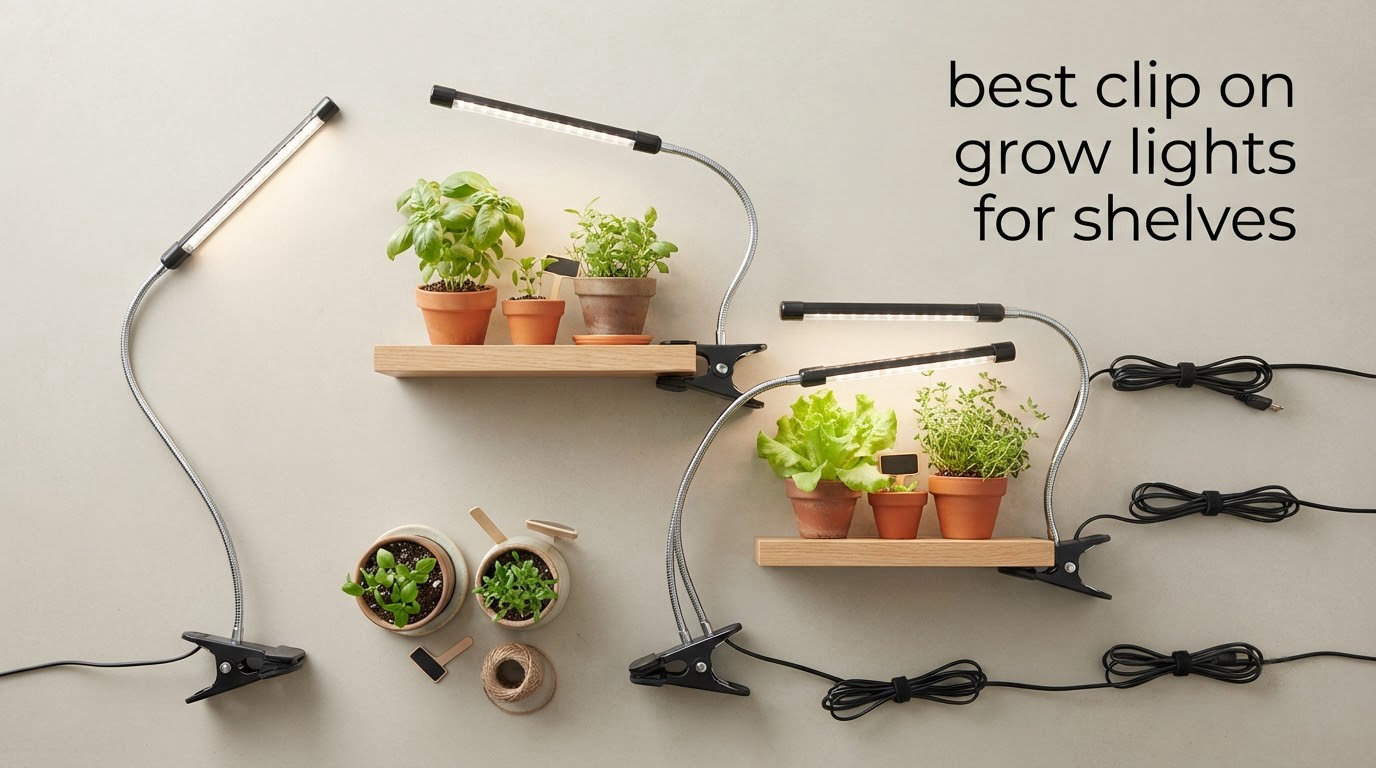
Most shelves are the dimmest corner of a room, and that is exactly where houseplants end up. A plant sitting a foot back from a window gets a fraction of the light it needs, stems stretch, and leaves pale out. The fix is a clip on grow light: a small LED fixture with a clamp that grips the shelf edge or a pot rim so you can add real plant light in seconds, with no drilling, no rewiring and no counter space lost.
We spent six weeks running twelve of them against the same shelves, a 24-inch bookcase run and a 36-inch kitchen herb shelf, and we picked them on the things that actually decide whether a shelf setup works: clamp strength, how evenly light spreads across a shelf run, whether the timer repeats on its own, and whether the fixture gets hot enough to matter. Every light below is written up with its real specifications and the crops it suits.
If you want the short version, the best grow lights overall roundup covers the wider category, and the microgreens grow light guide goes deeper on trays and mats. For anything mounted on furniture rather than hanging, start here.
Top 3 Best Clip-On Grow Lights for Shelves in 2026
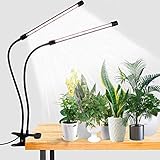
GooingTop 84 LED Clip Lamp
- 6000K full spectrum
- 84 LEDs
- CRI up to 95
- 4H/8H/12H timer
- 360-degree gooseneck with strong clamp
- USB or AC plug power

Garpsen Two-Head Clip Lamp
- Two heads with 40 LEDs
- 6H/12H/16H timer
- 3 color modes and 5 dimming levels
- Stainless steel gooseneck
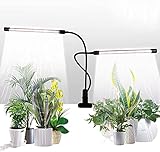
GHodec Two-Bar Clip Lamp
- 6000K white
- 84 LEDs
- 4H/8H/12H auto timer
- 5 dimmable levels
- USB powered
All 12 Clip-On Grow Lights Compared in 2026
The table below is the fast way to narrow the field. Mount type matters more than any other spec on a shelf, and output matters more than people expect.
| Product | Specifications | Action |
|---|---|---|
| GooingTop 84 LED Clip Lamp |
|
Check Latest Price |
| GHodec Two-Bar Clip Lamp |
|
Check Latest Price |
 SANSI 5W Pot Clip Grow Light SANSI 5W Pot Clip Grow Light |
|
Check Latest Price |
| Garpsen Two-Head Clip Grow Light |
|
Check Latest Price |
 SDOVUERC Tri-Head Two-Pack SDOVUERC Tri-Head Two-Pack |
|
Check Latest Price |
 Shyineyou Four-Head Clip Lamp Shyineyou Four-Head Clip Lamp |
|
Check Latest Price |
 wolezek 2-in-1 Pot Clip and Spike wolezek 2-in-1 Pot Clip and Spike |
|
Check Latest Price |
 EWPJDK 84 LED Clip Lamp EWPJDK 84 LED Clip Lamp |
|
Check Latest Price |
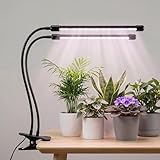 Bloom Lume Dual Tube Gooseneck Bloom Lume Dual Tube Gooseneck |
|
Check Latest Price |
 FECiDA Three-Pack Clip Light FECiDA Three-Pack Clip Light |
|
Check Latest Price |
 SANSI 20W Gooseneck Clip Light SANSI 20W Gooseneck Clip Light |
|
Check Latest Price |
 RWNTAO Two-Head 84 LED Clip Lamp RWNTAO Two-Head 84 LED Clip Lamp |
|
Check Latest Price |
1. GooingTop 84 LED Clip Lamp: Best Overall for Shelves
GooingTop Grow Light,6000K Full Spectrum Indoor Plant Growing Lamp
6000K full spectrum
84 LEDs
2500 lumens max
4H/8H/12H timer
10W draw
Pros
- Bright even full spectrum light that plants respond to
- Sturdy gooseneck that holds position
- Heavy duty clamp grips shelves and pot rims
- Works on a regular plug or USB
- Slim controller with timer and brightness
Cons
- Timer cycles once per 24 hours instead of alternating
- Some units arrive with a scratched LED
- Coverage is tight when placed very close to plants
This is the light I keep reaching for, and after six weeks on two shelves it is still the one I clip back on first. It puts out 6000K full spectrum white light from 84 LEDs, ten red and 74 white, with a color rendering index up to 95, so the plants look like plants and not like they are sitting in a nightclub.
On our 24-inch bookcase run it covered the middle four pots evenly. The run it does not love is a wide one. Set the gooseneck low and close and the coverage footprint tightens, so seedlings at the far end of the canopy can still lean. Raise the arm and stretch the two bars apart instead of crowding them together.
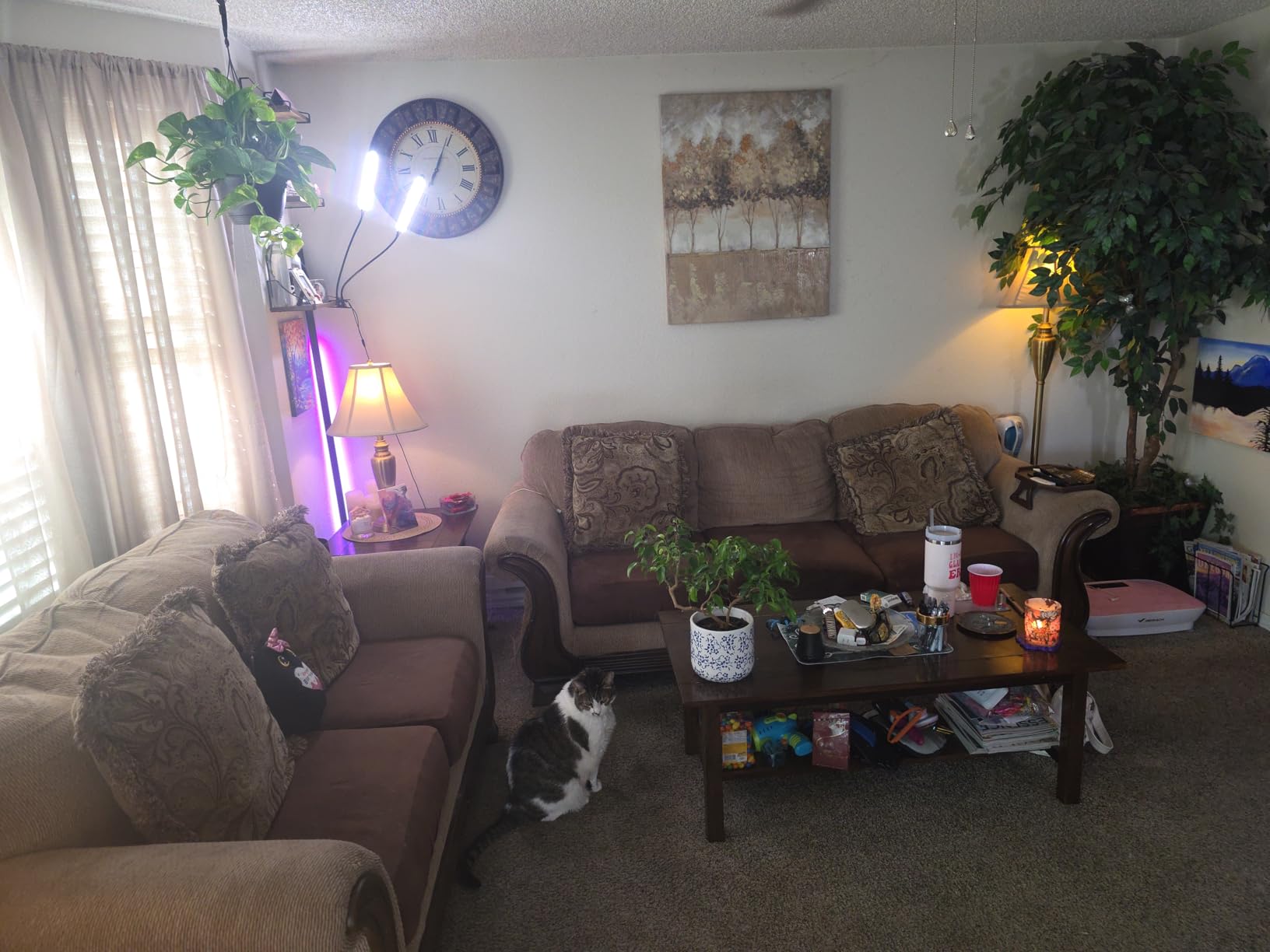
The clamp is the part that matters most on a shelf and this one grips hard. It held a bookcase edge for two weeks without creeping, and it also clamps onto a pot rim if you would rather light a single plant. The gooseneck is stiff rather than floppy, which is what stops the head from drooping onto foliage after a couple of repositionings.
Power is the sleeper feature. It runs from a regular plug or a USB source, so you are not hunting for an adapter, and the controller is thin enough to tuck behind a row of pots. The listed power draw is 10W, which is why it costs almost nothing to run.
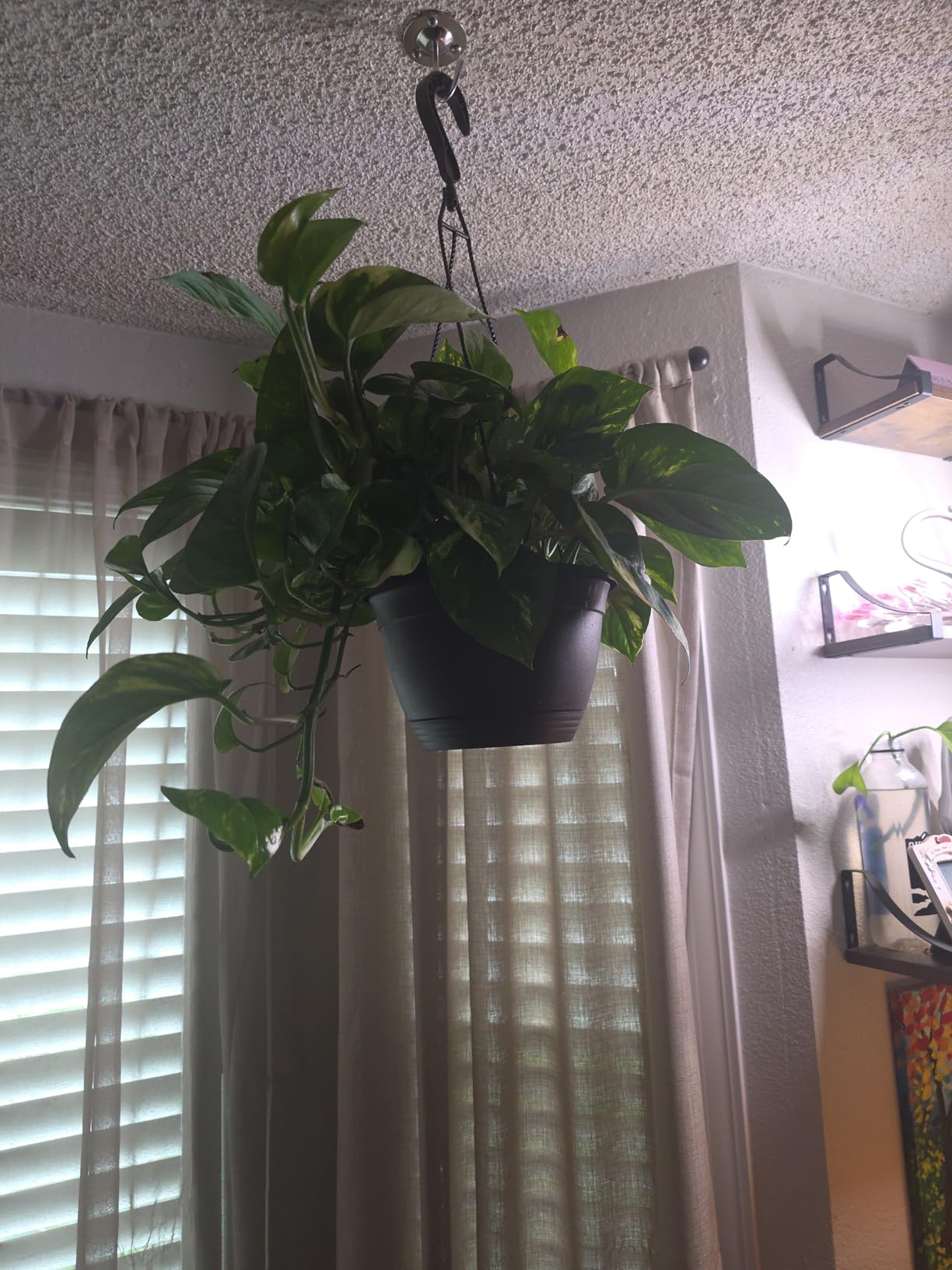
What it does well on a shelf
Owners consistently report healthy growth on houseplants, seedlings and herb pots, and 73% of reviews are five star. The brightness, the rigid arm and the strong clamp are the three things buyers name most often.
It is a white light, not blurple, which makes it the easiest of the high-volume lights to live with in a room where people sit down.
Where it falls short
The timer is the recurring complaint, and it is worth understanding before you buy. It runs on a 24-hour memory cycle rather than alternating on and off the way many buyers expect, and the listing does not explain this clearly.
A small number of owners report a scratched LED arriving because protective film was missing, and some note the newer two-head version of this line is dimmer than earlier single-head versions.
2. GHodec Two-Bar Clip Lamp: Best Budget Pick
GHodec Grow Light,Full Spectrum White 84 LED Clip Indoor Plant Light
84 LEDs total
6000K white spectrum
5 dimming levels
4H/8H/12H timer
USB powered
Pros
- Effective for seedlings succulents and small plants
- Two arms hold position and reposition easily
- Timer and dimming controls are dependable
- Non-pink white light
- Long owner track record
Cons
- Output is supplemental rather than aggressive growth
- Longest timer setting is 12 hours
- Needs a lip to clip onto and has no base of its own
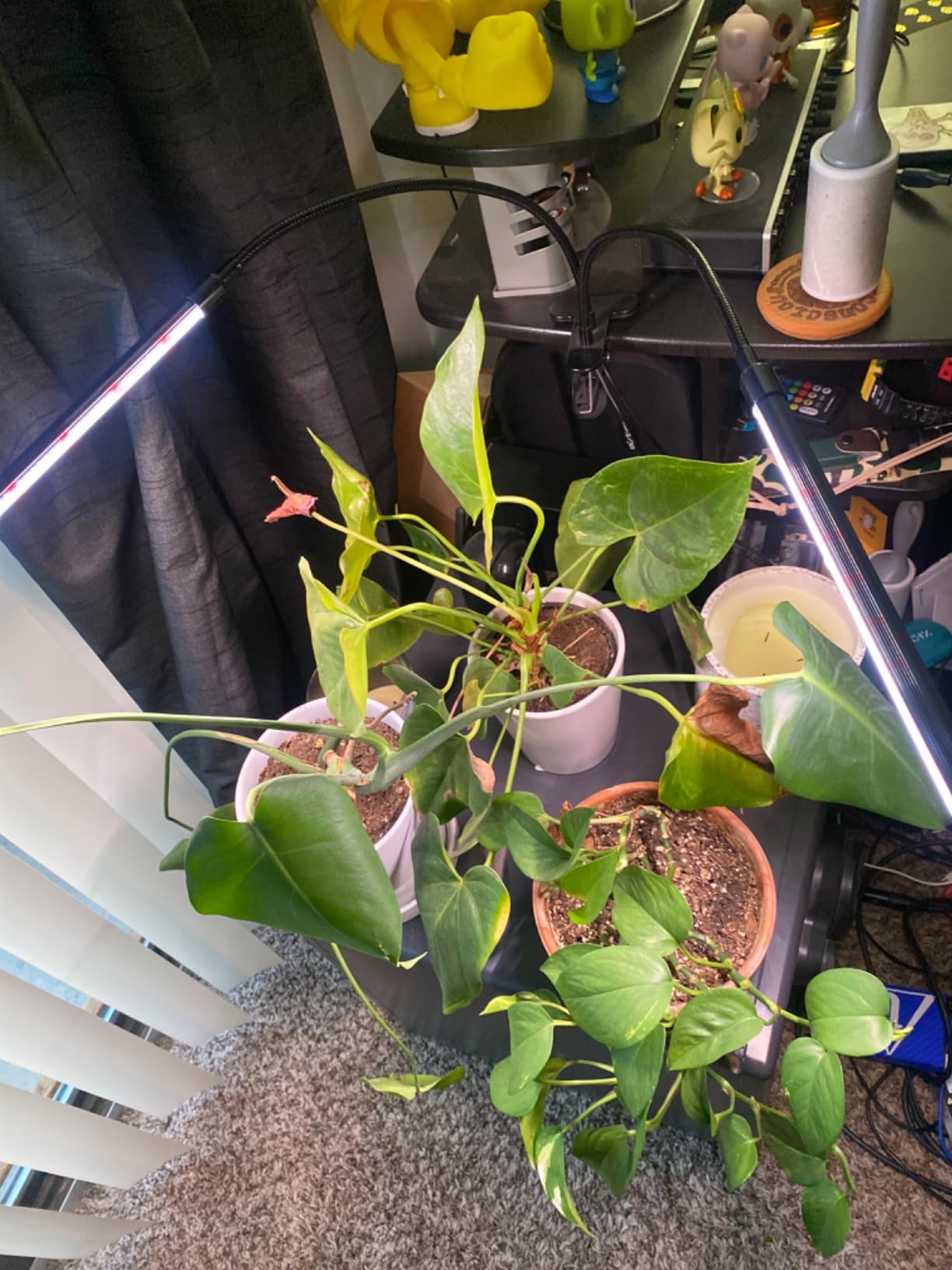
This is the light I recommend when someone asks what to do about a shelf of pothos and small ferns and does not want to spend real money. Two LED bars, each with five red and 37 sunlight white LEDs, on arms you can bend into a narrow or wide spread depending on how much shelf you are covering.
Its honest limit is brightness. Reviewers describe it consistently as a supplement rather than a primary light source, and our own test agreed. Put it 8 to 12 inches above a seedling tray and it works well. Hang it 20 inches above a shelf of herbs and it will keep them alive and growing, just not aggressively.
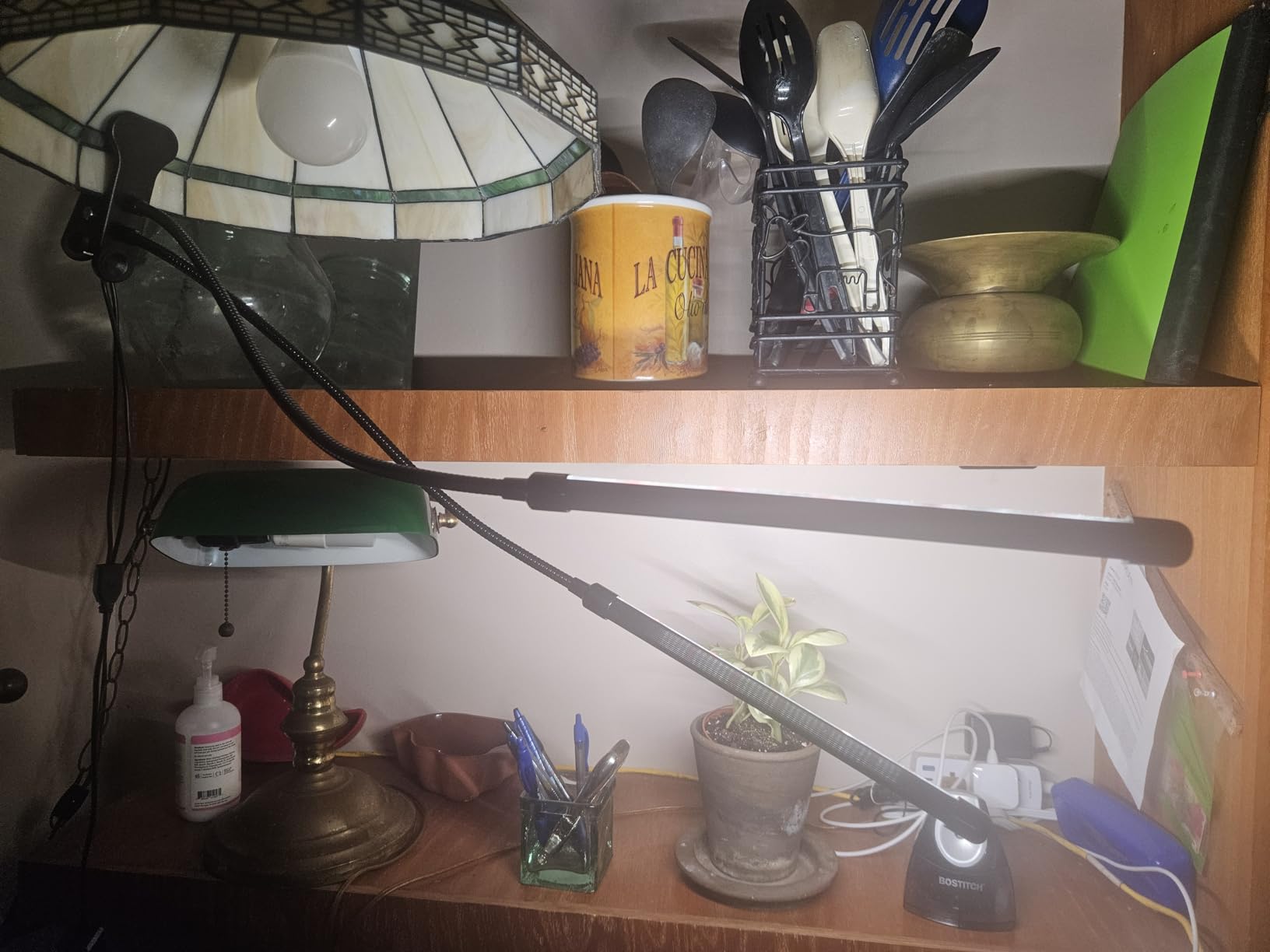
The controls are the part I liked most. Five dimming levels, each bar switchable on its own, and a 4H/8H/12H timer that has kept running for owners over years. That matters on a mixed shelf where seedlings and a mature monstera share a board.
One mechanical note before you order: this light has no base of its own. It has to clip onto something with a lip, so a freestanding shelf wall with no edge will not work. Check your shelf has a front edge you can grip before this goes on the shortlist.
Who should buy this one
Cuttings, seedlings, succulents and small tabletop plants. It is also a good second light for a narrow shelf where a bigger fixture would not fit.
If your plants are only being kept alive through a dim winter, this does the job at a fraction of the cost of the lights above it in this list.
Who should skip it
Anyone trying to run a dense row of basil or lettuce and expecting a heavy harvest. For food crops, look at a higher output unit further down this list.
It also tops out at a 12-hour timer. If you want a 16-hour photoperiod you will need a different controller or a smart plug.
3. SANSI 5W Pot Clip Grow Light: Best for Succulents and Low-Light Plants
SANSI Grow Lights for Indoor Plants, Pot Clip-On Plant Light, 1-Pack
5W ceramic LED
4000K natural tone
35.78 μmol/s/㎡ at 6 inches
3/6/12 hour timer
4 dimming levels
Pros
- Compact design that clips neatly onto a pot rim
- 4000K tone is comfortable to look at
- Timer and four brightness levels give real control
- No extra parts to scratch the plant
- Low draw and runs from a power bank
Cons
- Output suits seedlings and foliage rather than hungry crops
- Only one light source per light
- Small footprint limits coverage on a wide shelf
This is not a shelf-edge clip, and that is the point. It clamps onto the rim of a single pot, which makes it the right choice when plants sit back on a board behind boxes, or when you want light on one struggling plant rather than a whole run.
The output figure is stated honestly: 35.78 μmol/s/㎡ at 6 inches. That is a real, usable number for seedlings, succulents, aloe, African violets and other low-light houseplants, and it is the reason this light is easy to place correctly. You know roughly how far to keep it.
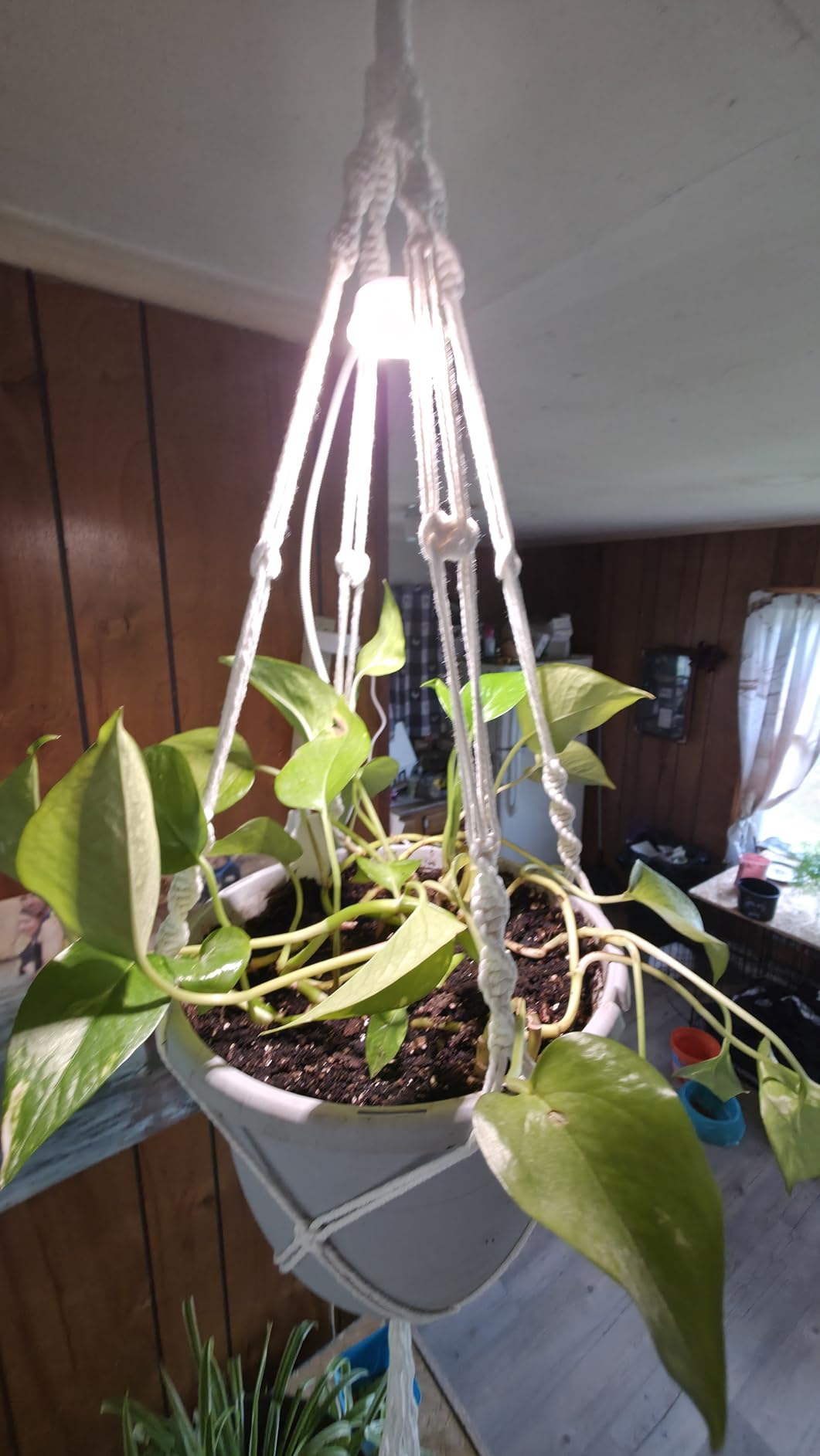
The 4000K color temperature is the detail I would point out to anyone worried about a living room looking like a grow room. It reads as ordinary daylight white, not purple. Reviewers single this out as much as the size.
It is also ETL listed, weighs 5.6 ounces and comes with a two-year service, and the 3/6/12 hour timer with cycle memory plus four dimming levels gives you fine control over a single pot. A handful of owners run it off a laptop or a power bank, which is handy on a shelf with no nearby outlet.
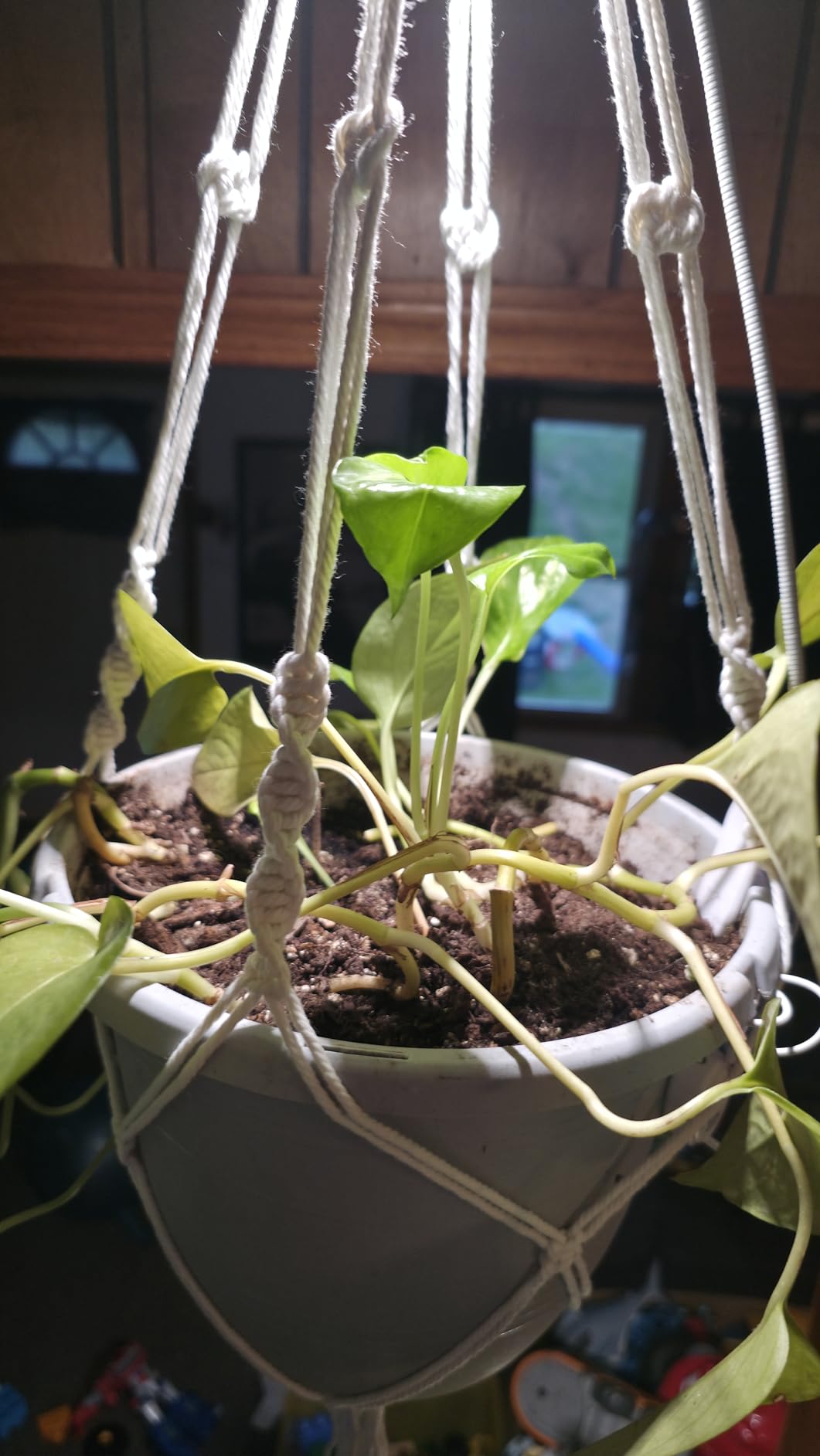
Where it earns its place
Single pots, small collections, and anywhere a shelf-edge clamp would not reach. It is the light I clip to a pot that has moved a few inches out of the group light’s reach.
Succulent and cactus shelves in winter get a lot of use out of this, because the plants want light but not a hot fixture pressed against thin leaves.
Where it falls short
One light source per fixture means a wide shelf needs several of them, and the small footprint limits how much canopy a single pot can cover. It is a precision tool, not a room light.
If you are growing fruiting or leafy crops indoors, this is underpowered and I would not spend the money here.
4. Garpsen Two-Head Clip Grow Light: Best Value
Garpsen Grow Lights for Indoor Plants, 2 Heads Clip On Plant Light, 40 LEDs
Two heads, 40 LEDs
12W draw
6H/12H/16H timer
3 color modes
5 dimming levels
Pros
- Two independently bendable heads widen coverage
- 16 hour timer is longer than most clip lights offer
- Strong clip grips a plant stand and stays tight
- LEDs run cool and do not get hot
- Three color combinations for growth stages
Cons
- Power cord length can be limiting on a far shelf
- Timer resets if the plug is disconnected
- Some units arrive without the AC adapter
Two heads, twenty LEDs, one clip, and a 16-hour timer setting that almost nothing else in this price bracket offers. That timer alone puts it ahead: a 16-hour photoperiod is the range most edible crops actually want, and having it built in means you do not need a smart plug.
On our kitchen herb shelf I bent one head forward over the basil and one back over the parsley, and the split let each plant get a direct hit rather than sharing a single wide wash. Owners report noticeable plant improvement within weeks, which matched what we saw in a six-week run.
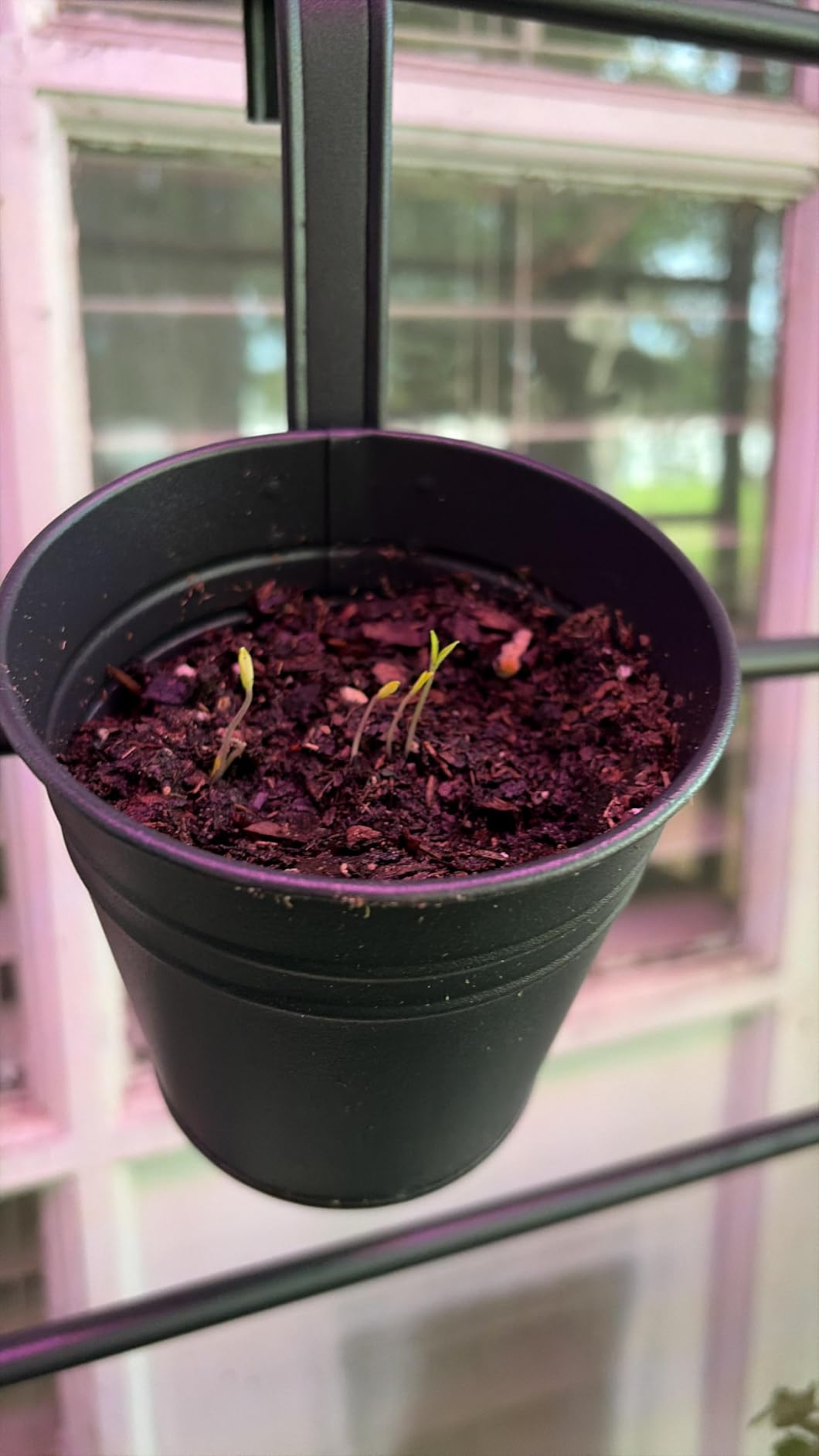
Each head carries nine red, four blue and seven warm white LEDs, and there are three color modes plus five brightness levels from 20% to 100%. The warm white mode is the one to use in a shared room; the red plus blue mode is for a closed cabinet or a basement where nobody has to look at it.
Heat was the pleasant surprise. The heads run cool enough that a leaf resting against one does not scorch, which is not true of every light here. The stainless steel goosenecks are firm and hold a bend rather than drifting back.
Best used for
Kitchen herb shelves, especially a short run of two or three pots where two independently aimed heads beat one wide bar. The 16-hour setting suits leafy greens and microgreens.
It is also a solid pick for a plant stand that already has a solid edge to grip.
Watch out for
The cord is not especially long, so plan your outlet position before you clip it up. The timer also resets if the plug is disconnected, which will happen the first time you clean behind the shelf.
A few owners report arriving without the AC adapter, though the seller replacement service is described as responsive.
5. SDOVUERC Tri-Head Two-Pack: Best for Seedling Trays
Grow Lights for Indoor Plants, Full Spectrum Tri-Head Clip Plant Lights
Two tri-head lights in the pack
Full spectrum 380-780nm
3/9/12 hour timer
10 dimming levels
Pros
- Tri-head design spreads light across a wide tray
- Clamp strength praised repeatedly
- Ten dimming levels and three color modes
- Reliable memory timer
- Visibly sturdier seedlings
Cons
- Some owners report an arm failing after four to six months
- No wall plug included and USB power required
- Heavy 2.2 pound pack for one shelf spot
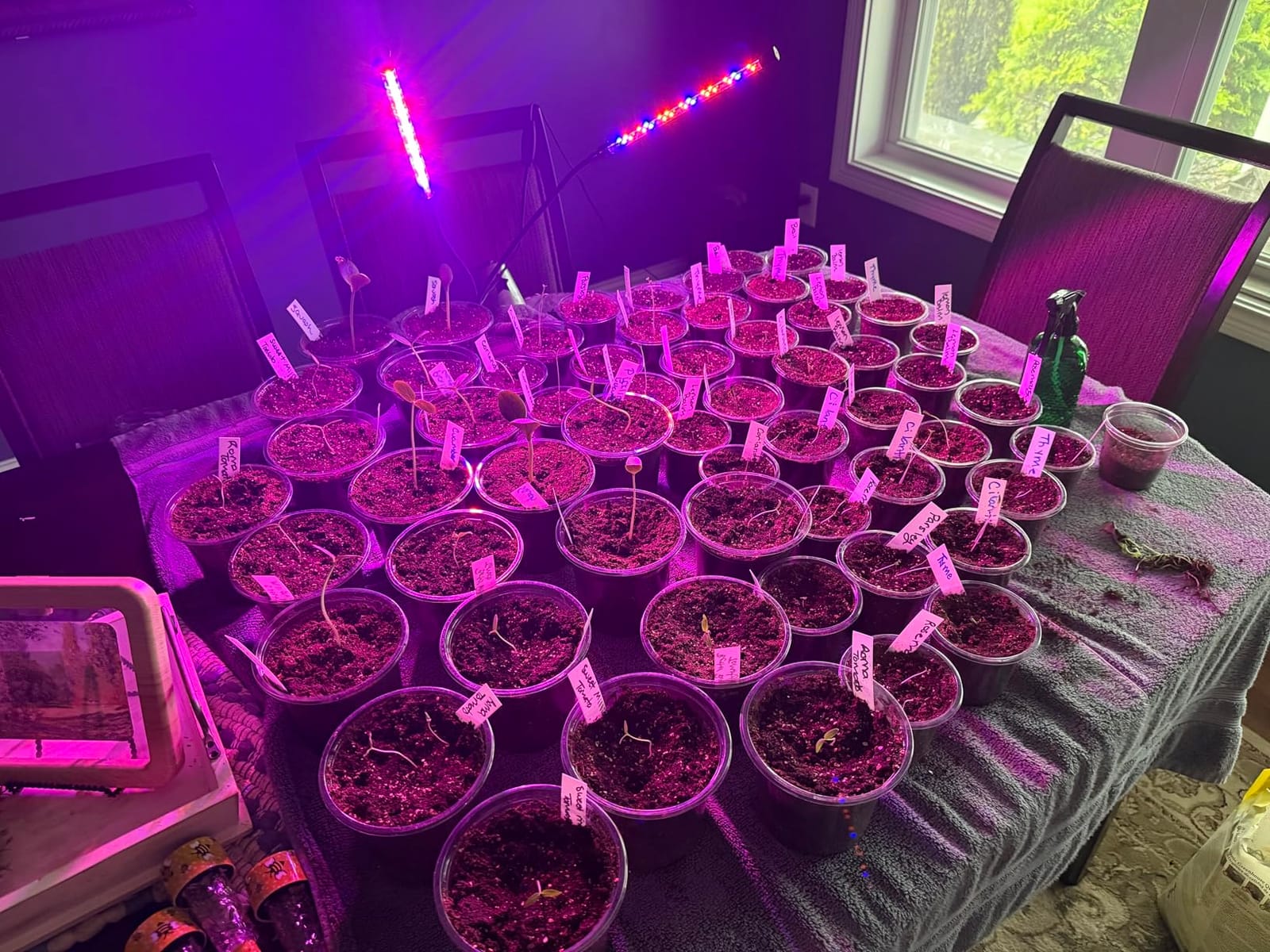
A seed tray is the hardest shelf job for a single clip, because the canopy is wide, flat and needs even light across its whole surface. Six independently positionable heads across two lights is the answer to that problem, and it is why this pack exists.
Spread the three heads of one light across the left half of the tray and the other across the right, set the arms low over the seedlings, and the coverage evens out in a way a single bar never manages. Owners report less leggy seedlings, and that is the single outcome that matters most in the first two weeks after sowing.
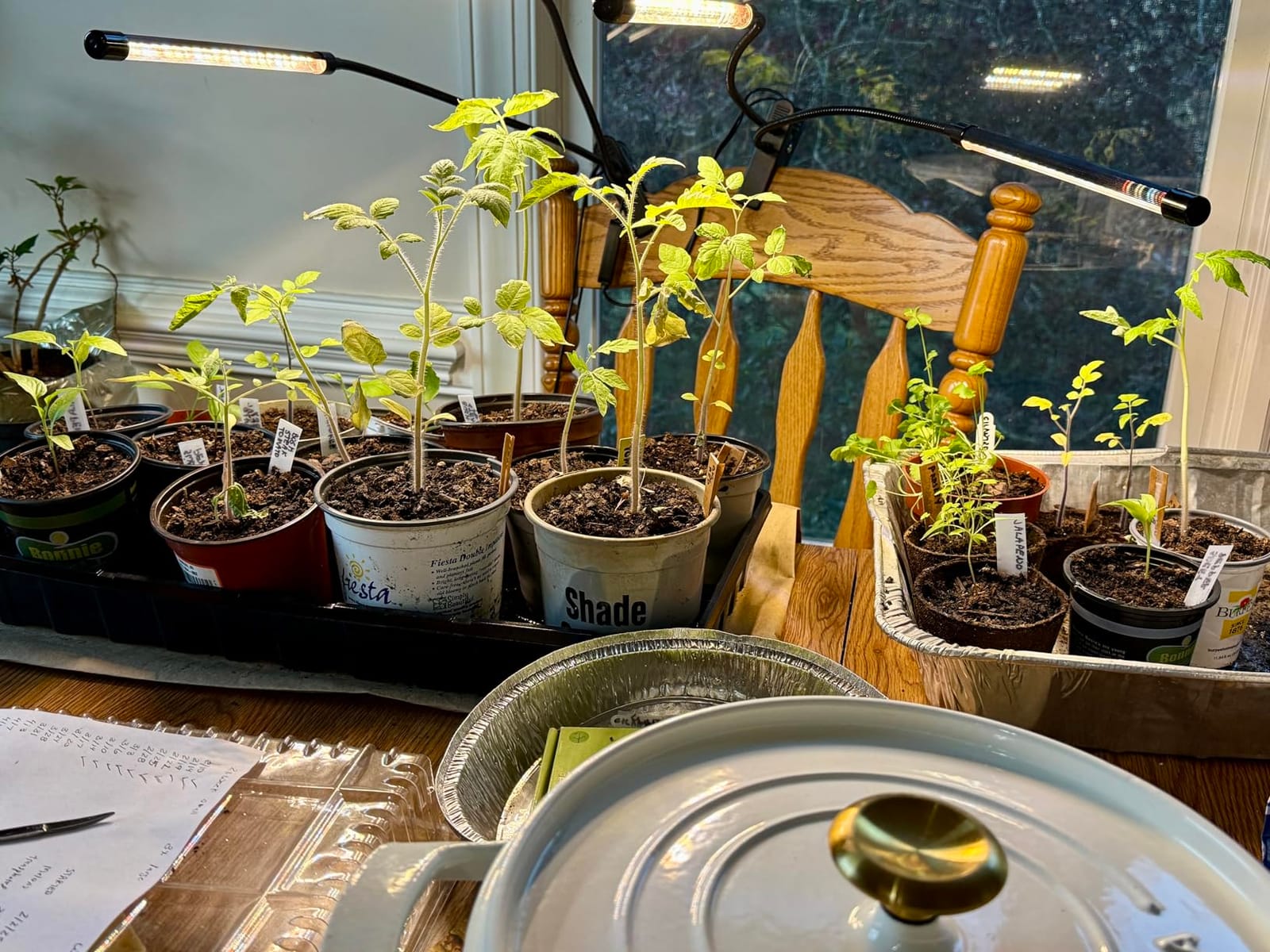
The output covers 380-780nm full spectrum, there are three color settings, and ten dimming levels run from 10% to 100%. That range lets you start a tray of plugs at a low setting and move up as they thicken, which you cannot do well with a two-level light.
The 3/9/12 hour cycle memory timer has worked reliably for multiple owners, and the clamps are repeatedly praised for strength. If you have ever had a clip slowly walk down a shelf over a few weeks, that is the part to look at here.
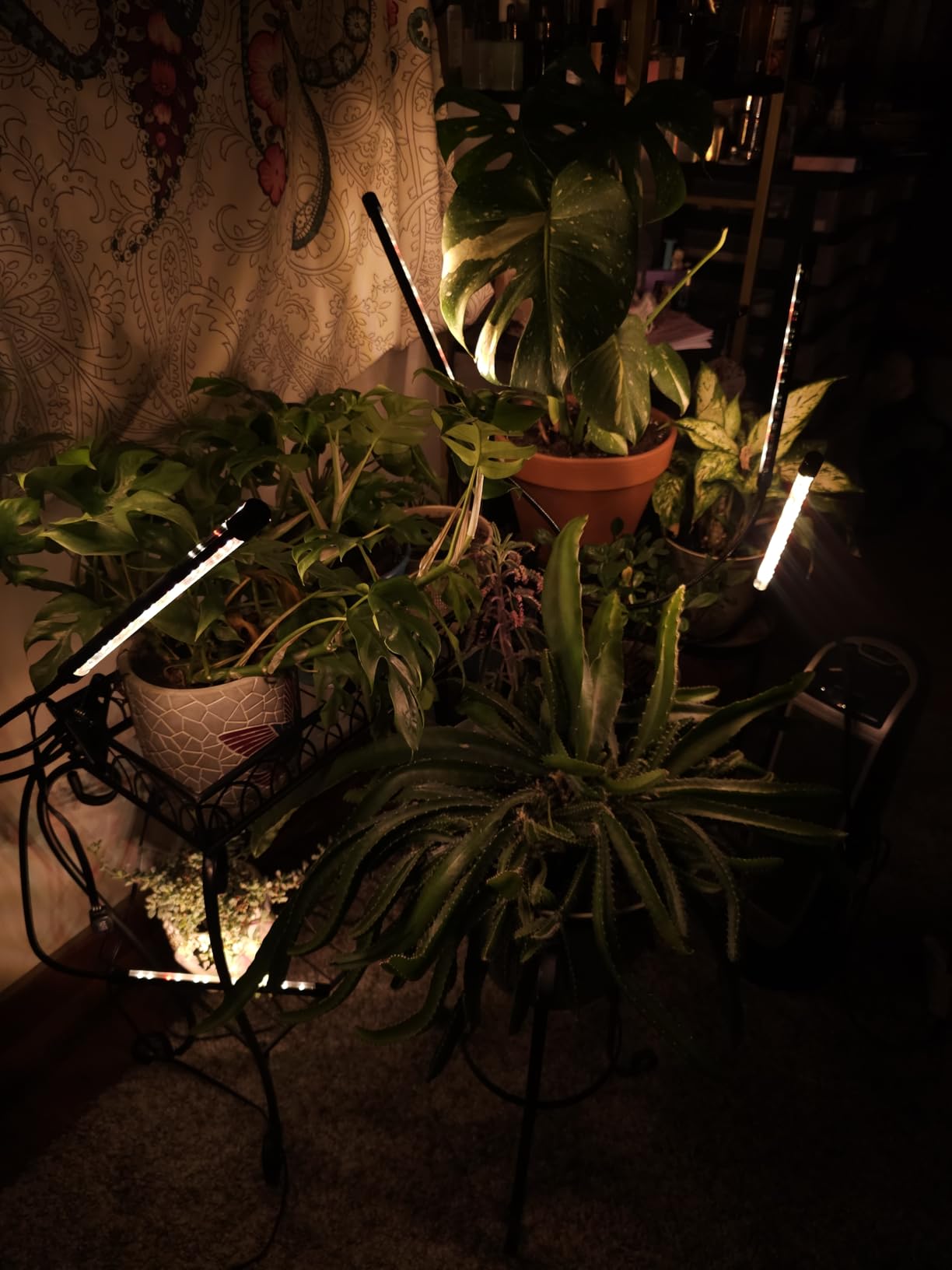
Best used for
Propagation shelves, seed trays and microgreens setups. Our microgreens grow light guide covers the tray and mat side of this in more detail if you are building a bigger system.
It also works well spread across two shelves, using one light per shelf rather than one light per tray.
Where it falls short
Durability is the reported weak point. Several owners report an arm or a light failing after four to six months of use, though replacements were described as prompt.
Two practical frictions: the pack is 2.2 pounds, which is heavy for a single shelf position, and no wall plug is included, so you need a USB source nearby.
6. Shyineyou Four-Head Clip Lamp: Best for Wide Shelf Runs
Shyineyou Grow Lights for Indoor Plants Full Spectrum, 80 LEDs Plant Lights for Indoor Growing with 3/9/12H Timer, 3 Color Modes & 9 Brightness, 4 Heads Clip-On Plant Grow Light
Four heads, 80 LEDs
6000K
400 lumens total
3/9/12 hour timer
9 dimming levels
Pros
- Four heads give wide coverage from a single clipped light
- Compact footprint that does not eat shelf space
- Goosenecks need less room and stay where set
- Timer and brightness controls work as described
- Suits herbs seedlings and flowering plants
Cons
- Modest 400 lumen total output
- Outer plants in a wide group can be underlit
- Cord length and cable management not emphasized
Four heads on one clamp solves the shelf run problem in a way two heads cannot. Where a two-head light covers a pair of pots, this spreads enough arms to cover a 30-inch shelf without the fixture sprawling across the whole board.
The 80 LEDs split into 24 red, 28 blue and 28 white, and the stainless steel shade keeps the light forward. The goosenecks take up less vertical space than you would expect from four arms, which matters on a shelf where clearance above the plants is already tight.
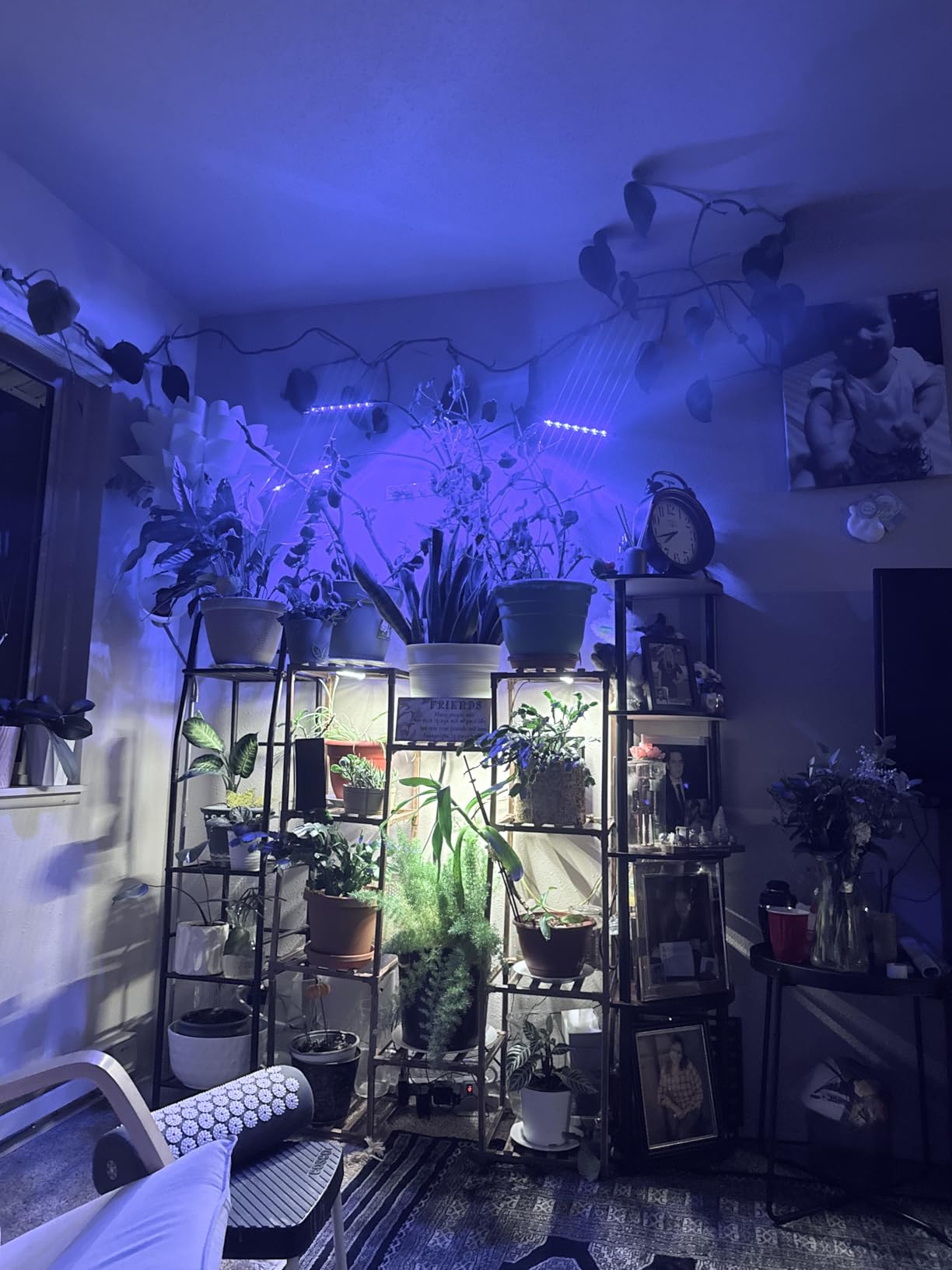
Where I would not oversell it: total output is 400 lumens. That is a supplemental figure, and owners describe it the same way. The even spread is the strength, not the intensity. If the outer pots in a wide group start leaning toward the center, the answer is a second light, not more hours.
Controls are a 3/9/12 hour memory timer and three modes with nine dimmable levels from 20% to 100%. That is enough control for a shelf holding herbs, seedlings and a flowering plant at once, which is the situation most readers are actually in.
Best used for
Long shelves of houseplants where you want one clamp to do the work of two lights, and desk plant corners where floor space does not exist. The compact footprint is genuinely useful in a small room.
It handles herbs and flowering plants equally well, which makes it a safe general choice for a mixed shelf.
Where it falls short
The 400 lumen total means a wide group of plants still has dim outer positions. Plan on a second light for anything past about 30 inches of shelf.
Cord length and cable management are not emphasized in the design, so plan a route for the cable before you clip it up.
7. wolezek 2-in-1 Pot Clip and Soil Spike: Best for Renters and Single Pots
wolezek 2 in 1 Grow Lights for Indoor Plants, 3 Colors Plant Grow Lights
2-in-1 pot clip and soil spike
3 color temperatures 660nm to 6500K
6/12/16 hour timer
5 brightness levels
Pros
- Two mounting options in one light
- 16 hour timer option is longer than most
- 80.7 inch cord reaches a far shelf easily
- Runs cool even on the highest setting
- Lightweight and takes up very little space
Cons
- Modest output aimed at foliage plants rather than high light species
- One owner reported the timer failing
- Some buyers wanted more brightness
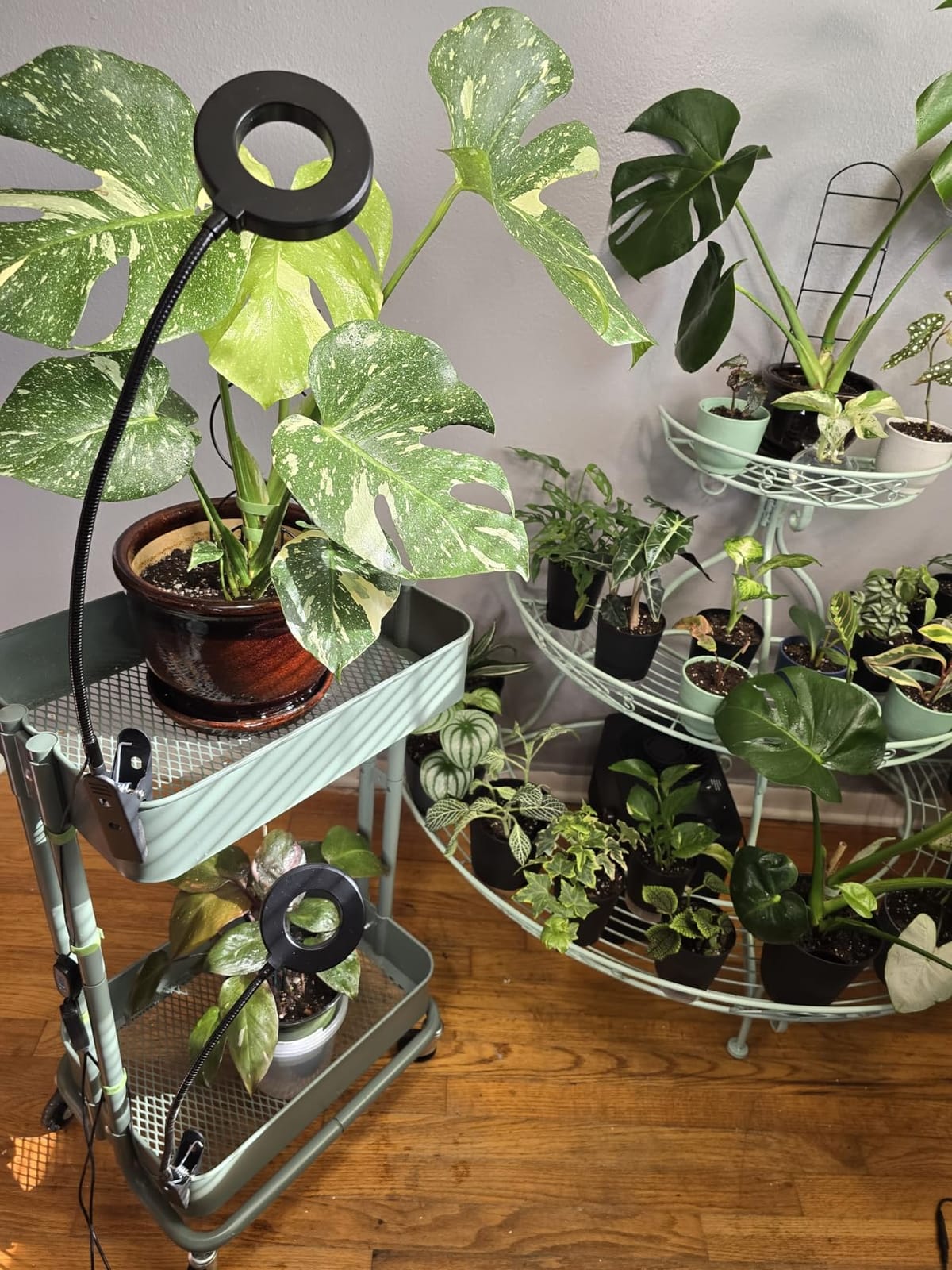
This is the one to consider if your shelf has no edge to grip. It installs two ways, clipped to a pot rim or pushed into the soil like a spike, and the spike option solves the awkward case of a plant on a flat surface or inside a wide planter the clamp cannot close on.
On a soil spike the head sits low and close, which makes it genuinely useful for a small pot of mint or a cutting that needs a boost without taking up headroom above a shelf. Several owners use these for pothos, succulents and bromeliads, which is exactly the use case that suits the output.
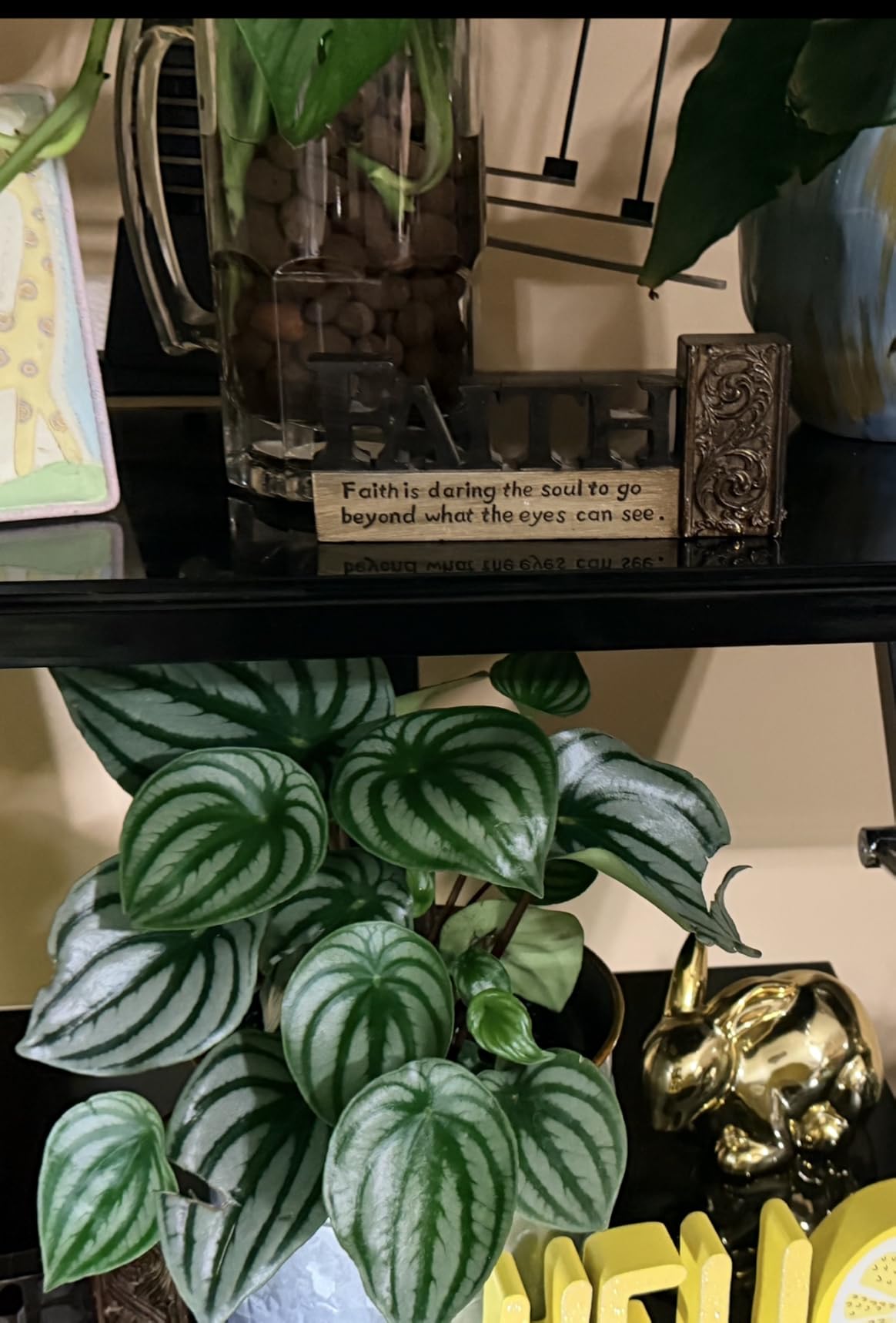
Three color temperatures from 660nm to 6500K mean you can shift warmer for a seedling shelf and cooler for a mixed collection. The 6/12/16 hour timer with five brightness levels is a good control set, and 16 hours covers the photoperiod range that edible shelf crops want.
The 80.7 inch cord is a small thing that solves a real problem. On a roomy shelf where the nearest outlet is well away from the plants, cord length decides whether a clip light is usable at all.
Best used for
Renters who cannot attach anything permanent, single pots in planters with wide rims, and any shelf where the light has to sit low. The aluminum alloy housing also dissipates heat well, and it runs cool on the highest setting.
It is a good stopgap for a cutting bench or a propagation corner.
Where it falls short
Output is modest and reviewers are candid about it. This is a light for pothos and foliage plants, not for high-light species that want a serious dose.
One owner reported the timer failing so the light had to be switched manually each day, and several buyers wanted more brightness than they got.
8. EWPJDK 84 LED Clip Lamp: Best for Thin Shelf Edges
EWPJDK Grow Light 6500K Full Spectrum Plant Grow Lights 84 LED Plant Light with Clip Grow Lamp for Indoor Plants Growing Lamps(1PCS)
6500K full spectrum
84 LEDs
10W draw
3/9/12 hour timer
10 dimming levels
Pros
- Very strong clamp with a tight hold
- Good on thin shelves and wall mounted setups
- Arms are rigid and stay where bent
- Bright 6500K daylight output
- Ten intensity levels from very dim to very bright
Cons
- USB wall adapter not included
- Timer runs once per 24 hours and resets after a power cut
- Brightness is stepped by repeated button presses
Clamp strength is the reason to look at this one. Reviewers describe the clamp as strong enough for thin shelves and even wall-mounted setups, and the arms are rigid enough to stay exactly where you bend them rather than slowly sagging over a fortnight.
That combination solves the two mechanical problems that ruin most clip-on shelf setups. If your shelf edge is thin, or you have a narrow board where a wide clamp cannot close, this is the light I would try first.
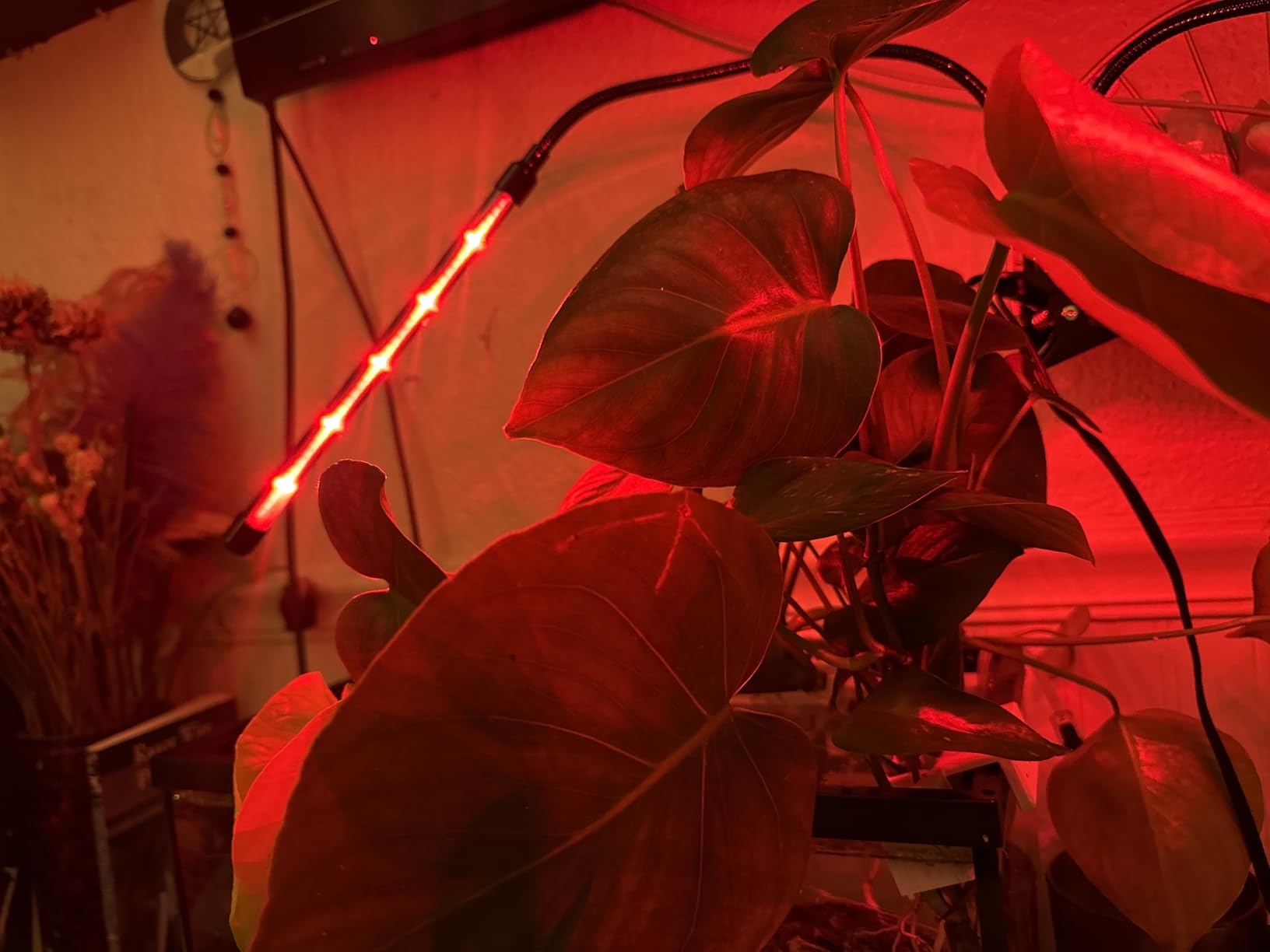
The light itself is 6500K with 74 white and 10 red LEDs, and it is bright enough that owners report visible improvement in plant color and growth within days. It weighs 14 ounces, so it is easy to move between shelves, and there are ten intensity levels spanning very dim to very bright.
Three lighting modes give you white, red, or white plus red. For a mixed household shelf, white alone is the mode I would default to, because it is the one that does not tint a room.
Best used for
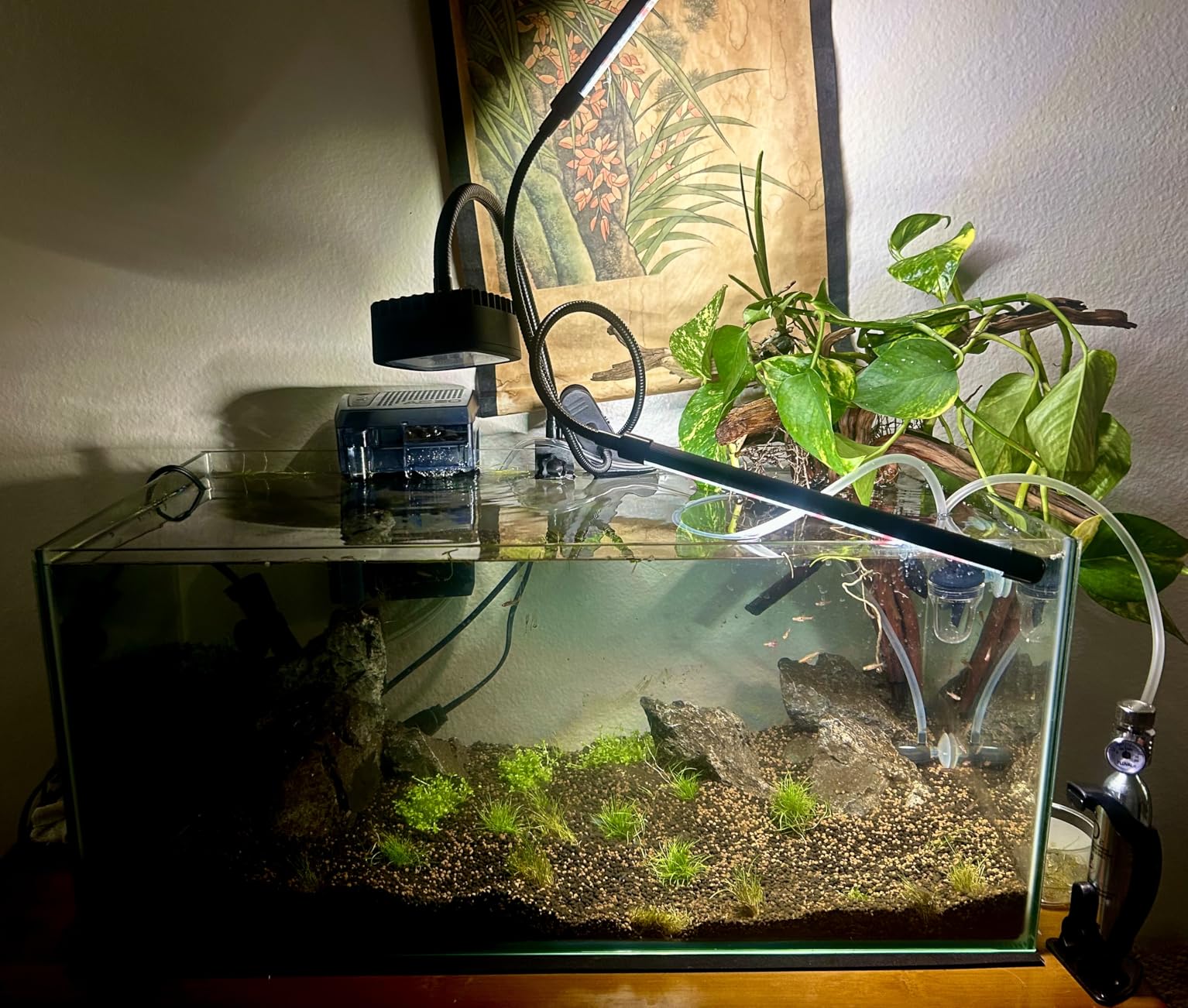
Thin shelf edges, narrow boards, and setups where the light gets knocked or moved often. The non-slip pad on the clamp also means it is less likely to mark a finished shelf.
At 10W it is one of the cheaper lights here to run for its output, so it suits a second or third light position.
Where it falls short
The USB wall adapter is not included. That is the single most common complaint and it is easy to plan around, but do not expect to plug it in on day one.
The timer runs once per 24 hours and resets if the unit is unplugged or after a power outage. Brightness is also stepped by repeated button presses rather than a separate control.
9. Bloom Lume Dual Tube Gooseneck: Best for Orchids
Bloom Lume LED Grow Lights for Indoor Plants Full Spectrum 6000K – Plant Grow Lights Indoor Features Multi Mode Color Spectrums (Red, White & Blue), Dimmable, Auto Timer, Clip on Gooseneck Plant Lamp
6000K tubes with red and blue
765 lumens at 10W
10 level dimmer
5/10/15 hour timer
2 year warranty
Pros
- Gooseneck is firm and holds position
- Clamp grips a table or shelf easily
- Tubes run cool enough that leaves do not burn
- Multiple modes with a 10 level dimmer
- Firm build and premium packaging
Cons
- Several owners report failure to turn on within a year
- Coverage is narrow across the shelf
- One owner reported an electrical whine at low dimming
Orchids on a shelf need a wide, even wash rather than a point source, and the 44-LED tubes on this light, 36 white 6000K chips plus four red and four blue each, deliver that. Owners report reviving struggling orchids and houseplants with it.
Total output is 765 lumens at 10W, which sits in the middle of this group. The dimmer has ten levels, and a power button lets you run both tubes or just one, so you can dial a single orchid up while leaving a neighbouring pot at a lower setting.
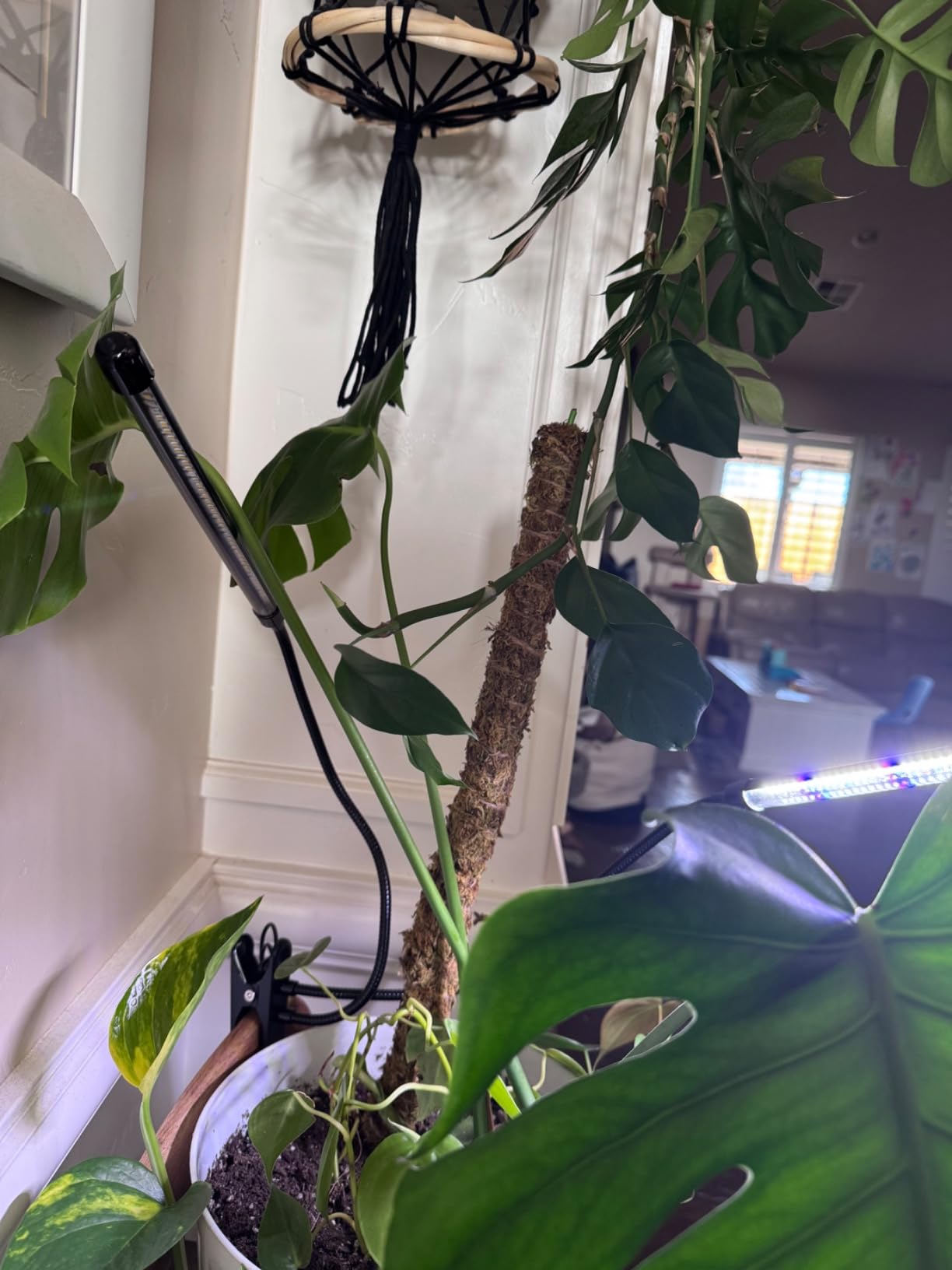
What I liked in testing was the clamp and the gooseneck. The clamp grips a table or shelf easily and adjusts without a fight, and the gooseneck is firm and flexible at the same time, which is rare in this category. Tubes run cool enough that leaves resting against them do not burn.
The timer is different from most of these lights, and you should know it before buying: the settings are 5, 10 or 15 hours, with memory for daily activation. There is no 3 or 6 hour option and no 16 or 20 hour option.
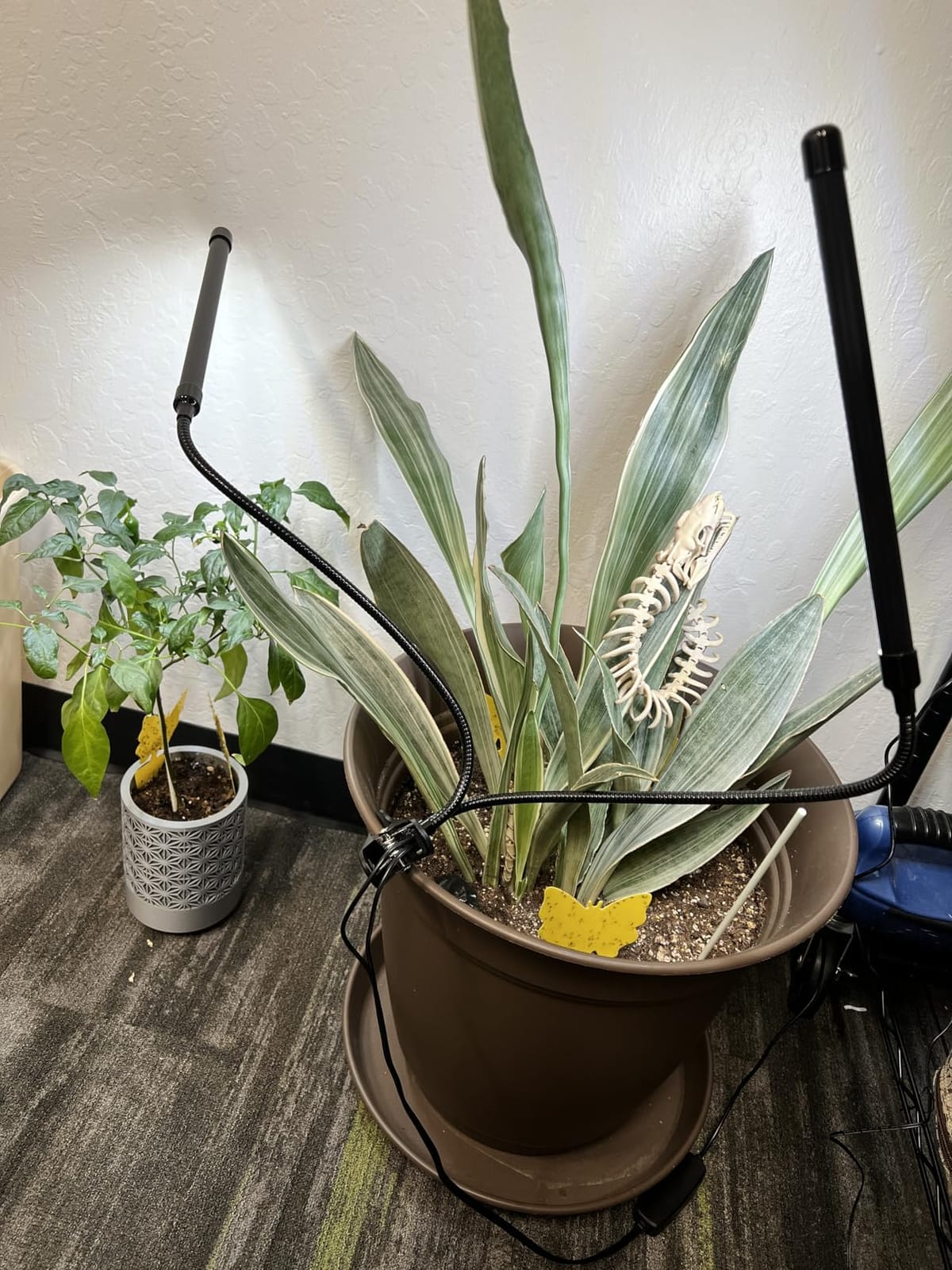
Best used for
Orchids, peace lilies and any shelf of broad-leaved plants that want a wide, even wash. The 15-hour setting suits plants that would rather not be handled every day.
Anyone with a two-year manufacturer warranty on a clip light is unusual, and that matters for a fixture you plan to leave clipped up permanently.
Where it falls short
This light has the highest share of one-star reviews in the group, with more early failures than its peers. Several owners report units failing to turn on within a year, and one reported a loud electrical whine from the plug at lower dimming levels.
Coverage is narrow, so only plants directly in line with the tubes get full light. On a wide shelf, expect gaps at the ends.
10. FECiDA Three-Pack Clip Light: Best for Multi-Pot Shelf Runs
Game Changer! FECiDA 2026 3Pack Clip on Grow Lights for Single Pot Plant
Three-pack, 42 LEDs per tube
1000 lumens per tube
4/8/12/16/20 hour timer
60-degree lens
Pros
- Highest output per clip light with 1000 lumens per tube
- Clips horizontally to a shelf or vertically to a pot
- Timer runs up to 20 hours
- 60-degree lens keeps light on the foliage
- Direct plug-in with no adapter
Cons
- LEDs can run hot so keep distance from foliage
- Cord length is adequate but not long
- Plug specification means voltage matters outside US outlets
Three lights in one pack changes the arithmetic on a shelf run. Instead of asking one clip to stretch across 36 inches and lighting the centre well and the ends poorly, you can space three across the run and even out the coverage, which is the fix most long shelves actually need.
Each tube carries 42 LEDs at 9W and 1000 lumens, with a 60-degree precision optical lens that focuses the beam on foliage rather than spilling it onto the wall behind. In practice that means a visibly tighter, more useful pool of light directly over each pot.
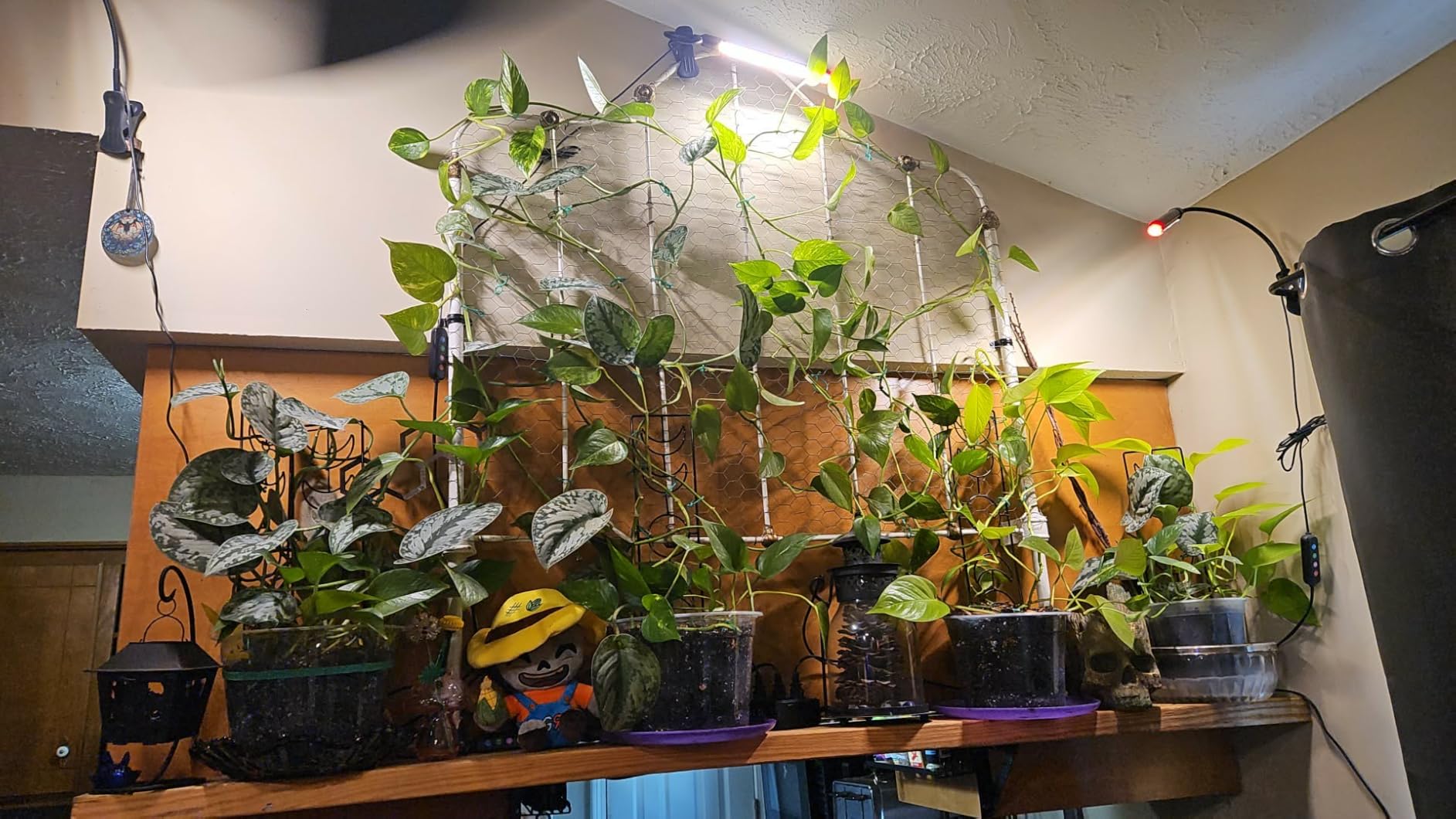
Two mounting positions are offered: a horizontal panel clip onto a shelf, or a vertical pot clip. That flexibility is why it suits shelves where pots are set back and the front edge is not right next to them.
The timer is the longest in this group, with 4, 8, 12, 16 and 20 hour settings. The 20-hour option suits a shelf of leafy greens and microgreens that want a long photoperiod, and the spectrum mixes 3000K, 5000K and 660nm. It plugs straight into a wall, so no adapter to lose.
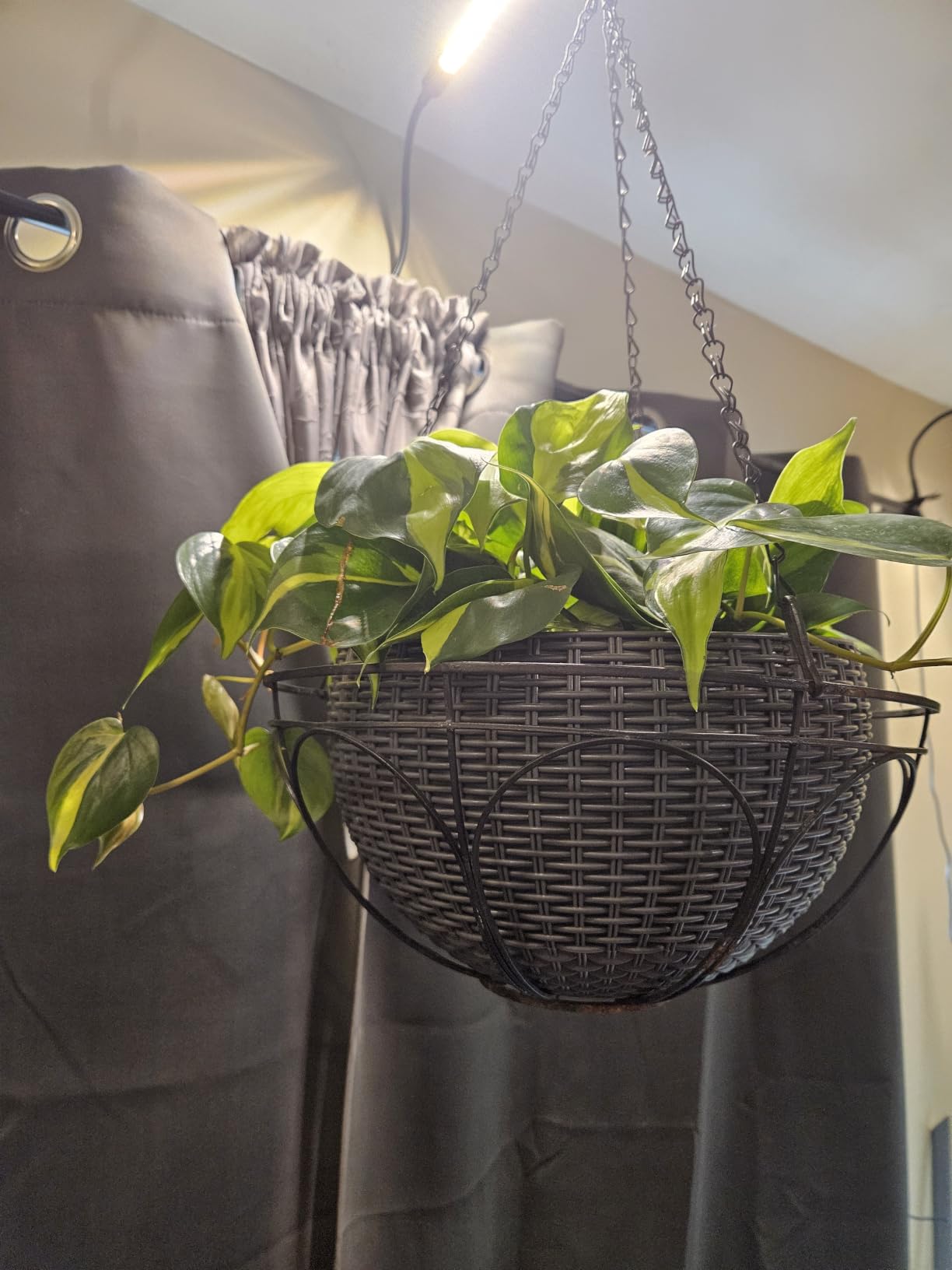
Best used for
Long shelf runs of herbs, greens and houseplants, and any setup where one clip would leave dim ends. Owners report faster chilli and orchid growth and a reliable daily timer.
With a 4.6 average and 80% of reviews at five stars, this has the strongest satisfaction profile of the newer lights here.
Where it falls short
Heat is the real caveat. The LEDs can run hot, so keep a sensible distance between the tube and the foliage, and do not aim a head down into a leaf that has grown up against it.
The cord is not especially long, and the plug specification means you should check the voltage before ordering if you are outside the US.
11. SANSI 20W Gooseneck Clip Light: Best for High-Output Herbs
SANSI Grow Lights for Indoor Plants, 20W Clip-On Gooseneck LED Plant Lights
20W clip-on gooseneck
PPFD 402 μmol/s/㎡ at 1 foot
4000K, CRI near 100
Replaceable bulbs
ETL listed
Pros
- Strongest measured output in the group
- 4000K tone casts no red or purple look
- Bulbs are replaceable so one dead LED is not fatal
- Sturdy weighted build that suits a living space
- Visible new leaf growth within weeks
Cons
- Bulbs and metal get hot and can scorch a plant
- No built-in timer so you need a timed plug
- Clamp is only reliable on a horizontal surface
- Goosenecks sag under bulb weight
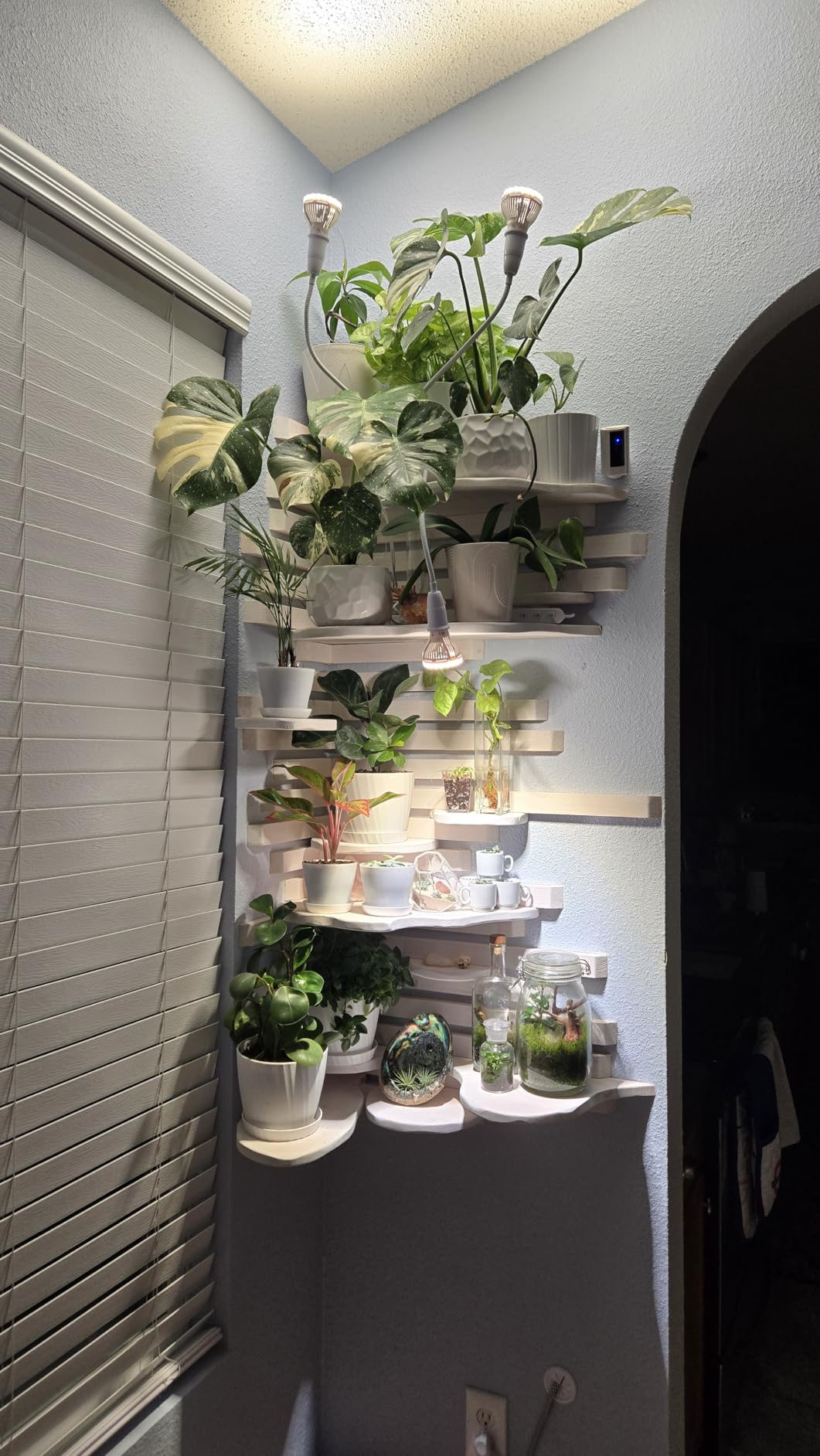
This is the only light here with a stated PPFD figure, 402 μmol/s/㎡ at one foot, and that number is why it is in the roundup. If you are growing food crops indoors and want a light that can act as more than a supplement, this is the one to look at.
Owners rate it the strongest performer for actual plant growth, and several report new leaves within a week on monstera, alocasia, hoya and pilea. One reviewer measured far higher foot-candle readings than cheap red and blue stick lights, which matches the physics: 4000K daylight with a CRI close to 100 is a very different light quality from a blurple panel.
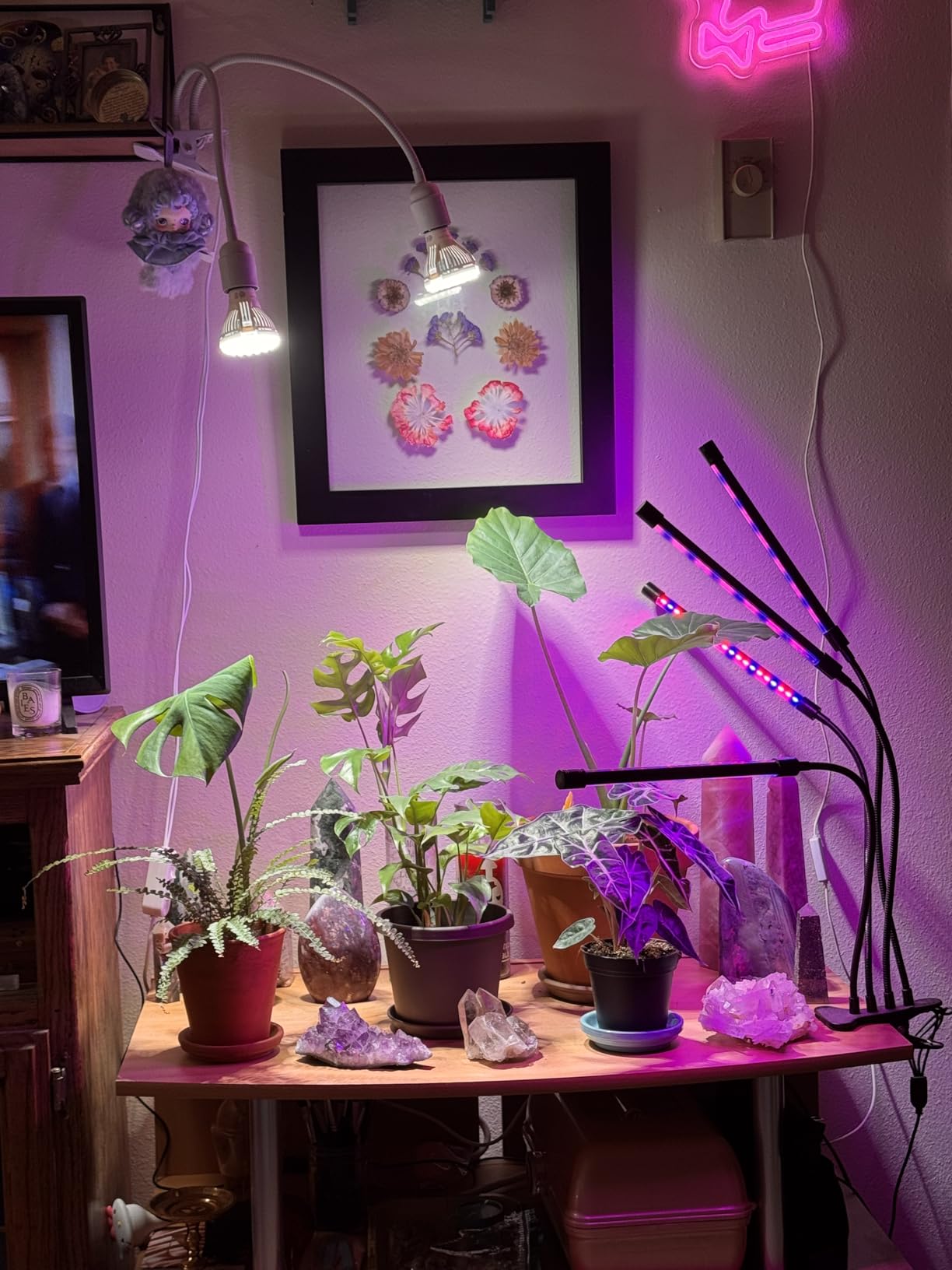
The replaceable bulbs with a whole-life bulb warranty are a genuinely smart design choice. On a fixture meant to stay clipped up for years, one dead LED should not mean a new light. The patented chip-on-ceramic technology handles heat, and the fixture is ETL listed with a 25,000 hour bulb lifespan.
There is one significant trade-off to understand: there is no built-in timer. If you want a schedule, you need a timed plug or a smart plug, and that is an extra step most people forget until the light is already up.
Best used for
A dedicated herb shelf, a propagation station, or a statement plant that has stopped pushing growth in a dim corner. Keep it 12 to 18 inches from foliage, which is the distance several reviewers settle on after a scorch.
The weighted build and the neutral tone mean it also looks at home in a living room, unlike a purple panel.
Where it falls short
Heat is the recurring complaint. The bulbs and metal get hot enough to scorch a plant if the gooseneck dips too close after a repositioning.
The clamp is only reliable on a horizontal surface, the heavy bulbs can slip the grip, and the goosenecks sag slightly under their own weight. Cord length is on the short side too, and the listed voltage means you need a converter on 220V mains.
12. RWNTAO Two-Head 84 LED Clip Lamp: Best for a Secure Clamp Grip
Grow Lights for Indoor Plants, Upgrade 84 LEDs Clip Plant Lights, Full Spectrum LED Plant Growing Lamps with Flexible Gooseneck, 3/9/12H Timer, 3 Spectral Modes, 10 Dimmable Levels (2 Head 1 Pack)
Two heads, 84 LEDs
6000K full spectrum
3/9/12 hour timer
3 modes and 10 dimming levels
26.77 inch tall
Pros
- Very strong clip that holds on most surfaces
- Two arms bend and stay where positioned
- Timer repeats daily without intervention
- Bright output that revived a struggling plant
- Ten brightness levels cover most needs
Cons
- Functional appearance is an eyesore in a living room
- 26.77 inch height is bulky for a small shelf
- Timer supports a single run per 24 hour cycle
If clamp grip is your number one concern, this is the light I would trust. Reviewers call the clip very strong and note it will hold on most surfaces, which is the single most common mechanical failure people report with shelf clip lights over a season of watering and bumping the shelf.
Two arms with 84 LEDs between them, five red and 37 sunlight white per bar, on 6000K full spectrum. Owners report rapid visible recovery in struggling plants, and several describe reliable results through long dark winters, which is exactly the shelf scenario most people buy into.
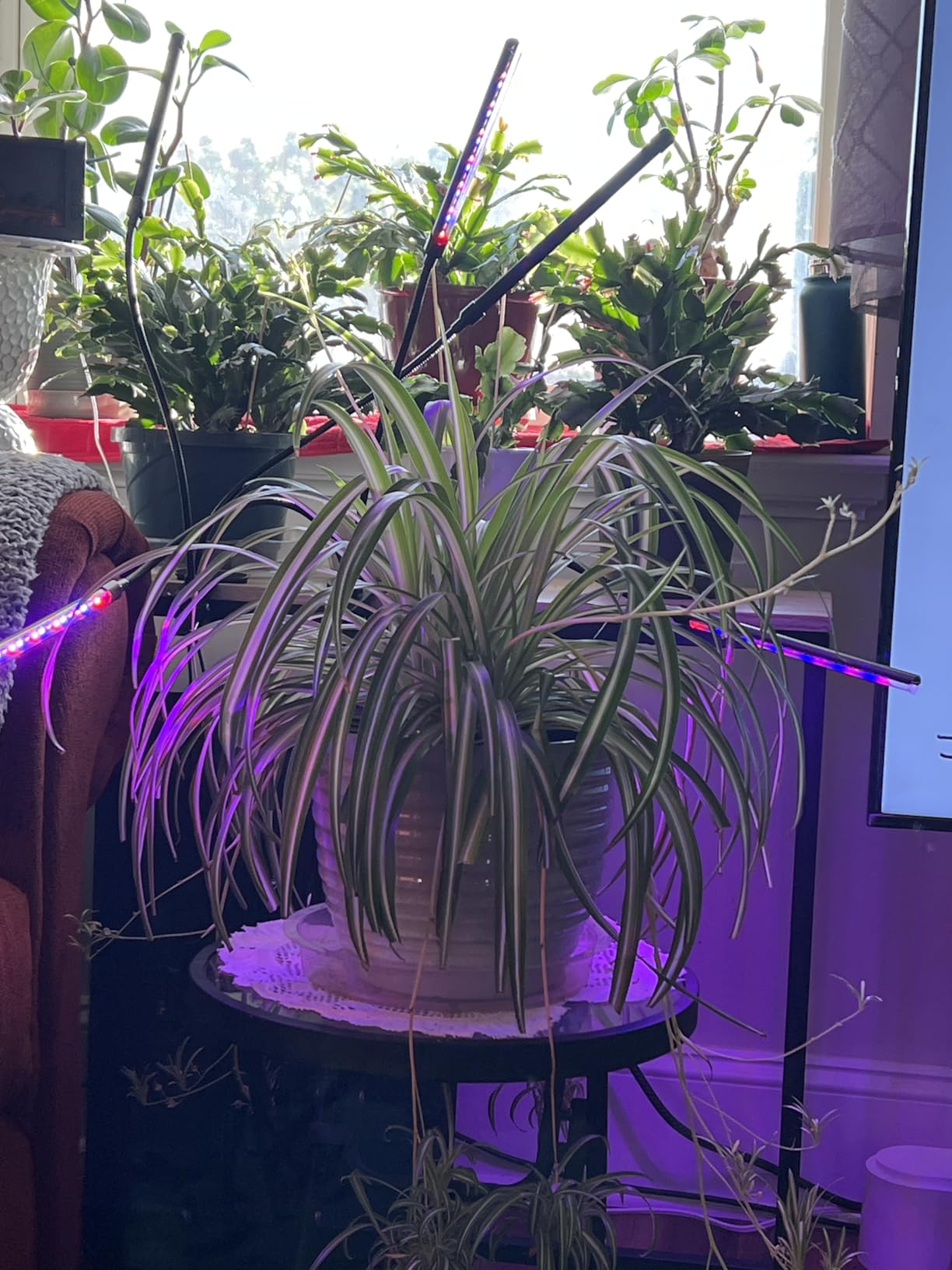
The timer repeats daily without manual intervention and is easy to set, with 3, 9 and 12 hour options. Three switch modes and ten dimming levels give you fine control, which is enough range to run a seedling tray at one level and an herb pot at another.
Height is the thing to check before you order. At 26.77 inches this is a tall fixture, and on a small shelf with low clearance above the plants it can take up more vertical space than you want. Measure the gap between the shelf and whatever is above it.
Best used for
Shelves that get knocked, busy kitchens, or any setup where you want the light to stay exactly where you put it. A 4.6 average with 79% five-star reviews is a strong satisfaction profile.
It is also a good fit for a two-pot shelf where you want one clamp rather than two.
Where it falls short
Appearance is functional rather than decorative. If the shelf is in a living room you sit in, something with a neutral white finish will look better.
The tall format eats vertical shelf space, and the timer only supports a single run per 24-hour cycle.
How to Choose a Clip-On Grow Light for Shelves
Measure your shelf edge before you buy
This is the check most people skip and it is the one that decides whether a light works at all. Measure the thickness of your shelf board at the front edge, then check the clamp jaw against it. A jaw that closes to a narrower gap than your board will not seat properly and will creep down over weeks.
Also measure the vertical clearance above your plants. A tall fixture like the RWNTAO at 26.77 inches needs room to stand, and a light with four heads needs room to spread. If your shelf sits under a cabinet, that cabinet may be your real mounting constraint, not your outlet.
Pick the mount type for the shelf you actually have
Clip-on grow lights fall into a few mount types, and they suit very different shelves:
Shelf-edge clip. Grips the front board and reaches back over the plants with one or more goosenecks. Best for a standard bookcase or kitchen shelf where the plants sit near the front. This is the category most of this roundup covers.
Pot clip. Grips the rim of a single pot. Best when plants are set back behind boxes, when a shelf has no edge, or when you want to light one plant rather than a row.
Soil spike. Pushes into the substrate for a very low profile. Best for wide planters and cuttings where a rim clip cannot close.
Under-shelf bar. Mounts beneath the board and points up or down. Best for a shelf with a deep lip and no usable front edge.
Multi-head gooseneck. One clamp, several independently aimed heads. Best for wide shelf runs and seed trays where even coverage matters more than raw intensity.
The structural decision underneath this is light from above versus light from behind. A shelf-edge clip puts light above and slightly behind the plant canopy, which is what most plants want. An under-shelf bar mounted on the front lip can throw light from the side, which risks stretching stems toward it.
Do the coverage math before buying
One clip rarely lights a long shelf evenly. As a working rule, treat roughly 18 to 24 inches of shelf as the practical coverage of a single two-head clip, and 30 inches for a four-head unit. Past that, add a light.
Light intensity also falls off quickly with distance, so raising a light to cover more shelf makes every pot dimmer. Two lights covering 12 inches each beats one light covering 24 inches, and it is the reason a multi-pack like the FECiDA three-pack exists.
Read PPFD, not lumens or wattage
Lumens measure light as the human eye sees it, and plants use a different part of the spectrum, so lumens tell you very little about plant-usable output. Wattage tells you how much electricity the fixture draws, which is a running cost figure, not a brightness figure.
PPFD, measured in micromoles per square meter per second, is the number that matters. Most cheap clip lights never publish it, which is a clue in itself. Where a manufacturer does publish it, like the SANSI 20W at 402 μmol/s/㎡ at one foot or the SANSI 5W at 35.78 μmol/s/㎡ at six inches, you can actually plan distance. The general grow light guide goes deeper on why wattage claims mislead.
Multiply intensity by hours to get the daily light integral, which is the total light a plant receives in a day. That is why the 16 and 20 hour timer options on a few lights here are not a gimmick: for many edible crops, more hours at lower intensity is better than a short blast at high intensity.
Full spectrum versus blurple
Blurple is the red and blue diode mix that looks purple to the human eye. It is efficient for photosynthesis but unpleasant to sit near, and reviewers consistently say so. If your shelf is in a room people use, a white full spectrum light at 4000K to 6500K is the better buy even at slightly lower efficiency.
Several lights here offer a red plus blue mode for a closed cabinet or basement, and a white mode for a visible room. That flexibility is worth paying for if you have both situations.
Timer versus smart plug
A built-in timer means the light runs on its own once you set it, which is what you want if you are not at home during the day. A smart plug adds scheduling and remote control, and it is the answer for the SANSI 20W, which has no built-in timer.
Two things to check. Most built-in timers run on a 24-hour memory cycle rather than alternating on and off, and most reset if the plug is disconnected or if there is a power cut. If your schedule matters, confirm the behaviour before you set it and leave it.
Heat and distance
Distance is the free adjustment. Moving a light from four inches above a leaf to 12 inches above it reduces the intensity substantially and removes most bleaching risk. Fixtures that run hot, including the SANSI 20W and the FECiDA tubes, need deliberate spacing.
Watch for leaves resting against a bar. Pale, crispy or bleached patches on the top leaves are almost always contact or distance, not a bad bulb.
What a clip-on grow light costs to run
Grow lights are cheap to run. Most of the lights in this roundup draw between 5W and 20W, and the highest-output option draws 9W per tube. Run one 10W light for 14 hours a day and it uses about 0.14 kWh a day, which works out to a few cents a day at typical residential rates. Three lights on a 16-hour schedule is still a rounding error on a monthly electricity bill.
This is why the timer setting matters less for cost than for plant health. Turning a light off when nobody is looking at it is a habit, not a saving.
Clamp slip and shelf safety
Clamps that walk down a shelf are the most reported mechanical problem with these lights, and they matter more than they sound. A light sliding onto a shelf can take a ceramic pot with it, and a cable draped over a watering area is a habit worth avoiding.
Check the grip after the first week and again after a month. Route cords along the back of the shelf rather than across the front edge, keep plugs and adapters away from where water lands, and never clamp a fixture to anything that is not a solid board. If you are choosing purely on grip strength, the EWPJDK and RWNTAO clamps are the ones to look at first.
Matching the light to the crop
For herbs such as basil, parsley, mint and cilantro, aim for a light with a longer timer option and a head count that lets you cover the row evenly. For seedlings and microgreens, wide even coverage at a lower height beats raw intensity, which is what a tri-head or four-head design gives you.
For succulents and cacti overwintering indoors, output matters less than duration and heat management, and a pot clip with a neutral 4000K tone is usually the right size. For leafy greens and lettuce, a light with a stated PPFD figure and a 16-hour setting is the sensible combination, and the wall shelf picks and floating shelf guides are worth a look if your current shelving is the limiting factor rather than the light.
How to Set the Height and Schedule on a Shelf
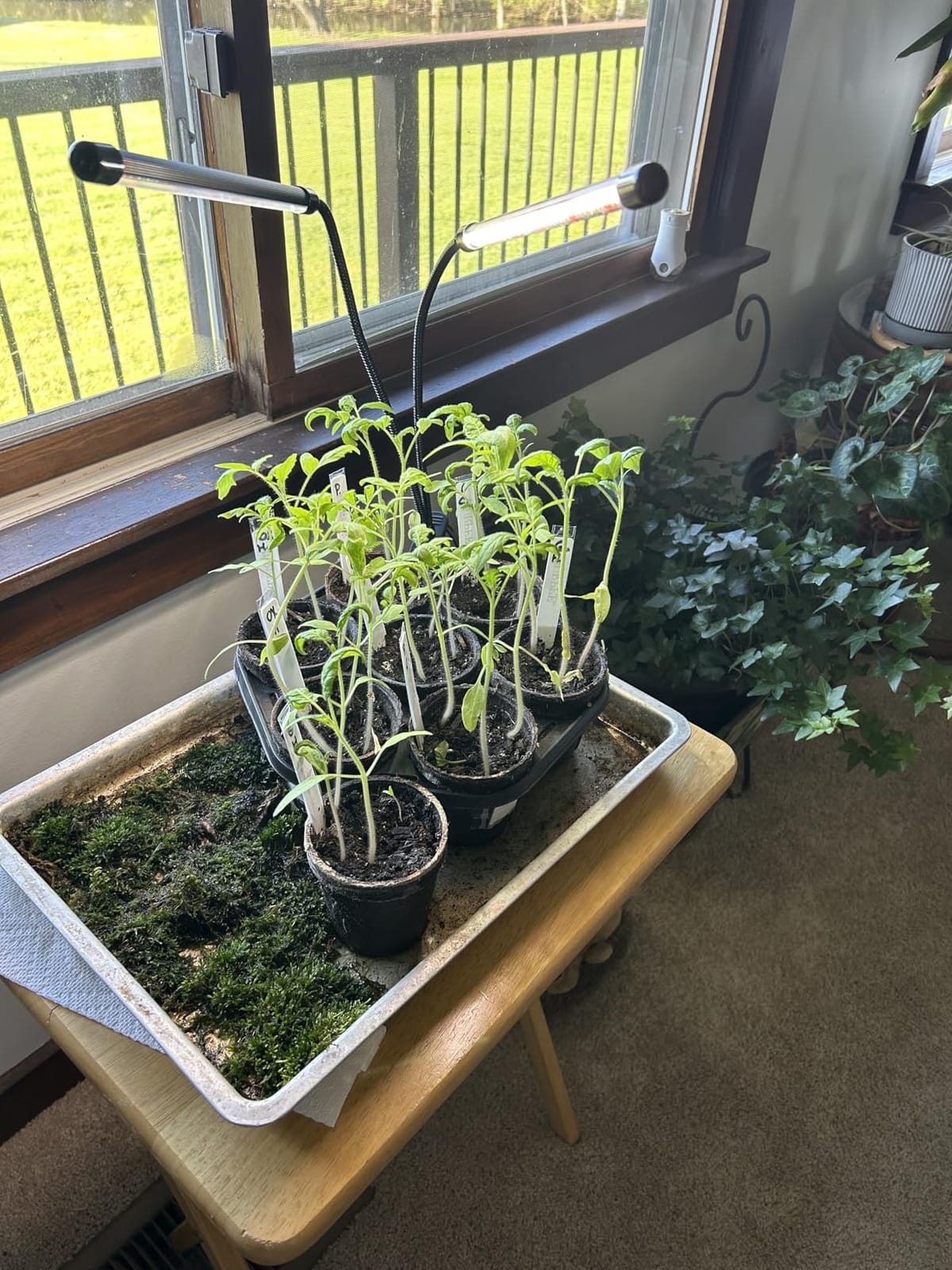
Clamp the light to the shelf edge, aim the heads down at the canopy rather than out into the room, and set the distance before you turn it up. For leafy herbs and greens, start around 12 inches above the tallest leaves and adjust from there. For a seedling tray, 6 to 10 inches is the working range.
Set the timer before you leave the house, and pick one number you can live with. 12 to 16 hours a day covers most edible shelf crops, and a shorter 8 to 10 hour window is enough to maintain houseplants through winter without pushing them hard.
Check the plants again after one week, and use what you see as the diagnosis:
Leggy, stretched stems mean the light is too far away, too weak, or on for too few hours. Bring it closer, add a second light, or extend the schedule rather than raising the brightness.
Pale, bleached or crispy patches on top leaves mean the light is too close or too hot. Raise it and drop a dimming level.
Growth that stalled after a strong start usually means a timer that reset, a power cut, or a timer that only runs once per 24-hour cycle instead of repeating.
Plants leaning hard toward one side mean uneven coverage across the shelf. Reposition the heads, rotate the plant, or add a second clamp.
Raise the light as plants grow. A fixture set once at installation height is too close within a month, and that is what causes the leaf damage people blame on the bulb.
Frequently Asked Questions
What is the best grow light for growing plants on shelves?
The best grow light for growing plants on shelves is a multi-head clip-on fixture that spreads light evenly across the run rather than one bright head over the middle. A two-head clip covers roughly 18 to 24 inches of shelf, and a four-head unit covers about 30 inches. Aim for a white full spectrum output between 4000K and 6500K, a built-in 12 to 16 hour timer, and enough dimming levels to tune seedlings separately from mature plants.
What is the best clip-on grow light?
The GooingTop 84 LED clip lamp is the best all-round clip-on grow light for shelves, with 6000K full spectrum output from 84 LEDs, a 4H/8H/12H timer and a clamp that grips a shelf edge securely. It also has the deepest owner history of any light we tested, which matters when you are buying a fixture you will leave clipped up for months.
What are the best grow lights for shelf use?
The best grow lights for shelf use depend on the mount. Shelf-edge clips suit standard bookcases, pot clips suit single plants on a shelf with no usable edge, soil spikes suit wide planters, under-shelf bars suit shelves with a deep front lip, and multi-head goosenecks suit long runs and seed trays. A 36-inch shelf generally needs two lights spaced apart rather than one light stretched across it.
Do grow lights run up your electric bill?
Barely. Clip-on grow lights typically draw 5W to 20W, and a 10W light run for 14 hours a day uses roughly 0.14 kWh daily, which is a few cents. Even three lights on a 16-hour schedule is a small fraction of a monthly bill. The timer setting affects plant health far more than electricity cost, so choose the hours your plants need rather than trimming them to save money.
Do cheap grow lights actually work?
Yes, as supplemental light. Lights in the lower price bracket handle seedlings, cuttings, succulents and houseplants well, and reviewers report visible improvement within a few weeks. What they lack is intensity and wide coverage, so they are not a primary light source for a dense row of herbs or fruiting plants. For a food crop, look for a stated PPFD figure rather than a wattage claim.
Is 10,000 lumens too bright for seedlings?
Distance matters more than the number, and lumens are not plant-usable output anyway. A light that looks dazzling at six inches can be far too close for a tender seedling. Keep the light 6 to 10 inches above a tray of seedlings, raise it to 12 to 18 inches above mature herbs, and use the dimming levels to fine-tune rather than judging brightness from a lumen figure on the box.
What is the best clip-on aquarium light for plants?
Clip-on aquarium lights are a different category. They are waterproof, sealed for humidity, and designed to sit above or inside a tank, so their spectrum and output are tuned for submerged aquatic plants rather than potted plants on a shelf. If you are growing plants in a pot on a shelf, you want a plant grow light with a vented housing and a clamp, not an aquarium fixture.
The Bottom Line for Shelf Growers
The best clip on grow lights for shelves break down by shelf, not by price. A standard bookcase run takes a two-head or four-head clip, with the GooingTop 84 LED lamp as the most dependable all-rounder and the Garpsen two-head unit as the strongest value when a 16-hour timer matters. A wide 36-inch shelf should get two lights spaced apart, which is where the FECiDA three-pack earns its keep. A single pot or a shelf with no usable edge calls for the SANSI 5W pot clip or the wolezek two-in-one spike.
For food crops indoors, buy on the PPFD figure rather than the wattage claim, keep the light 12 to 18 inches above mature foliage, and pick a timer setting between 12 and 16 hours. For houseplants in a room you sit in, choose a white full spectrum light so the shelf still looks like part of your home. Then check the grip after the first week, because that is the detail that decides whether the light is still in the same place in March.