
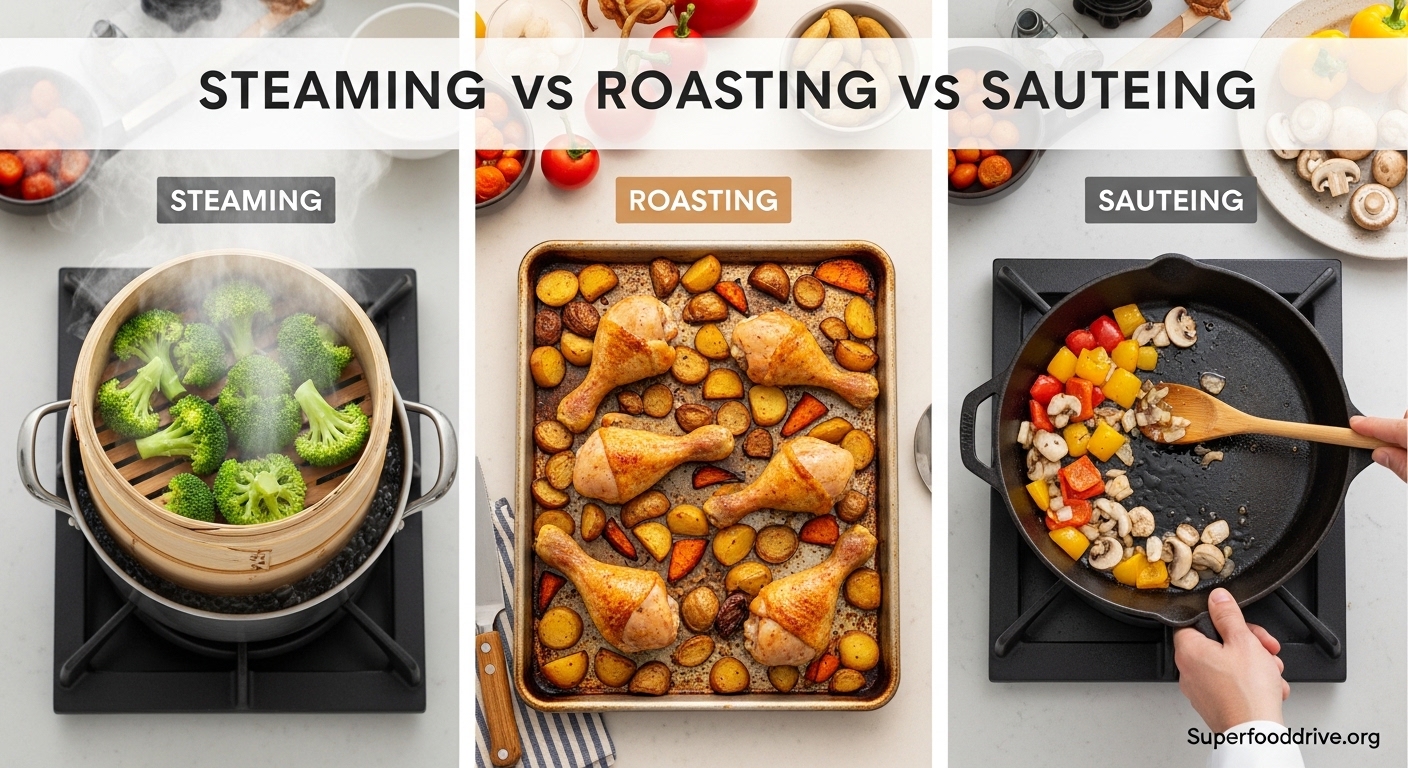
Choosing the right cooking method can make the difference between a nutrient-dense meal and one that has lost most of its vitamins. When comparing steaming vs roasting vs sauteing which preserves most nutrients, the answer depends on which specific nutrients you want to maximize. Some methods excel at preserving water-soluble vitamins, while others enhance the absorption of fat-soluble compounds.
Our team spent weeks analyzing scientific studies and nutrition data to give you clear answers. We looked at vitamin retention percentages, how heat affects different nutrients, and what actually happens to your vegetables during each cooking method. This guide will show you exactly which technique wins for overall nutrient preservation and when you might want to choose a different method for specific health goals.
By the end of this article, you will know the nutrient retention rates for each method, which vegetables work best with each technique, and practical tips to keep more vitamins in your food.
Table of Contents
How Cooking Affects Nutrients in Your Food
Cooking changes food at the molecular level. Heat breaks down cell walls, releases compounds, and can either preserve or destroy vitamins depending on the method used. Understanding these effects helps you make informed choices about how to prepare your vegetables.
Water-Soluble vs Fat-Soluble Vitamins
Vitamins fall into two main categories based on how they interact with water and fat. Water-soluble vitamins include vitamin C and the B-complex vitamins (B1, B2, B3, B6, B9, B12). These dissolve in water and are sensitive to heat and water exposure. Fat-soluble vitamins include A, D, E, and K, which require dietary fat for proper absorption.
Water-soluble vitamins are the most vulnerable during cooking. They can leach into cooking water and degrade at high temperatures. Fat-soluble vitamins are more heat-stable but need fat present to be absorbed by your body effectively.
The Three Factors That Destroy Nutrients
Three main factors determine how many nutrients survive the cooking process: heat, water contact, and time. Higher temperatures generally cause more nutrient degradation. Contact with water allows water-soluble vitamins to escape into the liquid. Longer cooking times give heat and water more opportunity to break down sensitive compounds.
Minerals like potassium, magnesium, and calcium are generally stable during cooking, though they can leach into cooking water. Antioxidants and phytochemicals show variable responses, with some becoming more available while others degrade.
Steaming: The Nutrient Preservation Champion
Steaming is widely recognized as the cooking method that preserves the most nutrients, particularly water-soluble vitamins. When you steam vegetables, the food never touches the boiling water below. This minimal water contact prevents the leaching that occurs with boiling.
How Steaming Preserves Nutrients
The gentle heat of steaming, typically between 212°F (100°C) at sea level, is hot enough to soften vegetables and break down tough fibers without destroying sensitive vitamins. The steam surrounds the food, cooking it evenly while keeping water-soluble nutrients locked inside the vegetable cells.
Research shows that steaming broccoli, spinach, and lettuce results in only 9-15% loss of vitamin C content. This is dramatically better than boiling, which can destroy up to 50-70% of vitamin C in the same vegetables. B vitamins like thiamine, riboflavin, and folate also fare well under steaming, with retention rates typically above 80%.
Best Vegetables for Steaming
Cruciferous vegetables like broccoli, cauliflower, and Brussels sprouts are ideal for steaming. These vegetables contain glucosinolates, sulfur-containing compounds linked to cancer prevention. Studies show that steaming preserves these beneficial compounds better than other cooking methods.
Leafy greens including spinach, kale, and Swiss chard also steam beautifully. The quick cooking time helps maintain their vibrant color and tender texture while preserving folate and vitamin K. Root vegetables like carrots and beets steam well too, though they may take longer to become tender.
The Trade-Off: Taste and Texture
While steaming wins for nutrient preservation, some people find steamed vegetables bland compared to roasted alternatives. The Maillard reaction, which creates those delicious roasted flavors, does not occur during steaming. However, you can add flavor after steaming with herbs, lemon juice, or a small amount of olive oil without significantly affecting nutrient content.
Roasting: Flavor with Selective Nutrient Benefits
Roasting uses dry heat at higher temperatures, typically between 375°F and 425°F (190°C to 220°C). This method creates complex flavors through caramelization and the Maillard reaction, but the higher heat and longer cooking times can affect nutrient retention differently than steaming.
How Roasting Affects Different Nutrients
Roasting tends to preserve B vitamins well because there is no water contact to cause leaching. The dry heat environment keeps water-soluble nutrients inside the vegetables. However, vitamin C is more vulnerable during roasting due to the higher temperatures and extended cooking times. Vitamin C losses during roasting can range from 20-40% depending on the vegetable and cooking duration.
Where roasting truly shines is with fat-soluble nutrients. The dry heat and often-added oil enhance the bioavailability of compounds like lycopene in tomatoes and beta carotene in carrots and sweet potatoes. Studies show that cooked tomatoes can have up to 35% more available lycopene than raw tomatoes.
Best Vegetables for Roasting
Root vegetables are roasting superstars. Carrots, parsnips, beets, and sweet potatoes develop caramelized sweetness and tender interiors. Their natural sugars concentrate and brown, creating depth of flavor. Nightshades like tomatoes, bell peppers, and eggplant also benefit from roasting, with their flavors intensifying and textures becoming silky.
Cruciferous vegetables like broccoli and cauliflower can be roasted, though they may lose some glucosinolates compared to steaming. The trade-off is a nutty, caramelized flavor that many find worth the modest nutrient cost. Brussels sprouts in particular transform when roasted, developing crispy edges and sweet interiors.
The Oil Factor
Most roasting recipes call for tossing vegetables in oil before cooking. This oil serves multiple purposes. It prevents sticking, promotes even browning, and crucially, helps your body absorb fat-soluble vitamins and carotenoids. Using olive oil, avocado oil, or other healthy fats during roasting actually increases the nutritional value of fat-soluble compounds compared to eating those same vegetables raw.
Sautéing: Quick Cooking with Oil Benefits
Sautéing involves cooking food quickly in a small amount of oil over relatively high heat. This method combines aspects of both steaming and roasting, using oil for flavor and nutrient absorption while keeping cooking times short to minimize vitamin loss.
Nutrient Retention in Sautéing
The short cooking time of sautéing, typically 3-7 minutes, helps preserve heat-sensitive vitamins. Because vegetables are cut into small pieces and cooked quickly, they spend less time exposed to degrading heat. Vitamin C retention in sautéed vegetables generally falls between steaming and roasting, typically preserving 70-80% of the original content.
The presence of oil during sautéing enhances absorption of fat-soluble vitamins and carotenoids. Similar to roasting, adding healthy oils helps your body access nutrients that would otherwise pass through unabsorbed. This makes sautéing particularly effective for vegetables rich in vitamins A, E, and K.
Oil Selection Matters
Not all oils are equal for sautéing. Olive oil, particularly extra virgin, offers excellent heat stability up to around 375°F (190°C) and provides polyphenols and monounsaturated fats. Avocado oil has an even higher smoke point at 520°F (271°C), making it ideal for higher-heat sautéing.
Avoid oils with low smoke points like flaxseed oil or unrefined walnut oil for sautéing. When oils smoke, they break down and can create harmful compounds. Coconut oil works well for medium-heat sautéing and adds a subtle sweetness that complements many vegetables.
Best Vegetables for Sautéing
Vegetables that cook quickly work best for sautéing. Leafy greens like spinach and kale wilt beautifully in just minutes. Thinly sliced onions, peppers, and zucchini develop sweet, caramelized edges while maintaining some crispness. Asparagus and green beans sauté well, developing blistered spots while staying tender-crisp.
Dense vegetables like potatoes and carrots can be sautéed but typically need par-cooking first or very thin slicing to ensure they cook through before burning. Many cooks combine sautéing with a splash of water or broth and a lid to create a hybrid steam-sauté method that speeds cooking while preserving nutrients.
Steaming vs Roasting vs Sauteing: The Comparison
Now for the direct comparison you came here for. The table below shows how each method performs across different nutrient categories based on scientific research.
| Nutrient Category | Steaming | Roasting | Sautéing |
|---|---|---|---|
| Vitamin C Retention | 85-91% | 60-80% | 70-80% |
| B Vitamin Retention | 80-90% | 75-85% | 70-85% |
| Fat-Soluble Vitamins | Good (add oil after) | Excellent (oil present) | Excellent (oil present) |
| Glucosinolates | 90-95% retained | 70-80% retained | 75-85% retained |
| Antioxidants | 85-95% retained | Variable* | 80-90% retained |
| Cooking Time | 5-10 minutes | 25-45 minutes | 3-7 minutes |
*Roasting can increase availability of certain antioxidants like lycopene and beta carotene while degrading others like vitamin C.
The Verdict: Which Method Preserves Most Nutrients?
Steaming wins for overall nutrient preservation, particularly for water-soluble vitamins. When comparing steaming vs roasting vs sauteing which preserves most nutrients, steaming consistently shows the highest retention rates across multiple vitamin categories.
However, the full answer is more nuanced. Steaming is best for vitamin C, B vitamins, and glucosinolates. Roasting excels at making fat-soluble nutrients more bioavailable. Sautéing offers a middle ground with good retention across categories plus the benefits of oil for fat-soluble vitamins.
If your goal is maximizing total nutrient intake, especially water-soluble vitamins, choose steaming. If you want to maximize absorption of carotenoids and fat-soluble vitamins, roasting with healthy oil is your best bet. For a balanced approach that preserves most nutrients while enhancing fat-soluble vitamin absorption, sautéing in healthy oil for a short time offers an excellent compromise.
Best Cooking Method by Vegetable Type
Different vegetables respond differently to cooking methods based on their cellular structure and nutrient composition. Use this guide to match each vegetable with its ideal preparation technique.
Cruciferous Vegetables (Broccoli, Cauliflower, Brussels Sprouts)
Best method: Steaming
These vegetables contain glucosinolates that break down into cancer-fighting compounds. Steaming preserves 90-95% of these valuable compounds while maintaining vitamin C levels. If you prefer roasted cruciferous vegetables for taste, keep roasting times shorter and temperatures moderate to minimize nutrient loss.
Leafy Greens (Spinach, Kale, Swiss Chard)
Best method: Steaming or Sautéing
Leafy greens cook so quickly that both steaming and sautéing work well. Steaming preserves slightly more folate and vitamin C. Sautéing with olive oil enhances absorption of vitamin K and carotenoids. Both methods are excellent choices depending on whether you prioritize water-soluble or fat-soluble nutrients.
Root Vegetables (Carrots, Sweet Potatoes, Beets)
Best method: Roasting
Root vegetables contain abundant beta carotene and other carotenoids that become more bioavailable when cooked with fat. Roasting concentrates their natural sugars and develops complex flavors. The extended cooking time works well because these vegetables are low in vitamin C and high in heat-stable nutrients.
Nightshades (Tomatoes, Bell Peppers, Eggplant)
Best method: Roasting or Sautéing
Tomatoes are the standout here. Cooking tomatoes, especially with oil, increases lycopene availability by up to 35%. Bell peppers contain high vitamin C, so shorter cooking methods like sautéing preserve more nutrients. Eggplant benefits from roasting or sautéing to achieve tender texture without waterlogging.
Alliums (Onions, Garlic)
Best method: Sautéing
Quick sautéing brings out the sweetness in onions while preserving sulfur compounds. Garlic should be chopped and allowed to sit for 10 minutes before cooking to allow allicin formation, then sautéed briefly. Long roasting can diminish some of garlic’s beneficial compounds.
Practical Tips for Maximizing Nutrient Retention
Small changes in how you cook can significantly impact the nutritional value of your meals. These evidence-based tips will help you keep more vitamins in your food regardless of which cooking method you choose.
General Rules for All Methods
Cook for the shortest time necessary. Vegetables should be tender but still have some bite. Overcooking destroys more nutrients and creates mushy texture.
Cut vegetables uniformly. Even sizes ensure all pieces cook at the same rate, preventing some from overcooking while others remain underdone.
Keep skins on when possible. Many nutrients concentrate near the surface or in the skin. Potatoes, carrots, and beets retain more nutrients when cooked with their skins on.
Steaming Tips
Use minimal water in the pot below the steamer basket. The less water, the less chance for nutrients to leach if any condensation drips back onto food. Steam vegetables just until tender-crisp, typically 5-8 minutes for most vegetables.
Add a small amount of oil or dressing after steaming if you want to enhance absorption of fat-soluble vitamins. This approach gives you the best of both worlds: maximum water-soluble vitamin retention plus improved fat-soluble nutrient absorption.
Roasting Tips
Roast at moderate temperatures (375-400°F) rather than high heat to minimize vitamin C loss while still achieving browning. Use enough oil to coat vegetables lightly; this prevents sticking and enhances carotenoid absorption.
Cut vegetables into larger pieces for roasting. Smaller pieces have more surface area exposed to heat and air, leading to greater nutrient degradation. Stir vegetables halfway through cooking to promote even browning without burning.
Sautéing Tips
Preheat your pan before adding oil to prevent sticking. Use medium-high heat to cook quickly without burning. Add vegetables in a single layer; overcrowding causes steaming rather than sautéing.
Use healthy oils with appropriate smoke points. Olive oil works for most vegetables at medium-high heat. Add garlic and delicate herbs at the end of cooking to preserve their volatile compounds.
How to Choose Your Cooking Method
Selecting the right cooking method depends on your priorities. Use this decision framework to match your goals with the appropriate technique.
Choose steaming when: You want maximum vitamin retention, particularly vitamin C and B vitamins. You are cooking cruciferous vegetables for their glucosinolates. You prefer lighter, cleaner flavors. You are watching fat intake.
Choose roasting when: You want to maximize absorption of carotenoids and fat-soluble vitamins. You are cooking root vegetables or tomatoes. You enjoy caramelized, sweet flavors. You have time for longer cooking.
Choose sautéing when: You want a balance of nutrient retention and flavor. You need a quick cooking method. You want to add healthy fats to enhance nutrient absorption. You are cooking leafy greens or quick-cooking vegetables.
Frequently Asked Questions
What method of cooking preserves the most nutrients?
Steaming preserves the most nutrients overall, particularly water-soluble vitamins like vitamin C and B vitamins. Studies show steaming retains 85-91% of vitamin C compared to 50-70% loss when boiling. Steaming’s gentle heat and minimal water contact prevent nutrient leaching while maintaining food structure.
Do roasting or steaming vegetables retain more nutrients?
Steaming retains more water-soluble nutrients like vitamin C and B vitamins. However, roasting enhances absorption of fat-soluble nutrients like lycopene and beta carotene. Steaming is better for overall nutrient preservation, while roasting offers specific benefits for certain nutrients.
Does sautéing destroy nutrients?
Sautéing destroys fewer nutrients than many people assume. The quick cooking time preserves 70-80% of vitamin C and similar percentages of B vitamins. The oil used in sautéing actually enhances absorption of fat-soluble vitamins A, D, E, and K, making nutrients more available to your body than eating vegetables raw.
Should I add oil before or after steaming vegetables?
Add oil after steaming if you want to maximize water-soluble vitamin retention while still getting fat-soluble benefits. Steaming without oil preserves the most vitamin C and B vitamins. Drizzling olive oil or another healthy fat over steamed vegetables before eating enhances absorption of fat-soluble nutrients without the losses associated with high-heat oil cooking.
Is it better to eat vegetables raw or cooked?
Cooked vegetables often provide more available nutrients than raw. Cooking breaks down cell walls, making carotenoids and other compounds more absorbable. However, water-soluble vitamins like vitamin C are higher in raw vegetables. The best approach is eating a mix of both raw and cooked vegetables, choosing cooking methods that preserve nutrients based on the specific vegetable.
Which cooking method is best for weight loss?
Steaming is the best cooking method for weight loss because it requires no added fat. Steamed vegetables are low in calories while retaining maximum nutrients. However, roasted and sautéed vegetables can still support weight loss when prepared with minimal healthy oils. The most important factor for weight loss is eating plenty of vegetables regardless of cooking method.
Final Thoughts: Steaming vs Roasting vs Sauteing Which Preserves Most Nutrients
After analyzing the science behind each cooking method, the answer is clear: steaming preserves the most nutrients overall. With 85-91% vitamin C retention and excellent preservation of B vitamins and glucosinolates, steaming stands out as the nutritional champion when comparing steaming vs roasting vs sauteing which preserves most nutrients.
That said, the best cooking method depends on your specific goals. Roasting enhances fat-soluble nutrient absorption and creates flavors that make vegetables more enjoyable to eat. Sautéing offers a practical middle ground with good retention across all nutrient categories.
Our recommendation: use steaming for cruciferous vegetables and leafy greens where water-soluble vitamins matter most. Choose roasting for root vegetables and tomatoes to maximize carotenoid absorption. Keep sautéing in your rotation for quick weeknight meals where speed matters.
The most important thing is eating plenty of vegetables, regardless of how you cook them. A vegetable you enjoy eating, even if roasted rather than steamed, provides far more nutrition than a vegetable that sits uneaten on your plate.