
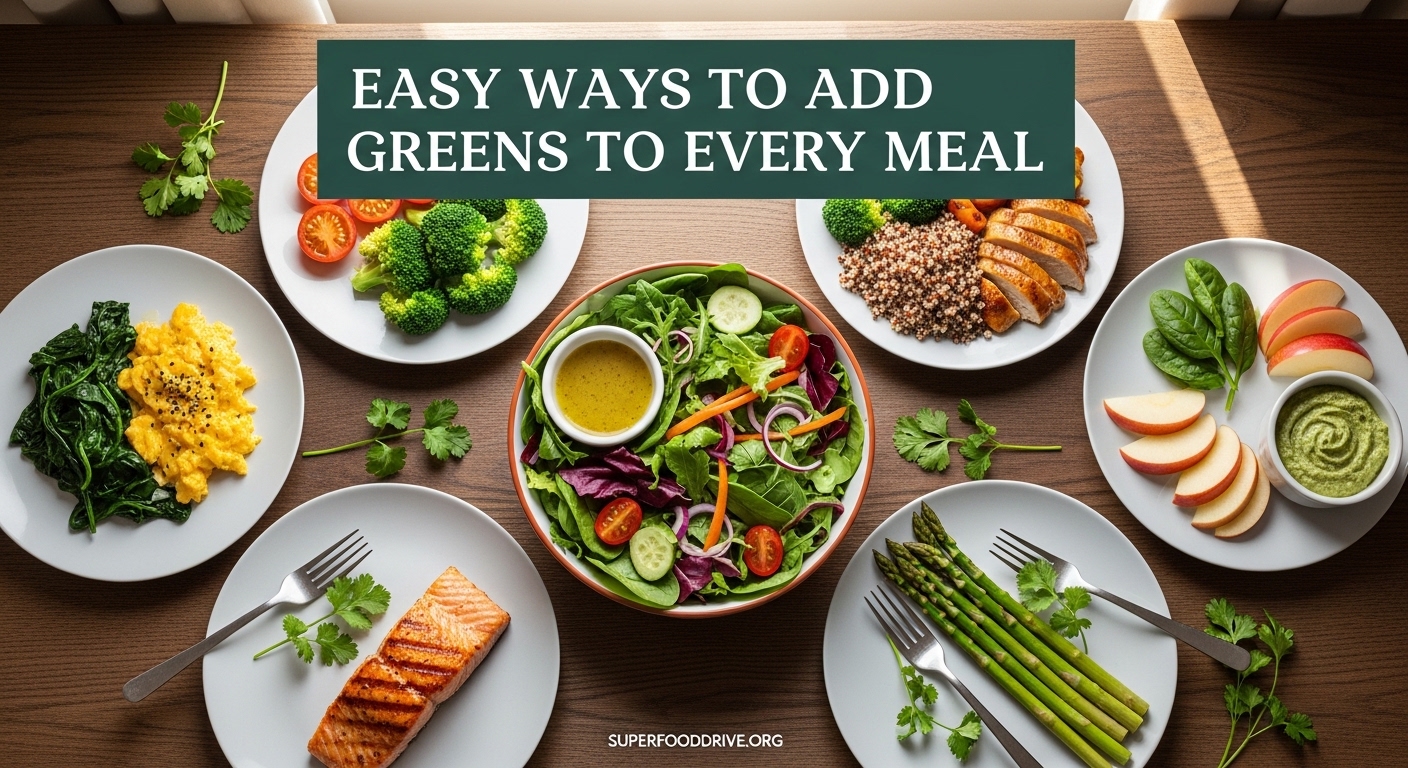
I used to struggle with eating enough vegetables. Like many people, I knew leafy greens were good for me, but I could not figure out how to make them a regular part of every meal without getting bored. After experimenting in my own kitchen for months, I discovered simple tricks that transformed how I eat.
Learning Easy Ways to Add Greens to Every Meal does not require becoming a chef or spending hours in the kitchen. You just need practical strategies that fit your routine. This guide shares the methods that worked for me and thousands of others who wanted to eat healthier without the hassle.
By the end of this article, you will have specific ideas for breakfast, lunch, dinner, and snacks. You will also learn meal prep techniques that make eating greens automatic rather than a daily decision.
Table of Contents
Why Eating Greens Matters for Your Health
Dark leafy greens pack more nutrients per calorie than almost any other food group. A single cup of raw spinach contains vitamin K, vitamin A, folate, and iron while adding fewer than 10 calories to your meal.
These vegetables support immune function, bone health, heart health, and digestion. The fiber in greens feeds beneficial gut bacteria. The antioxidants help protect cells from damage. Most adults should aim for 2 to 3 cups of leafy greens daily according to dietary guidelines.
Many people worry that frozen greens lack nutrition compared to fresh. The truth is that frozen greens are often picked at peak ripeness and flash-frozen immediately, locking in nutrients. Fresh greens that sit in your refrigerator for a week may actually lose more vitamins than their frozen counterparts. Both options work perfectly for the strategies in this guide.
Best Greens for Beginners: Start Mild
If you are new to eating greens, start with milder varieties and gradually work up to stronger flavors. Here is how I rank them from gentlest to most intense:
Spinach tastes almost neutral when cooked and blends seamlessly into smoothies. It wilts in seconds, making it the easiest green to add to hot dishes.
Romaine lettuce offers crunch with very little bitterness. It works great in wraps and sandwiches where you want texture without overwhelming flavor.
Swiss chard has a slightly earthy taste but becomes mild and silky when sauteed. The stems add nice color and crunch if you chop them finely.
Kale delivers the strongest flavor and chewy texture. Massaging raw kale with olive oil softens it and reduces bitterness significantly.
Easy Ways to Add Greens to Breakfast
Morning meals offer surprising opportunities for vegetables. After trying dozens of approaches, these four methods became my breakfast staples.
Green Smoothies
Blend a handful of spinach with frozen banana, almond milk, and a scoop of protein powder. You will not taste the spinach, but you will get a full serving of greens before leaving the house. Frozen mango or pineapple masks any green flavor completely.
My favorite combination is 2 cups spinach, 1 frozen banana, 1 cup frozen mango, and 1 cup oat milk. It takes under 2 minutes to make and keeps me full until lunch.
Egg Dishes
Add chopped spinach or kale to scrambled eggs, omelets, or frittatas. The eggs cook so quickly that the greens retain their color and nutrients. Try wilting spinach in the pan first, then pouring beaten eggs over top.
For a make-ahead option, bake egg muffins in a muffin tin with chopped greens mixed into the batter. These keep well in the refrigerator for 5 days.
Breakfast Tacos
Warm corn tortillas and fill them with scrambled eggs, black beans, salsa, and a big handful of shredded lettuce or spinach. The contrast between warm eggs and crisp greens creates great texture.
Toast Toppings
Top whole grain toast with smashed avocado and arugula or microgreens. The peppery bite of arugula pairs perfectly with creamy avocado. A squeeze of lemon juice brings everything together.
Simple Lunch Ideas with Greens
Midday meals often happen at work or on the go. These strategies work for packed lunches and quick restaurant options.
Sandwich Upgrades
Add spinach, arugula, or romaine to any sandwich or wrap. Even a basic turkey sandwich becomes more nutritious with a layer of greens. For hot sandwiches, add the greens after heating so they stay fresh and crisp.
Replace bread entirely with large collard green leaves for a low-carb wrap option. Blanch the collards briefly to make them pliable, then fill with your favorite sandwich ingredients.
Soups and Stews
Stir chopped kale or spinach into any hot soup during the last 2 minutes of cooking. The residual heat wilts the greens perfectly without overcooking. This works with canned soup, homemade stew, or even ramen.
I keep a bag of frozen chopped spinach in my freezer specifically for adding to soup. It breaks apart easily and melts into broth instantly.
Grain Bowls
Build lunch bowls with a base of quinoa or brown rice, then pile on roasted vegetables, protein, and a big handful of raw greens on top. The warmth from the other ingredients slightly wilts the greens, creating a perfect texture.
How to Make Dinners More Green
Evening meals usually allow more cooking time, making it easier to incorporate substantial amounts of vegetables.
Pasta Dishes
Stir fresh spinach into hot pasta right after draining. The residual heat wilts it perfectly. Alternatively, blend steamed kale or spinach into pesto sauce for a nutrient boost that changes the color but not the familiar flavor.
For a complete meal, saute chopped Swiss chard with garlic and olive oil, then toss with whole wheat pasta and white beans.
Stir-Fry Methods
Quick cooking over high heat preserves the color and crunch of greens. Add chopped bok choy, kale, or spinach during the final 2 minutes of any stir-fry. The leaves wilt slightly while maintaining texture.
Start with harder vegetables like carrots and broccoli, then add greens at the end. This prevents overcooking and nutrient loss.
Sheet Pan Meals
Roast vegetables and protein on a sheet pan, then toss with fresh arugula or baby spinach right before serving. The heat from the roasted ingredients wilts the greens just enough.
Pizza Night
Top homemade or frozen pizza with fresh arugula or spinach after baking. The contrast between hot crust and cool greens feels restaurant-quality. You can also blend spinach into pizza sauce for a hidden vegetable boost.
Green Snacks and Treats
Snacks offer sneaky ways to increase your daily vegetable intake without feeling like you are eating salad.
Kale chips satisfy crunchy cravings. Remove kale leaves from stems, toss with olive oil and salt, then bake at 300 degrees for 15 minutes until crisp. These keep for 3 days in an airtight container.
Green muffins hide spinach in banana bread or zucchini muffins. Blend fresh spinach with wet ingredients before mixing into batter. The color turns slightly green but the taste stays sweet and familiar.
Dip containers make raw vegetables appealing. Pack small containers with hummus or Greek yogurt dip alongside baby spinach leaves or lettuce strips. The individual portions feel like a treat rather than obligation.
Meal Prep Tips for Daily Greens
Preparation determines whether eating greens becomes a habit or a struggle. These techniques save time and reduce waste.
Wash and Store Properly
Wash greens as soon as you bring them home. Dry thoroughly in a salad spinner, then store in a container lined with paper towels. This keeps lettuce crisp for up to 10 days.
Do not wash delicate herbs or spinach until you are ready to use them. Excess moisture causes faster spoilage.
Blanching Technique
Blanching removes bitterness from stronger greens like kale and collards. Boil water, submerge greens for 30 seconds, then transfer to ice water. Squeeze out excess moisture and store in the refrigerator for up to 5 days.
Pre-blanched greens work perfectly for quick stir-fries, soups, or side dishes throughout the week.
Freezing Methods
Freeze excess greens before they spoil. Blanch first for best texture, or simply wash, chop, and freeze raw for smoothies. Frozen greens break apart easily and blend seamlessly.
I freeze spinach in portions using silicone muffin tins. Once frozen, pop them out and store in a freezer bag. Each puck equals about half a cup of greens.
FAQ
How to incorporate greens into every meal?
Start by adding spinach to smoothies for breakfast, include lettuce in sandwiches for lunch, stir kale into pasta or stir-fry for dinner, and snack on kale chips. Use frozen greens for convenience and pre-wash fresh greens to make them ready-to-use.
Which greens are best for diabetics?
Leafy greens like spinach, kale, and Swiss chard are excellent for diabetics because they are low in carbohydrates and calories while high in fiber. The fiber helps regulate blood sugar levels. Aim for at least 2-3 cups daily of non-starchy vegetables including these greens.
Can heart patients eat green vegetables?
Yes, green vegetables are highly recommended for heart patients. They contain potassium which helps manage blood pressure, nitrates that improve blood flow, and antioxidants that reduce inflammation. The American Heart Association recommends eating leafy greens regularly for cardiovascular health.
How much leafy greens should I eat per day?
Most dietary guidelines recommend 2 to 3 cups of leafy greens per day for adults. This equals roughly one large salad or several smaller additions throughout your meals. Eating greens at every meal makes reaching this target achievable without effort.
Are frozen greens as nutritious as fresh?
Frozen greens are often equally or more nutritious than fresh greens because they are picked at peak ripeness and flash-frozen immediately. Fresh greens may lose nutrients during transport and storage. Both options provide excellent nutrition, so choose based on convenience and preference.
Easy Ways to Add Greens to Every Meal: Your Next Steps
Adding greens to every meal does not require drastic changes to your diet. Start with one method from this guide and build from there. Perhaps blend spinach into your morning smoothie this week, then add greens to your lunch sandwiches next week.
Remember that frozen greens work just as well as fresh for most recipes. Meal prep techniques like pre-washing and blanching remove the daily friction that stops many people from eating vegetables consistently.
Pick one idea from each meal category and try it this week. Before long, eating greens at every meal will feel natural rather than forced. Your body will thank you for the extra nutrients, fiber, and energy.