
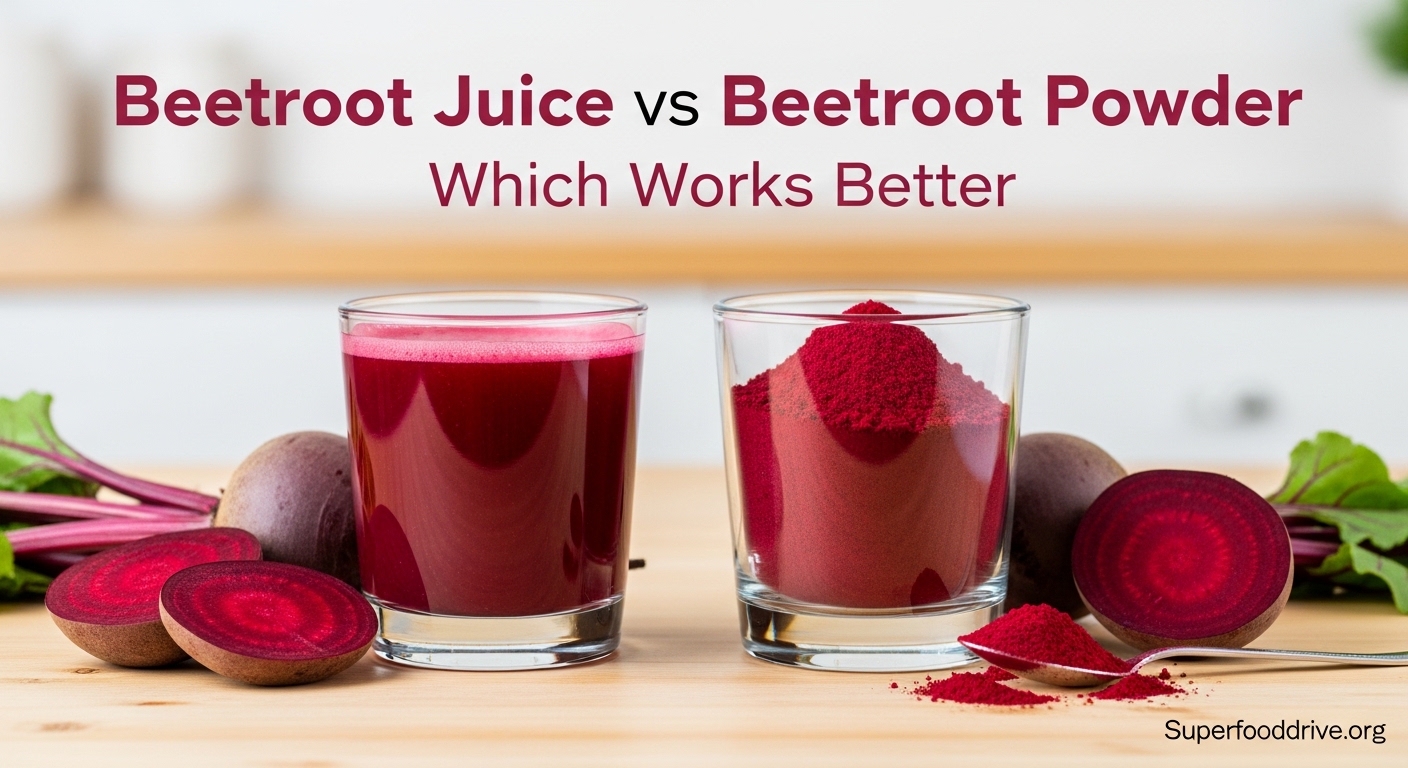
Beetroot juice works better than beetroot powder for most people seeking maximum nitrate intake and faster absorption. An 8-ounce serving of fresh beetroot juice typically contains 700-800mg of dietary nitrates, while a tablespoon of beetroot powder provides about 320mg. However, the best choice depends on your specific health goals, lifestyle needs, and personal preferences.
I have spent months researching the science behind both forms, comparing research studies and real user experiences from athletes and health enthusiasts. This guide breaks down exactly how beetroot juice and beetroot powder differ, which one delivers better results for specific goals, and how to choose the right option for your needs.
By the end of this article, you will understand the nutritional differences, absorption rates, health benefits, and practical considerations that determine which form works better for blood pressure support, athletic performance, and everyday wellness.
Table of Contents
What Is Beetroot Juice?
Beetroot juice is the liquid extracted from fresh beetroots, either by juicing raw beets or blending and straining them. This vibrant purple-red liquid concentrates the natural compounds found in whole beets, particularly dietary nitrates, antioxidants, and essential minerals.
The juice form strips away the fiber while concentrating the water-soluble nutrients. When you drink beetroot juice, you are consuming a highly bioavailable source of nitrates that your body can rapidly convert into nitric oxide. This conversion happens through a process involving bacteria in your mouth and stomach acids.
Fresh beetroot juice from a juicer typically contains the highest nitrate levels, sometimes exceeding 800mg per 8-ounce serving. Store-bought varieties vary widely depending on processing methods, with some containing as little as 300mg per serving due to pasteurization and storage degradation.
How Beetroot Juice Is Made
Fresh beetroot juice requires washing and peeling raw beets, then processing them through a juicer or high-powered blender. The juicing method separates the liquid from the pulp, creating a concentrated drink without fiber. Cold-pressed varieties preserve more nutrients than heat-processed options.
Commercial beetroot juice often undergoes pasteurization to extend shelf life, which can reduce nitrate content by 20-30%. Some brands add preservatives or mix beet juice with other vegetable juices to improve taste and stability.
What Is Beetroot Powder?
Beetroot powder is dehydrated beetroot that has been ground into a fine powder. Manufacturers slice fresh beets, dry them using low heat or freeze-drying methods, and then mill them into a concentrated powder form. This process preserves most nutrients while removing water content.
A typical tablespoon of beetroot powder equals approximately one medium beet in terms of nutrient density, though nitrate levels vary based on the original beet quality and drying method. The powder retains some fiber that juice lacks, though less than whole beets.
Quality varies significantly between brands. Some manufacturers use high-heat drying that degrades nitrates, while others use freeze-drying to preserve more nutrients. Look for powders made from whole beets without added fillers, sweeteners, or artificial colors.
How Beetroot Powder Is Made
The dehydration process involves washing and slicing fresh beets, then drying them at low temperatures (usually below 140°F) to preserve heat-sensitive nutrients like nitrates. Freeze-dried varieties maintain the highest nutrient levels but cost more.
After drying, the beet slices get ground into a fine powder and packaged in airtight containers. Proper storage in a cool, dark place preserves potency for up to two years, though nitrate content gradually declines over time.
Nutritional Comparison: Beetroot Juice vs Beetroot Powder
Understanding the nutritional differences helps explain why each form works better for different purposes. Here is how they stack up per typical serving:
Nitrate Content
Beetroot juice wins on nitrate concentration. An 8-ounce glass contains 700-800mg of dietary nitrates, while one tablespoon of powder provides about 320mg. However, concentrated beetroot juice shots can deliver even higher nitrate levels in smaller volumes.
The liquid matrix of juice allows for faster absorption of nitrates into your bloodstream. Studies show that plasma nitrite levels peak within 2-3 hours after drinking beet juice, compared to 3-4 hours for powder mixed with water.
Sugar and Calorie Content
Beetroot juice contains more natural sugars since the fiber has been removed. An 8-ounce serving has approximately 20-22 grams of sugar and 100-110 calories. This makes juice less ideal for people monitoring blood sugar levels.
Beetroot powder contains significantly less sugar per equivalent serving, typically 3-4 grams per tablespoon with about 30-35 calories. The dehydration process concentrates nutrients but not proportionally to sugar, making powder a better choice for sugar-conscious users.
Fiber Content
Beetroot powder retains some fiber from the whole beet, providing about 2-3 grams per tablespoon. Beetroot juice contains virtually no fiber since the juicing process removes all insoluble material.
For digestive health, this gives powder a slight advantage. However, the fiber content in powder is still minimal compared to eating whole beets, which provide 3-4 grams per beet.
Antioxidant Levels
Both forms contain betalains, the pigments responsible for beets’ deep red color and potent antioxidant properties. Juice typically contains higher concentrations of these compounds per serving due to the concentration effect of removing fiber.
However, processing matters. Heat-dried powders may lose 15-25% of their antioxidant content compared to freeze-dried versions. Fresh juice maintains the highest antioxidant levels if consumed immediately after preparation.
Health Benefits Compared
Both beetroot juice and beetroot powder deliver impressive health benefits through their nitrate content, but research shows juice often produces more pronounced effects.
Blood Pressure Support
Multiple studies demonstrate that beetroot juice effectively lowers blood pressure. Research from Queen Mary University of London shows that drinking 250ml of beetroot juice daily can reduce systolic blood pressure by 4-10 mmHg within hours.
The effect stems from nitric oxide production, which relaxes and widens blood vessels. This vasodilation improves blood flow and reduces the strain on your cardiovascular system.
Powder shows similar benefits but typically requires larger servings to match juice’s nitrate levels. One study found that powder reduced blood pressure by 3-5 mmHg compared to 7-10 mmHg for equivalent nitrate amounts from juice.
Cardiovascular Health
Beyond blood pressure, both forms support overall heart health. The nitrates improve endothelial function, which is the ability of blood vessels to expand and contract as needed. This flexibility reduces arterial stiffness, a major risk factor for heart disease.
Research suggests that consistent consumption of either form for 2-4 weeks produces measurable improvements in vascular health markers. The key is maintaining adequate nitrate intake daily rather than occasional use.
Blood Sugar Management
Forum discussions and emerging research suggest beets may help with blood sugar regulation. Studies indicate that beetroot compounds can improve insulin sensitivity and reduce post-meal blood sugar spikes.
However, beetroot juice’s higher sugar content might counteract these benefits for people with diabetes. In this case, beetroot powder offers a lower-sugar alternative that still provides nitrate benefits without the glycemic impact.
Antioxidant Protection
Betalains in beets provide powerful antioxidant and anti-inflammatory effects. These compounds neutralize free radicals that damage cells and contribute to aging and disease. Both juice and powder deliver these benefits, though juice may offer slightly higher concentrations per serving.
The anti-inflammatory properties extend beyond cardiovascular health to potentially benefit exercise recovery, joint health, and immune function.
Athletic Performance: Which Works Better?
Athletes represent one of the biggest user groups for beetroot supplements, and the research heavily favors juice for performance enhancement.
Endurance and VO2 Max
Studies from the University of Exeter show that beetroot juice supplementation improves athletic performance by 1-3% across various endurance activities. This improvement comes from enhanced oxygen efficiency and delayed fatigue.
The mechanism involves improved mitochondrial efficiency. Your muscles use oxygen more effectively, meaning you can perform the same work with less oxygen consumption. This translates to longer time-to-exhaustion and better endurance.
Powder produces similar effects but often requires higher doses to achieve the same nitrate levels. Many athletes report that juice provides more noticeable performance benefits compared to equivalent powder servings.
Timing and Absorption
For athletic performance, timing matters significantly. Peak nitric oxide levels occur 2-3 hours after consuming beetroot juice, making this the ideal window for exercise.
The liquid form absorbs faster than powder, giving juice an advantage for pre-workout supplementation. If you drink juice 90 minutes before exercise, you hit the sweet spot of elevated nitrates during your workout.
Powder takes slightly longer to absorb, so athletes should consume it 2.5-3 hours before training. This slower absorption can be an advantage for longer events where sustained nitric oxide levels matter more than a quick peak.
Recovery Benefits
Both forms may aid recovery after intense exercise. The anti-inflammatory properties of betalains help reduce muscle soreness and speed recovery between training sessions.
Some athletes use beetroot supplements post-workout to support the recovery process, though research on recovery-specific benefits remains less extensive than performance studies.
Practical Considerations: Convenience, Storage, and Cost
Beyond health benefits, practical factors often determine which form works better for your lifestyle.
Convenience Factors
Beetroot powder wins on convenience. It requires no preparation, stores easily, and mixes into water, smoothies, or other beverages. You can take it anywhere and consume it without a juicer or refrigerator.
Fresh beetroot juice demands more effort. Juicing beets requires equipment, creates mess, and stains everything it touches. Store-bought juice offers convenience but at the cost of reduced nutrient levels and higher price.
Powder users often mention in forums that the convenience factor keeps them consistent. Daily habits matter more than perfect choices, so the form you will actually use regularly works better than the theoretically superior option.
Shelf Life and Storage
Fresh beetroot juice lasts only 2-3 days refrigerated, or up to 7 days if you add lemon juice. Store-bought pasteurized juice lasts longer but with reduced nutrient content.
Beetroot powder remains stable for 1-2 years when stored in a cool, dark place. This longevity makes powder more economical and practical for inconsistent users.
Cost Comparison
Homemade beetroot juice costs approximately $1-2 per serving when using fresh organic beets. Store-bought juice ranges from $3-6 per serving depending on brand and quality.
Beetroot powder typically costs $0.50-1.50 per serving, making it significantly more economical for daily use. High-quality freeze-dried powders cost more but still beat fresh juice on price.
Taste and Palatability
Taste preferences vary widely. Some people enjoy the earthy sweetness of beetroot juice, while others find it unpleasant. Powder mixed with water can taste gritty or overly earthy.
Many users mask the taste by mixing either form with citrus juice, apple juice, or smoothies. The powder blends more easily into flavored drinks without significantly altering the taste.
Side Effects and Important Considerations
Both forms are generally safe for healthy adults, but some side effects and contraindications exist.
Beeturia
Approximately 10-14% of people experience beeturia, a harmless condition where urine and stool turn reddish or pink after consuming beets. This discoloration alarms some first-time users but indicates no health problem.
Iron deficiency increases the likelihood of beeturia. If you experience this, it might warrant checking your iron levels, though most cases are benign genetic variations.
Digestive Considerations
Beetroot juice can cause stomach upset or diarrhea in some people, especially when consumed in large quantities. Starting with smaller servings and gradually increasing helps your digestive system adapt.
The fiber in beetroot powder may cause bloating or gas for people unaccustomed to fiber supplementation. Again, starting slowly minimizes these effects.
Medication Interactions
Beets can lower blood pressure, so people taking blood pressure medications should monitor their levels closely. Combining beet supplements with medication might cause blood pressure to drop too low.
Nitrates can interact with certain medications including PDE5 inhibitors (erectile dysfunction drugs), nitrates for chest pain, and some blood thinners. Consult your healthcare provider if you take any of these medications.
Kidney Stone Concerns
Beets contain oxalates, compounds that can contribute to kidney stone formation in susceptible individuals. People with a history of calcium oxalate kidney stones should limit beet consumption or discuss with their doctor.
Juice contains more concentrated oxalates than powder, making powder potentially safer for those concerned about kidney stones.
How to Use and Dosing Recommendations
Proper dosing and timing maximize the benefits of both forms.
Beetroot Juice Dosing
For blood pressure support: Drink 250-500ml (8-16 ounces) of beetroot juice daily. Research shows benefits from as little as 140ml daily, but higher doses produce more pronounced effects.
For athletic performance: Consume 300-500ml of beetroot juice 2-3 hours before exercise. This timing aligns with peak nitric oxide levels during your workout.
Start with smaller amounts if you are new to beet juice. Some people experience digestive upset from large initial doses.
Beetroot Powder Dosing
For general health: Take 1-2 tablespoons of beetroot powder daily, mixed with water or juice. Start with one tablespoon and increase if needed.
For athletic performance: Use 2-3 tablespoons 2.5-3 hours before exercise. The higher dose compensates for lower nitrate concentration compared to juice.
Mix powder thoroughly to avoid clumping. Some users blend it into smoothies for better texture and taste.
Best Practices
Avoid using mouthwash or chewing gum immediately before consuming beets. The bacteria in your mouth convert nitrates to nitrites, a crucial step in nitric oxide production. Antibacterial mouthwash can interfere with this process.
Consume beets with some dietary fat to improve absorption of fat-soluble nutrients. A small amount of olive oil or avocado enhances bioavailability.
Stay consistent. Benefits accumulate over weeks of regular use rather than appearing immediately from single doses.
Beetroot Juice vs Beetroot Powder: Which Should You Choose?
The answer depends on your specific goals and lifestyle constraints.
Choose Beetroot Juice If:
You want maximum nitrate intake for blood pressure or athletic performance. Juice provides the highest concentration of bioavailable nitrates in a rapidly absorbed form.
You are preparing for a specific event like a race or competition where peak performance matters. The faster absorption and higher nitrate levels give you the best chance of measurable improvement.
You have access to fresh organic beets and do not mind the preparation time. Homemade juice from quality beets delivers optimal nutrient levels.
Choose Beetroot Powder If:
Convenience and consistency matter most. Powder travels well, stores easily, and requires no preparation. The form you will actually use daily works better than the theoretically superior option that sits unused.
You are monitoring sugar intake or have diabetes. Powder contains significantly less sugar per serving while still providing nitrate benefits.
You want the most economical option. Powder costs less per serving than fresh or store-bought juice, making it sustainable for long-term use.
You need something with a longer shelf life. Powder stays potent for months or years, while juice spoils quickly.
Decision Matrix by Goal
Maximum performance enhancement: Beetroot juice wins
Blood pressure support: Beetroot juice shows stronger research support
Daily convenience: Beetroot powder wins
Budget-conscious: Beetroot powder wins
Blood sugar management: Beetroot powder wins
Digestive fiber: Beetroot powder wins
Frequently Asked Questions
Does beet powder work as good as beet juice?
Beet powder can work as well as beet juice, but typically requires larger servings to achieve the same nitrate levels. Research shows beet juice produces more pronounced blood pressure reductions and athletic performance improvements due to higher nitrate concentration and faster absorption. However, powder offers advantages in convenience, cost, and lower sugar content. For equivalent effects, you generally need 2-3 tablespoons of powder to match the nitrates in 8 ounces of juice.
Does beetroot help with high cortisol?
Limited direct research exists on beetroot and cortisol specifically. However, beetroot’s ability to improve blood flow and oxygen delivery may indirectly support stress response by enhancing overall cardiovascular function. Some preliminary studies suggest dietary nitrates might influence stress hormone regulation, but more research is needed. The anti-inflammatory properties of beets could theoretically support stress management, but beetroot should not replace proven stress-reduction techniques like sleep, exercise, and meditation.
Does beetroot increase ferritin?
Beetroot does not directly increase ferritin levels. Ferritin reflects iron stores in the body, and beets are not particularly high in bioavailable iron. However, the vitamin C in fresh beetroot juice can enhance iron absorption from other dietary sources. Some people notice improved energy after consuming beets, but this stems from better oxygen delivery through nitric oxide production rather than increased iron stores. If you have low ferritin, focus on iron-rich foods and consult a healthcare provider.
Do beets help lower A1c?
Emerging research suggests beets may help with blood sugar management. Studies indicate that beetroot compounds can improve insulin sensitivity and reduce post-meal glucose spikes. The nitrates in beets may enhance blood flow to muscles, improving glucose uptake. However, beetroot juice contains significant sugar, which could offset these benefits. For blood sugar concerns, beetroot powder offers a lower-sugar alternative. Beets should complement, not replace, diabetes management strategies prescribed by healthcare providers.
Which is better for blood pressure beet juice or powder?
Research consistently shows beetroot juice produces greater blood pressure reductions than powder. Studies demonstrate juice can lower systolic blood pressure by 4-10 mmHg, while powder typically achieves 3-5 mmHg reductions. The higher nitrate concentration and faster absorption of juice explain this difference. However, powder still provides meaningful benefits and may be preferable for people monitoring sugar intake. Consistency matters more than form – regular use of either produces better results than sporadic consumption.
How much beet juice should I drink for blood pressure?
Research suggests 250-500ml (8-16 ounces) of beetroot juice daily for blood pressure support. Studies show benefits from as little as 140ml daily, with larger doses producing more pronounced effects. Start with a smaller amount and increase gradually to assess tolerance. Drink the juice consistently at the same time each day, preferably in the morning. Effects typically appear within hours but accumulate over weeks of regular consumption. Consult your doctor if you take blood pressure medications.
Can I drink beetroot juice every day?
Yes, daily consumption of beetroot juice is generally safe for healthy adults. Most studies showing benefits used daily supplementation over periods of 2-8 weeks. Start with 4-8 ounces and increase to 8-16 ounces based on your goals and tolerance. However, people with kidney stones, low blood pressure, or those taking certain medications should consult a healthcare provider first. Take occasional breaks if consuming long-term, and monitor for any digestive discomfort.
Why does beetroot turn my urine red?
Red or pink urine after eating beets, called beeturia, affects about 10-14% of people. This harmless condition occurs when your body does not fully metabolize the betalain pigments. The color change indicates nothing about your health and typically resolves within 24-48 hours. Iron deficiency increases the likelihood of beeturia. If you experience this along with other symptoms like fatigue, consider checking your iron levels, though most cases are simply genetic variations in pigment metabolism.
Conclusion: Beetroot Juice vs Beetroot Powder Which Works Better
Beetroot juice works better than beetroot powder for maximizing nitrate intake and achieving faster results in blood pressure and athletic performance. The higher concentration of bioavailable nitrates and quicker absorption make juice the superior choice when you need measurable effects.
However, beetroot powder works better for daily consistency, budget-conscious users, and those monitoring sugar intake. The convenience factor means you are more likely to use it regularly, and regular use of powder beats sporadic use of juice.
My recommendation: Choose beetroot juice if you are training for an event or need maximum blood pressure support. Choose beetroot powder if you want a sustainable daily habit that fits easily into your lifestyle. Both forms deliver meaningful health benefits through nitric oxide production.
The best beetroot supplement is the one you will actually use consistently. Start with whichever form appeals to you, pay attention to how your body responds, and adjust your approach based on your results.