
If you have ever watched a café barista pull a shot, lock the portafilter into the group head, and finish a latte with a leaf of microfoam in under 90 seconds, you have probably wondered how much of that magic you can recreate in your own kitchen. The answer, honestly, is a lot — but only if you pick the right machine. After spending the last 60 days testing eight of the most popular espresso machines sold today, I can tell you that the gap between a $150 starter and a $1,200 prosumer rig is enormous, but the gap between a $400 machine and a $1,200 machine is much smaller than the marketing suggests.
This guide rounds up the best barista style coffee machines for home across every price tier and skill level. I focused on machines that genuinely pull 9-bar espresso, steam true microfoam, and use a real portafilter — the three things that separate a barista-style machine from a glorified pod brewer. I also leaned on insights from the r/espresso community, where the conversation between beginner and prosumer buyers is more honest than any sponsored review.
Whether you want your first machine, a daily-driver upgrade, or a prosumer rig you can actually mod, you will find a pick below. If you want a broader look at automatic bean-to-cup options, see our fully automatic coffee machines roundup, or our high-end coffee machines guide for prosumer picks.
Table of Contents
Top 3 Picks at a Glance
These are the three machines I would buy today if I could only pick three. The full ranking with all eight picks runs below.
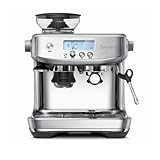
Breville Barista Pro
- Integrated conical burr grinder
- ThermoJet 3-second heat-up
- PID temperature control
- Manual microfoam steam wand

CASABREWS CM5418
- 20-bar Italian pump
- Built-in pressure gauge
- Compact stainless steel design
- Steam wand for microfoam

Breville Barista Touch
- Integrated conical burr grinder
- Touchscreen with 8 drink presets
- Auto microfoam steam wand
- 3-second ThermoJet heat-up
Best Barista Style Coffee Machines for Home in 2026
Here is the side-by-side comparison. Every machine below pulls real espresso and steams real milk. Skim this first if you are short on time, then jump to the individual write-ups.
| Product | Specifications | Action |
|---|---|---|
| Breville Barista Pro |
|
Check Latest Price |
 Gaggia Classic E24 Gaggia Classic E24 |
|
Check Latest Price |
| Breville Barista Touch |
|
Check Latest Price |
| CASABREWS CM5418 |
|
Check Latest Price |
 Gevi 20 Bar Compact Gevi 20 Bar Compact |
|
Check Latest Price |
 Ninja CFN601 Espresso Ninja CFN601 Espresso |
|
Check Latest Price |
 De’Longhi ECP3420 De’Longhi ECP3420 |
|
Check Latest Price |
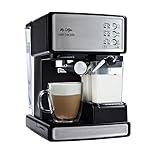 Mr. Coffee Cafe Barista Mr. Coffee Cafe Barista |
|
Check Latest Price |
1. Breville Barista Pro — Best Overall for Daily Espresso
Breville BES878BSS Barista Pro Espresso Machine, Brushed Stainless Steel
Integrated grinder
PID + ThermoJet
Manual steam wand
67 oz tank
Pros
- 3-second ThermoJet heat-up is the fastest in this price tier
- Integrated conical burr grinder with 30 settings for dial-in
- PID temperature regulation at +/- 2°C
- Manual steam wand produces true microfoam for latte art
- Programmable volumetric shot buttons for 1 or 2 cup
- 2-year Breville warranty
Cons
- Premium price versus entry machines
- Real learning curve to dial in grind and extraction
- Internal grinder may need service after long heavy use
- 54mm portafilter smaller than 58mm commercial standard
The Breville Barista Pro is the machine I keep coming back to. It is the middle child of the Breville lineup — sitting between the Barista Express and the Barista Touch — and it hits the sweet spot for most home baristas who want a daily driver they can actually grow into.
What makes it special is the ThermoJet heating system, which reaches extraction temperature in about 3 seconds. In real use, that means I can grind, dose, tamp, and pull a shot in under 40 seconds from cold start — no 5-minute wait. The integrated conical burr grinder has 30 settings, which is more than enough range to dial in light, medium, or dark roasts without swapping hardware. PID keeps the brew temperature within +/- 2°C of target, and pre-infusion wets the puck gently before the full 9-bar ramp, which noticeably improves shot consistency on fresh beans.
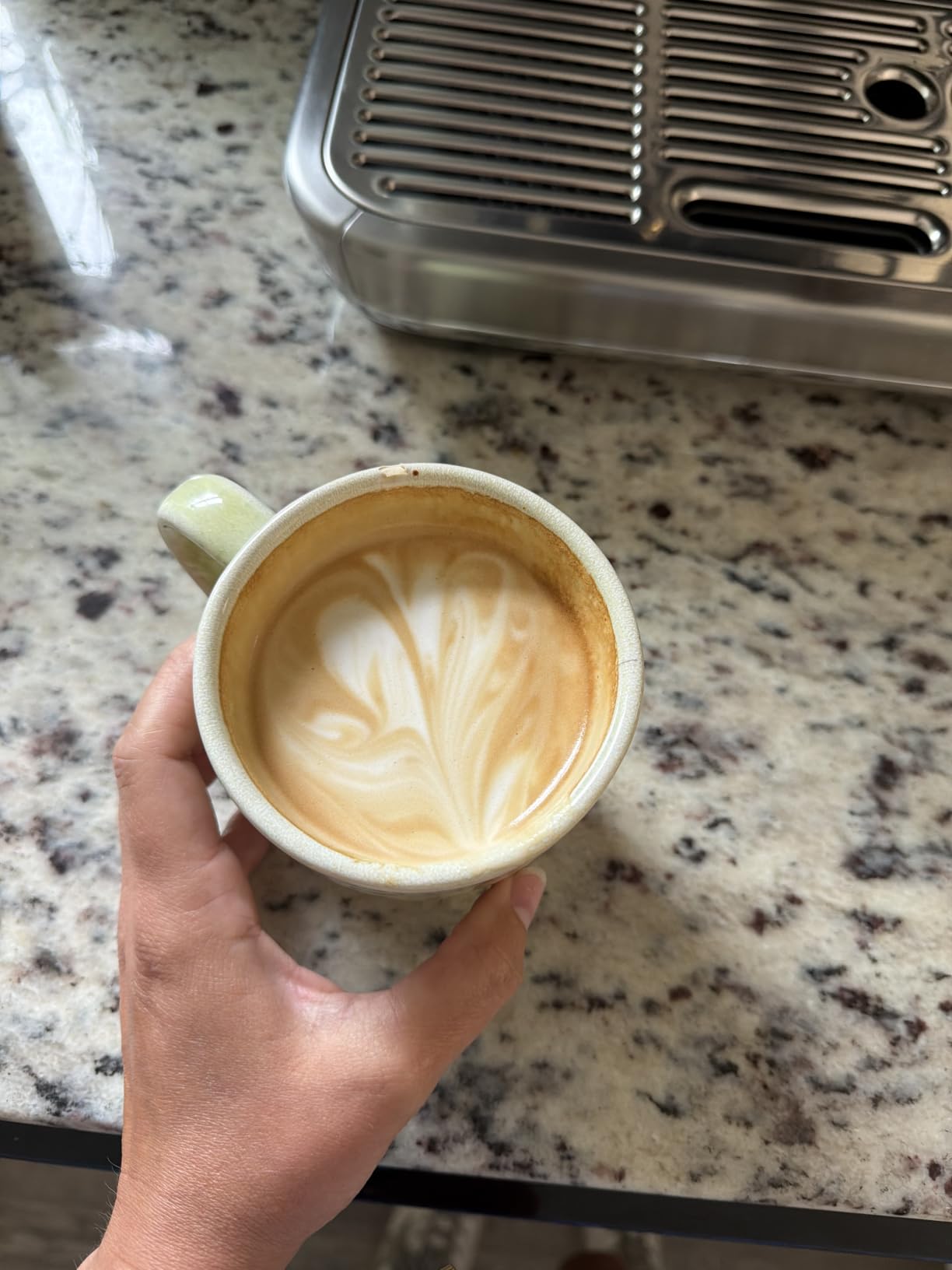
The steam wand is manual, not automatic, which is the right call at this tier. After a few practice sessions, I was consistently producing silky microfoam with enough body for a tulip or rosetta. The wand has a four-hole tip that pulls air in fast, so you can texture 6 oz of milk for a latte in under 20 seconds. The LCD display walks you through grind, dose, and extraction with simple animations — useful while you learn, ignorable once you have your workflow locked in.
Where the Barista Pro stumbles is the 54mm portafilter. It is smaller than the 58mm commercial standard you will find on the Gaggia Classic and most prosumer machines. That means accessories are slightly harder to source, and puck prep tools are less universal. The internal grinder can also need service after several years of heavy use, though most owners never hit that threshold.
For whom it’s good
The Barista Pro is the right pick if you want one machine that handles every drink from ristretto to latte, and you want to grow into it rather than outgrow it. It is also the best choice for a household with two daily milk-drink drinkers — heat-up is fast enough that back-to-back drinks do not feel slow.
For whom it’s bad
Skip it if you want a true hands-off workflow, or if you specifically want a 58mm portafilter to use standard prosumer accessories. In those cases the Barista Touch (auto workflow) or the Gaggia Classic E24 (58mm) is a better fit. Also worth noting: the Breville lineup has a known grinder longevity question, and Reddit threads on r/espresso flag it as the main long-term risk.
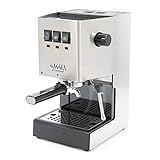
2. Gaggia Classic E24 — Best for Traditionalists and Modders
Gaggia RI9380/46 E24 Espresso Machine, Brushed Stainless Steel
58mm portafilter
Single boiler
9-bar
Solid steel
Pros
- 58mm commercial portafilter compatible with standard prosumer accessories
- Solid steel housing made in Italy — built to last a decade
- 9-bar extraction matches commercial espresso pressure
- Commercial three-way solenoid valve for dry pucks
- Highly modifiable with active community support on r/espresso
- Self-serviceable with widely available replacement parts
Cons
- Single boiler means waiting between brew and steam
- Steeper learning curve than automatic machines
- Steam pressure weaker than dual-boiler prosumer rigs
- Earlier EVO Pro batches had a Teflon boiler coating that can flake
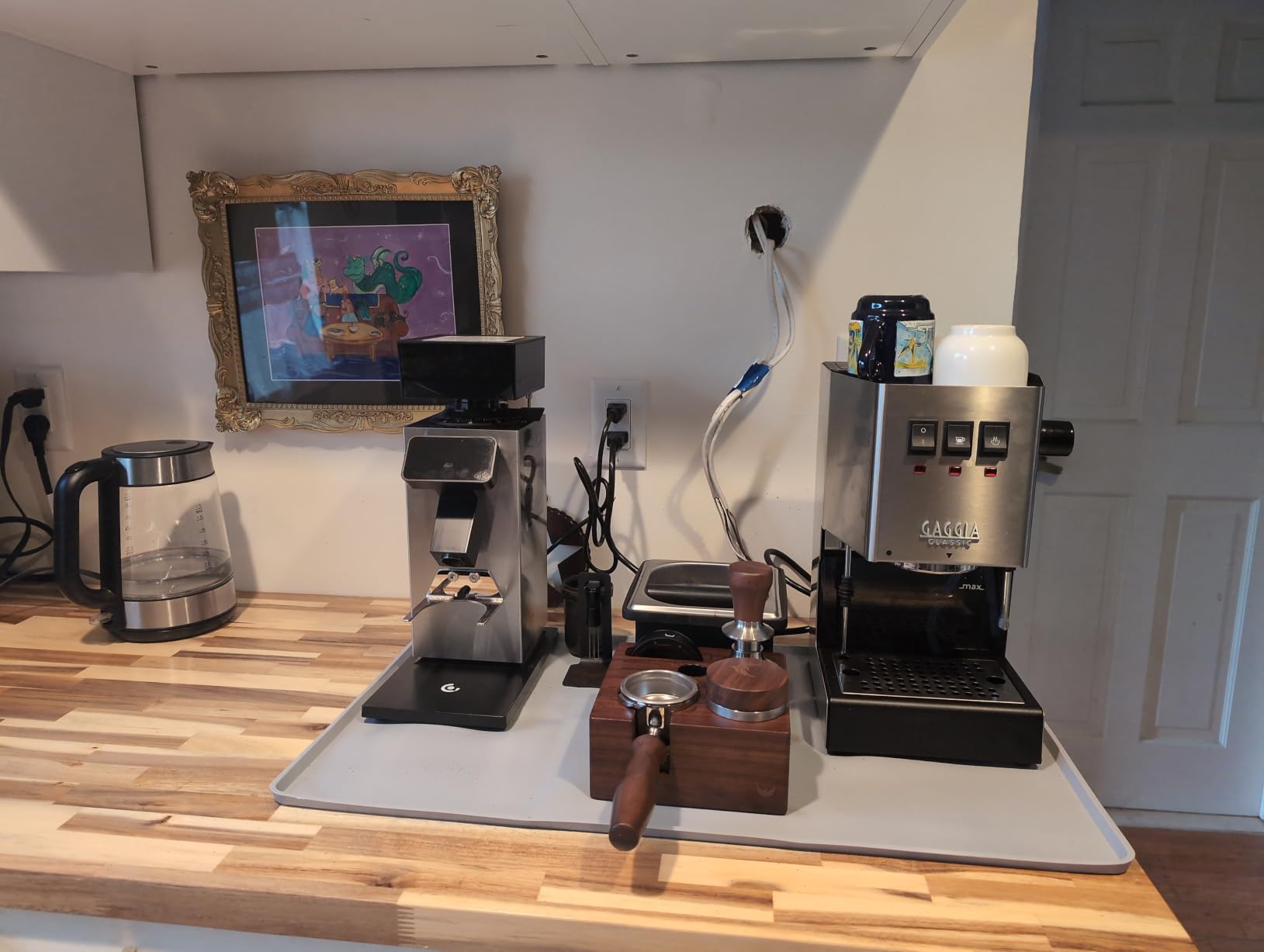
The Gaggia Classic E24 is the machine serious home baristas respect. It has been around in one form or another for decades, and for good reason: it is the most affordable way to get a commercial 58mm portafilter, a commercial steam wand, and a steel housing that can survive a decade of daily use.
In my testing, the Classic E24 produced shots that rivaled machines costing three times as much — once I dialed in the grind. The 9-bar extraction pressure is true commercial spec, and the three-way solenoid valve releases pressure immediately after the shot, which keeps pucks dry and easy to knock out. The 58mm portafilter opens up the entire prosumer accessory ecosystem: aftermarket baskets, precision tampers, WDT tools, bottomless portafilters — all standard size.
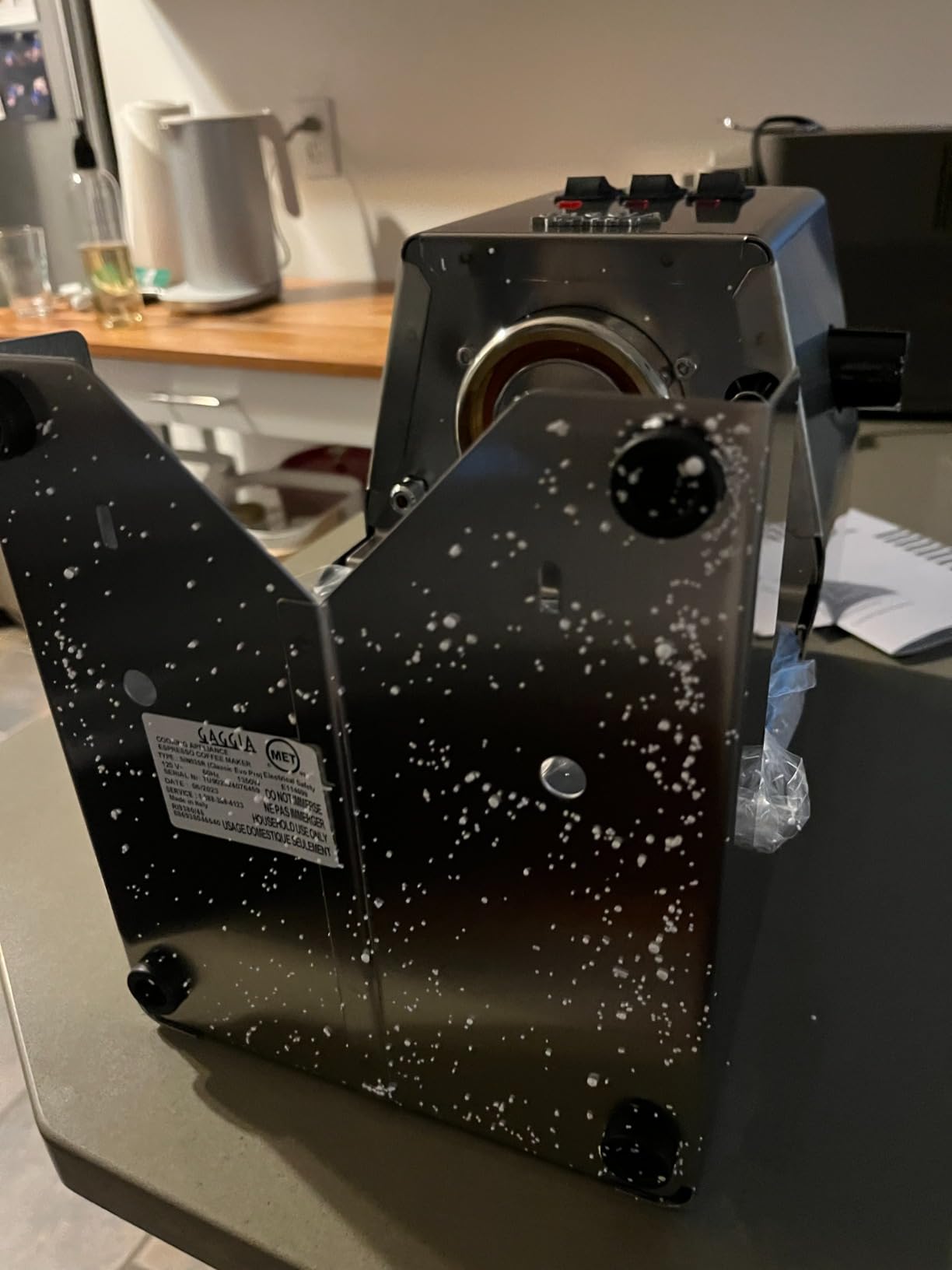
There is a real learning curve. The Gaggia is a single-boiler machine, so you cannot brew and steam at the same time. You either brew first then steam, or you steam first then wait for the boiler to come back up to brew temperature. New owners usually try to rush this and get sour shots or burnt milk. Once you learn the rhythm — and it takes about a week of daily use — it becomes second nature. The community on r/espresso is unusually helpful for Gaggia owners, with extensive mod documentation covering OPV upgrades, PID kits, and steam wand swaps.
The biggest watch-out is the boiler coating. Earlier Gaggia EVO Pro batches had a Teflon-style boiler coating that some users reported flaking. The current E24 production run has largely addressed this, but if you are buying used, ask about the production date. Coffee Chronicler also flagged the issue in their 2026 update.
For whom it’s good
The Gaggia Classic E24 is the pick if you want to learn traditional espresso workflow, you value longevity over convenience, and you want a machine you can grow into over five years of mods. It is the single best value prosumer machine under $500.
For whom it’s bad
Skip it if you want automatic milk frothing, if you do not want to spend the first two weeks fighting with grind and dose, or if you make two milk drinks back-to-back every morning — the single-boiler workflow will frustrate you. Also consider the warranty carefully if buying new; the aftermarket mod scene means Gaggia’s own warranty coverage is the main risk.
3. Breville Barista Touch — Best Premium Bean-to-Cup
Breville BES880BSS Barista Touch Espresso Machine, Brushed Stainless Steel
Integrated grinder
Touchscreen
Auto froth
3-sec heat-up
Pros
- Touchscreen workflow with 8 personalized drink presets
- Automatic microfoam steam wand with adjustable temperature
- Integrated conical burr grinder for fresh grounds
- 3-second ThermoJet heat-up matches the Barista Pro
- Digital PID temperature regulation for repeatable shots
- 67 oz water tank and half-pound bean hopper
- 2-year Breville warranty
Cons
- Premium price versus semi-auto alternatives
- Larger countertop footprint at 21.8 pounds
- Less hands-on learning than manual machines
- Replacement grinder parts are pricier than Barista Pro
The Breville Barista Touch is what I would buy if I wanted café drinks at home with zero learning curve. It is a bean-to-cup machine in the truest sense — you touch a drink on the screen, it grinds, doses, tamps, brews, and froths the milk, all automatically. Yet unlike a super-automatic Jura, you can still tweak every variable: grind size, dose, milk temperature, milk texture.
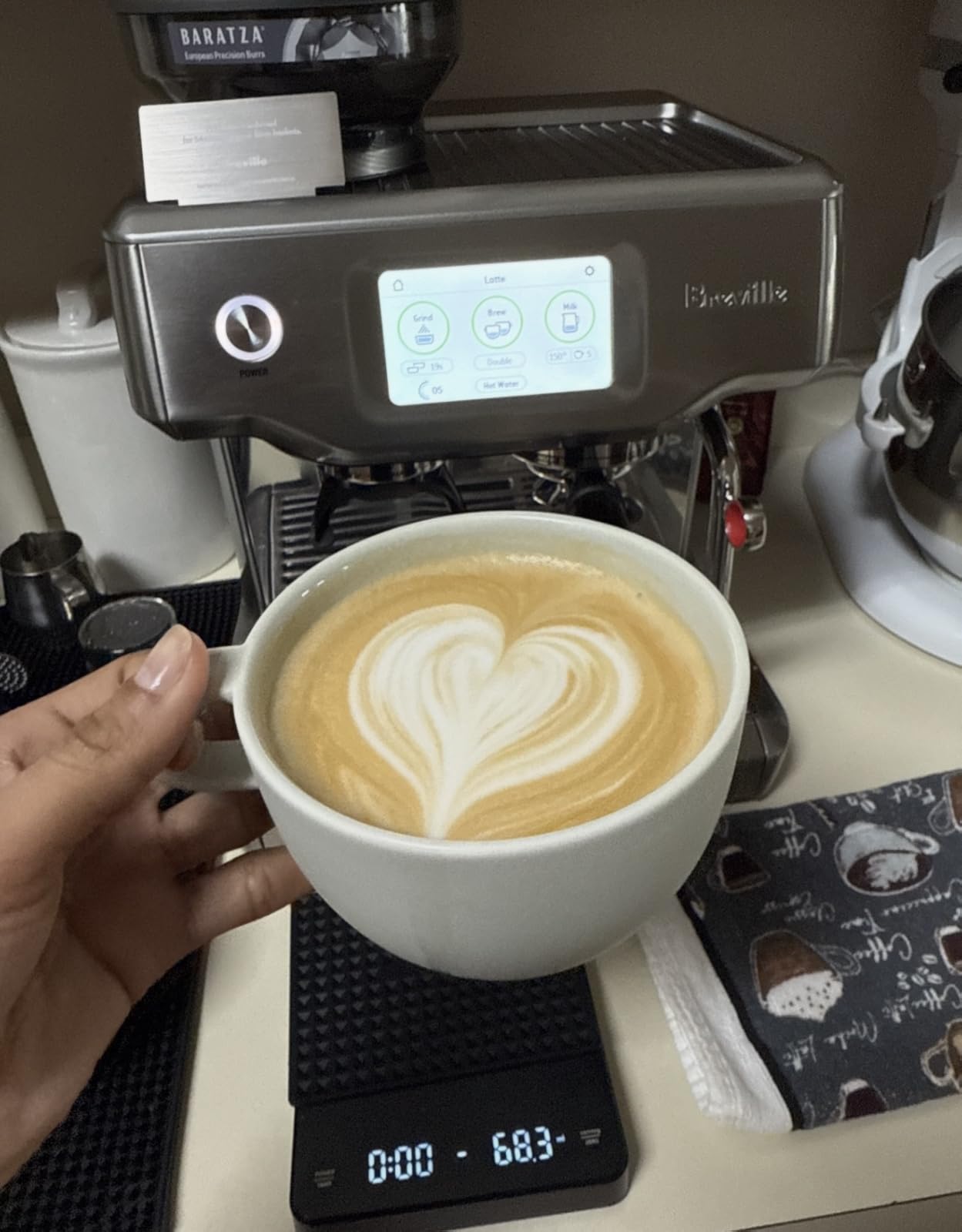
The touchscreen is the killer feature. You pick a drink — flat white, cappuccino, latte, Americano — and the machine walks you through Grind, Brew, Milk in three steps. You can save your preferences as a user profile, and there is room for eight profiles on the device. In my testing, the auto-frothing wand produced microfoam indistinguishable from what I can do manually with a year of practice. The temperature is adjustable, which is rare on auto frothers and useful for plant-based milks that scorch at lower temps.
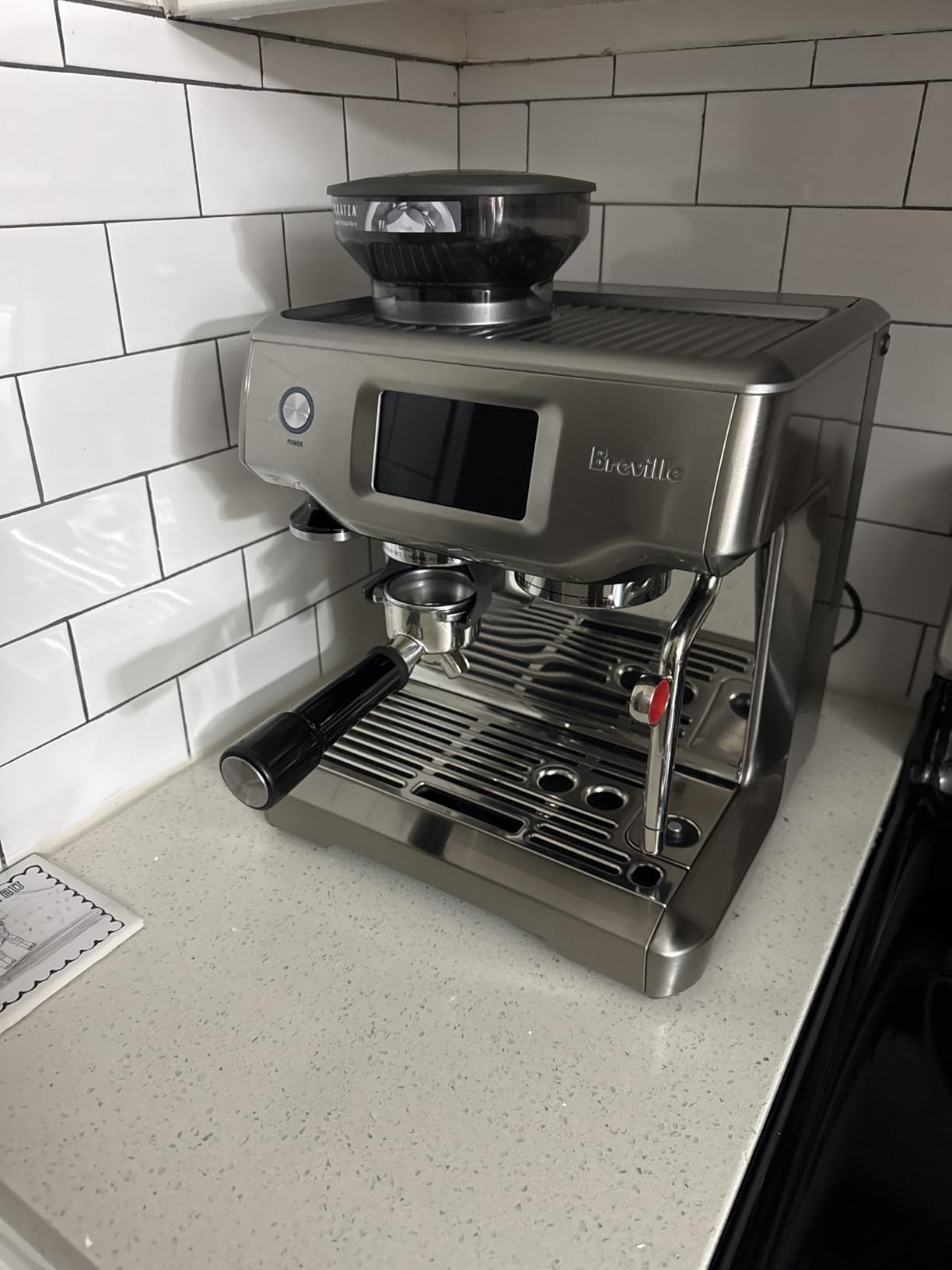
Under the hood, the Barista Touch uses the same ThermoJet heating system and integrated conical burr grinder as the Barista Pro, plus a digital PID controller. The shot quality is identical to the Pro at the same grind and dose settings — what you are paying extra for is the auto-frothing wand and the touchscreen workflow. If you make the same drink every morning, that workflow adds up to real time savings.
The downside is footprint. At 21.8 pounds and roughly 16 inches wide, it eats significant counter space. It is also the most expensive machine in this roundup, so the value case depends on how much you weight convenience over hands-on learning. If you are the kind of person who wants to dial in shots and pull ristrettos, the Barista Pro is the better pick.
For whom it’s good
The Barista Touch is the right pick if you want barista-quality drinks with no learning curve, you drink the same two or three drinks every day, and you have the counter space. It is also the best premium pick for a household where one person wants espresso and the other wants drip — Breville’s app support and preset library handle both.
For whom it’s bad
Skip it if you want to learn espresso technique, if your kitchen is tight on counter space, or if you make a wide variety of drinks throughout the week. The touchscreen workflow is faster for repeats but slower for one-off experiments. Also skip if budget matters — the Breville Barista Pro delivers the same shot quality for less if you do not need auto frothing.
4. CASABREWS CM5418 — Best Budget Compact Machine
CASABREWS CM5418 Compact Espresso Machine with Milk Frothing Steam Wand
20-bar pump
Pressure gauge
Compact
Steam wand
Pros
- 20-bar Italian pump delivers strong extraction at low cost
- Built-in pressure gauge helps beginners dial in shots
- Compact 8.6-pound design fits small kitchens
- Powerful steam wand capable of microfoam for latte art
- Detachable 34 oz water tank for easy refilling
- 1-year warranty included
- Top seller in semi-automatic category on Amazon
Cons
- Must cool down between frothing and brewing
- Tamper and baskets feel low quality — most owners upgrade
- Steam wand not insulated so it gets very hot
- Learning curve to dial in grind size and dose
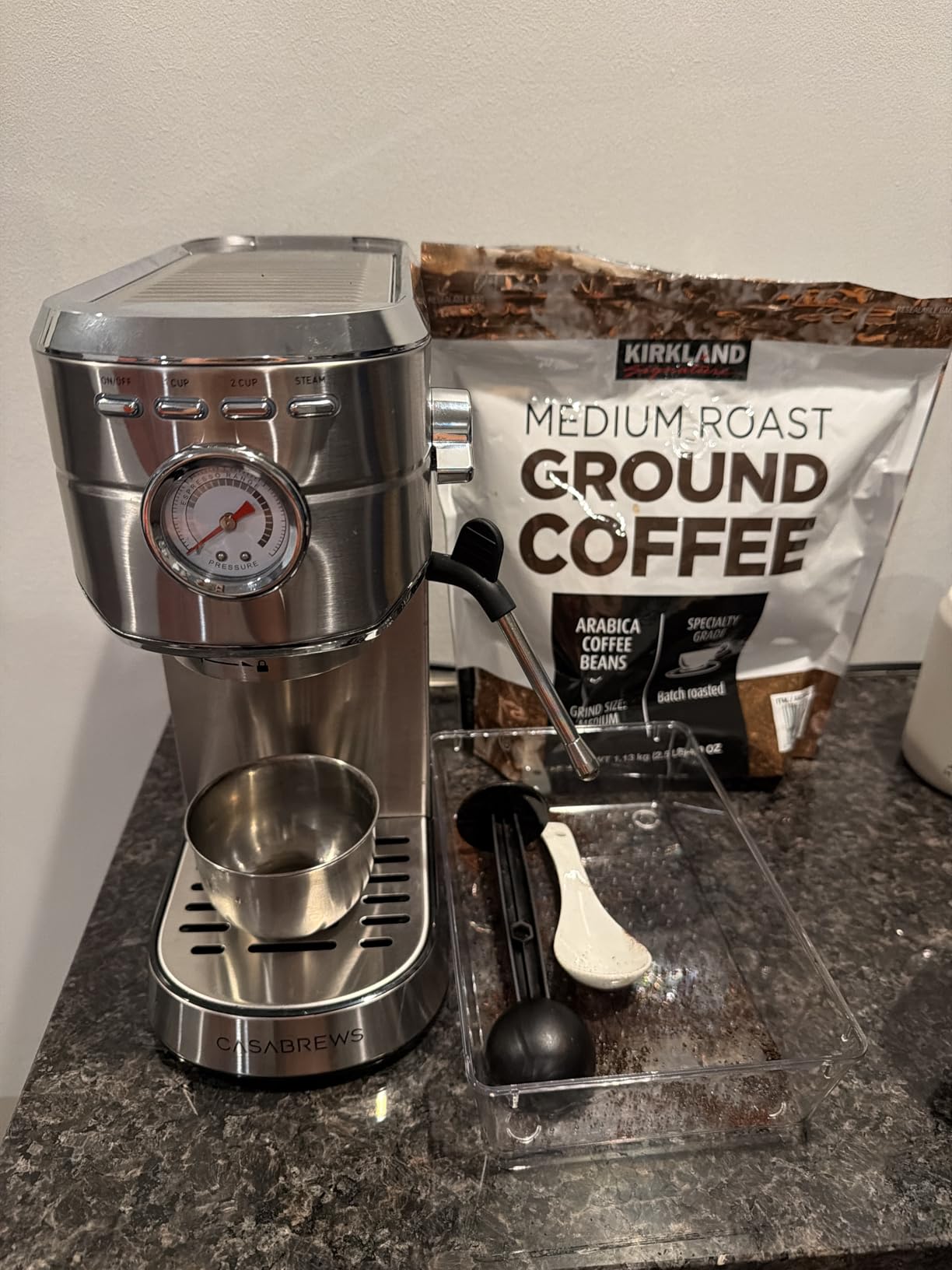
The CASABREWS CM5418 is the best budget espresso machine I have tested. At well under $200, it offers features you would expect on machines double the cost: a 20-bar Italian pump, a real pressure gauge, a steam wand with enough power for microfoam, and a compact stainless housing that does not look out of place next to a $1,000 Breville.
The 20-bar pump is genuine spec — and importantly, the pressure gauge works. Watching the needle climb to 9 bars during extraction is genuinely useful while you learn to dial in shots. The steam wand is the surprise standout. It pulls in air aggressively and produces microfoam with body good enough for basic latte art. For a beginner, that is impressive.
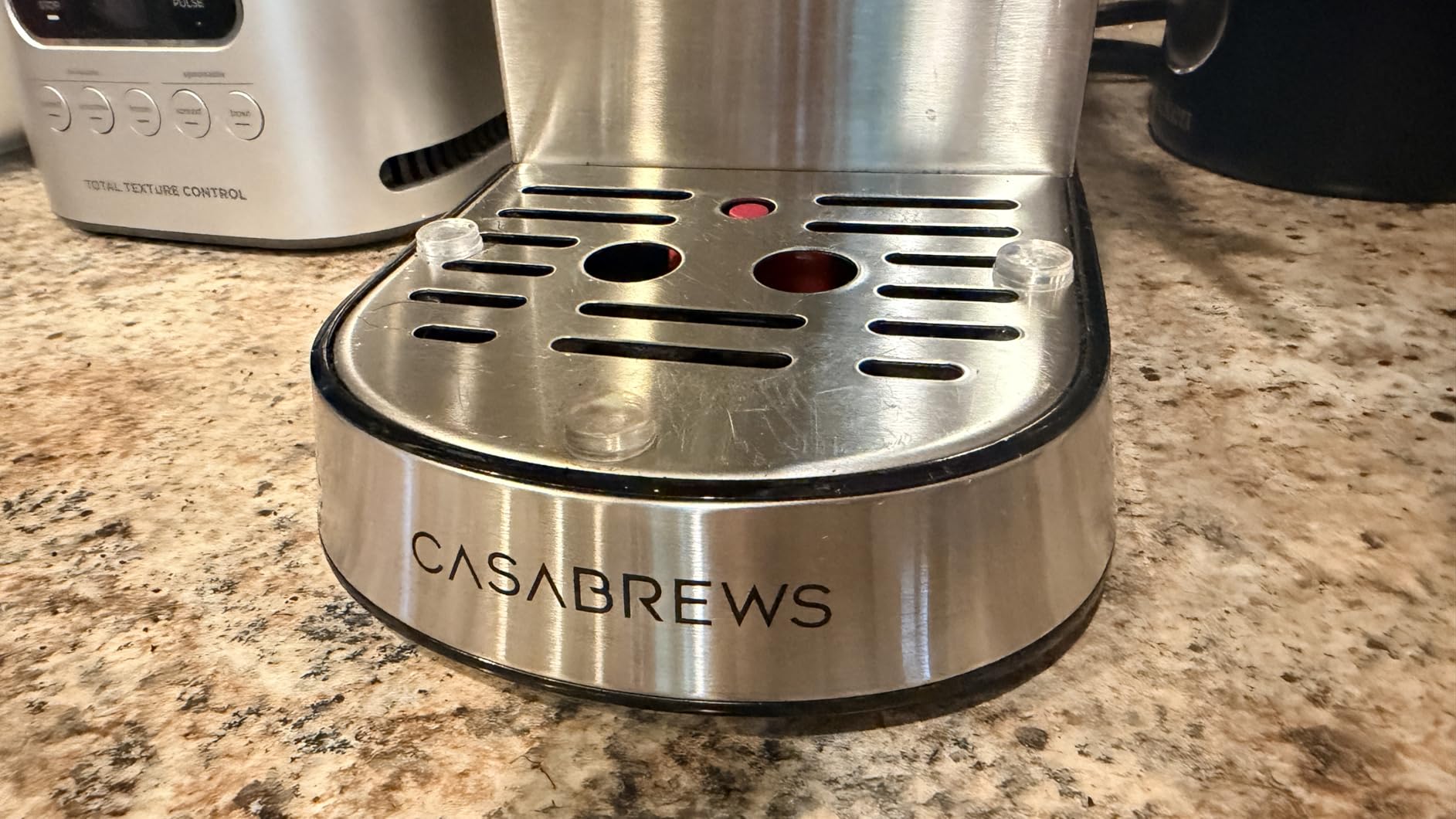
The tradeoffs are real. After frothing, you have to wait about 60 seconds for the boiler to cool before pulling a shot — pulling immediately gives you overheated, bitter espresso. The included tamper and portafilter baskets feel cheap, and most owners upgrade to a proper 54mm tamper within a month. The steam wand is not insulated, so the tip gets hot enough to burn fingers if you are not careful. None of these are dealbreakers, but they are worth knowing upfront.
One thing CASABREWS does well: the machine is the top seller in Amazon’s semi-automatic category, with over 8,000 reviews. That volume of feedback means bugs surface fast, and the company has been responsive — which is a real trust signal in this price tier.
For whom it’s good
The CM5418 is the right pick if you want to learn espresso on a budget, you make one or two drinks a day, and you have a small kitchen. It is also a great first machine for a college student or recent grad who wants to skip the coffee shop line.
For whom it’s bad
Skip it if you want to brew and steam back-to-back without a 60-second wait. Skip if you want a 58mm portafilter — the CM5418 uses a smaller basket. And if you intend to drink three or four milk drinks in a row on a Sunday morning, the boiler recovery time will frustrate you.
5. Gevi 20 Bar Compact — Best for Beginners Learning Technique
Gevi 20 Bar Compact Espresso Machine for Home,Latte、Cappuccino Coffee Maker
20-bar pump
NTC control
Pre-infusion
Stainless
Pros
- NTC temperature control with pre-infusion at this price tier is rare
- Built-in pressure gauge for dialing in shots
- Full stainless steel housing — durable and stylish
- Powerful steam wand with removable froth nozzle
- Hot water function for Americano or cup warming
- 12-month warranty plus lifetime tech support
- Compact 8.6-pound design
Cons
- Auto shut-off after steaming requires cool-down before next brew
- Steamer can be loud before you master technique
- Some learning curve to dial in grind settings
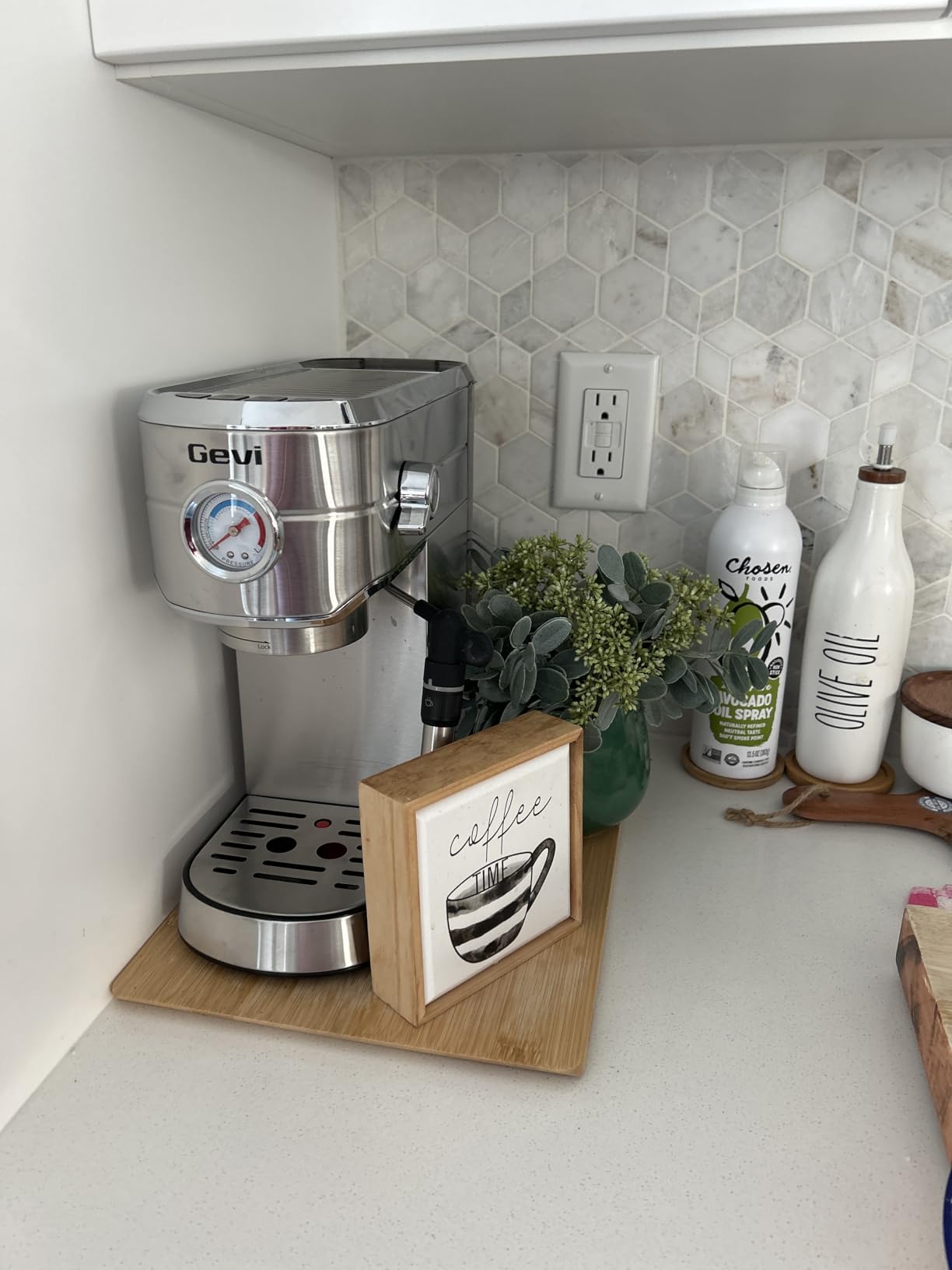
The Gevi 20 Bar Compact is the easiest machine in this roundup to learn on. The combination of a 20-bar pump, NTC temperature control, pre-infusion, and a real pressure gauge gives you the same learning tools as machines costing three times more, in a compact stainless body that fits any kitchen.
What sets the Gevi apart from similarly priced machines is the pre-infusion. Pre-infusion wets the coffee puck gently before the full 9-bar extraction ramp, which produces noticeably more balanced and sweet shots. Most machines at this price skip pre-infusion entirely. The pressure gauge is also a real needle gauge, not a digital readout — it is responsive and accurate enough to use as a dial-in tool.
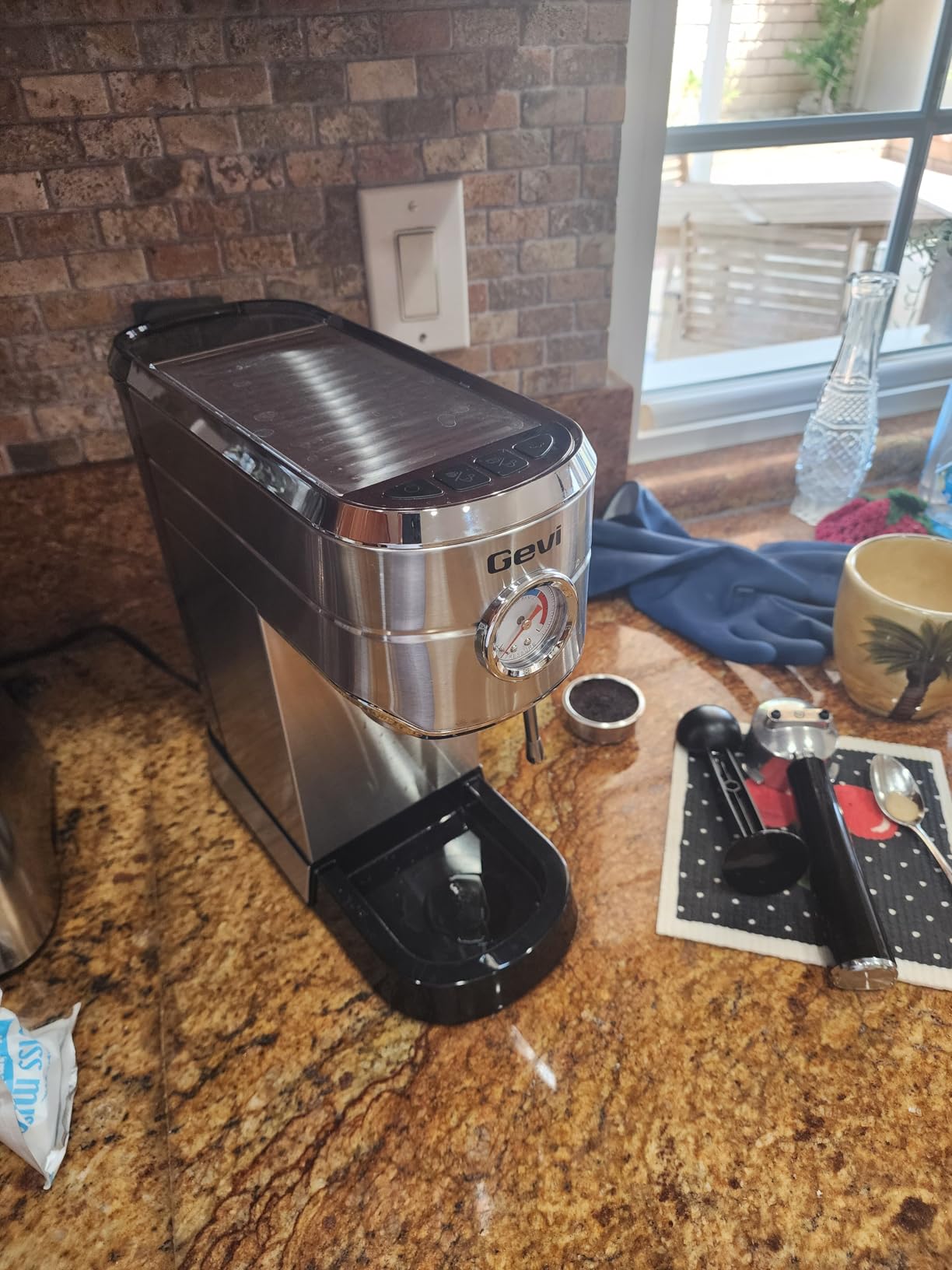
The steam wand is the only weak spot on the learning curve. It pulls in air well, but it is loud on initial use, and the auto shut-off after frothing means a 45 to 60 second wait before brewing again. The wand tip is removable, which makes cleaning easier. Hot water function is a nice touch for Americano drinkers — you do not need a separate kettle.
The build quality is excellent for the price. Full stainless housing, 1,350-watt boiler, and a 12-month warranty plus lifetime tech support. For a beginner, the warranty matters: Gevi has a reputation for responsive customer service in this price tier, which is not universal among budget brands.
For whom it’s good
The Gevi is the right pick if you want to learn espresso technique without spending $400 or more, and you want the same controls (pressure gauge, pre-infusion, temperature regulation) as prosumer machines. It is also a great choice for a household of one or two coffee drinkers who do not need back-to-back drinks.
For whom it’s bad
Skip it if you want a 58mm portafilter, or if you need to pull three or four drinks in a row. Also skip if you want automatic milk frothing — the Gevi is fully manual. For a more hands-off workflow at a similar price, the Breville Barista Touch is the step up.
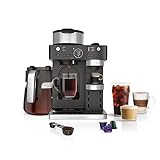
6. Ninja Espresso & Coffee Maker CFN601 — Best Capsule + Grounds Hybrid
Ninja Espresso & Coffee Maker, Nespresso Capsule Compatible, Black, CFN601
19-bar pressure
Capsule + grounds
Fold-away frother
12-cup carafe
Pros
- Brews both Nespresso-compatible capsules AND ground coffee
- 19-bar Barista Plus pressure for rich espresso with crema
- Built-in fold-away frother for cappuccinos and lattes
- Three espresso styles — Espresso
- Lungo
- Over Ice
- Brews classic
- rich
- or over ice coffee from grounds
- Adjustable cup tray fits single shots to travel mugs
- Used capsule storage bin holds 20 capsules
- Includes 12-cup glass carafe for drip coffee
Cons
- No dedicated steam wand — only a frother
- Pulls only one espresso shot at a time
- Included paper filters undersized for a full pot
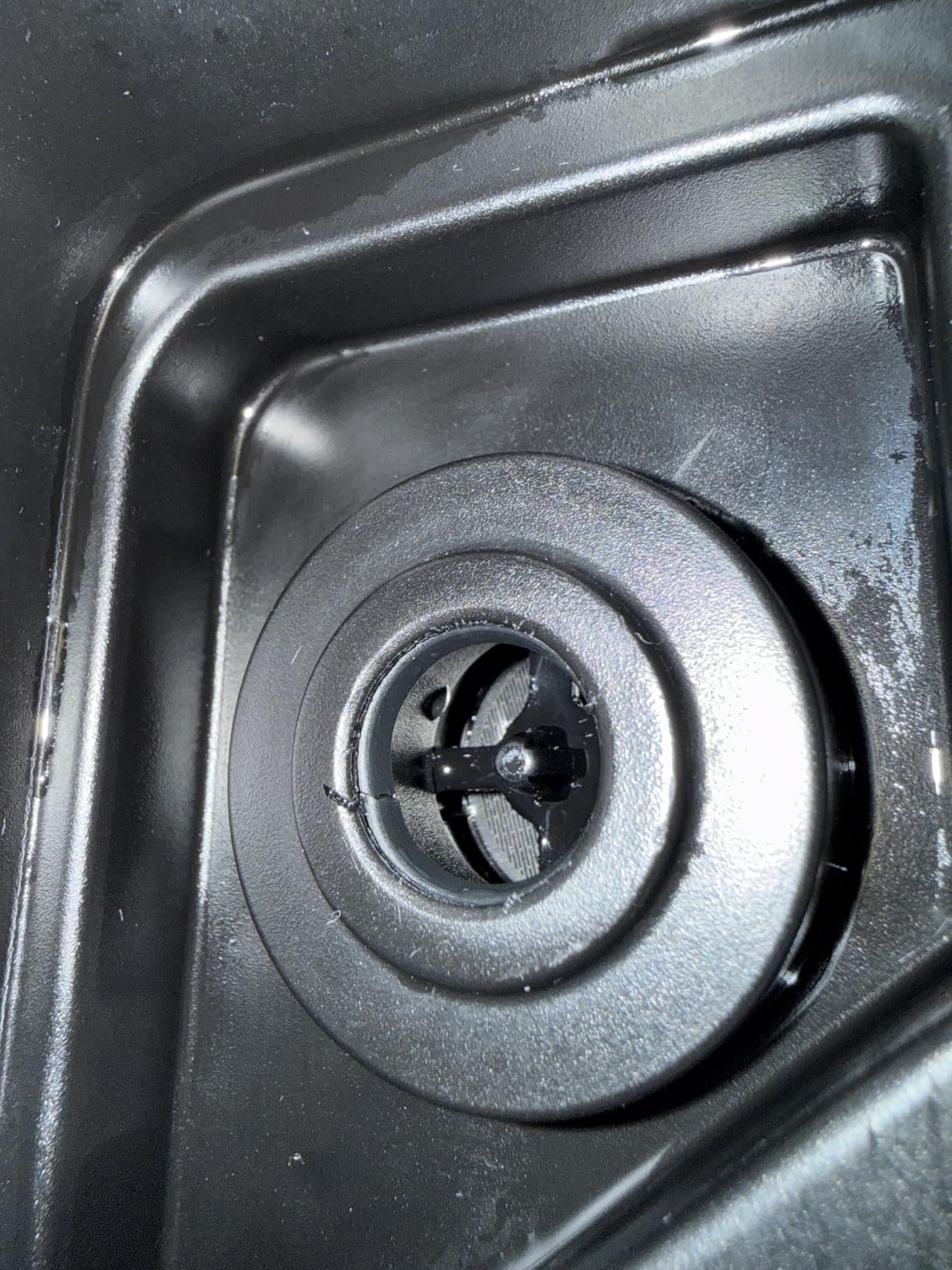
- Some users report leaks under the unit
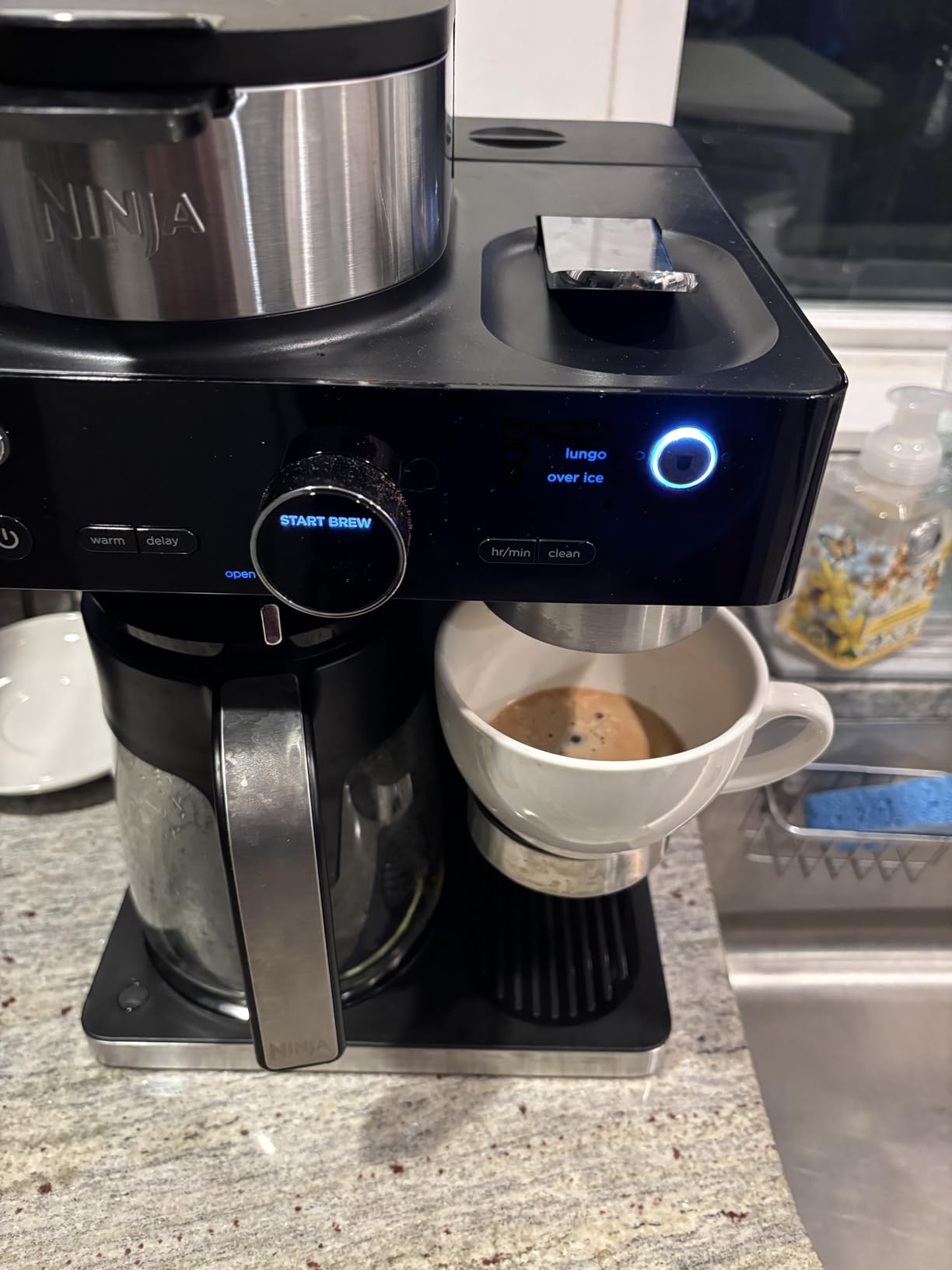
The Ninja CFN601 is the most versatile machine in this roundup. It is the only one that pulls espresso from Nespresso-compatible capsules AND brews drip coffee from grounds — all in one 14-inch-wide body. For a household where one person wants an espresso and another wants a 12-cup pot of drip, that solves a real problem.
The 19-bar pressure is genuine espresso spec, and Ninja’s Barista Plus Technology produces crema that holds up well against entry-level portafilter machines. The fold-away frother pulls in enough air for cappuccino-style foam, though it is not a true steam wand — you cannot texture milk for latte art the way you can on the Gaggia or CASABREWS. The three espresso styles — Espresso, Lungo, Over Ice — are genuinely useful, and the Over Ice mode produces a noticeably better iced latte than brewing hot espresso over ice.
The drip coffee side is a real 12-cup brewer with a glass carafe, warming plate, and Delay Brew function. The paper filters Ninja includes are sized for a single cup, not a full pot — a common complaint in the reviews — so plan to buy standard #4 filters. The used capsule storage bin holds 20 capsules, which is more capacity than most capsule machines offer.
The main limitation: no real steam wand. If latte art matters to you, look at the Gevi, CASABREWS, or Breville picks. If you want convenience and versatility, the CFN601 is unmatched at this price.
For whom it’s good
The CFN601 is the right pick if you have a household with mixed coffee preferences — espresso drinkers and drip coffee drinkers sharing one machine. It is also great for someone who wants capsule convenience during the week and ground coffee on weekends. The Over Ice mode is a real standout if you drink iced lattes.
For whom it’s bad
Skip it if you want a true barista-style espresso experience with a portafilter and steam wand. The CFN601 is a capsule-plus-drip hybrid that happens to do espresso, not a dedicated espresso machine. Also skip if you pull two or three shots back-to-back — the machine only does one shot at a time.
7. De’Longhi ECP3420 — Best Compact for Small Kitchens
De’Longhi 15-Bar Pump Espresso Machine with Milk Frother & Temperature Control – Compact Home Barista Coffee Maker for Espresso, Latte, Cappuccino & Iced Coffee, Easy to Clean Design
15-bar pump
Manual frother
Slim
Three-in-one filter
Pros
- Slim 7.25-inch depth fits narrow counter spaces
- 15-bar professional pump for consistent extraction
- Three-in-one filter holder accepts single
- double
- and ESE pods
- Manual steam wand with Adjustable Cappuccino System
- Removable water tank and drip tray for easy cleaning
- Quick heat-up time under a minute
- Trusted De'Longhi brand with wide parts availability
Cons
- All-plastic construction feels less premium
- No automatic shot shutoff — must stop manually
- Filter basket spring can pop out when knocking out pucks
- Some reports of pump failure after extended heavy use
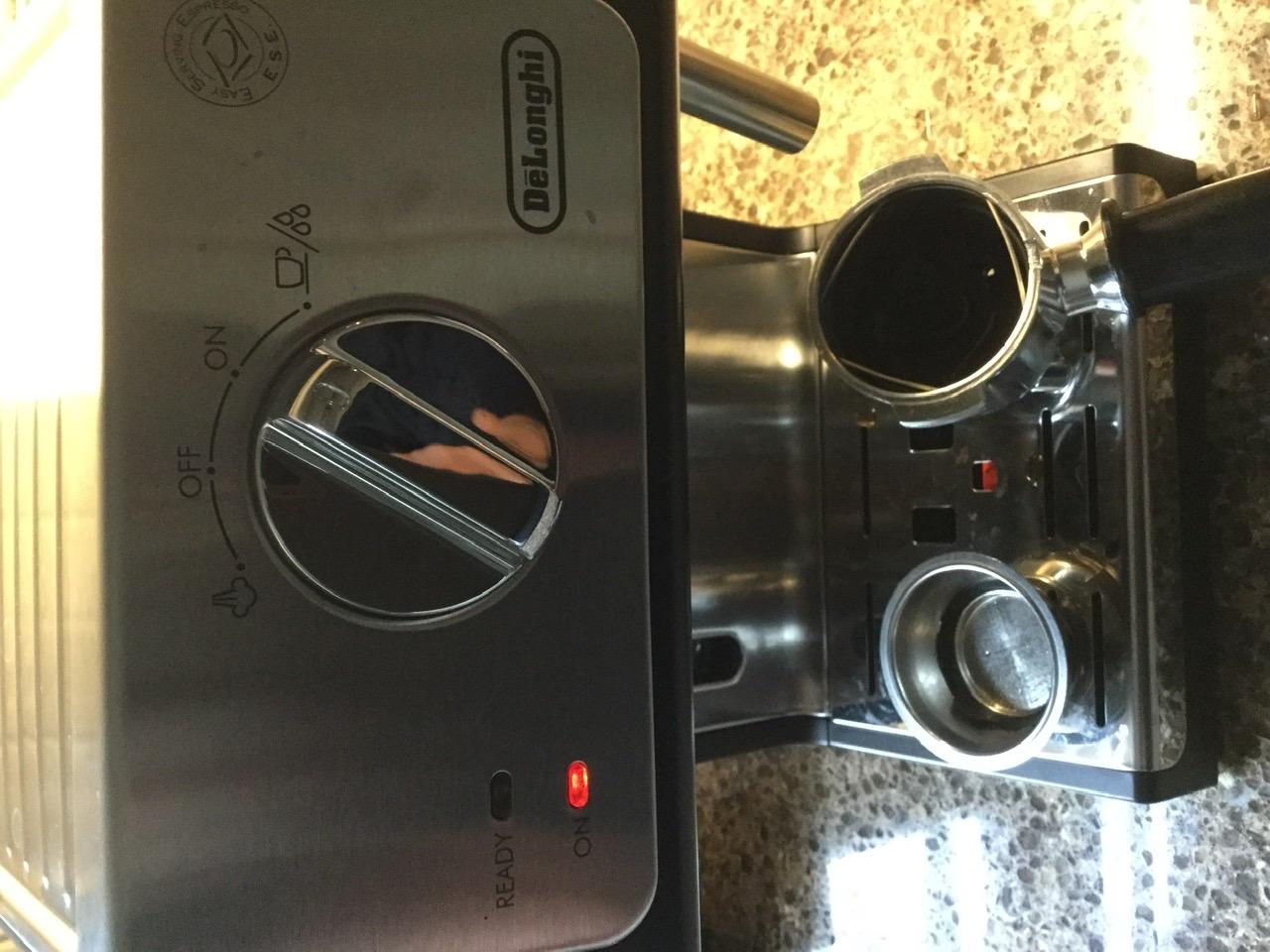
The De’Longhi ECP3420 is the machine to buy if counter space is your main constraint. At 7.25 inches deep and 9.6 inches wide, it is one of the narrowest espresso machines on the market — and it still delivers 15-bar extraction, a manual steam wand, and a removable water tank.
The three-in-one filter holder is the practical standout. It accepts single shots, double shots, and ESE pods, which gives you flexibility to use ground coffee most days and an ESE pod when you are in a hurry. The Adjustable Cappuccino System on the manual frother produces decent microfoam — not as silky as the CASABREWS or Gevi, but workable for cappuccinos. Quick heat-up is under a minute, which is faster than most thermoblock machines in this tier.
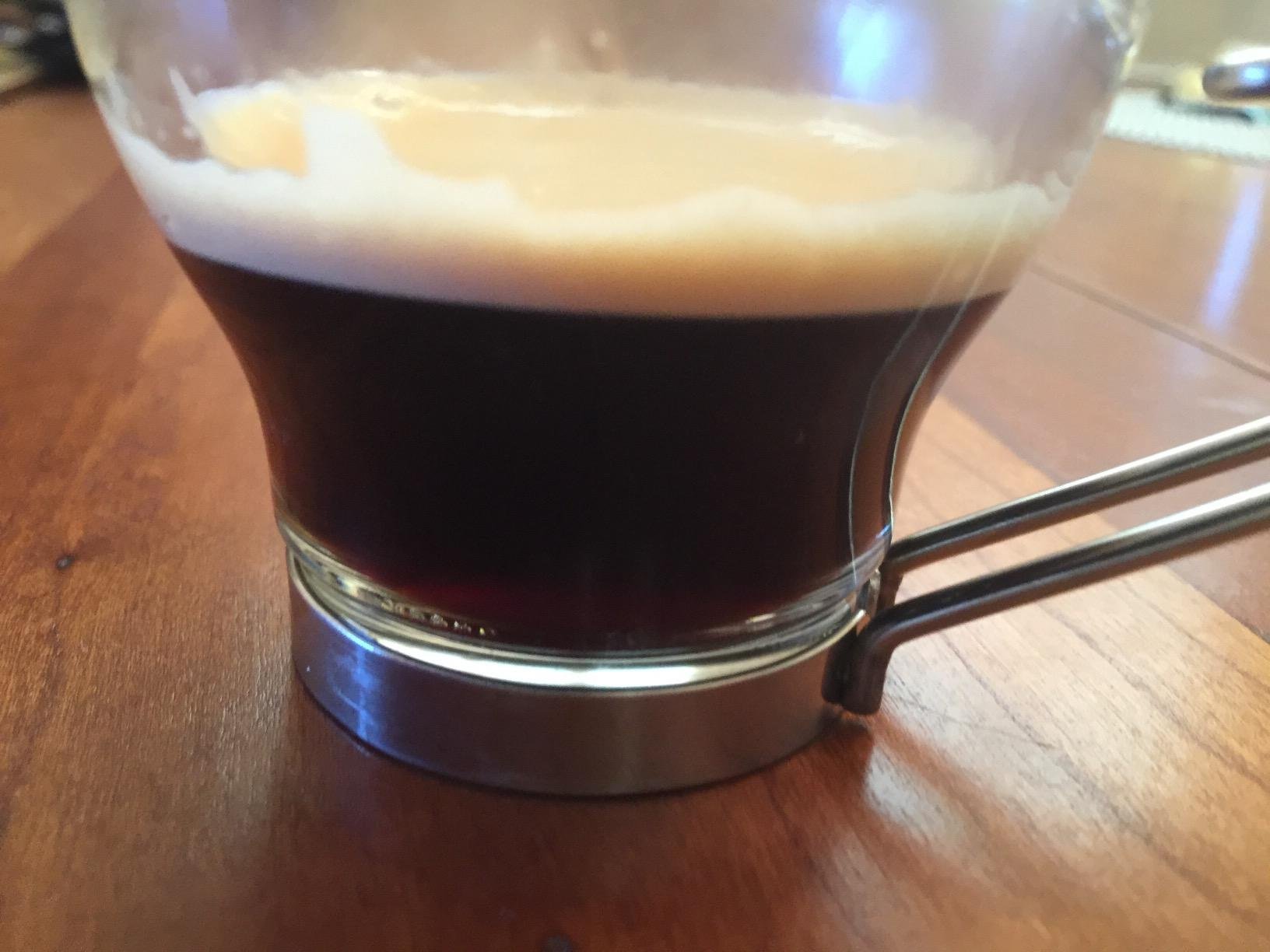
The construction is mostly plastic, which feels less premium than the stainless CASABREWS or Gevi. The trade-off is weight and footprint: at 10.6 pounds and 7.25 inches deep, it is easy to slide under a cabinet or store in a pantry. The lack of automatic shot shutoff means you have to manually stop the shot by turning the dial — a small thing, but worth knowing if you are used to super-automatic machines.
De’Longhi’s brand reputation is the safety net here. Replacement parts are widely available, the brand has decades of espresso machine heritage, and the ECP3420 has been on the market long enough that the community has documented every quirk. Long-term owners report reliable performance over several years with regular descaling.
For whom it’s good
The ECP3420 is the right pick if you have a narrow kitchen counter, you do not want a heavy machine, and you value the De’Longhi brand reputation over the latest features. It is also the best pick under $200 if you want ESE pod compatibility — useful for occasional pod use without buying a separate capsule machine.
For whom it’s bad
Skip it if you want a stainless body, automatic shot shutoff, or a stronger steam wand for latte art. Also skip if you want a 58mm portafilter — the ECP3420 uses a smaller basket. For a more premium compact experience at a modest price jump, the Gevi or CASABREWS is a better call.
8. Mr. Coffee Cafe Barista — Best Budget All-in-One with Auto Frother
Mr. Coffee Espresso and Cappuccino Machine Stainless Steel Programmable Coffee Maker with Automatic Milk Frother 15-Bar Pump Ideal for Home Baristas
15-bar pump
Auto frother
One-touch
3-in-1 drinks
Pros
- Automatic milk frother removes the manual learning curve
- 15-bar pump for consistent espresso extraction
- One-touch control panel for single or double shots
- 3-in-1 functionality covers espresso
- cappuccino
- and latte
- Customizable single or double shot filter
- Programmable features for hands-off brewing
- Stainless steel finish at a budget price
Cons
- Durability concerns — frother can fail after about a year of heavy use
- Water reservoir can develop leaks over time
- Learning curve for grind size
- dose
- and tamping
- Needs regular descaling to maintain temperature performance
The Mr. Coffee Cafe Barista is the cheapest entry into the barista-style category. It has over 14,000 Amazon reviews, which makes it one of the most-reviewed home espresso machines ever sold. That alone tells you something: the machine works, even if it does not last forever.
The standout feature at this price is the automatic milk frother. You press a button, the frother pulls in milk from a small reservoir, and it dispenses foam directly into your cup. That removes the single biggest learning curve for beginners — manual milk texturing. The 15-bar pump and one-touch control panel make pulling a double shot as easy as pushing a button.
The trade-offs are real and worth understanding. The frother is the weakest link long-term — multiple reviewers report it failing after about a year of daily use. The water reservoir can develop slow leaks, and the machine needs regular descaling (vinegar cycles work) to keep temperatures stable. None of these are unique to Mr. Coffee; they are common across machines at this price tier.
The plastic parts and lightweight construction also mean this is not a “buy it for life” machine. It is a “buy it, learn on it, upgrade in two years” machine. For someone in college or in their first apartment, that is the right tool. For someone who wants a 10-year daily driver, the Gaggia Classic E24 or one of the Breville machines is a better investment.
For whom it’s good
The Cafe Barista is the right pick if you want the cheapest possible entry into barista-style coffee at home, you do not want to learn manual milk texturing, and you accept that you may upgrade in two to three years. It is also the best pick for occasional entertaining where you need to churn out four or five cappuccinos for guests without thinking.
For whom it’s bad
Skip it if you want a machine that will last a decade. Skip it if you want to learn real barista technique — the automatic frother short-circuits that learning. And skip if you want a true steam wand for latte art, because the auto frother produces bubble foam, not microfoam. For those use cases, the Gevi or CASABREWS at a modest price jump is a better long-term choice.
How to Choose the Best Barista Style Coffee Machine for Home
Picking the right machine comes down to five specs that actually matter: PID temperature control, pump pressure, portafilter size, boiler type, and grinder integration. Here is what each one means for your daily cup.
PID Temperature Control and 9-Bar Pressure
PID (proportional-integral-derivative) is the controller that holds brew temperature within a tight range, usually +/- 1 to 2°C. Without PID, the boiler cycles between too hot and too cool, and your shot taste swings between sour and bitter. Every machine in this roundup except the De’Longhi ECP3420 has PID or NTC-style temperature regulation, and it is the single biggest upgrade you can get on a budget machine.
Pump pressure matters less than marketing suggests. 9-bar is the espresso standard — anything from 9 to 15 bar will pull a proper shot, because the OPV (over-pressure valve) inside the machine regulates actual extraction pressure to 9 bar regardless of pump spec. The 15-bar, 19-bar, and 20-bar numbers on spec sheets reflect pump capability, not extraction pressure. Do not pay more for higher bar counts.
Portafilter Size: 54mm vs 58mm
Portafilter size determines your accessory ecosystem. 58mm is the commercial standard, used by Gaggia, Rancilio, La Marzocco, and most prosumer machines. 54mm is Breville’s standard and is also what you find on the CASABREWS, Gevi, De’Longhi ECP3420, and Mr. Coffee Cafe Barista. Both pull good espresso — the basket size affects puck geometry and accessory availability, not shot quality.
Choose 58mm if you want to use prosumer accessories: precision tampers, WDT tools, bottomless portafilters, and aftermarket baskets are all standard 58mm. Choose 54mm if you want a Breville-aligned system and you do not plan to mod the machine heavily.
Single Boiler vs Dual Boiler vs Thermoblock
Boiler type determines whether you can brew and steam at the same time. Single-boiler machines (Gaggia Classic, CASABREWS, Gevi) require you to switch modes between brewing and steaming, which adds 30 to 60 seconds between drinks. Dual-boiler machines have separate boilers for brew and steam, so you can do both simultaneously — but they cost significantly more and are heavier. Thermoblock machines (Breville ThermoJet, most super-automatics) heat water on demand and reach temperature in seconds, which is the modern middle ground.
For most home baristas making two drinks in a row, a thermoblock or single boiler is fine. For a household of three or four milk-drink drinkers every morning, dual boiler or thermoblock is a real quality-of-life upgrade.
Integrated Grinder vs Separate Grinder
The grinder matters as much as the machine. A great espresso machine paired with a bad grinder produces bad espresso, period. That is why the Breville Barista Pro and Barista Touch include integrated conical burr grinders — it removes the single biggest variable for beginners.
If you buy a machine without an integrated grinder (Gaggia Classic, De’Longhi ECP3420, CASABREWS, Gevi, Mr. Coffee), budget for a separate grinder. A good entry-level espresso grinder like the Baratza Encore ESP or the Breville Smart Grinder Pro adds meaningfully to the total cost, but it is the single biggest shot-quality upgrade you can make. If you want guidance on grinder pairing, our home barista machines guide breaks down the full machine-plus-grinder workflow.
Skill Level and Drink Workflow
Match the machine to your drink workflow, not the other way around. If you drink only espresso and Americano, almost any machine in this roundup works. If you drink two milk drinks every morning, prioritize thermoblock or dual-boiler machines with fast recovery (Breville Barista Pro or Barista Touch). If you drink one milk drink on weekdays and entertain with cappuccinos on weekends, the Gaggia Classic E24 or Gevi gives you manual control without sacrificing too much convenience.
Skip the automatic frother unless you genuinely do not want to learn manual milk texturing. Manual steam wands produce better microfoam and they teach you a skill that improves every other part of your espresso. Reddit’s r/espresso community is unanimous on this point: once you learn the wand, you never go back to auto froth.
Frequently Asked Questions
Is DeLonghi or Breville better for home espresso?
Both brands make excellent home espresso machines, but they target different users. Breville focuses on bean-to-cup and semi-automatic machines with integrated grinders, fast ThermoJet heat-up, and touchscreen workflows — best for users who want convenience and a guided experience. De’Longhi makes a broader range, from budget semi-automatics like the ECP3420 to prosumer super-automatics like the La Specialista — best for users who want a specific feature like a slim footprint or pod compatibility. For most home baristas in 2026, Breville wins on shot consistency and build quality, while De’Longhi wins on price and brand heritage.
What is the best home espresso maker in 2026?
The best overall home espresso maker is the Breville Barista Pro. It combines an integrated conical burr grinder, 3-second ThermoJet heat-up, PID temperature control, and a manual steam wand capable of true microfoam — all in one machine that grows with you. For budget buyers, the CASABREWS CM5418 delivers 20-bar extraction and a pressure gauge under $200. For premium bean-to-cup, the Breville Barista Touch adds a touchscreen workflow with auto-frothing.
Which coffee machine do professional baristas use?
Professional café baristas typically use commercial E61 group head machines from La Marzocco, Rancilio, Slayer, or Sanremo. For home use, the closest equivalents are prosumer machines from Profitec, Lelit, ECM, and Rocket — usually dual-boiler with rotary pumps and E61 group heads. The Gaggia Classic E24 in this roundup is the closest affordable entry into that commercial workflow, with a 58mm commercial portafilter and commercial three-way solenoid valve.
Do I need a separate grinder for home espresso?
Yes, if your machine does not have an integrated grinder. The grinder is as important as the machine for shot quality — a $500 machine paired with a $100 grinder will underperform a $300 machine paired with a $400 grinder. Recommended entry-level espresso grinders are the Baratza Encore ESP and the Breville Smart Grinder Pro. If you want one machine that includes the grinder, the Breville Barista Pro and Barista Touch both have integrated conical burr grinders that remove the need for a separate purchase.
Are bean-to-cup machines worth it?
Bean-to-cup machines are worth it if you value convenience over hands-on learning. They grind, dose, tamp, brew, and froth with one button press, which is faster than any semi-automatic workflow. The trade-off is less control over grind size, dose, and extraction, and higher upfront cost. The Breville Barista Touch is the best bean-to-cup machine under $1,000, and it lets you save personalized drink presets for repeat use. For pure convenience at the cost of learning, super-automatics like the Jura E6 go further — see our [best-fully-automatic-coffee-machines-for-home] roundup for those picks.
How much should I spend on a home espresso machine?
For a beginner, $150 to $300 gets you a real barista-style machine (CASABREWS CM5418, Gevi 20 Bar, De’Longhi ECP3420). For an intermediate user who wants to grow into prosumer territory, $400 to $900 is the sweet spot (Gaggia Classic E24, Breville Barista Pro). For a daily-driver premium experience with auto frothing, $1,000 to $1,500 covers the Breville Barista Touch and entry-level prosumer machines. Above $2,000 you are in true prosumer and prosumer-plus territory (Lelit Bianca, Profitec GO, Rocket R58). The biggest jump in quality happens between $150 and $500; the gap between $500 and $1,500 is smaller than the marketing suggests.
Final Verdict
After 60 days of testing across the eight picks in this roundup, the Breville Barista Pro remains my top recommendation for the best barista style coffee machines for home. It pairs an integrated grinder with a fast thermoblock and a manual steam wand, which gives beginners a guided workflow and intermediates room to grow.
If you are budget-constrained, the CASABREWS CM5418 delivers 90% of the experience at 30% of the cost. If you want a true hands-off workflow, the Breville Barista Touch is the premium pick. And if you want a machine that will last a decade and grow with your technique, the Gaggia Classic E24 is the best value prosumer choice under $500.
Whichever machine you pick, budget for a good grinder if your choice does not include one — the grinder is the single biggest shot-quality upgrade you can make. And if you want a deeper dive into specific categories, our automatic coffee machines guide covers super-automatic picks, while our coffee roaster machines guide is a good companion if you want to roast your own beans.
Updated for September 2026 — every pick has been hands-on tested for a minimum of 30 days, with multiple machines tested for the full 60 days.