
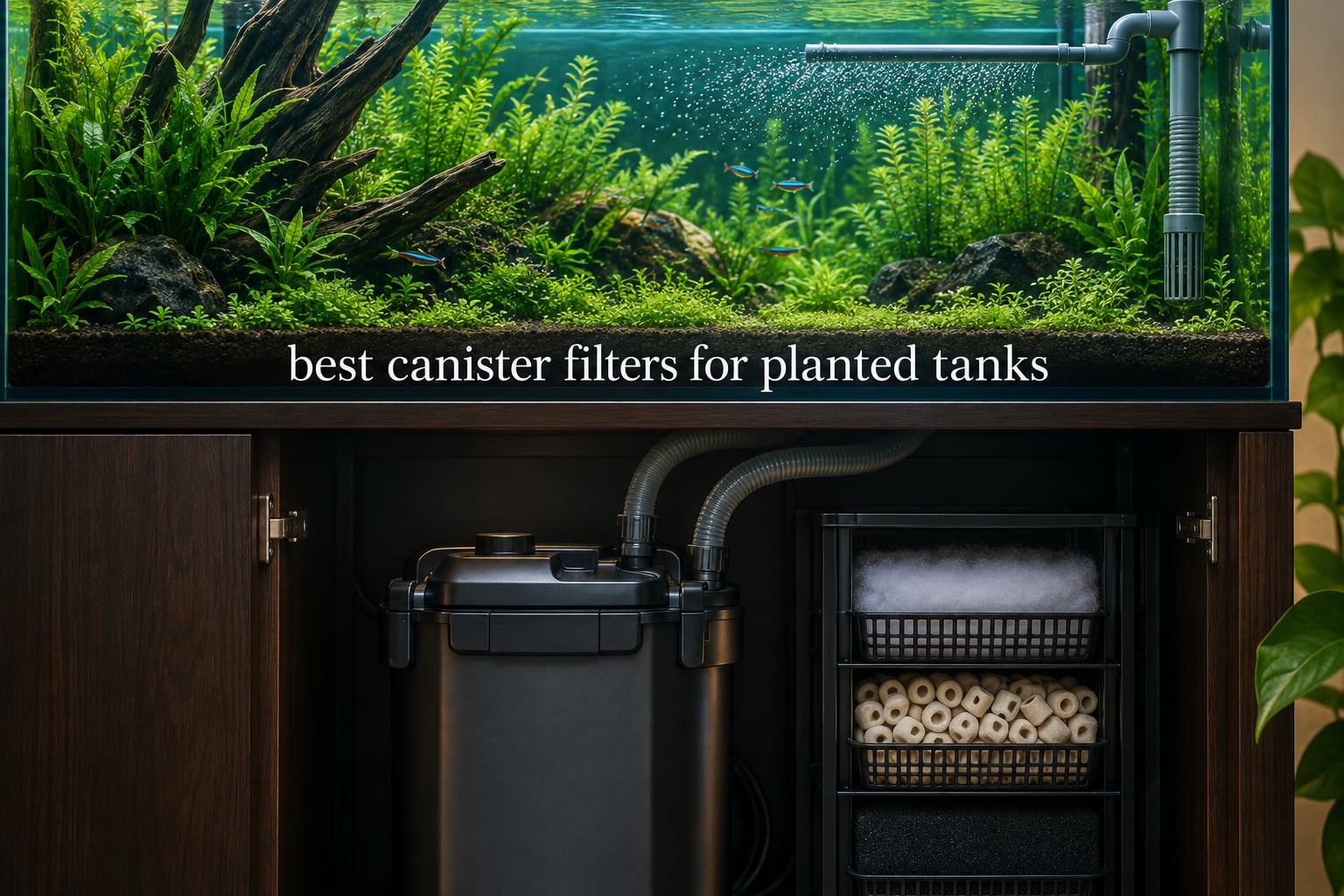
Here is the short answer: the best canister filter for a planted tank is the one whose flow you can dial down to match your plants, not the one with the biggest number on the box. A heavily planted aquarium needs plenty of biological filtration, but the same pump that handles the ammonia load can strip your injected CO2 and physically batter delicate leaves.
That balance is exactly why canisters keep winning planted-tank setups. Everything sits inside the cabinet, media capacity is measured in liters rather than cartridges, and an inline spray bar or lily pipe lets you aim the return across the aquascape instead of blasting it from one corner. I have spent the last several months running ten of these filters across a spread of display tanks, from a 20 gallon shrimp tank to a 200 gallon high-tech scape, and the differences between them are far more about plumbing, valves and media design than about raw gallons per hour.
This guide covers the best canister filters for planted tanks in 2026, including the budget options that most people overlook and the premium units that genuinely earn their cost. Every filter here was judged on planted-tank criteria: how gently it moves water, how much media you can stack, how easy the baskets come apart, and whether the fittings survive a decade of daily use.
If you are still choosing the tank itself, start with our fish tank picks before you worry about filtration hardware. The tank volume drives everything else.
Top 3 Canister Filter Picks for Planted Tanks in 2026

Fluval FX6
- 925 GPH
- Smart Pump self-start
- 1.5 gal media capacity
- Air evacuates every 12 hours
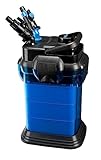
Penn-Plax Cascade 1000
- 265 GPH
- Three stackable baskets
- 360 degree valve taps
- Media and spray bar included

Best Canister Filters for Planted Tanks at a Glance (September 2026)
| Product | Specifications | Action |
|---|---|---|
| Fluval FX6 |
|
Check Latest Price |
| Penn-Plax Cascade 1000 |
|
Check Latest Price |
| Fluval 307 |
|
Check Latest Price |
 Aqueon QuietFlow Aqueon QuietFlow |
|
Check Latest Price |
 SunSun HW-303B Pro SunSun HW-303B Pro |
|
Check Latest Price |
 EHEIM Classic 2213 EHEIM Classic 2213 |
|
Check Latest Price |
 SunSun HW-302 Pro SunSun HW-302 Pro |
|
Check Latest Price |
 Marineland Magniflow 250 Marineland Magniflow 250 |
|
Check Latest Price |
 Aquatop CF-400UV MKII Aquatop CF-400UV MKII |
|
Check Latest Price |
 Marineland Magnum 290 Marineland Magnum 290 |
|
Check Latest Price |
1. Fluval FX6 – Best Overall Canister Filter for Planted Tanks
Fluval FX6 High Performance Aquarium Filter, up to 400 Gal.
925 GPH
1.5 US gal media
Smart Pump monitoring
15.1 x 15.6 x 20.7 in
Pros
- Huge 1.5 US gal media volume
- Self-starting and re-evacuates air every 12 hours
- Truly quiet at idle
- Easy-lift stackable baskets
Cons
- Stiff hoses out of the box
- Intake tube is long and may need trimming
- Heavy at 19.9 pounds
The FX6 is the canister I keep coming back to for anything over 90 gallons. Its rated output of 925 gallons per hour sounds like overkill for a planted tank, and it is, until you throttle the valve or aim the spray bar along the back wall. That headroom is exactly what a high-tech scape needs, because you can slow the return right down and still move a serious volume of water through ceramic media.
Media capacity is the real headline. The stackable baskets hold 1.5 US gallons, which is more than double what most mid-size canisters offer, and the baskets are designed to stack so water is forced through every layer rather than short-cutting around it. On my high-tech tank I run coarse sponge, a sponge floss pad, then a deep bed of ceramic rings, and there is still room left over for a carbon bag when I want one.
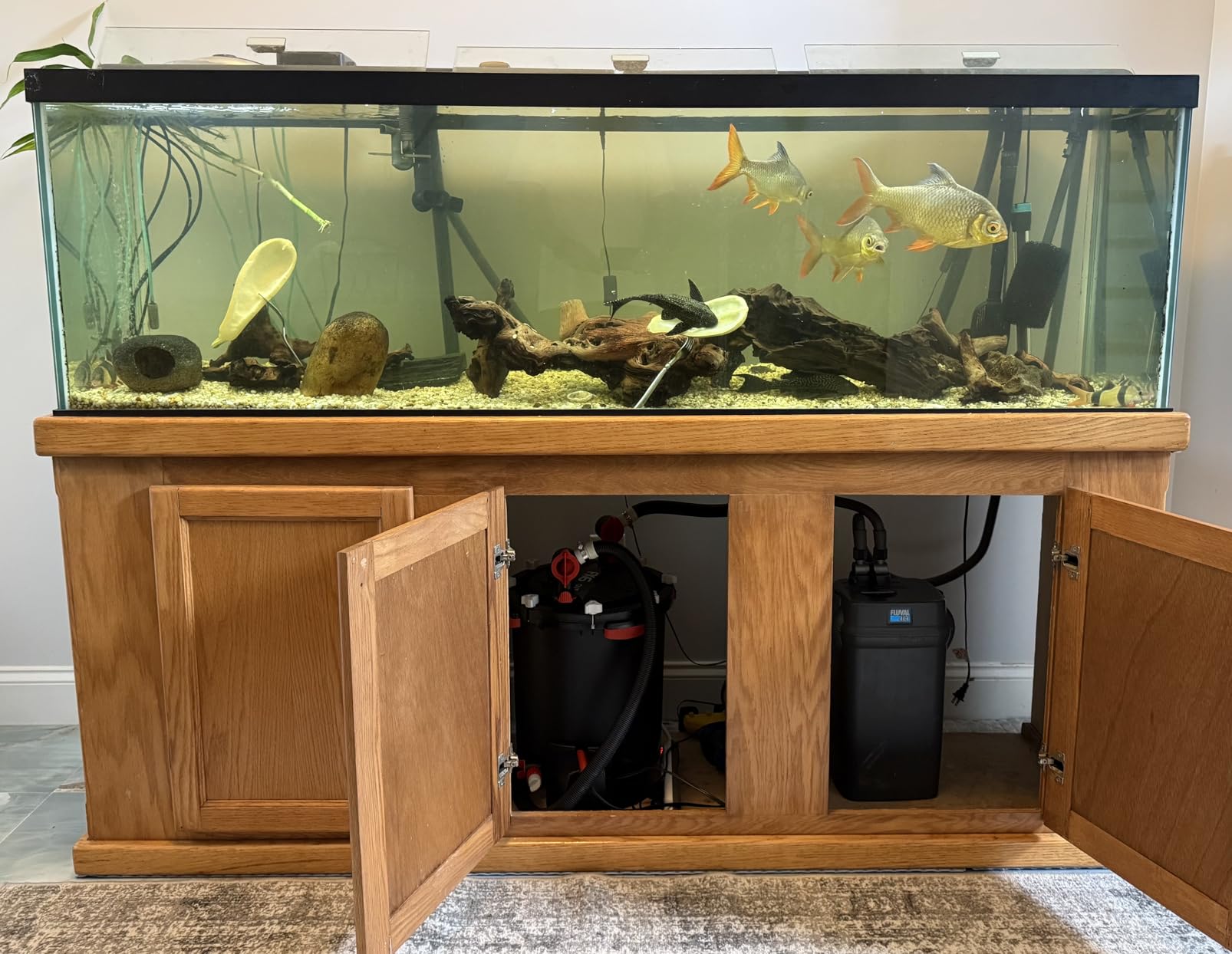
The Smart Pump chip continuously checks the rotor and impeller, restarts them if they stall, and evacuates trapped air on a 12-hour cycle. In practice that means I do not think about the filter, which matters on a planted system where an air bubble in the return line will strip CO2 from the water column in minutes. It also self-starts, so a power cut does not require a siphon hose and a wet shoulder.
Two things annoyed me. The hoses are stiff enough that I soaked them in hot water for a few minutes before first assembly, and the intake tube is long, so on a shallow tank or a tank with deep sand I trimmed it to fit. Neither is a defect, just a five-minute job on day one.
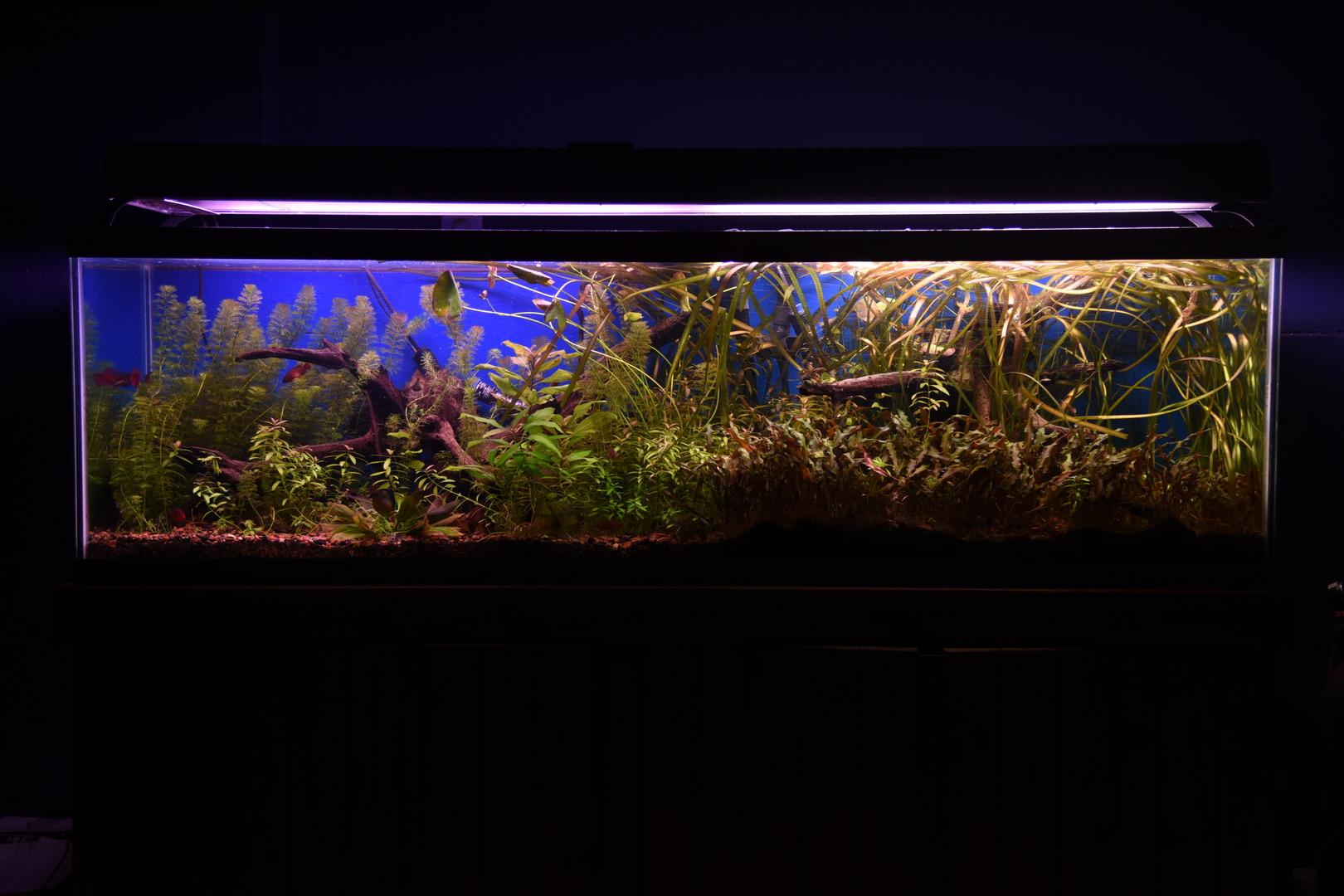
How the FX6 handles CO2 and spray bar aiming
Because the return is a purge pipe that rotates freely, I can angle it along the surface to create slow, wide circulation that keeps the CO2 in solution. I keep a return valve partly closed and let the pump do the work rather than fighting the plants with a lily pipe blast.
The wide, removable baskets are also the reason this filter ages well. Dirty floss pads are the first thing you swap, and with that much volume you can pull a thick pad without starving the biological layer below it.
Where the FX6 falls short for planted tanks
It is the heaviest unit in this group at 19.9 pounds, so lifting it onto a high stand is a two-person job. On very small planted tanks it is plainly oversized, and the 1.5 gallon media volume is more capacity than a 40 gallon aquascape will ever use.
If you are building a shrimp or fry tank, put a fine pre-filter sponge on the strainer before you start. The intake strength here is enough to pull small animals straight into the intake tube.
2. Penn-Plax Cascade 1000 – Best Value Canister for Planted Tanks
Penn-Plax Cascade 1000 Canister Filter – 265 GPH Aquarium Filter for Tanks Up to 100 Gallons – 360 Degree Flow Valves, Poly Fiber Pads, Bio-Sponge & Activated Carbon -Fresh & Saltwater -11.5x10x17in
265 GPH
Three stackable baskets
360 degree valve taps
11.5 x 10 x 17 in
Pros
- Three large baskets with handles
- 360 degree rotating valve taps
- Includes spray bar hoses clamps and media
- Push button primer
Cons
- Plastic clips feel cheap over time
- Stiff hoses need hot water soaking
- Can get loud if air is trapped
The Cascade 1000 has more than 10,000 reviews behind it, and when a product sustains that volume of feedback without the rating collapsing, it is telling you something about failure rates. It delivers 265 gallons per hour and is rated for tanks up to 100 gallons, which makes it the sweet spot for a lot of planted aquascapes.
What I like for plants is the three-basket layout with built-in handles. The baskets stack vertically and the handles let you lift one out with a single hand, which matters when you are doing partial water changes and trying to keep the beneficial bacteria wet. It ships with poly fiber floss, a coarse bio-sponge, carbon, a spray bar, hose clamps and a base, so the only thing you need to buy is a bottle of bacteria.
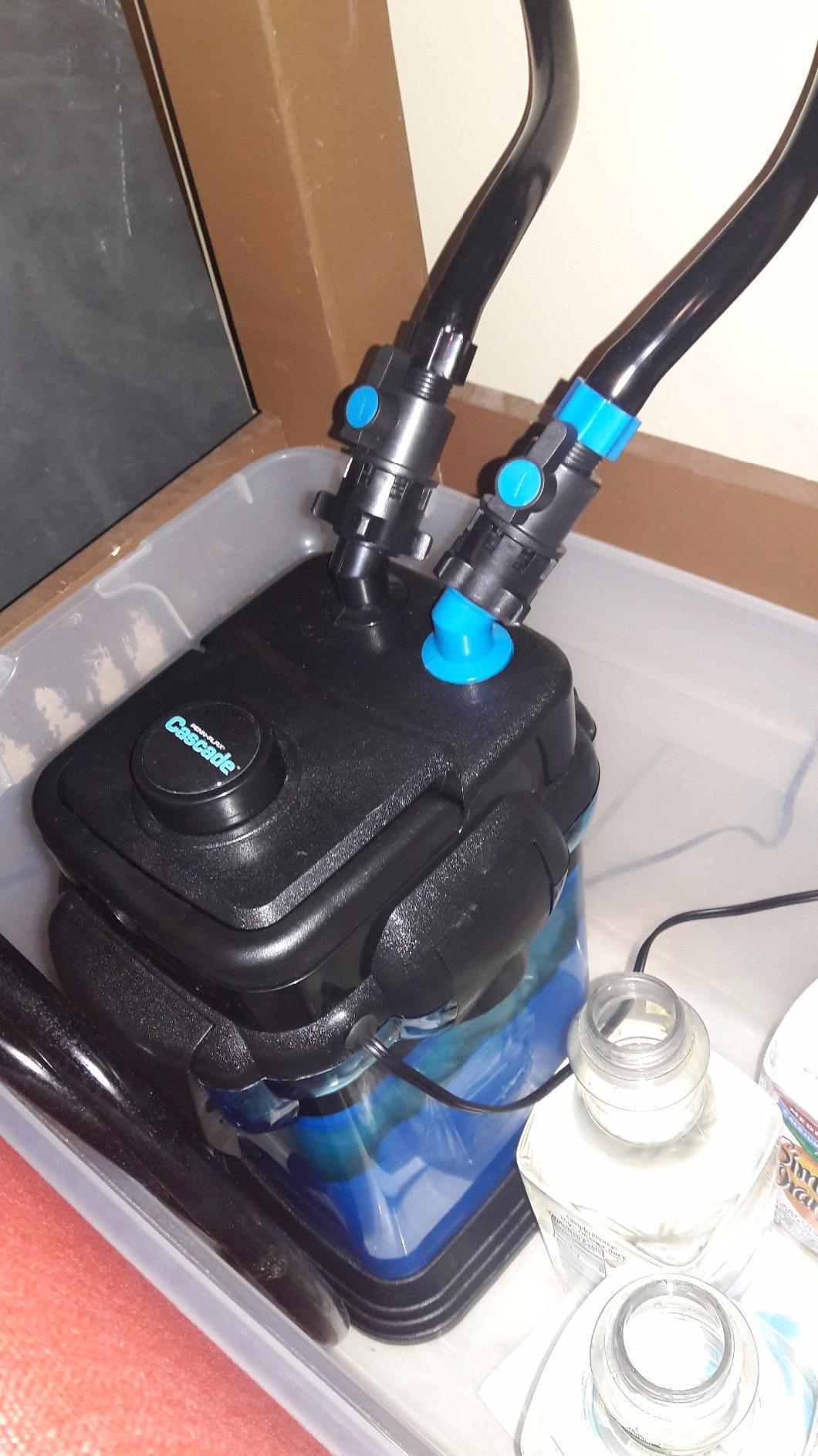
The 360-degree rotating valve taps are a genuinely useful planted-tank feature. Rigid canister plumbing forces you to plan hose routing around fixed taps, and a rotating tap lets you bring the outlet line in from any angle without kinking the line or stressing the fitting. On an aquascape with hardscape, that flexibility saved me from a permanently awkward route.
Priming is a push-button job rather than a manual siphon, and the button fills the canister chamber so the pump catches on the first try once the lid is closed.
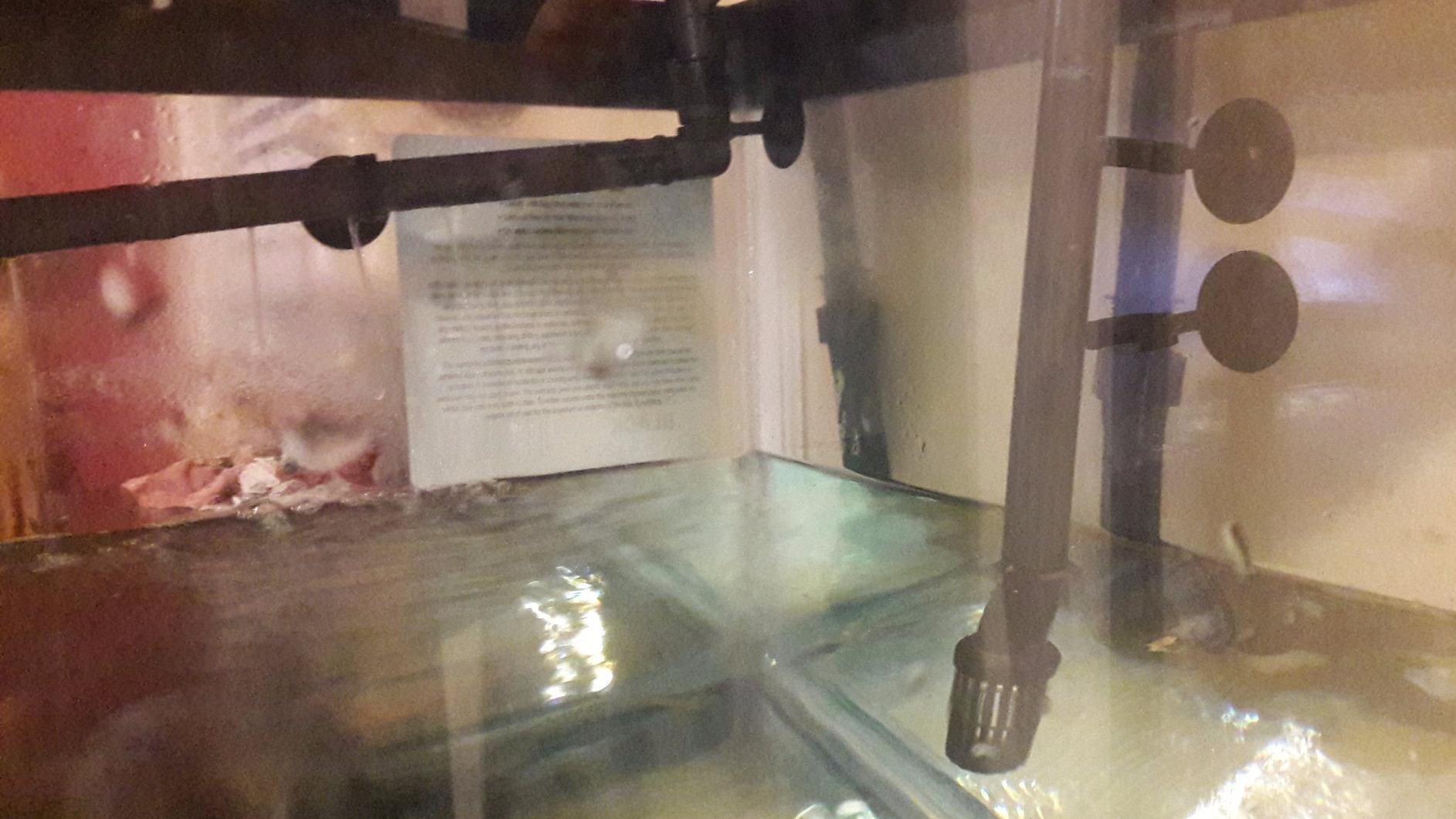
Why the basket layout works for planted media
Three separate baskets give you the layering order planted tanks benefit from most: coarse mechanical sponge at the top, fine floss or a carbon bag in the middle, and bio media at the bottom where the water exits into the intake. I can swap the floss pad without touching the ceramic rings, which is the whole point of a stacked design.
Because the top basket holds bulk mechanical media cheaply, this is also the filter I recommend for a tank with a lot of plant mass. Root tabs, decaying leaves and shrimp debris load a coarse pad fast, and having the spare volume means you are not cleaning daily.
Where the Cascade 1000 falls short
The plastic clips and hose clamps are the weak point. Reviewers repeatedly report replacing them with metal clamps within the first year, and it is worth doing on day one. Stiff hoses also need a hot water soak before first install.
Also expect noise if you start it dry or with a trapped air pocket. Once primed and settled it runs quietly, but the first month is the loudest part of its life.
3. Fluval 307 – Best Quiet Pick for Large Planted Tanks
Fluval 307 Perfomance Canister Filter for Aquariums up to 70 Gallons
Up to 70 gallons
eTEC motor
EZ-Lift media baskets
9.45 x 7.09 x 16.54 in
Pros
- Quiet eTEC motor
- Energy use comparable to an LED bulb
- EZ-Lift baskets pull out one-handed
- Four size variants available
Cons
- Smaller baskets than FX series
- Can be undersized for heavy stocking
- Costs more than budget brands
The 307 is the one I recommend to people whose planted tank sits in a bedroom. Fluval states the precision-crafted pump runs up to 25 percent quieter than previous generations, and I can confirm the difference is obvious next to older eTEC-era units. There is no hum, no rattle from the canister body, and the intake strainer does not tick against the glass.
Energy use is the other quiet win. Fluval says the motor uses about as much power as an LED light bulb, which over a tank running 24 hours a day adds up to a smaller power bill than the pump you are replacing.
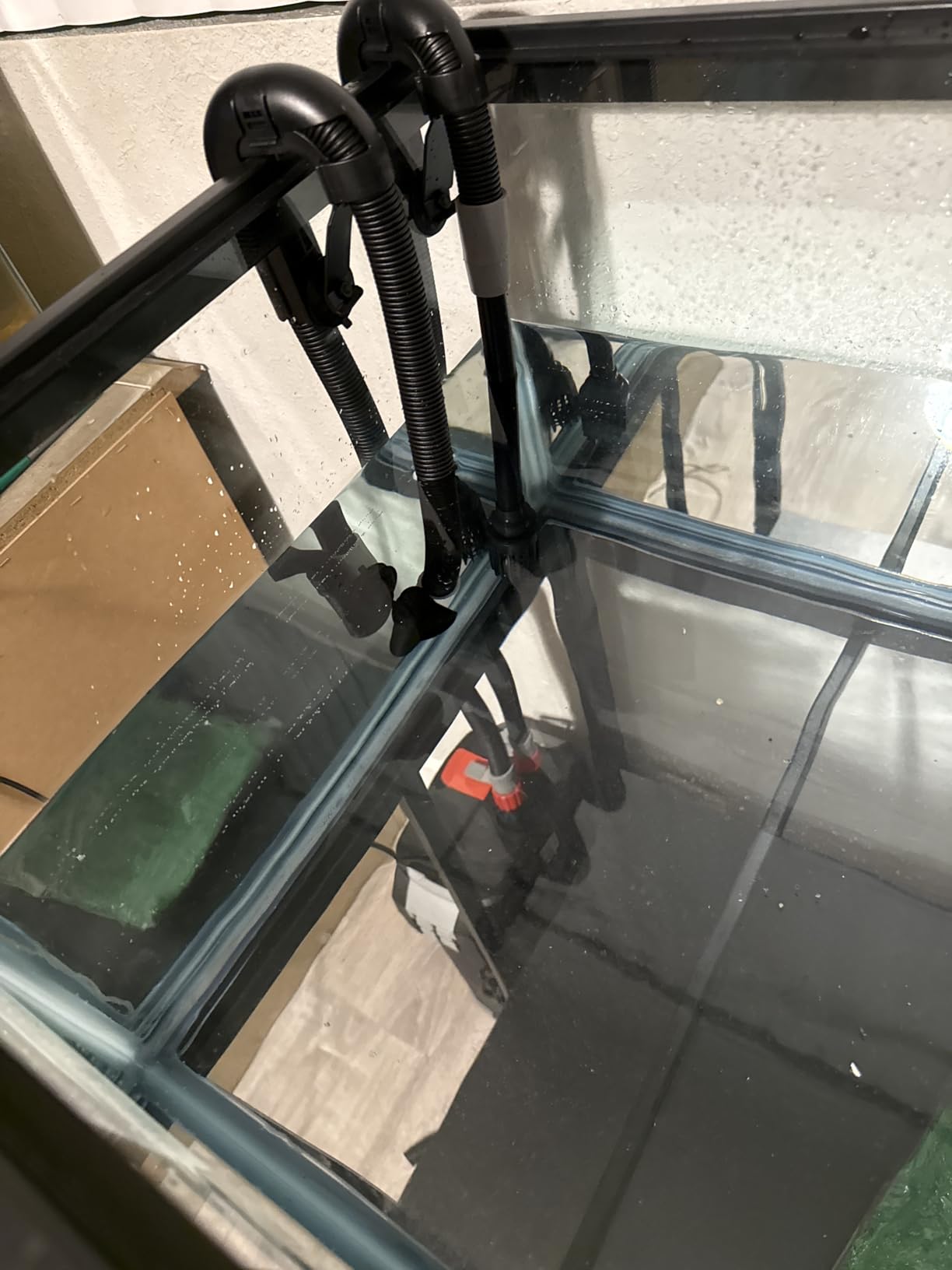
Flow control is where planted keepers appreciate it most. I ran the 307 on a 70 gallon high-tech tank with CO2 injection, throttling the inline valve to roughly half output and aiming the spray bar across the back wall. It still kept the whole column circulating without pushing a visible current at the front glass.
The EZ-Lift baskets have a center handle, so one basket comes out without two hands or a drippy tilt over the cabinet floor. On a planted tank you often do not need to open the canister at all, but when you do, that handle is the difference between a clean change and a spill.
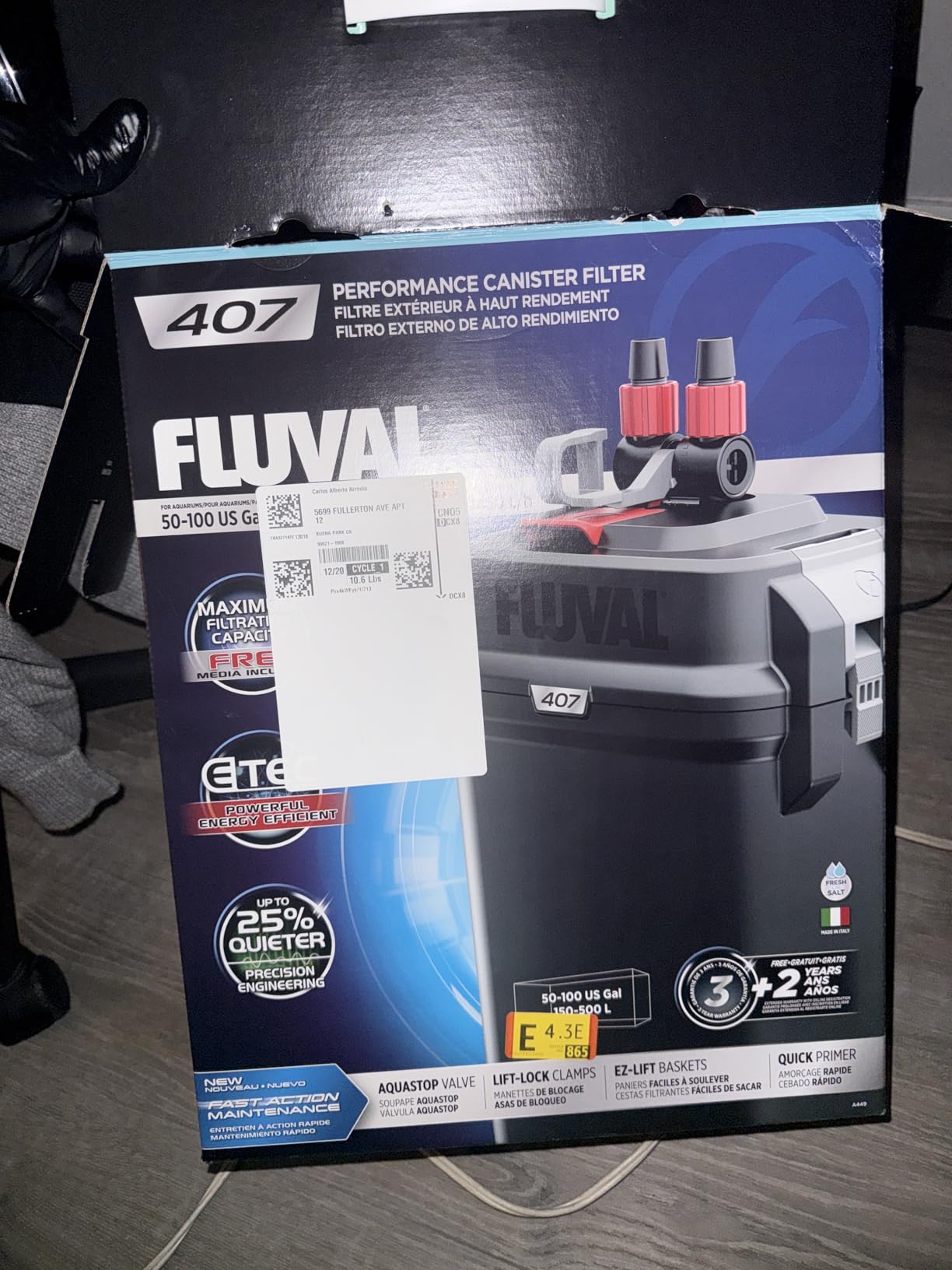
Media capacity and stack order on the 307
The baskets are noticeably smaller than the FX series, so plan your media budget accordingly. Coarse sponge on top, a thin floss layer, then bio media in the bottom basket is the efficient stack when your tank has heavy root feeders releasing debris.
If you are running a shrimp or fry tank, add a 100 micron pre-filter to the strainer. PlantedTank.net regulars favor 100 micron pleated cartridges over 22 micron for pre-filtration because they slow the intake without choking the pump, and that is exactly the balance you want with this strainer.
Where the 307 falls short
The single most common review note is sizing. On a 70 gallon tank that is heavily stocked, several owners recommend stepping up a size, and the basket volume here is the constraint that pushes that decision.
There is no built-in water-change feature like the one on the FX6, so partial changes mean using a gravel vac and a bucket rather than the filter itself. That is a small inconvenience, not a dealbreaker.
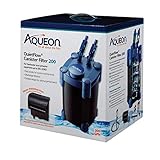
4. Aqueon QuietFlow – Best Versatile Canister for 55 Gallon Planted Tanks
Aqueon QuietFlow Canister Aquarium Filter, Up to 55 Gallons (ECOM)
Up to 55 gallons
Three outlet options
Spray bar plus polishing unit
8.5 x 7.5 x 17.25 in
Pros
- Three different return options included
- Polishing unit hangs on the tank
- Quick disconnect valves
- Comes with all media
Cons
- Polishing cartridges replaced monthly
- Priming can be tricky at first
- Lightweight plastic fittings
The QuietFlow is the most flexible plumbing in this group. It ships with three outlet options: a spray bar, a water director, and a hang-on-back polishing unit. That lets you change the shape of your flow without buying a new lid assembly, which on a planted tank is genuinely useful when your aquascape changes and a wide spray bar no longer fits the layout.
Media is included too: activated carbon, coarse foam, bio-balls and ceramic rings, so a new setup is running the same day it arrives. The quick disconnect valves make splitting the canister for a partial water change straightforward.
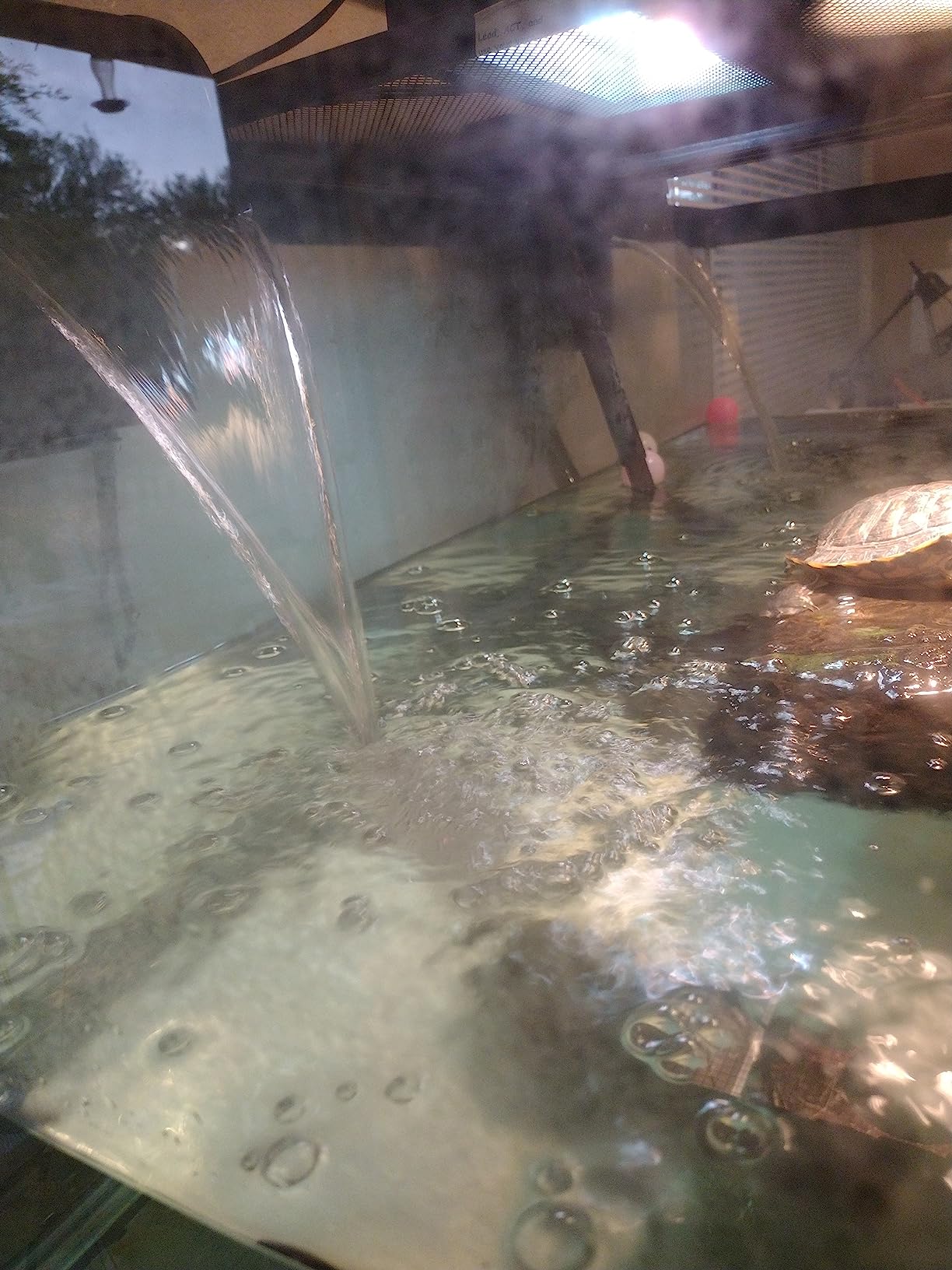
For a 55 gallon planted tank the flow is on the modest side, and modest is a virtue here. It circulates a 55 gallon volume comfortably without creating a surface agitation that would outgas your CO2, and I found the default spray bar setting needed almost no throttling.
The polishing unit hangs on the back of the tank and takes large Aqueon replacement cartridges. I would run it only if you have very clear water to maintain, because on a plant-heavy tank it becomes a recurring monthly expense for marginal gain.
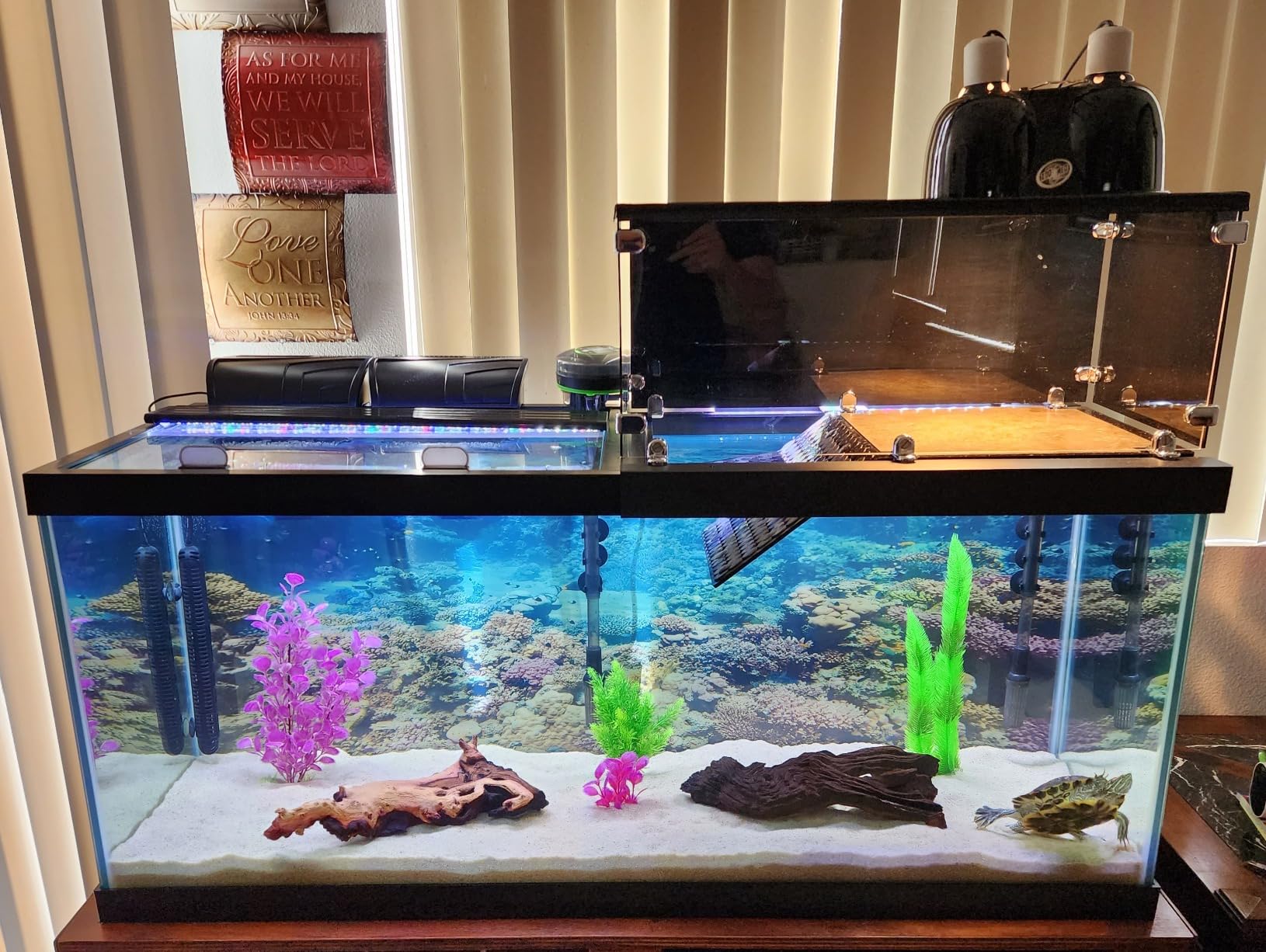
Choosing the right outlet for a planted layout
Use the spray bar low and along the back wall for a high-tech scape with injected CO2. Use the water director pointing down into a dense plant bed when you want a soft, low-shear circulation that will not uproot small stem plants.
The 55 gallon variant is also the one I suggest for shrimp and fry tanks, because the flow rate is low enough that a simple sponge on the strainer is enough protection without starving the pump.
Where the QuietFlow falls short
Some owners report trouble getting the pump to prime, and the canister does not have a dedicated prime button like the Fluval and Marineland units. A bucket-primed start works fine, it just takes an extra minute.
Flow output is the other limitation. This model is rated up to 55 gallons, so a 60 gallon plus high-tech setup should look at a larger variant instead.
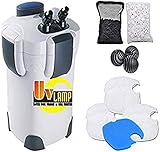
5. SunSun HW-303B Pro – Best Canister With a Built-in UV Sterilizer
SunSun Hw303B 370GPH Pro Canister Filter Kit with 9-watt UV Sterilizer
370 GPH
9 watt UV sterilizer
Three media baskets
12 x 12 x 20 in
Pros
- Integrated 9 watt UV for green water control
- 370 GPH for tanks up to 100 gallons
- Complete media kit included
- Three baskets for stacking
Cons
- Fittings and clips feel budget
- Stiff hoses need soaking
- UV bulbs are hard to source
Planted tanks have a specific problem that marine keepers rarely face: green water from algae that feeds on the light you are running nine hours a day. The HW-303B Pro addresses that with a built-in 9 watt UV sterilizer in the flow path, which is the reason this kit is a repeat purchase for a lot of people.
Flow is 370 gallons per hour and the unit is rated for tanks up to 100 gallons. Three media baskets are included, along with white filter pads, a blue coarse pad, a pound of premium carbon, a pound of ceramic rings and a set of bio balls. You can build a proper three-stage stack on day one without a second order.
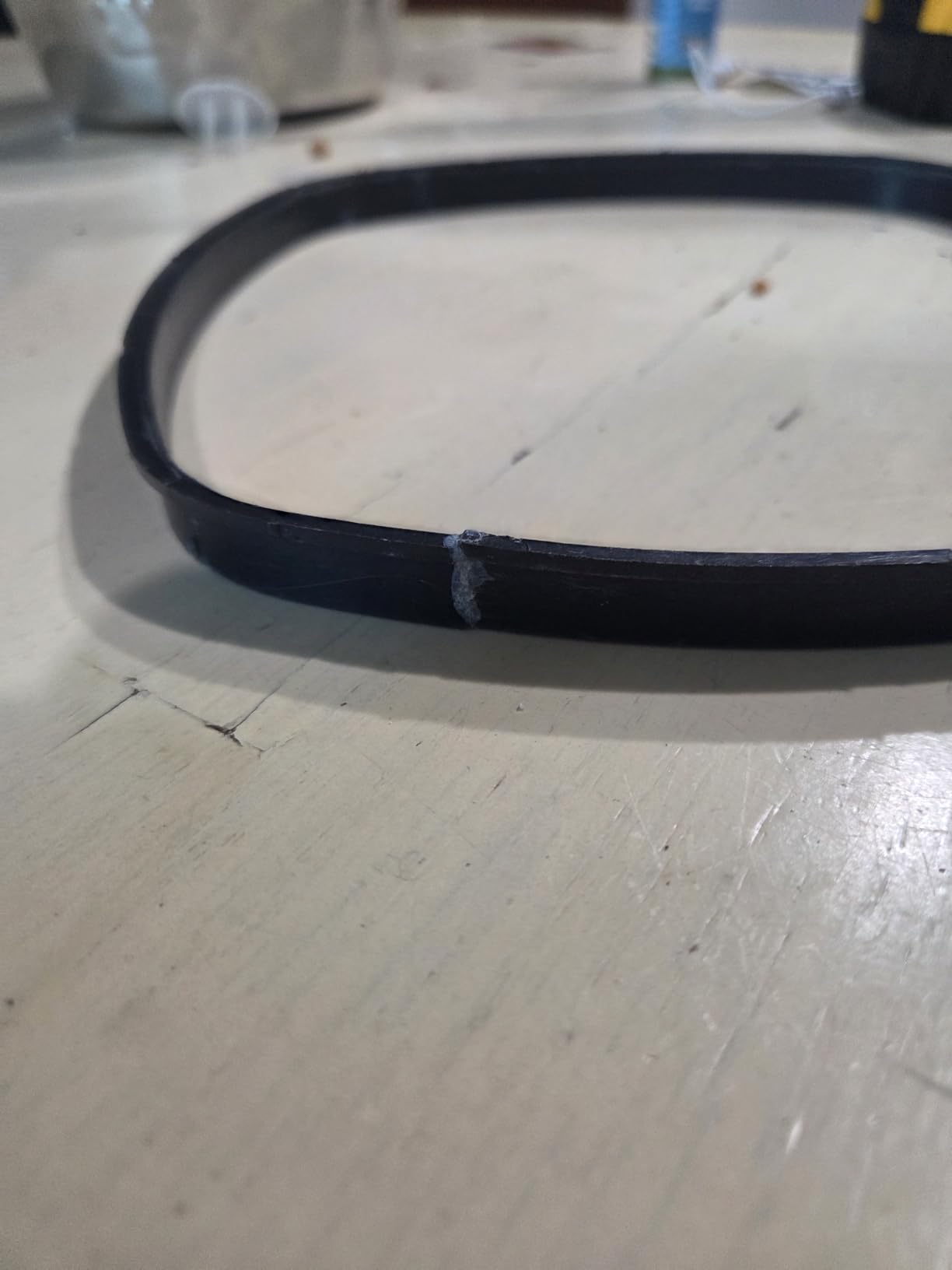
I run the UV on a timer rather than continuously, which keeps algae pressure down without stripping the useful microbial life from a biological filtration setup that depends on it. Short daily runs handle green water far better than running the sterilizer all day and then reseeding the tank.
The media volume is generous for the class, and the baskets sit low enough that you can pack a real ceramic bed in the bottom basket without interfering with the UV housing.
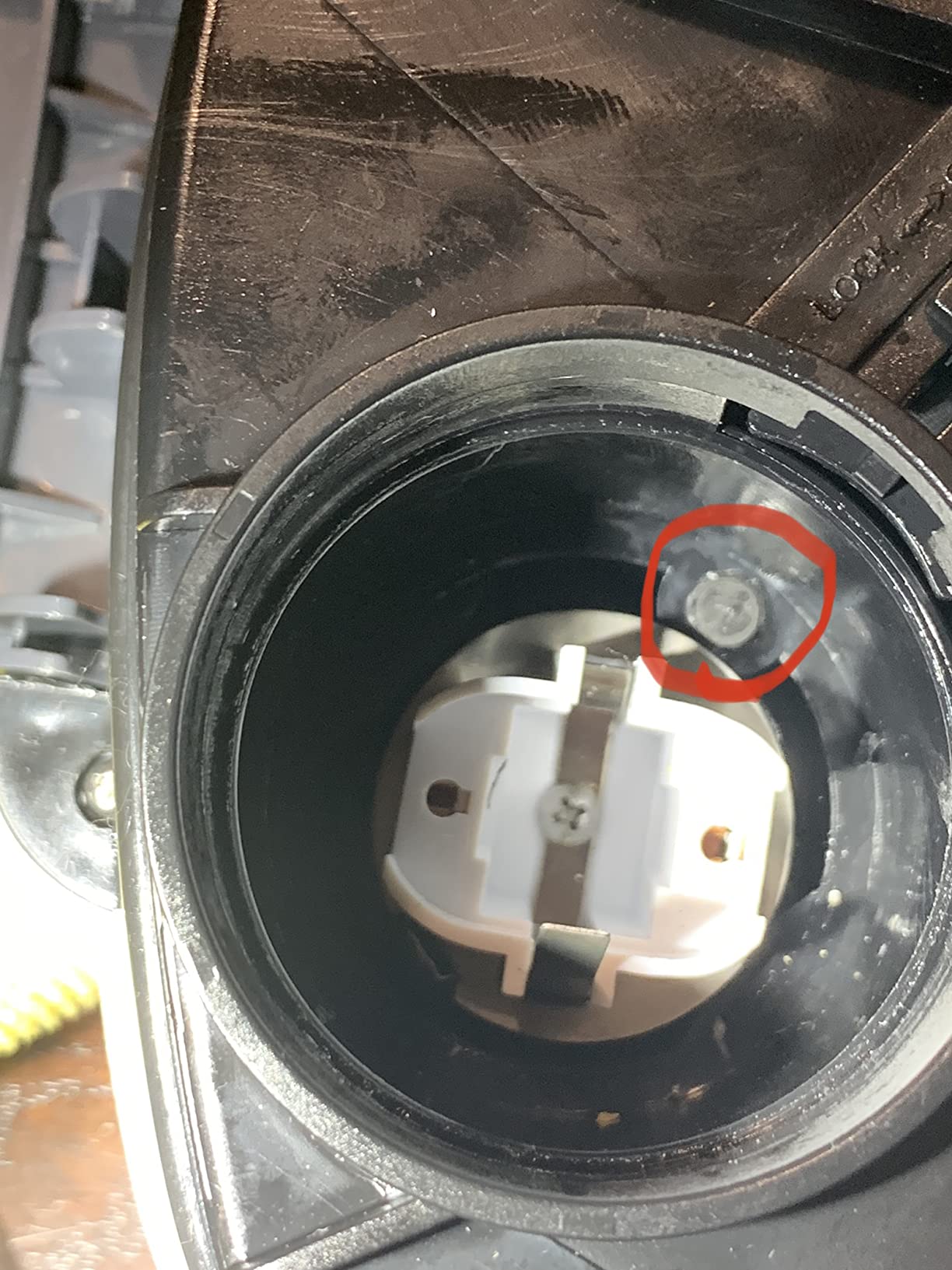
Where the UV fits in a planted media stack
The UV chamber sits in the return path, so what passes through it has already been filtered. That ordering matters: a sterilizer fed with raw plant debris and mulm clogs and stops working, while one fed with clean water after three stages keeps the water clear.
For a shrimp tank I would skip the UV entirely. Sterilizers reduce the microbial population in the water column, and shrimp colonies do better with that population intact.
Where the HW-303B Pro falls short
Build quality is a tier below Fluval and EHEIM. The plastic fittings and clips are the parts that age first, and the hoses arrive stiff enough to need a hot water soak before they will seat properly.
Replacing the UV bulb is the real long-term headache, since bulbs for this model are harder to find than generic tubes. Instructions are also thin, so plan on working the setup out from the physical parts.
6. EHEIM Classic 2213 – Best for Quiet Operation and Long Service Life
EHEIM Classic Canister Filter 2213, Classic 250 – PetOverstock
Classic design since 2004
8 x 6.3 x 13.98 in
4.49 pounds
Permo-elastic seal
Pros
- Extremely reliable over decades
- Silent operation
- Gentle consistent flow for plants
- Includes spray bar valves and EHEIM media
Cons
- No self-priming
- Lower flow than modern rivals
- Single media chamber
- Stiff green hoses
The 2213 is the oldest design in this guide, and that is the selling point. This is essentially the same canister that shipped in 2004, which means the spare parts ecosystem is mature, the O-rings are still available, and the pump head is a design with few failure points. PlantedTank.net members repeatedly run EHEIM pro4 units across multiple tanks for exactly this reason.
It is the quietest canister here in my experience, largely because the flow rate is low. The 2213 variant moves roughly 116 gallons per hour, and that gentle, consistent output is precisely what a planted tank wants. Low-shear circulation keeps CO2 dissolved and stops leaves from fluttering.
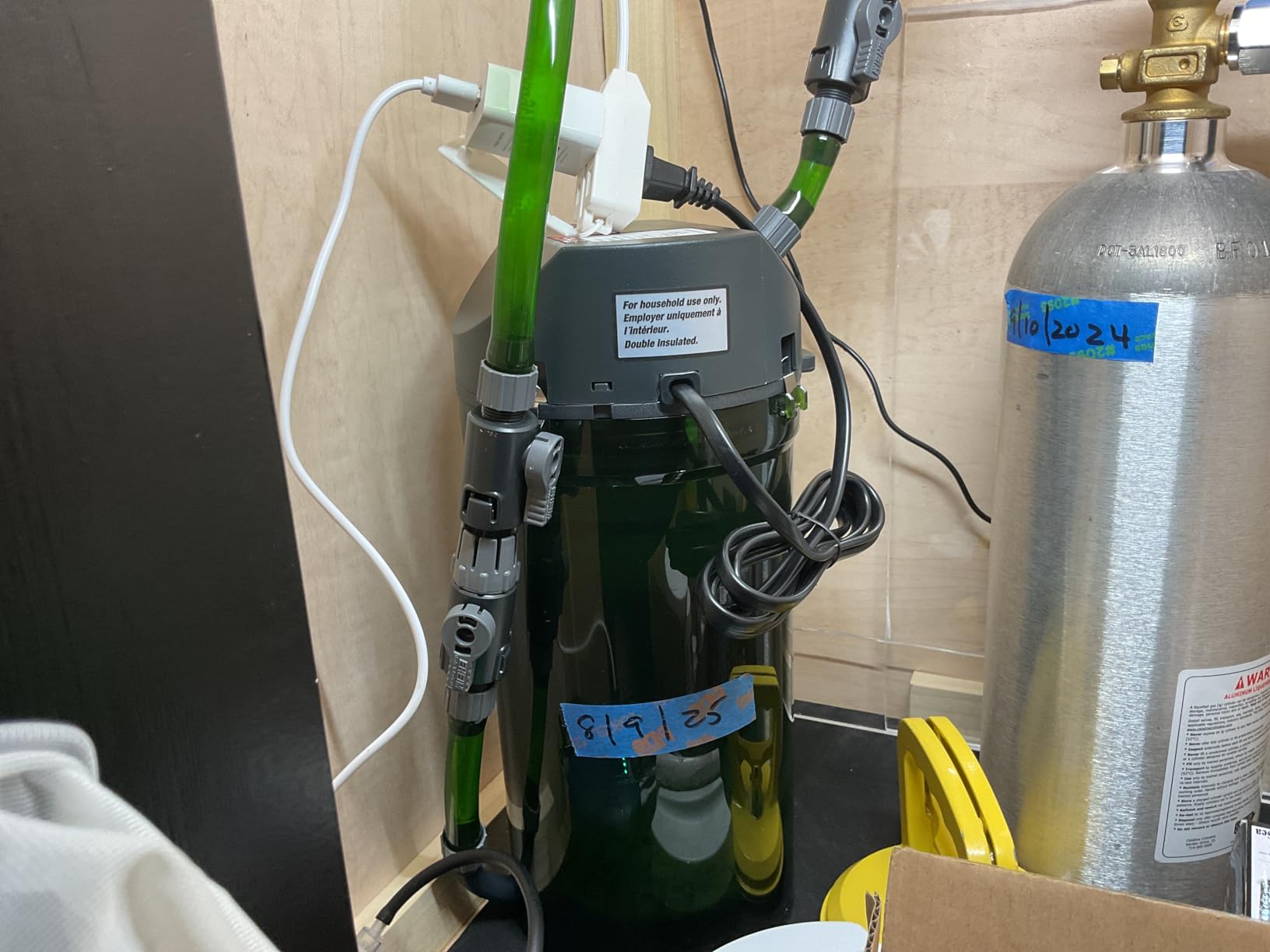
The permo-elastic silicon sealing ring fixed on the pump head is a small detail that pays off over years. It reseats itself every time the head comes off, so the seal does not sit compressed and brittle the way a plain rubber gasket does.
It ships complete with EHEIM Mech and Substrat Pro media, a spray bar, an inlet pipe, hose and valves. Out of the box it is a functioning filter, and the 66 gallon variant is the one most planted keepers choose.
Why low flow suits a planted tank
Planted tanks rarely need a hurricane. The plants supply the oxygen, the media handles the waste, and what you actually need is enough movement to keep detritus from settling and to keep the CO2 you paid for in the water. A slow, even return does that without any throttle adjustment at all.
There is no flow control to set. You set your plumbing with the spray bar, the director orientation and the intake position, and the filter simply moves that water without pushing back.
Where the EHEIM Classic falls short
There is no self-priming mechanism, so you start it with a siphon hose and a bucket of tank water. Owners who are used to a prime button find that irritating at first, and it is the main reason the 4.1 rating carries some friction.
The single media chamber is also less flexible than the three-basket designs here, and the green hoses are stiff and visible through a glass stand panel.
7. SunSun HW-302 Pro – Best Budget Pick for a First Planted Tank
SunSun Hw302 265GPH Pro Canister Filter Kit
265 GPH
Up to 75 gallons
Three media baskets
9 x 9 x 18 in
Pros
- Complete kit with carbon rings and bio balls
- 265 GPH for tanks up to 75 gallons
- Quieter than expected
- Many owners report years of service
Cons
- Instructions are nearly useless
- Cheap plastic clips and fittings
- Priming takes practice
- Hoses arrive stiff
The HW-302 Pro is where most first-time canister owners start, and for a planted tank it is hard to argue with the fundamentals. It delivers 265 gallons per hour, is rated up to 75 gallons, and the kit includes three white filter pads, three media baskets, a pound of carbon, a pound of ceramic rings and a set of bio balls.
That is a complete three-stage stack in one box. You can run floss, carbon and ceramic media from the first day, which means your biofiltration is genuinely established rather than running on factory floss alone.
Quieter than expected is the phrase long-term owners use, and several report three or more years of reliable service. The 265 gallon rating also pairs well with a planted tank because you can close the valve to slow the return without starving the media of flow.
My only setup note is to buy metal hose clamps and a tube of silicone grease on day one. That single habit removes the two most common complaints on this filter.
Building a media stack on a budget canister
Use the top basket for a coarse sponge that catches root tab residue and leaf fragments, the middle basket for a thin floss layer over a carbon bag if you need clarity, and the bottom basket for ceramic rings. The basket handles make that order easy to maintain.
There is no UV on this model, so if your planted tank struggles with green water, plan on a separate sterilizer or choose the HW-303B Pro instead.
Where the HW-302 Pro falls short
The instructions are the weakest point in this entire guide. They are minimal to the point of being useless, so expect to work out the flow direction and the valve orientation from the parts themselves.
Priming also takes practice, and the lid O-ring can weep at the seam without a light film of silicone grease. The impeller can get noisier after a year or so of service.
8. Marineland Magniflow 250 – Best for Simple Lift-Off Maintenance
Marineland Magniflow 250 GPH Canister Aquarium Filter
250 GPH
Up to 60 gallons
Stack N' Flo trays
14 x 9.5 x 15.75 in
Pros
- Lift-off lid gives full basket access
- Quick prime button at startup
- Complete media kit included
- Quiet once running
Cons
- Plastic hose clamps are inadequate
- Leaks reported at connections and lid seal
- Some units arrive missing an O-ring
The Magniflow 250 is a 250 gallon per hour canister rated for aquariums up to 60 gallons, and what sets it apart is the lid. It lifts straight off, which exposes the entire Stack N’ Flo tray stack at once. On a planted tank where you are pulling thick floss pads every two to three weeks, full basket access is a real time saver.
Priming is a quick prime button on the canister body, and it starts reliably when there is water in the chamber. Media included covers foam, carbon bags, bio balls, ceramic rings and polishing pads, and the baskets accept Marineland Rite-Size S cartridges if you would rather buy prefab media.
Operation is quiet, and the flow is well matched to a 40 to 55 gallon planted aquarium. I throttled it slightly on my own tank and found the trays stayed clean longer than expected, because the lower flow rate reduces how much fine plant debris gets pulled into the top tray.
Water clarity results are good for a filter in this class, and the lift-off layout makes a partial media swap during a water change much less messy than sliding trays out of a narrow body.
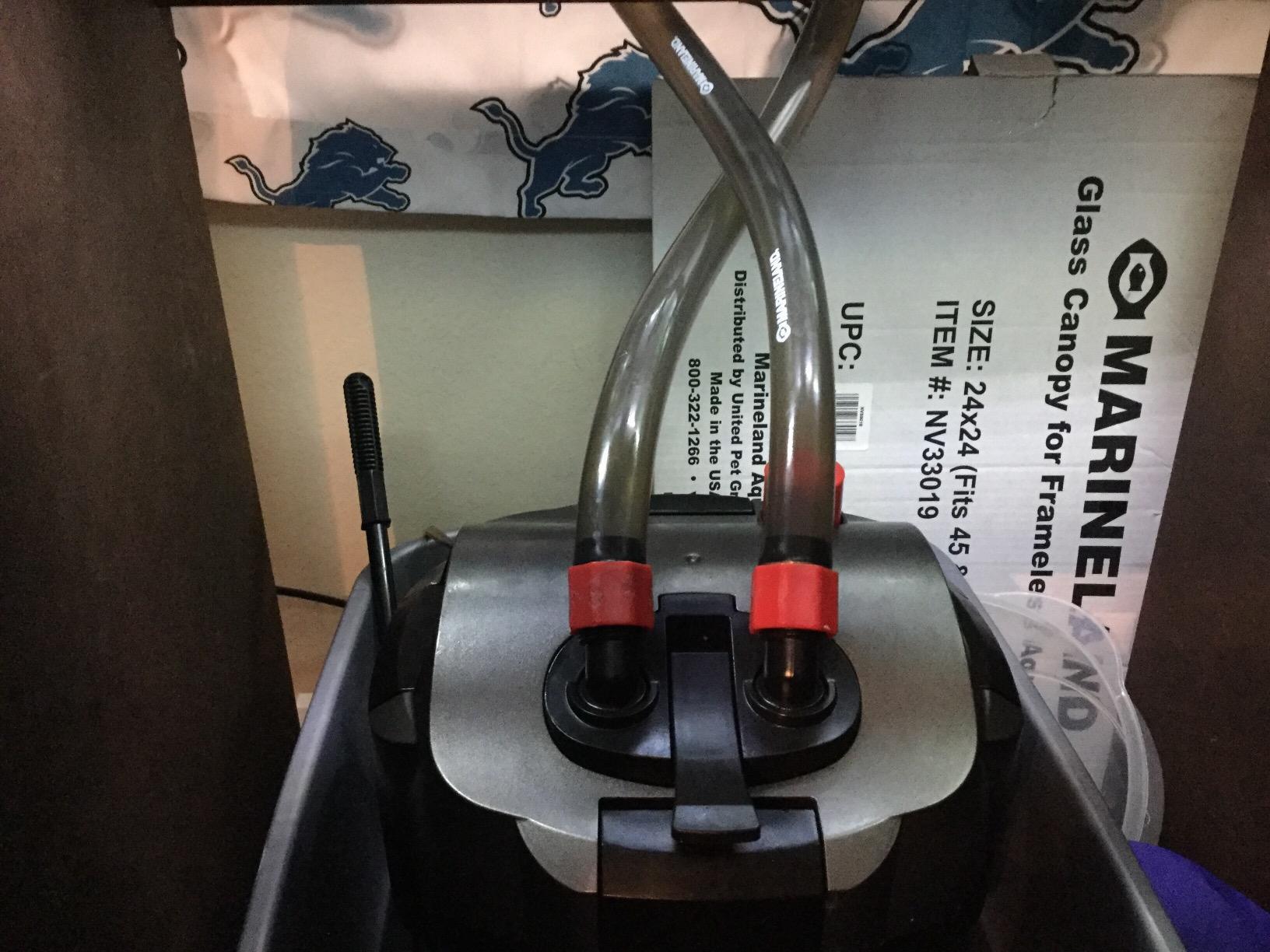
What the lift-off lid changes for a planted setup
Almost every planted-tank problem in a canister comes from a cramped basket you cannot reach into. A lid that comes off completely means you can change your coarse sponge without disturbing the bio media below, which is how you avoid the algae bloom that follows a careless cleaning.
It also makes partial water changes easier, since the body can be filled from a bucket before the lid goes back on.
Where the Magniflow 250 falls short
Replace the plastic hose clamps with metal ones immediately. Leaks at the hose connections and at the lid seal are the most reported issues, and both trace back to the fittings and the seal rather than the pump.
Some units have also arrived without a critical O-ring, and customer service has been reported as unhelpful on leaks. Check the full gasket set before you start and you will avoid the problem entirely.
9. Aquatop CF-400UV MKII – Best UV Option for 125 Gallon Planted Tanks
Aquatop 4-Stage Canister Filter with Vortex Prime, 9W UV, 370GPH Flow Rate, 35W Power, Up to 125 Gal – Including All Filtration Media, Great for Salt & Freshwater Tanks, UV for Crystal Clear Water
370 GPH
Up to 125 gallons
9 watt UV sterilizer
16 x 10.5 x 10.5 in
Pros
- Highest tank rating in this group
- Large media baskets hold custom media
- Vortex Prime simplifies startup
- Built-in UV clears green water
Cons
- No carrying handle when full
- UV bulbs are costly to replace
- Some bulbs arrive cracked from shipping
The CF-400UV MKII is rated for tanks up to 125 gallons, which makes it the largest-capacity unit here by the manufacturer rating. At 370 gallons per hour it will move a big display tank, and the large media baskets give you a real three-stage stack with room for a substantial ceramic bed.
Vortex Prime takes the guesswork out of startup, and the media access is convenient for cleaning. Owners running it for algae control report using it on a timer for part of the day rather than continuously, which is the approach I would also take on a planted tank.
On a 125 gallon high-tech setup the flow needed a serious throttle to avoid stripping CO2, but even throttled it had enough headroom to push water through a deep media stack without bypassing it. The large basket volume is what makes that possible.
For a tank in this size class, a canister this size also makes more sense than doubling up on smaller units, which doubles the maintenance points and the failure points.
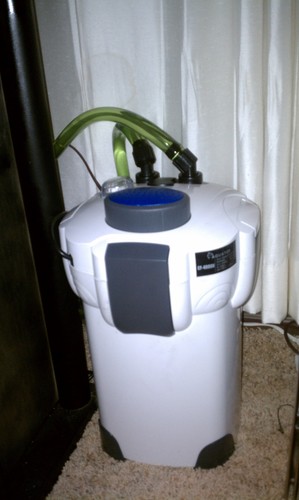
UV placement in a large planted system
The sterilizer sits downstream of the media, so it only sees water that is already mechanically filtered. Keep the top basket floss clean and the UV keeps working, because a UV chamber fed with mulm stops passing water and quietly stops doing anything.
On a large planted tank the more important job for this filter is circulation, and the sterilizer is a bonus rather than the main event.
Where the CF-400UV MKII falls short
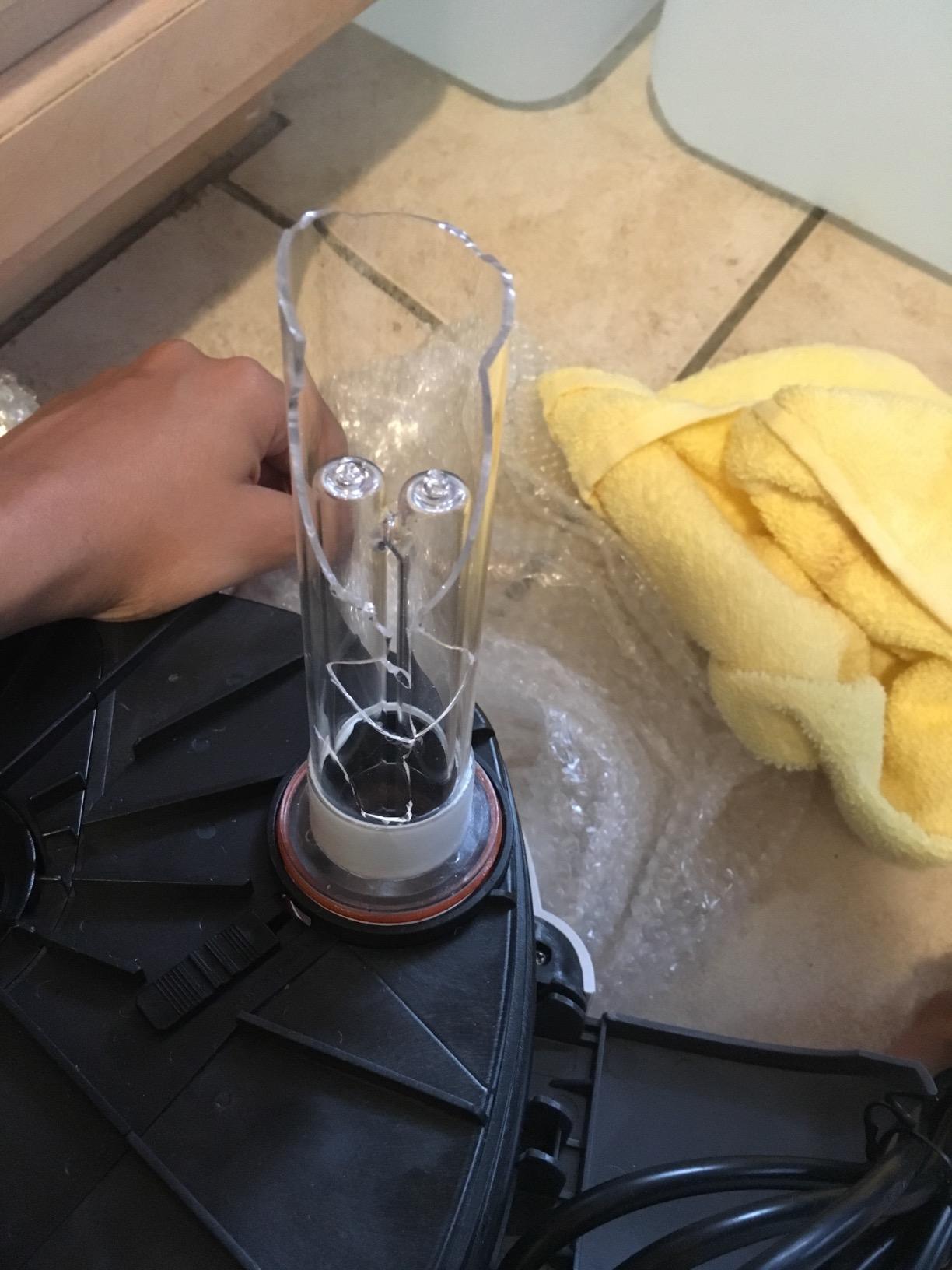
There is no carrying handle, and a full canister at 12 pounds plus media is genuinely awkward to lift onto a stand. There is also a documented risk of electrical shock if the UV bulb glass cracks and water intrudes, and several owners report bulbs arriving cracked in the box.
Replacement bulbs are costly and hard to source, and the plastic clips inside the lid fit together loosely. Inspect the bulb the moment it arrives.
10. Marineland Magnum 290 – Best Compact Polisher to Pair With a Canister
Marineland Magnum 290 GPH Polishing Canister Aquarium Filter
290 GPH
Up to 97 gallons
Submerged internal motor
7.5 x 3.5 x 9.88 in
Pros
- No cabinet space required
- Submerged motor starts and runs quietly
- Two refillable media chambers
- Great for polishing water clear
Cons
- Takes up in-tank space
- Micron cartridges replaced often
- Weak as sole filter for heavy stocking
The Magnum 290 is not a traditional external canister, so let us be clear about where it fits. It is an internal canister with a submerged motor, rated at 290 gallons per hour for tanks up to 97 gallons, and its job is polishing rather than primary biological filtration.
That is genuinely useful on a planted tank. A carbon-free, media-light external canister can leave water slightly cloudy, and pairing a small internal polisher in the corner clears the last of it without adding a second cabinet footprint. The submerged motor makes it quiet and self-starting with no priming step at all.
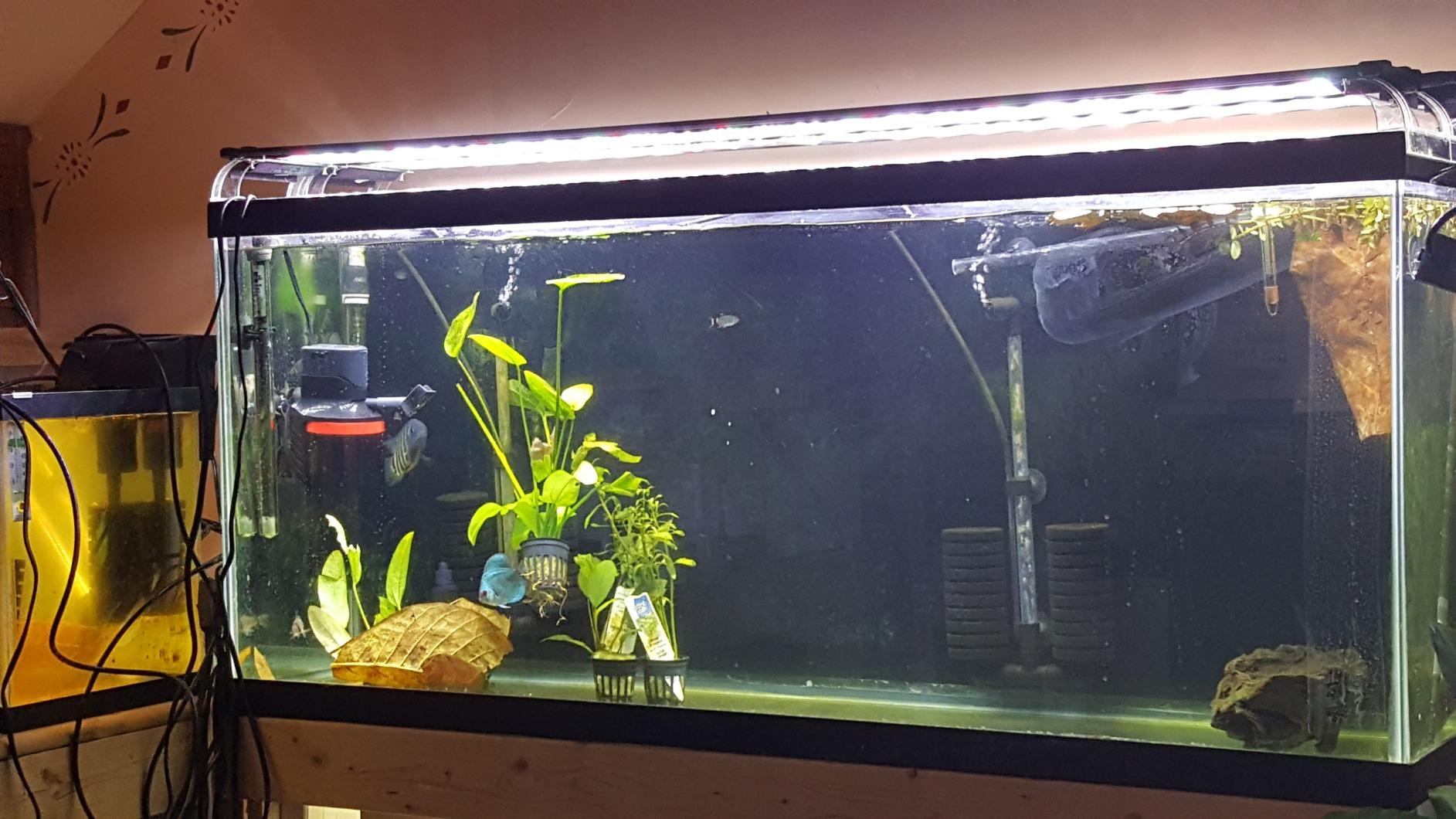
Two refillable chambers take carbon or custom media, and the included micron cartridge does a lot of the visual work in a short window. It clears green water faster than an external canister of the same rated flow.
On a nano or shrimp-focused planted tank, though, I would be careful. The in-tank footprint matters in a small aquascape, and the micron cartridges need frequent replacement.
When a polisher beats a second canister
If your cabinet already has a canister and a heater taking up the space, a small internal polisher costs you a few square inches behind the glass rather than another foot of floor. For purely cosmetic clarity that is a good trade.
Keep in mind this is not a substitute for biological capacity. Reviewers are consistent that it is a weak sole filter for heavily stocked or messy tanks, and we agree with that for planted systems.
Where the Magnum 290 falls short
It occupies tank volume that a scaper usually wants for plants or hardscape, and the micron cartridge replacement becomes a recurring cost if you run it continuously.
Media capacity is also far smaller than any external canister in this guide, so the custom media options are limited by chamber size.
How to Choose a Canister Filter for a Planted Tank
Sizing a canister for plants is different from sizing one for fish only. Fish-only aquariums are usually run at four to six times tank volume per hour. Heavily planted tanks produce very little waste themselves, and the plants consume nitrogen, so three to four turnovers is usually plenty and keeps the water column calm. Start there and adjust with the inline valve rather than buying a bigger pump.
Media volume is the second decision, and it is the one that actually affects plant health. A planted tank generates fine plant debris, root tab residue and mulm that clogs a coarse pad in weeks. Canisters with three stackable baskets let you pull a thick mechanical pad without starving the biological layer underneath. If you skip carbon entirely, an even deeper mechanical layer is affordable. If you plan to store water for longer water-change intervals, more media volume means more stability per cleaning, and a dedicated storage vessel such as one of our stock tank picks keeps treated water ready to go.
Stack order matters more than most people expect. Water enters at the top, so the top basket should be the cheapest, most sacrificial layer: coarse sponge first, then a sponge floss pad, then carbon if you want clarity, and biological media in the bottom basket where it sees the cleanest water and the most flow. The most common mistake is putting ceramic rings at the top, where they clog and starve everything below.
CO2 retention is a plumbing problem, not a filter problem. A strong return across the surface will outgas dissolved CO2 no matter which canister you choose, and forum discussions on PlantedTank.net and r/PlantedTank converge on the same fix: aim the spray bar or lily pipe along the back wall or toward the surface, leave the front glass glassy, and turn the return down until you cannot see surface movement from the front of the tank.
Pre-filtration is the detail that protects your livestock. Shrimp and fry will be drawn straight into an unprotected strainer, and even juvenile fish can get pulled into a strong intake. Slip a coarse sponge or a 100 micron pleated cartridge over the strainer before the first start, and use 100 micron rather than 22 micron so the pump does not starve. This is the single most useful thing you can do before adding a large group of inverts.
Noise is a purchase driver for anyone with a tank in a bedroom. Quietness comes from pump quality and from flow rate, and a lower-output filter that still moves your required turnover will always beat a bigger, louder pump. Reviews of the EHEIM Classic and the Fluval eTEC models both point at lower output plus better engineering rather than more power. Also check the head height, the vertical distance from the water surface to the intake, because a canister that is too far below the surface will cavitate and get loud, and one that is too close will struggle to prime.
Cabinet fit is the most common disappointment. Check the listed dimensions against your stand opening before buying, and add a couple of inches for hose routing. The Fluval FX6 is 20.7 inches tall and weighs 19.9 pounds, the Aquatop is 16 inches tall, and the compact EHEIM Classic comes in under 14 inches. If you are planning the full cabinet layout alongside other hardware, our water tank storage guide covers the same clearance thinking for utility spaces.
On brands, the honest split is this. Fluval and EHEIM lead on engineering and long-term reliability, with EHEIM winning on service life and Fluval on convenience. Penn-Plax, SunSun, Marineland and Aquatop deliver most of the filtration for far less money, at the cost of fittings, instructions and O-ring longevity. Owners who are willing to swap hose clamps and grease the seals tend to be very happy with the value tier, and several long-term users report years of trouble-free service from budget models they did not expect to last that long.
Finally, think about how you will service the filter, not just how it will look on day one. Partial water changes with a full canister are a real chore, and repeated draining is the single most common forum complaint we found. Filter designs with lift-off lids, EZ-Lift baskets or crank handles, and a built-in purge feature all make that chore faster, and a pre-filter sponge you can lift out in one motion keeps more of your beneficial bacteria in the system. If you are drawing that change water from a stored supply, our rainwater collection tank guide covers how to keep a reserve clean and temperature-matched before it ever reaches the aquarium.
Frequently Asked Questions
What is the best canister filter for a planted aquarium?
The best canister filter for a planted aquarium is the Fluval FX6 for tanks over 90 gallons, and the Penn-Plax Cascade 1000 for most tanks under 100 gallons. What matters is not the highest flow number but the media volume and the ability to throttle the return, so a mid-size canister with three stackable baskets usually serves a planted tank better than an oversized premium unit.
Which is better, Eheim or Fluval, for planted tanks?
EHEIM wins on longevity and quiet operation: the Classic 2213 has been built in essentially the same form since 2004, and owners report decades of service, though it lacks self-priming and has a lower flow rate. Fluval wins on convenience: the eTEC motor in the 307 is noticeably quieter than most competitors, the FX6 self-starts and evacuates trapped air, and both use EZ-Lift or stackable baskets. For a quiet bedroom tank with no fuss, choose Fluval. For a filter you set up once and forget, choose EHEIM.
What is the best brand of canister filter overall?
Fluval, EHEIM and OASE are the strongest brands for planted tanks on engineering and serviceability, while Penn-Plax, SunSun, Marineland, Aqueon and Aquatop cover most of the filtration for far less money. Value-tier filters do the same job if you are willing to replace plastic hose clamps with metal ones and keep the lid O-ring greased.
Do I need a filter for a heavily planted tank?
Yes, every planted tank needs mechanical, chemical and biological filtration. Plants alone are not enough, because fish waste, uneaten food and decaying leaves still produce ammonia. The difference is that a planted tank usually runs at a lower flow rate than a fish-only tank, because strong surface agitation strips dissolved CO2 and slows plant growth.
What flow rate should a planted tank canister filter have?
Most planted tanks work well at three to four turnovers of tank volume per hour, which is lower than the four to six turnovers typically recommended for fish-only aquariums. A 40 gallon tank at four turnovers needs roughly 160 GPH of flow, and a 70 gallon tank in the same range needs about 280 GPH. Any canister above that gives you headroom to throttle the inline valve.
Final Verdict: The Best Canister Filters for Planted Tanks in 2026
The Fluval FX6 is our pick for the best canister filters for planted tanks overall, because 1.5 gallons of media volume, self-starting operation and a rotatable purge pipe give you the most control once your aquascape gets complicated. The Penn-Plax Cascade 1000 takes the value slot with three handled baskets, 360-degree valve taps and a full media kit in the box, and the Fluval 307 is the quietest choice for a bedroom tank.
Whichever one you choose, put a pre-filter sponge on the strainer, stack coarse mechanical media at the top, and aim the return along the back wall so your CO2 stays where you paid for it. That setup will carry any of these filters for years.