
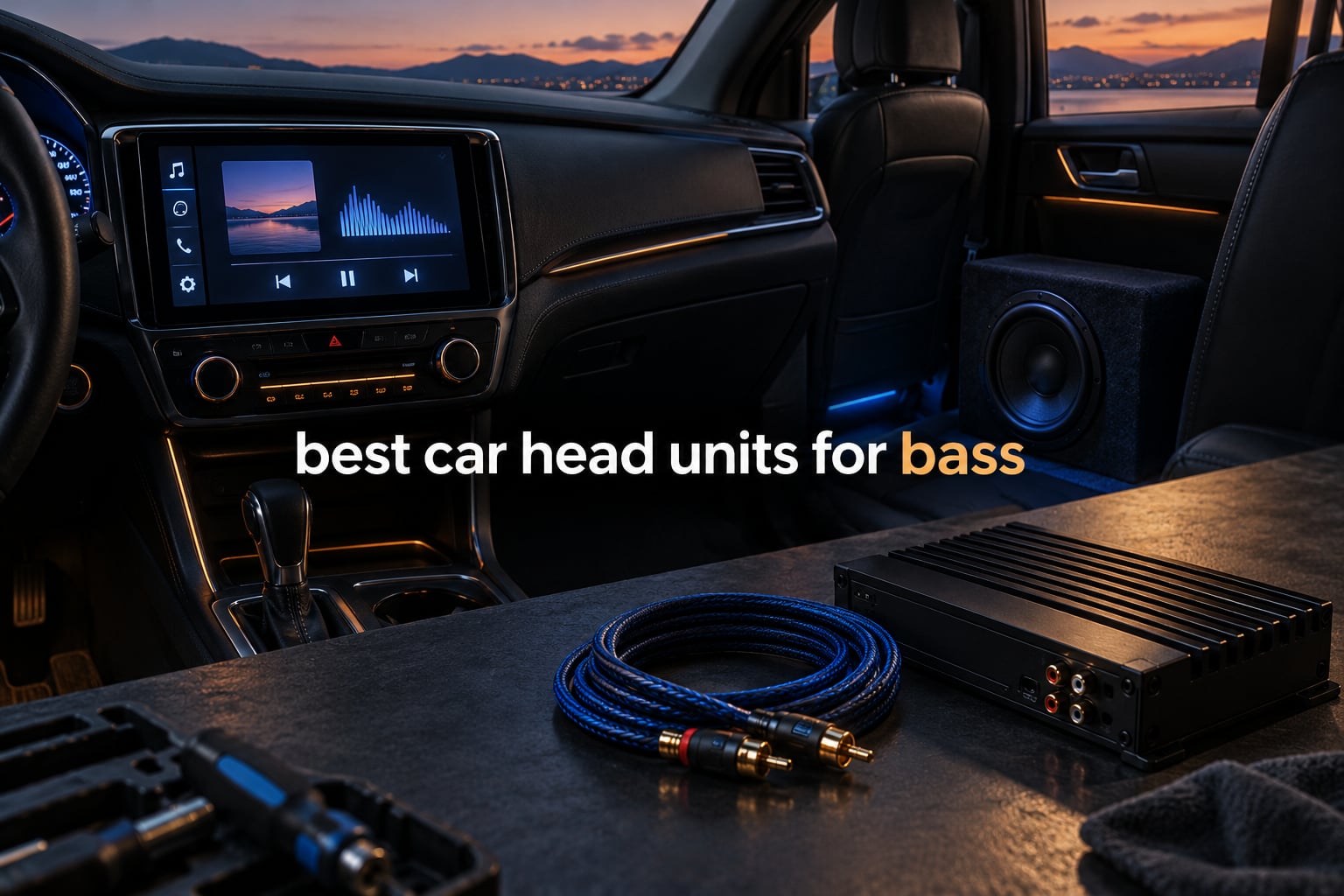
What makes a car head unit good for bass is simple: RCA preamp outputs with enough preamp voltage, a dedicated subwoofer level control, and a variable low-pass filter you can set by ear. Everything else on the faceplate is decoration next to those three things. The head unit does not make bass. It decides how much clean, distortion-free signal your amplifier can turn into bass before it runs out of headroom.
That distinction matters more than most buyers expect. A factory radio usually has no RCA outputs at all, so you need a line output converter, and the low voltage coming out of factory speakers can run out of clean level long before your sub is loud. Swap in an aftermarket head unit with proper preouts and the same amplifier and subwoofer usually produce noticeably deeper, tighter low end with nothing else changed. That is why searching for the best car head units for bass is not about screen size or horsepower ratings.
We went through twelve single-DIN and double-DIN receivers that are all built around external amplification rather than around driving door speakers on their own. We compared them on preamp output count, preamp voltage where the manufacturer publishes it, subwoofer level control, low-pass filter options, built-in power, fitment and warranty. Twelve units, six weeks of reading spec sheets, install notes and owner reviews, and one rule: if a product cannot hand your amp a clean adjustable signal, it does not belong on a bass list.
Four of the units here have no documented RCA preouts at all, and one more offers only a single generic preamp-out. We say so plainly rather than pretending otherwise. If you already own an amp and a sub, start with the preamp section in the buying guide and skip straight to the products that carry dedicated subwoofer outputs.
Top 3 Picks for Bass Right Now for October 2026

BOSS Audio Systems 616UAB
- Front and rear pre-amp outputs
- Push-to-talk voice assistant
- Bluetooth with built-in mic


PLZ MP-902W 7-inch Double DIN
- Two subwoofer outputs
- Built-in DSP and 10-band EQ
- Wireless CarPlay and Android Auto
The BOSS 616UAB takes the top spot because it is the rare low-cost single-DIN that actually ships preamp outputs front and rear, and it has more owner reviews than anything else on this list. The Alpine UTE-73BT is the cleanest-sounding unit here if your priority is vocal and midrange clarity rather than raw low end. The PLZ MP-902W is the one to buy when you want a big screen, two dedicated subwoofer outputs and a 10-band EQ in one box.
All 12 Head Units at a Glance for October 2026
Every unit below is listed with the specs that decide bass behaviour rather than marketing adjectives. Read the preamp column first.
| Product | Specifications | Action |
|---|---|---|
| BOSS Audio Systems 616UAB |
|
Check Latest Price |
| Alpine UTE-73BT |
|
Check Latest Price |
| PLZ MP-902W 7-inch Double DIN |
|
Check Latest Price |
 Pioneer MVH-S322BT Pioneer MVH-S322BT |
|
Check Latest Price |
 SJOYBRING JOY-W022 7-inch QLED SJOYBRING JOY-W022 7-inch QLED |
|
Check Latest Price |
 JVC KD-SX27BT JVC KD-SX27BT |
|
Check Latest Price |
 Pioneer DEH-S4220BT Pioneer DEH-S4220BT |
|
Check Latest Price |
 Kenwood KMM-BT332U Kenwood KMM-BT332U |
|
Check Latest Price |
 Sony DSX-A410BT Sony DSX-A410BT |
|
Check Latest Price |
 Kenwood KMM-BT270U Kenwood KMM-BT270U |
|
Check Latest Price |
 JVC KW-SX88BT JVC KW-SX88BT |
|
Check Latest Price |
 Jensen MPR210 Jensen MPR210 |
|
Check Latest Price |
1. BOSS Audio Systems 616UAB – Front and Rear Preamp Outputs in a Single DIN
BOSS Audio Systems 616UAB Single DIN Bluetooth Car Stereo, No DVD, USB
Single DIN mech-less
Front and rear pre-amp outputs
50W x 4 maximum
Bluetooth with built-in mic
Pros
- Front and rear pre-amp outputs for flexible amplifier hookup
- Push-to-talk access to phone voice assistants
- Wireless remote for balance fader bass and treble
- Over 19k owner reviews averaging 4.2 stars
- Switchable US and Europe tuner
Cons
- 50W x 4 max means an amplifier is needed for real volume
- Small LCD with limited on-screen EQ control
- No CD or DVD player and no navigation features
I picked this one first because it solves the actual problem in this article. Most subwoofers that feel weak are not weak. They are being fed a signal with no preamp outputs and nothing to control, and this single-DIN unit gives you both front and rear pre-amp outputs so you can run your amplifier properly.
For a daily driver in an older car with a manual deck, it drops in without a fight. The chassis measures 3.94 inches deep by 7.4 inches wide by 2.28 inches tall and the package includes installation brackets, a power and speaker harness, and the stereo itself.
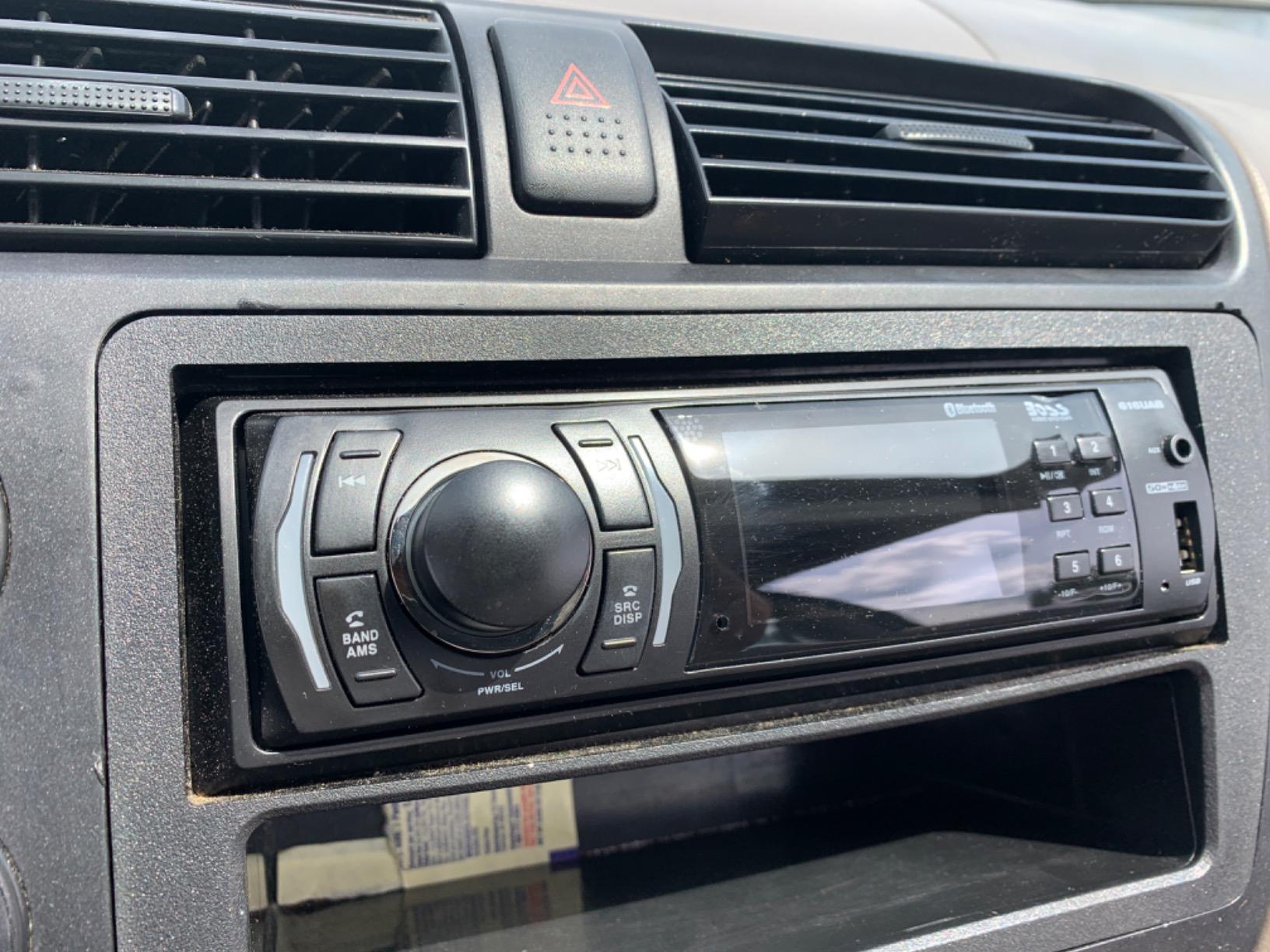
Bluetooth pairing for calls and streaming works, and the push-to-talk button reaches your phone assistant without hunting through menus. Streaming services named in the spec sheet include Pandora and Spotify, and the USB port on the front handles playback from a phone or a drive.
The honest limitation is output. The published figure is 50 watts x 4 maximum, and the manufacturer itself recommends an amplifier for proper speaker power. That rating is a peak number, not a continuous one, so treat it as a spec-sheet formality rather than a real output target.
Who this head unit suits
This suits anyone whose car still has a single DIN opening and whose amp or sub is waiting for a proper signal. It is also the safest choice on this list for a first head unit upgrade because the owner base is enormous, which means parts, adapters and troubleshooting advice are easy to find.
The three-year parts and labor warranty is longer than any other stated coverage in this group, apart from one receiver that extends to four years with registration. That matters on a unit at this level, where a failure means a dash disassembly.
Who should skip it
Skip it if you want a touchscreen, smartphone projection or fine tone shaping. The balance, fader, bass and treble controls live on an included wireless remote rather than a display, so EQ work takes more steps than it would on a double-DIN unit.
Also skip it if you plan to run a DSP later. A simple preamp pair is all it offers, and you will outgrow it once you want per-channel time alignment.
2. Alpine UTE-73BT – Clean Sound Without Bass Hardware
Alpine UTE-73BT Mech-Less Digital Media Receiver with Bluetooth® Wireless Technology
Single DIN mech-less
FLAC and WMA via USB
72W across 4 channels
Bluetooth with AOA 2.0
Pros
- Highest average rating in this group at 4.6 stars
- 78 percent of owners give five stars
- FLAC playback plus USB and 3.5mm aux input
- Bluetooth with AOA 2.0 and Made for iPod support
Cons
- No touchscreen or CarPlay or Android Auto
- No CD player
- No documented RCA preamp outputs
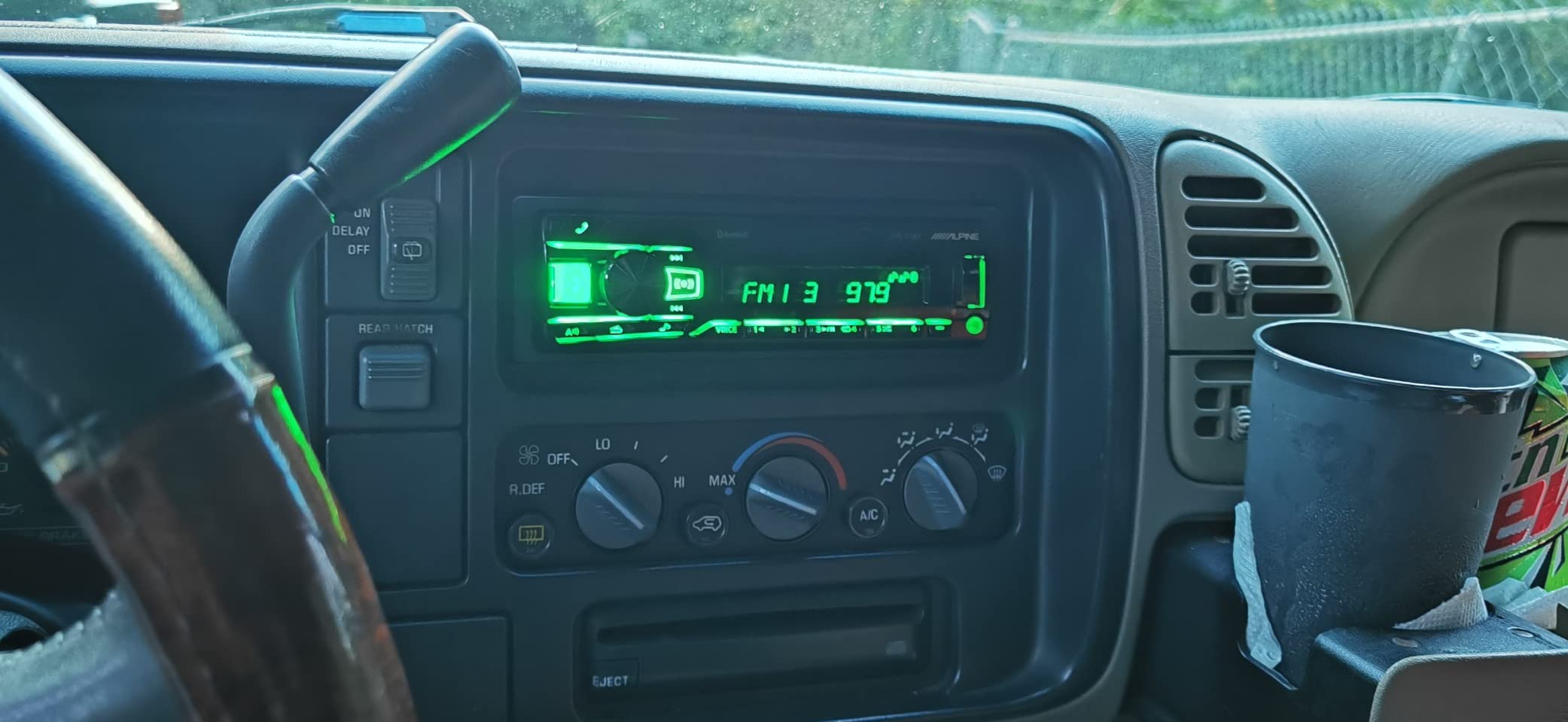
The Alpine UTE-73BT has the highest average rating of any unit on this list, and owner reviews describe the same thing over and over: clean, uncluttered sound with straightforward knob-and-button operation. If your complaint is that your system sounds harsh or muddy rather than that it lacks output, start here.
It is a mech-less design, so there is no CD slot and no moving parts behind the face. The tuner handles AM and FM with RBDS data, and file playback covers FLAC, MP3 and WMA through USB.
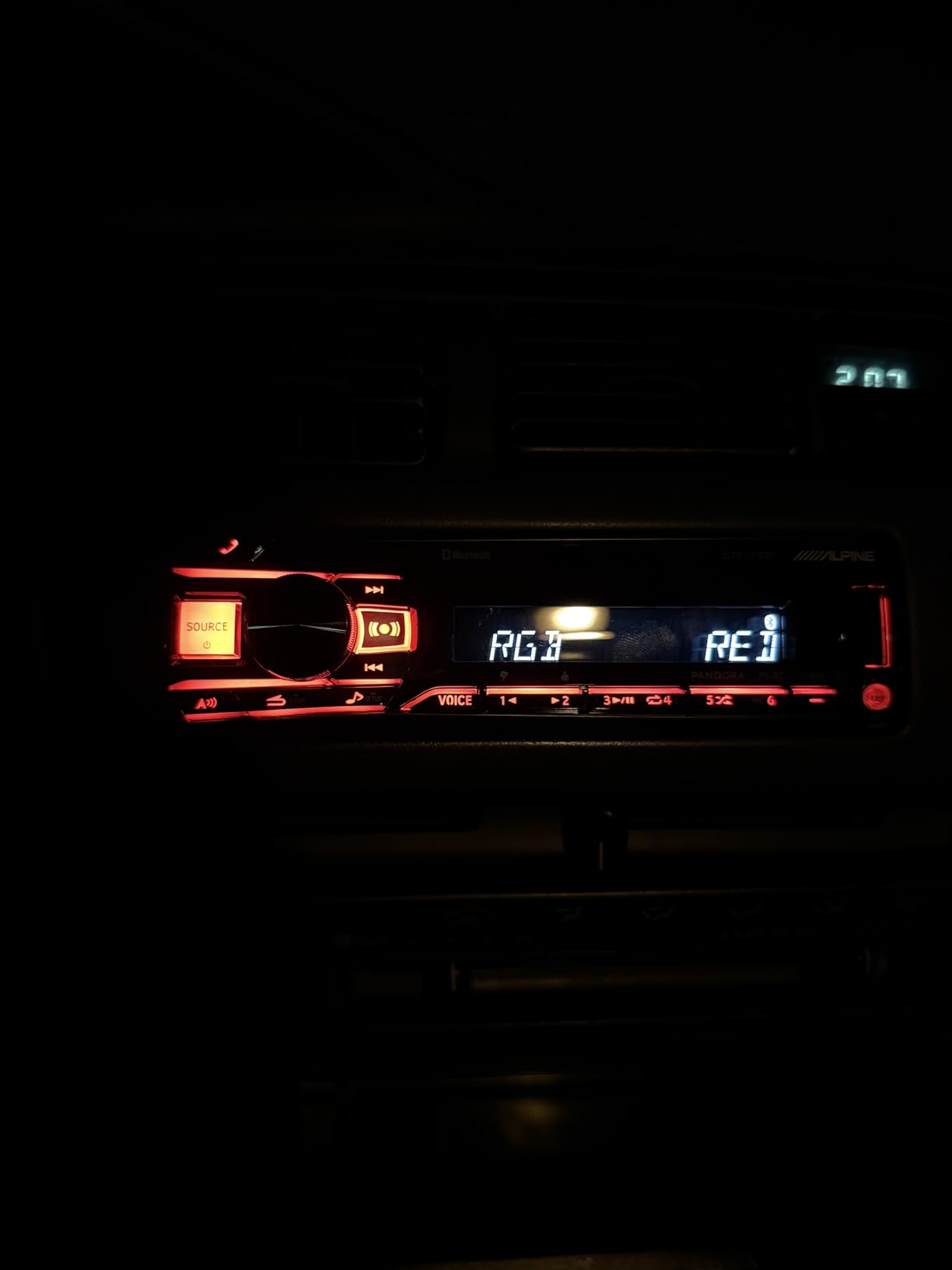
Bluetooth is the primary connection, with Made for iPod and iPhone support and Android AOA 2.0 compatibility, and Pandora works on both phone platforms. The output figure is 72 watts across four channels, which is honest rather than inflated.
Here is the catch that matters for this topic: no RCA preamp outputs are documented for this model. If your plan involves an external amplifier or subwoofer, this unit is not the right platform.
Who this head unit suits
It suits drivers who want the cleanest vocal and midrange presentation in a single-DIN format and who drive stock door speakers or a simple system. Owners consistently report reliable Bluetooth pairing and an interface you can use without looking at it for long.
It is also a good choice if you dislike touchscreen units entirely. Rotary control and physical buttons are a genuine preference, not a compromise, for a lot of people.
Who should skip it
Skip it if bass is the actual goal. Without documented preouts you are limited to what the internal amplifier can do, and the modest 72-watt figure will not drive a subwoofer with any authority.
Owners also flag the missing CD player and the single-year warranty as the two things they would change. Neither affects bass, but both matter if you bought a car that still has discs in the glovebox.
3. PLZ MP-902W – Two Sub Outputs and a 10-Band EQ on a Budget
PLZ 7″ Wireless Double Din Car Stereo Apple Carplay Radio Screen for Car Audio Receivers, Bluetooth 5.3 Car Play Android Auto Touchscreen, 240W 4.2 CHN 2 Subwoofers Outputs, Backup Camera, SWC, FM/AM
Double DIN 7-inch touchscreen
Two subwoofer outputs
4.2-channel 240W max
Bluetooth 5.3
Pros
- Two dedicated subwoofer outputs plus a 10-band EQ
- Built-in DSP with front and rear zone adjustment
- Bright 7-inch IPS touchscreen at 1024x600
- Wireless CarPlay and Android Auto
- Backup camera and install documentation included
Cons
- Call and navigation audio can show high-pitched distortion
- Occasional screen flicker on some aftermarket harnesses
- No Wi-Fi hotspot function
Most budget double-DIN screens treat the subwoofer as an afterthought. This one has two dedicated subwoofer outputs, a 4.2-channel amplifier section and a 10-band equalizer, which is an unusual amount of subwoofer hardware for a large screen at this level.
The built-in DSP adjusts front and rear zones independently, which is unusual at this level and useful if your front door speakers and rear speakers sit very close together. The amplifier section is rated to 240 watts maximum across the four speaker channels plus the sub channels.
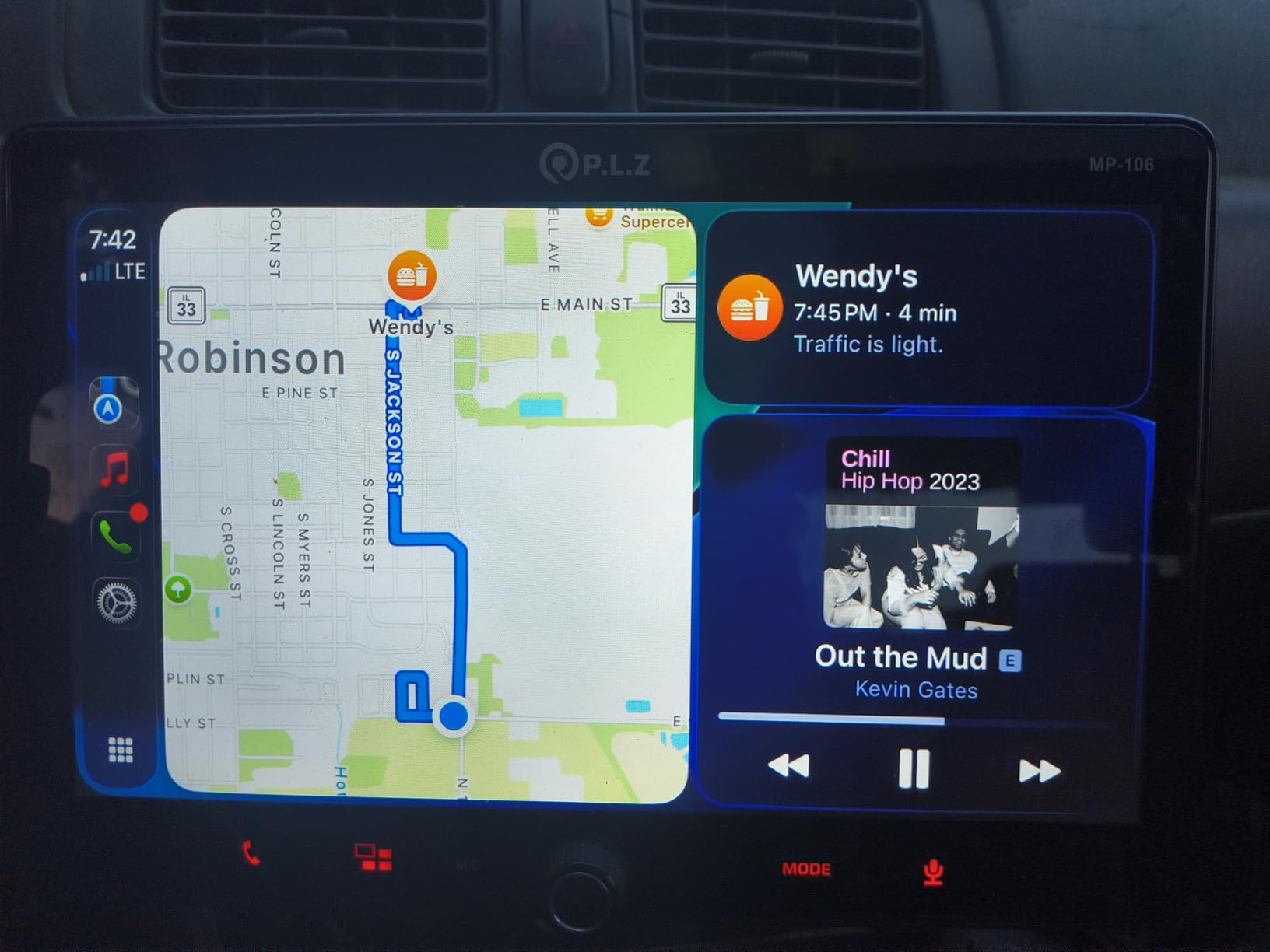
Connectivity is the other strength. You get wired and wireless Apple CarPlay and Android Auto with voice control, Bluetooth 5.3 on an independent module with an external antenna, and video playback from USB sources. The 7-inch IPS panel runs at 1024×600 with a wired mirror link option.
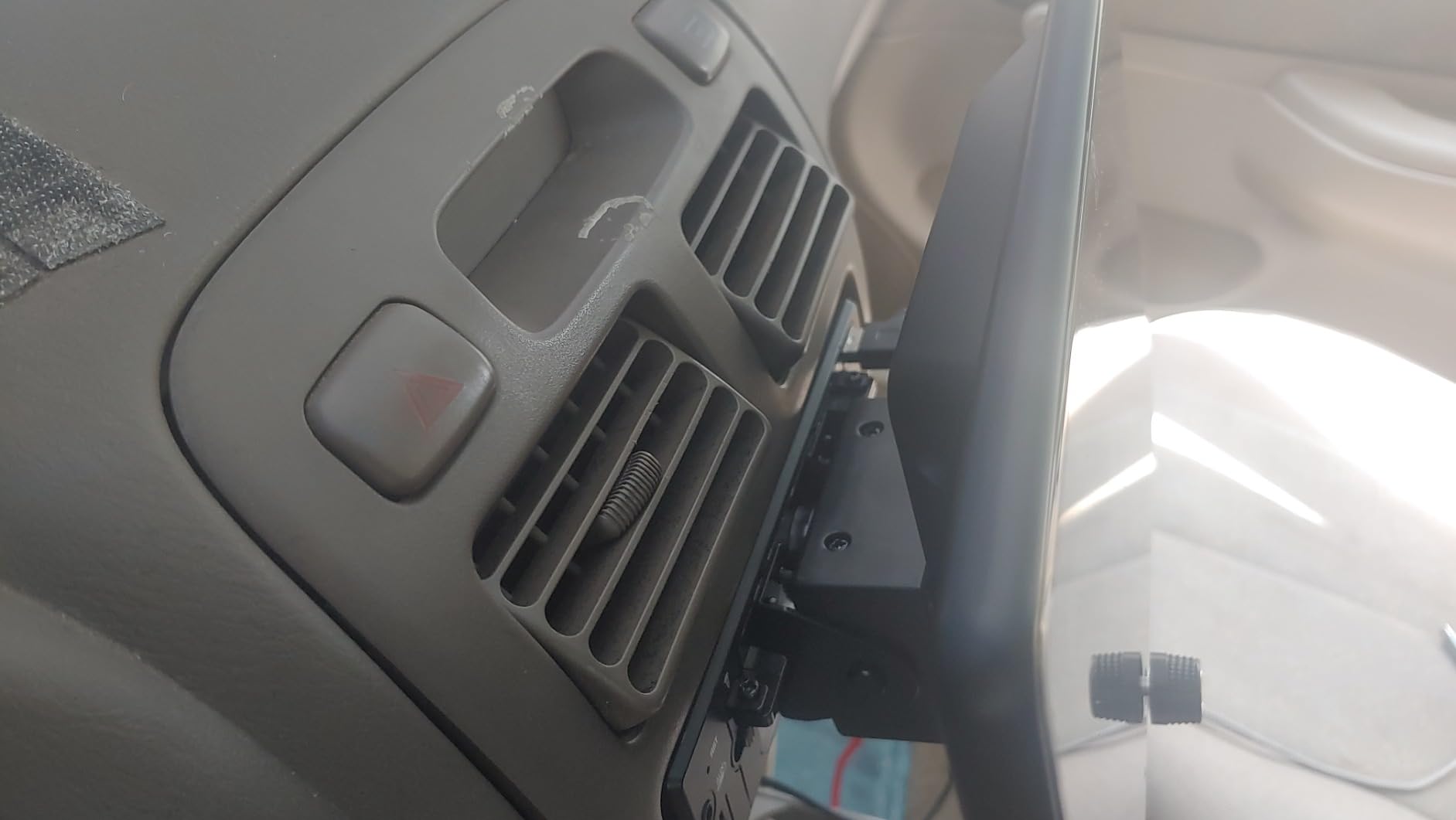
Fitment is the practical catch. It needs a minimum 6.69 inch by 3.81 inch dash opening, and a 7.44 inch by 4.61 inch frame is included. A dash kit, wiring harness and antenna adapter may still be required depending on your vehicle.
Who this head unit suits
It suits someone adding smartphone integration and a subwoofer to an older car that still has a usable double DIN opening. Owners frequently mention that the difference versus their original car stereo was large enough to justify the swap on its own.
The included backup camera and the documentation are genuinely helpful for a first install, and owner reports describe responsive vendor tech support, which is rare in this category.
Who should skip it
Skip it if you listen to a lot of phone calls or navigation prompts. Multiple owners report high-pitched distortion on call and nav audio that EQ changes do not fully fix, while music playback is generally described as acceptable.
Some owners also see screen flicker when the unit is wired through certain aftermarket harnesses, which points to a voltage or harness wiring issue rather than the head unit itself but still needs sorting out before you commit.
4. Pioneer MVH-S322BT – Selectable RCA Preouts and a Real 13-Band EQ
Pioneer MVH-S322BT 1-Din Car Stereo with Bluetooth, USB, AM/FM Radio
Single DIN
Front rear and sub selectable RCA preouts
13-band EQ
50W x 4 output
Pros
- Selectable front rear and subwoofer RCA preouts
- 13-band EQ with preamp level control
- Clean preamp signal valued by system builders
- Bluetooth pairs fast and auto-reconnects
Cons
- Smart Sync app repeatedly asks for contacts permission
- EQ is easier to adjust on the unit than in the app
- No CD player
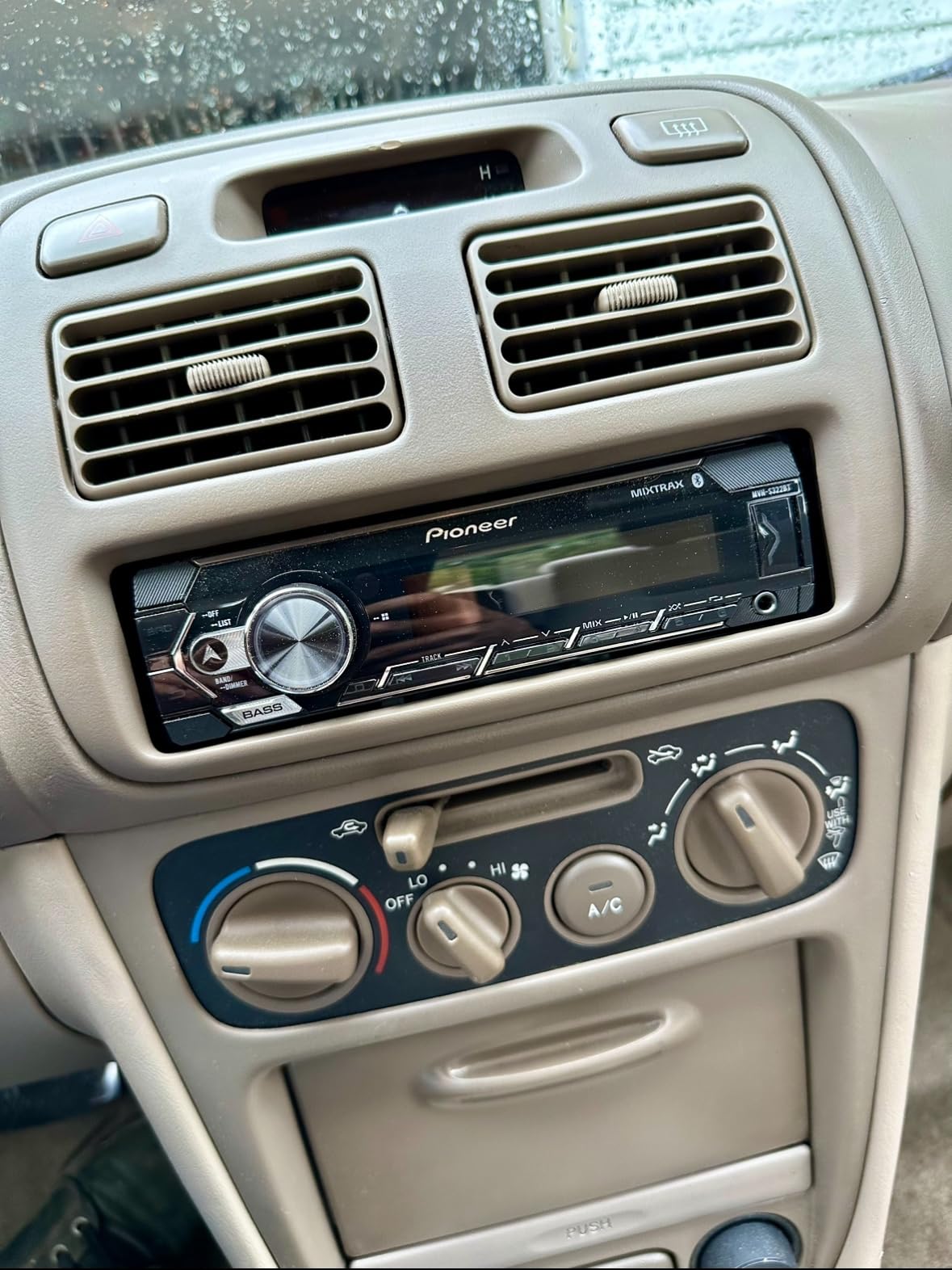
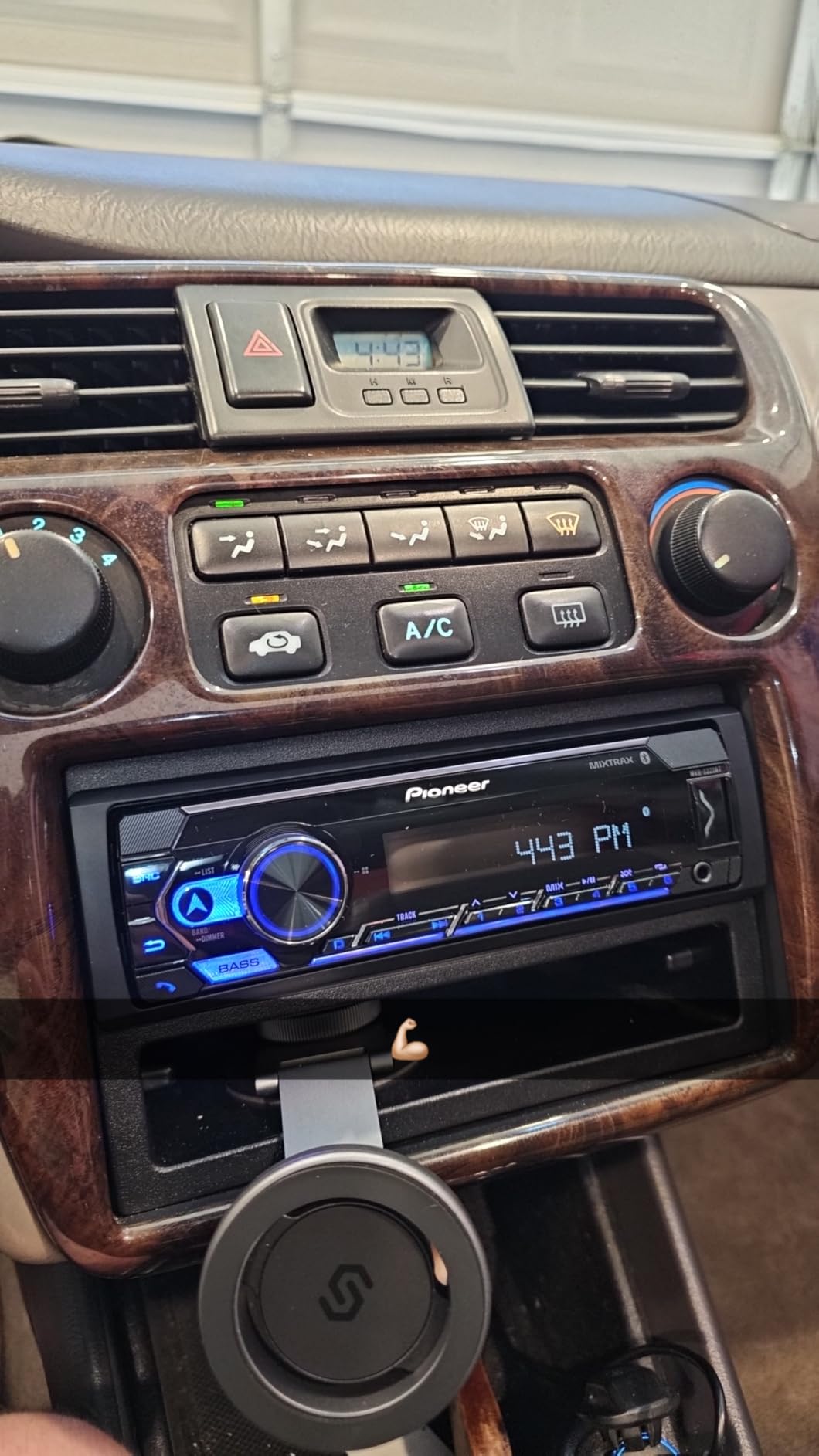
This is the unit I would put in a car where the amplifier and subwoofer are already chosen. The preouts are selectable, so you can decide which pair feeds your amp and which feeds a sub, and there is a preamp level control to set the match before you touch gain on the amplifier.
That combination is rare at this level. A 13-band EQ gives you real tone shaping for bass rather than the two knobs most budget receivers offer, and owner reviews from system builders single out the clean preamp output and built-in preamp filters as the reasons they chose it.
Output is 50 watts x 4, or 200 watts total rated, which again matters less if an external amplifier is doing the work. File support covers MP3, WMA, AAC and WAV, and the Advanced Sound Retriever feature tries to restore detail lost to compression.
The Pioneer Smart Sync app handles iOS and Android control, and the front USB port also charges a phone. Bluetooth calling is described by owners as having a clear microphone, and pairing reconnects automatically on later starts.
Who this head unit suits
It suits installers and careful listeners who want to run external amps and subs and care about signal quality more than screen size. A single DIN opening, a 13-band EQ and selectable sub preouts is a solid foundation for a system you will grow into.
Owners also report straightforward installation with a well-documented harness, which matters if this is your first time replacing a factory radio.
Who should skip it
Skip it if you dislike app prompts. Multiple owners mention the Smart Sync app asking for contacts permission every time the unit powers up, which is irritating on a daily driver.
Also consider alternatives if you need a touchscreen or smartphone projection. There is no display beyond the small readout, and EQ adjustment is described as more practical on the unit face than in the app.
5. SJOYBRING JOY-W022 – Brightest Screen With Dedicated Sub Outputs
SJoyBring 7″ QLED Double Din Car Stereo – Wireless Apple CarPlay & Android Auto, 240W 4.2CHN, SWC, Bluetooth, FM/AM Car Radio, 2 Subwoofers Outputs, Backup Camera
Double DIN 7-inch QLED
Two subwoofer outputs
240W max 4.2-channel
Backup camera included
Pros
- Dual subwoofer outputs with custom EQ settings
- 1280x720 QLED screen readable in sunlight
- Wireless CarPlay and Android Auto connect quickly
- Includes rear-view camera brackets and ISO harness
Cons
- Touch and button response can lag about half a second
- Sound quality may disappoint listeners
- USB browsing has no folder nesting or scroll bar
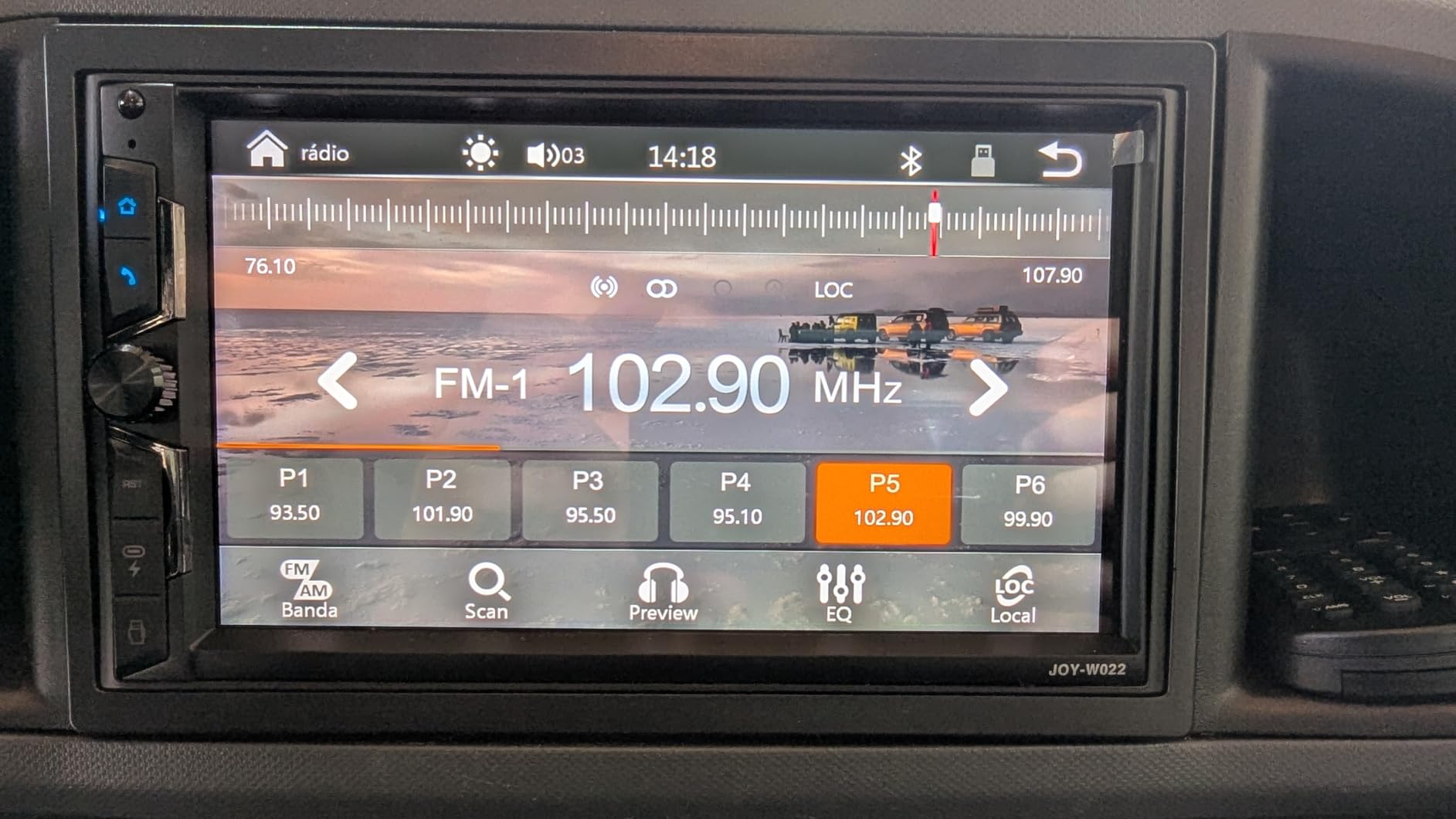
The JOY-W022 pairs a 1280×720 QLED panel with a 4.2-channel output section, which means four speaker channels plus dual subwoofer outputs. Custom EQ settings let you shape the low end to taste, and 240 watts maximum output covers the internal amplifier stage.
Screen quality is its standout feature. Owners consistently single out brightness and readability in direct sunlight, which is a common complaint about budget double-DIN displays in hot climates.
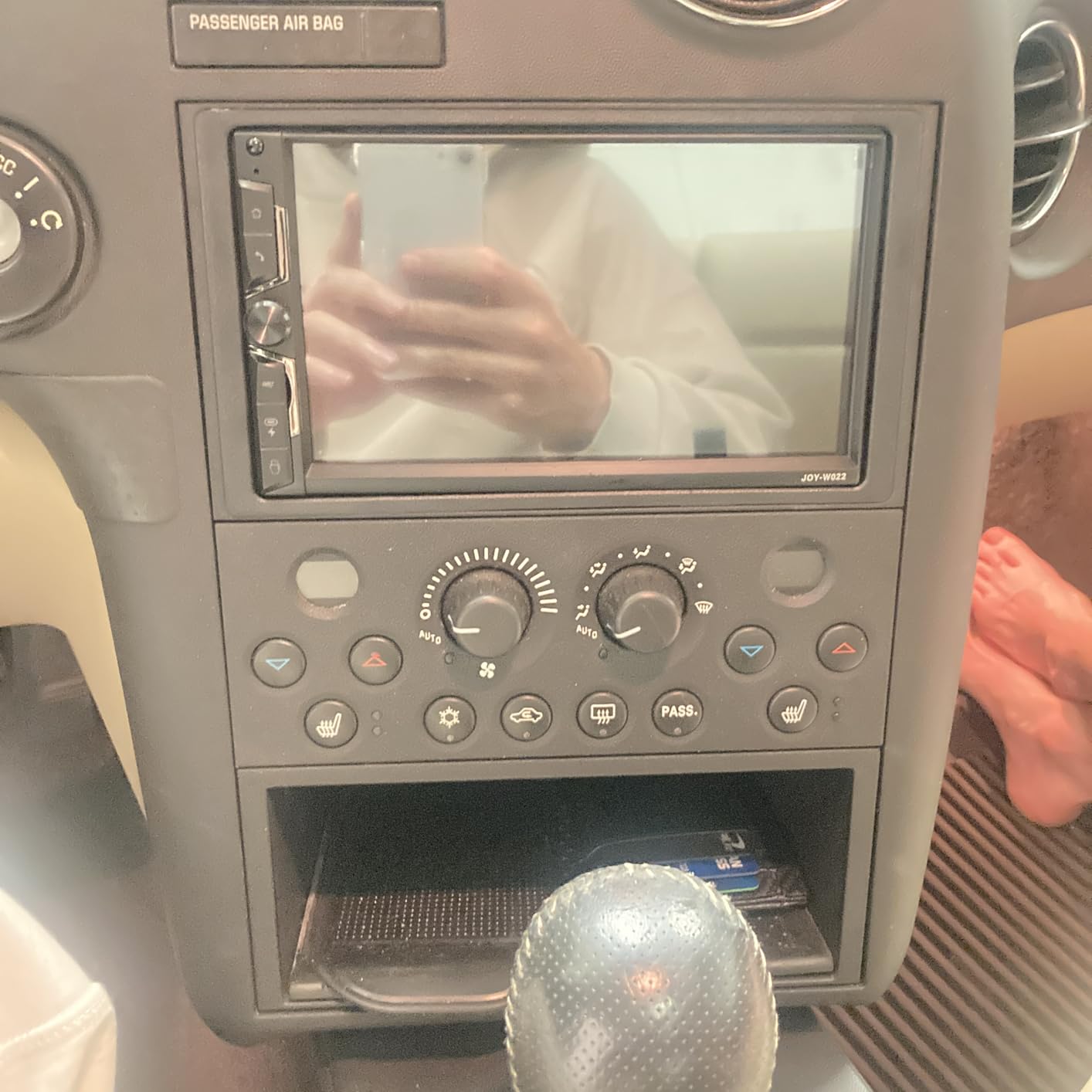
Wireless Apple CarPlay and Android Auto run over both Bluetooth and Wi-Fi, with Siri and Google Assistant voice commands. The box includes an HD night-vision backup camera, brackets and screws, a camera cable, an ISO stereo harness, two frames, a remote and a manual.
Fitment is standard double DIN at 6.69 inch by 3.81 inch. A dash kit, wiring harness adapter and antenna adapter are often required, and steering wheel control needs an additional interface sold separately.
Who this head unit suits
It suits someone with an older car who wants a modern screen, wireless phone integration and two sub outputs in one unit rather than building that from a separate display and a separate processor.
Owner reports also praise the vendor support, including custom boot logos, wallpaper files and a replacement unit sent without argument, which softens the risk of buying from a lesser-known brand.
Who should skip it
Skip it if you are picky about sound. Owners who came from a higher-end system describe the audio quality as underwhelming compared with what they had, and the half-second interface lag shows up on every button press.
The Wi-Fi connection is phone-to-unit only with no hotspot support, and the backup camera can drop to no-signal in very cold weather or during electrical fluctuation, which is worth knowing before winter.
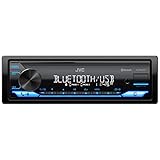
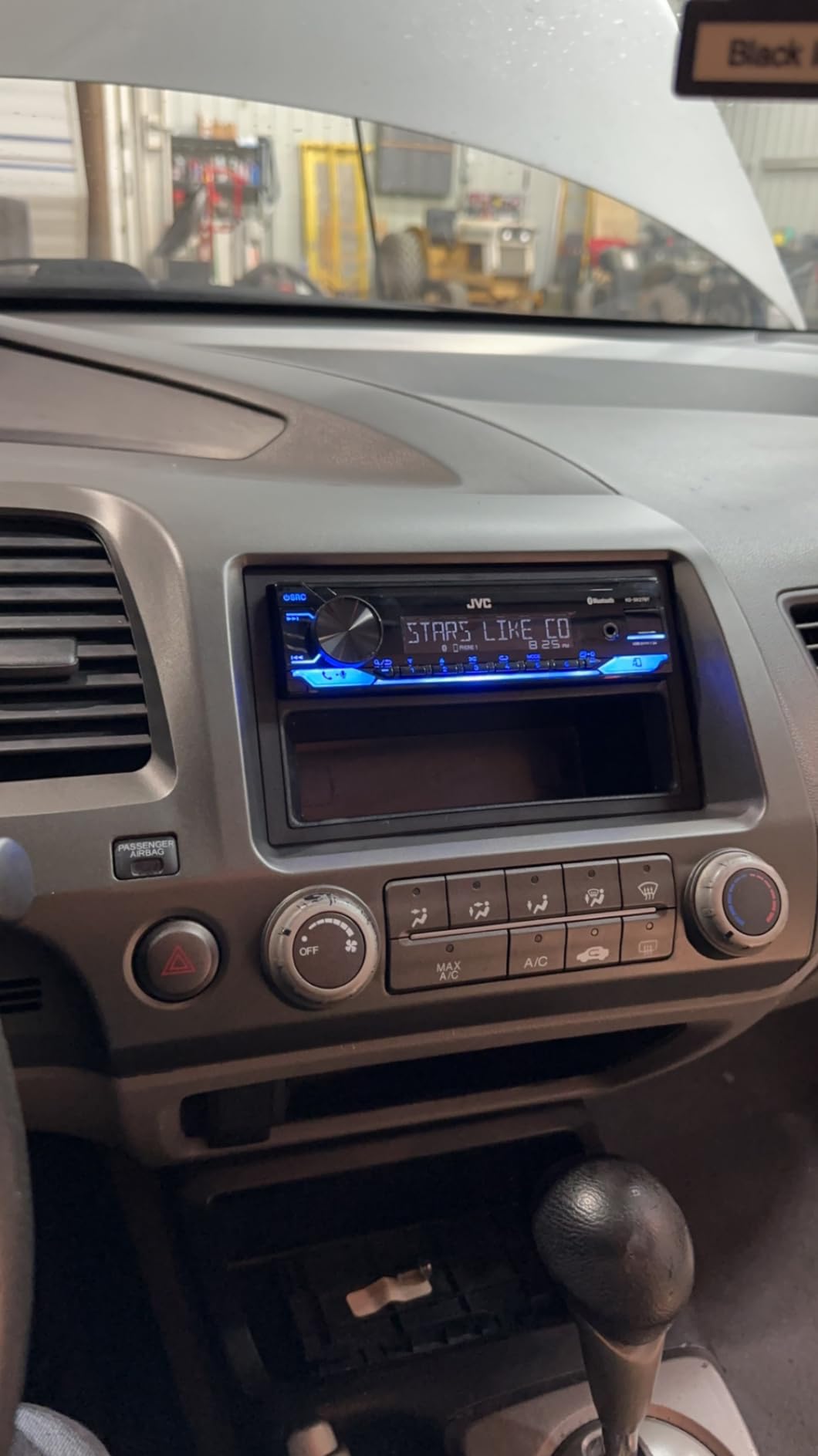
6. JVC KD-SX27BT – Bass EQ Tools With a Short Chassis
JVC KD-SX27BT Car Stereo with Bluetooth, 100W Digital Media Receiver, 1.5A USB, Single DIN Head Unit with AM/FM Radio & AUX-in, iOS/Android JVC Remote App, 13-Band EQ, Dual Phone Connection
Single DIN
13-band EQ with time alignment
Preamp-out for amp or sub
100W internal amplifier
Pros
- 13-band EQ plus Time Alignment and Sound Lift for bass shaping
- Preamp-out lets you add an amplifier or subwoofer
- Dual phone connection and five paired Bluetooth devices
- Short chassis fits tight dashboards
- 1.5A USB port charges quickly
Cons
- No touchscreen or smartphone projection
- No CD player
- App required for some functions
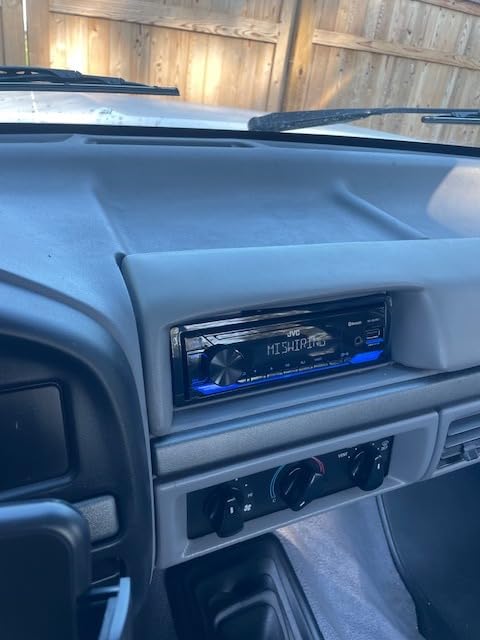
The KD-SX27BT is the one I would recommend for a small car with a cramped dash. Its short chassis is designed to fit where a deeper single-DIN body will not, and it still carries a preamp-out so an amplifier or subwoofer is not off the table.
For bass, the important part is the 13-band EQ combined with Time Alignment and Sound Lift. Time Alignment positions sound so it reaches both ears at the same moment, which matters more than most buyers expect because seat position changes how low frequencies behave in a small cabin.
The internal amplifier is rated at 100 watts, or 50 watts per channel, and K2 technology is included for digital sound processing. Bluetooth supports dual phone connection and up to five paired devices at once, and the USB port delivers 1.5A charging while also playing MP3, WMA, WAV, AAC and high-resolution FLAC.
Controls run through a mechanical knob and buttons, with a JVC Remote app for iOS and Android. The display language supports Spanish text, which is unusual and useful for some markets.
Who this head unit suits
It suits owners of compact cars and older vehicles with a shallow dash cavity, and anyone who wants serious EQ control without a touchscreen getting in the way. The preamp-out means you are not locked into factory speakers.
Owners value the combination of EQ tools and short chassis most, and the dual-phone Bluetooth is genuinely useful for drivers who separate work and personal phones.
Who should skip it
Skip it if you want a screen. There is no display, which also means no CarPlay or Android Auto and no visible track information beyond a small readout.
Some functions route through the phone app, so if you prefer a fully self-contained unit, look at a mech-less receiver with more physical controls. There is also no CD player.
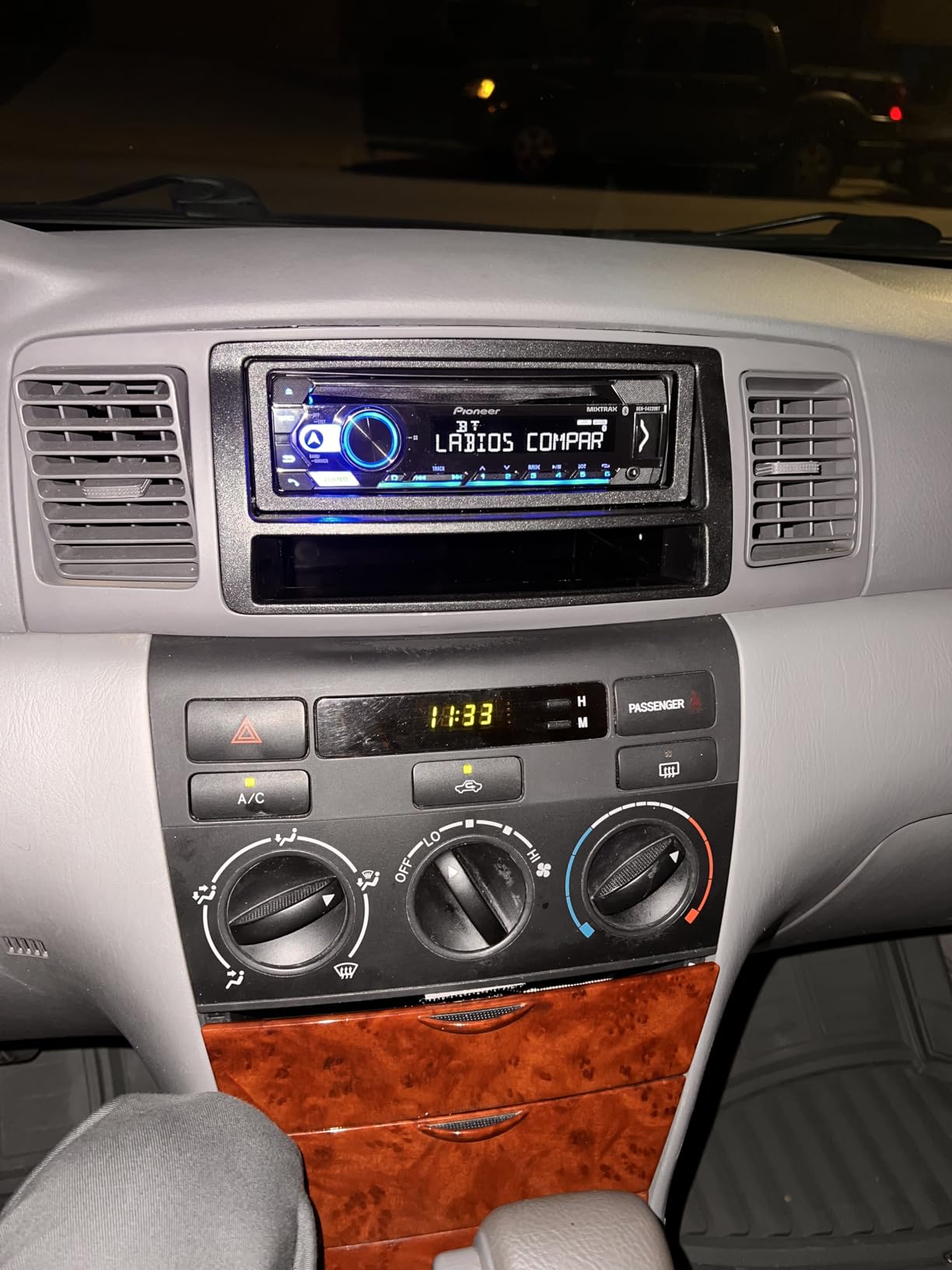
7. Pioneer DEH-S4220BT – Hi-Volt Preouts With a CD Player Attached
Pioneer DEH-S4220BT 1-Din CD Car Stereo with Bluetooth USB/AUX
Single DIN with CD
Hi-Volt RCA preouts
FLAC playback
50W x 4 output
Pros
- Hi-Volt RCA preouts give extra clean signal headroom
- Retains a CD player in a compact chassis
- Bluetooth pairs quickly and USB charges the phone
- Easy upgrade if Pioneer is already in the car
Cons
- Bluetooth range is limited versus newer receivers
- 50W x 4 rated output is modest for driving an amp
- No touchscreen or phone projection
Only three units in this group publish a preamp voltage figure, and this is one of them. Hi-Volt RCA preouts mean more clean signal reaches your amplifier, which is the single most direct way a head unit can make bass deeper and louder without distortion creeping in.
That is the reason to pick it. If you are running a sub and an amp and you care about headroom rather than features, more preamp voltage beats a bigger screen every time.
The trade-offs are real. A single-year warranty is shorter than several other units here, and there is no touchscreen or phone projection, so this is a signal-first purchase rather than a feature-first one.
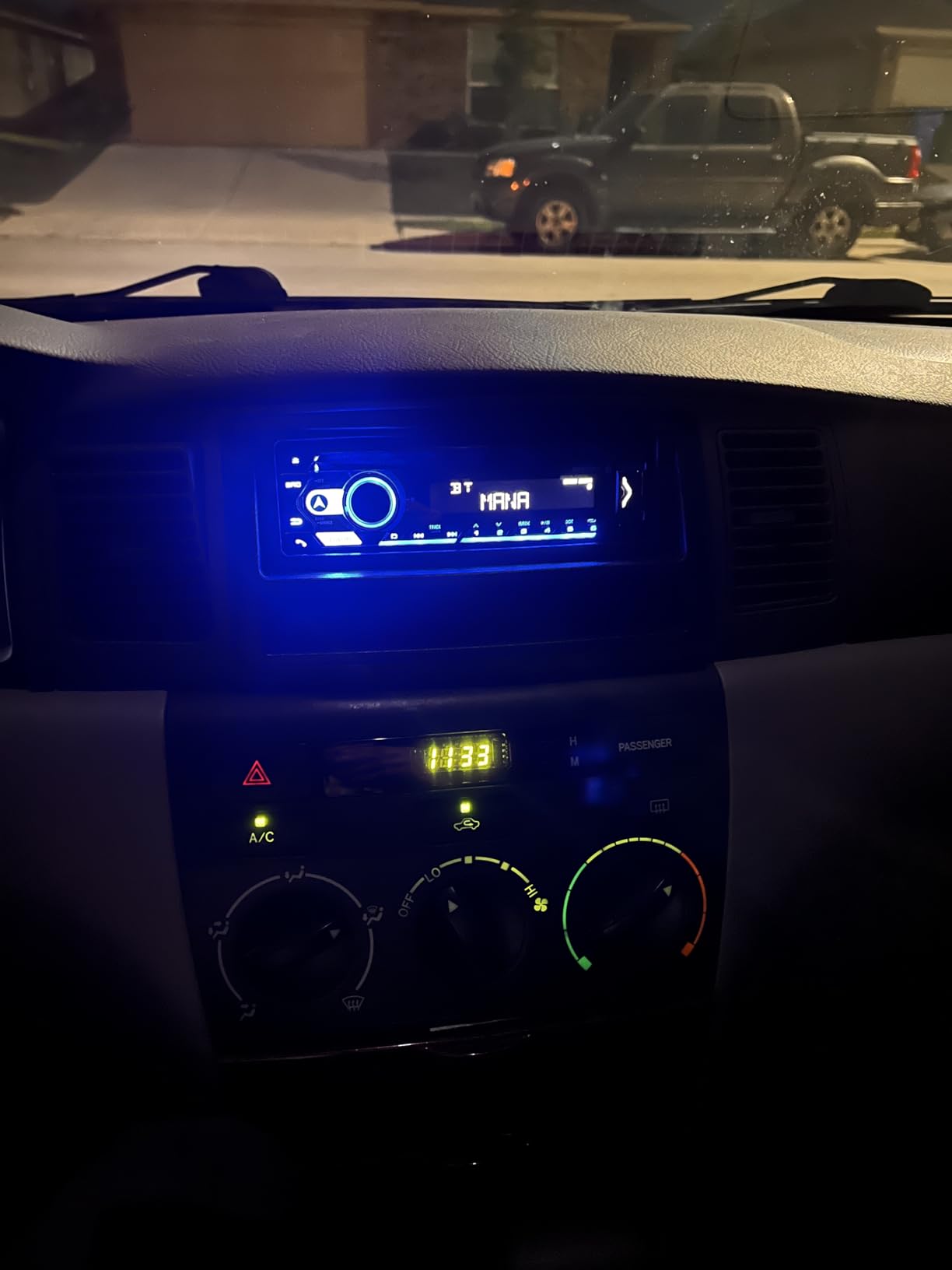
It also keeps a CD player with a detachable faceplate, which almost nobody else on this list does. FLAC and high-resolution playback work through USB, and the Advanced Sound Retriever restores detail lost to compressed files. MIXTRAX adds automatic DJ-style track mixing for long drives.
Output is 50 watts x 4. That figure is modest when the unit is driving an amplifier directly, which is the opposite of what you want to hear, but it becomes irrelevant once the amp is doing the work and the preouts are feeding it cleanly.
Who this head unit suits
It suits an installer mindset: someone who wants clean signal headroom, a real CD slot and a straightforward single-DIN swap. Owners upgrading from an existing Pioneer system report a familiar interface and easy installation.
If you are keeping physical media in the car, this is the only unit here that does it in a compact single-DIN body rather than a mech-less design.
Who should skip it
Skip it if phone integration matters. There is no touchscreen, no CarPlay and no Android Auto, and a few buyers report shorter Bluetooth range than newer receivers deliver.
Some owners also switched to a different unit once an external amplifier was added, which is worth weighing. The preamp is the strength here, not the built-in amplification.
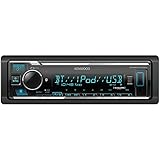
8. Kenwood KMM-BT332U – Dedicated Subwoofer Pre-Out in a Single DIN
KENWOOD KMM-BT332U Bluetooth Single DIN Car Stereo with USB Port, AM/FM Radio, MP3 Player, Multi Color LCD, Detachable Face, Built in Amazon Alexa, Compatible with SiriusXM Tuner
Single DIN
6-channel preamps with 2.5V sub preout
13-band EQ with time alignment
300W total rated
Pros
- Six-channel preamp outputs including a dedicated subwoofer pre-out
- 13-band EQ with digital time alignment
- Two-phone Bluetooth and control of five paired phones
- Detachable faceplate and multi-color LCD
- Built-in Amazon Alexa
Cons
- No touchscreen display
- Does not play CDs
- Voice and app features are limited versus double-DIN units
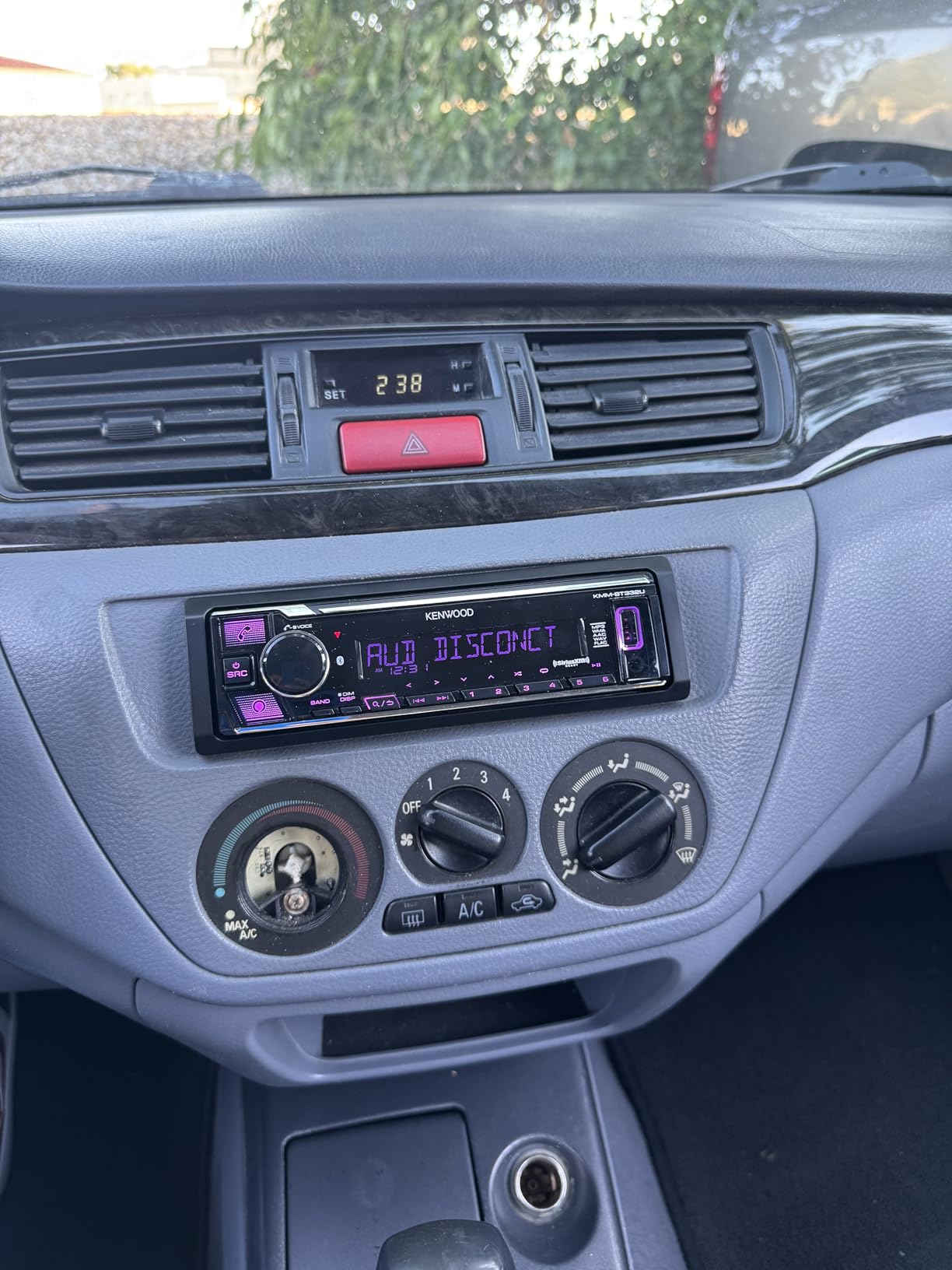
The KMM-BT332U is the most flexible signal router in this group. It has six channels of preamp output including a dedicated subwoofer pre-out rated at 2.5 volts, so you can feed front speakers, rear speakers and a subwoofer amp on separate, individually level-controlled outputs without a separate converter.
The 13-band EQ is paired with digital time alignment, which lets you pull the centre image and low end into the right place in the cabin. That is the feature that makes a system sound integrated rather than a sub bolted onto a factory front stage.
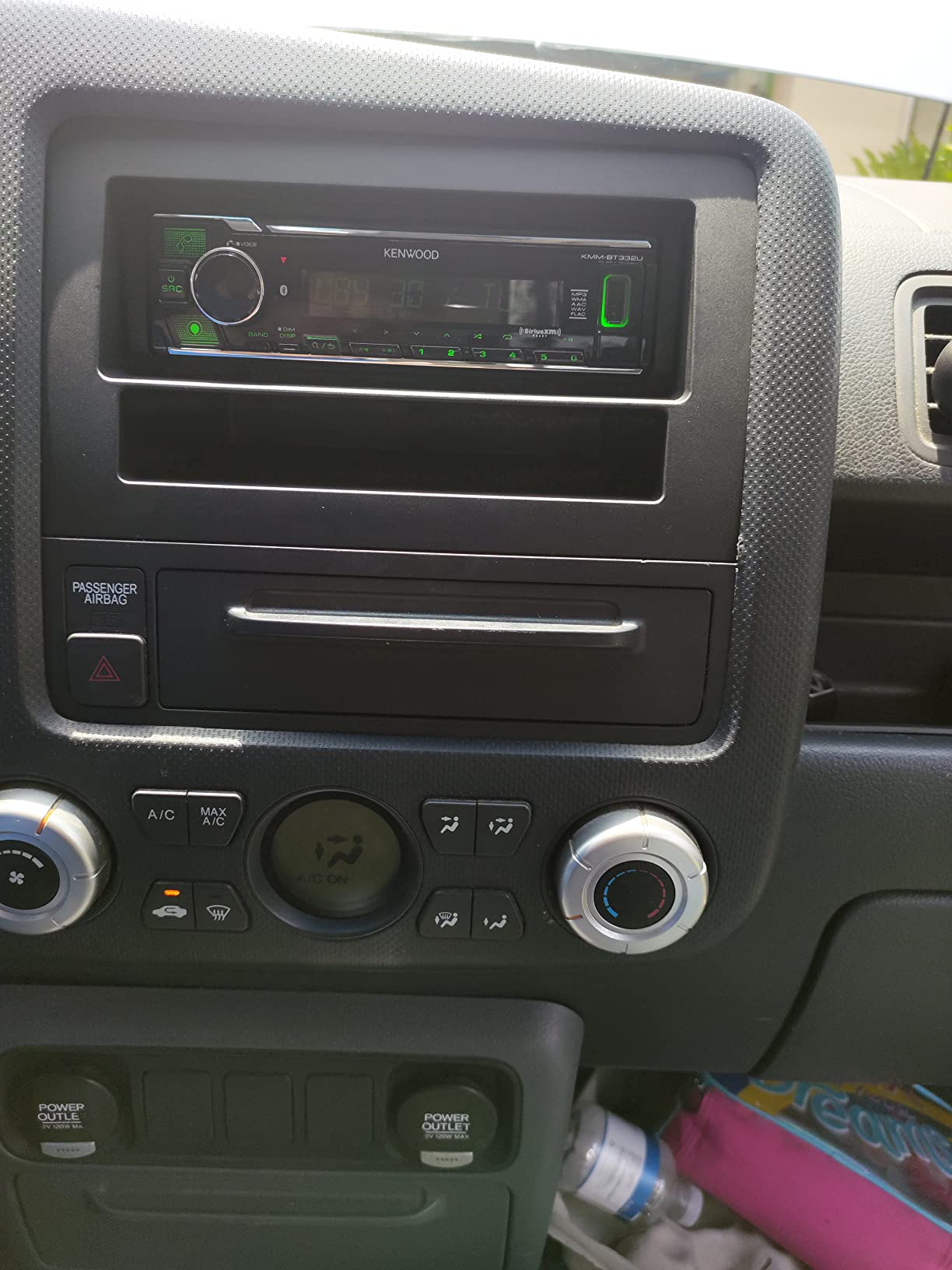
Output is 50 watts per channel for 300 watts total rated. Bluetooth handles two phones at once with voice recognition dialling, and Music Mix streams from up to five paired smartphones. Amazon Alexa is built in, and the unit is compatible with a SiriusXM tuner if you add one.
The box includes removal tools, a face-fixing screw, the face, trim ring, sleeve, wiring harness, a microphone with bracket, a quick start guide and a warranty card. Installation size is 7-3/16 inch by 2-1/8 inch by 3-15/16 inch.
Who this head unit suits
It suits a builder who wants a proper multi-channel preamp in a single DIN opening. Six preamp channels plus a 2.5V sub pre-out is the most flexible signal-routing arrangement here, and it is the reason installers recommend this model.
It is also a good match for a car with no double DIN space but a full multi-amp system, which is a common situation in older coupes and small sedans.
Who should skip it
Skip it if you want a screen. There is no display, no CarPlay and no Android Auto, and the warranty is one year limited.
Owners also note that voice control and app features are limited compared with double-DIN units, and there is no CD playback, so a car full of discs needs a different answer.
9. Sony DSX-A410BT – Dual Phone Bluetooth, Minimal Bass Hardware
Sony DSX-A410BT Single Din Bluetooth Front USB AUX Car Stereo Digital Media Receiver (No CD Player)
Single DIN mech-less
Dual Bluetooth two-phone pairing
Voice control
Front USB and AUX
Pros
- Dual Bluetooth pairs one phone for navigation and music plus a second for calls
- Sony brand with a 4.5-star owner average
- Front USB and AUX inputs for flexible sources
- Compact single-DIN mech-less body
Cons
- No touchscreen display
- Does not play CDs
- No documented multi-band EQ or subwoofer pre-out
The DSX-A410BT is included here as a contrast case, and it is worth being blunt about why. It is a clean, well-rated single-DIN receiver with excellent phone connectivity, but its published specifications list no subwoofer pre-out and no multi-band EQ.
Without documented preamp outputs, adding an amplifier means a line output converter, and without an adjustable low-pass filter on the head unit, crossover control falls entirely to the amplifier. That is workable, but it is the opposite of what this article recommends.
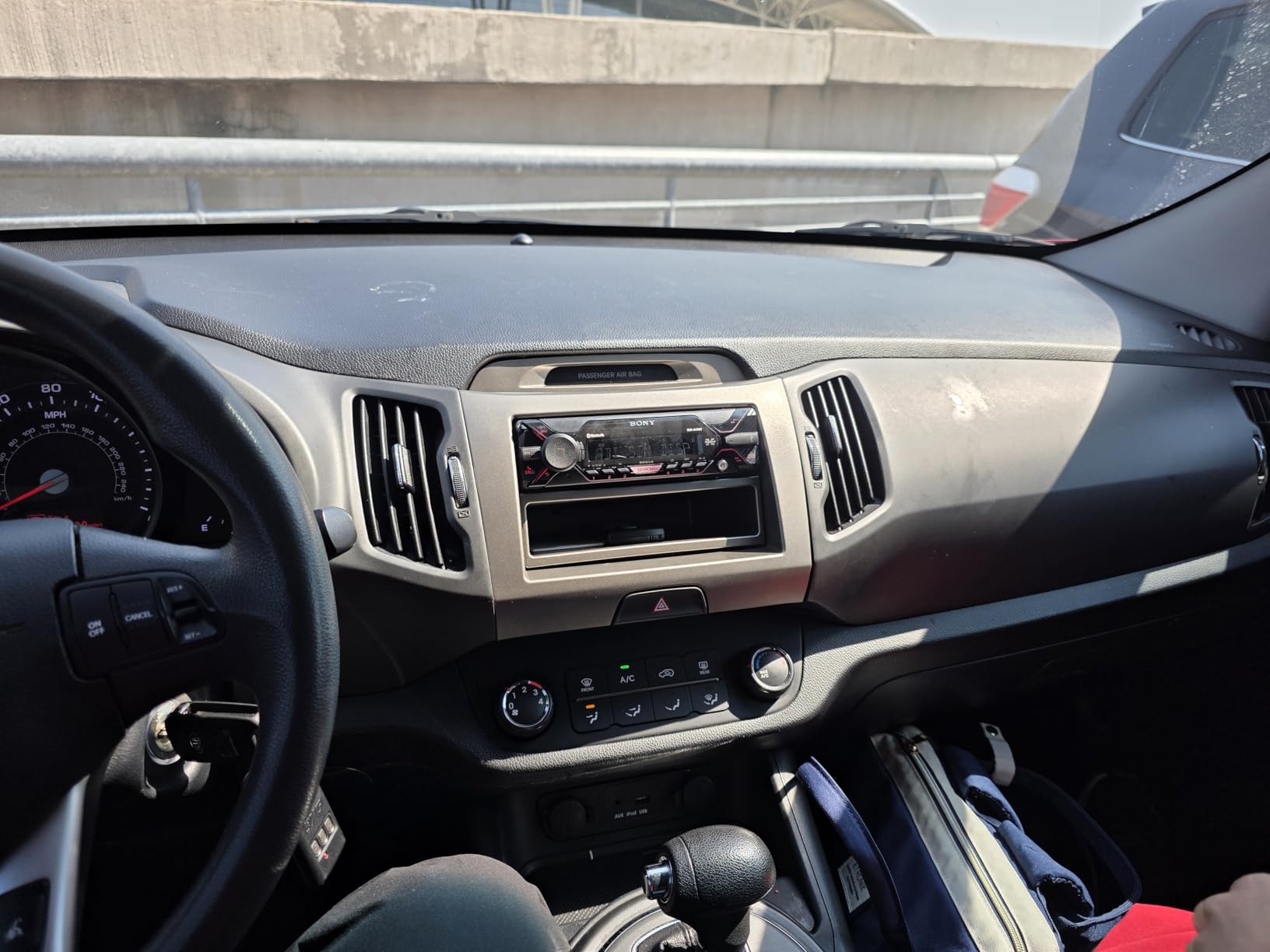
What it does well is connection management. Dual Bluetooth lets one phone handle full navigation, music and contacts while a second stays dedicated to hands-free calling, which owners rate as the main reason to buy it. Voice control covers music, directions and contacts.
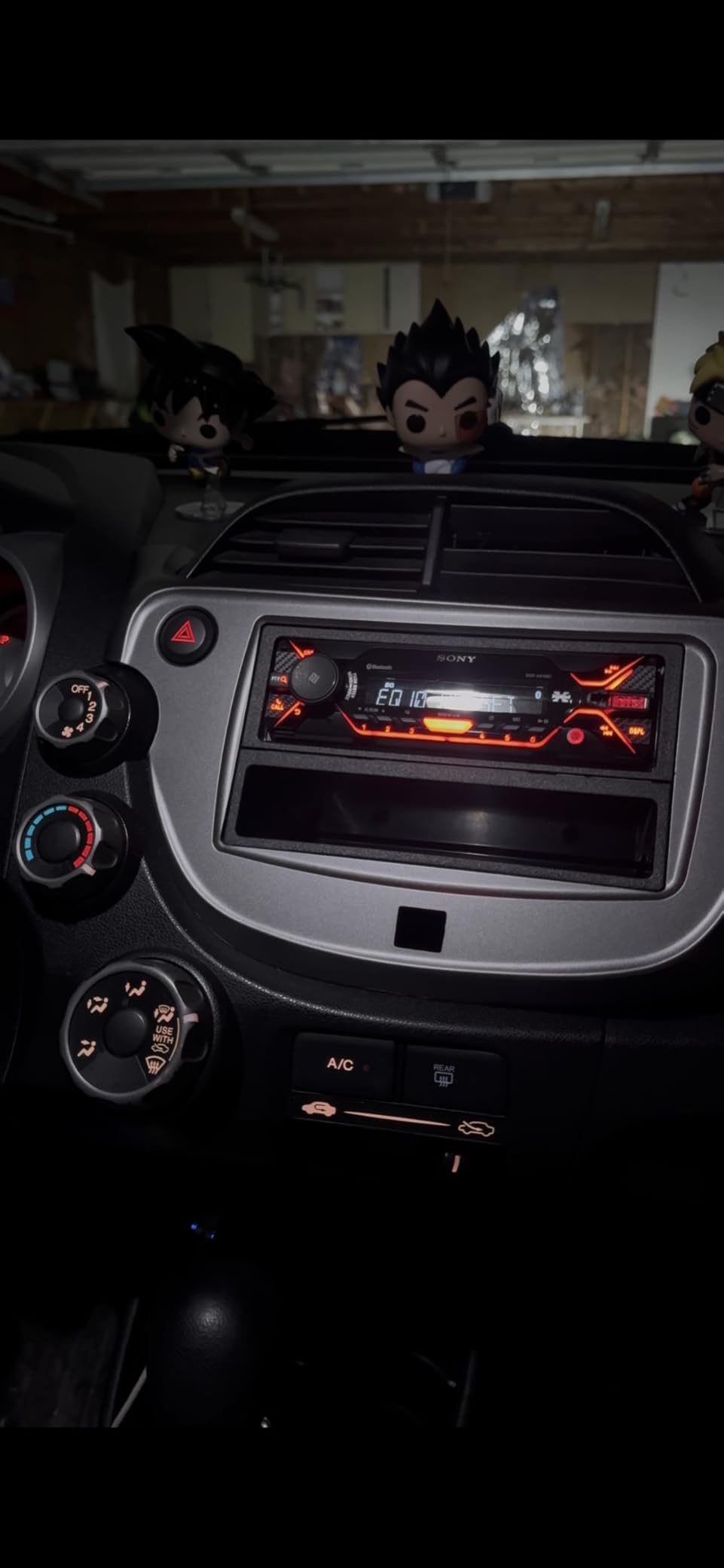
Source options are front USB and front AUX alongside an FM and AM tuner. Installation size is 7 inch by 2-1/8 inch by 3-15/16 inch, so it is a standard single DIN body with no display and no CD player.
Who this head unit suits
It suits a driver whose priority is phone and navigation reliability with a factory speaker system. Eighty percent of owners give five stars, and the recurring theme is dependable Bluetooth rather than audio flexibility.
If you are keeping the factory speakers and simply want better sound quality per dollar, it is a reasonable single-DIN choice with a small footprint.
Who should skip it
Skip it for any amplified bass build. No documented subwoofer pre-out means no clean, level-controlled feed to a sub amp, and no multi-band EQ means no tone shaping for the low end.
It is also the wrong pick if you listen to CDs. The unit is a digital media receiver with no optical drive, and the small readout means limited on-screen information.
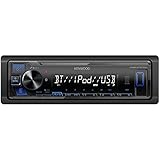
10. Kenwood KMM-BT270U – Built-In Power for Stock Speakers
KENWOOD KMM-BT270U Bluetooth Digital Media Car Stereo Receiver with USB Port – AM/FM Radio, MP3 Player, High Contrast LCD, Detachable Face Plate, Single DIN, 13-Band EQ
Single DIN
13-band EQ
200W max MOSFET amplifier
Detachable faceplate
Pros
- MOSFET amplifier has noticeably more headroom than a factory radio
- 13-band EQ for real bass and treble adjustment
- Quick install in older vehicles with a harness adapter
- Detachable faceplate and high-contrast LCD
Cons
- Bluetooth phone pairing is described as tricky by some owners
- One documented unit failed after about two months
- No touchscreen display
Where the KMM-BT270U differs from a factory radio is raw built-in headroom. Owners installing it in older cars and golf carts report that the MOSFET amplifier gives noticeably more power than the stock system, which wakes up faded door speakers without an external amplifier.
For bass specifically, it also carries a 13-band EQ. That is more tone control than the two knobs most entry single-DIN units provide, and it lets you lift or cut the low bands before they reach a small front stage.
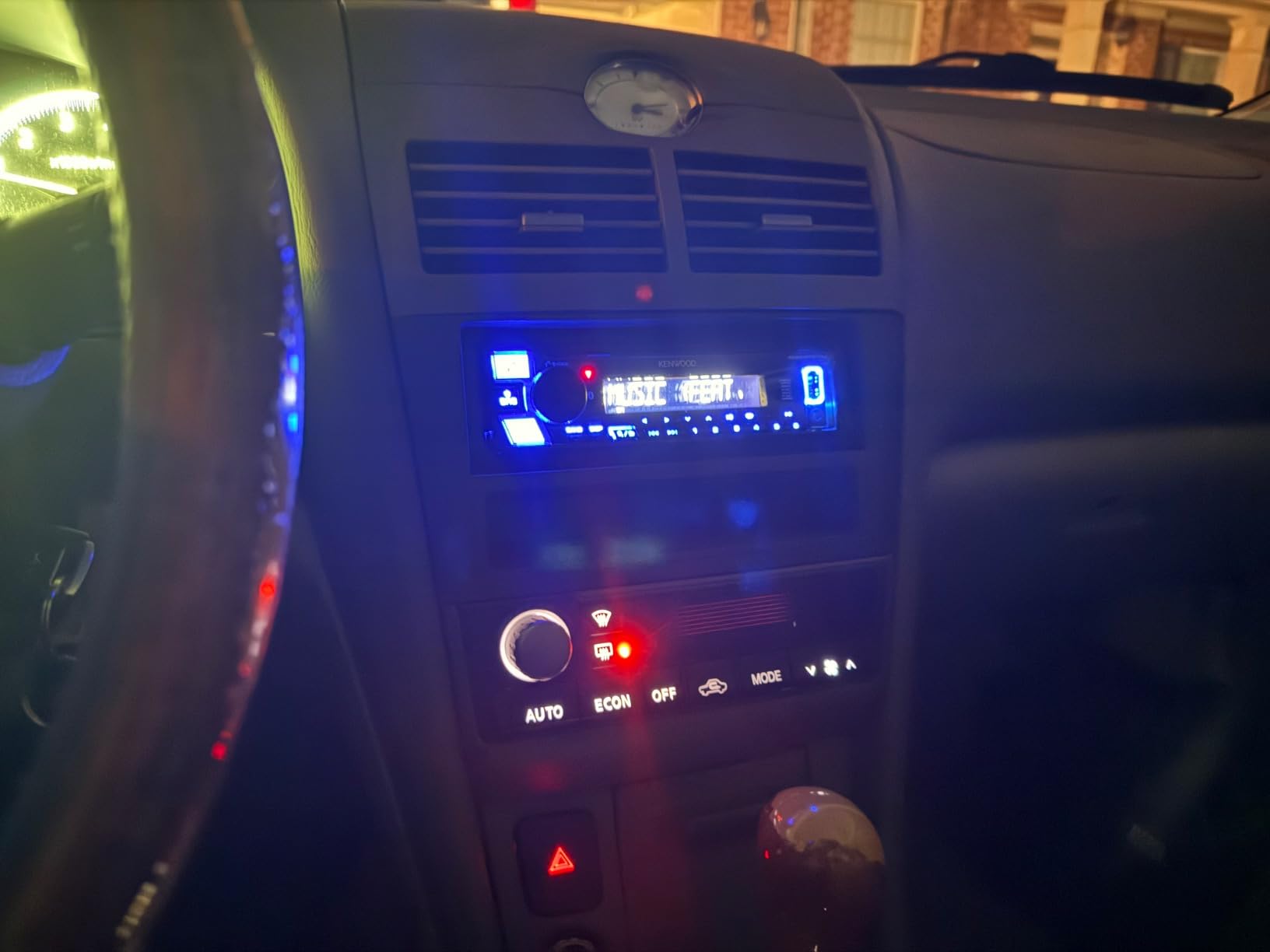
It plays MP3 and WMA, streams and takes calls over Bluetooth, has a USB port for playback and rapid device charging, and adds an aux input. iPod and iPhone playback is supported, and a high contrast LCD with a detachable faceplate handles the display and theft deterrence.
What it does not do is feed an amplifier cleanly from documented preouts. If you are running a sub with an external amp, this is not the unit to build the signal chain around.
Who this head unit suits
It suits drivers who want more volume and better tone from factory speakers without buying an amplifier, and owners frequently report that it is a straightforward install with a wiring harness adapter.
The detachable faceplate is genuinely useful in a daily driver that lives outside in the sun, and the multi-step EQ gives more control than the two knobs most entry units provide.
Who should skip it
Skip it if you plan to add amps and subs, because the absence of documented RCA preouts puts a line output converter back into the plan. It is also a no-CD variant, so check the version before ordering.
Some owners describe initial Bluetooth pairing as finicky until the phone and unit settle into a routine, and there is one documented report of a unit failing after about two months, so keep the box and receipt.
11. JVC KW-SX88BT – Shallow Double DIN With 2.5V Sub Preouts
JVC KW-SX88BT Bluetooth Double DIN Car Stereo, 200W Digital Stereo Receiver, AM/FM Radio, Dual Phone Connection, 13-Band EQ, 1.5A USB & AUX Inputs, Custom Color Illumination, Shallow Chassis
Double DIN shallow chassis
2.5V rear and subwoofer preamp outs
13-band EQ
50W x 4
Pros
- Two-channel preamp outputs with 2.5V rear and subwoofer level
- 13-band EQ with digital time alignment
- Shallow chassis fits tighter double DIN openings
- Custom color illumination and 1.5A USB charging
Cons
- No touchscreen or phone projection despite double DIN size
- 50W x 4 rated output needs an amp for high volume
- Not a CD player
The KW-SX88BT solves a specific fitment problem that most double-DIN units create. Its shallow chassis measures 7 inch by 3-15/16 inch by 3-15/16 inch, which lets it sit in tighter openings behind a double DIN face where a deep body would hit the climate control housing or the stereo bracket.
It also brings real signal hardware. The preamp outputs are rated at 2.5 volts for rear and subwoofer level, which is one of only three published preamp voltages in this entire group, alongside the Pioneer Hi-Volt unit.
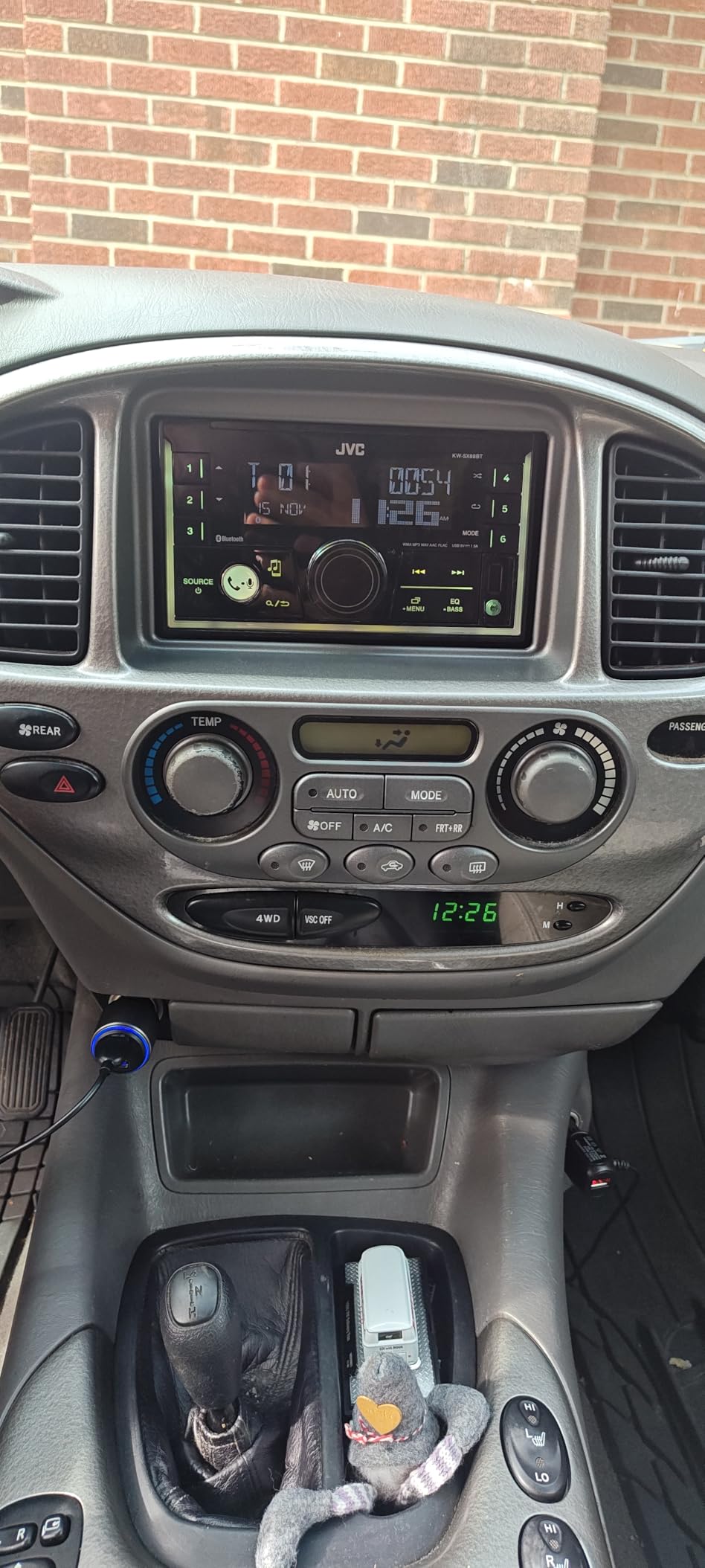
A 13-band EQ with digital time alignment handles tone and staging, and K2 technology is included for digital sound enhancement. Built-in Bluetooth supports dual phone connection with an included microphone, and the front USB port delivers 1.5A charging with MP3, WMA, WAV and AAC playback.
The built-in amplifier is 50 watts per channel for 200 watts maximum, so an external amplifier is needed for high volume even though the preamp section is good.
Who this head unit suits
It suits anyone with a double DIN opening that is physically shallow, which is common in trucks, older sedans and vehicles with a stacked factory radio and climate control arrangement.
Enthusiast buyers point to the 2.5V rear and subwoofer preamp outputs as a clean, capable signal chain for an external amplifier, which is exactly the use case this article is about.
Who should skip it
Skip it if you bought a double DIN expecting a screen. It has no touchscreen and no CarPlay or Android Auto, so the form factor is purely about fitment and preamp quality.
The 50W x 4 internal amplifier also means you still need an external amp for real output, and there is no CD player for anyone with a disc collection.
12. Jensen MPR210 – Reliable Basic Stereo, No Amplified Bass Path
Jensen MPR210 Single DIN Bluetooth Car Stereo, Hands-Free, AM/FM, USB
Single DIN
2-band tone control
Four EQ presets
180W rated 200W max
Pros
- Very low entry cost with core calling and streaming
- Bass and treble controls plus four EQ presets
- Push-to-talk access to Siri and Google Assistant
- USB playback and phone charging
- Warranty extendable to four years with registration
Cons
- Only 2-band tone control with no multi-band EQ
- No documented preamp or subwoofer outputs
- Small 7-character LCD
- No CD player
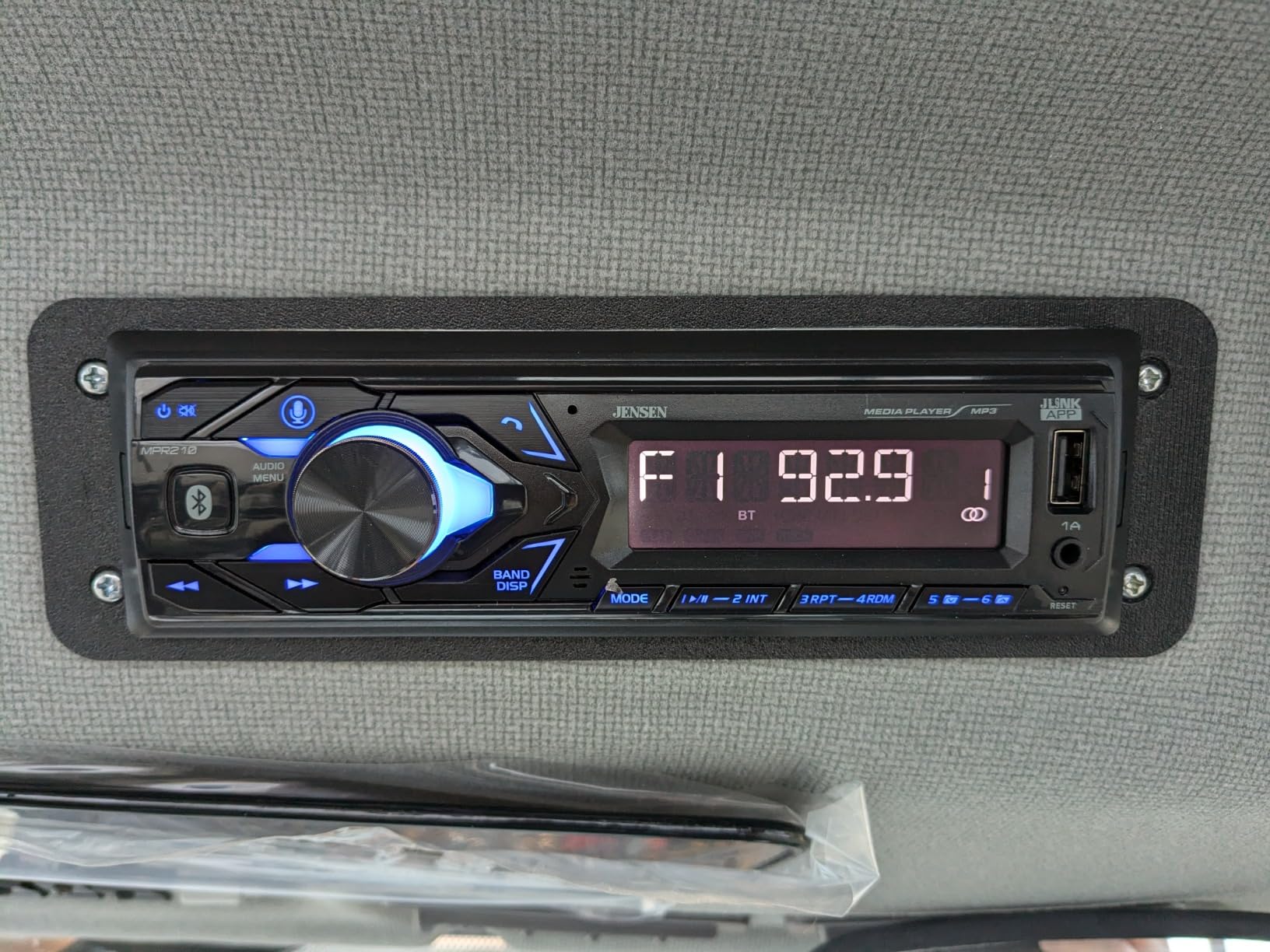
The Jensen MPR210 sits at one end of this list with more than 7,700 owner reviews, and buyers treat it as a dependable basic upgrade rather than an audio component. Clear hands-free calling and straightforward USB playback are what people report back.
I include it because it is where most people actually start. If you have never replaced a car radio, this is a low-risk first move, and the two-year warranty extendable to four years with registration is the longest stated coverage here.
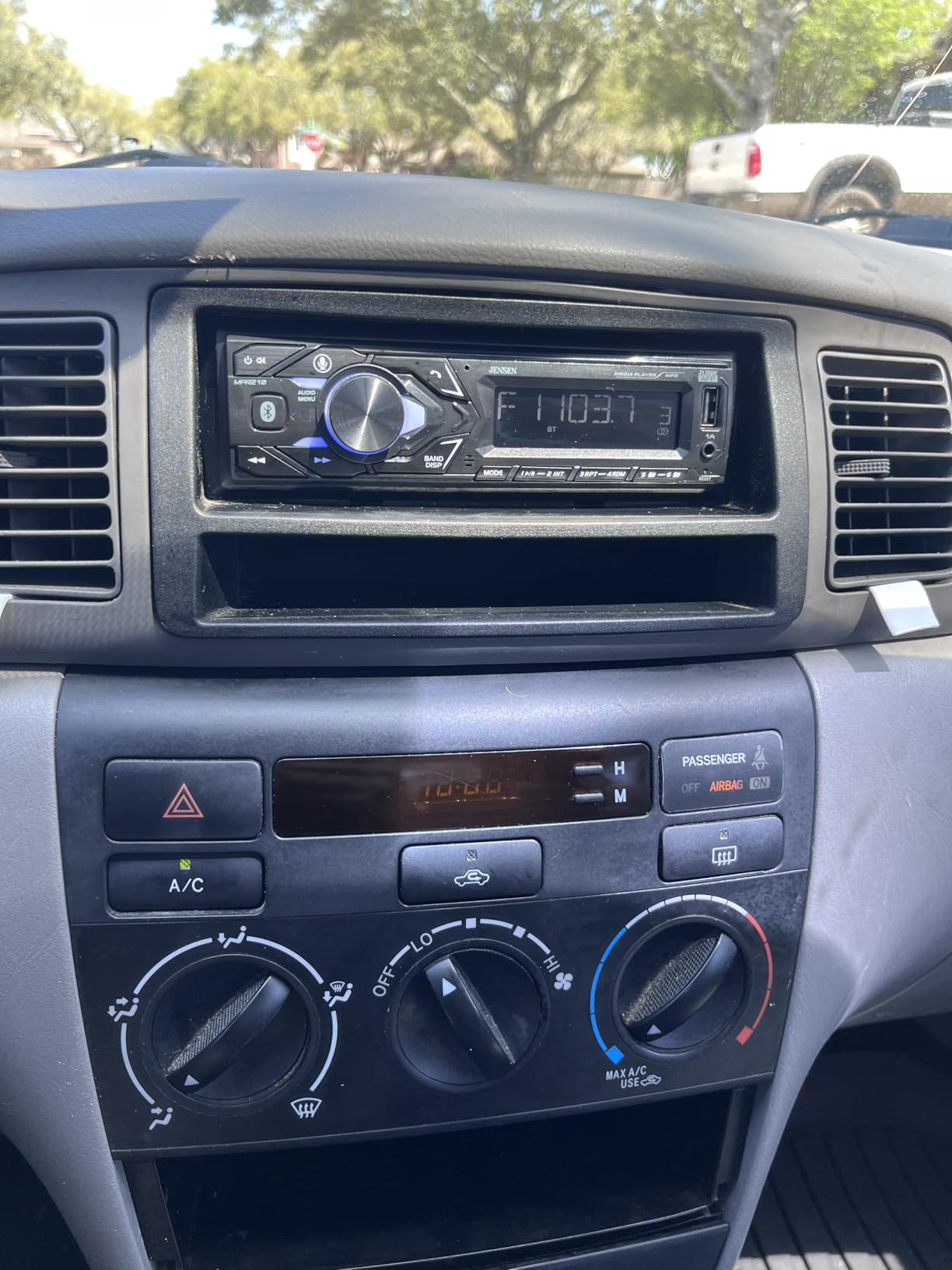
For tone, it offers 2-band bass and treble control plus four preset EQ curves: Pop, Jazz, Rock and Flat. That is enough to tilt the balance toward bass without a proper multi-band EQ, and it is the limit of what you can do at the head unit.
There are no documented preamp or subwoofer outputs, so an amplifier or subwoofer means a line output converter. Output figures are 180 watts rated and 200 watts maximum across four channels, which are peak numbers rather than usable continuous power.
Who this head unit suits
It suits a first-time installer who wants Bluetooth calling, streaming, USB playback and an AM and FM radio in a simple single-DIN package with minimal menus to learn.
If you are replacing a dead factory radio in an older car and your speakers are original, this does the job without the wiring complexity of a double-DIN screen.
Who should skip it
Skip it for any subwoofer system. No documented preamp or sub outputs means no clean adjustable feed to an amp, and 2-band tone control with presets is not real bass management.
The 7-character LCD also gives you almost no on-screen feedback, so navigating USB folders or track lists is guesswork. Plan a converter and an amplifier with its own crossover controls if this is the only unit available to you.
Specs That Matter for Bass
Preamp voltage. This is the number most buyers ignore and enthusiasts watch. A unit with 2.5V or Hi-Volt preouts delivers more clean signal to your amplifier than a 2V unit, which means you can run more amplifier gain before distortion sets in. In this group the Pioneer DEH-S4220BT, the JVC KW-SX88BT and the Kenwood KMM-BT332U publish a figure.
Where no figure is published, assume the more common 2V rather than assuming something better. A 4V unit would be a genuine step up, and no product here claims it.
RCA preamp output count. You need at least one pair for a subwoofer amplifier and a second pair if you are running an amplifier for the front speakers. Outputs labelled front, rear and sub that you can select are more useful than a fixed configuration, because they let you decide what feeds what. Four units on this list have no documented preouts at all, and the Jensen MPR210 offers only basic speaker-level wiring, which puts a line output converter back in your plan.
Subwoofer level control. A dedicated sub level lets you trim the sub to the door speakers from the driver’s seat.
Without it you are adjusting the sub amp gain, which changes the level for every input, not just music.
Low-pass filter. The LPF removes midrange from the sub so it blends with the front speakers instead of fighting them. Head unit LPFs are usually adjustable from around 80Hz to 200Hz. r/CarAV members typically set theirs between 80 and 100Hz, and if your door speakers have midbass capability a narrower sub band tightens the low end noticeably.
RMS versus peak. Head unit wattage is usually quoted as a peak total across all channels, so figures like 200W or 240W describe brief maximums, not sustained output.
If you are using an external amplifier and a subwoofer, head unit wattage is largely irrelevant. The preamp section is what matters.
Bass boost versus sub level. Bass boost applies fixed low-frequency gain at the head unit, which can push a signal into clipping and sound worse rather than deeper.
Sub level simply turns the sub channel up or down cleanly. Prefer sub level, and treat bass boost as a tone control rather than a volume control.
Double DIN versus single DIN. Single DIN is a narrow single-slot opening, roughly 7 inch wide, and most single-DIN units use rotary controls and buttons. Double DIN is a 6.69 inch by 3.81 inch opening, which fits a large screen and more controls. Neither is better for bass. Fitment and preamp hardware decide that, not the form factor.
RCA or High-Level Inputs for a Subwoofer
Use RCA low-level inputs whenever the head unit has proper preamp outputs. They carry a clean, noise-resistant line-level signal that you can set precisely with the amp gain, and they are the only way to use a head unit’s own sub level and low-pass filter.
High-level or speaker-level inputs tap the signal after the internal amplifier, which is what you use with a factory radio or a unit with no preouts. They work, and a good line output converter makes them acceptable. What they cost you is fine control: the signal has already passed through the factory amplifier, and the noise floor rises with volume.
Here is the difference in plain terms.
RCA low-level input: clean line-level signal taken before the internal amplifier. Uses the head unit’s sub level and LPF. Requires preamp outputs on the head unit. Best for any amplified bass build.
High-level speaker-level input: signal taken from the speaker wires after the internal amplifier. Requires a line output converter. Volume changes affect the signal level, and the noise floor rises. Fine for a factory system with one sub.
The forum consensus lines up with the spec sheets. Owners on r/CarAV and TalkBass describe head unit choice as the preamp and signal hub in a working bass system rather than the component that makes the bass, and r/CarAV members widely treat any Kenwood eXcelon head unit as a safe bass-capable choice for that reason.
One TalkBass user put a useful limit on the power argument, noting that around 1,000 watts into medium-efficiency subs in a mid-size car already reaches 140 dB SPL, which is far past the pain threshold. If your system is already loud enough, more head unit wattage is not what is missing.
Six Steps to Deeper Bass
These steps work whether you bought a new head unit this week or are keeping your factory one. The order matters, because each step assumes the previous one is finished.
1. Fix the signal path first. Run RCA cables from the head unit preouts to the amplifier, or install a line output converter at the speaker wires if there are no preouts. Use a proper shielded cable and keep it away from power wires on the way to the amp.
2. Flatten everything on the head unit. Set the EQ flat, set bass boost or bass level enhancement to zero, and set tone controls to neutral before you judge anything. You cannot evaluate low end while a boost is colouring it.
3. Set the low-pass filter. Start at 80Hz and listen in your car with the doors closed. If the sub and door speakers overlap audibly, drop the frequency. If midbass-capable door speakers handle the upper range, a narrower sub band tightens the response.
4. Set sub level, then amp gain. Turn the sub amp gain all the way down. Set the head unit sub level to about three-quarters. Play bass-heavy music and raise amp gain until you hit the level you want, then back it off slightly so you are not at the clipping point.
5. Check phase and polarity. If the sub is connected with reversed polarity, the bass will sound thin and hollow at higher volume. Swap the subwoofer leads and listen again before changing any settings.
6. Turn the volume up and listen at speed. Set gain so the system stays clean with the windows down and the cabin noisy. If the bass disappears at highway speed, the signal is being masked, not starved, and more preamp headroom is the fix rather than more amp gain.
If your phone is also running your maps, audio apps and a dash cam, a car charger with enough current stops your phone from throttling audio playback mid-drive. Our guide to the best car chargers covers that side of the install.
Why Your Sub Sounds Bad
In our experience reading owner threads, most terrible-sounding subwoofers are not head unit problems at all. The same handful of causes keep coming up.
Gain structure is wrong. Too much amp gain or too much head unit boost is the most common cause. Bass distorts, gets fuzzy on peaks, then sounds thin at lower volume. Reset both to the six-step process above.
The low-pass filter is set too high. Above roughly 120Hz the sub is fighting the door speakers and the result sounds muddy and undefined. Drop it to 80Hz and listen again.
Phase is reversed. A wired backwards sub sounds weak and hollow. Swap the leads at the terminal and the problem usually disappears instantly.
Preamp voltage is too low. This is the one that genuinely is a head unit problem. On xdaforums, owners of budget Android head units report the defining limitation directly: no meaningful output even with sub volume maxed and amp gain maxed. When the signal runs out of clean level, bass dies early no matter what the amplifier can do.
The sub is the wrong part of the equation. Underpowered amps and low-sensitivity subwoofers roll off before reaching the lowest frequencies, and users routinely blame the head unit for it. If your sub loses output at 40Hz while the head unit volume is still climbing, the problem is amp power and sub sensitivity, not signal.
Double DIN vs Single DIN Fitment
Measure before you buy, and measure the opening rather than the visible screen area. Double DIN openings are standard at 6.69 inch by 3.81 inch, and the PLZ MP-902W states the same minimum with an extra 7.44 inch by 4.61 inch frame included.
Single DIN is a single narrow slot, and the Kenwood KMM-BT332U measures 7-3/16 inch wide by 2-1/8 inch tall by 3-15/16 inch deep as a reference for what fits. Depth is the hidden problem: a deep chassis can hit the climate control cable or bracket behind the dash, which is exactly why the shallow-chassis JVC KW-SX88BT is worth considering on tight trucks and older sedans.
Budget for three extra items on any double DIN install: a vehicle-specific dash kit, a wiring harness adapter, and possibly an antenna adapter. The PLZ and SJOYBRING units both flag these in their own documentation, and steering wheel control on the SJOYBRING needs a separate interface.
Fitment work is the one part of a head unit upgrade where doing it yourself can cost more than a shop. If your dash has a stacked factory radio and climate control, a professional install is usually the cheaper path to a clean result.
While the car is apart, it is also a good moment to handle paint correction on the panels you are touching, and our best car polishers guide covers that if the finish has seen years of sun.
Frequently Asked Questions
What head unit has the best sound quality?
Among the units we reviewed, the Alpine UTE-73BT has the highest average owner rating at 4.6 stars and is praised for clean, uncluttered sound. It has no documented RCA preamp outputs, though, so if your priority is bass with an external amp, the Pioneer MVH-S322BT with selectable sub preouts and a 13-band EQ is the stronger pick.
Does a better head unit give you more bass?
Only if it has proper preamp outputs. Your amplifier makes the bass, but the head unit supplies the signal. A unit with RCA preouts, higher preamp voltage and a dedicated sub level control lets you run more amp gain before distortion, which sounds deeper at speed without any change to the amp or subwoofer.
Should I use RCA or high-level inputs for my subwoofer?
Use RCA low-level inputs whenever the head unit has preamp outputs, because they give a clean signal and let you use the head unit’s sub level and low-pass filter. Use high-level speaker-level inputs with a line output converter only when the head unit has no preouts, since the signal has already passed through an internal amplifier and the noise floor rises with volume.
How do I make my subwoofer bass deeper?
Start with the signal path: run RCA from the head unit preouts to the amp, set head unit EQ flat and bass boost to zero, then set the low-pass filter near 80Hz. Turn amp gain down, set sub level to about three-quarters, and raise gain until the level is right. Finally check phase by swapping the sub leads, since a reversed sub sounds thin.
What is the best bass frequency for a car subwoofer?
Around 80Hz is the most common starting point, and r/CarAV members typically set their low-pass filters between 80 and 100Hz. If your front door speakers have midbass capability, a narrower sub band can tighten the low end. Above roughly 120Hz the sub starts fighting the front speakers and the result sounds muddy.
Why does my subwoofer sound terrible?
The usual causes are gain structure set too high, a low-pass filter set too high, reversed phase on the sub leads, or a head unit with too little preamp voltage. If the sub loses output at low frequencies while head unit volume is still climbing, the real issue is amplifier power and subwoofer sensitivity rather than the head unit.
Final Verdict
For most people searching for the best car head units for bass with a single DIN opening and an amplifier waiting to be fed, the BOSS Audio Systems 616UAB is the pick. It is the only entry-level single-DIN here that publishes both front and rear preamp outputs, it carries a 3-year warranty, and its owner base is large enough that any install problem you hit will already have a documented answer somewhere.
Buy the Kenwood KMM-BT332U if you want the most flexible signal routing available in a single DIN, including six preamp channels and a dedicated 2.5V subwoofer pre-out. Buy the Pioneer DEH-S4220BT if preamp headroom is the whole game and you still want a CD slot. Buy the JVC KW-SX88BT if your double DIN opening is too shallow for a deep body. Buy the PLZ MP-902W or the SJOYBRING JOY-W022 if you want a large screen with dedicated sub outputs and you are replacing a much older factory unit.
Skip the Sony DSX-A410BT, the Kenwood KMM-BT270U and the Jensen MPR210 for an amplified bass build, because none of them documents preamp or subwoofer outputs. They are fine daily drivers with factory speakers. They are not the answer to this question.
Last updated in 2026. Head unit models and dash fitment change often, so check your dash opening measurement and your vehicle-specific harness before ordering.
Editor note: product specifications were taken from manufacturer listings and owner review data. We do not publish pricing, and prices move daily, so use the check price buttons to see current listings.