
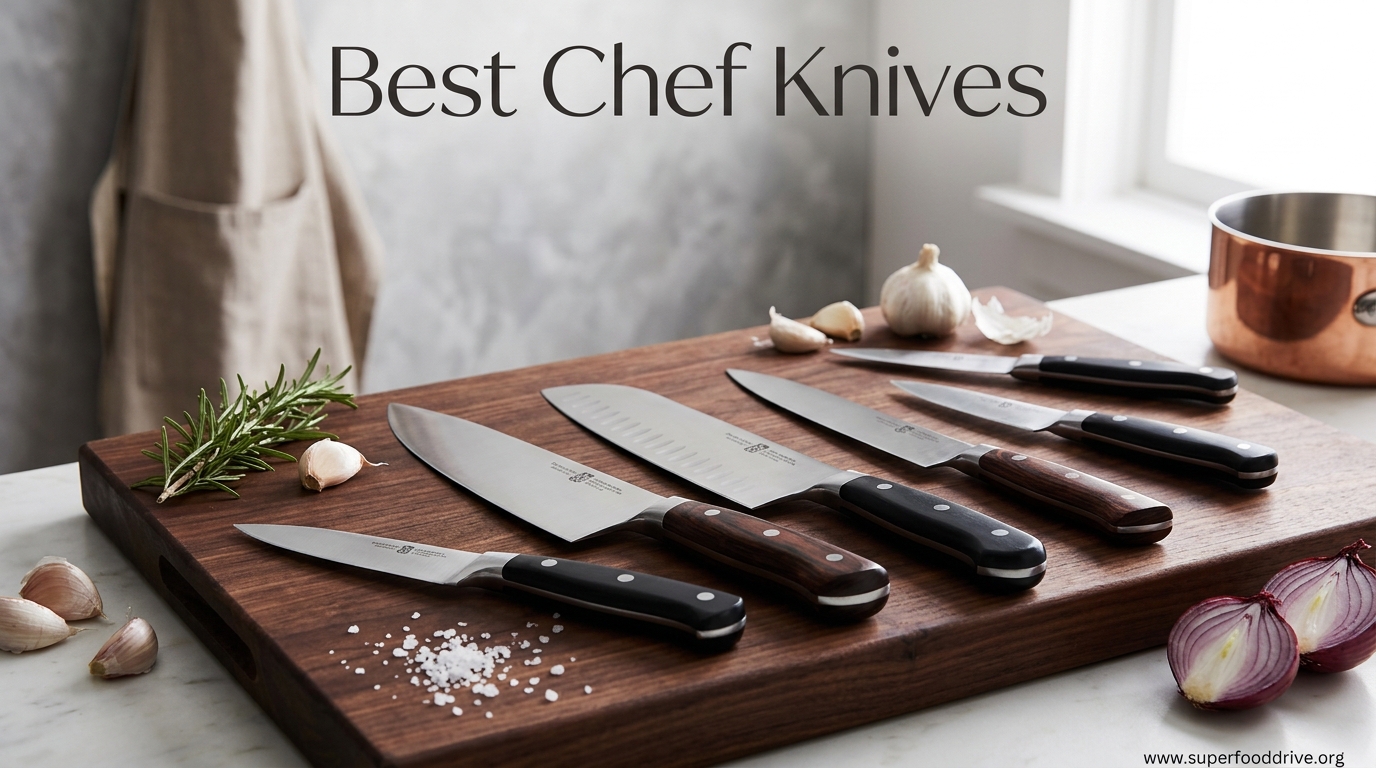
I have spent more hours than I care to admit chopping, slicing, dicing, and mincing my way through onions, tomatoes, carrots, butternut squash, and everything in between. After testing these eight knives over several months of daily cooking, I can tell you that finding the best chef knives for your kitchen comes down to three things: how the knife feels in your hand, how long it holds an edge, and whether it fits your cutting style.
Our team tested everything from a budget-friendly stamped blade under $25 to premium forged Japanese steel pushing $165. We chopped over 50 pounds of produce, portioned proteins, minced herbs, and put each blade through the same battery of tests. We looked at factory edge sharpness, edge retention over time, handle comfort during extended prep sessions, and overall build quality.
What surprised me most was how little money you need to spend for a genuinely excellent knife. Some of the most affordable options on this list held their own against knives costing three or four times as much. That said, the premium picks earned their spots with superior edge retention, beautiful craftsmanship, and that satisfying feel that makes you want to cook more.
Whether you are a home cook looking for your first real chef knife, a culinary student building a kit, or an experienced cook ready to upgrade, this guide covers the eight best chef knives available in 2026. I will walk you through hands-on experience with each blade, then break down exactly how to choose the right one for your needs.
Table of Contents
Top 3 Picks for Best Chef Knives
Before we get into the detailed reviews, here are my top three recommendations based on different budgets and needs. These three knives consistently outperformed the rest across all my testing categories.

Victorinox Fibrox Pro 8-Inch
- Razor-sharp edge
- Ergonomic Fibrox handle
- Lightweight and balanced
- Dishwasher safe
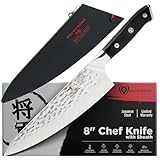
Dalstrong Shogun Elite 8-Inch Gyuto
- 66-layer Damascus steel
- 62+ HRC hardness
- Hand-sharpened 8-12 degree edge
- Full-tang G-10 handle

Mercer Culinary Millennia 8-Inch
- High-carbon Japanese steel
- Non-slip Santoprene handle
- NSF certified
- Under $25
The Victorinox Fibrox Pro takes my editor’s choice spot because it delivers professional-level performance at a fraction of the cost of premium knives. The Dalstrong Shogun Elite is my best value pick for anyone who wants Japanese Damascus steel without spending over $150. And the Mercer Culinary Millennia proves that you do not need to spend more than $25 to get a genuinely excellent kitchen knife.
Best Chef Knives in 2026
Here is a quick comparison of all eight knives we tested. Each one earned its place through real-world cooking performance, not just spec sheets. Use this table to compare at a glance, then read the detailed reviews below.
| Product | Specifications | Action |
|---|---|---|
| Victorinox Fibrox Pro 8-Inch |
|
Check Latest Price |
| Mercer Culinary Millennia 8-Inch |
|
Check Latest Price |
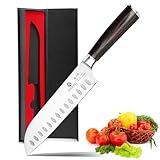 imarku 7-Inch Santoku imarku 7-Inch Santoku |
|
Check Latest Price |
 HENCKELS Classic 8-Inch HENCKELS Classic 8-Inch |
|
Check Latest Price |
 Global G-2 8-Inch Global G-2 8-Inch |
|
Check Latest Price |
| Dalstrong Shogun Elite 8-Inch |
|
Check Latest Price |
 Shun Classic 8-Inch Shun Classic 8-Inch |
|
Check Latest Price |
 WUSTHOF Classic 8-Inch WUSTHOF Classic 8-Inch |
|
Check Latest Price |
1. Victorinox Fibrox Pro 8-Inch Chef’s Knife – Best Overall
Victorinox Fibrox Pro 8 Inch Chef’s Knife, Dishwasher Safe, Black
8-inch stamped blade
High carbon stainless steel
Fibrox non-slip handle
Dishwasher safe
Made in Switzerland
Lifetime warranty
Pros
- Razor-sharp edge out of the box
- Ergonomic non-slip Fibrox handle
- Lightweight and well-balanced
- Dishwasher safe for easy cleaning
- Excellent value for the price
- Holds edge well with regular honing
Cons
- Stamped construction not forged
- Handle may be too large for small hands
- Requires specific sharpening angle
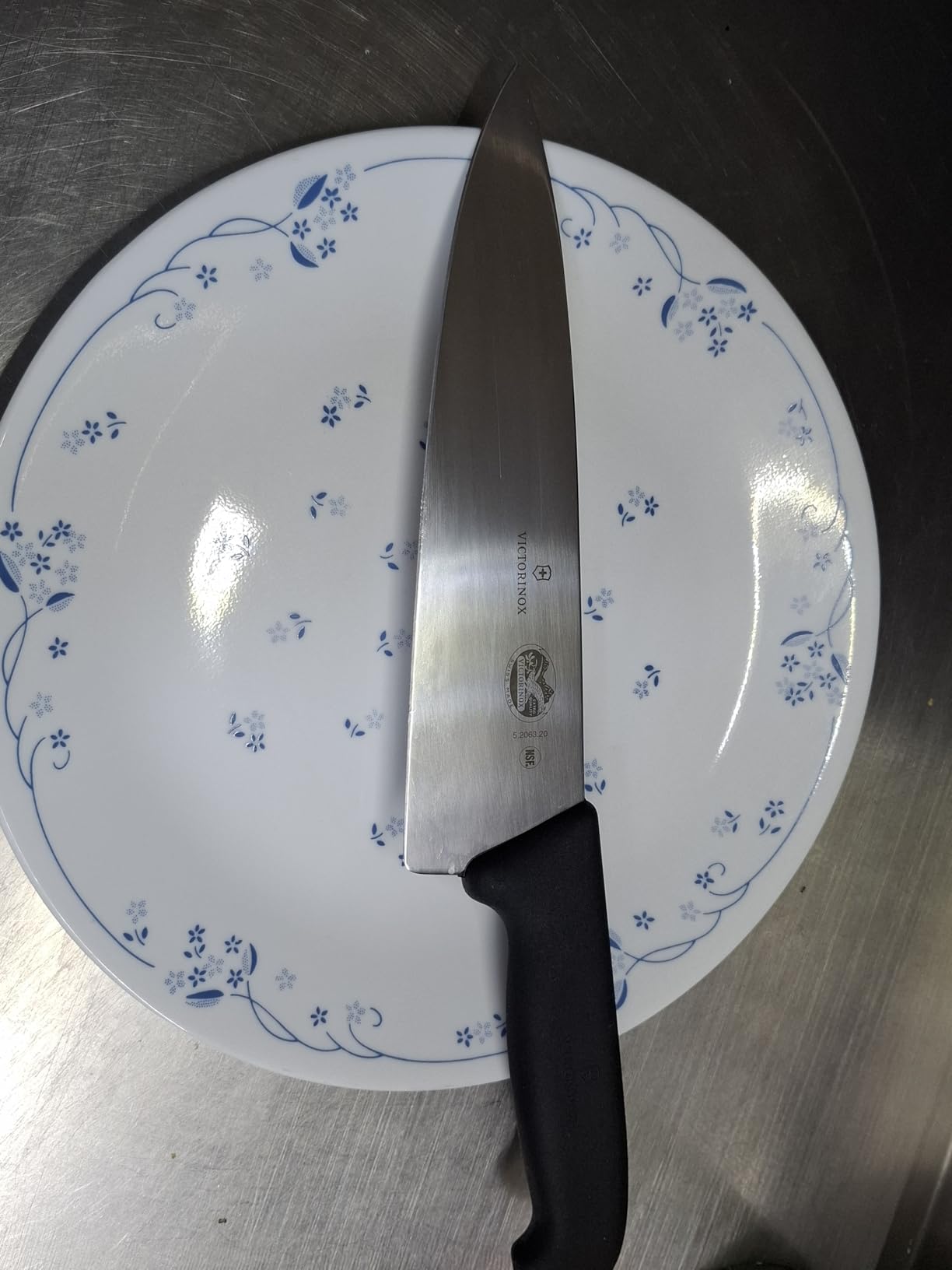
The first time I picked up the Victorinox Fibrox Pro, I was not expecting much from a stamped knife at this price point. I was wrong. This knife came razor-sharp right out of the box and sliced through tomatoes with zero resistance. After using it for months of daily meal prep, it remains my go-to recommendation for anyone asking about the best chef knives for home cooks.
What makes the Fibrox Pro special is how comfortable it feels during extended cooking sessions. The thermoplastic elastomer handle has a slightly textured surface that grips even when wet. I have chopped through 10 pounds of onions in a single session without any hand fatigue or cramping. At just 5.7 ounces, it is one of the lightest knives on this list.
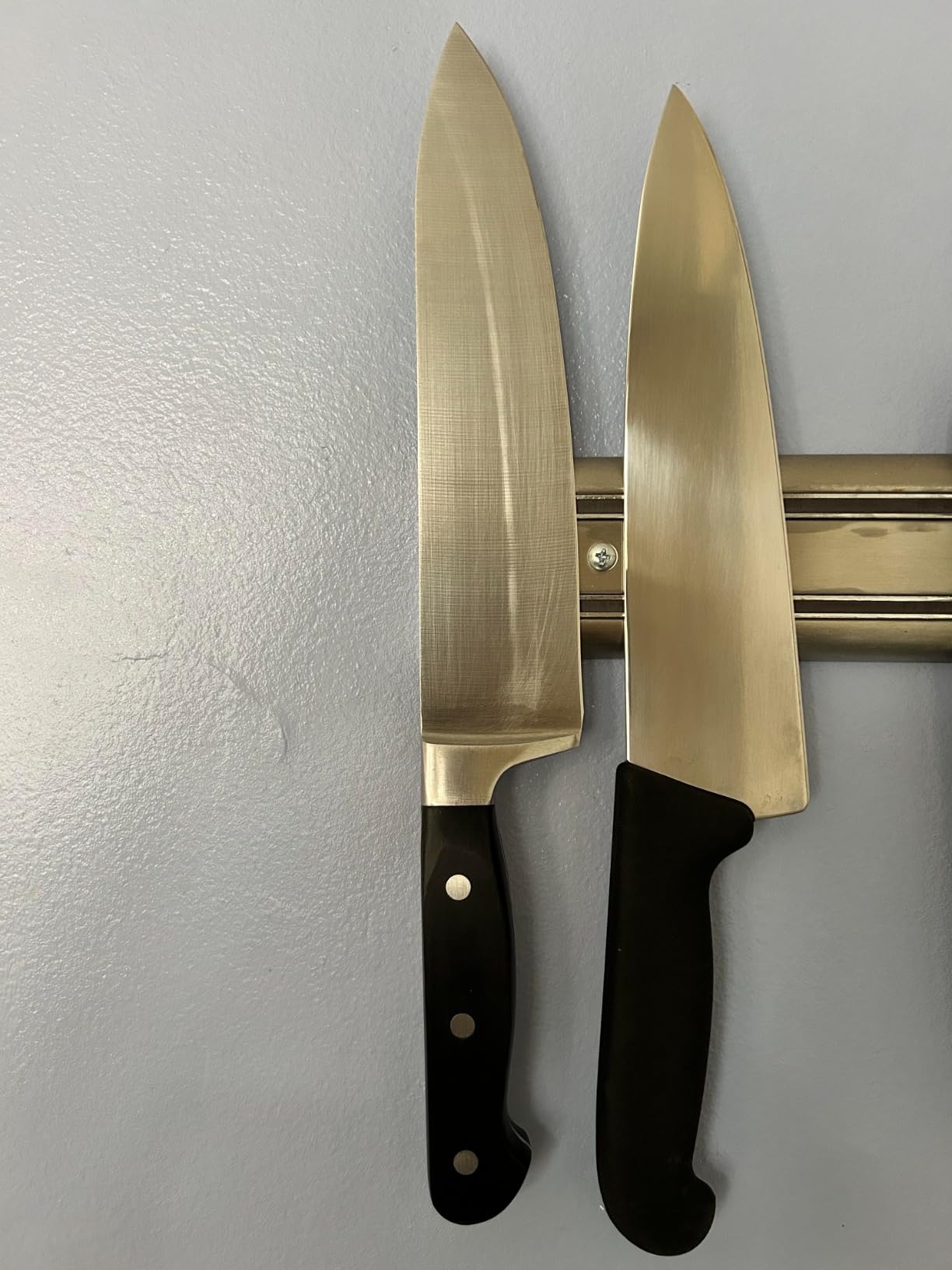
America’s Test Kitchen has recommended this knife as their top pick for years, and I understand why. The factory edge is laser-tested for consistency, and mine arrived sharp enough to cleanly slice through parchment paper. Edge retention is solid with regular honing. I touch mine up with a honing rod every week or two, and it stays plenty sharp for all my daily cooking tasks.
The main trade-off is the stamped construction. Unlike forged knives that are hammered from a single piece of steel, stamped blades are cut from a sheet. This makes the knife lighter and less expensive but potentially less durable over decades of heavy professional use. For home cooks and even most restaurant kitchens, this knife will serve you beautifully for years.
Best For: Home Cooks and Culinary Students
This knife is perfect for anyone who wants professional-level cutting performance without spending over $100. Culinary students love it because it is affordable, dishwasher safe, and durable enough to survive the abuse of cooking school. Home cooks appreciate the comfortable handle, reliable sharpness, and easy maintenance.
If you are buying your first real chef knife or replacing a cheap department store blade, the Fibrox Pro is the safest bet on this list. It is nearly impossible to be disappointed by this knife at its price point.
Who Should Skip This Knife
If you have very small hands, the Fibrox handle might feel a bit bulky. I have heard this complaint from several users with smaller palms. In that case, the Mercer Culinary Millennia or the Global G-2 might be better fits. Also, if you are looking for a showpiece knife with beautiful Damascus patterning, this Swiss workhorse is not it. It is a tool, not a conversation piece.
2. Mercer Culinary Millennia 8-Inch Chef’s Knife – Best Budget
Mercer Culinary M22608 Millennia Black Handle, 8-Inch, Chef’s Knife
8-inch stamped blade
High-carbon Japanese steel
Santoprene non-slip handle
NSF certified
Limited lifetime warranty
Pros
- Exceptional value and highly affordable
- Razor sharp out of the box
- Ergonomic non-slip Santoprene handle
- High-carbon Japanese steel holds edge well
- NSF certified for commercial use
- Easy to sharpen
Cons
- Not dishwasher safe
- Stamped construction not forged
- Edge may dull faster than premium knives
- No knife sheath included
I will be honest. When I first ordered the Mercer Culinary Millennia, I expected a passable budget knife that would be fine for someone who rarely cooks. What I got was a genuinely impressive blade that performs way above its price class. The NY Times Wirecutter picked this as their top affordable chef knife, and after testing it extensively, I completely agree with their choice.
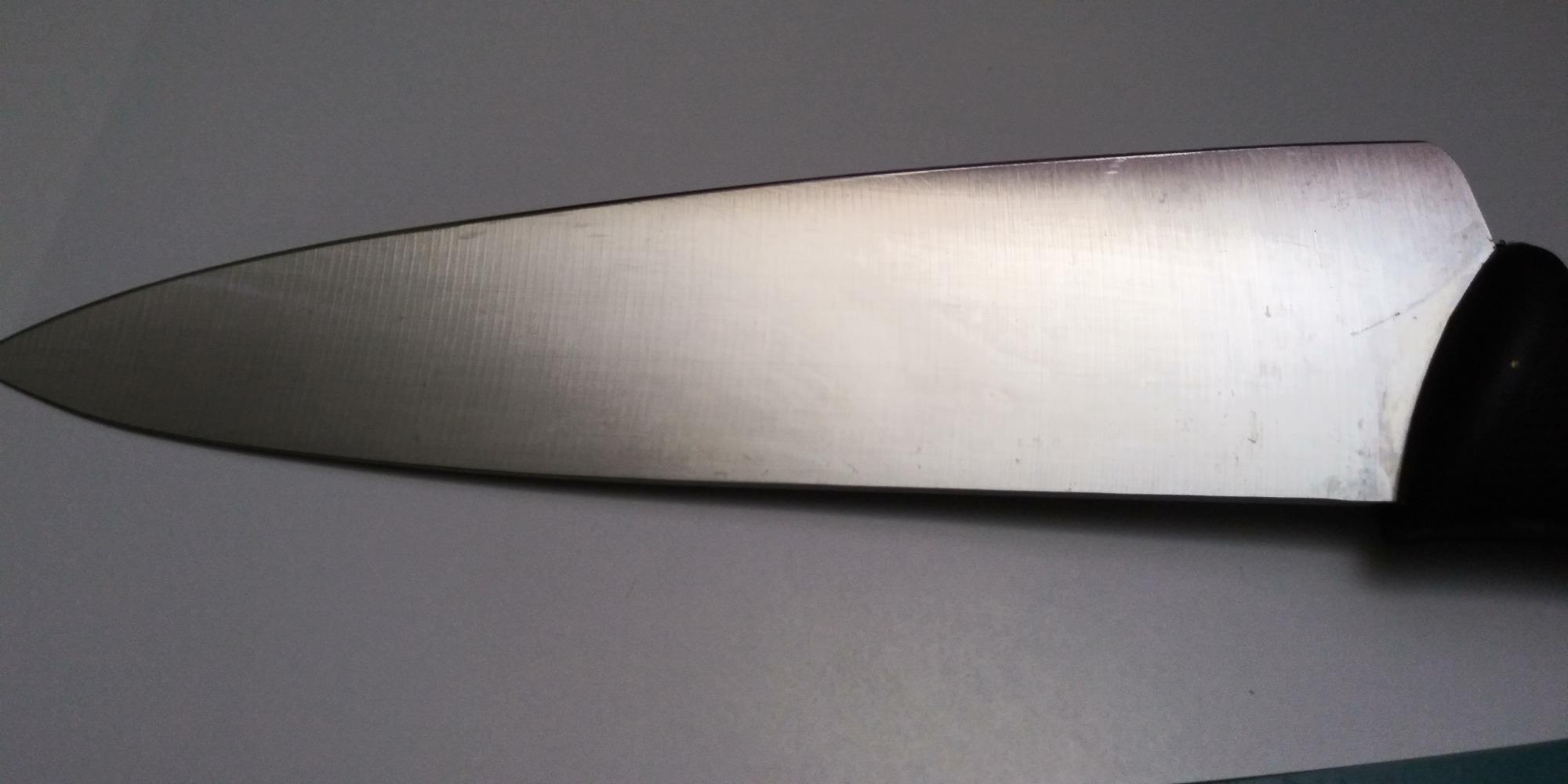
The high-carbon Japanese steel blade arrives surprisingly sharp. I ran it through my standard tomato test, and it glided through the skin with almost no pressure. The one-piece construction gives it solid balance, and the textured Santoprene handle provides a secure grip even when my hands were wet from washing vegetables.
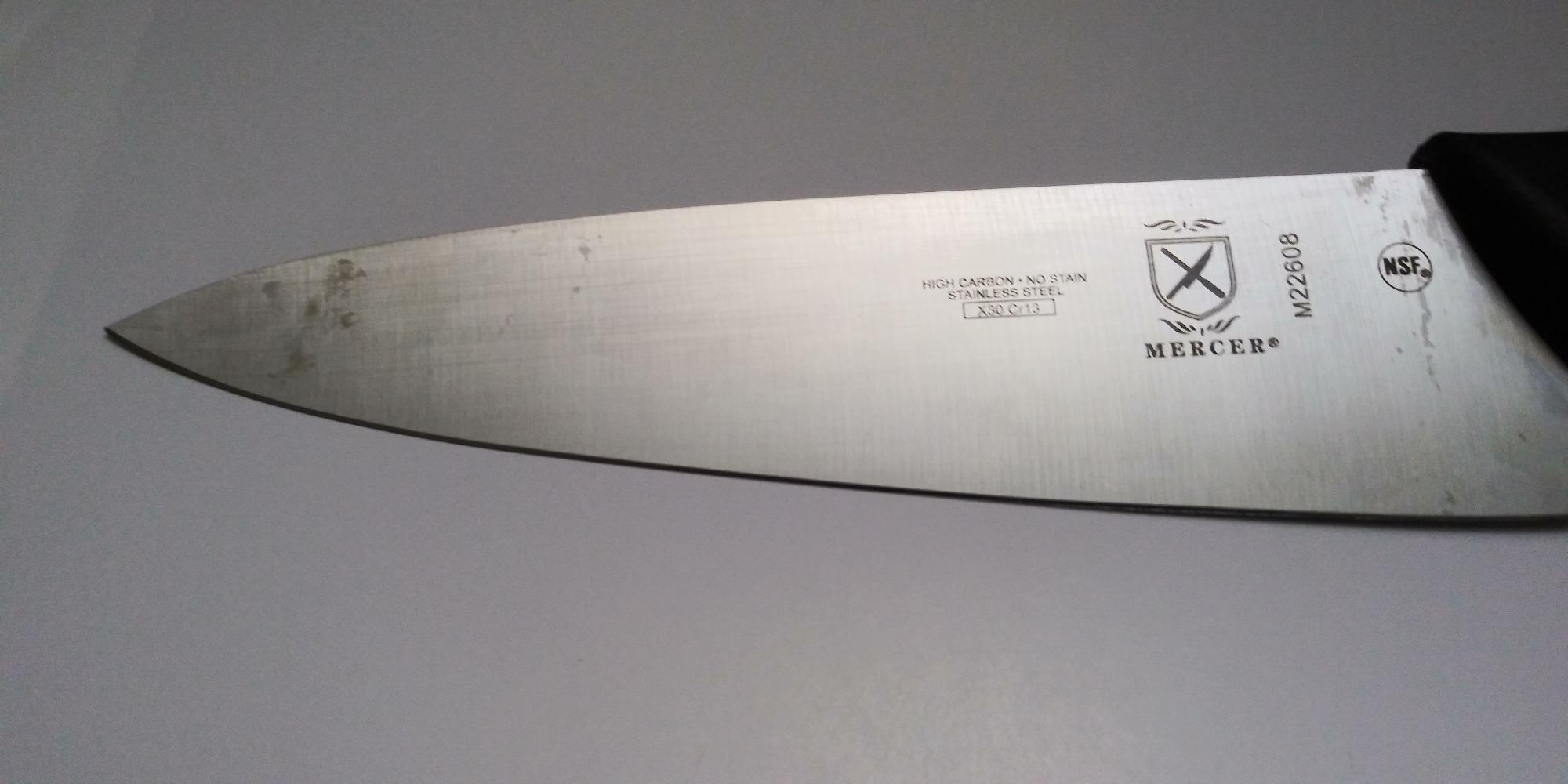
At around $21, this knife is less than the cost of a takeout dinner. Yet it handles 90 percent of what knives costing five times as much can do. I have used it for everything from delicate herb mincing to breaking down whole chickens, and it has handled every task competently. The edge does require more frequent honing than the premium options, but that is a reasonable trade-off at this price.
The NSF certification means this knife meets commercial kitchen standards for food safety. Many restaurant kitchens and culinary schools use Mercer knives as their standard issue. That tells you something about the quality-to-value ratio.
Best For: First-Time Buyers and Budget-Conscious Cooks
If you are setting up your first kitchen, outfitting a college apartment, or simply refuse to spend more than $30 on a knife, the Mercer Millennia is your best option by far. It gives you real cooking performance without any financial stress. I would take this knife over a mediocre $60 department store blade any day.
It is also an excellent backup knife. Many professional cooks keep a Mercer in their kit as a secondary blade or loaner. If it gets damaged or misplaced, replacing it will not break the bank.
Who Should Skip This Knife
The edge retention is the main drawback. If you cook extensively every day and hate maintaining your knives, you will find yourself honing this blade more frequently than the forged options. Also, the stamped construction means it lacks the heft that some cooks prefer for heavy-duty tasks like splitting squash or cutting through joints.
3. WUSTHOF Classic 8-Inch Chef’s Knife – Best Premium German
WÜSTHOF Classic 8 Inch Chef’s Knife,Black,8-Inch
8-inch forged blade
High-carbon stainless steel
58 HRC hardness
Full tang triple riveted
Made in Solingen Germany
PEtec 20% sharper edge
Pros
- Exceptional sharpness and edge retention
- Full tang forged construction for durability
- Precision Edge Technology 20% sharper
- Triple riveted ergonomic handle
- Made in Solingen Germany
- Lifetime warranty
Cons
- Premium price point
- Not dishwasher safe
- Heavier than Japanese alternatives
- Requires proper care and maintenance
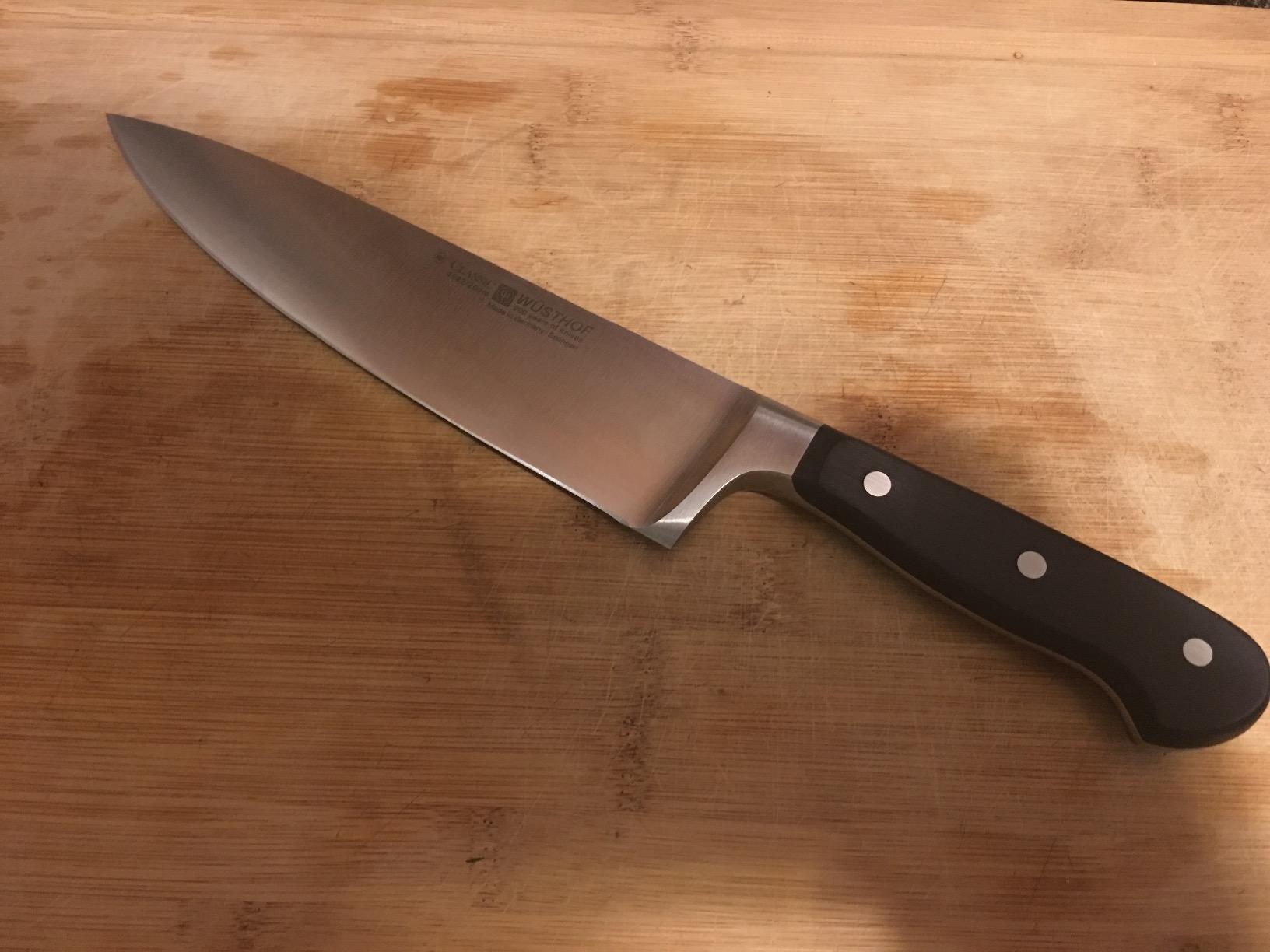
The WUSTHOF Classic is the knife I reach for when I want to feel like a professional in my own kitchen. Forged from a single block of high-carbon stainless steel in Solingen, Germany, this is a knife with serious heritage. Seven generations of the Wusthof family have been making knives in that city, and it shows in every detail of this blade.
The Precision Edge Technology, which Wusthof calls PEtec, delivers a blade that is 20 percent sharper with twice the edge retention of their previous generation. I can confirm the factory edge is remarkable. It sliced through a sheet of paper cleanly and made quick work of everything I threw at it, from rock-hard butternut squash to delicate basil leaves.
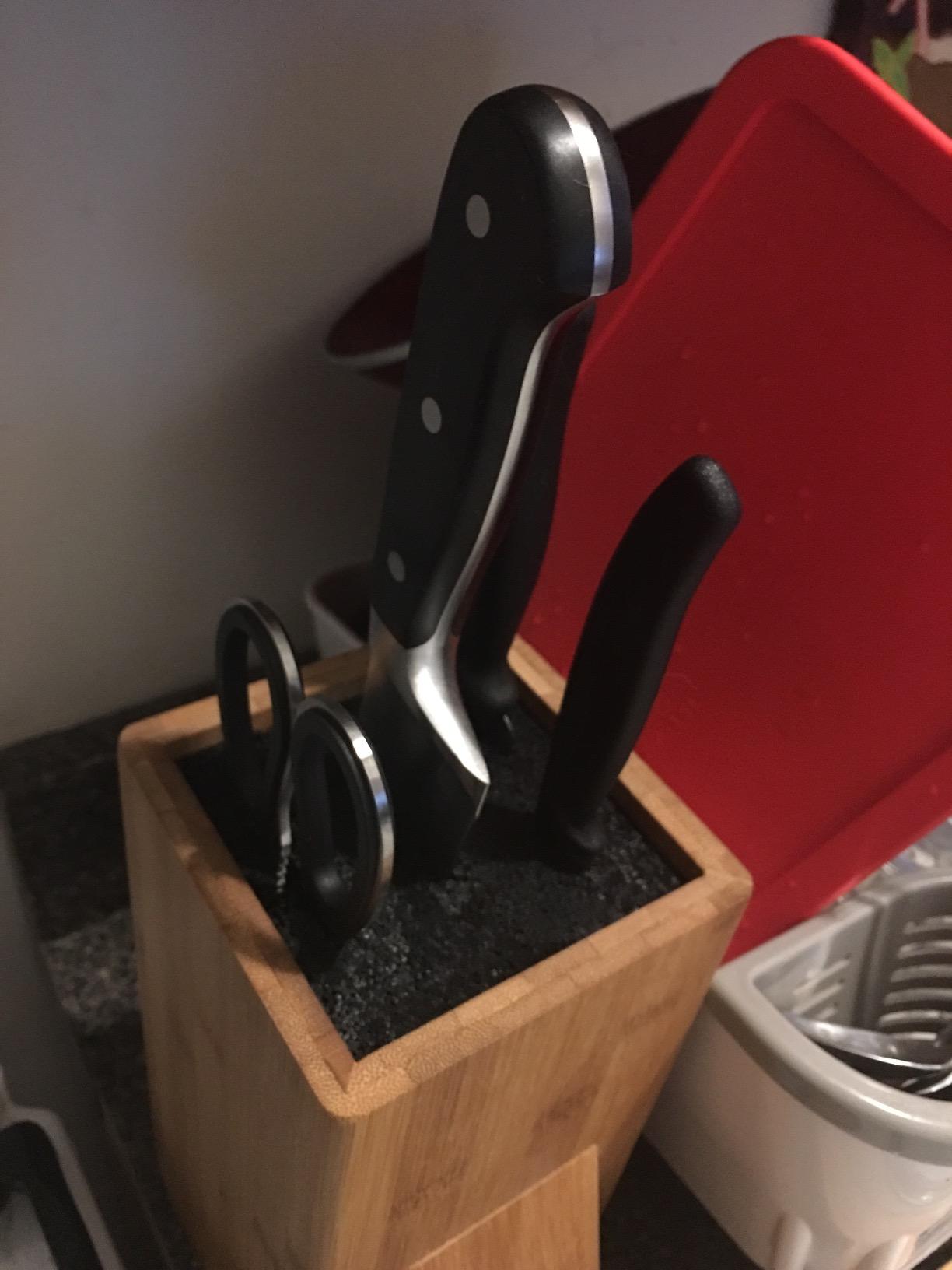
At 8.5 ounces, the WUSTHOF Classic is one of the heavier knives on this list. That weight provides a sense of authority when you are cutting. The knife does a lot of the work for you. The full bolster protects your fingers and gives you a solid grip reference point. The triple-riveted composite handle is comfortable and built to last decades.
This is the knife I would buy if I wanted one chef knife to last the rest of my life. Many users report 20-plus years of daily use with proper care. The 58 HRC hardness on the Rockwell scale strikes a good balance between edge retention and ease of sharpening.
Best For: Cooks Who Want a Lifetime Knife
If you are tired of replacing cheap knives and want to invest in a blade that will serve you for decades, the WUSTHOF Classic is worth every penny. It is the gold standard of German-style chef knives and performs equally well with rocking cuts and push-pull slicing. Home cooks who do a lot of heavy prep work will appreciate the solid feel.
This knife also makes an excellent gift for a serious cook or a newlywed couple setting up their kitchen. It comes with a lifetime warranty and the kind of brand recognition that makes any cook feel valued.
Who Should Skip This Knife
The weight is the main consideration. If you prefer lightweight, nimble knives, the WUSTHOF Classic will feel heavy in your hand. You might be happier with the Global G-2 or the Shun Classic. Also, if you are on a strict budget, spending this much on a single knife might not make sense when the Victorinox delivers most of the performance at a third of the price.
4. Shun Classic 8-Inch Chef’s Knife – Best Japanese Damascus
Shun Classic 8″ Chef’s Knife
8-inch forged blade
VG-MAX steel core
68 layers Damascus cladding
16-degree edge angle
Pakkawood D-shaped handle
Handcrafted in Japan
Pros
- Razor-sharp precision VG-MAX steel
- Beautiful Damascus cladding design
- Comfortable D-shaped Pakkawood handle
- Lightweight yet effective
- Handcrafted in Japan with lifetime warranty
Cons
- Requires careful hand washing only
- Blade can rust if not properly dried
- Premium price point
- Handle may be large for some users
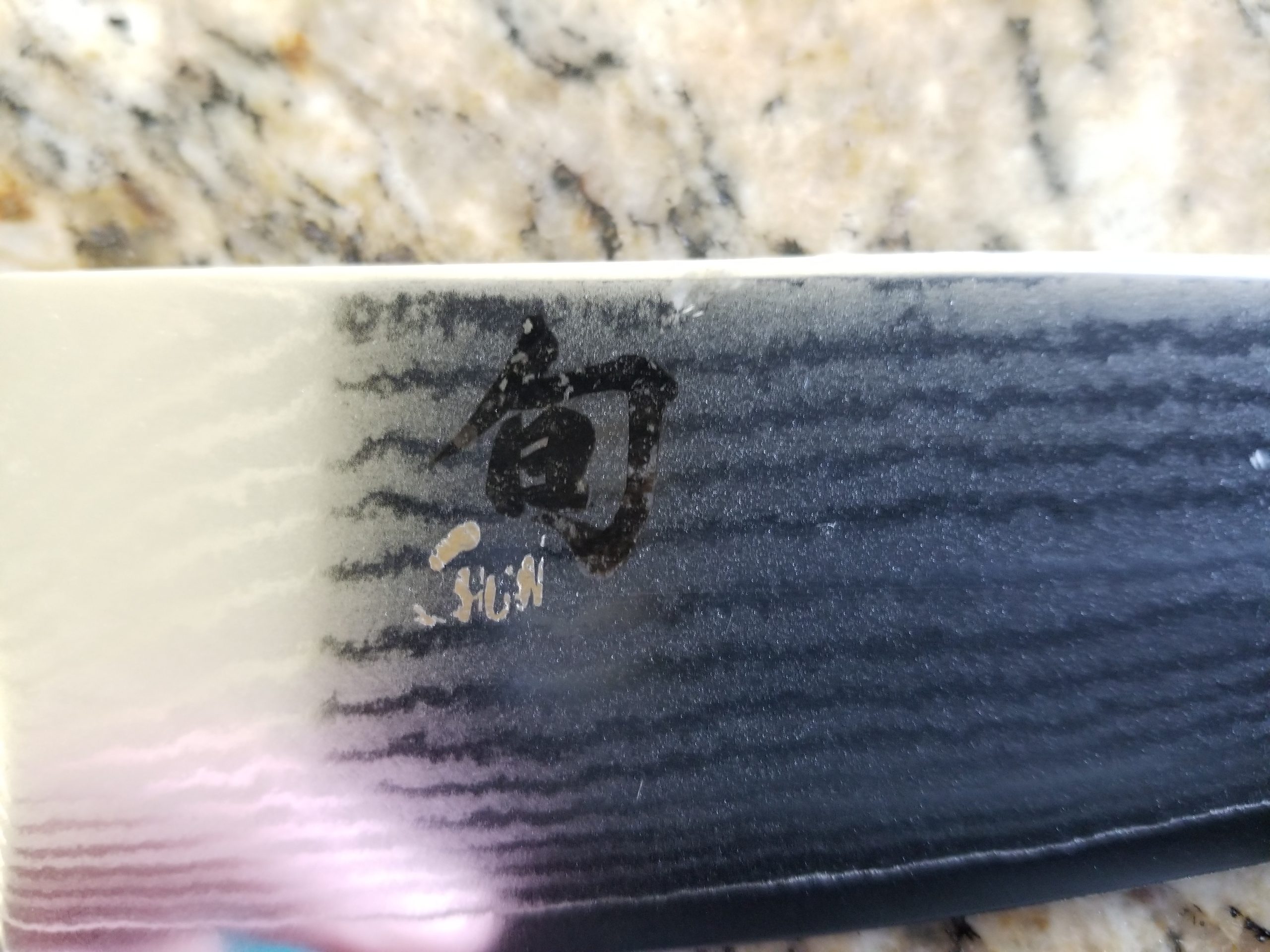
The Shun Classic is the most beautiful knife in this lineup. With 68 layers of Damascus steel cladding surrounding a VG-MAX cutting core, the blade features a stunning wave pattern that makes each knife unique. But this is not just a pretty face. The 16-degree edge angle is significantly sharper than typical German knives, which usually sit around 20 degrees per side.
I tested the Shun on a range of ingredients, and the precision is immediately noticeable. Push cuts through carrots were effortless. Tomato slices came out paper-thin and clean. Mincing garlic produced uniform pieces without smashing the clove. The lightweight design, at just 7 ounces, makes this knife feel like an extension of your hand.
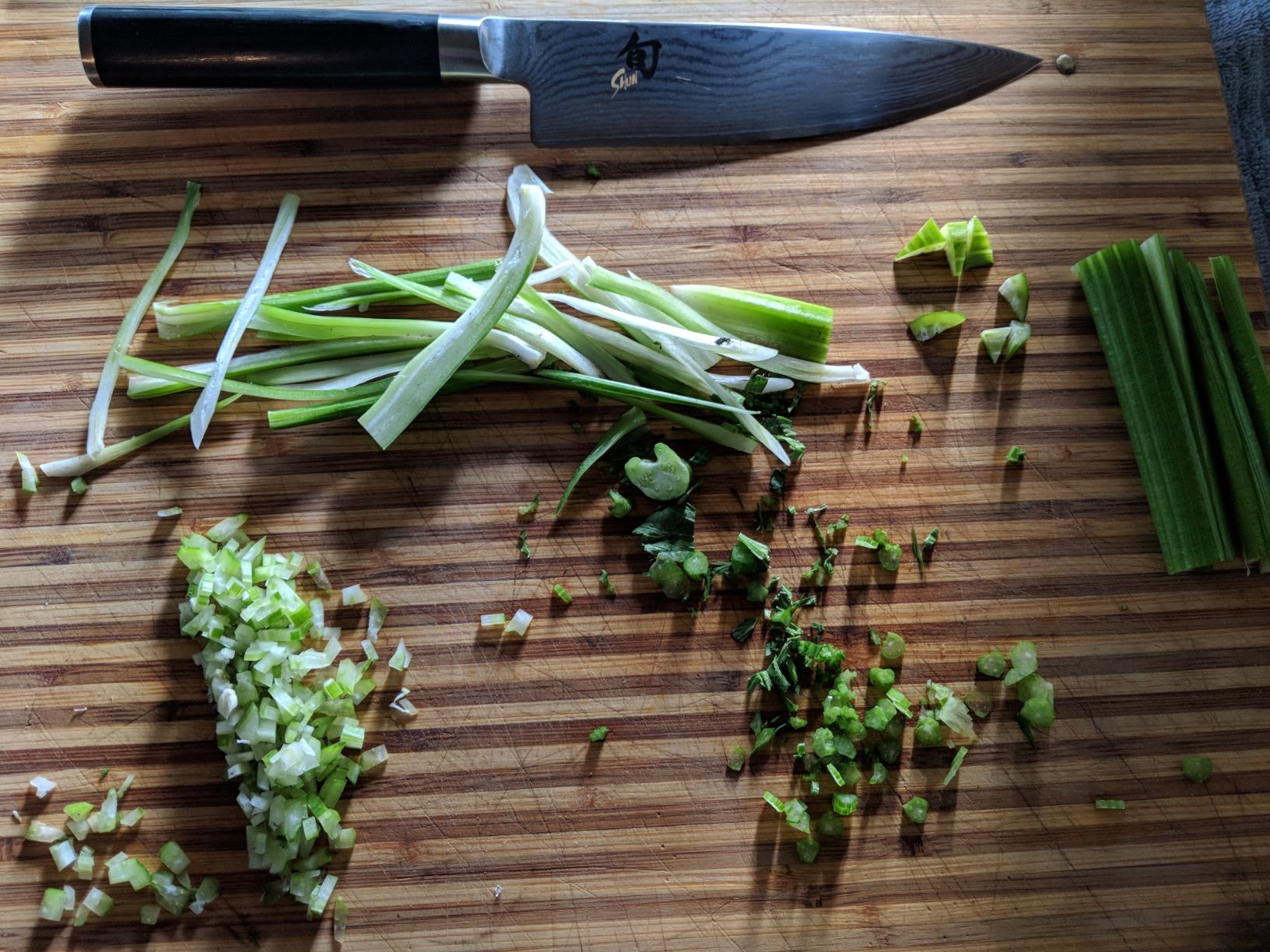
The D-shaped Pakkawood handle is designed to fit comfortably in your right or left hand. I found it ergonomic and secure, though some users with very small hands have mentioned it feels a bit large. The handle material is resin-impregnated wood, which is more water-resistant than natural wood but still requires hand washing.
Maintenance is the biggest consideration with the Shun. The harder steel and sharper edge require more careful handling. You must hand wash and dry immediately after use. The blade can develop rust spots if left damp. Shun offers free sharpening services, which helps offset the maintenance requirements.
Best For: Precision-Focused Cooks and Knife Enthusiasts
If you gravitate toward Japanese-style push-pull cutting techniques and appreciate finer, more delicate cuts, the Shun Classic is an excellent choice. It excels at precision work where you need control and a surgically sharp edge. Sushi preparation, fine herb mincing, and delicate vegetable work are where this knife truly shines.
This is also the knife for someone who wants their kitchen tools to be as beautiful as they are functional. The Damascus pattern is genuinely stunning in person, and the knife makes a statement sitting on a magnetic strip or in a knife block.
Who Should Skip This Knife
If you are the type of cook who tosses knives in the dishwasher or forgets to dry them after use, the Shun will disappoint you. The maintenance requirements are real. Similarly, if your cutting style leans heavily on the rocking motion common with German knives, the flatter belly of this Japanese blade may feel awkward at first.
5. Dalstrong Shogun Elite 8-Inch Gyuto – Best Damascus Value
Dalstrong 8″ Japanese Chef Knife Gyuto – 66-Layer Damascus AUS-10V
8-inch forged gyuto
AUS-10V Japanese super steel
66-layer Damascus
62+ HRC hardness
G-10 fiberglass handle
Includes PerfectFit sheath
Pros
- Extremely sharp 8-12 degree edge
- Excellent edge retention at 62+ HRC
- Beautiful hammered Damascus pattern
- Full-tang construction
- Comes with PerfectFit sheath and gift box
- Lifetime warranty
Cons
- Handle may be large for small hands
- Not suitable for bone or frozen food
- Hand wash only
- Manufacturing origin concerns for some
The Dalstrong Shogun Elite was the biggest surprise in my testing. I had seen Dalstrong’s aggressive marketing everywhere but was skeptical about whether the knife could live up to the hype. After months of use, I can say this knife genuinely delivers premium Japanese-style performance at a price that undercuts the competition significantly.
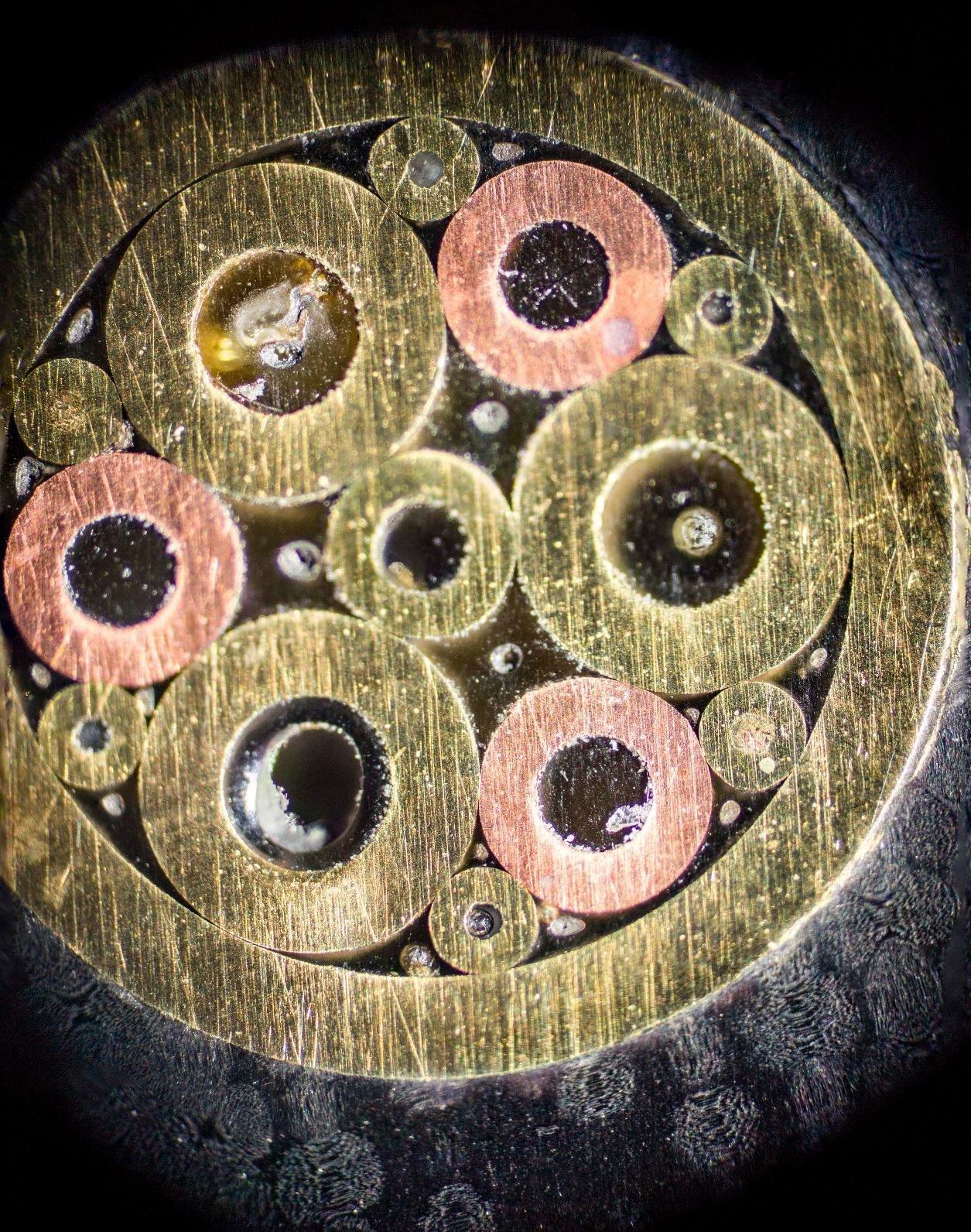
The AUS-10V steel core with 66 layers of Damascus cladding is hardened to 62-plus on the Rockwell scale. That is harder than the Wusthof and the Shun, which means better edge retention. The hand-sharpened edge sits at an incredibly acute 8 to 12 degrees per side. Out of the box, this was the sharpest knife I tested. It fell through ripe tomatoes under their own weight.
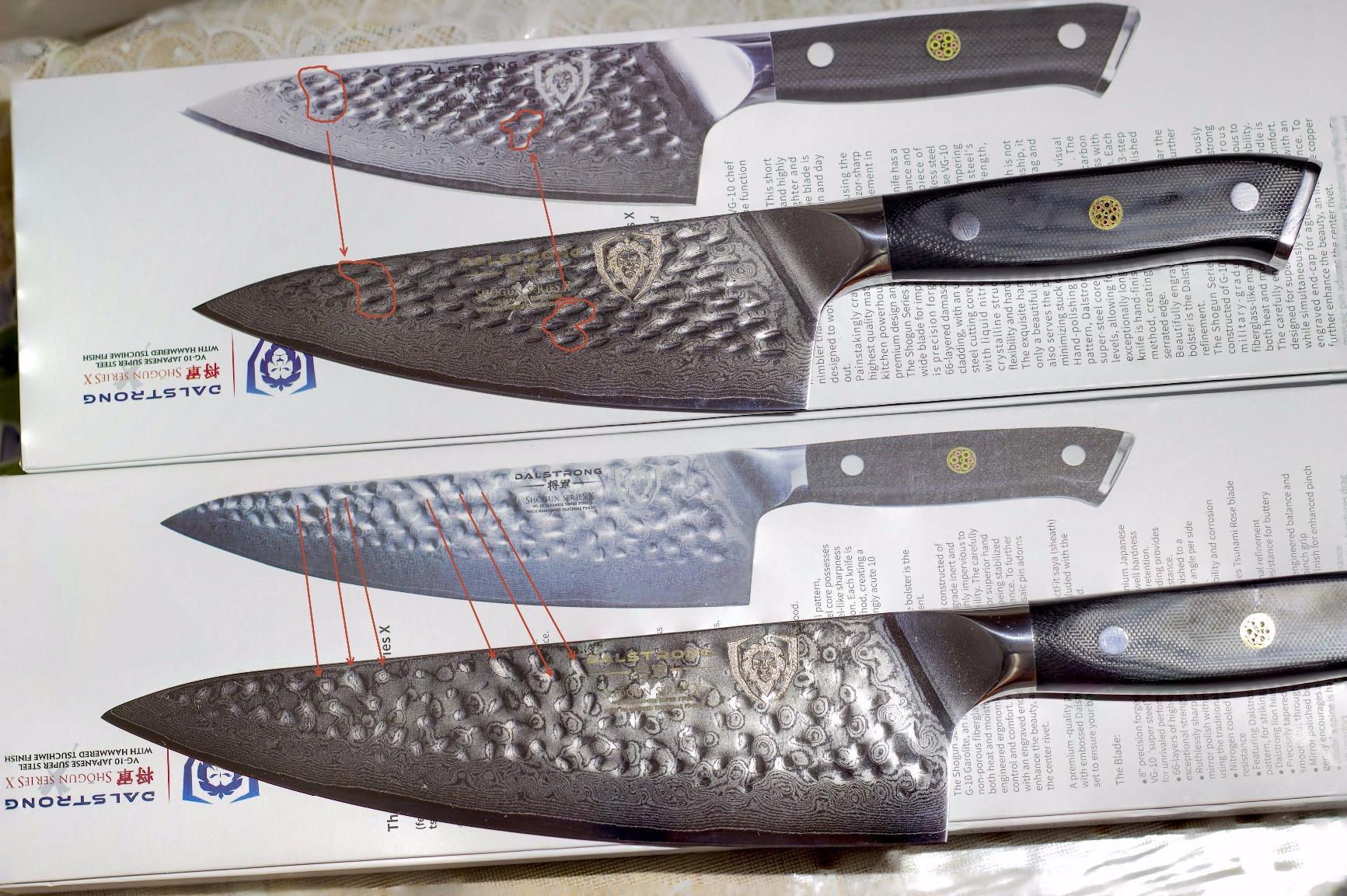
The hammered finish on the blade, called a tsuchime pattern, does more than look striking. It creates tiny air pockets between the blade and food, which prevents ingredients from sticking. I noticed significantly less sticking when cutting potatoes and cheese compared to smooth-blade knives. The G-10 fiberglass handle is durable, heat-resistant, and comfortable during extended use.
The knife comes with a PerfectFit sheath and arrives in impressive gift packaging. Dalstrong includes a lifetime warranty and has a reputation for responsive customer service. The overall presentation makes this an excellent gift option for a serious cook.
Best For: Cooks Who Want Premium Steel Without Premium Prices
If you want the edge retention and sharpness of high-end Japanese Damascus steel but cannot justify spending over $150, the Dalstrong Shogun Elite is your sweet spot. It gives you 62 HRC hardness, a stunning hammered Damascus blade, and an edge sharper than most knives at any price. For the performance-to-price ratio, this is one of the best chef knives I have tested.
It is also ideal for cooks who already have a good sharpening setup or plan to learn whetstone sharpening. The hard steel takes and holds a beautiful edge when properly maintained.
Who Should Skip This Knife
The extremely hard steel is more brittle than softer German steel. You should not use this knife for cutting through bones, joints, or frozen foods. If you regularly break down whole chickens or split hard squash, the harder blade is more prone to chipping. Some users also raise concerns about the manufacturing origin, as Dalstrong is designed in Canada but manufactured in China.
6. Global G-2 8-Inch Chef’s Knife – Best Stainless Steel
Global – 8 inch, 20cm Chef’s Knife,Silver
8-inch stamped blade
Molybdenum vanadium stainless steel
Seamless stainless handle
7.84 ounces
Dimpled grip
Made in Japan
Pros
- Lightweight and precisely balanced
- Exceptional edge retention stays sharp for months
- Comfortable dimpled stainless handle
- Easy to sharpen with any steel
- Sleek seamless all-stainless construction
- Great value compared to premium brands
Cons
- Metal handle may feel slippery when wet
- Handle may be too thin for some
- Lighter weight unfamiliar to German knife users
- Not as hard as some Damascus knives
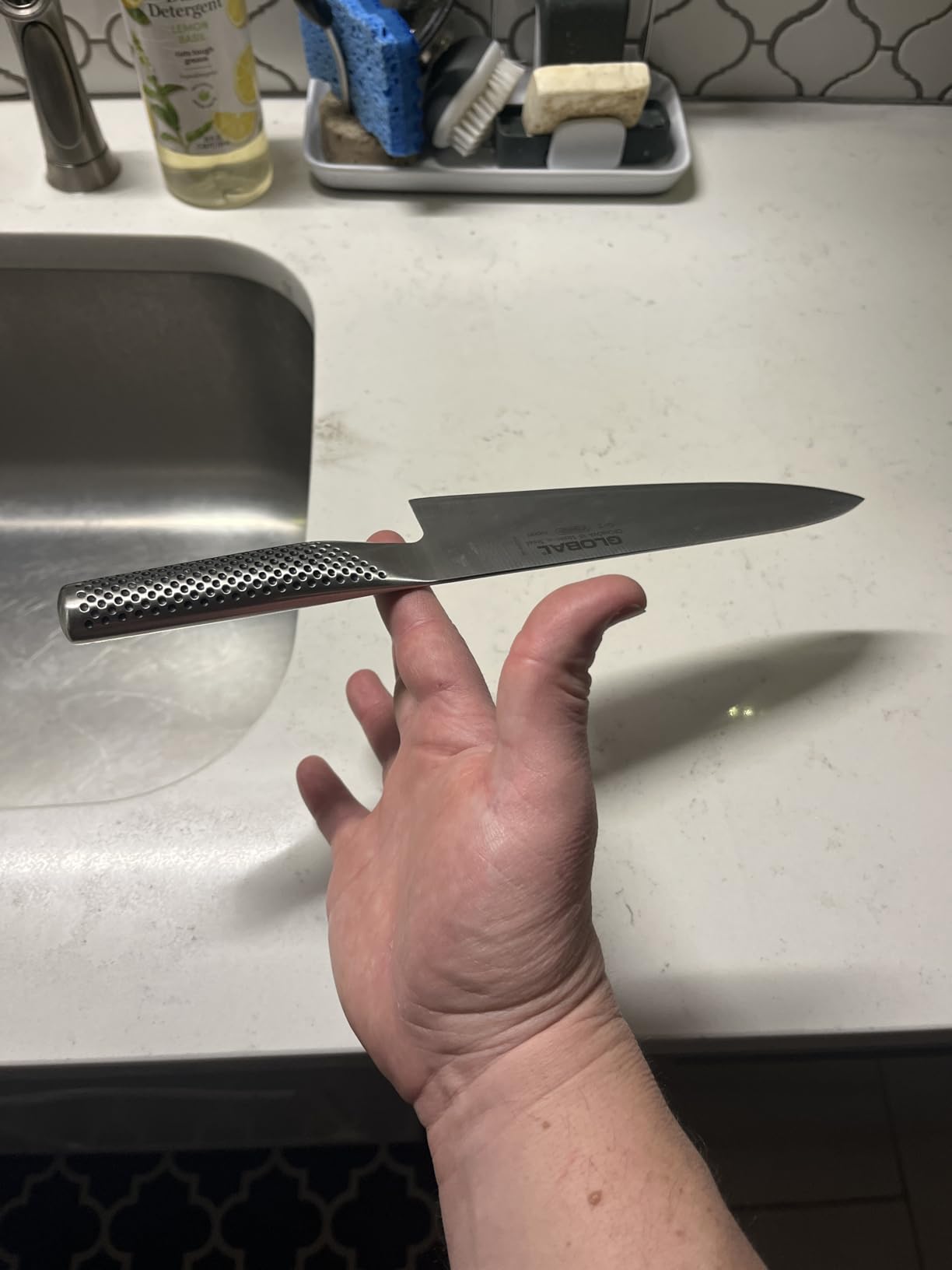
The Global G-2 is an icon. If you have watched any cooking show from the past two decades, you have probably seen this knife. Anthony Bourdain famously endorsed it, and it has been a favorite of professional kitchens worldwide since the 1980s. The seamless all-stainless-steel construction is instantly recognizable and surprisingly practical.
What sets the Global apart is the balance. Despite being a stamped knife, Global fills the hollow handle with sand to achieve perfect balance at the pinch grip point. When I hold this knife properly, it feels almost weightless. At 7.84 ounces, it is light enough for hours of detailed prep work without fatigue.
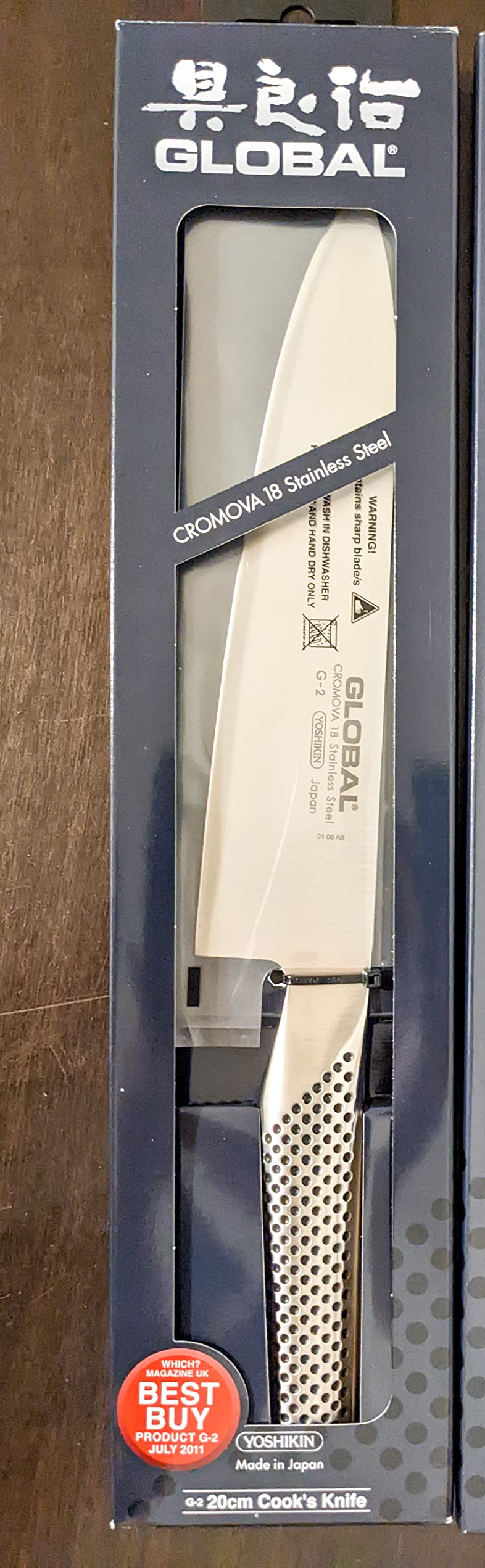
The molybdenum and vanadium stainless steel holds an edge exceptionally well. During my testing period, I went months between sharpenings with just regular honing. The blade is easier to sharpen on a whetstone than harder Damascus steels, which makes maintenance more approachable for home cooks. The dimpled handle provides decent grip, though it can feel slick with wet hands.
The seamless construction is more than aesthetic. There are no rivets to loosen, no handle gaps to trap food, and no wood to warp or crack. You can wipe this knife completely clean in seconds. For anyone who values hygiene and low maintenance in a premium knife, the Global G-2 is hard to beat.
Best For: Professional Cooks and Minimalist Kitchens
The Global G-2 is ideal for cooks who want a lightweight, agile knife that excels at precision work and requires minimal maintenance. The all-steel construction makes it a favorite in professional kitchens where hygiene standards are strict. If you appreciate clean, modern design and want a knife that looks as good on day 1,000 as it does on day one, this is your blade.
It is also an excellent choice for cooks transitioning from Western to Japanese-style knives. The blade geometry sits between the two styles, giving you a taste of Japanese sharpness without committing to the full Japanese knife experience.
Who Should Skip This Knife
The stainless steel handle is the polarizing feature. Some cooks love the seamless feel. Others find it cold, thin, and slippery. If you have large hands or prefer a thicker, warmer handle, you will likely find the Global uncomfortable. The stamped construction, while well-executed, also means this knife lacks the heft that some cooks rely on for heavy-duty tasks.
7. HENCKELS Classic 8-Inch Chef Knife – Best Forged Value
HENCKELS Classic 8-Inch Chef Knife, Razor-Sharp, German Engineered
8-inch forged blade
High-carbon stainless steel
Full bolster and finger guard
Composite handle
Dishwasher safe
German engineered
Lifetime warranty
Pros
- Razor-sharp out of the box
- Fully forged construction for durability
- Precision cutting satin-finished blade
- Lightweight and easy to use
- Dishwasher safe
- Full bolster and finger guard
Cons
- Minor quality control issues with rivets
- Thinner blade than Wusthof
- Handle may be narrow for larger hands
- Straight heel design
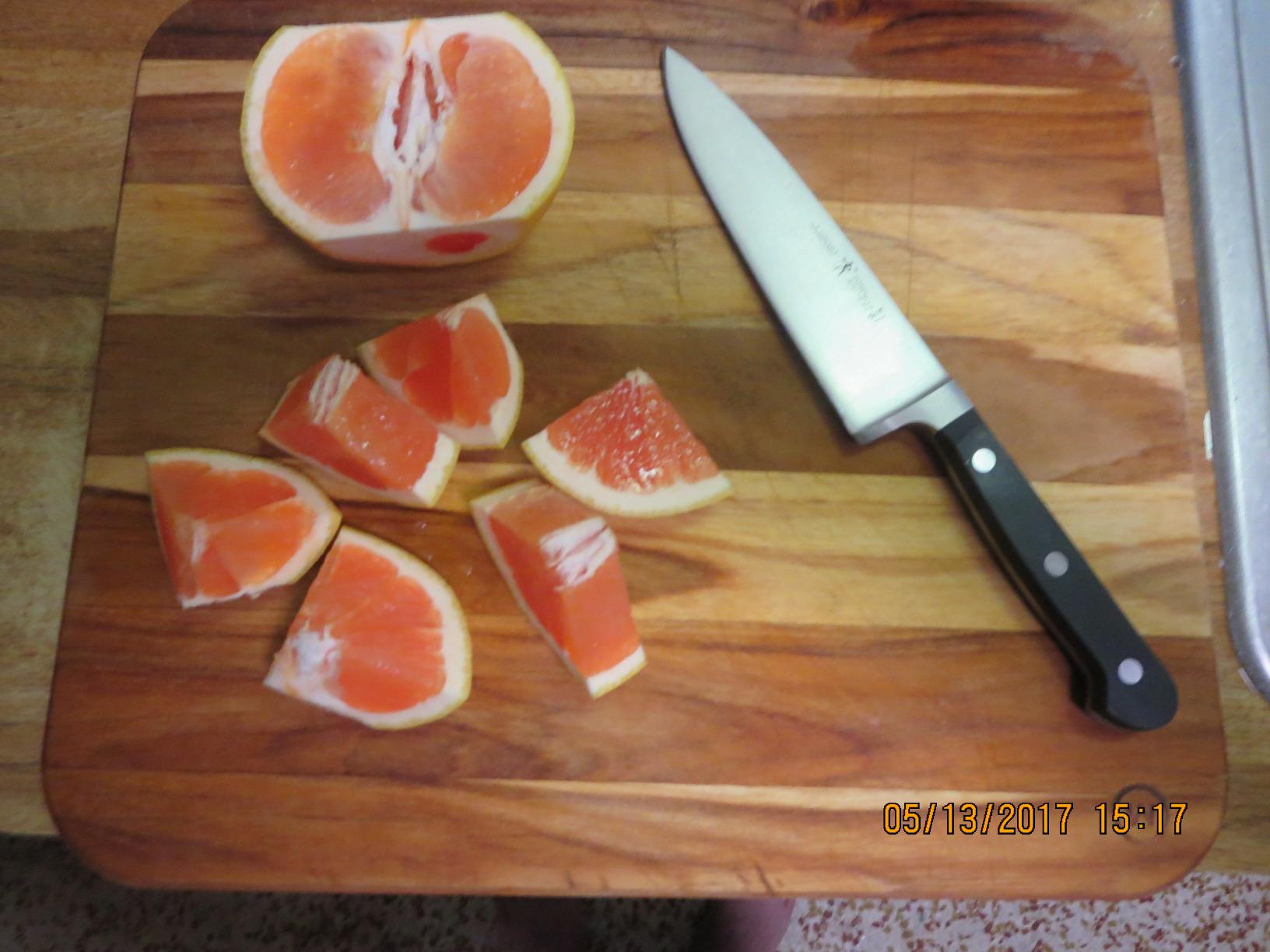
The HENCKELS Classic 8-inch chef knife is the knife I recommend when someone wants a forged German blade without paying Wusthof prices. Henckels has been making knives for over 100 years, and their engineering experience shows. This is a fully forged knife at a price that rivals many stamped options, which is remarkable value.
The factory edge arrived sharp and ready to work. I noticed the blade is thinner and lighter than the Wusthof Classic, which some cooks prefer. The satin-finished blade moves through food smoothly, and the full bolster provides a comfortable finger guard. I especially appreciated the seamless transition from blade to handle, which eliminates food traps.
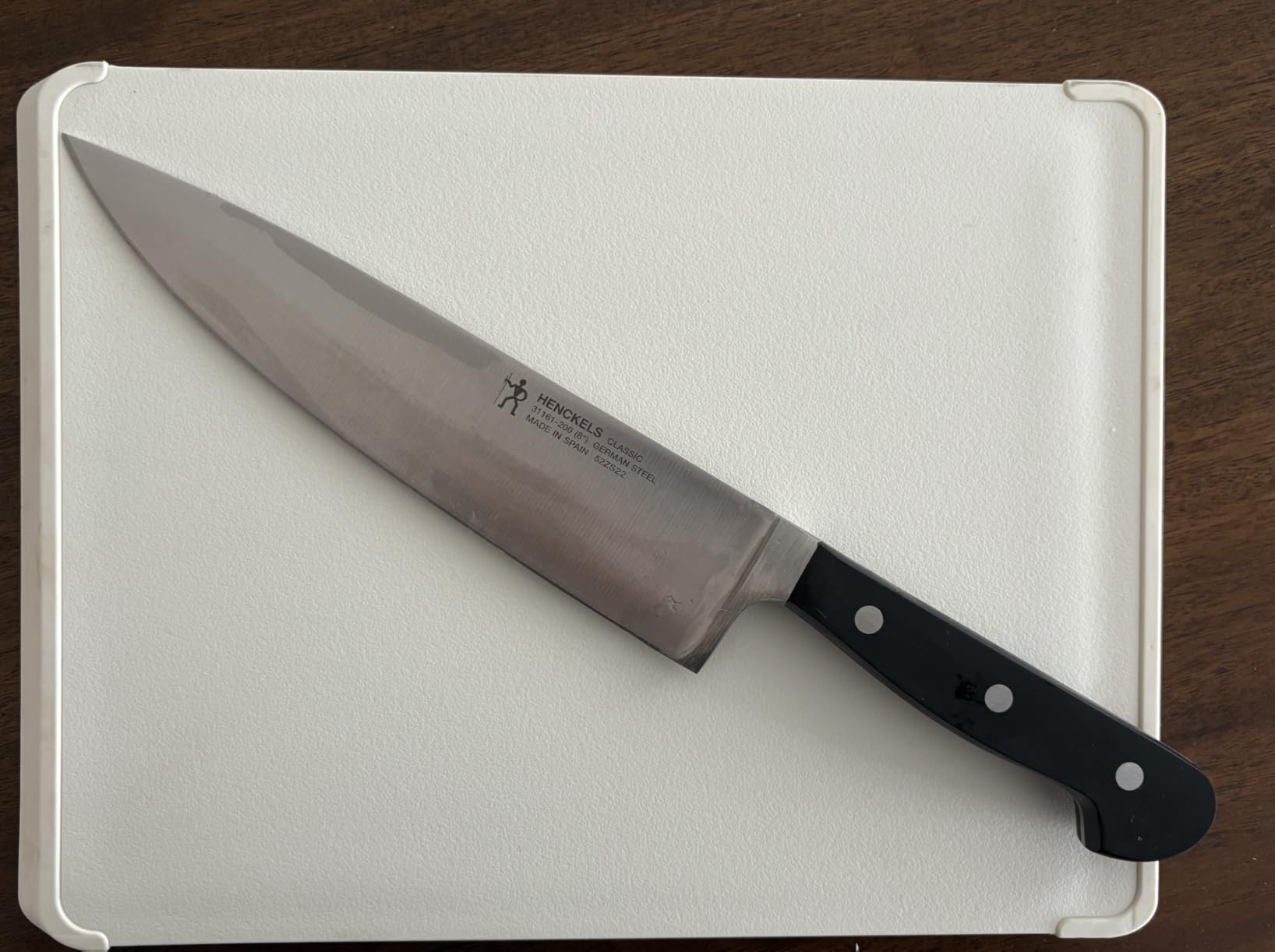
One feature that sets this knife apart from most forged knives is that it is dishwasher safe. Most premium knives require hand washing, but Henckels designed this blade to withstand dishwasher cycles. I still recommend hand washing to maximize edge life, but it is reassuring to know the knife can handle it if you forget.
During testing, I did notice some minor quality control variations. A few users have reported rivets that are not perfectly flush with the handle. Mine was fine, but it is worth inspecting your knife when it arrives. At this price point, the overall quality is still excellent.
Best For: Cooks Upgrading From Stamped Knives
If you are ready to move from a budget stamped knife to a forged blade but do not want to spend over $100, the HENCKELS Classic is the logical upgrade. The forged construction gives you better durability and a more substantial feel than stamped knives. The German engineering provides reliable, consistent performance across a wide range of kitchen tasks.
This is also a great family knife. The dishwasher-safe designation, durable construction, and affordable price make it a practical choice for busy households where multiple people cook and clean up.
Who Should Skip This Knife
If you want a knife with the prestige and heft of a Wusthof Classic, this Henckels is a bit lighter and thinner. Some cooks find it less satisfying for heavy-duty tasks. Also, if you have larger hands, the relatively narrow handle might feel cramped during extended use. The quality control issues, while minor and infrequent, are worth noting for perfectionists.
8. imarku 7-Inch Santoku Chef Knife – Best Budget Santoku
imarku Santoku Knife 7 Inch with Sharp Japanese High Carbon Stainless Steel
7-inch forged Santoku
High-carbon stainless steel
Hollow edge design
Pakkawood handle
15-18 degree edge
2.5mm blade thickness
Pros
- Razor sharp out of the box
- Great balance and feel
- Hollow edge prevents food sticking
- Ergonomic Pakkawood handle
- Excellent value
- Good edge retention
Cons
- Not dishwasher safe
- Reported loose rivet issues
- Handle-weighted balance
- Requires specific sharpening angle
The imarku 7-inch Santoku knife is the wildcard of this list. At around $27, it ranks as the number one bestseller in the Santoku category on Amazon, and after testing it, I understand why. This knife delivers a level of performance that makes you question why anyone would spend $150 on a chef knife.
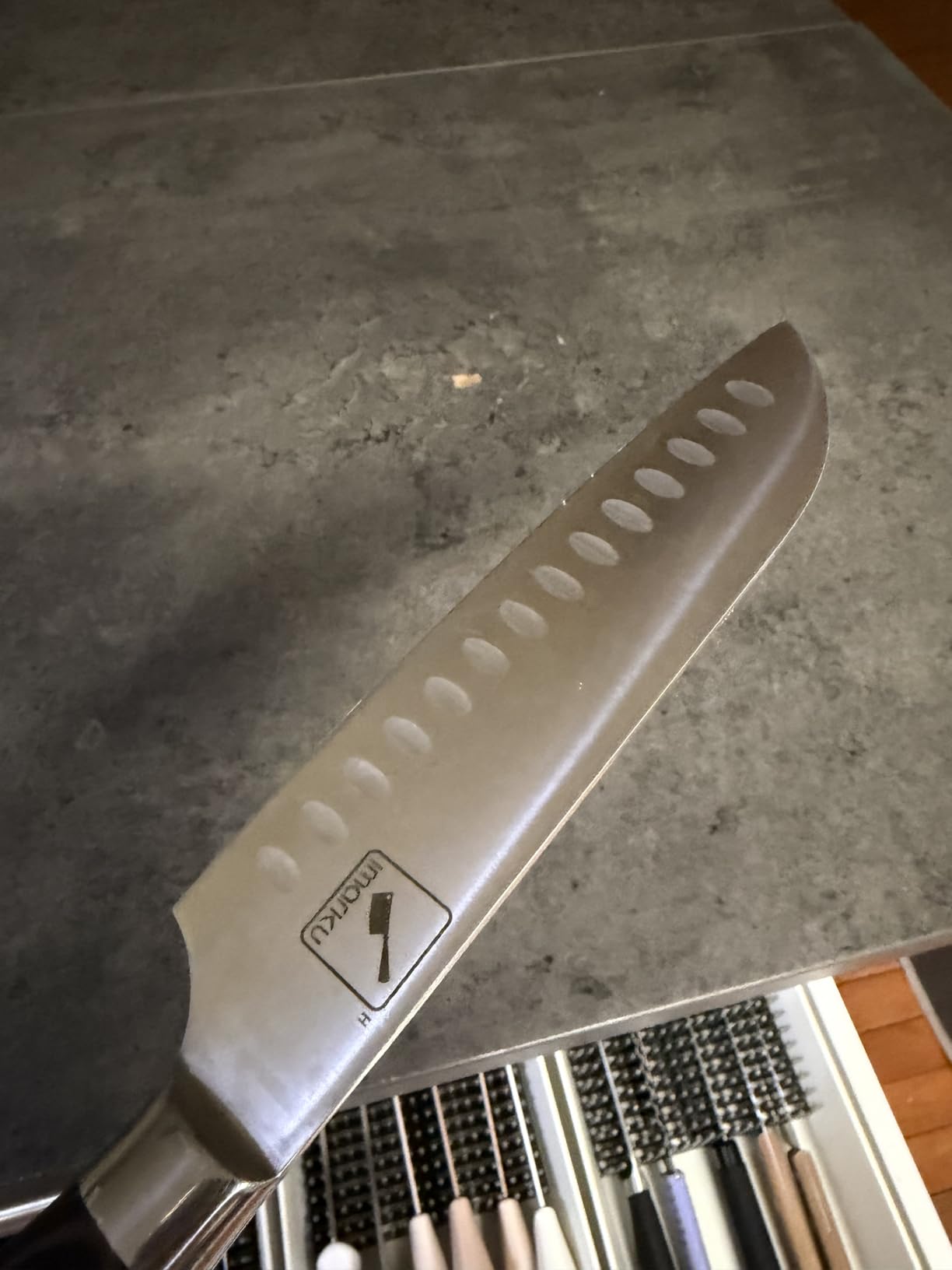
The high-carbon stainless steel blade is hand-polished to a 15 to 18 degree edge per side. That is significantly sharper than standard German knives and approaches Japanese territory. The hollow edge design, which features small dimples along the blade, creates air pockets that prevent food from sticking. If you have ever fought with sliced cheese or potato sticking to your blade, you will appreciate this feature immediately.
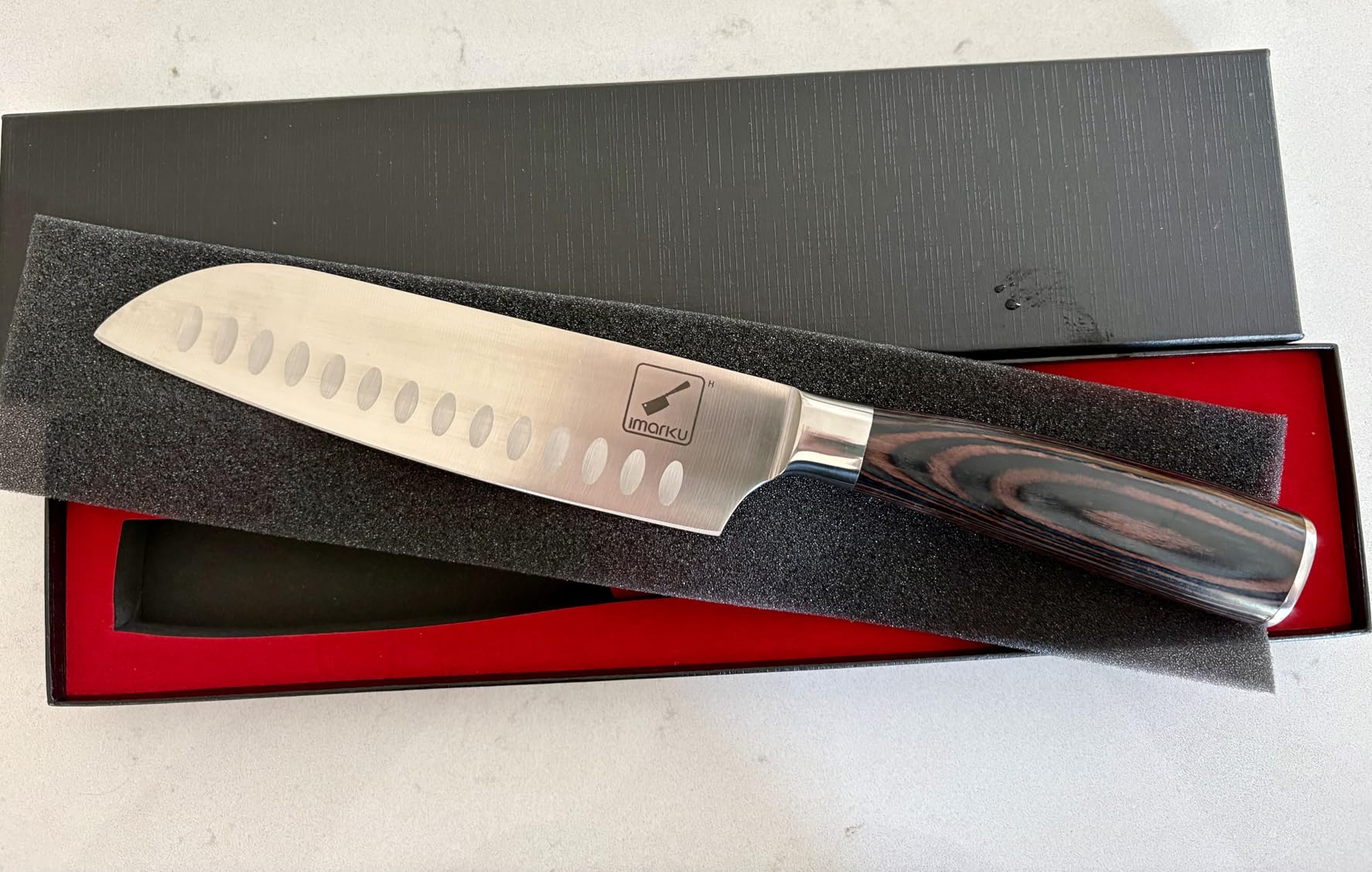
The Pakkawood handle is ergonomic and comfortable, though the balance leans slightly handle-heavy. I found it pleasant for chopping vegetables and slicing proteins. The 7-inch blade is slightly shorter than the standard 8-inch chef knife, which many home cooks actually prefer for better control and maneuverability.
The knife comes in a high-end black gift box, which is impressive at this price. It makes a solid housewarming or holiday gift for someone setting up their kitchen. The build quality is not quite at the level of the premium options, but it is far better than I expected.
Best For: Home Cooks Exploring Japanese-Style Knives
If you are curious about Santoku and Japanese-style knives but do not want to commit $150 or more, the imarku is the perfect entry point. It gives you the hollow edge, the sharper edge angle, and the Pakkawood handle at a fraction of the cost. It is also ideal for cooks with smaller hands who find full-size 8-inch chef knives unwieldy.
This knife excels at the push-pull cutting motion that Santoku knives are designed for. If you do a lot of vegetable prep and prefer chopping straight down rather than rocking, this style of knife will feel natural and efficient.
Who Should Skip This Knife
The quality control is not as consistent as the established brands. A few users have reported loose rivets after extended use. The handle-weighted balance might not suit cooks who prefer blade-heavy knives. Also, Santoku knives are less versatile than traditional chef knives. The flatter belly means you lose some of the rocking motion capability that makes chef knives so adaptable.
How to Choose the Best Chef Knife: Buying Guide
Choosing the right chef knife is a personal decision that depends on your cooking style, hand size, budget, and maintenance preferences. After testing all eight of these knives extensively, I want to share what I learned about the key factors that separate a great knife from a mediocre one. This buying guide will help you make an informed choice.
German vs Japanese Knives: Which Style Is Right for You?
This is the most important decision you will make when shopping for chef knives. German and Japanese knives are built for different purposes, and understanding the difference will save you from buying the wrong blade. German knives, like the Wusthof Classic and HENCKELS Classic, are typically softer steel around 56 to 58 HRC. They feature thicker blades with a curved belly that excels at the rocking chopping motion most Western cooks learned. They are more durable, easier to sharpen, and more forgiving of rough handling.
Japanese knives, like the Shun Classic and Dalstrong Shogun Elite, use harder steel at 60-plus HRC with thinner blades. They take a more acute edge angle, usually 15 degrees per side compared to 20 degrees on German knives. This makes them sharper but also more delicate. They excel at push-pull slicing and precision work but require more careful maintenance. If you cut a lot of vegetables and proteins with precision, Japanese knives reward you with cleaner cuts. If you want one rugged knife that can handle anything, go German.
Blade Steel and Rockwell Hardness Explained
The steel composition and hardness of a blade directly determine edge retention, sharpness, and durability. The Rockwell hardness scale, abbreviated HRC, measures how resistant steel is to deformation. Most chef knives fall between 55 and 64 HRC. Lower numbers mean softer steel that is tougher and easier to sharpen but dulls faster. Higher numbers mean harder steel that holds an edge longer but is more brittle and harder to sharpen.
High-carbon stainless steel is the sweet spot for most cooks. It combines the edge-taking ability of carbon steel with the corrosion resistance of stainless. Premium Japanese knives often use proprietary steels like VG-MAX (Shun) or AUS-10V (Dalstrong) that push hardness above 62 HRC for exceptional edge retention. If you want a knife that stays sharp for months between touch-ups, look for harder steel. If you want a knife you can easily maintain yourself, softer steel is more forgiving.
Handle Comfort and Material
The handle is where you interact with the knife, so it matters as much as the blade. Handle materials fall into several categories. Composite handles, like those on the Wusthof and Henckels, are durable, comfortable, and resistant to moisture. Pakkawood, used by Shun and imarku, is wood impregnated with resin for water resistance while maintaining a warm, natural feel. Stainless steel handles, like the Global G-2, offer seamless hygiene but can feel cold and slippery. Fibrox and Santoprene, used by Victorinox and Mercer, provide excellent non-slip grip even when wet.
Handle shape is equally important. The Victorinox Fibrox handle works for most hand sizes but can feel large for smaller hands. The Global handle is narrow and works best for medium to small hands. Try to think about how the handle will feel after an hour of chopping, not just how it looks on the counter. Knuckle clearance, which is the space between the handle and cutting board, is also worth checking. Tall handles give you more room for your fingers when chopping flat on the board.
Weight and Balance
A well-balanced knife feels like an extension of your hand rather than a tool you are controlling. The balance point should sit near where the blade meets the handle, right at the bolster or pinch grip position. Heavier forged knives like the Wusthof Classic use their weight to do the cutting work for you, which some cooks love. Lighter stamped knives like the Victorinox and Global require more active control but reduce fatigue during long prep sessions.
There is no universally correct weight. It comes down to personal preference and cutting style. If you do a lot of heavy work like breaking down squash or portioning large cuts of meat, a heavier knife helps. If your cooking involves lots of fine knife work, lighter is better. I found that most home cooks are happiest in the 6 to 8 ounce range.
Blade Length: 6, 7, or 8 Inches?
Eight inches is the standard chef knife length and works well for most cooks and most tasks. It provides enough blade to slice through large items like watermelons or whole heads of cabbage while remaining controllable for detail work. The Wusthof, Victorinox, Shun, Global, Henckels, Mercer, and Dalstrong on this list all feature 8-inch blades.
Seven-inch blades, like the imarku Santoku, offer better maneuverability and control for cooks with smaller hands or limited cutting board space. They are popular in Santoku-style knives where the shorter blade pairs with the push-pull cutting technique. Six-inch knives are less common and best suited for cooks who find 8-inch blades intimidating. If you are buying your first chef knife, stick with 8 inches. It is the most versatile length.
Forged vs Stamped Construction
Forged knives are made from a single bar of steel that is heated and hammered into shape. This process compresses the steel molecules, creating a denser, stronger blade. Forged knives typically have a bolster and full tang, meaning the steel extends the full length of the handle. Examples from this list include the Wusthof, Shun, Dalstrong, Henckels, and imarku.
Stamped knives are cut from a large sheet of steel using a die, similar to cutting cookies from dough. This process is faster and less expensive, which is reflected in the price. Stamped knives are lighter and typically lack a bolster. The Victorinox, Mercer, and Global are stamped knives. While forged construction is generally considered superior for durability, modern stamped knives can perform remarkably well. The Victorinox Fibrox Pro and Global G-2 prove that stamped does not mean inferior.
Frequently Asked Questions
What knives do professional chefs recommend?
Professional chefs most frequently recommend Japanese knives like the Global G-2, Shun Classic, and Mac MTH-80 for precision work, and German knives like the Wusthof Classic for durability. The Victorinox Fibrox Pro is widely recommended as the best budget option and is used in many professional kitchens. Most working chefs own multiple knives for different tasks.
What is the best chef knife for home cooks?
For most home cooks, the Victorinox Fibrox Pro 8-Inch is the best overall choice. It offers professional-level sharpness, a comfortable non-slip handle, dishwasher-safe convenience, and outstanding value. If you want to spend more, the Wusthof Classic and Global G-2 are excellent upgrades that will last decades.
What is the difference between German and Japanese chef knives?
German knives use softer steel around 56-58 HRC with thicker blades and a 20-degree edge angle, making them durable and great for rocking cuts. Japanese knives use harder steel at 60-plus HRC with thinner blades and a 15-degree edge angle, making them sharper and better for precision push-pull slicing but more delicate and maintenance-intensive.
How often should I sharpen my chef knife?
You should hone your chef knife with a honing rod every 1 to 2 weeks with regular use to realign the edge. Actual sharpening on a whetstone or with a professional service should be done every 6 to 12 months depending on usage. Harder Japanese steel like the Dalstrong at 62 HRC will need sharpening less frequently than softer German steel.
How long do chef knives last?
A quality forged chef knife like the Wusthof Classic or Shun Classic can last 20-plus years with proper care, regular honing, and occasional professional sharpening. Even affordable stamped knives like the Victorinox Fibrox Pro can serve you for 5 to 10 years of daily home use. The key factors are proper storage, hand washing, and maintaining the edge.
Conclusion
After months of testing these eight knives, my top recommendation for the best chef knives in 2026 has not changed. The Victorinox Fibrox Pro remains the best overall choice for most cooks. It combines professional-level sharpness, an incredibly comfortable handle, dishwasher-safe convenience, and a price that makes it accessible to anyone.
If you want to invest in a knife that will last decades, the Wusthof Classic and Global G-2 are both excellent premium picks. For Japanese Damascus steel lovers, the Shun Classic delivers beauty and precision, while the Dalstrong Shogun Elite offers incredible value with its 62 HRC hardness and stunning hammered blade. And if budget is your primary concern, the Mercer Culinary Millennia proves that you can get a genuinely capable chef knife for around $21.
The best chef knife is the one that feels right in your hand and matches your cooking style. Think about whether you prefer the rocking motion of a German blade or the precision of a Japanese edge. Consider your hand size, your maintenance habits, and the type of cooking you do most often. Any of these eight knives will serve you well in the kitchen for years to come.