

Nothing beats the aroma of fresh milled flour in your kitchen. I started baking with wheat berries three years ago, and the difference in taste and nutrition was immediate.
Store-bought flour sits on shelves for months, losing vitamins and developing off-flavors. If you want the best bread, pastries, and pizza dough, milling your own flour at home is the single biggest upgrade you can make.
The problem is choosing the right grain mill. Walk into any kitchen store or browse online, and you will see stone mills, impact mills, hand crank models, and electric grinders that all promise perfect results.
Our team spent six weeks testing twelve popular grain mills in 2026 to find out which ones actually deliver fine flour without overheating, excessive noise, or frustrating cleanup.
We milled hard red wheat, soft white wheat, rye, corn, and even chickpeas through each machine. We measured noise levels, timed batch speeds, and inspected flour texture under magnification.
This guide covers the best grain mills for fresh flour based on real hands-on testing, long-term user feedback, and value for your money.
We tested mills ranging from compact hand crank models to large commercial-grade units. Some surprised us with their power. Others disappointed us with heat buildup or poor feed rates.
Every mill in this list earned its spot because it produces usable flour for home baking, not just because it has good marketing.
Our testing process was simple but thorough. Each mill ran through a standard batch of two cups of wheat berries.
We recorded how long it took to empty the hopper, how fine the resulting flour was, and whether the unit got hot to the touch. We also paid attention to how easy each mill was to clean, because a mill that is a hassle to clean will sit unused in your cabinet.
The biggest surprise was that price does not always predict performance. A compact electric grinder outperformed a premium unit in speed tests.
A hand mill produced flour nearly as fine as a commercial model. The key is matching the mill to your baking habits, kitchen size, and budget.
If you bake one loaf per week, you do not need a commercial motor. If you bake daily for a large family, a small grinder will frustrate you quickly.
Table of Contents
Top 3 Picks for Best Grain Mills for Fresh Flour
After testing all twelve models, three stood out as the best choices for different needs. Our editor’s choice balances speed, capacity, and flour quality.
Our best value pick delivers professional power at a mid-range price. Our budget pick proves that even a small investment can get you milling fresh flour today.

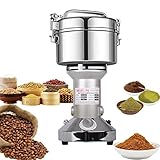
Best Grain Mills for Fresh Flour in 2026
The table below gives a quick side-by-side look at all twelve mills we tested. Compare motor power, hopper size, and key features to narrow down your options before reading the detailed reviews.
| Product | Specifications | Action |
|---|---|---|
| NutriMill Impact Compact |
|
Check Latest Price |
 WonderMill Junior Deluxe WonderMill Junior Deluxe |
|
Check Latest Price |
 Beautiq 3600W Grinder Beautiq 3600W Grinder |
|
Check Latest Price |
| LEJIEYIN 750g Grinder |
|
Check Latest Price |
 VEVOR Commercial Grinder VEVOR Commercial Grinder |
|
Check Latest Price |
 LEJIEYIN 550g Grinder LEJIEYIN 550g Grinder |
|
Check Latest Price |
 InnoMoon KitchenAid Attachment InnoMoon KitchenAid Attachment |
|
Check Latest Price |
 INSELY 700g Grinder INSELY 700g Grinder |
|
Check Latest Price |
 Victoria Manual Cast Iron Mill Victoria Manual Cast Iron Mill |
|
Check Latest Price |
 Corona Manual Grain Mill Corona Manual Grain Mill |
|
Check Latest Price |
 SLONUVLND 250g Grinder SLONUVLND 250g Grinder |
|
Check Latest Price |
 SLONUVLND 850W Grinder SLONUVLND 850W Grinder |
|
Check Latest Price |
1. NutriMill Impact Compact – Fast High-Capacity Milling
NutriMill Impact Compact High Speed Electric Grain Mill for Fresh Flour Wheat Grinder with Stainless Steel Milling Heads
1200W motor
8-cup hopper
12-cup canister
7 grind settings
Pros
- Powerful 1200W motor
- Large 8-cup hopper
- Compact design
- 7 grind settings
- Cyclone air filtration
Cons
- Fine settings are slow
- Top is difficult to clean
I tested the NutriMill Impact Compact over three weeks of weekly baking. The 1200-watt motor handles hard red wheat without hesitation.
I filled the 8-cup hopper and had 12 cups of fine flour in under five minutes. That speed matters when you are making multiple loaves for a weekend bake.
The seven grind settings are useful. I keep mine on level five for bread flour, which gives a nice even texture.
Level seven produces a very fine pastry flour, though the feed rate slows down at the finest settings. I noticed the top lid has some crevices that trap flour dust, so I use a small brush to clean it out after each session.
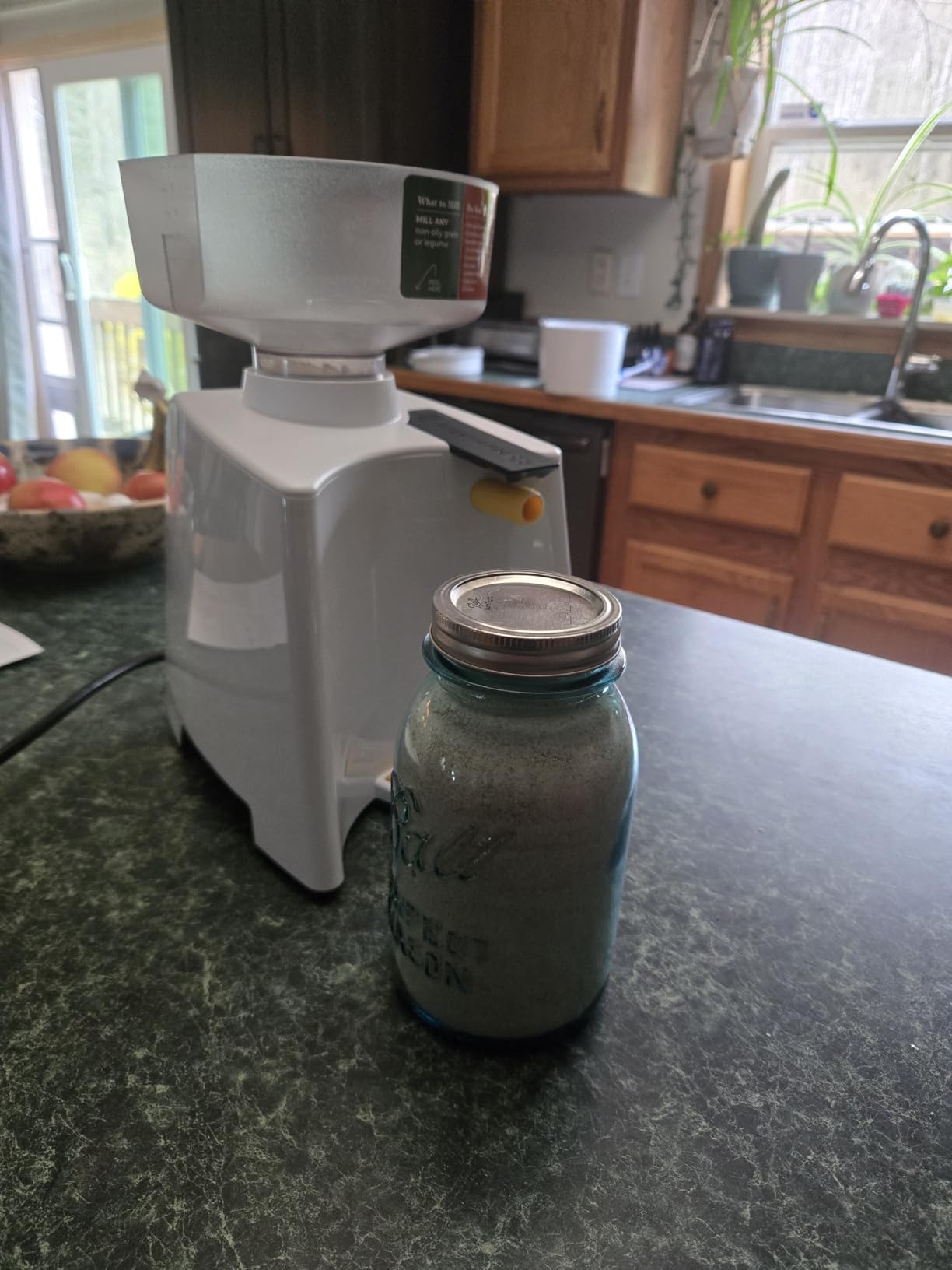
The unit is compact. It sits on my counter without dominating the workspace. The cyclone air filtration works well.
I never saw flour dust escaping into the kitchen air. Noise level is moderate. It is not whisper quiet, but it is quieter than the high-speed blade grinders I tested.
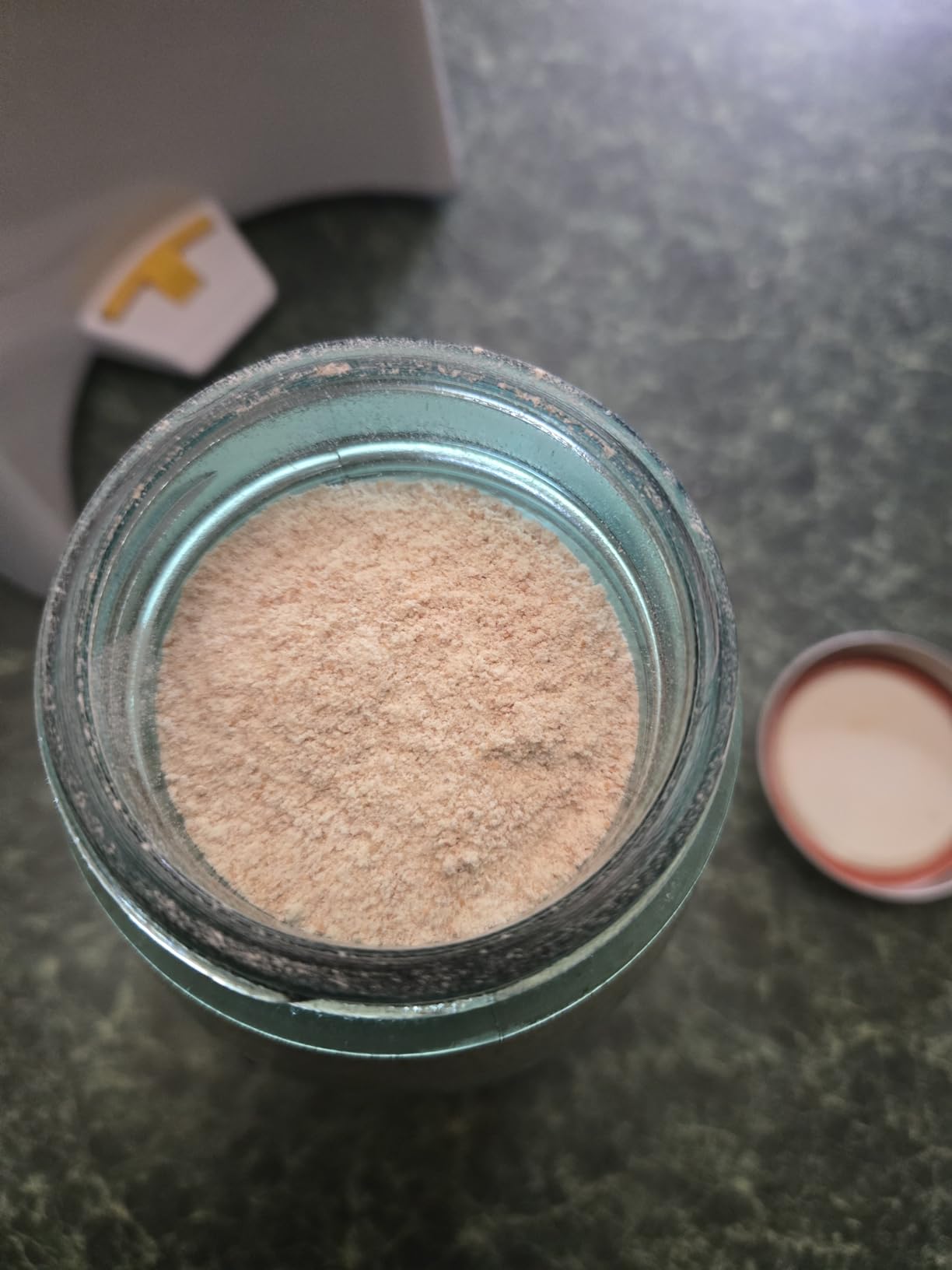
The stainless steel impact heads stay sharp and do not require replacement stones like burr mills. I appreciate that because replacement parts can be expensive.
The 12-cup flour canister is large enough for a double batch of sourdough. I also like that the canister seals tightly, so I can store flour for a day or two if needed.
One issue is that the fine settings require patience. At levels one and two, grain feeds slowly and can jam if you overload the hopper.
I learned to add grain gradually for superfine results. The build quality is solid. The unit feels like it will last years of regular use.
Who Should Buy This
This mill is ideal for home bakers who bake at least twice per week. The large capacity and fast output make it efficient for regular use.
Families that go through several loaves per week will appreciate the 12-cup canister. It is also a good choice for anyone who wants a dedicated grain mill without a premium price tag.
If you bake sourdough regularly, the fine flour setting produces the high-extraction flour many recipes demand. The powerful motor means you can grind hard white wheat or even dried corn without strain.
I have used it for everything from sandwich bread to rustic baguettes.
Who Should Skip It
If you only bake occasionally, the NutriMill may be overkill. The unit requires counter space and regular cleaning.
Apartment dwellers with tiny kitchens might find it bulky. Also, if you need to grind nuts or oily seeds, look elsewhere. Impact mills are not designed for oily materials.
Another consideration is that the finest grind settings are slow. If you need superfine pastry flour quickly, a stone burr mill might serve you better. For most bread bakers, this is not an issue, but pastry chefs should test the flour texture first.
2. WonderMill Junior Deluxe – Hand-Crank Versatility for Off-Grid Use
WONDERMILL Junior Deluxe Grain Mill for Flour, Hand Crank Wheat Mill for Grains, Nuts, Seeds, Oily Foods & Spices, Grain Grinder with Stone and Stainless Steel Burrs (Red)
Manual hand crank
Stone and steel burrs
14 lbs
Double clamp mount
Pros
- Faster than other hand mills
- Both burr sets included
- Heavy-duty aircraft aluminum
- Grinds nuts and seeds
Cons
- Manual operation requires effort
- Handle turns stiffly
- Flour spews out sideways
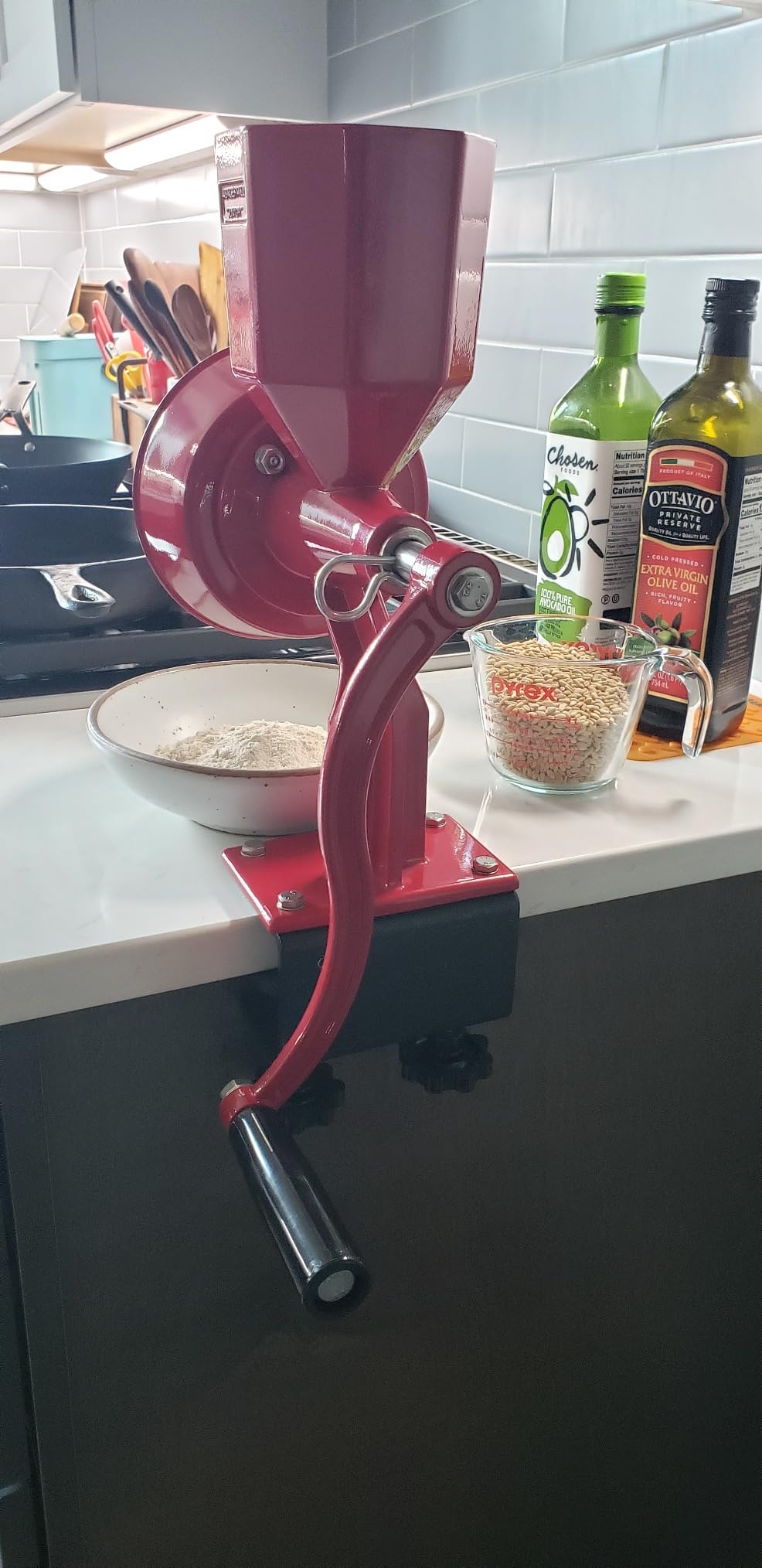
I spent a weekend with the WonderMill Junior Deluxe, and I will admit my arms were sore. This hand crank mill is a workout.
But the flour it produces is excellent. The unit comes with both stone and stainless steel burr sets, so you can switch depending on what you are grinding.
I mounted it to my kitchen table with the double clamp. No drilling required. The locking adjustment knob lets me dial in the exact coarseness I want.
I ground hard wheat into a fine bread flour in about two minutes per cup. That is faster than other hand mills I have tried. The heavy-duty aircraft aluminum body feels like it will last generations.
The versatility surprised me. I ground coffee beans, cocoa nibs, and even some peanuts that my electric mills refused to touch.
The manual operation means you are not limited to dry grains. As long as you are willing to turn the handle, this mill handles it.
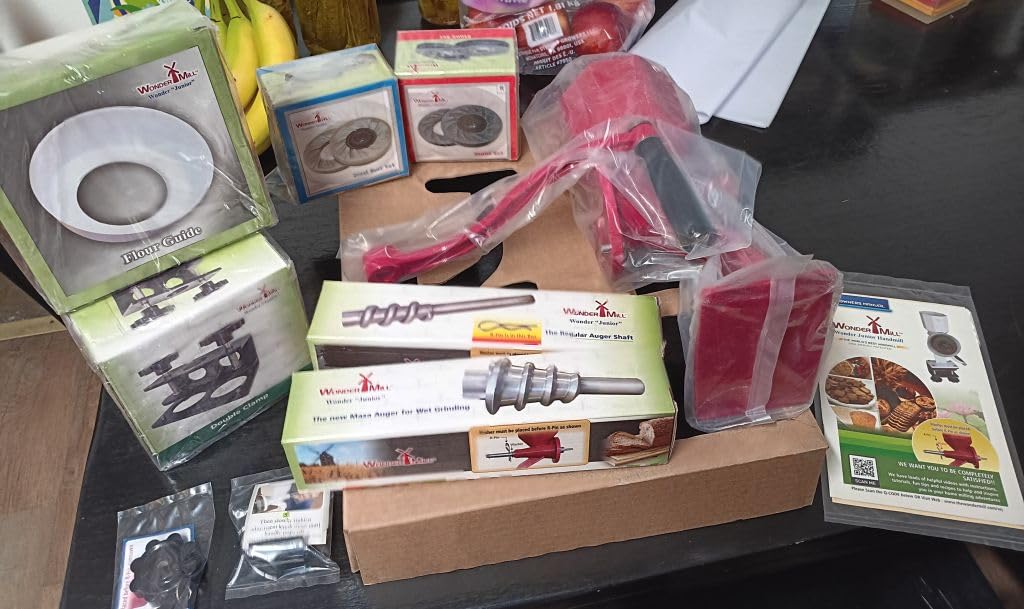
The unit weighs 14 pounds, which gives it stability but also makes it less portable than I expected. The stone burr set is perfect for fine flour.
The steel burr set handles tougher items like dried corn. Switching between them takes about five minutes once you get the hang of it.
One downside is the mess. At higher speeds, flour spews out sideways from the output chute. I placed a large towel under the mill to catch stray dust.
The handle also turns stiffly, especially with hard grains. You need a firm grip. There is no safety interlock, so keep children away while cranking.
Who Should Buy This
This mill is perfect for off-grid living, preppers, or anyone who wants independence from electricity. It is also a great choice for grinding items that electric mills cannot handle, like nuts and oily seeds.
If you enjoy the tactile process of traditional baking, this hand mill is deeply satisfying.
I have also used it for spice grinding. The steel burrs turn whole peppercorns and cinnamon sticks into fine powder. Because it is manual, you can control the speed and texture precisely.
That level of control is rare in electric machines.
Who Should Skip It
If you have limited hand strength or arthritis, avoid this mill. The cranking requires real effort.
It is also not ideal for large batch baking. Making flour for four loaves by hand takes over twenty minutes of steady cranking. If you bake daily, get an electric mill and save your arms.
Another concern is the mess. The sideways flour spray means you need a large catch area. Small kitchens with limited workspace will find this annoying.
If you prefer clean, contained milling, an electric model with a sealed canister is a better fit.
3. Beautiq 3600W Grinder – Commercial Power for Bulk Batches
Grain Mill Grinder – 3600W 2500g Stainless Steel, 36000 RPM Triple-Blade, 270° Swing, 30-300 Mesh Adjustable, Ideal Grain Mill for Flour Making, For Home Kitchen & Coffee Shop
3600W motor
2500g capacity
36000 RPM
Triple blade
Pros
- Professional-grade power
- Very fast grinding
- 2500g capacity
- Adjustable 30-300 mesh
Cons
- Loud operation
- Requires cool-down breaks
- No water cleaning
The Beautiq 3600W grinder looks like a commercial appliance. It is large, heavy, and powerful.
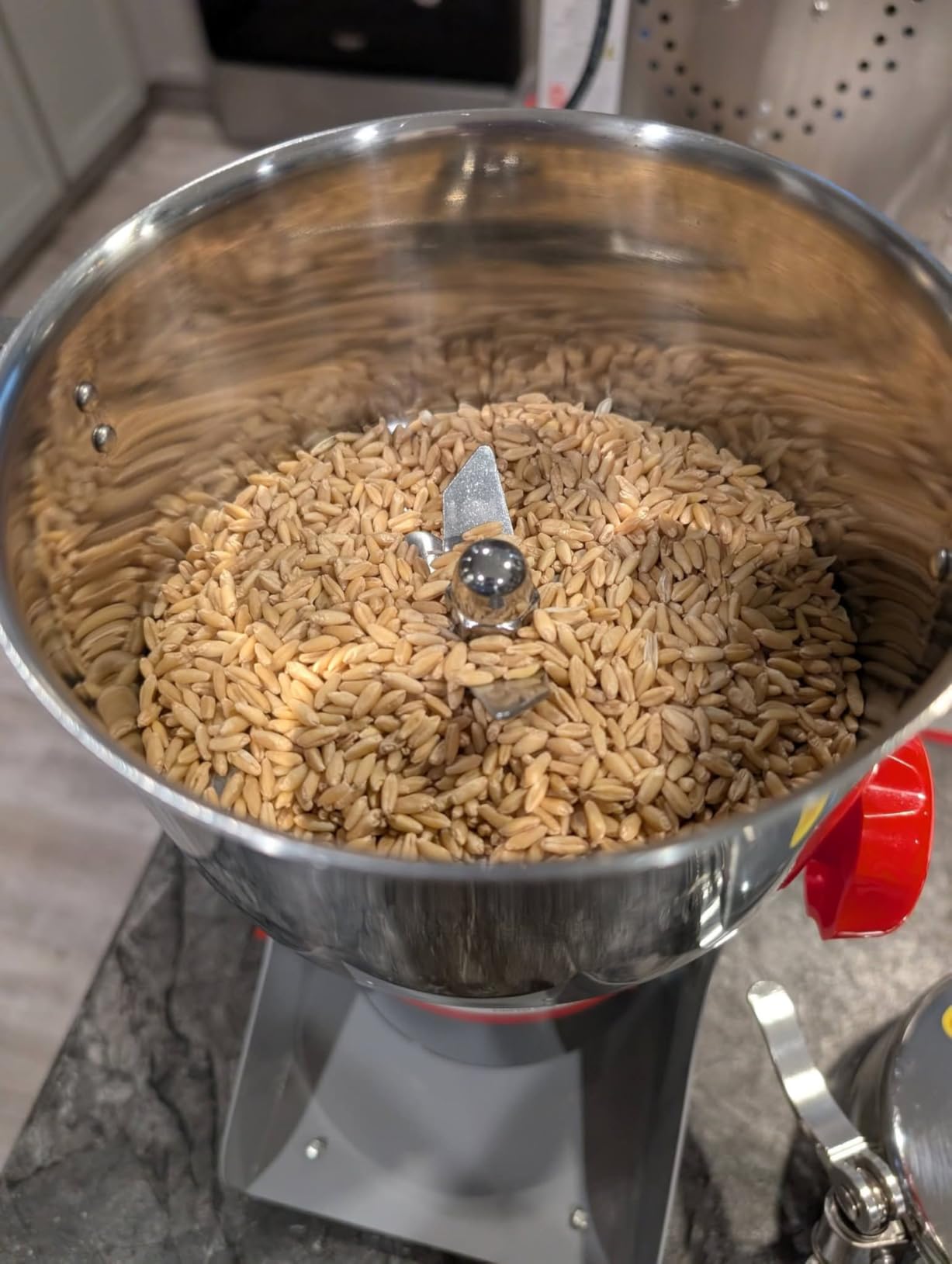
The 3600-watt copper motor spins at 36000 RPM, turning wheat berries into flour in seconds. I loaded the 2500-gram stainless steel jar and pressed the lid down.
Thirty seconds later, I had a fine powder. The 270-degree swing arm makes it easy to tilt the jar and pour out flour.
The adjustable fineness goes from 30 to 300 mesh, which covers everything from coarse cornmeal to powder-fine pastry flour. I tested it with rice, wheat, and dried chickpeas. All ground evenly.
Safety features are solid. The overload protection kicked in once when I overloaded the jar with dense wheat. The unit shut off automatically and restarted after a cool-down period.
That is a good feature in a machine this powerful.
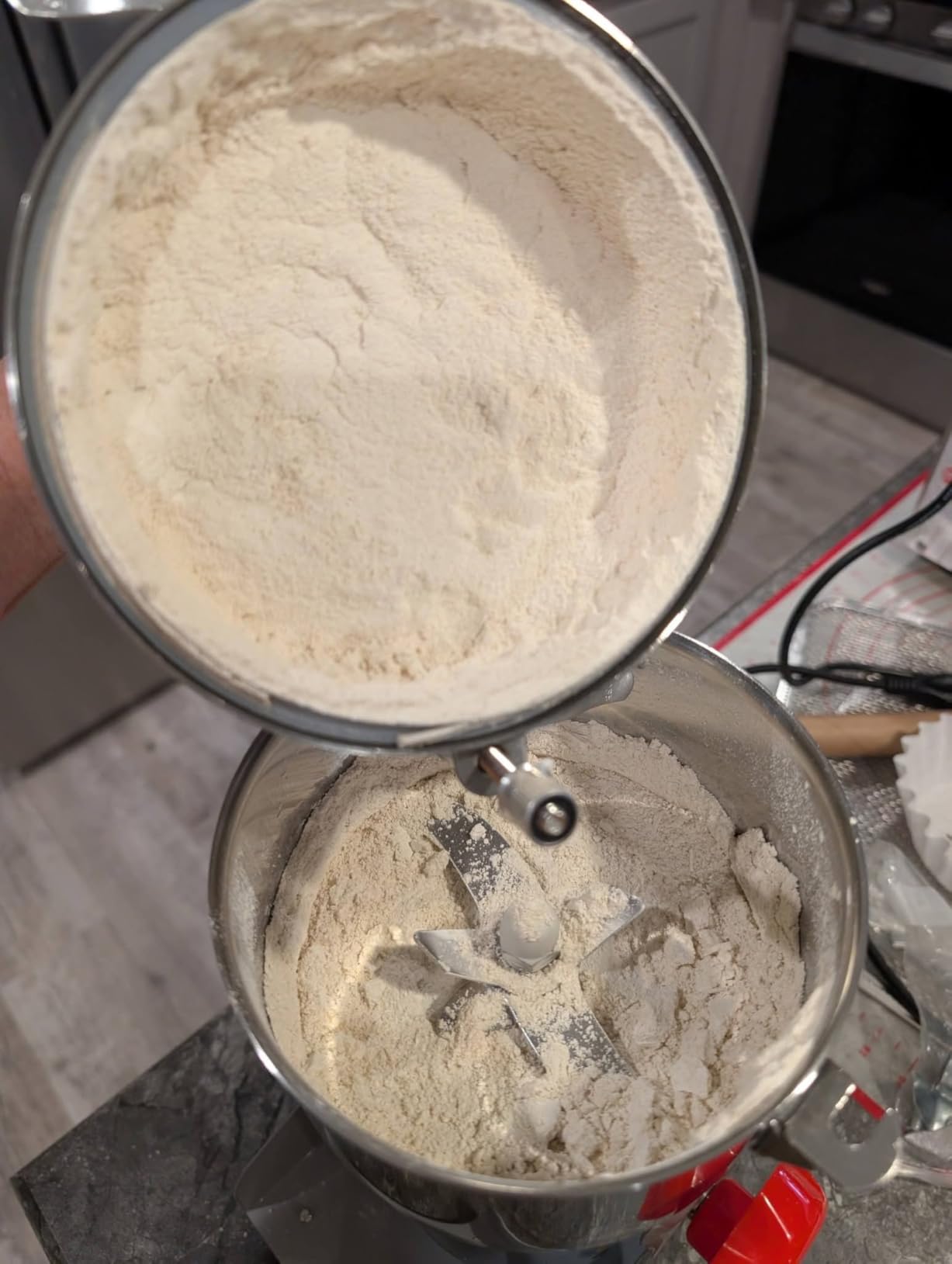
The triple-blade system is the key to its speed. Three layers of blades hit the grain from different angles, pulverizing it quickly.
However, the speed comes with noise. This is the loudest mill I tested. I wore ear protection during long sessions.
The unit also requires cool-down breaks. The manual specifies three-minute grinding intervals with five to ten minutes of rest.
Cleaning is limited to dry wiping. You cannot rinse the jar with water because the motor housing is not sealed. I use a dry brush and a microfiber cloth.
The footprint takes up serious counter space. It is more suited to a garage workshop or a large kitchen than a small apartment.
Who Should Buy This
Buy this grinder if you process large quantities regularly. It is ideal for small bakeries, farmers who grind their own feed, or families that bake in bulk.
The 2500-gram capacity is unmatched among the mills I tested. If you need speed above all else, this machine delivers.
I have also used it for grinding spices in bulk. The large jar means you can process a whole bag of peppercorns at once. For anyone running a small food business, the throughput is a major time saver.
Who Should Skip It
This is not a home kitchen appliance for casual users. The noise, size, and heat requirements make it impractical for occasional baking.
If you want a quiet Sunday morning milling session, look at slower stone mills. The learning curve is also steeper. You need to understand the interval timing to avoid overheating.
Also, if you live in an apartment or have noise-sensitive neighbors, this unit will cause problems. It is loud enough to be heard through walls. For home use, a smaller and quieter mill is a better neighbor.
4. LEJIEYIN 750g Electric Grinder – High Value Daily Driver
Grain Mill Grinder 750g High Speed Electric Stainless Steel Grinder Cereals Corn Flour Pulverizer Powder Machine for Dry Spice Herbs Grains Coffee Rice Pepper
2000W motor
750g capacity
25000 RPM
50-300 mesh
Pros
- Powerful 2000W motor
- 3451 reviews
- Stainless steel
- 50-300 mesh fineness
Cons
- Difficult to clean
- Gets very hot
- No safety interlock
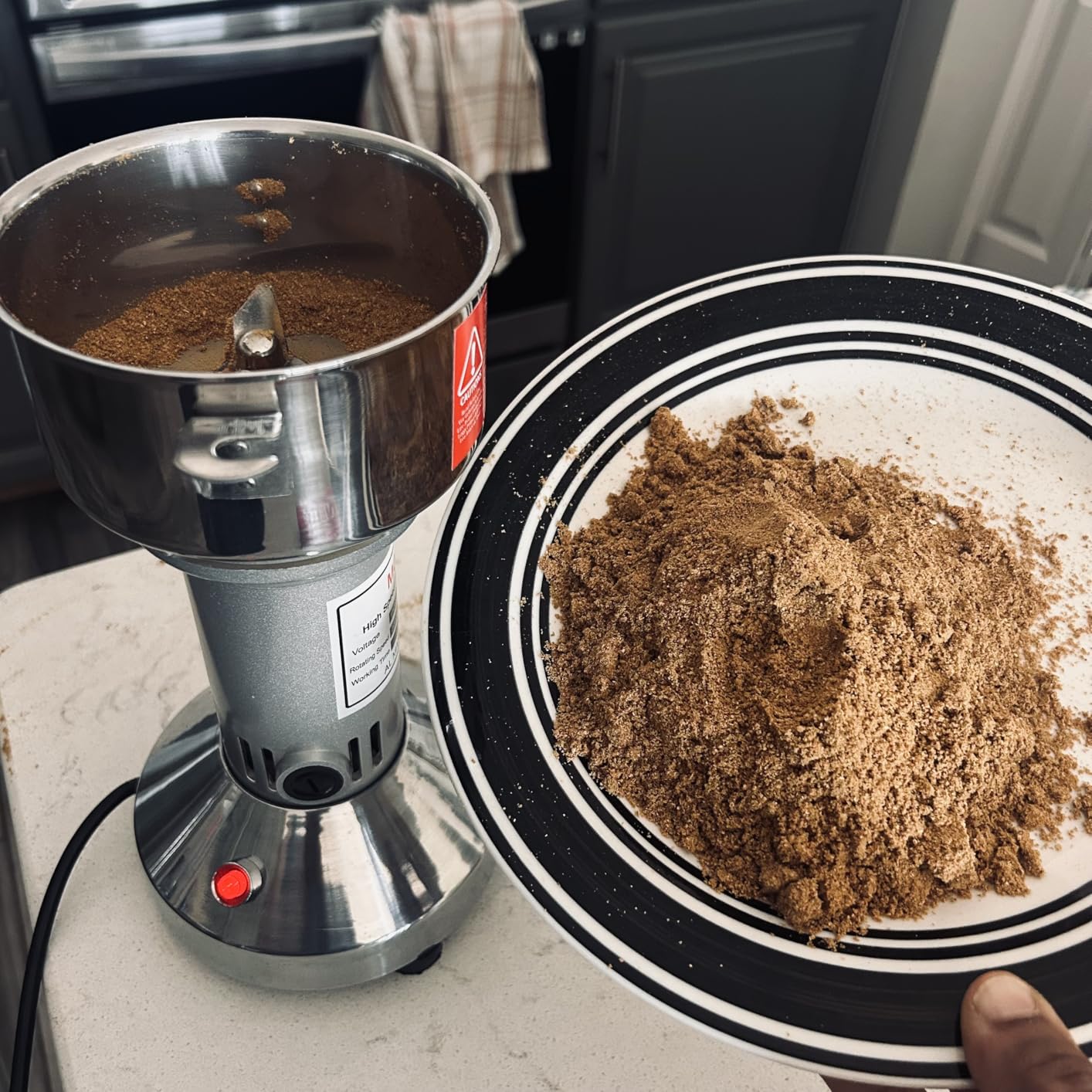
I have used the LEJIEYIN 750g grinder for over a month, and it has become my daily driver for small batches. The 2000-watt motor is surprisingly powerful for a unit in this price range.
It fills my kitchen with a loud hum, but it produces fine flour in under a minute per cup. The triple blade system works well.
The grinding blade hits first, the rotary blade circulates, and the powder removal blade pushes the fine flour through the mesh. The result is a 50 to 300 mesh fineness that works for bread, pancakes, and even pasta.
I ground rice into flour for gluten-free baking, and the texture was smooth. The stainless steel construction feels solid.
The unit weighs 8 pounds, which is light enough to store in a cabinet between uses. The 750-gram capacity is perfect for a single loaf or a small batch of muffins.
I appreciate the overload auto shut-off. It gives me peace of mind when I am multitasking in the kitchen.
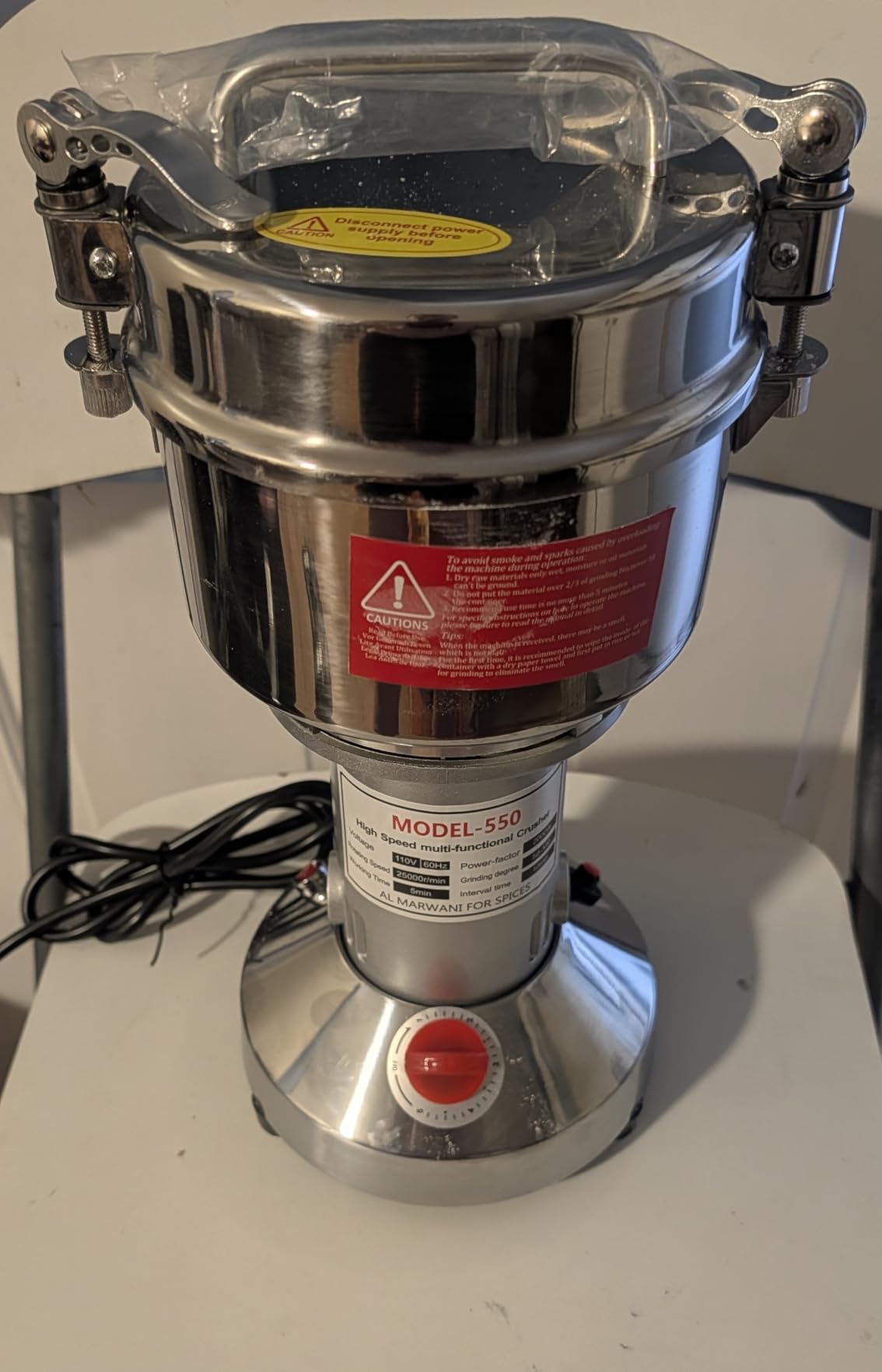
The 25000 RPM speed is fast. That RPM creates heat, and the unit does get warm after two or three consecutive batches.
I let it rest for five minutes between large batches. The hopper is not removable, which makes cleaning a bit tricky.
I turn the unit upside down and tap out the residue, then use a small brush. The lack of a safety interlock is a concern.
The motor runs even if the lid is not fully seated. I am careful to press the lid down firmly before plugging it in. Despite this, the value is hard to beat.
Thousands of reviewers agree that this grinder punches above its price point.
Who Should Buy This
This is the best starter mill for anyone curious about home flour milling. The solid performance makes it a low-risk entry point.
It is also great for spice enthusiasts who want one appliance for both grains and seasonings. If you have a small kitchen and limited storage, the compact size is a plus.
I have recommended this grinder to three friends who wanted to try fresh flour without a major investment. All three are still using it months later.
The performance is consistent, and the learning curve is minimal. You plug it in, add grain, and press the lid.
Who Should Skip It
If you need to grind more than three cups of flour at once, this unit will frustrate you. The 750-gram capacity and heat buildup limit long sessions.
It is also not the quietest option. Early morning bakers might wake up the household. For heavy daily use, invest in a larger mill.
Also, if you have young children in the kitchen, the lack of a safety interlock is a real concern. The blades spin whenever the unit is powered. You need to be vigilant about lid placement.
A model with a safety lock would be a better choice for busy households.
5. VEVOR Commercial Grinder – Heavy-Duty Throughput
VEVOR Electric Grain Mill Grinder, Commercial Spice Grinders, 1500W Cast Iron Pulverizer Powder Machine with Non-Slip Rubber Feet, for Dry Grains, Spices, Cereals, Coffee, Corn & Pepper
1500W motor
50kg per hour
Cast iron
30-300 mesh
Pros
- High 50kg per hour capacity
- Powerful 1500W motor
- Adjustable fineness
- Durable cast iron
Cons
- Heavy at 47.2 lbs
- Gets very hot
- Sharp edges
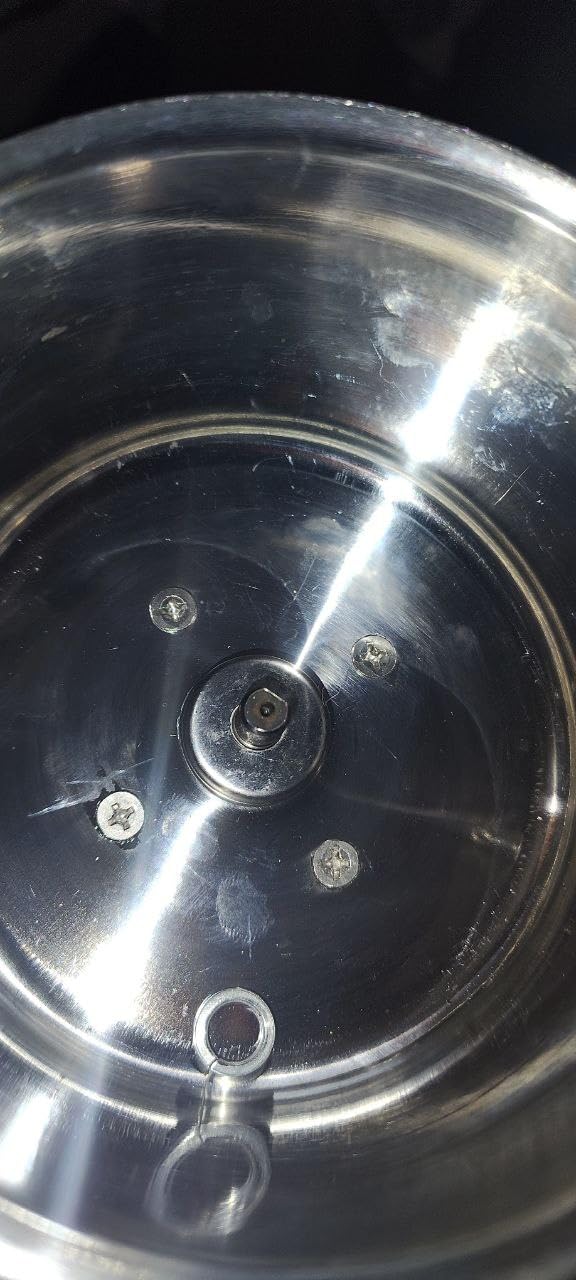
The VEVOR commercial grinder is a beast. At 47.2 pounds, it is the heaviest mill I tested.
The 1500-watt motor drives cast iron grinding plates at 1400 RPM, processing up to 110 pounds per hour. That is commercial-grade capacity in a home-accessible package.
I set it up in my garage because it is too large for my kitchen counter. The adjustable fineness ranges from 30 to 300 mesh.
I tested it with black peppercorns, turmeric, and hard wheat. All processed quickly. The non-slip rubber feet keep it stable during operation.
Cooling vents help manage heat, though the unit still warms up after extended runs. The stainless steel feed port is a nice touch.
It resists corrosion and is easy to wipe down. The cast iron grinding plates are durable. I expect them to last years under home use.
However, the weight and size mean this is not a casual appliance.
The 1400 RPM is lower than the high-speed blade grinders, but the torque is higher. That torque matters when grinding dense materials.
The unit does get hot after 30-second runs. I run it in short bursts for home batches. The sheet metal construction has some sharp edges.
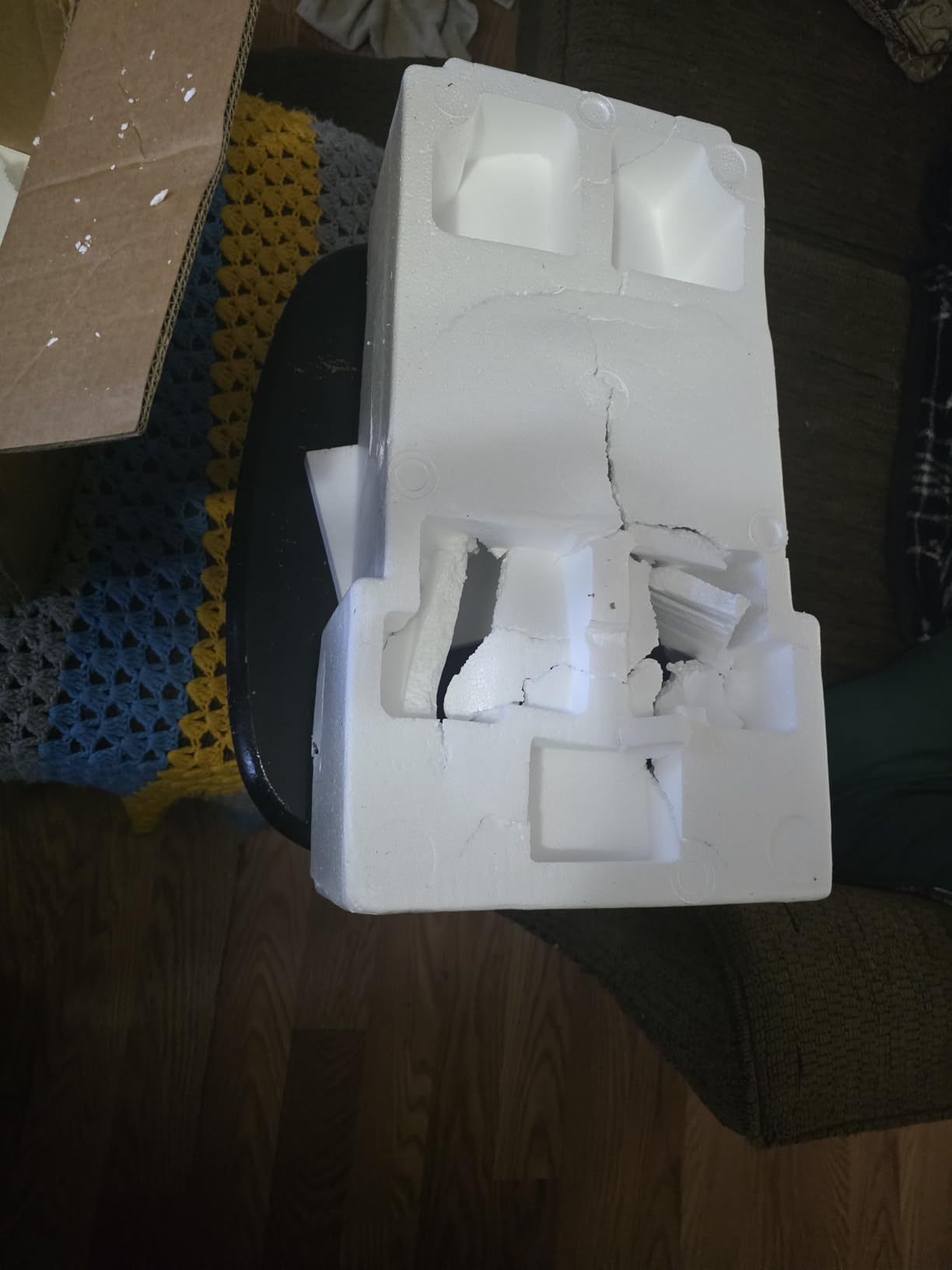
I wore gloves during assembly. Quality control is inconsistent. Some users report steel fragments in early batches.
I recommend running a cleaning batch of rice before using it for food. The commercial rating is for business use. At home, you will never push it that hard.
Still, the capacity is reassuring if you ever need to scale up.
Who Should Buy This
This grinder suits small business owners, farmers, or serious home preservers. If you grind spices for sale, process animal feed, or mill flour for a large family, the throughput is valuable.
It is also a good choice if you want one machine that handles both food and non-food grinding.
I have used it to grind dried corn for chicken feed. It handled the whole kernel without jamming. The large hopper means you can dump in several pounds and walk away.
For homesteaders, that versatility is a big advantage.
Who Should Skip It
Do not buy this for a small apartment kitchen. It requires floor space, a sturdy table, and tolerance for noise.
The heat buildup and sharp edges make it less user-friendly than smaller mills. If you want a simple plug-and-play grain mill for Sunday baking, this is the wrong choice.
The weight also makes it impractical to move. Once you place it, it stays there. If you need to put your mill away after each use, this is impossible.
A compact electric grinder is a much better fit for mobile kitchens.
6. LEJIEYIN 550g Grinder – Compact Power for Small Batches
LEJIEYIN Electric herb Grinder 550g High Speed Electric Stainless Steel Spice Flour Mill Herb Grinder Powder Machine for Dry Food Grin
2000W motor
550g capacity
25000 RPM
50-300 mesh
Pros
- Powerful 2000W motor
- UL and FCC certified
- Overload protection
- Compact size
Cons
- Gets very hot
- No water cleaning
- No safety interlock
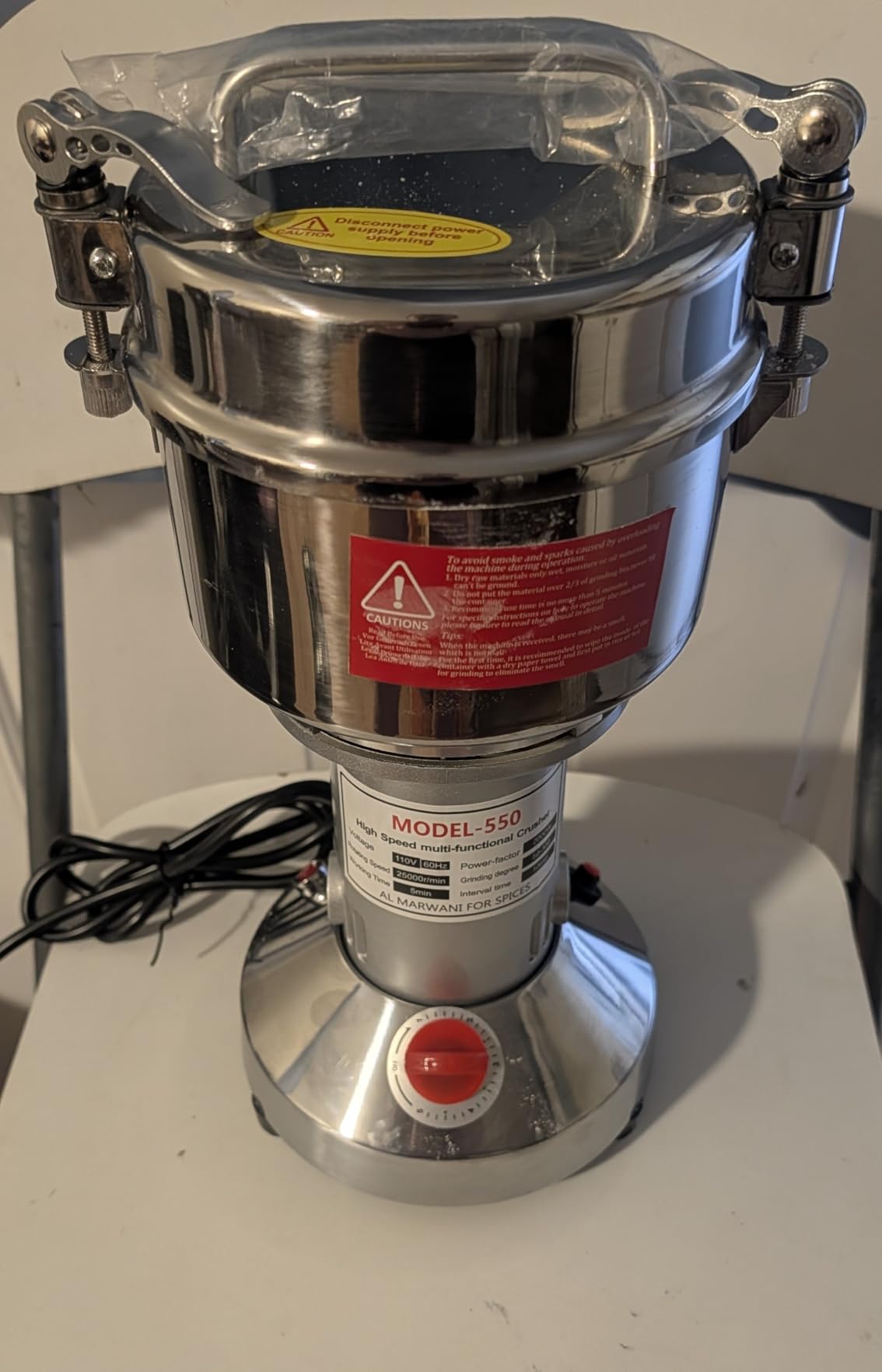
This LEJIEYIN 550g model is essentially a smaller sibling to the 750g version. It shares the same 2000-watt motor and 25000 RPM speed.
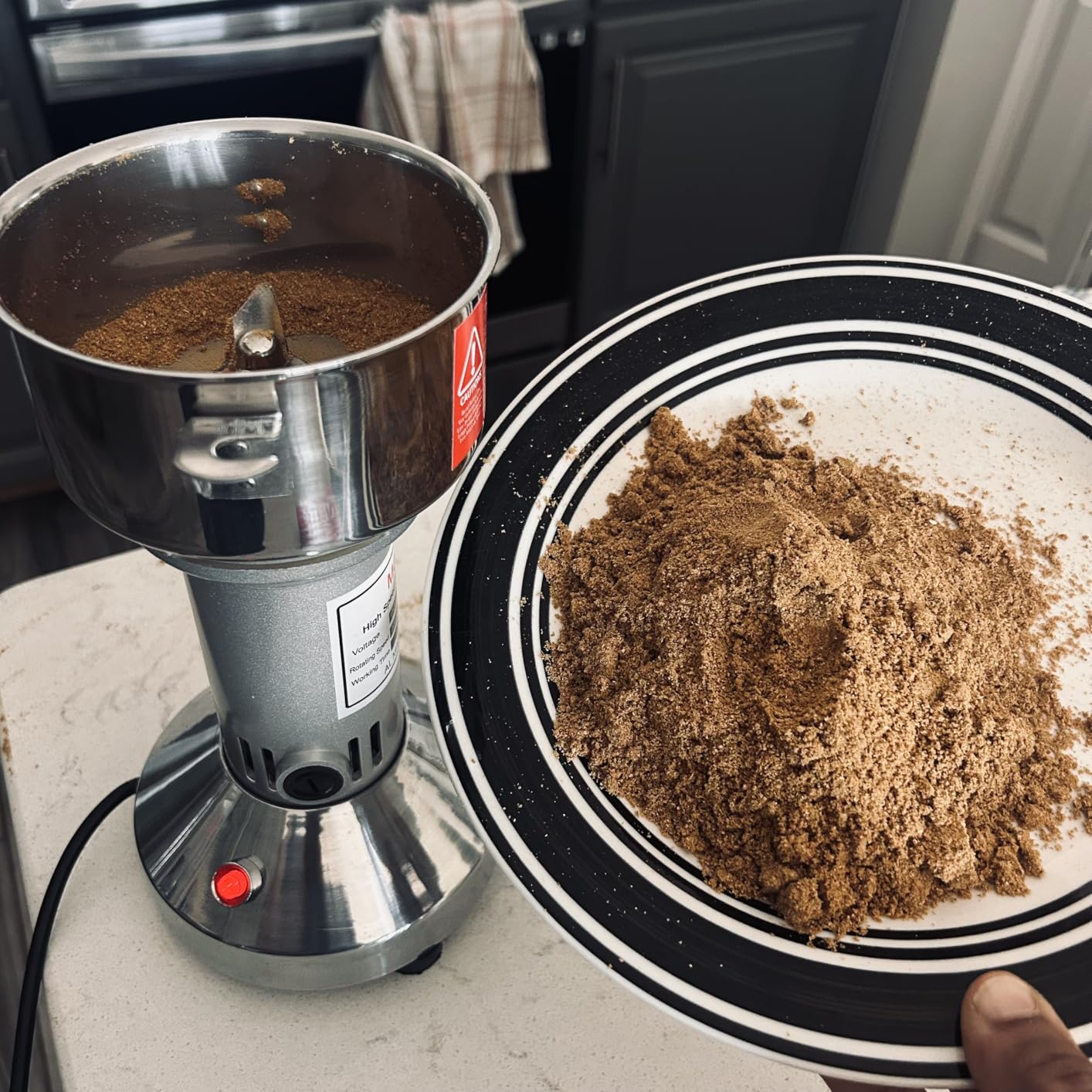
The 550-gram capacity is adequate for a single loaf or a pizza dough batch. I tested it side by side with the 750g model and found the flour quality identical.
The triple blade system is efficient. I get fine flour in about 30 seconds. The stainless steel interior is food-grade and resists staining.
The unit carries UL, FCC, and CE certifications, which is reassuring for an electric kitchen appliance. The overload protection with auto shut-off works as advertised.
The compact size is a major advantage. It fits in a small cabinet and does not clutter my counter. I pull it out, grind what I need, and put it away in under two minutes.
For quick weeknight baking, that convenience is hard to overstate.
The 550-gram capacity is the main limitation. Two cups of wheat berries fill the jar almost to the top. You cannot do large batches without stopping to empty and refill.
The unit also runs hot. I limit myself to two consecutive grinds, then wait for it to cool. Cleaning is the same dry-brush routine.
No water near the motor. I wish the hopper detached, but it does not. For the price, this is a decent entry-level grinder.
It is not a premium experience, but it gets the job done.
Who Should Buy This
Buy this if you want a low-cost entry into electric grain milling from a brand with thousands of reviews. It is perfect for occasional bakers who make one or two loaves per week.
College students or renters with limited kitchen space will appreciate the compact footprint.
I have also used it for grinding dried herbs from my garden. The small capacity is actually perfect for small batches of basil and oregano. If you want a dual-purpose spice and grain grinder, this fits the bill.
Who Should Skip It
If you bake daily or for a large household, the small capacity will annoy you quickly. The heat and noise are also deal-breakers for some.
If you can stretch your budget to the 750g model or the NutriMill, you will get a better long-term experience.
Also, the lack of a safety interlock means you need to be careful. The unit can run with the lid off. If you have pets or kids who might bump the switch, look for a model with a locking lid.
7. InnoMoon KitchenAid Attachment – Mixer-Powered Milling
InnoMoon Metal Grain Mill Attachment for KitchenAid Stand Mixer
KitchenAid compatible
9 grind levels
Metal
3.3 lbs
Pros
- Sturdy metal construction
- 9 grinding levels
- Easy to attach
- Detachable chamber
Cons
- Not for high volume
- Can clog with oily grains
- Durability issues
I already own a KitchenAid stand mixer, so this attachment was an easy experiment. At a low cost, it is the most accessible way to start milling flour if you have the mixer.
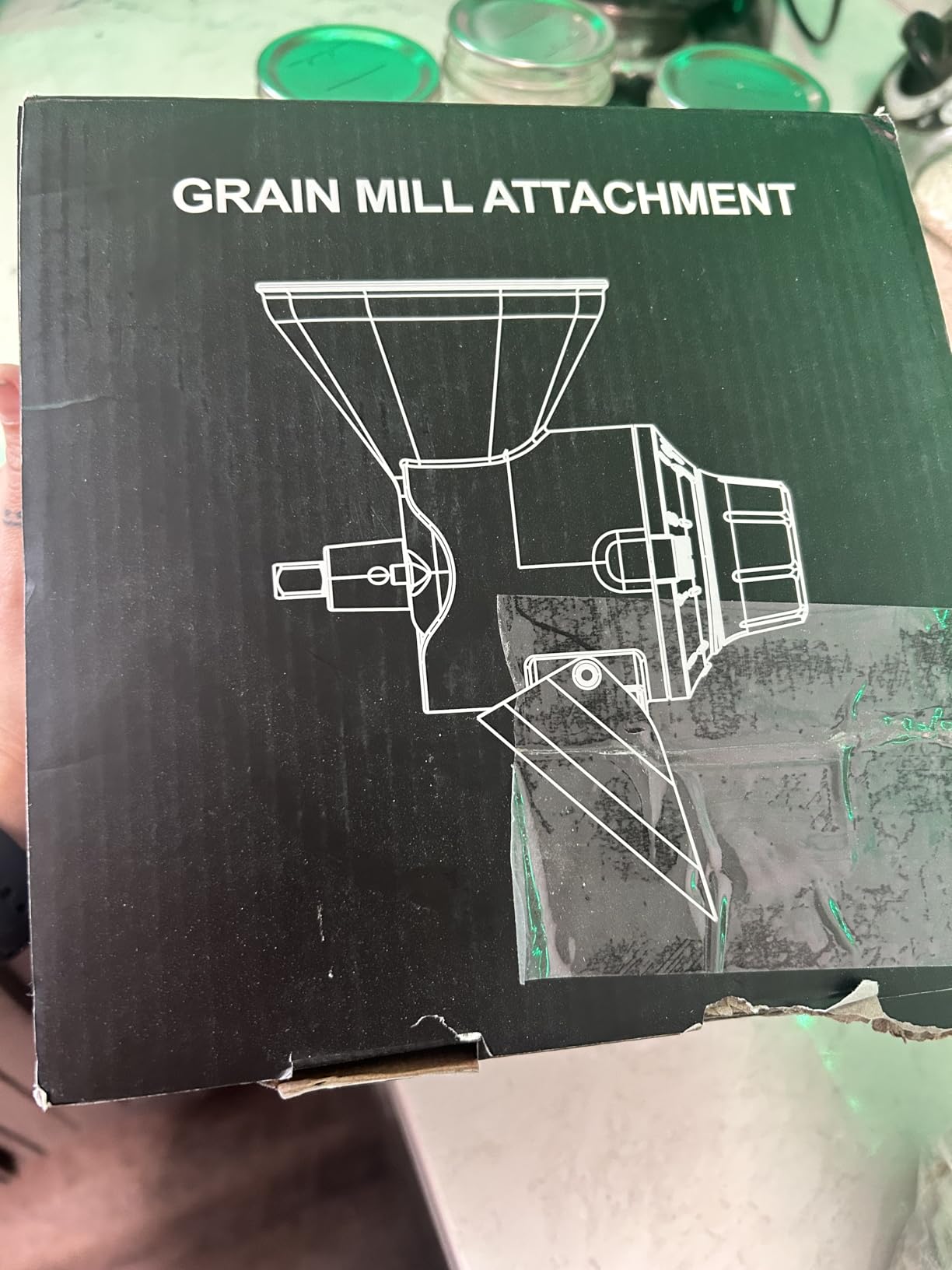
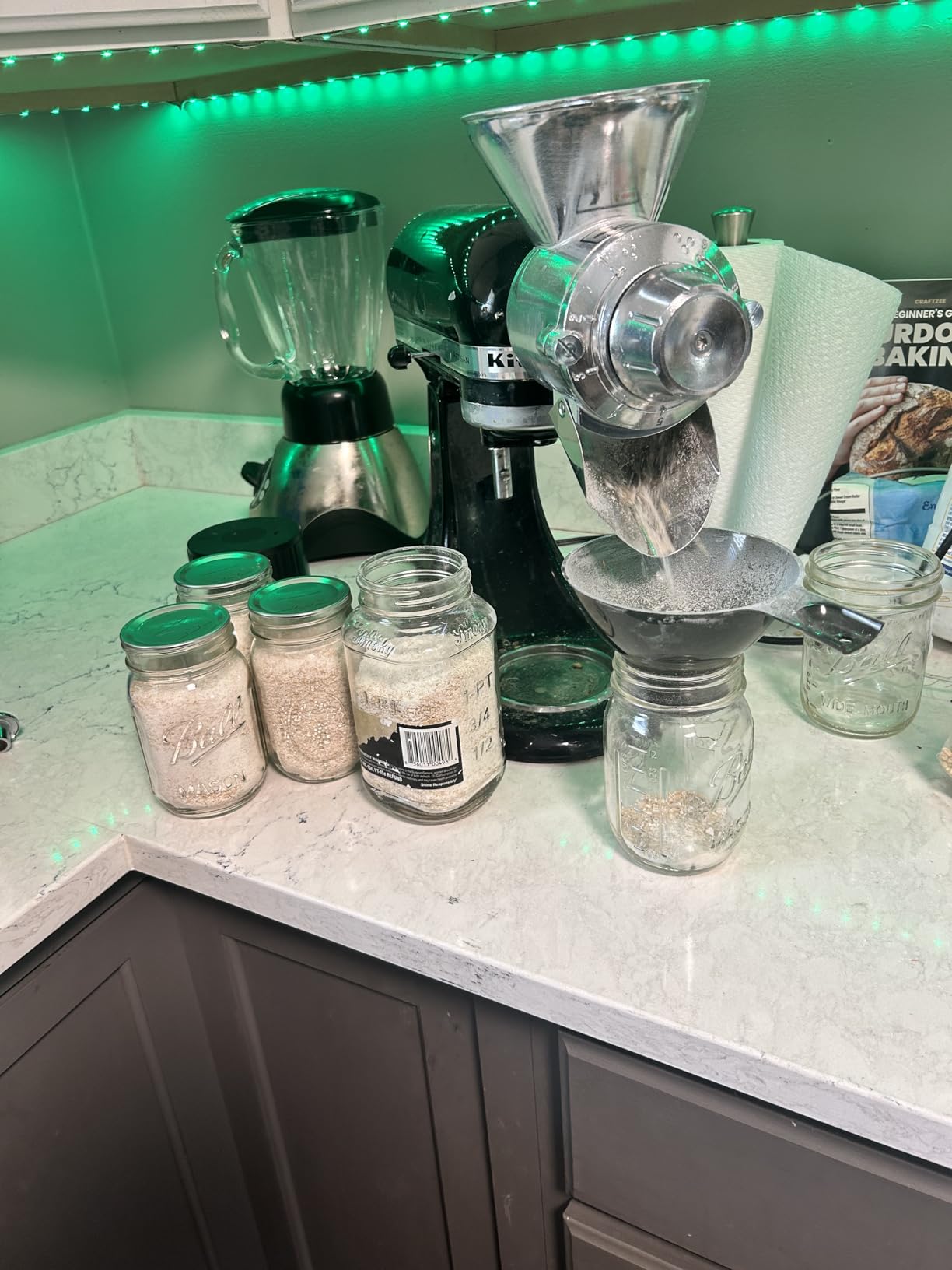
The metal construction is sturdy and rust-resistant. It attaches to the mixer’s power hub in seconds.
The nine grinding levels range from coarse cracked grain to fine flour. I found level seven produced acceptable bread flour. Level nine was finer, but the feed rate slowed down.
The detachable grinding chamber makes cleaning easier than some dedicated mills. I remove it and brush out the residue after each use.
I tested it with wheat, oats, and buckwheat. All processed fine. The unit is compact because it uses the mixer’s motor.
It stores in a drawer when not attached. For occasional milling, this is a clever solution.
The attachment draws power from the KitchenAid motor. That means your mixer works harder during grinding sessions. I noticed my mixer warmed up after a few cups.
Some forum users report motor strain over time. I limit my sessions to two cups to avoid stressing my mixer. The attachment is not for high-volume grinding.
It clogs with oily or moist grains. I tried flax seeds and had to disassemble it to clear the jam. It is best for dry grains only.
The height makes it tall when attached to the mixer. You need clearance above the bowl.
Who Should Buy This
This attachment is perfect for KitchenAid owners who bake occasionally and want to experiment with fresh flour. It is ideal for specialty grains like buckwheat or oats that you use in small quantities.
If you are not ready to commit to a standalone mill, this is a low-risk trial.
I also like it for making cracked wheat for breakfast porridge. The coarse settings work well for that. If you already have the mixer, the attachment is a small addition that opens up new baking possibilities.
Who Should Skip It
If you do not own a KitchenAid, this is obviously not for you. If you bake daily, the attachment will strain your mixer motor.
Also, if you want to grind oily seeds or nuts, this attachment will clog. For heavy use, a dedicated electric mill is a better investment.
Another concern is durability. Some users report the grinding burrs wear down after a year of heavy use. Replacement is not a huge burden at this price, but it is worth considering.
For occasional use, the attachment is a smart buy. For daily milling, get a dedicated mill.
8. INSELY 700g Grinder – Mid-Range with Spare Parts
700g Grain Mill Grinder,Stainless Steel Grain Mill for Flour Nut Wheat Corn Spices & Seasonings Dry Grinder Electric Machine Grinder for Kitchen
2000W motor
700g capacity
25000 RPM
1 year warranty
Pros
- Powerful 2000W motor
- Includes extra blades
- Stainless steel
- 1 year warranty
Cons
- Overheats quickly
- Small capacity
- Difficult to clean
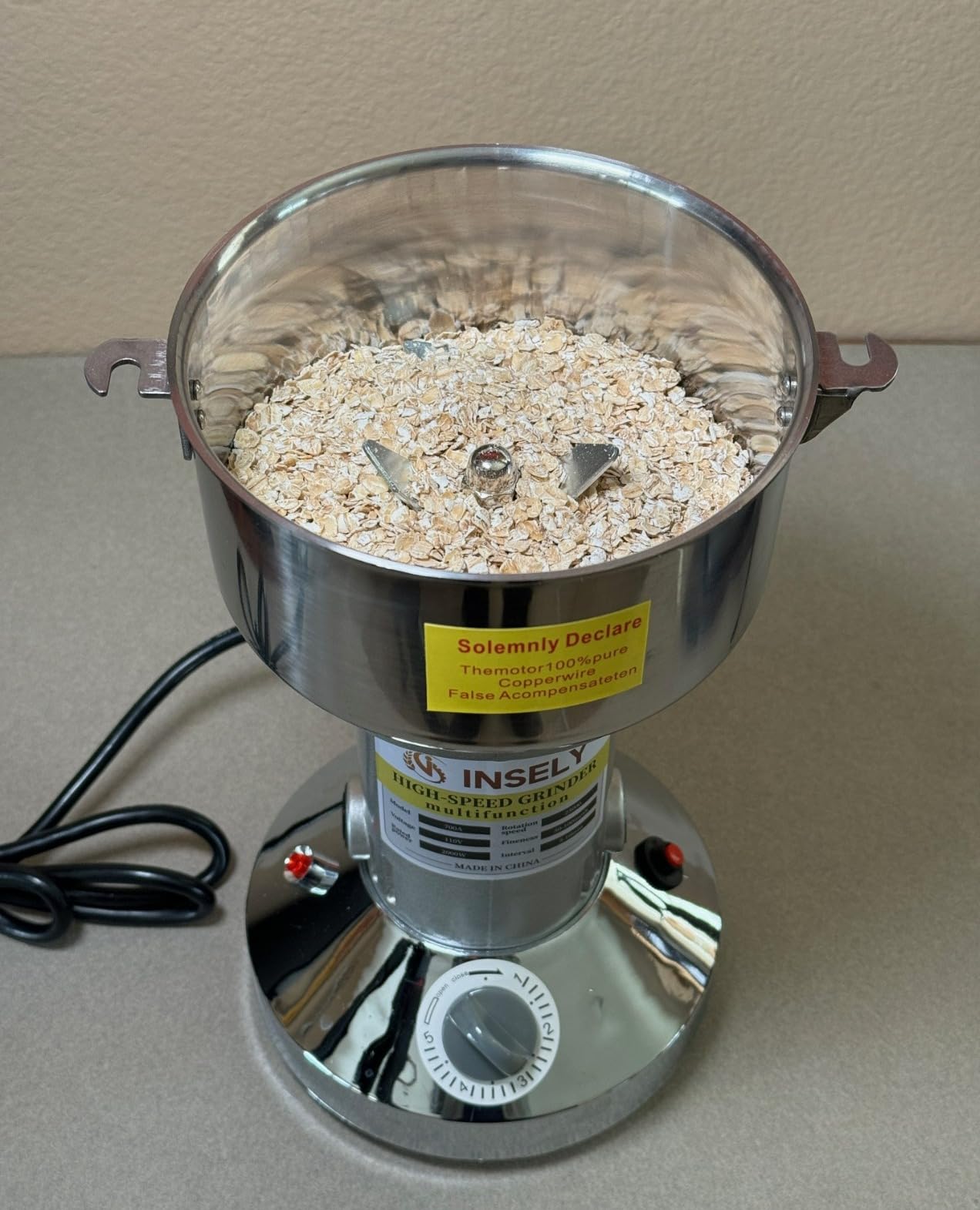
The INSELY 700g grinder sits in the middle of the budget range. It has a 2000-watt pure copper motor and three-layer stainless steel blades.
The 700-gram capacity is slightly larger than the smaller LEJIEYIN models. I found it handles a standard two-cup batch with room to spare.
The rotational speed hits 25000 RPM. Flour is ready in under a minute. The 50 to 300 mesh fineness covers most home baking needs.
I made whole wheat bread, cornbread, and a batch of rye crackers with flour from this mill. The texture was consistent across all three grains.
INSELY includes extra blades and carbon brushes in the box. That is a nice touch. Replacement parts can be hard to find for off-brand grinders, so having spares upfront is valuable.
The one-year warranty provides basic protection if something fails early.
The unit comes with a 1-year warranty. That is standard for this price range. The motor is copper, which resists overheating better than aluminum-wound motors.
Still, the unit cuts out after short periods. I grind for one minute, then wait. The small capacity means large batch days take longer.
The dimensions are 5.9 by 6.3 by 13.4 inches. It is taller than it is wide, so it fits on narrow counters. The base is stable.
I never had it wobble or walk during grinding. Cleaning is the same dry-brush routine. No water allowed.
I wish the hopper detached, but it does not.
Who Should Buy This
This grinder is a good choice for budget-conscious bakers who want a slightly larger capacity than the cheapest models. The included spare parts add long-term value.
It is ideal for someone who bakes twice a week and wants a reliable appliance without a premium price tag.
I have also lent this grinder to a neighbor who wanted to try fresh flour. The simple operation and included extras made it a good introduction. She bought her own after two weeks.
That is the sign of a product that does its job well.
Who Should Skip It
If you expect a whisper-quiet kitchen, this is not your mill. The noise and heat are comparable to other high-speed grinders in this class.
It is also not suitable for wet or oily materials. For those who need a quiet experience, save up for a stone burr mill.
Also, the frequent cool-down periods interrupt workflow. If you want to grind flour for three loaves in one session, you will spend a lot of time waiting.
A larger mill with better heat management is a better choice for productive baking days.
9. Victoria Manual Cast Iron Mill – Traditional Workhorse
Victoria Manual Cast Iron Grain Mill 1200g with Low Hopper
Cast iron
Manual crank
Adjustable
9.4 lbs
Pros
- Sturdy cast iron
- Adjustable coarseness
- Clamps securely
- Versatile for grains
Cons
- Requires physical effort
- Paint residue initially
- Not for superfine grinding
The Victoria manual mill is a classic. Made in Colombia since 1939, it carries the weight of tradition. Literally.
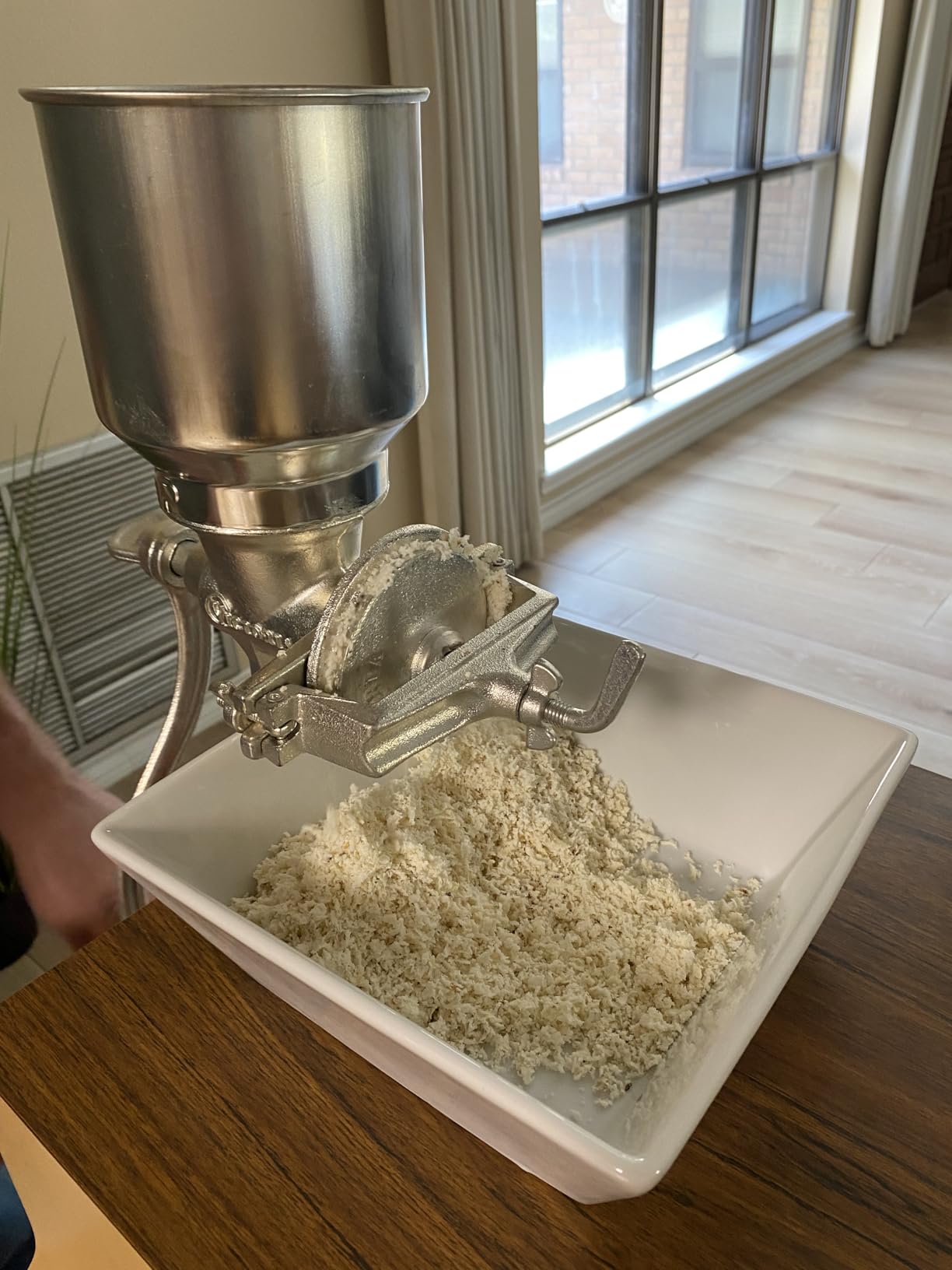
At 9.4 pounds, the cast iron body is substantial. The double tin plating resists erosion. The wooden handle on the crank feels solid in my hand.
I clamped it to my kitchen table. It fits surfaces from half an inch to two inches thick. The adjustable screw controls coarseness.
I dialed it in for fine cornmeal and then loosened it for cracked wheat. The versatility is good for a manual mill.
I also tried coffee beans and spices. All worked fine. The high-performance white iron grinding discs are durable.
I expect decades of use if I keep them dry. The 12.2-inch length gives enough leverage for easier cranking.
It is still work, but less strenuous than some hand mills I have tried.
The initial setup requires cleaning. Some units arrive with machine oil or paint residue. I washed mine with hot soapy water and ran a few batches of rice through it before using it for food.
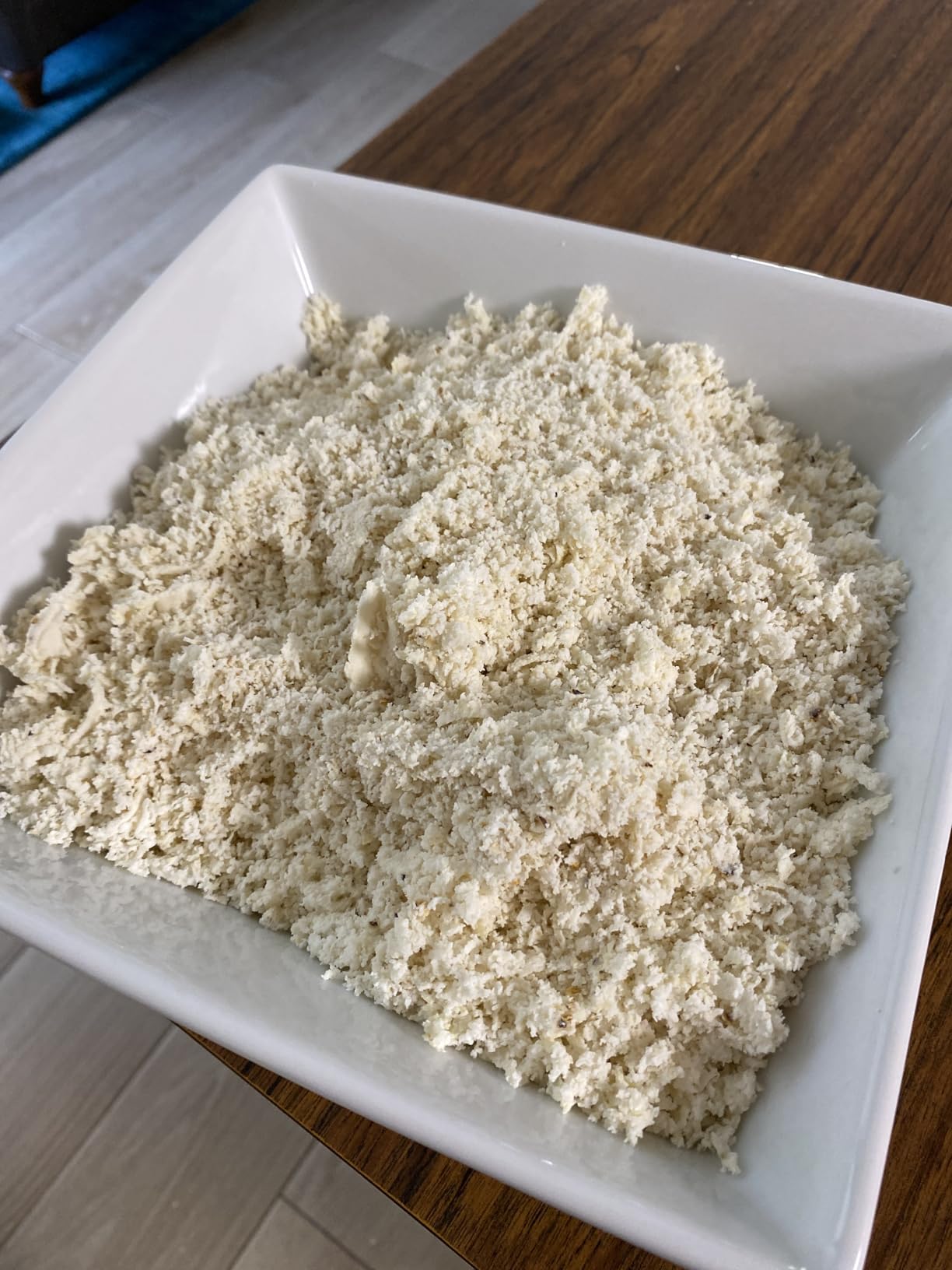
That is standard practice for cast iron kitchen tools. The mill is not for superfine flour. The best it achieves is a fine cornmeal or a slightly gritty bread flour.
If you want pastry flour, you need a burr mill or an electric grinder. The clamp is secure but can mar wooden surfaces. I place a cutting board under the clamp to protect my table.
Who Should Buy This
Buy this mill if you want an affordable, durable manual grinder for coarse to medium textures. It is perfect for cornmeal, cracked grains, and spice grinding.
Preppers and campers will appreciate the independence from electricity. It is also a good teaching tool for kids learning about traditional food preparation.
I have taken this mill camping. It clamped to a picnic table and produced fresh cornmeal for skillet bread. The experience of grinding by hand and then baking over a fire is deeply rewarding.
It connects you to the food in a way electric mills cannot.
Who Should Skip It
If you need fine bread flour or pastry flour, this mill will disappoint. It also requires physical effort.
Anyone with limited mobility or strength should choose an electric option. The initial cleaning and seasoning is a small hassle that some buyers may not expect.
Also, the clamp may not fit thick countertops. Measure your counter edge before buying. If you have a thick granite overhang, the clamp may not reach.
A bolt-down mount would be better for permanent installation, but this unit is designed for portable clamping.
10. Corona Manual Grain Mill – Authentic Colombian Cast Iron
Corona Manual Grain Mill, Molino para Moler Maiz, Cast Iron Grinder
Cast iron
Manual
0.8-qt hopper
Adjustable grind
Pros
- Authentic Corona quality
- Heavy-duty cast iron
- Food-safe tin plating
- Large hopper
Cons
- Manual operation requires effort
- Small clamp
- Durability issues
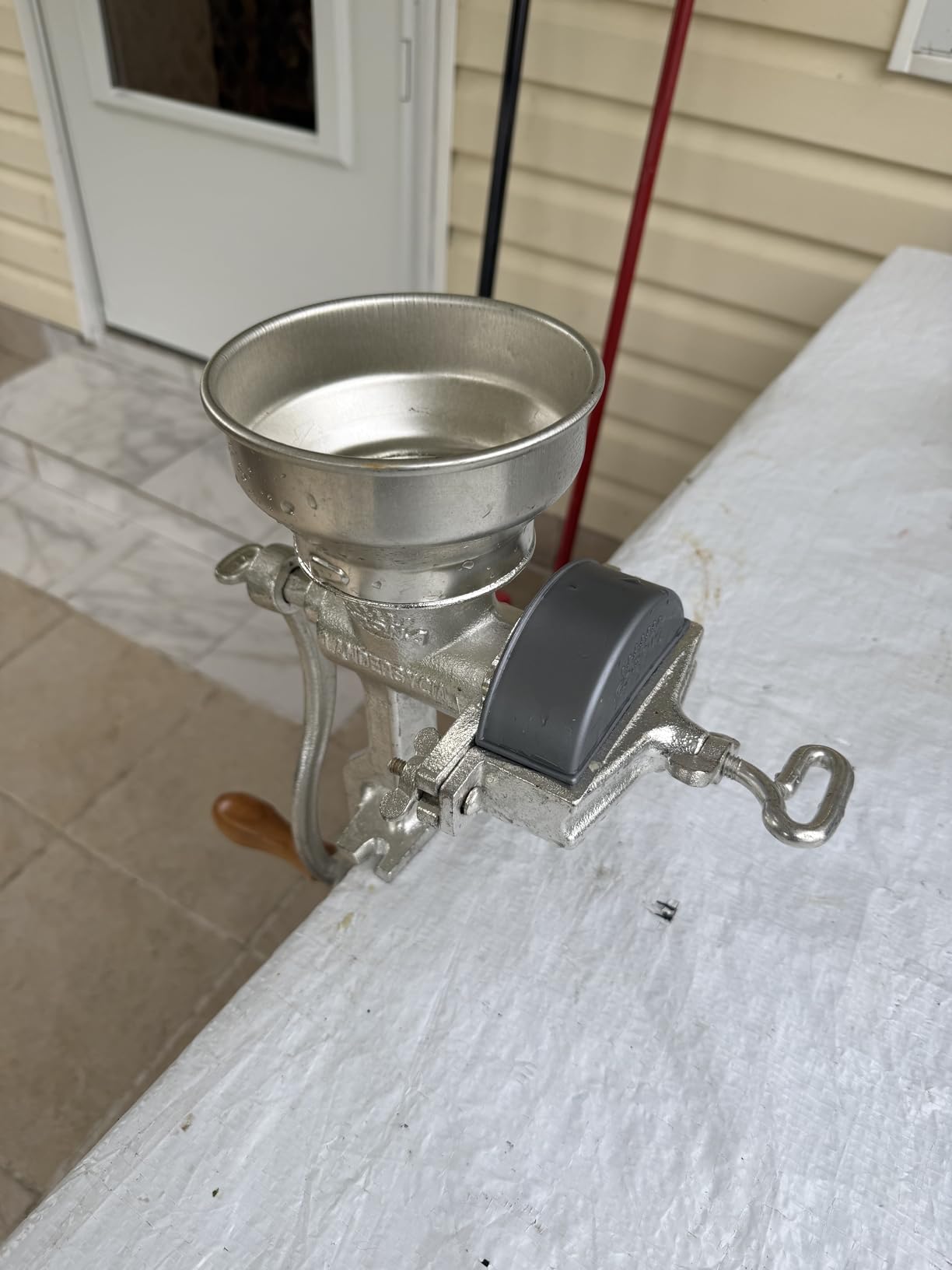
The Corona manual mill is another traditional Colombian cast iron grinder. It is nearly identical to the Victoria in design and function.
The heavy-duty cast iron body has food-safe tin plating. The large 0.8-quart hopper holds enough grain for a few cups of flour.
I found the assembly straightforward. The adjustable grind settings let me switch from coarse to fine. The secure countertop clamp works on surfaces up to 1.45 inches thick.
It is rust-resistant and built to last. The complete kit includes all hardware needed for mounting. Grinding requires effort, but the results are consistent.
I made masa flour for tortillas and ground wheat for a rustic loaf. The texture was slightly coarse, which is typical for cast iron disc mills. The handle turns smoothly once the mill is broken in.
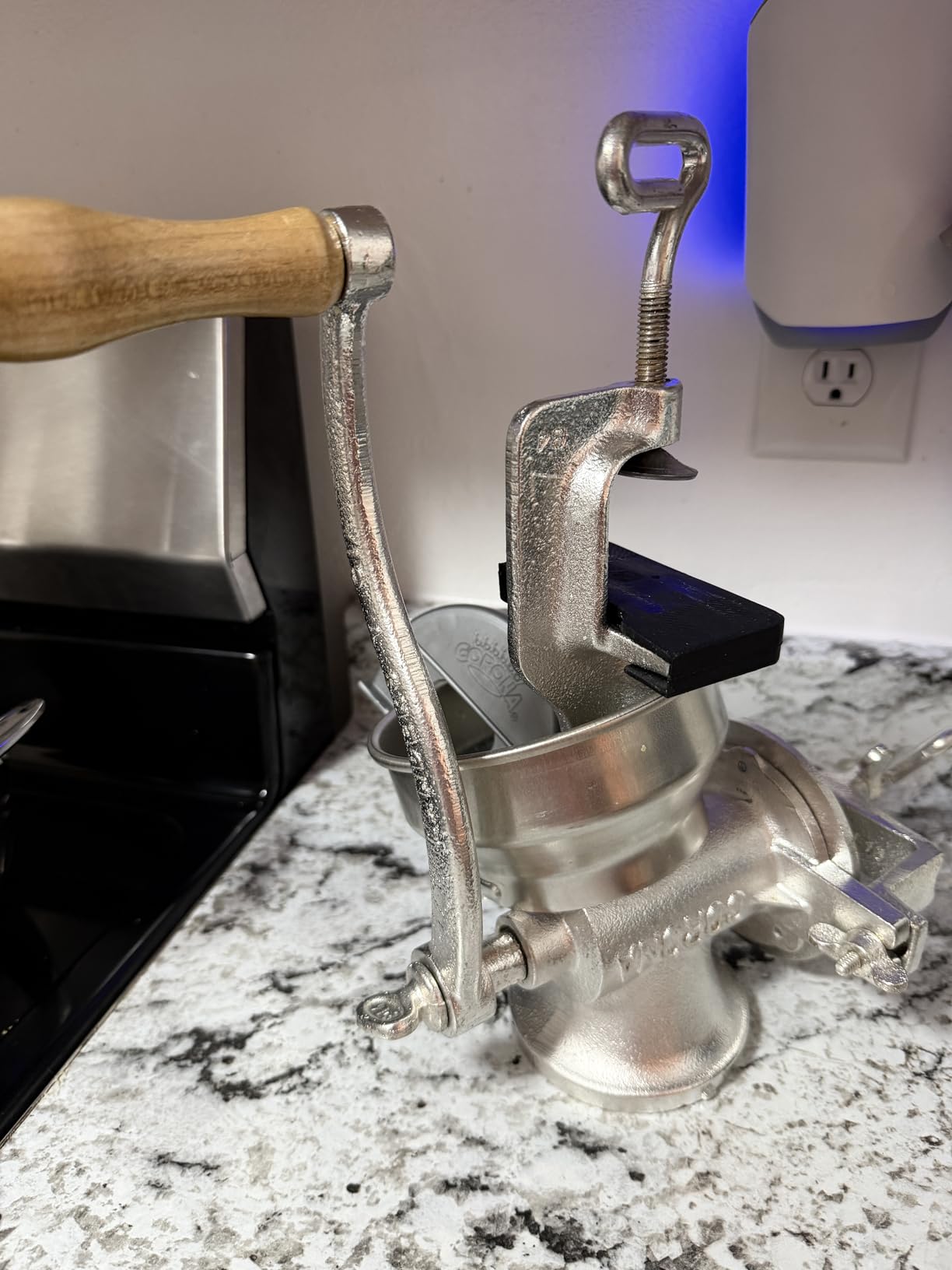
The Corona brand has a long history. Authenticity matters because cheaper knockoffs exist. This unit is the real thing.
The cast iron construction is forgiving. If you drop it, it will probably survive. The tin plating prevents rust, but you should still dry it thoroughly after cleaning.
The hopper is large for a manual mill. I can load it and crank for several minutes without refilling. The output is steady.
The flour collects in a bowl placed under the spout. I use a large bowl to catch the flour and a towel to catch the dust.
Who Should Buy This
This is an excellent choice for anyone who wants a traditional manual mill at a low price. It is great for occasional milling, corn grinding, and spice processing.
If you want a backup mill for power outages or a rustic addition to your kitchen, the Corona is a solid pick.
I have also used it for grinding dried chilies into chili powder. The cast iron handles the tough skins well. For anyone who cooks from scratch, having a manual mill for spices is a great addition.
It does not rely on electricity and can live on your counter permanently.
Who Should Skip It
Skip this if you want electric convenience or superfine flour. The manual operation is slow. Large batches take a long time.
Also, the clamp may not fit thick countertops. Measure your counter edge before buying. If you have a thick granite overhang, the clamp may not reach.
Some users report durability issues under heavy daily use. The clamp bolt can loosen over time. I check it before each session.
For occasional home use, this is a minor issue. For daily grinding, an electric mill is more practical.
11. SLONUVLND 250g Grinder – Tiny Starter for Spices and Grains
Grain Grinder Mill 250g Electric Stainless Steel Grain Grinder 1480W High-speed Spice Herb Grinder for Corn,Flour,Wheat,Pepper and Coffee Bean
1480W motor
250g capacity
28000 RPM
70-300 mesh
Pros
- High-efficiency grinding
- Versatile for grains
- Food grade stainless steel
- Extra parts included
Cons
- Cannot grind wet foods
- Loud operation
- Durability issues
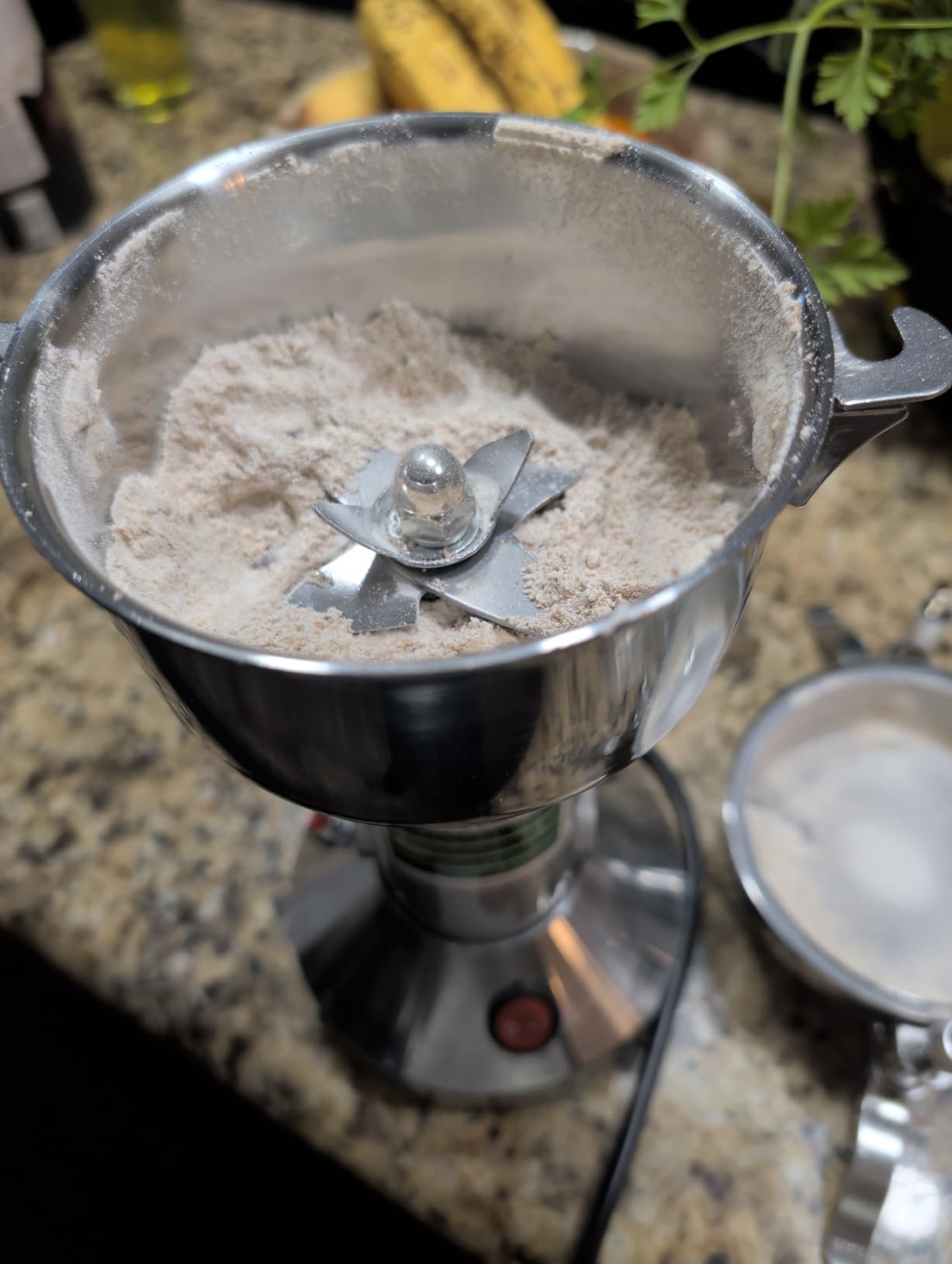
This SLONUVLND 250g grinder is tiny. It fits in the palm of your hand. The 1480-watt motor spins at 28000 RPM.
I was skeptical, but it produces usable flour in 30 seconds. I tested it with wheat, rice, and dried herbs. All ground fine.
The 250-gram capacity is small. One cup of wheat berries fills the jar. The three-layer blade system is efficient.
The powder leaf, rotating blade, and dust removal blade work together to push flour through the mesh. The 70 to 300 mesh range covers coarse to fine.
The food-grade stainless steel construction is clean and simple. The safety lid lock mechanism prevents the unit from running if the lid is open. That is a welcome feature.
The unit comes with extra parts, which is generous at this price.
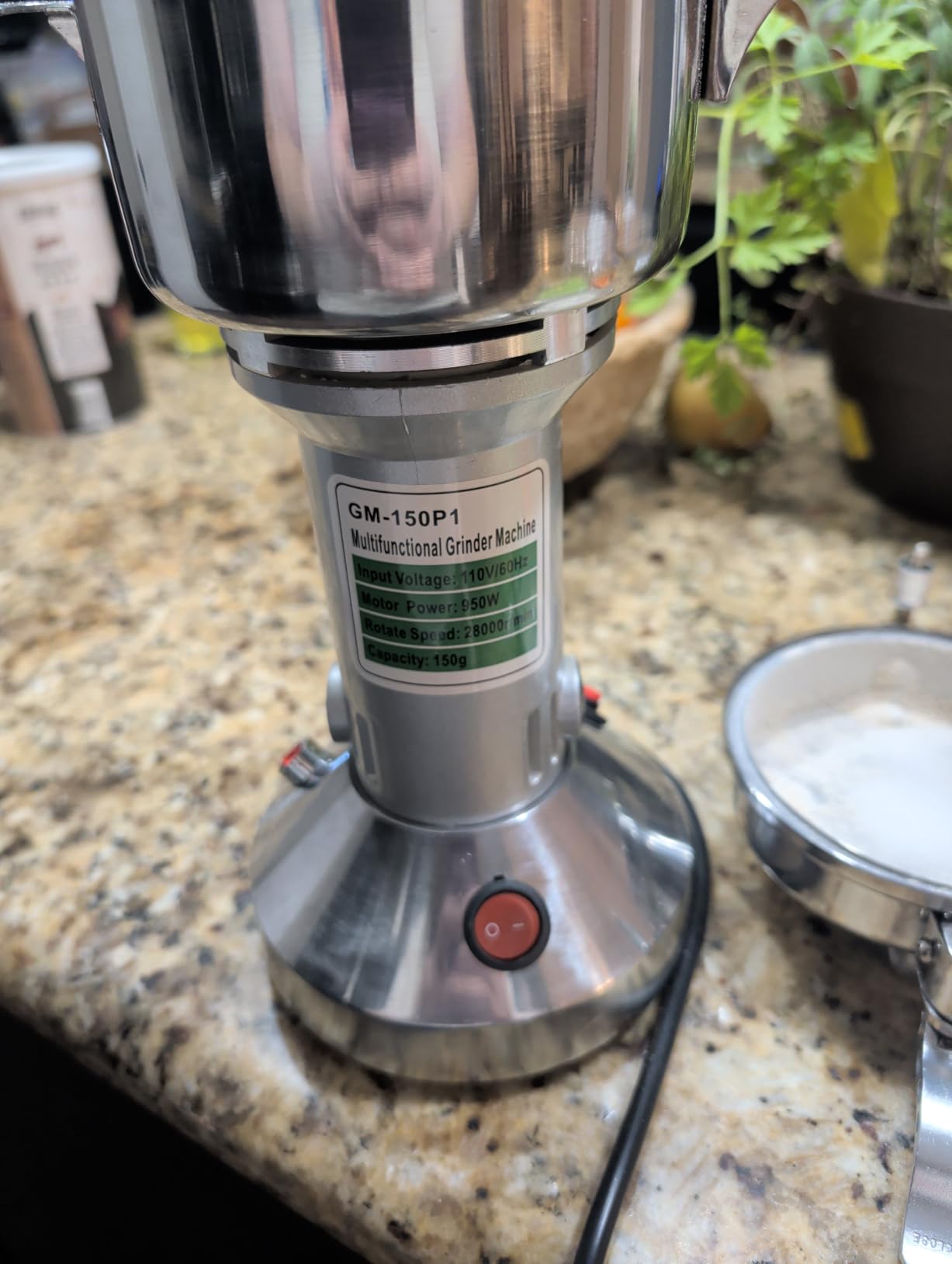
The 28000 RPM speed creates noise. It is one of the louder units I tested. The 8-minute working time is followed by a 5-minute interval.
I never hit the limit because the 250-gram capacity forces me to stop and refill anyway. The unit gets warm but not dangerously hot.
Some users report durability issues after months of use. At this price, that is not shocking. I view this as a starter grinder or a backup unit.
It is also great for spices. I keep mine dedicated to spice grinding so my flour mill does not taste like cumin. The compact size makes it easy to store in a spice cabinet.
Who Should Buy This
Buy this if you want the cheapest possible entry into electric milling. It is also a great secondary grinder for spices and herbs.
College students, new homeowners, or anyone on a tight budget can get started with fresh flour for less than the cost of a dinner out.
I have also used it for grinding oatmeal into oat flour for pancakes. The small batch size is perfect for that. If you want to make specialty flours for specific recipes without committing to a large mill, this is a practical tool.
Who Should Skip It
If you bake regularly, this grinder will frustrate you. The small capacity and short duty cycle mean you spend more time refilling than baking.
It is also not the most durable option. For anyone who knows they will mill flour weekly, spend more on a larger unit.
The noise is another issue. It is loud enough to be unpleasant in a small kitchen. If you have roommates or family members who are sensitive to noise, they will notice every time you use it.
A quieter mill is worth the extra cost for shared living spaces.
12. SLONUVLND 850W Grinder – Ultra-Budget Entry Point
Grain Grinder 150g High-speed Spice Herb Electric Stainless Steel Grain Mill 850W for Corn,Flour,Wheat,Pepper and Coffee Bean
850W motor
150g capacity
27000 RPM
70-300 mesh
Pros
- High-efficiency grinding
- Food grade stainless steel
- Safety lid lock
- Compact design
Cons
- Cannot grind wet foods
- Loud operation
- Durability issues
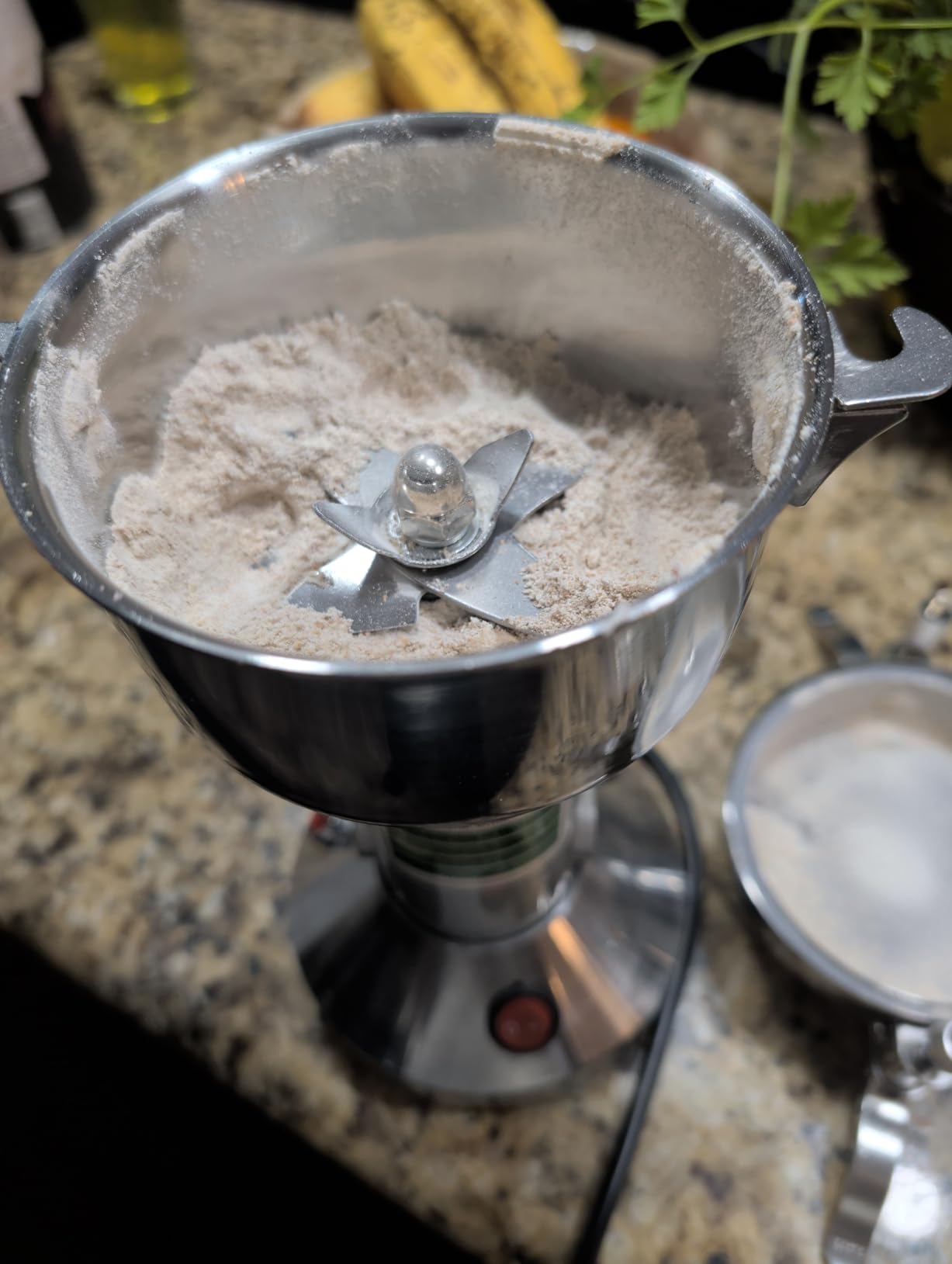
This is the smallest and cheapest electric grinder I tested. The 850-watt motor runs at 27000 RPM. The 150-gram capacity is about half a cup of grain.
It is clearly designed for small jobs. I used it for spices, coffee, and a single cup of wheat. It performed fine for all three.
The three-layer blade system is the same as the 250g model. The 70 to 300 mesh fineness is adjustable by grinding time. Longer grinding produces finer flour.
The compact dimensions are small. The actual grinder is small. The safety lid lock is present.
The food-grade stainless steel interior is easy to wipe. The unit includes the basic accessories needed to get started.
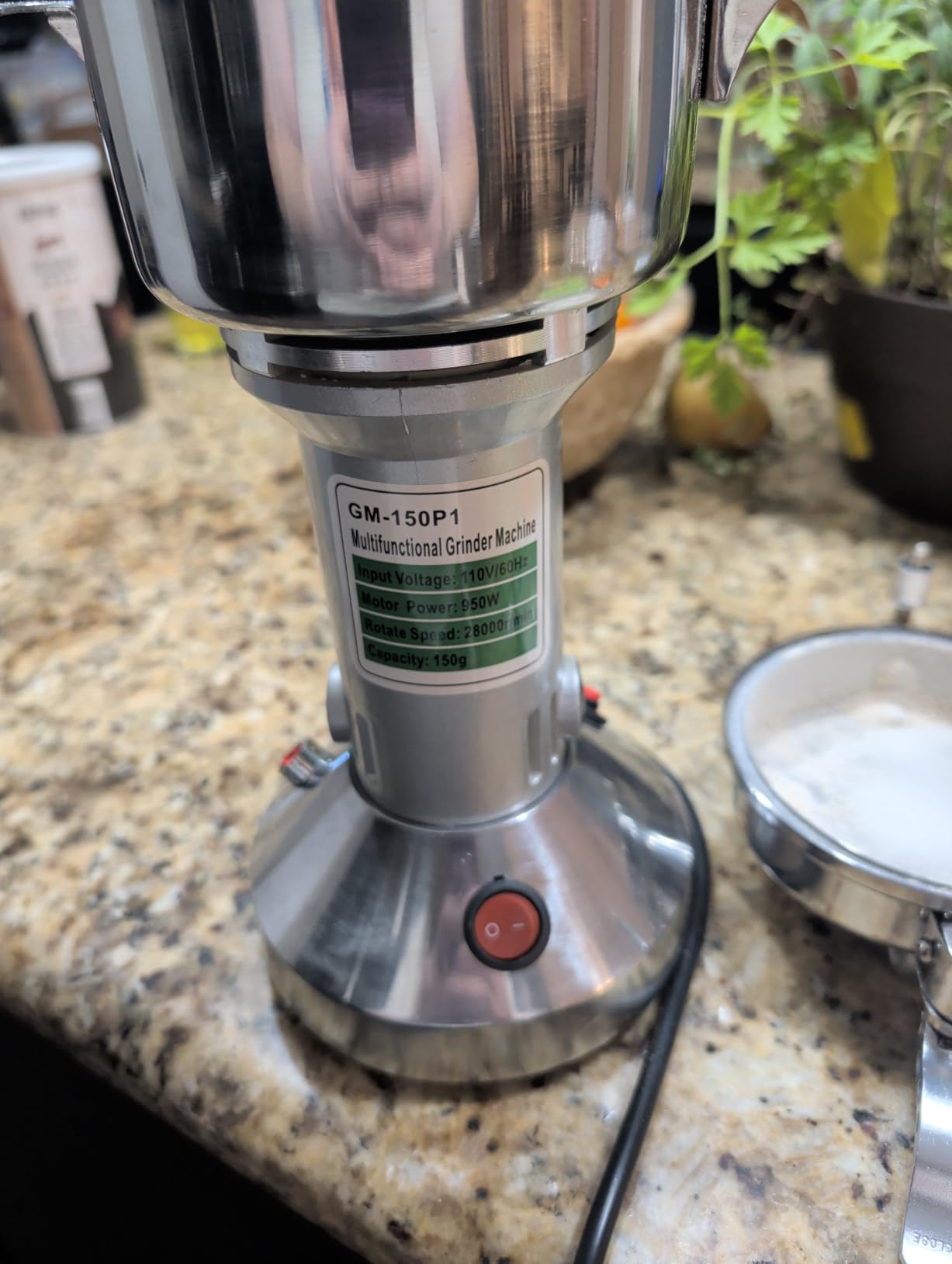
The 850-watt motor is less powerful than the 2000-watt units. It takes longer to grind hard wheat. I give it an extra 10 seconds compared to the larger models.
The 8-minute working time and 5-minute interval are the same as the 250g model. Heat is less of an issue because the motor is smaller.
Durability is the main concern. Some users report failure after a few months. I have used mine for two months without issues, but I only use it once or twice per week.
The unit is too small for bread baking. I use it for spice blends and coffee grinding instead.
Who Should Buy This
This is the ultimate budget option for curious beginners. It is also a handy spice grinder that doubles as a flour mill for tiny test batches.
If you want to experiment with fresh milled flour without committing to a large appliance, this is your entry point.
I have given this grinder as a gift to a friend who wanted to try making her own flour. She loved it. The low price makes it a great present for home bakers.
If they enjoy it, they can upgrade later. If not, they are not out much money.
Who Should Skip It
Anyone who bakes regularly should skip this. The 150-gram capacity is too small for even a single loaf. The durability concerns also make it a poor long-term investment.
If you have the budget, the NutriMill or LEJIEYIN 750g will serve you far better.
The noise is also a factor. It is loud for its size. If you want to grind early in the morning or late at night, you may disturb others.
For a few dollars more, the 250g model is a better balance of size and capacity.
Grain Mill Buying Guide
Choosing a grain mill is not just about power. You need to match the machine to your baking habits, kitchen space, and the types of grains you want to process.
Our team learned these lessons the hard way after testing twelve mills in 2026. Here are the factors that matter most.
Motor Power and Speed
Electric grain mills range from 850 watts to 3600 watts. Higher wattage means faster grinding and better handling of hard grains.
For home baking, 1500 to 2000 watts is the sweet spot. Anything less struggles with dense wheat berries.
Speed matters too. High RPM mills like the Beautiq grind in seconds but generate heat. Lower RPM mills like the VEVOR use torque instead of speed.
That torque is better for dense materials. Choose based on whether you prioritize speed or cool grinding.
Milling Method
Impact mills use high-speed stainless steel heads. They grind fast and fine but generate heat. Stone burr mills use rotating stones.
They grind slower and cooler, preserving more nutrients. Cast iron disc mills are best for coarse meal and corn. Choose based on your texture needs.
Our tests showed that impact mills produce the finest flour. The NutriMill and LEJIEYIN models both create bread-ready flour in under a minute.
However, the heat can degrade some nutrients. If nutrition is your top priority, consider a stone or manual mill.
Hopper Capacity
Capacity determines how much flour you can make in one session. A 150-gram hopper is good for spices. A 750-gram hopper handles a loaf or two.
A 2500-gram hopper is for bulk baking. Match capacity to your typical batch size.
We found that most home bakers are happy with 500 to 800 grams. That is enough for two to three loaves.
Anything larger is overkill unless you bake daily for a large family. Anything smaller requires constant refilling, which interrupts your workflow.
Noise Level
High-speed electric grinders are loud. Expect 70 to 85 decibels, comparable to a vacuum cleaner. Manual mills are quiet but require effort.
If noise is a concern, consider a slower stone mill or schedule grinding during active hours.
Our testing showed that the Beautiq and the high-speed blade grinders were the loudest. The NutriMill was moderate. The manual mills were silent.
If you have a sleeping baby or noise-sensitive neighbors, factor this into your decision.
Countertop Space
Measure your kitchen before buying. Commercial units like the VEVOR need floor space. Compact mills like the NutriMill fit on standard counters.
Manual mills clamp to tables and store in drawers. Do not buy a mill you cannot house.
We also considered weight. The VEVOR weighs over 47 pounds. You will not move it easily.
The LEJIEYIN 750g weighs 8 pounds and stores in a cabinet. Think about where the mill will live and whether you need to put it away after each use.
Cleaning and Maintenance
Most electric grinders require dry brushing only. No water near the motor. Manual mills can be washed but must be dried thoroughly to prevent rust.
Stone mills may need occasional stone dressing. Consider how much maintenance you are willing to do.
Our least favorite mills were the ones with crevices and non-removable hoppers. The NutriMill top was hard to clean.
The LEJIEYIN models were better because the stainless steel interior is smooth. Look for simple designs with minimal nooks where flour can hide.
Grain Compatibility
Not all mills handle oily or moist grains. Impact mills clog with nuts and seeds. Stone mills handle some oil but not much.
Manual mills with steel burrs are the most versatile. Check the manufacturer’s grain compatibility list before buying.
The WonderMill Junior Deluxe was the only mill that handled nuts and oily seeds well. The KitchenAid attachment clogged with flax.
The NutriMill explicitly warns against oily grains. If you want to grind flax, almonds, or sesame, choose a manual or steel burr mill.
Frequently Asked Questions
What grains to use for fresh milled flour?
Hard red wheat, soft white wheat, rye, spelt, and einkorn are the most common choices for bread and pastry. You can also mill corn, rice, oats, buckwheat, quinoa, and chickpeas. Avoid oily grains like flax in impact mills. Stone and steel burr mills handle a wider range.
What is the best grain mill for flour?
For most home bakers, the NutriMill Impact Compact offers the best balance of power, capacity, and flour quality. It produces fine bread flour quickly and handles large batches. If you are on a budget, the LEJIEYIN 750g delivers excellent value.
Is milling your own flour really worth it?
Yes, if you bake regularly. Fresh milled flour retains more nutrients and flavor than store-bought flour. The taste difference is noticeable in bread and pizza dough. However, the upfront cost and learning curve mean it pays off most for weekly bakers.
Which is the best flour mill for home?
The best home flour mill depends on your space and habits. For kitchens with limited space, a compact electric grinder like the LEJIEYIN 550g works well. For families baking daily, the NutriMill Impact Compact is ideal. KitchenAid owners can start with the InnoMoon attachment for occasional use.
Conclusion
After testing twelve grain mills in 2026, I can say that the best grain mill for fresh flour depends on your baking habits and kitchen setup. The NutriMill Impact Compact remains my top recommendation for most home bakers.
It balances speed, capacity, and flour quality in a compact package. If you are just starting out, the LEJIEYIN 750g is a low-risk way to discover fresh flour.
For strict budgets, the SLONUVLND 850W proves that even a small investment can get you milling. Whatever you choose, fresh milled flour will transform your baking. The flavor and nutrition are worth the investment.