
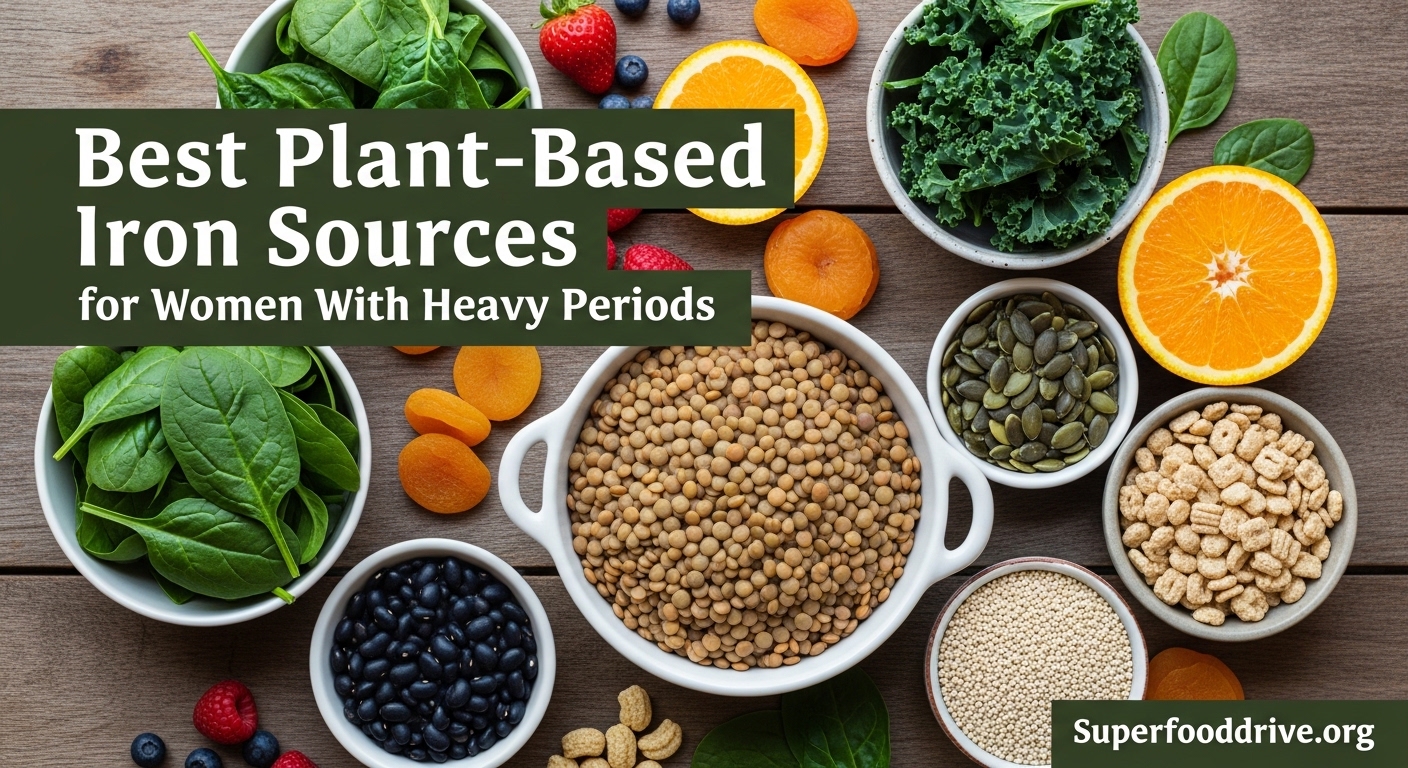
If you deal with heavy periods, you already know the exhaustion that hits around day two. I have been there. The fatigue, the dizziness, the feeling that your energy has been vacuumed out of your body. For women eating plant-based, the challenge gets harder because the iron in plants does not absorb as easily as the iron in meat.
That is why I put together this guide on the Best Plant-Based Iron Sources for Women With Heavy Periods. You will learn which foods pack the most iron, how to absorb it better, and practical ways to eat that do not require a nutrition degree. Whether you are fully vegan, vegetarian, or just cutting back on meat, this article gives you the tools to keep your iron levels steady even during your heaviest flow days.
By the end, you will know exactly what to put on your plate, what to pair it with, and what to avoid. You will also understand why some women need more iron than others, and when it is time to talk to a doctor about supplementation.
Table of Contents
Heme vs Non-Heme Iron: What Plant-Based Women Need to Know
Iron comes in two forms, and understanding the difference is the first step to fixing your levels.
Heme iron comes from animal sources like beef, chicken, and fish. Your body absorbs it easily because the iron is already bound to hemoglobin and myoglobin. About 15-35% of the heme iron you eat gets absorbed. This means if you eat 10 mg of heme iron from beef, your body might absorb up to 3.5 mg.
Non-heme iron comes from plant sources like beans, spinach, and seeds. This is the only iron available on a plant-based diet. The catch? Your body only absorbs 2-20% of it. That wide range depends on what else you eat at the same meal. Eat beans with coffee, and you might absorb 2%. Eat beans with bell peppers, and that jumps to 15% or more.
This lower absorption rate does not mean plant-based eaters cannot meet their iron needs. It just means you need strategy. You need more iron-rich foods per meal, and you need to pair them with absorption boosters. The rest of this guide shows you exactly how to do that.
Understanding this distinction matters because many doctors and nutrition guides assume you are eating meat. They recommend 18 mg of iron daily without accounting for the fact that plant iron works differently in your body. If you are eating only non-heme sources, you may need to aim for higher total iron intake to compensate for lower absorption rates.
How Much Iron Do Women with Heavy Periods Actually Need?
The standard recommended daily allowance for women aged 19-50 is 18 mg per day. That number jumps to 27 mg during pregnancy. But those numbers assume average menstrual blood loss and typical iron absorption.
Here is what most guides do not tell you. Women with heavy menstrual bleeding lose significantly more iron than the average. A normal period loses about 30-40 ml of blood. A heavy period can lose 80 ml or more. Some women with menorrhagia lose over 100 ml per cycle.
That extra blood means extra iron loss. You lose roughly 1 mg of iron for every 10 ml of blood lost beyond the normal range. If you are losing 80 ml monthly instead of 40 ml, you are essentially losing an extra 4 mg of iron per cycle. Over a year, that adds up to nearly 50 mg of iron just from periods alone. This is why many women with heavy flows need closer to 25-30 mg of iron daily during menstruating years.
Your ferritin level matters too. Ferritin measures your iron stores. Many doctors consider anything above 15 ng/mL normal, but for energy and symptom relief, women often need levels above 50 ng/mL. If your ferritin is 20 ng/mL, you might technically not be anemic, but you could still feel exhausted and foggy.
Getting your ferritin tested is simple. Ask your doctor for a ferritin test, not just a complete blood count. The CBC only shows if you are anemic right now. Ferritin shows how much iron you have in reserve. Women with heavy periods should check ferritin every six months.
Best Plant-Based Iron Sources for Women With Heavy Periods
These are the most iron-dense plant foods you can eat, organized by category and ranked by practical value for women with heavy periods. Each entry includes the milligrams of iron per serving so you can track your intake throughout the day.
1. Lentils (6.6 mg per cooked cup)
Lentils are the iron powerhouse of the plant world. One cup of cooked lentils delivers 6.6 mg of iron, more than a third of your daily target. They are also packed with protein and fiber, which helps stabilize blood sugar during that time of the month when cravings hit hard.
Red lentils cook in 15 minutes, making them perfect for quick meals when you are tired. Green and brown lentils hold their shape better for salads and grain bowls. Black lentils, sometimes called beluga lentils, have a similar iron content and add visual appeal to dishes.
I keep cooked lentils in my fridge all week during my period. I toss them into salads, warm them up with broth for instant soup, or mash them with spices for quick patties. Having them ready means I actually eat them instead of reaching for convenience foods.
2. Spinach (6.4 mg per cooked cup)
Cooked spinach contains 6.4 mg of iron per cup, nearly triple the amount in raw spinach. Cooking breaks down oxalates, compounds that can block iron absorption. This makes cooked spinach significantly more valuable than raw for iron purposes.
Saute spinach with garlic and olive oil, or blend it into soups and stews. Frozen spinach works just as well as fresh and saves prep time. I buy frozen chopped spinach in bags and add handfuls to everything from pasta sauce to curry.
The vitamin C in lemon juice helps offset any remaining oxalates. Always squeeze fresh lemon over cooked spinach right before eating. The acidity also brightens the flavor.
3. Tofu (6.3 mg per half block)
A half-block of firm tofu delivers 6.3 mg of iron. Tofu is also high in calcium and protein, making it a complete meal base. The iron in tofu is particularly well-absorbed compared to other plant sources.
Extra-firm tofu works best for stir-fries and bowls. Press it first to remove excess water, then cube and pan-fry until golden. Silken tofu blends into smoothies for a protein boost without changing the flavor or texture.
Tofu takes on the flavor of whatever you cook it with. Marinate it in soy sauce, ginger, and garlic before cooking for extra depth. The calcium in tofu does not significantly block iron absorption when eaten with vitamin C-rich vegetables.
4. Kidney Beans (5.3 mg per cooked cup)
Kidney beans offer 5.3 mg of iron per cup along with resistant starch that feeds good gut bacteria. They are filling, affordable, and work in everything from chili to salads. The deep red color comes from anthocyanins, which have anti-inflammatory benefits.
Canned kidney beans are just as nutritious as dried and save hours of cooking time. Rinse them well to reduce sodium. One can typically contains about 1.5 cups of beans, giving you nearly 8 mg of iron total.
Kidney beans pair beautifully with tomatoes, which add vitamin C to boost iron absorption. Classic chili combines both, making it an ideal heavy-period meal.
5. Pumpkin Seeds (4.2 mg per ounce)
One ounce of pumpkin seeds, about a small handful or quarter cup, contains 4.2 mg of iron. They are also rich in zinc and magnesium, two minerals that support hormonal balance and cramp relief. The zinc content is particularly valuable for women, as zinc supports progesterone production.
Keep a bag of pumpkin seeds in your desk or bag for easy snacking. They also make a great topping for oatmeal, yogurt, and salads. I blend them into smoothies for a nutty flavor and extra minerals.
Raw pumpkin seeds contain the most nutrients, but roasted ones still pack plenty of iron. Look for dry-roasted without added oils if you are watching fat intake.
6. Quinoa (2.8 mg per cooked cup)
Quinoa provides 2.8 mg of iron per cooked cup plus all nine essential amino acids, making it a complete protein. It is gluten-free and cooks in just 15 minutes. The iron in quinoa absorbs better than many other grains.
Use quinoa as a base for grain bowls, mix it into soups, or serve it as a side dish instead of rice. Red quinoa holds its shape better, while white quinoa cooks up fluffier. Both offer the same iron content.
Rinse quinoa before cooking to remove saponins, natural compounds that can taste bitter. Toast it in a dry pan for a minute before adding liquid for a nuttier flavor.
7. Blackstrap Molasses (3.5 mg per tablespoon)
Blackstrap molasses is the dark, thick syrup left after sugar processing. One tablespoon contains 3.5 mg of iron along with calcium and potassium. It has a strong, slightly bitter flavor that works well in baking and oatmeal.
Stir a tablespoon into warm oatmeal or use it to sweeten smoothies. The mineral content makes it far more nutritious than regular sugar or maple syrup. It also contains copper, which helps your body use the iron properly.
Look for organic unsulphured blackstrap molasses. The sulphured version has added chemicals that some people prefer to avoid. Store it in a cool pantry, not the refrigerator, where it becomes too thick to pour.
8. Fortified Cereals (varies by brand)
Many breakfast cereals are fortified with 18 mg of iron or more per serving. Check the nutrition label because amounts vary widely. Some brands pack 100% of your daily iron in one bowl. These cereals offer an easy way to hit your iron target quickly, especially on busy mornings.
Pair fortified cereal with orange juice or berries to boost absorption with vitamin C. Avoid drinking coffee or tea with breakfast, as they block iron absorption. If you need caffeine, wait at least an hour after eating.
Fortified cereals are particularly helpful when your energy is lowest and cooking feels impossible. Keep a box in your pantry for those mornings when even scrambling tofu sounds like too much work.
9. Sesame Seeds (2.7 mg per 2 tablespoons)
Two tablespoons of sesame seeds contain 2.7 mg of iron. Tahini, made from ground sesame seeds, offers similar amounts and works well in dressings, dips, and sauces. The tahini version is often easier to incorporate into meals.
Sprinkle sesame seeds on stir-fries, salads, or avocado toast. Tahini makes an excellent base for creamy dressings and sauces. Mix tahini with lemon juice, garlic, and water for a simple sauce that works on everything from roasted vegetables to grain bowls.
Toasted sesame seeds have a stronger flavor than raw. Both work for iron intake, so choose based on your taste preference.
10. Dark Chocolate (3.3 mg per ounce)
One ounce of dark chocolate with 70% cacao or higher contains 3.3 mg of iron. It also provides magnesium, which can help with period cramps and mood. The flavonoids in dark chocolate may also support blood flow.
Choose chocolate with minimal added sugar. A square or two after dinner gives you an iron boost along with your dessert. The higher the cacao percentage, the more iron and magnesium you get.
Dutch-processed cocoa has lower iron than natural cocoa because of the alkalizing process. For maximum iron, choose natural unsweetened cocoa powder or high-cacao chocolate bars.
Vitamin C Pairing: The Secret to Absorbing Plant-Based Iron
Here is the strategy that makes plant-based iron actually work. Vitamin C transforms non-heme iron into a form your body can absorb easily. Studies show that consuming just 25 mg of vitamin C with your iron-rich meal can double or triple absorption rates.
The mechanism is simple. Vitamin C converts ferric iron (Fe3+) to ferrous iron (Fe2+), which is more soluble and easier for your intestines to take up. Without this conversion, much of the iron in your plant foods passes right through you. This is why vegetarians who eat plenty of iron-rich foods can still be deficient if they are not pairing strategically.
Best Vitamin C Sources to Pair with Iron
These foods deliver enough vitamin C to significantly boost iron absorption:
Red bell peppers (95 mg per cup), broccoli (81 mg per cup), strawberries (85 mg per cup), oranges (70 mg per fruit), kiwi (64 mg per fruit), tomatoes (17 mg per medium tomato), and lemon juice (6 mg per tablespoon).
You do not need massive amounts. Just 25-50 mg of vitamin C does the trick. That is about a quarter cup of bell peppers or half a cup of strawberries. Small amounts of vitamin C-rich foods make a big difference.
Practical Pairing Examples
Lentil soup with tomatoes and bell peppers. Spinach salad with strawberries and lemon dressing. Tofu stir-fry with broccoli and red peppers. Black bean tacos with salsa and lime. Quinoa bowl with roasted peppers and lemon tahini dressing.
Timing matters too. The vitamin C needs to be in your stomach at the same time as the iron. Taking a vitamin C supplement two hours later will not help. Eat them together in the same meal.
Some foods naturally contain both iron and vitamin C. Broccoli, kale, and bok choy offer both minerals in one package. These are perfect foods for heavy period days.
Foods and Drinks That Block Iron Absorption (Avoid These)
Just as some foods boost absorption, others block it. Knowing what to avoid is just as important as knowing what to eat. These blockers can reduce iron absorption by 50% or more.
Phytates in Whole Grains and Legumes
Phytates are compounds found in whole grains, legumes, nuts, and seeds. They bind to iron and prevent absorption. This creates a frustrating paradox: the foods highest in iron also contain phytates that block it.
The solution is preparation. Soaking beans, lentils, and grains for 8-12 hours before cooking reduces phytates significantly. Sprouting and fermenting also help. Sourdough bread has lower phytates than regular bread because of the fermentation process.
Canned beans are lower in phytates than dried because the canning process involves soaking. If you use dried beans, always soak them overnight and discard the soaking water before cooking.
Coffee and Tea
Both coffee and tea contain polyphenols and tannins that block iron absorption. One cup of coffee can reduce iron absorption by up to 60% when consumed with a meal. Tea has a similar effect, especially black tea.
Wait at least one hour after eating before drinking coffee or tea. If you need caffeine in the morning, have your iron-rich breakfast first, then your coffee later. Herbal teas without tannins, like peppermint or ginger, do not block absorption as much.
Green tea blocks iron too, though slightly less than black tea. Matcha is particularly high in tannins. Save your tea for between meals.
Calcium Supplements and Dairy
Calcium competes with iron for absorption in the intestines. Taking a calcium supplement with an iron-rich meal can cut iron absorption by 50% or more. This is true for dairy calcium and supplemental calcium.
Space calcium supplements and high-calcium foods at least two hours away from your iron-rich meals. If you take both supplements, take iron in the morning and calcium at night. If you eat dairy, have it at a different meal than your iron sources.
Plant milks fortified with calcium count too. Check labels on your oat or almond milk. If they are calcium-fortified, they could be blocking iron absorption at breakfast.
High-Oxalate Foods
Raw spinach, beet greens, and Swiss chard contain oxalates that bind iron. This is why cooked spinach delivers more available iron than raw. Cooking breaks down oxalates and frees up the iron.
If you eat these greens raw in smoothies, pair them with extra vitamin C to compensate for the oxalates. Adding lemon juice or mango helps offset the binding effect. You can also lightly steam the greens first, then freeze them for smoothies.
Seed Cycling and Iron-Rich Superfoods for Hormonal Balance
Seed cycling is a practice of eating specific seeds during different phases of your menstrual cycle to support hormone balance. What many women do not realize is that these same seeds are also excellent sources of iron.
Follicular Phase (Days 1-14): Pumpkin and Flax Seeds
During the first half of your cycle, pumpkin and flax seeds support estrogen production. One ounce of pumpkin seeds contains 4.2 mg of iron. Flax seeds add lignans, which help balance estrogen levels and reduce heavy bleeding for some women.
Grind flax seeds fresh for best absorption. Add both seeds to smoothies, oatmeal, or yogurt bowls. The omega-3 fatty acids in flax also support hormone health and reduce inflammation.
Some women notice their periods become lighter after two to three months of consistent seed cycling. The iron in pumpkin seeds helps replace what you lose during this phase.
Luteal Phase (Days 15-28): Sesame and Sunflower Seeds
During the second half, sesame and sunflower seeds support progesterone. Sesame seeds contain 2.7 mg of iron per 2 tablespoons. Sunflower seeds add vitamin E and zinc.
Tahini, made from sesame seeds, makes an easy addition to dressings and sauces during this phase. The zinc in sesame seeds supports progesterone production, which can help with PMS symptoms.
Progesterone helps regulate the menstrual cycle. Low progesterone can contribute to heavy bleeding. Supporting progesterone production may indirectly help with iron loss.
The Iron Bonus
Whether or not you follow seed cycling strictly, incorporating these seeds into your diet boosts your iron intake while providing healthy fats and minerals. Pumpkin and sesame seeds are particularly iron-dense.
I keep a jar of mixed pumpkin and sesame seeds on my counter and sprinkle them on everything during my period week. It takes no extra effort, and I know I am getting minerals that support both iron levels and hormones.
Start with one tablespoon of seeds daily and work up to two tablespoons. Some women notice digestive changes at first, so increase gradually.
Iron-Boosting Meal Ideas for Heavy Period Days
Here are practical meals that combine high-iron foods with vitamin C boosters. These are meals I actually eat when my energy is lowest and cooking feels hardest. Each one delivers at least 8 mg of iron per serving.
Breakfast Options
Iron-fortified oatmeal: Cook oats in fortified oat milk. Top with pumpkin seeds, blackstrap molasses, and sliced strawberries. The molasses and seeds provide iron. The strawberries add vitamin C. This takes five minutes and keeps me full for hours.
Tofu scramble: Scramble firm tofu with spinach, tomatoes, and red bell peppers. Serve with whole grain toast. The tofu and spinach deliver iron. The tomatoes and peppers provide vitamin C. Add turmeric for color and anti-inflammatory benefits.
Smoothie bowl: Blend spinach, frozen mango, and orange juice. Top with pumpkin seeds and tahini drizzle. The spinach and seeds add iron. The orange juice and mango provide vitamin C. Freeze spinach in cubes for easy blending.
Lunch Options
Lentil soup: Simmer red lentils with tomatoes, carrots, and kale. Squeeze fresh lemon over the top before eating. Lentils and kale provide iron. Tomatoes and lemon boost absorption. Make a big batch on Sunday and reheat all week.
Quinoa power bowl: Combine quinoa with roasted broccoli, chickpeas, and red peppers. Dress with lemon tahini sauce. Quinoa and chickpeas deliver iron. Broccoli, peppers, and lemon provide vitamin C. Roast vegetables in batches for easy assembly.
Spinach salad: Toss cooked lentils with fresh spinach, strawberries, and walnuts. Dress with orange vinaigrette. Lentils and spinach provide iron. Strawberries and orange add vitamin C. The walnuts add healthy fats for hormone support.
Dinner Options
Black bean tacos: Stuff corn tortillas with black beans, sauteed peppers and onions, and fresh salsa. Squeeze lime over everything. Black beans provide iron. Peppers, salsa, and lime add vitamin C. Add avocado for healthy fats.
Tofu stir-fry: Stir-fry tofu with broccoli, snap peas, and bok choy. Serve over brown rice. Season with ginger and garlic. Tofu and bok choy deliver iron. Broccoli provides vitamin C. Use coconut aminos instead of soy sauce for a cleaner ingredient list.
Chickpea curry: Simmer chickpeas with tomatoes, spinach, and coconut milk. Serve with quinoa or brown rice. Chickpeas and spinach provide iron. Tomatoes add vitamin C. The turmeric and ginger reduce inflammation.
Snack Ideas
Trail mix with pumpkin seeds and dried apricots. Hummus (chickpeas equal iron) with red pepper strips (vitamin C). Dark chocolate with orange slices. Tahini on rice cakes with sliced strawberries. Energy balls made with dates, pumpkin seeds, and cocoa powder.
Keep snacks ready for when hunger hits during your period. Having iron-rich options available prevents reaching for empty calories that do not support your energy needs.
When Food Is Not Enough: Signs You Need an Iron Supplement
Sometimes diet alone cannot replace what heavy periods take away. Here is how to know when to consider supplementation beyond food.
Warning Signs of Iron Deficiency
Extreme fatigue that sleep does not fix. Pale skin, especially inside your lower eyelid. Shortness of breath during normal activity like climbing stairs. Dizziness or lightheadedness when standing. Brittle nails that spoon or crack. Unusual cravings for ice, dirt, or starch.
If you have these symptoms, get a blood test before starting supplements. Ask for a ferritin test specifically, not just hemoglobin. Hemoglobin can be normal while ferritin is tanked.
Some women experience restless leg syndrome with low iron. Others notice hair shedding or brain fog. Track your symptoms and share them with your doctor.
When Supplements Make Sense
Your ferritin is below 30 ng/mL and you have symptoms. You have been eating iron-rich foods consistently for three months without improvement. Your doctor confirms deficiency through blood work.
Choose ferrous bisglycinate or iron bisglycinate forms, which absorb better and cause less stomach upset than ferrous sulfate. These chelated forms are gentler on the digestive system.
Start with a lower dose and increase gradually. Taking 325 mg of ferrous sulfate at once often causes nausea and constipation. Splitting doses or choosing gentler forms works better for many women.
Supplement Timing
Take iron supplements on an empty stomach with vitamin C for best absorption. Avoid taking them with calcium, coffee, or tea. Many women tolerate evening dosing better than morning.
Work with a healthcare provider to retest your levels every three months while supplementing. Too much iron can be harmful. Your goal is ferritin above 50 ng/mL, not just out of the deficiency range.
Do not stop supplements the moment you feel better. It takes months to rebuild iron stores. Your doctor can guide you on how long to continue.
Frequently Asked Questions
How to increase iron during a heavy period?
Focus on eating iron-rich plant foods like lentils, spinach, and pumpkin seeds at every meal. Pair them with vitamin C sources like bell peppers, citrus, or strawberries to boost absorption. Avoid coffee and tea for at least one hour after eating. Consider a supplement if your ferritin levels are low.
What to eat when your period is extremely heavy?
Eat lentils or beans with tomatoes and peppers, cooked spinach with lemon, or tofu with broccoli. These combinations provide iron plus vitamin C for absorption. Include pumpkin seeds as snacks. Stay hydrated and avoid coffee around meals.
Can you get enough iron from plants alone?
Yes, but it requires strategy. You need to eat more iron-rich foods than meat-eaters because plant iron absorbs at lower rates. Pair every iron source with vitamin C. Soak beans and grains to reduce phytates. Get your ferritin tested regularly if you have heavy periods.
What do you crave when your iron is low?
Many women with low iron crave ice, starch like uncooked pasta or cornstarch, or non-food items like dirt or clay. This condition is called pica. If you have these cravings, get your iron and ferritin levels checked immediately.
Conclusion
Heavy periods drain more than your patience. They drain your iron stores, your energy, and your ability to function at full capacity. But with the right plant-based foods and smart pairing strategies, you can rebuild those stores naturally.
The Best Plant-Based Iron Sources for Women With Heavy Periods are lentils, spinach, tofu, beans, and seeds. The secret to making them work is vitamin C pairing at every meal. Avoid coffee and tea around eating times. Consider seed cycling for hormonal bonus benefits. And know when to ask for help if food alone is not enough.
Start with one change this week. Add pumpkin seeds to your breakfast. Swap your coffee timing. Make one lentil soup. Small steps add up to better iron levels and easier periods over time. You deserve to feel energized, even during that time of the month.