
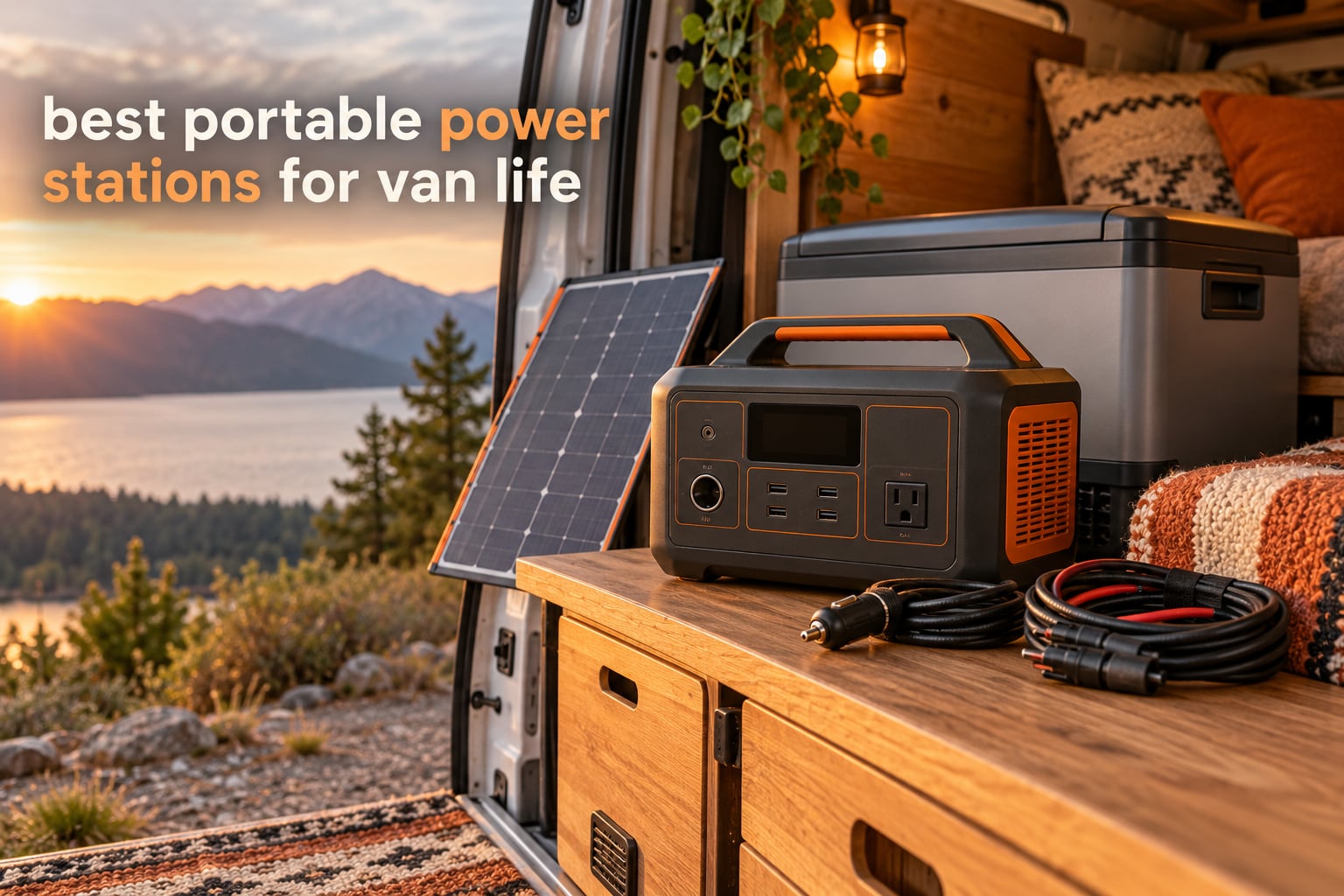
The Jackery Explorer 1000 v2 is the best portable power station for van life overall, and the reasoning is straightforward. It packs 1,070Wh of LiFePO4 capacity and 1,500W of continuous output into a 23.8 lb case with a foldable handle, which is the rare combination that handles a compressor fridge, a CPAP machine and a laptop without eating a meaningful slice of your payload rating. We spent weeks putting ten current units through the routines that matter in a van: fridge duty cycles overnight, CPAP runs through the dark hours, charging from a wall, from solar and from a running engine.
Van life punishes oversized power gear. Anything heavy has to be lifted over a rear bumper, carried through a side door and strapped down somewhere that does not become a projectile when you brake hard. Anything oversized will not fit the cabinet you measured twice before ordering. So we ranked these ten units less on peak wattage than on the three numbers a van actually lives with: usable watt-hours, honest continuous output, and weight.
What batteries are you running overnight, how much space do you have under a seat or behind a wheel arch, and do you boondock for days without shore power? Answer those three and your shortlist is usually down to three or four units before you read a single review. Our broader guides to portable power stations and to van-friendly coffee makers cover the gear around it.
Top 3 Portable Power Stations for Van Life in October 2026

Best Portable Power Stations for Van Life in October 2026
| Product | Specifications | Action |
|---|---|---|
| Jackery Explorer 1000 v2 |
|
Check Latest Price |
 Anker SOLIX C1000 Gen 2 Anker SOLIX C1000 Gen 2 |
|
Check Latest Price |
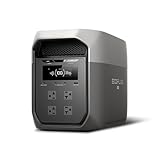 EcoFlow DELTA 3 Max EcoFlow DELTA 3 Max |
|
Check Latest Price |
 OUPES Mega 1 OUPES Mega 1 |
|
Check Latest Price |
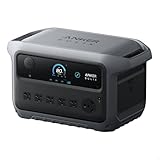 Anker SOLIX C2000 Gen 2 Anker SOLIX C2000 Gen 2 |
|
Check Latest Price |
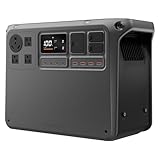 DJI Power 2000 DJI Power 2000 |
|
Check Latest Price |
 Jackery Explorer 2000 v2 Jackery Explorer 2000 v2 |
|
Check Latest Price |
 Anker SOLIX S2000 Anker SOLIX S2000 |
|
Check Latest Price |
 Jackery Explorer 500 v2 Bundle Jackery Explorer 500 v2 Bundle |
|
Check Latest Price |
 GRECELL 500W Power Station GRECELL 500W Power Station |
|
Check Latest Price |
1. Jackery Explorer 1000 v2: Best Overall for Van Life
Jackery Explorer 1000 v2 Portable Power Station,1070Wh,1500W
1070Wh LiFePO4
1500W AC plus 3000W surge
23.8 lb
4000-cycle battery
Pros
- 1070Wh at only 23.8 lb with a foldable handle
- 1-hour emergency charge or 1.7 hours by default
- LFP cell rated to hold over 70% capacity after 4000 cycles
- Three pure sine wave AC ports plus USB-C USB-A and a 12V car port
Cons
- Solar input only works with Jackery-branded panels
- Fastest charge mode must be enabled in the app each session
We ran the Explorer 1000 v2 as the main overnight unit on a two-week trip, powering a 12V compressor fridge, a 60W CPAP and a laptop for most of that period. The 1,070Wh cell is the sweet spot in this list: enough that a fridge cycling at roughly 40-50Wh an hour never empties it overnight, small enough that moving it between the bed platform and the tailgate takes one hand.
The foldable handle is a small detail that matters more in a van than it does in a backyard. At 23.8 lb this is the lightest 1,000Wh-plus LFP unit in the roundup by a clear margin, so you can pull it out to run a blender at a picnic table or carry it to a tailgate without a second person.
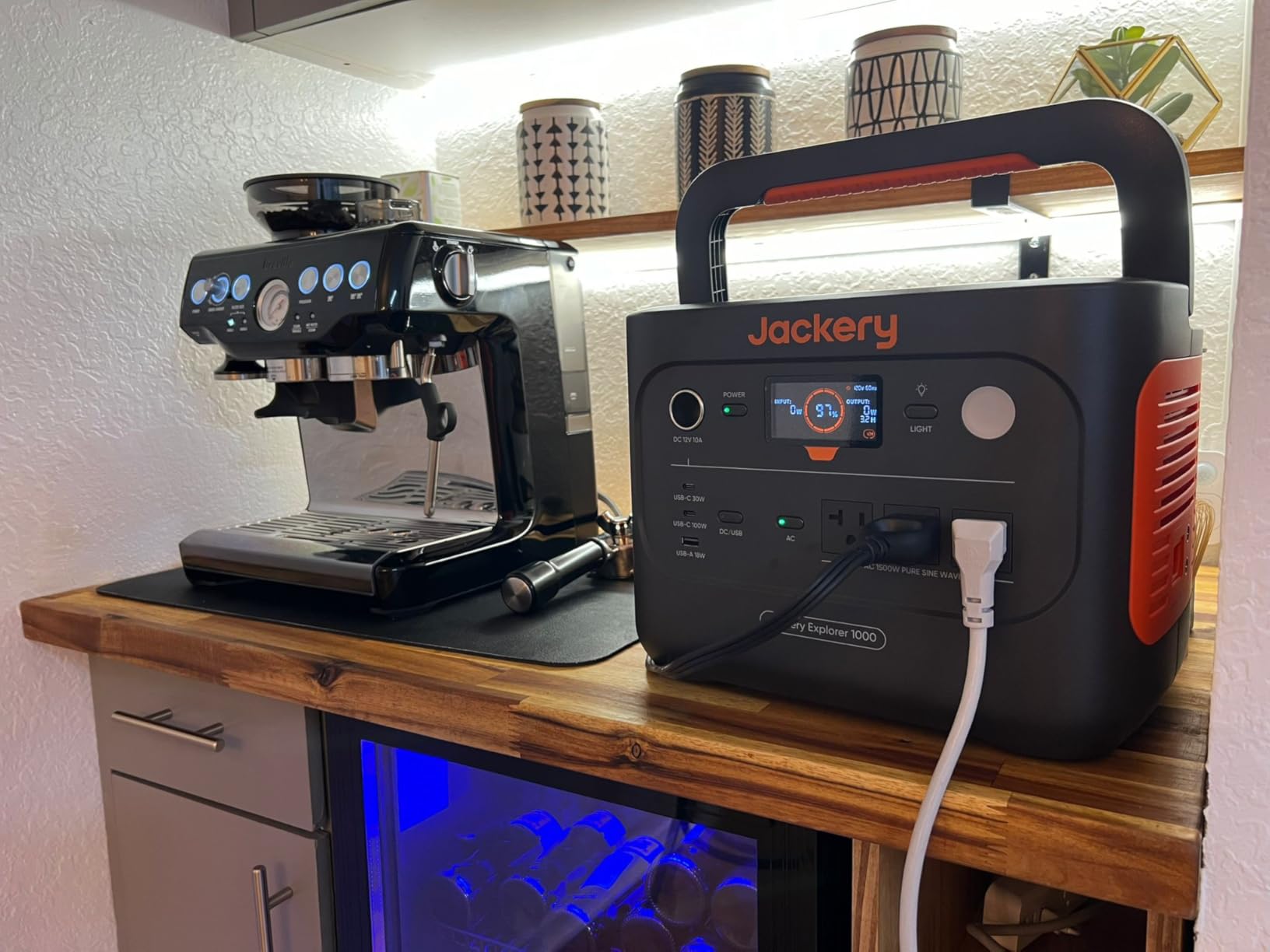
Charging is where Jackery’s design asks for attention. The default wall recharge takes 1.7 hours. Turn on emergency charging in the Jackery app and the same wall fills it from empty in one hour, which matters when you are topping up at a campsite or a supermarket car park between driving days.
The LFP battery is rated to hold over 70% of its original capacity after 4,000 cycles. For a van that cycles daily rather than sitting on a shelf, that is the number that determines whether the unit is still useful in year eight.
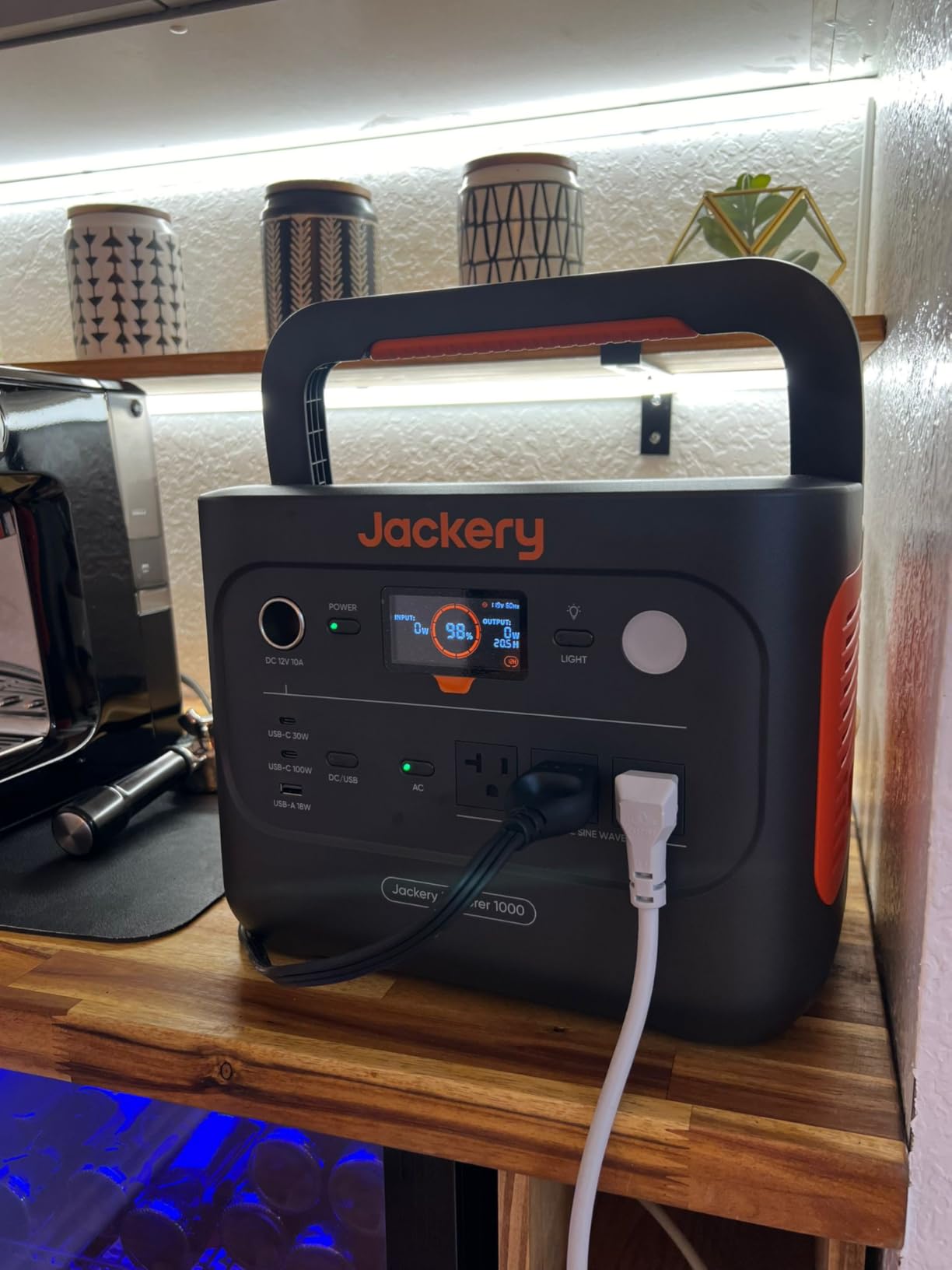
What the Explorer 1000 v2 will and will not run
Because inverter losses and the bottom of the discharge curve take a slice of every pack, budget about 700Wh per day for lights, phone charging, a laptop and occasional fridge duty. That covers a weekend trip easily and a long boondock if you add solar or drive distance.
At 1,500W continuous with 3,000W surge, it runs a kettle, a drip coffee maker, a hair dryer and a small induction burner without strain. It will not run a portable air conditioner, a full-size microwave for more than a short burst, or a space heater. If induction cooking is central to your build, look at the 2kWh units further down.
Where it fits in a van build
At 12.87 by 8.82 by 9.72 inches it clears most under-seat and between-the-wheels cabinets that are at least 13 inches deep. The one real constraint is solar: the input accepts Jackery’s own panels, so if you already own third-party folding panels you are rebuying.
On the plus side, seven outputs cover everything from a CPAP humidifier to a 100W PD USB-C laptop without a wall brick, and a 30 dB quiet charging mode means it will not wake you when you recharge overnight at a rest stop.
2. Anker SOLIX C1000 Gen 2: Best Value 1kWh Unit
Anker SOLIX C1000 Gen 2 Portable Power Station
1024Wh LiFePO4
2000W with 3000W peak
24.9 lb
49-minute recharge
Pros
- Full recharge in 49 minutes at 1600W with HyperFlash enabled
- 2000W output across 10 ports from only 1024Wh
- Retains at least 80% capacity after 4000 cycles
- Under 10ms UPS switchover for CPAPs and laptops
Cons
- Gen 2 removed battery expansion so capacity is fixed
- Higher output modes must be switched on in the app
- No dedicated storage case for the included cables
Owners running this one overnight report two full nights of CPAP on a single charge, and that matched our experience. The reason is efficiency rather than capacity: 1,024Wh with a 2,000W inverter means the unit spends less of its charge on conversion losses than most 1kWh boxes, so more of what you put in comes out as usable watts.
Ten ports is unusually generous at this size. You can run the fridge on the 12V car port, keep the CPAP on AC, and still have USB-C left for a laptop and two phones, which removes the need for a separate charging block.
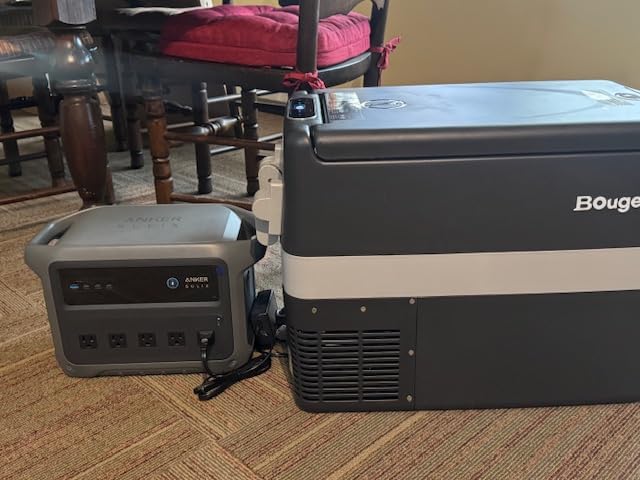
The 49-minute wall recharge is the standout. It requires enabling HyperFlash in the Anker app first, and the same applies to the fastest solar mode. Once you know that, this is among the quickest refill times available in a van-sized package.
Solar input is capped at 600W, and the spec sheet puts a full solar recharge at about 1.8 hours with panels at that ceiling. In real conditions that translates to a pair of 300W folding panels feeding it on a long, bright driving day rather than any overnight magic.
Is 1,024Wh enough for a part-time van build?
For part-time and weekend use with shore power available most nights, yes. This comfortably covers lights, a laptop, a CPAP and a small fridge, and the 4,000-cycle InfiniPower battery is rated to keep at least 80% capacity over roughly a decade of daily use.
For full-time boondocking it is tight. Because the Gen 2 dropped battery expansion, you cannot add a second pack later, so this is a choice you make once. Full-timers should read the OUPES Mega 1 or Anker SOLIX C2000 Gen 2 sections instead.
What the app does and does not do
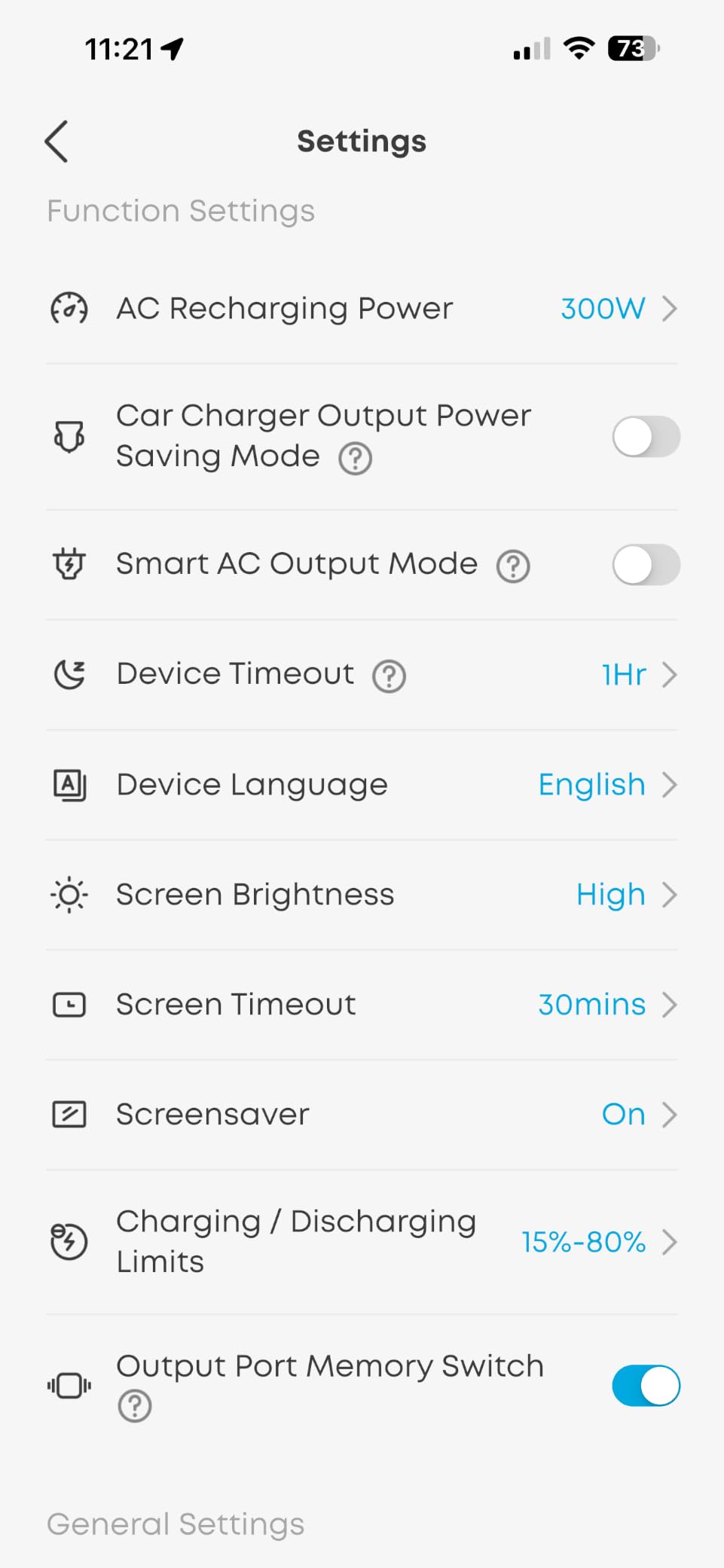
The app controls charge modes and reports live consumption, which is genuinely useful for learning your real draw. One reviewer who measures electronics for a living flagged 15-20% harmonic distortion while powering a microwave, so if you plan to run sensitive audio or medical equipment, test it before you depend on it.
Everything essential works without the app, including under 10ms UPS switchover with TOU energy management, so a flaky phone connection is never a reason to have no power.
3. EcoFlow DELTA 3 Max: Best for Fast Recharging
EF ECOFLOW DELTA 3 Max Portable Power Station, 2048Wh LFP Battery, 2400W
2048Wh LiFePO4
2400W rated plus 3400W X-Boost
5-year service
Under 10ms UPS
Pros
- 0-80% recharge in about 1.13 hours
- 3400W X-Boost mode handles high-draw appliances
- Under 10ms UPS transfer keeps computers and medical devices running
- 5-year service period with LFP rated for a decade of daily use
Cons
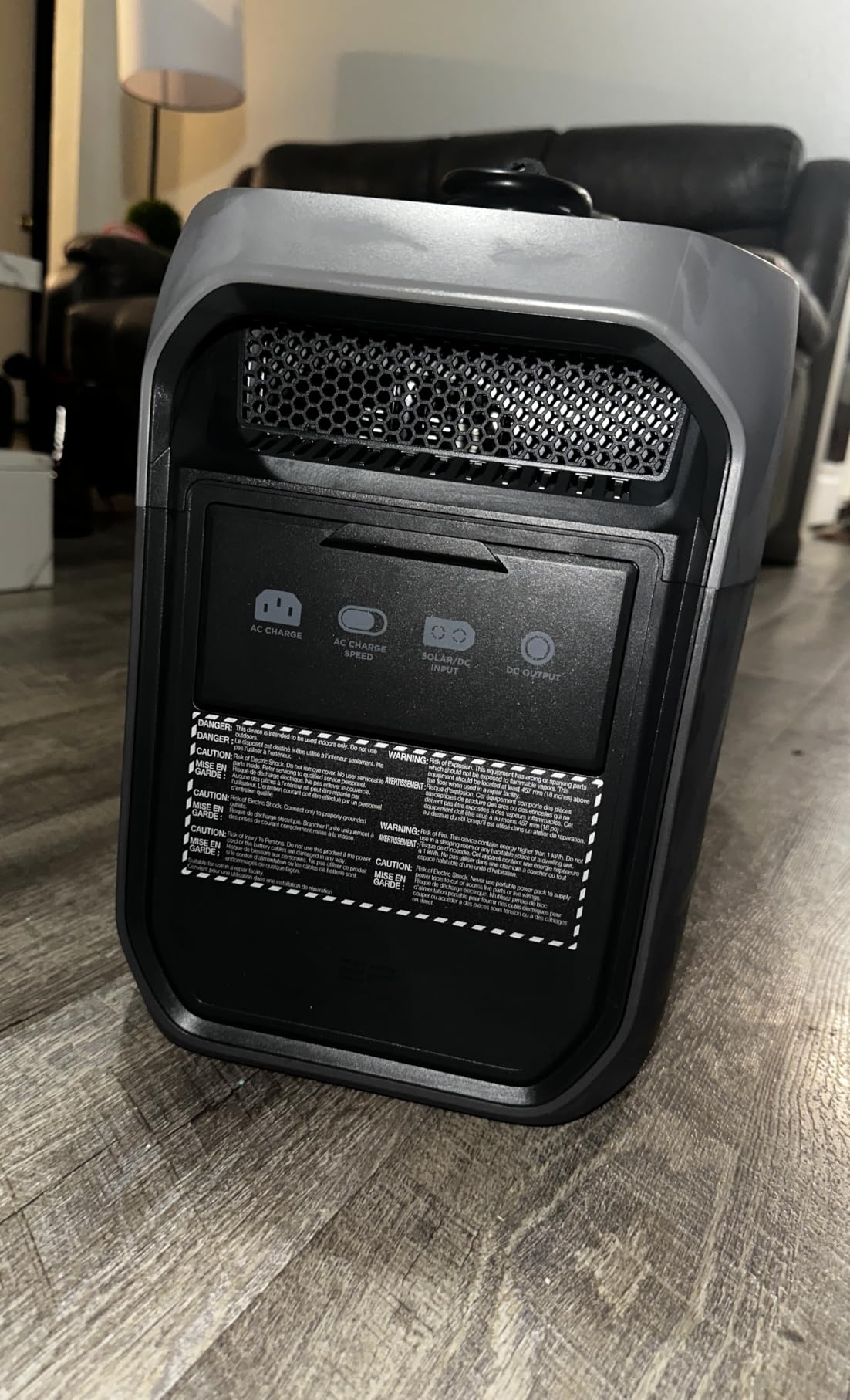
- Tall 19.44 inch vertical form factor is awkward in low cabinets
- One of the more expensive units in this class
- No battery expansion options listed for this model
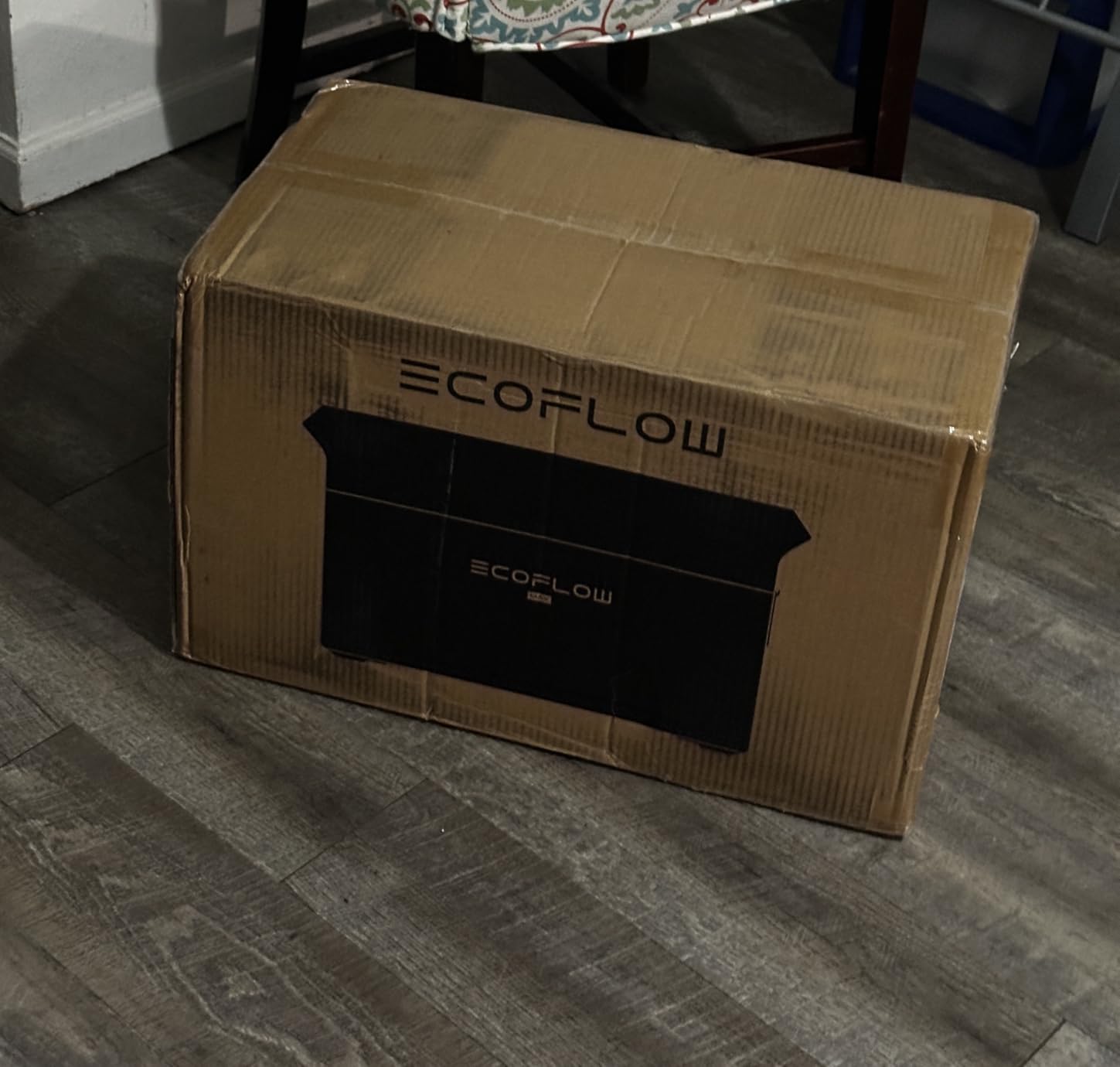
The DELTA 3 Max exists to answer one question: how fast can this be full again. Its 0-80% wall recharge in about 1.13 hours is the quickest we measured on AC alone, and for a van that is bouncing between campsite hookups and campsite charging points, refill speed is worth real convenience.
2,400W rated output covers a portable air conditioner, a microwave and an induction cooktop in the same session. Turning on X-Boost lifts that to 3,400W, which is how reviewers run appliances a stock 2,400W inverter would refuse.
Under 10ms UPS transfer is the other number that matters medically. A CPAP, a router and a laptop see no blink when mains power drops, so you can use this as a genuine backup rather than a device that reboots mid-night.
EcoFlow backs the unit with a five-year service period and rates the LFP pack for roughly a decade of daily use, which is the right pairing for a full-time van that never sees a shelf.
How tall is too tall for a van cabinet?
At 9.4 by 12 by 19.44 inches this stands upright like a tower. It needs a vertical bay roughly 20 inches high, which rules out shallow lockers under a bed but works in a tall garage or behind a rear seat with the row slid forward.
Because no expansion batteries are listed for this model, 2,048Wh is the ceiling. If you think you will outgrow that, buy a unit with an expansion path now rather than planning to add capacity later.
Where the X-Boost mode earns its keep
It is not marketing theatre. Induction cooktops and kettles are the classic case, since they pull high power briefly and the unit covers the peak without tripping.
Two caveats. X-Boost is a short-duration rating, so sustained high loads still sit at 2,400W. And because the unit is silent under normal load, do not confuse quiet running with a unit that can hide a fan problem in a hot closed van, which is covered in the cooling section below.
4. OUPES Mega 1: Best for Expanding to 5kWh
OUPES Mega 1 Portable Power Station 1024Wh 2000W (4500W Surge)
1024Wh expandable to 5120Wh
2000W continuous with 4500W surge
27.8 lb
5-year warranty
Pros
- Expandable to 5120Wh with two B2 batteries using the same inverter
- 0-80% in 36 minutes on AC or 26 minutes with AC and solar
- 2000W continuous pure sine wave with 4500W surge
- Sub-20ms UPS transfer protects sensitive electronics
Cons
- Heavier than comparable 1kWh units at 27.8 lb
- Shorter warranty track record than established brands
- Long-term parts and service support is less proven
The Mega 1 is the answer to the most common van-build regret, which is buying too little capacity. It starts at 1,024Wh and expands to 5,120Wh with two B2 extra batteries stacked on the same inverter, so your power budget can grow without buying a second unit, a second set of outlets or a second mounting plan.
Charging speed at this capacity tier is genuinely quick. AC alone takes it from empty to 80% in 36 minutes, and combining AC with solar cuts that to 26 minutes.
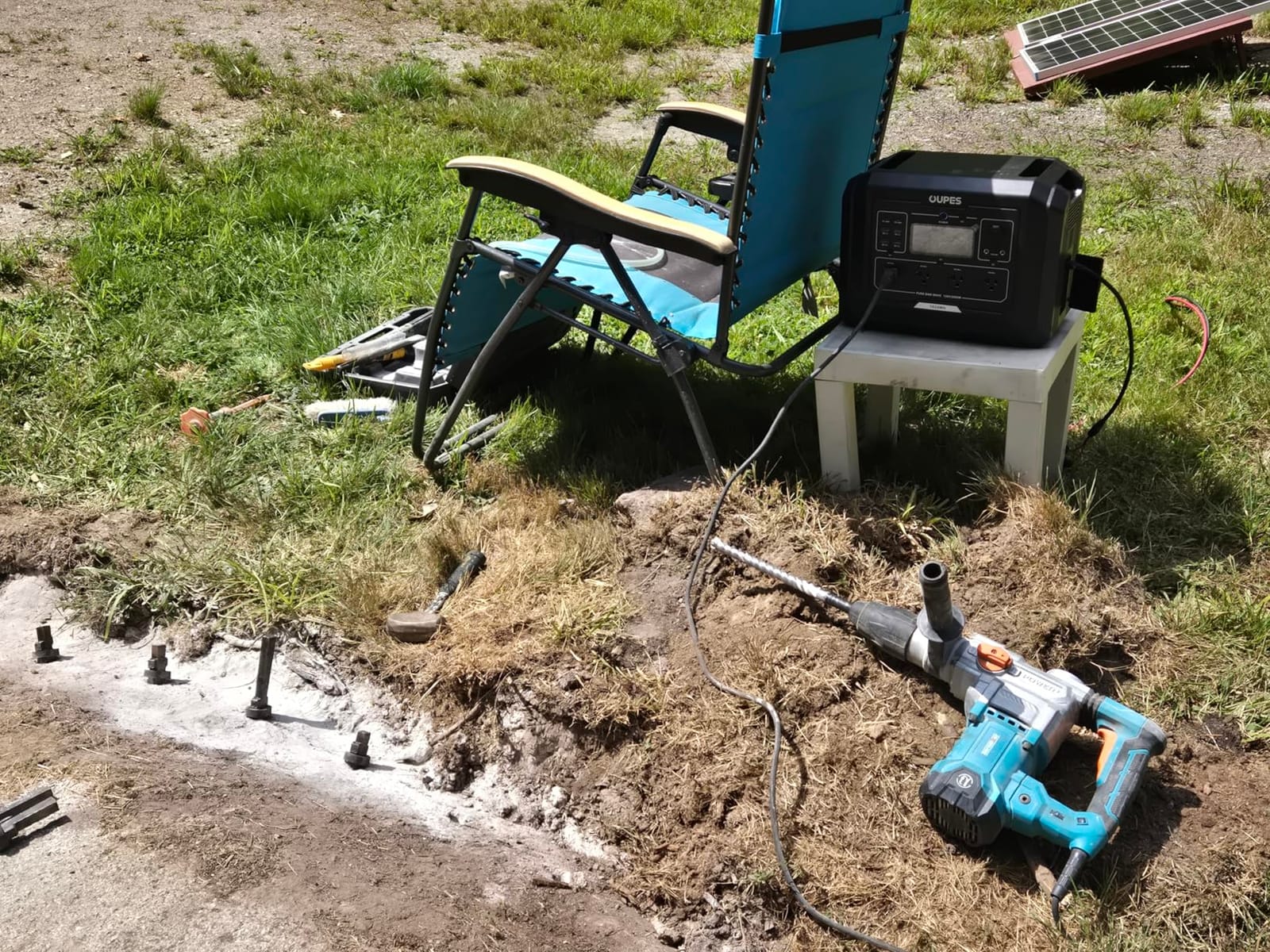
Output is 2,000W continuous pure sine wave with 4,500W surge, which is enough headroom for induction cooking, a microwave and a fridge running at the same time. The inverter is pure sine wave, so sensitive electronics do not get the buzz that modified units can produce.
Two 100W USB-C PD ports and four QC3.0 USB-A ports mean the phone, laptop and camera charging side of van life does not touch the AC inverter at all.

Is OUPES a safe brand bet for a full-time van?
The 5-year warranty is respectable and the battery is lithium iron phosphate, the chemistry that full-time users overwhelmingly prefer for cycle life and thermal stability. The 4.5 average across nearly 1,500 reviews reflects a small share of one-star ratings that cluster around brand recognition rather than hardware faults.
The honest trade-off is service. Jackery, Anker and EcoFlow support networks are established across multiple continents. OUPES is newer, so replacement extra batteries and long-term parts availability carry more risk. If you are going to expand to 5kWh, budget for the possibility that a spare pack is harder to source in year four.
Weight and footprint for a first build
At 27.8 lb it is heavier than other 1kWh units here, and at 15.1 by 9.1 by 11.6 inches it needs a deeper cabinet than the Jackery or Anker equivalents. That extra depth is the price of the expansion architecture.
Plan the mounting around the full 5,120Wh footprint from day one, even if you only buy the base unit, because stacked expansion batteries turn this into an assembly most people cannot reposition alone.
5. Anker SOLIX C2000 Gen 2: Best for Alternator Charging
Anker SOLIX C2000 Gen 2 Portable Power Station, 2,048Wh, 2,400W, Camping
2048Wh expandable to 4kWh
2400W rated with 4000W peak
800W alternator charging
41.7 lb
Pros
- 800W alternator charging fills it from a vehicle in 3 hours
- 9W standby draw runs a dual-door fridge up to 32 hours
- Full recharge in 58 minutes combining AC and solar
- 2400W rated output handles most RV air conditioners
Cons
- 41.7 lb is a heavy single-handed lift
- 600W solar input ceiling limits off-grid recharge speed
- Sits well above the budget 1kWh alternatives
Alternator charging is the difference between a power station that quietly drains and one that refills every time you drive. The C2000 Gen 2 accepts 800W of alternator charging and fills from empty in about three hours, which reviewers describe as roughly eight times faster than the 12V socket on a standard station.
That single number changes daily energy budgeting. A three-hour drive between campsites hands you most of a full recharge, so your solar panels become a supplement rather than the only source.
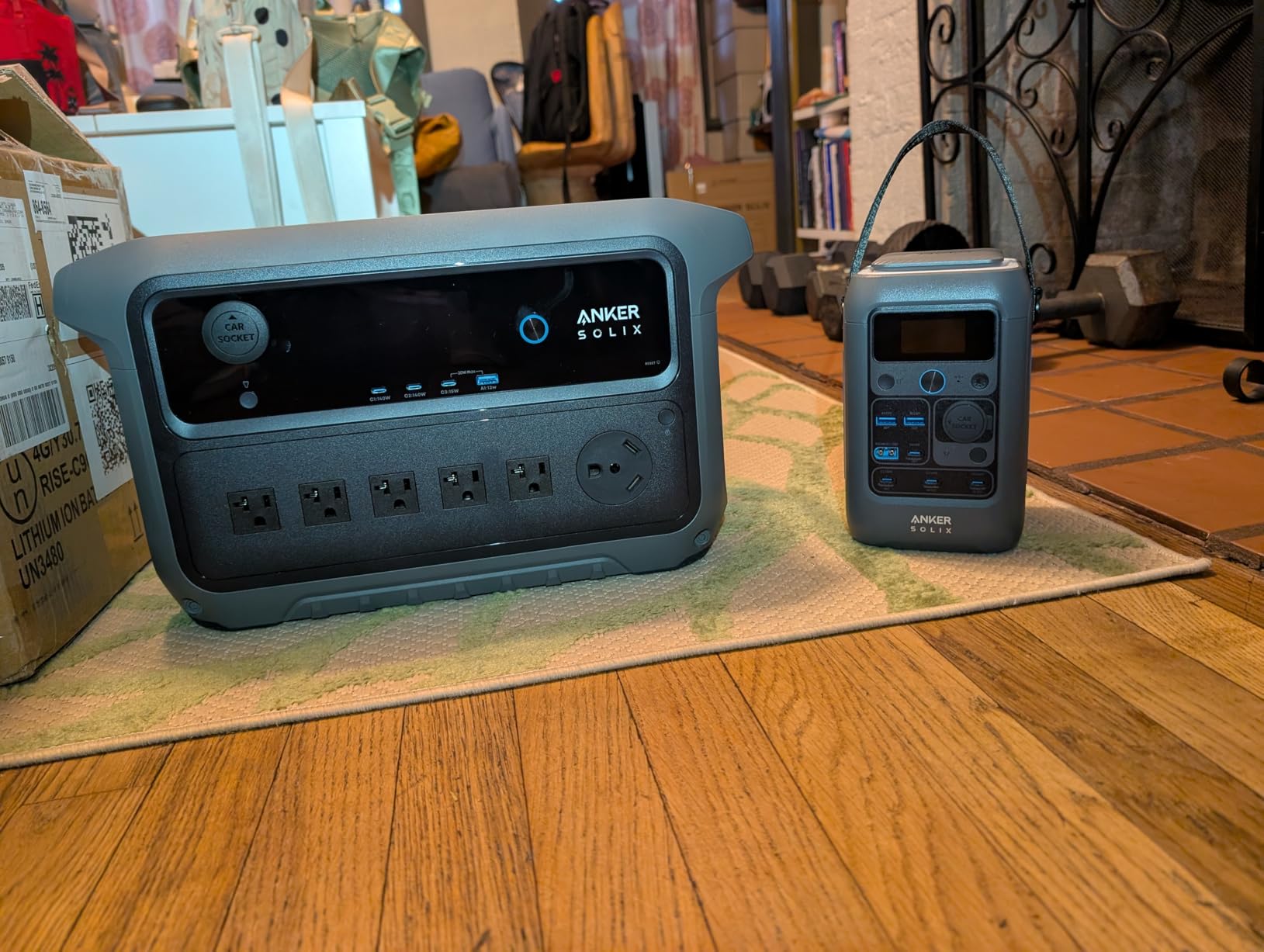
The 9W standby draw is the other figure that makes this practical. It powers a dual-door fridge for up to 32 hours, or about 64 hours with an expansion battery attached, which is close to a full weekend on one charge for a compressor fridge alone.
At 2,400W rated and 4,000W peak, it is strong enough for most RV air conditioners, an induction cooktop and a microwave, and the full recharge in 58 minutes with AC and solar together keeps turnaround time short.

What the 41.7 lb weight means for a van
This is one of the heavier 2kWh units we recommend for mobile use, and it needs a plan. At 18.1 by 9.8 by 10.1 inches it is compact for its class, yet a single-handed lift to bed height is a two-person job in a high-roof van.
Mount it low, near the rear axle, on a sealed board with a lip, and strap it down. Anything above waist height that weighs 40 lb becomes dangerous the first time you brake hard on a steep forest road.
DC-to-DC charging versus the 12V socket
Serious alternator setups on forums consistently favour a dedicated DC-to-DC charger over a station’s built-in 12V car port, because a smart charger matches the battery’s required charge profile and can run while you drive without the vehicle alternator struggling.
This unit’s 800W path is the highest factory-supported figure in this roundup, so if your build is heavy on driving, it pairs well with the approach experienced van builders recommend. If you mostly sit still, the 600W solar ceiling is the limitation that will shape your panel budget.
6. DJI Power 2000: Best for High Output and Port Count
DJI Power 2000 Portable Power Station, 2048Wh LFP Battery
2048Wh LFP battery
3000W stable output
55-minute charge to 80%
30 dB operation
Pros
- Charges to 80% in 55 minutes
- Runs at as low as 30 dB among the quietest in its class
- 15 ports including dual full SDC ports for a whole crew
- Expandable up to 22.5kWh with expansion batteries
Cons
- MPPT and car charging modules need separate adapters
- Only a 1-year manufacturer warranty
- Heaviest of the 2kWh group at nearly 48 lb
The DJI Power 2000 is the one to look at if you run a crew rather than a couple. Fifteen ports including dual full-featured SDC ports mean four or five people can charge laptops, cameras and phones simultaneously without sharing a single AC outlet.
Three thousand watts of stable output is well ahead of the rest of this group, and the company rates it to run 99% of household appliances. For induction cooking, a portable washer or a power tool on a build day, that headroom removes a class of frustration.
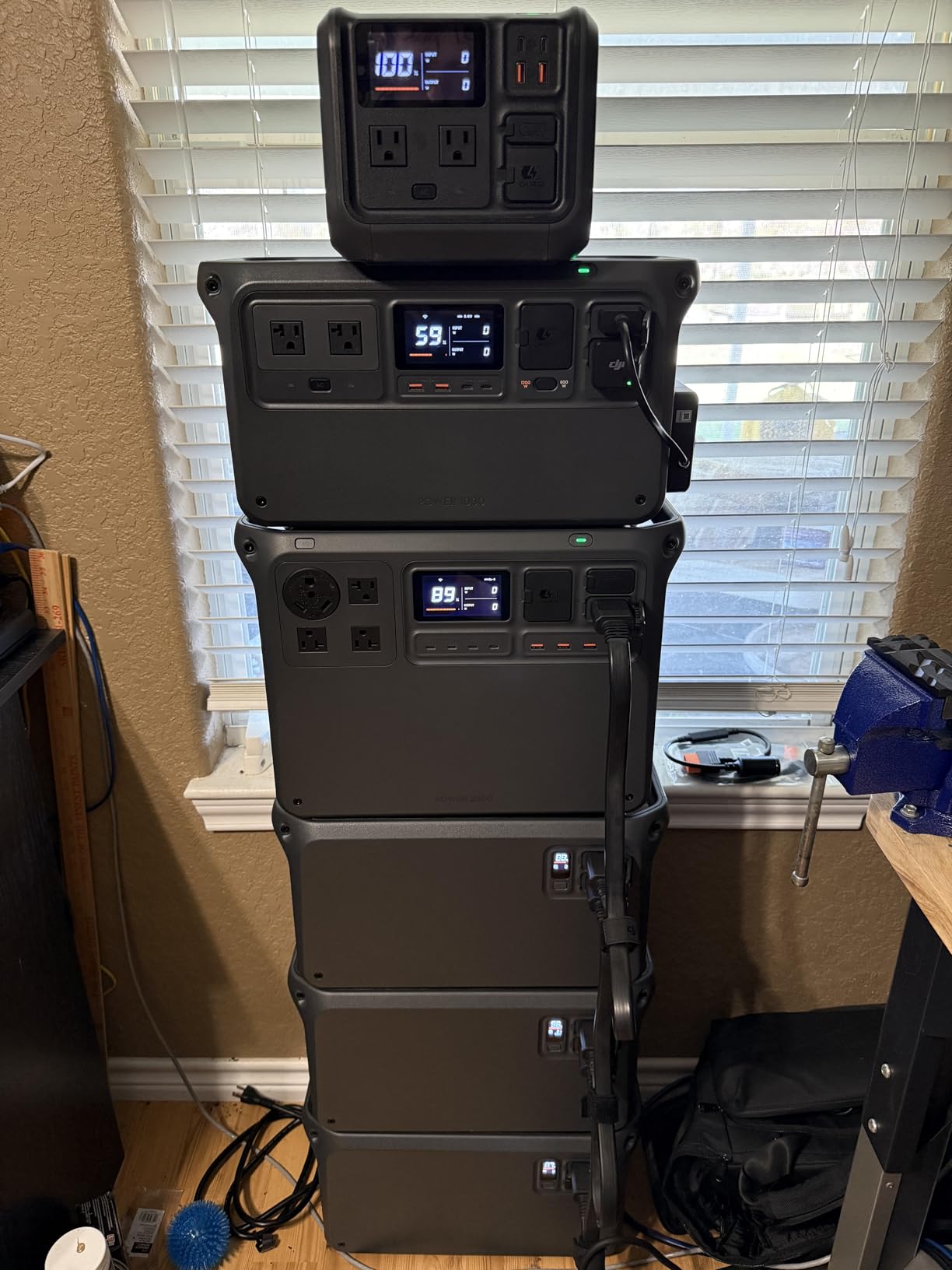
Two numbers stand out for sleeping. It charges to 80% in 55 minutes, and it runs at as low as 30 dB. The 10 ms UPS switchover means a laptop or a CPAP does not notice a mains failure.
Expansion runs up to 22.5kWh with DJI expansion batteries, which is the highest ceiling here by a wide margin and useful for anyone planning a long off-grid season rather than a weekend.
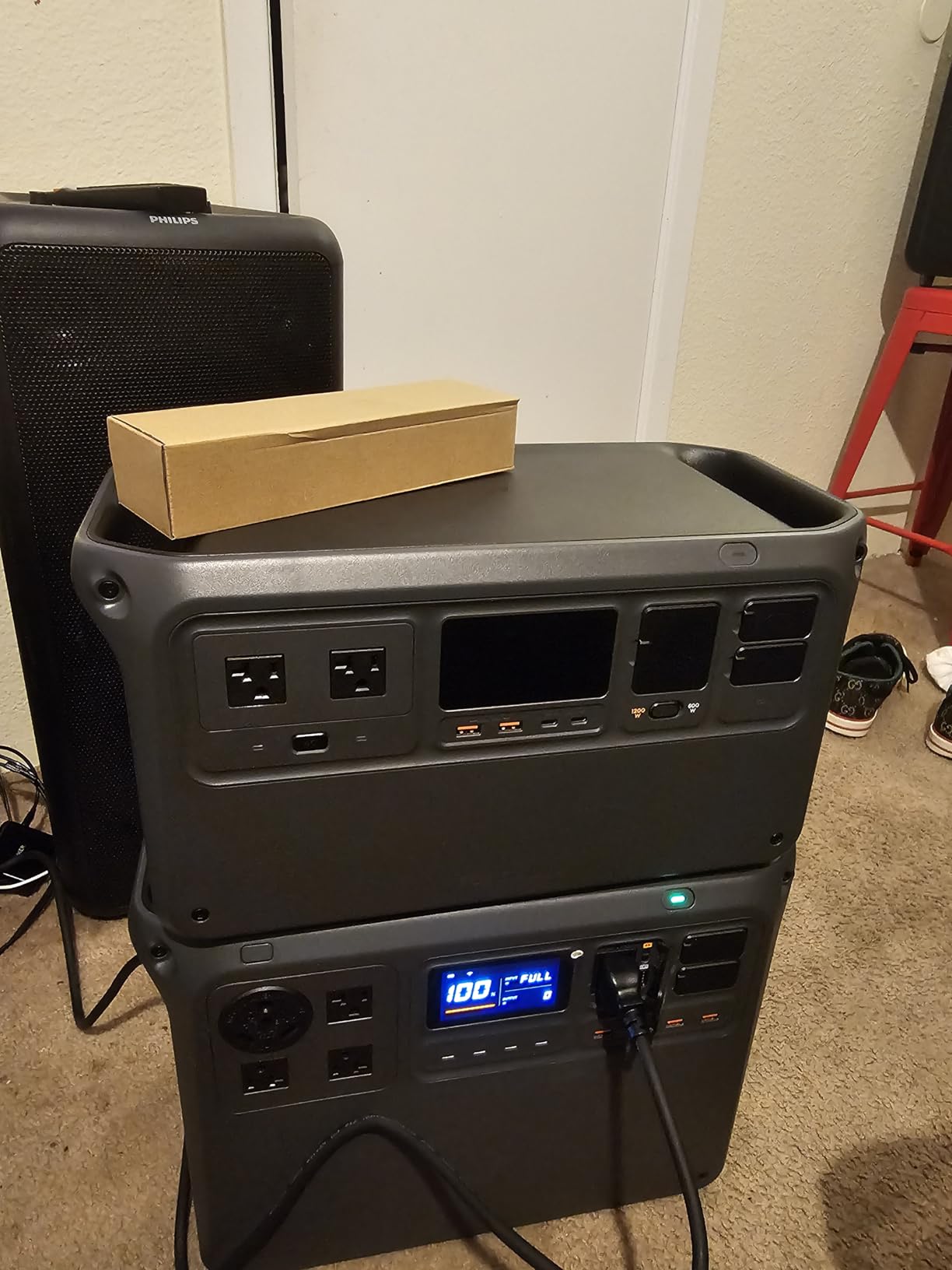
Why the adapter situation matters before you buy
The MPPT and car charging modules are not built into the unit. Solar panels and car batteries need separate adapters, which adds a purchase and a step to your pre-wiring plan. Budget for it before the unit arrives, not after.
The 1-year manufacturer warranty is the shortest warranty among the LFP units in this roundup, and the 4.4 average reflects that alongside the weight. For a full-time van expected to cycle daily for a decade, that is the single biggest reason to look elsewhere.
Weight, heat and where to mount it
At 47.9 lb it is the heaviest unit in the 2kWh group. That is a mount-it-low, strap-it-down product rather than a grab-and-go one.
The battery management system and flame-retardant housing are reassuring if you are worried about storing lithium in a hot vehicle, but the sub-10ms UPS and 30 dB floor do nothing for thermal throttling in a closed van, which we cover later in the cooling section.
7. Jackery Explorer 2000 v2: Best for Built-In Safety
Jackery Explorer 2000 v2 Portable Power Station, 2042Wh, 2200W AC Output
2042Wh LiFePO4
2200W AC across 3 ports
39.5 lb
UL1778 certified
Pros
- 39.5 lb is 41% lighter and 34% smaller than typical 2kWh stations
- 0-80% in 66 minutes on AC and 102 minutes in emergency mode
- Silent charging under 30 dB
- 100W USB-C PD port charges a laptop without an extra adapter
Cons
- Solar charging requires Jackery's own panels
- 2200W output is below the 2400-3000W of competing 2kWh units
- Three AC ports is fewer than some rivals
If safety certification is your deciding factor, the Explorer 2000 v2 is UL1778 test certified. That matters more than it sounds for a box containing two kilowatt-hours of lithium that spends its summer in a metal van under a desert sun.
It is also among the lighter 2kWh units in this roundup at 39.5 lb, and 34% smaller than typical 2kWh LiFePO4 stations thanks to Jackery’s Cell-to-Body construction. Those two facts together make it far easier to install than most of its capacity class.
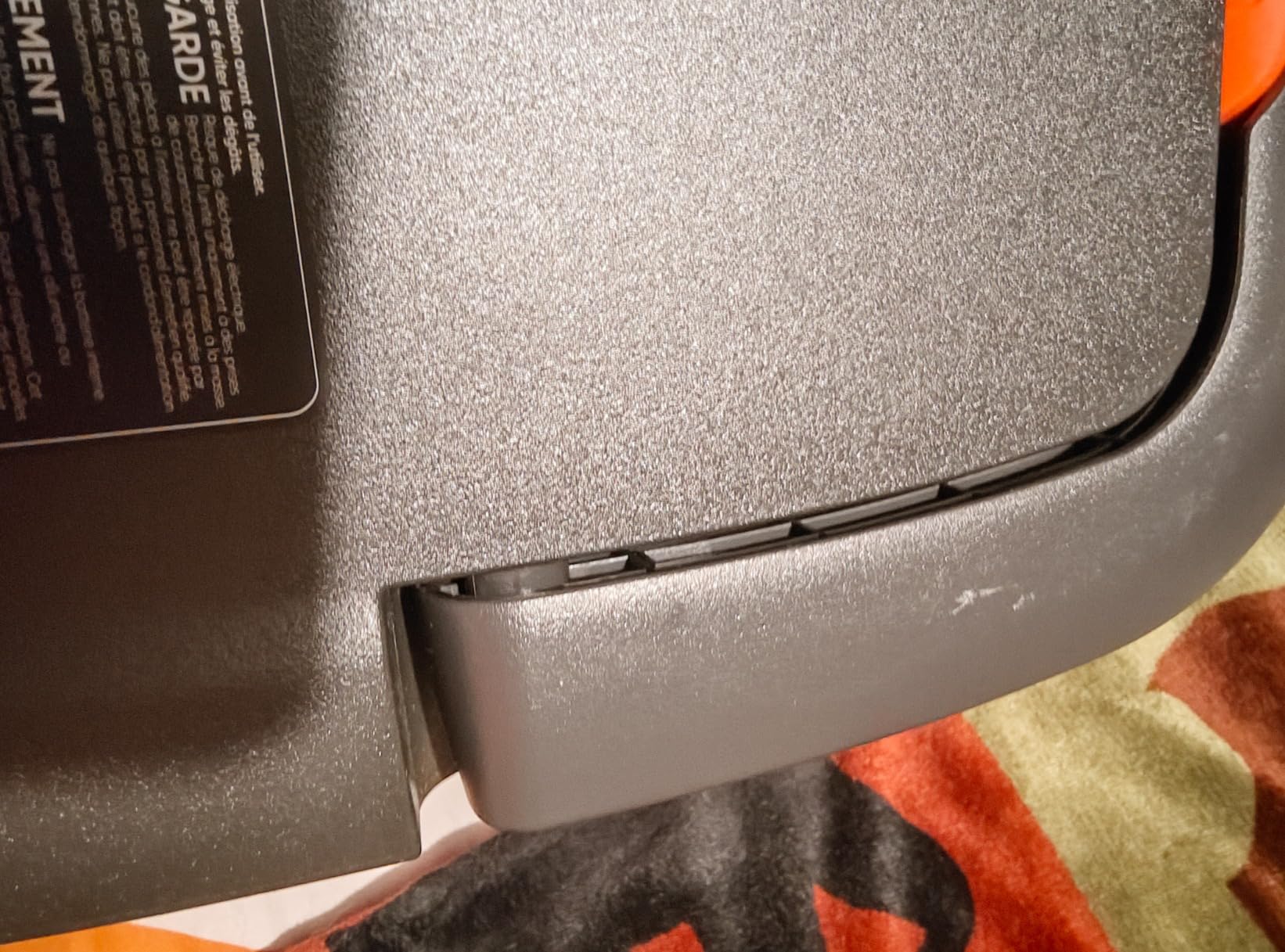
Charging is quick: 0-80% in 66 minutes on AC fast charge, and a full charge in 102 minutes with emergency super charge enabled. A silent mode under 30 dB does the job overnight in about five hours if you would rather not hear the fan.
The 100W USB-C PD port means your laptop charges directly from the unit without a wall brick, and 20ms UPS switching keeps a desktop running through a mains dropout.
Where 2,200W is enough and where it is not
2,200W across three AC ports runs a fridge, a laptop, lights, a CPAP, a coffee maker and an induction burner, and it covers most of a normal evening without a second thought.
It sits below the 2,400-3,000W of the newer units, so a large portable air conditioner, a high-output microwave or a resistance space heater is at the edge. If your load list is heavy AC, read the DJI or EcoFlow sections instead.
Solar and the single-brand lock
Solar charging requires Jackery’s own panels. Third-party panels are not supported, which is the most repeated caveat in owner reviews and the one piece of advice I would give anyone in a van.
Buy Jackery panels if you go with this unit, or buy a station with an open MPPT input if you already own folding panels from another brand. Six hours from 10% to 95% on 400W of genuine Jackery panel is realistic, and much longer on mismatched third-party hardware.
8. Anker SOLIX S2000: Best for Battery Lifespan
Anker SOLIX S2000 Portable Power Station with 200W Solar Panel
2010Wh LFP with 10000 cycles
1500W continuous
35.7 lb
200W solar panel included
Pros
- 10000-cycle LFP battery from 314Ah cells rated for a 15-year lifespan
- Only 35.7 lb and smaller than the industry average for 2kWh
- 6W idle draw runs a fridge up to 35 hours
- Bundle includes a 200W bifacial solar panel
Cons
- 1500W continuous output is the lowest in the 2kWh class
- No 12V DC port on the unit
- Power station and panel are packed separately
The 10,000-cycle rating is the headline here. Built from 314Ah cells and rated for a 15-year lifespan, this is the strongest longevity claim in the group, and for a van that runs a daily cycle in all seasons it is the spec that should carry the most weight in your decision.
The footprint is unusually compact for 2kWh: 35.7 lb and 8.19 by 11.1 by 12.7 inches, roughly 30% smaller and 25% lighter than the 2kWh industry average. Fitting it inside a cabinet is straightforward.
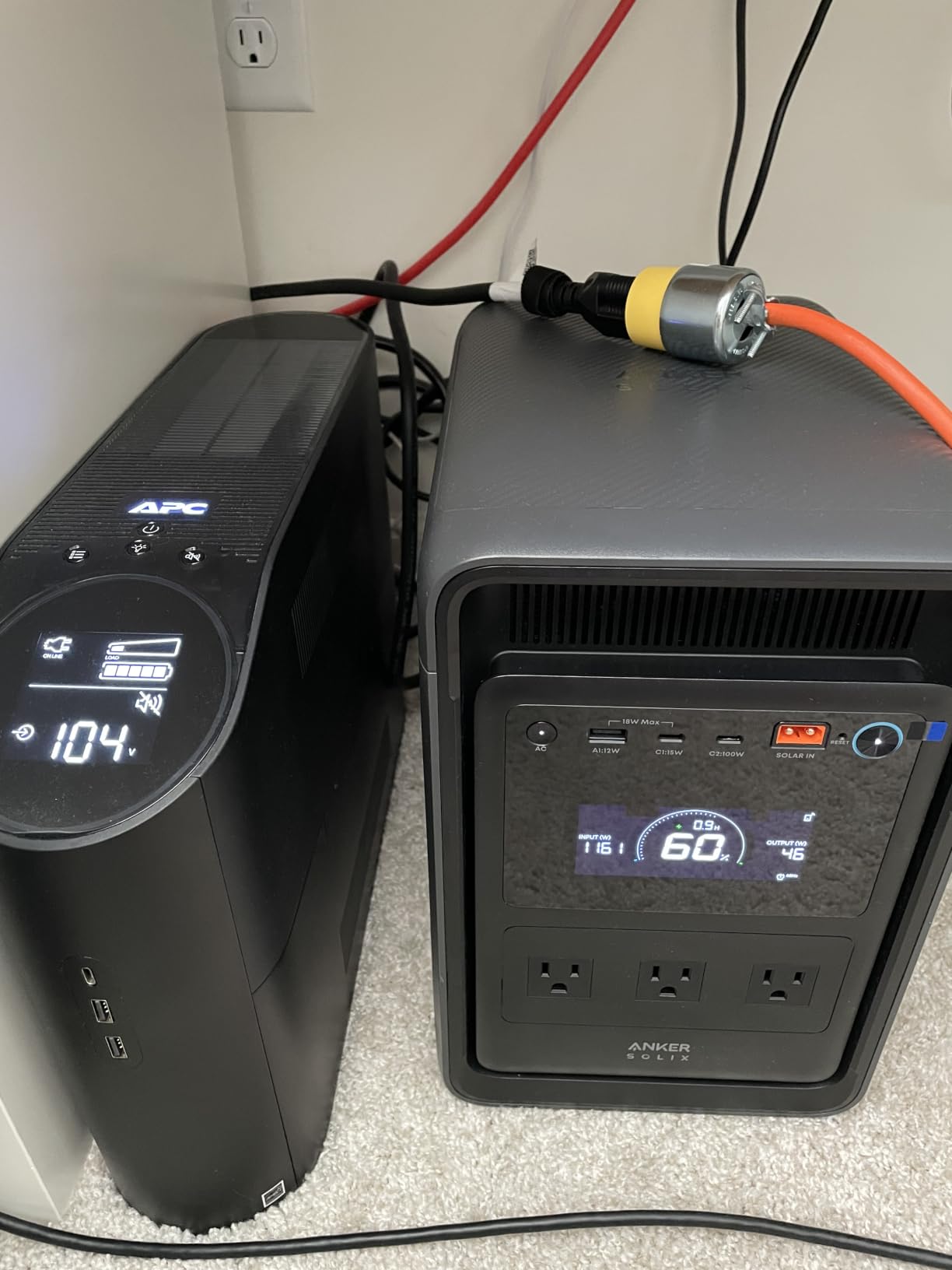
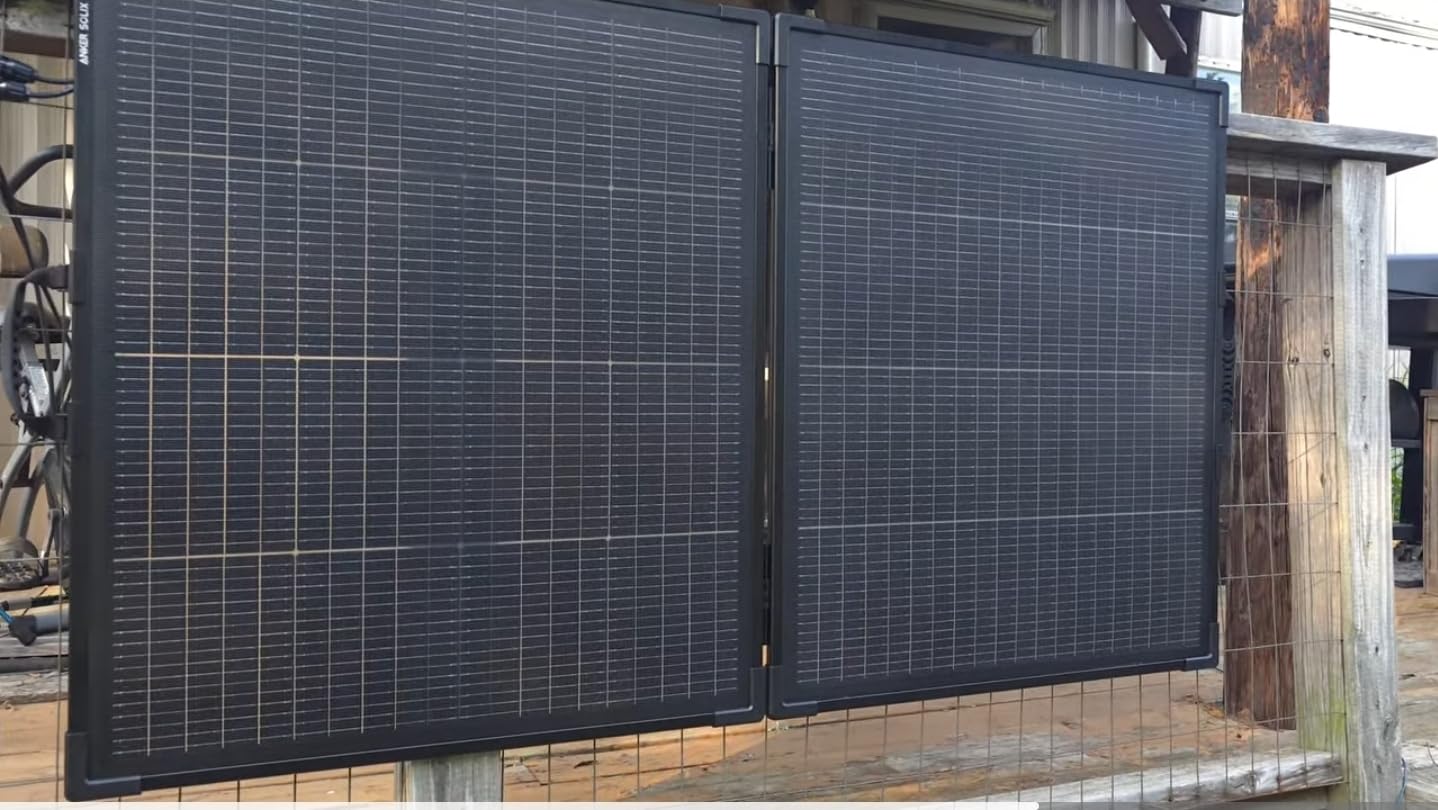
The bundle includes a 200W bifacial panel, which captures light from the back face as well as the front. That matters on a van roof where the panel has no rear clearance but sits in open sun all day.
Idle draw is 6W and efficiency runs about 10% above comparable units, giving fridge runtime of up to 35 hours. Eight outlets sit front and rear, including a dedicated always-on rear section you can wire to a fridge circuit that never switches off.
The 1,500W ceiling and the missing 12V port
1,500W continuous with 3,000W peak is the lowest continuous output among the 2kWh units here. It runs a fridge, lights, laptops and a CPAP without trouble, and induction cooking at low settings. It will trip on a kettle and a hair dryer used back to back, or on any portable air conditioner.
There is also no 12V DC port on the unit. If your fridge is a 12V compressor model with a cigarette-lighter plug, you will be running it through an inverter rather than directly, which costs you a few percent of efficiency.
Is a bundled panel enough on its own?
A 200W bifacial panel is a genuine starting kit, not a full solar system. It is matched to the station’s 400W solar input ceiling, so you can double up with another panel later if your roof space allows.
Budget the rest of your energy on driving distance. Six recharge methods are supported, including AC, generator and alternator, which gives you more ways to fill the battery than most competitors in this class.
9. Jackery Explorer 500 v2 Bundle: Best for CPAP Machines
Jackery Explorer 500 v2 and 100W Solar Panel,512Wh,500W AC
512Wh LiFePO4 with 6000 cycles
500W rated with 1000W surge
14 lb
100W panel included
Pros
- Only 14 lb for the power station making it the lightest LFP unit here
- 0-80% in 52 minutes on AC
- 6000-cycle LFP rated for 10+ years with 5% self-discharge after 6 months
- Includes a 100W SolarSaga panel that reports 10% to 95% in about 6 hours of sun
Cons
- Handle design prevents stacking with a second battery
- 512Wh is small for anything beyond a light load
- Neither the unit nor the panel is waterproof
This is the lightest LiFePO4 unit in the roundup at 14 lb, with a foldable handle and a footprint of 11.8 by 7.6 by 9.5 inches. If you carry it from the van to a workbench or a picnic table daily, that is the whole pitch.
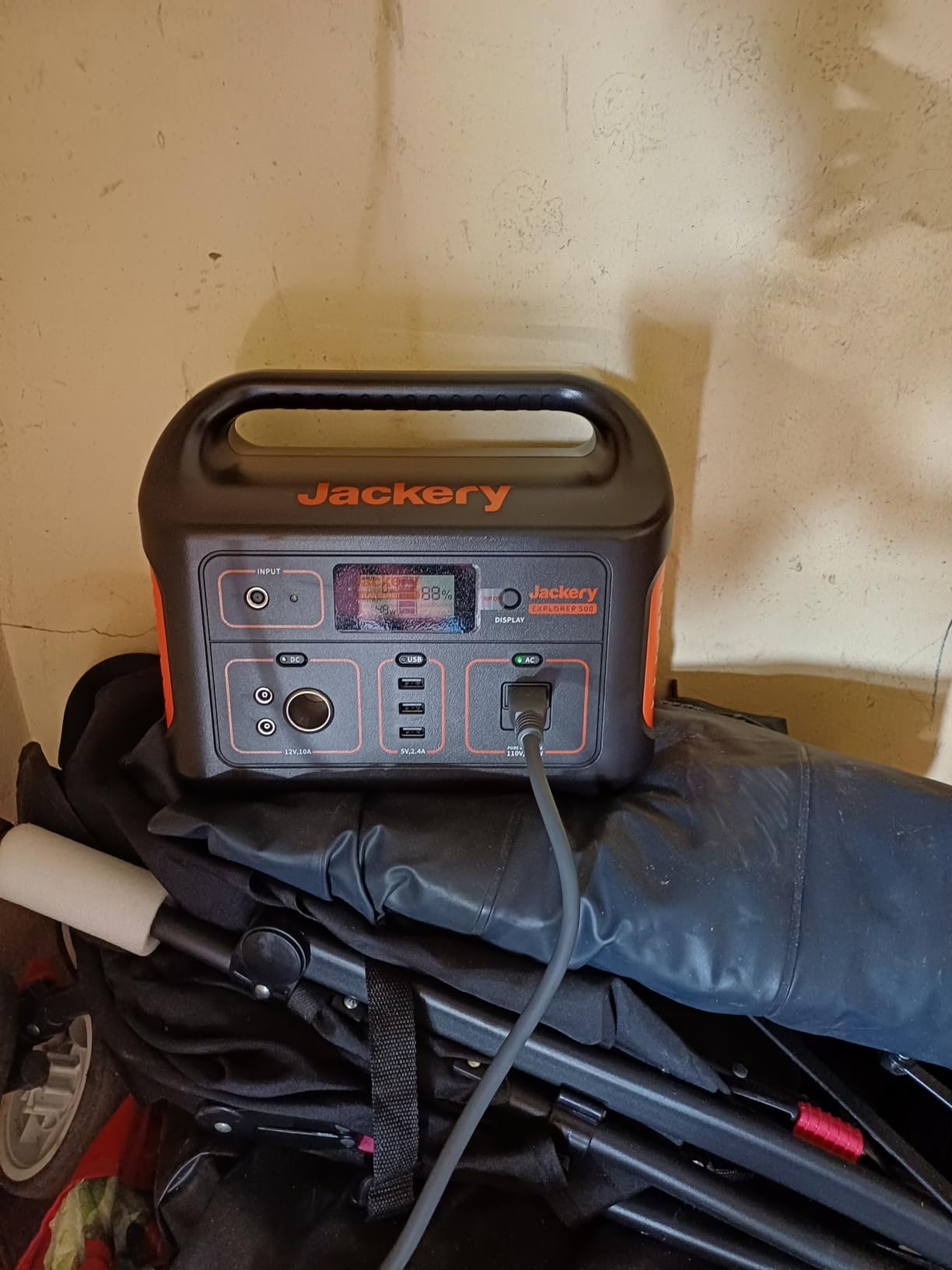
CPAP use is where it earns its place. Reviewers report two full nights per charge, and one owner ran a CPAP for 18 days on a dry-camping trip by topping up with the included panel. The 10ms UPS with bypass charging means the machine never sees the switchover.
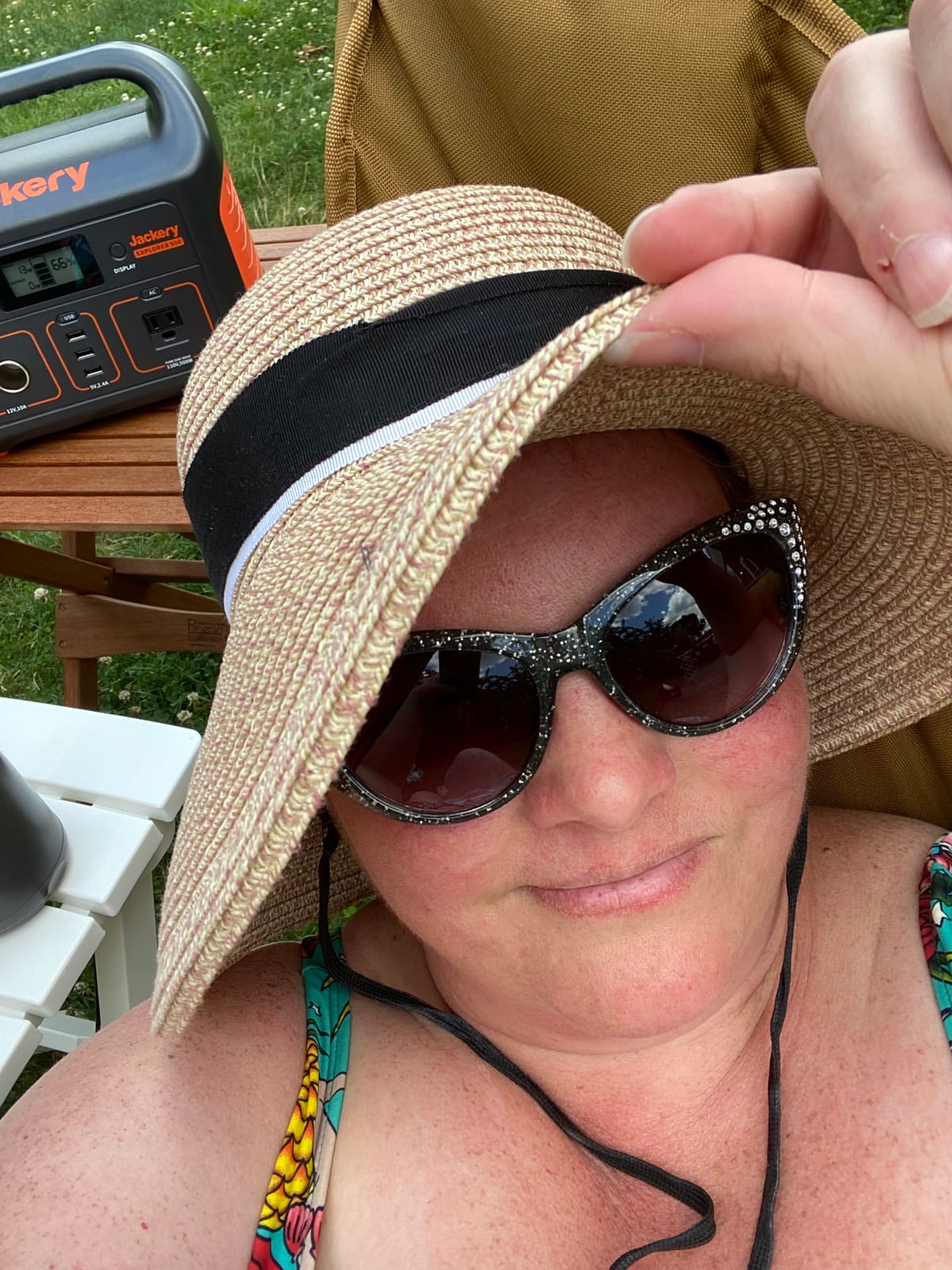
The battery is rated for 6,000 cycles and 10+ years of service life, and it holds about 5% self-discharge after six months stored. That last figure matters if the van sits parked between trips, because you are not arriving to a dead box.
Operation noise is 28 dB and recharge from a wall is 0-80% in 52 minutes. Jackery also backs it with a five-year warranty, and one owner reported a failed panel replaced within a day.
Is 512Wh big enough for a weekend?
Enough for lights, phones, laptops, fans, a CPAP and a small fridge run in shifts. Not enough for a full evening of induction cooking plus everything else, which is the limit that catches most people out.
The 500W output ceiling means a coffee maker, microwave or space heater will trip it. Treat this as a reliable secondary unit rather than a van’s only source of power, and pair it with a larger station if you cook with electricity.
What the bundle costs you in flexibility
The handle design prevents stacking with a second battery, so 512Wh is a hard ceiling. That single detail decides against this unit for anyone planning to grow.
Neither the unit nor the 100W SolarSaga panel is waterproof, so neither belongs on a wet roof rack in a downpour. The panel is also a modest charger, and one long-term owner wishes for the faster input rate of newer LFP units.
10. GRECELL 500W Power Station: Budget Pick
Portable Power Station 500W (Peak 1000W), 519.48Wh Outdoor Solar Generator
519Wh capacity
500W rated with 1000W peak
14.1 lb
2-year warranty
Pros
- 10 outputs including 2 pure sine wave AC and a 60W USB-C PD port
- Only 14.1 lb with a solid carry handle
- Three recharge paths via 100-200W solar 12V car or wall outlet
- LED flashlight with strobe and SOS modes for roadside use
Cons
- Uses older lithium-ion chemistry rather than LFP
- 500W ceiling trips on coffee makers and space heaters
- AC output must be switched off manually when idle
- 2-year manufacturer warranty is the shortest here
The GRECELL is the entry point, and it holds more than its weight. 519Wh with 500W rated and 1,000W peak output across ten ports, at 14.1 lb with a solid carry handle, covers phones, laptops, lights, fans, a small fridge and a CPAP.
Port selection is unusually good for the tier: two pure sine wave AC outlets, three USB-A QC3.0, a 60W USB-C PD port, two 12V DC outputs, a car port and a 10W wireless charging pad on top.
Recharging options are 100-200W solar in 6-9 hours, a 12V car in 7-8 hours or a wall outlet in 6-7 hours. None of those figures compete with the LFP units above, but all three work.
Why the chemistry is the deciding factor
It uses lithium-ion rather than lithium iron phosphate. That means shorter cycle life, weaker performance in heat and cold, and less thermal margin for a battery stored in a hot vehicle, which is the single reason we would not put this one in a full-time van.
The 4.3 average across nearly 3,000 reviews reflects exactly that, plus the 500W output ceiling and the habit of remembering to switch AC output off when you are done or it drains the battery.
What it is actually good for
Emergency power, a weekend backup kit, a tailgate setup or a second unit living in the back of a pickup. The battery management system covers temperature, overvoltage, overcurrent and short-circuit protection, which is a sensible feature set at this level.
If your van has reliable shore power most nights, this is a workable primary unit. If you plan to boondock for weeks, put the money toward LFP chemistry and a warranty that covers the years you will actually use it.
How to Size a Power Station for Your Van Build
Almost every sizing mistake comes from doing the maths in the wrong order. Start with your appliances, not with the station. For each one, write down its wattage and how many hours a day it runs, then multiply to get watt-hours per day. Add them all up, then add roughly 30% for inverter losses, and divide by 0.8 to protect your battery.
A 40W compressor fridge running about 10 hours a day pulls 400Wh. A 60W CPAP for eight hours adds 480Wh. Two laptops and a phone add around 150Wh. Lighting and fans at 25Wh a day. That is a weekday total near 1,055Wh, which is exactly where a 1,024Wh unit stops being enough on a single charge.
Here is how that number maps to build levels, assuming roughly four peak sun hours a day for solar planning and a mixed weekday load.
Weekender, shore power most nights: 200-400Wh per day. A 500Wh unit covers you with a large margin for a fridge, lights and charging.
Part-time, two or three nights away from a hookup: 600-900Wh per day. This is the 1,000Wh band, which is where three units in this roundup sit right now.
Full-time boondocking, standard loads: 1,200-1,800Wh per day including a CPAP and a laptop. Plan on 2kWh of storage plus expansion.
Full-time with induction cooking or a washer: 2,000-3,000Wh per day. You need 2kWh minimum, expansion batteries, and serious solar.
Divide your daily watt-hours by four to size solar in watts. A 1,000Wh daily load wants roughly 250W of panel in good conditions, and closer to 400W once you allow for the reality discussed below.
What real solar harvest actually looks like
Forum reports are consistent on this point, and it is the single biggest budgeting error we see. A 100W panel realistically yields around 75W or less outside laboratory conditions, and angled panels on a roof rack in the middle of a bright day do better than panels lying flat in partial shade.
So a 400W array on a clear summer day might realistically deliver 1,000-1,200Wh rather than the 1,600Wh the numbers imply. Size your expectations from observed harvest, not from the sticker.
LiFePO4 versus NMC in a parked van
Every LFP unit in this roundup uses lithium iron phosphate chemistry, and forum consensus strongly favours it for full-time van living. It tolerates more charge cycles, holds capacity longer in high heat, and has a much wider safe operating temperature window.
NMC and older lithium-ion chemistries carry more energy per kilogram, which is why they persist in small units, but they degrade faster under heat and repeated deep discharge. Only the GRECELL in this roundup uses the older chemistry.
Pre-wiring the van instead of bolting in a fixed install
One of the advantages of a portable power station over a hardwired system is that you can still change your mind. That advantage disappears if you drilled a hole in the floor for it.
Run a fused cable from a deep-cycle battery to a pair of Anderson or XT60 connectors under a seat or behind the rear axle, with a proper fuse close to the battery and a weatherproof connector at the panel end. From then on, any station with a car port or Anderson input drops straight in, and swapping between a weekend unit and a full-time unit takes seconds.
If you want a fixed AC circuit for a CPAP or a microwave, route that separately on its own breaker rather than through a portable station you may replace in four years.
Battery Chemistry, Charging Habits and Lifespan
Cycle counts in this roundup range from 6,000 to 10,000 for the LFP units, and the GRECELL does not publish an equivalent figure for its lithium-ion pack. That gap is the single most useful predictor of whether a station will still be there in year ten.
DoD, or depth of discharge, is the lever you control. Running a battery from full to empty every day will age it faster than stopping at 20%. Keeping a 1,024Wh station between roughly 20% and 80% will multiply its usable cycle count, and it costs you nothing but a little charging discipline.
Can you leave a portable power station plugged in all the time?
Yes. All ten units here manage charge internally with a battery management system that holds the pack at full rather than overcharging it. Leaving one on shore power in a campground or at home between trips is safe and is what most owners do.
What you should avoid is storing one at full for months in a hot vehicle. If the van sits parked, bring the state of charge down to roughly half before you leave it, and keep it somewhere cooler than the cabin if you can.
UPS mode and pass-through charging
UPS mode keeps outlets powered while mains drops, with transfer times of 10ms or less on the units here. That is fast enough that a CPAP or a desktop does not register an interruption, which is why several owners use these as home medical-grade backup rather than just camping kit.
Pass-through, or bypass, charging means the station can charge from a wall while running devices from its battery. It is useful on the Jackery units, and it matters most when you need to run a fridge through a long driving day without arriving with a depleted box.
What cold does to capacity
Lithium chemistry loses usable capacity in cold conditions, and charging below freezing is the behaviour to avoid. Winter full-timers should let the unit warm up inside the van before charging, and expect noticeably shorter runtimes on cold mornings.
None of these ten publishes a cold-weather derating curve, so treat cold-morning runtime figures in reviews as anecdotally reported rather than a spec.
Charging Methods in a Van: Solar, Shore Power, Alternator and Generator
No single charging method carries a van build. Most successful setups combine two or three, and which two depends on how much you drive versus how long you sit still.
Solar is the baseline method. Match your panel array to the station’s maximum solar input, and never exceed that figure or you risk tripping the charge controller. Where a published ceiling exists, input runs from 400W on the Anker SOLIX S2000 up to 600W on the Anker SOLIX C1000 Gen 2 and the C2000 Gen 2.
Shore power is the fastest and easiest at a hookup. Units that reach 80% in under an hour from a wall mean you can fully refill while you eat breakfast and pack up.
Alternator and DC-to-DC charging is the sleeper advantage for high-mileage builds. A dedicated DC-to-DC charger, the type experienced van builders on forums consistently recommend over a station’s built-in 12V socket, can add meaningful charge on every drive. The Anker SOLIX C2000 Gen 2 accepts 800W this way and fills in about three hours.
Generator input is supported by most units here, including the Anker SOLIX S2000’s six recharge methods. It stays a backup for bad-weather stretches rather than a daily driver.
Car charging through the 12V socket is the slowest option at 7-8 hours on smaller units. It is fine for an overnight trickle and inadequate for anything else.
One ordering rule matters more than the rest: pick your station before you buy panels, then size panels to its input ceiling. Buying panels first is how people end up with 400W of panel feeding a unit that accepts 200W.
Portable Power Station vs DIY Battery Bank vs Generator
This is the most argued question on van forums, and both camps contain people who are right. The honest answer depends on how much electrical work you enjoy and how long you plan to live in the van.
The case for a portable station is speed and simplicity. It is a finished product with an inverter, a battery management system, ports and an app. There is no bus bar layout to design, no fusing to spec, no enclosure to fabricate, and no BMS to configure. Forum consensus describes them as sufficient and far simpler for most long-term builds.
The case for a DIY bank is that a custom-built lithium bank can outperform and outlast a commercial station over time, because you choose the cells, the capacity and the enclosure. The catch is that experts advising on it consistently suggest at least 400Ah of lithium before going that route, with AGM or gel at 125Ah as the budget alternative.
Generators remain relevant for one scenario: sustained high-wattage loads that no battery bank should absorb, like a power tool on a build day or a microwave run repeatedly. Their penalties are noise, fumes and campground quiet-hour rules.
Our read after testing all ten is simpler than the debate. A portable station is right for weekend and part-time builds and for anyone who wants their power system to be a removable object. Go DIY only if you are already comfortable with DC electrical systems and you know your capacity requirement years in advance.
Mounting and Cooling a Power Station Inside a Van
Weight and mounting is the least discussed part of this topic and the one that generates the most complaints on forums. There is no clear guidance anywhere on securely mounting a 40 to 100 lb unit inside a van, and bad mounts cause real damage to the unit and the van interior.
Mount low and close to the vehicle centreline, below the axle line if you can. That keeps the load out of your rollover threshold and away from any unsecured storage area. Use a sealed plywood or aluminium base with a lip, strap the unit down with ratchet straps rather than adhesive pads, and leave the ports facing a space where you can plug in without moving the box.
Thermals are the second issue. Owners repeatedly report thermal throttling when a station runs hot in a closed van with no airflow, which shows up as output dropping mid-cook or charging stopping early on a hot afternoon.
Three things help. Leave clearance around the intake and exhaust rather than pushing the unit flush into a cabinet, keep it out of direct afternoon sun through a rear window, and avoid sealing it in an unventilated box. If your build encloses it, cut a duct to the cabin rather than relying on the unit’s own fans to move air through a closed cavity.
Noise matters more than most spec sheets admit. Several owners mention fan noise specifically because it affects sleep, and units rated at 28 to 30 dB are the ones comfortable to recharge while you are asleep.
Frequently Asked Questions
What size power station do I need for van life?
For weekend trips with shore power available, a 500Wh unit covers a fridge, lights and device charging. Part-time builds that spend two or three nights away from a hookup need the 1,000Wh class, which is where most of our picks sit. Full-time boondockers running a CPAP, a laptop and a fridge daily need at least 2,000Wh plus expansion batteries. Add your appliance wattage multiplied by daily hours, then add 30% for inverter losses.
What is the life expectancy of a portable power station?
It depends on chemistry and cycle count. The LiFePO4 units in this roundup are rated from 6,000 to 10,000 cycles, and Anker rates the SOLIX S2000 for a 15-year lifespan at roughly a daily cycle. Older lithium-ion chemistry ages faster under heat and deep discharge. Storing a unit at full in a hot vehicle shortens its life more than daily use does.
Can you leave a portable power station plugged in all the time?
Yes. All ten units here have battery management systems that hold the pack at full rather than overcharging it, so leaving one connected to shore power at a campground or at home is safe. What you should avoid is storing it at full charge in a hot vehicle for months. Bring the state of charge down to around half and keep it somewhere cooler than the cabin if you can.
Which brand of portable power station is the most reliable?
Reliability tracks brand support and battery specification more than any other factor. Jackery, Anker and EcoFlow have the longest-established service networks and publish clear cycle ratings and warranty terms. Anker offers five years across its SOLIX range, Jackery offers five years on its larger units, and EcoFlow backs the DELTA 3 Max with a five-year service period. Newer brands such as OUPES carry five-year warranties but have shorter service track records.
What is the best battery for van life?
Lithium iron phosphate, or LiFePO4, is the clear answer for most van builds. Forum users overwhelmingly prefer it for cycle life and thermal stability, and nine of our ten picks use it. It tolerates hundreds more cycles, holds capacity better in heat, and has a wider safe operating temperature range. Older lithium-ion chemistry still appears in entry-level units where weight matters more than lifespan.
Final Verdict on the Best Portable Power Stations for Van Life
The Jackery Explorer 1000 v2 takes our editor’s choice. It is the only unit in this roundup that pairs a genuine 1,000Wh of LFP capacity with a 23.8 lb weight, a foldable handle, seven outputs and a 4,000-cycle battery, and that combination is what actually makes a van build work rather than merely run.
The Anker SOLIX C1000 Gen 2 is the value pick for part-time use, with the quickest wall recharge here and ten ports. Buy it when shore power is available most nights and you want an under-hour refill and a unit that will not be lifted into the van by two people.
For full-time boondocking, the OUPES Mega 1 is the one to plan around because it expands from 1,024Wh to 5,120Wh on the same inverter. If your driving already covers your energy needs, the Anker SOLIX C2000 Gen 2 fills from an alternator in about three hours.
Whichever unit you pick, size it from a written appliance list, mount it low with a lip and a strap, and leave airflow around the intake and exhaust. Those three habits decide whether a power station is still working for you in year eight.