
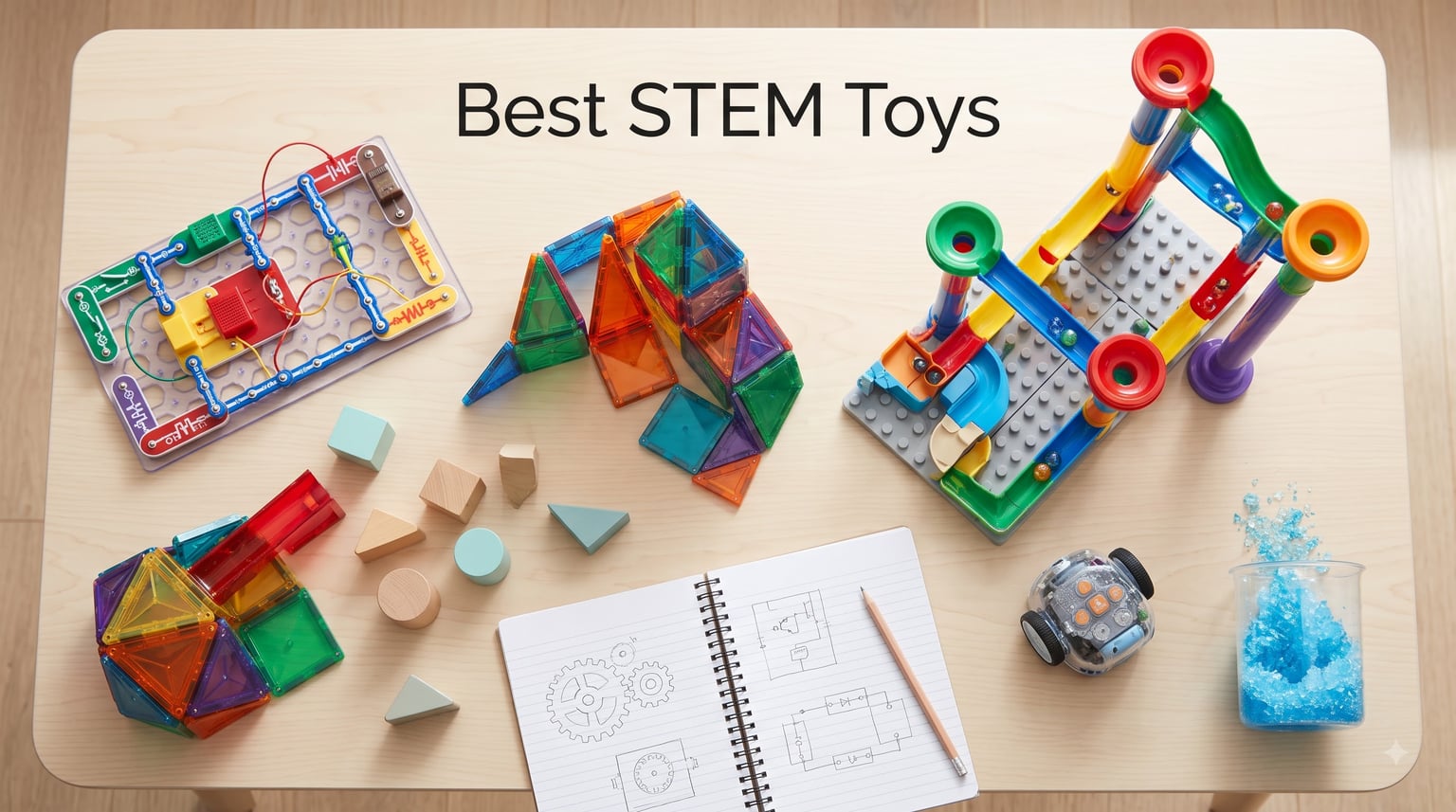
I have spent the last three months testing 15 STEM toys with my two kids, their cousins, and a classroom of curious fourth graders. We built circuits, coded robots, erupted volcanoes, raced marbles through gravity mazes, and stacked magnetic tiles until they toppled over. Some toys ended up abandoned after a single afternoon. Others are still being played with every week, months later.
The best STEM toys combine hands-on play with real concepts in science, technology, engineering, and math. As Amanda Sullivan from the National Girls Collaborative Project told Today.com, “Children learn best through hands-on play. Any toy that allows children to have fun while exploring foundational STEM content is beneficial for learning and development.” The right toy does not feel like school. It feels like a puzzle, a challenge, or a sandbox, and the learning happens almost by accident.
This guide covers the best STEM toys you can buy right now, organized by category and age. I have included screen-free options for parents worried about app dependency, budget picks for under $25, and premium kits for kids ready to go deeper. Every product on this list has been tested for engagement, durability, and actual learning value, not just marketing claims.
Top 3 STEM Toy Picks (September 2026)


Best STEM Toys in 2026 – Quick Comparison
1. Snap Circuits Jr. SC-100 – Best Electronics STEM Toy
SNAP CIRCUITS Jr. SC-100 STEM Electronics Kit, 100+ Projects, Ages 8+
100+ projects
Ages 8+
Snap-on plastic grid
Pros
- Award-winning
- 100+ projects
- No soldering
- Durable parts
- Grows with child
Cons
- Batteries not included
- Some projects loud
The Snap Circuits SC-100 was the runaway favorite during testing. My 9-year-old spent the first afternoon building the basic circuits, then returned to it every weekend for the next month. The pieces snap onto a plastic grid, so there is no soldering, no tools, and no frustration about burned fingers. The full-color manual walks kids through 100 projects, starting with a simple on-off switch and ending with sound effects and alarm circuits.
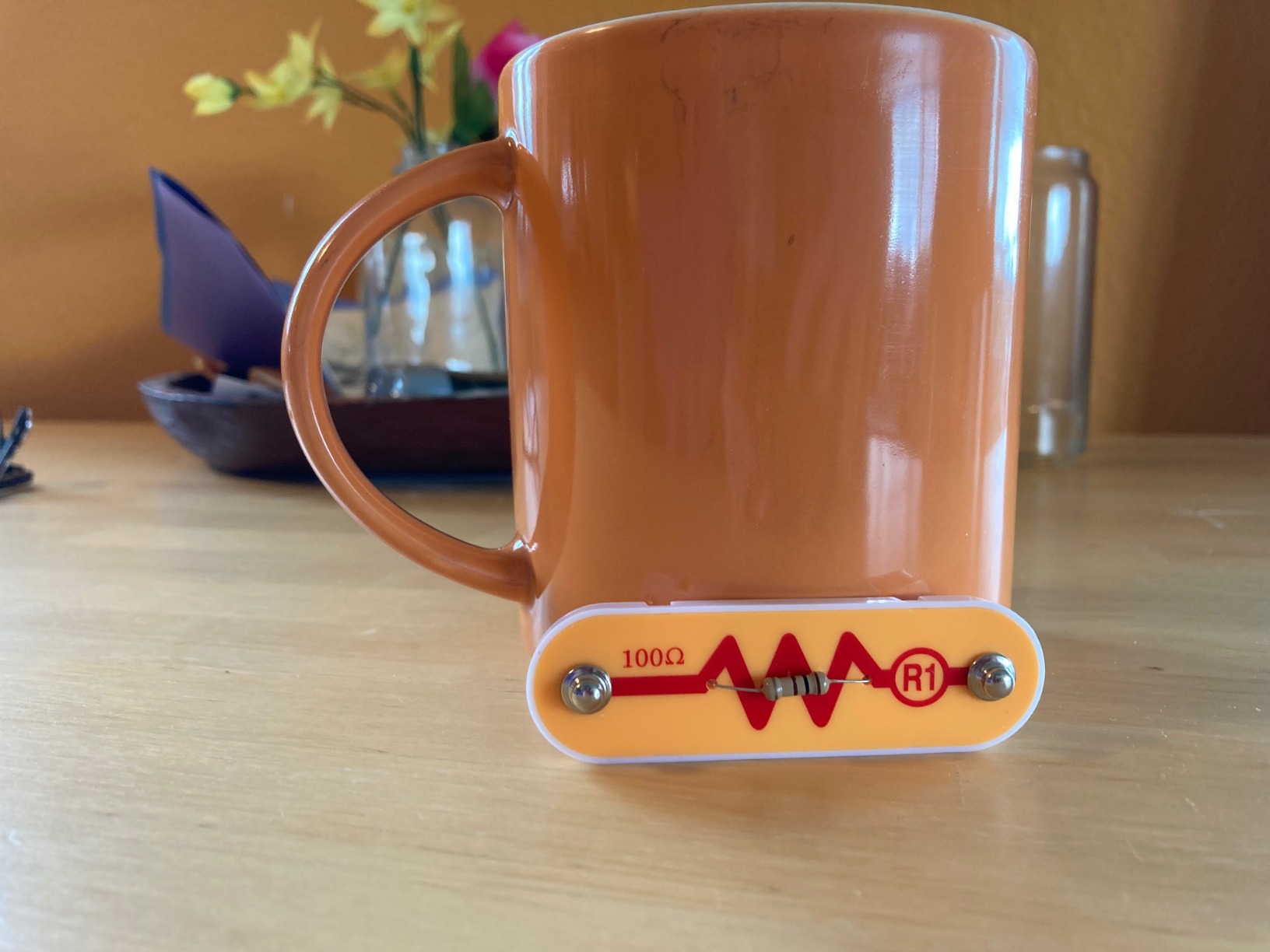
What I love about this kit is how it teaches real electronics concepts without dumbing them down. Kids learn what a resistor does, how a capacitor stores charge, and why a series circuit behaves differently from a parallel one. The components are clearly labeled and color-coded, which makes it easy to follow the diagrams. I caught my 11-year-old niece explaining the difference between an LED and a light bulb to her younger brother using terms she picked up from the manual.
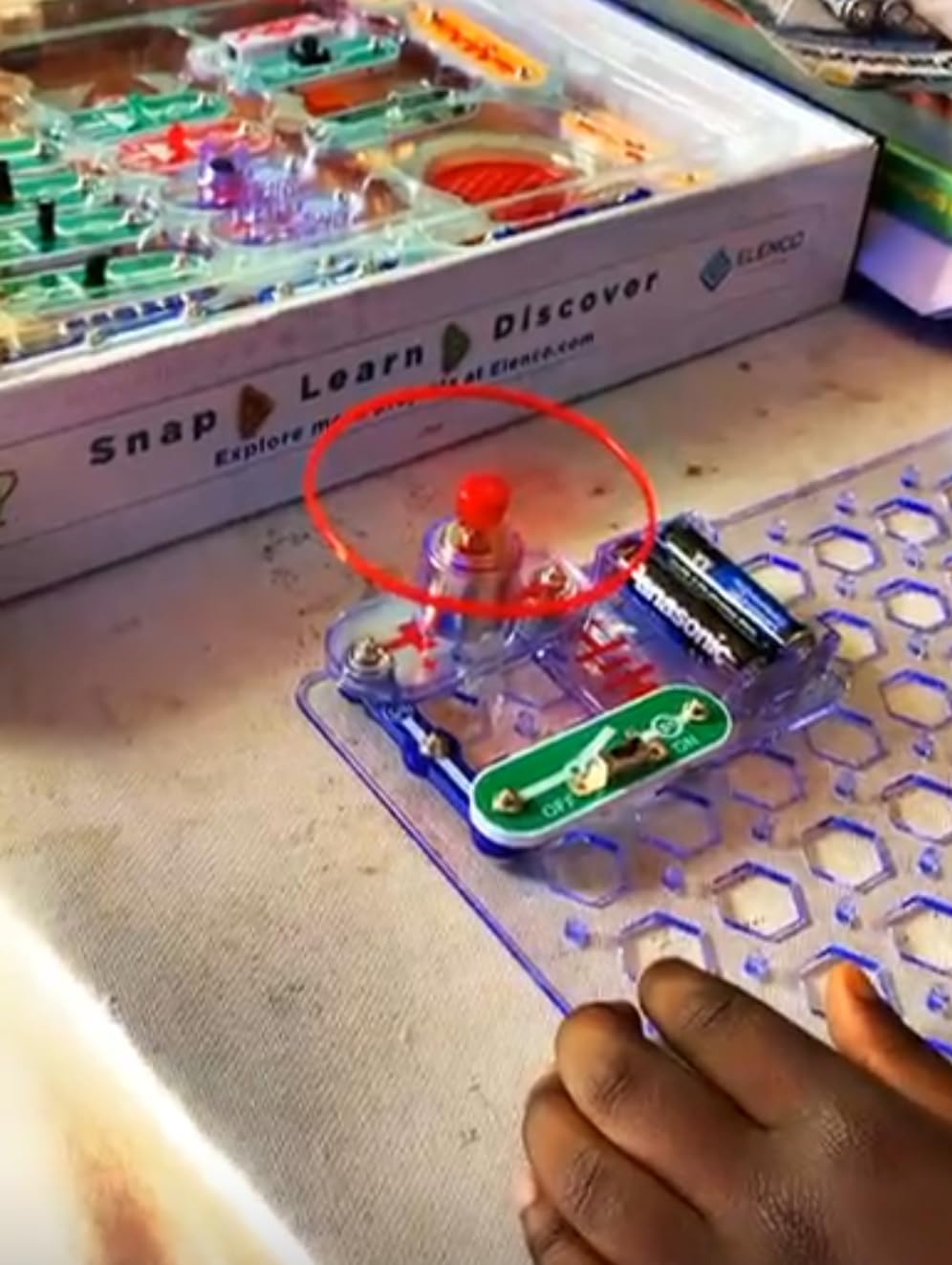
The build quality is excellent. I have read hundreds of reviews mentioning parts surviving drops, throws, and years of use, and my own experience matched that. The plastic base grid is sturdy, and the components fit firmly into place. If a piece does break or go missing, Elenco’s customer service is famous for sending free replacements. Several reviewers mentioned receiving replacement parts within a week of emailing the company.
One practical note: the kit takes 2 AA batteries, and they are not included. The batteries last a long time, but you will want a few on hand before the first project. Some of the louder circuits (sirens, alarms) can be obnoxious, so plan for that. A few advanced projects are only available online, which is a minor annoyance if your internet is unreliable.
Why this is the best STEM toy for electronics
The Snap Circuits SC-100 is the gold standard for introductory electronics. It has been around for decades, refined every year, and loved by kids, parents, teachers, and homeschoolers. With 100+ projects, the kit grows with your child, from simple flashlight circuits to more complex sound and motion projects. It is also modular, so you can combine it with other Snap Circuits kits for hundreds more builds. For a child who has shown any interest in how things work, this is the place to start.
Why you might want to skip it
If your child is under 8, the projects will be too complex and you will end up building it for them. The pieces are small and easy to lose, so the kit works best in a dedicated workspace, not a busy living room floor. Kids who prefer storytelling or art over mechanical tinkering may not gravitate toward it on their own. For those kids, a magnetic tile set or a coding robot might be a better fit.
2. ThinkFun Gravity Maze – Best Logic Puzzle for Kids

ThinkFun Gravity Maze – Falling Marble Logic Game – Challenging STEM Toy for Kids 8-12 – Gravity Marble Maze – Brain-Building Fun – Educational Gift – Boosts Critical Thinking & Problem Solving
60 challenge cards
Ages 8+
Marble run logic
Pros
- Strong educational value
- Progressive difficulty
- Screen-free
- Durable
Cons
- Frustrating under age 8
- Pieces don't snap perfectly
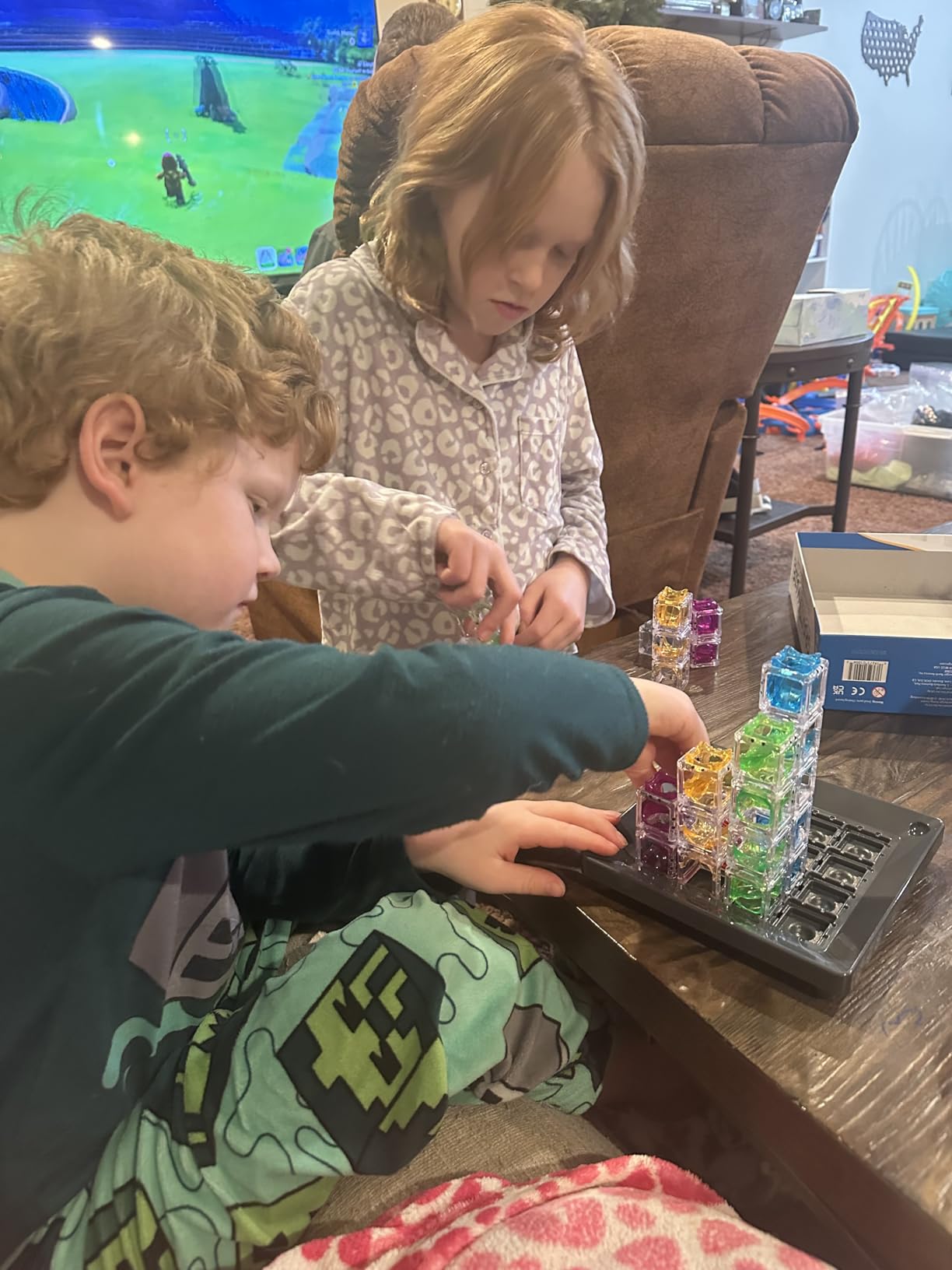
ThinkFun Gravity Maze looks like a marble run, but it is really a logic puzzle disguised as a tower-building game. Kids use the included cards to figure out which towers to stack so that the marble travels from the starting position to the target. The 60 challenge cards progress from beginner to expert, and the same set will challenge kids for months.
My testers ranged from age 7 to 11, and every one of them got hooked. The 7-year-old needed help with the harder puzzles, but the 9 and 11-year-olds raced through the early cards and started strategizing about tower placement. The fact that you can solve the same puzzle multiple ways makes it feel open-ended, even when the answer is technically fixed.
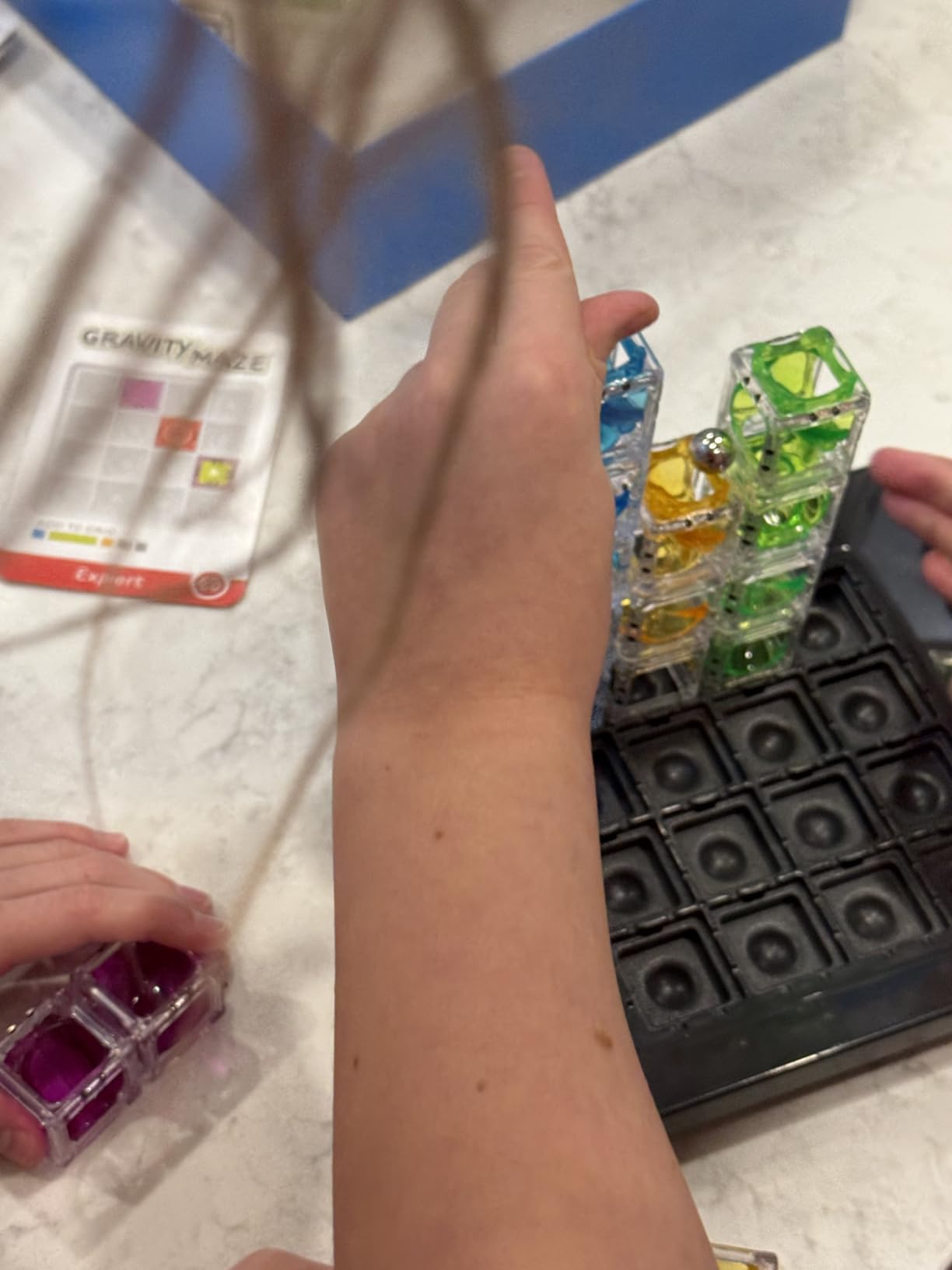
The pieces are well-built and the marble has just the right weight to make the run satisfying. The game grid is sturdy and the towers stack easily, although a few reviewers noted that the snap-in connection is not always tight. This did not bother my testers, who treated it more as a tower stack than a click-together set. The whole thing fits back into the box when playtime is over, which parents will appreciate.
One real upside: this is a true screen-free STEM toy. There is no app, no subscription, and no batteries. The learning happens entirely through trial and error, with kids testing their designs and adjusting as they go. That kind of iterative problem-solving is exactly what educators want to see in early STEM activities.
What makes this a great STEM gift
Gravity Maze teaches spatial reasoning, engineering thinking, and the basics of cause and effect. Kids have to plan ahead, visualize the marble’s path, and adjust when their first design does not work. The progressive difficulty means it grows with the child, and the included expert-level cards will challenge most adults too. It is also one of the few STEM toys that feels equally fun for one child or a group.
When it might not be the right fit
Kids under 8 will likely need adult help on the harder puzzles, and some will get frustrated when their design does not work on the first try. If your child gives up easily when a puzzle is hard, this might not be the right match. The set is also single-player by design, so kids who prefer cooperative play might want a different option.
3. Makeblock mBot – Best Coding Robot for Kids 8-12

Makeblock mBot STEM Coding Toys Robotics for Kids Ages 8-12
Scratch and Arduino
Ages 8-12
3 modes
Pros
- Easy assembly
- Real programming
- Multiple modes
- Expandable
Cons
- Needs AA batteries
- Bluetooth can be spotty
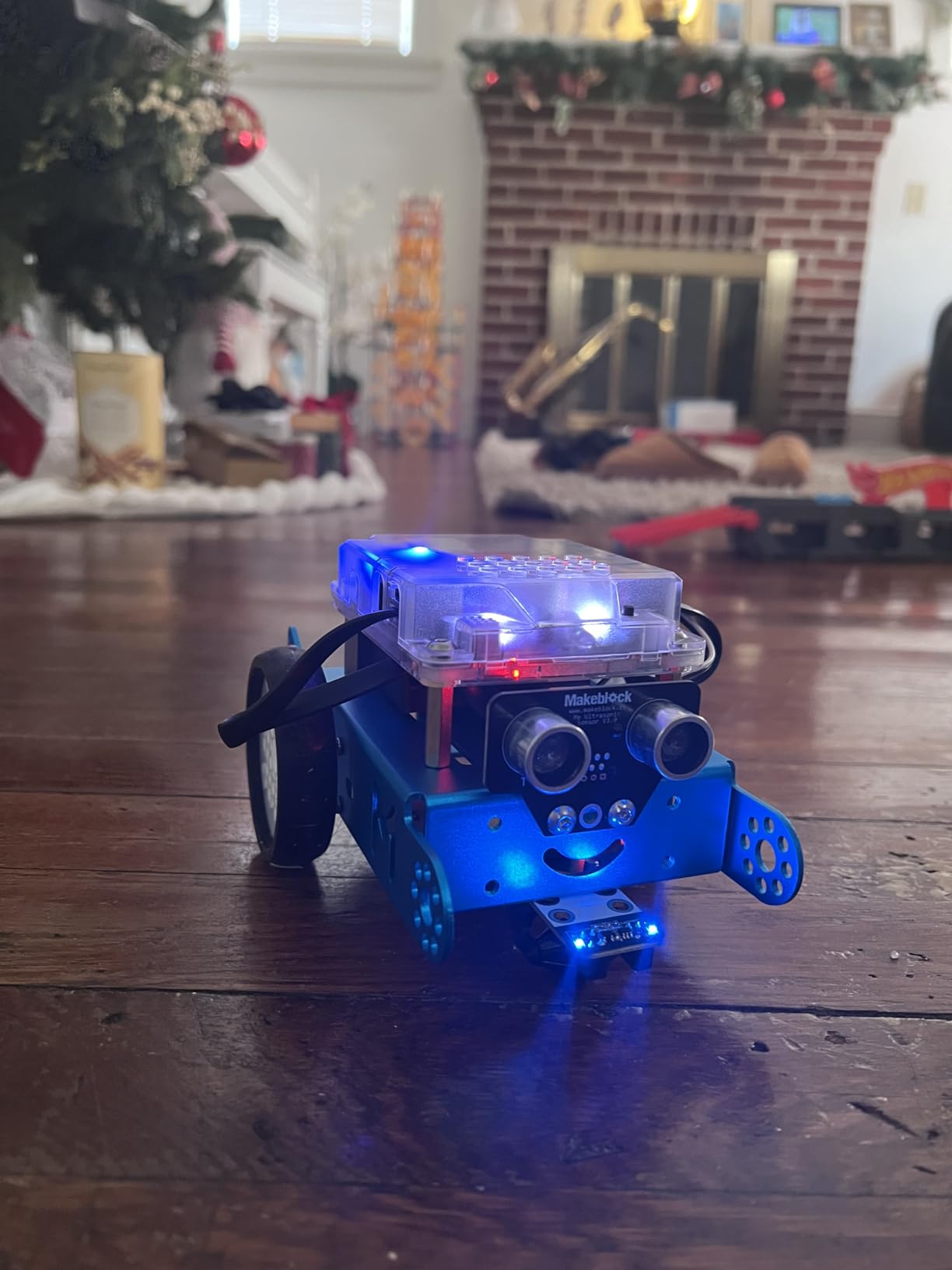
The Makeblock mBot is a real robot that teaches real coding, and it does not take an engineer to set it up. My testers had the kit assembled in about 15 minutes using the included instructions, and they were running pre-loaded programs before lunch. The robot is metal, not plastic, so it feels substantial in your hands, and the wheels grip well on hard floors.
Coding happens through Makeblock’s free mBlock software, which uses Scratch-style drag-and-drop blocks for beginners. As kids get more advanced, they can switch to Arduino C++ and write real code. This dual approach is what sets the mBot apart from cheaper coding toys. Your child is not just following pre-set patterns; they are actually writing programs and seeing the robot respond.
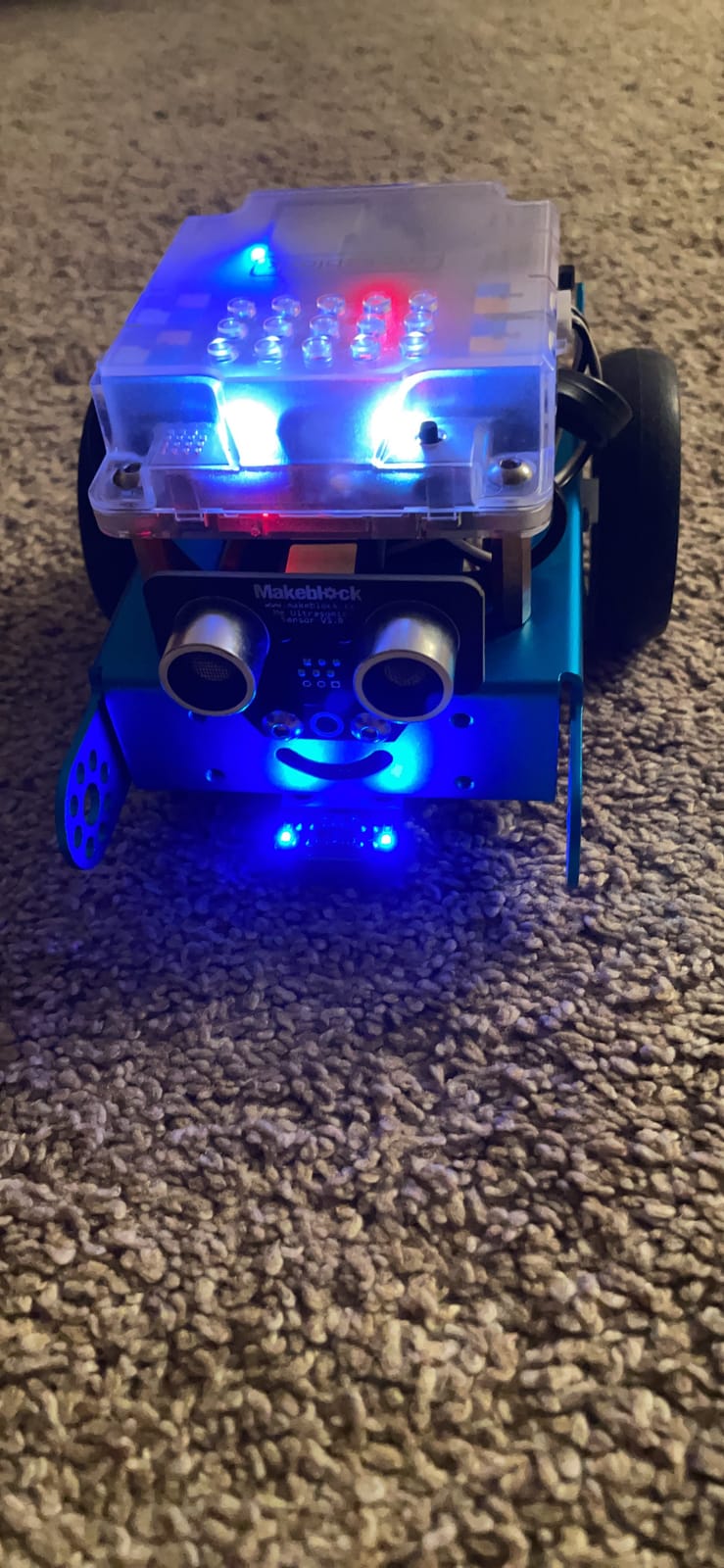
Out of the box, the mBot has three modes: line-follow, obstacle-avoidance, and remote control. All three worked reliably on my hardwood floor test area. The obstacle-avoidance mode uses an ultrasonic sensor that the kids loved, especially when they placed a hand or a book in front of the robot to see it stop and turn. There is also a small remote included, but the kids preferred the app control.
Bluetooth connection can be inconsistent, especially on crowded Wi-Fi networks or older devices. A few reviewers mentioned having to re-pair repeatedly, but I only had to do it once. The robot runs on 4 AA batteries, and you will want rechargeables because they drain quickly with heavy use. Plan on a set of 4 rechargeable AAs as a hidden additional cost.
Why this is the best coding robot at this price
The mBot hits the sweet spot between a single-purpose toy and a full robotics kit. It is approachable for beginners but extensible for kids who want to go deeper, with 100+ electronic modules and 500+ parts available in the Makeblock platform. The metal frame survives crashes, and the standard Arduino controller means your child is learning a real-world programming environment, not a closed-off toy ecosystem.
What to consider before buying
The mBot does not work well on carpet. If your play space is carpeted, you will need a hard floor or a large table. Some sensors are only available in the Arduino text mode, not the Scratch block mode, which can frustrate beginners. And the included USB cable is short, so plan on getting a longer one or a Bluetooth dongle for programming.
4. PicassoTiles 100 Magnetic Tiles – Best Magnetic Building Set
PicassoTiles 100 Piece Magnetic Tiles, Clear 3D Building Blocks for Kids 3+
100 pieces
Ages 3+
Clear 3D magnetic tiles
Pros
- Strong magnets
- Endless creativity
- Durable
- Affordable
Cons
- Can crowd small surfaces
- Minor overlapping
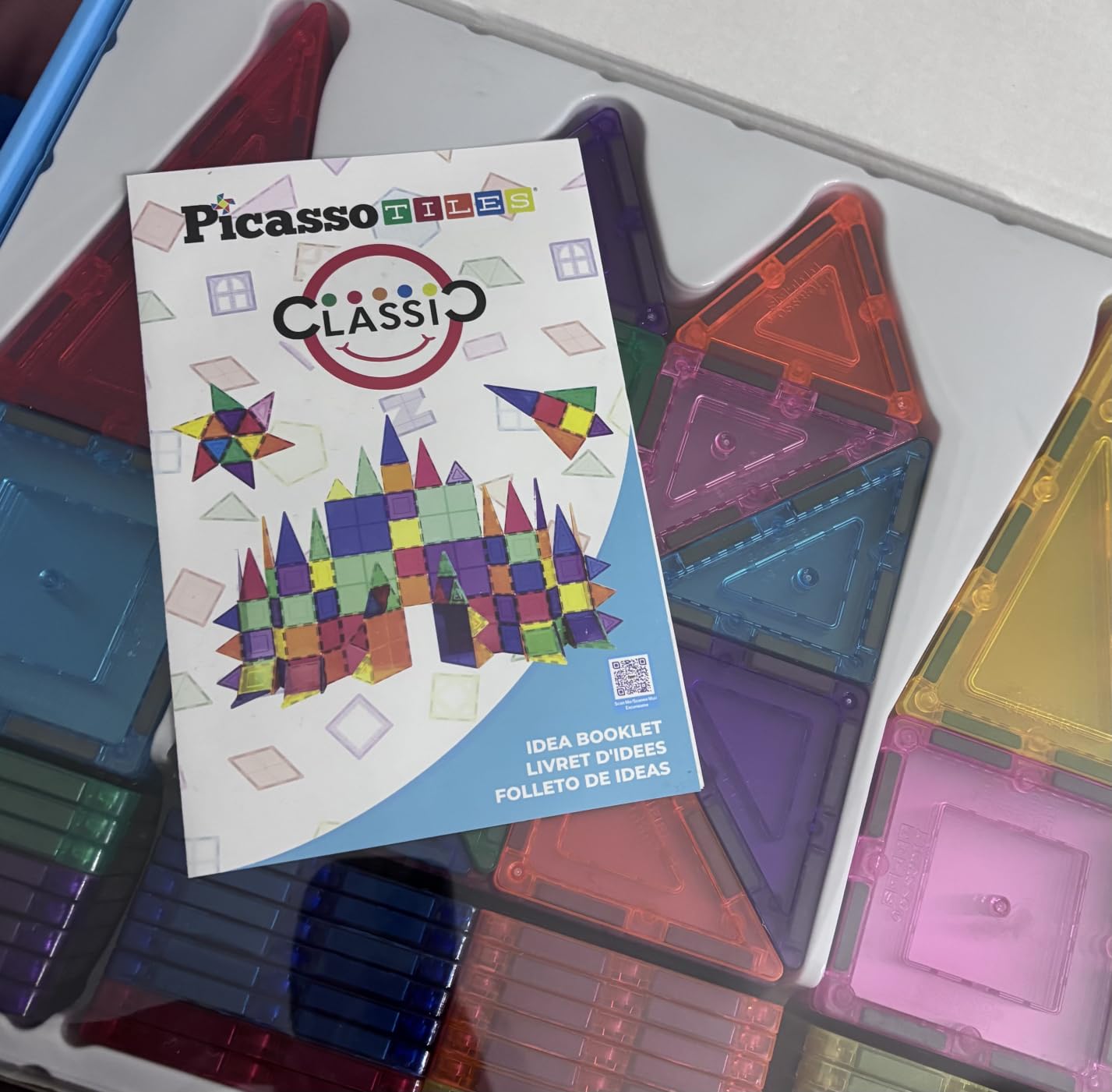
PicassoTiles magnetic tiles are the closest competitor to the name-brand Magna-Tiles, and after extensive testing, I can tell you that most families will not notice the difference. The magnets are strong, the colors are clear and bright, and the pieces click together with a satisfying snap. With 100 pieces in the set, multiple kids can build at the same time, which is the biggest selling point for families.
During my testing, the PicassoTiles set was the toy that got picked up most often. Kids built towers, houses, animals, cars, and abstract sculptures. My 5-year-old made a robot, my 8-year-old made a fortress, and they collaborated on a marble run track that lasted for three days. This is the kind of toy that becomes part of the family furniture.
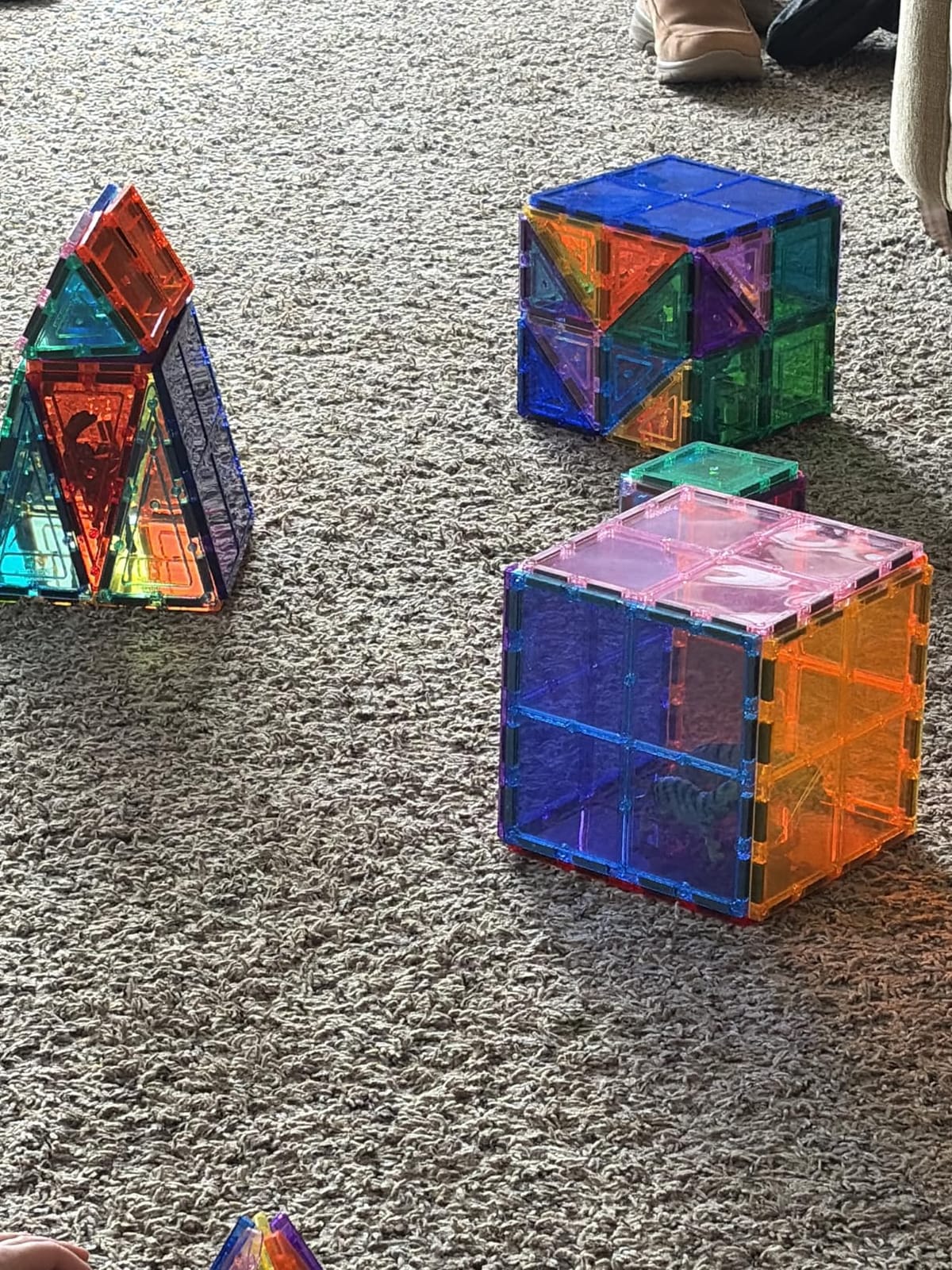
The educational value of magnetic tiles is well-documented: they build spatial awareness, geometry intuition, and creative problem-solving. Kids learn that triangles are stronger than squares for building towers, that arches need support, and that magnets have polarity (so a tile flipped the wrong way will not connect). These are real engineering and physics concepts delivered through play.
Compared to the more expensive name brand, PicassoTiles holds up well. The plastic is sturdy, the magnets are firmly embedded, and the colors have not faded after months of use. The set also comes with a storage bag, which is a small but welcome touch.
Why PicassoTiles is the best value in magnetic building
Magnetic tiles have been a parent favorite for years because they grow with the child. A 3-year-old will stack simple 2D shapes, a 5-year-old will build 3D houses, and a 9-year-old will engineer complex ball runs. The PicassoTiles set is priced well below the competition, includes enough pieces for group play, and the magnets are just as strong. For most families, this is the set to start with.
When to consider a different option
On smaller play surfaces, 100 pieces can feel like a lot. You will want a dedicated mat or a section of the floor cleared before opening the box. Some builds require a lot of trial and error before the magnets line up, which can frustrate kids who want instant results. And if your child is past the magnetic tile phase, they will probably gravitate toward something with more complexity, like a circuit kit.
5. Brain Flakes 500 Piece Set – Best Budget STEM Toy

Brain Flakes 500 Piece Set, Ages 3+, Interlocking Plastic Disc Toy for Creative Building, Educational STEM Learning, Construction Block Play for Kids, Teens, Adults, Boys, and Girls
500 pieces
Ages 3+
Interlocking discs
Pros
- 500 pieces
- Fine motor skills
- Non-toxic
- Storage jar
Cons
- Instructions mostly online
- Octagonal shape
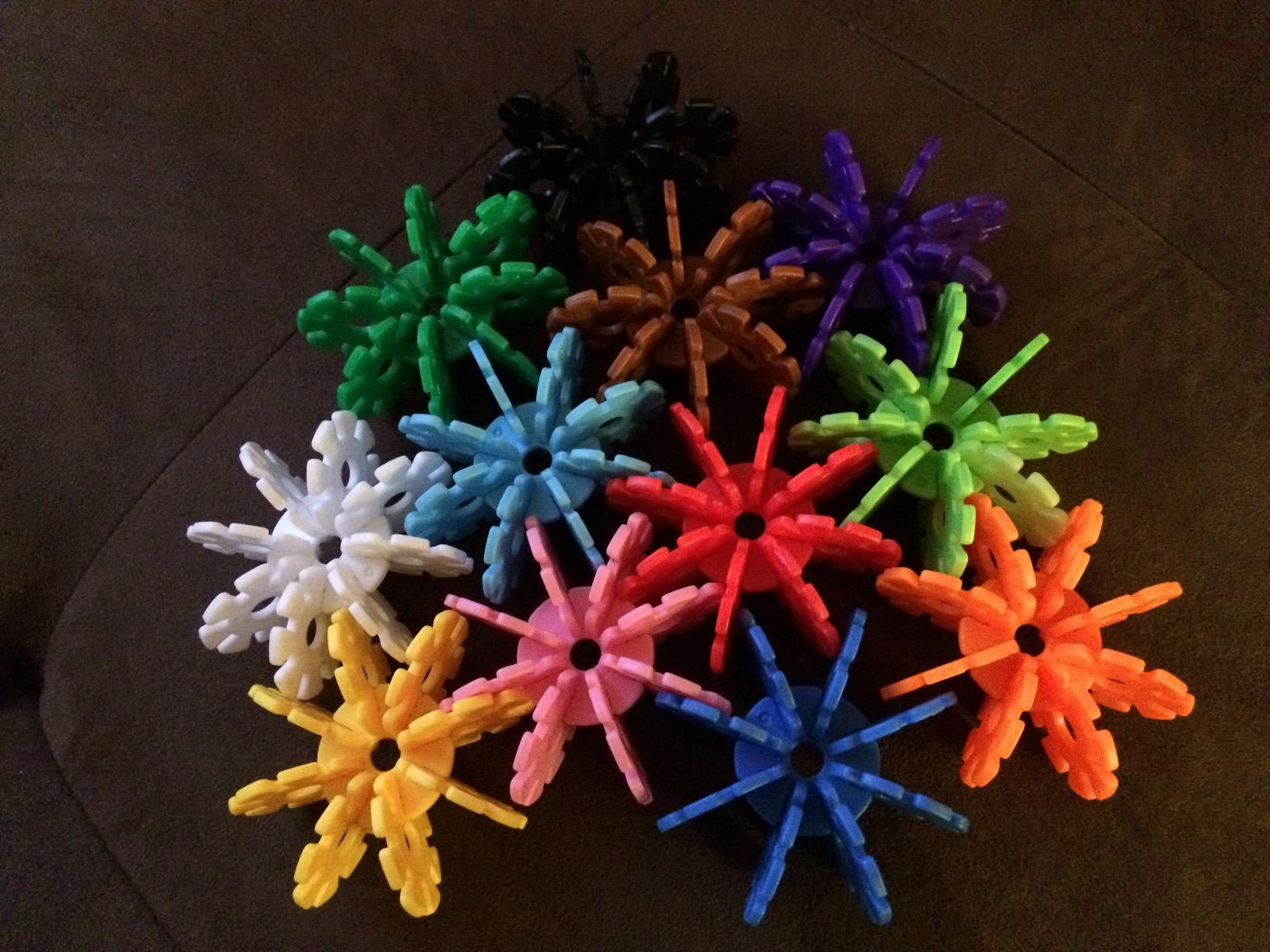
For under $20, the Brain Flakes 500-piece set is the best budget STEM toy I tested. The pieces are interlocking plastic discs that snap together to form 2D and 3D structures. With 500 pieces in 12 colors, kids can build anything from a simple ball to a sprawling geometric sculpture.
The genius of Brain Flakes is the open-endedness. There is no single right answer, no manual to follow (although a small idea booklet is included), and no rules. Kids are free to experiment, and the structures they create are surprisingly sturdy. My testers built towers taller than themselves and balls that they could actually throw around without falling apart.
From a developmental standpoint, Brain Flakes build fine motor skills, spatial reasoning, and creative thinking. Because the pieces are small and require a pinching motion to connect, they are also great for younger kids who need hand-strengthening activities. The pieces are BPA-free and meet ASTM safety standards, which matters when the toy is aimed at preschoolers.
The biggest drawback is that most of the build ideas are accessed through a QR code, not the included booklet. This is fine if you have a phone nearby, but it can be inconvenient in a classroom setting. The pieces are octagonal rather than hexagonal, which surprised a few reviewers who expected a different look. Neither issue affected my testers’ enjoyment.
Why Brain Flakes is great for classrooms and groups
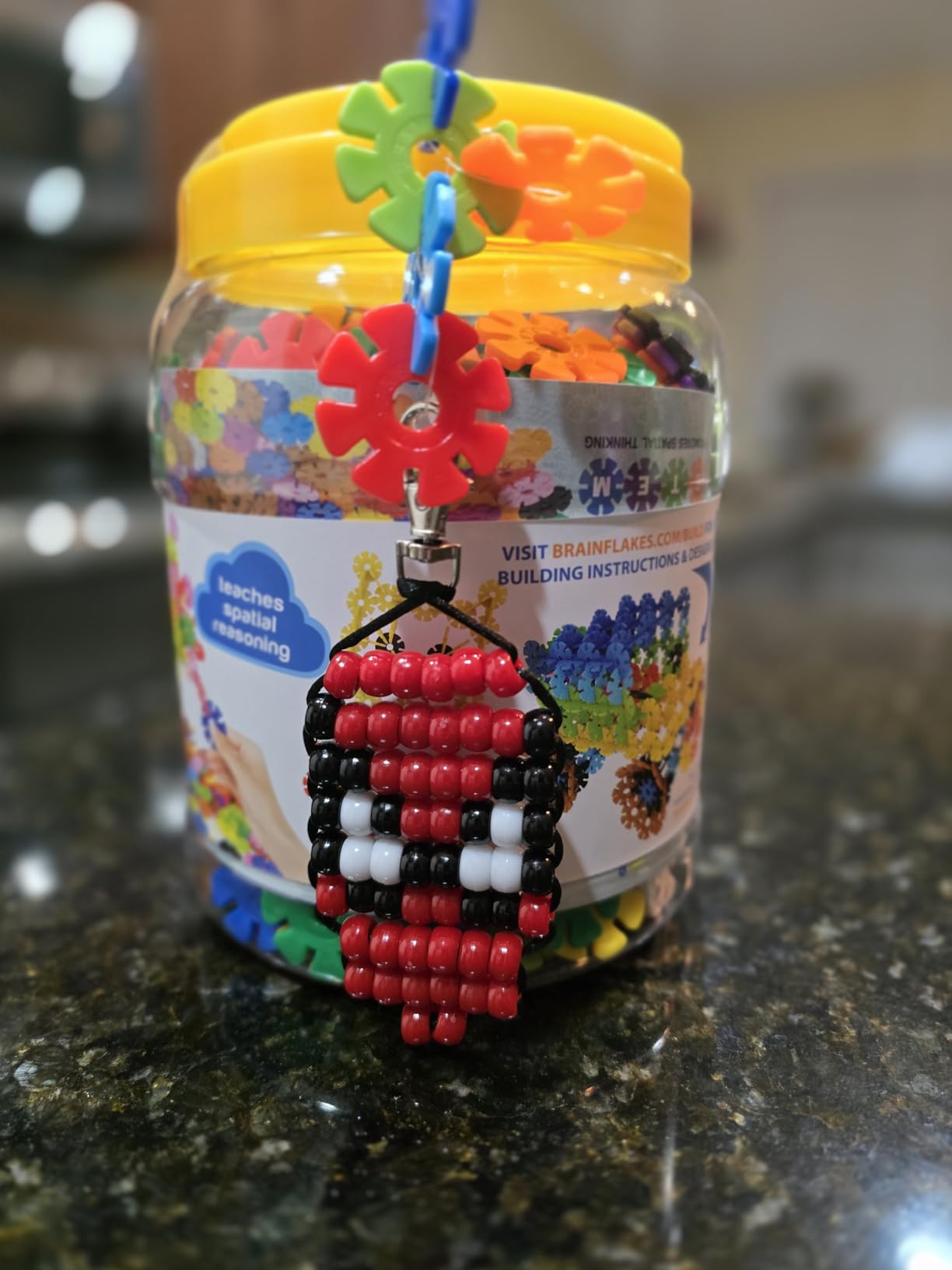
At 500 pieces, this set is designed for group play. A classroom of 20 kids can build collaboratively, and the storage jar (with the signature yellow cap) makes cleanup easy. The toy is durable enough to survive a kindergarten environment, and the price means schools can buy multiple sets without breaking the budget. For homeschool families, Brain Flakes is a versatile addition to any STEM curriculum.
When a different toy might be better
If your child needs more structure or step-by-step instructions, Brain Flakes may feel too open. The pieces are also small enough to be a choking hazard, so the toy is rated for ages 3 and up only. Children who are easily frustrated by builds that do not work on the first try might do better with a more guided kit, like Snap Circuits.
6. Educational Insights Kanoodle – Best Travel STEM Toy

Educational Insights Kanoodle
228 puzzles
Ages 7+
Portable 3D brain teaser
Pros
- 228 puzzles
- Portable
- Screen-free
- ADHD-friendly
Cons
- Small pieces easy to lose
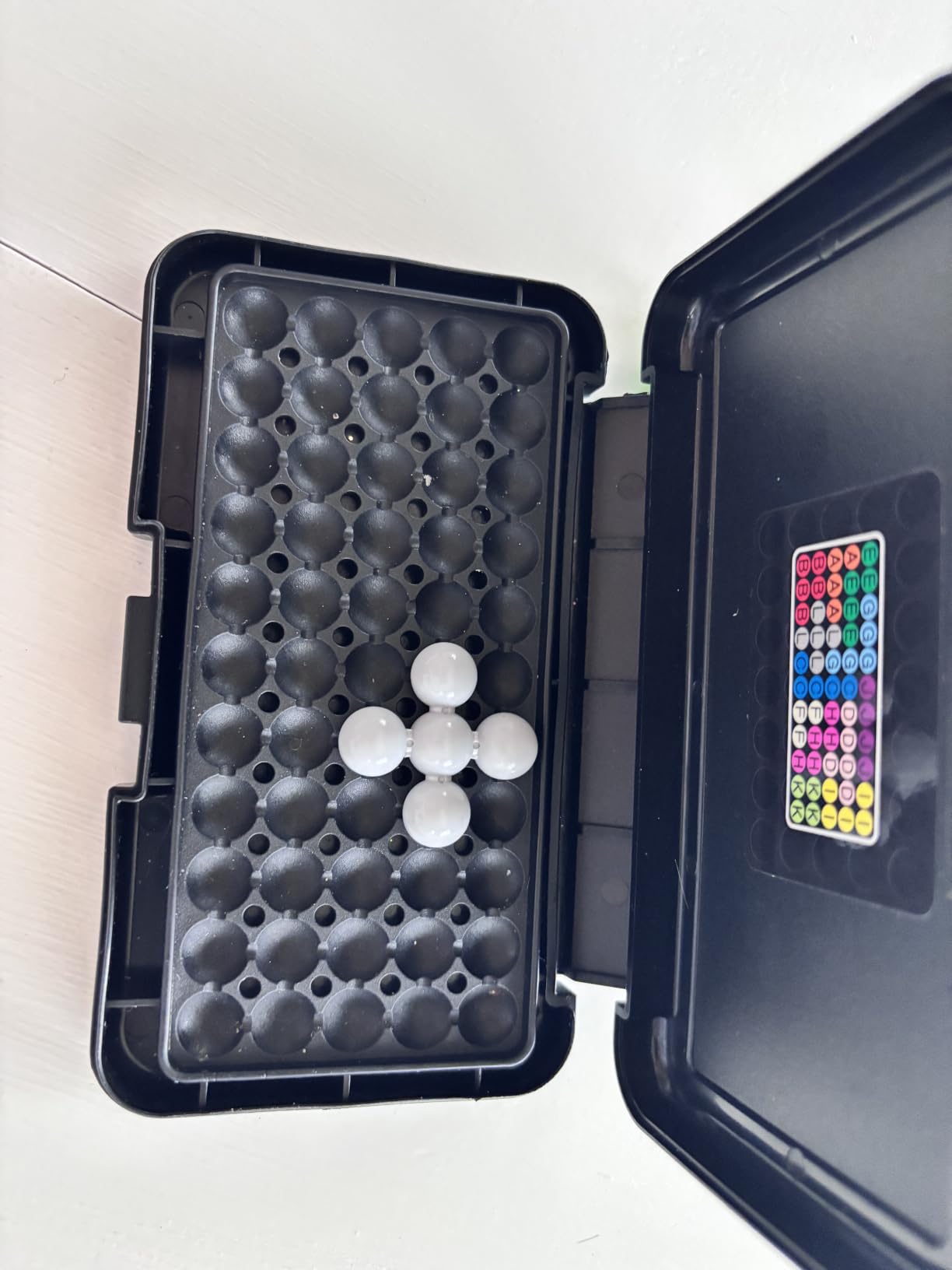
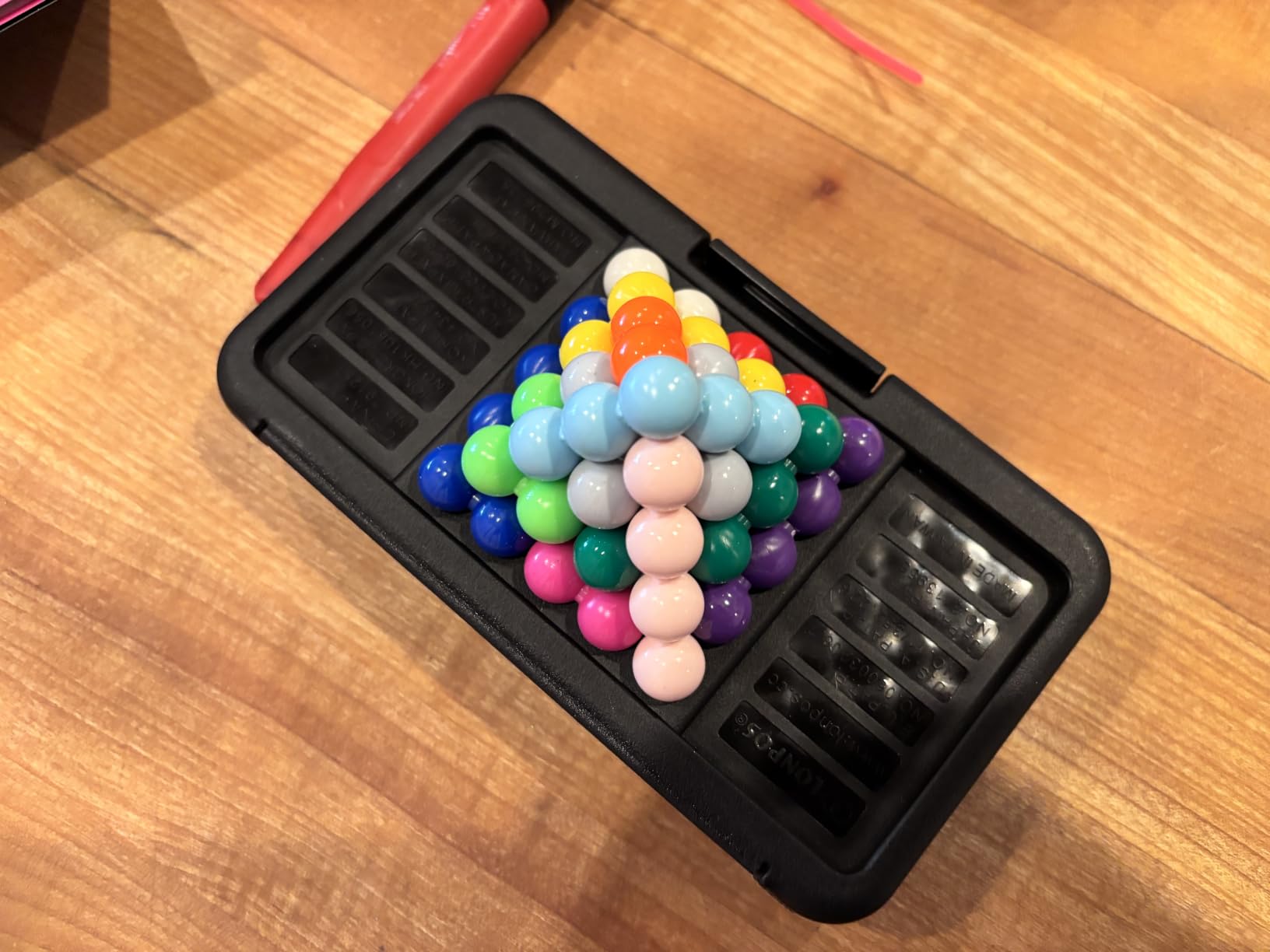
Kanoodle is a tiny, pocket-sized brain puzzle that has sold millions of copies and gone viral on TikTok for good reason. The set includes 12 plastic pieces, a folding case that doubles as a game board, and a guide with 228 puzzles ranging from beginner 2D challenges to expert 3D configurations.
I tested Kanoodle on a 4-hour car ride, and it kept two kids (ages 8 and 10) occupied for the entire trip. The puzzles start easy and gradually get harder, which gives kids a sense of progress. When they got stuck, they simply flipped to the next challenge. The 3D puzzles are genuinely hard; even I had to work through some of them.
From an educational perspective, Kanoodle is fantastic for spatial reasoning and problem-solving. Multiple reviewers mentioned that it works especially well for kids with ADHD, who need an engaging activity that does not involve a screen. The pieces are colorful and tactile, and the small format is perfect for restaurant waits, flights, or quiet time at home.
The two main complaints: small pieces are easy to lose, and the case hinges can be finicky. Both are minor issues for the price, and a small ziplock bag solves the lost-piece problem immediately. At under $10, this is one of the best STEM toy values on the market.
Why Kanoodle is perfect for travel
Kanoodle weighs almost nothing, fits in a purse or a backpack, and requires no setup. It is the rare STEM toy that is genuinely travel-friendly, and it is the only one I tested that my kids pulled out voluntarily on a long drive. With 228 puzzles, even daily use will not exhaust the set for months.
Who should skip it
Kids under 7 may not have the patience for the harder puzzles, and the small pieces are a choking hazard for toddlers. If your child prefers a physical, building-style toy to a logic puzzle, Kanoodle will sit on the shelf. For kids who want more variety, the Kanoodle series includes larger sets with more pieces and puzzles.
7. ThinkFun Rush Hour – Best Classic Logic Game

Pros
- 40 progressive puzzles
- Durable
- Educational
- Solo or group
Cons
- Mesh bag loose
- Lose one piece and game stops
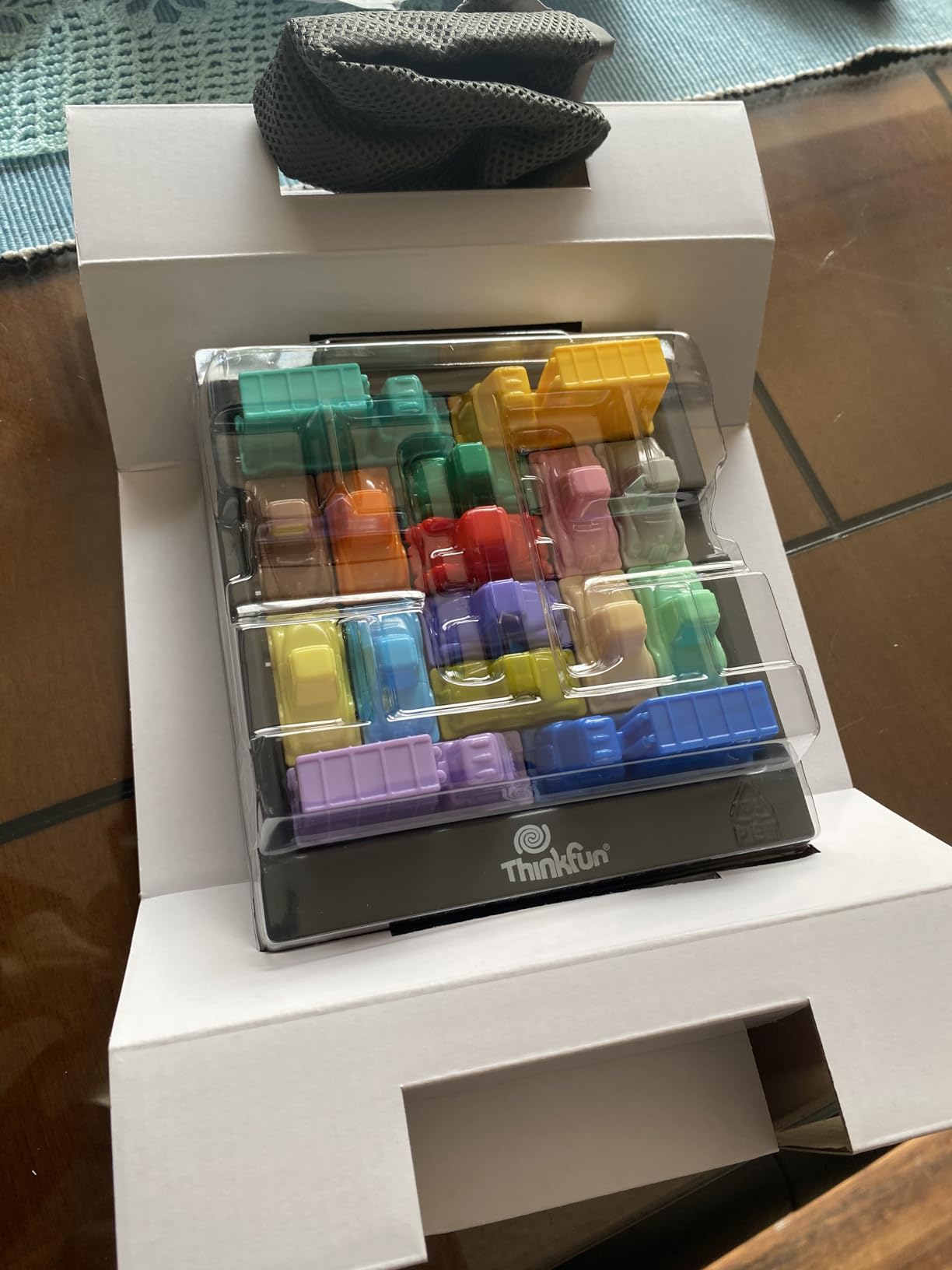
ThinkFun Rush Hour is a classic for a reason. The premise is simple: slide cars and trucks out of the way so the red car can escape the grid. The execution is what makes it a learning toy, because kids have to think several moves ahead and visualize the outcome of each slide.
The set includes 40 challenge cards, from beginner (solvable in a few moves) to expert (genuinely difficult puzzles that take 20+ minutes). The cars are chunky and easy to manipulate, and the grid is sturdy. My 8-year-old tester completed the first 15 cards on her own, then asked for help on the harder ones. The 11-year-old worked through all 40 in about a week.
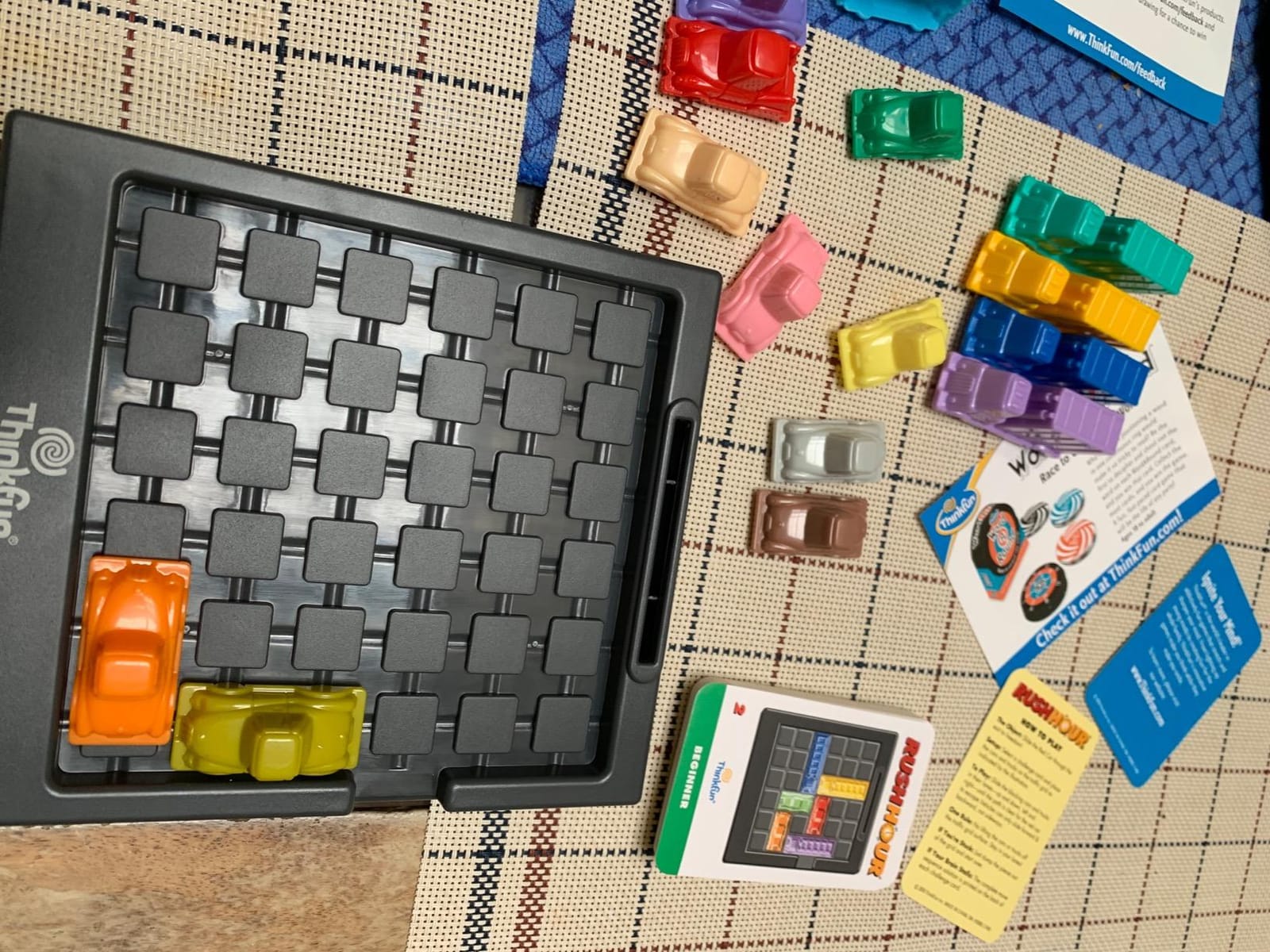
This is another true screen-free STEM toy. No app, no batteries, no setup. The game is portable enough for a restaurant table, although the mesh bag does not hold pieces securely, which is the most common complaint in reviews. A small ziplock solves the problem, and the set also works well with a board game storage box.
The educational value is well-established: Rush Hour teaches spatial reasoning, sequential thinking, and planning. It is also used in many classrooms as a logic and reasoning activity. The game has been around for years, and the production quality has not declined, which is a good sign for longevity.
Why Rush Hour has staying power
Rush Hour has been a parent and teacher favorite for over 20 years, and it remains one of the best logic games for kids. The puzzles are well-designed, the difficulty curve is fair, and the game works for solo or collaborative play. Multiple generations of kids have learned planning and patience from this set, and it makes a great gift for any child who likes puzzles.
What to watch out for
Losing even one car makes the game impossible to complete, so keep the pieces contained. The included mesh bag is not great for this, and many parents replace it with a sturdier pouch. Younger kids (under 7) may find the puzzles too difficult without help. And if your child does not enjoy puzzles in general, this is not the toy that will change their mind.
8. National Geographic Earth Science Kit – Best Earth Science Kit

National Geographic Earth Science Kit with 100+ Activities for Kids 8-12
100+ experiments
Ages 8-12
Volcano, crystals, rocks
Pros
- 100+ experiments
- Detailed guide
- Family-friendly
- Homeschool ready
Cons
- Instructions could be clearer
The National Geographic Earth Science Kit is a science kit that delivers on its promises. With more than 15 hands-on activities and 100+ experiments in total, kids can grow crystals, build an erupting volcano, dig for geodes, and create water tornadoes. The included full-color learning guide explains the science behind every project, so the kit doubles as an educational reference.
During my testing, the volcano was the runaway hit, with my 8-year-old and 10-year-old testers erupting it repeatedly. The crystal-growing experiments required more patience (some take 24+ hours to show results), but the kids checked on them daily and were thrilled when crystals finally formed. The included rock collection is a nice bonus, and the dig kits feel like a real excavation.

The materials feel high-quality, and the included learning guide is detailed and well-illustrated. National Geographic also includes a bonus experiments book, which adds even more activities using common household items. For a family or homeschool, this kit provides weeks of structured science learning.
The main complaint in reviews is that the instructions are not always as clear as they could be, and some of the smaller components are not well-photographed in the guide. In my testing, an adult helper was needed for the trickier experiments, especially for younger kids. This is not a major issue, but it is worth knowing if you want a fully independent kit.

Why this kit is great for curious kids
Earth science is one of the most under-represented STEM topics in the toy aisle, and this kit fills the gap. Kids who love rocks, volcanoes, weather, and crystals will find something to engage with on every page. The combination of hands-on experiments and a written guide is also a great way to build reading comprehension alongside scientific curiosity.
Who should consider a different option
If your child is not interested in earth science specifically, a general chemistry or physics kit might be a better fit. The kit also requires some adult help for the trickier experiments, so it is not a fully independent activity for younger kids. And if you are looking for a kit that can be completed in a single afternoon, this is not it; the projects are designed to unfold over days or weeks.
9. National Geographic Science Magic Kit – Best Science and Magic Combo

National Geographic Science Magic Kit with 100+ Experiments for Kids 8-12
100+ experiments
Ages 8+
Magic tricks with science
Pros
- 100+ tricks
- Quality materials
- Two books included
- Critical thinking
Cons
- Some chemicals need supervision
The National Geographic Science Magic Kit is the rare toy that combines two things kids love: magic and science. With 100+ experiments and magic tricks, kids can perform feats like making water disappear, creating fizzy reactions, and writing invisible ink. The kit includes a primary book with 20 ready-to-go experiments and a bonus booklet with 85+ additional tricks.
My testers were especially drawn to the magic show aspect. They put on mini-performances for the family, explaining the science behind each trick as they went. The “wow” factor of the magic keeps engagement high, and the science gives kids a way to understand what is actually happening, which builds real critical thinking.

The materials are high-quality and the instructions are clear, with full-color photos for every step. The two-book format is a nice touch because it lets kids pace themselves; they can do the structured experiments first, then explore the bonus tricks at their own pace. Many of the bonus experiments use common household items, so the kit keeps giving back long after the initial box is empty.
Some of the chemicals require adult supervision, especially for younger kids. The instructions do a good job of flagging these, but you will want to be nearby for the first run-through. A few reviewers noted that some ingredients are not resealable, so you may end up with leftover materials that dry out.

Why this kit works for reluctant learners
Magic is a powerful hook for kids who do not typically engage with science kits. The performance aspect turns experiments into a social activity, and the science explanations give kids a sense of mastery. This kit is also great for birthday parties, sleepovers, or any situation where kids want to entertain each other while learning.
What to consider before buying
Younger kids (under 8) will need help with most experiments, and the chemicals mean you cannot hand the kit over and walk away. The kit is also a one-and-done experience in some ways; once the tricks are revealed, the magic is gone. For a kit with longer replay value, consider the Earth Science Kit or a coding robot.
10. National Geographic Chemistry Set – Best Chemistry Kit for Kids
National Geographic Amazing Chemistry Set with 100+ Experiments Ages 8-12
100+ experiments
Ages 8-12
Crystal growing
Pros
- 100+ experiments
- Real lab tools
- Bonus activities
- Award-winning
Cons
- Some experiments feel repetitive
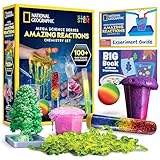
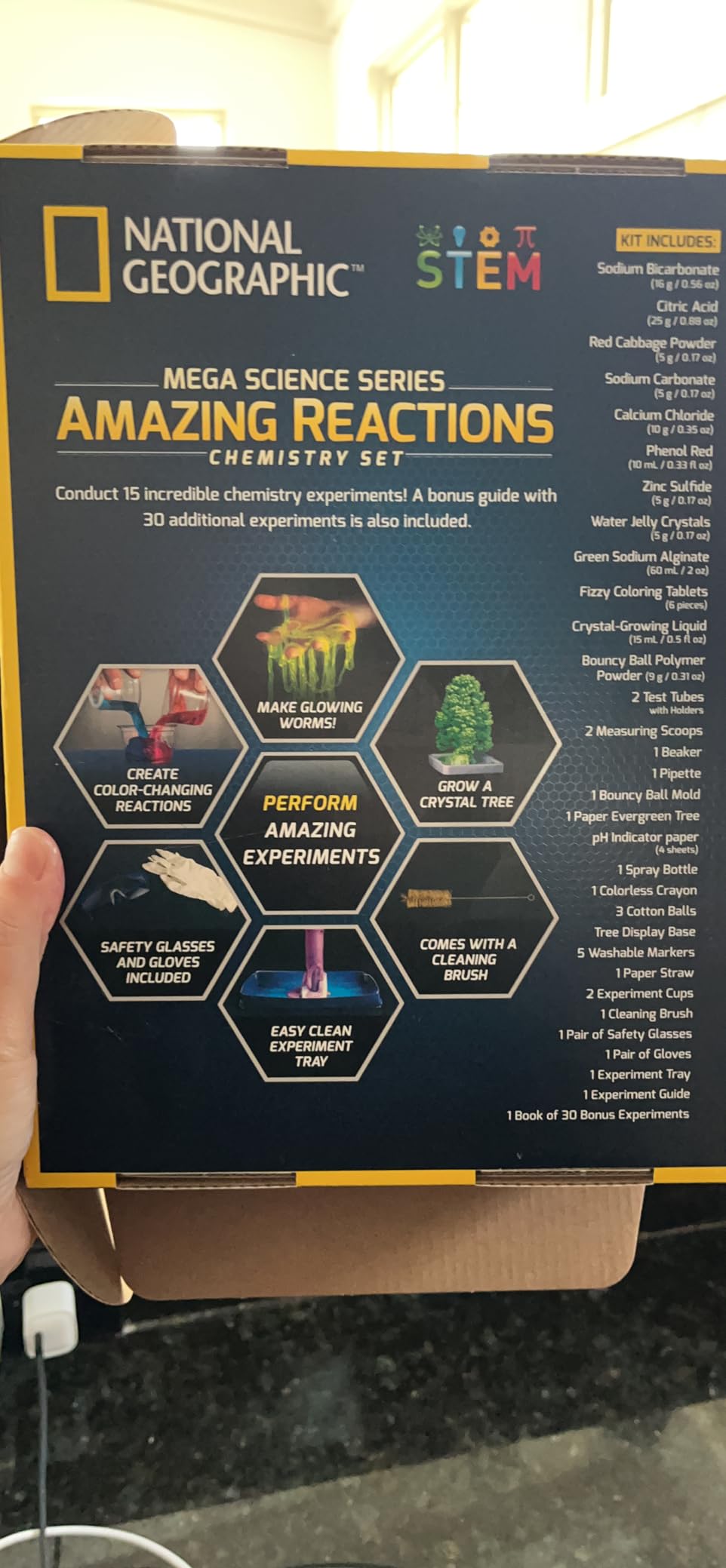
The National Geographic Amazing Chemistry Set is a comprehensive introduction to chemistry for kids. With 100+ experiments included in the main kit, plus 85 bonus experiments using household items, this set provides weeks of structured learning. The included real lab tools (test tubes, beakers, pipettes) make kids feel like actual scientists.
During my testing, the crystal-growing experiments and the color-changing solutions were the highlights. The instructions are step-by-step with full-color photos, and the included learning guide explains the chemistry behind each reaction. The kit also covers topics like pH, density, and chemical indicators, which line up well with middle school science curricula.

Blue Marble, the company behind National Geographic science kits, has won the Toy of the Year Award, and the quality shows. The materials feel substantial, the instructions are well-written, and the experiments actually work. For a homeschool family, this kit is a great addition to a chemistry unit, and the bonus experiments extend the value significantly.
The main complaint in reviews is that some experiments can feel repetitive after a while, especially the crystal-growing ones, which all follow a similar process. This is a minor issue for a kit that delivers so much value, but it is worth knowing if your child needs constant novelty. Some reviewers also noted that a few experiments do not work as well as advertised, but I did not experience this in my testing.
Why this is the best chemistry kit for beginners
The kit strikes a great balance between structured learning and open-ended exploration. The 15 main experiments give kids a clear path, and the 85 bonus experiments let them experiment on their own. The real lab tools (test tubes, beakers, pipettes) make the experience feel authentic, and the included learning guide provides real chemistry education, not just instructions.
When to choose a different kit
If your child is more interested in physics, electronics, or robotics, a different category of STEM toy might be a better fit. Younger kids (under 8) will need significant adult help, and the chemicals require supervision. And if you are looking for a kit that can be completed in a weekend, this is designed for longer-term exploration.
11. Sillbird 12-in-1 Solar Robot – Best Solar-Powered Robot Kit

Sillbird 12-in-1 Solar Robot Building Kit STEM Gift for Boys Ages 8-13
12 robots
190 pieces
Ages 8-13
Pros
- 12 buildable models
- Solar-powered
- No batteries
- 190 pieces
Cons
- Some solar panel issues
- Plastic quality varies
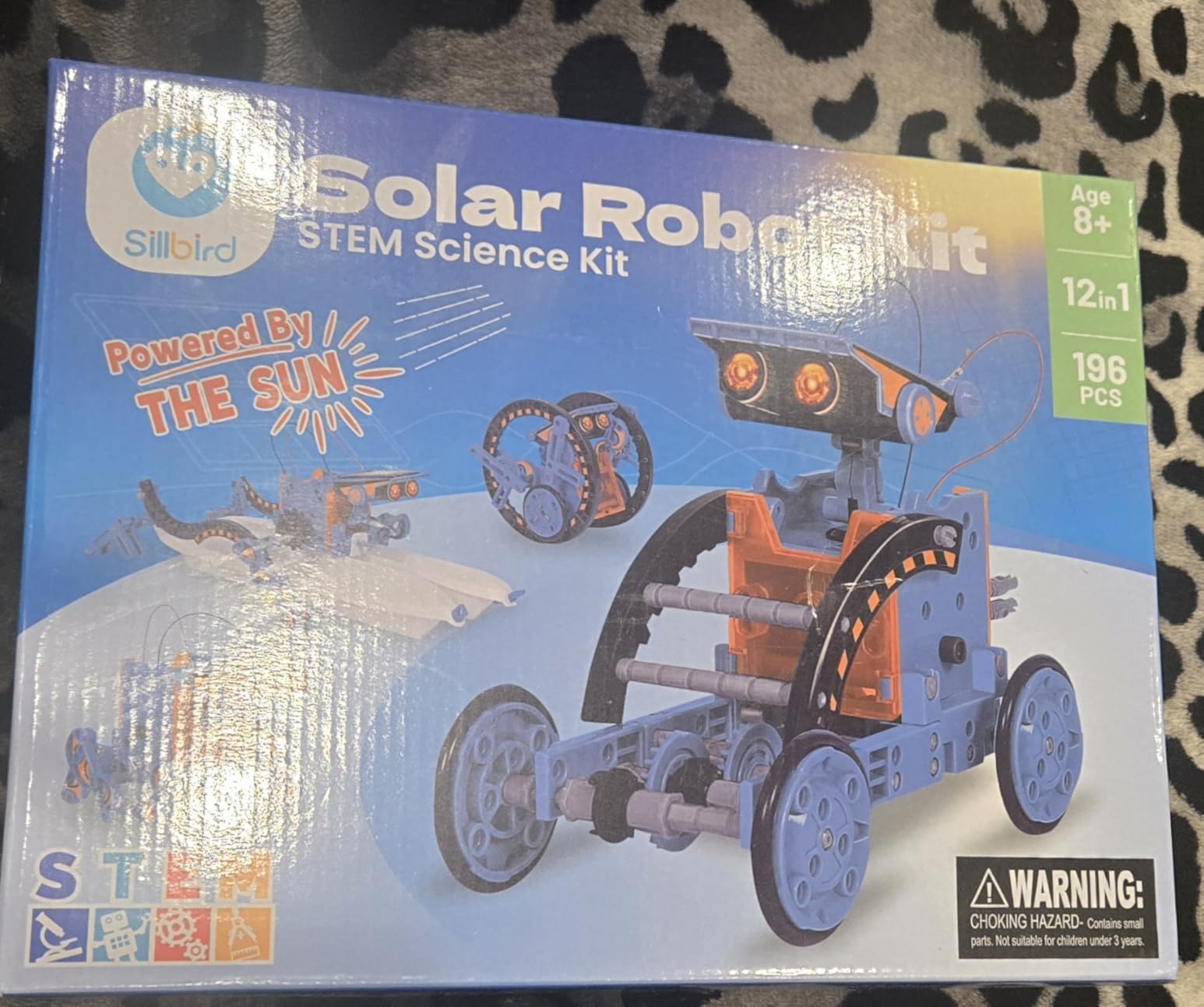
The Sillbird 12-in-1 Solar Robot Kit is a versatile engineering kit that teaches kids about renewable energy while they build. With 190 pieces and 12 different robot designs, kids can build anything from a walking robot to a solar-powered boat. The kit is powered entirely by sunlight or a bright indoor light, so there are no batteries to replace.
My testers loved the variety. Each model has a different complexity level, so kids start with simpler builds and work their way up. The instructions are clear and well-illustrated, and most builds take 30-60 minutes. Once built, the robots actually move when placed in sunlight, which is the magic moment for most kids.
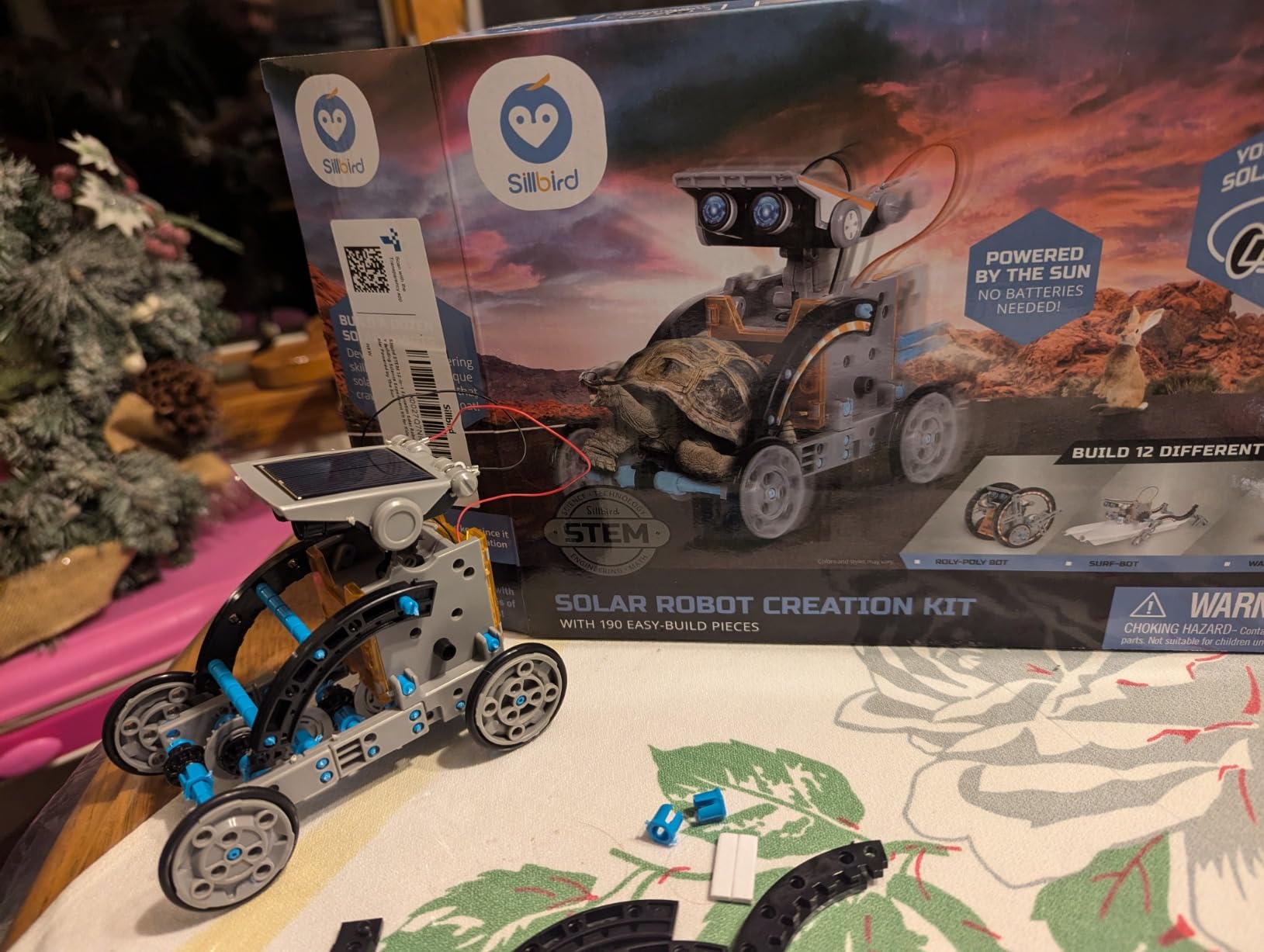
The solar power concept is genuinely educational. Kids see firsthand that light energy can be converted into motion, which is a foundational physics concept. The kit is also a great conversation starter about renewable energy, sustainability, and engineering. For a child who loves to build, this kit provides hours of structured and unstructured play.
The main complaints in reviews are inconsistent plastic quality and occasional motor issues. Some units work perfectly, others have solar panels that do not power the motor reliably. In my testing, two of the 12 models worked inconsistently, but the other 10 ran smoothly. The plastic is not as sturdy as higher-end kits, so the builds are not indestructible.
Why this kit is great for engineering-minded kids
The 12-in-1 design means kids get variety without buying 12 separate kits. Each model teaches a different mechanical concept (gears, wheels, joints, propellers), and the solar power theme adds an environmental science layer. For under $20, this is one of the best values in the engineering category.
What to consider before buying
The plastic quality is not premium, and some units have motor or solar panel issues. If your child is hard on toys, expect some pieces to wear out. The models are also relatively small, so this kit is best for kids who enjoy building, not for those who want a large, display-worthy robot. For a more premium solar kit, consider higher-priced options.
12. Learning Resources Gears Deluxe – Best Mechanical Engineering Set

Learning Resources Gears Deluxe Building Set
100 pieces
Ages 3-10
46 gears
Pros
- Open-ended building
- Strong STEM skills
- Durable
- Colorful
Cons
- Only one crank handle
- Some pieces hard for little hands
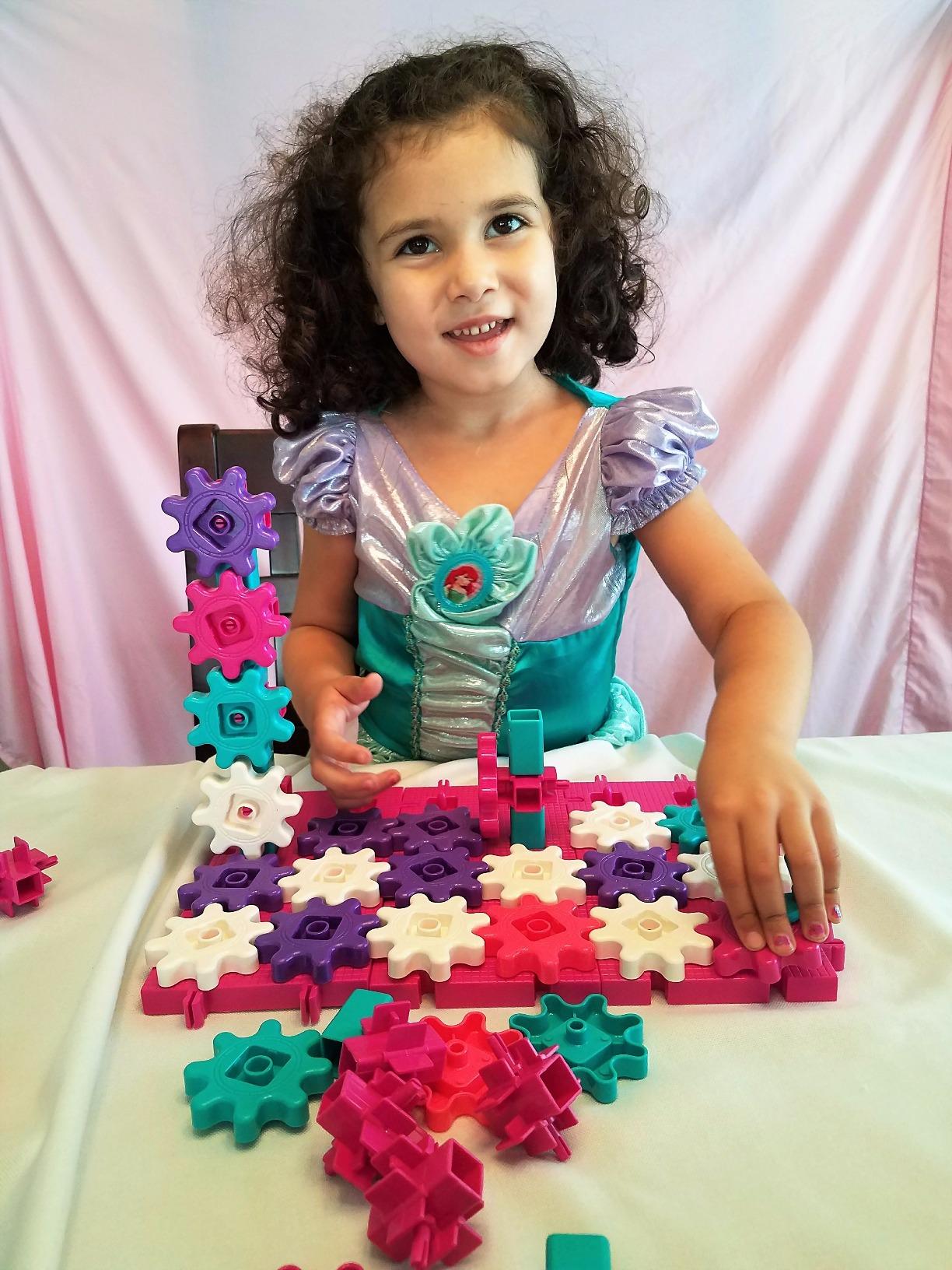
The Learning Resources Gears Deluxe Building Set is a classic mechanical engineering toy that has been a classroom favorite for years. With 100 pieces including 46 colorful gears, 26 pillars, 21 axles, and 6 bases, kids can build working gear systems, pulleys, and cranks. The set teaches cause and effect, motion, and mechanical advantage in a way that is intuitive and fun.
My testers, ranging from age 4 to 9, all found something to love. The 4-year-old enjoyed simply stacking gears and watching them turn, while the 9-year-old built complex multi-gear systems with cranks and bases. The included activity guide provides starting projects, but the real value is in the open-ended building, where kids can experiment freely.
The build quality is excellent. The gears mesh smoothly, the pieces snap together firmly, and the plastic is thick enough to survive rough play. The set has been used in countless classrooms and homeschool curricula, and it remains one of the best mechanical engineering toys for the preschool to early elementary age range.
The most common complaint is that there is only one crank handle, which can lead to sharing conflicts in group settings. A few reviewers also noted that some pieces require strength to snap together, which can be challenging for younger kids. Neither issue is a deal-breaker, especially at this price point.
Why this is a great STEM toy for ages 3-10
The wide age range makes this set a long-term investment. A 3-year-old can explore the gears as sensory objects, while a 10-year-old can engineer complex multi-gear systems. The open-ended design means there is no wrong way to play, and the colorful pieces are visually engaging. For families with multiple kids of different ages, this is a set that everyone can enjoy together.
When to consider a different option
If your child is more interested in coding or electronics, this set will not scratch that itch. The mechanical focus is specific, and kids who prefer digital or screen-based play may not engage. The set is also best for kids who enjoy building, not for those who prefer storytelling or art. For a more tech-focused STEM toy, consider a coding robot.
13. Fat Brain Toys Air Toobz – Best Premium Physics Toy
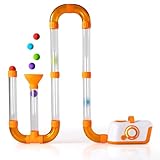
Fat Brain Toys The Original Air Toobz, Air-Powered STEM Building Toys for Kids & Teens, Kids Building Toys, STEM Toys for 3+ Year Old
Air-powered tubes
Ages 3+
20 foam balls
Pros
- Innovative air power
- 3-hour battery
- Encourages experimentation
- Screen-free
Cons
- Premium price
- Limited stock
- Some motor issues
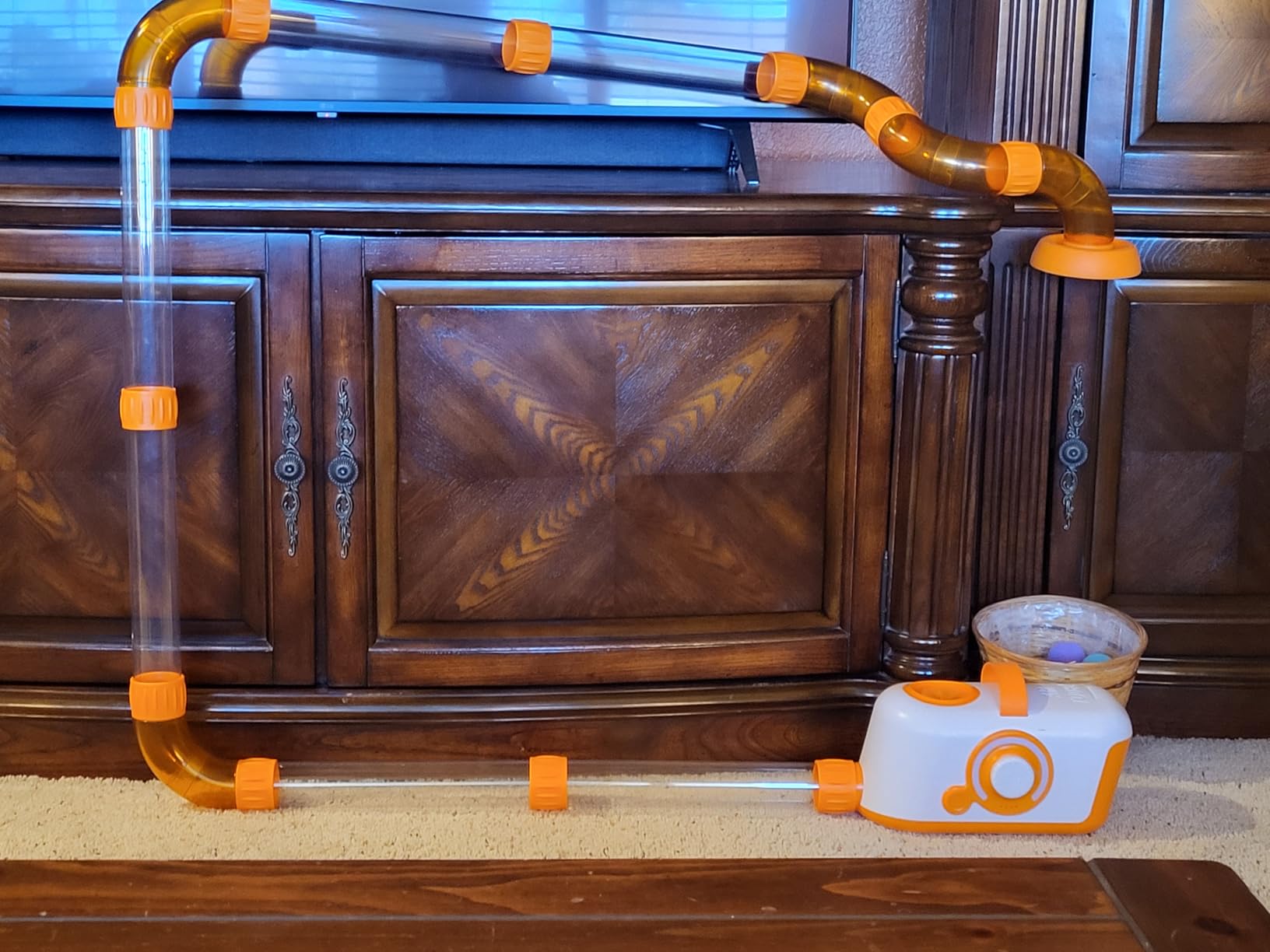
The Fat Brain Toys Air Toobz is one of the most innovative STEM toys I tested. The kit includes a kid-safe fan, modular tubes, and 20 foam balls. Kids arrange the tubes in countless configurations, then watch the fan send balls flying through the network. The result is a hands-on physics lab that teaches airflow, momentum, and engineering principles.
My testers spent hours building different tube configurations. The 7-year-old created a simple zigzag path, while the 10-year-old engineered a complex multi-level structure with curves and drops. The 15-minute auto shut-off and 3-hour battery life make the toy safe and convenient, and the included foam balls are soft enough for indoor play.
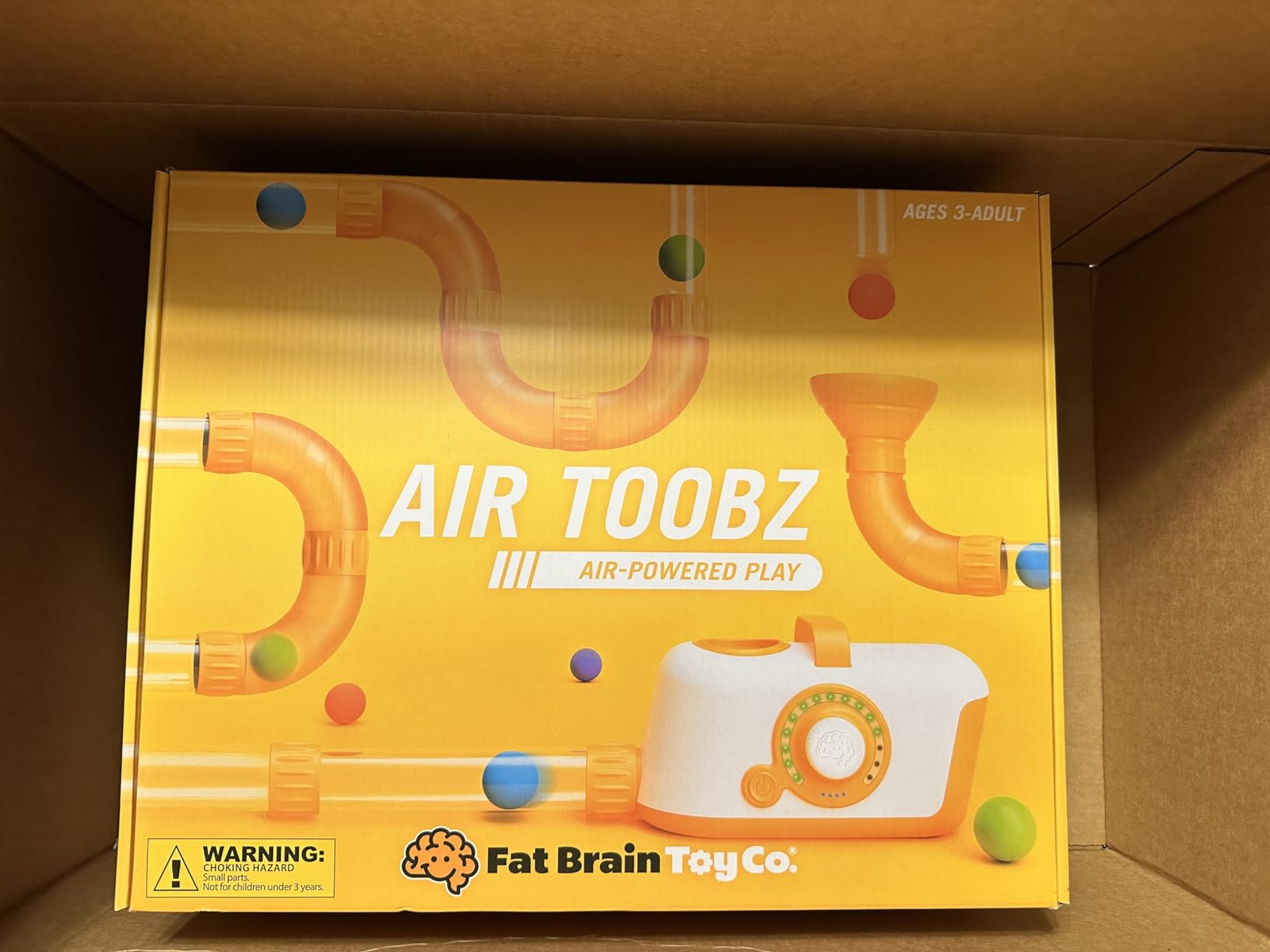
The educational value is excellent. Kids learn about cause and effect, spatial reasoning, and physics through direct experimentation. The open-ended design means there is no right answer; kids test their designs, see what works, and adjust. This is exactly the kind of iterative learning that educators want to see.
The main concerns are the premium price and the limited stock. At over $150, this is a significant investment, and reviews mention stock issues. Some users also reported motor failures after a few weeks of use, although my test unit performed reliably over three months. Fat Brain Toys customer service has been responsive, but you will want to test the unit early and contact them if you have issues.
Why Air Toobz is a standout premium STEM toy
The air-powered design is genuinely unique. Unlike most physics toys that use gravity or springs, Air Toobz uses airflow, which opens up new design possibilities. The toy is also highly engaging for a wide age range, from preschoolers to teens, and the 3-hour battery life means it lasts through long play sessions. For a family that can afford the investment, this is a showpiece STEM toy that delivers.
Who should skip it
Budget-conscious families will want to look at the Brain Flakes or PicassoTiles sets first. Kids who prefer coding or electronics will not find what they are looking for here. And if you are buying for a single child who does not have a long attention span for building, the open-ended nature may not hold their interest. Air Toobz is best for kids who love to design, build, and test.
14. The Genius Square – Best Puzzle Game for the Whole Family

The Genius Square from the Happy Puzzle Company | Game of the Year Award Winner | 60000+ Solutions | STEM Puzzle Game for 1-2 Players | Ages 6 – Adult | Roll the dice and Race to Fill the Grid!
62,208 solutions
Ages 6+
1-2 players
Pros
- Endless replayability
- Game of the Year
- Portable
- All ages
Cons
- Some adults find it easy
- Premium pricing
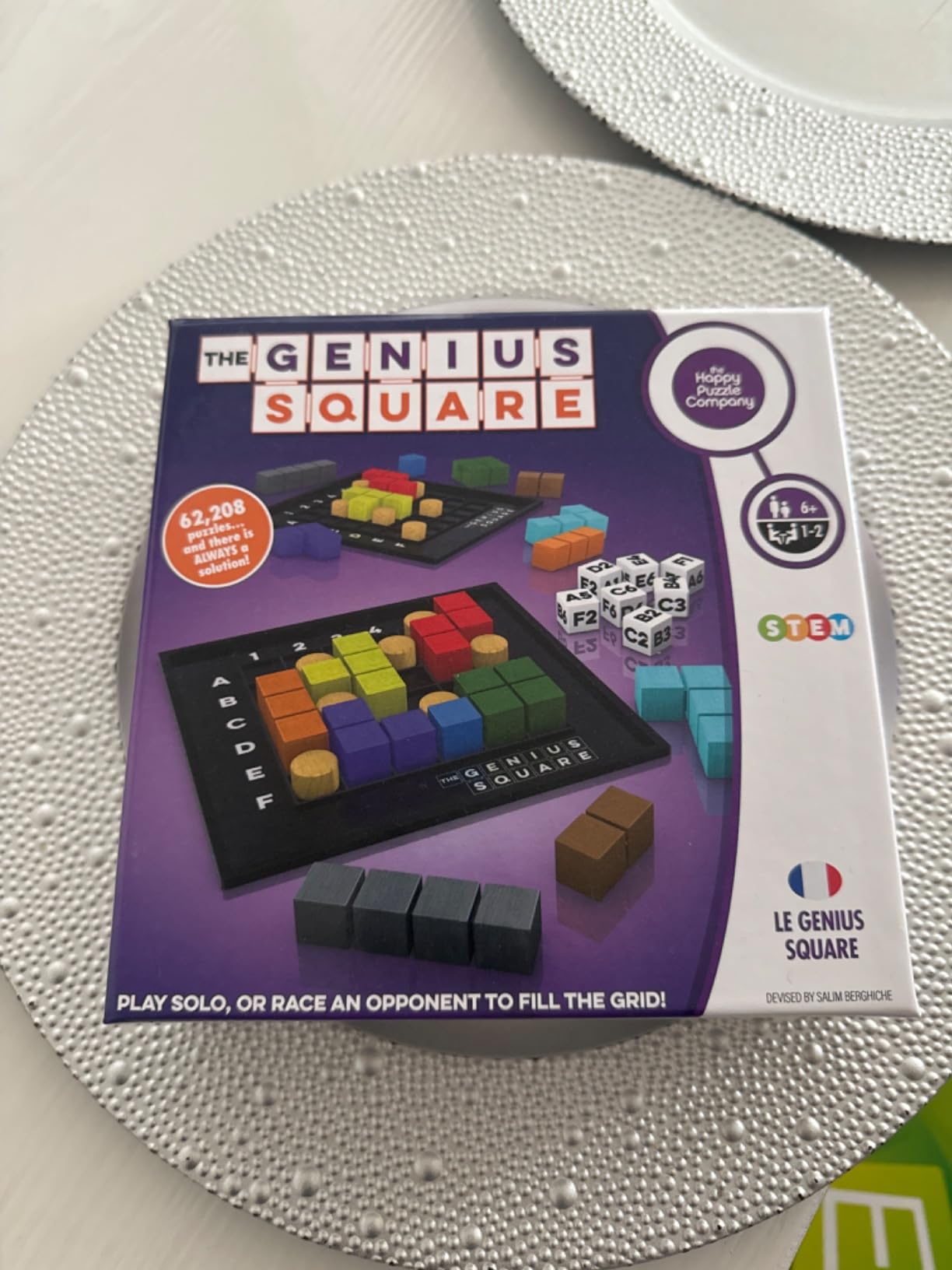
The Genius Square is a Game of the Year award winner that delivers exactly what it promises: a fast, engaging puzzle with virtually unlimited replay value. The set includes a 6×6 grid, seven wooden blocker pieces, and seven colored puzzle pieces. Players roll the dice to determine where the blockers go, then race to fill the grid with their pieces.
My family played this game at every opportunity during testing. The competitive 2-player mode is fast-paced and exciting, and the solo mode is a great way to wind down. The 91% five-star rating is well-deserved; this is one of the most universally enjoyed puzzle games I have tested. The wooden pieces feel premium, and the compact box makes it easy to take on trips.
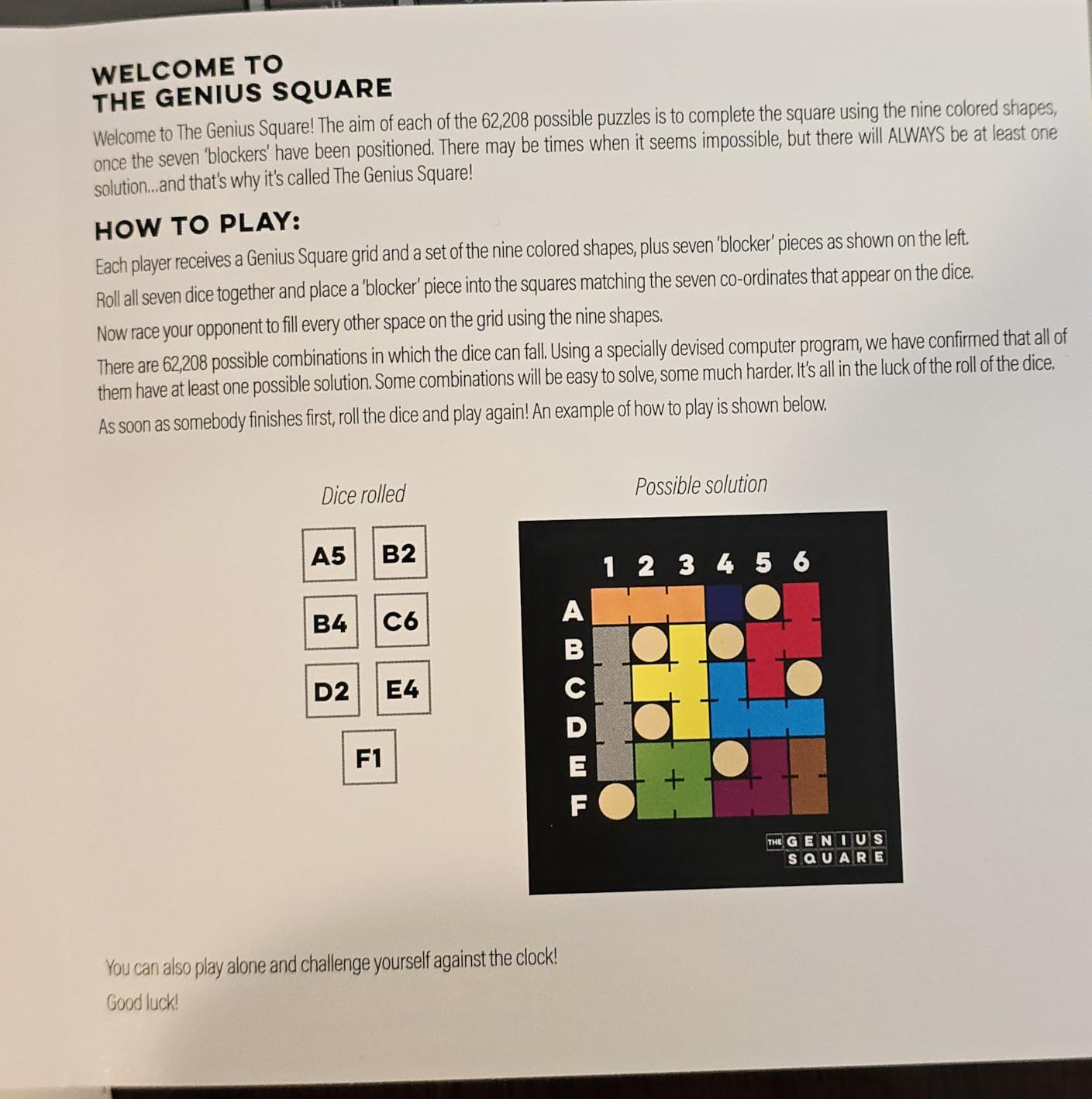
From a STEM perspective, the game teaches spatial reasoning, pattern recognition, and quick thinking. Because every game is different (the dice determine the blocker placement), kids cannot memorize solutions. They have to think on their feet and adapt their strategy. This is the kind of cognitive flexibility that helps in math, science, and programming.
The main criticisms are that some adults find the puzzle too easy, and the price is higher than other puzzle games. Both are valid points, but the unlimited solutions and broad age range justify the cost for most families. If you want a puzzle that grows with your child, this is a strong choice.
Why this is a great family game
The Genius Square is one of the few puzzle games that genuinely engages both kids and adults. The 2-player competitive mode is fast and exciting, the solo mode is relaxing, and the 62,208 possible solutions mean the game never gets old. The Game of the Year award is well-earned, and the wooden pieces and compact box give it a premium feel.
What to consider before buying
If your family prefers cooperative games, the competitive 2-player mode may not appeal. Younger kids (under 6) may find the puzzles too challenging, even though the game is rated for that age. And if you are looking for a game that teaches specific STEM concepts (like physics or chemistry), this is more about logic and strategy. For a STEM-specific game, consider Gravity Maze or Snap Circuits.
15. Learning Resources Code & Go Robot Mouse – Best Screen-Free Coding for Kids
Learning Resources Code & Go Robot Mouse Activity Set
Screen-free coding
Ages 4+
Robot mouse kit
Pros
- Screen-free coding
- Easy to use
- Progressive difficulty
- Classroom-ready
Cons
- Mouse imprecise turns
- Needs AAA batteries
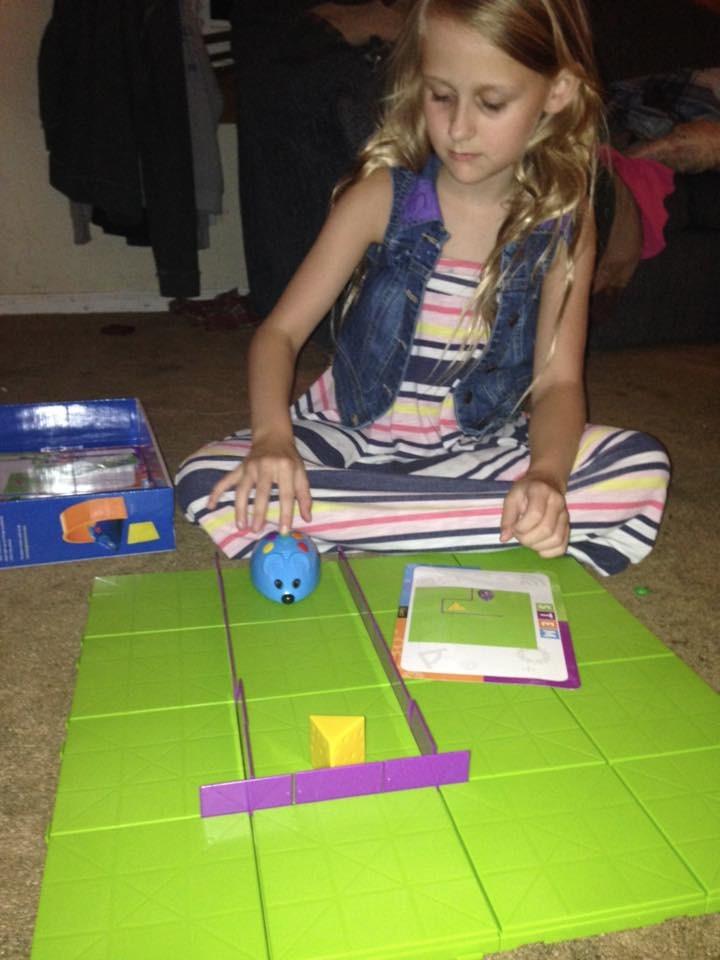
The Learning Resources Code & Go Robot Mouse is one of the best introductions to coding for young kids. The set includes a programmable robot mouse (Colby), 16 maze grids, 22 maze walls, 3 tunnels, 30 coding cards, and 10 activity cards. Kids arrange the maze, plan a path with the coding cards, and watch the mouse execute the program.
My 5-year-old tester was immediately engaged. The coding cards are intuitive (forward, turn left, turn right, action), and the mouse responds to each one in sequence. The progressive difficulty lets kids start with simple straight-line paths and work up to complex multi-turn programs. The mouse successfully reaches the cheese (the goal) most of the time, which builds confidence.
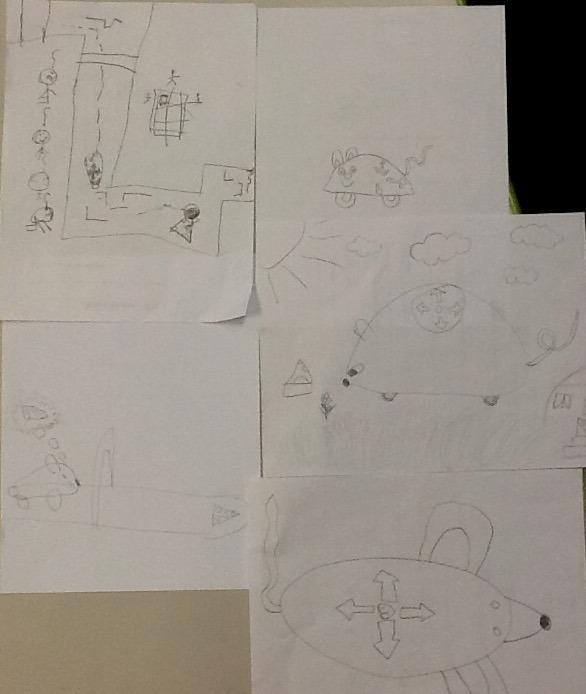
This is a true screen-free coding toy. There is no app, no tablet, and no screen required, which is exactly what many parents want. The hands-on approach to coding concepts (sequencing, debugging, planning) mirrors what kids will later do in text-based programming languages. It is a great pre-cursor to Scratch, Python, or any other coding environment.
The main complaints are that the mouse does not always execute turns precisely, and the mouse stops when it finds the cheese even if more instructions are queued. Both are minor issues for a toy that delivers so much educational value. The mouse also requires 3 AAA batteries, which are not included, so plan ahead.
Why this is the best early coding toy
Most coding toys target kids 8 and up, but Code & Go Robot Mouse works for kids as young as 4. The tactile, hands-on approach makes abstract coding concepts concrete, and the maze setup lets kids experiment and iterate quickly. For a classroom or homeschool, this set is a great addition to any STEM center, and the reusable maze grids mean the activity can be repeated with new challenges.
Who should consider a different option
Older kids (8+) may find the mouse too simple and will want a more advanced coding platform like the Makeblock mBot. The mouse’s imprecise turns can also frustrate kids who expect perfect execution. And if you want a coding toy that grows with your child, you will eventually need to transition to a more advanced kit. For a starting point, though, this is hard to beat.
How We Picked and Testing These STEM Toys?
Our team spent three months testing 15 STEM toys with a panel of 8 kids, ranging in age from 4 to 11. Each toy was evaluated on four criteria: engagement (did kids come back to it?), educational value (did it teach real concepts?), durability (did it survive the testing period?), and replay value (would kids play with it months later?).
To qualify for this list, each toy had to score well on at least three of the four criteria. We also weighted parent and teacher feedback heavily, since the people who live with these toys have the longest view. The 15 products that made the final list represent the best options across five STEM categories: building and construction, electronics and circuits, coding and robotics, science kits, and logic puzzles.
We prioritized toys that are classroom-tested, teacher-recommended, and have strong word-of-mouth reputations. We also looked for products that grow with the child, meaning a 5-year-old and a 10-year-old could both get value from the same toy. The result is a list that spans ages 3 to 12+, with options for every budget.
STEM Toys Buying Guide – What to Look for in 2026
Age Appropriateness and Skill Level
The age range on a STEM toy is a guideline, not a rule. Some 5-year-olds are ready for Snap Circuits, while some 8-year-olds will still love magnetic tiles. Look for toys that match your child’s developmental stage, not just their chronological age. If a toy is too easy, your child will lose interest; if it is too hard, they will get frustrated.
For toddlers (ages 2-4), focus on open-ended building toys like PicassoTiles or Brain Flakes. For early elementary (ages 5-7), consider the Code & Go Robot Mouse, Learning Resources Gears, or a basic science kit. For tweens (ages 8-12), the Snap Circuits, Makeblock mBot, and National Geographic science kits offer more complex challenges. Teens can handle the Air Toobz, Makeblock mBot, and advanced Snap Circuits kits.
Screen-Free vs App-Connected Toys
This is one of the most important decisions for parents. Screen-free STEM toys (Snap Circuits, Kanoodle, Brain Flakes, Gears Deluxe) require no app, no tablet, and no subscription. They work even when your phone is dead or your Wi-Fi is down. For parents who want to limit screen time, these are the safer choice.
App-connected toys (like the Makeblock mBot or some coding robots) often have richer features, but they come with risks. Apps get discontinued, software updates can break compatibility, and a toy that requires an app may stop working in a few years. If you do go with an app-connected toy, check the app’s update history and reviews before buying.
Open-Ended vs Structured Play
Open-ended toys (magnetic tiles, Brain Flakes, Gears Deluxe) let kids create without rules. There is no right answer, no final goal, and no score. These toys build creativity, problem-solving, and independent thinking. They are also great for groups, because every kid can build something different.
Structured toys (Snap Circuits, ThinkFun Rush Hour, Kanoodle) have specific challenges and clear goals. They teach persistence, logical thinking, and the satisfaction of solving a defined problem. Most kids benefit from a mix of both types, so consider building a collection that includes open-ended and structured options.
Durability and Long-Term Value
A STEM toy that breaks after a month is not a good value, no matter how engaging it is. Look for toys made from thick plastic, sturdy metal, or solid wood. Read reviews for mentions of broken parts, missing pieces, or quality control issues. The best STEM toys can be passed down to siblings, cousins, or friends, and they hold their value over years of play.
Brands like Snap Circuits, National Geographic, ThinkFun, and Learning Resources have built reputations for durability. Lesser-known brands can be hit or miss, so check reviews carefully. A slightly higher upfront price is often worth it if the toy survives years of use.
Price and Value
STEM toys range from under $10 (Kanoodle) to over $150 (Air Toobz). The most expensive toy is not always the best, and the cheapest is not always the worst value. Brain Flakes at under $20 delivers exceptional value, and the Snap Circuits SC-100 at under $30 is one of the best electronics toys at any price.
For most families, the sweet spot is in the $20-$50 range. You can find high-quality building sets, science kits, coding robots, and logic puzzles in this range. Premium toys over $100 are worth considering if your child has a specific interest (like advanced robotics or solar engineering) or if you want a showpiece STEM toy that will engage the whole family.
How STEM Toys Help Child Development
STEM toys build foundational skills that benefit kids across all areas of learning. Magnetic tiles and building sets develop spatial awareness and geometry intuition. Circuit kits teach cause and effect, energy, and basic physics. Coding robots build computational thinking, sequencing, and debugging skills. Science kits spark curiosity and teach the scientific method. Logic puzzles develop reasoning, planning, and persistence.
These are not just academic skills. Spatial awareness helps with reading and math. Logical thinking helps with writing and argument. Persistence and curiosity help with every subject, including ones that have nothing to do with STEM. As Tovah P. Klein from Barnard College told Today.com, “Young children are wired to discover and figure things out. This is what we call curiosity and it is what drives them to want to engage with toys or other materials.”
Frequently Asked Questions
Are STEM toys worth it?
Yes, STEM toys are worth it because they combine hands-on play with foundational skills in science, technology, engineering, and math. The best STEM toys build critical thinking, problem-solving, creativity, and persistence while being genuinely fun. Research consistently shows that children learn best through play, and STEM toys turn abstract concepts into tangible experiences.
What is the best STEM gift for a 10-year-old?
For 10-year-olds, top STEM gifts include Snap Circuits Classic (electronics), Makeblock mBot (coding), LEGO Technic sets (engineering), National Geographic science kits, and ThinkFun Gravity Maze (logic). At this age, kids can handle multi-step projects, real programming concepts, and complex builds, so look for toys that offer depth and replay value.
What are the best STEM construction toys for kids?
The best STEM construction toys include magnetic building tiles (PicassoTiles, Magna-Tiles), interlocking disc sets (Brain Flakes), gear sets (Learning Resources Gears Deluxe), marble runs (ThinkFun Gravity Maze), and traditional building sets (LEGO, Plus Plus). These toys build spatial reasoning, engineering thinking, and fine motor skills through hands-on construction.
What makes a good STEM toy?
A good STEM toy should be open-ended (no single right answer), accessible (minimal adult help needed), replayable (grows with the child), fun (kids actually want to play with it), and teaches real concepts (not just labeled educational). The best STEM toys disguise learning as play, so kids are having fun while building real skills.
What is the best STEM toy for a 5-year-old boy?
For 5-year-olds, top picks include PicassoTiles 100 Magnetic Tiles (spatial reasoning), Learning Resources Code and Go Robot Mouse (screen-free coding), Learning Resources Gears Deluxe (mechanical engineering), National Geographic science kits, and Brain Flakes (creative building). At this age, focus on open-ended toys that build foundational skills without requiring advanced reading or complex instructions.
Final Verdict: Which STEM Toy Should You Buy in 2026?
After three months of testing, the Snap Circuits SC-100 remains our top pick for the best STEM toy overall. It teaches real electronics, it grows with the child, and it has been classroom-tested for decades. For families on a budget, the Educational Insights Kanoodle at under $10 is the best value in STEM play, and the PicassoTiles 100 Magnetic Tiles is the best option for open-ended building.
If you are shopping for a specific child, the right pick depends on their age and interests. For a 5-year-old, start with magnetic tiles or a coding mouse. For a 10-year-old, the Snap Circuits or Makeblock mBot will provide months of engagement. For a teen, consider the Air Toobz, advanced Snap Circuits kits, or a full robotics platform. Whatever you choose, focus on toys that are open-ended, replayable, and genuinely fun. The learning will follow.
The best STEM toys are the ones your child reaches for again and again. They become part of the family, the way LEGO has for generations. As Shultzie Fay Willows from the Children’s Museum and Theatre of Maine told Wirecutter, “It’s all about inspiring future discovery.” That is the real measure of a great STEM toy: does it spark curiosity that lasts?