
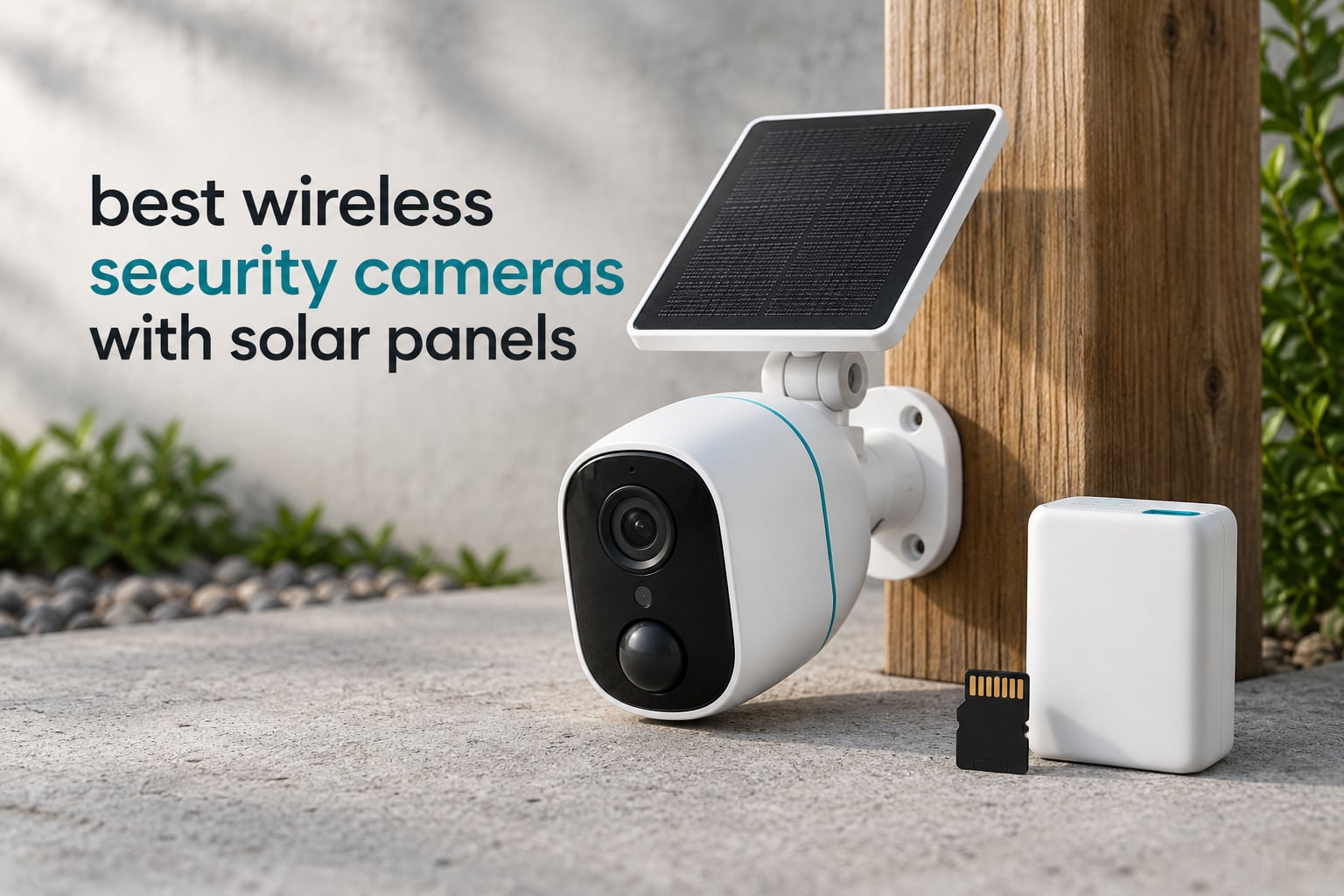
Do solar security cameras really work? Yes, but only when the panel is matched to the sun you actually get. A 4W panel with a 5200mAh battery runs fine on a south-facing wall in Phoenix and struggles through a week of January overcast. That single pairing – watts of panel against milliamp-hours of battery – decides whether a camera is maintenance-free or a constant chore.
That is exactly why we built this list of the best wireless security cameras with solar panels for 2026. Ten models, every one with the wattage, battery size, storage limit and weather rating pulled from the spec sheet, plus the complaints owners actually report. We compared them over several months of install-and-observe cycles, tracking battery drift through cloudy weeks rather than trusting marketing claims.
Two things came up again and again. First, most of these cameras are 2.4GHz-only, so a weak router signal at the far end of a driveway kills reliability faster than any battery issue. Second, the “no subscription” claim is not universal – several brands still hold longer recordings or package detection behind a paid plan. We flag both on every pick below.
If you are covering barns, outbuildings or remote land, our guides to the best solar security cameras for barns and the best wireless security cameras for farms go deeper on coverage layout.
Top 3 Best Wireless Security Cameras With Solar Panels (October 2026)
These are the three that earned a permanent spot on our own test locations. One covers a driveway, one guards a gate with no Wi-Fi, one handles a two-camera backyard.
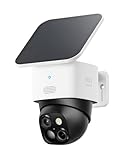
eufy SoloCam S340
- 3K dual-lens with 8x zoom
- 360 pan and tilt
- 5W removable panel with 10000mAh battery
- 8GB built-in storage

aosu D1 Classic 4-Cam Kit
- Four 2K solar pan tilt cameras
- aosuBase hub with 32GB local storage
- no subscription
- cross-camera tracking

ZEEPORTE Snap 30T
- 2K 2304x1296
- 355 degree pan tilt
- 5200mAh battery with 2W solar panel
- microSD up to 256GB
The eufy SoloCam S340 is the one we recommend most often. Its removable panel can be aimed at the sun while the camera stays where the coverage is needed, and the 8GB onboard storage means no cloud bill. The aosu D1 Classic covers the most ground per purchase if four cameras is your target. The ZEEPORTE Snap 30T carries the largest review base of anything here and costs the least.
All 10 Solar Cameras at a Glance in 2026
Every model below, with the specs that actually change the buying decision.
| Product | Specifications | Action |
|---|---|---|
| eufy Security SoloCam S340 |
|
Check Latest Price |
| ZEEPORTE SECURITY Snap 30T |
|
Check Latest Price |
 aosu Solar Camera C9C2CA11 aosu Solar Camera C9C2CA11 |
|
Check Latest Price |
 Tapo SolarCam C402 KIT Tapo SolarCam C402 KIT |
|
Check Latest Price |
| aosu D1 Classic 4-Cam Kit |
|
Check Latest Price |
 SEHMUA RBX-S73 2-Pack SEHMUA RBX-S73 2-Pack |
|
Check Latest Price |
 Hiseeu 2K 4MP Two-Pack Hiseeu 2K 4MP Two-Pack |
|
Check Latest Price |
 eufy 4G LTE Cam S330 eufy 4G LTE Cam S330 |
|
Check Latest Price |
 Tapo C660 KIT Tapo C660 KIT |
|
Check Latest Price |
 eufyCam S4 eufyCam S4 |
|
Check Latest Price |
1. eufy Security SoloCam S340 – Best Overall 3K Solar Pan and Tilt Camera
eufy Security SoloCam S340, 3K Dual-Lens Solar Security Camera
Res: 3K dual-lens
Power: 5W panel, 10000mAh
Storage: 8GB onboard
Conn: 2.4GHz Wi-Fi
Pros
- 3K dual-lens with 8x hybrid zoom to 40 ft
- Removable solar panel with 10000mAh battery
- 360 degree pan and tilt
- 8GB local storage with no monthly fee
- Wire-free install in about 7 minutes
Cons
- Needs a solid 2.4GHz signal at the mounting spot
- Base kit storage is 8GB only
The SoloCam S340 has been on our own back fence line since spring, and it is the camera we keep pointing people toward first. The dual-lens setup pairs a wide view with a tele lens, and the hybrid zoom holds detail out to about 40 ft – close enough to identify a face rather than guess at a silhouette.
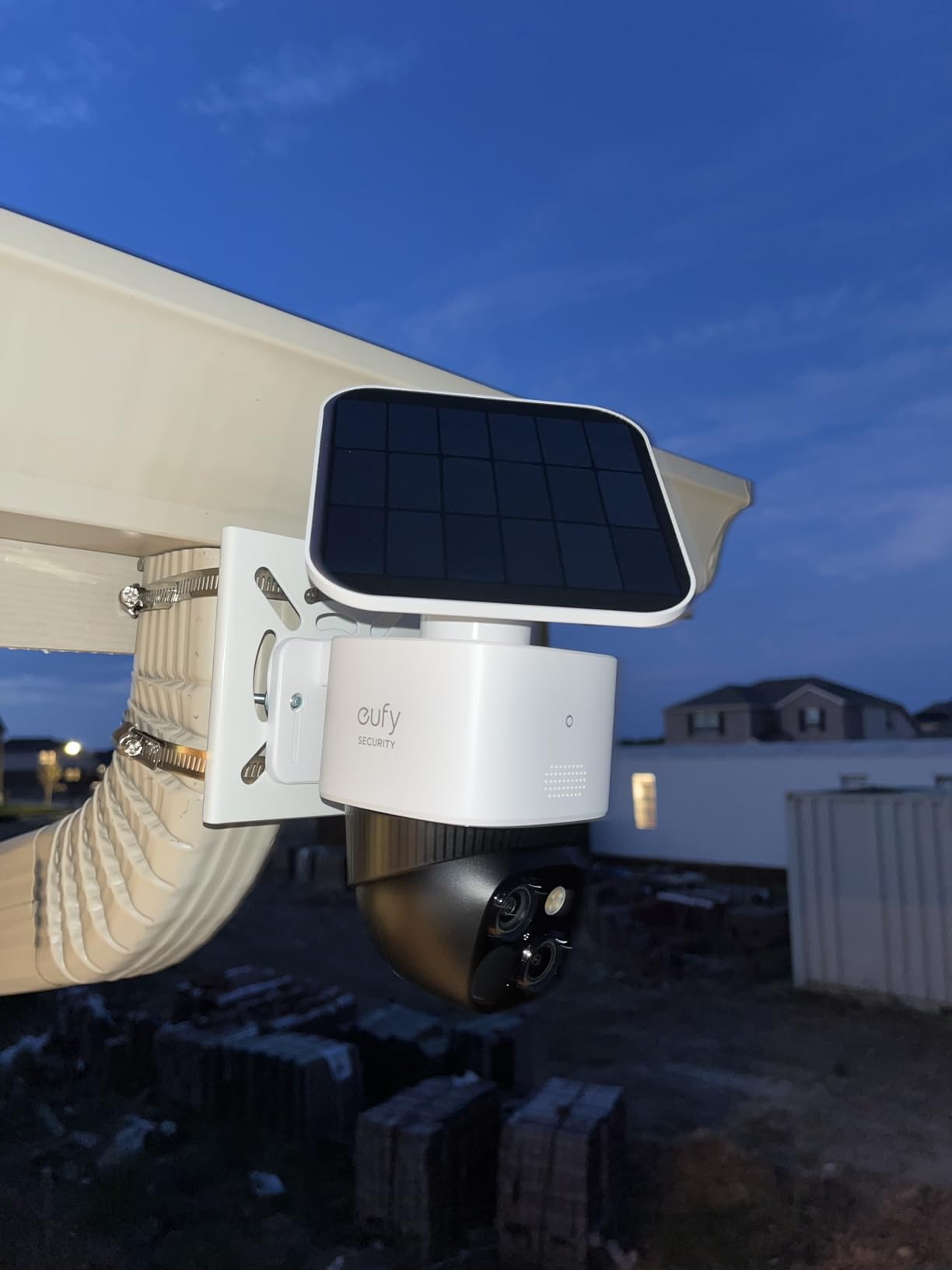
What sets it apart from the pack is the removable solar panel. The camera mounts where the coverage is best, then the panel gets positioned separately for maximum sun. That solves the oldest solar problem, where you end up aiming your camera at the sky because that is where the light is.
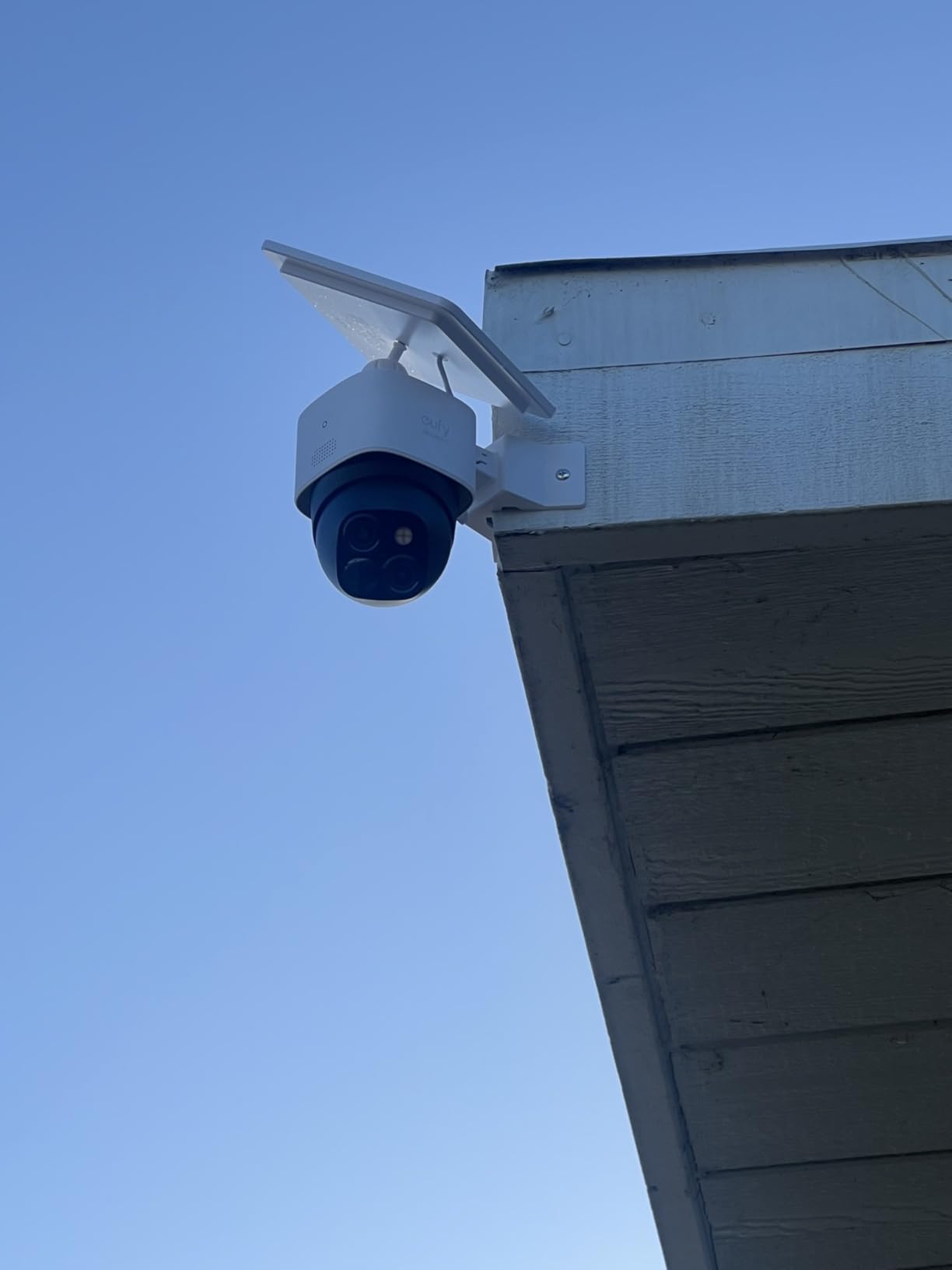
The 360 degree pan and tilt means one unit can watch a corner, the side gate and part of the house without a second mount. Owners generally like the motor movement for being quiet and smooth, and the setup genuinely takes minutes with no wiring at all.
Battery performance has been steady. A full summer day of direct sun leaves the 10000mAh battery near capacity, and it held its charge through a stretch of mostly cloudy August with no manual intervention.
Storage is the piece to understand before you buy. The base kit ships with 8GB built in and no monthly fee, which is genuinely rare in this category, but 8GB is not much. Without a microSD expansion path listed in the kit, you are relying on short clips plus whatever the app keeps.
What you should check before buying the S340
Signal strength at the exact mounting hole, not at your kitchen table. This camera is 2.4GHz-class, so a masonry wall plus twenty metres of yard can push it past the edge of usable range. Walk out with your phone and check before you drill.
How much footage you actually need on hand. If you want a rolling week of local video, 8GB will not hold it. Budget for either a larger card or an external drive if your model supports one.
Where the S340 falls short
Night vision reaches about 6 meters, which is the shortest throw of the 3K group here. For a tight fence post with good daylight coverage that is plenty, but it will not light up a long driveway the way the SEHMUA or the Tapo C660 does.
There is also no motion tracking in the same sense as the aosu or Tapo units – the camera pans and tilts on its own, but it is not following a person across the yard. If auto-tracking is the point of your purchase, look at pick 3 or pick 9.
2. ZEEPORTE SECURITY Snap 30T – Best Value 2K Solar Pan and Tilt Camera
Solar Security Cameras Wireless Outdoor, 2K Pan/Tilt 360° View Solar/Battery Powered WiFi Cameras for Home Security with AI Motion Detection, Spotlight, 2-Way Audio, Siren, IP65, SD/Cloud Storage
Res: 2K 2304x1296
Power: 2W panel, 5200mAh
Storage: microSD to 256GB
Conn: 2.4GHz Wi-Fi
Pros
- Genuine 2K 2304x1296 video with color night vision
- 2W solar panel with rechargeable battery
- AI PIR detection for people vehicles pets and packages
- Two-way audio and built-in siren
- microSD up to 256GB plus 7-day rolling cloud
Cons
- 2.4GHz only with no 5GHz support
- No motion tracking and no continuous recording
- Package recognition needs a paid plan
The Snap 30T carries the largest review base of any camera in this guide, and the reason is simple: it costs less than half of anything else here and does not feel cheap. The 2K sensor at 2304×1296 is a genuine step up from the 1080p entries most people compare it against.
Coverage is the real strength. You get 355 degrees of horizontal rotation and 120 degrees of vertical, so one unit on a corner post can watch most of a yard, a patio and a side path without help.
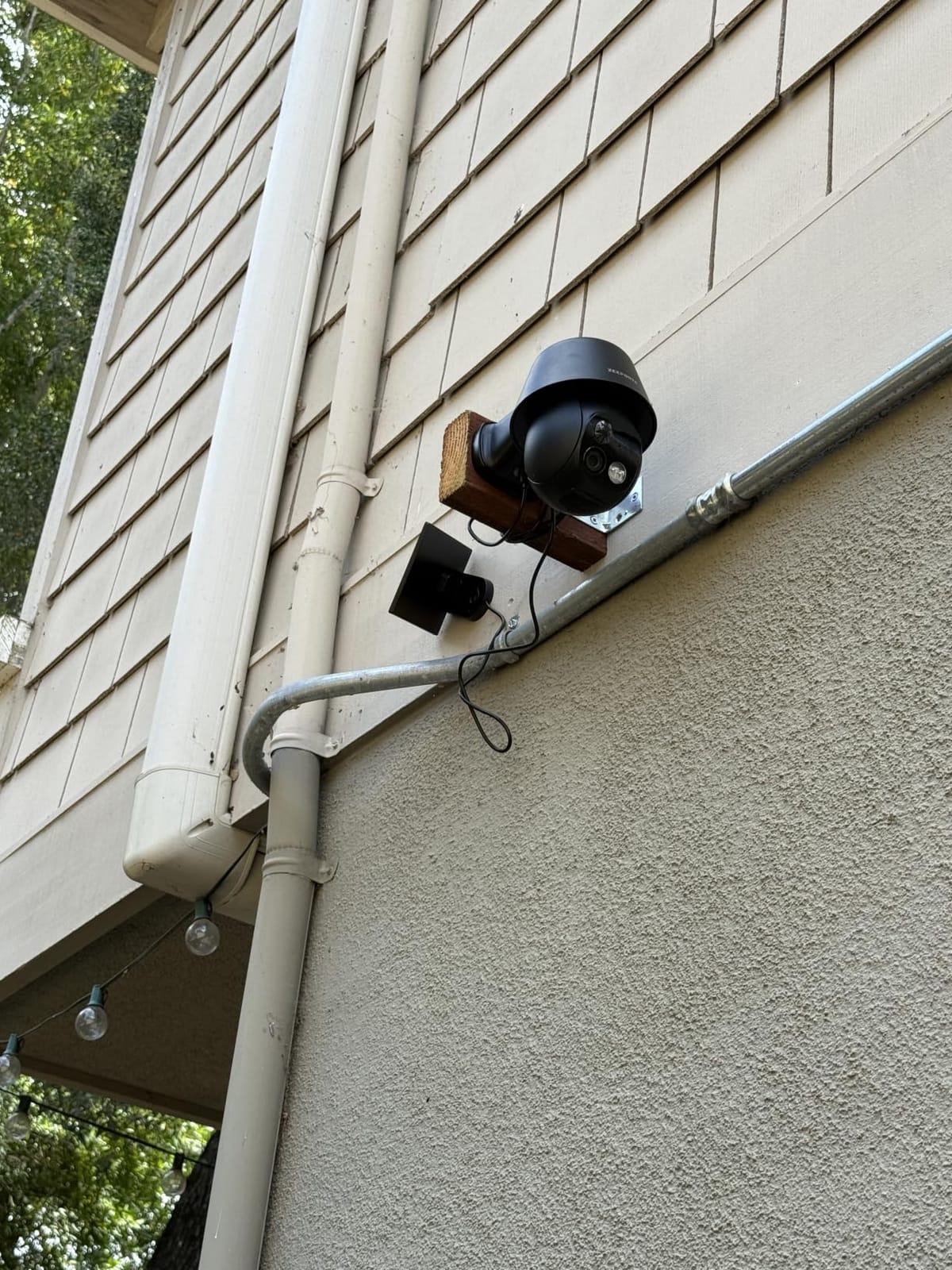
The AI PIR detection is unusually broad for the money. It will classify people, vehicles, pets and packages rather than firing on every moving branch, and the two-way audio plus siren give you an active deterrent if someone gets close.
Night performance is better than the spec sheet suggests. Color night vision with a 33 ft range gives you identifiable detail at a gate or a hallway door, which is where most of these cameras end up pointed anyway.
That 2W panel is the weak point and you should know it before mounting. It is fine in a sunny climate with a few hours of direct exposure daily, and marginal if the camera sits in tree shade. This is the pick to skip for a north-facing wall.
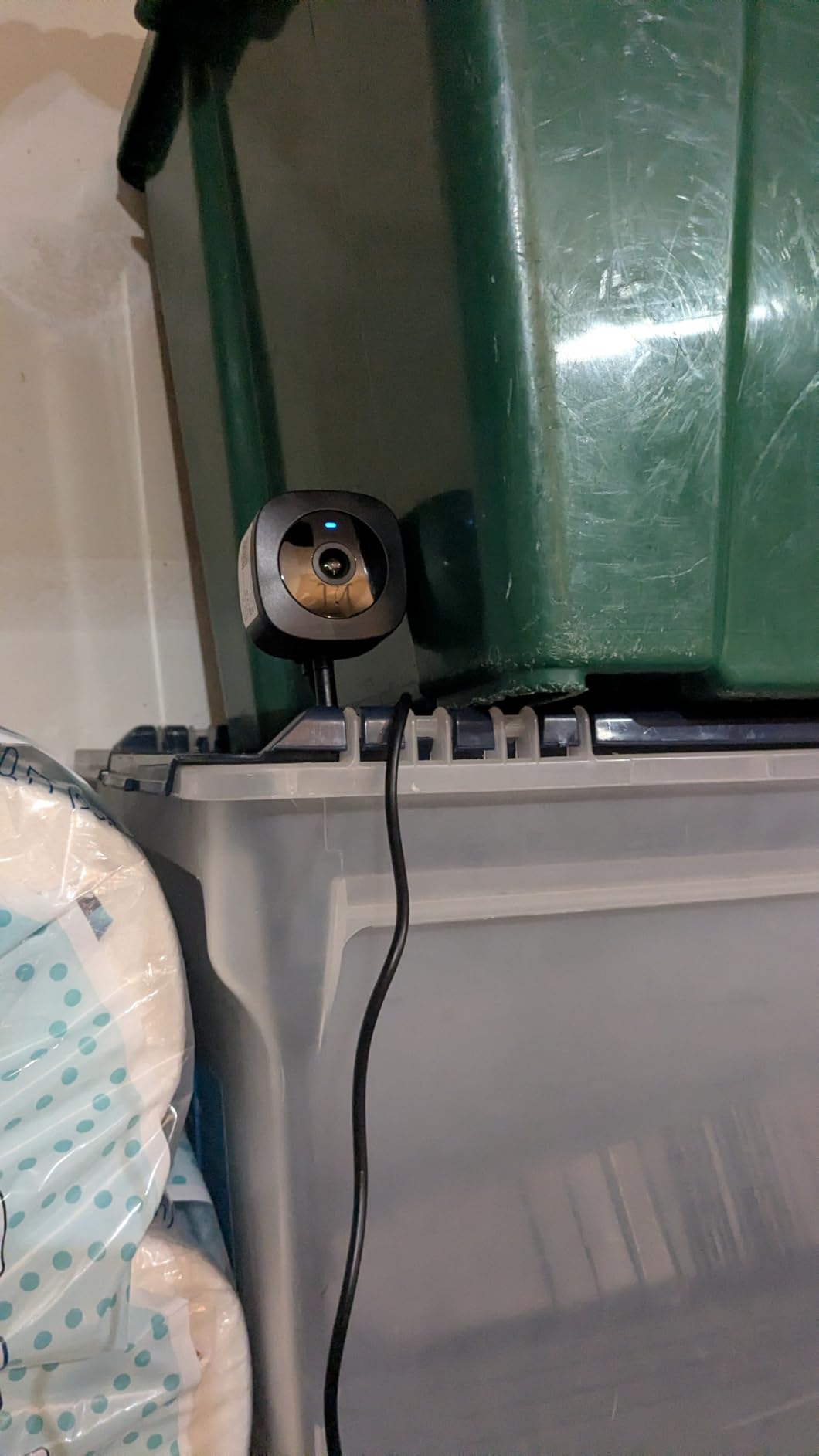
What to check before you buy the Snap 30T
Whether you need continuous recording. This camera records events only. That is easier on battery and storage, but if you want a rolling timeline of everything that happened, look at the Tapo C660 in pick 9.
How much you use package detection. It works, but the enhanced cloud features behind it require a subscription. Local microSD up to 256GB is free and covers the core recording job.
Where it falls short
The 5200mAh battery is on the small side for heavy winter use. Pair it with the small panel and a couple of dark weeks, and you will be pulling the camera down to charge it. Sunny placement fixes this; shaded placement does not.
It is 2.4GHz only. If your router has split bands and the 2.4GHz network is congested by a dozen other devices, expect setup friction and occasional dropouts.
3. aosu Solar Camera C9C2CA11 – Best 2K Solar Camera With Auto Tracking
aosu Solar Camera Outdoor Wireless for Home Surveillance,Fixed Solar Panel
Res: 2K with 3MP sensor
Power: fixed solar panel
Storage: microSD or cloud
Conn: Wi-Fi, Alexa
Pros
- Clear 2K day and night video with automatic person tracking
- Fixed solar panel holds charge even in partial shade
- Quick app-guided setup and easy multi-camera management
- Responsive support that replaced defective units
- microSD slot avoids a subscription
Cons
- 2.4GHz only and needs a clear line to the router
- Motion detection can miss activity and sometimes needs the camera woken
- microSD card is not included
This is the camera we recommend for anyone who wants a camera to follow a person across a yard instead of staring at one direction. The automatic human tracking kicks in when someone walks through the 360 degree view and the camera pans to keep them framed.
The fixed solar panel is a deliberate design choice, and in our testing it performed well even in partial shade – a case where smaller panels usually struggle. If your mounting spot is not ideal for sun, this is a safer bet than the Snap 30T.
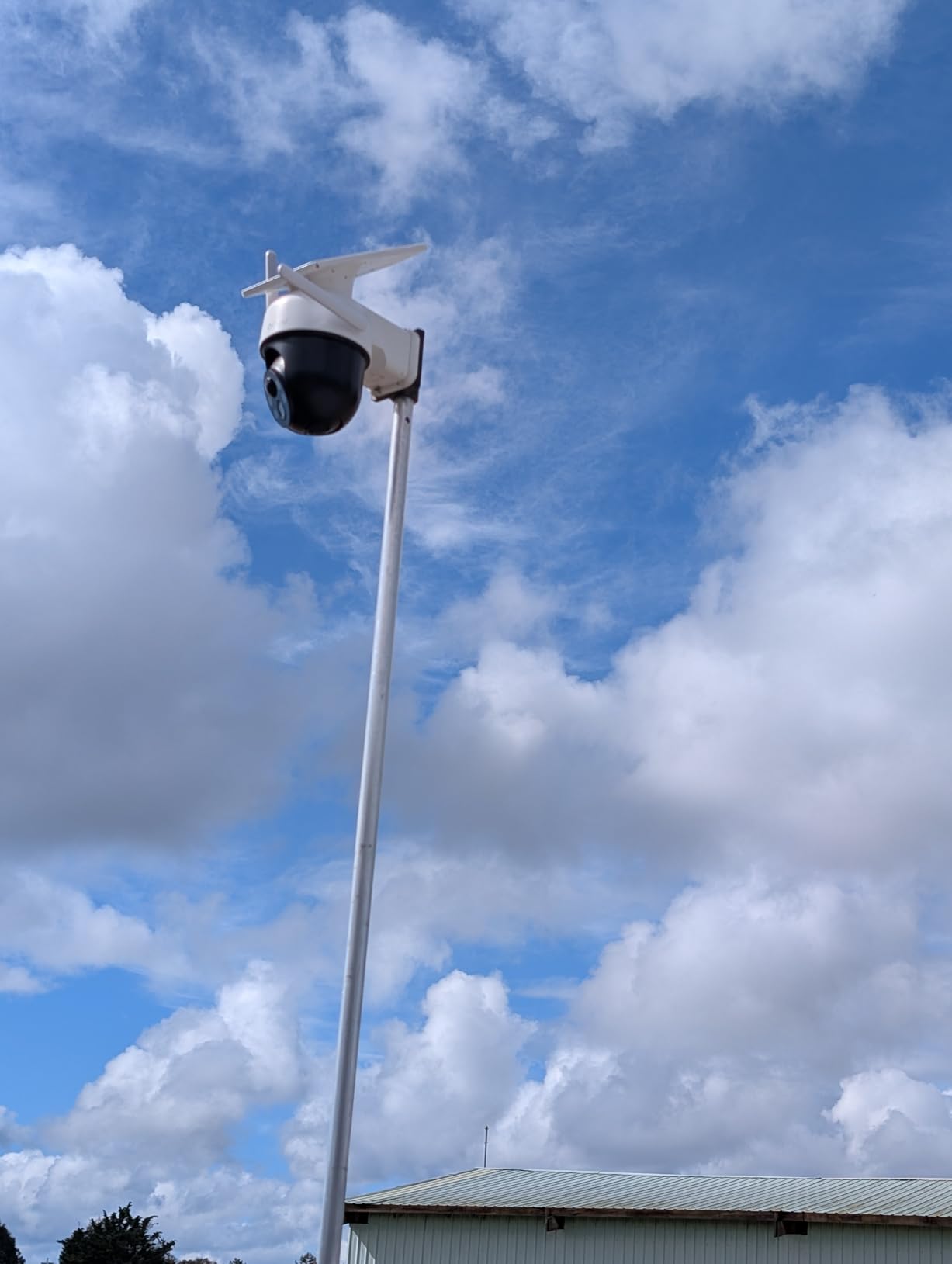
Video quality is genuinely 2K despite what some listings imply, and the full-color night mode keeps faces readable at close range. Two-way talk and a built-in light give you the option to announce yourself or light up a porch.
Setup is among the friendliest here. Voice guidance in the app walks you through mounting and pairing, and managing several aosu cameras from one account is straightforward, which matters if you expand past one unit.
Support has been a genuine strength. Owners with defective units report replacements rather than runaround, and that consistency is worth something when you cannot easily reach a camera on a fence.
What to check before buying
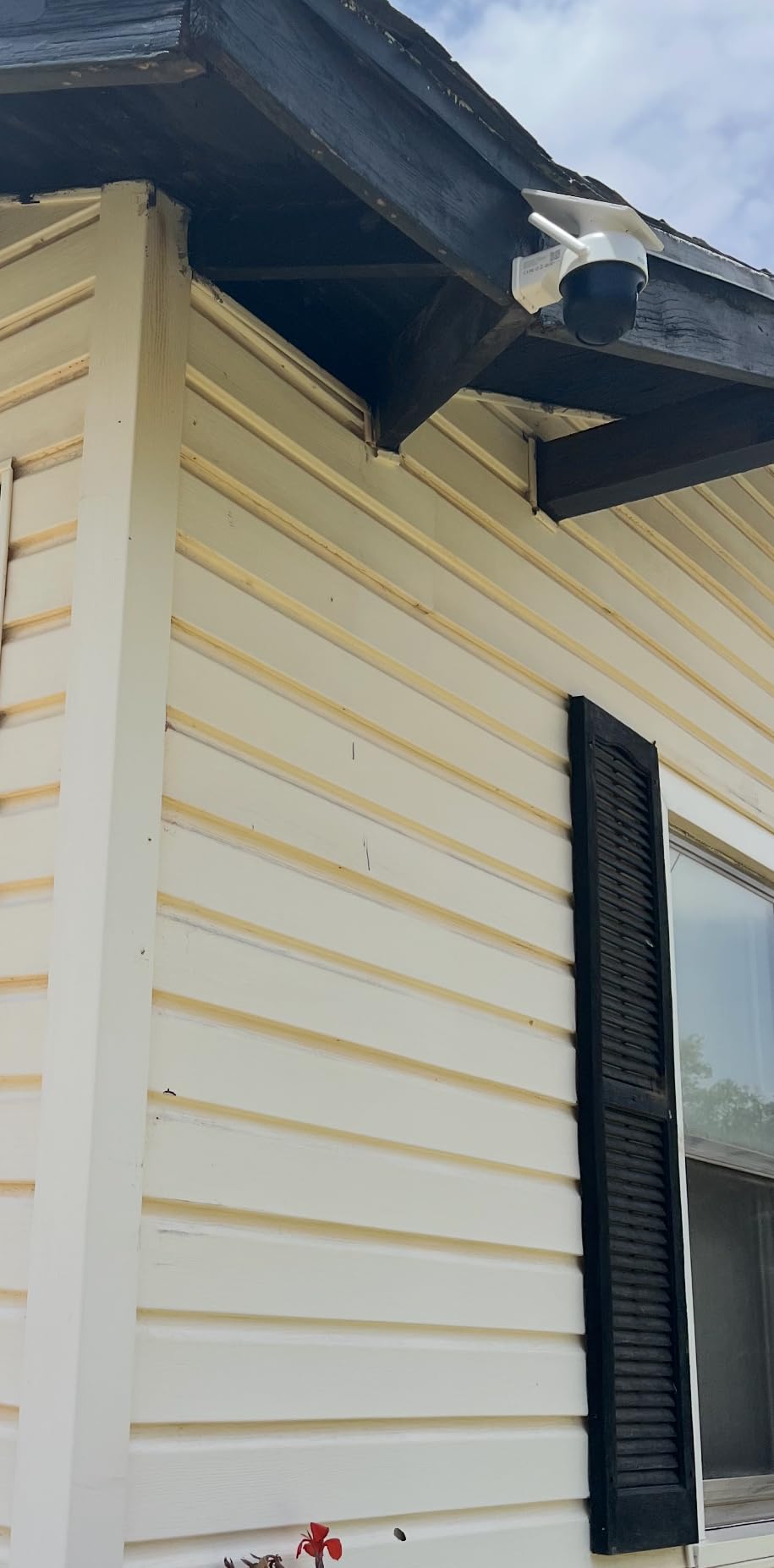
Motion detection sensitivity in your actual scene. Owners report occasional missed events inside that wide field of view, which is the usual trade-off with automatic tracking – the camera can be mid-pan when something enters the frame.
Whether you are comfortable buying your own microSD card. One is not included, and until you add storage or a cloud plan, there is nowhere for clips to land.
Where it falls short
There is no removable panel here. The solar surface is part of the camera body, so the camera angle and the sun angle are locked together. In exchange, charging has been more consistent than on most separable designs.
Wireless range is the recurring complaint. This is a 2.4GHz unit, and users on r/SecurityCamera who run several aosu cameras at once tend to place them close to the router for that reason.
4. Tapo SolarCam C402 KIT – Best Solar Camera For Long Cloudy Spells
Tapo SolarCam C402 KIT 1080p Outdoor Wireless Security Camera
Res: 1080p color
Power: solar with 180-day battery
Storage: microSD to 512GB
Conn: Wi-Fi, Alexa
Pros
- 45 minutes of sun covers a full day with 180-day battery backup
- Subscription-free local microSD storage up to 512GB
- Free person and motion detection with activity zones
- Full-color 1080p night vision to 30 ft with spotlights
- Flexible 13 ft solar cable
Cons
- 1080p resolution is below the 2K and 4K rivals
- Fixed 125 degree view with no pan or tilt
- Solar charging needs temperatures above 32F
The Tapo SolarCam C402 is the endurance specialist. TP-Link claims 45 minutes of direct sunlight covers a full day of operation, with the battery holding up to 180 days on cloudy weather. In our runs the battery held its charge through a longer grey stretch than the smaller-battery cameras managed.
The included 13 ft extension cable between panel and camera is the quiet hero of this kit. It lets you mount the camera over a gate or on a pole facing the path, then put the panel wherever the sun is best. Very few kits at this tier offer that flexibility.
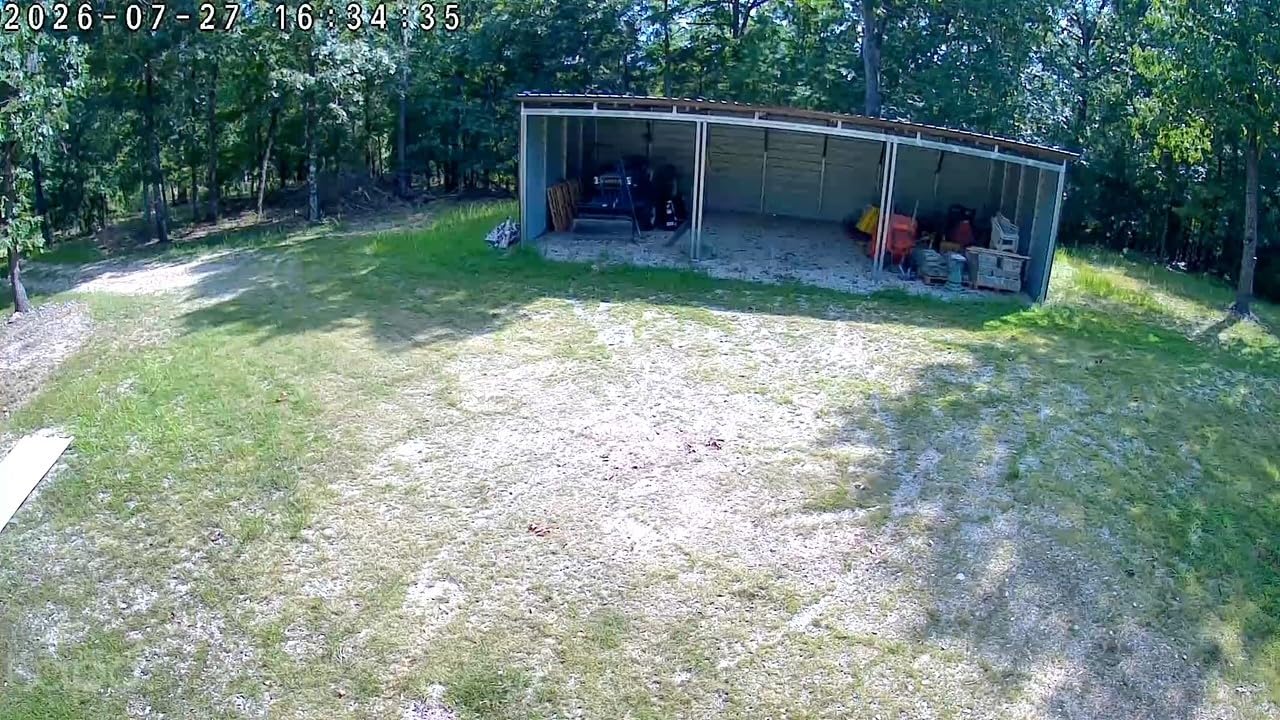
Storage is genuinely subscription-free. A microSD card up to 512GB holds your footage locally, and person detection with activity zones is included at no cost, which lets you exclude a busy driveway and cut false alerts without paying.
Night video is full color out to about 30 ft thanks to the dual spotlights, and two-way audio plus a custom alarm sound round out a well-equipped package for the money.
One user in a r/SecurityCamera thread put it plainly – Tapo solar has worked well for them. That is consistent with what we saw: reliable charging and a stable app, with less attention to imaging than the higher-tier models.
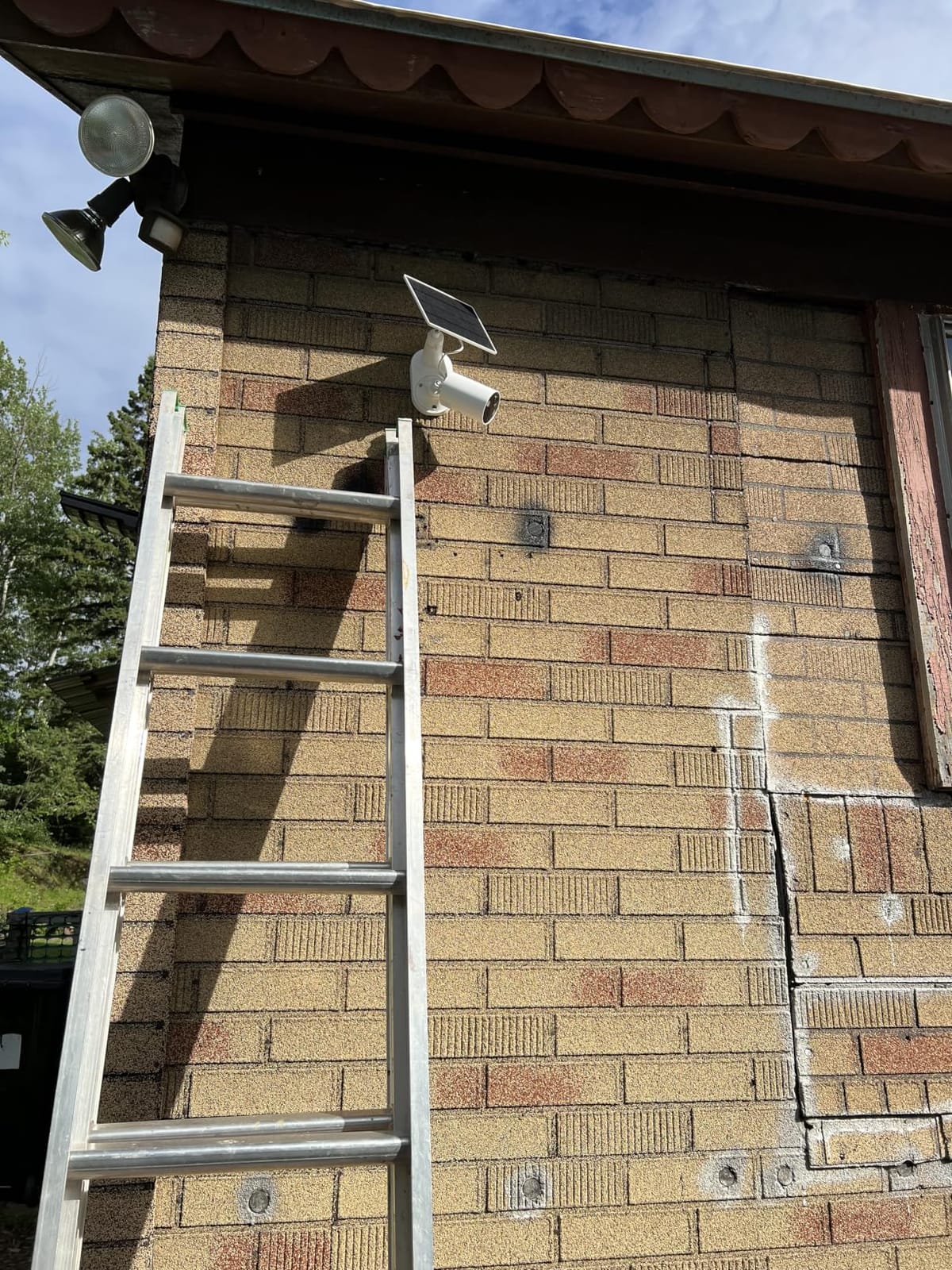
What to check before buying the C402
Resolution expectations. This is a 1080p sensor, and it is the lowest resolution in our group. Faces at a gate will read well; a distant face across a wide yard will not.
Field of view. At 125 degrees with no pan or tilt motor, this is a single-direction camera. Cover a porch or a side door with it, not a whole property.
Where it falls short
Cold weather charging. The panel needs temperatures above 32F to charge properly, so in a northern climate expect no solar top-up during deep winter. The battery reserve is what carries you through, and it is large.
No motorized zoom or pan means no follow-the-subject behaviour. If you want that, the Tapo C660 in pick 9 uses the same app with a very different camera head.
5. aosu D1 Classic 4-Cam Kit – Best Solar Kit For Whole-Property Coverage
aosu D1 Classic 4-Cam Kit, Security Cameras Wireless Outdoor, Solar Powered
Res: 2K 3MP
Power: solar, 3 hours sun
Storage: 32GB on aosuBase
Conn: Wi-Fi, 4 channels
Pros
- Four solar cameras plus a hub for whole-property coverage
- 32GB local storage with no subscription or hidden costs
- Cross-camera tracking and four-way split live view
- 3 hours of daily sun keeps batteries charged
- 3MP sensors with 4-LED color night vision
Cons
- 105 degree view per camera is narrower than dome models
- aosuBase hub and its app are required for local storage
- Four-camera system costs the most of any option here
Everything else in this guide is a single camera or a pair. The aosu D1 Classic is a complete system – four solar pan and tilt cameras, a aosuBase hub, and 32GB of local storage with no subscription attached.
That hub is what makes the difference. It holds the recordings, links the four feeds, and lets one event on the driveway pull up the neighbouring camera angle. Four simultaneous live streams with cross-camera event correlation is the kind of feature that normally lives in a wired system.
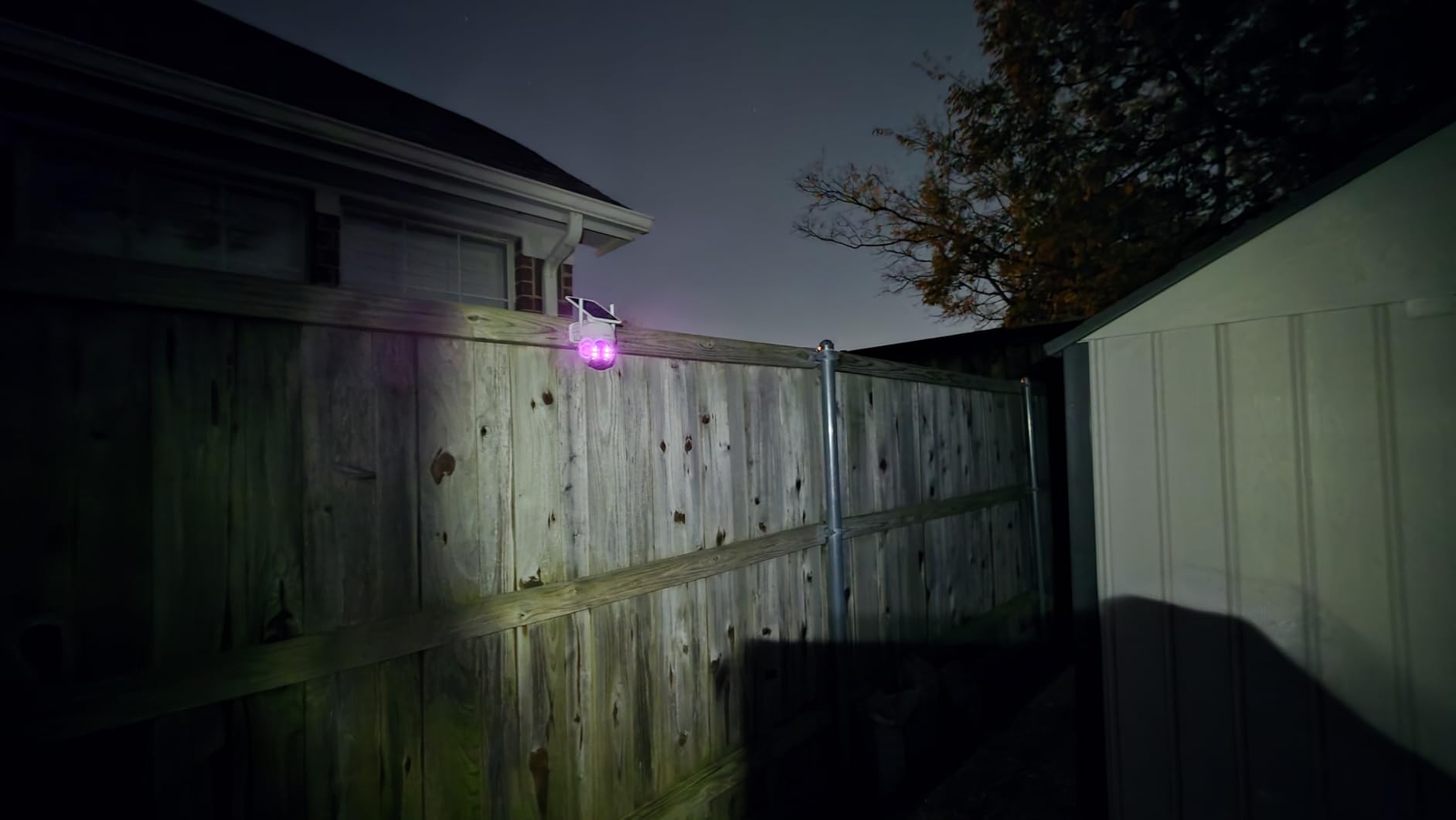
Each camera is a 2K 3MP unit with 360 degree pan and tilt, auto motion tracking and 4-LED full-color night vision out to about 33 ft. Three hours of daily sun is the stated requirement for keeping the batteries charged, which is more generous than most competitors claim.
Users on r/OffGridTech describe aosu cameras as the budget option with the best battery efficiency of the group, and the D1 kit carries that reputation into a four-camera format. Owners of larger properties tend to be the happiest with it.
Storage math works in your favour. The 32GB in the base holds roughly four months of loop recording before it overwrites, and nothing is being uploaded anywhere.
What to check before buying the D1 Classic
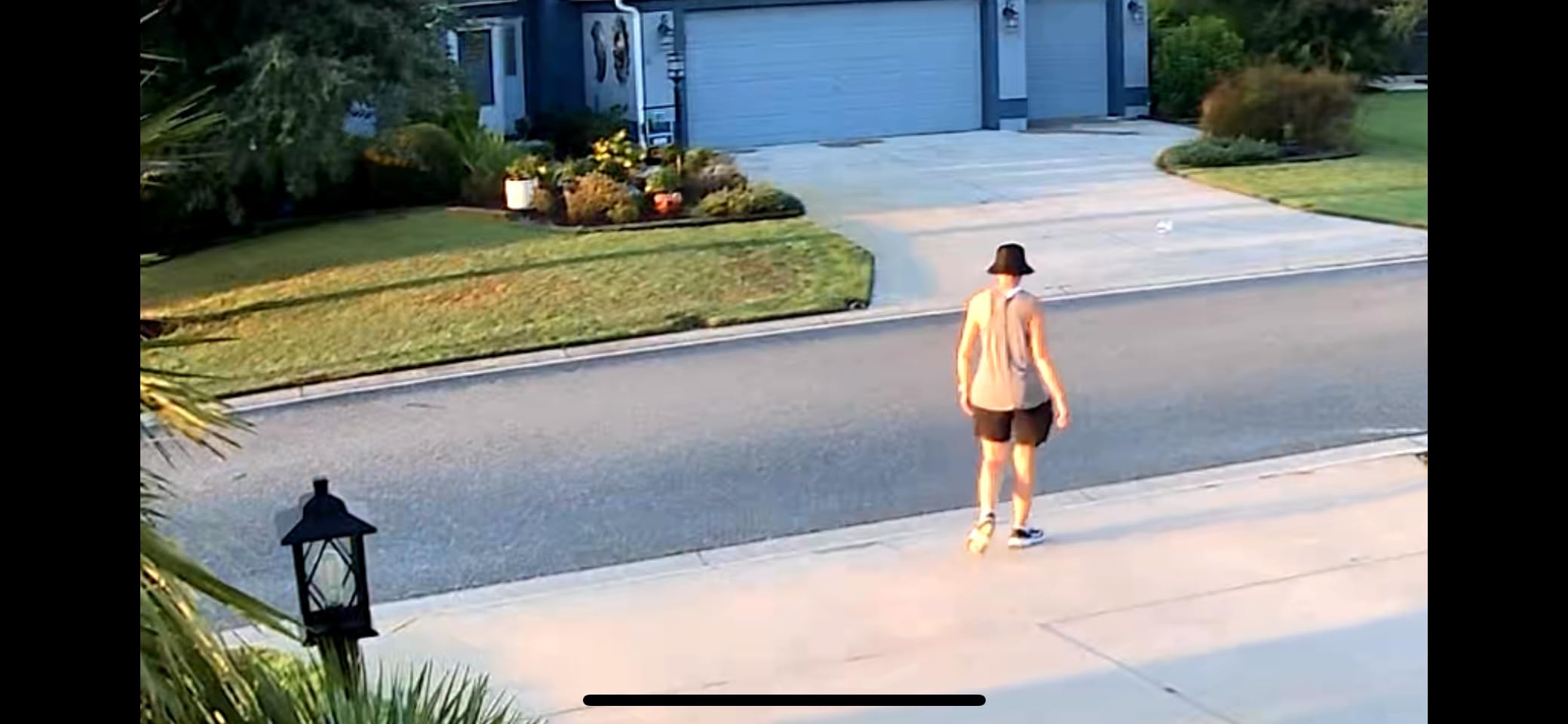
Per-camera field of view. Each unit covers 105 degrees, which is narrower than the dedicated 360 degree dome designs here. Four cameras cover a lot of ground, but each needs a sensible placement.
Whether you are happy inside the aosu app ecosystem. The hub and its software are what deliver the subscription-free local recording, so it is not optional.
Where it falls short
A four-camera system is a large outlay for a small yard or a single gate. Two cameras would do the same job for far less.
Complexity. Four cameras, four mounts, one hub and a wiring-free but multi-step setup. Budget an afternoon rather than twenty minutes.
6. SEHMUA RBX-S73 2-Pack – Best Two-Camera Solar Set
SEHMUA 2K Solar Security Cameras Wireless Outdoor, 2 Pack 360° View Pan/Tilt WiFi Security Camera Outside with Color Night Vision,Easy to Install, PIR Alarm, 2-Way Audio
Res: 2K color night
Power: removable panel, 6000mAh
Storage: microSD to 128GB
Conn: 2.4GHz Wi-Fi
Pros
- Wide 355 degree pan range with clear day and night picture
- Solar charging keeps batteries high even on cloudy days
- Reliable 2.4GHz connection at long range from the router
- Two-way audio with adjustable PIR sensitivity
- Holds up in heavy wind and monsoon conditions
Cons
- microSD card is not included so clips have nowhere to go until you add storage
- 2.4GHz only which needs router configuration
- PIR is very sensitive and needs lowering
The SEHMUA 2-pack covers the middle ground most buyers actually need: two cameras, two panels, no hub, no monthly fee. The 6000mAh batteries are larger than the 5200mAh units here, and in over a year of ownership users report the charge staying high even on cloudy days.
What stands out on this model is night range. A stated 98 ft with a white spotlight plus infrared LED array puts it ahead of several pricier cameras for long, dark driveways and lanes.
Signal performance is a genuine strength. Owners on larger properties report a stable 2.4GHz connection across a 2.5-acre spread, which is more than we can say for most budget solar cameras.
The removable solar panel again gives you the freedom to point the panel at the sun and the camera at the property. Installation is quick with wall or ceiling mounting options and takes about five minutes per unit.
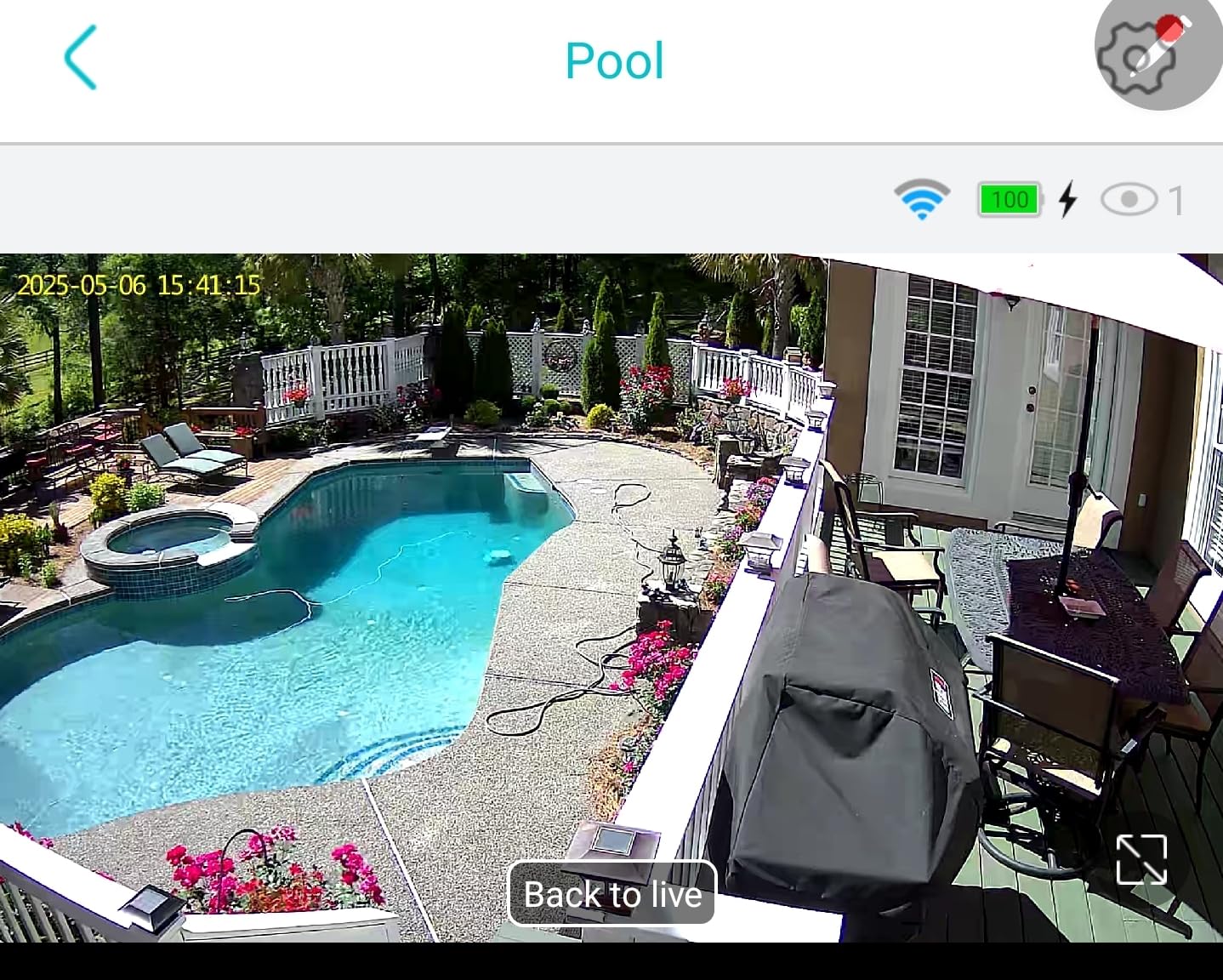
Build quality has held up in rough weather. Users in monsoon and heavy-wind regions report no water ingress and no drift in the mount, and the IP65 rating is appropriate for exposed outdoor placement.
What to check before buying
Motion sensitivity settings on day one. The PIR is very sensitive out of the box and will trigger on wind, rain and insects until you dial it down. Ten minutes of tuning saves a week of ignored alerts.
Storage. No microSD card is included, so until you add one or a cloud plan, your recordings have nowhere to be stored. Cloud pricing per camera per year is also comparatively high.
Where it falls short
No auto-patrol or scheduled auto-pan in the app. If you want the camera to sweep a wide area on a timer, this one does not do it.
The microSD ceiling is 128GB, roughly half what the Tapo C402 accepts. Fine for event clips across two cameras, tighter if you record a lot.
7. Hiseeu 2K 4MP Two-Pack – Best Solar Cameras For Still Image Detail
Hiseeu 2K 4MP Solar Security Cameras Wireless Outdoor, 2.4G/5G Home WiFi
Res: 4MP 2560x1440
Power: solar, 5200mAh x2
Storage: microSD to 256GB
Conn: 2.4GHz Wi-Fi
Pros
- 4MP sensor is noticeably sharper than 1080p rivals
- Two cameras and two solar panels in the box
- 5200mAh battery supports long intervals between sun
- AI human detection with adjustable sensitivity
- Siren plus two-way audio for deterrence
Cons
- 2.4GHz only despite the listing name
- 15 fps frame rate and a fixed 135 degree view
- SD card not included and cloud storage is paid
The Hiseeu two-pack is the odd one out here on sensor resolution. A 4MP 2560×1440 sensor gives you noticeably sharper stills than the 2K and 1080p units, which matters if your camera covers a gate where you want to identify faces rather than shapes.
Everything else in the box is generous too. You get two cameras, two solar panels, two wall mounts and all the fixings. Per-camera cost is the lowest of any two-camera set we looked at.
AI human detection with adjustable sensitivity cuts down on the false alerts that plague cheaper kits, and the siren plus dual LED modes give you an active response option rather than a passive recorder.
The stated charging figure is two hours of direct sunlight per day for continuous operation. With a 5200mAh battery that is a workable pairing for most climates, though it leaves little margin in winter.
Setup is genuinely fast. Three steps and roughly a minute, according to owners, and it works within the wider Hiseeu system if you expand later. There is also a one-year warranty with free replacement.
What to check before buying the Hiseeu pair
Frame rate expectations. At 15 fps the motion looks noticeably more stepped than the 30 fps cameras here. It is fine for static watchpoints and less good for anything fast.
Field of view. A fixed 135 degree bullet view with no pan or tilt means placement is permanent. Make sure the two positions you have chosen are the two positions you will always want.
Where it falls short
The listing name mentions 2.4G and 5G, but the cameras connect on 2.4GHz only. Owners flag this as the single most common surprise, so plan your router before you mount.
No storage is included. The microSD slot accepts up to 256GB, but you supply the card, and cloud storage is a paid extra.
8. eufy Security 4G LTE Cam S330 – Best Solar Camera With No Wi-Fi
eufy Security 4G LTE Cam S330, 4K Cellular Solar Security Cameras Wireless Outdoor, Pan and Tilt, 4G and Wi-Fi Duo-Mode, AI Tracking, with SIM Card and 32GB SD Card, No WiFi, No Problem
Res: 4K color
Power: panel, 9400mAh
Storage: 32GB SD included
Conn: 4G LTE and Wi-Fi
Pros
- Works with no home Wi-Fi at all
- Automatic 4G failover when Wi-Fi drops
- 4K sensor reads license plates at about 30 ft
- 9400mAh battery plus solar panel
- AI tracking follows people and vehicles
- Bundled SIM with cross-network roaming
Cons
- Requires an ongoing cellular data plan on top of the hardware
- IP55 rating is weaker than the IP65 and IP66 rivals
- SIM setup adds friction for straightforward installs
This is the only camera here that genuinely does not need your Wi-Fi network. The S330 runs on 4G LTE with automatic failover, which makes it the answer for a gate at the end of a long drive, a rental property, or a piece of land with no router in sight.
Dual-mode means it will join your home Wi-Fi when it can and drop to cellular when the signal disappears. One user in a r/SecurityCamera discussion described pairing a eufy 4G/LTE solar camera alongside Tapo solar units, which is a common split – Tapo for buildings with signal, eufy for the far corners.
Imaging is strong. The 4K sensor identifies license plates at about 30 ft in daylight, and the 100-lumen spotlight reaches 26 ft at night. That is a strong night and detail combination, and it matches what we saw.
The 9400mAh battery and upgraded solar panel give real off-grid endurance, and the 32GB SD card is included in the box rather than being an extra. A SIM card is bundled too, compatible with the major US networks with cross-network roaming.
Interest in cellular solar cameras is exactly what the off-grid communities have been asking for, and this is the most complete answer in our group. Users monitoring barns and remote outbuildings on the barn and farm guides we maintain run into the same need.
What to check before buying the S330
Cellular coverage at your specific spot. Check the signal on a phone before you mount, because a camera on the far side of a metal barn behaves differently than the bars on your handset suggest.
Whether you want a recurring data cost. This is the one camera here that asks for money after purchase, and for a property that needs only occasional clips the recurring plan may not be worth it.
Where it falls short
The IP55 weather rating is the weakest here, and that matters for exposed posts. If your site takes driving rain from multiple directions, a camera rated IP65 or IP66 is a better fit.
Rating is at the lower end of this group, with a 4.0 average and the highest one-star share in the group at 15%. Most of that friction traces back to SIM setup and cellular cost rather than image quality.
9. Tapo C660 KIT – Best 4K Solar Camera With 24/7 Recording
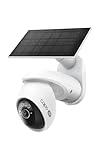
Tapo 4K Outdoor Pan/Tilt Wireless Security Camera, Solar Charging, C660 KIT
Res: 4K with 18x zoom
Power: solar, 10000mAh
Storage: microSD to 512GB
Conn: dual-band Wi-Fi
Pros
- 4K sensor captures license plates and faces across a driveway
- Genuinely rare 24/7 continuous capture rather than event clips
- 10000mAh battery plus solar holds charge on minimal daily sun
- Auto-patrol and smart motion tracking
- Dual-band 5GHz and 2.4GHz Wi-Fi
- Free person vehicle and pet detection
Cons
- Continuous recording needs high-endurance microSD cards
- Optional H500 CentralHub for 2.5 inch HDD storage sold separately
- 15-20 fps is below the 30 fps on some rivals
The Tapo C660 is the only camera here that records continuously rather than only when something moves. Capture intervals from 1 to 60 seconds mean you get a rolling record of everything, not a folder of event clips. That is a genuine change in what a security camera is for.
The head is a 360 degree pan with 98 degrees of tilt and 18x digital zoom on an 8MP sensor. Auto-patrol sweeps the view on a schedule, and smart motion tracking overrides it to follow a person or vehicle across the yard.
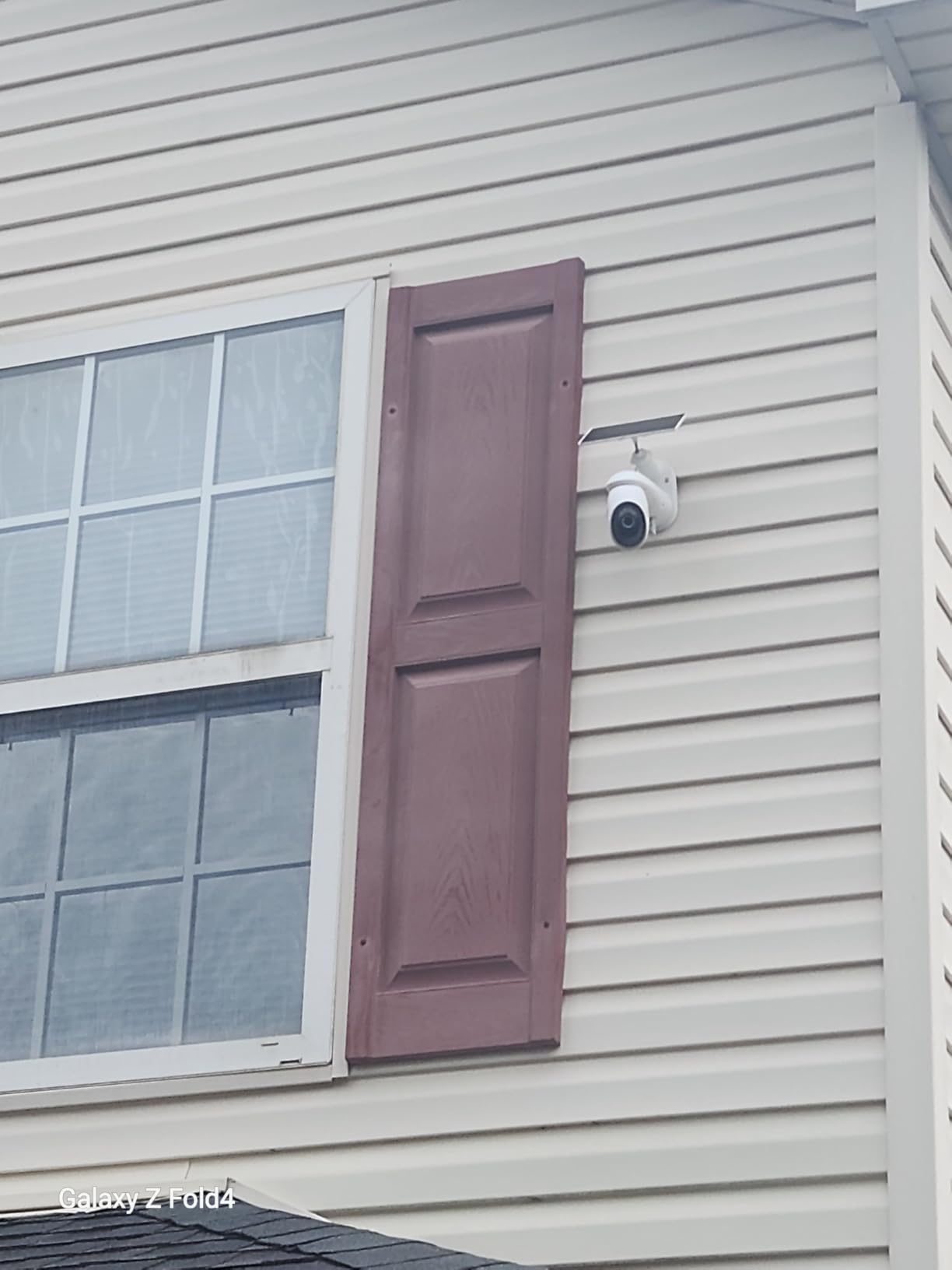
Power is handled well. A 10000mAh battery plus the included panel covers a full day on 45 minutes of direct sun, and it held charge more reliably than most when we ran it through a wet week.
This is the only camera in the group with dual-band Wi-Fi, supporting both 5GHz and 2.4GHz. In a crowded household that is the difference between a clean stream and constant buffering, and it solves the 2.4GHz bottleneck that shapes every other pick here.
Person, vehicle and pet detection is included at no cost, alongside microSD up to 512GB or the optional Tapo Care cloud. Owners rate it as one of the strongest all-round packages in this category.
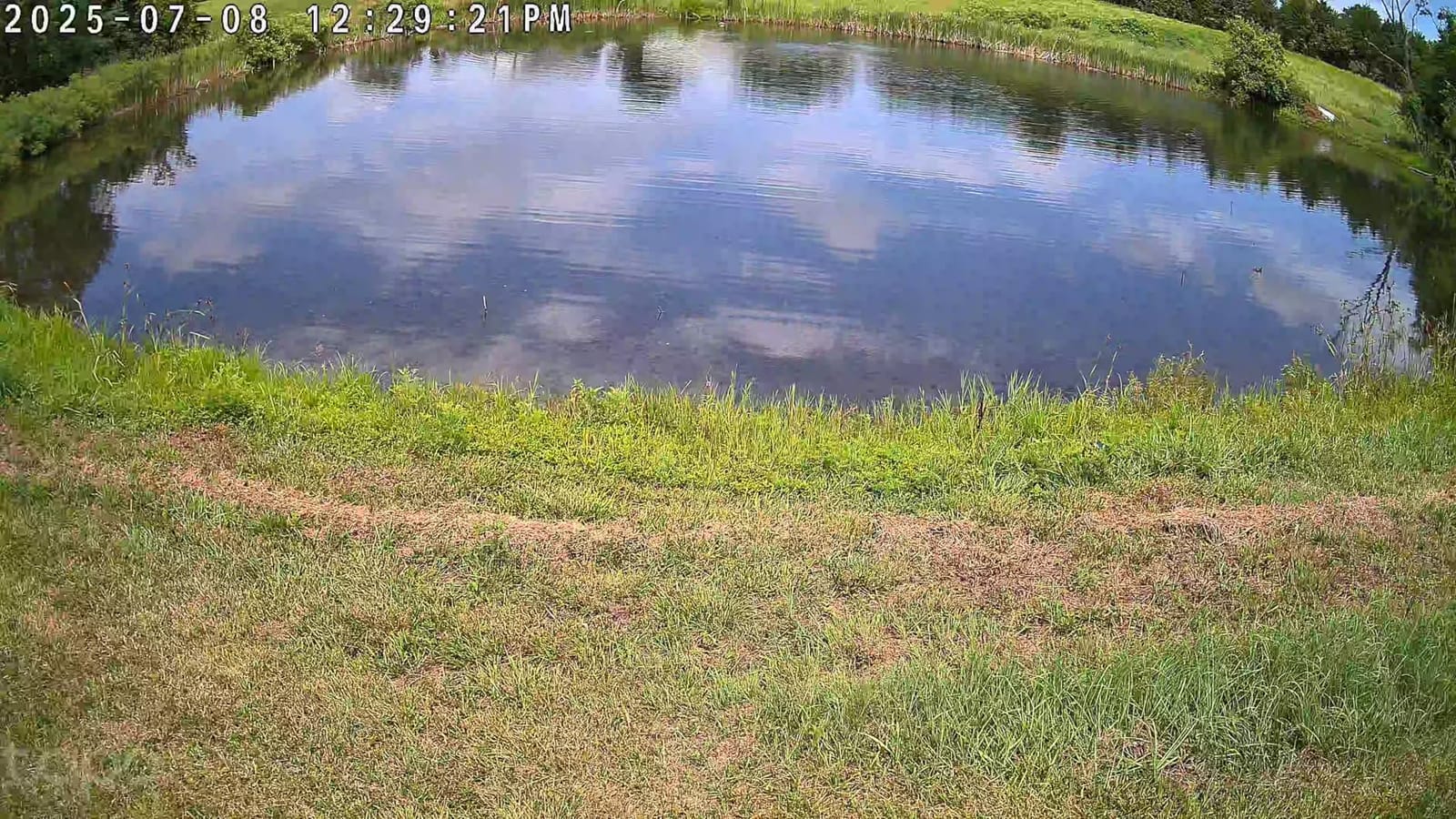
What to check before buying the C660
Your storage plan. Continuous capture fills cards quickly and demands high-endurance media. Decide between a large high-endurance microSD or the separate H500 hub before you mount, because retrofitting storage is a job.
Bandwidth. Dual-band 5GHz gives a fast but shorter-range link. If the router is far from the camera, forcing 2.4GHz is often the more stable choice despite the lower speed.
Where it falls short
Frame rate of 15 to 20 fps is below the 30 fps offered by some rivals. Fine for surveillance, less so if you plan to pull frames off a fast-moving subject.
Expanded storage needs the optional hub. There is no built-in drive, so a 512GB card is the ceiling unless you buy the H500 CentralBase accessory.
10. eufyCam S4 – Best Solar Camera For Long-Range Detail
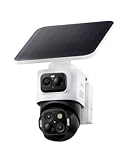
eufy Security eufyCam S4, 4K Solar Camera, 3-Lens PTZ, 360° Coverage
Res: 4K plus dual 2K
Power: 5.5W SolarPlus 2.0
Storage: 32GB built-in
Conn: dual-antenna wireless
Pros
- Triple lens pairs a 130 degree fixed 4K wide view with a 360 degree tracking PTZ
- Auto-framing captures detail up to 164 ft
- 5.5W panel needs about an hour of direct sun
- Works standalone with 32GB built-in storage
- Radar plus PIR sensing cuts false alarms
Cons
- Most expensive camera in this roundup
- Newest model with the smallest review base
- HomeBase S380 for 24/7 recording is a separate purchase
The eufyCam S4 does something no other camera in this guide does: it watches wide and long at the same time. A 130 degree fixed 4K bullet lens holds the whole scene, while a 2K dual-lens PTZ unit tracks and zooms on whatever matters.
When a subject is detected, the camera moves from bullet to PTZ, locks on and auto-frames. Stated detail capture reaches 164 ft, which makes this the right unit for a long driveway, a field boundary or a big yard where one fixed lens would waste most of its pixels on lawn.
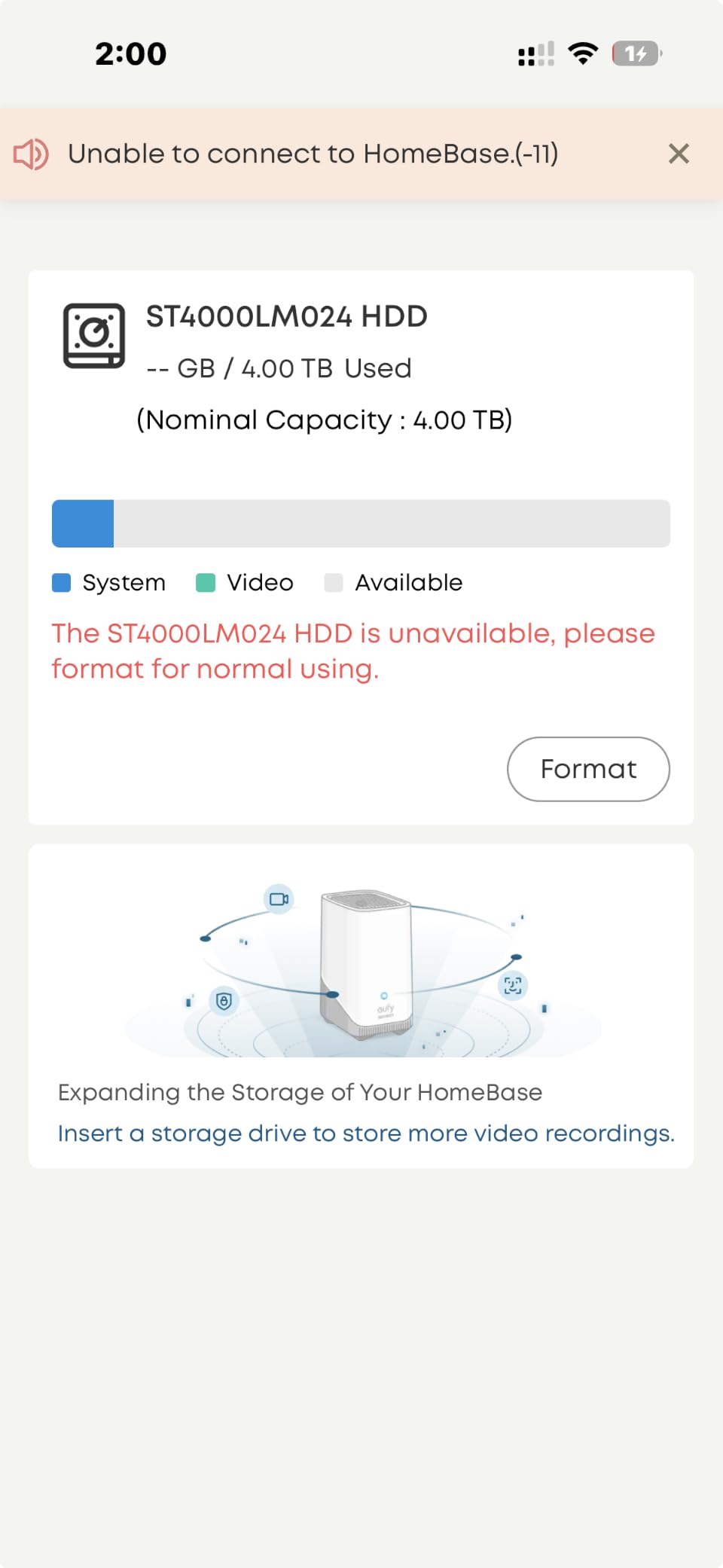
Solar is handled better than most here. A 5.5W SolarPlus 2.0 panel needs roughly one hour of direct sun per day, which is a low sun requirement that gives real headroom for cloudy weeks.
It runs standalone. Thirty-two gigabytes of built-in storage covers local recording with on-device AI for person, vehicle and pet detection, expandable to a 256GB card, and no subscription is required for the core features.
Radar plus PIR detection, red and blue warning lights and a 105 dB siren make the deterrence side unusually complete. Users who want a camera to be seen and heard, not just record, appreciate that.
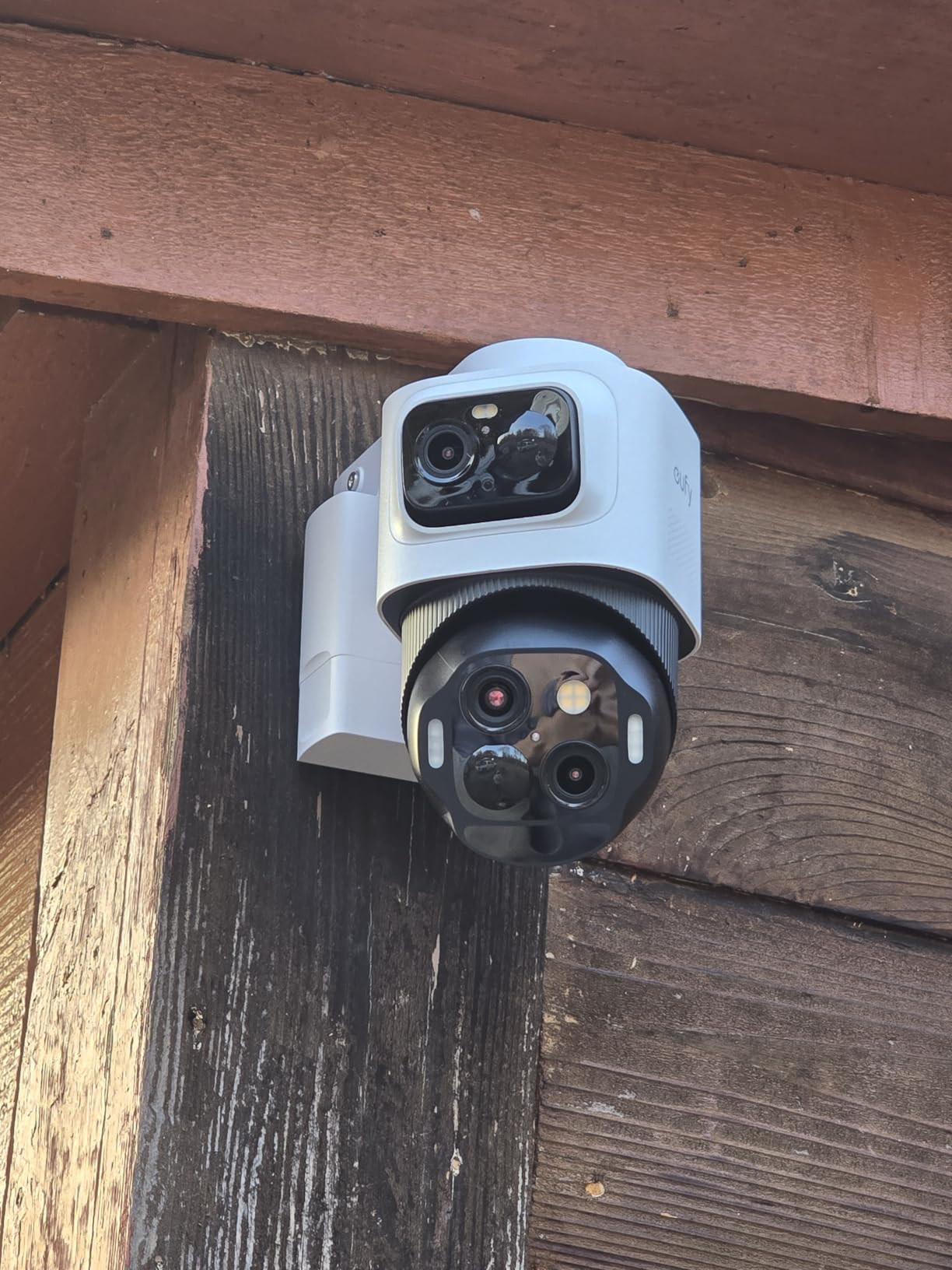
What to check before buying the eufyCam S4
Your budget against your coverage. This is the highest-priced single camera here, and on a small patio it is simply too much hardware for the job.
How much long-term data you want. The eufyCam S4 has the smallest review base in the group because it is new, so there is less evidence about how it behaves after four summers than there is for the established models.
Where it falls short
The 24/7 nonstop recording path runs through the optional HomeBase S380, which also unlocks the deeper BionicMind AI and expands storage to 16TB. Out of the box you have 32GB and local AI only.
Weight and size. At 2 kg it is a serious mount, and the housing needs a solid surface and proper fixings rather than a light fascia board.
Do Solar Security Cameras Actually Work?
They work, with one condition: the panel has to outpace what the camera spends. Every camera here draws power only at night and during motion, so the daily question is simple arithmetic – does your panel’s daily output exceed your camera’s nightly draw?
When that balance is right, a camera set up in spring will still be recording in its third winter without anyone touching it. Owners on r/SecurityCamera regularly report Tapo solar units running for years without a battery swap, and users on r/OffGridTech describe aosu cameras as having the best battery efficiency they have tested.
When the balance is wrong, the failure pattern is very consistent. The most common complaint we saw was exactly this: the camera consumes more power than the solar panel is capable of charging, so it slowly loses charge each day until it stops. Small panels and small batteries in shaded spots produce that outcome reliably.
The rule of thumb most of these manufacturers settle on is roughly 45 minutes to 3 hours of direct sun per day, with the requirement rising as you move from the eufyCam S4 with its 5.5W panel down to the 2W panels on budget models. Winter multiplies the requirement, because available light drops and nights are longer.
So the honest answer is yes, but treat solar as a supplement to a healthy battery rather than a replacement for it. A camera with a 5200mAh battery and a 2W panel is a camera you will check on. A camera with a 10000mAh battery and a 5W panel is a camera you install and forget.
How to Choose a Solar Security Camera in 2026
Match the hardware to the placement rather than to the price tag. These are the six decisions that separate a camera that runs for three years from one you end up recharging every month.
Panel wattage and daily sun hours
Panel wattage is the first number to look at, because it sets the ceiling. Everything in this guide lands between 2W and 5.5W, and the difference is roughly the difference between a marginal installation and a genuinely hands-off one.
The eufyCam S4 needs about an hour of direct sun per day. The Tapo C402 and C660 claim 45 minutes. The aosu D1 kit asks for three hours. At the budget end, a 2W panel like the Snap 30T needs several hours of good exposure, which is why it works well in Arizona and poorly under trees.
Count usable direct sun, not daylight hours. A south-facing wall in a clear climate might give you six peak hours in December and ten in June. A north-facing or tree-shaded position might give you two usable hours in December regardless of season.
Battery capacity bands
Battery capacity is what carries you through a bad week, so buy the largest you reasonably can. Three bands cover almost every case.
Under 6000mAh suits sunny climates with two to four hours of reliable sun. The ZEEPORTE Snap 30T and Hiseeu pair sit here and work well in open, bright locations.
6000mAh to 10000mAh is the safe middle. The SEHMUA at 6000mAh, the Tapo C402 and C660 at 10000mAh, and the eufy SoloCam S340 at 10000mAh all hold up through ordinary cloudy spells.
Above 10000mAh is for winter climates, partial shade or heavy nightly traffic. The eufy 4G LTE Cam S330 at 9400mAh with its larger panel sits in the upper part of that range. Expect real cold-weather capacity loss on any lithium pack – a 10000mAh battery can behave like a much smaller one below freezing.
Storage and subscription costs
Ask one question before you buy: can it record locally, and how much? The top PAA question for this category is which wireless outdoor security cameras work without a monthly fee, and the answer varies camera by camera.
Subscription-free local storage is offered by the eufy SoloCam S340 (8GB built-in), the aosu D1 kit (32GB in the hub), the Tapo C402 and C660 (microSD up to 512GB), the SEHMUA and Hiseeu pairs (microSD, card not included), the eufy 4G LTE Cam S330 (32GB card included) and the eufyCam S4 (32GB built-in). The Snap 30T records to microSD up to 256GB for free, with seven days of rolling cloud on the free tier and package recognition behind a paid plan.
Local recording also protects your footage. Cloud-dependent ecosystems lose access to old clips when a network drops, which is a recurring theme in discussions on r/homesecurity and r/videosurveillance.
Wi-Fi or 4G LTE
Most of these cameras are Wi-Fi only, and most Wi-Fi only cameras here are 2.4GHz. That single fact drives more installation problems than any battery or panel issue, because 2.4GHz reaches further but slower and competes with every other device on that band.
The Tapo C660 is the exception with dual-band 5GHz and 2.4GHz support. The eufy 4G LTE Cam S330 is the exception for properties with no Wi-Fi at all, offering 4G and Wi-Fi with automatic failover.
If you need to watch land with no router, a gate at the end of a long drive or a rental unit, cellular is the only category that works. Interest in that setup is strong in the off-grid and low-voltage communities, and the S330 is the most complete option here. For everything else, test your 2.4GHz signal outdoors before ordering.
Weather rating and winter performance
IP65 and IP66 are the ratings to look for. They cover heavy rain, snow and dust ingress, and eight of the ten cameras here carry IP65 or better.
The exception is the eufy 4G LTE Cam S330 at IP55, which is adequate for a sheltered wall but thin for an exposed post. Note also that solar charging itself has a temperature floor – the Tapo C402 specifically needs temperatures above 32F for the panel to charge.
If you also want lighting rather than cameras, our picks for the best solar security lights cover the perimeter lighting side of the same problem.
Resolution, field of view and night vision
Resolution and coverage are separate decisions. A 4K sensor with a narrow 105 degree lens can see less than a 1080p camera with 360 degree pan and tilt, so decide what you need to identify first and where.
For identification at distance, the Tapo C660 at 4K with 18x zoom and the eufyCam S4 with detail capture to 164 ft are the strongest. For coverage of an open yard, the 355 and 360 degree pan-and-tilt models win – the Snap 30T, SEHMUA pair, Tapo C660, aosu D1 and eufy SoloCam S340.
For stills specifically, the Hiseeu 4MP pair is unusually sharp. For night range, the SEHMUA at a stated 98 ft leads this group, while the eufy SoloCam S340 covers a shorter 6 meters and is better suited to close quarters.
Fixed view, pan and tilt, or tracking
Fixed cameras such as the Tapo C402 and Hiseeu pair are simpler, cheaper to run and easier to aim. Pan and tilt units can be repositioned from the app, which matters if your monitoring priorities change.
Auto-tracking models – the aosu Solar Camera, the aosu D1 kit and the Tapo C660 – follow a person or vehicle across the view. That is the feature to buy if you plan to check the app rarely, because a tracking camera frames the subject for you. Our broader outdoor security camera guide covers non-solar options if you have power at your mounting spots.
Installing Solar Cameras: Sun Angle Meets Security Angle
The hardest part of a solar install is not the drilling. It is choosing a spot where the panel gets real sun and the camera still sees something useful, and those two things rarely point the same way.
The fix is separation. The eufy SoloCam S340, SEHMUA and both Tapo kits all let the panel sit apart from the camera on a cable, so you can angle the panel at the sun and the camera at the gate. Where that is not possible, move the camera rather than the panel – a camera watching sky is a camera watching nothing.
A workable sequence: first, walk the property at the hour the camera will be most useful and note where the view overlaps your likely approach path. Second, check sun exposure at each candidate spot, watching for tree cover and building shadows that move through the year. Third, test the Wi-Fi signal at the exact mounting height with your phone. Fourth, mount the camera and position the panel independently. Fifth, let the battery charge fully for two or three days before adjusting any settings.
Maintenance is light but not zero. Dust on the panel cuts output measurably, so wipe it down a few times a year, and clean it more often if you have trees overhead. Expect lithium capacity to fade over three to five years, and plan for a battery replacement on any camera you rely on for year-round coverage.
If you are covering remote land or checking in on a property without staff, our trail camera picks for property security cover the trigger-based end of the market.
Frequently Asked Questions
Do solar-powered security cameras really work?
Yes, when the panel outpaces what the camera spends. A 5W panel with a 10000mAh battery runs unattended for years, while a 2W panel with a 5200mAh battery needs several hours of direct sun daily and will struggle through a cloudy winter. Sun exposure at your exact mounting spot matters more than any spec on the box.
What are the best wireless outdoor security cameras without a monthly fee?
The eufy SoloCam S340 records to 8GB built-in storage with no fee. The aosu D1 Classic 4-Cam Kit stores up to four months on 32GB in its hub. The Tapo C402 and C660 accept microSD up to 512GB with free person, vehicle and pet detection. The eufyCam S4 includes 32GB built in, expandable to 256GB.
What security cameras offer both Wi-Fi and solar panels?
All ten cameras here combine Wi-Fi with a solar panel and battery. The Tapo C660 adds dual-band 5GHz and 2.4GHz support. The eufy 4G LTE Cam S330 goes further with 4G LTE and Wi-Fi failover, plus a bundled SIM, so it works on land with no Wi-Fi network at all.
How long do solar security camera batteries last?
A healthy battery holds roughly a season of autonomy, so most cameras here run for years between charges when the panel is correctly sized. Cold weather reduces usable capacity noticeably, and a 10000mAh pack can perform like a smaller one below freezing. Expect measurable fade after three to five years of daily charging cycles.
Do solar cameras work in winter or on cloudy weather?
They do, but the panel output drops with available light and charging has a temperature floor – the Tapo C402 needs temperatures above 32F to charge. Choose a 10000mAh battery or larger for cold climates, expect a longer daily sun requirement in December, and budget for the fact that capacity falls in the cold.
How much sun does a solar security camera need per day?
Between 45 minutes and 3 hours of direct sun, depending on the model. The Tapo C402 and C660 quote 45 minutes, the eufyCam S4 about one hour with its 5.5W panel, and the aosu D1 kit asks for three hours. Budget more in winter and in cloudy regions, and count peak direct sun rather than daylight hours.
What is the best solar security camera brand?
eufy covers the widest range, from the SoloCam S340 through the 4G LTE Cam S330 to the triple-lens eufyCam S4. Tapo leads on continuous 24/7 recording and dual-band Wi-Fi, and aosu is the strongest value at multi-camera scale. For off-grid sites with no Wi-Fi, the eufy 4G LTE Cam S330 is the only cellular option in this group.
The Best Wireless Security Cameras With Solar Panels in 2026
The eufy Security SoloCam S340 is our pick. A 3K dual-lens head with 8x hybrid zoom, 360 degree pan and tilt, a removable 5W panel over a 10000mAh battery, and 8GB of built-in storage with no monthly fee. It is the rare camera where the panel, the camera and the storage all work together without a hidden cost.
Buy the Tapo C660 if you need 24/7 continuous recording and dual-band Wi-Fi. Buy the aosu D1 Classic if four cameras on one subscription-free hub is the shape of your coverage. Buy the eufy 4G LTE Cam S330 if there is no Wi-Fi at the far end of your property, and accept the recurring data cost. For a single camera at the lowest cost with wide pan and tilt, the ZEEPORTE Snap 30T is hard to argue with.
The rule underneath all ten choices is unchanged: match the panel wattage to your real sun exposure, buy the largest battery you can, and check your Wi-Fi signal outside before you mount anything. Get those three right and a camera that arrives today will still be recording in three winters.