
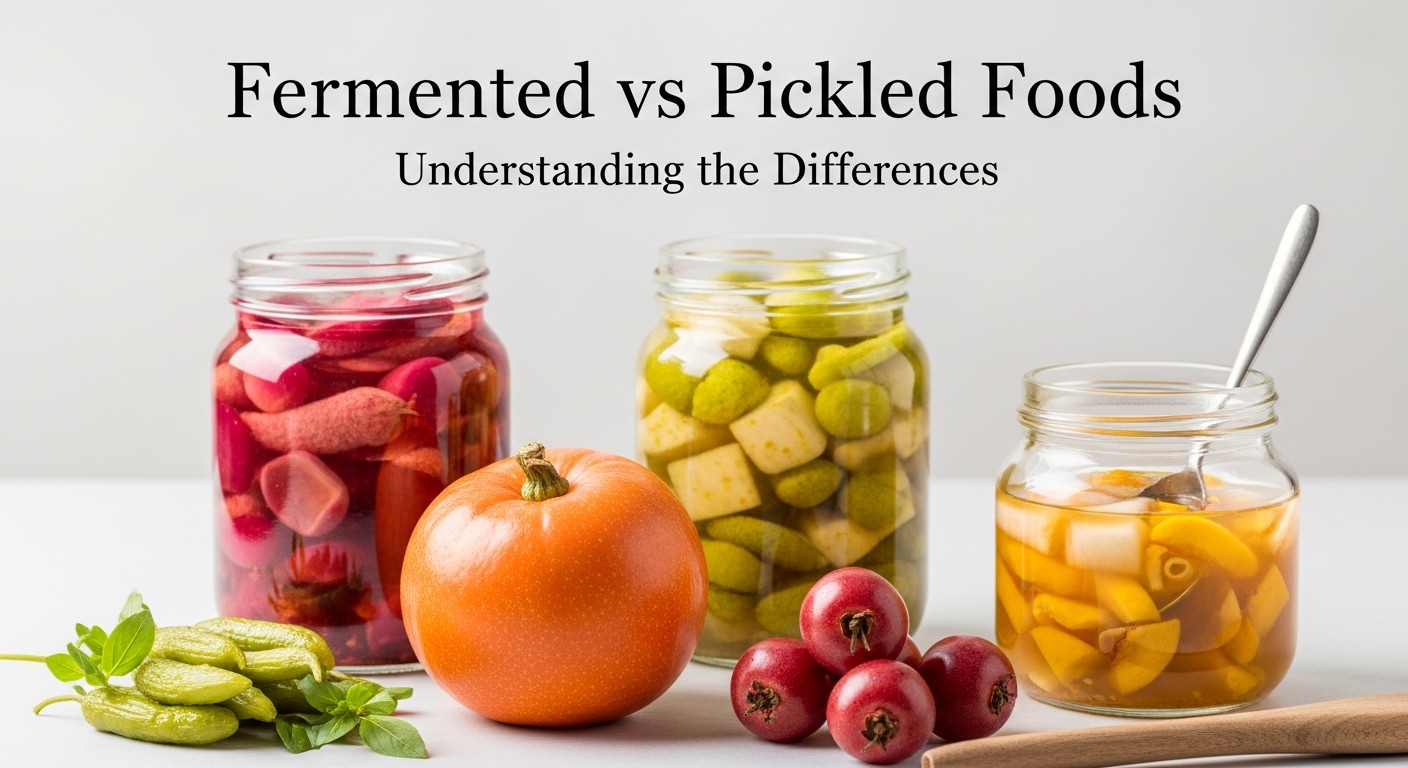
I remember standing in the grocery store aisle, staring at two jars of cucumbers. One said “fermented pickles,” the other simply “dill pickles.” They looked nearly identical. The price was similar. But the fermented jar promised probiotics and gut health benefits, while the vinegar pickles just promised tang.
That is the question we are answering today. What is the real difference between fermented and pickled foods? Pickled foods are preserved by soaking them in an acidic vinegar brine, while fermented foods are preserved through natural bacterial activity that converts sugars into lactic acid. The key distinction lies in the source of acidity: vinegar is added in pickling, while fermentation creates its own acid through bacterial action.
In this guide, we will break down exactly how each process works, why fermented foods offer unique health benefits that pickled foods cannot match, and how to tell the difference when you are shopping. By the end, you will know which jar to reach for based on your health goals.
Table of Contents
What is Pickling
Pickling is a preservation method that uses an acidic liquid, typically vinegar, to prevent spoilage and create that signature sour taste. The process is straightforward: vegetables or fruits are submerged in a brine made of vinegar, water, salt, and sometimes sugar and spices. The high acidity of the vinegar creates an environment where harmful bacteria cannot survive, effectively preserving the food.
Most commercially produced pickles undergo heat processing. The jars are sealed and heated to high temperatures, which kills any microorganisms present. This pasteurization ensures a stable product with a long shelf life, but it also eliminates any beneficial bacteria that might have been present.
The type of vinegar matters. White vinegar creates the sharpest, cleanest sour flavor. Apple cider vinegar adds subtle sweetness and complexity. Rice vinegar offers a milder, more delicate tang. The acetic acid in vinegar, typically 4-6% concentration, does the heavy lifting of preservation.
Quick Pickling at Home
Quick pickling has become popular among home cooks because it delivers results in hours rather than days or weeks. You simply heat vinegar with salt and spices, pour it over vegetables in a jar, and let it cool. Within a few hours, you have tangy pickled onions, cucumbers, or carrots.
This method offers convenience and control over flavors. You can experiment with different spice combinations, adjust the sweetness, and create custom blends. However, quick pickles lack the complex flavor development and probiotic benefits of fermented foods.
What is Fermentation
Fermentation is a biological process where naturally occurring bacteria convert sugars and carbohydrates in food into acids, alcohol, or gases. When we talk about fermented foods for health, we are specifically referring to lacto-fermentation, a process where Lactobacillus bacteria convert sugars into lactic acid.
Unlike pickling, fermentation does not require added acid. The bacteria present on the raw vegetables create their own acidic environment. As lactic acid accumulates, it drops the pH of the food, preventing spoilage organisms from growing while preserving the food naturally.
The process begins with salt. Vegetables are submerged in a salt brine or dry-salted, which creates an environment where harmful bacteria cannot thrive but beneficial Lactobacillus can flourish. Over days or weeks, these bacteria multiply and produce lactic acid, giving fermented foods their characteristic tangy, complex flavor.
The Science of Lacto-Fermentation
Lacto-fermentation relies on anaerobic conditions, meaning the vegetables must remain submerged under liquid without exposure to oxygen. This prevents mold growth while allowing the beneficial bacteria to work. The bacteria feed on the natural sugars in the vegetables, producing lactic acid as a byproduct.
This process also produces enzymes, B vitamins, and other bioactive compounds. The resulting food is not just preserved; it is transformed. Nutrients become more bioavailable, meaning your body can absorb and use them more effectively. The living bacteria that survive the process become the probiotics that support gut health.
Fermented vs Pickled Foods: Key Differences
Understanding the distinction between these two preservation methods comes down to a few critical factors. Each affects the final product’s nutrition, flavor, and health impact.
The source of acidity is the fundamental difference. Pickled foods rely on externally added vinegar, which contains acetic acid. Fermented foods generate their own lactic acid through bacterial activity. This difference in acid source creates ripple effects throughout every other characteristic.
Microbial content represents perhaps the most important distinction for health-conscious consumers. Fermented foods contain living cultures of beneficial bacteria, known as probiotics. These microorganisms survive the fermentation process and can colonize your gut, supporting digestive health and immune function. Pickled foods, particularly commercially produced ones, are typically pasteurized, killing any beneficial bacteria along with harmful ones.
Processing temperature matters enormously. Pickling often involves heat to seal jars and ensure safety. Fermentation requires cool, stable temperatures to allow beneficial bacteria to thrive. Heat is the enemy of fermentation; it kills the very organisms that make fermented foods valuable.
Comparison at a Glance
Pickling uses vinegar as the preservation agent, results in acetic acid as the primary acid, typically involves heat processing, offers no probiotic benefits, and provides a sharp, clean sour flavor. Fermentation uses salt and natural bacteria, creates lactic acid through bacterial action, requires cool temperatures, delivers probiotic benefits, and produces a complex, funky tang.
Shelf life differs between the two methods. Properly sealed pickled foods can last years in the pantry. Fermented foods continue to slowly ferment even when refrigerated, developing deeper flavors over time, though they typically remain safe to eat for months.
Health Benefits of Fermented Foods
The probiotic content of fermented foods represents their primary health advantage. These living microorganisms support the gut microbiome, the complex ecosystem of bacteria in your digestive tract that influences everything from digestion to immune function to mood.
Research consistently links a diverse, healthy gut microbiome to improved digestive health. Fermented foods can reduce bloating, improve regularity, and ease symptoms of irritable bowel syndrome. The beneficial bacteria help break down food, produce vitamins, and protect against harmful pathogens.
Beyond digestion, fermented foods support immune function. Approximately 70% of the immune system resides in the gut. By maintaining a healthy balance of gut bacteria, fermented foods help regulate immune responses and reduce inflammation.
The fermentation process also increases nutrient bioavailability. Minerals like iron and zinc become more absorbable. B vitamins, particularly B12 and folate, are synthesized during fermentation. Anti-nutrients that can block mineral absorption are broken down.
Gut-Brain Connection
Emerging research highlights the connection between gut health and mental wellbeing, often called the gut-brain axis. The enteric nervous system in your gut communicates with your brain through the vagus nerve. A healthy gut microbiome produces neurotransmitters like serotonin and gamma-aminobutyric acid.
Regular consumption of fermented foods has been associated with reduced anxiety and improved mood in some studies. While research continues, the connection between gut health and mental health represents a compelling reason to incorporate fermented foods into your diet.
Health Considerations for Pickled Foods
Pickled foods are not without merit. They offer convenience, long shelf stability, and that satisfying sour flavor many people crave. However, they lack the probiotic benefits that make fermented foods special from a health perspective.
The primary health consideration with pickled foods is sodium content. Both pickling and fermentation use salt, but commercial pickles often contain high levels of added sodium for flavor and preservation. People monitoring their sodium intake should read labels carefully.
Some pickled foods, particularly those made with sugar-added brines, can impact blood sugar levels. Diabetics should be mindful of sweet pickle varieties and opt for naturally fermented options when possible, as the fermentation process consumes sugars.
That said, vinegar itself offers some health benefits. Acetic acid has been shown to help regulate blood sugar levels after meals and may support weight management. Pickled foods can add flavor to meals without significant calories, making them useful for those watching their weight.
Popular Fermented Foods to Try
Sauerkraut is perhaps the most accessible entry point into fermented foods. Made from shredded cabbage and salt, it develops a tangy, slightly crunchy texture over weeks of fermentation. Look for raw, unpasteurized versions in the refrigerated section for probiotic benefits.
Kimchi brings Korean tradition and bold flavors. This fermented vegetable dish typically includes napa cabbage, radishes, garlic, ginger, and chili. The complex flavor profile combines spicy, sour, and umami notes. Like sauerkraut, refrigerated kimchi retains live cultures.
Kombucha has exploded in popularity as a fermented tea beverage. The SCOBY, a symbiotic culture of bacteria and yeast, transforms sweet tea into a fizzy, tart drink. Commercial versions vary widely in sugar content, so read labels if you are monitoring intake.
Kefir, a fermented milk drink, offers probiotic benefits along with protein and calcium. Its tangy, yogurt-like flavor works well in smoothies or on its own. Water kefir provides a dairy-free alternative using sugar water and kefir grains.
Miso and tempeh offer fermented soy options. Miso paste adds umami depth to soups and sauces while providing probiotics. Tempeh, made from fermented whole soybeans, offers a firm, nutty protein source that absorbs marinades beautifully.
Popular Pickled Foods and Their Uses
Classic dill pickles remain a staple in many households. The sharp vinegar tang pairs perfectly with sandwiches and burgers. Bread and butter pickles offer a sweeter alternative, while spicy pickles bring heat to the equation.
Pickled onions have become a favorite among food enthusiasts for good reason. Quick-pickled red onions add bright color and tangy crunch to tacos, salads, and grain bowls. They are incredibly easy to make at home and keep for weeks in the refrigerator.
Indian pickles, or achaar, represent a completely different tradition. These intensely flavored preserves use oil, spices, and often lemon or mango as the acid source. They are meant to be consumed in small amounts alongside meals, adding explosive flavor to rice and bread.
Pickled ginger, the pale pink slices served with sushi, cleanses the palate between bites. The quick-pickling process preserves the ginger’s heat while adding sweetness and acidity. It is easy to make at home with rice vinegar and sugar.
Taste and Texture: What to Expect
The flavor profiles of fermented and pickled foods differ significantly, and understanding these differences helps set expectations.
Fermented foods develop what enthusiasts describe as a “funky” or “earthy” complexity. The lactic acid creates a rounded, nuanced sourness that evolves over time. Early in fermentation, flavors are mild and slightly salty. As fermentation progresses, the tang deepens and develops character. Many people describe truly fermented pickles as having more depth than their vinegar-pickled counterparts.
Pickled foods offer a cleaner, more straightforward sourness. The acetic acid from vinegar hits the palate immediately with sharp clarity. This predictability makes pickled foods consistently reliable for adding tang to dishes without the variable intensity of fermentation.
Texture differs too. Fermentation can soften vegetables while maintaining some crunch, though over-fermentation leads to mushiness. Pickling tends to preserve the original texture more consistently, especially with quick-pickling methods.
Users consistently report that fermented pickles have a “deeper, funkier flavor” compared to the “straight-forward clean” taste of vinegar pickles. Both have their place in a well-stocked kitchen.
How to Tell the Difference When Shopping
Reading labels carefully is the key to identifying truly fermented foods. The word “pickles” on a jar does not tell the whole story.
Look for the words “fermented,” “raw,” “unpasteurized,” or “live cultures” on the label. These indicate the product contains beneficial bacteria. Fermented foods are almost always found in the refrigerated section because the live cultures require cool temperatures to remain dormant.
Check the ingredient list. Fermented foods will list vegetables, salt, water, and possibly spices. They should not list vinegar as a primary ingredient. Pickled foods will almost always list vinegar near the top of the ingredient list.
Examine the brine. Fermented pickle brine is typically cloudy from bacterial activity and may contain sediment. This is normal and actually indicates living cultures. Pickled food brine is usually crystal clear.
Price can be a clue. True fermented foods require time and careful handling, making them more expensive than mass-produced vinegar pickles. If a jar of “fermented” pickles costs the same as standard shelf-stable pickles, check the label carefully.
Red Flags to Avoid
Avoid products labeled “fermented” that also list vinegar as a main ingredient. These are pickled, not fermented. Similarly, shelf-stable jars claiming fermentation benefits have almost certainly been pasteurized, killing the beneficial bacteria.
Watch for misleading terms like “made with fermented ingredients” that do not guarantee live cultures in the final product. The fermentation may have occurred in an ingredient that was then pasteurized before inclusion.
Common Misconceptions Debunked
One persistent myth is that all pickles are fermented. This is simply not true. Most pickles sold in the standard condiment aisle are vinegar-pickled and pasteurized. They offer the sour flavor but none of the probiotic benefits.
Dr. Steven Gundry, author of “The Plant Paradox,” has controversially claimed that pickles are unhealthy due to lectin content. However, this view is not widely supported by nutrition science. While some people with specific sensitivities may react to certain pickled foods, for most people, moderate pickle consumption fits fine within a balanced diet. The key distinction is that fermented foods offer probiotic benefits that vinegar pickles cannot match.
Another misconception is that fermented foods are unsafe. Properly fermented foods are actually extremely safe due to the acidic environment created by lactic acid. This acidity prevents the growth of harmful bacteria like botulism. The greater risk comes from improperly canned foods, not properly fermented ones.
Some people believe fermentation is complicated or requires special equipment. While traditional fermentation can involve crocks and weights, simple home fermentation requires only a jar, salt, and vegetables. The process is remarkably forgiving.
SIBO and Histamine Considerations
For some people, fermented foods are not the gut health solution they appear to be. Small Intestinal Bacterial Overgrowth (SIBO) is a condition where excessive bacteria grow in the small intestine, causing bloating, gas, and digestive distress.
People with SIBO often react negatively to fermented foods. The beneficial bacteria that help healthy individuals can exacerbate bacterial overgrowth in those with SIBO. If you experience increased bloating or discomfort after eating fermented foods, consult a healthcare provider about testing for SIBO.
Histamine intolerance represents another concern. Fermented foods are naturally high in histamines, which form as a byproduct of bacterial fermentation. For most people, this is not a problem. However, those with histamine intolerance may experience headaches, hives, or digestive symptoms after consuming fermented foods.
If you suspect histamine issues, try eliminating fermented foods temporarily and see if symptoms improve. Some people can tolerate small amounts but react to larger quantities.
Frequently Asked Questions
What is healthier, fermented or pickled?
Fermented foods are generally considered healthier than pickled foods because they contain probiotics that support gut health, immune function, and nutrient absorption. The beneficial bacteria in fermented foods contribute to a diverse gut microbiome. Pickled foods offer the tangy flavor but lack these probiotic benefits because they are typically pasteurized. However, both can fit into a healthy diet when consumed in moderation.
Can I eat fermented foods if I have SIBO?
People with Small Intestinal Bacterial Overgrowth (SIBO) often need to avoid fermented foods temporarily. While fermented foods benefit those with healthy digestion, the additional bacteria can worsen SIBO symptoms like bloating, gas, and abdominal pain. If you suspect SIBO, consult a healthcare provider for testing and personalized dietary recommendations. Some people can reintroduce fermented foods after successful SIBO treatment.
What does Dr. Gundry say about pickles?
Dr. Steven Gundry has suggested that pickles may be problematic due to lectin content in the cucumbers and potential inflammatory effects. However, this view is controversial and not widely supported by mainstream nutrition science. Most nutrition experts agree that moderate pickle consumption is fine for healthy individuals. The key distinction is that fermented pickles offer probiotic benefits that vinegar pickles do not, making them a better choice for gut health.
What fermented foods are good for diabetics?
Fermented foods can be excellent choices for diabetics because the fermentation process consumes sugars while creating beneficial acids. Good options include sauerkraut, kimchi, unsweetened kombucha, plain kefir, and fermented vegetables. These foods have minimal impact on blood sugar while supporting gut health. Avoid sweetened fermented products like sugary kombucha or flavored kefir. Always check labels for added sugars and monitor your individual response.
How long do fermented foods last once opened?
Fermented foods typically last several months when properly refrigerated. The acidic environment and beneficial bacteria act as natural preservatives. Sauerkraut and kimchi generally remain good for 4-6 months in the refrigerator, though they continue to ferment and develop stronger flavors over time. Kombucha lasts 1-3 months refrigerated. Kefir typically stays fresh for 2-3 weeks. Always check for mold, off-odors, or unusual textures before consuming.
Is kimchi fermented or pickled?
Traditional kimchi is fermented, not pickled. It undergoes lacto-fermentation where naturally occurring bacteria convert sugars into lactic acid, creating the signature tangy flavor and probiotic benefits. However, some commercial products labeled kimchi may be vinegar-pickled imitations. Look for refrigerated kimchi with live cultures, check for vinegar in the ingredient list, and choose products specifically labeled as fermented or unpasteurized to get the probiotic benefits of true kimchi.
Fermented vs Pickled Foods: Making Your Choice
Now you understand the real difference between fermented and pickled foods. Pickling uses added vinegar to create acidity and preserve food. Fermentation relies on beneficial bacteria to naturally produce lactic acid while creating probiotics that support your health.
If you are seeking digestive health benefits, immune support, or improved nutrient absorption, fermented foods are the clear winner. The live cultures in sauerkraut, kimchi, kefir, and kombucha contribute to a thriving gut microbiome in ways that vinegar pickles cannot match.
That does not mean pickled foods have no place in your diet. They offer convenience, long shelf life, and that satisfying sour kick. Just understand what you are getting and what you are not.
When shopping, remember the key indicators: look for “fermented” or “unpasteurized” labels, check the refrigerated section, avoid vinegar in the ingredient list of supposedly fermented products, and expect to pay a bit more for truly fermented options. Your gut will thank you for making the distinction.