
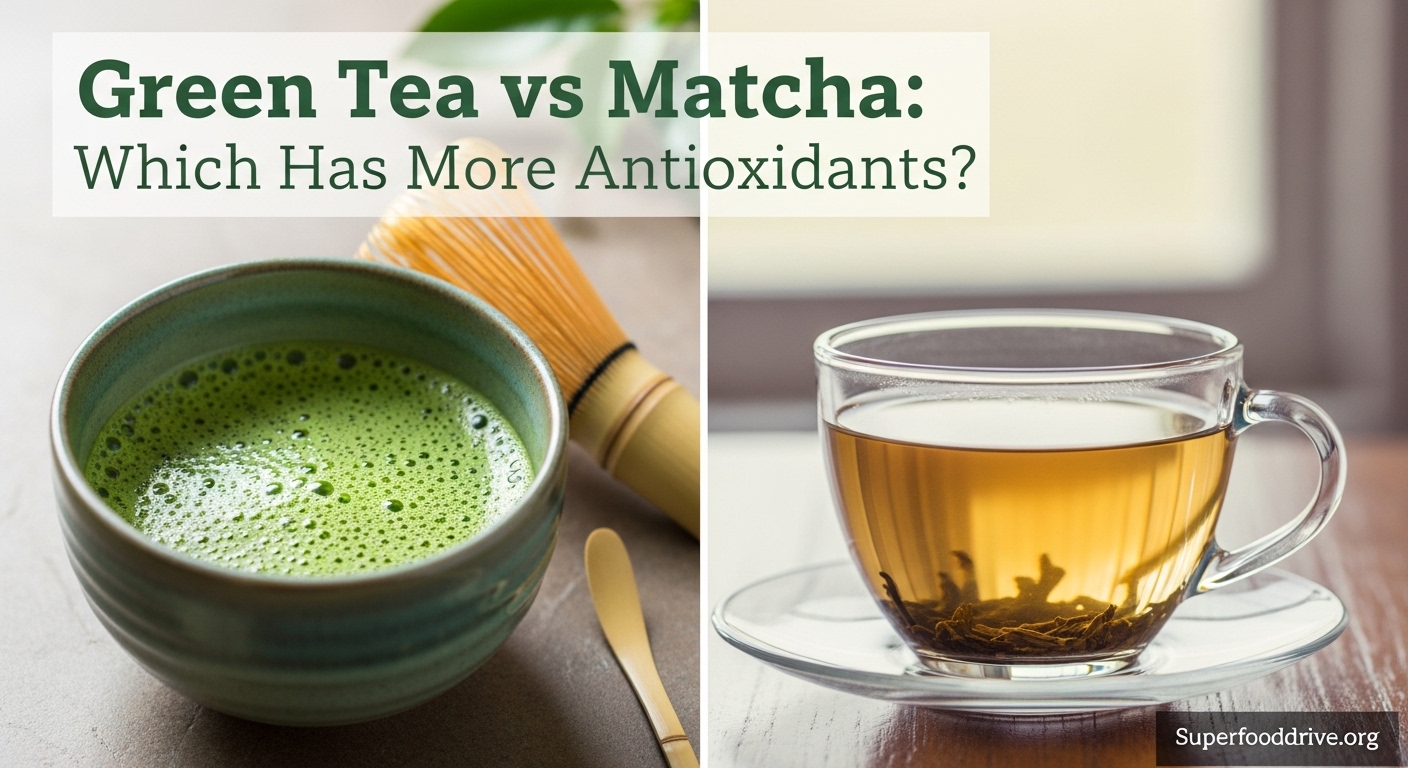
Matcha contains about three times more antioxidants per serving than regular green tea. Both beverages come from the same plant, Camellia sinensis, but the way they are grown and processed creates dramatically different nutritional profiles. Understanding these differences will help you make an informed choice about which tea suits your health goals and lifestyle.
In this guide, I will break down exactly how these two teas differ in antioxidant content, explain the science behind EGCG and catechins, and help you decide which option makes the most sense for your wellness routine.
Table of Contents
Green Tea vs Matcha Which Has More Antioxidants: The Science Explained
When it comes to antioxidant concentration, matcha takes the lead. A typical serving of matcha contains 137 times more EGCG (epigallocatechin gallate) than certain brands of standard green tea according to research, though this figure varies widely depending on preparation methods and tea quality.
The key difference lies in consumption. With green tea, you steep the leaves and discard them, consuming only the water-soluble compounds. With matcha, you consume the entire powdered leaf, ingesting both water-soluble and insoluble nutrients. This whole-leaf consumption is what drives matcha’s superior antioxidant density.
What Is Green Tea
Green tea is made from the leaves of the Camellia sinensis plant. After harvesting, the leaves undergo a quick heating process (either steaming or pan-frying) to prevent oxidation. This preserves their green color and delicate flavor profile.
The tea is then dried and packaged as loose leaves or in tea bags. When you prepare green tea, you steep these leaves in hot water for 2-3 minutes. You drink the infused water and discard the spent leaves.
This preparation method means you only extract water-soluble compounds. While green tea contains plenty of beneficial catechins and polyphenols, you are only accessing a portion of what the leaf offers.
What Is Matcha
Matcha is also made from Camellia sinensis leaves, but the cultivation process differs significantly. About 3-4 weeks before harvest, farmers shade the tea plants. This reduces sunlight exposure and increases chlorophyll production.
After harvest, the leaves are steamed to stop oxidation, then dried and deveined. The remaining leaf material is slowly stone-ground into an ultra-fine powder. This labor-intensive process explains matcha’s higher price point.
The critical difference is consumption. When you drink matcha, you whisk the powder directly into water and consume the entire leaf. Nothing is discarded. This means you receive the full spectrum of nutrients, including compounds that are not water-soluble.
How the Antioxidants Compare
Both green tea and matcha owe their health benefits to catechins, a type of polyphenol antioxidant. The most powerful and well-studied catechin is EGCG (epigallocatechin gallate).
Research suggests that matcha contains significantly more EGCG per gram than standard green tea. One study found that matcha had 137 times more EGCG than a popular low-grade green tea brand. However, high-quality green tea can narrow this gap considerably.
When comparing equal serving sizes, matcha typically delivers 3 times more antioxidants overall. This includes catechins, chlorophyll, L-theanine, and other beneficial compounds. The ORAC score (a measure of antioxidant capacity) for matcha is approximately 1,384 units per gram, compared to green tea’s 1,253 units per gram.
The 137x Antioxidant Myth
You may have seen claims that matcha contains 137 times more antioxidants than green tea. This figure comes from a specific study comparing matcha to one particular low-grade green tea brand.
While matcha does contain more antioxidants, the 137x figure is misleading when applied broadly. High-quality green tea can contain significantly more antioxidants than cheap tea bags. A more accurate comparison is that matcha contains roughly 3 times more antioxidants per serving than a typical cup of brewed green tea.
What Are Catechins and EGCG
Catechins are a type of flavonoid antioxidant found abundantly in tea. They make up about 30% of the dry weight of green tea leaves. EGCG is the most abundant and bioactive catechin, representing roughly 50-80% of total catechin content.
EGCG has been extensively studied for its potential health benefits. Research suggests it may help protect against heart disease, support brain health, aid weight management, and reduce inflammation. The concentration of EGCG is what primarily differentiates matcha from regular green tea.
Other Nutritional Differences
Beyond antioxidants, matcha and green tea differ in several other nutritional aspects worth considering.
Chlorophyll Content
The shade-growing process that matcha undergoes significantly boosts its chlorophyll levels. Chlorophyll gives matcha its vibrant green color and may support detoxification processes in the body. Green tea contains chlorophyll too, but at much lower concentrations.
L-Theanine Levels
Both teas contain L-theanine, an amino acid that promotes relaxation without drowsiness. Matcha typically contains higher concentrations due to shade-growing, which increases amino acid production.
This amino acid works synergistically with caffeine to create what many describe as “calm energy.” Users report feeling alert and focused without the jitters associated with coffee.
Caffeine Comparison
Matcha contains more caffeine than green tea. A typical serving of matcha has 35-70mg of caffeine, while green tea has 20-45mg per cup. The higher caffeine content, combined with L-theanine, contributes to matcha’s sustained energy boost.
Health Benefits of Green Tea
Regular green tea consumption offers numerous well-documented health benefits supported by scientific research.
Heart health: Studies show that drinking green tea regularly may reduce the risk of heart disease by lowering LDL cholesterol and improving blood vessel function.
Brain function: The combination of caffeine and L-theanine in green tea can improve cognitive performance, enhance memory, and increase alertness.
Weight management: Green tea may boost metabolism and increase fat burning, particularly during exercise.
Anti-inflammatory properties: The catechins in green tea help combat inflammation throughout the body, which is linked to many chronic diseases.
Cancer prevention: While more research is needed, some studies suggest green tea’s antioxidants may help protect against certain types of cancer.
Health Benefits of Matcha
Matcha offers all the benefits of green tea, often in enhanced form due to its higher concentration of beneficial compounds.
Enhanced antioxidant protection: With three times the catechins of green tea, matcha provides stronger protection against free radical damage and oxidative stress.
Calm focus: Many users report that matcha delivers a more sustained, jitter-free energy compared to coffee or even green tea. This is attributed to its higher L-theanine content.
Detoxification support: The high chlorophyll content in matcha may help the body eliminate toxins and heavy metals.
Metabolism boost: Matcha has been shown to increase thermogenesis (the body’s rate of burning calories) from 8-10% to 35-43% of daily energy expenditure.
Brain health: Research indicates that regular matcha consumption may improve attention, reaction time, and memory, particularly in older adults.
Which Should You Choose
Your choice between green tea and matcha depends on your priorities, budget, and lifestyle.
Choose matcha if you want maximum antioxidant benefits, sustained energy without jitters, and do not mind the higher cost or preparation time. Matcha is ideal for those serious about health optimization.
Choose green tea if you prefer a budget-friendly option, want something quick and convenient, or find matcha’s taste too intense. High-quality loose-leaf green tea still offers substantial health benefits.
Consider the taste difference too. Green tea has a lighter, more astringent flavor, while matcha is creamier and more vegetal. Many people prefer to start with green tea and graduate to matcha as they acquire the taste.
Frequently Asked Questions
Is matcha really healthier than green tea?
Matcha is more concentrated in antioxidants and beneficial compounds than green tea, making it potentially more effective for health benefits. However, both come from the same plant and offer similar benefits. Matcha contains about 3 times more antioxidants per serving because you consume the whole leaf. The best choice depends on your budget, taste preferences, and health goals.
What is the 30/20/10 rule for matcha?
The 30/20/10 rule refers to matcha preparation temperatures and timing. Use water heated to 175 degrees Fahrenheit (not boiling), whisk for 20 seconds in a zigzag motion, and aim for 10 seconds of frothing to create the perfect consistency. Proper preparation maximizes nutrient extraction and creates the characteristic smooth texture.
Is matcha good for high cortisol?
Matcha may help manage cortisol levels due to its high L-theanine content. L-theanine promotes relaxation and has been shown to reduce physiological stress responses. The combination of L-theanine and caffeine in matcha creates a calming effect while maintaining alertness, which may help regulate cortisol production.
Is matcha better than green tea for antioxidants?
Yes, matcha contains approximately 3 times more antioxidants than green tea per serving. This is because matcha involves consuming the entire powdered leaf, while green tea is brewed by steeping leaves and discarding them. Matcha delivers higher concentrations of EGCG, catechins, chlorophyll, and other beneficial compounds.
Does matcha lower LDL?
Research suggests that matcha may help lower LDL cholesterol levels. The high concentration of EGCG and other catechins in matcha has been shown to reduce cholesterol absorption in the gut and improve lipid profiles. Studies indicate that regular consumption of matcha can contribute to heart health by improving cholesterol markers.
Conclusion
Green Tea vs Matcha Which Has More Antioxidants? The answer is clear: matcha wins with approximately three times more antioxidant content per serving. This advantage comes from consuming the whole leaf rather than just brewed water.
Both teas offer impressive health benefits backed by scientific research. If maximizing antioxidant intake is your priority and budget allows, matcha is the superior choice. For those seeking a more affordable, convenient option, high-quality green tea still delivers substantial health benefits.
The best tea is the one you will actually drink regularly. Whether you choose green tea or matcha, incorporating either into your daily routine is a smart move for your overall health and wellness.