
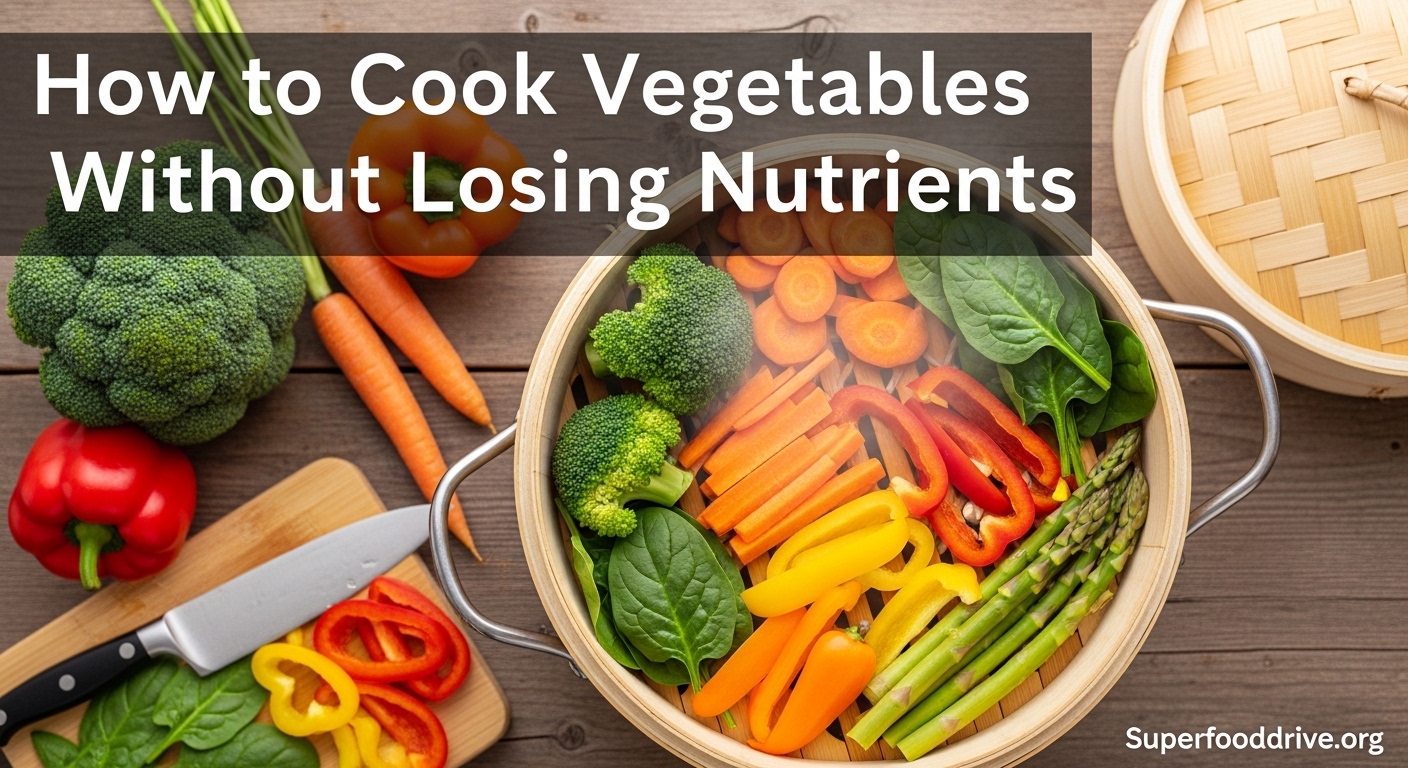
Learning how to cook vegetables without losing nutrients can transform your meals from merely filling to genuinely nourishing. Many home cooks unknowingly drain their vegetables of essential vitamins and minerals through simple cooking mistakes. The good news is that small changes to your cooking technique can preserve up to 90% of the nutritional value in your favorite vegetables.
This guide covers everything you need to know about nutrient retention methods that actually work. You will discover which cooking methods preserve the most vitamins, understand the science behind water-soluble and fat-soluble vitamins, and get specific instructions for each vegetable type. By the end, you will have a complete system for preparing vegetables that keeps their nutritional power intact.
Table of Contents
Understanding Water-Soluble vs Fat-Soluble Vitamins
Not all vitamins behave the same way when exposed to heat and water. Understanding the difference between water-soluble and fat-soluble vitamins helps you choose the right cooking method for maximum retention.
Water-Soluble Vitamins: The Heat-Sensitive Nutrients
Water-soluble vitamins include vitamin C and all eight B vitamins. These nutrients dissolve in water and are highly sensitive to heat, light, and air exposure. Vitamin C retention is particularly challenging because this vitamin degrades rapidly when vegetables are boiled or overcooked.
Broccoli can lose up to 50% of its vitamin C content when boiled for just ten minutes. Spinach loses roughly 60% of its folate when cooked in excess water. These water-soluble vitamins leach out into cooking liquid and break down under prolonged heat exposure.
The best approach for vegetables rich in vitamin C and B vitamins involves minimal water contact and shorter cooking times. Steaming, microwaving, and stir-frying all work better than boiling for preserving these heat-sensitive nutrients.
Fat-Soluble Vitamins: Heat-Stable but Need Oil
Fat-soluble vitamins include vitamins A, D, E, and K. Unlike their water-soluble counterparts, these vitamins are relatively stable during cooking and do not dissolve in water. However, they require dietary fat for proper absorption in your body.
Some fat-soluble nutrients actually become more bioavailable after cooking. Beta carotene in carrots increases by up to 50% when cooked. Lycopene in tomatoes becomes significantly more absorbable when heated. This means cooking can enhance the nutritional value of certain vegetables rather than diminish it.
Adding a small amount of healthy oil to your cooking helps your body absorb these fat-soluble vitamins. This is why roasting and stir-frying can be excellent choices for vegetables rich in vitamins A, E, and K.
How to Cook Vegetables Without Losing Nutrients
Now that you understand the science behind nutrient preservation, let us explore each cooking method in detail. Each technique has its strengths and works best for specific vegetable types.
Steaming: The Best Method for Nutrient Retention
Steaming vegetables is widely recognized by dietitians and nutrition researchers as the healthiest cooking method for preserving nutrients. This technique keeps vegetables above boiling water, preventing direct contact that causes vitamin leaching.
Research published in the Journal of Food Science shows that steaming broccoli retains 89% of its vitamin C content compared to only 66% when boiled. Green beans retain 77% of their antioxidants when steamed versus 55% when boiled. These numbers make a compelling case for investing in a simple steamer basket.
How to Steam Vegetables Perfectly
Bring one to two inches of water to a boil in a pot with a tight-fitting lid. Place your vegetables in a steamer basket above the water level, ensuring they do not touch the liquid. Cover the pot and steam until vegetables are just tender enough to pierce with a fork.
Most vegetables steam in five to seven minutes. Broccoli florets take about five minutes. Carrot slices need six to eight minutes. Green beans cook in five to six minutes. The key is checking frequently and removing vegetables immediately when they reach desired tenderness.
Season your steamed vegetables immediately after cooking while they are still hot. A drizzle of olive oil enhances absorption of fat-soluble vitamins while adding flavor. A squeeze of lemon juice provides extra vitamin C and brightens the taste.
Boiling: Why It Causes the Most Nutrient Loss
Boiling vegetables causes the greatest nutrient loss of any common cooking method. Water-soluble vitamins literally dissolve into the cooking liquid, leaving your vegetables nutritionally depleted.
Studies show that boiling vegetables can cause losses of 35% to 60% for vitamin C and up to 40% for B vitamins. Minerals like potassium and magnesium also leach into the water. The longer you boil, the more nutrients escape.
However, boiling is not completely off-limits. Some vegetables actually benefit from brief boiling. Boiling makes carrots more nutritious by breaking down cell walls and releasing beta carotene. Boiling also reduces oxalates in spinach, making its calcium more absorbable.
Tips to Minimize Nutrient Loss When Boiling
Use the smallest amount of water possible when you must boil vegetables. This reduces the volume of liquid available for nutrient leaching. Bring water to a full boil before adding vegetables to minimize cooking time.
Cut vegetables into larger pieces rather than small chunks. Larger pieces have less surface area exposed to water, reducing vitamin loss. Cook vegetables just until tender-crisp rather than mushy.
Always save and use the cooking liquid. That green water from boiling broccoli contains valuable nutrients. Use it as a base for soups, stews, or sauces. Drinking vegetable cooking water might sound unusual, but it captures vitamins that would otherwise go down the drain.
Microwaving: Surprisingly Effective for Nutrients
Microwaving vegetables preserves nutrients exceptionally well, often matching or exceeding steaming results. This method uses minimal water and short cooking times, the two key factors for nutrient retention.
Research from Harvard Medical School confirms that microwaving preserves nutrients because it cooks vegetables quickly with little liquid. A study in the journal Food and Bioproducts Processing found that microwaving retained 97% of vitamin C in green vegetables compared to 89% for steaming and 66% for boiling.
The key to microwaving vegetables successfully is using minimal water. Place vegetables in a microwave-safe dish with just two to three tablespoons of water. Cover the dish to create steam, then microwave on high for two to four minutes depending on the vegetable type.
Many people worry about microwave radiation affecting food quality. However, microwaves simply heat food by agitating water molecules. They do not make food radioactive or destroy nutrients beyond what any heat cooking method does.
Best Vegetables for Microwaving
Broccoli microwaves beautifully in three minutes with minimal water. Asparagus cooks in two to three minutes and retains excellent texture. Spinach wilts perfectly in just ninety seconds. Cauliflower florets become tender in four minutes.
Always pierce vegetables like potatoes or squash before microwaving to prevent steam buildup. Stir halfway through cooking for even heating. Let vegetables stand for one minute after cooking to complete the steaming process.
Roasting and Stir-Frying: Flavor with Good Retention
Roasting and stir-frying offer excellent nutrient preservation while adding delicious caramelized flavors. Both methods use dry heat and short cooking times that limit vitamin degradation.
Roasting vegetables at temperatures between 375 and 425 degrees Fahrenheit creates Maillard reactions that enhance flavor while preserving nutrients. The dry heat means water-soluble vitamins cannot leach away. Fat-soluble vitamins actually become more available when cooked with a light coating of oil.
Roasting for Maximum Nutrition
Cut vegetables into uniform pieces for even cooking. Toss with one to two tablespoons of olive oil or avocado oil to enhance absorption of fat-soluble vitamins. Spread vegetables in a single layer on a baking sheet without overcrowding.
Roast until vegetables are tender and edges begin to brown, typically twenty to thirty minutes. Root vegetables like carrots, sweet potatoes, and beets roast beautifully and develop enhanced sweetness. Brussels sprouts and cauliflower develop nutty flavors while retaining most nutrients.
Keep roasting times reasonable to prevent nutrient breakdown. Twenty to twenty-five minutes at 400 degrees preserves more nutrients than forty minutes at lower temperatures. High heat for shorter periods generally beats low heat for extended periods.
Stir-Frying for Quick Nutrition
Stir-frying uses high heat and constant motion to cook vegetables rapidly. This technique preserves water-soluble vitamins because cooking completes in three to seven minutes. The small amount of oil used helps absorb fat-soluble nutrients.
Use a wok or large skillet preheated over medium-high heat. Add oil and swirl to coat the surface. Add vegetables in order of cooking time, starting with harder vegetables like carrots and broccoli stems. Add quicker-cooking vegetables like peppers and spinach in the final two minutes.
Cut vegetables into thin, uniform pieces for fast, even cooking. Keep pieces moving constantly with a spatula to prevent burning. Add aromatics like garlic and ginger in the final minute for flavor without overcooking.
Pressure Cooking: The Underrated Nutrient Saver
Pressure cooking deserves more attention for nutrient preservation. Despite using water, the extremely short cooking times actually help retain more nutrients than boiling.
Research in the Journal of Food Science found that pressure cooking retained 90% of vitamin C in vegetables compared to 66% for boiling. The sealed environment prevents oxygen exposure that degrades heat-sensitive nutrients. Minerals also remain better preserved because cooking completes before significant leaching occurs.
Modern electric pressure cookers make this method accessible for busy home cooks. Vegetables cook in two to five minutes under pressure versus ten to twenty minutes boiling. Green beans cook in two minutes. Butternut squash cubes need four minutes. Potatoes become tender in eight minutes.
Use a steamer basket inside your pressure cooker to keep vegetables above the cooking liquid. This combines the speed of pressure cooking with the retention benefits of steaming. Quick release pressure immediately after cooking to stop the heating process and preserve texture.
Vegetable-by-Vegetable Cooking Guide
Different vegetables respond best to specific cooking methods and times. This guide provides exact recommendations for the most common vegetables.
Broccoli and Cauliflower
Steam broccoli florets for five minutes and cauliflower for six minutes. Both vegetables lose significant vitamin C when boiled, so avoid submerging them in water. Microwaving works well for three to four minutes with minimal water.
Roasting broccoli and cauliflower at 400 degrees for twenty to twenty-five minutes creates delicious crispy edges. Add a light coating of oil to maximize absorption of vitamins A and K. These cruciferous vegetables also contain glucosinolates that may become more available with light cooking.
Leafy Greens: Spinach, Kale, and Swiss Chard
Leafy greens require minimal cooking to preserve their delicate nutrient profile. Steam spinach for just two to three minutes until wilted. Kale benefits from five to seven minutes of steaming to soften tough fibers while preserving vitamins.
Sauteing leafy greens in a pan with a small amount of oil takes three to five minutes and enhances absorption of fat-soluble vitamins. Add garlic in the final minute for flavor. Never boil leafy greens for extended periods, as they lose nutrients rapidly and become mushy.
Root Vegetables: Carrots, Potatoes, and Beets
Root vegetables are more forgiving with cooking methods because many of their nutrients are fat-soluble. Roasting carrots at 400 degrees for twenty-five minutes increases beta carotene availability by up to 50%.
Steam potatoes for fifteen to twenty minutes depending on size. Leaving skins on preserves minerals and fiber. Beets require forty-five minutes to an hour of roasting wrapped in foil, or twenty-five minutes in a pressure cooker. The extended cooking time actually concentrates their sweet flavor while preserving most nutrients.
Peppers and Tomatoes
Peppers maintain excellent nutrient retention with quick cooking methods. Stir-fry sliced peppers for three to four minutes over high heat. Steam for five minutes until just tender. Roasting peppers brings out sweetness while preserving vitamin C if cooking time stays under twenty minutes.
Tomatoes uniquely benefit from cooking. While vitamin C decreases slightly, lycopene content increases by up to 35% when cooked. Simmer tomatoes for sauces, roast them for twenty minutes, or add to stir-fries. The heat breaks down cell walls, making antioxidants more bioavailable.
Green Beans and Asparagus
Green beans steam perfectly in five to six minutes. Boiling causes significant nutrient loss and often results in mushy texture. Saute green beans with a small amount of oil for six to eight minutes for excellent flavor and retention.
Asparagus spears steam in three to five minutes depending on thickness. Roasting at 400 degrees for twelve to fifteen minutes concentrates flavors while preserving folate and vitamins A, C, and K. The bottoms of asparagus spears may need trimming before cooking.
10 Proven Tips to Cook Vegetables Without Losing Nutrients
These evidence-based strategies will help you maximize nutrition in every vegetable dish you prepare.
1. Use minimal water for cooking. The less water you use, the fewer nutrients can leach out. Steam instead of boil whenever possible. If you must boil, use just enough water to cover the vegetables.
2. Cook for the shortest time necessary. Overcooking destroys nutrients and ruins texture. Vegetables should be tender-crisp, not mushy. Test with a fork and remove from heat immediately when done.
3. Cut vegetables into larger pieces. Smaller pieces have more surface area exposed to heat and water, accelerating nutrient loss. Cut vegetables just before cooking rather than hours ahead.
4. Add oil to enhance absorption. A small amount of olive oil or other healthy fat helps your body absorb fat-soluble vitamins A, D, E, and K. This is especially important for orange and dark green vegetables.
5. Use the cooking liquid. Never pour nutrient-rich cooking water down the drain. Save vegetable steaming liquid or boiling water for soups, stews, rice cooking, or sauces.
6. Cook vegetables whole when possible. Whole carrots, potatoes, and beets retain more nutrients than pre-cut versions. Cut just before cooking if smaller pieces are needed for even cooking.
7. Keep the pot covered during cooking. A tight-fitting lid traps steam and heat, reducing cooking time and oxygen exposure that degrades vitamins. This applies to steaming, boiling, and sauteing.
8. Choose fresh or frozen over canned. Fresh vegetables offer peak nutrition when properly cooked. Frozen vegetables are flash-frozen at peak ripeness and retain nutrients well. Canned vegetables often lose nutrients during processing.
9. Eat vegetables soon after cooking. Nutrients begin degrading as cooked vegetables sit. Serve immediately when possible. If storing leftovers, refrigerate promptly and consume within two days.
10. Eat some vegetables raw. Raw vegetables provide maximum vitamin C and certain enzymes that heat destroys. Include a mix of raw and cooked vegetables in your diet for complete nutrition.
Frequently Asked Questions
What is the healthiest way to cook vegetables?
Steaming is the healthiest way to cook vegetables because it minimizes water contact and cooking time. Research shows steaming preserves up to 89% of vitamin C compared to 66% for boiling. Microwaving is also excellent, retaining 97% of vitamin C in most vegetables.
How do you prevent nutrient loss when cooking vegetables?
Use minimal water, cook for the shortest time necessary, cut vegetables into larger pieces, and add a small amount of oil to enhance absorption of fat-soluble vitamins. Always save and use the cooking liquid which contains leached nutrients.
Is steaming better than boiling for nutrition?
Yes, steaming is significantly better than boiling for nutrient retention. Boiling causes water-soluble vitamins like vitamin C and B vitamins to leach into the cooking water. Steaming keeps vegetables above the water, preventing nutrient loss while still cooking them thoroughly.
Which method of cooking does not destroy nutrients?
No cooking method preserves 100% of nutrients, but steaming, microwaving, and stir-frying destroy the fewest nutrients. Raw vegetables maintain maximum nutrition, though cooking makes some nutrients like lycopene in tomatoes and beta carotene in carrots more bioavailable.
Do vegetables lose nutrients when cooked in soup?
Vegetables cooked in soup actually retain more nutrients than boiled vegetables because you consume the cooking liquid containing any leached vitamins and minerals. The nutrients stay in the broth rather than being discarded down the drain.
Which vegetables lose the most nutrients when cooked?
Broccoli, spinach, and other green vegetables high in vitamin C and folate lose the most nutrients when boiled or overcooked. Red peppers and leafy greens are also highly sensitive to heat and water exposure. Root vegetables like carrots and potatoes are more nutrient-stable during cooking.
Conclusion
Mastering how to cook vegetables without losing nutrients is one of the most impactful skills you can develop for better health. The evidence clearly shows that your cooking method choice matters significantly for vitamin retention.
Steaming emerges as the champion technique for preserving water-soluble vitamins like vitamin C and folate. Microwaving delivers surprisingly excellent results with minimal effort. Roasting and stir-frying offer flavorful alternatives that actually enhance absorption of fat-soluble vitamins.
The key principles are simple. Use minimal water, cook for the shortest time necessary, and include a small amount of healthy fat. Apply the ten tips from this guide and follow the vegetable-specific recommendations to transform your meals into nutrient-dense powerhouses that support your health goals.