
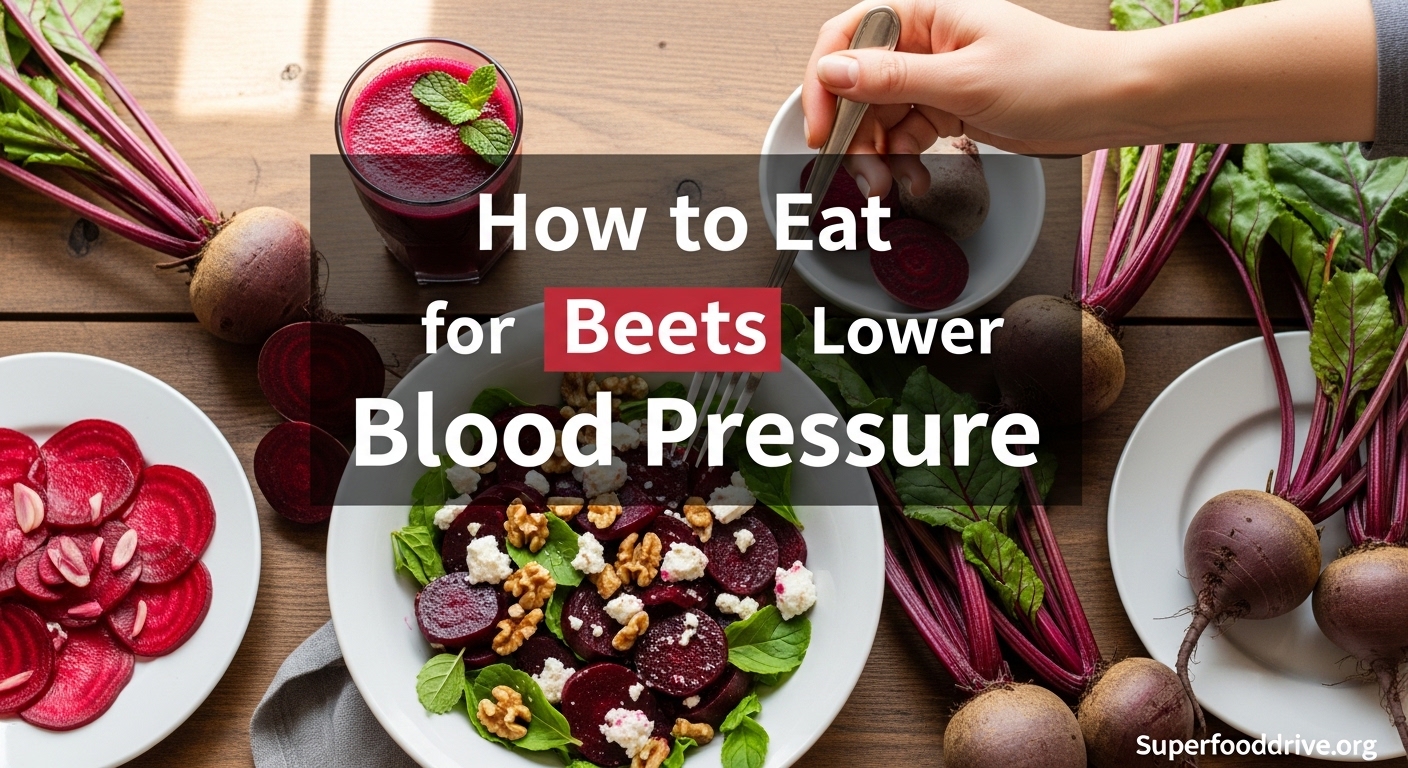
Learning how to eat beets for lower blood pressure could be one of the simplest changes you make for your heart health 2026. Studies show that consuming beets regularly can reduce systolic blood pressure by 4-10 mmHg within hours. This natural approach works through a fascinating biological mechanism involving dietary nitrates and nitric oxide production.
In this guide, I will share the seven most effective ways to consume beets based on scientific research and real-world results from hypertension communities. You will learn the optimal timing, specific dosages, preparation methods that preserve the most nitrates, and important safety considerations. Whether you prefer juice, raw beets, or cooked preparations, there is an approach that fits your lifestyle and taste preferences.
Table of Contents
How Beets Lower Blood Pressure: The Science Behind Nitrates
Beets contain exceptionally high levels of dietary nitrates, which your body converts into nitric oxide. This conversion happens through a two-step process involving bacteria in your mouth and enzymes in your body. Understanding this pathway helps you maximize the blood pressure benefits.
The Nitrate-to-Nitric Oxide Pathway
When you consume beets, the nitrates travel to your saliva where oral bacteria convert them to nitrites. These nitrites are then swallowed and further converted to nitric oxide in your stomach and bloodstream. Nitric oxide signals your blood vessel walls to relax and widen, a process called vasodilation.
This widening of blood vessels reduces resistance to blood flow, which directly lowers both systolic and diastolic pressure. The effects are most pronounced in people with existing hypertension, though healthy individuals also experience modest improvements in blood flow and oxygen delivery.
The Critical Role of Your Oral Microbiome
Here is something most articles miss: the bacteria in your mouth are essential for this process. If you use antibacterial mouthwash or swallow toothpaste immediately after brushing, you may be killing the very bacteria needed to convert nitrates to nitric oxide.
Research from the University of Texas shows that using chlorhexidine mouthwash can completely block the blood pressure-lowering effects of beets. Avoid mouthwash for at least two hours before and after eating beets or drinking beet juice to maintain a healthy population of nitrate-converting bacteria.
The 3-Hour Peak Effect Window
This is the most important timing insight for getting results. Peak blood pressure reduction occurs approximately 3 hours after consuming beets. The effects begin within 1 hour, reach maximum at 3 hours, and gradually decline over the next 6-24 hours.
Forum discussions consistently report this 3-hour window as the key to understanding when beets work best. Many users mistakenly consume beets with meals and do not see the expected results because they are not timing their consumption strategically.
How to Eat Beets for Lower Blood Pressure: 7 Best Methods
Different preparation methods affect how many nitrates remain in the beets and how quickly your body absorbs them. Here are the seven most effective approaches ranked by potency and convenience.
1. Fresh Beet Juice (Most Potent Option)
Beet juice delivers the highest concentration of nitrates in the most absorbable form. When you juice beets, you remove the fiber and concentrate the beneficial compounds, allowing faster conversion to nitric oxide.
A single 8-ounce glass of fresh beet juice can lower systolic blood pressure by 4-5 mmHg within 3 hours. The juice form bypasses some of the digestive work, making it ideal if you need quicker results or prefer drinking over eating solid food.
To make fresh beet juice, wash and peel 2-3 medium beets, chop into pieces that fit your juicer, and process them with a small apple or lemon to improve the earthy taste. Drink immediately after juicing to preserve the nitrates, which degrade with exposure to light and air.
2. Raw Beets (Maximum Nutrient Retention)
Eating beets raw preserves 100% of the nitrates and heat-sensitive nutrients like vitamin C and betalains. This method requires the most chewing, which actually helps activate the nitrate-converting process through saliva mixing.
The best way to eat raw beets is grated into salads or sliced paper-thin. The increased surface area from grating helps release more nitrates during chewing and improves absorption. One cup of grated raw beets provides similar nitrates to half a cup of beet juice.
Try combining raw grated beets with carrots, apples, and a citrus dressing. The vitamin C from citrus enhances iron absorption from the beets while the acidity helps preserve nitrates during digestion. This DASH-friendly combination supports overall cardiovascular health.
3. Steamed Beets (Best Cooked Option)
Steaming preserves more nitrates than any other cooking method, retaining approximately 80-85% of the original content. This gentle cooking method also makes beets easier to digest while maintaining their texture and flavor.
To steam beets properly, scrub them clean but leave the skins on during cooking to preserve nutrients. Steam whole beets for 30-45 minutes depending on size, or cut into 1-inch cubes and steam for 15-20 minutes. The skins slide off easily after steaming.
Season steamed beets simply with olive oil, lemon juice, and fresh herbs. Avoid adding salt if you are monitoring blood pressure, though a small amount of high-quality sea salt is acceptable within DASH diet guidelines. Steamed beets store well in the refrigerator for 3-5 days.
4. Roasted Beets (Most Flavorful Method)
Roasting concentrates the natural sugars in beets, creating a sweeter, more caramelized flavor that appeals to people who find raw or steamed beets too earthy. While roasting reduces nitrates by 25-30%, the remaining content still provides meaningful blood pressure benefits.
Roast beets at 400 degrees Fahrenheit (205 degrees Celsius) wrapped in foil to retain moisture. Whole beets take 45-60 minutes, while cubed beets roast in 25-30 minutes. The longer cooking time does degrade more nitrates, so consider roasting at slightly lower temperatures for longer if time permits.
Roasted beets work beautifully in warm salads with goat cheese and walnuts, though you should use these higher-fat toppings sparingly if managing blood pressure. The roasting process also makes beets more versatile for meal prep since the flavor improves over 1-2 days.
5. Fermented Beets (Gut Health Bonus)
Fermented beets combine blood pressure benefits with probiotic advantages. The fermentation process preserves nitrates while adding beneficial bacteria that support digestive health and may further support cardiovascular function through the gut-heart axis.
Traditional fermented beet recipes like kvass use simple ingredients: beets, water, salt, and whey or a starter culture. The fermentation takes 2-3 days at room temperature, after which the beets and liquid can be refrigerated for several weeks. The resulting drink is tangy and contains living probiotics.
Start with small portions of fermented beets if you are new to probiotic foods, as the sudden introduction of beneficial bacteria can cause temporary digestive adjustment. Two to four ounces of beet kvass daily provides both nitrates and probiotics without overwhelming your system.
6. Pickled Beets (Convenient Shelf-Stable Option)
Pickled beets offer convenience and long shelf life, making them practical for busy schedules. However, store-bought versions often contain high sodium levels that can counteract blood pressure benefits. Look for low-sodium options or make your own.
The pickling process preserves nitrates reasonably well, though vinegar-based brines may affect the nitrate conversion pathway slightly differently than raw beets. The acidity from vinegar actually helps with nitrite stability during digestion.
For homemade pickled beets, roast or steam beets first, then pickle in a mixture of apple cider vinegar, water, a small amount of salt or salt substitute, and spices like cloves and cinnamon. Refrigerator pickles maintain better texture and flavor than canned versions.
7. Beet Powder and Supplements (Travel-Friendly Alternative)
Beetroot powder and capsules provide convenience for travel or days when fresh beets are impractical. However, nitrates degrade during the drying process, so you need larger quantities to achieve equivalent effects. One teaspoon of powder equals approximately half a fresh beet in nitrate content.
When choosing beet supplements, look for products specifying nitrate content rather than just beetroot powder amount. Quality varies significantly between brands. Freeze-dried powders generally retain more nitrates than air-dried versions.
Mix beet powder into smoothies, yogurt, or oatmeal. The earthy flavor is milder than fresh beets but still noticeable. For capsules, you may need 4-6 capsules to equal the nitrates in one cup of fresh juice, making this a more expensive option long-term.
Comparison: Which Beet Preparation Is Best for Blood Pressure?
| Method | Nitrate Retention | Convenience | Taste Appeal | Cost | Best For |
|---|---|---|---|---|---|
| Fresh Juice | 95% | Medium | Low-Medium | Medium | Maximum effect, quick results |
| Raw Beets | 100% | Medium | Medium | Low | Purists, nutrient maximizers |
| Steamed Beets | 80-85% | High | Medium | Low | Daily eating, meal prep |
| Roasted Beets | 70-75% | High | High | Low | Flavor preference, beginners |
| Fermented Beets | 85-90% | Low | Medium | Low | Gut health focus |
| Pickled Beets | 75-80% | Very High | Medium | Low-Medium | Convenience, storage |
| Beet Powder | 40-60% | Very High | Low-Medium | High | Travel, emergencies |
This comparison shows why fresh juice and raw beets lead for maximum blood pressure impact, while steamed and roasted options offer the best balance of effectiveness and convenience for daily eating.
How Much Beets to Eat and When: Your Timing Guide
Getting the dosage and timing right makes the difference between seeing results and wondering if beets work at all. Here are the evidence-based recommendations for quantity and timing.
Recommended Daily Dosage for Blood Pressure
The research consistently shows that 1 cup (8 ounces) of beet juice daily provides optimal blood pressure reduction. If you prefer whole beets, aim for 1-2 medium beets or approximately 1 cup of cooked or raw beets.
For beet powder, you need 2-3 teaspoons to approach the nitrate content of fresh juice. With supplements, check the nitrate content on the label and aim for 400-500mg of dietary nitrate equivalent.
Consistency matters more than perfection. Daily consumption maintains steady nitric oxide levels, while sporadic intake produces temporary spikes in blood pressure benefits followed by return to baseline.
The 3-Hour Peak Effect Window Explained
Plan your beet consumption around the 3-hour peak effect. If you want maximum blood pressure reduction during specific times of day, consume beets 3 hours before that period.
For morning blood pressure management, drink beet juice with breakfast or on an empty stomach upon waking. The effects will peak mid-morning when many people experience natural blood pressure elevation. For evening management, consume beets in the mid-afternoon.
Some people in hypertension forums report splitting their dose: half in the morning and half in the afternoon. This creates two smaller peaks rather than one large dip, which may provide more stable blood pressure throughout the day.
Best Time of Day for Beet Consumption
Morning consumption on an empty stomach appears to provide the fastest absorption and most pronounced effects. Without food competing for digestion, the nitrates reach your saliva and convert to nitrites more efficiently.
If the earthy taste of morning beet juice is too intense, try blending with pineapple, berries, or citrus. These additions mask the flavor while adding vitamin C, which may enhance the conversion process. Avoid adding dairy, as calcium can interfere with nitrate absorption.
Evening consumption works well for people whose blood pressure rises at night or who have morning hypertension patterns. Just avoid consuming beets within 3 hours of bedtime if you are sensitive to blood pressure fluctuations during sleep.
Easy Beet Recipes for Blood Pressure Support
These recipes combine blood pressure benefits with palatable flavors and DASH diet principles. Each recipe serves one and takes under 15 minutes to prepare.
Morning Blood Pressure Smoothie
Blend 1/2 cup fresh beet juice or 1 small raw grated beet with 1 cup mixed berries, 1/2 banana, 1 cup unsweetened almond milk, and 1 tablespoon ground flaxseed. The berries mask the earthy beet flavor while adding antioxidants that support vascular health.
Add a handful of spinach for extra potassium and nitrates. This combination provides approximately 300-400mg of dietary nitrate, enough to produce measurable blood pressure reduction within hours. Drink immediately after blending to preserve nutrients.
Raw Beet Salad with Citrus Dressing
Grate 1 medium raw beet and combine with 2 grated carrots, 1 diced apple, and 1/4 cup chopped walnuts. Dress with 2 tablespoons olive oil, 1 tablespoon apple cider vinegar, and the juice of half a lemon.
The vitamin C from lemon enhances the conversion of nitrates to nitric oxide. Walnuts add omega-3 fatty acids that further support heart health. This salad delivers about 250mg of nitrates plus 8 grams of fiber to support healthy cholesterol levels.
Quick Low-Sodium Pickled Beets
Steam 4 medium beets until tender, then peel and slice. Pack into a jar with 1 cup apple cider vinegar, 1/2 cup water, 2 tablespoons honey or maple syrup, 4 cloves, and 1 cinnamon stick. Refrigerate for at least 24 hours before eating.
Unlike store-bought pickled beets, this version controls sodium while maintaining the tangy flavor. The spices add antioxidants and make the beets more palatable for people who dislike the pure earthy taste. These keep in the refrigerator for 3 weeks.
Beet Greens Stir-Fry (Do Not Waste the Greens)
Beet greens contain even more potassium than the roots, plus additional nitrates and antioxidants. Sauté chopped beet greens in olive oil with garlic and red pepper flakes for 3-4 minutes until wilted.
Season with lemon juice and serve as a side dish. One cup of cooked beet greens provides over 1000mg of potassium, which works synergistically with beet nitrates to lower blood pressure. The greens have a milder, spinach-like flavor that converts even beet skeptics.
How to Maximize Beets’ Blood Pressure Benefits
Beyond choosing the right preparation method, several strategies can enhance how effectively beets lower your blood pressure.
Protect Your Oral Microbiome
Avoid antibacterial mouthwash for at least 2 hours before and after eating beets. If you need to freshen your breath, rinse with plain water or use a salt water gargle instead. Wait 30 minutes after eating beets before brushing your teeth.
Consider taking a probiotic supplement to support oral bacteria diversity. The specific bacteria needed for nitrate conversion thrive in a balanced oral environment, not one constantly sanitized by antimicrobial products.
Combine with Vitamin C for Enhanced Absorption
Vitamin C helps stabilize nitrites during digestion and may improve the overall conversion to nitric oxide. Add citrus, berries, or a vitamin C supplement when consuming beets. The combination of nitrates and vitamin C produces better blood flow improvements than either alone.
A study from the University of Oslo found that combining beet juice with vitamin C increased plasma nitrite levels by 37% compared to beet juice alone. This translates to greater blood pressure reduction and longer-lasting effects.
Time with Exercise for Dual Benefits
Consuming beets 2-3 hours before exercise enhances both the blood pressure benefits and workout performance. The nitric oxide improves oxygen delivery to muscles while simultaneously reducing vascular resistance.
Even a 20-minute walk after consuming beets amplifies the blood pressure effects through the additional nitric oxide production that exercise stimulates. This synergy makes beets particularly valuable for people managing hypertension through lifestyle changes.
Side Effects, Risks, and Who Should Avoid Beets
While beets are safe for most people, understanding potential side effects helps you use them effectively and recognize when to seek medical advice.
Common Side Effects Explained
Beeturia, the harmless condition where urine and sometimes stool turn pink or red after eating beets, alarms people who mistake it for blood. This affects approximately 10-14% of the population and indicates nothing about health status or blood pressure response.
Some people experience digestive upset, including gas, bloating, or diarrhea, especially when first adding beets to their diet. Start with smaller portions and increase gradually. Fermented beets may be easier to digest than raw or cooked versions for sensitive stomachs.
Important Medication Interactions
Beets can enhance the effects of blood pressure medications, potentially causing blood pressure to drop too low. If you take ACE inhibitors, ARBs, beta-blockers, or diuretics, monitor your blood pressure closely when adding beets to your routine. You may need medication adjustments under doctor supervision.
The nitrates in beets work through similar pathways as PDE5 inhibitors like sildenafil (Viagra). Combining these can cause dangerous blood pressure drops. Avoid beets within 24 hours of taking erectile dysfunction medications.
Beets are high in vitamin K, which affects blood clotting. If you take warfarin or other blood thinners, maintain consistent vitamin K intake rather than suddenly increasing beet consumption. Consult your doctor about appropriate portions.
Who Should Limit or Avoid Beets
People with a history of calcium oxalate kidney stones should limit beet consumption. Beets are high in oxalates, which can contribute to stone formation in susceptible individuals. Balance beet intake with calcium-rich foods and stay well-hydrated.
Those with gout may need to limit beets during flare-ups, as they contain moderate amounts of purines. The oxalate content also suggests caution for people with iron overload conditions like hemochromatosis.
If your blood pressure already runs low (below 90/60 mmHg), beets could push it into symptomatic ranges causing dizziness or fainting. Monitor your response carefully and reduce portions if you experience lightheadedness.
FAQ
How many beets should I eat a day to lower blood pressure?
For blood pressure reduction, consume 1 cup (8 ounces) of beet juice daily or 1-2 medium whole beets. This provides approximately 400-500mg of dietary nitrates, the amount shown in studies to produce measurable blood pressure reduction. Consistency matters more than exact quantity – daily consumption maintains steady nitric oxide levels for sustained benefits.
What happens 3 hours after eating beets?
Peak blood pressure reduction occurs approximately 3 hours after consuming beets. This happens because nitrates convert to nitrites in your mouth, then to nitric oxide in your bloodstream, reaching maximum concentration around the 3-hour mark. Blood pressure typically drops 4-10 mmHg systolic during this window. Plan your beet consumption timing around this 3-hour peak for maximum benefit.
Do cooked beets still lower blood pressure?
Yes, cooked beets still lower blood pressure effectively. Steaming retains 80-85% of nitrates, while roasting preserves 70-75%. Although cooking reduces nitrate content compared to raw beets, the remaining amount still provides meaningful cardiovascular benefits. Steaming is the best cooking method for preserving nitrates while making beets more palatable and easier to digest.
Can beetroot help with high cortisol?
Beetroot may indirectly support cortisol management through blood pressure and cardiovascular benefits. Chronic stress elevates cortisol and blood pressure simultaneously. By improving blood flow and reducing hypertension, beets can support overall stress response. However, beets do not directly lower cortisol levels – for high cortisol, focus on sleep, stress management techniques, and addressing underlying causes.
Can beets replace blood pressure medication?
Beets should not replace prescribed blood pressure medication without medical supervision. While studies show beets can reduce systolic pressure by 4-10 mmHg, this is typically less than medication effects. Beets work best as a complementary approach alongside medication, diet changes like DASH, exercise, and stress management. Never stop taking prescribed medications without consulting your doctor.
How fast do beets lower blood pressure?
Beets begin lowering blood pressure within 1 hour of consumption, with peak effects at 3 hours. The blood pressure reduction typically lasts 6-24 hours depending on individual metabolism and dosage. For sustained benefits, consume beets daily rather than sporadically. Some people report feeling effects within 30 minutes, though measurable blood pressure changes take 1-3 hours to develop.
Are there any side effects of eating beets daily?
Daily beet consumption is safe for most people but can cause harmless red or pink urine (beeturia) and occasional digestive upset. Some people experience gas, bloating, or diarrhea when first adding beets. Beets may also lower blood pressure too much when combined with medications. Start with smaller portions and increase gradually. People with kidney stones or blood clotting concerns should consult a doctor first.
Is beet juice better than eating whole beets?
Beet juice delivers nitrates more concentrated and rapidly than whole beets, making it more potent for immediate blood pressure reduction. However, whole beets provide fiber that supports digestive health and cholesterol management. For maximum blood pressure impact, choose juice. For overall health benefits including fiber and slower digestion, choose whole beets. Both methods are effective.
Conclusion: How to Eat Beets for Lower Blood Pressure 2026
Learning how to eat beets for lower blood pressure gives you a natural, food-based tool for cardiovascular health. The key insights are simple: consume 1 cup of beet juice or 1-2 whole beets daily, time your intake around the 3-hour peak effect window, avoid mouthwash that kills beneficial bacteria, and choose preparation methods that fit your lifestyle while preserving nitrates.
Whether you prefer the potency of fresh juice, the convenience of steamed beets, or the flavor of roasted preparations, consistency matters more than perfection. Combine your beet consumption with other heart-healthy habits like the DASH diet, regular exercise, and stress management for comprehensive blood pressure support.
Start with one method that appeals to you, track your blood pressure response, and adjust timing and dosage based on your results. Your heart – and your blood pressure monitor – will thank you.