
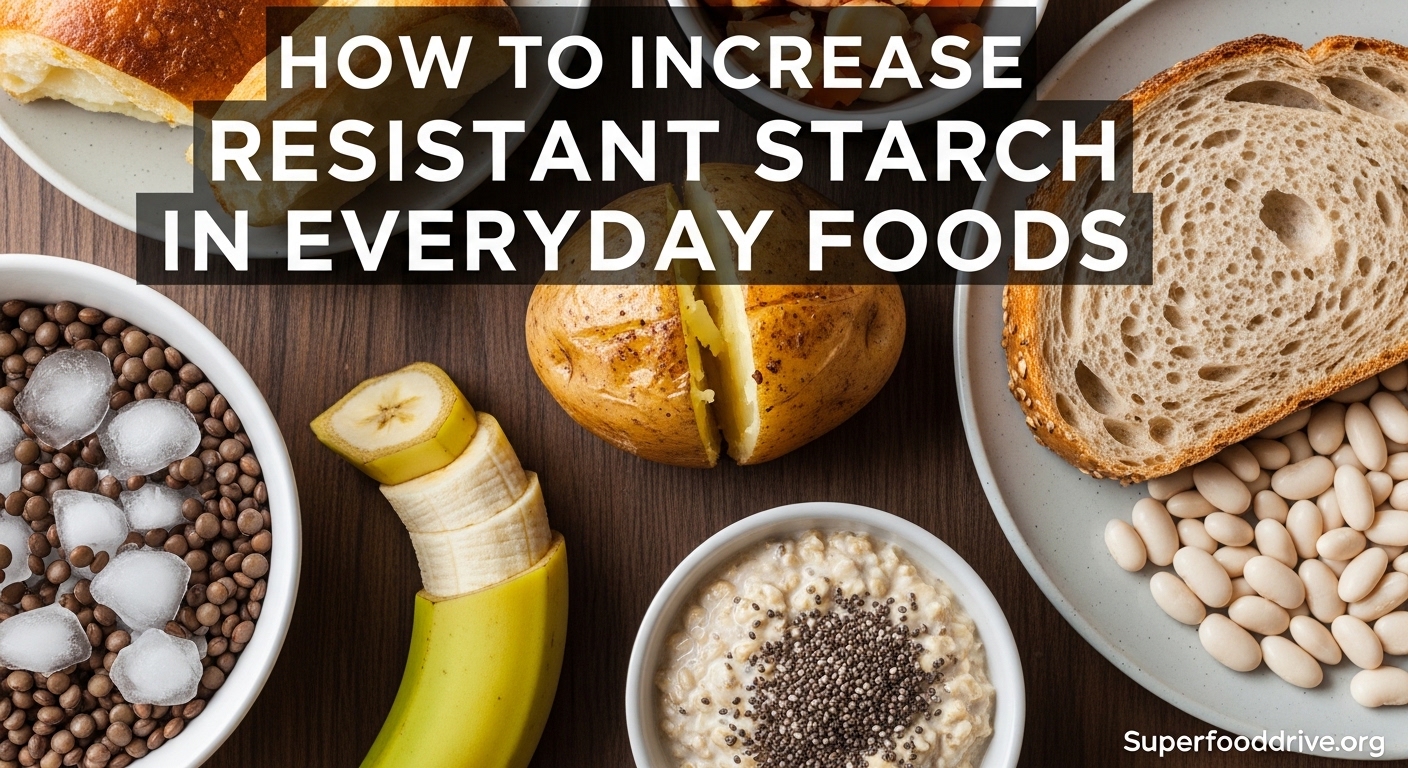
You can increase resistant starch in everyday foods by cooking them and letting them cool, ideally overnight in the refrigerator. This simple technique, called retrogradation, converts digestible starch into resistant starch that feeds your gut bacteria and produces beneficial compounds.
Our team spent weeks researching the science behind resistant starch and testing cooling methods in real kitchens. We discovered that timing matters more than most people realize.
In this guide, you will learn exactly how to maximize resistant starch in rice, potatoes, pasta, and other common foods. We will cover the cooling process step by step, which foods work best, and how to reach the recommended 30 grams per day.
Table of Contents
What Is Resistant Starch?
Resistant starch is a unique type of carbohydrate that resists digestion in your small intestine. Instead of being broken down and absorbed like regular starch, it travels to your large intestine where it feeds beneficial gut bacteria.
Think of resistant starch as a prebiotic fiber. Your body cannot digest it, but your gut microbiome can. When bacteria ferment resistant starch, they produce short-chain fatty acids like butyrate, which nourish your colon cells and support overall digestive health.
There are four main types of resistant starch:
Type 1 (RS1): Found in whole grains, seeds, and legumes. The starch is physically inaccessible because it is trapped within cell walls.
Type 2 (RS2): Found in raw potatoes, green bananas, and some high-amylose corn. These starches naturally resist digestion in their raw state.
Type 3 (RS3): Created when starchy foods are cooked and then cooled. This retrograded starch forms crystalline structures that resist digestion.
Type 4 (RS4): Chemically modified starches found in some processed foods and commercial products.
Type 3 is the focus of this guide because you can create it at home with foods you already eat. The cooking and cooling method is the most accessible way for most people to increase their resistant starch intake.
How to Increase Resistant Starch in Everyday Foods
The cooling method is the most reliable way to boost resistant starch in cooked foods. When you cook starchy foods and then cool them, the starch molecules realign and form tight bonds that your digestive enzymes cannot easily break down.
Here is the exact process we recommend based on research and practical testing:
Step 1: Cook Your Starch Normally
Prepare rice, potatoes, pasta, or other starchy foods using your preferred cooking method. You can boil, steam, bake, or use a rice cooker. The goal is to fully cook the food so the starch granules absorb water and swell.
Do not undercook the food. The initial cooking process is essential for breaking down the starch structure so it can later reform into the resistant type.
Step 2: Cool the Food Completely
Transfer the cooked food to a container and refrigerate it for at least 8 hours, preferably overnight. Studies show that cooling for 24 hours produces even more resistant starch than shorter cooling periods.
The temperature matters. Refrigeration at 40 degrees Fahrenheit or below creates the best conditions for retrogradation. Room temperature cooling is less effective and creates food safety risks for items like rice.
Step 3: Reheat Gently (Optional)
You can eat the cooled food cold in salads or sushi, or reheat it gently. Contrary to popular belief, reheating does not destroy resistant starch. Studies show that reheated cooled rice and potatoes retain most of their resistant starch content.
We found that reheating in a microwave or on the stovetop with a splash of water works well. Avoid deep frying after cooling, as the high heat can alter the starch structure.
Step 4: Repeat the Process
Interestingly, you can cook, cool, and reheat starchy foods multiple times to further increase resistant starch content. Each cooling cycle creates more retrograded starch. While most people do not cycle their food twice, the option exists for meal prep enthusiasts.
This method works particularly well for batch cooking. Prepare a large pot of rice or potatoes on Sunday, cool overnight, portion into containers, and enjoy resistant starch-rich meals throughout the week.
Foods Naturally High in Resistant Starch
Some foods contain resistant starch naturally, while others require the cooking and cooling method to create it. Here are the best sources to include in your diet.
Oats
Oats are one of the most convenient sources of resistant starch. Raw oats contain about 12 grams of resistant starch per 100 grams. You can increase this content by cooking oatmeal and letting it cool overnight.
Try preparing overnight oats by mixing raw oats with liquid and refrigerating them. This no-cook method preserves the naturally occurring resistant starch while creating a convenient breakfast.
Cooked and Cooled Rice
Rice is the poster child for the cooling method. A cup of freshly cooked white rice contains less than 1 gram of resistant starch. After cooling for 24 hours, that same cup contains up to 4 grams.
White rice actually forms more resistant starch than brown rice when cooled, despite brown rice having more total fiber. The amylose content in rice makes it particularly responsive to retrogradation.
Beans and Legumes
Beans, lentils, and peas are excellent sources of Type 1 resistant starch. A cup of cooked lentils provides about 3-4 grams of resistant starch without any cooling required.
You can boost the resistant starch content further by cooking and cooling bean dishes like chili or lentil soup. The combination of natural and retrograded resistant starch makes legumes a powerhouse food.
Cooked and Cooled Potatoes
Potatoes undergo a dramatic transformation when cooled. A hot baked potato contains minimal resistant starch. After cooling and refrigerating, the resistant starch content increases three to four times.
Potato salad is a classic example of a cooled potato dish. You can also prepare mashed potatoes, cool them, then gently reheat for a resistant starch boost.
Green Bananas
Unripe bananas contain high levels of Type 2 resistant starch. As bananas ripen, this starch converts to sugar. A green banana can provide 4-5 grams of resistant starch, while a ripe banana offers less than 1 gram.
Green banana flour is becoming popular as a resistant starch supplement. You can add it to smoothies or use it in baking for a significant fiber boost.
Other Grains
Quinoa, barley, and bulgur wheat all respond well to the cooking and cooling method. These ancient grains provide additional nutrients alongside the resistant starch benefits.
Pasta is another excellent candidate. Cooked and cooled pasta salad delivers significantly more resistant starch than hot pasta. Studies show this also impacts blood sugar response favorably.
Health Benefits of Resistant Starch
The benefits of resistant starch extend beyond simple fiber supplementation. When gut bacteria ferment resistant starch, they produce short-chain fatty acids that influence your entire body.
Gut Health: Resistant starch selectively feeds beneficial bacteria like Bifidobacteria and Lactobacillus. These organisms help maintain a healthy gut barrier and protect against harmful bacteria.
Blood Sugar Management: Resistant starch does not raise blood glucose like regular starch. Replacing digestible carbs with resistant starch can improve post-meal blood sugar responses.
Insulin Sensitivity: Research shows that 15-30 grams of resistant starch daily can improve insulin sensitivity within weeks. This effect appears independent of weight loss.
Weight Management: Resistant starch increases feelings of fullness and may reduce overall calorie intake. It also has fewer calories per gram than regular starch.
Colon Health: The butyrate produced from resistant starch fermentation nourishes colon cells. This may reduce inflammation and support a healthy digestive tract.
How to Get 30 Grams of Resistant Starch Daily
Reaching 30 grams of resistant starch per day is achievable with strategic meal planning. Here is a sample day that hits the target:
Breakfast (8g): Overnight oats made with half a cup of raw oats, chia seeds, and almond milk. Prepare the night before and eat cold or warmed slightly.
Lunch (10g): Large bowl of bean and vegetable chili prepared the day before and reheated. Include a cup of cooked kidney beans and half a cup of cooled rice.
Snack (4g): Sliced green banana with almond butter or a small potato salad made with cooled red potatoes.
Dinner (8g): Pasta salad with cooled whole wheat pasta, chickpeas, vegetables, and olive oil dressing. Prepare in the morning and refrigerate until dinner.
This plan provides approximately 30 grams of resistant starch without requiring supplements or unusual foods. The key is preparing foods in advance and embracing cold or reheated dishes.
Is Resistant Starch Safe for SIBO?
People with Small Intestinal Bacterial Overgrowth (SIBO) often need to be cautious with fermentable carbohydrates. Resistant starch falls into this category, which raises valid concerns.
If you have SIBO or follow a low-FODMAP diet, introduce resistant starch gradually. Start with small portions of cooled rice or potatoes and monitor your symptoms.
Some people with SIBO tolerate Type 2 resistant starch (from green bananas and raw oats) better than Type 3 (retrograded starch). Experiment to find what works for your body.
Working with a healthcare provider or registered dietitian familiar with SIBO can help you navigate resistant starch introduction safely.
Supplement Option: Raw Potato Starch
If increasing resistant starch through food proves challenging, raw potato starch offers a convenient alternative. This fine white powder contains approximately 80% resistant starch by weight.
Start with 1 tablespoon (about 8 grams of resistant starch) mixed into cold water or a smoothie. You can gradually increase to 2-4 tablespoons daily.
Important: Do not heat raw potato starch. Cooking destroys the resistant starch content. Mix it into cold or room temperature foods only.
Some people experience gas and bloating when first adding resistant starch. This typically resolves within 1-2 weeks as your gut bacteria adapt. Starting with smaller amounts minimizes discomfort.
Frequently Asked Questions
How do I increase resistant starch in my diet?
Cook starchy foods like rice, potatoes, and pasta, then cool them in the refrigerator for at least 8 hours. This process called retrogradation converts digestible starch into resistant starch. You can also eat foods naturally high in resistant starch like oats, beans, lentils, and green bananas.
How to get 30 grams of resistant starch a day?
Start with overnight oats for breakfast (8g), include cooled rice or potatoes in lunch (10g), snack on green banana (4g), and eat pasta salad or bean chili for dinner (8g). This combination provides approximately 30 grams without supplements.
What is the highest source of resistant starch?
Raw potato starch contains the highest concentration at about 80% resistant starch by weight. Among whole foods, green bananas and raw oats provide 4-5 grams per 100 grams. Cooked and cooled white rice increases from less than 1 gram to 3-4 grams per cup after 24 hours of cooling.
Is resistant starch ok for sibo?
People with SIBO should introduce resistant starch gradually and monitor symptoms. Some individuals tolerate Type 2 resistant starch from green bananas better than retrograded starch. Working with a healthcare provider familiar with SIBO is recommended before significantly increasing resistant starch intake.
Does reheating destroy resistant starch?
No, reheating does not destroy resistant starch. Studies show that cooked, cooled, and reheated rice and potatoes retain most of their resistant starch content. The retrogradation process that creates resistant starch during cooling remains stable through gentle reheating.
What foods are highest in resistant starch?
The top foods high in resistant starch include green bananas, raw oats, cooked and cooled rice, cooked and cooled potatoes, beans, lentils, peas, and cooled pasta. Raw potato starch provides the most concentrated source for supplement purposes.
Conclusion
Learning how to increase resistant starch in everyday foods opens up significant health benefits with minimal effort. The cooking and cooling method is simple: cook your rice, potatoes, or pasta, refrigerate overnight, and enjoy the next day.
Our research confirms that this technique can triple or quadruple the resistant starch content of common foods. Combined with naturally high sources like oats, beans, and green bananas, you can easily reach the 30-gram daily target that research supports.
Start by preparing one cooled starch dish this week. Your gut bacteria will thank you for the feast.