
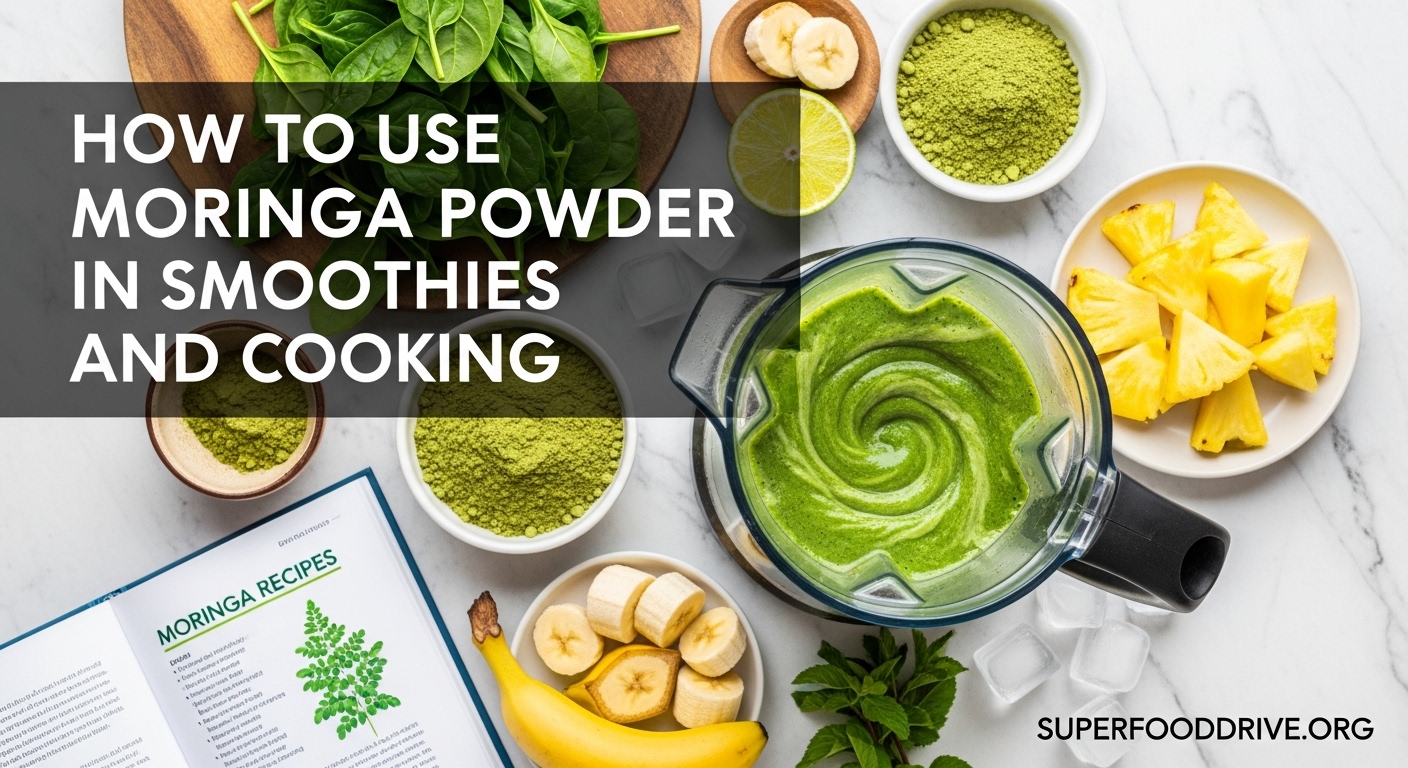
I still remember the first time I opened a bag of moringa powder. The earthy, slightly grassy aroma hit me immediately, and I had no idea how to turn this vibrant green powder into something I would actually want to eat. That was three years ago. Since then, I have experimented with dozens of recipes and learned exactly how to use moringa powder in smoothies and cooking without sacrificing flavor.
Moringa oleifera has earned its reputation as a superfood for good reason. The dried leaf powder packs an incredible nutritional punch with vitamins A, C, and E, plus significant amounts of calcium, potassium, and iron. I personally noticed a sustained energy boost within two weeks of making moringa a daily habit. The key is knowing how to incorporate it properly so the benefits shine through while the bitter taste stays hidden.
This guide will walk you through everything I have learned about using moringa powder effectively. You will discover smoothie recipes that actually taste amazing, cooking methods that preserve nutrients, and practical tips for masking that distinctive grassy flavor. Whether you are a complete beginner or looking to expand your moringa repertoire, these strategies will help you make this superfood a seamless part of your daily routine in 2026.
Table of Contents
What Makes Moringa Powder a Nutritional Powerhouse
Before diving into recipes, it helps to understand why moringa deserves a spot in your kitchen. This plant, native to parts of India and Africa, has been used in traditional medicine for centuries. Modern research continues to validate what traditional healers knew all along.
Vitamin and Mineral Content
One tablespoon of moringa powder delivers about 25% of your daily iron needs. That same spoonful contains roughly 15% of your recommended vitamin A and significant amounts of vitamin C. I find this especially valuable as someone who follows a predominantly plant-based diet.
The calcium content surprised me when I first researched moringa. It contains roughly four times the calcium of milk by weight. For anyone concerned about bone health or looking to reduce dairy consumption, this makes moringa an excellent dietary addition.
Antioxidant Properties
Moringa contains quercetin and chlorogenic acid, two powerful antioxidants that help combat oxidative stress in the body. These compounds support immune function and may help reduce inflammation over time. I noticed fewer afternoon energy crashes once I started my morning moringa routine consistently.
The anti-inflammatory benefits extend beyond general wellness. Some studies suggest moringa may help support healthy blood sugar levels and cardiovascular function. While it is not a miracle cure, the nutritional density makes it a smart addition to any health-conscious diet.
How to Use Moringa Powder: Dosage Guidelines
Getting the dosage right makes the difference between enjoying moringa and giving up after the first attempt. I learned this lesson the hard way by adding too much to my first smoothie and creating an undrinkable green sludge.
Starting Small
Begin with half a teaspoon daily for the first week. This gives your digestive system time to adjust to the fiber and concentrated nutrients. Several people in online forums mentioned experiencing mild stomach upset when starting with larger amounts.
After the first week, increase to one teaspoon if you are tolerating it well. I recommend staying at this level for at least two weeks before considering any increase. Your body needs time to adapt to the phytonutrients and bioactive compounds.
Daily Recommended Amount
Most health practitioners suggest one to two teaspoons daily as a maintenance dose. This equals roughly three to six grams of powder. For specific health goals, some people work up to one tablespoon, but I find one to two teaspoons sufficient for general wellness.
Spread your intake throughout the day if you prefer. I typically do one teaspoon in my morning smoothie and another in the afternoon if I need an energy boost. This approach keeps nutrient levels steady rather than overwhelming your system at once.
When to Take Moringa
Morning consumption works best for most people, myself included. The natural energy boost complements breakfast nicely without the jitters that coffee sometimes brings. Taking moringa with food also helps with nutrient absorption and reduces any chance of stomach discomfort.
Some people prefer taking moringa before bed, claiming it helps with sleep quality. I have tried both approaches and find morning works better for sustained daytime energy. Experiment to find what suits your schedule and body best.
Moringa Smoothie Recipes for Every Taste
Smoothies remain the easiest entry point for most people starting with moringa powder. The blended format masks texture issues completely, and the cold temperature helps mellow the earthy flavor. These four recipes have become staples in my weekly rotation.
Tropical Green Moringa Smoothie
This recipe combines the sweetness of mango and pineapple with the creaminess of coconut. The tropical flavors completely overpower any grassy notes from the moringa. I make this at least twice a week during summer months.
Ingredients:
- 1 cup frozen mango chunks
- 1/2 cup frozen pineapple
- 1 banana
- 1 cup coconut water
- 1 teaspoon moringa powder
- Handful of fresh spinach
- Ice cubes (optional)
Blend all ingredients until smooth, about 60 seconds. The spinach amplifies the green color while adding extra nutrients. This smoothie delivers serious hydration along with the moringa benefits.
Chocolate Moringa Energy Smoothie
Chocolate and moringa work surprisingly well together. The rich cocoa flavor dominates while the moringa adds nutritional depth without interfering with the taste. This has become my go-to post-workout recovery drink.
Ingredients:
- 1 banana (frozen for creaminess)
- 1 tablespoon unsweetened cocoa powder
- 1 cup almond milk or oat milk
- 1 tablespoon almond butter
- 1 teaspoon moringa powder
- 1 scoop chocolate protein powder (optional)
- Ice as needed
Blend until completely smooth, scraping down the sides once if needed. The almond butter adds healthy fats that help your body absorb the fat-soluble vitamins in moringa. This combination keeps me satisfied for hours.
Berry Antioxidant Moringa Smoothie
Berries provide their own antioxidant benefits while their tartness balances moringa’s earthiness. I love this recipe during berry season when fresh strawberries and blueberries are abundant at the farmers market.
Ingredients:
- 1 cup mixed frozen berries (strawberries, blueberries, raspberries)
- 1/2 cup Greek yogurt or coconut yogurt
- 1/2 cup orange juice or pomegranate juice
- 1 teaspoon moringa powder
- 1 tablespoon chia seeds
- Honey or maple syrup to taste
Blend on high speed until the chia seeds are fully incorporated. Let the smoothie sit for two minutes after blending to allow the chia seeds to thicken the texture slightly. The result tastes like a berry parfait with hidden superfood powers.
Creamy Banana Moringa Smoothie
Sometimes simple works best. This three-ingredient smoothie proves that moringa does not require complex recipes to taste good. I make this when I am short on time but still want my nutritional boost.
Ingredients:
- 2 frozen bananas
- 1 cup milk of choice (dairy or plant-based)
- 1 teaspoon moringa powder
- Pinch of cinnamon (optional)
Blend until creamy and completely smooth. The frozen bananas create an ice cream-like texture that makes this feel indulgent despite being incredibly healthy. Add a splash more liquid if your blender struggles with the frozen fruit.
Creative Ways to Use Moringa Powder in Cooking
Smoothies are just the beginning. Moringa integrates beautifully into savory dishes, baked goods, and warm beverages. These methods have expanded how I use moringa beyond the blender.
Moringa in Soups and Stews
Soups provide an excellent vehicle for moringa because the powder dissolves completely into hot liquid. I add one teaspoon to lentil soup, vegetable stew, or even chicken noodle soup during the last five minutes of cooking. This timing preserves more nutrients than extended boiling would.
Traditional Indian cooking has used fresh moringa leaves in sambar for generations. The powder works similarly in any brothy soup. The key is stirring it in at the end rather than at the beginning of cooking to maintain nutritional integrity.
Breakfast Ideas with Moringa
Oatmeal becomes a nutritional powerhouse with moringa stirred in after cooking. I mix one teaspoon into my morning oats along with nut butter and sliced fruit. The warmth of the oats helps the powder dissolve while the toppings mask any remaining earthiness.
Pancake and waffle batter also accommodate moringa beautifully. Add one teaspoon per cup of flour to your regular recipe. The green tint disappears once cooked, and the flavor gets lost among the vanilla and maple syrup. My kids eat these without complaint.
Baking with Moringa Powder
Muffins, quick breads, and energy balls all accept moringa powder graciously. I have successfully added up to two tablespoons to a standard banana bread recipe without any taste complaints from taste testers. The key is balancing with enough sweetener and spices.
Energy balls make an excellent entry point for moringa baking. Mix dates, nuts, oats, and one teaspoon of moringa in a food processor, then roll into bite-sized portions. These store well in the refrigerator and provide a quick nutrient boost any time of day.
Moringa Latte and Tea Recipes
A warm moringa latte has replaced my afternoon coffee on many days. Heat your milk of choice, whisk in one teaspoon of moringa powder with a splash of vanilla and honey, and froth if desired. The result tastes similar to a matcha latte with its own unique character.
For a simpler approach, add half a teaspoon to your regular herbal tea. Chai spices particularly complement moringa’s earthy notes. I sometimes leave a chai tea bag in the bottom of my cup before straining the moringa mixture on top for extra flavor depth.
How to Hide the Taste of Moringa Powder
The biggest hurdle for most people is moringa’s distinctive flavor. It tastes grassy, slightly bitter, and definitely earthy. Over three years of experimentation, I have identified the ingredients that successfully mask this taste.
Best Flavor Pairings
Citrus fruits work exceptionally well with moringa. The acidity of lemon, lime, or orange juice cuts through the earthiness while adding brightness. I always include a squeeze of lemon in my green smoothies when using moringa.
Sweet fruits provide the strongest masking effect. Mango, pineapple, banana, and ripe pear all dominate moringa’s flavor profile. Berries offer a middle ground, providing some sweetness while their tartness adds complexity that distracts from the green taste.
Ingredients That Work
Cocoa powder and chocolate flavors completely overwhelm moringa. This is my go-to strategy when introducing skeptical friends to moringa for the first time. A chocolate smoothie with moringa tastes like dessert, not health food.
Nut butters add richness that helps mask moringa while providing healthy fats. Peanut butter, almond butter, and cashew butter all work beautifully. The fat content also helps your body absorb the fat-soluble vitamins in moringa more effectively.
Ginger and cinnamon add warming spices that distract from moringa’s earthiness. I frequently include fresh ginger in my smoothies for this reason. These spices also bring their own anti-inflammatory benefits, creating a synergistic effect.
What to Avoid
Plain water or milk without any additions will not mask moringa’s taste effectively. I tried this during my first week and nearly gave up on moringa entirely. Always pair moringa with at least one strong flavor component.
Delicate flavors like cucumber or subtle teas get overpowered by moringa. Save those combinations for days when you have acquired the taste and actually enjoy moringa’s natural flavor. Most beginners need bolder pairings.
Storage and Preparation Tips
Proper storage keeps moringa powder potent and fresh. I learned this lesson after leaving an open bag in my pantry for three months and noticing the color faded from vibrant green to dull olive.
Store moringa in an airtight container away from direct sunlight and heat. The pantry works fine, but a cool, dark cabinet is ideal. Properly stored moringa maintains its nutritional value for up to one year from the purchase date.
Always use a dry spoon when scooping moringa powder. Moisture causes clumping and can lead to spoilage. If your powder develops any off smell or significant color change, it is time to replace it.
For meal prep enthusiasts, pre-portion moringa into small containers or bags for the week ahead. This makes morning smoothie assembly faster and ensures consistent dosing. I keep a week’s worth of one-teaspoon portions ready in my pantry.
Troubleshooting Common Issues
Even with the best preparation, you might encounter some challenges when starting with moringa. Here are solutions to the most common problems based on my experience and community feedback.
Problem: Digestive discomfort when starting. This affected me during my first week. The solution is simple, start with a smaller dose and gradually increase. Most people’s systems adjust within one to two weeks.
Problem: Clumping in cold liquids. Moringa powder sometimes forms lumps in icy smoothies. Blend longer or add the powder to your liquid base first before adding frozen ingredients. This pre-dispersal prevents clumping.
Problem: Too bitter despite masking efforts. Some batches of moringa taste stronger than others. Try reducing your dose slightly or adding more sweetener. Quality varies between brands, so consider switching suppliers if the bitterness seems excessive.
Problem: Green stains on clothing. Moringa powder can leave noticeable green marks. Handle carefully and rinse spills immediately. I keep a damp cloth nearby when working with moringa to catch any stray powder before it sets.
Frequently Asked Questions
How much moringa powder should I add to a smoothie?
Start with one teaspoon per serving for most smoothie recipes. This provides nutritional benefits without overwhelming the flavor. After you acquire the taste, you can increase to one tablespoon if desired. For beginners, half a teaspoon blended with strongly flavored fruits like mango or banana works perfectly.
Can I take moringa if I have hyperthyroidism?
Consult your healthcare provider before using moringa if you have thyroid conditions. Moringa contains compounds that may affect thyroid function, particularly in large amounts. Your doctor can advise whether moringa is appropriate for your specific situation and recommended dosage.
What does moringa taste like?
Moringa has an earthy, slightly grassy flavor with mild bitter undertones similar to green tea or matcha but more pronounced. Many people describe it as tasting like concentrated greens. The flavor intensity varies by brand and quality, with fresher powders tasting milder than older ones.
How should I store moringa powder?
Store moringa powder in an airtight container away from heat, light, and moisture. A cool, dark pantry cabinet works well. Properly stored moringa stays fresh for up to one year. Watch for color changes, faded green indicates oxidation and potential nutrient loss.
Can I put moringa in hot water or cooking?
Yes, but add moringa at the end of cooking to preserve nutrients. High heat for extended periods degrades some vitamins and antioxidants. For soups and stews, stir moringa in during the last five minutes. For hot beverages like tea or lattes, whisk powder into heated liquid just before drinking.
How long does it take to see benefits from moringa?
Most people notice subtle energy improvements within two to three weeks of consistent daily use. More significant benefits like improved digestion or reduced inflammation may take four to eight weeks. Consistency matters more than dose size. Taking moringa daily, even in smaller amounts, produces better results than occasional large doses.
Final Thoughts
Learning how to use moringa powder in smoothies and cooking opens up a world of nutritional possibilities. The key lessons from my three-year journey are simple: start small, mask the flavor creatively, and stay consistent. This superfood has earned its permanent place in my kitchen through tangible benefits I experience daily.
Pick one recipe from this guide and try it this week. The Tropical Green Smoothie works beautifully for beginners, while the Chocolate Energy Smoothie wins over skeptical family members. Once you find your gateway recipe, expanding to other methods becomes natural and enjoyable.
Remember that moringa is a supplement to a balanced diet, not a replacement for whole foods. Combined with varied nutrition and healthy lifestyle habits, moringa powder can support your wellness goals in 2026 and beyond. Your journey with this remarkable green superfood starts with a single teaspoon.