
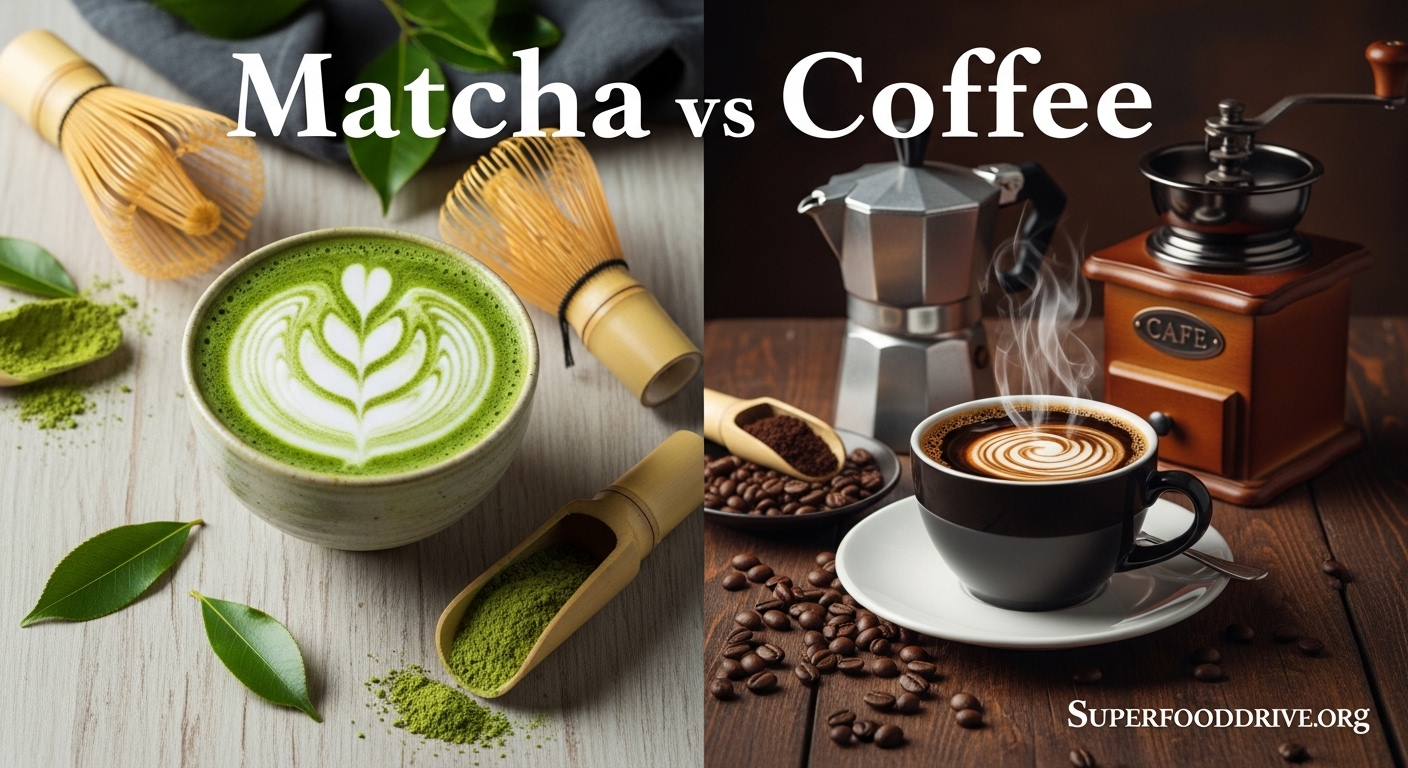
Every morning, millions of us face the same choice. Do we reach for the familiar coffee mug or explore the vibrant green powder that has taken over cafes and TikTok feeds? I spent 30 days switching between matcha and coffee, tracking my energy levels, focus, and yes, the dreaded afternoon crash. What I discovered changed how I think about caffeine entirely.
Matcha and coffee both deliver caffeine, but the experience could not be more different. Coffee hits fast and hard, often leaving you jittery before an inevitable crash. Matcha provides a slow, sustained release of energy that lasts 4-6 hours without the spike-and-fall pattern. The secret lies in L-theanine, an amino acid found in matcha that binds to caffeine and moderates its absorption.
| Factor | Matcha | Coffee |
|---|---|---|
| Caffeine Content | 30-70mg per serving | 95-200mg per cup |
| L-Theanine | 25-40mg per serving | 0mg |
| Energy Onset | Gradual (30-60 min) | Rapid (15-30 min) |
| Duration | 4-6 hours sustained | 2-3 hours, then crash |
| Crash Potential | Minimal to none | Common and pronounced |
| Acidity | Alkaline | Acidic |
In this guide, you will learn exactly why matcha delivers calm, sustained energy while coffee often leaves you anxious and crashing. We will explore the science behind L-theanine, compare caffeine absorption rates, and help you decide which beverage suits your lifestyle and goals.
Table of Contents
How Much Caffeine Is Actually in Matcha vs Coffee?
The caffeine numbers might surprise you. A standard 8-ounce cup of brewed coffee contains between 95 and 200 milligrams of caffeine, depending on the bean type and brewing method. Espresso packs even more per ounce, though serving sizes are smaller.
Matcha contains significantly less caffeine, typically ranging from 30 to 70 milligrams per serving. This variance depends heavily on quality and preparation. Ceremonial grade matcha from the first flush harvest tends toward the higher end, while culinary grades often sit lower.
Here is where it gets interesting. Matcha caffeine binds to catechins and L-theanine, slowing its release into your bloodstream. Coffee caffeine absorbs rapidly, peaking within 30-60 minutes and dropping just as quickly. Matcha caffeine releases gradually over 3-4 hours, explaining why you feel sustained rather than spiked.
The absorption rate difference is crucial for understanding the crash phenomenon. Rapid absorption means rapid elimination. When coffee caffeine leaves your system, you feel the drop. Matcha’s slower absorption creates a gentle taper rather than a cliff.
What Is L-Theanine and Why Does It Matter?
L-theanine is an amino acid found almost exclusively in tea plants, particularly in shade-grown green tea like matcha. When tea plants are shaded before harvest, they produce more chlorophyll and amino acids, including L-theanine. This compound is largely responsible for matcha’s unique effects.
Coffee contains zero L-theanine. This single difference explains why two beverages with the same caffeine content can produce such different experiences. The L-theanine in matcha works synergistically with caffeine to create what researchers call “alert calmness.”
Scientific studies from PubMed show that L-theanine promotes alpha brain wave activity. These brain waves are associated with relaxed alertness, the same state achieved during meditation. You feel awake and focused, but not wired or anxious.
The combination of caffeine and L-theanine has been studied extensively. Research shows this pairing improves attention, reaction time, and working memory better than caffeine alone. Participants report feeling less distracted and better able to focus on complex tasks. This is why matcha has become popular among programmers, writers, and students who need sustained mental performance.
The Crash Comparison: Matcha vs Coffee
Let us address the core question directly. Does matcha make you crash like coffee? The answer is generally no. While individual responses vary, most people experience minimal to no crash from matcha compared to the pronounced crash common with coffee.
Coffee crashes happen because of how caffeine interacts with your body. When you drink coffee, caffeine spikes your cortisol levels, the stress hormone. This creates a temporary energy boost, but as cortisol drops and caffeine metabolizes, you feel the crash. Your body has been pushed into a stressed state, and the rebound leaves you tired and sometimes irritable.
L-theanine prevents this crash through several mechanisms. It slows caffeine absorption, preventing the sharp spike that triggers cortisol release. It also increases levels of GABA, serotonin, and dopamine, neurotransmitters that promote relaxation and well-being. This biochemical balance keeps you steady rather than swinging between high and low.
During my 30-day experiment, I tracked my energy hourly. Coffee days showed a predictable pattern: strong energy at hour 1, peak jitters at hour 2, noticeable decline at hour 3, and crash by hour 4. Matcha days showed gradual onset at hour 1, sustained peak from hours 2-5, and gentle taper through hour 6.
The duration difference is significant for productivity. Coffee’s 2-3 hour window often leaves you needing another cup just when your afternoon starts. Matcha’s 4-6 hour window carries most people through until evening without a second serving.
Energy Types: Sharp Spike vs Sustained Focus
Coffee delivers what I call “task energy.” It is intense, immediate, and powerful. If you need to power through a difficult workout or finish a project under deadline, coffee excels. The sharp spike gives you that kick-in-the-pants feeling that some people crave.
But that intensity comes with side effects. Many coffee drinkers experience jitters, anxiety, racing thoughts, or digestive discomfort. These effects make coffee less ideal for activities requiring calm focus, like writing, coding, or creative work.
Matcha provides “flow energy.” The combination of caffeine and L-theanine creates a state of relaxed alertness perfect for deep work. You feel awake and capable without feeling wired. Tasks requiring sustained attention become easier, and you are less likely to get distracted.
Productivity research supports this distinction. Studies show that moderate caffeine with L-theanine improves performance on tasks requiring attention switching and working memory. Coffee alone can improve simple reaction time but may hurt complex cognitive performance due to anxiety.
Your optimal choice depends on your daily demands. Choose coffee for high-intensity physical tasks or when you need immediate alertness. Choose matcha for knowledge work, creative projects, or any activity requiring hours of sustained focus.
Gut Health and Acidity: The Hidden Difference
Most comparisons focus on caffeine and energy, but the digestive impact matters tremendously. Coffee is highly acidic, with a pH around 5.0. This acidity can irritate sensitive stomachs, trigger acid reflux, and contribute to long-term digestive issues.
Matcha is alkaline, with a pH around 9.0. Many people who cannot tolerate coffee find matcha gentle on their stomach. This makes matcha an excellent alternative for those with GERD, IBS, or general sensitivity to acidic foods.
Because matcha uses the whole ground leaf, you consume all the fiber and nutrients. Quality matters enormously here. Conventionally grown tea leaves may contain pesticide residues. Since you are consuming the entire leaf with matcha, organic certification is non-negotiable for safety.
The gut health difference extends beyond acidity. Coffee can stimulate bowel movements, which some people appreciate and others find disruptive. Matcha is gentler in this regard, providing energy without the urgency.
If you have ever felt nauseous or uncomfortable after coffee, matcha may be your solution. The alkaline nature and slower caffeine release are much easier on sensitive digestive systems.
First Flush Harvest: Why Quality Affects Your Experience
Not all matcha is created equal. The harvest timing dramatically impacts L-theanine content and overall quality. First flush matcha comes from the very first spring harvest, when plants have been storing nutrients all winter.
First flush matcha contains the highest L-theanine levels, sometimes double that of later harvests. This is the ceremonial grade matcha prized for its sweet, umami flavor and superior cognitive effects. The leaves are shade-grown for 3-4 weeks before harvest, maximizing chlorophyll and amino acid production.
Second and third flush matcha, often sold as culinary grade, contains less L-theanine and more catechins. While still healthy, these grades deliver a different experience. The energy boost is less refined, and the taste is more bitter.
When shopping for matcha, look for labels indicating “first flush,” “ceremonial grade,” or “spring harvest.” The color should be vibrant green, not dull or yellowish. Quality matcha costs more, but the difference in both taste and effects justifies the investment.
Which One Should You Choose?
The matcha vs coffee decision depends on your body, your goals, and your daily routine. There is no universally superior choice, only the right choice for you.
Choose coffee if: You need immediate, intense energy for physical tasks. You enjoy the ritual and flavor of coffee. You have developed a tolerance and do not experience jitters or crashes. You prefer a stronger stimulant effect.
Choose matcha if: You are sensitive to caffeine jitters or anxiety. You need sustained focus for hours of mental work. You want energy without the crash. You prefer a gentler, more balanced stimulant effect. You have stomach sensitivity to acidic foods.
Consider a hybrid approach: Many people find success with strategic use of both. Coffee for intense morning workouts or early deadlines. Matcha for afternoon focus sessions when you need steady energy without compromising evening sleep.
I ultimately settled on matcha for weekdays when I write and research, and coffee for weekend mornings when I exercise. This hybrid approach gives me the benefits of both without the drawbacks of overusing either.
Frequently Asked Questions
Does matcha make you crash like coffee?
Generally no. Matcha contains L-theanine, an amino acid that binds to caffeine and slows its absorption. This prevents the sharp spike and subsequent crash associated with coffee. Most people experience 4-6 hours of sustained energy from matcha with a gentle taper rather than a crash.
What is the 30/20/10 rule for matcha?
The 30/20/10 rule refers to matcha preparation: 30 seconds of whisking, 20 seconds of resting after pouring water, and 10 seconds of initial stirring before drinking. This ensures proper dissolution and optimal flavor. Some also interpret it as 30g powder to 200ml water at 10 degrees below boiling.
Does matcha have more L-theanine than other teas?
Yes. Matcha contains significantly more L-theanine than regular green tea because it is shade-grown before harvest. This process increases amino acid production. A typical serving of matcha contains 25-40mg of L-theanine, compared to 5-10mg in regular brewed green tea.
Does L-theanine prevent caffeine crashes?
L-theanine does not prevent caffeine crashes entirely, but it significantly reduces them. By slowing caffeine absorption and promoting alpha brain waves, L-theanine creates a steady energy curve rather than a spike and crash. It also helps reduce jitters and anxiety associated with caffeine.
Why is Gen Z obsessed with matcha?
Gen Z has embraced matcha for several reasons: the aesthetic green color is highly Instagram and TikTok friendly, the wellness culture association aligns with health-conscious values, the sustained energy without jitters appeals to those sensitive to caffeine, and the ritual of preparation provides a mindful moment in busy days.
Can matcha replace coffee for energy?
Matcha can replace coffee for most people seeking energy, but the experience differs. Matcha provides less intense but more sustained energy. Those needing immediate, high-intensity stimulation may find coffee more suitable. Many people successfully switch entirely to matcha after a 1-2 week adjustment period.
Matcha vs Coffee Caffeine L-Theanine Crash Comparison: Final Thoughts
The matcha vs coffee debate ultimately comes down to what kind of energy you need. Coffee excels at delivering immediate, intense stimulation perfect for physical tasks and quick energy boosts. Matcha shines when you need hours of calm, focused productivity without the anxiety and crash.
The L-theanine difference is the key scientific factor separating these beverages. By binding to caffeine and promoting alpha brain waves, L-theanine transforms matcha into a tool for sustained mental performance. Coffee lacks this moderating compound, which explains its more volatile effects.
After my 30-day experiment, I recommend trying both under controlled conditions. Track your energy, focus, and how you feel 4-6 hours after consumption. Pay attention to sleep quality, anxiety levels, and digestive comfort. The right choice will become obvious through your own experience.
Whether you choose matcha, stick with coffee, or adopt a hybrid approach, understanding the caffeine-L-theanine dynamic empowers you to optimize your daily energy. The goal is not to abandon coffee or worship matcha, but to use each beverage strategically for your specific needs.