
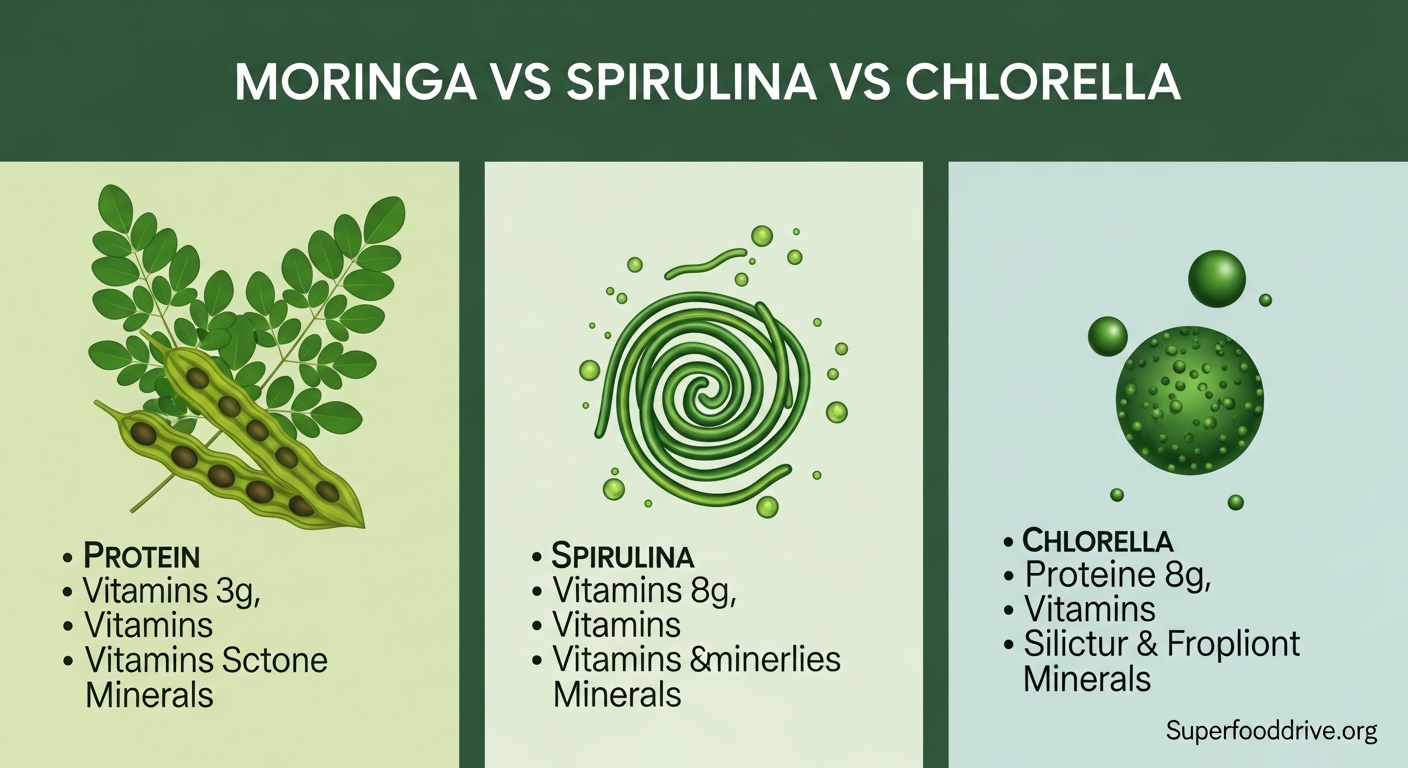
Choosing between Moringa, Spirulina, and Chlorella feels like comparing three different shades of green paint. Each one promises incredible health benefits, from better energy to detox support, but which one actually deserves a spot in your daily routine?
After spending months researching these green superfoods and testing them myself, I have found that each one shines in different areas. Some offer complete protein perfect for vegans. Others excel at pulling heavy metals from your body.
This guide breaks down the real differences between these three powerhouse supplements so you can decide which one fits your health goals.
Table of Contents
What Are These Green Superfoods Anyway?
Before diving into the comparison, let us understand what each one actually is. They are not interchangeable, even though health food stores often lump them together.
Moringa: The Tree Leaf That Packs a Punch
Moringa oleifera comes from a fast-growing tree native to India and parts of Africa. People have called it the “miracle tree” for centuries because nearly every part of it serves a purpose. The leaves contain the concentrated nutrition, which is why you find moringa in powder and capsule form.
What makes moringa unique is its impressive calcium content and anti-inflammatory compounds. The leaves contain isothiocyanates that researchers have studied for their ability to reduce inflammation markers in the body.
Spirulina: The Blue-Green Algae Powerhouse
Spirulina is a cyanobacteria that grows in freshwater lakes, particularly in alkaline environments. Despite being called blue-green algae, it is technically a bacteria that performs photosynthesis. The distinctive blue color comes from phycocyanin, a pigment with powerful antioxidant properties.
This superfood became famous after NASA proposed growing it in space for astronaut nutrition. It contains between 60-70% complete protein by weight, making it one of the most protein-dense foods on the planet.
Chlorella: The Single-Celled Detoxifier
Chlorella is a true green algae that grows in freshwater. Unlike spirulina, it has a hard cell wall made of cellulose that humans cannot digest. Manufacturers must crack this wall to make the nutrients bioavailable.
The cell wall itself offers unique benefits. It binds to heavy metals and toxins in the digestive tract, which is why chlorella has earned its reputation as a detox superfood. Studies have shown it can help remove lead, mercury, and cadmium from the body.
Moringa vs Spirulina vs Chlorella: Nutritional Showdown
When comparing these three superfoods, the nutritional differences become clear. Each one dominates in specific categories.
Spirulina wins on protein content with about 57 grams per 100 grams of powder. It provides all nine essential amino acids, making it a complete protein source rare in the plant world. This makes spirulina ideal for vegans, athletes, and anyone needing extra protein.
Moringa takes the crown for calcium and vitamin K. A 10-gram serving provides roughly 25% of your daily calcium needs and significant vitamin K for bone health. It also contains impressive iron levels, though the calcium content can inhibit iron absorption if taken with other iron sources.
Chlorella stands out for chlorophyll content and omega-3 fatty acids. It contains more chlorophyll per gram than any other plant food, plus ALA omega-3s that support heart and brain health. Chlorella also provides vitamin B12, though researchers debate whether humans can absorb the form it contains.
Antioxidant profiles differ significantly too. Spirulina gets its power from phycocyanin. Moringa offers quercetin and chlorogenic acid. Chlorella provides chlorophyll and carotenoids like beta-carotene and lutein.
Protein Content Breakdown
For those tracking macros, protein content matters enormously. Spirulina delivers approximately 4 grams of complete protein per 10-gram serving. Moringa provides about 2.7 grams per same serving size, though it is not a complete protein. Chlorella offers around 5.8 grams per 10 grams but lacks some essential amino acids in optimal ratios.
The amino acid profile tells the real story. Spirulina contains all essential amino acids in ratios similar to eggs, the gold standard for protein quality. Moringa contains most essential amino acids but falls short on tryptophan. Chlorella has a decent amino acid spread but tends to be lower in methionine and cysteine.
Health Benefits: What Science Actually Shows
Marketing claims around superfoods often outpace actual evidence. Here is what research actually supports for each one.
Moringa Benefits Backed by Research
Studies on moringa show promising results for blood sugar control. A 2014 study published in the Journal of Food Science and Technology found that women taking 7 grams of moringa leaf powder daily for three months reduced fasting blood sugar levels by 13.5%.
Anti-inflammatory effects have also been documented. Research in the Asian Pacific Journal of Tropical Medicine showed moringa reduced inflammation markers in patients with arthritis. The isothiocyanates appear to block inflammatory pathways similar to how some medications work.
Cholesterol improvements appear in multiple studies. Moringa consumption has been linked to reduced LDL cholesterol and triglyceride levels, though researchers recommend more large-scale trials.
Spirulina Research Highlights
The immune-modulating effects of spirulina have substantial research support. A 2008 study in the Journal of Medicinal Food found that spirulina enhanced immune function in older adults, increasing white blood cell counts and improving infection-fighting capacity.
Allergy sufferers may benefit specifically. Research published in the European Archives of Allergy and Clinical Immunology showed that spirulina reduced nasal congestion, sneezing, and itching in people with allergic rhinitis. The anti-inflammatory properties appear to calm allergic responses.
Exercise performance shows mixed but promising results. Some studies indicate spirulina improves endurance and reduces muscle fatigue, possibly due to its antioxidant content protecting against oxidative stress during exercise.
Chlorella Health Benefits
Heavy metal detoxification represents chlorella’s most studied benefit. Research in Nutrition Research and Practice demonstrated that chlorella supplementation reduced heavy metal levels in people with chronic exposure. The cell wall binds metals and prevents their absorption.
Immune function improvements appear in multiple trials. A study in the Nutrition Journal found that taking chlorella daily for eight weeks increased immune markers in healthy adults. Natural killer cell activity improved significantly.
Heart health benefits have evidence too. Chlorella has been shown to reduce blood pressure and cholesterol levels in some studies. The combination of antioxidants, omega-3s, and fiber likely contributes to these cardiovascular benefits.
Detoxification Capabilities: The Heavy Metal Question
The detox claims around green superfoods deserve special attention because this is where they differ most dramatically.
Chlorella wins the detox category by a significant margin. Its cell wall contains compounds that bind to heavy metals, pesticides, and other toxins in the digestive tract. This prevents absorption and facilitates excretion. Studies specifically highlight its effectiveness for mercury, lead, and cadmium.
The detox mechanism works in the gut, not through some mystical body-wide cleansing. Chlorella grabs toxins present in your digestive system before they enter your bloodstream. It does not pull metals already stored in your tissues, contrary to some marketing claims.
Spirulina offers some detox support through its antioxidant content but lacks the metal-binding cell wall structure. It may help protect against toxin damage but does not actively remove metals from the body.
Moringa provides liver support through its antioxidant compounds, which helps your natural detoxification processes. However, it does not bind heavy metals the way chlorella does.
What Toxins Does Chlorella Actually Remove?
Research specifically supports chlorella’s ability to bind lead, mercury, cadmium, and arsenic. It also appears effective against some pesticides and persistent organic pollutants. The binding happens through ion exchange and chelation processes in the cell wall structure.
Performance and Energy: Which One Fuels Your Day?
For athletes and busy professionals, the energy-boosting potential matters. Here is what users report and what studies suggest.
Spirulina provides the most immediate energy boost for many users. The complete protein and B-vitamin content support steady energy without the jitters of caffeine. Athletes often report improved endurance and faster recovery.
A 2010 study in Medicine and Science in Sports and Exercise found that spirulina supplementation increased time to fatigue in runners. The antioxidant content likely helps by reducing oxidative stress during intense exercise.
Moringa offers more subtle, sustained energy through its nutrient density. The iron content helps prevent fatigue from deficiency, while the B vitamins support cellular energy production. Users often report feeling more balanced rather than energized.
Chlorella’s energy benefits come from its detoxifying effects. As your body processes fewer toxins, energy naturally improves. Some users report mental clarity benefits as well, possibly from reduced inflammation.
Safety, Side Effects, and Who Should Avoid Each
All three superfoods have excellent safety profiles, but specific concerns exist for each.
Chlorella Side Effects
Digestive issues represent the most common complaint. Bloating, gas, and nausea occur frequently, especially when starting supplementation. The high chlorophyll content and fiber can irritate sensitive digestive systems.
Some users report green stools, which is harmless but alarming if unexpected. Starting with smaller doses and gradually increasing helps minimize discomfort.
Chlorella grown in contaminated water can contain heavy metals. This ironic risk means quality sourcing matters enormously. Look for third-party tested products certified free of contamination.
Spirulina Warnings
Contamination remains the primary concern. Spirulina grown in polluted water can accumulate toxins, heavy metals, and harmful bacteria. Several countries have reported spirulina products contaminated with microcystins, which damage the liver.
Autoimmune conditions require caution. Spirulina stimulates immune function, which could worsen conditions like multiple sclerosis, rheumatoid arthritis, or lupus. People with Hashimoto’s thyroiditis should consult healthcare providers specifically.
Phenylketonuria patients must avoid spirulina due to its phenylalanine content. The amino acid poses serious risks for those with this genetic disorder.
Moringa Considerations
The root and bark contain compounds that can cause uterine contractions. Pregnant women should avoid these parts of the plant entirely. Leaf powder appears safer but pregnant women should still consult healthcare providers.
Moringa can lower blood sugar and blood pressure. While beneficial for many, this effect can cause problems for people on diabetes or blood pressure medications. Monitoring levels and adjusting medication with medical guidance prevents issues.
Some people experience mild digestive upset or headaches when starting moringa. Starting with smaller doses and taking with food minimizes these effects.
Can You Take Moringa, Spirulina, and Chlorella Together?
The short answer is yes, and many people do. Combining all three creates a comprehensive green superfood profile covering protein, detox, vitamins, and minerals.
I have tried taking all three together and found the combination effective. However, I recommend starting with one at a time to assess tolerance. Each affects the body differently, and combining them from the start makes it difficult to identify which one causes any issues.
Timing matters for optimal absorption. Taking chlorella away from meals maximizes its toxin-binding effects in the digestive tract. Spirulina works well before exercise or in the morning for energy. Moringa fits nicely with meals to support blood sugar regulation.
Typical combined dosing might include 5 grams spirulina in the morning, 3 grams chlorella midday, and 5 grams moringa with dinner. Adjust based on your goals and tolerance.
FAQ: Your Questions Answered
Is moringa better than spirulina and chlorella?
No single superfood is universally better. Moringa excels at blood sugar control and calcium content. Spirulina dominates protein content and energy support. Chlorella wins for detoxification. The best choice depends on your specific health goals.
Can I take moringa, spirulina, and chlorella together?
Yes, you can safely take all three together. Many people combine them for comprehensive nutrition. Start with one at a time to assess tolerance, then combine. Typical dosing includes 3-5 grams of each daily, split across different times.
What toxins does chlorella remove from the body?
Chlorella binds heavy metals including mercury, lead, cadmium, and arsenic in the digestive tract. It also helps remove some pesticides and persistent organic pollutants. The cell wall structure traps these toxins and prevents their absorption.
Do spirulina and chlorella really work?
Research supports specific benefits for both. Spirulina shows evidence for immune support, allergy relief, and exercise performance. Chlorella demonstrates effectiveness for heavy metal binding and immune function. Individual results vary based on health status and product quality.
What not to mix with chlorella?
Avoid taking chlorella with medications or supplements you want fully absorbed, as it may bind these substances. Separate by at least 2 hours. People with autoimmune conditions should consult healthcare providers before taking chlorella due to immune-stimulating effects.
Which green superfood has the most protein?
Spirulina contains the most protein per gram at approximately 60-70% protein by weight. It provides all essential amino acids, making it a complete protein. Chlorella contains around 50-60% protein but lacks optimal ratios of some amino acids. Moringa provides about 25% protein.
Final Verdict: Which Green Superfood Wins?
After comparing Moringa vs Spirulina vs Chlorella across nutrition, benefits, and safety, the answer depends entirely on your goals.
Choose Spirulina if you need complete protein, want energy support, or follow a vegan diet. Its protein density and amino acid profile make it unmatched for plant-based nutrition.
Choose Chlorella if detoxification is your priority, if you have concerns about heavy metal exposure, or if you want the highest chlorophyll content. Just be prepared for potential digestive adjustment.
Choose Moringa if blood sugar control matters most, if you need calcium support, or if you want anti-inflammatory benefits. It offers the most well-rounded nutrient spread of the three.
For most people, a combination approach works best. Each superfood fills gaps the others leave. After testing all three myself, I now rotate between them based on my daily needs rather than committing to just one.
Whatever you choose, quality sourcing matters more than the specific superfood. Look for third-party tested products, organic certification when possible, and transparent sourcing information. The best superfood in the world does not help if it comes contaminated.
Start with one, assess how your body responds, and adjust from there. Your perfect green superfood stack awaits.