
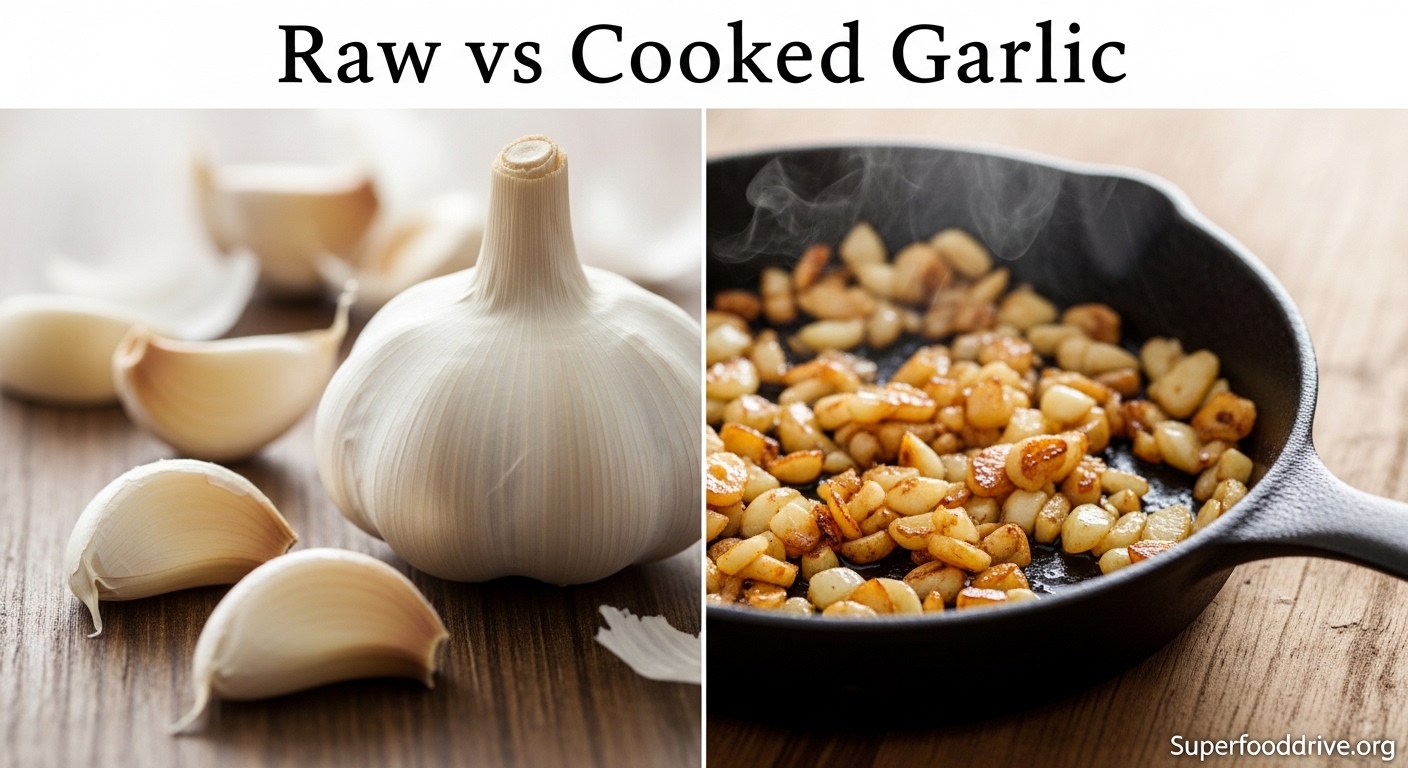
Raw garlic is healthier than cooked garlic because it retains the maximum amount of allicin, the sulfur compound responsible for most of garlic’s health benefits. When you cook garlic above 140°F (60°C), you destroy over 90% of its allicin content. However, both forms offer benefits, and there is a simple hack to preserve allicin even when cooking.
I have been researching garlic’s health properties for years, and the science is clear on one point: heat is allicin’s enemy. That pungent smell you get when crushing garlic? That is allicin forming, and it is also what gives garlic its powerful anti-inflammatory, immune-boosting, and heart-protective properties.
In this guide, you will learn exactly how cooking affects garlic’s nutrients, the simple 10-minute rule that preserves benefits even in cooked dishes, and how to choose between raw and cooked garlic based on your health goals and digestive tolerance.
Table of Contents
What Is Allicin and Why It Matters
Allicin is the bioactive compound that makes garlic a superfood. It does not exist in whole garlic cloves. Instead, garlic contains two separate substances: alliin (a sulfur-containing amino acid) and alliinase (an enzyme). When you crush, chop, or chew garlic, you break cell walls and allow these two components to meet. They react instantly to form allicin.
This reaction is the reason raw garlic has that distinctive sharp, pungent odor. Allicin is unstable and breaks down quickly when exposed to heat. Research shows that heating garlic above 140°F (60°C) destroys alliinase, stopping the allicin formation process and degrading any allicin already present.
Allicin is responsible for most of garlic’s documented health benefits. It has antibacterial, antiviral, antifungal, and anti-inflammatory properties. Studies link allicin to reduced blood pressure, lower cholesterol levels, improved immune function, and potential cancer-fighting effects. Without allicin, garlic becomes primarily a flavoring agent rather than a functional food.
Raw Garlic Health Benefits
Raw garlic delivers the highest concentration of allicin and organosulfur compounds. When you eat it uncooked, you get the full spectrum of garlic’s pharmacologically active molecules. Here is what the research shows about raw garlic’s specific benefits.
Anti-Inflammatory Effects
Raw garlic contains potent anti-inflammatory compounds that can help reduce swelling and inflammation throughout the body. Studies have shown that regular consumption of raw garlic may lower inflammatory markers like C-reactive protein (CRP) and interleukin-6. This matters for anyone dealing with chronic inflammation, joint pain, or inflammatory conditions.
The sulfur compounds in raw garlic inhibit the production of pro-inflammatory cytokines. This mechanism is why some people report reduced arthritis symptoms when consuming raw garlic regularly. For maximum anti-inflammatory benefit, crush the garlic and let it sit for 10 minutes before eating to maximize allicin formation.
Cardiovascular Health
Raw garlic has well-documented benefits for heart health. Multiple studies show that raw garlic consumption can lower blood pressure in people with hypertension. The effect is modest but meaningful, comparable to some blood pressure medications in some trials.
Raw garlic also helps reduce LDL (bad) cholesterol levels while potentially raising HDL (good) cholesterol. It may prevent plaque buildup in arteries and improve overall circulation. These effects are significantly stronger with raw garlic compared to cooked, though cooked garlic still provides some cardiovascular benefit.
Immune System Support
Raw garlic has natural antimicrobial properties that can help your body fight infections. Allicin has been shown effective against various bacteria, viruses, and fungi. Some studies suggest that regular raw garlic consumption may reduce the severity and duration of common colds.
The immune-boosting effects come from allicin’s ability to stimulate white blood cell activity and enhance the body’s natural defense mechanisms. Raw garlic also contains antioxidants like vitamin C and selenium that support immune function.
What Happens When You Cook Garlic
Cooking garlic transforms its chemical profile. The heat destroys alliinase, the enzyme needed to create allicin. Once alliinase is gone, no new allicin can form. Any allicin already present breaks down rapidly at temperatures above 140°F (60°C).
This does not mean cooked garlic has zero health benefits. Cooking garlic actually creates different sulfur compounds, including diallyl disulfide and diallyl trisulfide. These compounds have their own health benefits, though they are generally less potent than allicin.
Cooked garlic is easier to digest for many people. The harsh compounds that irritate the stomach and cause garlic breath are partially broken down by heat. Cooked garlic still provides antioxidant benefits, some cardiovascular protection, and cancer-fighting potential, just at reduced levels compared to raw.
Research comparing raw and cooked garlic consistently shows that raw preparation yields higher levels of bioactive compounds. However, the comfort and digestibility of cooked garlic mean that many people can consume more of it, potentially offsetting some of the potency loss.
The 10-Minute Garlic Rule: How to Preserve Allicin When Cooking
Here is the solution that gives you the best of both worlds. You can cook garlic and still preserve most of its allicin content by following one simple rule: let crushed or chopped garlic sit for 10 minutes before exposing it to heat.
When you crush garlic, the alliin and alliinase begin reacting immediately. The allicin formation process takes about 10 minutes to complete. If you heat the garlic before this reaction finishes, you destroy the alliinase and stop allicin production. By waiting 10 minutes, you allow maximum allicin to form before cooking.
How to Use the 10-Minute Rule
- Peel your garlic cloves and place them on a cutting board.
- Crush or finely chop the garlic to break cell walls and start the enzymatic reaction.
- Leave the crushed garlic exposed to air at room temperature.
- Wait exactly 10 minutes before adding it to your hot pan or recipe.
- Cook as desired, knowing you have preserved the maximum allicin content.
This technique was validated in research published in the Journal of Nutrition. Scientists found that crushed garlic allowed to stand for 10 minutes before cooking retained similar anti-cancer properties to raw garlic. The waiting period allows the allicin formation reaction to complete before heat can interrupt it.
I use this technique every time I cook with garlic now. It requires zero extra effort, just a bit of planning. Chop your garlic first, then prepare your other ingredients while you wait. By the time your pan is ready, the 10 minutes have passed.
How Different Cooking Methods Affect Garlic
Not all cooking methods affect garlic equally. Temperature and duration both play roles in how much allicin survives. Understanding these differences helps you choose the best preparation method for your needs.
Frying and Sauteing
Frying garlic in oil at high temperatures destroys allicin almost completely. Pan temperatures often exceed 300°F (150°C), far above the 140°F threshold where allicin degrades. The longer you cook garlic at high heat, the more compounds you lose.
If you must fry garlic, use the 10-minute wait rule first. Add the garlic toward the end of cooking rather than the beginning. Brief exposure to heat preserves more compounds than prolonged cooking.
Roasting
Roasting whole garlic heads at moderate temperatures (350-400°F) for extended periods destroys allicin but creates different beneficial compounds. Roasted garlic develops a sweet, mellow flavor that many people prefer. The long cooking time breaks down harsh sulfur compounds, making it gentler on digestion.
Roasted garlic retains antioxidant properties and develops unique compounds through the Maillard reaction. While it loses allicin-specific benefits, it gains other nutritional advantages and becomes more palatable for regular consumption.
Microwaving
Research specifically examining microwaved garlic found that just 60 seconds in a microwave completely blocks allicin formation. The electromagnetic radiation appears to damage alliinase more rapidly than conventional heating methods. If preserving allicin is your goal, avoid microwaving garlic entirely.
Simmering in Soups and Stews
Adding garlic to soups and stews exposes it to sustained heat in liquid. The water temperature typically stays around 212°F (100°C), well above the allicin preservation threshold. However, some allicin may survive briefly if added toward the end of cooking. For maximum benefit in soups, add raw crushed garlic just before serving.
Digestive Tolerance: Raw vs Cooked Garlic
Raw garlic is powerful medicine, but that power comes with potential side effects. The same compounds that make it healthy can irritate sensitive digestive systems. This is where the raw vs cooked decision becomes personal.
Cooked garlic is significantly easier to digest than raw. Heat breaks down the fructans in garlic that can cause bloating, gas, and discomfort in people with sensitive digestive systems. If you have IBS or follow a low-FODMAP diet, cooked garlic is usually better tolerated than raw.
Raw garlic can trigger heartburn and GERD symptoms in susceptible individuals. The harsh sulfur compounds relax the lower esophageal sphincter, allowing stomach acid to flow back into the esophagus. If you experience reflux after eating raw garlic, switching to cooked may solve the problem while still providing health benefits.
Some people experience skin irritation from handling raw garlic. The allicin can cause contact dermatitis in sensitive individuals. Cooking eliminates this risk entirely.
The key is finding your personal tolerance level. Start with small amounts of cooked garlic if you are sensitive. Gradually work up to raw if desired. Remember that cooked garlic still provides benefits, just at lower potency levels.
How Much Garlic Should You Eat Daily
Research suggests that 1-2 raw cloves daily is the optimal amount for health benefits. This provides enough allicin and organosulfur compounds to support cardiovascular health and immune function without overwhelming your system.
If eating raw garlic is uncomfortable, you can consume more cooked garlic to compensate for the reduced potency. Three to four cooked cloves would provide roughly equivalent compounds to 1-2 raw cloves.
Spread your garlic consumption throughout the day rather than eating it all at once. This maintains more stable levels of beneficial compounds in your bloodstream. Add raw garlic to salad dressings, dips, or sprinkle it over finished dishes. Use cooked garlic liberally in soups, stir-fries, and roasted vegetables.
For those who cannot tolerate garlic in food, aged garlic extract supplements provide an alternative. These supplements contain S-allyl cysteine, a stable compound formed during the aging process that offers cardiovascular benefits without digestive side effects.
Frequently Asked Questions
Is it better to eat garlic raw or cooked?
Raw garlic is better for maximum health benefits because it retains full allicin content. However, cooked garlic is easier to digest and still provides benefits. If you can tolerate raw garlic, eat 1-2 cloves daily. If raw causes digestive issues, cooked garlic is still worthwhile.
What is the 10 minute garlic rule?
The 10-minute garlic rule means crushing or chopping garlic and letting it sit for 10 minutes before cooking. This allows allicin to form completely before heat destroys the enzyme needed to create it. Following this rule preserves most of garlic’s health benefits even in cooked dishes.
Does garlic reduce swelling?
Yes, garlic has anti-inflammatory properties that can help reduce swelling. Raw garlic contains compounds that inhibit inflammatory markers in the body. Regular consumption may help with conditions involving chronic inflammation, though it should not replace medical treatment.
Can garlic cure SIBO?
Garlic cannot cure SIBO (Small Intestinal Bacterial Overgrowth). While garlic has antimicrobial properties, SIBO requires medical diagnosis and treatment. In fact, garlic is high in FODMAPs and may worsen SIBO symptoms in some people. Consult a healthcare provider for proper SIBO management.
Does cooking garlic destroy all its nutrients?
Cooking destroys allicin but not all nutrients. Vitamins and minerals remain stable during cooking. Heat creates different beneficial sulfur compounds, though they are less potent than allicin. Using the 10-minute wait rule before cooking preserves much of the allicin content.
How can I reduce garlic breath?
Eat parsley, mint, or other chlorophyll-rich herbs after consuming garlic. Drinking milk, especially whole milk, can help neutralize garlic odor. Green tea and apples also contain compounds that may reduce garlic breath. The odor comes from sulfur compounds that enter your bloodstream and are released through your lungs.
The Bottom Line on Raw vs Cooked Garlic
Raw vs cooked garlic which is healthier? Raw garlic wins for maximum potency, delivering full allicin content and the strongest anti-inflammatory, cardiovascular, and immune benefits. Cooked garlic offers a gentler alternative that is easier to digest while still providing meaningful health advantages.
The 10-minute wait rule bridges the gap between raw and cooked. By crushing garlic and letting it sit before cooking, you preserve most of the allicin that would otherwise be lost. This simple habit lets you enjoy the flavor of cooked garlic without sacrificing the health benefits.
Aim for 1-2 raw cloves daily if you can tolerate them. Use cooked garlic liberally when raw is too harsh. Either way, you are giving your body beneficial sulfur compounds that support heart health, reduce inflammation, and boost immune function. Garlic has been valued as medicine for thousands of years for good reason, and modern science continues to confirm what ancient healers knew.