
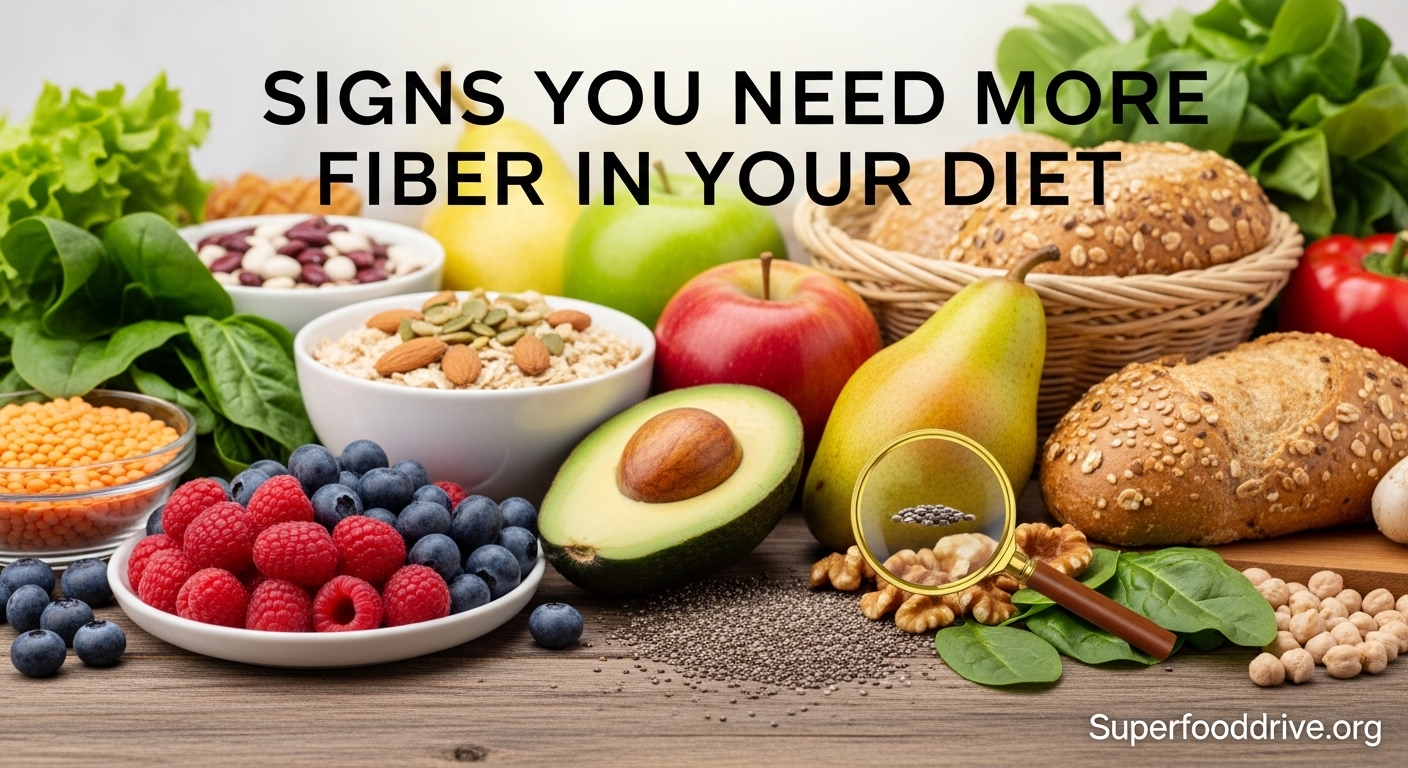
Your body sends clear signals when something is off with your nutrition. If you have been wondering whether you are eating enough fiber, you are not alone. Most adults only get about half the fiber they need each day.
After researching the signs of low fiber symptoms and speaking with our nutrition team, I have identified the key warning signs that your body needs more dietary fiber. This guide will help you recognize these signals and take simple steps to improve your digestive health.
Table of Contents
What Is Dietary Fiber and Why Does It Matter?
Dietary fiber is the indigestible part of plant foods that passes through your digestive system. Unlike other nutrients, your body cannot break down fiber. Instead, it travels through your stomach and intestines, providing benefits along the way.
There are two main types of fiber, and both play different roles in your health:
Soluble fiber dissolves in water and forms a gel-like substance in your digestive tract. This type helps lower your cholesterol and stabilizes blood sugar levels. You can find soluble fiber in foods like oats, beans, apples, and carrots.
Insoluble fiber does not dissolve in water. It adds bulk to your stool and helps food move through your digestive system more quickly. Whole grains, nuts, and vegetables like cauliflower and potatoes are good sources of insoluble fiber.
Most plant foods contain both types, so eating a variety of high-fiber foods gives you the benefits of each. Together, they support regular bowel movements, feed healthy gut bacteria, and help you feel satisfied after meals.
How Much Fiber Do You Need Each Day?
The recommended daily fiber intake depends on your age and gender. According to health guidelines, most adult women need about 25 grams of fiber per day. Adult men should aim for around 38 grams daily.
Unfortunately, the average American only consumes about 15 grams of fiber daily. That gap between what you need and what you actually eat can lead to several uncomfortable symptoms and health concerns.
Children and teenagers need less fiber based on their age, starting at about 19 grams for younger kids and increasing to adult levels by their late teens. Older adults may need slightly less as calorie needs decrease, but getting adequate fiber remains important for digestive health.
6 Signs You Need More Fiber in Your Diet
If you are experiencing any of these symptoms, low fiber could be the culprit. Your body has a clever way of letting you know when it needs more support. Here are the most common fiber deficiency symptoms to watch for:
1. Constipation and Irregular Bowel Movements
This is the most obvious sign you are not getting enough fiber. When your diet lacks fiber, your stool becomes hard and difficult to pass. You may find yourself straining during bathroom visits or going less frequently than you should.
Fiber adds bulk to your stool and helps it move smoothly through your intestines. Without enough fiber, everything slows down. Many people find that simply increasing their fiber intake resolves chronic constipation within days.
2. Feeling Hungry Shortly After Meals
Do you eat a full meal only to feel hungry an hour later? This happens when your food digests too quickly. Fiber slows down the digestive process, helping you feel full and satisfied for longer periods.
High-fiber foods take up space in your stomach and trigger hormones that signal fullness. When you eat low-fiber meals, your stomach empties faster and hunger returns sooner. This can lead to overeating and unwanted weight gain over time.
3. Energy Crashes and Fatigue
Constant tiredness and afternoon energy crashes can signal low fiber intake. Fiber helps regulate how quickly sugar enters your bloodstream. Without it, you experience rapid spikes followed by sudden drops in blood sugar.
These blood sugar swings leave you feeling drained and foggy. Many people notice steady, lasting energy when they increase their fiber intake because their blood sugar stays more stable throughout the day.
4. High Cholesterol Levels
Soluble fiber binds with cholesterol in your digestive system and carries it out of your body before it can be absorbed. If your cholesterol numbers are higher than they should be, insufficient fiber could be contributing to the problem.
Studies show that increasing fiber intake can lower LDL cholesterol by 5 to 10 percent. This reduction matters for your heart health, as high cholesterol increases your risk of heart disease and stroke.
5. Bloating and Digestive Discomfort
Ironically, bloating can be a sign of both too little and too much fiber. When you are not eating enough fiber regularly, your gut bacteria become unbalanced. This can lead to gas, bloating, and general digestive discomfort.
Your gut microbiome needs fiber to thrive. When fiber is scarce, harmful bacteria can multiply while beneficial strains decline. This imbalance often manifests as persistent bloating that does not seem tied to specific foods.
6. Blood Sugar Spikes and Crashes
If you feel shaky, irritable, or lightheaded between meals, your blood sugar may be unstable. Fiber slows carbohydrate absorption, preventing the rapid glucose spikes that lead to subsequent crashes.
This is particularly important for people with diabetes or prediabetes. Getting enough fiber can help improve A1c levels and reduce the need for medication in some cases. Even without diabetes, stable blood sugar supports better mood and concentration.
High-Fiber Foods to Add to Your Diet
Increasing your fiber intake does not require expensive supplements or complicated meal plans. Nature provides plenty of fiber-rich options. Here are the best food categories to focus on:
Legumes are fiber champions. Lentils provide about 15 grams per cup, while black beans and chickpeas offer around 15 grams per cup as well. Add beans to soups, salads, or tacos for an easy boost.
Whole grains like quinoa, oats, and brown rice deliver significant fiber. A cup of cooked quinoa contains 5 grams, while a half cup of dry oats provides 4 grams. Choose whole grain bread with at least 3 grams of fiber per slice.
Vegetables are excellent low-calorie fiber sources. Artichokes lead the pack with 10 grams per medium vegetable. Broccoli, Brussels sprouts, and carrots all provide 3 to 5 grams per cup.
Fruits offer fiber plus natural sweetness. Raspberries contain 8 grams per cup. Pears, apples with skin, and bananas all provide 3 to 5 grams each. Eating the skin maximizes fiber content.
Nuts and seeds pack fiber into small servings. Chia seeds contain 10 grams per ounce, while almonds and pistachios provide 3 grams per ounce. Sprinkle these on yogurt or salads.
How to Increase Your Fiber Intake Safely?
Adding fiber too quickly can cause gas, bloating, and stomach cramps. Your digestive system needs time to adjust. Follow these tips to increase your fiber intake comfortably:
Start gradually. Add just 5 grams of fiber to your daily intake for one week. Once your body adjusts, increase by another 5 grams. This slow approach prevents uncomfortable side effects.
Drink more water. Fiber needs water to work properly. Aim for at least 8 glasses daily as you increase fiber. Without adequate hydration, fiber can actually worsen constipation instead of relieving it.
Read food labels. Look for products with at least 3 grams of fiber per serving. Check the ingredient list for whole grains as the first ingredient. Terms like “100% whole wheat” indicate better fiber content than “enriched flour.”
Make simple swaps. Replace white rice with brown rice. Choose whole grain pasta instead of regular. Swap refined cereals for oatmeal. These small changes add up quickly without requiring a complete diet overhaul.
Spread fiber throughout the day. Eating all your fiber at one meal can overwhelm your digestive system. Include fiber-rich foods at breakfast, lunch, and dinner for steady digestion.
Frequently Asked Questions
How do I know if I am lacking fiber?
You may be lacking fiber if you experience constipation, feel hungry shortly after eating, have energy crashes, or notice high cholesterol levels. Other signs include bloating and unstable blood sugar. Pay attention to your bowel habits and how you feel after meals.
Can increasing fiber lower A1c?
Yes, increasing fiber can help lower A1c levels. Fiber slows carbohydrate absorption and improves blood sugar control. Studies show that high-fiber diets improve glycemic control in people with type 2 diabetes. The effect varies by individual, but fiber is a valuable tool for blood sugar management.
What is the number one food high in fiber?
Legumes like lentils, black beans, and chickpeas contain the most fiber per serving. One cup of cooked lentils provides about 15 grams of fiber. Other top sources include artichokes, chia seeds, and raspberries. No single food is best, so eating a variety of high-fiber foods provides the greatest benefit.
Does fiber help with erectile dysfunction?
Fiber may indirectly help with erectile dysfunction by supporting heart health and improving blood flow. High-fiber diets are associated with lower risk of cardiovascular disease, which is a major cause of erectile dysfunction. However, fiber alone is not a treatment, and anyone experiencing erectile dysfunction should consult a healthcare provider.
How much fiber is too much?
Consuming more than 70 grams of fiber daily may cause digestive issues for most people. Signs of excessive fiber include diarrhea, bloating, gas, and mineral deficiencies. Most adults should aim for 25 to 38 grams daily. If you experience discomfort from high fiber intake, reduce your consumption gradually.
Final Thoughts on Signs You Need More Fiber in Your Diet
Recognizing the signs you need more fiber in your diet is the first step toward better digestive health and overall wellness. Constipation, constant hunger, energy crashes, high cholesterol, bloating, and blood sugar issues all point to inadequate fiber intake.
The good news is that increasing fiber is straightforward and affordable. Start with small changes like adding beans to your meals, choosing whole grains, and eating more fruits and vegetables. Increase gradually and drink plenty of water to help your body adjust.
Your gut will thank you. Within a few weeks of boosting your fiber intake, you will likely notice more regular digestion, steadier energy, and greater satisfaction after meals.