
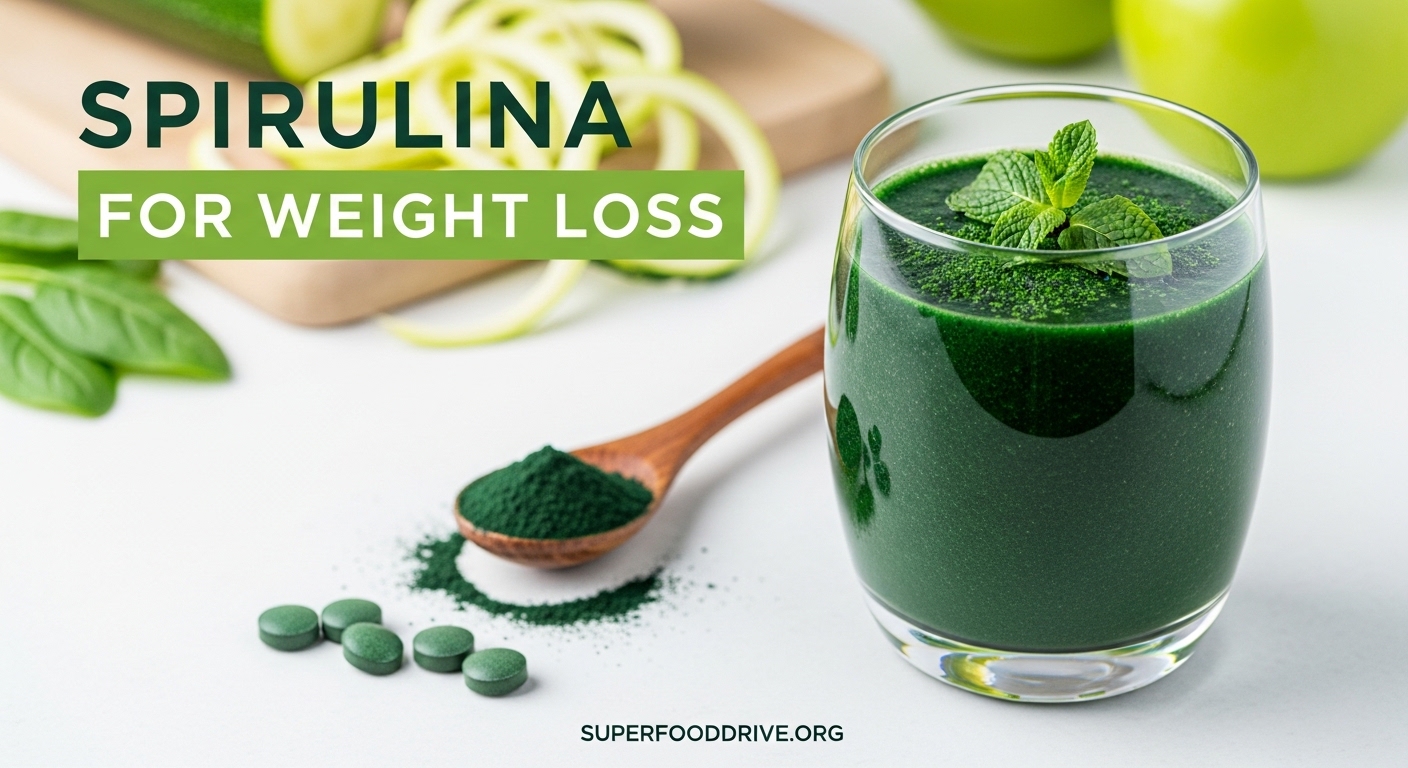
Spirulina has become one of the most talked-about supplements for weight loss. You have probably seen claims about this blue-green algae helping people shed pounds effortlessly.
But what does the actual research say? As someone who has spent years analyzing nutritional studies, I know the gap between marketing hype and scientific evidence can be massive. This article examines the clinical research on spirulina for weight loss so you can make an informed decision.
We will look at meta-analyses, clinical trials, mechanisms of action, proper dosages, and realistic timelines for results. The goal is to give you facts rather than promises.
Table of Contents
What Is Spirulina?
Spirulina is a blue-green algae that grows in both fresh and salt water. Scientifically, it is classified as a cyanobacterium. This microscopic organism has existed on Earth for billions of years.
Ancient Origins and Modern Recognition
The Aztecs consumed spirulina as a food source centuries ago. They harvested it from Lake Texcoco in Mexico. Today, it is cultivated worldwide in controlled environments.
NASA investigated spirulina as a potential food source for astronauts during long-duration space missions. They found it to be nutrient-dense and efficient to produce in closed systems.
Nutritional Profile
Spirulina contains between 65% and 70% complete protein by weight. This includes all essential amino acids your body cannot produce on its own. That makes it one of the most protein-dense foods available.
It also delivers significant amounts of B vitamins, iron, magnesium, potassium, and beta-carotene. The vibrant blue-green color comes from phycocyanin, a pigment with antioxidant and anti-inflammatory properties.
A typical 3-gram serving contains only about 15 calories while providing substantial micronutrients. This nutrient density is one reason researchers became interested in its potential for weight management.
What the Research Says: Spirulina for Weight Loss
The evidence supporting spirulina for weight loss comes from several clinical trials and meta-analyses. Let us examine what the research actually demonstrates.
Meta-Analysis Findings
A meta-analysis published in 2020 examined four randomized controlled trials on spirulina and weight loss. The researchers found that spirulina supplementation resulted in significant reductions in body weight and body mass index (BMI).
Another meta-analysis from 2019 analyzed studies involving overweight and obese individuals. The conclusion stated that spirulina supplementation significantly reduces body weight, especially for people who are already obese.
These meta-analyses are important because they combine data from multiple studies. This approach provides stronger evidence than individual trials alone.
Key Clinical Studies
Here is a breakdown of the major clinical studies examining spirulina for weight loss:
| Study | Sample Size | Duration | Dosage | Key Findings |
|---|---|---|---|---|
| Mazokopakis et al., 2014 | 52 adults | 12 weeks | 1g twice daily | Significant reduction in appetite, weight loss of 2.5 kg average |
| Micke et al., 2016 | 40 participants | 12 weeks | 4.5g daily | Reduced BMI and waist circumference |
| Youness et al., 2018 | 30 obese adults | 8 weeks | 2g twice daily | Decreased body fat percentage, improved lipid profiles |
| Szczesniak et al., 2019 | 60 overweight adults | 12 weeks | 3g daily | Reduced body weight, waist circumference, and appetite |
| Karimi et al., 2020 | 80 obese participants | 12 weeks | 2g daily | Significant weight reduction, improved insulin sensitivity |
Most studies used dosages between 1 and 4.5 grams daily. Treatment durations ranged from 8 to 12 weeks. Sample sizes were relatively small but results were consistent across multiple trials.
What the Evidence Actually Shows
The research suggests spirulina can produce modest weight loss effects. Studies typically report reductions of 2 to 5 pounds over 8 to 12 weeks when combined with standard dietary advice.
Spirulina appears most effective for individuals who are overweight or obese. The benefits for people with normal BMI are less well-established.
Importantly, spirulina is not a miracle solution. The weight loss effects are real but modest. It works best as part of a comprehensive approach including calorie reduction and physical activity.
How Spirulina May Support Weight Loss
Researchers have identified several mechanisms through which spirulina might influence body weight and metabolism.
Protein and Satiety
Spirulina contains exceptionally high protein content. Protein is the most satiating macronutrient. It helps you feel full longer after eating.
Some studies suggest spirulina may influence appetite-regulating hormones. Participants in clinical trials often report reduced hunger when taking spirulina supplements.
This appetite suppression effect could lead to reduced calorie intake throughout the day. Over time, this calorie reduction contributes to weight loss.
Phycocyanin and Metabolism
Phycocyanin is the primary active compound in spirulina. It gives spirulina its distinctive blue-green color. This compound has demonstrated antioxidant and anti-inflammatory effects in research.
Chronic inflammation is associated with obesity and metabolic dysfunction. By reducing inflammatory markers, phycocyanin may help improve metabolic health.
Some animal studies suggest phycocyanin may influence fat metabolism directly. Human research in this area is still developing.
Blood Sugar and Lipid Regulation
Several studies have found that spirulina improves markers of blood sugar control. Better insulin sensitivity can help prevent energy storage as fat.
Spirulina has also demonstrated the ability to reduce blood lipids. Research shows reductions in total cholesterol, LDL cholesterol, and triglycerides.
These metabolic improvements may contribute to weight management beyond simple calorie counting.
Dosage and Usage Guidelines
Understanding the proper dosage can help you use spirulina effectively while avoiding unnecessary expense or side effects.
Evidence-Based Dosage
Clinical studies have used doses ranging from 1 gram to 4.5 grams per day. Most positive outcomes occur in the 2 to 3 gram range.
The Cleveland Clinic suggests a maximum of 8 grams daily for general health purposes. Higher doses do not necessarily produce better weight loss results.
Starting with 1 gram daily and gradually increasing allows your body to adjust. This approach can minimize digestive side effects.
Best Time to Take Spirulina
Research has not established an optimal timing for spirulina consumption. Most studies had participants take it with meals.
Taking spirulina in the morning may help with appetite control throughout the day. Some users prefer taking it before exercise for potential energy benefits.
Consistency matters more than timing. Taking spirulina at the same time each day helps establish a routine.
Forms and Administration
Spirulina comes in powder, tablet, and capsule forms. Each has advantages and disadvantages.
Powder allows for flexible dosing and mixing into foods. However, many people find the taste challenging. It has been described as earthy, grassy, or even fishy.
Tablets and capsules eliminate taste concerns but offer less dosing flexibility. They may also contain binding agents.
For masking the taste of powder, try blending it into fruit smoothies. Pineapple and mango work particularly well. You can also mix it into yogurt, oatmeal, or energy balls.
Timeline for Results: How Long Does Spirulina Take to Work?
This is one of the most common questions people have about spirulina for weight loss. The research provides some clear guidance.
Most clinical studies lasted between 8 and 12 weeks. Significant results typically appeared after the 8-week mark. Earlier measurements often showed trends but not statistically significant changes.
Realistic expectations suggest waiting 2 to 3 months before evaluating spirulina’s effects on your weight. This aligns with the study durations that produced measurable results.
Several factors influence how quickly you might see results. These include your starting weight, diet quality, exercise habits, and individual metabolic response. People with more weight to lose often see faster initial changes.
Patience is essential. Supplements work slowly compared to dramatic dietary changes. Consistent daily use over months produces better outcomes than sporadic high doses.
Safety Considerations and Side Effects
Understanding potential risks helps you use spirulina safely and effectively.
Common Side Effects
Most people tolerate spirulina well. The most commonly reported side effects are digestive in nature. These include bloating, gas, nausea, and mild diarrhea.
Some users report headaches or fatigue when first starting spirulina. These symptoms typically resolve within a few days.
The taste of spirulina powder is a practical concern rather than a medical one. However, it causes some people to discontinue use.
Who Should Avoid Spirulina
Certain populations should exercise caution or avoid spirulina entirely.
People with phenylketonuria (PKU) must avoid spirulina. It contains phenylalanine, which they cannot metabolize properly.
Those with autoimmune conditions should consult their healthcare provider. Spirulina may stimulate immune function, which could worsen autoimmune symptoms.
People taking blood-thinning medications should be cautious. Spirulina contains vitamin K, which affects blood clotting.
Pregnant and breastfeeding women should avoid spirulina due to limited safety data.
Quality and Contamination Concerns
Not all spirulina products are equal. Quality varies significantly between brands.
Spirulina grown in contaminated water can accumulate heavy metals. These include lead, mercury, and arsenic. Third-party testing for heavy metals is essential.
Microcystin contamination is another concern. This toxin comes from other algae species. Reputable manufacturers test for microcystins.
Look for products that specify third-party testing. Certification from organizations like USP, NSF, or ConsumerLab adds credibility. Organic certification may provide additional quality assurance.
Avoid spirulina products from unknown sources or those with suspiciously low prices. Quality cultivation and testing are not cheap. Extremely inexpensive products may cut corners on safety.
Frequently Asked Questions
Does spirulina really work for weight loss?
Yes, research suggests spirulina may aid in weight loss. A meta-analysis of four studies shows that spirulina can reduce body weight and body mass index (BMI). However, the effects are modest and work best when combined with diet and exercise. Studies typically show weight reductions of 2 to 5 pounds over 8 to 12 weeks.
How long do you have to take spirulina to see results?
Clinical studies suggest waiting 8 to 12 weeks before expecting significant weight loss results from spirulina. Most research showing measurable outcomes used treatment periods of at least 2 to 3 months. Individual results vary based on starting weight, diet, exercise habits, and metabolic factors.
Can I lose weight with spirulina alone?
Spirulina alone is unlikely to produce significant weight loss. The research shows it works as a supportive supplement when combined with calorie reduction and physical activity. Relying on spirulina without addressing diet and exercise will likely produce disappointing results.
Is spirulina safe for people with autoimmune disease?
People with autoimmune diseases should consult their healthcare provider before taking spirulina. Spirulina may stimulate immune function, which could potentially worsen autoimmune symptoms. Some autoimmune conditions may benefit while others could be aggravated. Individual medical guidance is essential.
Can people with Hashimoto’s take spirulina?
People with Hashimoto’s thyroiditis should be cautious with spirulina. Spirulina contains iodine, which can affect thyroid function. Additionally, its immune-stimulating properties may be problematic for some autoimmune conditions. Consult an endocrinologist or healthcare provider familiar with your specific case before using spirulina.
What does NASA say about spirulina?
NASA investigated spirulina as a potential food source for long-duration space missions. They found it to be nutrient-dense, efficient to produce, and capable of being cultivated in closed systems. While not currently a primary space food, the research demonstrated spirulina’s impressive nutritional profile and cultivation efficiency.
Can chemo patients take spirulina?
Chemotherapy patients should not take spirulina without explicit approval from their oncology team. Spirulina’s immune-stimulating effects could theoretically interfere with immunosuppressive cancer treatments. Additionally, contamination risks with low-quality products pose serious concerns for immunocompromised individuals. Always discuss supplements with your cancer care team.
Conclusion
The research on spirulina for weight loss shows promising but modest effects. Meta-analyses of clinical trials demonstrate that spirulina can reduce body weight, BMI, and waist circumference when taken consistently for 8 to 12 weeks.
However, spirulina is not a magic solution. The weight loss effects are real but relatively small. It works best as part of a comprehensive approach including proper nutrition and regular physical activity.
If you are considering spirulina for weight loss, talk to your healthcare provider first. They can help you determine if it is appropriate for your specific health situation and advise on proper dosing.
Choose quality products from reputable manufacturers who conduct third-party testing. Start with a lower dose and give it 2 to 3 months before evaluating results. With realistic expectations and proper use, spirulina may be a helpful addition to your weight management strategy in 2026.