
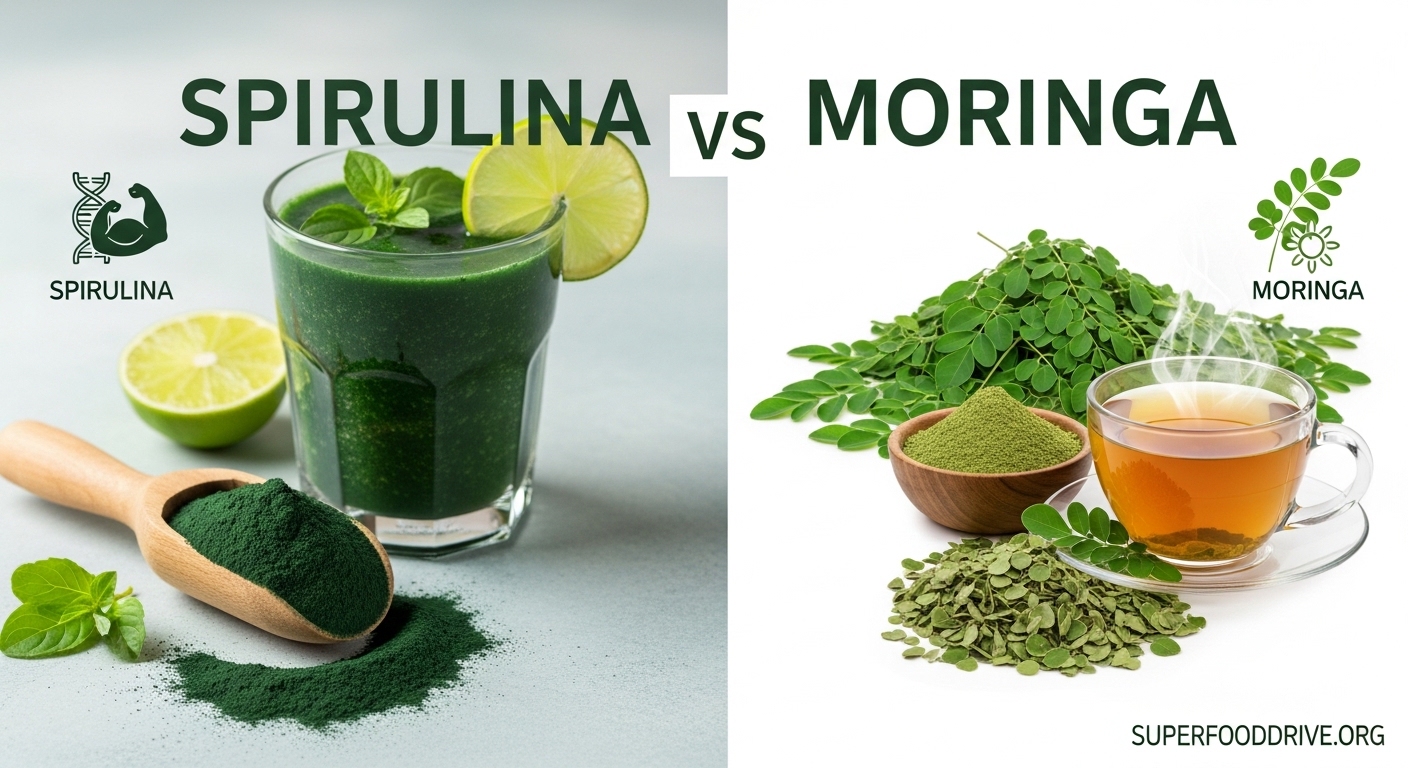
Iron deficiency anemia affects over 1.2 billion people globally, making it the most common nutritional deficiency worldwide. If you are struggling with low energy, pale skin, or constant fatigue, you have probably searched for natural solutions to boost your iron levels without relying on harsh synthetic supplements. Spirulina and moringa have emerged as two of the most promising super greens for addressing iron deficiency naturally.
This guide compares spirulina vs moringa for iron deficiency anemia using clinical research, real nutrient data, and practical advice you can apply today. I have spent months researching these superfoods, analyzing peer-reviewed studies, and understanding how plant-based iron actually works in your body. By the end, you will know exactly which option offers better iron support and how to maximize absorption for real results.
Table of Contents
Quick Answer: Which Has More Iron?
Moringa leaf powder contains approximately 28.2mg of iron per 100g serving, while spirulina provides about 28.5mg per 100g. At first glance, they appear nearly identical in iron density. However, moringa delivers significantly more vitamin C (about 17mg per 10g compared to spirulina’s trace amounts), which directly enhances iron absorption in your digestive tract.
For pure iron content, spirulina technically wins by a negligible margin. For effective iron absorption and anemia support, moringa offers superior bioavailability due to its vitamin C content. Many nutritionists recommend combining both for maximum benefit.
What Is Iron Deficiency Anemia?
Iron deficiency anemia occurs when your body lacks sufficient iron to produce adequate hemoglobin, the protein in red blood cells that transports oxygen throughout your body. Without enough hemoglobin, your tissues and muscles receive less oxygen, leading to the characteristic fatigue and weakness associated with anemia.
Common symptoms include persistent tiredness, pale skin, shortness of breath during light activity, cold hands and feet, brittle nails, and unusual cravings for non-food items like ice or starch. Women of reproductive age, pregnant women, vegans, vegetarians, and frequent blood donors face the highest risk of developing this condition.
Plant-based iron, known as non-heme iron, differs from the heme iron found in meat and seafood. Your body absorbs non-heme iron at roughly 2-20% efficiency compared to 15-35% for heme iron. This lower bioavailability makes absorption enhancers like vitamin C crucial for anyone relying on plant sources for their iron needs.
Spirulina for Iron Deficiency Anemia
Spirulina is a blue-green algae that has earned its reputation as one of nature’s most nutrient-dense foods. NASA investigated spirulina as a potential food source for astronauts due to its exceptional nutritional profile and minimal resource requirements for cultivation.
Iron Content and Bioavailability
A single 10-gram serving of spirulina powder delivers approximately 2.85mg of iron, representing about 16% of the recommended daily intake for adult men and 11% for premenopausal women. This iron comes in the highly absorbable ferrous form, which your body can utilize more efficiently than many other plant iron sources.
Beyond iron, spirulina contains phycocyanin, a unique blue pigment with potent antioxidant and anti-inflammatory properties. Phycocyanin has shown promise in protecting red blood cells from oxidative damage, potentially supporting overall blood health in ways that extend beyond simple iron provision.
Research published in the journal Cellular and Molecular Immunology demonstrated that spirulina supplementation increased hemoglobin content in test subjects. Participants consuming spirulina showed measurable improvements in red blood cell counts and hemoglobin concentration over the study period.
Clinical Evidence for Anemia
A significant study published in the National Library of Medicine examined spirulina’s effects on anemia and immune function in senior citizens. Researchers found that spirulina supplementation significantly improved mean corpuscular hemoglobin levels in participants over 50 years old.
Another clinical trial focused on children with iron deficiency anemia showed that spirulina supplementation led to improvements in hemoglobin, serum ferritin, and mean corpuscular volume compared to control groups. These markers indicate better iron status and more efficient red blood cell production.
The research suggests that spirulina works not just by providing iron, but by supporting the entire process of blood cell formation. Its rich B-vitamin content, particularly folate and B12 precursors, contributes to healthy red blood cell development alongside its iron contribution.
Moringa for Iron Deficiency Anemia
Moringa oleifera, often called the drumstick tree or miracle tree, has been used in traditional medicine systems for thousands of years. Native to India and Africa, this fast-growing tree produces leaves packed with nutrients essential for combating iron deficiency.
Iron Content and Supporting Nutrients
Moringa leaf powder provides approximately 28.2mg of iron per 100g, translating to about 2.8mg per 10-gram serving. While this matches spirulina closely in raw iron content, moringa’s real advantage lies in its synergistic nutrient profile that enhances iron utilization.
That same 10-gram serving delivers roughly 17mg of vitamin C, a critical factor for iron absorption. Vitamin C converts ferric iron (Fe3+) to ferrous iron (Fe2+), which your intestines absorb up to six times more efficiently. Without adequate vitamin C, much of the iron you consume passes through your system unused.
Moringa also supplies significant vitamin A (as beta-carotene), calcium, magnesium, and potassium. These nutrients support overall immune function and cellular health during recovery from anemia. The combination of iron plus absorption enhancers makes moringa particularly effective for addressing deficiency states.
Research on Iron Levels
Clinical studies on moringa and anemia have shown promising results. Research published in the International Journal of Health Sciences demonstrated that moringa leaf powder supplementation improved hemoglobin levels and red blood cell counts in anemic subjects over a 12-week period.
A comparative study examining moringa against standard iron supplements found that moringa was nearly as effective as pharmaceutical iron tablets at raising hemoglobin levels. Participants receiving moringa also reported fewer digestive side effects compared to those taking synthetic iron supplements.
The World Health Organization has recognized moringa as a valuable tool for addressing malnutrition in developing regions. Its combination of iron, protein, and essential vitamins makes it particularly valuable for populations struggling with multiple nutritional deficiencies.
Spirulina vs Moringa: Complete Iron Comparison
When comparing these super greens specifically for iron deficiency anemia, several factors beyond raw iron content matter. Bioavailability, supporting nutrients, and clinical research all play roles in determining which might work better for your situation.
Iron Content Per Serving
Both spirulina and moringa deliver approximately 2.8mg of iron per 10-gram serving. This represents roughly 15% of the daily iron requirement for most adults. To meet your full iron needs through these sources alone, you would need 60-70 grams daily, which is neither practical nor recommended.
However, as part of a varied diet including other iron sources like lentils, spinach, and fortified foods, both superfoods make meaningful contributions. The key is consistency rather than relying on any single source for your complete iron intake.
Bioavailability Factors
Spirulina’s iron comes with phycocyanin and chlorophyll compounds that may enhance absorption and protect iron from oxidation during digestion. Some research suggests algae-based iron absorbs more efficiently than iron from land plants due to these protective compounds.
Moringa counters with substantial vitamin C content that actively promotes iron absorption. While spirulina contains minimal vitamin C, moringa delivers enough in a single serving to significantly boost iron uptake from your entire meal. This synergistic effect gives moringa an edge when consumed with other plant iron sources.
Both sources provide non-heme iron, meaning absorption rates remain lower than meat-based options regardless of enhancement strategies. Expect 5-12% absorption from either source when consumed alone, potentially doubling when paired with vitamin C-rich foods.
Additional Anemia-Supporting Nutrients
Spirulina excels in complete protein content, offering all nine essential amino acids with roughly 57g of protein per 100g. This protein supports the structural components needed for red blood cell production. Spirulina also provides significant B12 analogues, though their bioavailability in humans remains debated among researchers.
Moringa counters with superior calcium (185mg per 10g), vitamin A, and potassium levels. These nutrients support bone health, immune function, and cellular metabolism during recovery from deficiency states. The broader nutritional profile makes moringa valuable for overall health restoration.
For pure anemia support, spirulina’s higher protein and unique pigments offer theoretical advantages. For general nutritional rehabilitation alongside iron support, moringa’s vitamin diversity provides more comprehensive benefits.
How to Maximize Iron Absorption from Plant Sources
Getting enough iron from your diet means nothing if your body cannot absorb it. Several dietary strategies can dramatically improve how much iron you actually retain from spirulina, moringa, and other plant sources.
The Vitamin C Connection
Vitamin C represents the single most powerful enhancer of non-heme iron absorption. Studies show that consuming 25-100mg of vitamin C alongside iron-rich foods can increase absorption by 200-400%. This is why moringa’s natural vitamin C content gives it such an advantage for anemia support.
Practical combinations include mixing moringa powder into orange juice or a smoothie containing strawberries and kiwi. For spirulina, always pair it with a vitamin C source like lemon water, bell peppers, or citrus fruits to maximize iron uptake.
The mechanism works through reduction chemistry. Vitamin C converts ferric iron to the ferrous form and creates a chelate that protects iron from binding with absorption inhibitors in your digestive tract. This dual action makes vitamin C essential for anyone relying on plant iron.
Inhibitors to Avoid
Just as some foods enhance iron absorption, others actively block it. Polyphenols in coffee and tea can reduce iron absorption by 50-90% when consumed with meals. Calcium supplements and dairy products compete with iron for absorption pathways. Phytates in whole grains and legumes bind iron and reduce its bioavailability.
Timing matters significantly. Consume your spirulina or moringa at least one hour before or two hours after coffee, tea, or calcium supplements. This spacing allows your body to absorb the iron before encountering these inhibitors.
Some forum users report better results taking their super greens in the morning before breakfast, well separated from coffee consumption. Others find mixing them into lunch works well when that meal does not include dairy or tea.
Recommended Dosage for Iron Deficiency Support
For general health maintenance, 5-10 grams daily of either spirulina or moringa provides reasonable nutritional support. However, addressing active iron deficiency requires more intentional dosing strategies.
Clinical studies showing anemia improvements typically used 10-20 grams of spirulina daily, divided into two doses. For moringa, research demonstrating hemoglobin increases used similar amounts of 10-15 grams daily. These doses represent the upper end of what most people can reasonably incorporate.
Starting with 5 grams daily and gradually increasing to 10-15 grams over two weeks allows your digestive system to adapt. Both superfoods can cause initial digestive discomfort, including mild nausea or loose stools, when introduced too quickly.
Combining both superfoods may offer the best approach. Many nutritionists recommend 5-7 grams of each daily, providing the benefits of spirulina’s phycocyanin alongside moringa’s vitamin C content. Forum discussions reveal users commonly mix one tablespoon spirulina with two tablespoons moringa in smoothies for combined benefits.
Safety and Side Effects
Both spirulina and moringa have excellent safety profiles when sourced from reputable suppliers. However, specific considerations apply to each superfood that users should understand.
Spirulina carries a contamination risk that moringa does not. Blue-green algae grown in unsafe conditions can accumulate heavy metals, microcystins, and harmful bacteria. Always choose spirulina that has been third-party tested for purity and grown in controlled environments. Look for certifications from USP, NSF, or similar testing organizations.
Some users report mild detox symptoms when first taking spirulina, including headaches, digestive upset, or skin breakouts. These typically resolve within a week as the body adjusts. Starting with lower doses and gradually increasing minimizes these effects.
Moringa has a long history of safe use in traditional medicine. However, the root and bark contain compounds that can cause uterine contractions, making leaf powder the only safe form for pregnant women. Even with leaf powder, pregnant women should consult healthcare providers before use.
Both superfoods may interact with blood-thinning medications due to their vitamin K content. Anyone taking warfarin or similar drugs should discuss supplementation with their physician and maintain consistent intake levels to avoid affecting medication stability.
Which Is Better for Iron Deficiency Anemia?
After analyzing the research, nutrient profiles, and clinical evidence, I recommend moringa as the superior choice for iron deficiency anemia when choosing between these two superfoods. The deciding factor is not iron content, which is nearly identical, but bioavailability and supporting nutrients.
Moringa’s natural vitamin C content creates a self-enhancing absorption system. You do not need to carefully pair it with other foods to get optimal iron uptake. This built-in synergy makes it more practical for daily use and more forgiving if your diet is not perfectly optimized.
However, the optimal solution is not choosing one over the other but combining both strategically. Spirulina brings phycocyanin, complete protein, and unique protective compounds. Moringa provides vitamin C, broader mineral support, and better iron absorption. Together, they address iron deficiency from multiple angles.
If you must choose just one due to budget or simplicity, moringa wins for anemia specifically. If you can incorporate both, you will likely see faster improvements in energy levels and blood markers based on the complementary mechanisms these superfoods provide.
Frequently Asked Questions
Is spirulina better than moringa for iron?
No, moringa is generally better than spirulina for iron deficiency anemia despite their similar iron content. Moringa contains significantly more vitamin C, which enhances iron absorption by 200-400%. While spirulina provides comparable iron levels and unique phycocyanin compounds, moringa’s built-in absorption enhancers make it more effective for raising iron levels.
Can spirulina raise iron levels?
Yes, spirulina can raise iron levels according to clinical research. Studies published in peer-reviewed journals show that spirulina supplementation improves hemoglobin, serum ferritin, and red blood cell counts in anemic subjects. The algae provides approximately 2.85mg of iron per 10g serving along with B vitamins that support red blood cell production.
Does moringa raise iron levels?
Yes, moringa effectively raises iron levels. Clinical trials demonstrate that moringa leaf powder improves hemoglobin concentrations and red blood cell counts in anemic participants. Moringa delivers about 2.8mg of iron per 10g serving plus 17mg of vitamin C, which significantly enhances iron absorption compared to iron sources without vitamin C.
What are the best herbs for iron deficiency?
The best herbs and superfoods for iron deficiency include moringa leaf, spirulina, nettle leaf, dandelion greens, and yellow dock root. Moringa and spirulina offer the highest iron density with additional nutritional benefits. Nettle leaf provides iron and vitamin C. Dandelion greens supply iron and folate. Yellow dock root has been traditionally used to support iron absorption.
Conclusion
Comparing spirulina vs moringa for iron deficiency anemia reveals that both superfoods offer legitimate benefits for addressing low iron levels naturally. They deliver comparable iron density, but moringa’s superior vitamin C content gives it the edge for absorption and practical effectiveness.
The research supports what traditional medicine has suggested for centuries: these nutrient-dense foods can meaningfully contribute to iron status when consumed consistently. Clinical studies on both superfoods demonstrate measurable improvements in hemoglobin, ferritin, and red blood cell markers.
Your best strategy is to start with 5-10 grams daily of either superfood, paired with additional vitamin C sources if choosing spirulina. Consider combining both for complementary benefits. Remember that plant iron works best as part of a varied diet rather than a single solution. With consistent use and attention to absorption enhancers, either superfood can support your journey toward healthy iron levels in 2026.