
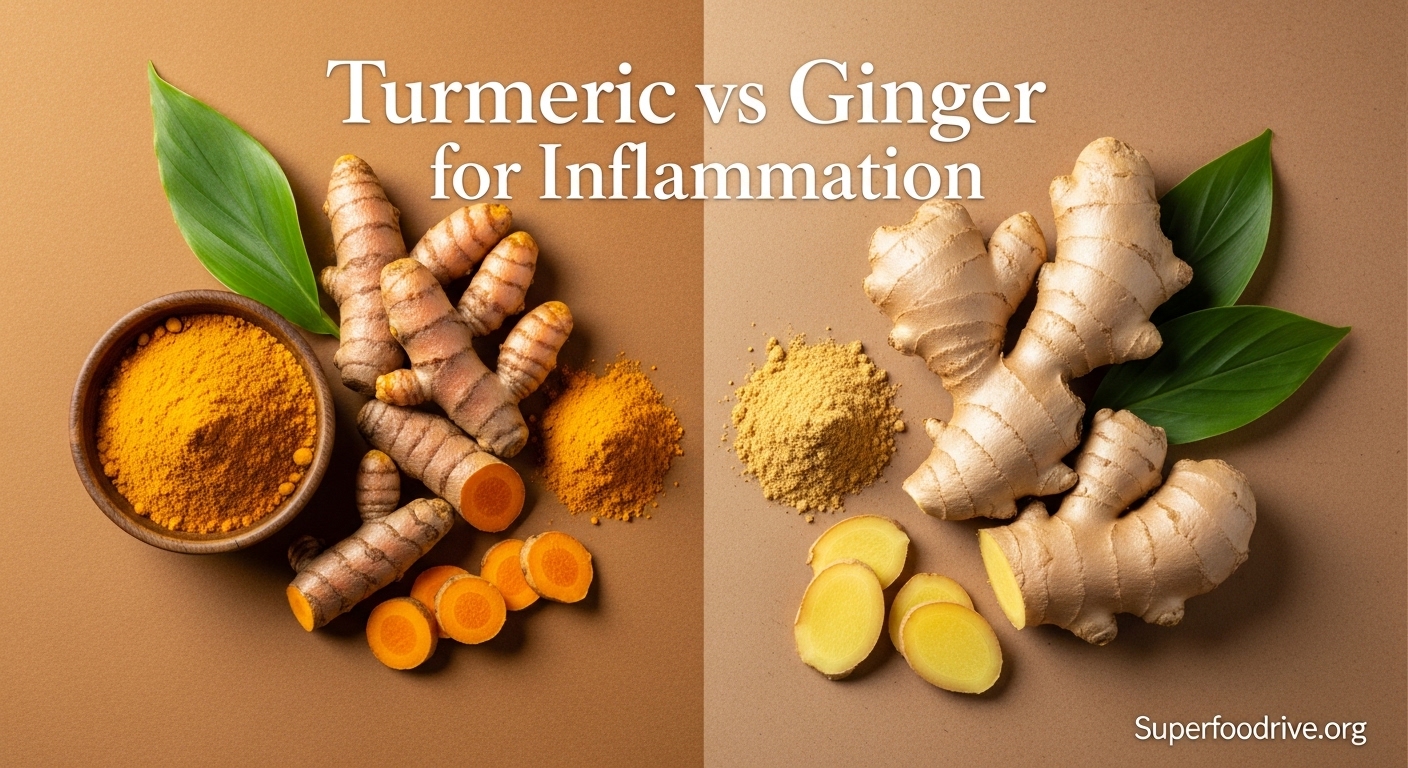
Living with chronic inflammation can feel like fighting an invisible battle every day. Whether you are dealing with aching joints, digestive discomfort, or general fatigue from inflammatory conditions, finding natural relief matters. I have spent years researching and personally testing natural remedies, and two spices consistently rise to the top: turmeric and ginger.
Both turmeric and ginger belong to the same plant family and share powerful anti-inflammatory properties, but they work differently in your body. Understanding turmeric vs ginger for inflammation helps you choose the right tool for your specific symptoms. This guide breaks down exactly when to use each spice, backed by clinical research and real experiences from people managing chronic inflammation.
By the end of this article, you will know which spice targets your particular type of inflammation, how to use them effectively, what dosages work, and whether combining them multiplies the benefits. Let us cut through the confusion and get you real answers.
Table of Contents
What Makes Turmeric and Ginger Anti-Inflammatory?
Both turmeric and ginger fight inflammation through bioactive compounds that interact with your body’s inflammatory pathways. Understanding these compounds helps explain why each spice excels in different situations.
Curcumin: Turmeric’s Powerful Compound
Curcumin is the primary active compound in turmeric, responsible for its vibrant golden color and most of its health benefits. Research shows curcumin blocks NF-kB, a molecule that activates genes related to inflammation. It also activates the Nrf2 pathway, which triggers your body’s natural antioxidant defenses.
Curcumin reduces inflammatory markers like C-reactive protein (CRP), interleukin-6 (IL-6), and tumor necrosis factor-alpha (TNF-alpha). Studies demonstrate curcumin can match the effectiveness of some anti-inflammatory drugs, without the side effects. However, curcumin has low bioavailability, meaning your body struggles to absorb it without help from black pepper or fats.
Gingerols and Shogaols: Ginger’s Active Ingredients
Ginger contains gingerols, which convert to shogaols when dried or cooked. These compounds give ginger its distinctive spicy flavor and medicinal punch. Gingerols work by inhibiting the production of pro-inflammatory compounds called prostaglandins and leukotrienes.
Fresh ginger contains higher levels of gingerols, while dried ginger packs more shogaols. Both forms work effectively, but they act faster than curcumin for acute symptoms. Users on forums like r/Fibromyalgia report feeling relief from ginger within hours for nausea and within days for pain, compared to weeks for turmeric’s full effects.
Turmeric vs Ginger for Inflammation: The Science Compared
Both spices reduce inflammation, but they target different pathways and timeframes. Understanding these differences helps you choose the right one for your needs.
How Curcumin Fights Inflammation
Curcumin acts as a master regulator of inflammation by blocking multiple inflammatory signals simultaneously. It inhibits NF-kB activation, suppresses COX-2 enzyme production, and downregulates inflammatory cytokines. Clinical trials show curcumin reduces joint pain and stiffness in osteoarthritis patients as effectively as ibuprofen in some studies.
The anti-inflammatory effects of curcumin build over time. Most people need 4-8 weeks of consistent use to experience significant benefits for chronic conditions. Curcumin works best for systemic, long-term inflammation rather than acute flare-ups. Its effects persist longer in the body once therapeutic levels are reached.
How Ginger Compounds Reduce Inflammation
Gingerols and shogaols work more directly on immediate inflammatory processes. They block COX-1 and COX-2 enzymes, similar to how NSAIDs like aspirin work. Ginger also suppresses 5-lipoxygenase, an enzyme that creates inflammatory leukotrienes. This dual action makes ginger effective for both pain and swelling.
Ginger works faster than turmeric for acute inflammation. Studies show pain reduction within 2 hours for menstrual cramps and within days for muscle soreness. The effects are more immediate but may not last as long as curcumin’s systemic benefits. For athletes and active individuals, ginger offers quicker recovery between workouts.
Which Works Better? The Verdict
Turmeric wins for chronic, systemic inflammation like arthritis, autoimmune conditions, and long-term joint health. Ginger takes the lead for acute inflammation, digestive upset, nausea, and immediate pain relief. Neither is objectively better overall. They complement each other perfectly.
For maximum anti-inflammatory benefit, use turmeric daily as your foundation for long-term protection. Add ginger when you need faster relief or have digestive symptoms. Many chronic inflammation sufferers on Reddit’s r/covidlonghaulers report the combination works better than either alone.
When to Use Turmeric vs Ginger by Condition
Your specific symptoms should guide which spice you reach for first. Here is a condition-by-condition breakdown to help you decide.
For Arthritis and Joint Pain
Choose turmeric for osteoarthritis and degenerative joint conditions. Multiple clinical trials show curcumin reduces pain and improves function in knee osteoarthritis patients. The Arthritis Foundation recommends turmeric supplements containing 500-1000mg of curcumin for arthritis management.
Choose ginger for rheumatoid arthritis and inflammatory arthritis types. Ginger’s prostaglandin inhibition helps with the inflammatory component of RA. Studies show 1-2 grams of ginger daily reduces RA symptoms. Some patients in r/ankylosingspondylitis forums report success alternating both, using turmeric daily and ginger during flares.
For Digestive Issues and Nausea
Choose ginger for nausea, motion sickness, morning sickness, and general stomach upset. Ginger speeds gastric emptying and blocks serotonin receptors in the gut that trigger nausea. It works within 30 minutes for most people. The American College of Obstetricians recommends ginger as a first-line treatment for pregnancy nausea.
Choose turmeric for gut inflammation, IBS, and leaky gut issues. Curcumin soothes the intestinal lining and reduces inflammatory bowel symptoms. It supports the gut barrier function and may help with IBD conditions like Crohn’s disease and ulcerative colitis. Turmeric works slower but addresses root causes rather than just symptoms.
For Muscle Soreness and Post-Workout Recovery
Both spices help with exercise-induced muscle damage, but timing matters. Take ginger immediately after intense workouts to reduce next-day soreness. Studies show 2 grams of ginger reduces muscle pain by 25% within 24 hours. Ginger’s faster action makes it ideal for immediate recovery needs.
Take turmeric daily if you train consistently and want long-term protection against exercise-induced inflammation. Curcumin’s antioxidant effects help prevent the cumulative damage that leads to chronic overuse injuries. Athletes report best results using both: ginger post-workout and turmeric daily.
For Immune System Support
Turmeric provides stronger immune modulation for autoimmune conditions and chronic immune dysfunction. Curcumin regulates T-cell function and reduces excessive immune responses that damage healthy tissue. It has antimicrobial properties against bacteria, viruses, and fungi.
Ginger offers better immediate immune support for colds, flu, and acute infections. Its warming properties promote circulation and sweating. Ginger’s antimicrobial effects work quickly in the throat and respiratory tract. For active infections, ginger tea with honey provides faster symptomatic relief.
Using Turmeric and Ginger Together: Synergistic Benefits
Research published in PMC shows combining turmeric and ginger creates synergistic anti-inflammatory effects greater than either alone. The study found the combination more effectively reduced inflammatory markers than individual supplements.
Real users confirm this science. Long COVID patients in r/covidlonghaulers report significant relief from brain fog, fatigue, and dizziness using turmeric-ginger tea blends. One user shared that a $2 homemade anti-inflammatory shot with fresh turmeric, ginger, and black pepper worked better than expensive supplements.
When combining them, use a 2:1 ratio of turmeric to ginger for general inflammation. For digestive issues, reverse this to 1:2 favoring ginger. Always add black pepper or a fat source to maximize absorption. Many find taking them together in the morning provides all-day benefits.
The combination addresses both immediate symptoms and underlying inflammation. This dual action makes the turmeric-ginger pairing particularly effective for chronic conditions where you need both fast relief and long-term healing.
How to Prepare and Use Turmeric and Ginger
How you prepare these spices affects their potency and absorption. Here is what works best based on research and user experiences.
Fresh vs Powder vs Supplements
Fresh turmeric and ginger contain the highest levels of active compounds but are harder to find and use consistently. Fresh ginger contains more gingerols, while dried ginger concentrates shogaols. Fresh turmeric stains everything it touches but provides unprocessed curcumin in its natural form.
Powdered forms offer convenience and longer shelf life. Turmeric powder retains curcumin well for up to a year when stored properly. Ground ginger maintains shogaol content and works perfectly for daily use. Powders blend easily into smoothies, soups, and golden milk.
Supplements provide standardized doses and often include absorption enhancers. Look for turmeric supplements with 95% curcuminoids and added piperine (black pepper extract). Ginger supplements should list gingerol content. Capsules suit people who dislike the taste or need precise dosing for medical conditions.
Recipes and Preparation Methods
Golden milk remains the most popular turmeric delivery method. Heat 1 cup of milk (dairy or plant-based) with 1 teaspoon turmeric powder, a pinch of black pepper, and honey to taste. Add 1/2 teaspoon ginger for extra benefits. Drink before bed for overnight anti-inflammatory action.
Fresh ginger tea works immediately for nausea and stomach upset. Slice 1-2 inches of fresh ginger root into boiling water. Simmer for 10 minutes, strain, and add lemon and honey. Drink 2-3 cups daily during colds or digestive flare-ups.
Anti-inflammatory shots pack concentrated benefits. Blend 1 inch fresh turmeric, 1 inch fresh ginger, juice of 1 lemon, pinch of black pepper, and a splash of water. Strain and drink as a 2-ounce shot. Take daily in the morning on an empty stomach for maximum absorption.
Cooking with both spices provides maintenance-level benefits. Add turmeric to rice, soups, and roasted vegetables. Use ginger in stir-fries, marinades, and dressings. Heating turmeric in oil increases curcumin availability by 6 times compared to raw use.
Dosage Recommendations for Inflammation Relief
Getting the dose right matters for effectiveness. Too little provides no benefit; too much wastes money and risks side effects.
How Much Turmeric Should You Take?
Standard turmeric powder contains only 3-5% curcumin, so you need larger amounts for therapeutic effects. For general wellness, 1-3 grams of turmeric powder daily works. For inflammation, aim for 500-2000mg of actual curcumin content daily, which requires 10-20 grams of standard turmeric powder.
Supplements make dosing easier. Look for products providing 500-1000mg of curcumin per serving. Most studies use 500-1500mg daily for arthritis and inflammatory conditions. Split doses morning and evening maintain steady blood levels. Expect 4-8 weeks before noticing significant joint pain reduction.
How Much Ginger Is Effective?
Fresh ginger dosing ranges from 1-4 grams daily for therapeutic effects. This equals 1/4 to 1 teaspoon of fresh grated ginger or 1-2 capsules of standardized extract. For nausea, 0.5-2 grams works within an hour. For pain and inflammation, 2-4 grams daily provides best results.
Dried ginger is more concentrated than fresh. Use 0.5-2 grams of powdered ginger for equivalent effects. Start with lower doses and increase gradually. Some people experience heartburn at higher doses, so find your personal tolerance level.
The Black Pepper Connection
Black pepper contains piperine, which increases curcumin absorption by up to 2000%. Without piperine, most curcumin passes through your body unabsorbed. This explains why many turmeric supplements include BioPerine or black pepper extract.
Always combine turmeric with black pepper when possible. Add 1/4 teaspoon black pepper to turmeric recipes. If taking supplements, choose formulations with piperine. Take turmeric with a meal containing healthy fats (avocado, olive oil, nuts) for additional absorption benefits.
Ginger does not require black pepper for absorption, but the combination still enhances overall anti-inflammatory effects. Many traditional medicine systems have used turmeric, ginger, and black pepper together for centuries with good reason.
Side Effects and Drug Interactions to Know
Natural does not mean risk-free. Both spices can interact with medications and cause problems for certain people.
Turmeric Precautions
Turmeric has blood-thinning properties that concern people on anticoagulant medications. It may increase bleeding risk when combined with warfarin, aspirin, or clopidogrel. Discuss turmeric use with your doctor if you take blood thinners. Stop turmeric 2 weeks before scheduled surgery.
Turmeric stimulates bile production, which helps digestion but can worsen gallbladder problems. Avoid turmeric if you have gallstones or bile duct obstruction. High doses may cause stomach upset, nausea, or diarrhea in sensitive individuals.
Turmeric reduces iron absorption by chelating iron in the gut. People with hemochromatosis (iron overload) should avoid turmeric supplements. Those with anemia should take turmeric away from iron supplements or iron-rich meals.
Ginger Precautions
Ginger also has blood-thinning effects, though milder than turmeric. High doses (4+ grams daily) may increase bleeding risk. Use caution if you have a bleeding disorder or take blood-thinning medications.
Ginger can lower blood sugar and blood pressure. This benefits many people but poses risks for those on diabetes or blood pressure medications. Monitor levels closely when adding ginger to your regimen. Dosage adjustments may be needed.
High ginger intake sometimes causes heartburn, mouth irritation, or stomach discomfort. Reduce the dose or take with food if these occur. Some people are allergic to ginger and should avoid it completely.
Who Should Avoid These Supplements?
Pregnant women should limit ginger to culinary amounts and avoid high-dose supplements, especially near delivery due to blood-thinning effects. Breastfeeding women can use normal culinary amounts safely. Turmeric is generally safe in food amounts during pregnancy.
People scheduled for surgery should stop both spices 2 weeks beforehand to reduce bleeding risks. Those with bleeding disorders need medical supervision. Anyone experiencing allergic reactions (rash, difficulty breathing, swelling) should discontinue immediately.
People with hormone-sensitive conditions sometimes ask about turmeric and HRT interactions. Current research shows no significant interference with hormone replacement therapy at normal doses. However, turmeric may have mild estrogenic effects in very high amounts, so discuss with your healthcare provider.
FAQ
What works better for inflammation, ginger or turmeric?
Turmeric works better for chronic, systemic inflammation like arthritis and autoimmune conditions because curcumin blocks NF-kB and reduces inflammatory cytokines. Ginger works faster for acute inflammation, nausea, and immediate pain relief through prostaglandin inhibition. For maximum benefit, many people use both together.
Can I take turmeric and ginger together?
Yes, you can safely take turmeric and ginger together. Research shows they have synergistic anti-inflammatory effects, meaning the combination works better than either alone. Use a 2:1 ratio of turmeric to ginger for general inflammation, or 1:2 for digestive issues. Add black pepper to enhance absorption.
How long before I see results from turmeric or ginger?
Ginger works quickly, often providing nausea relief within 30 minutes and pain relief within hours to days. Turmeric takes longer, with most people needing 4-8 weeks of consistent use to experience significant benefits for chronic inflammation and joint pain. Consistency matters more than high doses for turmeric.
Does turmeric interfere with HRT?
Current research shows no significant interference between turmeric and hormone replacement therapy at normal dietary or supplemental doses. However, turmeric may have mild estrogenic effects in very high amounts. If you take HRT, discuss turmeric supplementation with your healthcare provider and start with culinary amounts.
Can lupus patients take ginger?
Most lupus patients can take ginger safely in food amounts. Ginger may help with lupus-related inflammation and pain. However, high-dose supplements should be used cautiously because both ginger and turmeric have immune-modulating effects. Always consult your rheumatologist before adding supplements to your lupus management plan.
Can I take turmeric if I have hemochromatosis?
People with hemochromatosis (iron overload) should avoid turmeric supplements because curcumin reduces iron absorption and may worsen iron deficiency over time. Small amounts in food are generally safe, but therapeutic doses could interfere with iron metabolism. Discuss with your doctor if you have any iron storage disorders.
Is fresh ginger better than supplements?
Fresh ginger contains more gingerols, while dried ginger and supplements contain more shogaols. Both forms work effectively. Fresh works faster for immediate nausea relief. Supplements provide consistent dosing and convenience. For daily anti-inflammatory use, choose the form you will actually take consistently.
What happens if you drink ginger and turmeric every day?
Drinking ginger and turmeric daily provides cumulative anti-inflammatory benefits. Most people experience reduced joint pain, better digestion, and improved immune function after 4-8 weeks. Side effects are rare at normal doses but may include stomach upset or heartburn in sensitive individuals. Always include black pepper with turmeric for absorption.
Making the Right Choice for Your Health
Choosing between turmeric and ginger for inflammation does not have to be complicated. Remember this simple rule: turmeric for chronic, ginger for acute. If you have ongoing joint pain, autoimmune conditions, or want long-term protection, make turmeric your daily foundation. If you need immediate relief from nausea, muscle soreness, or digestive upset, reach for ginger first.
The real secret many chronic inflammation sufferers discover is that turmeric vs ginger inflammation is not an either-or decision. Using both together creates synergistic effects that exceed what either spice achieves alone. Start with turmeric daily, add ginger when you need faster relief, and always include black pepper to unlock curcumin’s full potential.
Healing from inflammation takes time, consistency, and the right tools for your specific situation. Whether you choose turmeric, ginger, or the powerful combination of both, you are taking a natural step toward reduced pain and better health. Begin with small doses, listen to your body, and adjust as needed. Your journey to lower inflammation starts with a single cup of golden milk or ginger tea.