
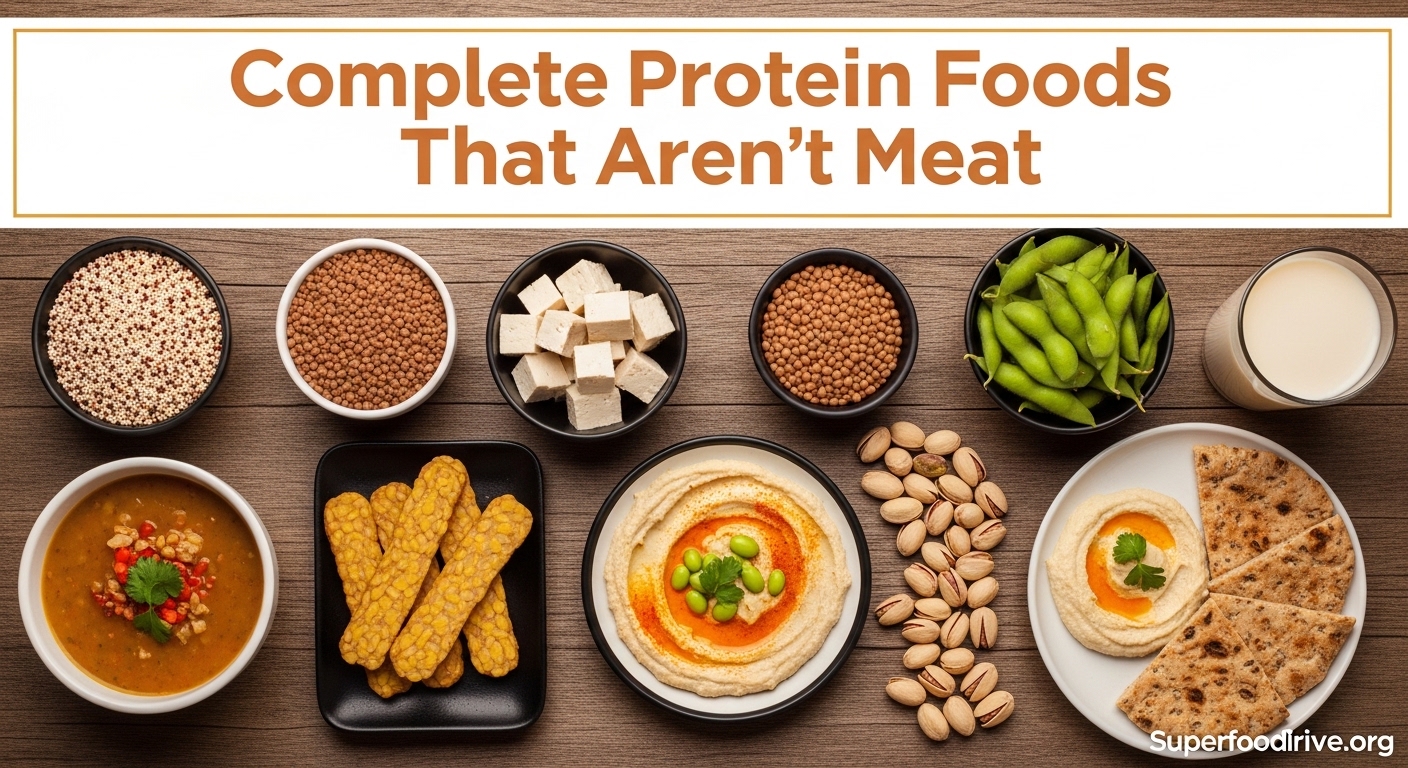
Many people believe meat is the only reliable way to get complete proteins. That myth has stopped countless individuals from exploring plant-based eating or simply reducing their meat consumption. The truth is far more interesting and liberating.
A complete protein contains all nine essential amino acids your body needs but cannot produce on its own. These amino acids are the building blocks of every cell, muscle, and enzyme in your body. And plenty of foods besides meat deliver them in abundance.
Our team has researched nutritional science for years. We’ve compiled everything you need to know about getting complete proteins without touching meat. Whether you’re vegetarian, vegan, or just looking to diversify your protein sources, this guide will show you exactly how to fuel your body with complete nutrition.
You will learn which plant foods are complete proteins on their own. You will discover how to combine foods for complete amino acid profiles. You will see practical meal plans that deliver adequate protein for any lifestyle. By the end, you will have complete confidence in meeting your protein needs without meat.
Table of Contents
What Is a Complete Protein
A complete protein is any food that contains adequate amounts of all nine essential amino acids. Your body cannot synthesize these amino acids internally, so you must obtain them through your diet.
The nine essential amino acids are: histidine, isoleucine, leucine, lysine, methionine, phenylalanine, threonine, tryptophan, and valine. Each plays a unique role in maintaining your health. Leucine helps build muscle. Lysine supports immune function. Tryptophan aids in producing serotonin. Without adequate intake of all nine, your body cannot function optimally.
Incomplete proteins lack one or more of these essential amino acids. Most plant foods fall into this category individually. Beans are low in methionine. Grains are low in lysine. Nuts and seeds may lack certain amino acids depending on the variety.
However, this does not mean plant-based eaters cannot get complete nutrition. The concept of protein combining has evolved significantly over the past few decades. What once seemed like a limiting factor is now understood to be a manageable aspect of plant-based eating.
Here’s what modern science tells us: you do not need to combine proteins at every single meal. Your body maintains an amino acid pool that draws from everything you eat throughout the day. As long as you consume varied protein sources over 24 hours, your body can assemble complete proteins on its own.
This discovery changed how nutritionists view vegetarian and vegan diets. The old advice about carefully combining rice and beans at the same meal has been thoroughly debunked. Research published in the Journal of the Academy of Nutrition and Dietetics confirms that variety across your daily meals is what matters most.
For years, vegetarians were told that plant proteins were inferior because they were incomplete. This created unnecessary anxiety about meal planning. The reality is that people following varied plant-based diets routinely meet and exceed their protein needs without obsessing over combinations.
Plant-Based Complete Protein Sources
Nature provides several plant foods that are complete proteins all by themselves. These foods deliver all nine essential amino acids without needing any combination. Understanding these options gives you powerful tools for building nutritious meals without meat.
Here are the most powerful plant-based complete protein sources available today.
Soy Products: Tofu, Tempeh, and Edamame
Soy stands alone as the most complete plant protein available. It rivals meat in amino acid quality and provides substantial protein per serving. The soybean is truly remarkable in its nutritional profile.
Tofu offers about 20 grams of protein per cup. This versatile soy product absorbs flavors from marinades and works in everything from stir-fries to smoothies. Soft tofu blends into creamy sauces and desserts. Extra-firm tofu grills beautifully and holds its shape in stir-fries. Silken tofu creates silky puddings and creamy dressings.
The different textures of tofu suit different purposes. Firm and extra-firm varieties work best when you want defined pieces. Soft and silken varieties blend smoothly into other preparations. Experimenting with different types expands your cooking possibilities significantly.
Tempeh contains even more protein, delivering around 31 grams per cup. Made from fermented soybeans, tempeh has a nutty flavor and firm, chewy texture. The fermentation process may improve digestibility and add beneficial probiotics. Many people find tempeh more satisfying than tofu because of its substantial texture.
Tempeh originates from Indonesia and has been a protein staple there for centuries. Its fermentation process partially breaks down the soybeans, potentially making nutrients more available. The fermentation also reduces compounds that can cause digestive discomfort in some people.
Edamame provides 17 grams of protein per cup. These young soybeans make excellent snacks and salad additions. I keep frozen edamame on hand for quick protein boosts throughout the week. Simply steaming them and adding sea salt creates a satisfying snack.
Preparation tips matter with soy products. Press tofu for 15 minutes before cooking to remove excess water. This improves texture and helps it absorb marinades better. Place the tofu between paper towels, then set a heavy pan on top. Marinate tofu for at least 30 minutes for best flavor penetration.
Tempeh benefits from steaming before marinating to open its pores and remove any bitterness. A quick 10-minute steam makes a noticeable difference in how well tempeh accepts flavors. After steaming, marinate just like you would tofu.
Soy products also provide additional nutrients beyond protein. They contain iron, calcium, and beneficial phytoestrogens called isoflavones. Despite past controversies, current research supports soy as a healthy food for most people when consumed as whole foods rather than isolated supplements.
Quinoa: The Complete Grain
Quinoa is technically a seed, though we cook and eat it like a grain. It contains all nine essential amino acids, making it a rare complete protein among grain-like foods. The Incas called it the “mother of all grains” and considered it sacred.
One cup of cooked quinoa delivers 8 grams of protein. That might seem modest compared to soy, but quinoa offers something meat cannot: significant fiber and complex carbohydrates. This combination provides sustained energy alongside protein. You get complete nutrition in every bite.
Quinoa also provides magnesium, iron, and manganese. It is naturally gluten-free, making it suitable for people with celiac disease or gluten sensitivity. The saponins coating quinoa need thorough rinsing before cooking, but the grain itself is clean and versatile.
Cooking quinoa correctly makes a difference in the final result. Rinse it thoroughly before cooking to remove bitter saponins. Use a 2:1 water-to-quinoa ratio. Bring to a boil, then simmer covered for 15 minutes. Let it rest for 5 minutes before fluffing with a fork. This resting period allows the quinoa to finish absorbing moisture and creates that fluffy texture.
I use quinoa as a base for Buddha bowls, substitute it for rice in stir-fries, and add it to breakfast porridge. It works hot or cold and stores well in the refrigerator for meal prep. Cold quinoa makes excellent salads that hold up better than pasta salads.
The three main types of quinoa are white, red, and black. White cooks fastest and has the mildest flavor. Red and black hold their shape better and add visual interest to dishes. Tri-color quinoa mixes all three for variety in both texture and appearance.
Ancient Grains: Amaranth and Buckwheat
These lesser-known pseudocereals pack impressive protein credentials. Both amaranth and buckwheat are complete proteins with rich nutritional profiles that deserve more attention in modern kitchens.
Amaranth contains about 9 grams of protein per cooked cup. This tiny grain was a staple food for the Aztecs and has been cultivated for thousands of years. It has a slightly peppery flavor and porridge-like texture when cooked. Amaranth also provides significant iron, magnesium, and calcium.
Amaranth contains more protein than most other grains. It is also high in lysine, an amino acid often lacking in grains. This makes amaranth particularly valuable for plant-based eaters looking to diversify their amino acid intake.
Buckwheat offers 6 grams of protein per cooked cup. Despite its name, buckwheat contains no wheat and is naturally gluten-free. Its earthy, nutty flavor works well in savory dishes. Buckwheat groats make excellent pilafs. Buckwheat flour creates hearty pancakes and soba noodles.
Buckwheat contains rutin, an antioxidant that may support cardiovascular health. The protein in buckwheat has been studied for its potential benefits in managing blood sugar. Like amaranth, buckwheat is high in lysine compared to common grains.
Amaranth cooks best with more water than quinoa. Use a 3:1 ratio for a softer, porridge-like texture. Some people enjoy amaranth popped like miniature popcorn for a crunchy topping. The small seeds cook quickly but can become gummy if overcooked.
Buckwheat groats cook quickly in about 10 minutes. Toast them dry in a pan before adding liquid for enhanced nuttiness. This toasting step is worth the extra few minutes for the depth of flavor it adds.
Both grains work well in breakfast porridges. Amaranth creates a creamy, comforting bowl similar to cream of wheat. Buckwheat groats (kasha) make a traditional Eastern European porridge that pairs well with mushrooms and onions for a savory approach.
Seeds: Hemp, Chia, and Pumpkin
Small seeds can deliver significant protein power. Three seeds stand out for their complete amino acid profiles and ease of use in everyday eating.
Hemp hearts (shelled hemp seeds) provide 10 grams of protein per 3 tablespoons. They have a mild, nutty flavor that works well in almost anything. I sprinkle them on salads, blend them into smoothies, and mix them into oatmeal. Hemp hearts also offer healthy omega-3 and omega-6 fatty acids in an ideal ratio rarely found in foods.
Hemp seeds contain all nine essential amino acids along with gamma-linolenic acid (GLA), an anti-inflammatory fatty acid. They are also good sources of iron, zinc, and magnesium. The protein in hemp is highly digestible, meaning your body can use it efficiently.
Chia seeds contain 5 grams of protein per 2 tablespoons. When soaked in liquid, chia forms a gel that works well in puddings and as an egg replacement in baking. The protein content adds up when you use chia regularly in your diet.
Chia seeds are remarkably high in fiber, providing nearly 10 grams per ounce. This combination of protein and fiber creates lasting satiety. The seeds also contain calcium and antioxidants that protect the delicate fats from oxidation.
Pumpkin seeds (pepitas) deliver 9 grams of protein per ounce. These crunchy seeds make excellent snacks and salad toppers. Roasted pumpkin seeds add protein and texture to grain bowls and soups. They are particularly high in zinc, which supports immune function.
Pumpkin seeds are one of the best natural sources of magnesium. They also contain tryptophan, which your body uses to produce serotonin and melatonin. Eating them in the evening may support better sleep quality.
Eating seeds raw or minimally processed preserves their nutritional value. Store them in the refrigerator to prevent rancidity of their healthy fats. I keep small containers of mixed seeds at my desk for easy protein snacks throughout the day.
Spirulina and Nutritional Yeast
These unconventional protein sources deserve attention for their exceptional nutritional density. They may not form the base of a meal, but they contribute significant protein and micronutrients in small amounts.
Spirulina is a blue-green algae that contains about 4 grams of protein per tablespoon. By weight, it is approximately 60-70% protein, making it one of the most protein-dense foods on Earth. Spirulina also provides iron, B vitamins, and powerful antioxidants like phycocyanin.
The protein in spirulina is highly bioavailable and requires minimal digestion. Some studies suggest it may support immune function and reduce inflammation. Its bright blue-green color comes from phycocyanin, which has shown antioxidant properties in research.
The challenge with spirulina is the quantity needed for significant protein contribution. Most people add a teaspoon to smoothies rather than eating tablespoons. Still, it contributes valuable amino acids and micronutrients to your overall intake. Quality matters with spirulina—choose products tested for contaminants.
Nutritional yeast offers 8 grams of protein per 2 tablespoons. This deactivated yeast has a cheesy, nutty flavor popular in vegan cooking. It also provides B vitamins, including B12 in fortified varieties. This makes it particularly valuable for vegans who need reliable B12 sources.
Nutritional yeast contains beta-glucans, which may support immune health. The protein is complete, containing all nine essential amino acids. It is also low in sodium and fat-free, making it a heart-healthy way to add flavor.
I always keep a jar in my pantry for quick flavor and protein boosts. Nutritional yeast works beautifully as a popcorn topping, in cashew-based cheese sauces, and sprinkled over pasta dishes. It dissolves well into soups and sauces, adding savory depth without dairy.
Animal-Based Complete Proteins Without Meat
Not all complete proteins come from plants. Several animal-derived foods provide complete amino acid profiles without being meat. These options work well for vegetarians and those transitioning toward plant-based eating.
Eggs: Nature’s Perfect Protein
Eggs have long been considered the gold standard for protein quality. They contain all nine essential amino acids in ratios that match human needs almost perfectly. This is why scientists use egg protein as the reference point for measuring other proteins.
One large egg provides 6 grams of complete protein. The biological value of egg protein is exceptionally high, meaning your body can use it efficiently with minimal waste. This makes eggs particularly valuable for muscle building and recovery.
The debate about whole eggs versus egg whites continues in fitness circles. Egg whites contain most of the protein with fewer calories. However, whole eggs provide additional nutrients like choline for brain health, vitamin D for bone health, and healthy fats in the yolk. Recent research suggests whole eggs support muscle protein synthesis better than whites alone.
For most healthy people, eating whole eggs does not negatively impact blood cholesterol as once believed. The dietary cholesterol in eggs has less effect on blood cholesterol than previously thought. The American Heart Association now includes eggs in healthy dietary patterns.
Eggs cook quickly and adapt to countless preparations. Hard-boiled eggs make portable snacks that keep in the refrigerator for a week. Scrambled eggs work for any meal of the day. Poached eggs top grain bowls and salads beautifully. Fried eggs add richness to simple rice dishes.
I keep a dozen boiled eggs in my refrigerator for emergency protein. They are the original fast food—nutritious, portable, and requiring no preparation when pre-cooked. Adding hot sauce or everything bagel seasoning makes them feel like a treat rather than a health food.
Dairy Products: Greek Yogurt, Cottage Cheese, and Milk
Dairy foods offer convenient complete protein for those who consume animal products. These foods also provide calcium and other nutrients that support bone health and overall wellness.
Greek yogurt stands out with 20 grams of protein per cup. The straining process removes whey, concentrating the protein content. Greek yogurt is thick, creamy, and incredibly versatile. Choose plain varieties to avoid added sugars that diminish the health benefits.
Greek yogurt contains probiotics that support gut health. The protein is high-quality and complete. It works as a breakfast base with fruit and nuts, a smoothie ingredient that adds creaminess, or a sour cream substitute that cuts calories while adding protein.
Cottage cheese delivers about 24 grams of protein per cup. This low-fat option contains casein protein, which digests slowly and may support overnight muscle recovery. Many bodybuilders eat cottage cheese before bed for this reason.
Cottage cheese pairs well with fruit for breakfast or serves as a savory base with vegetables and pepper. The curds provide satisfying texture, and the mild flavor accepts both sweet and savory preparations. Small-curd and large-curd varieties offer different textures to suit preferences.
Milk provides 8 grams of protein per cup. While lower in concentration than yogurt or cheese, milk contributes protein to smoothies, oatmeal, and hot beverages. The protein in milk is approximately 80% casein and 20% whey, providing both slow and fast-digesting protein.
For those avoiding dairy, soy milk offers similar protein content with a complete amino acid profile. Other plant milks like almond or oat milk typically contain much less protein and are not complete proteins on their own.
Cheese varieties vary in protein content. Parmesan offers about 10 grams per ounce. Cheddar provides 7 grams. Feta delivers 4 grams. Cheese adds flavor and protein to vegetarian meals, though it comes with higher saturated fat content than other dairy options.
Other Options: Whey Protein and Seitan
These processed protein sources can supplement whole food options effectively when convenience or specific goals require them.
Whey protein powder comes from milk and offers 20-30 grams of complete protein per scoop. It dissolves easily in liquids and absorbs quickly after exercise, making it popular among athletes. Whey protein isolates contain minimal lactose, making them suitable for many with dairy sensitivities.
Whey contains branched-chain amino acids (BCAAs), particularly leucine, which triggers muscle protein synthesis. This makes it effective for post-workout recovery. However, whole food sources provide additional nutrients that powders cannot match.
Seitan deserves special mention despite being technically incomplete. Made from wheat gluten, seitan contains about 25 grams of protein per 3.5 ounces. It is low in lysine, making it an incomplete protein on its own. However, combining seitan with lysine-rich foods like legumes creates a complete amino acid profile.
Many vegetarians and vegans use seitan as a meat substitute because of its chewy texture. It works well in stir-fries, sandwiches, and stews. When simmered in flavorful broth, seitan absorbs seasonings beautifully. Just remember to pair it with complementary proteins throughout your day for complete nutrition.
Seitan is not suitable for people with celiac disease or gluten sensitivity because it is pure wheat gluten. For others, it provides an affordable, high-protein option that satisfies cravings for chewy, meaty textures.
Complementary Protein Combinations
The idea that vegetarians must carefully combine proteins at every meal has been thoroughly debunked by modern nutrition science. Understanding this frees you from rigid meal planning while still allowing you to make informed food choices.
Your body maintains an amino acid pool that draws from all foods consumed throughout the day. When you eat varied protein sources within 24 hours, your body efficiently assembles complete proteins as needed. This biological fact makes plant-based eating far simpler than outdated advice suggested.
Still, understanding complementary proteins helps you make informed food choices. Certain food pairings create complete amino acid profiles when eaten together or within the same day. These combinations also happen to be delicious and culturally significant across cuisines worldwide.
Rice and beans form the classic example that appears in cultures everywhere. Rice is low in lysine but contains methionine. Beans contain plenty of lysine but are low in methionine. Together, they provide all essential amino acids. This combination appears in cuisines worldwide: red beans and rice in Louisiana, gallo pinto in Costa Rica, dal and rice in India, rice and black beans throughout Latin America.
The combination also provides fiber, complex carbohydrates, and steady energy. It is affordable, shelf-stable, and deeply satisfying. You can prepare endless variations by changing the bean variety, seasonings, and vegetable additions.
Hummus and pita create another perfect pair. Chickpeas provide lysine that wheat lacks. The tahini in hummus adds methionine from sesame seeds. Together with whole grain pita, you get complete protein plus healthy fats and fiber. This Middle Eastern staple has sustained people for millennia.
Peanut butter on whole grain bread delivers complete protein in a familiar format. Peanuts contain adequate lysine while wheat provides methionine. This simple sandwich has fueled generations of children and adults. Choosing whole grain bread increases the fiber and nutrient content.
Other effective combinations include lentils with rice or barley, bean chili with cornbread, tofu with quinoa, and split pea soup with whole grain rolls. The key principle involves pairing legumes (high in lysine, low in methionine) with grains or nuts/seeds (low in lysine, high in methionine).
Focus on variety throughout your day rather than specific combinations at each meal. Eat legumes, grains, nuts, and seeds regularly. Your body handles the amino acid assembly automatically. This approach is both nutritionally sound and psychologically liberating.
Meal Planning with Complete Proteins
Putting complete protein knowledge into practice requires planning. Here’s how a day of complete protein eating might look for different dietary preferences and needs.
Breakfast options: Greek yogurt with hemp hearts and berries provides complete protein from dairy and seeds. Oatmeal made with soy milk and topped with chia seeds offers plant-based complete protein. A vegetable omelet delivers eggs plus nutrients from vegetables. Tofu scramble with vegetables mimics eggs for vegans while providing complete soy protein.
Lunch ideas: Quinoa bowl with roasted vegetables, chickpeas, and tahini dressing combines complete grain protein with complementary legumes. A hummus and vegetable wrap on whole wheat pita delivers complete protein through the classic combination. Cottage cheese with sliced tomatoes and whole grain crackers provides quick complete protein. Tempeh tacos with corn tortillas offer complete soy protein.
Dinner meals: Stir-fried tempeh with vegetables over brown rice offers soy complete protein plus complementary grain. Buckwheat soba noodles with edamame and vegetables deliver complete protein from multiple sources. Bean and vegetable chili with cornbread creates complementary protein combination. Tofu curry with quinoa provides complete protein from both main ingredients.
Protein-rich snacks: Hard-boiled eggs, edamame pods, roasted pumpkin seeds, a handful of almonds with an apple, Greek yogurt with honey, or whole grain toast with almond butter provide protein between meals.
Protein needs vary by individual based on body size, activity level, and goals. Sedentary adults need about 0.8 grams per kilogram of body weight. Active individuals require 1.2-2.0 grams per kilogram depending on training intensity. Older adults may benefit from higher protein intake to prevent muscle loss.
A 150-pound sedentary person needs about 55 grams daily. That same person training intensely might need 110 grams or more. Pregnant and breastfeeding women have increased needs. Growing children and teenagers also require more protein per pound of body weight than adults.
Here’s a sample day totaling approximately 75 grams of complete and complementary protein:
- Breakfast: Greek yogurt (20g) with hemp hearts (5g) = 25g
- Lunch: Quinoa bowl (8g) with chickpeas (7g) = 15g
- Snack: Edamame (17g) = 17g
- Dinner: Tofu stir-fry (20g) over rice (4g) = 24g
- Total: 81 grams of protein
This plan shows how easily complete proteins fit into regular meals without special effort. Each meal contains foods you might eat anyway, just with attention to protein content.
Frequently Asked Questions
What is the most complete protein that is not meat?
Soy products, particularly tempeh and tofu, are the most complete plant proteins. They contain all nine essential amino acids in ratios comparable to meat. Eggs are the most complete animal-based protein without meat, offering the highest biological value of any protein source.
How do I make complete proteins without meat?
You can obtain complete proteins without meat by eating soy products like tofu and tempeh, quinoa, hemp seeds, or combining complementary proteins throughout your day. Pair legumes with grains, such as rice and beans or hummus with pita bread. You do not need to combine these at every meal—variety throughout the day is sufficient.
What can I eat that has protein but not meat?
Complete protein options without meat include tofu, tempeh, edamame, quinoa, hemp seeds, chia seeds, eggs, Greek yogurt, cottage cheese, and spirulina. Complementary protein combinations include rice and beans, peanut butter on whole grain bread, lentils with barley, and hummus with pita.
How can vegetarians get complete proteins?
Vegetarians can get complete proteins by including soy products, quinoa, hemp seeds, eggs, and dairy in their diet. Lacto-ovo vegetarians have the easiest path with eggs and dairy providing complete protein. Vegans can rely on soy, quinoa, and strategic combinations of legumes with grains or nuts throughout the day.
Is quinoa a complete protein?
Yes, quinoa is a complete protein. It contains all nine essential amino acids in adequate amounts, making it one of the few plant-based complete protein sources. One cup of cooked quinoa provides 8 grams of complete protein along with fiber, iron, and magnesium.
Are beans and rice a complete protein?
Yes, beans and rice together form a complete protein. Rice is low in lysine but contains methionine. Beans are high in lysine but low in methionine. When eaten together, they provide all nine essential amino acids. However, you do not need to eat them at the same meal—consuming both foods within the same day provides the same benefit.
Do I need to combine proteins at every meal?
No, you do not need to combine proteins at every meal. Modern research shows your body maintains an amino acid pool that draws from all foods consumed throughout the day. As long as you eat varied protein sources over 24 hours, your body can assemble complete proteins. Focus on dietary variety rather than specific combinations at each meal.
Conclusion
Getting complete proteins without meat is not just possible—it is straightforward and delicious. Soy products, quinoa, hemp seeds, eggs, and dairy provide all nine essential amino acids without any combining needed. Complementary proteins like rice and beans or hummus and pita create complete profiles when enjoyed within the same day.
The outdated advice about precise protein combining at every meal has been replaced by a simpler truth backed by modern science. Your body is smart enough to assemble amino acids from varied foods eaten throughout the day. Focus on including diverse protein sources in your regular rotation rather than obsessing over specific combinations.
Keep tofu, tempeh, quinoa, and legumes in your pantry. Stock eggs and Greek yogurt if you consume animal products. Sprinkle hemp and chia seeds on everything from salads to smoothies. Try ancient grains like amaranth and buckwheat in your breakfast rotation.
With these foods at your disposal, complete protein nutrition becomes automatic. Your body gets exactly what it needs to build muscle, support immunity, and maintain optimal health—no meat required. The path to complete protein without meat is wide open, delicious, and waiting for you to explore.