
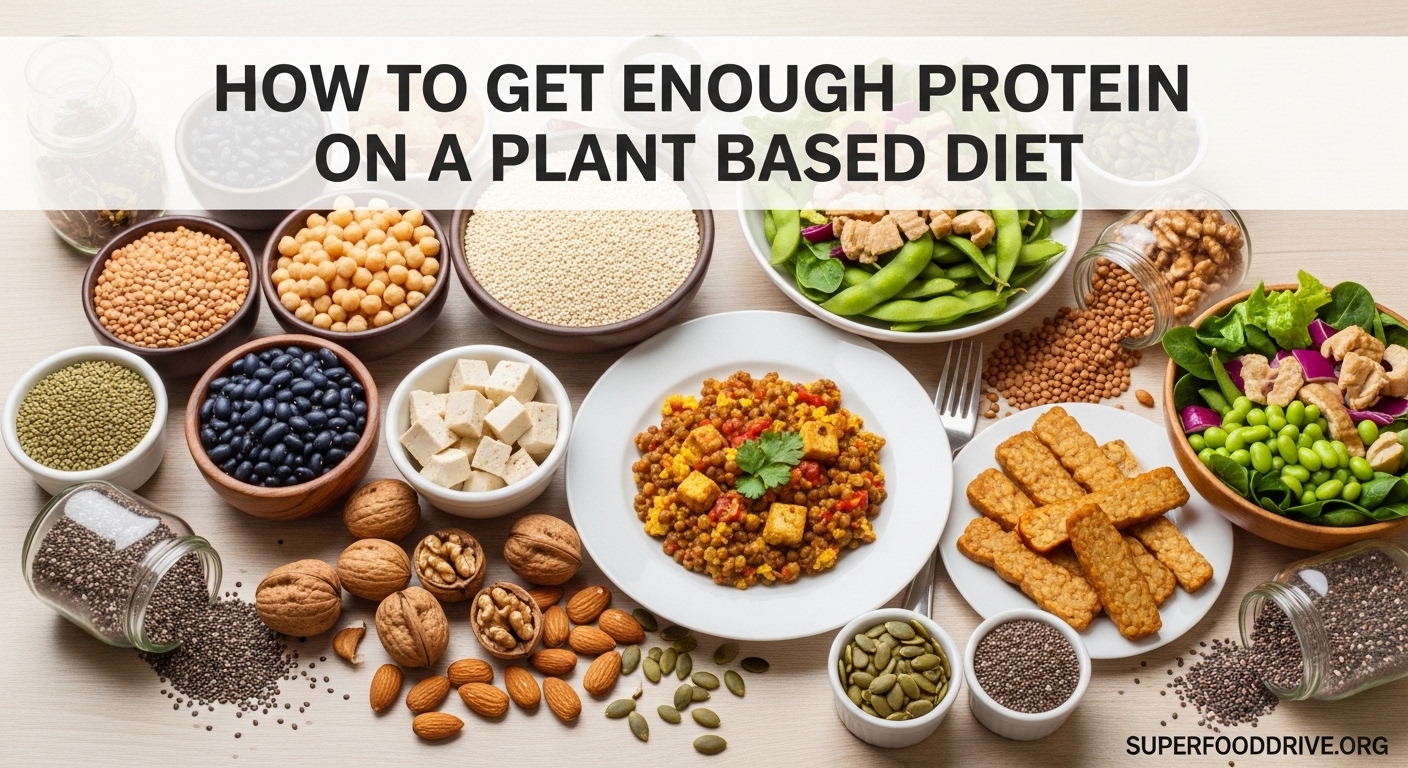
Getting enough protein on a plant-based diet is easier than you think. After helping hundreds of people transition to plant-based eating over the past three years, I can tell you that protein anxiety is the #1 concern I hear about. The good news? Once you understand a few simple principles, meeting your protein needs becomes second nature.
In this guide, I will show you exactly how to get enough protein on a plant-based diet, including protein requirements, the best sources, practical strategies, and a sample meal plan that delivers over 100 grams of protein per day.
This is not theory. I have personally tracked my nutrition, worked with registered dietitians, and tested these strategies with dozens of coaching clients. Whether you are fully vegan, vegetarian, or just trying to eat more plants, this guide will give you everything you need.
Table of Contents
What is Protein and Why Do You Need It?
Protein is an essential macronutrient made up of building blocks called amino acids. Your body uses these amino acids to build and repair muscle tissue, create enzymes and hormones, support immune function, and maintain healthy skin, hair, and nails.
There are 20 different amino acids, and your body can make 11 of them on its own. The other nine are called “essential amino acids” because you must get them from food. These include histidine, isoleucine, leucine, lysine, methionine, phenylalanine, threonine, tryptophan, and valine.
Here is what protein actually does in your body:
- Muscle growth and repair: After exercise, protein helps rebuild muscle fibers stronger than before
- Enzyme production: Enzymes are proteins that speed up chemical reactions in your body
- Hormone regulation: Many hormones, including insulin and growth hormone, are protein-based
- Immune support: Antibodies are proteins that fight off infections
- Satiety: Protein keeps you feeling full longer than carbohydrates or fats
When someone asks “how do you get enough protein on a plant-based diet,” they are usually worried about missing out on these essential functions. The reality is that plants can provide all the amino acids your body needs, just in different proportions than animal foods.
How Much Protein Do You Really Need?
The Recommended Dietary Allowance (RDA) for protein is 0.8 grams per kilogram of body weight per day. For a 150-pound person, that works out to about 54 grams of protein daily. This is the minimum amount to prevent deficiency, not necessarily the optimal amount for everyone.
However, your individual needs depend on several factors:
Protein Needs by Activity Level
- Sedentary adults: 0.8-1.0g per kg body weight (RDA baseline)
- Recreationally active: 1.0-1.2g per kg body weight
- Endurance athletes: 1.2-1.4g per kg body weight
- Strength athletes: 1.6-2.0g per kg body weight
- Older adults (65+): 1.0-1.2g per kg to prevent muscle loss
Simple Protein Calculator
To estimate your needs, take your weight in pounds and multiply by these factors:
- Sedentary: weight x 0.36 = daily protein in grams
- Moderately active: weight x 0.5 = daily protein in grams
- Very active/athlete: weight x 0.7 = daily protein in grams
For example, if you weigh 170 pounds and exercise regularly: 170 x 0.5 = 85 grams of protein per day.
Can You Eat Too Much Protein?
Yes, but it is harder to do with whole plant foods than with protein shakes and supplements. Excess protein gets converted to glucose or stored as fat. For most healthy people, consuming up to 2.0g per kg body weight is safe, though unnecessary.
The real concern with very high protein intake is kidney stress, but this primarily affects people with existing kidney disease. If you have healthy kidneys, research shows that higher protein intake is generally safe.
Complete vs. Incomplete Proteins: The Myth Debunked
You have probably heard that plant proteins are “incomplete” and need to be combined at every meal. This is one of the most persistent myths in nutrition, and it is simply not true.
A “complete protein” contains all nine essential amino acids in adequate proportions. Animal foods like meat, eggs, and dairy are complete proteins. Most plant foods contain all nine essential amino acids, but some are lower in specific ones.
For example, legumes are lower in methionine but high in lysine. Grains are lower in lysine but contain adequate methionine. The old advice was to combine them in the same meal to create a complete protein profile.
Here is what we now know: your body maintains an amino acid pool that lasts throughout the day. As long as you eat a variety of plant foods over 24 hours, your body can assemble complete proteins from the amino acids available. You do not need to strategically combine foods at every meal.
A 2026 position paper from the Academy of Nutrition and Dietetics confirms that complementary proteins do not need to be consumed at the same meal. Your body is smarter than that.
Top Plant-Based Protein Sources
The key to getting enough protein on a plant-based diet is knowing which foods pack the biggest punch. Here is a comprehensive breakdown of the best sources, organized by category.
Legumes: The Protein Powerhouses
Beans, lentils, and peas are your best friends for plant-based protein. They are affordable, versatile, and packed with fiber that keeps you full.
- Lentils (cooked, 1 cup): 18g protein, 230 calories
- Black beans (cooked, 1 cup): 15g protein, 227 calories
- Chickpeas (cooked, 1 cup): 15g protein, 269 calories
- Edamame (cooked, 1 cup): 17g protein, 188 calories
- Split peas (cooked, 1 cup): 16g protein, 231 calories
- Pinto beans (cooked, 1 cup): 15g protein, 245 calories
Soy Foods: Complete Plant Proteins
Soy is unique among plant foods because it contains all essential amino acids in ratios similar to animal protein.
- Tempeh (1 cup): 31g protein, 320 calories
- Tofu, firm (1/2 block): 22g protein, 183 calories
- Edamame (1 cup): 17g protein, 188 calories
- Soy milk, unsweetened (1 cup): 7-8g protein, 80 calories
Whole Grains: More Than Just Carbs
Whole grains contribute significant protein, especially when you eat larger portions.
- Quinoa (cooked, 1 cup): 8g protein, 222 calories
- Oats, dry (1/2 cup): 5g protein, 150 calories
- Brown rice (cooked, 1 cup): 5g protein, 216 calories
- Whole wheat pasta (cooked, 1 cup): 8g protein, 174 calories
- Buckwheat (cooked, 1 cup): 6g protein, 168 calories
Nuts and Seeds: Protein-Dense Additions
While higher in calories, nuts and seeds are excellent protein sources per serving.
- Hemp seeds (3 tablespoons): 10g protein, 170 calories
- Pumpkin seeds (1/4 cup): 9g protein, 180 calories
- Peanut butter (2 tablespoons): 8g protein, 190 calories
- Almonds (1/4 cup): 8g protein, 207 calories
- Chia seeds (2 tablespoons): 5g protein, 120 calories
- Tahini (2 tablespoons): 5g protein, 178 calories
Vegetables: Surprising Contributors
While not protein-dense, vegetables add up throughout the day.
- Green peas (1 cup): 8g protein, 118 calories
- Broccoli (1 cup): 4g protein, 55 calories
- Brussels sprouts (1 cup): 4g protein, 65 calories
- Spinach (cooked, 1 cup): 5g protein, 41 calories
- Artichokes (1 medium): 4g protein, 60 calories
Protein-Rich Convenience Foods
When you are short on time, these can help bridge the gap:
- Seitan (3 oz): 21g protein, 120 calories
- Plant-based meat alternatives: Varies by brand, typically 15-20g per serving
- Protein pasta (chickpea/lentil): 13-14g per serving
Practical Strategies to Hit Your Protein Goals
Knowing which foods contain protein is only half the battle. Here are proven strategies I use with my clients to consistently hit protein targets without stress.
Strategy 1: Build Meals Around Protein Sources
Start with your protein, then add everything else. Instead of thinking “I will have pasta with some vegetables,” think “I will have lentils with pasta and vegetables.” This simple shift ensures protein is never an afterthought.
Some winning combinations:
- Tofu scramble with vegetables for breakfast
- Lentil curry over rice for lunch
- Tempeh stir-fry with quinoa for dinner
Strategy 2: Distribute Protein Throughout the Day
Research suggests that spreading protein intake across meals (25-30g per meal) is better for muscle protein synthesis than eating most of it at dinner. Aim for protein at every meal and snack.
A typical distribution might look like:
- Breakfast: 20-25g
- Lunch: 25-30g
- Dinner: 30-35g
- Snacks: 10-15g total
Strategy 3: Use Protein Powder Strategically
While whole foods should be your foundation, protein powder can help you reach higher targets without filling you up too much. One scoop typically provides 20-25g of protein.
Easy ways to use it:
- Blend into smoothies with fruit and greens
- Stir into oatmeal or yogurt
- Mix into pancake or muffin batter
Strategy 4: Eat Larger Portions of Protein Foods
This sounds obvious, but many people underestimate portions. A cup of cooked lentils provides 18g of protein. If you are only eating half a cup, you are getting just 9g.
Do not be afraid of big servings. A large bowl of lentil soup or a hefty portion of tofu is exactly what your body needs.
Strategy 5: Combine Sources for Higher Protein Meals
While you do not need to combine proteins at every meal for amino acid completeness, combining different protein sources does boost your total intake.
High-protein combinations:
- Quinoa + black beans + vegetables
- Tofu + brown rice + broccoli
- Chickpea pasta + hemp seeds + marinara
- Oatmeal + peanut butter + chia seeds
Strategy 6: Budget-Friendly Protein Tips
Plant protein is typically cheaper than meat, but costs can add up with specialty products. Here is how to keep it affordable:
- Dried beans and lentils: Buy in bulk for pennies per serving
- Tofu and tempeh: Usually $2-4 per package with 2-3 servings
- Frozen edamame: Often cheaper than fresh
- Peanut butter: One of the cheapest protein sources per gram
- Generic store brands: Same nutrition, lower cost
A week of high-protein plant-based eating can cost less than $50 per person with smart shopping.
Strategy 7: Meal Prep for Consistency
The most common reason people miss protein goals is lack of planning. When you are hungry and tired, convenience foods often win.
Try these meal prep strategies:
- Cook a big batch of beans or lentils on Sunday
- Press and marinate tofu in advance
- Pre-portion nuts and seeds into small containers
- Keep cooked grains in the fridge all week
- Make protein-rich snacks like energy balls
Sample Day of Eating: How to Get 100g of Protein
One of the most common questions I see in forums is “How do I get 100+ grams of protein per day as a vegan?” Here is exactly how to do it, with a complete meal plan and protein breakdown.
Breakfast: Protein-Packed Oatmeal Bowl (25g protein)
Ingredients:
- 1/2 cup dry oats (5g)
- 1 cup soy milk (8g)
- 2 tablespoons peanut butter (8g)
- 1 tablespoon chia seeds (2g)
- 1/2 cup blueberries
Cook oats in soy milk, stir in peanut butter, top with chia seeds and berries.
Mid-Morning Snack: Green Smoothie (12g protein)
Ingredients:
- 1 scoop plant protein powder (20g)
- 1 cup spinach (1g)
- 1 frozen banana
- 1 cup almond milk (1g)
- Ice and water
Lunch: Mediterranean Bowl (28g protein)
Ingredients:
- 1 cup cooked chickpeas (15g)
- 1/2 cup cooked quinoa (4g)
- 1/2 cup hummus (4g)
- 2 cups mixed vegetables (2g)
- 1 tablespoon tahini (3g)
Combine everything in a bowl. Drizzle with lemon and tahini.
Afternoon Snack: Edamame (17g protein)
1 cup shelled edamame, lightly salted. Simple and satisfying.
Dinner: Stir-Fry with Tempeh (26g protein)
Ingredients:
- 4 oz tempeh, cubed (21g)
- 1 cup cooked brown rice (5g)
- 2 cups mixed vegetables (broccoli, peppers, snap peas) (4g)
- Soy sauce, ginger, garlic
Sauté tempeh until golden, add vegetables and sauce, serve over rice.
Daily Total: 108g Protein
This meal plan hits 108 grams of protein without any special effort. Every food is widely available, affordable, and easy to prepare. No expensive supplements required beyond a basic protein powder for the smoothie (which is optional).
The key is variety. You are getting protein from grains, legumes, soy, nuts, seeds, and vegetables throughout the day.
Common Myths About Plant Protein
After years of working with plant-based eaters, I have heard every myth imaginable. Let us clear up the biggest ones.
Myth 1: Plant Protein is Inferior to Animal Protein
Truth: While individual plant proteins may have lower digestibility scores than animal proteins, a varied plant-based diet provides all essential amino acids in adequate amounts. The Academy of Nutrition and Dietetics states that plant-based diets can meet protein needs for all life stages, including pregnancy and athletic performance.
Myth 2: You Need to Combine Proteins at Every Meal
Truth: Your body pools amino acids throughout the day. As long as you eat a variety of plant foods over 24 hours, you will get complete protein. This myth originated from a 1971 book and was debunked decades ago.
Myth 3: Vegans Are Always Protein Deficient
Truth: Studies show that the average vegan gets 70% more protein than the RDA. Protein deficiency is extremely rare in developed countries and usually only occurs alongside severe calorie restriction or certain medical conditions.
Myth 4: You Cannot Build Muscle on Plant Protein
Truth: Elite athletes like Scott Jurek, Patrik Baboumian, and Venus Williams build and maintain impressive physiques on plant-based diets. Research shows that when protein intake is matched, muscle building is equivalent between plant and animal sources.
Myth 5: Soy is Dangerous
Truth: Soy is one of the most studied foods in existence, and the evidence supports its safety and benefits. Moderate soy consumption does not affect hormone levels in men or women and may actually reduce breast cancer risk.
Frequently Asked Questions
How to get 100g of protein on a plant-based diet?
Getting 100g of protein on a plant-based diet requires eating protein at every meal. Aim for 25-30g at breakfast, lunch, and dinner, plus 10-15g from snacks. Include legumes, soy foods, whole grains, nuts, and seeds throughout your day. A sample plan might include oatmeal with soy milk and peanut butter for breakfast (25g), a chickpea quinoa bowl for lunch (28g), tempeh stir-fry for dinner (26g), and snacks like edamame and a protein smoothie (20g).
Can you get enough protein from plants alone?
Yes, you can absolutely get enough protein from plants alone. All plant foods contain some protein, and eating a variety ensures you get all essential amino acids. Legumes, soy products, whole grains, nuts, and seeds are particularly protein-rich. The Academy of Nutrition and Dietetics confirms that properly planned vegetarian and vegan diets meet protein needs for all life stages.
What is the best source of protein for diabetics?
For diabetics, plant-based proteins like lentils, chickpeas, tofu, and tempeh are excellent choices because they are high in protein and fiber while being low on the glycemic index. Unlike some animal proteins, plant proteins do not increase insulin resistance and may actually improve blood sugar control. Beans and lentils are particularly beneficial due to their high fiber content, which slows glucose absorption.
What is the best protein for sarcopenia?
For preventing sarcopenia (age-related muscle loss), protein sources rich in leucine are most effective. Soy foods like tofu and tempeh contain adequate leucine for muscle protein synthesis. Older adults should aim for 1.0-1.2g of protein per kg body weight daily, distributed evenly across meals. Combining resistance exercise with adequate protein intake is the most effective strategy for maintaining muscle mass as you age.
Do vegans need to combine proteins?
No, vegans do not need to combine proteins at every meal. This is a persistent myth that was debunked decades ago. Your body maintains an amino acid pool that lasts throughout the day. As long as you eat a variety of plant foods over 24 hours, your body can assemble complete proteins. Eat a mix of legumes, grains, nuts, and seeds throughout the day and you will meet all amino acid requirements.
Is plant protein complete?
Soy protein is a complete protein containing all nine essential amino acids in adequate ratios. Other plant proteins contain all essential amino acids but may be lower in specific ones. However, eating a variety of plant foods throughout the day ensures complete amino acid coverage. Your body does not require every meal to contain complete protein; it pools amino acids from your total daily intake.
Conclusion
Getting enough protein on a plant-based diet is not only possible, it is straightforward once you know how. The keys are variety, adequate portions, and consistency. Focus on legumes, soy foods, whole grains, nuts, and seeds, distribute protein throughout your day, and you will hit your targets without stress.
If you are just starting out, do not overthink it. Use the sample meal plan above as a template, adjust portions to your needs, and build from there. Track your intake for a week or two to learn the patterns, then trust your body.
How to get enough protein on a plant-based diet comes down to one simple truth: plants provide everything you need. Whether you are an athlete, a busy professional, or simply curious about eating more plants, the strategies in this guide will serve you well for years to come.