
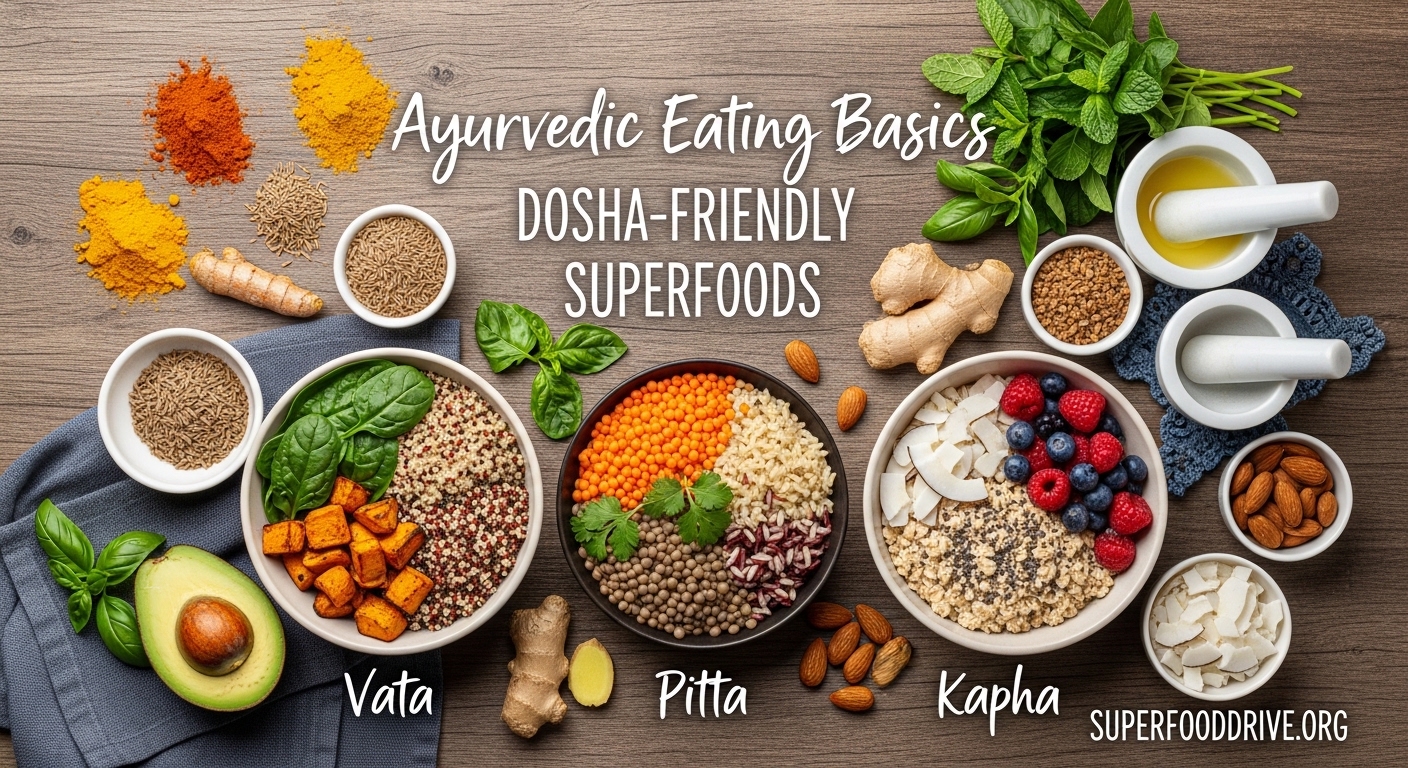
Ayurvedic Eating Basics Dosha-Friendly Superfoods offers a path to personalized nutrition that has guided wellness seekers for over 5,000 years. I discovered this ancient system three years ago when constant fatigue and digestive issues led me to explore alternatives to generic diet advice. What I found transformed not just what I eat, but how I understand my body’s unique needs.
This guide will walk you through the fundamentals of Ayurvedic eating and show you exactly which superfoods support your specific dosha type. You will learn practical ways to incorporate these foods into your daily routine without overwhelming complexity.
Whether you are new to Ayurveda or looking to deepen your practice, the principles here will help you make informed food choices that support balance, energy, and long-term health.
Table of Contents
What Is Ayurveda and Why Does Your Dosha Matter
Ayurveda translates to “science of life” from Sanskrit. This holistic healing system originated in India and views health as a balance between mind, body, and spirit. At its core, Ayurveda teaches that each person has a unique constitution made up of three fundamental energies called doshas.
Your dosha determines everything from your physical build to your emotional tendencies. When you eat foods that balance your dominant dosha, you support optimal digestion (called agni) and maintain vitality (called ojas). When you eat foods that aggravate your dosha, you may experience digestive issues, low energy, or emotional imbalance.
Understanding Vata Dosha
Vata combines the elements of air and space. People with dominant Vata tend to be creative, energetic, and quick-thinking. Physically, they often have a lighter frame, dry skin, and variable appetite.
When Vata becomes imbalanced, you might experience anxiety, insomnia, dry skin, constipation, or scattered thoughts. Cold weather, irregular schedules, and raw foods often trigger these symptoms.
Understanding Pitta Dosha
Pitta combines fire and water elements. Pitta-dominant individuals typically have a medium build, strong digestion, warm body temperature, and sharp intellect. They are often ambitious, focused, and natural leaders.
Excess Pitta manifests as irritability, acid reflux, skin rashes, inflammation, or perfectionism. Hot weather, spicy foods, and skipped meals commonly aggravate this dosha.
Understanding Kapha Dosha
Kapha consists of earth and water elements. Those with dominant Kapha usually have a solid, sturdy build, smooth skin, and steady energy levels. They tend to be calm, nurturing, and methodical.
Kapha imbalance appears as weight gain, lethargy, congestion, attachment, or resistance to change. Cold, damp weather, heavy foods, and sedentary habits worsen Kapha excess.
How to Determine Your Dosha Type
Identifying your dominant dosha is the essential first step in applying Ayurvedic eating principles. Most people have one primary dosha, though some have two equally dominant doshas or even a balanced tridoshic constitution.
Physical Characteristics by Dosha
Vata traits: Thin or light build, dry skin, prominent joints, narrow shoulders and hips, variable weight, tendency toward cold hands and feet.
Pitta traits: Medium build, warm skin that may be sensitive or freckled, well-developed musculature, strong appetite, tendency to overheat easily.
Kapha traits: Larger or stocky build, smooth oily skin, wide hips and shoulders, steady weight, strong stamina but slow to start moving.
Mental and Emotional Patterns
Vata mental traits: Quick, creative mind; enthusiasm for new ideas; tendency toward worry; difficulty with routine; light, interrupted sleep.
Pitta mental traits: Sharp intellect; goal-oriented; competitive; prone to criticism and anger; moderate, sound sleep.
Kapha mental traits: Steady, calm demeanor; excellent memory; tendency toward attachment; resistance to change; deep, heavy sleep.
Several reputable online dosha quizzes can help confirm your assessment. The Ayurvedic Institute, Banyan Botanicals, and Art of Living all offer free dosha evaluation tools that take about five minutes to complete.
How to Balance Vata Dosha with Superfoods
Vata needs warmth, moisture, and grounding to maintain balance. The best foods for Vata are warm, cooked, slightly oily, and naturally sweet or sour in taste. Raw, cold, dry, and light foods aggravate this dosha.
Top 5 Superfoods for Vata Balance
1. Ghee (Clarified Butter)
Ghee provides the healthy fats Vata needs for moisture and grounding. Use one to two teaspoons daily in cooking or over warm foods.
2. Ashwagandha
This adaptogenic root helps calm Vata’s nervous energy and supports restful sleep. Add half a teaspoon of powder to warm milk before bed.
3. Dates
Natural sweetness combined with moisture makes dates perfect for Vata. Soak two to three dates overnight and eat them first thing in the morning.
4. Oatmeal
Warm, moist, and grounding, oatmeal makes an ideal Vata breakfast. Cook with cinnamon, ghee, and a touch of honey.
5. Sesame Seeds and Sesame Oil
These provide the heavy, oily qualities that counter Vata’s light, dry nature. Use sesame oil for cooking or massage.
Foods Vata Should Avoid
Limit raw vegetables, cold salads, crackers, dried fruits, iced beverages, and excessive beans. These foods increase the dry, light qualities Vata already has in abundance.
How to Balance Pitta Dosha with Superfoods
Pitta benefits from cooling, calming, and moderately dry foods. Sweet, bitter, and astringent tastes help balance this fiery dosha. Sour, salty, and pungent foods typically aggravate Pitta.
Top 5 Superfoods for Pitta Balance
1. Coconut
Fresh coconut meat, coconut water, and coconut oil all provide cooling properties that soothe Pitta’s heat. Use coconut oil for cooking instead of heating oils.
2. Cucumber
This water-rich vegetable offers immediate cooling effects. Eat fresh cucumber daily, especially during warm months.
3. Amla (Indian Gooseberry)
Despite being sour, amla has a unique cooling after-effect. It supports digestion without creating excess heat. Take one teaspoon of amla powder with water in the morning.
4. Mint
Fresh mint tea cools the digestive system and calms the mind. Steep fresh leaves in room temperature or slightly cool water.
5. Sweet Juicy Fruits
Grapes, pears, pomegranates, and ripe mangoes provide sweetness and hydration. Eat these at room temperature, not chilled.
Foods Pitta Should Avoid
Reduce hot peppers, garlic, onions, tomatoes, vinegar, fermented foods, and excess salt. Also avoid skipping meals, as hunger increases Pitta’s fiery nature.
How to Balance Kapha Dosha with Superfoods
Kapha needs stimulation, lightness, and warmth to stay balanced. Pungent, bitter, and astringent foods help counter Kapha’s heavy, moist qualities. Sweet, sour, and salty tastes tend to increase Kapha.
Top 5 Superfoods for Kapha Balance
1. Ginger
Fresh ginger stimulates digestion and metabolism. Grate one teaspoon into warm water with lemon each morning to kindle digestive fire.
2. Triphala
This traditional blend of three fruits supports gentle detoxification and regular elimination. Take half a teaspoon before bed with warm water.
3. Leafy Greens
Bitter greens like kale, dandelion, and arugula help lighten Kapha’s heaviness. Eat them cooked with warming spices.
4. Honey
Raw honey has a scraping quality that helps reduce Kapha. Use it sparingly as a sweetener, never heated above body temperature.
5. Turmeric
This warming spice supports circulation and reduces inflammation. Add to savory dishes or make golden milk with plant-based milk.
Foods Kapha Should Avoid
Minimize dairy products (especially cold milk), wheat, red meat, fried foods, sugary desserts, and iced beverages. These foods increase the heavy, sticky qualities Kapha already possesses.
Universal Ayurvedic Superfoods for All Doshas
Certain foods and herbs are considered tridoshic, meaning they balance all three doshas when used appropriately. These versatile superfoods form the foundation of any Ayurvedic kitchen.
Tridoshic Foods to Embrace
Mung Beans: Light, easy to digest, and balancing for everyone. Use split mung dal for soups and kitchari.
Basmati Rice: The most easily digestible grain, suitable for all constitutions when cooked fresh.
Fresh Vegetables (cooked): Most cooked vegetables work for all doshas when prepared with appropriate spices.
Fresh Fruits: Seasonal, ripe fruits generally suit everyone when eaten at the right time.
Spices: Cumin, coriander, and fennel form a digestive trinity that benefits all doshas.
Adaptogenic Herbs for Daily Use
Tulsi (Holy Basil): Supports stress response and immune function. Drink as tea daily.
Brahmi: Enhances mental clarity and calm focus. Take as a supplement or tea.
Shatavari: Particularly beneficial for reproductive health and hormonal balance.
Practical Tips for Incorporating Ayurvedic Eating
Starting an Ayurvedic diet does not require a complete pantry overhaul. Small, consistent changes yield better results than dramatic shifts that feel unsustainable.
Step 1: Start with Spices
Add digestion-supporting spices to meals you already enjoy. Cumin, coriander, fennel, ginger, and turmeric enhance flavor while supporting agni.
Step 2: Eat Your Largest Meal at Lunch
Digestive fire peaks when the sun is highest. Make lunch your main meal and keep dinner light and early, at least three hours before bed.
Step 3: Follow Proper Food Combinations
Avoid mixing milk with sour fruits, melons with other foods, or eating fish and dairy together. These combinations create digestive issues regardless of dosha.
Step 4: Eat Seasonally
Adjust your diet with the seasons. Eat lighter foods in spring, cooling foods in summer, and grounding foods in fall and winter.
Step 5: Sip Warm Water Throughout the Day
Cold water dampens digestive fire. Keep a thermos of warm water nearby and sip regularly, especially before and between meals.
Sample Daily Eating Patterns by Dosha
Here are simple frameworks to inspire your own Ayurvedic meal planning.
Vata Daily Framework
Breakfast: Warm oatmeal with ghee, cinnamon, and soaked dates.
Lunch: Steamed vegetables, quinoa, mung dal soup, and a side of avocado.
Dinner: Light kitchari (rice and mung bean porridge) with warming spices.
Pitta Daily Framework
Breakfast: Cool or room-temperature fresh fruit, or coconut chia pudding.
Lunch: Large salad with cucumber, fresh herbs, grains, and cooling dressing.
Dinner: Steamed vegetables, basmati rice, and sweet mung dal.
Kapha Daily Framework
Breakfast: Light, if any. Try ginger tea with honey, or a green vegetable juice.
Lunch: Hearty but light meal with plenty of vegetables, legumes, and spices.
Dinner: Soup or stew with leafy greens, minimal grains, and generous ginger.
FAQ: Common Questions About Ayurvedic Eating
What are the best foods for Vata dosha?
The best foods for Vata are warm, cooked, slightly oily, and naturally sweet. Top choices include ghee, ashwagandha, dates, oatmeal, sesame seeds, cooked grains, soups, and stews. Avoid cold, raw, dry, and light foods like crackers, salads, and iced beverages.
What are the best foods for Pitta dosha?
The best foods for Pitta are cooling, sweet, bitter, and astringent. Excellent options include coconut, cucumber, amla, mint, sweet fruits, leafy greens, and basmati rice. Avoid hot spicy foods, fermented items, excess salt, and sour tastes like vinegar.
What are the best foods for Kapha dosha?
The best foods for Kapha are warm, light, dry, and spicy. Ideal choices include ginger, triphala, leafy greens, honey, turmeric, legumes, and light grains. Minimize dairy, wheat, red meat, fried foods, and sugary desserts.
What is the Ayurvedic diet for beginners?
Beginners should start by determining their dosha type, then focus on eating warm, cooked foods with appropriate spices. Make lunch your largest meal, eat dinner early and light, and sip warm water throughout the day. Start with one or two changes rather than overwhelming yourself with rules.
How do you balance doshas with food?
Balance doshas by eating foods with opposite qualities to your dominant dosha. Vata needs warmth and moisture, so eat warm, oily foods. Pitta needs cooling, so favor sweet and bitter tastes. Kapha needs lightness and warmth, so choose pungent, bitter foods and avoid heaviness.
What superfoods are recommended in Ayurveda?
Key Ayurvedic superfoods include ashwagandha for Vata, amla for Pitta, triphala for Kapha, and tridoshic options like ghee, ginger, turmeric, tulsi, and mung beans. These foods support digestion, immunity, energy, and overall balance.
Conclusion: Start Your Ayurvedic Eating Journey
Ayurvedic Eating Basics Dosha-Friendly Superfoods provides a time-tested framework for understanding your unique nutritional needs. By identifying your dosha and choosing foods that balance your natural tendencies, you can support better digestion, sustained energy, and overall wellbeing.
Start small. Pick one or two recommendations from your dosha section and incorporate them this week. Notice how your body responds. Ayurveda rewards consistency over perfection, and even small shifts toward dosha-appropriate eating can yield noticeable benefits.
Remember that food is medicine in Ayurveda. Every meal offers an opportunity to restore balance and nourish yourself at the deepest level. Use this guide as your starting point, and let your body’s wisdom guide you forward.