
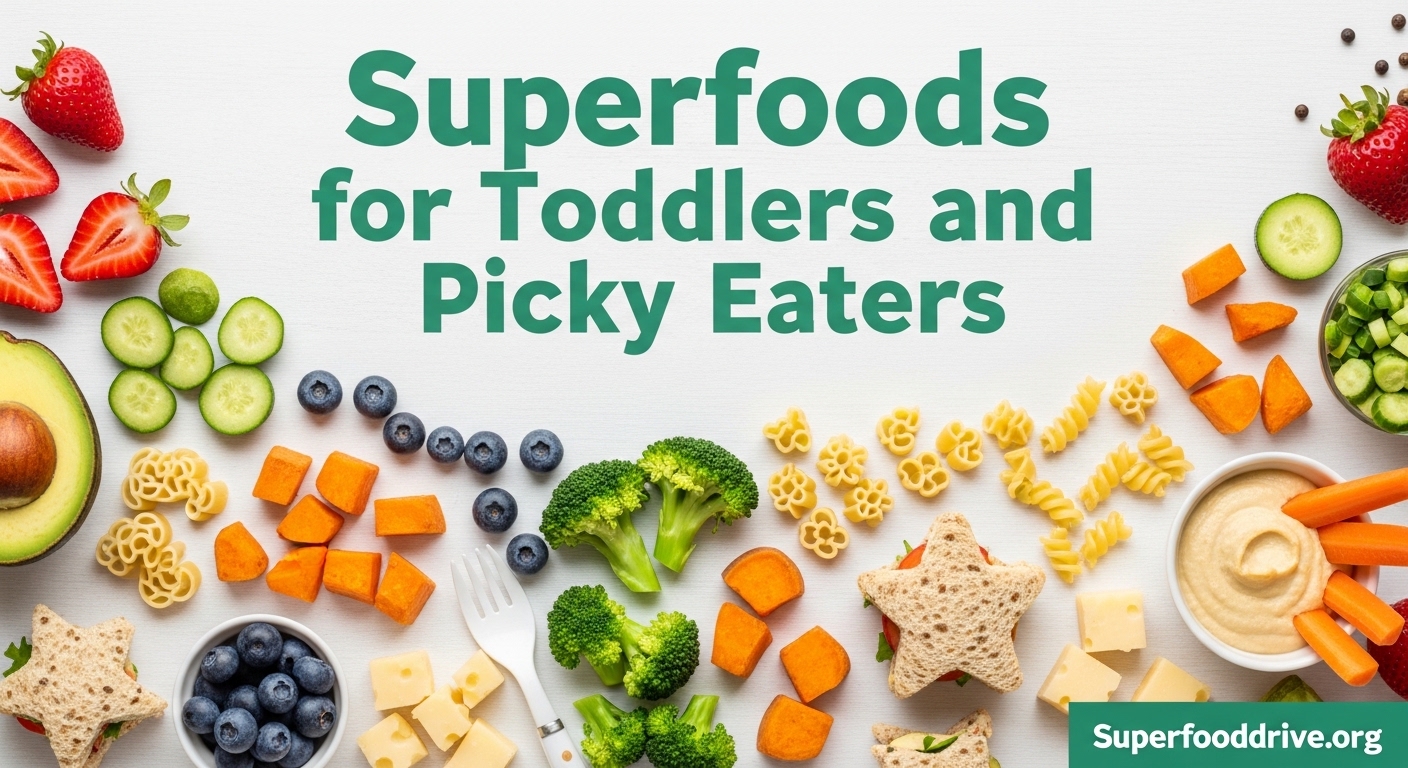
Getting a picky toddler to eat anything green feels like negotiating with a tiny, determined diplomat who speaks only in “no.” If you have stared at untouched broccoli for the third dinner in a row, you are not alone. Our team has talked to dozens of parents navigating the same battlefield, and the frustration is real.
This guide covers the best superfoods for toddlers and picky eaters, practical serving ideas that actually work, and strategies tested by real parents. Whether your child accepts five foods or fifty, these nutrient-dense options can help fill nutritional gaps while you work through the picky phase.
Table of Contents
What Are Superfoods and Why They Matter for Toddlers
Superfoods are nutrient-dense foods packed with vitamins, minerals, antioxidants, and healthy fats that support toddler growth and development. The term has no official regulatory definition, but nutritionists use it to describe foods that deliver exceptional nutritional value per serving.
Toddlers experience rapid brain development during the first three years of life. Their stomachs are small, yet their nutritional needs are massive. Superfoods become valuable because they provide concentrated nutrition in toddler-sized portions. A few blueberries deliver antioxidants. A spoonful of avocado provides healthy fats for brain development. This efficiency matters when your child eats like a bird one day and a linebacker the next.
Top 10 Superfoods for Toddlers and Picky Eaters
These ten superfoods offer the best combination of nutrition, palatability, and versatility for toddlers. Each includes specific nutrients, benefits, and serving ideas that work even for cautious eaters.
1. Avocados
Avocados top our list because nearly every toddler accepts them. The creamy texture and mild flavor make them an ideal first superfood. One serving delivers monounsaturated fats that support brain development and help the body absorb fat-soluble vitamins.
Nutritional highlights include potassium for healthy blood pressure, fiber for digestive regularity, and vitamin E for immune support. The texture also makes avocados perfect for hiding less popular foods.
Easy serving ideas: Mash and spread on toast, blend into smoothies for creaminess without dairy, mix with banana for instant “pudding,” or serve as guacamole with soft veggie sticks.
2. Blueberries
Blueberries pack more antioxidants per serving than most fruits. These tiny berries contain flavonoids that support cognitive function and memory development, perfect for growing brains. The natural sweetness appeals to toddler taste preferences while delivering fiber and vitamin C.
Frozen blueberries work just as well as fresh and can soothe teething gums. They also cost less when fresh berries are out of season.
Easy serving ideas: Serve fresh as finger food, blend into smoothies, mix into oatmeal or yogurt, bake into mini muffins, or freeze for a refreshing teething treat.
3. Eggs
Eggs remain one of nature’s most complete protein sources. The yolk contains choline, a nutrient critical for brain development and memory function that many toddlers lack. Eggs also provide vitamin D for bone health, lutein for eye development, and high-quality protein for growing muscles.
Research shows early introduction of eggs may reduce allergy risk. The American Academy of Pediatrics now recommends introducing allergenic foods like eggs early, around six months, rather than delaying.
Easy serving ideas: Scramble with a splash of milk for fluffiness, serve hard-boiled and cut into fun shapes, mix into pancake batter, or make egg muffins with hidden veggies.
4. Sweet Potatoes
Sweet potatoes deliver beta-carotene, which the body converts to vitamin A for immune support and healthy vision. Their natural sweetness makes them one of the most accepted vegetables among picky eaters. One medium sweet potato provides over 100 percent of daily vitamin A needs.
The fiber content supports healthy digestion, while the complex carbohydrates provide sustained energy without sugar crashes. The orange color also signals phytonutrients that protect cells from damage.
Easy serving ideas: Roast as fries, mash with a bit of butter, blend into soups, bake into muffins, or cut into shapes before roasting for fun presentation.
5. Salmon
Salmon provides omega-3 fatty acids, specifically DHA, which makes up a significant portion of brain tissue. These healthy fats support cognitive development, vision, and immune function. Wild-caught salmon generally contains higher omega-3 levels than farmed varieties.
Many parents worry about mercury in fish. Salmon remains one of the safest choices, being low in mercury while high in beneficial fats. The FDA recommends two to three servings of low-mercury fish weekly for toddlers.
Easy serving ideas: Bake and flake into pasta, make salmon patties with mashed potato, mix into scrambled eggs, or blend into a mild fish cake with hidden veggies.
6. Spinach
Spinach and other dark leafy greens provide iron, folate, and calcium. Iron deficiency remains common in toddlers and can affect energy levels and cognitive development. The key to spinach is preparation, not persistence. Raw spinach rarely appeals to toddlers, but hidden spinach works surprisingly well.
Pair spinach with vitamin C-rich foods like tomatoes or citrus to boost iron absorption. This combination matters because plant-based iron absorbs less efficiently than iron from meat.
Easy serving ideas: Blend into fruit smoothies where color hides easily, chop finely into omelets, mix into pasta sauce, bake into muffins or brownies, or wilt into soups.
7. Oats
Oats provide beta-glucan, a type of soluble fiber that supports heart health and digestive regularity. They offer sustained energy through complex carbohydrates, making them ideal breakfast fuel. Oats also contain more protein than most grains.
The versatility of oats makes them a meal prep favorite for busy parents. They accept sweet or savory additions and work hot or cold.
Easy serving ideas: Make overnight oats with yogurt and berries, blend into smoothies for thickness, bake into oatmeal cups with hidden veggies, or make simple energy balls with nut butter.
8. Greek Yogurt
Greek yogurt contains roughly twice the protein of regular yogurt plus probiotics that support digestive health. The calcium and vitamin D content builds strong bones during critical growth years. Plain varieties avoid added sugars while providing the same benefits.
The thick texture works well as a dip or base for smoothies. For dairy-free families, coconut or almond-based alternatives offer similar versatility, though check labels for added calcium and vitamin D.
Easy serving ideas: Layer with fruit for parfait, blend into smoothies for creaminess, use as a dip for fruit or soft veggies, mix with mashed banana for instant pudding, or freeze into yogurt drops.
9. Beans and Lentils
Beans and lentils deliver plant-based protein, iron, fiber, and zinc. They cost less than meat while providing comparable nutrition. The mild flavor of lentils especially blends well into familiar foods without detection.
Canned beans offer convenience, but rinse them to reduce sodium. Dried lentils cook quickly and can be batch-cooked and frozen in portions.
Easy serving ideas: Blend into hummus for dipping, mash and mix into quesadillas, stir into soups, blend into pasta sauce, or make simple bean patties.
10. Nut Butters
Nut butters provide healthy fats, protein, and vitamin E in a shelf-stable form most toddlers accept. Peanut and almond butters remain the most common, but sunflower seed butter offers a safe alternative for nut-free environments or allergies.
Choose varieties without added sugars or hydrogenated oils. The ingredient list should read: nuts and maybe salt. Nothing else required.
Easy serving ideas: Spread thinly on toast or crackers, swirl into oatmeal, blend into smoothies, mix with yogurt for dipping fruit, or roll into energy balls with oats.
Proven Strategies for Introducing Superfoods to Picky Eaters
The CDC recommends offering a new food eight to ten times before expecting acceptance. This repetition matters because toddlers need multiple exposures to recognize a food as safe. One study found children who tasted a vegetable eight times showed increased acceptance compared to those who only looked at it or heard about it.
Mix new superfoods with familiar favorites. If your child loves pasta, stir pureed spinach into the sauce. If they accept smoothies, add avocado or spinach to their favorite blend. This stealth nutrition works while you continue offering the food in its visible form.
Make eating fun rather than serious. The CDC suggests being silly with food, making animal sounds, or letting your toddler feed you first. When parents model enjoyment of foods, children follow. Give limited choices between two acceptable options rather than open-ended requests.
Never force bites or create power struggles. Pressure backfires and creates negative associations with foods. Instead, keep offering without comment, eat the foods yourself with visible enjoyment, and trust that exposure works over time.
Nutrition absorption tip: Pair iron-rich foods like spinach, beans, or lentils with vitamin C sources like tomatoes, peppers, or berries. Vitamin C increases iron absorption significantly. A bean quesadilla with tomato salsa or spinach smoothie with berries maximizes nutrition.
Safety First: Choking Hazards and Allergies
Toddlers lack fully developed chewing and swallowing coordination. Certain superfoods require specific preparation to prevent choking. Always cut round foods like grapes and blueberries into quarters lengthwise. Spread nut butters thinly rather than serving chunks that can block airways.
Cook hard vegetables like carrots until soft. Cut hot dogs and similar foods lengthwise then into small pieces. Avoid whole nuts until age four. Supervise eating closely and have your child sit while eating, never walking or lying down.
For allergies, introduce one new food at a time and wait three to five days before adding another. This spacing helps identify any reactions. Common allergenic foods like eggs, fish, and nut butters can be introduced safely, but watch for hives, vomiting, or breathing difficulties after serving.
Sample Meal Ideas Using Superfoods
These simple combinations incorporate multiple superfoods into meals that work for families. Adjust portions based on your toddler’s appetite, which varies daily.
Breakfast Ideas
- Overnight oats with Greek yogurt, blueberries, and mashed banana
- Scrambled eggs with spinach and sweet potato toast
- Smoothie with spinach, blueberries, banana, and Greek yogurt
Lunch Ideas
- Hummus dip with soft sweet potato wedges and avocado slices
- Bean and cheese quesadilla with tomato salsa for vitamin C
- Egg salad with mashed avocado on soft bread
Dinner Ideas
- Salmon pasta with hidden spinach in the sauce
- Lentil soup with soft bread for dipping
- Sweet potato and black bean soft tacos
Snack Ideas
- Apple slices with thin almond butter
- Avocado mashed on soft crackers
- Energy balls made with oats, nut butter, and blueberries
- Frozen yogurt drops with mashed berries
Simple Recipe: Hidden Veggie Berry Smoothie
Blend one cup frozen blueberries, half a banana, half cup Greek yogurt, a handful of fresh spinach, and quarter avocado with a splash of milk until smooth. The blueberries mask the green color completely. The avocado adds creaminess without dairy. Even vegetable-resistant toddlers accept this smoothie regularly.
Simple Recipe: Overnight Power Oats
Mix half cup rolled oats with half cup milk, quarter cup Greek yogurt, and a tablespoon of chia seeds in a jar. Refrigerate overnight. In the morning, top with blueberries and a drizzle of nut butter. Prepare multiple jars on Sunday for grab-and-go breakfasts throughout the week.
Frequently Asked Questions
What can I feed my super picky toddler?
Start with accepted foods and gradually expand. Offer safe superfoods like avocados, sweet potatoes, and blueberries that most toddlers accept. Mix new foods into favorites, serve with dips, and keep offering without pressure. The CDC recommends eight to ten exposures before expecting acceptance.
What is the 5 2 1 0 rule for kids?
The 5 2 1 0 rule helps families remember healthy habits: 5 or more servings of fruits and vegetables daily, 2 hours or less of recreational screen time, 1 hour or more of physical activity, and 0 sugary drinks. This framework supports balanced nutrition and active lifestyles for children.
What are the 5 P’s of picky eating?
The 5 P’s describe factors affecting picky eating: Palate (taste sensitivity), Power (control struggles), Pressure (forcing bites), Parents (modeling behavior), and Patience (needed for acceptance). Understanding these helps parents address root causes rather than just symptoms.
What is the 3 bite rule for kids?
The 3 bite rule asks children to try three bites of a new food before deciding if they like it. However, research shows this pressure tactic often backfires. The CDC recommends no pressure approaches instead, focusing on repeated exposure and modeling without forcing consumption.
Conclusion
Picky eating frustrates even the most patient parents, but it remains a normal developmental phase for toddlers. Superfoods for toddlers offer a way to maximize nutrition in every bite while you navigate this challenging season. Focus on repeated exposure, mix new foods with favorites, and model enjoyment of healthy foods yourself.
Your child will not eat perfectly every day. Some days they will eat only bread. Other days they might surprise you by eating salmon. Both are normal. Keep offering, stay patient, and remember that exposure works even when it feels like nothing changes. The superfoods in this guide give you tools to support their growth while you both grow through the picky eating phase together.
1 thought on “10 Superfoods for Toddlers and Picky Eaters (October 2026)”