
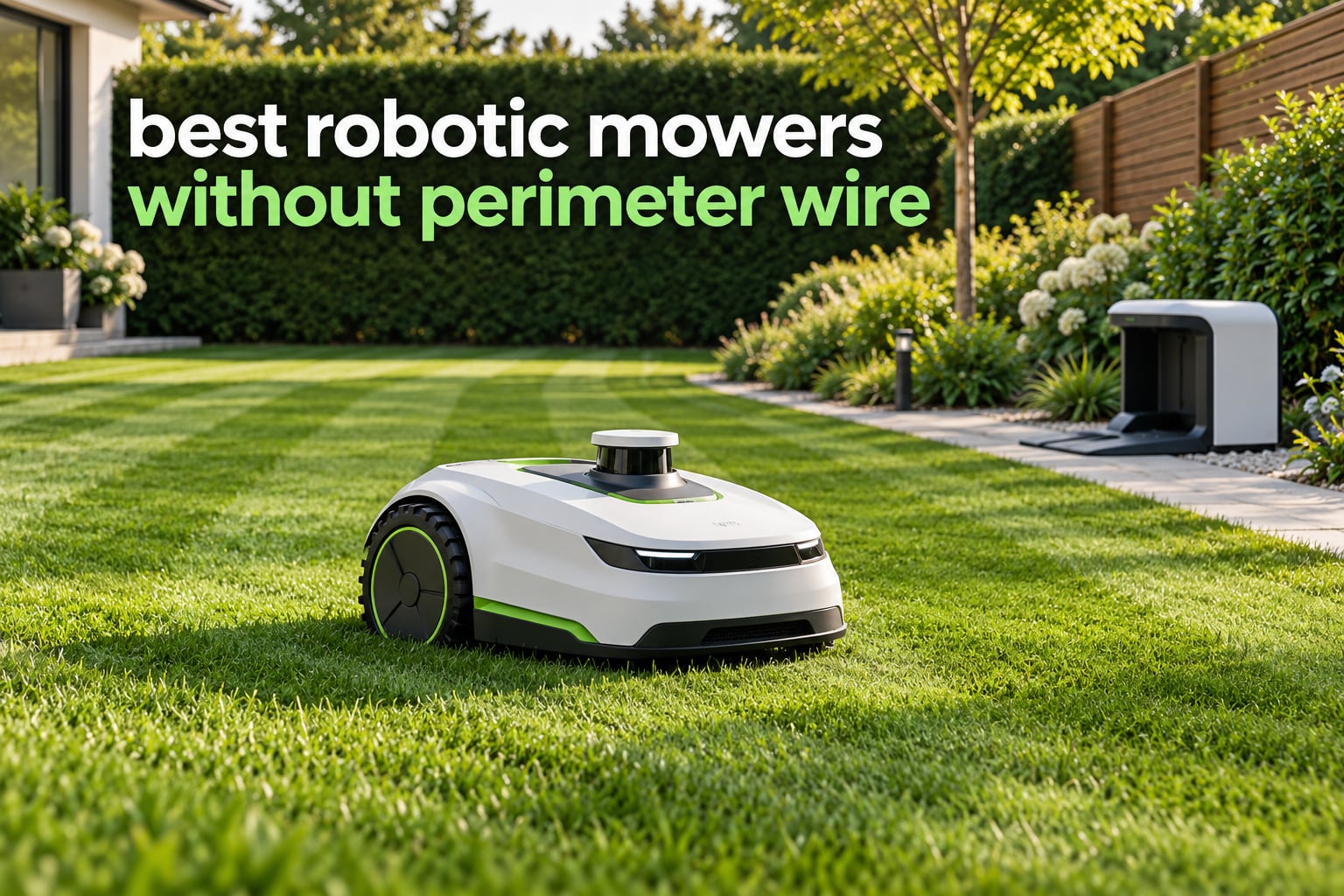
A robotic mower without a perimeter wire maps your lawn on its own, then cuts on a saved schedule and returns to its dock without a single buried cable. Navigation comes in three flavors: RTK satellite positioning, LiDAR laser mapping, or AI vision. We tested and compared 10 of them for 2026.
The reason this category grew so fast is the cable itself. Perimeter wire has to be trenched, it gets cut by the mower or the aerator, and it turns a Saturday into a digging project. A wire-free machine maps boundaries through the app instead, which is why owners on r/roboticLawnmowers describe it as the point where automation actually starts working for them.
We put 10 models through the same lens: navigation type, coverage, slope rating, cut width, edge behaviour, app quality and the setup work each one still demands. If you want the broad picture of robot mowers first, our [guide to robotic lawn mowers](https://www.superfooddrive.org/best-robotic-lawn-mowers/) covers the wired options too.
A word on honesty before we start. Launch-day spec sheets are easy to publish and hard to live with, so we leaned on owner review patterns for the claims about mapping, traction and support. Where a mower’s weaknesses are consistent, we say so plainly.
Top 3 Wire-Free Mowers in 2026

Mammotion LUBA mini 2 AWD
- 80% slope capability
- 360 degree LiDAR plus dual cameras
- 20 mowing zones
- DropMow no-mapping mode

Segway Navimow i105N
- RTK plus vision at centimeter accuracy
- 12 managed zones
- 58 dB(A) quiet operation
- 3-year warranty

ANTHBOT M5 LiDAR
- No wire and no RTK antenna
- Mowing within about 3 minutes of unboxing
- 500 sqm per day
- 24 degree slopes
Best Robotic Mowers Without Perimeter Wire in 2026 at a Glance
| Product | Specifications | Action |
|---|---|---|
| Mammotion LUBA mini 2 AWD 1500H |
|
Check Latest Price |
| Segway Navimow i105N |
|
Check Latest Price |
| ANTHBOT M5 LiDAR |
|
Check Latest Price |
 ECOVACS GOAT O1000 LiDAR PRO ECOVACS GOAT O1000 LiDAR PRO |
|
Check Latest Price |
 MOVA LiDAX Ultra 1000 MOVA LiDAX Ultra 1000 |
|
Check Latest Price |
 eufy E15 eufy E15 |
|
Check Latest Price |
 Segway Navimow i206 AWD Segway Navimow i206 AWD |
|
Check Latest Price |
 Mammotion LUBA 2 AWD 3000HX Mammotion LUBA 2 AWD 3000HX |
|
Check Latest Price |
 Roborock RockNeo Q110H Roborock RockNeo Q110H |
|
Check Latest Price |
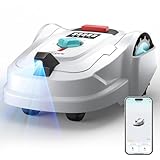 YARDCARE M800Plus YARDCARE M800Plus |
|
Check Latest Price |
1. Mammotion LUBA mini 2 AWD 1500H – Best Overall for Sloped, Uneven Lawns
(2026 NEW) Mammotion LUBA mini 2 AWD 1500H Robot Lawn Mower with Garage, for 0.37 Acres, 360° LiDAR+Dual-Camera AI Vision, 80% Slope, DropMow, 20 Multi-Zone Management
0.37 acres
80% slope
360 degree LiDAR plus dual cameras
DropMow no-mapping mode
Pros
- Climbs 80% slopes and rough root-filled ground
- 20 zoning options with DropMow shortcut
- Very quiet with a rain sensor
- Main disc plus dedicated edge disc
- Independent suspension keeps turf damage low
Cons
- 0.37 acre cap cannot be extended in software
- Small blade and slow pace mean long mowing times
- App map editing is awkward and occasionally buggy
This is the wire-free robotic mower I recommend to most people. The LUBA mini 2 AWD pairs a 360 by 45 degree LiDAR head with dual-camera AI vision, so it never needs a base station, an antenna or a boundary wire. Owners consistently report it is the machine that finally handled the lawn other robots gave up on.
Driveability is the headline. Two independently driven 88W motors plus adaptive suspension that steps over curbs, roots and thresholds up to 45mm mean it works ground where flat-deck mowers stall. The 80% slope figure matches the highest rating in this roundup, and owners with steep block-to-block lawns say the rating is honest.
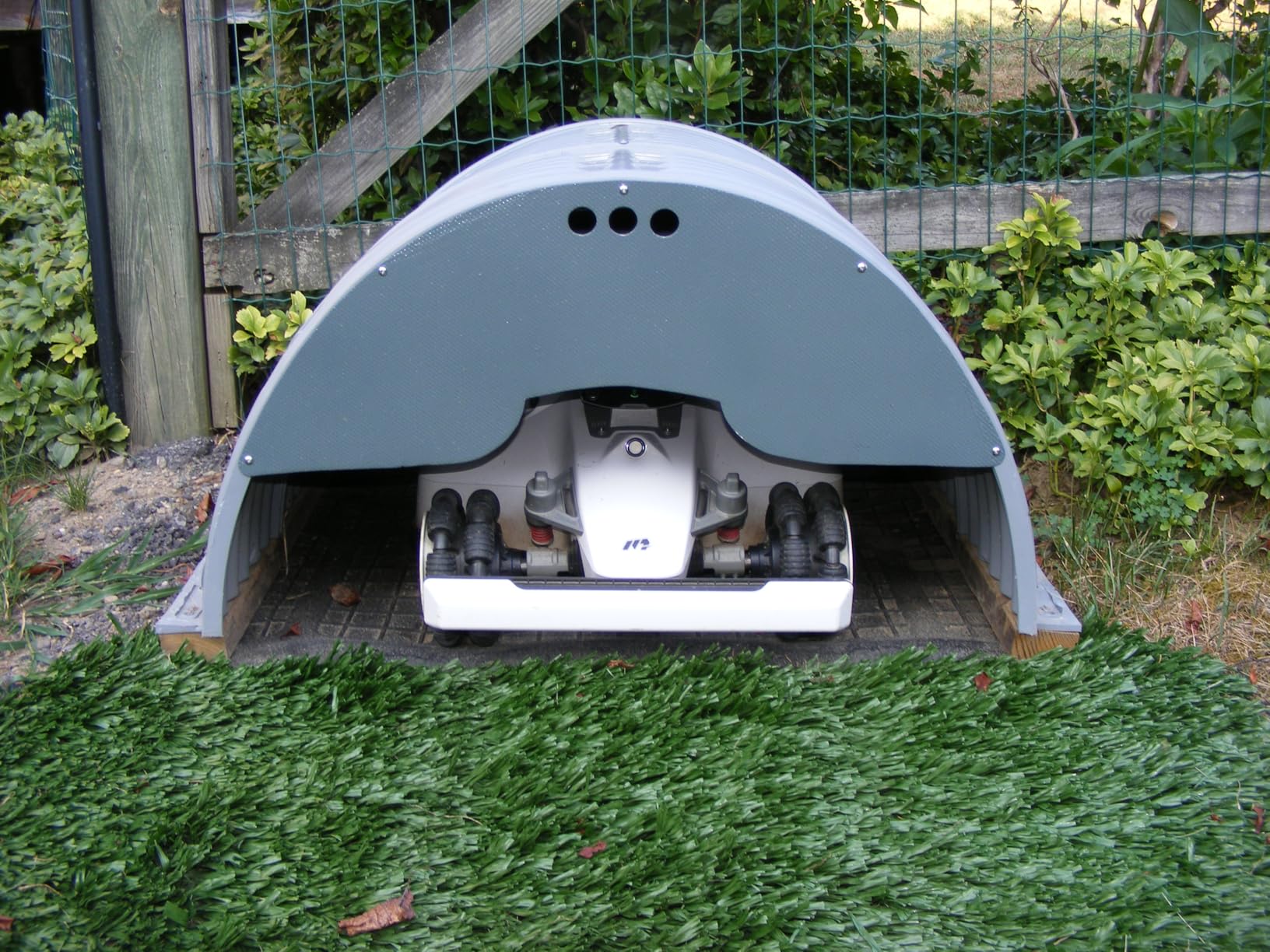
Cut quality is strong for a machine this size. There is a main cutting disc plus a separate edge disc, so border cutting is a real feature rather than an app promise. The height range runs 2.2 to 4 inches across 7 positions, which suits warm-season grass that other mowers cannot reach into.
Zoning is unusually flexible. You get up to 20 independent mowing areas, and DropMow lets it handle a one-off patch without building a map first. The trade is speed: the 5.5 inch class of blade and walking-pace travel mean a full cut takes time, and a charge from the 13% return level can take two to three hours.
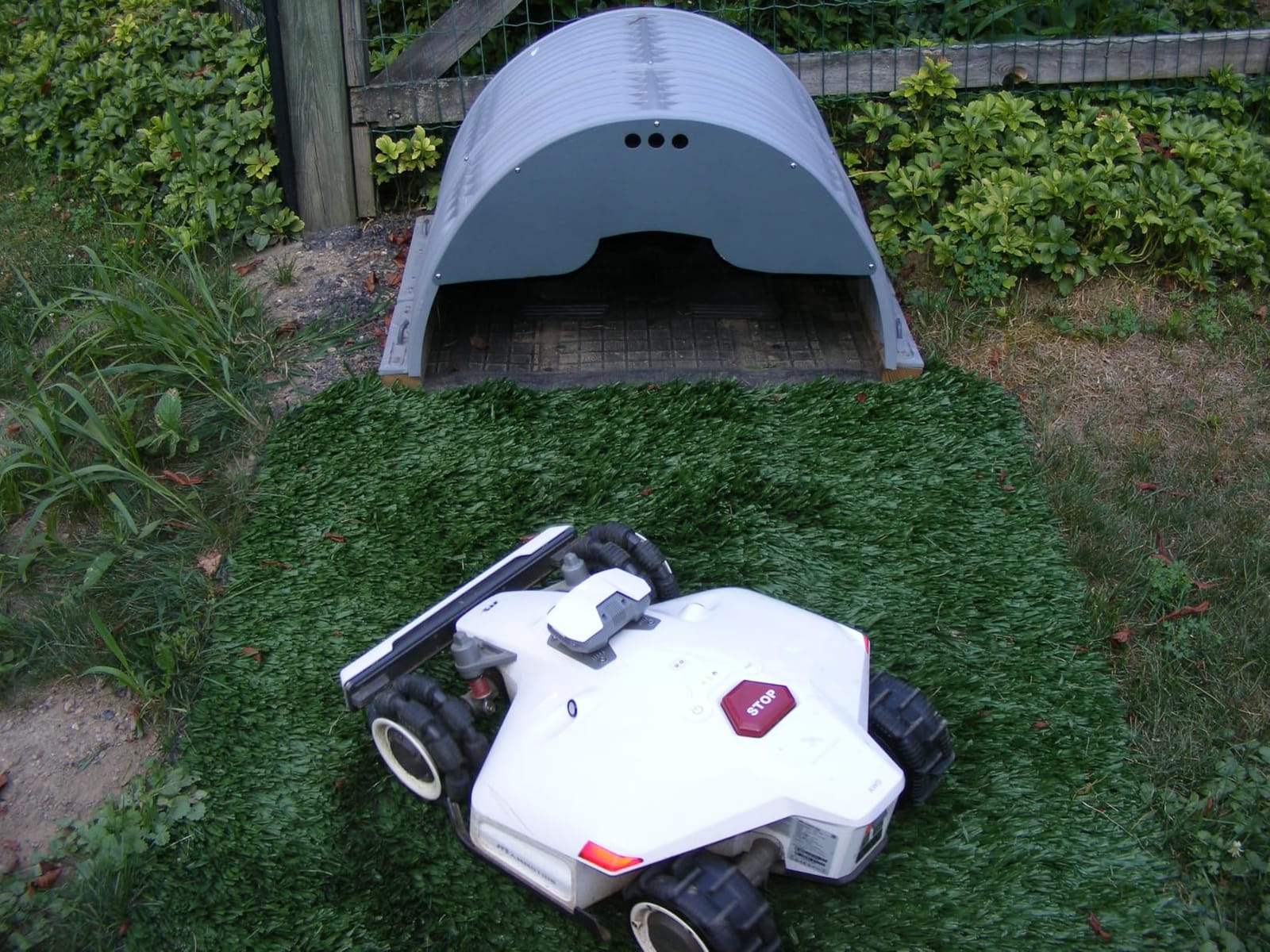
This mower suits any lawn up to a third of an acre with real terrain
Buy it for uneven ground, tree roots, a slope from the street to the back fence, or a lawn where previous robots jammed. Independent suspension is the reason turf damage stays low even on soft soil, which is the complaint that drives owners to look for front-wheel steering models.
Support has also been a quiet strength. Multiple owners report Mammotion replacing stations, cables and parts at no charge. Owners posting in r/roboticLawnmowers also single out Mammotion for quiet operation that makes night mowing practical in a neighborhood.
Skip this one if your lawn runs past a third of an acre
The 0.37 acre limit is hard-coded and cannot be raised in the app. If you have more grass than that, or you want stripes across a wide open lawn in a single afternoon, you will be waiting through several charge cycles for every mow.
Map editing is the other weak spot. Boundaries can be corrected, but the interface is clumsy and some owners report signal loss or wandering after software updates. If you plan to redraw zones often, budget time for that friction.
2. Segway Navimow i105N – Budget Pick Wire-Free Mower for Small Yards
Segway Navimow i105N Robot Lawn Mower Perimeter Wire Free 1/8 Acre RTK+Vision Robotic Lawnmower, AI-Assisted Mapping, Virtual Boundary, APP Control, 58dB(A) Quiet, Multi-Zone Management
0.125 acres
RTK plus vision EFLS 2.0
58 dB(A)
3-year warranty
Pros
- Best value in RTK wire-free mowing
- Quiet enough to run at night
- Docking accuracy is excellent
- Strong app with zone and schedule control
- RTK plus vision holds under tree cover
Cons
- Standard wheels dig ruts on soft ground
- VisionFence misses mailboxes gates hoses and sprinklers
- Mapping can be clunky and long pauses can corrupt a saved map
It is the mower I recommend most often, and one of the most heavily reviewed in this roundup, and the pattern in those reviews is consistent: this is the best value wire-free robotic mower for a small urban yard. Coverage is 0.125 acre with the app limit raised to 1,200 square meters, which covers most suburban back lawns.
Navigation combines RTK with a camera under the EFLS 2.0 system, and owners say that pairing is what keeps it going under heavy tree cover where a satellite-only mower stalls. The 140 degree camera detects 150+ obstacle types, and the app manages up to 12 zones with per-zone direction and schedule.
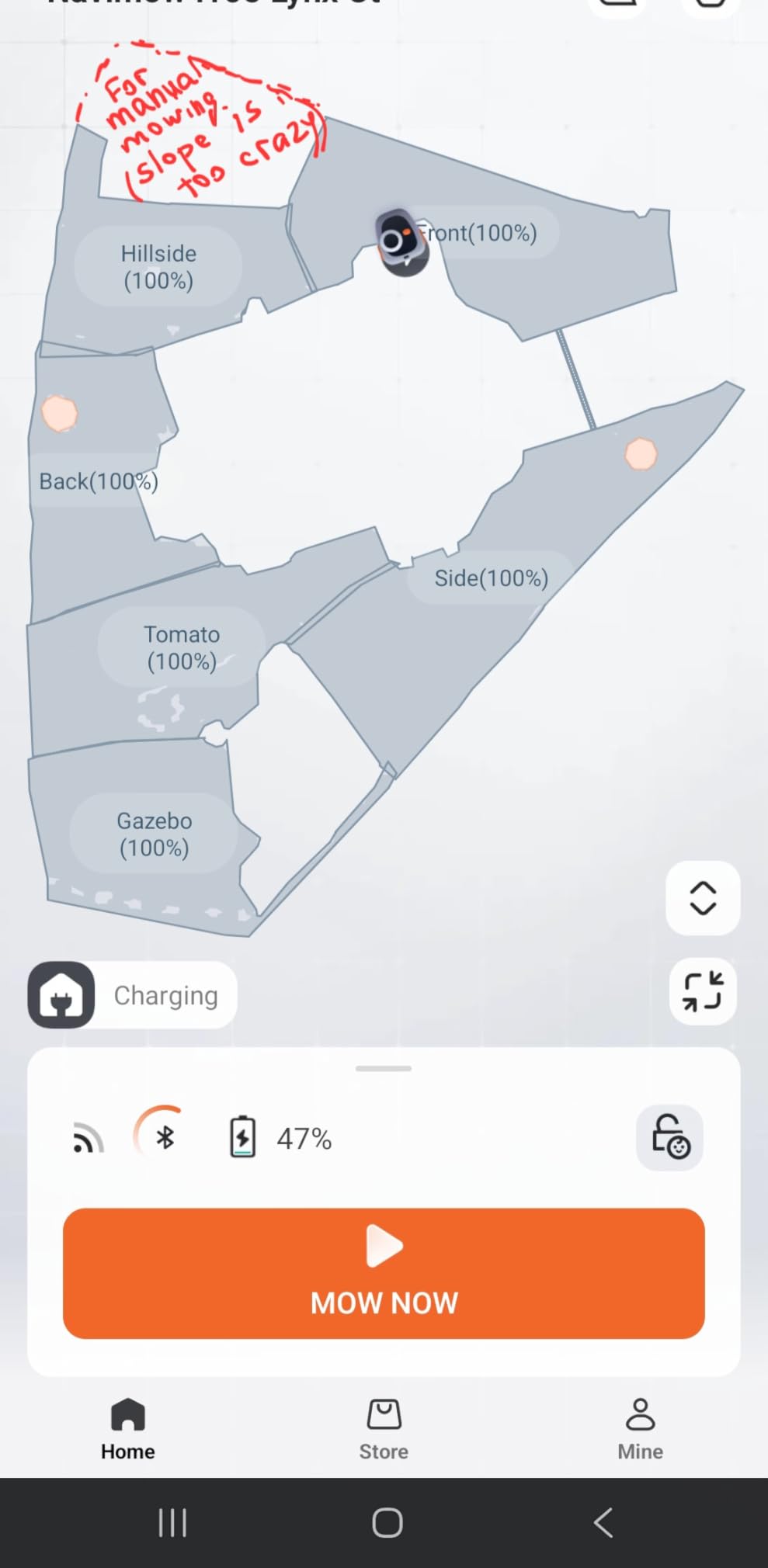
It is also genuinely quiet at 58 dB(A), which owners use to run nighttime schedules. The charging station docking is one of the more accurate in this roundup, so it rarely spends time hunting for home after a cycle.
Long-term owners on r/roboticLawnmowers repeatedly recommend Navimow when you have decent signal and reasonably open sky, and they treat the brand as the most transparent about technical updates. That matters more than it sounds when you are buying a machine that depends on software.
This mower fits flat small yards where a lawn service is eating your weekends
Owners call it a lawn-service replacement more than any other unit in this list, largely because it is quiet, accurate and inexpensive to run. A 3-year warranty is among the longest published here, and the docking accuracy means fewer failed returns and more unattended mowing.
It handles a lawn with defined edges and moderate tree cover very well. If your yard is roughly 1,000 to 5,000 square feet with normal slope, this is the pick I keep coming back to.
Skip this one if you have real slope or soft sandy ground
The standard wheels have poor traction and will dig ruts in soft soil. Off-road tires are the near-universal upgrade among owners, and without them the mower struggles past roughly 10 to 11 degrees of slope.
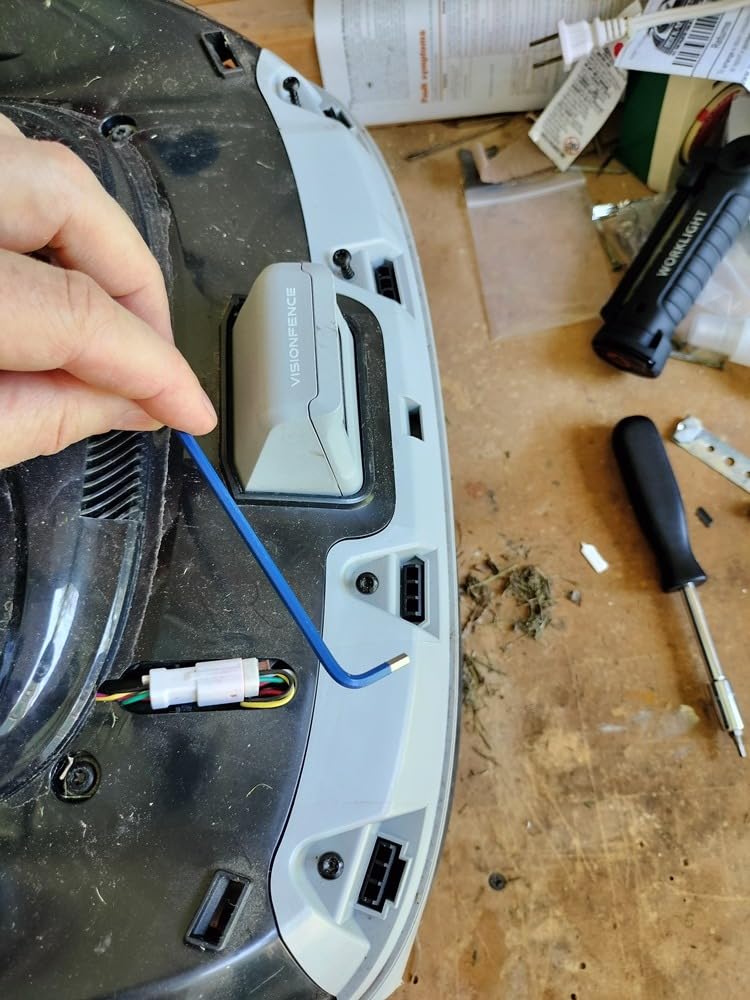
VisionFence also has known blind spots. Owners report it missing mailboxes, gates, hoses and sprinklers, which is a genuine hazard if a small object is low and flat. Mapping is functional rather than pleasant, and long pauses during a mapping pass can corrupt a saved map.
3. ANTHBOT M5 LiDAR – Easiest Wire-Free Setup for First-Time Robot Owners
ANTHBOT M5 LIDAR Robotic Lawn Mowers, 1/8 Acre Wire-Free Dual Vision
0.125 acres
360 degree LiDAR
No RTK antenna
24 degree slopes
Pros
- Mowing within about 3 minutes of unboxing
- No wire and no antenna to install
- Works in enclosed yards with walls and dense trees
- Accurate edge cutting along fences and beds
- Very quiet at or below 58 dB
Cons
- Needs roughly three passes for an even cut
- Narrow deck forces multiple recharges
- Struggles on very uneven or sunken ground
The M5 is the mower I tell first-time buyers to start with. There is no boundary wire, no RTK antenna and no base station, and owners report it is mowing within about three minutes of opening the box. That single fact removes the most common source of setup anxiety in this category.
It combines 360 degree LiDAR with dual cameras, which means it navigates by building a map of the yard rather than by triangulating satellites. That is why it works in enclosed backyards with walls and dense tree cover, the exact conditions that defeat GPS-only machines. Slopes up to 24 degrees are within reach thanks to gear-tread tires.
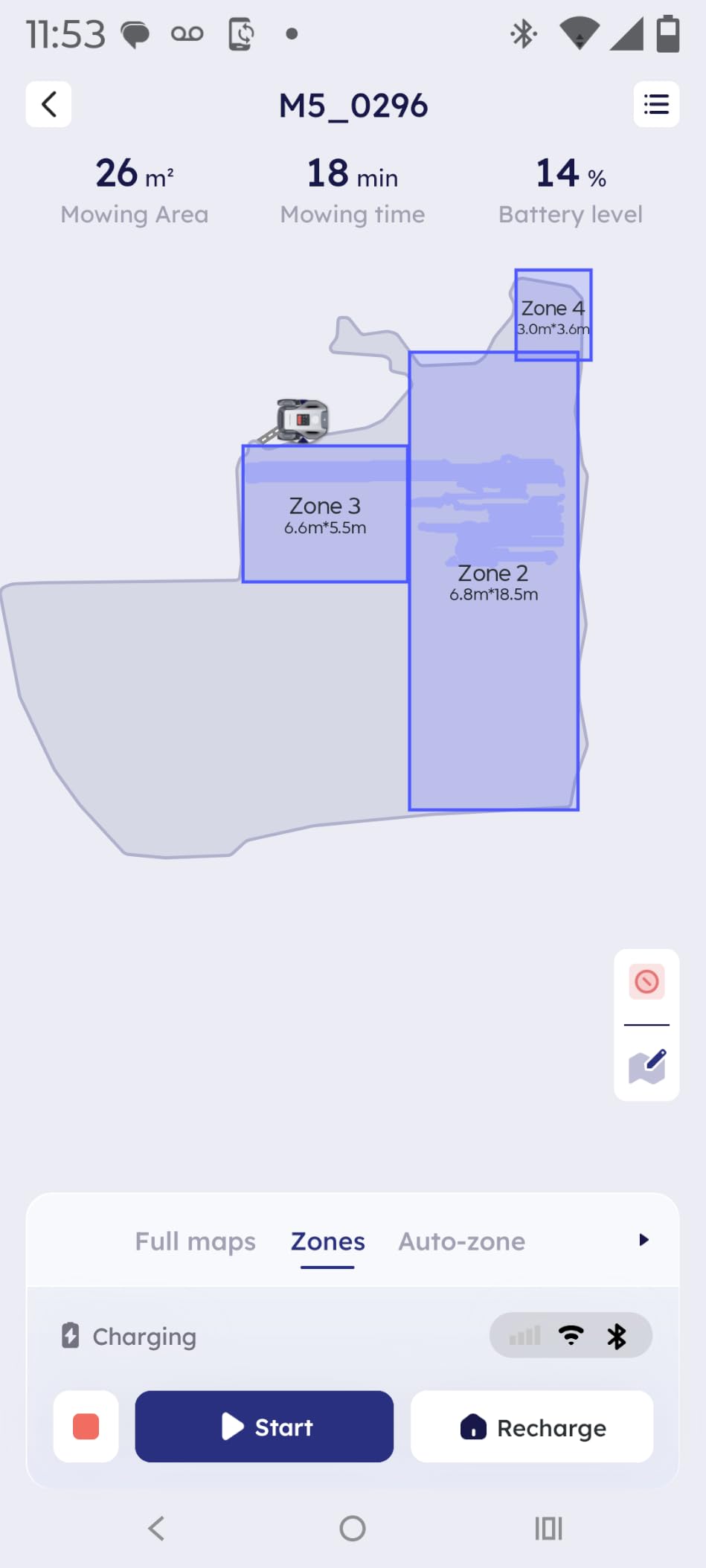
Edge quality gets good marks. Owners note the cut runs close to fences and flower beds, and the 200mm deck with five blades handles 1.2 to 2.8 inches of height across 9 levels. Coverage is 500 square meters per day with automatic return and resume, and it stays at or below 58 dB.
Bluetooth, Wi-Fi and 4G control all work, and OTA updates plus anti-theft GPS come standard. The app is straightforward for zones, no-go areas and scheduling, which matters when the machine is meant to run unsupervised.
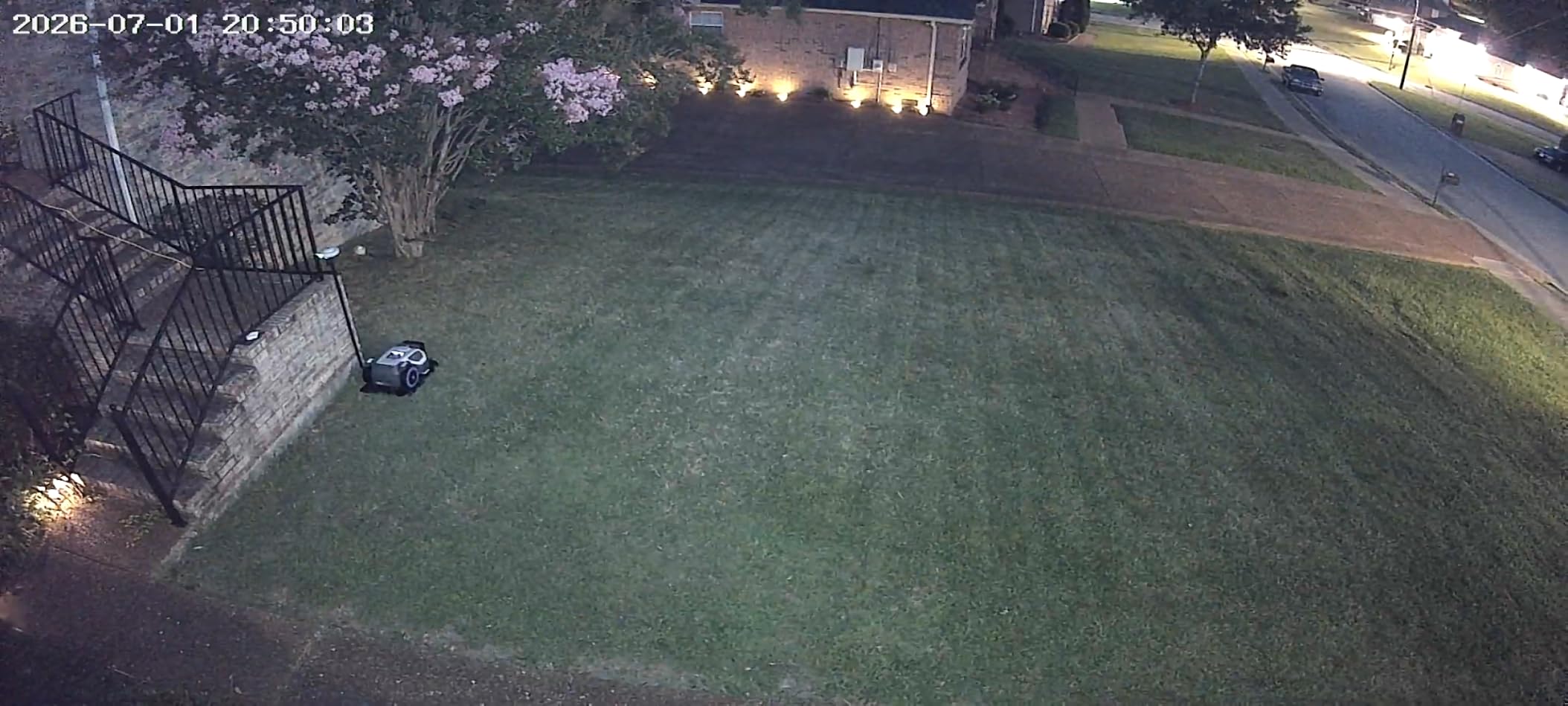
This mower suits small enclosed lawns and anyone who refuses to dig a trench
Think small urban plots, side yards behind fencing, and lawns hemmed in by walls and hedges. The LiDAR-plus-camera stack does not care about sky view, so it works where an RTK mower would sit idle waiting for satellites.
It is also the least installation-dependent option in this roundup. If your objection to robot mowers is the day of work that a wire-free install seems to promise, this is the one that delivers on the promise.
Skip this one if you want a fast one-pass cut on a wide lawn
Coverage efficiency is the recurring limitation. Owners report needing roughly three passes before a lawn looks evenly cut, and the narrow deck means multiple recharge cycles on anything larger than a small yard. If you mow weekly and dislike seeing patchy results mid-week, look elsewhere.
Very uneven or sunken ground can also confuse it, and app-based support responses have been reported at up to 48 hours. The written manual and the manual-mode steering are both weak on detail, so plan to learn the app instead.
4. ECOVACS GOAT O1000 LiDAR PRO – Best Wire-Free Mower With a Built-In Trimmer
ECOVACS Goat O1000 LiDAR PRO Robot Lawn Mower, Wire-Free Mapping with LiDAR Navigation, AI Obstacle Avoidance, Smart Edge Mowing, App Control, for Lawns Up to 1/4 Acre
0.25 acres
HoloScope dual-LiDAR at 2 cm accuracy
TruEdge trimmer
0.8 m body width
Pros
- LiDAR-only navigation needs no antenna or wire
- Maps stored locally so it keeps working offline
- Built-in trimmer cuts a real edge
- Accurate 360 degree mapping
- Passes corridors as slim as 0.8 m
Cons
- Single-axis mapping joystick is hard to steer
- Edge trimming will not run along fences
- Small front caster wheels cannot climb curbs or high grass
The GOAT O1000 LiDAR PRO is the pick for anyone whose main goal is to stop string-trimming. It is the only machine in this roundup with an integrated TruEdge trimmer, and it maps with HoloScope 360 degree dual-LiDAR at 2 cm accuracy without needing an RTK antenna or any buried cable.
Local map storage is the detail I like most. Because the map lives on the device rather than only on a cloud server, the mower keeps working when your internet does not, which is a real advantage on rural properties. It ranks second in Robotic Lawn Mowers on retailer best-seller lists, and 143 owners have left feedback.
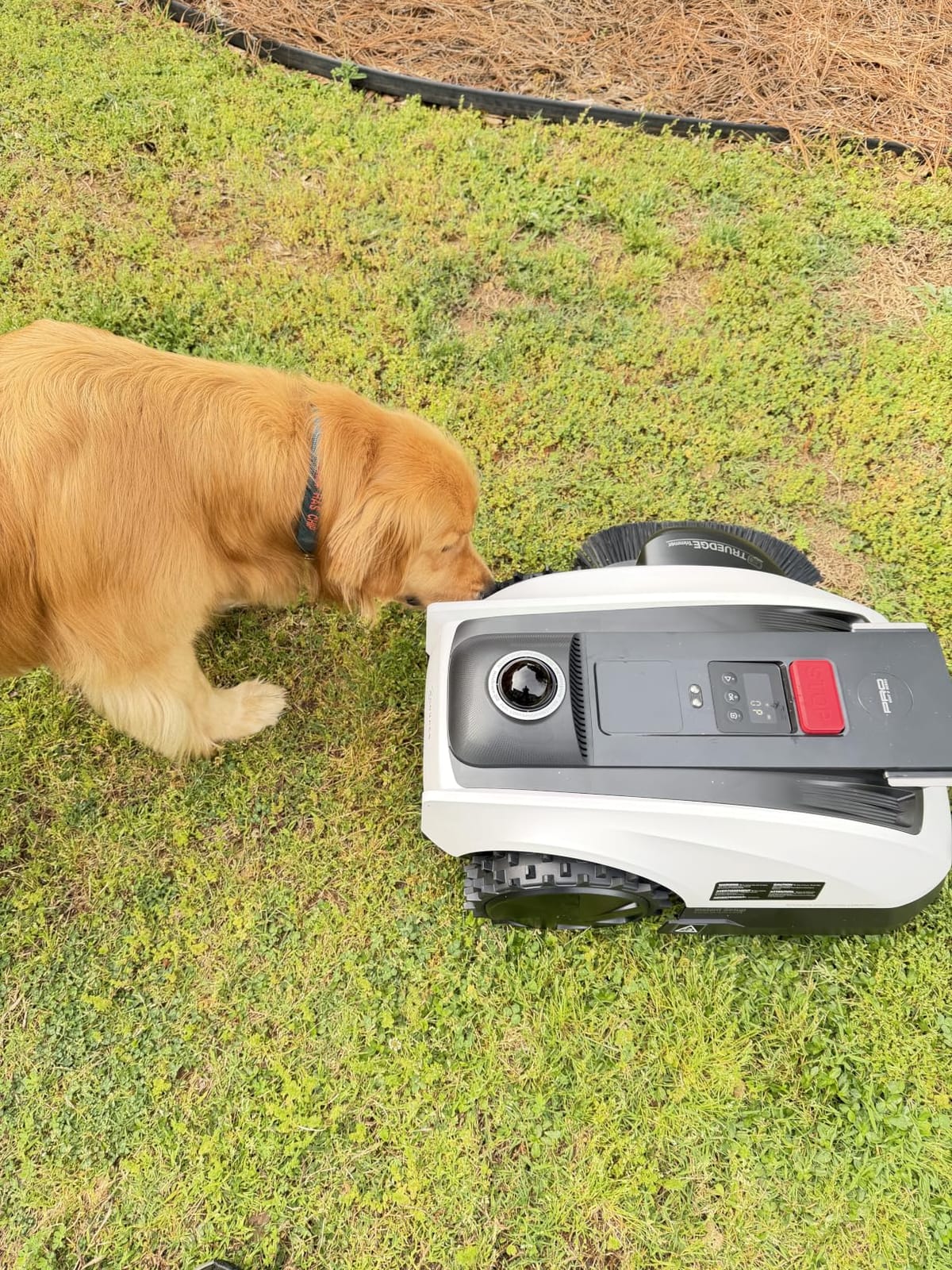
Obstacle detection combines AI vision with 3D time-of-flight LiDAR across 200+ object types at 5 cm precision. The body is narrow enough for passages as slim as 0.8 m, which is useful on corridor-shaped yards, and the app handles zones, schedules and custom no-go areas.
Cut height runs 1.2 to 3.6 inches. Buyers who tuned the system in report a cleaner cut than expected along driveways and sidewalks, and the rain handling keeps it docked when weather turns.
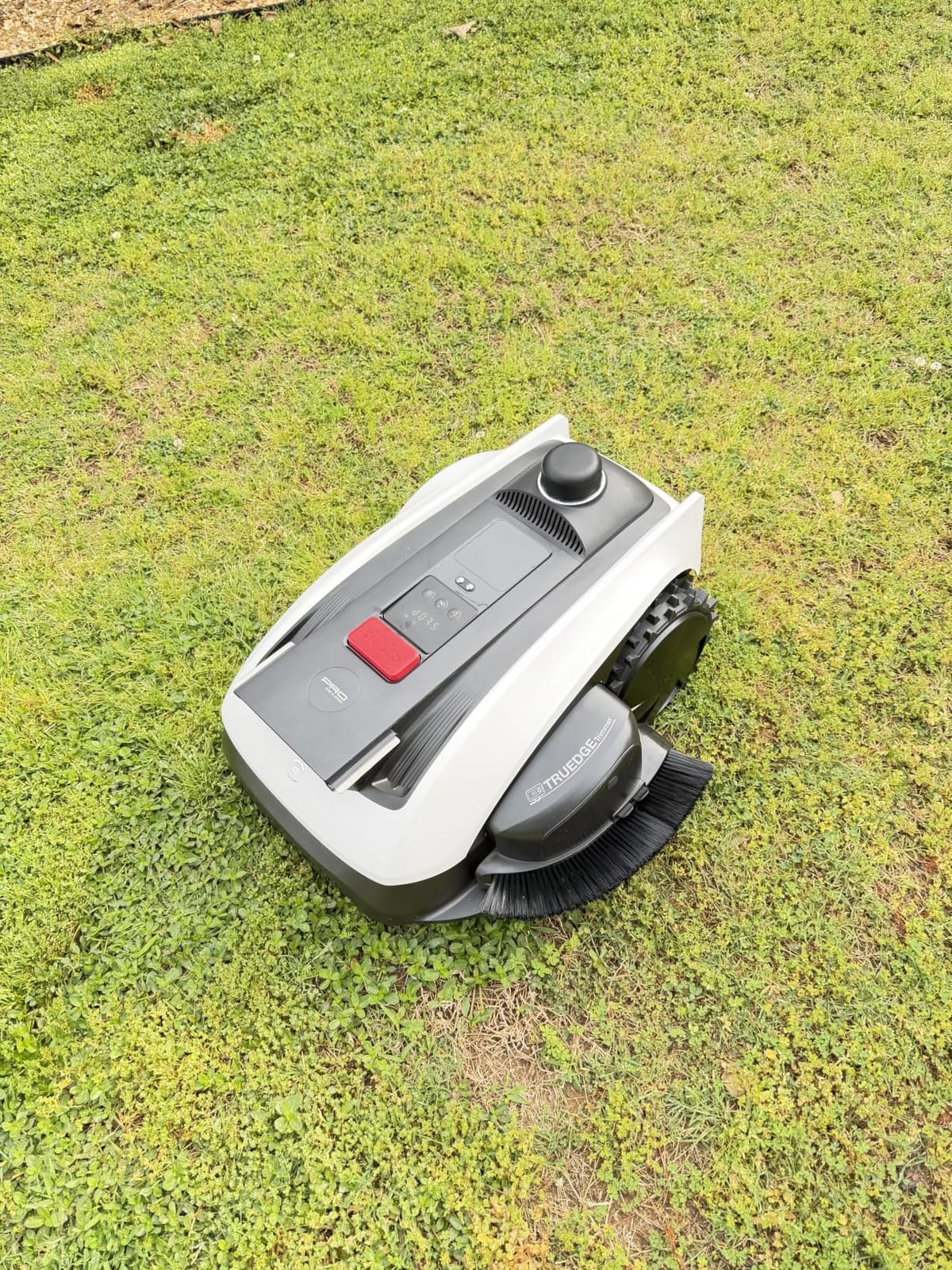
This mower suits narrow side yards and anyone who dreads edge work
Choose it when your lawn has tight corridors, hard edges against walls and paving, and you want the string trimmer to stay in the shed. The narrow body and the integrated trimmer are genuinely useful together in a side-yard or terrace situation.
It is a good fit for properties with weak home internet, since mapping does not depend on a cloud connection. The feature set here is unusually complete for a LiDAR-only design.
Skip this one if you want fence-line edging or have rough ground
The built-in trimmer refuses to run along fences, because the unit treats a fence as an obstacle. That is a strange limitation for the machine selling itself on edge cutting, and owners notice it immediately.
Obstacle logic also runs cautious, leaving wide unmown bands along posts and edges, and the front caster wheels are small enough that high grass or a curb will stop it. The maximum cut height of 3.2 to 3.6 inches is short for cool-season lawns. The single-axis mapping joystick is also genuinely awkward to drive in a straight line.
5. MOVA LiDAX Ultra 1000 – Best for Edge Cutting Without an RTK Station
MOVA LiDAX Ultra 1000 Robot Lawn Mower Wire Free for 1/4 Acre, RTK-Free+360° 3D LiDAR+AI Vision Auto Mapping, Zero-Edge Cutting, Cutting Height 1.2″-3.9″, 45% Slope, Up to 150 Managed Zones Dual Maps
0.25 acres
RTK-free 3D LiDAR
300+ obstacle types
45% slopes
Pros
- No wire and no RTK station
- UltraTrim cuts within 2 inches of walls and hedges
- Largest obstacle library in this roundup
- Rear-wheel drive handles uneven ground
- 3.9 inch maximum cut height
Cons
- Roughly 60 minute battery runtime forces constant dock returns
- LiDAR can be confused by heavily bordered lawns
- Some owners report it wandering off mapped areas
The LiDAX Ultra 1000 is the mower for a quarter-acre lawn with hard borders and a 3-year warranty behind it. UltraTrim 1.0 uses a movable disc to cut within about 2 inches of walls, hedges and raised edges, which is the tightest edging claim among the models we tested.
Navigation is 360 degree 3D LiDAR plus AI vision, and there is no RTK station and no wire. It holds up to two independent maps and up to 150 managed zones, the highest zone count of any mower in this roundup, which makes it a natural fit for properties split by a pool, a driveway or a long path.
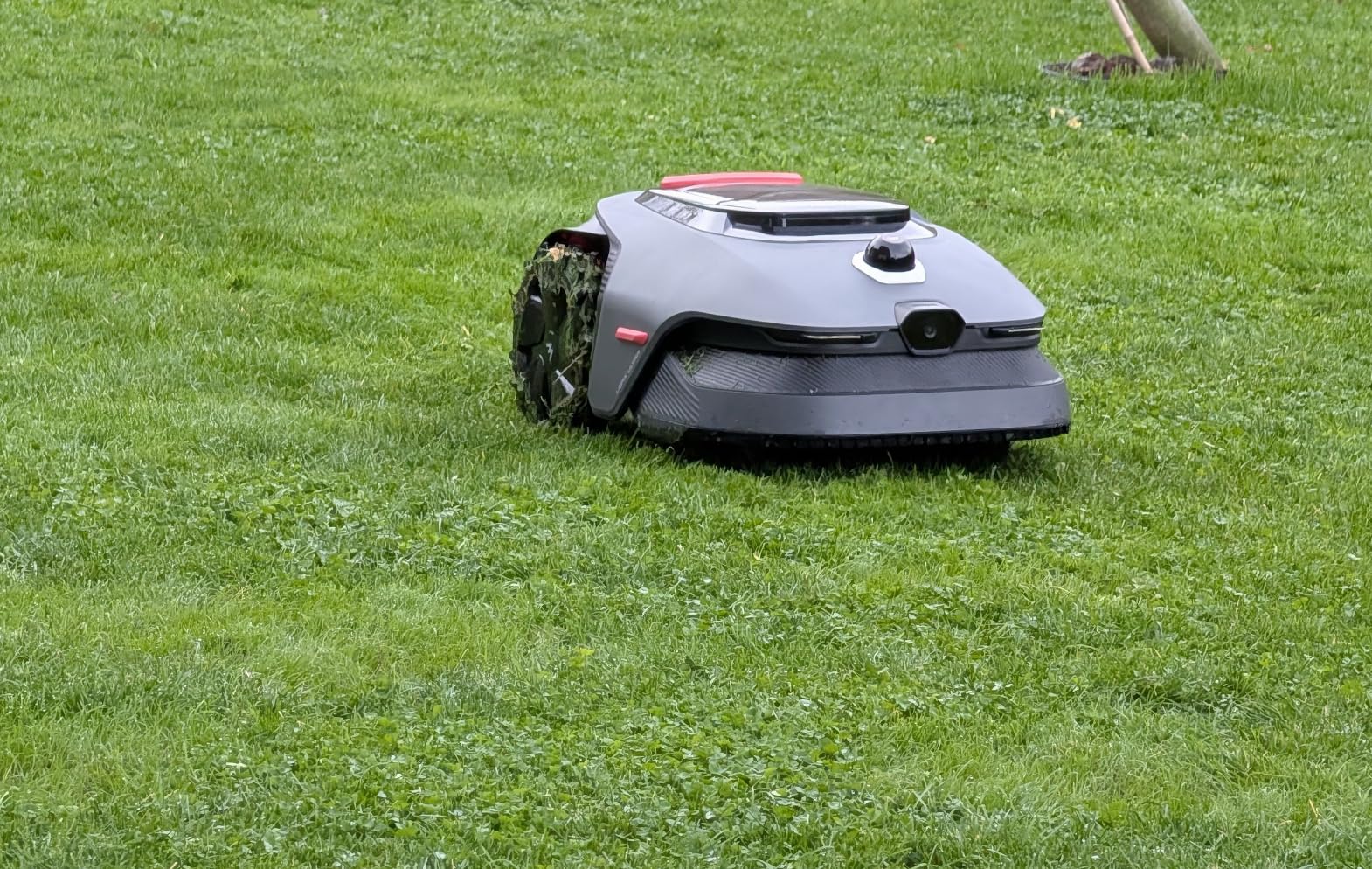
Obstacle avoidance is the strongest spec on paper here, detecting 300+ types from 3D point cloud data. Rear-wheel drive with off-road wheels handles 45% slopes, 1.6 inch obstacles and paths as narrow as 23.6 inches, and the 1.2 to 3.9 inch cut height range suits both cool and warm season lawns.
That 3.9 inch ceiling is unusually tall and owners with thick spring growth mention it. The 8 inch deck is a compromise, since quarter-acre lots take multiple cycles to complete.
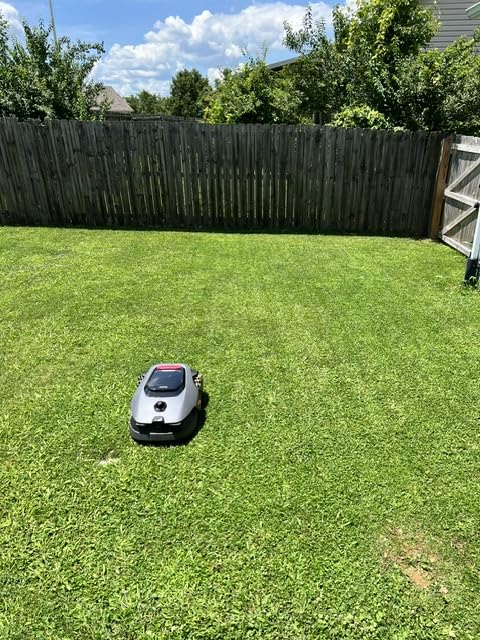
This mower suits bordered lawns with walls, hedges and multiple separate grass areas
If your property has hard landscaping edges and you want the cut to finish close to them, the UltraTrim system is the reason to pick this. The 300+ obstacle library also makes it a calm choice for yards with garden clutter and small toys.
Two independent maps is a real convenience on a property with a front and back lawn. The 3-year manufacturer warranty and the TrueGuard link module for anti-theft add peace of mind for a machine that lives outside all day.
Skip this one if battery runtime is the deciding factor
The battery averages about 60 minutes of run time, among the shortest published here, so the mower returns to the dock constantly. On a quarter-acre lawn that means many cycles a day.
LiDAR-only navigation can also be confused by a complex, heavily bordered lawn, and some owners report it wandering outside mapped areas and needing to be rescued. Owners on r/roboticLawnmowers have described weeks of daily emails with a MOVA or Dreame unit over a suspected hardware fault, so factor support response into a long purchase like this.
6. eufy E15 – Best for Quiet, Fenced Yards With No Antenna
eufy Robot Lawn Mower E15, Auto Mapping, Pure Vision Navigation
0.2 acres
Pure vision V-FSD 1.0
No wire or base station
18 degree slopes
Pros
- Setup takes about 10 to 15 minutes
- Inaudible across a privacy fence
- Clean parallel striping with automatic re-mow
- Works in GPS and cellular dead zones
- Rain detection reliably docks the mower
Cons
- Camera navigation means daylight-only mowing
- Auto mapping struggles on patchy or sandy lawns
- Mowing speed is slow
The eufy E15 is the cleanest answer to the question of whether you need a wire and a base station at all. Its V-FSD 1.0 pure vision system uses stereo cameras for both positioning and distance measurement, so there is nothing to install, nothing to mount and no satellite to wait for. Owners report setup in 10 to 15 minutes.
Owners also describe it as the quietest of the mowers they have used, inaudible across a privacy fence, and a few report it replaced a paid lawn service outright. Cut quality shows as clean parallel striping, with automatic detection and re-mow of missed spots.
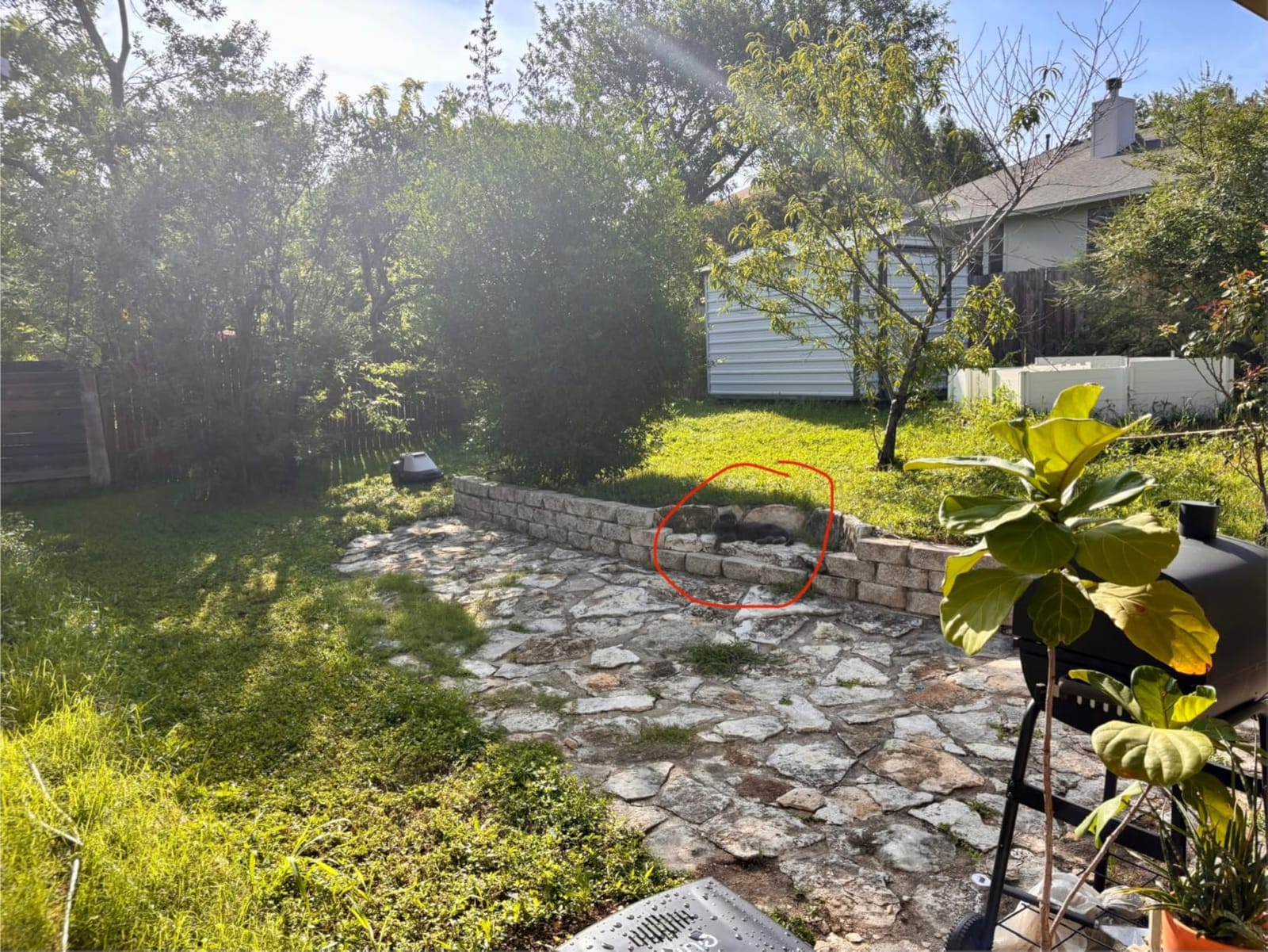
It navigates by cameras alone, so it keeps working in GPS and cellular dead zones, which is exactly the scenario that stops an RTK model in its tracks. Rain detection keeps it docked and it resumes on schedule.
Coverage is up to 0.2 acres, about 8,700 square feet, with 18 degree slopes and a 1 to 3 inch cut height across 5 positions. Ride-on Edge cutting takes the deck right to the lawn boundary, and virtual walls and exclusion zones are set at 0.2 m precision.
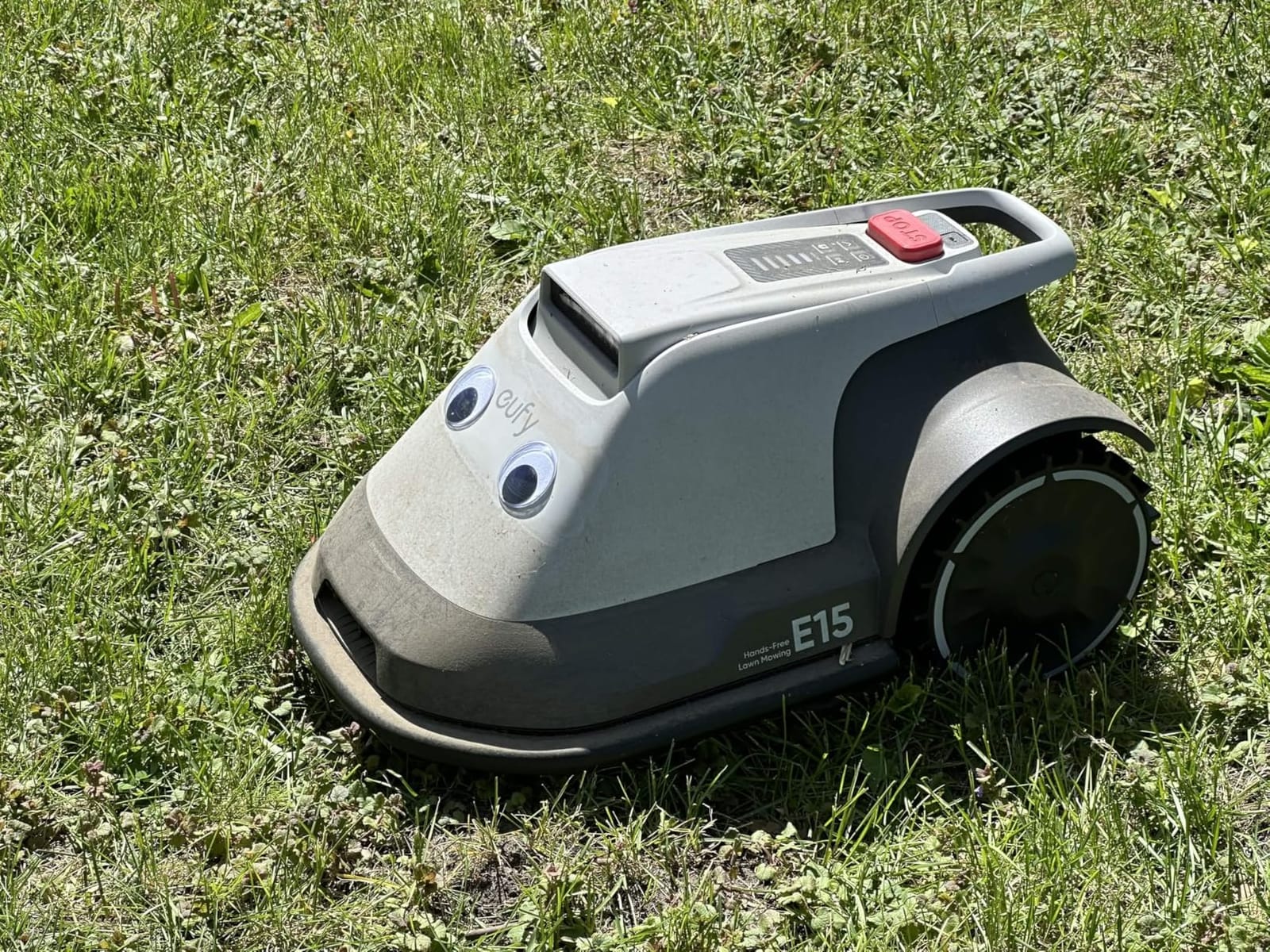
This mower suits flat well-defined fenced lawns that are far from a router or cell tower
Think a small urban yard enclosed by fencing, with clear grass-to-walkway transitions and no meaningful slope. Those are the conditions the stereo cameras handle best, and they are the conditions most city lots actually have.
It is also the best choice for a rural property where a 4G subscription would be awkward or coverage is thin. Just note that a 4G module is needed where Wi-Fi does not reach the yard at all.
Skip this one if you want night mowing or a big lawn
Camera navigation means daylight-only operation. If your schedule only works after dark, this is the wrong machine, and there is no software fix for it.
Auto mapping also struggles on patchy, sandy or sparse lawns and needs manual box drawing, and mowing speed is slow enough that a medium yard takes hours. The manufacturer also advises against St. Augustine and dense Zoysia grass, and one owner reported a failed blade-height worm gear motor.
7. Segway Navimow i206 AWD – Best All-Wheel-Drive Pick for Hilly Lawns
Segway Navimow i206 AWD Robot Lawn Mower, New i105N, 0.15 Acre, 45% Slopes
0.15 acres
AWD with stability control
45% slopes
zero-turn steering
Pros
- All-wheel drive handles ground that defeated two prior robots
- Zero-turn steering protects turf on turns
- Very quiet running
- Real-time lift and off-course alerts
- Support sent free parts and a garage
Cons
- Auto mapping often fails and forces manual zone mapping
- Maps can be lost if the mower is lifted or tilted
- Leaves an unmowed swath next to fences
The i206 AWD is the traction answer. Owners describe a lawn where two earlier robot mowers had failed and this one took it in stride, which is what all-wheel drive with automotive-grade stability control buys you on a property with a real incline.
It pairs EFLS Network RTK with vision and one-tap auto mapping for centimeter accuracy, and adds zero-turn steering that pivots on the spot rather than scrubbing a circle into your turf. That turning behaviour is one of the reasons experienced owners recommend front-wheel-steering or zero-turn designs over skid-steer on soft ground.
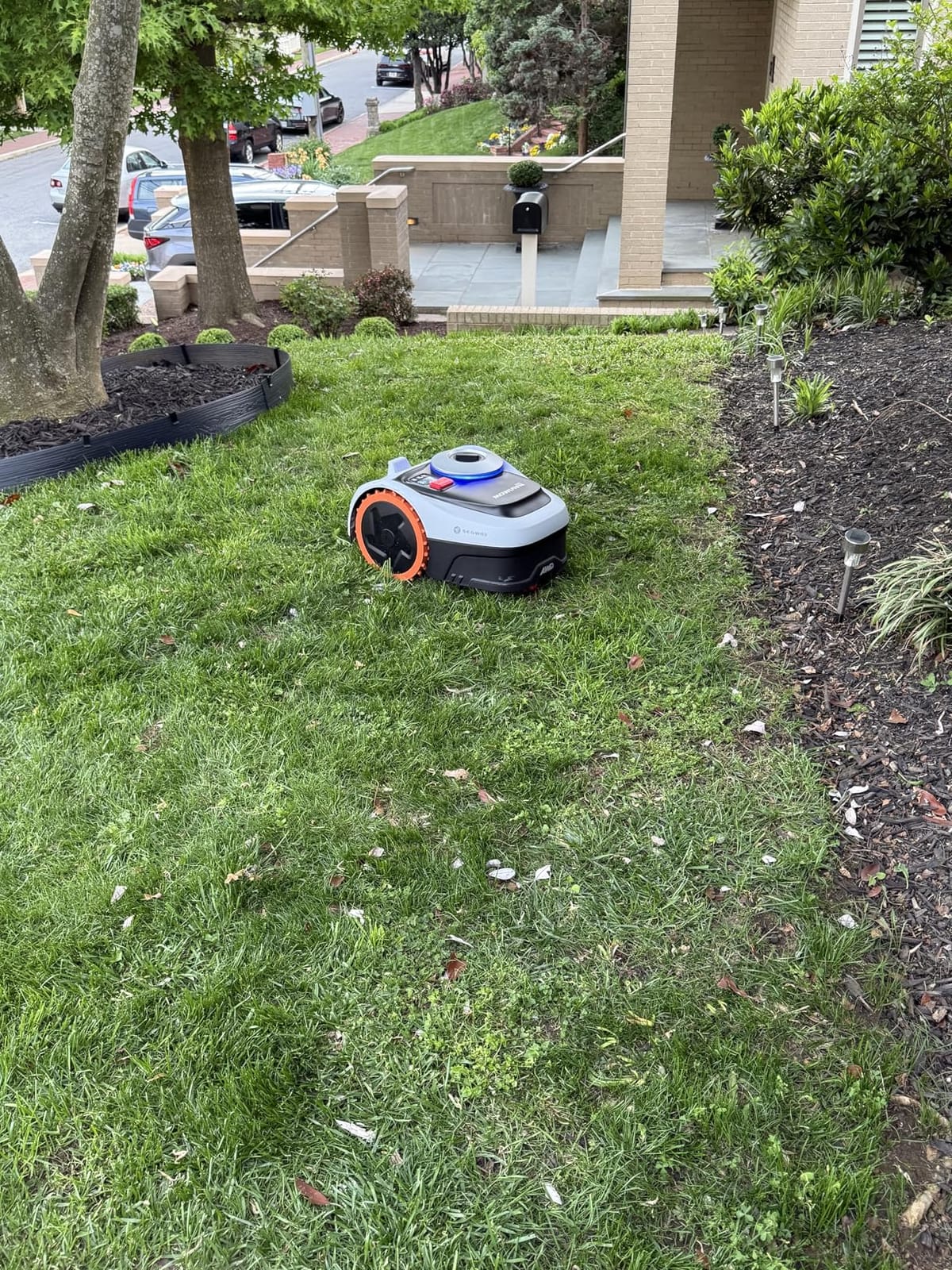
It is also very quiet, so dogs and neighbors are undisturbed, and the app gives real-time GPS alerts if the mower is lifted or leaves its course. Up to 20 mowing zones with auto-resume charging are supported, and the 2.5Ah battery covers up to 1,350 square feet per charge.
Customer service came out well for several buyers here, with hardware problems resolved by sending free parts and even a workshop. That is a meaningful signal on a brand where owners elsewhere have reported slower responses.
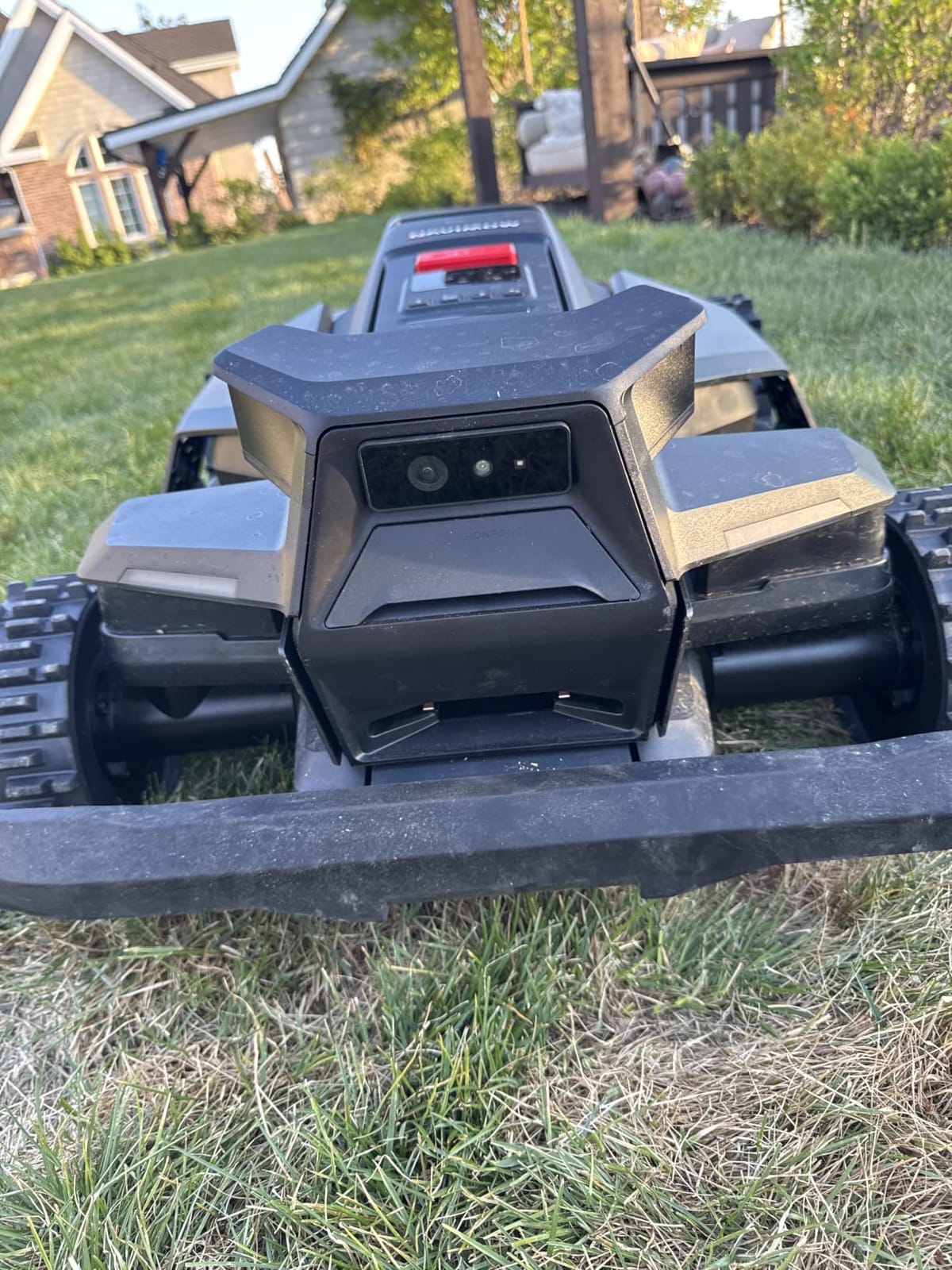
This mower suits a small yard with a real hill and a lawn that has already rejected other robots
At 0.15 acre with a 7.1 inch deck and a 2 to 3.6 inch cut range, it is a compact machine. But if your problem is traction and slope rather than acreage, the 45% capability and the all-wheel drive are what will finally get the job done quietly.
It is also a good pick for anyone who cares about turf. Zero-turn steering is the mechanism behind the low scuffing that owners on r/roboticLawnmowers look for when their soil turns muddy in spring.
Skip this one if you want reliable hands-off mapping
Auto mapping is the dominant complaint. It often fails outright and drops you back to manual zone mapping, which is tedious for a 20-zone layout, and maps can be lost if the mower is lifted or tilted even briefly, forcing a complete remap.
There is also a persistent unmowed swath next to fences even after manual mapping, and the machine needs several passes to catch isolated tall clumps. In-app support has been inconsistent for some buyers.
8. Mammotion LUBA 2 AWD 3000HX – Best Wire-Free Mower for Large Properties
Mammotion LUBA 2 AWD 3000HX Robot Lawn Mower with 4G, All-Wheel-Drive for 80% Slope, Perimeter Wire Free for 0.75 Acre, UltraSense AI Vision & RTK Auto-Mapping, 2.2″-4.0″ Adjustable Cutting Height
0.75 acres
165 W four-wheel drive
80% slope climbing
30 managed areas
Pros
- Largest coverage area in this roundup at 0.75 acre
- Climbs 80% slopes and rough ground
- Clean sharp striping and lawn patterns
- Very quiet for night mowing
- RTK plus 4G keeps navigation steady
Cons
- RTK antenna mounting needs extra hardware and drilling
- Sharp three-point turns can tear grass
- Stalls on small driveway ramps and low bumps
The LUBA 2 AWD 3000HX covers 0.75 acre, the largest area of any mower we tested, and it is the one to look at if you want a single machine to take a large, complicated property. Owners with hilly multi-zone yards describe it replacing a weekly lawn service, which is the clearest cost argument in this roundup.
The drivetrain is the reason it handles that ground. A 165 W four-wheel drive motor system climbs slopes up to 80%, or 38 degrees, and UltraSense AI vision works alongside RTK so the mower can still navigate in tree-covered areas. Up to 30 managed mowing areas and no-go zones give you more layout control than the other Mammotion offers.
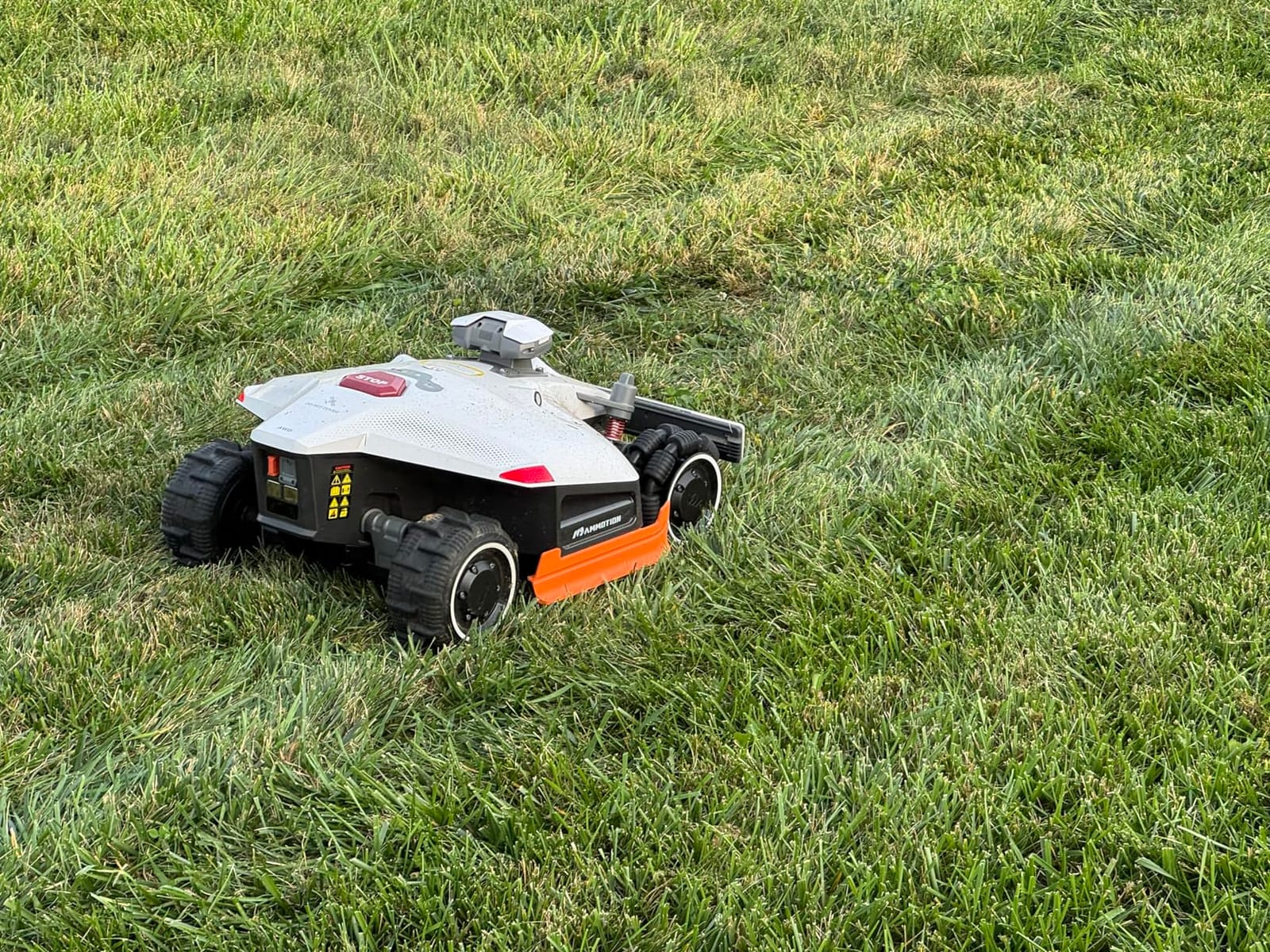
The dual-blade disk cuts up to 15.8 inches, wider than the other deck figures published here, and owners praise the clean sharp striping and pattern capability. Height adjustment spans 2.2 to 4 inches across 5 positions, and it runs quietly enough to mow at night. Connectivity covers 4G, Bluetooth and Wi-Fi, with GPS tracking and anti-theft protection.
Obstacle avoidance recognises 200+ object types, and the app supports 3D lawn printing patterns for those who want stripes rather than random coverage.
This mower suits large hilly properties with many separate grass areas
If you are past half an acre, or your lawn splits into front, back and side zones with a path between them, the 30 managed areas are the reason this one earns its place on a larger list. The 80% slope rating and the wide deck cut mowing time down on open grass.
Owners with large acreage also point out that the 4G connection keeps navigation steady on a property that stretches past the house, where a Wi-Fi-only mower would lose the link.
Skip this one if you want a weekend-install-free setup
Setup is the most common friction point. Mounting the RTK antenna and running the wiring often needs extra hardware and drilling, so this is not the mower you buy on a Friday night and mow on Saturday morning.
Sharp three-point turns can tear grass on tight corners, and the unit occasionally stalls on small driveway ramps and low bumps. It does not mulch leaves, so edges and beds still need periodic manual weeding. One owner reported a motor and worm-gear failure that a warranty repair did not resolve.
9. Roborock RockNeo Q110H – Best for Night Mowing and Straight Lines
Roborock RockNeo Q110H Robot Lawn Mower, Wire-Free Robotic Lawn Mower with Full-Band RTK + VSLAM Navigation, Auto Mapping, AI Vision Obstacle Avoidance, App Control, 45% Slope, Covers Up to 1/4 Acre
0.25 acres
Full-Band RTK plus VSLAM
45% slopes
headlights for night mowing
Pros
- Headlights let it finish a mow after dark
- Very quiet with perfectly straight cutting lines
- Floating deck follows ground contours
- Handles hilly obstacle-strewn lawns
- App feels familiar to Roborock vacuum users
Cons
- Auto mapping was not available on the shipped unit
- Boundaries left 1 to 1.5 feet unmowed
- Refuses to pass through narrow gates despite clearance
The RockNeo Q110H is the one in this roundup with headlights, and that single feature makes it the answer for anyone whose mowing window starts after dark. It also borrows the app design from Roborock vacuums, which owners who already own one describe as a genuine advantage.
Navigation is full-band RTK combined with VSLAM, a dual approach that holds positioning under tree cover where a satellite-only unit would drift. It handles 45% slopes and 1.57 inch obstacles, and the floating cutting deck adapts to ground contours, which shows up as straight, consistent lines on uneven lawns.
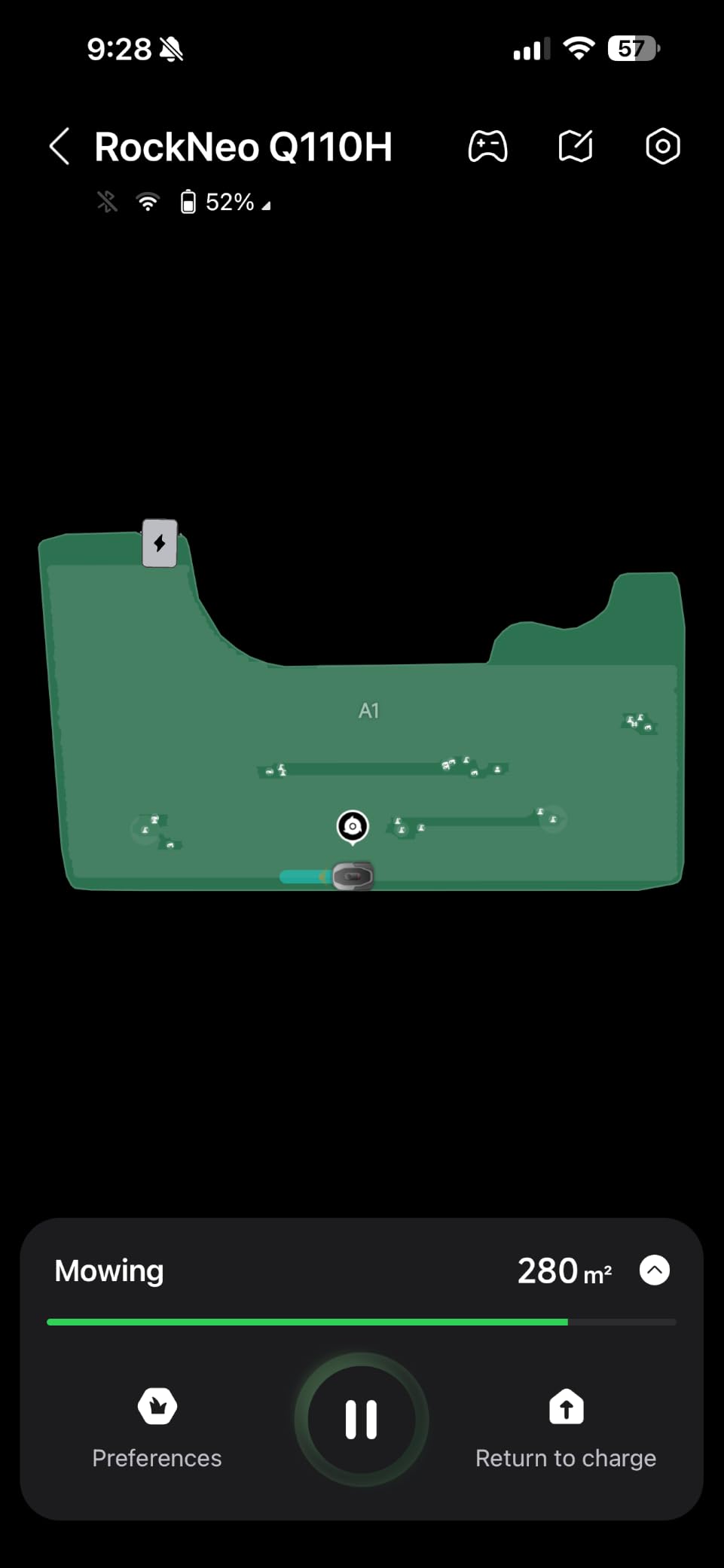
Coverage is up to a quarter acre, cutting width 8.7 inches, height 1.6 to 3.1 inches, and the body is narrow enough for 2.3 foot passages. PIN lockout and an alarm come out of the box, with a 4G anti-theft module sold separately. AI vision with stereo perception handles obstacle avoidance.
On paper that is a strong spec sheet. The reality of the software is where this one falls short, and it has the lowest rating among the models we reviewed.
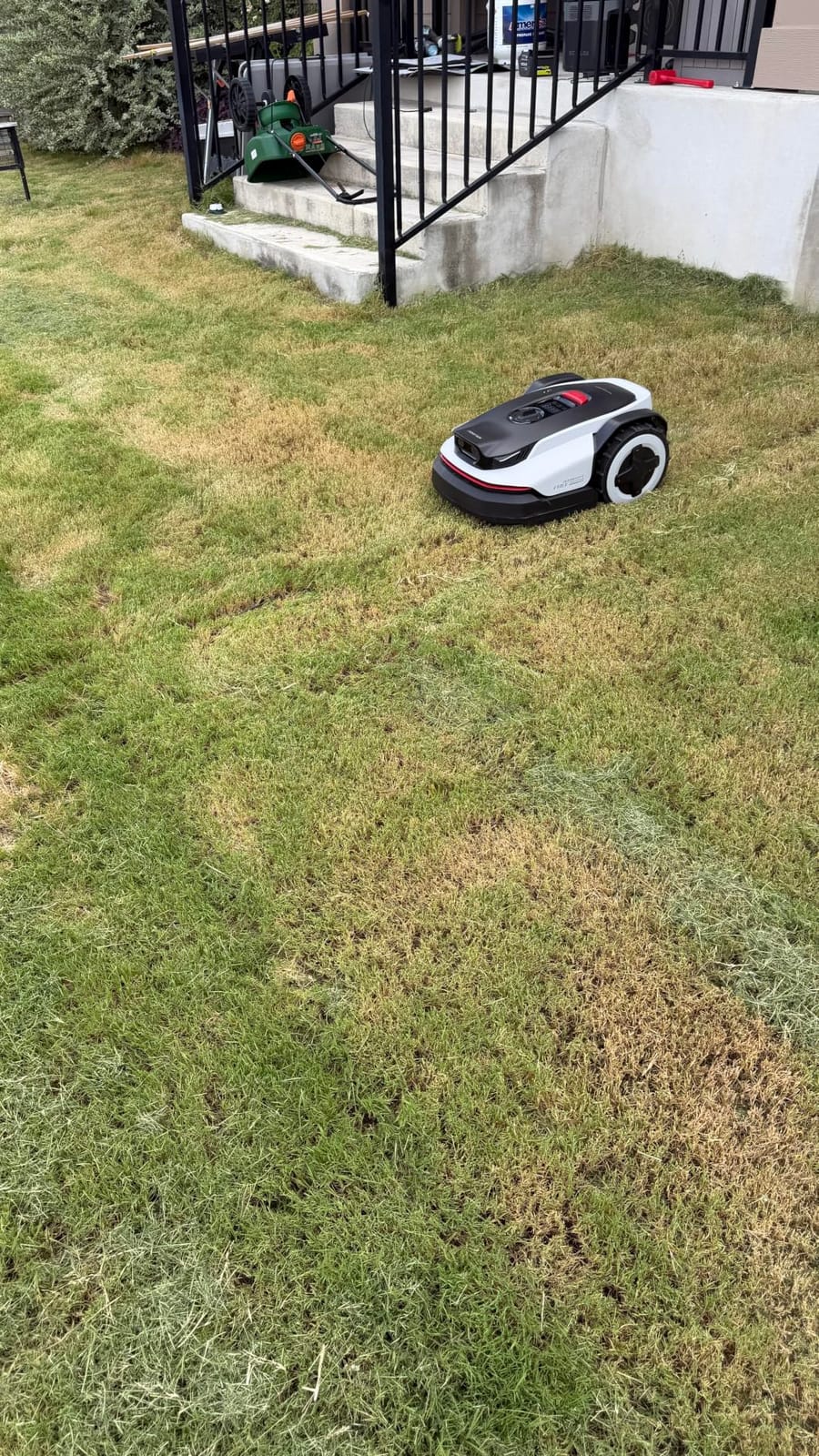
This mower suits open flat lawns that need mowing late at night
Pick it if your schedule rules out daylight, or if you already run Roborock vacuums and want the app to feel familiar. The straight-line cut and low noise are both well liked, and the floating deck handles small drops onto walkways without a bounce.
Its 2.3 foot passage width is also useful on properties with tight side access, and the floating deck makes sense on ground that is not perfectly level.
Skip this one if you need automatic mapping or tight edge cutting
Auto mapping was not available on the shipped unit, so mapping is manual driving from the app, which is the single most common complaint among owners. Boundaries are left excessively wide, roughly 1 to 1.5 feet unmowed along fences, trees and objects, and edge handling is poor with the optional edge module unavailable in the US at review time.
It also refuses to pass through narrow gates despite having clearance, and the app cannot edit maps or mow a single spot without driving the mower. St. Augustine owners report traction problems and false unit-lifted alerts. If mapping software is the feature you are buying, this is the wrong pick.
10. YARDCARE M800Plus – Simple GPS and Vision Mowing for Open Lawns
YARDCARE M800Plus Cordless Robot Lawn Mower with GPS + Visual Navigation, Bow-Shaped Path Mowing, APP Control, 4.0Ah Automatic Robotic Lawnmower for 1/5 Acre, Obstacle Avoidance, Height Adjustment
0.2 acres
GPS plus 3D vision
35% slopes
150+ obstacle types
Pros
- No boundary wire and clean grass detection
- 135 degree AI camera reroutes around 150+ obstacle types
- Handles 35% slopes without slipping
- Mixed row and gap-filling logic evens out coverage
Cons
- Only 7 inch cutting width so a fifth of an acre needs repeated cycles
- Grass taller than 2.6 inches should be cut by hand first
- Very small review base so reliability is unproven
The M800Plus is a cordless robot mower built for a plain open lawn with defined edges, and the tiny review count is the main thing to know about it. Four reviews, all recent, all positive. We include it because the design fills a real gap, not because it has an established track record.
Navigation is GPS plus 3D vision with an HD camera that separates grass from patio and walkway, which means no boundary wire and no antenna to install. A 135 degree AI camera detects 150+ obstacle types and reroutes on the fly, and the mower handles slopes up to 35%, or 20 degrees.
Mowing logic is a mix of 40 minutes of orderly rows followed by 60 minutes of random gap-filling, which is a sensible way to even out coverage. A spot spiral mode handles neglected patches, cutting width is 7 inches and height adjusts from 0.8 to 2.4 inches, with app control for schedule, pattern and OTA updates.
For a fifth of an acre, the narrow deck means repeated cycles, and anything taller than about 2.6 inches should be cut by hand before the first run or the mower will bog down.
This mower suits a simple open yard with clear grass edges and a moderate slope
If your lawn is a straightforward rectangle or square with paving, a patio or a walkway defining the edge, the camera-based grass detection works exactly as advertised. It handles a 35% slope without slipping, which is more than enough for most suburban lots.
The app gives you schedule, mowing pattern and spot-mow control, and the 28.7 pound body is manageable if you ever need to move it by hand.
Skip this one if you need proven long-term reliability
Four reviews is not a reliability record. Every review here is recent, which means nobody has yet reported what happens after a full season of daily mowing, a battery season or two firmware updates.
Blades also need regular replacement to hold cut quality, and the 7 inch deck makes anything over a fifth of an acre a long job. Treat this as a low-risk trial rather than a set-and-forget machine.
How to Set Up a Wire-Free Mower in 5 Steps
Wire-free does not mean installation-free, and the difference between a good first week and a frustrating one is usually preparation. Every mower in this roundup maps its own boundary, but they all need the same five things done properly first.
1. Pick the dock site before anything else. The dock needs a flat, level run of straight lawn behind it, a power outlet within reach, and a path the mower can re-enter without hitting anything. Owners report that docking accuracy is one of the most noticeable quality differences between models, so give it the best straight approach you have.
2. Clear the lawn of dips, matted grass and buried debris. An owner on r/roboticLawnmowers described his first mapping pass exposing hollows and matted patches he did not know about. A LiDAR scan will find them, and the mower will either bog down or tip. Fill them before you map, not after.
3. Charge fully, then map at a walk. Most apps let you drive the mower around the boundary manually as well as auto-mapping. If auto-mapping exists, run it first, then walk the perimeter and correct anything it cut inside or outside. The complaints we saw about map editing being awkward are worth an extra careful pass now.
4. Check your sky view if you are buying RTK. RTK positioning needs a clear line to the satellites plus a base station, phone or module on the mower. Under heavy tree cover, or with a tall building to one side, accuracy degrades. That is the entire argument for choosing LiDAR instead.
5. Set the cut height low for the first mow. Start at the lowest setting and raise it over a few weeks. A mower arriving into 4 inch grass will either stall or tear the lawn, and YARDCARE owners specifically warn that grass over 2.6 inches should be cut by hand first.
RTK vs LiDAR vs Vision: Which Navigation to Choose
Three navigation systems fill the wire-free category, and the honest answer is that accuracy depends more on your yard than on the spec sheet. RTK delivers centimeter positioning but needs open sky. LiDAR ignores the sky entirely and builds a physical map. Vision is the simplest and the most sensitive to lawn conditions.
RTK, which is Real-Time Kinematic satellite positioning, triangulates between the mower, a base station and the satellites. It is the most accurate option and it never needs a buried wire, but it wants a clear view of the sky. In an open yard with good signal it is hard to beat, and Navimow owners on r/roboticLawnmowers consistently recommend it in exactly those conditions.
LiDAR spins a laser to build a 3D point cloud of your yard, often with cameras layered on top. It works under tree cover, at night, inside walled enclosures and on a property where cell service is poor. Its weakness is complexity: a highly bordered or visually repetitive lawn can confuse a LiDAR map, which is why some MOVA LiDAX owners report wandering outside mapped areas.
Vision systems use cameras and AI to recognise grass and obstacles. The eufy E15 is the purest vision example, and owners report it working in a true GPS and cellular dead zone. The cost is that it needs daylight and well-defined lawn edges, and it struggles on patchy or sandy ground.
The rule experienced owners use: LiDAR for tree cover, narrow passages and walls close to the path. RTK for open yards with clear sky. Vision for a flat, fenced, clearly bounded yard where you want zero installation. Hybrid units such as the Navimow i105N and the Roborock RockNeo blend two of these and are the safest general choice if your yard is not obviously one type.
Match the Mower to Your Lawn Size, Slope and Signal
Coverage figures are the fastest way to buy the wrong machine, because manufacturers rate the same mower differently. The honest comparisons here are the published acreage numbers: 0.125 acre for the ANTHBOT M5 and the Navimow i105N, 0.15 acre for the Navimow i206, 0.2 acre for the eufy E15 and the YARDCARE, 0.25 acre for the ECOVACS GOAT O1000, the MOVA LiDAX and the Roborock RockNeo, 0.37 acre for the LUBA mini 2, and 0.75 acre for the LUBA 2 AWD.
Leave headroom. A mower rated at the exact size of your lawn spends all day cycling to the dock, and the LUBA mini 2 owners report a two to three hour charge from the 13% return level. Rating your lawn at 80% of the machine’s coverage is a better starting point.
Slope matters more than most buyers expect. Ratings in this roundup run from 18 degrees on the eufy E15, through 20 to 24 degrees on the YARDCARE and ANTHBOT, to 45% on the Navimow i206, the MOVA LiDAX and the Roborock, and 80% on both Mammotion models. Ignore the percentage if your soil is clay that turns to mud, because traction fails before the rated slope does.
Signal is the third filter, and it is where RTK purchases go wrong. If your property is rural, heavily wooded, or has a tall building that blocks much of the sky, a LiDAR or vision mower will keep working while an RTK machine spends its afternoon parked. Check your cell coverage across the whole lawn, not just at the house, and remember that some models want a 4G subscription where Wi-Fi does not reach.
Obstacle Avoidance, Pets and Kids
Obstacle libraries in this roundup run from 150 types on the Navimow i105N, YARDCARE and Roborock, up to 200 on the ECOVACS GOAT O1000 and the LUBA 2 AWD, and 300 on the MOVA LiDAX. Larger numbers sound reassuring and are, but the specific blind spots matter far more than the headline count.
The recurring real-world miss is small, low, flat objects. Navimow owners on r/roboticLawnmowers report VisionFence missing mailboxes, gates, hoses and sprinkler heads, all of which sit low enough to sit under a camera’s most reliable range. If you have irrigation heads or a low garden hose, move them before the first run rather than after the first puncture.
For families, the combination to look for is geofencing plus alerts. The Navimow i206 sends real-time GPS alerts if the mower is lifted or leaves its course, the Roborock ships with PIN lockout and an alarm, the Mammotion LUBA 2 AWD includes GPS tracking and zone-exit alerts, and the MOVA LiDAX pairs its TrueGuard system with a link module.
Cutting height limits are the other safety number worth checking. The eufy E15 is not recommended for St. Augustine or dense Zoysia, and the ECOVACS GOAT O1000 tops out at 3.2 to 3.6 inches. A mower that cannot take off enough grass will leave you cutting it with a real lawn mower anyway.
App Control, Zones and No-Go Areas
This is where wire-free mowers quietly replace the boundary wire. Instead of a trench around a flower bed, you draw a no-go zone in the app. Instead of one continuous loop, you schedule zones separately. The limits are all software, so they matter.
Zone counts in this roundup run from 12 on the Navimow i105N, 20 on the Navimow i206 and the LUBA mini 2, 30 on the LUBA 2 AWD, and up to 150 managed zones across two independent maps on the MOVA LiDAX. More zones only help if the app lets you edit them, and map editing is where owners report the most friction.
Two specific complaints to weigh. The ECOVACS GOAT O1000 has a single-axis mapping joystick that is genuinely hard to drive in a straight line, so correcting a boundary takes patience. The LUBA mini 2’s map editing is called awkward and occasionally buggy by owners, though Mammotion has also been praised for replacing stations, cables and parts at no charge.
The biggest structural gap is auto mapping. The Roborock RockNeo shipped without auto mapping at all, and the Navimow i206 owners report auto mapping failing often enough to push them into manual zone work. If you want a mower to learn the yard on its own, verify that the feature is active on the unit you are actually buying, not just listed for the range.
When Not to Buy a Wire-Free Mower
Wire-free is the right default, but there are yards where it is the wrong purchase. Being honest about this will save you more money than any deal in this roundup.
Fully enclosed lawns with no visible edge. Vision navigation needs to see where grass stops. A yard walled in on every side with no paving, gravel or fence line gives it nothing to lock onto, and manual box drawing becomes a chore.
Corridor-shaped and L-shaped properties. Narrow passages between a house and a fence are exactly where a wide deck cannot turn. The ECOVACS GOAT O1000 passes 0.8 m corridors and the Roborock 2.3 foot passages, but most machines will not negotiate a tight L.
Zero cell coverage on a large property. RTK mowers depend on 4G or Wi-Fi across the mowing area. A rural acreage with dead zones needs a LiDAR or vision machine, or a signal booster and a data plan.
Soft sandy or muddy clay soil. Skid-steer turns tear turf when the ground gives way. Owners pushing back on the turning-damage narrative point out that wet grass and heavy dew cause more tearing than turning radius, and that soil type matters more than drivetrain, but independent suspension and zero-turn steering still reduce the risk.
Daylight-only needs. If your only mowing window is after dark, camera-only machines such as the eufy E15 will not work. The RockNeo Q110H is the one here with headlights.
Expectation of mulch. None of these machines mulch leaves or clippings into the lawn. Edges and beds will still need periodic manual weeding, no matter which model you choose.
Software Updates and Customer Support
No competitor covers this and it matters more than any spec on the box, because a wire-free mower is a computer with a blade. Over-the-air updates change turning behaviour, remove features and break maps, and this is documented in owner reports rather than in marketing.
Mammotion owners on r/roboticLawnmowers reported a LUBA 2 update that altered turning behaviour and damaged grass, and a later update that was pulled, alongside a Luba 3 owner who sold their unit over persistent mapping issues. The same community treats Navimow as the most transparent brand about technical changes, which is a meaningful tiebreaker between otherwise similar machines.
Support quality varies just as much. The Navimow i206 buyers in this roundup had hardware resolved with free parts and a workshop, while a MOVA or Dreame owner described three weeks of daily emails over a suspected fault, being told it was software related with no timeline. App-based support on the ANTHBOT M5 has been reported at up to 48 hours for a response.
Owners also treat US-based support and a published two-year or longer warranty as a real buying factor, and they fall back on the return window and card chargeback when support stalls. We would rather you know that than discover it in week three of a firmware update.
Frequently Asked Questions
Which robotic lawn mowers don’t require a perimeter wire?
Every mower in this roundup is wire-free, and they navigate three ways. RTK models like the Segway Navimow i105N and i206 AWD use satellite positioning plus a base station or phone. LiDAR models like the ANTHBOT M5, ECOVACS GOAT O1000, MOVA LiDAX Ultra 1000 and Mammotion LUBA mini 2 spin a laser to map the yard. Vision models like the eufy E15 use cameras to recognise grass and obstacles. None of them need a buried cable.
Do all robot mowers need a boundary wire?
No. Older and budget robot mowers often still use a boundary wire, but every model in this guide maps a virtual boundary instead. That boundary is drawn either automatically or by driving the mower around the lawn in the app, and it is stored on the device. The trade-off is that the boundary depends on software and signal quality rather than a physical cable, so a mapping glitch is the equivalent of cutting the wire.
What is the best budget robot lawn mower without perimeter wire?
The Segway Navimow i105N is the value pick in this roundup, with 391 owner reviews, RTK plus vision navigation and a 3-year warranty. The ECOVACS GOAT O1000 LiDAR PRO is a close alternative and adds a built-in edge trimmer and narrow-body corridor handling. The Roborock RockNeo Q110H is also low-cost but its manual-only mapping is a real drawback.
How accurate is RTK navigation compared to LiDAR?
RTK is more accurate, typically reaching centimeter-level positioning, but it needs a clear view of the sky plus a base station or phone. LiDAR is measured in centimeters too, often around 2 to 5 cm, and it does not care about sky view at all because it builds a physical map of the yard. In an open lawn RTK wins on precision. Under tree cover, at night or inside a walled yard, LiDAR is the more reliable system.
What happens if a wire-free mower loses GPS signal?
An RTK-only mower will stop or exit the mapped area, which is why hybrid and LiDAR models are safer in poor signal. A hybrid unit such as the Navimow i105N or Roborock RockNeo falls back to its camera and vision system and keeps going. A pure LiDAR mower such as the MOVA LiDAX or ANTHBOT M5 is unaffected because it never used satellites. A pure vision mower like the eufy E15 also ignores signal entirely.
Do wire-free mowers work without Wi-Fi?
Most do, but the details matter. LiDAR and vision mowers map on the device, so the ECOVACS GOAT O1000 keeps working with no cloud connection. RTK mowers rely on 4G cellular or Wi-Fi across the lawn, so a rural property with dead zones may need a LiDAR model, a signal booster or a data plan. The eufy E15 needs a 4G subscription only where Wi-Fi does not reach the yard at all.
What are the downsides of using a robotic lawn mower?
The main drawbacks are upfront cost, a learning curve for mapping and zones, and the loss of grass clipping mulch. Narrow cut widths mean multiple charge cycles per mow, and none of these machines handle leaves or edge weeding. Edges still need a string trimmer, mapped boundaries can be lost or corrupted, and firmware updates have been reported to change turning behaviour. On very soft soil, sharp turns can tear turf.
Which Wire-Free Mower Should You Buy?
Pick by size, then by terrain, then by signal, in that order. If your lawn is under a quarter acre with clear edges, the eufy E15 sets up in minutes and works where satellites fail. If it is a small yard with a real hill, the Navimow i206 AWD gets the traction. If it is a quarter acre with hard borders, the MOVA LiDAX Ultra 1000 cuts closest to them.
For a large or awkward property, the Mammotion LUBA mini 2 AWD 1500H is our pick overall in 2026. Its 80% slope capability, independent suspension, 360 degree LiDAR plus dual cameras and 20 mowing zones handle the lawns that make other mowers quit, and at 4.4 stars across 263 reviews it has enough owner history behind it to trust.
Go past half an acre and the Mammotion LUBA 2 AWD 3000HX takes over, with 0.75 acre of coverage, a 15.8 inch deck and 30 managed areas. Just budget a proper afternoon for the RTK antenna mount. Start here, then check the [full robotic lawn mower guide](https://www.superfooddrive.org/best-robotic-lawn-mowers/) if you want to compare these against the wired machines too.