
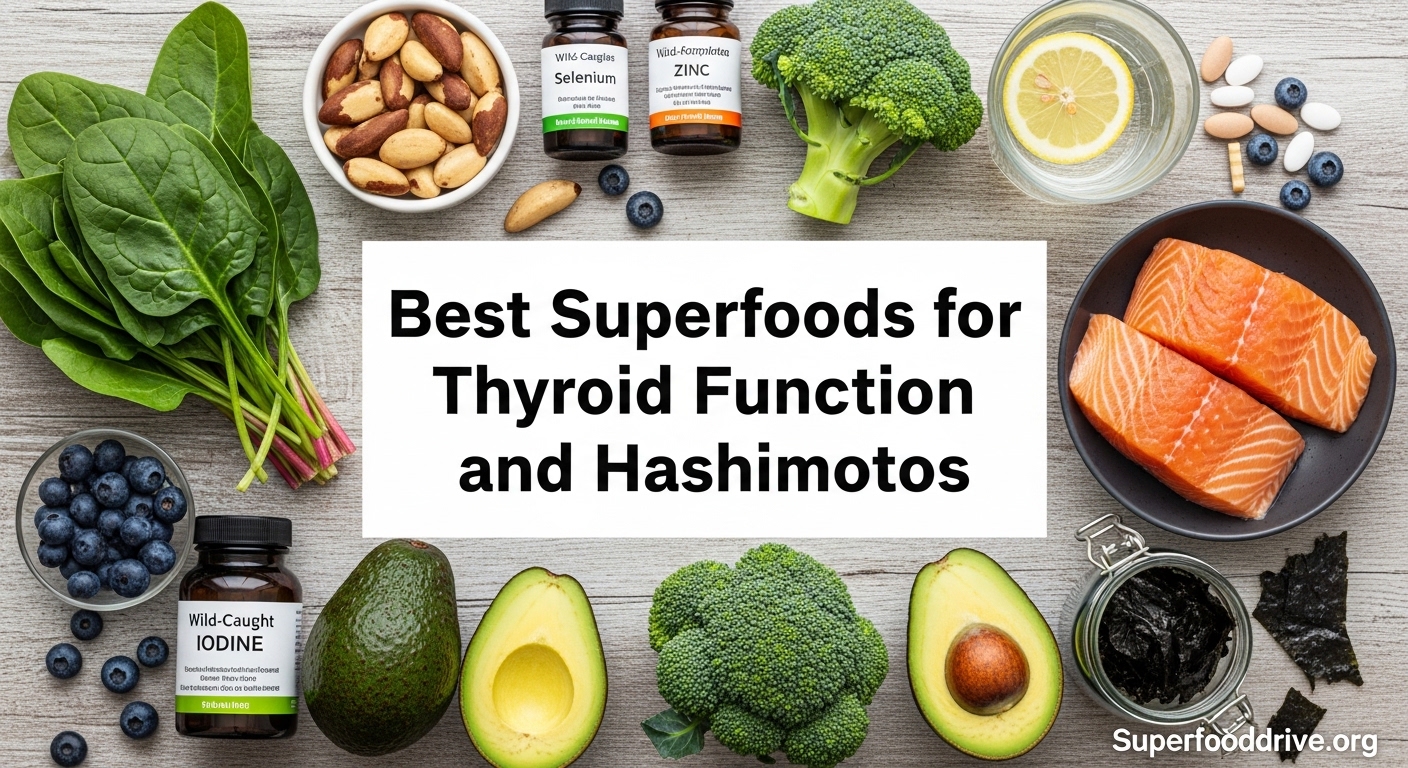
Living with Hashimoto’s thyroiditis can feel like a constant battle with fatigue, weight gain, and brain fog. I remember when I was first diagnosed – my doctor handed me a prescription and a generic food list that left me more confused than empowered. The truth is, what you eat matters just as much as any medication when it comes to supporting your thyroid function.
Superfoods for Thyroid Function and Hashimotos can make a measurable difference in how you feel day to day. The right nutrients help your body produce T3 and T4 hormones, reduce the inflammation that drives autoimmune flare-ups, and support the delicate balance your thyroid needs to function. This guide draws from both clinical research and real experiences from people managing Hashimoto’s every single day.
I have spent years researching the connection between nutrition and thyroid health, and I have learned that small dietary changes compound into significant improvements. Whether you are newly diagnosed or have been managing Hashimoto’s for years, these evidence-based superfoods and strategies will help you take control of your health.
Table of Contents
What is Hashimoto’s Thyroiditis?
Hashimoto’s thyroiditis is an autoimmune condition where your immune system mistakenly attacks your thyroid gland. This butterfly-shaped organ at the base of your neck produces hormones that regulate nearly every function in your body – from your metabolism and heart rate to your mood and digestion.
When the immune system launches its assault, the thyroid becomes inflamed and gradually loses its ability to produce adequate hormones. This leads to hypothyroidism, where your body slows down because it lacks sufficient thyroid hormones. The condition affects women seven to ten times more often than men, and it typically develops between ages 30 and 50.
Common symptoms include persistent fatigue, unexplained weight gain, sensitivity to cold, dry skin and hair, muscle weakness, joint pain, depression, and difficulty concentrating. Many people describe the feeling as if someone turned down their internal thermostat – everything runs slower and takes more effort.
Unlike other forms of hypothyroidism, Hashimoto’s has an autoimmune component. This means inflammation plays a central role in the disease progression. Foods that calm inflammation and support immune regulation become powerful tools in your management strategy.
Understanding Thyroid Function and Hormones
Your thyroid produces two primary hormones that control your metabolism: triiodothyronine (T3) and thyroxine (T4). These hormones influence how your cells use energy, affecting everything from your heart rate to how quickly you burn calories.
T4 is the inactive form that your thyroid produces in larger quantities. Your body converts T4 into T3, the active form that actually enters your cells and regulates metabolic processes. This conversion happens primarily in your liver and kidneys, though some occurs in your muscles and brain.
The process begins in your brain. Your pituitary gland monitors thyroid hormone levels and releases thyroid stimulating hormone (TSH) when it detects insufficient T3 and T4. TSH signals your thyroid to produce more hormones. In Hashimoto’s, even when TSH levels rise, the damaged thyroid cannot respond adequately.
Several nutrients directly support this hormone production and conversion process. Iodine is essential for building T3 and T4. Selenium acts as a cofactor for enzymes that convert T4 to T3. Zinc helps your thyroid gland receive TSH signals. Vitamin D regulates immune function and thyroid hormone receptors. Without adequate levels of these nutrients, your thyroid struggles to function regardless of medication.
Top Superfoods for Thyroid Health
These nutrient-dense foods provide the vitamins, minerals, and compounds your thyroid needs to function optimally. Each one offers specific benefits for hormone production, inflammation reduction, or immune regulation.
Brazil Nuts: The Selenium Powerhouse
Brazil nuts contain more selenium than any other food. Just two nuts provide your entire daily requirement of this essential mineral. Selenium supports the enzymes that convert inactive T4 to active T3, making it critical for thyroid hormone balance.
Research shows that selenium supplementation can reduce thyroid antibodies in people with Hashimoto’s. Lower antibody levels mean less immune system attack on your thyroid. I recommend eating two to three Brazil nuts daily rather than taking supplements – whole foods provide synergistic nutrients that isolated supplements cannot replicate.
Brazil nuts also contain healthy fats, magnesium, and vitamin E. Store them in the refrigerator or freezer to prevent the fats from going rancid. If you have a nut allergy, sunflower seeds offer moderate selenium content as an alternative.
Wild-Caught Salmon: Omega-3 and Vitamin D
Salmon provides two critical nutrients for thyroid health in one package. The omega-3 fatty acids EPA and DHA reduce inflammation throughout your body, including the inflammation that characterizes autoimmune thyroid disease.
Chronic inflammation interferes with thyroid hormone conversion and receptor function. By lowering inflammatory markers, omega-3s help restore normal thyroid signaling. Studies suggest omega-3 supplementation improves thyroid function markers in people with autoimmune thyroiditis.
Salmon is also one of the few food sources of vitamin D, which most people with Hashimoto’s are deficient in. Vitamin D modulates immune function and appears to play a protective role against autoimmune conditions. Aim for two to three servings of wild-caught salmon weekly.
Seaweed: Natural Iodine Source
Your thyroid needs iodine to produce T3 and T4 hormones. While severe iodine deficiency is rare in developed countries, many people with Hashimoto’s have suboptimal levels. Seaweed offers the most concentrated natural source of iodine.
Kelp, nori, wakame, and dulse all contain significant iodine. However, more is not always better with this nutrient. Excessive iodine can actually worsen Hashimoto’s in some people. Start with small amounts – a quarter teaspoon of kelp flakes or one sheet of nori daily.
Monitor how you feel when adding iodine-rich foods. Some people experience improvement in energy and metabolism. Others find their symptoms worsen. This individual variation explains why working with a healthcare provider on iodine intake matters.
Blueberries: Antioxidant Protection
Berries contain some of the highest antioxidant levels of any food. Blueberries, in particular, are rich in polyphenols called anthocyanins that protect your cells from oxidative stress.
Oxidative stress contributes to thyroid tissue damage in Hashimoto’s. The antioxidants in blueberries neutralize free radicals that would otherwise attack your thyroid cells. Regular berry consumption correlates with lower inflammation markers in clinical studies.
Blueberries are also low on the glycemic index, making them suitable for blood sugar management. Blood sugar fluctuations stress your adrenal glands, which in turn affects thyroid function. Aim for one cup of fresh or frozen blueberries daily.
Pumpkin Seeds: Zinc and Magnesium
Pumpkin seeds deliver impressive amounts of zinc, magnesium, and healthy fats. Zinc is essential for thyroid hormone production and helps T3 bind to cellular receptors. Many people with Hashimoto’s have low zinc levels.
Magnesium supports over 300 enzymatic reactions in your body, including those involved in thyroid hormone conversion. It also helps reduce stress and improve sleep quality – both important for thyroid health. Stress hormones like cortisol interfere with thyroid function when elevated chronically.
I recommend soaking pumpkin seeds overnight to reduce phytic acid, which can block mineral absorption. After soaking, dehydrate them at low heat or roast lightly. A quarter cup daily provides substantial zinc and magnesium.
Leafy Greens: Nutrient Density
Spinach, kale, Swiss chard, and other leafy greens provide folate, iron, magnesium, and antioxidants. These nutrients support red blood cell formation, energy production, and detoxification pathways that affect thyroid health.
Some people worry about goitrogens in cruciferous vegetables like kale. While these compounds can interfere with iodine uptake in theory, cooking eliminates this effect. The nutritional benefits of leafy greens far outweigh any potential risks when consumed as part of a varied diet.
Rotate your greens to get a variety of nutrients. Spinach is higher in iron. Kale provides more vitamin C. Swiss chard offers excellent magnesium. Aim for two to three cups of cooked leafy greens daily.
Pastured Eggs: Complete Nutrition
Eggs contain nearly every nutrient your thyroid needs. The yolk provides selenium, iodine, vitamin D, vitamin A, and choline. The white offers high-quality protein that supports tissue repair and hormone production.
Pastured eggs from chickens raised on grass and bugs have higher omega-3 content and more vitamins than conventional eggs. The deep orange yolks indicate higher nutrient density. Many people in Hashimoto’s support groups report that eggs are a staple food that helps them feel satisfied and energized.
Some individuals with autoimmune conditions react to egg whites while tolerating yolks. If you suspect sensitivity, try eliminating eggs for 30 days, then reintroduce yolks first. Four to six eggs weekly provide excellent nutritional support for most people.
Dark Chocolate: Magnesium and Flavonoids
Quality dark chocolate with 70 to 85 percent cacao offers impressive health benefits. It is one of the best food sources of magnesium, providing significant amounts in just a small serving.
The flavonoids in dark chocolate improve blood flow and reduce inflammation. They also support gut health by feeding beneficial bacteria. Since gut health directly connects to thyroid function, this benefit extends to your endocrine system.
Choose chocolate with minimal added sugar and no dairy. Many people with Hashimoto’s find that dairy triggers inflammation. Look for organic brands that use cacao sourced from reputable farms. One to two squares daily provides benefits without excess sugar.
Bone Broth: Gut Healing Support
Bone broth contains collagen, gelatin, and amino acids that repair the intestinal lining. Leaky gut syndrome is common in autoimmune conditions and contributes to the immune dysregulation seen in Hashimoto’s.
The glycine in bone broth supports detoxification pathways in your liver, which helps process thyroid hormones. Glutamine feeds intestinal cells and strengthens the gut barrier. Proline supports tissue repair throughout your body.
Make your own bone broth from grass-fed beef or pasture-raised chicken bones. Simmer for 24 to 48 hours to extract maximum nutrients. Drink one to two cups daily or use as a base for soups and stews.
Key Nutrients for Thyroid Function
Understanding why specific nutrients matter helps you make informed food choices. These five nutrients play starring roles in thyroid hormone production and regulation.
Selenium: The Conversion Catalyst
Selenium is a trace mineral that functions as a cofactor for enzymes called deiodinases. These enzymes convert the inactive T4 hormone into active T3. Without adequate selenium, this conversion slows down, leaving you with plenty of circulating T4 but insufficient T3 at the cellular level.
Beyond conversion support, selenium protects thyroid tissue from oxidative damage. It also appears to reduce thyroid antibody levels in people with autoimmune thyroiditis. Brazil nuts, seafood, eggs, and sunflower seeds provide the best dietary sources.
Iodine: The Building Block
Your thyroid needs iodine to manufacture T3 and T4. Each molecule of these hormones contains iodine atoms – three in T3 and four in T4. Without adequate iodine, hormone production falters.
However, balance matters. Too little iodine causes goiter and hypothyroidism. Too much can trigger or worsen autoimmune thyroiditis in susceptible individuals. Most people get sufficient iodine from iodized salt and seafood. Those following strict autoimmune protocols may need to monitor intake more carefully.
Vitamin D: The Immune Modulator
Vitamin D functions more like a hormone than a vitamin. It regulates immune cell activity and helps prevent the immune system from attacking your own tissues. Research consistently shows that people with Hashimoto’s have lower vitamin D levels than the general population.
Your skin produces vitamin D when exposed to sunlight, but many factors reduce production: living at northern latitudes, wearing sunscreen, having darker skin, and spending time indoors. Fatty fish, egg yolks, and fortified foods provide dietary vitamin D, though supplements are often necessary to reach optimal levels.
Zinc: The Signal Enhancer
Zinc helps your thyroid gland receive signals from the pituitary via TSH receptors. It also supports the conversion of T4 to T3 and helps T3 bind to cellular receptors where it exerts its metabolic effects.
Deficiency is common because zinc is depleted by stress, alcohol consumption, and high intake of phytates from grains and legumes. Oysters provide the highest zinc content, followed by beef, pumpkin seeds, and cashews.
Iron: The Oxygen Carrier
Iron deficiency is common in hypothyroidism and can worsen fatigue and hair loss. Your thyroid needs iron to produce thyroid peroxidase, an enzyme required for hormone synthesis. Iron also carries oxygen to your cells, supporting energy production.
Plant-based iron is less absorbable than heme iron from animal sources. Combining plant iron with vitamin C-rich foods improves absorption. Good sources include grass-fed beef, spinach, lentils, and pumpkin seeds.
The Gut-Thyroid Connection
Your gut and thyroid share a deeper connection than most people realize. This relationship explains why digestive issues often accompany thyroid disorders and why healing your gut can improve thyroid symptoms.
Approximately 20 percent of your thyroid hormone conversion happens in your gut. Beneficial bacteria produce an enzyme called intestinal sulfatase that helps convert inactive T4 to active T3. When gut bacteria are imbalanced, this conversion suffers.
Leaky gut syndrome occurs when the tight junctions between intestinal cells loosen, allowing undigested food particles and toxins to enter your bloodstream. This triggers immune activation and inflammation throughout your body. For people with autoimmune thyroiditis, this creates a vicious cycle where gut damage worsens thyroid inflammation.
Gut health also affects nutrient absorption. You can eat the perfect diet, but if your gut cannot absorb nutrients efficiently, your thyroid remains undernourished. Supporting gut healing through fermented foods, bone broth, and elimination of trigger foods creates a foundation for thyroid recovery.
Foods to Avoid with Hashimoto’s
While adding superfoods helps, removing inflammatory triggers often produces the most dramatic improvements. These foods commonly worsen Hashimoto’s symptoms and drive autoimmune flare-ups.
Gluten: The Primary Trigger
Gluten, the protein found in wheat, barley, and rye, tops the list of foods to avoid. The molecular structure of gluten closely resembles thyroid tissue. When your immune system creates antibodies against gluten, it may also attack your thyroid through a mechanism called molecular mimicry.
Research shows that people with Hashimoto’s have higher rates of celiac disease and gluten sensitivity than the general population. Even those without celiac disease often feel significantly better off gluten. Many report reduced brain fog, improved energy, and less joint pain within weeks of elimination.
Dairy: Common Sensitivity
Dairy products contain proteins like casein that can trigger immune reactions similar to gluten. Many people with Hashimoto’s find that eliminating dairy reduces inflammation and improves digestion. Butter and ghee are often better tolerated than milk or cheese.
If you choose to consume dairy, opt for fermented forms like yogurt or kefir from grass-fed animals. The fermentation process breaks down some of the problematic proteins. However, an elimination trial will tell you whether dairy truly works for your body.
Soy: Hormone Disruptor
Soy contains compounds called isoflavones that can interfere with thyroid hormone production and absorption. They may block iodine uptake and disrupt hormone signaling. While some people tolerate small amounts of fermented soy like tempeh or miso, most should limit or avoid it.
Many forum users report soy as a significant trigger for their Hashimoto’s symptoms. Common sources include soy milk, tofu, edamame, and soy protein isolates hidden in processed foods.
Processed Foods and Sugar
Refined sugar and processed foods drive inflammation, disrupt gut bacteria, and spike blood sugar. These effects worsen the underlying immune dysregulation in Hashimoto’s. Artificial ingredients, preservatives, and food dyes can also trigger reactions in sensitive individuals.
Focus on whole foods in their natural state. When you need packaged foods, choose options with five or fewer recognizable ingredients.
Goitrogenic Foods (in Excess)
Goitrogens are compounds that can interfere with iodine uptake. They are found in cruciferous vegetables, soy, millet, and some fruits. Cooking significantly reduces goitrogenic effects. Unless you eat these foods raw in very large quantities, they should not pose problems.
If you have low iodine levels or an active goiter, you may want to limit raw cruciferous vegetables. Otherwise, the nutritional benefits of these foods outweigh the minimal goitrogenic risk when consumed cooked.
Best Diet Approaches for Hashimoto’s
Several dietary frameworks work well for Hashimoto’s. The best approach depends on your individual symptoms, sensitivities, and lifestyle.
Gluten-Free Diet: This is the baseline recommendation for everyone with Hashimoto’s. Eliminating wheat, barley, and rye removes the most common trigger. Focus on naturally gluten-free whole foods rather than processed gluten-free products.
Dairy-Free Diet: Many people benefit from removing dairy alongside gluten. Try a 30-day elimination, then reintroduce to test your tolerance.
Autoimmune Protocol (AIP): This elimination diet removes all potentially inflammatory foods including gluten, dairy, eggs, nightshades, nuts, seeds, and legumes. After a healing period, foods are systematically reintroduced. AIP has shown promising results in clinical trials for reducing inflammation and symptoms.
Paleo Diet: This approach emphasizes meats, vegetables, fruits, and healthy fats while eliminating grains, legumes, and processed foods. It naturally reduces inflammation and supports gut health.
Low-Glycemic Diet: Focusing on foods that do not spike blood sugar helps stabilize energy and reduce stress on your adrenal glands. This approach emphasizes non-starchy vegetables, lean proteins, and healthy fats.
Practical Meal Planning Tips
Transforming dietary knowledge into daily meals requires practical strategies. Here is how to make thyroid-supportive eating sustainable.
Build Your Plate: Start with a foundation of non-starchy vegetables covering half your plate. Add a palm-sized portion of protein – salmon, grass-fed beef, or pastured chicken. Include a serving of healthy fats from avocado, olive oil, or coconut. Round out with a small portion of starchy vegetables or gluten-free grains if tolerated.
Batch Cooking: Prepare proteins and vegetables in batches at the start of the week. Roast a tray of mixed vegetables. Grill several chicken breasts. Make a large batch of bone broth. Having prepared components makes assembly quick on busy days.
Sample Day: Start with eggs scrambled with spinach and served with berries. For lunch, enjoy salmon over a large salad with pumpkin seeds and olive oil dressing. Dinner could be grass-fed beef stir-fry with vegetables over cauliflower rice. Snack on Brazil nuts and dark chocolate.
Smart Substitutions: Replace pasta with zucchini noodles or spaghetti squash. Use cauliflower rice instead of white rice. Swap wheat tortillas for lettuce wraps. These small changes maintain familiar textures while supporting your thyroid.
Frequently Asked Questions
What is the best diet for thyroid Hashimoto?
The best diet for Hashimoto’s is one that eliminates gluten and focuses on anti-inflammatory whole foods. Most people benefit from removing dairy and processed foods as well. The Autoimmune Protocol (AIP) diet shows particular promise, with clinical studies demonstrating reduced symptoms and inflammation markers.
What are the 7 thyroid boosting foods?
The seven most powerful thyroid-supporting foods are: 1) Brazil nuts for selenium, 2) Wild-caught salmon for omega-3s and vitamin D, 3) Seaweed for iodine, 4) Blueberries for antioxidants, 5) Pumpkin seeds for zinc and magnesium, 6) Pastured eggs for complete nutrition, and 7) Bone broth for gut healing support.
What foods flare up Hashimoto’s?
The most common trigger foods that cause Hashimoto’s flare-ups include gluten-containing grains, dairy products, soy, processed foods with artificial ingredients, refined sugar, and excessive caffeine. Individual sensitivities vary, so keeping a food-symptom journal helps identify your personal triggers.
How can I improve my Hashimoto’s naturally?
Natural strategies for improving Hashimoto’s include eating selenium-rich foods like Brazil nuts, ensuring adequate vitamin D through sun exposure or supplementation, supporting gut health with fermented foods and bone broth, managing stress through meditation or gentle exercise, prioritizing 7-9 hours of quality sleep, and eliminating gluten and dairy from your diet.
Why no dairy with Hashimoto’s?
Dairy contains casein protein that can trigger immune reactions similar to gluten through molecular mimicry. Many people with Hashimoto’s have sensitivities to dairy that worsen inflammation and symptoms. Eliminating dairy for 30 days and monitoring symptoms helps determine if it affects you personally.
Can diet cure Hashimoto’s?
Diet cannot cure Hashimoto’s because it is an autoimmune condition with genetic components. However, proper nutrition can significantly reduce symptoms, lower thyroid antibodies, decrease inflammation, and improve quality of life. Diet works alongside medication, not as a replacement for it.
Conclusion
Superfoods for Thyroid Function and Hashimotos offer a powerful way to support your health alongside conventional treatment. The nine superfoods outlined here – Brazil nuts, wild salmon, seaweed, blueberries, pumpkin seeds, leafy greens, pastured eggs, dark chocolate, and bone broth – provide the specific nutrients your thyroid needs to function optimally.
Remember that dietary changes take time to show results. Most people notice initial improvements in energy and digestion within two to four weeks. Thyroid antibody levels may take three to six months to shift. Be patient with your body as it heals.
Start with the basics: remove gluten, add two Brazil nuts daily, and incorporate wild salmon twice weekly. Build from there as these habits become automatic. Your thyroid supports every function in your body – investing in its health pays dividends in how you feel every single day.