
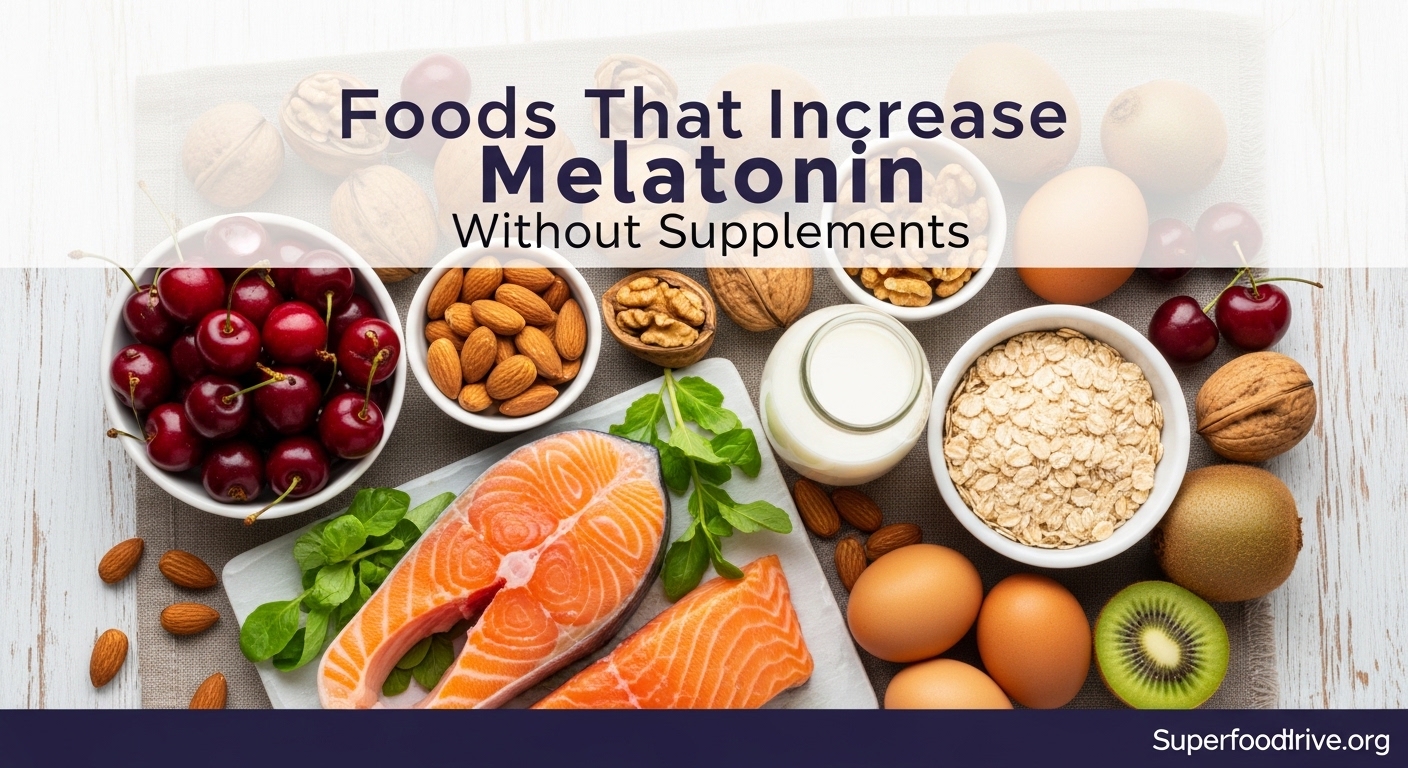
Finding foods that increase melatonin naturally has become one of my top priorities after years of struggling with restless nights. I used to rely on sleep supplements, but I wanted a more sustainable approach that worked with my body instead of overriding it. Through months of research and personal experimentation, I discovered that the right foods can make a remarkable difference in sleep quality without any pills or powders.
This guide covers everything I have learned about melatonin-rich foods, from the science behind how they work to practical meal ideas you can try tonight. You will discover which foods contain natural melatonin, how tryptophan converts into this sleep hormone, and what to avoid eating before bedtime. Whether you deal with occasional insomnia or just want deeper, more restorative sleep, these food-based strategies can help you drift off naturally.
Table of Contents
What Is Melatonin and How Does It Work?
Melatonin is a hormone your pineal gland produces in response to darkness. It acts as your body’s internal clock regulator, signaling that it is time to wind down and prepare for sleep. Your natural production typically starts rising in the evening, peaks in the middle of the night, and then decreases as morning approaches.
The connection between food and melatonin surprised me when I first started researching sleep nutrition. While your body manufactures melatonin internally, certain foods contain this hormone naturally or provide the building blocks your body needs to produce it. Eating these foods gives your system an extra boost of the same compound it already uses for sleep regulation.
The Pineal Gland and Hormone Production
Your pineal gland sits deep in your brain and responds primarily to light cues. When darkness falls, this tiny gland starts converting serotonin into melatonin through a multi-step process. The first step transforms serotonin into N-acetylserotonin, and the second converts that compound into active melatonin.
This production process relies on specific nutrients, including vitamin B6, magnesium, and tryptophan. Without adequate levels of these compounds, your pineal gland cannot manufacture sufficient melatonin for optimal sleep. That is why a nutrient-dense diet plays such a critical role in your sleep quality.
Circadian Rhythm Connection
Your circadian rhythm is the 24-hour internal clock that governs when you feel alert and when you feel sleepy. Melatonin serves as the primary messenger that keeps this rhythm synchronized with the day-night cycle. Disruptions to this system, whether from jet lag, shift work, or late-night screen exposure, throw off your melatonin timing.
Food-based melatonin can help reset this rhythm naturally. Studies show that consuming melatonin-rich foods in the evening supports your body’s natural production schedule. This approach works with your biology rather than forcing sleep through artificial means.
Foods That Increase Melatonin
After testing dozens of foods and reviewing clinical research, I have identified the most reliable dietary sources of natural melatonin. These foods contain measurable amounts of the hormone itself, not just the precursors your body uses to manufacture it. Incorporating them into your evening routine can directly elevate your melatonin levels.
Tart Cherries and Tart Cherry Juice
Tart cherries, particularly Montmorency varieties, contain some of the highest melatonin levels of any food. Research published in the Journal of Medicinal Food found that tart cherry juice concentrate increased melatonin levels in participants and improved sleep duration. I started drinking 8 ounces of unsweetened tart cherry juice about an hour before bed and noticed a difference within three days.
The key is choosing tart cherries rather than sweet varieties like Bing cherries. Tart cherries contain significantly more melatonin per serving. You can eat them fresh when in season, frozen year-round, or as a juice concentrate. Just watch the sugar content in juice products and opt for unsweetened versions.
Pistachios
Pistachios emerged as a surprising melatonin powerhouse in recent research. A 2026 study found that pistachios contain approximately 660 nanograms of melatonin per gram, making them one of the most concentrated food sources available. I now keep a small container of shelled pistachios on my nightstand for a pre-sleep snack.
Beyond melatonin, pistachios provide protein and healthy fats that help stabilize blood sugar overnight. This combination prevents the blood sugar crashes that can wake you up at 3 AM feeling hungry or anxious. About 1 ounce, or roughly 49 kernels, provides an ideal serving size before bed.
Almonds and Walnuts
Almonds contain melatonin along with magnesium, a mineral that supports muscle relaxation and nervous system calm. I find that a small handful of almonds about 30 minutes before bed helps me transition from a busy day into a restful evening. The melatonin content is lower than pistachios but still meaningful.
Walnuts offer a unique advantage because they contain both melatonin and omega-3 fatty acids. The omega-3s support brain health and may enhance the sleep-promoting effects of melatonin. Studies suggest walnuts can improve sleep quality in addition to increasing melatonin levels. Try 1 ounce of either nut as part of your evening routine.
Eggs
Eggs represent one of the best animal-based sources of melatonin. Research shows that eggs contain approximately 20 times more melatonin than other animal proteins. A simple dinner of eggs and vegetables or a hard-boiled egg as an evening snack can contribute meaningful amounts of this sleep hormone.
The melatonin in eggs appears concentrated in the yolk, so whole eggs provide more benefit than egg whites alone. Eggs also contain tryptophan and vitamin B6, both of which support your body’s own melatonin production. This triple action makes eggs a sleep-supporting superstar.
Milk and Dairy Products
Warm milk has earned its reputation as a sleep aid through decades of folk wisdom, and science now backs up this tradition. Milk contains melatonin along with tryptophan, creating a dual-action sleep support system. The calcium in dairy also helps your brain use tryptophan more effectively.
I prefer warm milk with a small amount of honey for taste, though some people skip the honey to avoid sugar before bed. Fermented dairy products like yogurt and kefir also contain melatonin, though in slightly lower concentrations. About 1 cup of milk or a small serving of yogurt provides a beneficial evening dose.
Fish and Seafood
Fish, particularly salmon, sardines, and cod, contain measurable amounts of melatonin along with omega-3 fatty acids. Research indicates that fish consumption correlates with better sleep quality, possibly due to this melatonin content combined with the anti-inflammatory effects of omega-3s.
Oily fish like salmon provide the most benefit, but even white fish contains some melatonin. I try to include fish in my dinner at least twice per week and have noticed improved sleep on those nights. A 4-ounce serving provides adequate melatonin along with high-quality protein that keeps blood sugar stable through the night.
Goji Berries
Goji berries, also called wolfberries, contain significant melatonin levels along with unique antioxidants called zeaxanthin and lutein. Traditional Chinese medicine has used goji berries for sleep and longevity for thousands of years. Modern research confirms they contain more melatonin than most other fruits.
You can eat goji berries dried as a snack, soaked in warm water, or added to evening tea. I find about 1 tablespoon of dried berries provides a noticeable sleep benefit without excessive sugar. Their natural sweetness makes them a satisfying alternative to dessert after dinner.
Mushrooms
Mushrooms, particularly reishi, cordyceps, and even common button mushrooms, contain melatonin. Research from the International Journal of Molecular Sciences documented melatonin in multiple mushroom species, with some varieties containing surprisingly high amounts. This makes mushrooms an excellent addition to evening meals.
Reishi mushrooms deserve special mention because they have been used in traditional medicine specifically for calming the mind and promoting sleep. You can find reishi as a tea, powder, or in whole form. Even adding regular mushrooms to your dinner provides some melatonin benefit along with savory flavor.
Tryptophan Foods That Support Melatonin Production
Not all sleep-supporting foods contain melatonin directly. Some provide tryptophan, an essential amino acid your body converts into serotonin and then melatonin. Understanding this distinction helped me build a more comprehensive sleep-supporting diet.
How Tryptophan Converts to Melatonin
Tryptophan serves as the raw material your brain uses to manufacture serotonin. Once serotonin levels rise in your pineal gland, enzymes convert it into melatonin through the process I described earlier. This conversion requires adequate vitamin B6, magnesium, and a dark environment to trigger the final transformation.
The challenge with tryptophan is that it competes with other amino acids to cross your blood-brain barrier. Eating tryptophan-rich foods alongside carbohydrates can help shuttle more tryptophan into your brain. This explains why combinations like turkey and potatoes or milk and honey work so well for sleep.
Turkey and Chicken
Turkey famously contains high tryptophan levels, which explains the post-Thanksgiving nap phenomenon. Chicken provides similar benefits in a more everyday format. Both poultry options give your body the building blocks needed for melatonin synthesis.
I find that a dinner featuring turkey or chicken, combined with a small portion of complex carbohydrates like sweet potato or brown rice, sets me up for excellent sleep. The protein also helps prevent middle-of-the-night hunger that can disrupt sleep cycles.
Pumpkin Seeds
Pumpkin seeds contain both tryptophan and magnesium, making them a double-action sleep support food. Just 1 ounce provides nearly 40% of your daily magnesium needs along with a meaningful dose of tryptophan. I keep roasted pumpkin seeds in my pantry for an easy evening snack.
The zinc in pumpkin seeds also supports melatonin metabolism. Research suggests zinc deficiency can impair melatonin production, so maintaining adequate levels through foods like pumpkin seeds helps your sleep hormone system function optimally.
Bananas
Bananas contain modest amounts of tryptophan along with magnesium and potassium. The potassium helps relax muscles, while the tryptophan supports melatonin production. I often eat a small banana with a few almonds about an hour before bed for a simple sleep-promoting snack.
The natural sugars in bananas actually help tryptophan reach your brain more effectively. This makes them a better bedtime choice than many people assume. Just choose a slightly green banana if you want to minimize sugar content, as greener bananas contain more resistant starch.
Oats and Whole Grains
Oats contain melatonin in addition to tryptophan, making them one of the most sleep-supporting grains available. A warm bowl of oatmeal in the evening provides complex carbohydrates that help tryptophan cross into your brain, plus direct melatonin content.
Other whole grains like quinoa, brown rice, and whole wheat also support sleep through their carbohydrate content and modest tryptophan levels. I find that a small serving of oatmeal with milk and a few nuts makes the perfect pre-sleep meal when I need something substantial.
Magnesium-Rich Foods for Better Sleep
Magnesium plays a supporting role in melatonin production that many people overlook. This mineral activates enzymes needed to convert serotonin into melatonin. Without adequate magnesium, your pineal gland cannot complete this transformation efficiently, regardless of how much tryptophan you consume.
Magnesium’s Role in Sleep Quality
Beyond melatonin production, magnesium helps activate your parasympathetic nervous system, the branch responsible for relaxation and rest. It regulates neurotransmitters that calm your nervous system and prepares your body for sleep. Magnesium also helps regulate muscle contraction and relaxation, preventing the restless leg sensations that keep many people awake.
Research consistently links magnesium deficiency with poor sleep quality and insomnia. One study found that magnesium supplementation improved sleep time, sleep efficiency, and early morning awakening. Getting magnesium from food sources provides these benefits along with additional nutrients.
Leafy Greens
Spinach, Swiss chard, and kale rank among the best dietary magnesium sources. A large salad with dinner or lightly cooked greens as a side dish provides substantial magnesium along with other sleep-supporting nutrients. I try to include leafy greens at dinner most nights.
Spinach deserves special mention because it contains both magnesium and tryptophan. This combination supports both direct melatonin production and the conversion process. Raw spinach in a dinner salad or lightly wilted into soups and stews preserves more nutrients than overcooking.
Legumes
Beans, lentils, and chickpeas provide excellent magnesium content along with complex carbohydrates and plant protein. Black beans, kidney beans, and edamame are particularly rich sources. A dinner featuring legumes supports sleep through multiple pathways.
Legumes also contain B vitamins that support neurotransmitter function and melatonin synthesis. I find that lentil soup or black bean tacos make satisfying dinners that do not interfere with sleep the way heavier proteins sometimes can.
Dark Chocolate
Dark chocolate contains magnesium along with compounds that can support relaxation. However, it also contains caffeine, which makes it a tricky choice for evening consumption. I recommend dark chocolate only for those who are not sensitive to caffeine, and only in small amounts at least 3 hours before bed.
If you do enjoy dark chocolate, choose varieties with 70% cacao or higher for maximum magnesium content and lower sugar. About 1 ounce provides meaningful magnesium without excessive caffeine for most people. Those sensitive to stimulants should skip this option entirely.
Other Sleep-Supporting Foods and Drinks
Beyond the core melatonin and tryptophan sources, several other foods and beverages support sleep through different mechanisms. I include these in my evening routine for their complementary benefits.
Kiwi Fruit
Kiwi fruit has demonstrated impressive sleep benefits in clinical research. One study found that eating two kiwis one hour before bedtime helped participants fall asleep faster and sleep more soundly. While kiwis do not contain high melatonin levels, they provide serotonin and antioxidants that support sleep quality.
The vitamin C and antioxidants in kiwi may reduce inflammation that interferes with sleep. I eat one or two kiwis about an hour before bed when I want a light, refreshing evening snack. Their natural sweetness satisfies dessert cravings without the sleep-disrupting sugar crash.
Chamomile Tea
Chamomile tea does not contain melatonin, but it provides apigenin, an antioxidant that binds to receptors in your brain promoting sleepiness. This gentle sedative effect makes chamomile tea an excellent part of any bedtime routine. I drink a cup about 30 minutes before I want to sleep.
The ritual of preparing and drinking warm tea also signals to your body that bedtime approaches. This behavioral cue, combined with the biological effects of apigenin, creates a powerful sleep-promoting habit. Choose caffeine-free chamomile and avoid adding sugar.
Warm Milk with Honey
The combination of warm milk and honey represents a time-tested sleep remedy supported by science. Milk provides tryptophan and melatonin, while honey provides carbohydrates that help tryptophan reach your brain. The warmth itself may promote relaxation through temperature effects.
I use about 1 cup of warm milk with 1 teaspoon of honey when I want a comforting pre-sleep drink. The key is keeping the honey minimal to avoid blood sugar spikes. Some people skip the honey entirely and find the warm milk alone sufficiently soothing.
Foods to Avoid Before Bed
Just as certain foods promote sleep, others actively interfere with melatonin production and sleep quality. I learned this lesson the hard way after too many nights ruined by poor evening food choices. Avoiding these foods in the hours before bed is as important as including sleep-promoting options.
Caffeine Sources
Caffeine blocks adenosine receptors in your brain, preventing the natural sleepiness that should build throughout the day. The half-life of caffeine ranges from 5 to 7 hours, meaning an afternoon coffee can still affect your sleep at midnight. I cut off all caffeine after 2 PM to protect my sleep.
Remember that caffeine hides in many sources beyond coffee and tea. Chocolate, energy drinks, some medications, and even decaffeinated coffee contain small amounts. Be mindful of hidden sources that could sabotage your melatonin production.
High-Sugar Foods
Sugary foods cause rapid blood sugar spikes followed by crashes that can wake you up in the middle of the night. Your body releases cortisol during these crashes, which directly opposes melatonin and promotes wakefulness. I avoid desserts and sweet snacks within 3 hours of bedtime.
This includes foods you might not immediately recognize as high sugar, such as white bread, crackers, and many processed snacks. These refined carbohydrates convert quickly to sugar in your bloodstream and trigger the same problematic blood sugar roller coaster.
Heavy or Spicy Meals
Eating a large meal close to bedtime forces your digestive system to work when it should be resting. This activity raises your body temperature and metabolic rate, both of which interfere with sleep onset. Spicy foods can cause heartburn that becomes particularly uncomfortable when lying down.
I aim to finish dinner at least 3 hours before bed and keep evening meals moderate in size. If I need a snack closer to bedtime, I choose something light from the melatonin-rich foods list rather than a heavy meal.
Alcohol
While alcohol initially makes you feel drowsy, it severely disrupts sleep architecture and suppresses melatonin production later in the night. Alcohol fragments your sleep, causing frequent awakenings you may not even remember. It also suppresses REM sleep, the restorative phase essential for cognitive function.
If you choose to drink alcohol, finish several hours before bed and limit the quantity. Even one drink can measurably reduce sleep quality for many people. I find that avoiding alcohol entirely on nights when I need restorative sleep produces the best results.
Practical Tips for Using Food to Improve Sleep
Knowing which foods increase melatonin is only half the battle. How and when you eat them matters just as much. These practical strategies have helped me translate nutritional knowledge into better sleep.
Timing Your Evening Snacks
Eating too close to bedtime can disrupt sleep through digestive activity and blood sugar changes. I aim to have my last substantial meal at least 3 hours before sleep. If I need a snack closer to bedtime, I choose something small from the melatonin-rich foods list about 1 hour before lying down.
The 1-hour window allows time for melatonin-containing foods to be absorbed and start working. Tart cherry juice, a small handful of pistachios, or a kiwi fruit work well in this timeframe. Avoid eating anything in the final 30 minutes before bed to prevent digestive discomfort.
Portion Size Guidelines
From my experience and forum discussions, portion size matters significantly for sleep benefits. Too little and you may not get enough melatonin to make a difference. Too much and digestion interferes with sleep onset. Here are the portions I have found effective:
For melatonin-rich foods, 1 ounce of nuts, 1 cup of tart cherry juice, 1 to 2 kiwis, or 1 hard-boiled egg provides meaningful benefit without overloading digestion. For tryptophan sources, 3 to 4 ounces of turkey or chicken with dinner works well. Keep bedtime snacks under 200 calories to avoid metabolic disruption.
Combining Foods for Maximum Benefit
Combining melatonin-rich foods with tryptophan sources and complex carbohydrates creates synergistic effects. The carbohydrates help tryptophan reach your brain, while the direct melatonin provides immediate support. This multi-pathway approach works better than relying on any single food.
My favorite combinations include oatmeal with milk and almonds, turkey with sweet potato and vegetables, or tart cherry juice with a small handful of pistachios. Experiment to find combinations you enjoy that fit your dietary preferences and restrictions.
FAQ
How to increase melatonin without supplements?
You can increase melatonin without supplements by eating foods that naturally contain this hormone. Tart cherries, pistachios, almonds, eggs, milk, and certain fish all provide measurable melatonin. Additionally, consuming tryptophan-rich foods like turkey and pumpkin seeds gives your body the building blocks to produce its own melatonin. Timing these foods 1 to 2 hours before bed maximizes their sleep-supporting effects.
What foods are naturally high in melatonin?
Tart cherries (especially Montmorency varieties) and pistachios contain the highest melatonin levels of any foods. Other excellent sources include almonds, walnuts, eggs, milk, fish (particularly salmon and sardines), goji berries, and certain mushrooms like reishi. Tart cherry juice concentrate provides a convenient way to consume high amounts of melatonin from a single source.
How do I naturally produce melatonin?
Your body produces melatonin naturally when your pineal gland converts serotonin into this sleep hormone. This process requires darkness as a trigger, so dimming lights and avoiding screens in the evening helps. You can support natural production by eating tryptophan-rich foods that provide serotonin building blocks, ensuring adequate magnesium and vitamin B6 intake, and maintaining a consistent sleep schedule that aligns with your circadian rhythm.
What drink is high in melatonin?
Tart cherry juice is the drink highest in melatonin, with Montmorency cherry juice concentrate providing the most concentrated source. Warm milk also contains melatonin along with tryptophan. Chamomile tea, while not containing melatonin, promotes sleep through other compounds and can complement melatonin-rich beverages. Avoid adding sugar to these drinks, as blood sugar spikes can interfere with sleep quality.
What foods increase melatonin levels?
Foods that increase melatonin levels include tart cherries, pistachios, almonds, eggs, milk, fish, goji berries, and oats. These foods contain melatonin naturally. Additionally, tryptophan-rich foods like turkey, chicken, pumpkin seeds, and bananas help your body manufacture more melatonin. Magnesium-rich foods like leafy greens and legumes support the enzymatic conversion of serotonin to melatonin in your pineal gland.
What to eat before bed if hungry?
If hungry before bed, choose small portions of melatonin-rich foods that combine protein and complex carbohydrates. Good options include a hard-boiled egg, a small handful of pistachios or almonds with a few whole grain crackers, 1 cup of warm milk, or 1 to 2 kiwi fruits. Keep portions under 200 calories and eat at least 30 minutes before lying down to allow digestion to begin. Avoid sugar, caffeine, and heavy fats.
Conclusion
Foods that increase melatonin offer a natural, sustainable path to better sleep without relying on supplements or medications. By incorporating tart cherries, pistachios, eggs, milk, and other melatonin-rich foods into your evening routine, you work with your body’s natural systems rather than overriding them. The addition of tryptophan sources like turkey and pumpkin seeds, plus magnesium-rich foods like leafy greens, creates a comprehensive approach that supports melatonin production through multiple pathways.
Remember that timing and portion sizes matter as much as food choice. Eat your last substantial meal at least 3 hours before bed, choose small melatonin-rich snacks about 1 hour before sleep, and avoid caffeine, sugar, and alcohol in the evening hours. With consistent application of these strategies, you can expect to fall asleep more easily, sleep more soundly, and wake feeling truly refreshed. Start tonight by adding one or two of these foods to your evening routine and notice how your sleep transforms.