
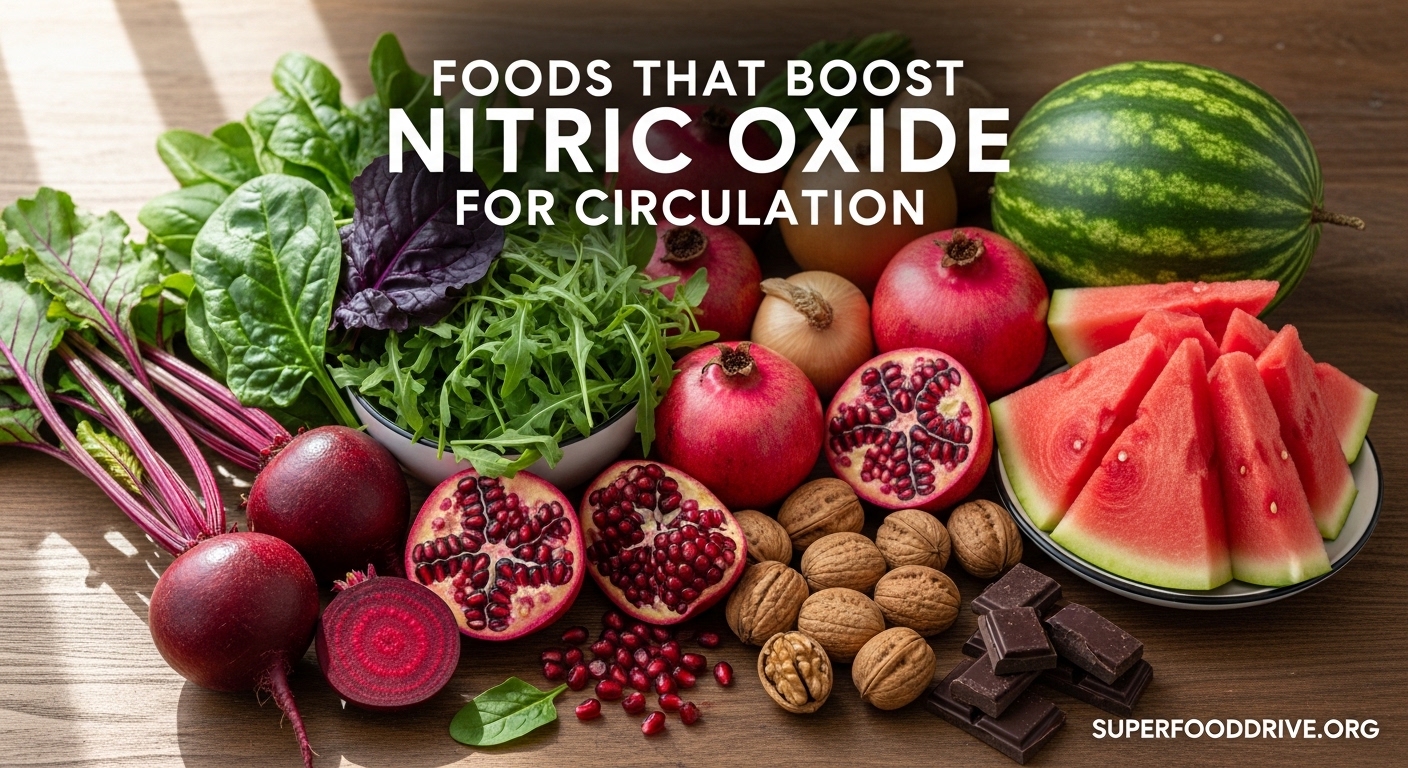
I used to think poor circulation was just something older people worried about. Then I hit my 40s and noticed my hands were always cold, my energy crashed by 2 PM, and my workouts felt harder than they should. After talking with my doctor and doing my own research, I discovered something surprising: the foods I was eating (or not eating) played a huge role in my circulation problems.
That is when I learned about nitric oxide. This tiny molecule acts like a natural vasodilator, helping your blood vessels relax and widen so blood can flow freely throughout your body. The best part? You can boost your nitric oxide levels naturally through the foods you eat.
In this guide, I will share the foods that boost nitric oxide for circulation based on scientific research and real-world results. Whether you want to support your heart health, improve your athletic performance, or just feel more energized, these foods can help.
Table of Contents
What Is Nitric Oxide?
Nitric oxide is a molecule your body produces that signals your blood vessels to relax and expand. This process, called vasodilation, improves blood flow and helps regulate blood pressure. Without enough nitric oxide, your blood vessels stay constricted, which restricts circulation and strains your cardiovascular system.
Your body makes nitric oxide through two main pathways:
The Nitrate-Nitrite-Nitric Oxide Pathway: When you eat nitrate-rich foods like beets and leafy greens, bacteria in your mouth and stomach convert those nitrates into nitrites. Those nitrites then become nitric oxide in your body. This pathway is responsible for about 70% of the nitric oxide circulating in your blood.
The L-Arginine Pathway: Your body can also produce nitric oxide from the amino acid L-arginine, using an enzyme called nitric oxide synthase. Foods high in protein provide L-arginine, which your cells convert directly into nitric oxide.
A third pathway involves L-citrulline, another amino acid found in foods like watermelon. Your body converts L-citrulline into L-arginine, which then becomes nitric oxide. This indirect route actually works well because L-citrulline bypasses some of the absorption issues that can limit L-arginine effectiveness.
Health Benefits of Nitric Oxide
Before diving into specific foods, let us look at why nitric oxide matters for your health. Here are the key benefits:
Improved Blood Pressure
Nitric oxide helps your blood vessels relax, which naturally lowers blood pressure. Studies show that people who consume nitrate-rich vegetables daily can reduce their blood pressure by 4 to 10 points within just a few hours. This effect is comparable to some blood pressure medications.
Better Circulation
When your blood vessels dilate, more oxygen and nutrients reach your tissues. This improved circulation benefits every organ in your body, from your brain to your toes. Better blood flow also helps remove waste products more efficiently.
Enhanced Exercise Performance
Athletes have been using beet juice for years to boost performance, and for good reason. Nitric oxide improves how efficiently your muscles use oxygen during exercise. This means you can exercise longer before fatigue sets in, and you recover faster afterward.
Brain Health
Your brain needs good blood flow to function properly. Nitric oxide helps maintain healthy blood flow to the brain, which supports memory, focus, and cognitive function as you age.
Heart Health
By supporting healthy blood pressure and circulation, nitric oxide reduces strain on your heart. It also helps prevent blood clots and supports healthy endothelial function, which is the lining of your blood vessels.
Signs You May Need More Nitric Oxide
How do you know if your nitric oxide levels are low? While there are not reliable at-home tests, your body gives clues:
Cold hands and feet: Poor circulation means less warm blood reaches your extremities.
Fatigue and low energy: When tissues do not get enough oxygen, you feel tired.
High blood pressure: Constricted blood vessels raise pressure.
Poor exercise recovery: You stay sore longer and bounce back slower.
Brain fog: Reduced blood flow to the brain affects thinking.
If you notice several of these symptoms, increasing nitric oxide-boosting foods could help.
Foods That Boost Nitric Oxide for Circulation
Now for the part you have been waiting for: the best foods that boost nitric oxide for circulation. I have organized them by how they work in your body.
Nitrate-Rich Vegetables (The Power Players)
These vegetables contain high levels of natural nitrates that convert to nitric oxide in your body.
Beets and Beetroot Juice
Beets are the undisputed champions of nitric oxide boosting. A single cup of beetroot juice can contain over 400 milligrams of nitrates. Studies consistently show that beet juice lowers blood pressure and improves exercise performance within 2 to 3 hours of consumption.
I started drinking 8 ounces of beetroot juice before my morning workouts, and the difference was noticeable within a week. My endurance improved, and I was not gasping for breath as quickly.
Arugula
Arugula contains approximately 480 milligrams of nitrates per 100 grams, making it one of the most nitrate-dense foods you can eat. Just two cups of arugula provides a significant nitric oxide boost. Add it to salads, sandwiches, or blend it into smoothies.
Spinach
This leafy green packs about 250 milligrams of nitrates per 100 grams. Spinach is also rich in iron and antioxidants, making it a circulation superfood. Lightly steaming spinach preserves more nitrates than boiling.
Swiss Chard
Swiss chard delivers around 150 to 200 milligrams of nitrates per 100 grams. The colorful stems are edible and nutritious too. Sautee chard with garlic and olive oil for a simple side dish.
Celery
Celery provides about 100 milligrams of nitrates per 100 grams. It is also hydrating and provides electrolytes. Munch on celery sticks with almond butter for a nitrate-rich snack.
Foods High in L-Arginine
These protein-rich foods supply L-arginine, which your body converts directly to nitric oxide.
Turkey
Turkey breast is one of the best sources of L-arginine, providing about 16 grams per breast. It is lean protein that supports muscle repair while boosting circulation.
Chicken
Chicken breast contains roughly 9 grams of L-arginine per breast. It is a versatile protein that fits into almost any meal plan.
Pumpkin Seeds
One cup of pumpkin seeds contains about 7 grams of L-arginine. They are also rich in magnesium and zinc. Roast them with a sprinkle of sea salt for a crunchy snack.
Peanuts
Peanuts provide about 4.6 grams of L-arginine per cup. Natural peanut butter works too, just avoid brands with added sugars and oils.
Soybeans
Edamame and other soy products contain L-arginine along with heart-healthy compounds. One cup of cooked soybeans provides about 3 grams of L-arginine.
Foods High in L-Citrulline
These foods provide L-citrulline, which your body converts to L-arginine and then to nitric oxide.
Watermelon
Watermelon is the best dietary source of L-citrulline. The highest concentration is in the white rind near the skin, so do not cut it all away. Juicing watermelon with the rind included maximizes the benefit.
Cucumber
Cucumbers also contain L-citrulline, especially in their skin. Add sliced cucumbers to salads or infuse them in water.
Bitter Melon
This Asian vegetable contains L-citrulline and has been used traditionally to support healthy blood sugar alongside circulation.
Antioxidant-Rich Foods That Support Nitric Oxide
These foods do not directly provide nitrates or amino acids, but they protect nitric oxide from breaking down in your body.
Dark Chocolate
Dark chocolate with at least 70% cocoa contains flavanols that boost nitric oxide production and protect existing nitric oxide from oxidative damage. One small study found that dark chocolate improved blood flow within two hours of consumption.
Citrus Fruits
Oranges, lemons, and grapefruits are rich in vitamin C, which protects nitric oxide from breaking down. Vitamin C also helps convert nitrites to nitric oxide more efficiently. Start your day with citrus to maximize the benefit.
Pomegranate
Pomegranate juice and seeds contain polyphenol antioxidants that support nitric oxide production and protect blood vessels. Research suggests pomegranate may be particularly beneficial for cardiovascular health.
Garlic
Garlic contains allicin and other sulfur compounds that stimulate nitric oxide production. It also helps blood vessels relax and may improve circulation on its own. Crush or chop garlic and let it sit for 10 minutes before cooking to activate these compounds.
Nuts and Seeds
Walnuts, almonds, and flaxseeds provide L-arginine plus antioxidants that support nitric oxide. They are also rich in healthy fats that support overall cardiovascular health.
How to Maximize Nitric Oxide from Your Diet
Knowing which foods to eat is just the beginning. Here is how to get the most benefit:
Best Timing
Consume nitrate-rich foods 2 to 3 hours before you need the circulation boost. This gives your body time to convert nitrates to nitric oxide. For exercise benefits, have beet juice or a spinach salad before your workout.
Food Combinations That Enhance Absorption
Pair nitrate-rich vegetables with vitamin C sources. The vitamin C helps convert nitrites to nitric oxide more efficiently. Try a beet and orange salad, or add lemon juice to your leafy greens.
Avoid using antibacterial mouthwash before eating nitrate-rich foods. The bacteria in your mouth are essential for the first step of nitrate conversion. Mouthwash kills these helpful bacteria and can reduce nitric oxide production by up to 90%.
Cooking Methods That Preserve Nitrates
Raw or lightly steamed vegetables retain more nitrates than boiled vegetables. If you boil beets or spinach, use the cooking water in soups or sauces to recapture lost nutrients.
Chew your food thoroughly. The longer nitrates stay in your mouth, the more time oral bacteria have to begin the conversion process.
Foods vs Supplements
While L-arginine and beetroot supplements exist, whole foods provide additional benefits. Vegetables give you fiber, vitamins, minerals, and phytonutrients alongside nitrates. Foods also provide a steady release of compounds rather than the spike from supplements.
However, if you need a quick pre-workout boost, beetroot powder mixed with water works well. Just choose products without added sugars or artificial ingredients.
FAQ
What foods increase blood flow and nitric oxide?
The best foods for increasing nitric oxide and blood flow include beets, arugula, spinach, watermelon, garlic, dark chocolate, citrus fruits, pomegranate, turkey, and pumpkin seeds. These foods provide nitrates, L-arginine, or L-citrulline that your body converts to nitric oxide.
What is the most powerful nitric oxide booster?
Beetroot juice is the most powerful nitric oxide booster, with over 400 milligrams of nitrates per cup. Arugula is the most nitrate-dense food at approximately 480 milligrams per 100 grams. Both can lower blood pressure and improve circulation within hours of consumption.
What is the fastest way to increase nitric oxide?
The fastest way to increase nitric oxide is drinking beetroot juice or eating arugula. Effects on blood pressure and circulation can occur within 2 to 3 hours. Avoid antibacterial mouthwash beforehand, as it kills the oral bacteria needed for nitrate conversion.
What drink has the highest nitric oxide?
Beetroot juice has the highest nitric oxide boosting potential of any drink, with 400+ milligrams of nitrates per cup. Pomegranate juice is another excellent choice. For a homemade option, blend beets, arugula, and citrus for a circulation-boosting smoothie.
Are nitrates in food bad for you?
Nitrates from vegetables are not bad for you and actually provide health benefits. Plant nitrates convert to nitric oxide, which supports healthy blood pressure and circulation. This is different from nitrates added to processed meats, which can form harmful compounds when heated at high temperatures.
How much nitrate-rich foods should I eat?
Aim for at least 1 to 2 cups of nitrate-rich vegetables daily. For therapeutic benefits like blood pressure reduction, studies use the equivalent of 1 cup of beet juice or 2 cups of leafy greens. Include a variety of nitric oxide boosting foods throughout your day.
Conclusion
The foods that boost nitric oxide for circulation are some of the most accessible and affordable options in your grocery store. From beets and leafy greens to watermelon and garlic, nature provides everything you need to support healthy blood flow.
Start by adding one or two nitrate-rich foods to your daily routine. Swap your afternoon coffee for beetroot juice. Add arugula to your lunch sandwich. Snack on pumpkin seeds instead of chips. Small changes add up to better circulation and improved overall health.
Remember that foods that boost nitric oxide for circulation work best as part of an overall healthy lifestyle. Combine these foods with regular exercise, adequate sleep, and stress management for maximum benefit.
Disclaimer: This article is for informational purposes only and does not constitute medical advice. Consult your healthcare provider before making significant dietary changes, especially if you have existing health conditions or take medications.