
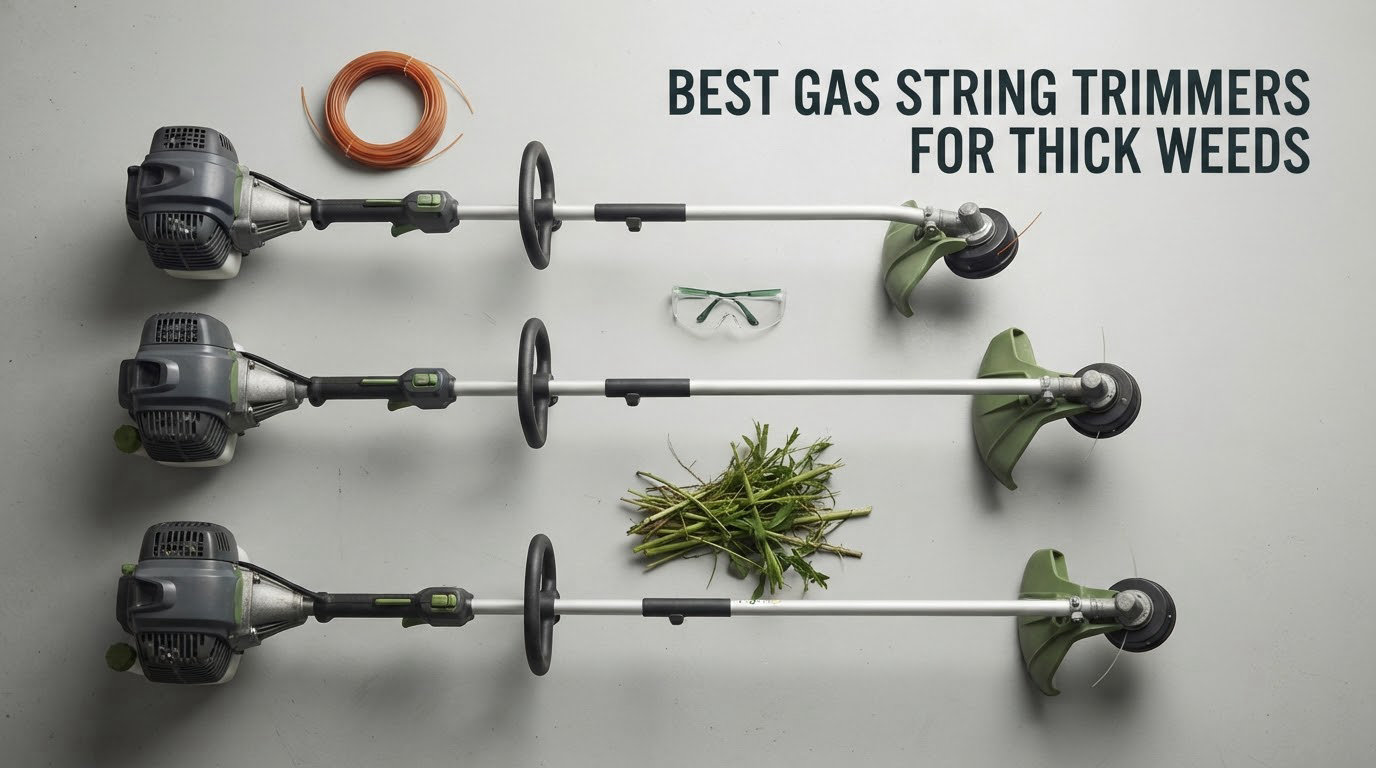
Thick weeds are where cheap trimmers quit. A 22cc two-cycle with a thin .080 line will bog down in knee-high grass, snap line on every woody stem, and leave a half-cut mess behind. What separates a trimmer that powers through a summer’s neglect from one that stalls is a combination of engine displacement, torque, and the right line gauge.
This roundup covers the best gas string trimmers for thick weeds we could justify buying in 2026. We focused on units that handle dense, overgrown growth rather than lawn edging, and we weighed owner review data for every machine: engine size, cutting swath, weight, head type, and how each one behaved when the weeds got woody. Ten trimmers made the list, from a dealer-backed ECHO kit to budget two-cycles with a brush blade in the box.
If you are still deciding between gas and battery, start with our cordless string trimmer comparison first. It is worth doing that math before you buy, because battery tools have genuinely closed the gap on small properties and lost it badly on acreage.
Short answer for most buyers: the ECHO PAS-225VP kit is the balanced all-round choice, the Husqvarna 330LK wins on swath for big properties, and anyone who hates a pull cord should look at the LawnMaster No-Pull 26cc. The shortlist below covers all three in detail.
Top 3 Picks For Best Gas String Trimmers for Thick Weeds (October 2026)


Best Gas String Trimmers for Thick Weeds – Quick Picks
Here is the short version for anyone who wants a verdict before the details.
ECHO PAS-225VP kit – the best all-round pick; 21.2cc pro powerhead, 17 inch cutting path, and an edger attachment in the box.
LawnMaster No-Pull 26cc – best value; electric push start kills the pull cord and the 26cc takes thick wet grass.
Husqvarna 330LK – widest swath here, switchable between 20 and 18 inch, with a click-on attachment shaft.
ECHO SRM-3020T – professional power; 30.5cc, 1.62:1 gear reduction, built for daily commercial work.
PowerSmart 25.4cc 16 inch – best budget power; ships with a 10 inch metal brush blade.
Husqvarna 122LK – straight-shaft reach under low brush with SmartStart and T25 head compatibility.
SENIX 4QL 26.5cc – the no-mixing 4-cycle option at 11.3 pounds, with a standardized attachment coupler.
Troy-Bilt TB25CB – the easy first trimmer; lightweight, curved shaft, SpringAssist starting.
PowerSmart PS4532 25.4cc – budget two-in-one with blade, harness, and low vibration.
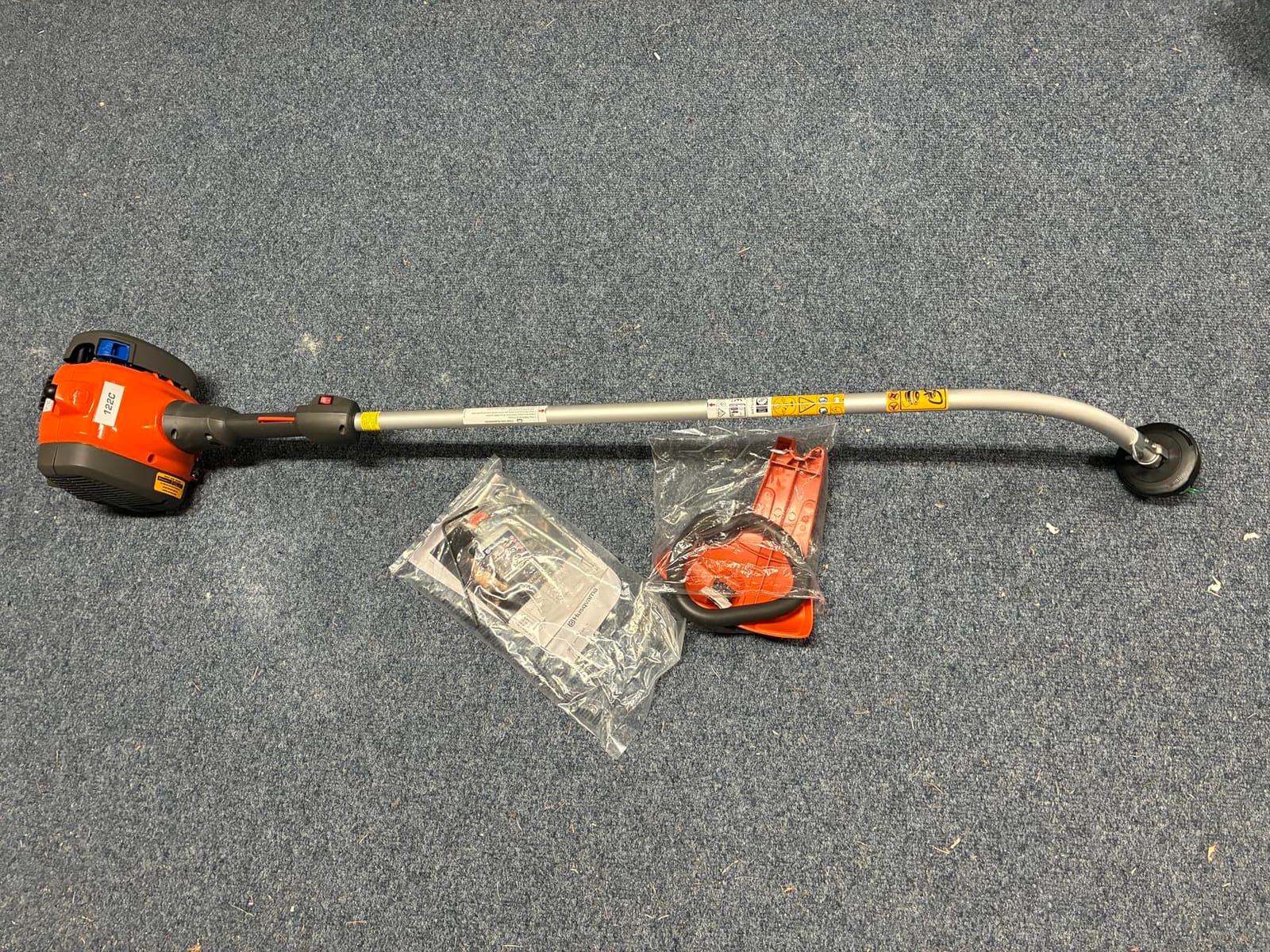
Husqvarna 122C – the lightest unit at 6.9 pounds, best for tight residential work.
Best Gas String Trimmer in 2026
Everything below is a spec you can verify before you buy, not marketing language. Swath is the width the trimmer cuts in a single pass, weight is the listed shipping-ready figure, and cycle type tells you whether you are mixing oil with fuel.
| Product | Specifications | Action |
|---|---|---|
| ECHO PAS-225VP Kit |
|
Check Latest Price |
| LawnMaster No-Pull 26cc |
|
Check Latest Price |
| Husqvarna 330LK |
|
Check Latest Price |
 ECHO SRM-3020T ECHO SRM-3020T |
|
Check Latest Price |
 PowerSmart 25.4cc 16 Inch PowerSmart 25.4cc 16 Inch |
|
Check Latest Price |
 Husqvarna 122LK Husqvarna 122LK |
|
Check Latest Price |
 SENIX 4QL 26.5cc SENIX 4QL 26.5cc |
|
Check Latest Price |
 Troy-Bilt TB25CB Troy-Bilt TB25CB |
|
Check Latest Price |
 PowerSmart PS4532 25.4cc PowerSmart PS4532 25.4cc |
|
Check Latest Price |
 Husqvarna 122C Husqvarna 122C |
|
Check Latest Price |
Reading the table quickly: if your growth is genuinely woody, look for a larger displacement figure and a brush blade option. If your problem is volume rather than woodiness, swath width and weight matter more than cc.
1. ECHO PAS-225VP Kit – The All-Round Pick for Thick Growth
ECHO 17 in. 21.2 cc Gas PAS Trimmer and Edger Kit-PAS-225VP
21.2cc pro powerhead
17 inch cutting path
Curved-shaft edger kit
16.2 lb
Pros
- Professional ECHO PAS platform with multiple attachment options
- Enough torque to edge in heavy clay and handle thick overgrown grass
- Light and easy to handle for a gas unit
- Starts on the first or second pull for most owners
- Runs relatively quietly
Cons
- Less displacement than high-end units so heavy brush and large limbs are out of scope
- Edger attachment is awkward to walk with and throws dirt back at your feet
- One owner reports the engine seizing within three months
The PAS-225VP is the kit version of ECHO’s pro powerhead, and the kit framing matters more than it sounds. You get the 21.2cc powerhead, a 17 inch trimmer attachment, and a curved-shaft edger, all on one platform. Owners with professional equipment describe the powerhead as adequate rather than overwhelming, and honest users benchmark it against Stihl Kombi units and land in the middle.
Where it earns its spot here is consistency. It edges in heavy clay, which is where a lot of cheap trimmers bog, and it handles thick overgrown grass without stalling. At 16.2 pounds it is lighter than most of the gas units we looked at, and most owners report it starting on the first or second pull.
The drive system is worth understanding. ECHO lists 400 rpm at the powerhead, which sounds slow until you realize the trimmer head spins far faster. That gearing is a deliberate trade toward torque and durability over raw speed, and it is the same kind of gear reduction that makes ECHO pro machines feel planted in heavy grass.
Roughly 78 percent of its reviews are five stars, and the recurring theme is value: one powerhead, two tools, and dealer-backed parts availability. Owners in lawn care forums consistently name parts availability and a dealer network as the deciding factor for long-term ownership, and this is where an ECHO kit earns its keep.
Who this trimmer suits
This is the pick for a homeowner or small crew who does everything: fence lines, ditch banks, bed edges, and a lot that has been letting itself go since spring. One machine covers trimming and edging without a second purchase, and the PAS platform means you can add a blower or hedge attachment later.
It also suits people who already know ECHO. If you own other ECHO tools, the fit and feel will be familiar, and the parts shelf at your local dealer is deep.
Where it falls short
Twenty-one cc is not a brush cutter engine. Owners are clear that heavy woody brush and anything limb-sized is out of scope, and experienced users consistently rate it below larger-displacement machines. If your lot has saplings or multi-year-old bramble canes, step up in displacement.
The edger attachment is the weak point ergonomically. Owners describe walking it awkwardly with a sideways step, and several say it throws dirt back onto their feet even with the rubber flaps fitted.
2. LawnMaster No-Pull 26cc – Best Value With an Electric Start
LawnMaster No-Pull 26cc 2 Cycle Engine 17” Grass Trimmer, NPTGSP2617A
26cc 2-cycle
17 inch cut with 0.095 line
400ml tank
18.9 lb
Pros
- No-pull electric push start removes the pull cord entirely
- Plenty of power for thick wet grass compared with cordless trimmers
- Anti-vibration assist handle rotates 360 degrees
- Split shaft accepts attachments and owners have run a roto-tiller head
- Low fuel consumption and quick starts once primed
Cons
- Supplied head and line are stiff plastic and feed unreliably
- Push-start battery can fail and leave the unit unstartable
- Heavier than typical gas trimmers at 18.9 lb
The headline feature here is not power, it is starting. This is the only unit in our set with a true electric push start, rated at up to 250 starts on a single charge, and owners single it out repeatedly as the single biggest quality-of-life upgrade in the category. No pull cord means no arm fatigue, which compounds badly over a long day in thick weeds.
Underneath the gimmick is a conventional 26cc two-cycle with a 400ml fuel tank, a 17 inch cutting width, and a dual-line bump feed head running .095 inch line. That is a sensible thick-weed configuration, and owners compare the power favorably against cordless trimmers in wet, heavy grass.
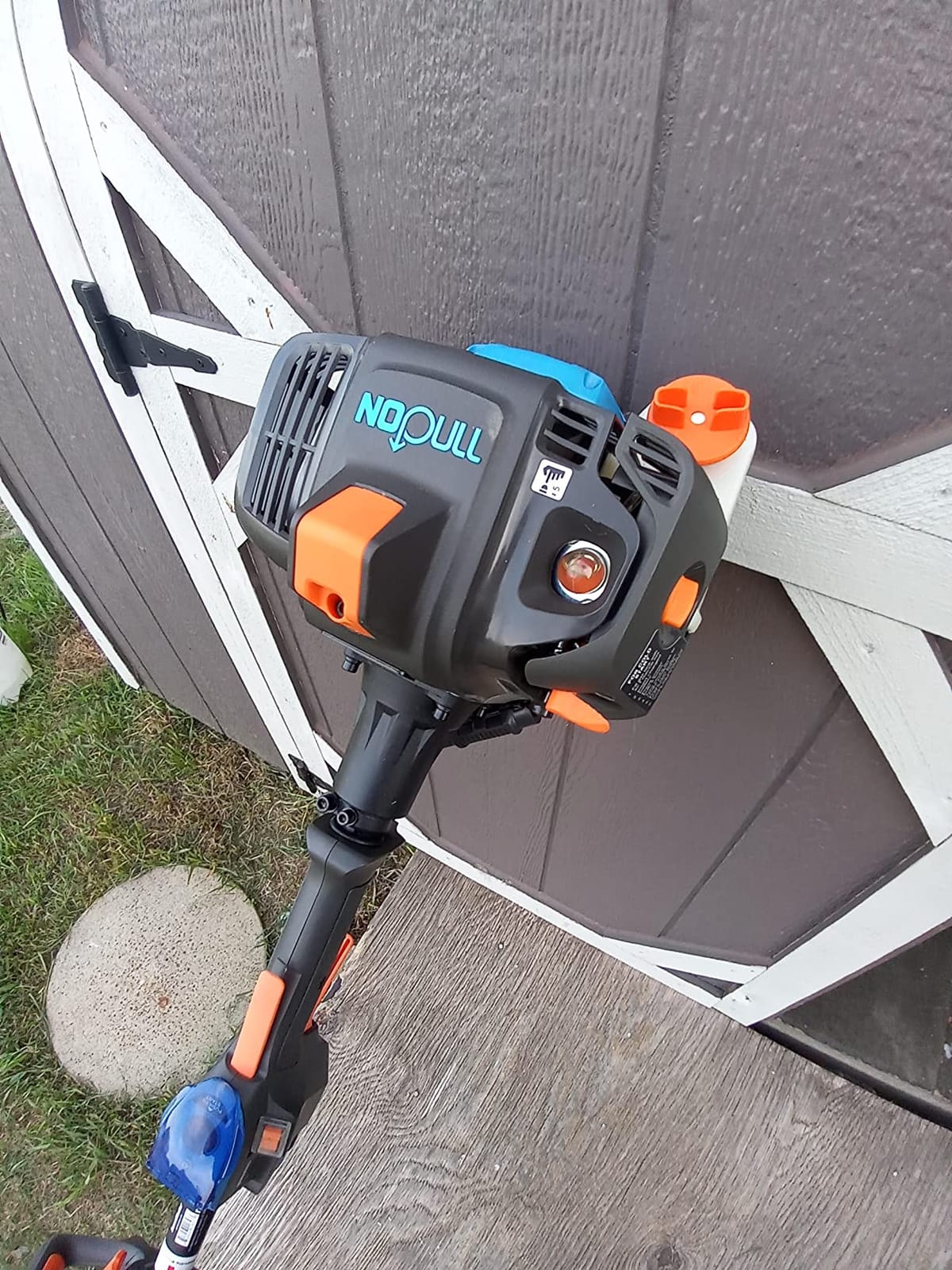
The split shaft is a genuine multi-tool mount, and owners report running a roto-tiller head on it. The anti-vibration assist handle adjusts and rotates 360 degrees, which matters more than it sounds when you are swinging through chest-high weed for an hour.
At 454 ratings this is the most-reviewed machine in the set, which makes its fault line unusually clear. The review pool splits hard into two camps: owners who replaced the supplied head and rate it 5 stars, and owners whose push-start battery died and rate it 1 star. That split is worth taking seriously.
Who this trimmer suits
This suits anyone with a physically demanding property who dreads pull-starting, and anyone who already owns a battery platform and has a spare pack to dedicate to the starter. The 26cc two-cycle and .095 line handle thick weed, and the split shaft opens up attachments later.
It is also a good first gas trimmer for a household where more than one person will use it, since the lowest-skill user can start it without a technique.
Where it falls short
The supplied trimmer head is the weak link. Owners describe the plastic head and line as stiff, feeding unreliably, and snapping off short pieces rather than paying out cleanly. Budget for an aftermarket bump-feed head from day one, and the split rating largely disappears.
The push-start battery is a single point of failure, and owners who have had it die report little manufacturer support afterward. At 18.9 pounds it is also heavier than most gas trimmers in this group, which is why several owners add a strap.
3. Husqvarna 330LK – Widest Swath for Big Properties
Husqvarna 330LK Gas String Trimmer, Weed Eater Gas Powered, 970545002
20 or 18 inch cut
Detachable click-on shaft
12.9 lb
LowVib system
Pros
- Wide 20 inch swath switchable to 18 inch for maximum power in thicker vegetation
- Straight shaft reaches under bushes and around obstacles
- Rapid Replace head makes tool-free line reloads quick
- Spring-assisted start plus Air Purge and automatic stop switch
- LowVib anti-vibration system reduces fatigue on long jobs
Cons
- Heavy build tires you out on extended sessions
- Some owners find the straight shaft long and awkward to control
- Costs more than comparable 25cc models
- Mixed long-term durability reports
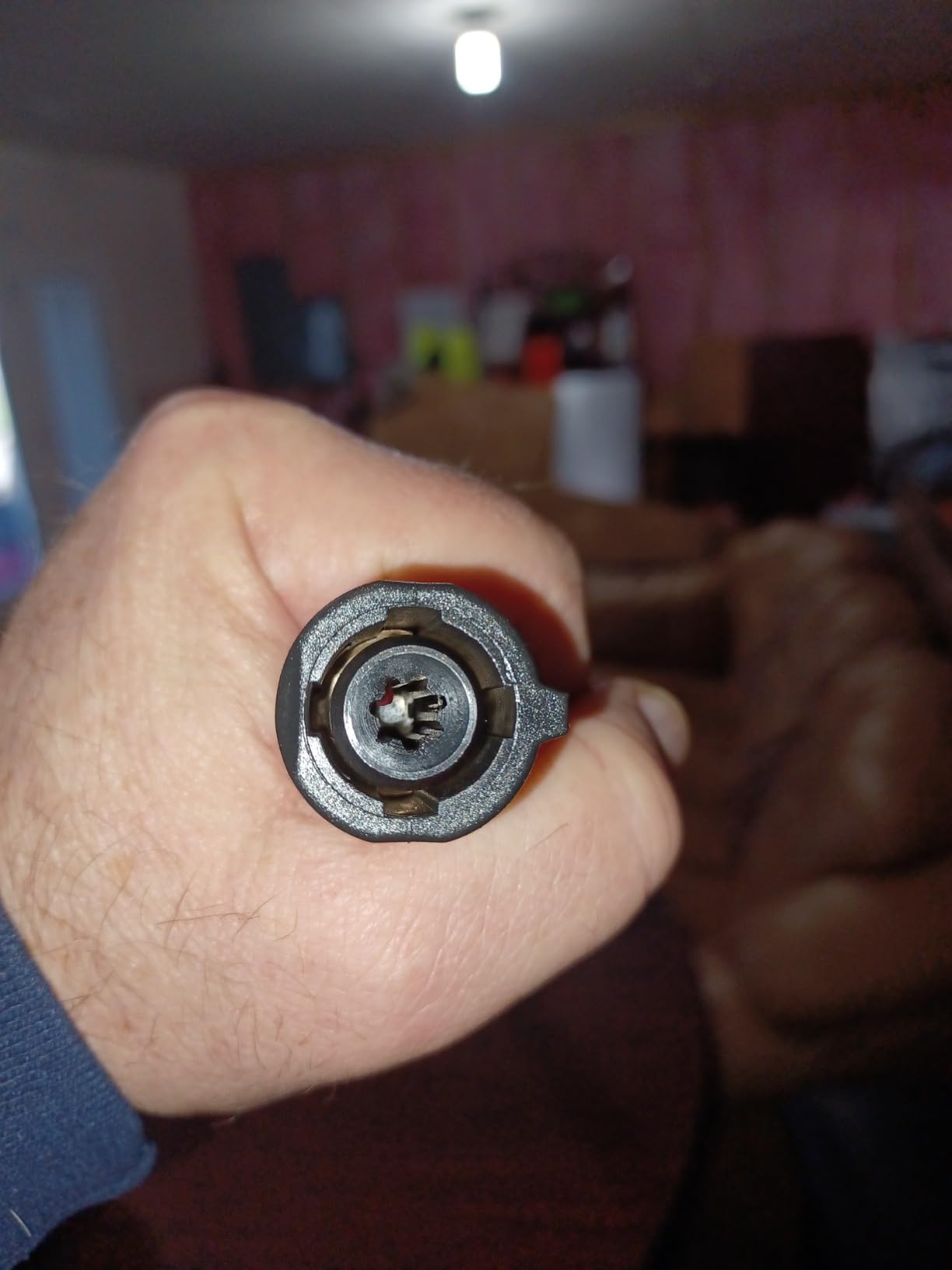
The 330LK’s argument is simple: cut more per pass. It offers a 20 inch cutting width for open ground and an 18 inch setting that Husqvarna positions as the maximum-power option for thicker vegetation. That switchable swath is a smart design for acreage work, because you trade width for torque exactly when the growth gets dense.
The detachable shaft with click-on attachments is the other half of the value proposition. One powerhead covers the trimmer, and anything that clicks on the same coupler, which on Husqvarna’s platform is a long list. Straight-shaft geometry also gets the head under shrubs and inside fence lines where curved shafts cannot reach.
Starting is handled well. The spring-assisted pull start is rated 30 percent easier, with Air Purge and an automatic stop switch that cuts fuel at shutdown to reduce risk of fuel in the cylinder. In practice that means fewer flood-and-purge cycles, which is exactly the pain point owners describe after a machine has sat over winter.
Line changes are quick too, because the Rapid Replace head spins counter-clockwise and comes off without tools. On a big property where you may reload a dozen times a session, that saves real time.
Who this trimmer suits
This is the acreage pick: pasture edges, roadside verges, long ditch banks, and anywhere you would rather cover ground in fewer passes. The LowVib anti-vibration system and 12.9 pound weight make it manageable across a full day if you keep the harness on.
It also suits owners who plan to buy attachments. A detachable shaft on a known platform is the cheapest route to a whole tool wall later.
Where it falls short
Its 3.6 star average is the lowest among the well-reviewed units here, and the pattern is consistent: weight and handling complaints dominate the one-star reviews, while the four and five star reviews praise starting and cutting speed. If you are not physically comfortable with a straight shaft, this is not the machine.
Long-term durability feedback is genuinely mixed, and it costs more than comparable 25cc models. Owners on lawn care forums note that Husqvarna straight-shaft two-cycles have a strong reputation for longevity, but that reputation is earned over years, not verified by the first season.
4. ECHO SRM-3020T – Professional Power for Daily Commercial Work
ECHO X Series 30.5 Cc Professional-Grade Gasoline String Trimmers
30.5cc professional engine
1.62:1 gear reduction
10000 rpm
Pros
- Highest owner satisfaction in our set
- 30.5cc professional power and 10000 rpm for dense heavy growth
- 1.62:1 gear reduction delivers fast efficient cutting speed
- Built for professional landscaping and high-demand trimming
Cons
- Most expensive machine we evaluated
- 50 lb listed weight is a heavy lift for occasional use
- Listed 12 inch cutting width is narrow for its displacement
- Only 50 ratings so less long-term feedback
This is the only machine here with a commercial brief and the numbers to back it: a 30.5cc professional-grade engine running at 10000 rpm with 1.62:1 gear reduction. That gear ratio is the detail that matters. It trades top-end speed for torque at the head, which is precisely the characteristic you want when the line hits a woody stem and the engine must not stall.
At 4.6 stars it has the highest average rating in the set, with 91 percent five-star ratings. Owners describe strong cutting performance and durability in demanding work, and nothing about the feedback suggests the machine is out of its depth in real commercial conditions.
The listed cutting width of 12 inches looks strange next to a 30.5cc engine, and it is worth flagging. Narrow swath on a big engine means you are trading pass width for power. For a crew clearing dense ground where line consumption is the limiting factor, that is a rational trade. For a homeowner who wants to mow down a field edge quickly, it is not.
The listed 50 pound weight points to a shipping or packaged figure rather than a bare-tool measurement, but either way it is described by owners as a heavy lift. Budget for a harness and expect a two-person carry for loading.
Who this trimmer suits
This belongs to crews working dense, woody ground eight hours a day, or to a very large property owner who will put hours on it. The gear reduction and 30.5cc displacement are the configuration that forum owners point to when they describe clearing bramble thickets and second-year growth.
It also makes sense for anyone who already buys ECHO parts and wants the machine to be serviceable for a decade rather than a few seasons.
Where it falls short
It is by far the most expensive machine in this group, and the cost is hard to justify for occasional residential use. Between the purchase, the weight, and the 12 inch swath, a weekend homeowner gets a poor return.
The review base is 50 ratings, which is the thinnest evidence in the set. High ratings on a small pool tell you the people who bought it are happy, not that it has been proven over years, so treat the durability claims as promising rather than established.
5. PowerSmart 25.4cc 16-Inch – Best Budget Power With a Blade
PowerSmart Gas Weed Wacker 2-Cycle 25cc Gas String Trimmer/Edger 16″ and 10″ Brush Cutter & Shoulder Strap Included
25.4cc 2-cycle
16 inch cut
10 inch brush blade
18.7 lb
Pros
- Low-displacement power owners rate above cheaper gas units and cordless trimmers
- Works with the line head and the included metal brush blade
- Quiet operation and low vibration for its class
- Shoulder strap makes the weight manageable for long sessions
- Customer service resolved issues with a partial refund and parts
Cons
- Assembly instructions are confusing for the trimmer head
- Heavier than expected at 18.7 lb
- Reports of a broken handle and a choke switch that arrived broken
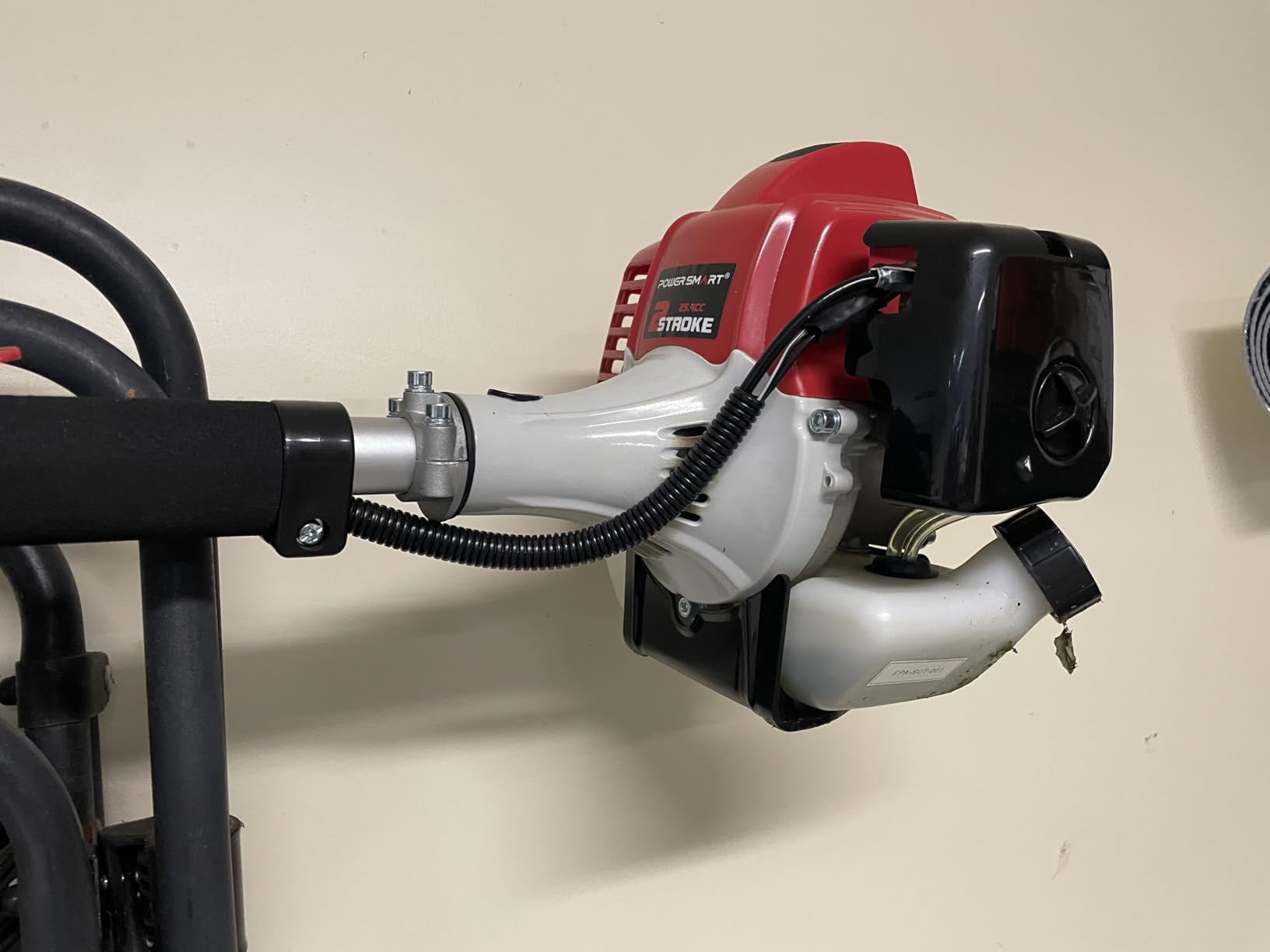
This is the value pick that actually competes on power. A 25.4cc two-cycle with a 16 inch cut and a 10 inch metal brush blade in the box covers both jobs a homeowner thinks of as trimming and brush cutting, and owners consistently say it takes down knee-high grass and small brush with either the line or the blade.
Owners compare it favorably against cordless trimmers on exactly the workloads where cordless struggles, which is the comparison that matters in 2026. A battery trimmer with a dead pack in the middle of an overgrown lot is a bad afternoon; a gas one with a full tank is not.
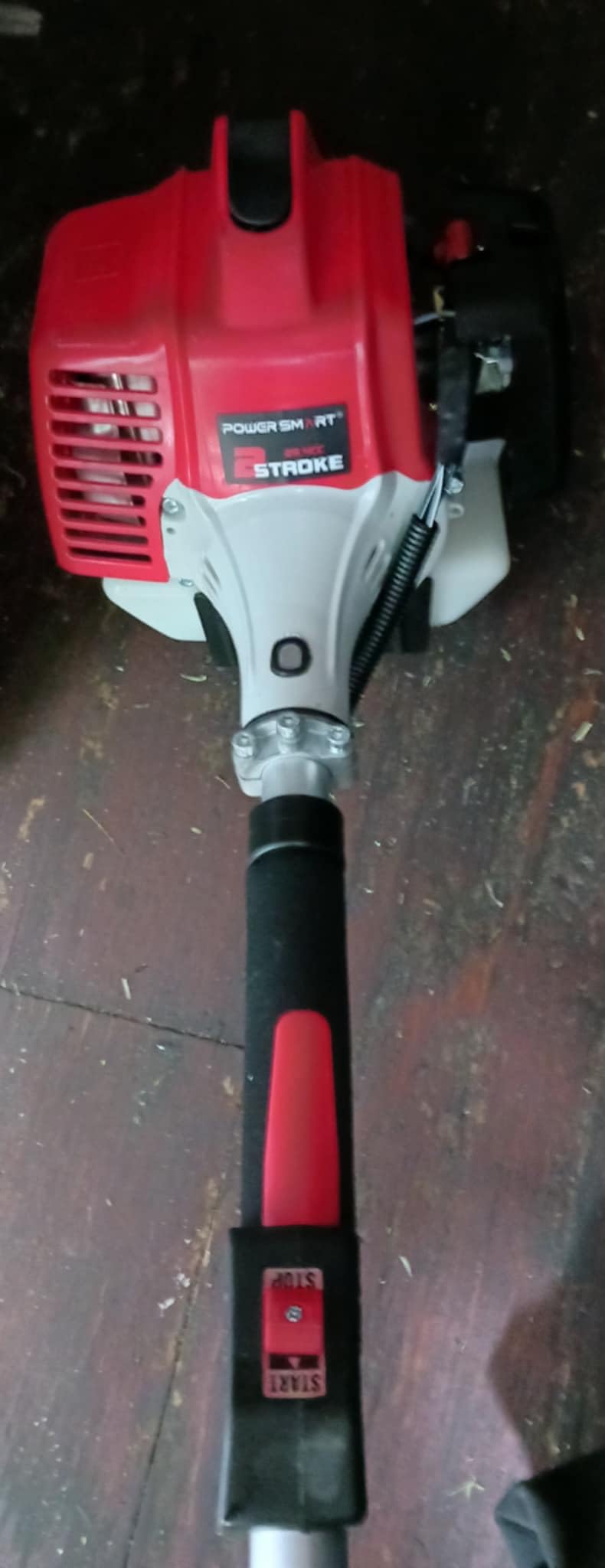
Two details make it livable for long sessions. The shoulder strap is included and owners say it tames the 18.7 pound weight, and the machine is reported as quiet and low vibration for its class. A five-pull starter gets it running quickly, and it disassembles for storage, which matters more than it sounds in a small garage.
It is a 2-in-1 configuration: the 10 inch brush blade and .095 inch line. The low-emission engine design does not change the fuel mixing routine, so plan on pre-mixing for this one.
Who this trimmer suits
This suits a first gas trimmer buyer who has a neglected area and a limited budget but does not want a toy. It suits fence lines, lot corners, and light brush where the blade handles stems the line would snap on.
It is also a sensible second machine for a household where someone else needs to cut without learning a premix ratio, provided you refuel it before they use it.
Where it falls short
Assembly instructions are the most common complaint. Owners specifically flag confusion when mounting the trimmer head, so budget an extra hour with the manual and a YouTube walkthrough on day one.
At 18.7 pounds it is heavier than expected, and the strap is not optional for a full session. There are also isolated quality control reports, including a broken handle and a choke switch that arrived broken, so inspect the machine before you start it.
6. Husqvarna 122LK – Straight-Shaft Reach Under Low Brush
Husqvarna 122LK Grass Trimmer, 22-cc 2-Cycle, 17-inch Straight Shaft Gas Trimmer with T25 Head, 967628203
22cc 2-cycle
17 inch straight shaft cut
T25 head compatible
SmartStart
Pros
- Straight shaft reaches beneath bushes and around obstacles
- Compatible with the durable T25 heavy-duty head and other attachments
- SmartStart gets the engine running with minimal pull effort
- Lightweight and low noise for occasional homeowner use
- Click-on coupling makes attachment changes fast
Cons
- 22cc 2-cycle output is modest against brush cutters for thick weeds
- 2-cycle engine requires premixing oil and fuel
- Only 27 ratings so long-term evidence is thin
The 122LK is the reach specialist. Its straight shaft is the reason to buy it, because a straight shaft puts the head flat and low under shrubs, along fence lines, and inside the base of dense growth where a curved shaft simply cannot fit. If your weeds grow underneath things, geometry beats displacement.
The T25 heavy-duty head compatibility is the detail that lifts this above a basic residential trimmer. The T25 is a well-regarded head for heavier work, and pairing a 22cc engine with a head designed for tough line is a smarter combination than upgrading a bigger engine later.
SmartStart handles the ignition side, cutting the pull effort so the machine starts with a normal cord pull rather than a wrestling match. Click-on attachment coupling means the shaft swaps tools fast, and the whole platform is designed for occasional homeowner use rather than commercial abuse.
Realistically, this is a light-duty engine. Owners at 4.2 stars like the reach, the starting, and the head flexibility, and the criticism that comes back is consistent: 22cc is modest against a brush cutter when the growth is genuinely thick.
Who this trimmer suits
This suits a homeowner with a well-kept property who mostly fights weeds in awkward places, or anyone who already owns pro equipment and wants the Husqvarna attachment ecosystem. It is a comfortable weekend tool, not a machine for clearing a neglected field.
It also suits buyers who plan to fit a blade later. With the right hub and a straight shaft, the platform can grow into brush work.
Where it falls short
Twenty-two cc two-stroke output is the hard ceiling here. If your primary problem is thick weeds rather than tidy-up, the ECHO PAS or Husqvarna 330LK will serve you better for the money.
Two-cycle means premixing, and the marketing versus reality gap on cutting width is worth checking before you buy. With only 27 ratings, long-term evidence on this specific model is thin, so buy it for what it is: a light, reachable, easy-starting trimmer.
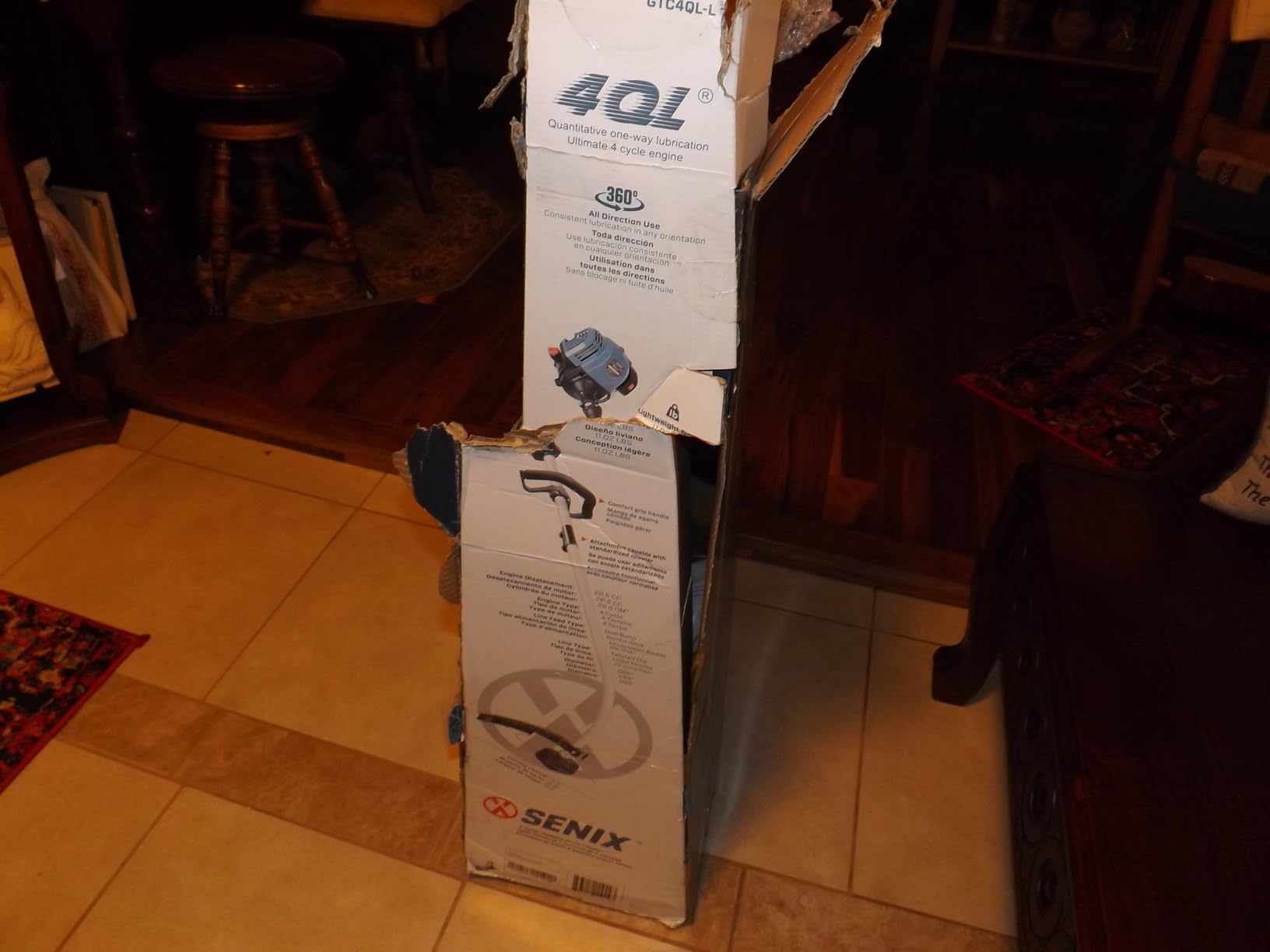
7. SENIX 4QL 26.5cc – The 4-Cycle With No Mixing Routine
SENIX 4QL 26.5 cc Full Crank Gas Weed Wacker, String Trimmer and Edger Lawn Tool with Curved Shaft, Front D-Handle, Bump Feed, 17.7 Inch Cutting Width (GTC4QL-L)
26.5cc 4-cycle full crank
17.7 inch cut
11.3 lb
8000 rpm
Pros
- 4-cycle full crank design so no premixing of oil and fuel
- Low vibration and an 11.3 lb package that maneuvers easily
- Starts on the second pull for most owners
- Standardized coupler accepts brush cutter and chainsaw blades
- Backed by a 3 year limited warranty
Cons
- Bogs down at full throttle on much more than a blade of grass
- Supplied head is reported to crack at the mount within a year
- Eats trimmer line faster than expected
- Reports of a jamming pull cord and early disassembly
The SENIX 4QL is the counterweight to everything else here. A 26.5cc four-cycle full crank engine at 8000 rpm, running .095 inch dual line through a 17.7 inch cut, and the entire fuel mixing step is gone. You put gas in and pull. Owners consistently list that as the reason they would buy it again.
At 11.3 pounds it is the second-lightest machine in this group, and owners praise the low vibration and the compactness of the full crank design, which is stated to be 20 percent more compact than comparable two-cycle engines. That weight advantage is real when you are working thick growth for hours.
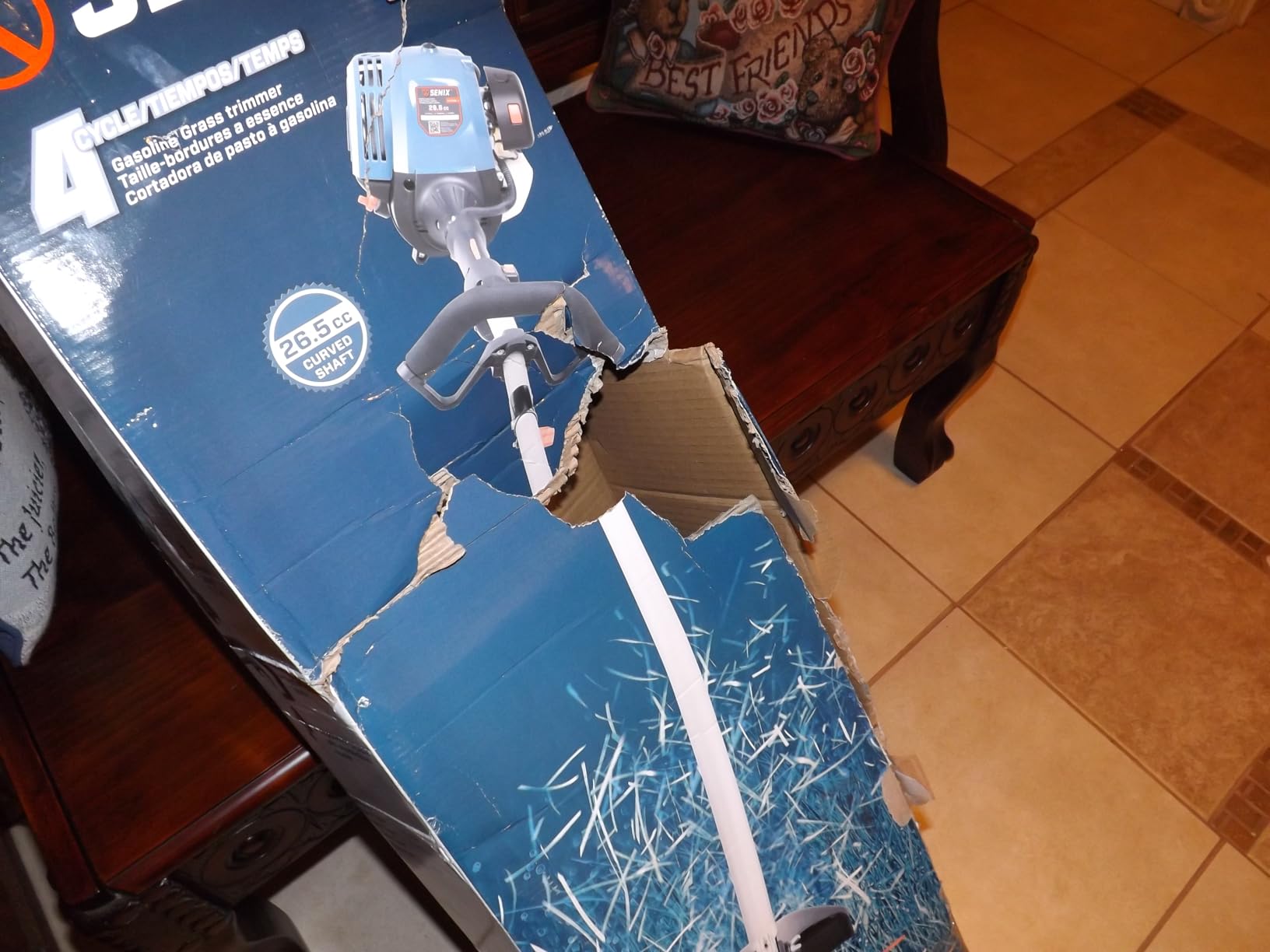
Starting is unremarkable in a good way. Most owners report it starts on the second pull, the curved shaft and front D-handle give good balance, and the standardized coupler means brush cutter and chainsaw blades from the same system bolt straight on. Several owners bought it precisely to add a blade later.
The power story is the tension. Owners who fitted a brush blade are happy; owners who expected a 26.5cc four-cycle to push through heavy wet grass report it bogs at full throttle on much more than a blade of grass. Four-cycle engines trade peak power for the convenience of no mixing.
Who this trimmer suits
This suits anyone who has ever ruined a tank of premix, has multiple people sharing one machine, or simply refuses to measure oil. It is also attractive for fence lines and yard edges on properties that are maintained rather than reclaimed.
If you already own a battery trimmer and want gas for the heavy jobs only, this is a clean second machine because it needs no fuel preparation between uses.
Where it falls short
The underpowered-at-throttle complaint is the most common, and it is exactly the failure mode this category punishes. If thick weeds are your main workload, the 4-cycle convenience is not a trade worth making; read the 2-cycle versus 4-cycle section below before you settle.
Durability feedback is also a concern. Owners report the supplied trimmer head cracking at the mount within a year, faster than expected line consumption, and a small number of severe failure reports involving a jamming pull cord.
8. Troy-Bilt TB25CB – The Easiest Starter for Beginners
Troy-Bilt Gas String Trimmer, 25cc, 16-inch (TB25CB), Red
25cc 2-cycle
16 inch cut
Curved shaft
SpringAssist
Pros
- Lightweight 25cc package comfortable for a wide range of users
- SpringAssist makes the pull start noticeably easier
- Curved shaft gives a clear view and balanced weight distribution
- Multi-position handle reduces vibration and fatigue
- Entry point for basic residential trimming
Cons
- 16 inch swath is narrow for large properties or heavy brush
- Curved shaft limits reach under low obstacles
- Modest 25cc output versus larger brush cutters
- Some owners report starting and reliability trouble after extended use
The TB25CB is a 25cc two-cycle with a 16 inch cutting swath, a curved shaft, and SpringAssist starting. That combination is the classic first gas trimmer, and the reason it keeps selling is that it does the ordinary jobs well without being unpleasant to operate.
The curved shaft is the ergonomic argument. Owners like that it gives a clear view of the cutting area and distributes weight in a way that feels balanced, and the multi-position adjustable handle is reported to cut vibration and fatigue on longer sessions. For a first timer, that is worth more than raw displacement.
SpringAssist reduces the effort on the pull cord, which matters disproportionately to people who have never used a recoil starter. It does not eliminate the cord, and it is not comparable to the LawnMaster’s electric start, but it is a meaningful improvement over a bare engine.
Being clear about limits: a 16 inch swath is narrow. On a large property or in heavy brush you will be making noticeably more passes than with an 18 or 20 inch machine, and the curved shaft means you cannot get under low obstacles.
Who this trimmer suits
This suits a first-time gas trimmer owner with a normal residential yard, a household member who will use it occasionally, and anyone who values a light, balanced, forgiving tool over raw capability. It is also a good second trimmer for edging duty.
Buyers who want the lightest handling in this group but need a bit more assurance than an ultralight 22cc offers will find 25cc a reasonable middle.
Where it falls short
It is a light-duty machine, and 25cc two-stroke output plus a 16 inch cut caps what it can take. Owners are candid that it suits ordinary residential trimming and light weed work rather than thick brush, and the curved shaft costs you reach in exactly the dense low growth most associated with weed problems.
A minority of reviews report difficulty starting and reliability problems after extended use, which is a fair warning if you have no patience for a stubborn recoil. For genuinely thick weeds, look at the ECHO kit or the PowerSmart blade-equipped options instead.
9. PowerSmart PS4532 25.4cc – Budget Two-in-One With Blade and Harness
PowerSmart 25.4cc Gas Weed Wacker, 16 Inch Cutting Width with 10 Inch Blade
25.4cc 2-cycle
16 inch cut
10 inch blade
18.8 lb
Pros
- 25.4cc power handles the toughest weeds and small brush on a budget
- Works as trimmer and brush cutter with the included 10 inch blade
- Low vibration and smooth operation when properly balanced
- Shoulder harness included to offset the weight on long sessions
- Lowest cost in this set with no fuel mixing shortcuts taken
Cons
- 18.8 lb is tiring without the harness
- Assembly directions are unclear for mounting the head
- Occasional reports of a broken choke switch or failure within weeks
- Straightforward head rather than a heavy-duty bump feed
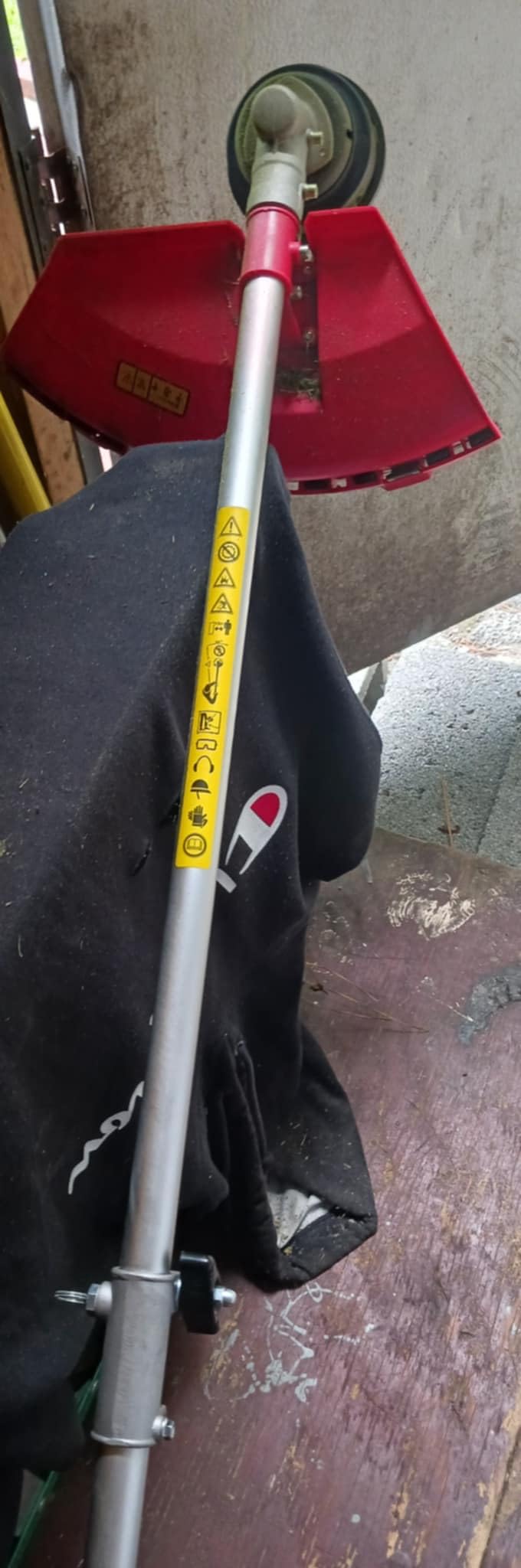
This is the sibling of the PowerSmart 16 inch we featured earlier, and it earns its place for a specific reason: the shoulder harness is the point. At 18.8 pounds this is a heavy machine, and the included harness is what turns it from a short-task tool into something you can carry around a large property for an afternoon.
Mechanically it is the same core package: 25.4cc two-cycle, 16 inch cutting width, a 10 inch brush blade plus .095 inch line, low-emission engine design, and a five-pull starter that disassembles for storage. Owners with 62 percent five-star ratings highlight the low-cost power, the working blade, and the low vibration.
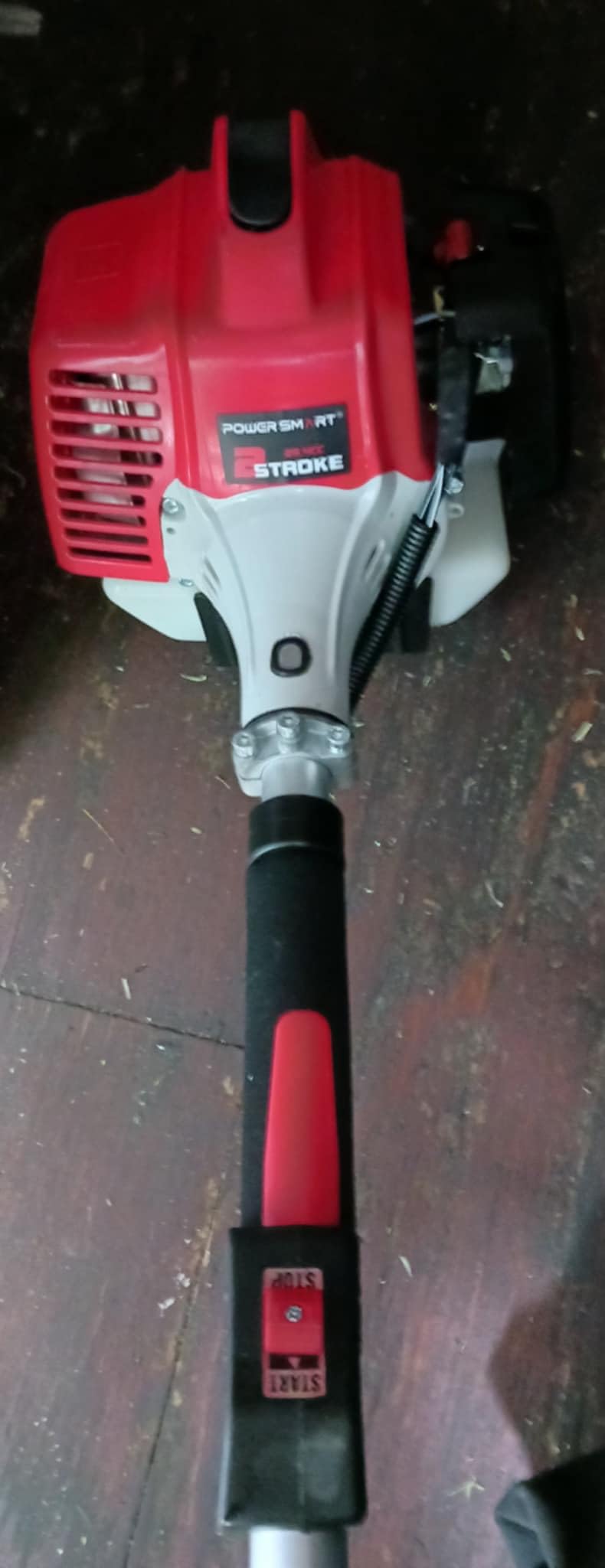
That smooth, low-vibration operation matters in thick weeds because vibration is what actually ends your session. A machine that feels planted lets you keep cutting past the point where a buzzier one has driven you to stop for the day. Fit the harness first, before the tank is full.
The 2-in-1 configuration is what makes it viable for overgrown ground. The line handles grass and weeds; the blade handles stems and light brush. Switching between them is the difference between a trimmer that stalls and one that finishes.
Who this trimmer suits
This suits a homeowner with moderate overgrowth and a tight budget who expects to use the blade as often as the line. It is a sensible pick if you already know you will be carrying it across uneven ground, because the harness is included rather than sold separately.
It also suits anyone who wants brush-cutter capability without buying a dedicated brush cutter, provided the growth is small stems rather than saplings.
Where it falls short
Weight is the recurring theme. Owners call 18.8 pounds tiring without the harness, and the harness is not a fix for the fact that this is a heavy machine in a light class.
Setup instructions are again the most common complaint, particularly for mounting the head, and there are occasional reports of a broken choke switch or failure within weeks. The supplied head is also a straightforward design rather than a heavy-duty bump feed built for sustained brush work.
10. Husqvarna 122C – The Lightest Curved-Shaft Workhorse
Husqvarna 122C, 22-cc 2-Cycle, 17-inch Curved Shaft Gas String Trimmer with Tap N’ Go Trimmer Head, 966712703
22cc 2-cycle
17 inch cut
Tap N Go head
6.9 lb
Pros
- Lightest unit we evaluated at 6.9 lb and easy to maneuver
- SmartStart and Air Purge make starting quick and low effort
- Tap N Go head makes line changes fast
- Low-noise 22cc engine design
- Backed by a 2 year limited consumer warranty
Cons
- 22cc 2-cycle power is light for the thickest weeds and woody brush
- 2-cycle engine requires premixing oil and fuel
- Curved shaft reduces reach under low obstacles
- Several 1 star and 2 star reviews cite durability or power
At 6.9 pounds listed weight, the 122C is the lightest machine here by a wide margin, and that is the entire pitch. If you are older, recovering from an injury, working on slopes, or simply tired of a machine that fights you, weight is the spec that decides your day.
It is a 22cc two-cycle at 8000 rpm with a 17 inch cutting width and a Tap N Go heavy-duty twin-line head that spins counter-clockwise. The curved shaft makes it easy to maneuver around obstacles, and the heavy-duty head is a better match for thick growth than the lightweight heads on cheaper trimmers.
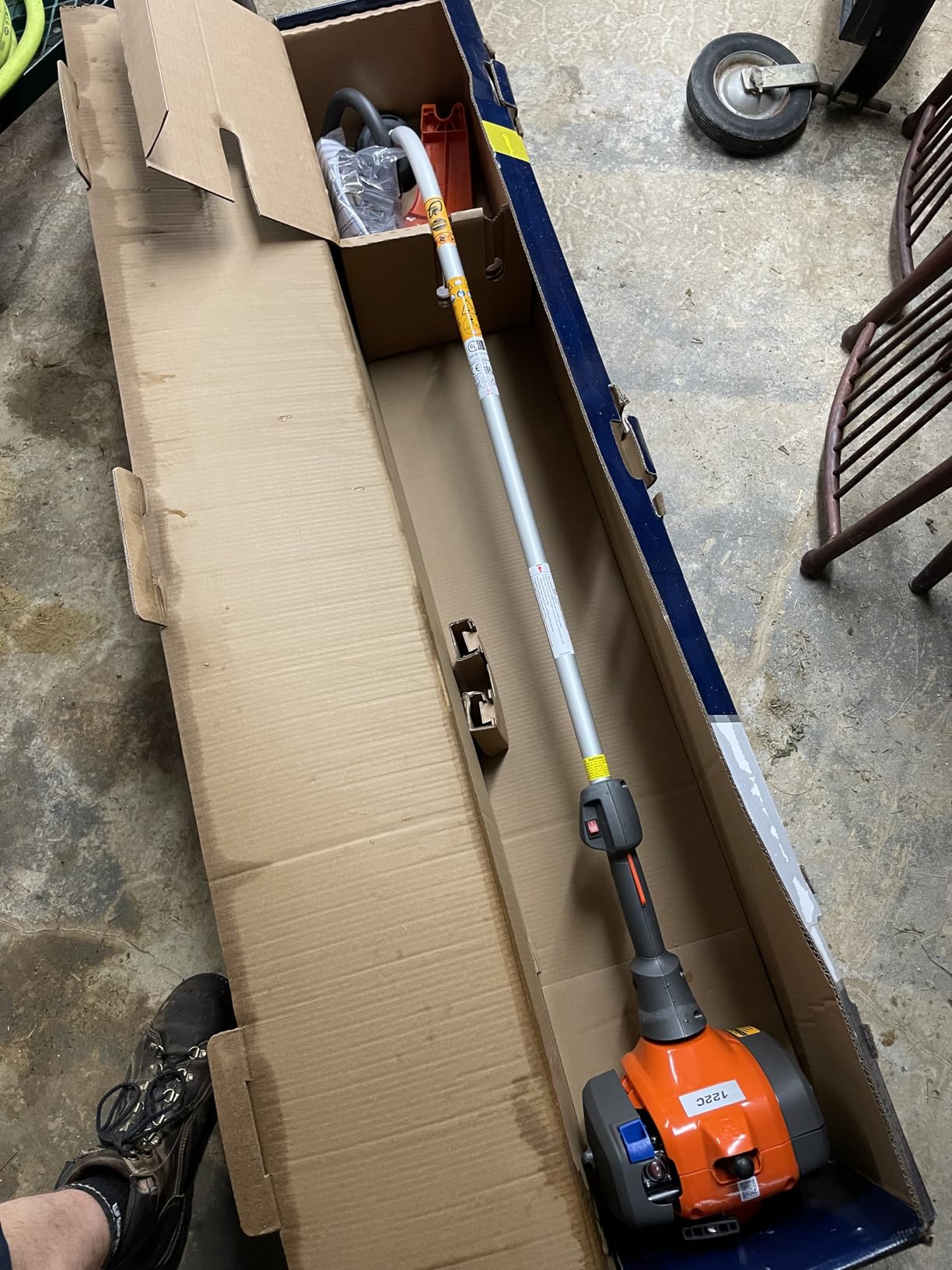
SmartStart and Air Purge handle starting, and the Air Purge is the feature owners value most after storage. It pushes air out of the carburetor and fuel system so the first pull primes the engine, which is the difference between a machine that fires on the first pull in spring and one you fight for ten minutes.
At 3.9 stars, the feedback reads as respect with reservations. Owners like the weight, the quietness, and the simplicity, and the recurring criticism is that 22cc simply is not enough power for the thickest weeds and woody brush.
Who this trimmer suits
This suits anyone whose priority is handling over capability: small gardens, elderly owners, users with back or shoulder limitations, and anyone who wants a trimmer they can work all day without arm fatigue. The Tap N Go head keeps line changes fast, which is helpful if you run it often.
It is also a good second machine for edging and tidy-up duty in a multi-level property.
Where it falls short
It is a light-duty trimmer and should be read as one. The 22cc two-cycle output is thin for woody brush, and the curved shaft means you are trading reach for maneuverability, which is a poor trade when weeds are growing beneath obstacles.
Several one and two star reviews cite durability and power directly, and its 41 ratings leave long-term evidence unproven. If thick weeds are genuinely your main task, this is not the machine, and spending a little more on displacement will save you time.
What String Trimmer Line Actually Cuts Thick Weeds
For thick weeds, use .080 inch line as your minimum and .095 inch when the growth is woody. Anything thinner will snap on stems, and every snap means stopping, restringing, and restarting.
Tapered line is the upgrade worth making over round line. The taper spins at a different speed at the tip than at the spool, so a tapered profile cuts harder at the business end while using less line overall. Round line is cheaper and lasts longer between changes but hits less like a blade.
Head type changes your workflow more than people expect. A bump feed head is the most common and the most practical: tap the head against the ground while it spins to pay out fresh line. A Tap N Go head spins counter-clockwise so you can wind line on manually, which means no bump and no debris stuck in the bump button.
Two things cause most of the stalling people complain about. The first is line gauge, which is covered above. The second is simply too little engine for the growth, and no amount of heavier line fully fixes a 22cc two-cycle meeting a woody stem at full throttle. Owners repeatedly report that upgrading the head changes the experience more than upgrading the line, so a better bump feed head is a cheap first move.
Legal note worth knowing: many jurisdictions restrict string trimming near fences, trees, and roadsides precisely because of flying debris. Check local rules before you work a boundary line, and always mow or trim away from sensitive surfaces.
2-Cycle vs 4-Cycle – Which Engine Handles Thick Weeds Best
Two-cycle engines make more power for their displacement and that is why they dominate this category. The cost is fuel mixing: oil and gasoline combined in a container, usually 40 to 1, at the correct ratio every single time.
Four-cycle engines take straight gasoline, run cleaner, lubricate in any orientation, and typically produce less vibration. In return you usually get less peak output for the same cc, which is exactly why the SENIX 4QL in this set draws complaints about bogging down.
For thick weeds specifically, two-cycle is the safer bet. The power-to-weight advantage is real, and the machines built for brush work in this list are nearly all two-strokes. Choose four-cycle when the work is light, the machine is shared, or nobody wants to premix.
Full crank shaft design is a related term you will see. It means the engine’s crankshaft is supported at both ends, which improves balance, durability, and cold starting compared with the older half-crank layout. It is why the SENIX four-cycle can be compact and light at the same time.
Straight Shaft vs Curved Shaft for Overgrown Ground
Curved shafts put the head below and beside you with a clear view of where you are cutting, and they distribute weight well. That makes them comfortable for maintained properties and for edging work.
Straight shafts keep the head in line with the engine, which means more reach under shrubs, inside fence lines, and into low dense growth. If your weeds grow underneath things, this is the deciding feature, not a preference.
The tradeoff is control. A straight shaft is longer and its head reacts more sharply when it hits a solid object, which is why some owners of the 330LK describe it as awkward. Most complaints about straight shafts come from users who bought one for comfort reasons.
When a String Trimmer Is Not Enough – Trimmer vs Brush Cutter Threshold
A string trimmer is the right tool up to roughly 1 inch of woody diameter. Past that, you are into brush cutter territory, and pushing a trimmer through larger stems wastes line and wears the head and gearbox.
Beyond about 1.5 to 2 inches, stop trimming and cut. Owners with brush cutter experience describe that range as the practical ceiling for a line head, and forums consistently flag the string trimmer versus brush cutter confusion as the single most common tool-buying mistake.
On a lot that has not been touched in a season, the smart sequence is to cut the large woody material first with a blade-equipped machine and then finish with the string trimmer. Trying to do both with one string head is how people end up with a spool of snapped line and a sore shoulder.
Most of the machines in this roundup that ship with a 10 inch brush blade, including both PowerSmart models, bridge this gap. That is the single most useful feature to check for if your growth is beyond ordinary weeds.
How to Choose a Gas String Trimmer for Thick Weeds
Start with the weeds, not the machine. Measure the diameter of the thickest stems you expect to face. Under half an inch, any of these trimmers works. Past an inch, prioritize displacement and make sure the machine accepts a brush blade.
Displacement is the next filter. In this roundup the range runs from 21.2cc on the ECHO kit up to 30.5cc on the professional ECHO, with most residential choices clustered between 22cc and 26.5cc. Under about 22cc, you are choosing a light-duty trimmer and should not expect it to handle woody stems.
Cutting swath decides how many passes you make. A 16 inch cut means more trips across an open area; 18 to 20 inch cuts cover ground in fewer passes. The Husqvarna 330LK’s switchable 18 and 20 inch setting is a smart answer to that, since you can trade width for power when growth thickens.
Weight matters more than buyers expect. Three of the machines here exceed 18 pounds, and every one of them includes a shoulder strap or harness. If your sessions run past an hour, assume you will use it, and factor it into the machine you pick.
Head type and line compatibility come next. Confirm the head accepts .080 or .095 inch line, and note whether the supplied head is a light-duty design. Several owners in this set upgraded the head and saw the biggest single improvement in how their trimmer handled thick growth.
Starting effort deserves a weight of its own. Spring-assisted, SmartStart, and Air Purge systems exist because hard starting is the number one complaint across owner reviews. The electric push start on the LawnMaster is the extreme version of the same idea.
Finally, consider where parts will come from. Dealer-backed brands such as ECHO, STIHL, and Husqvarna have service networks and stocked parts, which owners on lawn care forums consistently name as the deciding factor for a tool expected to last a decade. If you want that, pay for it up front rather than replacing a whole machine.
Fuel, Mixing and Off-Season Storage That Extends Tool Life
Ethanol in modern gasoline is the leading cause of the gummed carburetors and post-storage starting failures that dominate owner complaints. Ethanol-free fuel, where available, is the single highest-return habit in this list.
If you must use ethanol-containing fuel, buy a reputable stabilizer and add it every time you fill the tank, not just before long storage. The protective additive is cheaper than a carburetor rebuild.
For two-cycle machines, premix at 40 parts gasoline to 1 part two-stroke oil unless the engine manual specifies otherwise. Mark the fuel can with a permanent marker so the ratio is never guesswork, and never run a machine on straight gasoline with a two-stroke engine.
A five-step off-season routine covers most of it. Run the engine nearly out of fuel or empty the tank completely. Pull the spark plug, put a dab of grease on the tip, and leave it in. Clean or replace the air filter, because a clogged filter is the main cause of hard starting later. Change the spark plug if it is more than a season old. Store the machine somewhere dry, ideally hanging or lying on its side, and pull the trigger a few times to move oil into the cylinder.
Long-term owners report that professional-grade gas trimmers run on non-ethanol fuel and maintained on schedule can last a decade or more with very little work. The same owners describe machines that sat a season in ethanol-treated fuel needing carburetor service before they would run again.
Gas vs Battery for Thick Weeds – Honest Tradeoffs by Property Size
Under a quarter acre of maintained lawn, a battery trimmer is the better tool. Quieter, lighter, no mixing, no starting, and no exhaust in your face. Cordless owners in lawn care forums describe them as the default for lawn edges and ordinary weeds.
Once the workload involves tall grass, large weeds, and long unbroken runs, the comparison reverses. Runtime becomes the binding constraint, and a battery that is flat at the far end of a property is a real problem, not an inconvenience.
Gas wins decisively for acreage, ditch banks, roadside work, and post-storm cleanup. The torque headroom and unlimited runtime matter more there than noise and simplicity. Our full string trimmer roundup covers the cordless side in more depth if you are weighing a two-tool setup.
Where hedges and small woody growth are involved, a dedicated tool still wins. Our hedge trimmer picks handle that work with far less fuss than any string head.
Safety Gear and Technique for Cutting Thick Weeds
Eye protection and hearing protection are not optional, and the noise these machines produce makes ear protection the one most often skipped.
Wear eye protection, hearing protection, gloves, and long trousers before you start the engine.
Keep other people and pets out of the cutting path. Line throws debris further than you expect.
Cut with the head spinning counter-clockwise and keep the debris side away from you and away from bystanders.
Sweep slowly at the near edge of the growth first, then work into the dense material. Do not attack the thickest part at full throttle on the first pass.
Pause frequently in thick weeds. Most line snaps and most near-misses come from rushing.
If you fit a metal brush blade, stop and think. Blades throw stones and wood chips, and a blade cannot be used near people or vehicles.
Check the ground for wire, fencing, and irrigation line before you cut. This is the most common cause of a head replacing a line spool.
Also keep the machine’s guard and deflector fitted. It is the least glamorous part of the tool and the reason many injuries never happen.
Frequently Asked Questions
What string trimmer is best for thick weeds?
The ECHO PAS-225VP kit is our pick for thick weeds because its 21.2cc professional powerhead holds torque in dense growth and starts easily, and the kit includes an edger attachment. The Husqvarna 330LK wins on swath width for large properties, and the ECHO SRM-3020T is the choice for daily commercial brush work.
What is the best tool to cut through thick weeds?
A string trimmer handles weeds up to roughly 1 inch in diameter. For growth from about 1.5 to 2 inches, use a brush cutter with a metal blade instead, then finish with the string trimmer. Several trimmers in this roundup ship with a 10 inch brush blade and can cover both jobs.
What is the best string trimmer line for heavy weeds?
Use .080 inch line as a minimum for thick weeds and .095 inch when growth is woody. Tapered line cuts harder at the tip while using less overall, and it beats round line in dense vegetation. Pair heavier line with a good bump feed head, and replace the supplied lightweight head if the machine came with one.
How to cut down large, thick weeds?
Start the engine and let the head reach full speed, then sweep into the growth at the near edge rather than driving straight into the thickest section. Keep the head spinning counter-clockwise with debris directed away from people and pets, wear eye and ear protection, work slowly, and stop frequently. Switch to a brush cutter blade once stems exceed about 1.5 inches.
Why does my string trimmer stall on thick weeds?
The usual causes are line that is too light for the growth, an engine with too little displacement, dull or old line, or a partially clogged air filter. A clogged filter and stale ethanol-containing fuel are the most common reasons a machine will not restart after storage. Replace the air filter and run ethanol-free fuel with stabilizer added.
Final Verdict
For most people buying the best gas string trimmer for thick weeds, the ECHO PAS-225VP kit is the answer. It covers trimming and edging on one pro powerhead, weighs less than most of the machines here, and starts when you ask it to.
Buy the Husqvarna 330LK if acreage is the issue and swath width is what saves you time. Buy the LawnMaster No-Pull 26cc if the pull cord is the thing standing between you and the yard, and budget for a replacement head. Go to the ECHO SRM-3020T only if you are cutting dense growth daily and can justify the weight.
Whatever you choose, run ethanol-free fuel where you can, premix two-strokes at 40 to 1, and fit a harness on anything above 18 pounds. Those three habits do more for tool life than any feature on the spec sheet.