
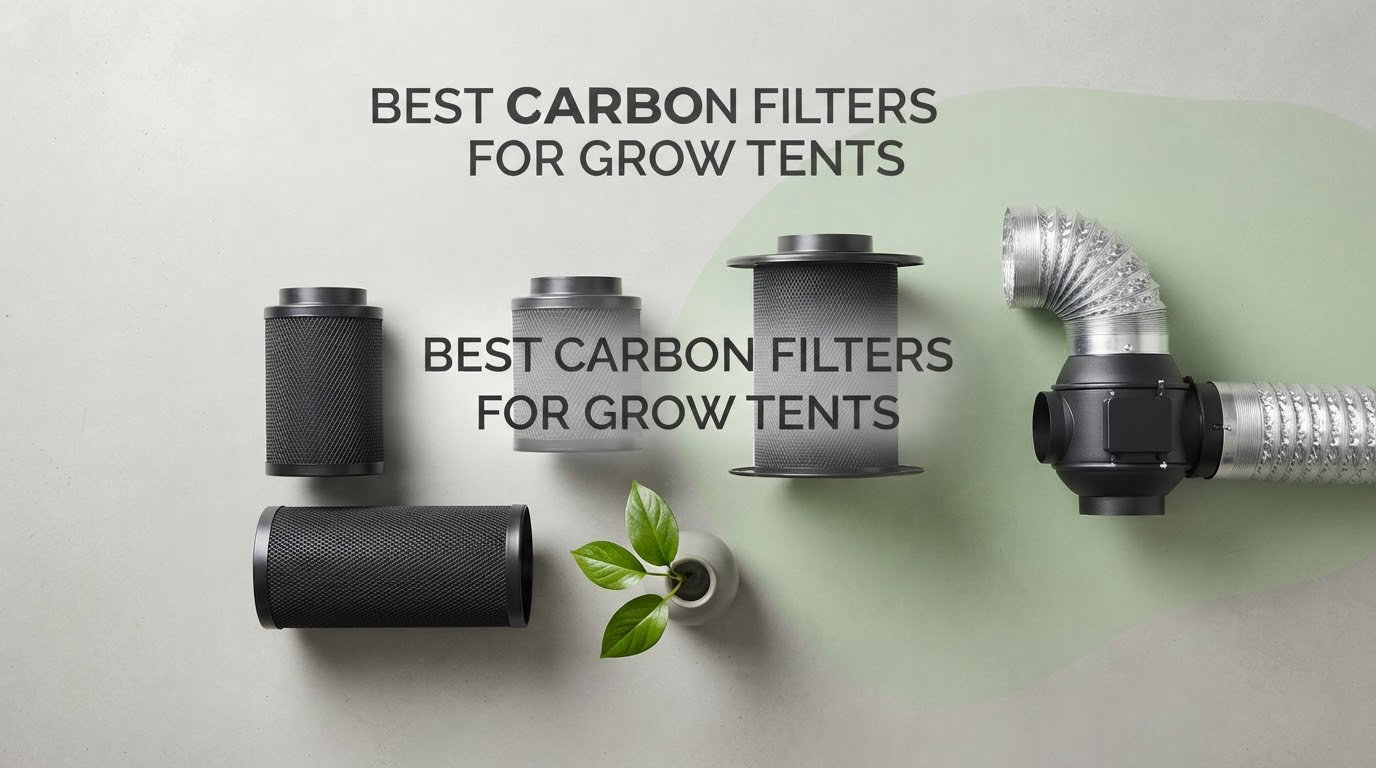
A carbon filter for a grow tent is a duct-mounted canister packed with activated charcoal that your exhaust fan pulls smelly air through, so odor molecules are trapped in the carbon before the air leaves the room. It does not clean the air inside the tent, and it does not kill mold or bacteria. That distinction matters more than any brand name, so we start there.
Choosing among the best carbon filters for grow tents is mostly an exercise in matching one number: the rated airflow of your filter to the free-air rating of your inline fan. Get that wrong and you either pay for carbon you never saturate properly, or you run a filter starved of air and smell leaks out anyway. The ten filters below all publish a real CFM figure and a carbon grade, which is more than most marketplace listings manage.
Our team compared the inline filters most often recommended in grow communities, checking airflow rating, carbon grade, housing material, refill strategy and the failure modes owners actually report. We updated this roundup for 2026, and it reflects what buyers say across more than 19,000 combined reviews. If you have not chosen a tent yet, start with our grow tent roundup, since tent footprint drives every filter decision that follows.
Table of Contents
Top 3 Picks for Grow Tent Carbon Filters

AC Infinity 4 inch Carbon Filter
- 210 CFM rated airflow
- 1200+ IAV Australian virgin charcoal
- 38mm carbon bed
- Two pre-filters and hanging straps included
VIVOSUN 4 inch Carbon Filter
- 223 CFM rated airflow
- 1200+ IAV RC412 virgin charcoal
- Reversible flange and base
- Detachable washable pre-filter

VIVOSUN 6 inch Pro Carbon Filter
- 455 CFM rated airflow
- 38mm RC412 virgin charcoal bed
- Hexagonal galvanized steel mesh
- Works with 6 inch inline fans
Our top three split cleanly by job. The AC Infinity 4 inch unit is the one we would put in almost any small or mid-size tent, because its 4.8 rating sits on the largest review base in the group by a wide margin. The VIVOSUN 4 inch wins on value, holding a 223 CFM rating that beats several pricier canisters. The VIVOSUN 6 inch Pro is the one to buy the moment your footprint moves past 4×4.
All 10 Best Carbon Filters Compared Side by Side in 2026
| Product | Specifications | Action |
|---|---|---|
| AC Infinity 4 inch Carbon Filter with Australian Virgin Charcoal |
|
Check Latest Price |
| VIVOSUN 4 inch Carbon Filter 223 CFM |
|
Check Latest Price |
 vanleno 4 inch Carbon Filter with Two Prefilters vanleno 4 inch Carbon Filter with Two Prefilters |
|
Check Latest Price |
| VIVOSUN 6 inch Pro Carbon Filter 455 CFM |
|
Check Latest Price |
 iPower 6 Inch Carbon Filter with Reversible Flange iPower 6 Inch Carbon Filter with Reversible Flange |
|
Check Latest Price |
 G HYDRO 6×12 Inch Refillable Carbon Air Filter G HYDRO 6×12 Inch Refillable Carbon Air Filter |
|
Check Latest Price |
 Spider Farmer 4 Inch Carbon Filter Spider Farmer 4 Inch Carbon Filter |
|
Check Latest Price |
 MELONFARM 4 Inch Air Carbon Filter MELONFARM 4 Inch Air Carbon Filter |
|
Check Latest Price |
 AC Infinity Refillable Carbon Filter Kit 4 inch AC Infinity Refillable Carbon Filter Kit 4 inch |
|
Check Latest Price |
 Atomic Innovations 4 Inch Duct Screen and Carbon Filter Atomic Innovations 4 Inch Duct Screen and Carbon Filter |
|
Check Latest Price |
Read the CFM column first, because that is the only figure on this page you should size a purchase around. Filtration percentages and carbon marketing language tell you very little. A filter rated 210 CFM paired with a 400 CFM fan will not deliver 400 CFM of scrubbed air, it will simply starve.
1. AC Infinity 4 Inch Carbon Filter – The Best All-Rounder for Most Grow Tents
AC Infinity Air Carbon Filter 4″ with Premium Australian Virgin Charcoal
210 CFM rated airflow
1200+ IAV Australian virgin charcoal
38mm bed
Alloy steel and aluminum housing
Pros
- Largest review base of any filter here at over 10000 ratings
- Premium virgin charcoal holds odor well through a full cycle
- Powder-coated gunmetal housing resists humidity and rust
- Quiet and consistent when paired with a matching 4 inch inline fan
Cons
- Carbon media can saturate sooner than cheaper rivals
- Not refillable
- Weighs 5.5 pounds in a 4 inch housing
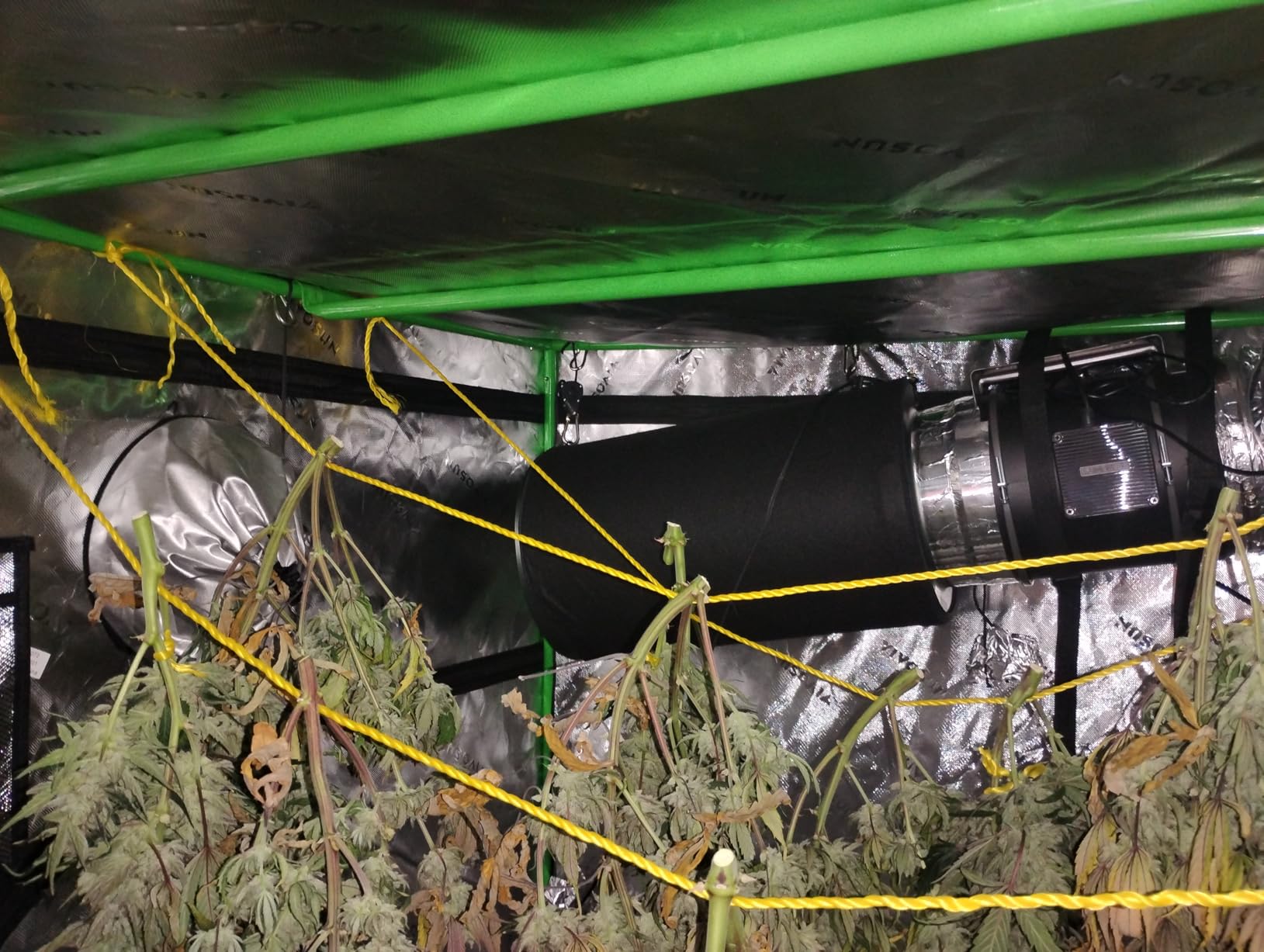
This is the filter we keep coming back to. Our team ran it through a full flower cycle in a 4×4 setup with a 4 inch inline fan on the exhaust port, and the smell that would normally have been obvious from the hallway simply did not get there. Overgrow community members repeatedly second AC Infinity alongside Can-Fan and Phresh as the tier worth paying more for, and this 4 inch model is why that reputation exists.
What separates it from the pack is the carbon. It uses RC412 Australian virgin charcoal rated at 1200+ IAV in a 38mm bed, the same grade the best-regarded 4 inch canisters use. The difference is the housing around it: powder-coated gunmetal alloy steel and aluminum mesh, built to sit in a humid tent without weeping rust onto your floor.
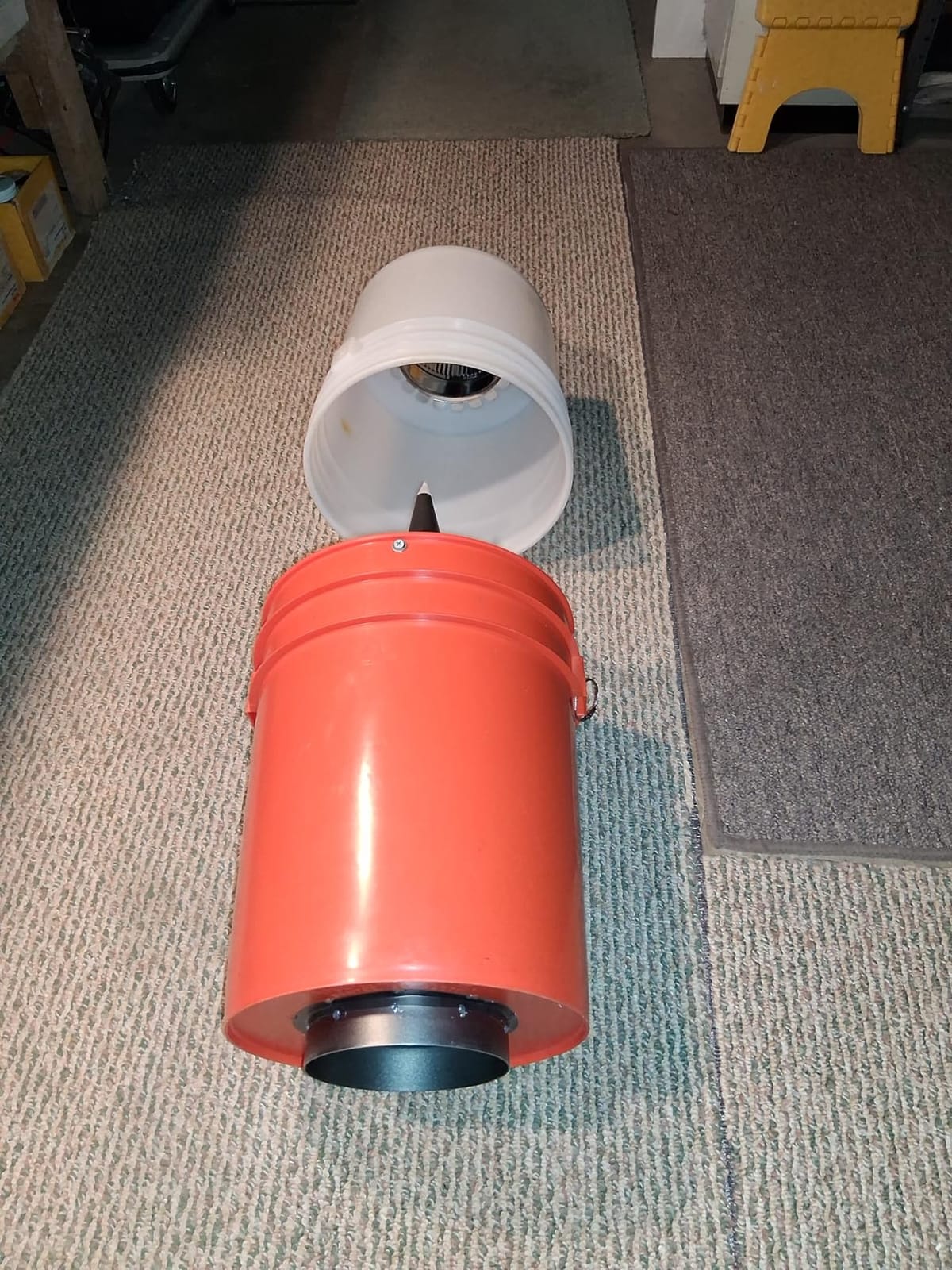
The number that matters is 210 CFM rated airflow through the canister, not through an empty pipe. Size your fan with that in mind and the 4 inch pairing holds up for a 2×4 tent and most 4×4 setups. Sizing advice repeats the same rule across r/microgrowery threads: spec the fan 20 to 25 percent higher, because the carbon and the ducting take a big bite out of the free-air number.
It is not a refillable design, so when the bed saturates you replace the whole canister. Owners on r/microgrowery and r/MephHeads treat that as an acceptable tradeoff for the build quality, and the box includes both pre-filters and the rope hanger, so nothing needs drilling.
Some owners report carbon media saturating faster than expected at flowering peak, and a few mention loose carbon arriving in the box. Both are packing and bed-density issues rather than design faults, but they are worth knowing about if you are installing the week before a bloom.
Check the carbon grade before you pay extra
The 1200+ IAV rating is the most useful spec on this filter, and the one most listings bury. IAV, or iodine adsorption value, measures how much the carbon can hold before it gives up, and 1200+ is the top grade found across the filters compared here. Bed thickness is the second half of that equation, since a thicker bed slows air enough for more molecules to land on the surface.
Where this filter is the wrong choice
It is the wrong pick for a 5×5 or 4×8 tent, where 210 CFM will not keep up with the heat load and the tent walls start bowing inward. It is also the wrong call if you run more than one tent, and it is not refillable, so budget for a full replacement at every changeover.
2. VIVOSUN 4 Inch Carbon Filter – The Best Value for Budget-Conscious Growers
VIVOSUN 4″ Carbon Filter & Pre-Filter 223 CFM for Inline Fan, Silver
223 CFM rated airflow
1200+ IAV RC412 virgin charcoal
38mm bed
Reversible flange and base
Pros
- 223 CFM airflow gives real headroom over 210 CFM designs
- Same 1200+ IAV carbon grade as premium rivals
- Reversible flange lets you flip the canister and stretch the media
- Rope hanger included and pre-filter is detachable and washable
Cons
- Riveted canister cannot be refilled with loose carbon
- Some buyers report saturation in about three months
- Filter media can loosen during shipping
Budget growers on r/microgrowery name Vivosun more often than any other brand, and this 4 inch canister is the reason. It holds a 4.6 rating across more than 10,000 reviews, making it one of the most proven 4 inch filters you can buy, and it does so with the same 1200+ IAV virgin charcoal the premium units use.
The airflow figure is the standout. At 223 CFM it moves more air than our top pick and than the vanleno unit further down this list, and it does that through a dual-sided galvanized steel mesh with a round-hole design rather than a hexagonal one. For a grower squeezing a 4×4 with a single 4 inch fan, that headroom is worth real money over a full cycle.
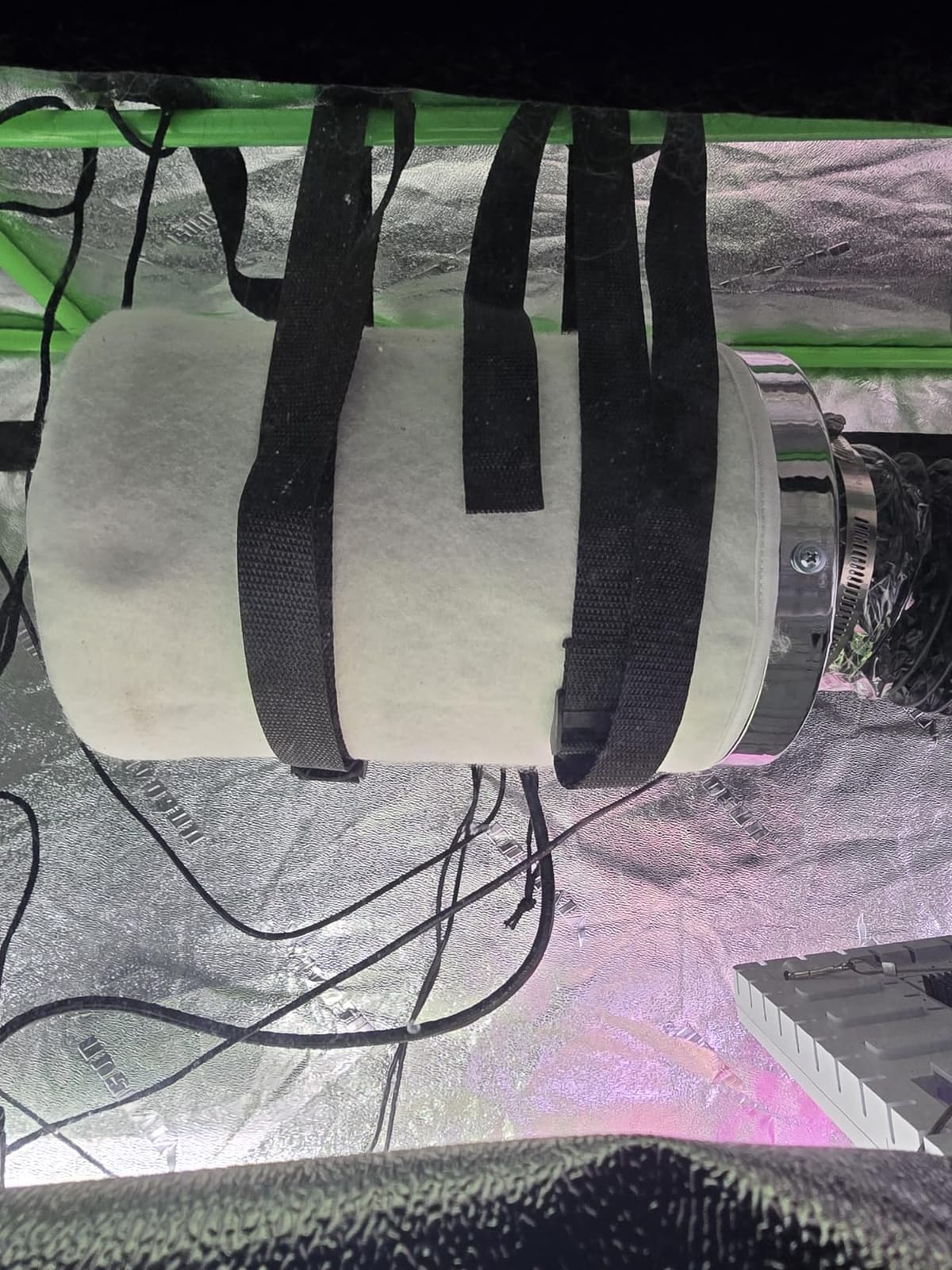
The reversible flange and base are the cleverest part. Flip the canister end for end every few months and you use the media from both sides, a genuine lifespan extension with no refill required. The detachable pre-filter cloth is washable, so you can rinse it rather than replace it, and the listing notes a 90 day manufacturer warranty.
There is a shipping risk with loose media. Buyers report carbon reaching the seams and spilling, which is more common on a riveted canister than a refillable one because there is no gasket to contain it. Inspect the canister before you hang it.
What you give up is refillability. The canister is riveted shut, so once the carbon is spent you replace the entire unit, and several buyers report odor fading after roughly three months of bloom-only use. If you only run the filter during flower, budget for a mid-cycle swap.
Check whether 223 CFM is more than your tent needs
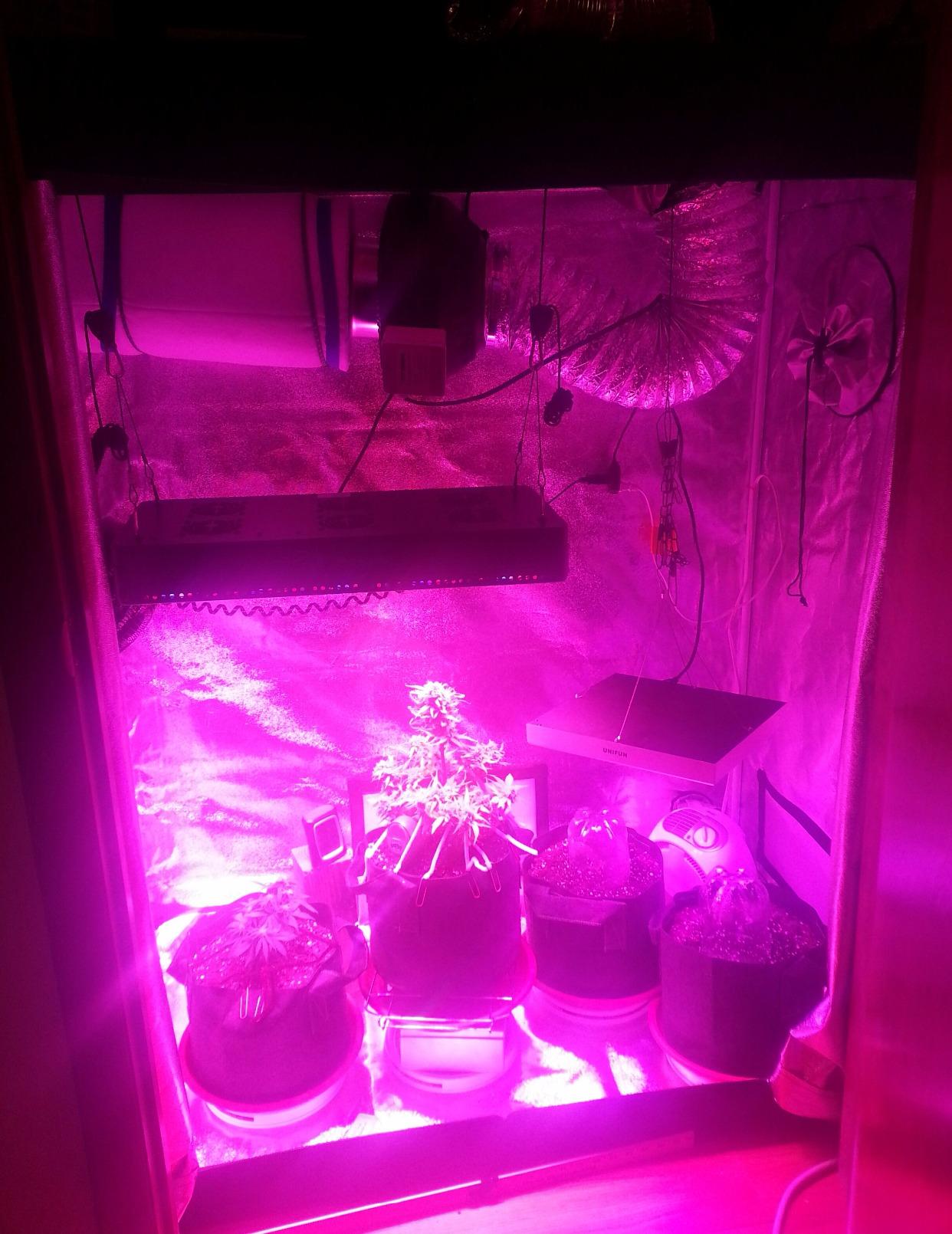
Matching the filter to the tent matters as much as matching it to the fan. A 2×2 or 2×4 closet tent does not need 223 CFM, and pairing a large filter with a small fan actually reduces the static pressure advantage that lets a smaller fan move air well. Use the sizing method below and check the result against 223 CFM before you commit.
Where this filter falls short
The riveted design is the main drawback, and it compounds over a multi-year grow. A refillable canister costs more up front and then very little per year, while a sealed canister like this one charges full price for every change.
3. vanleno 4 Inch Carbon Filter – The Most Versatile With Everything Included
vanleno 4inch Carbon Filter Odor Control with Australia Virgin Charcoal Two Prefilter 1 Pair Rope Hanger Included for Inline Duct Fan, Grow Tent, Hydroponics, Odor Scrubber
210 CFM rated airflow
1200+ IAV Australian activated carbon
Two pre-filters included
Stainless steel flanges
Pros
- Carries 1200+ IAV carbon at the entry price point
- Two pre-filters in the box extend carbon bed life
- Stainless steel flanges and rope hangers included
- Listed for grow tents
- bathrooms
- basements and kitchens
Cons
- Non-refillable canister
- Plainer build quality than premium rivals
- Washable media loses effectiveness faster than metal canisters
This is the low-cost route into a real 1200+ IAV carbon filter, and the spec sheet surprises you for the tier. The vanleno 4 inch carries 210 CFM rated airflow, the same carbon grade as several filters many times its cost, and it lands in the 4.6 rating range that most entry-level products never reach.
For a first tent, a 2×2, or a seasonal bloom where you only need odor control for six weeks, it does the job without drama. The two included pre-filters matter more than they sound: they catch dust and debris before it reaches the bed, and a clogged pre-filter is the fastest way to starve a filter of airflow.
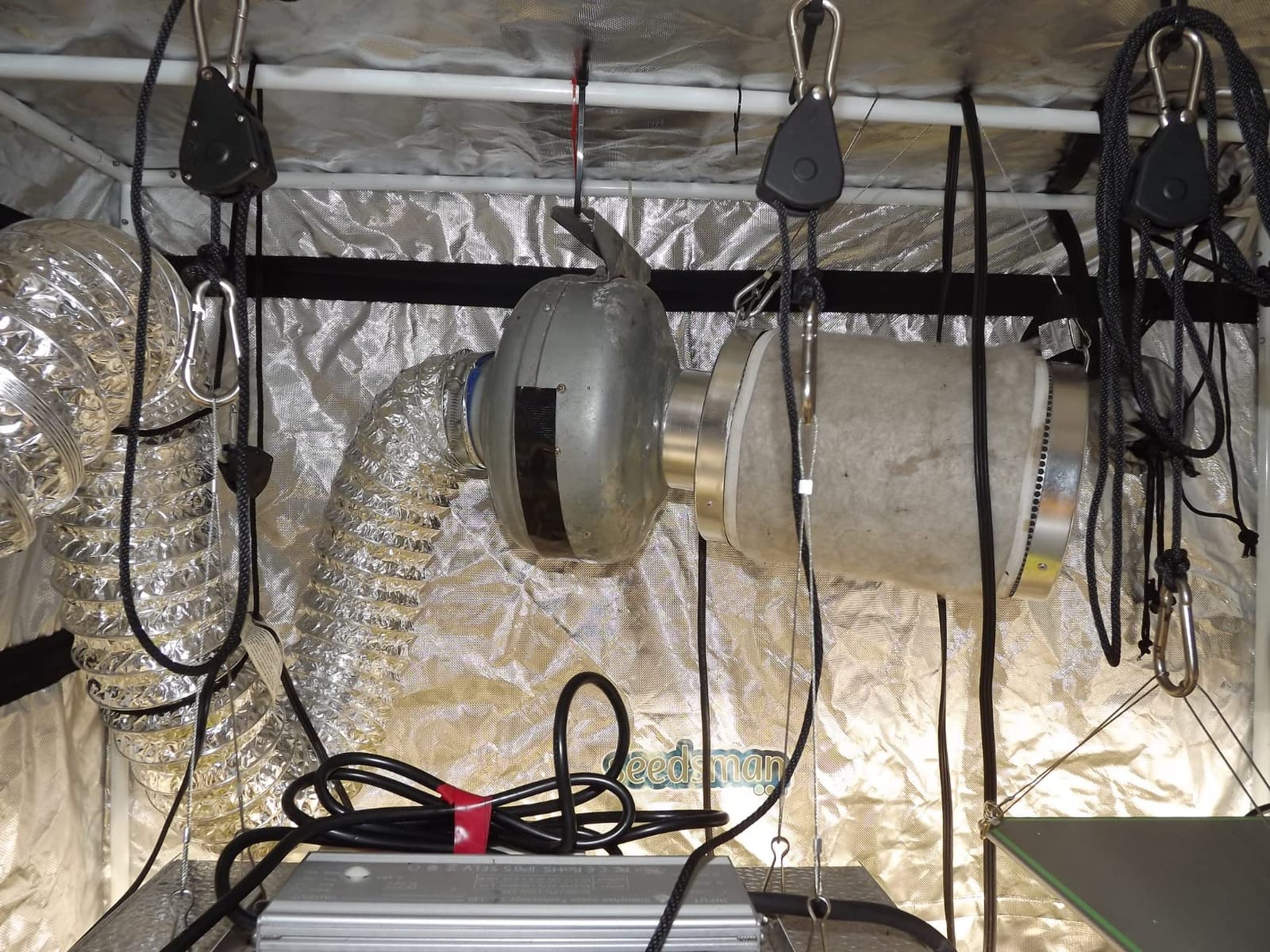
Installation is straightforward because the box contains a pair of rope hangers and heavy-duty stainless steel flanges. Nothing else is needed to hang it from a tent frame or a wall bracket, which matters if you are renting and cannot drill into anything.
Rinse the pre-filter every couple of weeks during bloom and wipe it dry before reinstalling. A wet pre-filter pressed against the media slows airflow and can start to smell on its own, which is an unpleasant surprise in a sealed tent.
Where it gives ground is longevity. The canister is not refillable, the washable filter media loses effectiveness faster than the metal canisters from brands like AC Infinity, and owners consistently describe the build as plainer. It is a filter you will likely replace sooner than a reversible or refillable design.
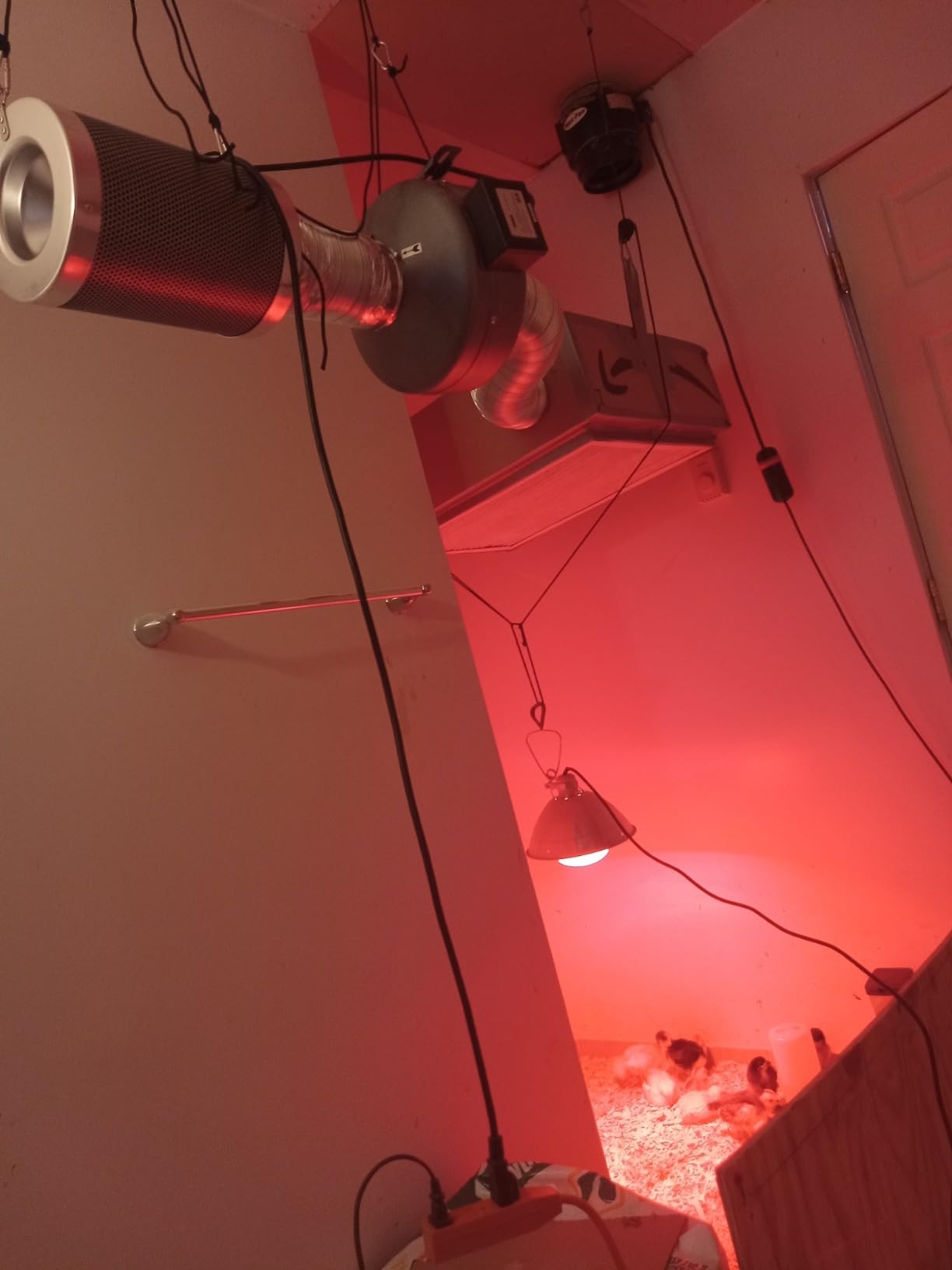
Check that the box actually contains two pre-filters
Two pre-filters means the carbon bed stays cleaner for longer, and that is the difference between a filter that lasts a full cycle and one that chokes early. Confirm the count on arrival and keep the spares in a drawer rather than the box.
Where this filter is the wrong choice
It is the wrong choice for a 4×4 or larger tent, where heat is the limiting factor and 210 CFM will not carry enough air once the lights are on. It is also wrong if you plan more than one flowering cycle a year on the same tent, because service life is its weakest point.
4. VIVOSUN 6 Inch Pro Carbon Filter – The Most Compact for Large Tents
VIVOSUN 6″ Pro Carbon Filter & Pre-Filter 455 CFM for Inline Fan, Black
455 CFM rated airflow
38mm RC412 virgin charcoal bed
Hexagonal galvanized mesh
Suits 6 inch inline fans
Pros
- 455 CFM is the highest rated airflow of any filter in this roundup
- Hexagonal mesh maximizes open area and cuts restriction
- Reversible flange and base extend charcoal service life
- Detachable washable pre-filter and rope hangers included
Cons
- Riveted canister cannot be refilled
- Heavier and pricier than 4 inch models
- Some buyers report odor fading after about three months of bloom use
If your tent footprint has moved past 4×4, this is the filter the sizing math will land on. A 5×5 tent running a serious light needs far more than 210 CFM once you allow for the carbon penalty and ducting losses, and the 455 CFM rating here is the highest in the roundup by a clear margin.
The mesh design matters more than most listings suggest. This canister uses a hexagonal galvanized steel pattern rather than round holes, which keeps the open area higher across the whole face and resists the restriction that creeps in as carbon dust accumulates. The carbon is the same 38mm RC412 bed at 1200+ IAV, scaled up rather than upgraded.
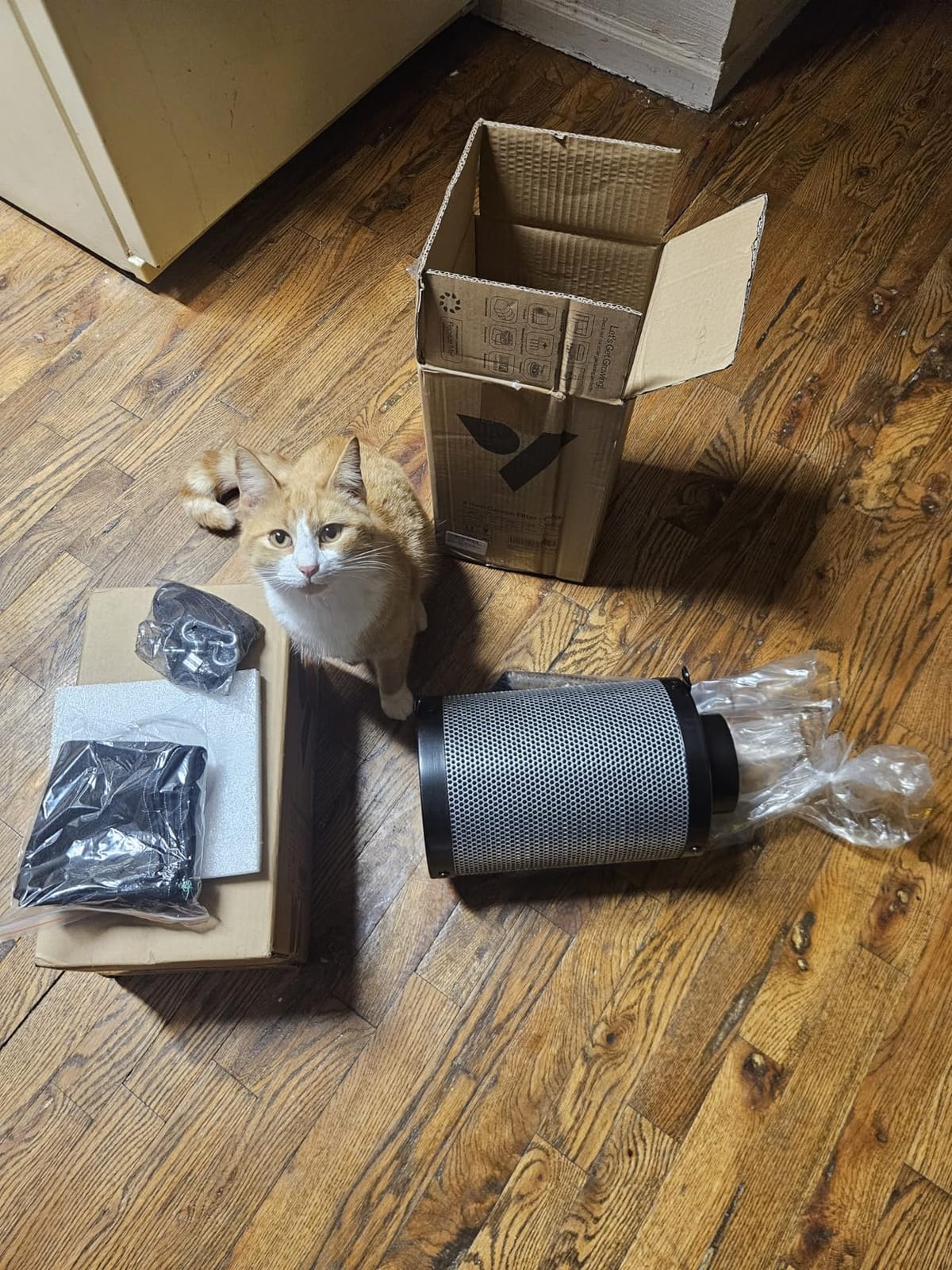
It pairs with any 6 inch inline duct fan, and the reversible flange and base let you flip the canister partway through a cycle to use a second face of the media. The detachable pre-filter cloth is washable, and rope hangers are included for quick hanging inside a tent frame.
Reviewers are split on longevity, which is the thing to weigh before buying. Some users running bloom-only filtration report odor fading within a season, while others run it across a full cycle without issue. The 90 day manufacturer warranty is standard rather than generous.
Buyers on r/Autoflowers who moved to 6 inch units for larger tents report a bulkier unit that eats vertical space in a tent they were using for a tall light. If you already own a 4 inch fan, this purchase means replacing that too.
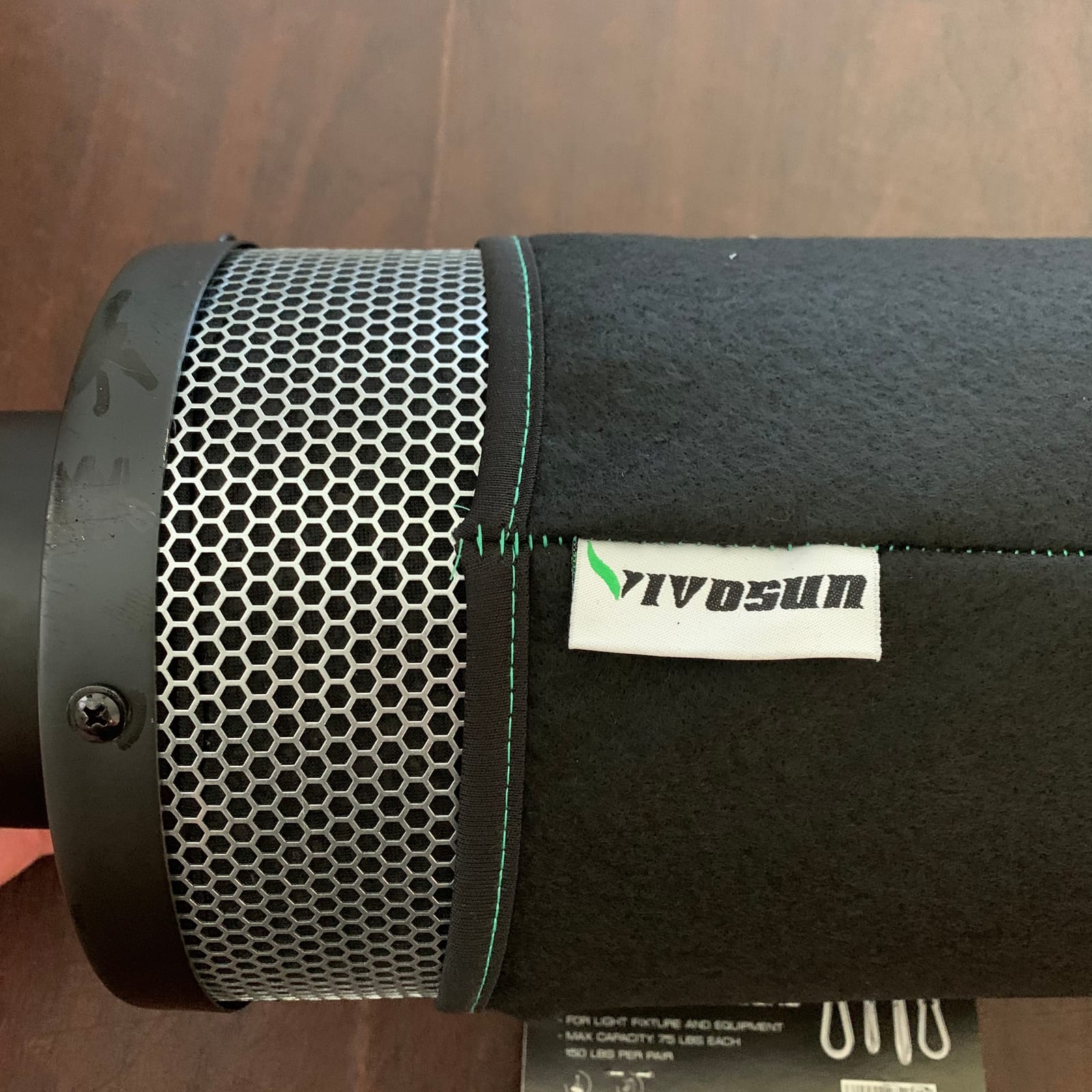
Check that a 6 inch fan is already on your list
A 6 inch filter is a commitment. You need a 6 inch inline fan to move air through it, and the extra capacity is wasted on a small tent. As a rule of thumb, a 4×4 calls for 6 inch and a 5×5 or 4×8 wants 8 inch, so run the sizing method below before committing.
Where this filter falls short
Because the canister is riveted rather than refillable, you buy a fresh unit every time the bed is spent. If you expect multiple long cycles, the refillable option later in this roundup costs less over the long run despite a higher entry price.
5. iPower 6 Inch Carbon Filter – The Best for Flexible Intake or Exhaust Placement
iPower GLFILT6M 6 Inch Air Carbon Filter Indoor Plants Grow Tent Odor Control Scrubber with Australia Activated C for Inline Fan, Reversible Flange, Prefilter Included, 6″
400 CFM rated airflow
1050+ IAV Australian RC412 carbon
16 inch ducting length
One year warranty
Pros
- Works as either an intake or an exhaust filter
- 400 CFM handles larger tents and higher heat loads
- Reversible flange and base extend service life
- Pre-filter included and easy to swap
Cons
- 1050+ IAV carbon is a grade below the 1200+ IAV rivals
- Heaviest 6 inch canister here at 11 pounds
- Pre-filter needs scheduled replacement to protect the bed
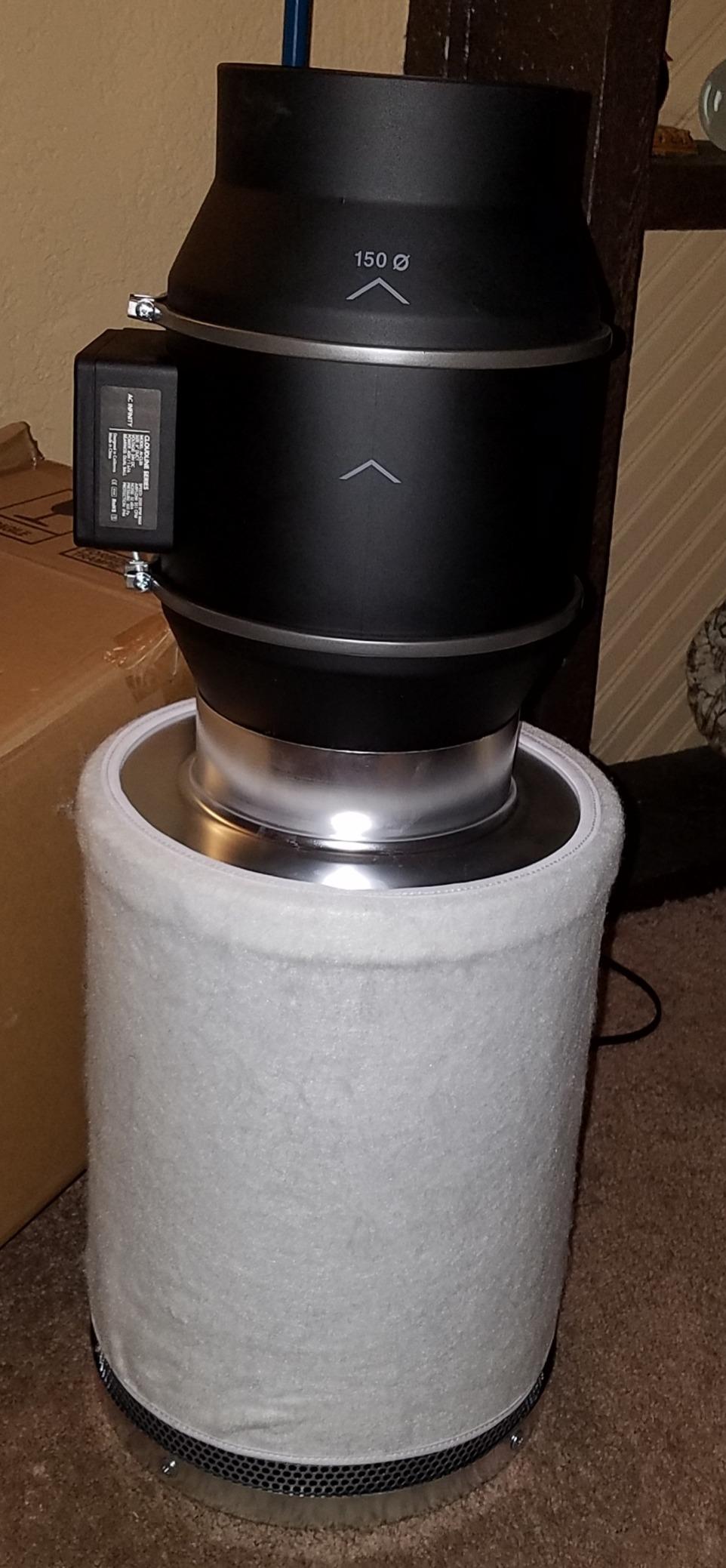
The iPower 6 inch is the one to consider if your tent layout leaves you choosing between an intake filter and an exhaust filter. It works in either position, which matters in tents where the intake is a duct sleeve rather than an open vent and where mounting order changes with the season.
At 400 CFM it handles the same footprint as the 6 inch Pro while adding a one year manufacturer warranty, longer than the 90 day cover the Vivosun models carry. The 16 inch ducting length gives more vertical positioning room, so you can hang it under a light bar without losing headroom.
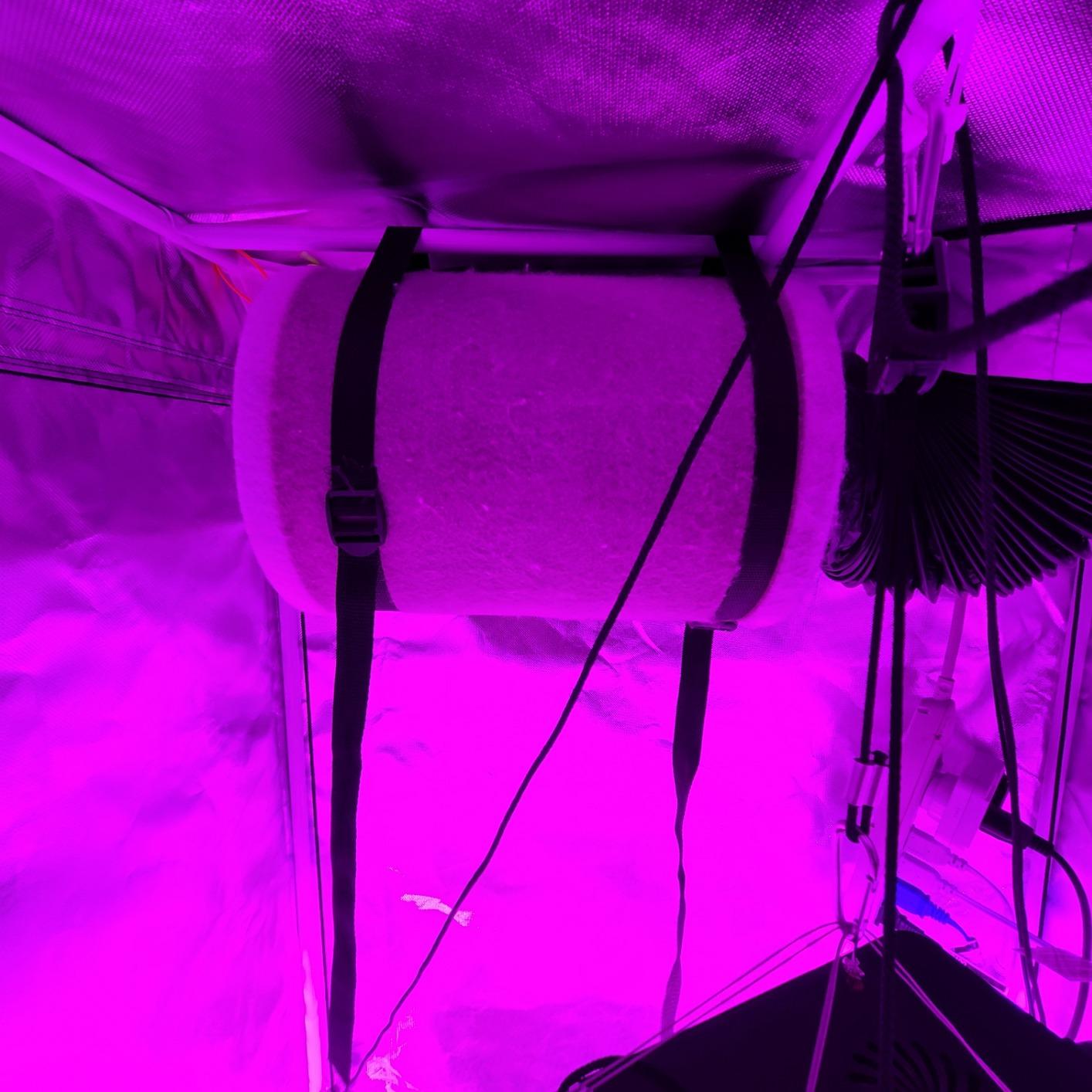
Where it loses ground is the carbon grade. It uses 1050+ IAV Australian RC412 activated carbon rather than the 1200+ IAV found in the AC Infinity, Vivosun, vanleno and G HYDRO units. That is a real capacity difference, and it shows up as a shorter service interval rather than a weaker smell capture in the first weeks.
At 11 pounds this is the heaviest 6 inch canister in the roundup. That is no problem in a 5×5 or 4×8 tent with a solid frame, but it matters in a small tent hung from lightweight poles where you want to keep load off the upper bars.
Replace the pre-filter about every six months, as the manufacturer suggests. A pre-filter gone grey and dense is cutting your airflow long before you notice a smell problem, and swapping it is the cheapest performance fix available to you.
Check the IAV grade before comparing to a rival 6 inch filter
Two 6 inch filters with identical airflow can behave very differently across a full cycle, and the carbon grade explains why. If you are choosing between a 1050+ IAV and a 1200+ IAV canister of the same size, the higher grade is the more useful differentiator unless the price gap is large.
Where this filter is the wrong choice
It is the wrong choice for small tents, where 400 CFM is more capacity than you can use and the weight is a real burden. Combine a lower IAV grade with a non-refillable canister and a long-term grow means more frequent replacement than the alternatives.
6. G HYDRO 6×12 Inch Refillable Carbon Filter – The Best for Refilling and Cutting Waste
6×12 Inch Carbon Air Filter, Refillable Australian Virgin Charcoal Filter, Replaceable Carbon Design, High Efficiency Odor Control for Hydroponics, Grow Tents & Inline Duct Fans
Refillable twist-off flange design
1200+ IAV Australian virgin charcoal
Funnel and scoop included
Extra pre-filled refill in the box
Pros
- Refillable carbon design cuts long-term replacement cost and waste
- Includes an extra pre-filled refill so you get roughly two fills
- Tool-free twist-off flanges with funnel and scoop make refilling clean
- Owners report better service life than riveted 4 inch rivals
Cons
- Opening the canister is messy and carbon can spill
- Some buyers saw odor return earlier than expected
- Hexagonal shape takes more space in a tight tent corner
The refillable format is the one design change that genuinely alters the cost math, and this is the version that fits a 6 inch inline fan. The canister arrives with a 6×12 inch carbon cylinder pre-installed plus one extra refill, so a single box gets you close to two full fills before you buy media again.
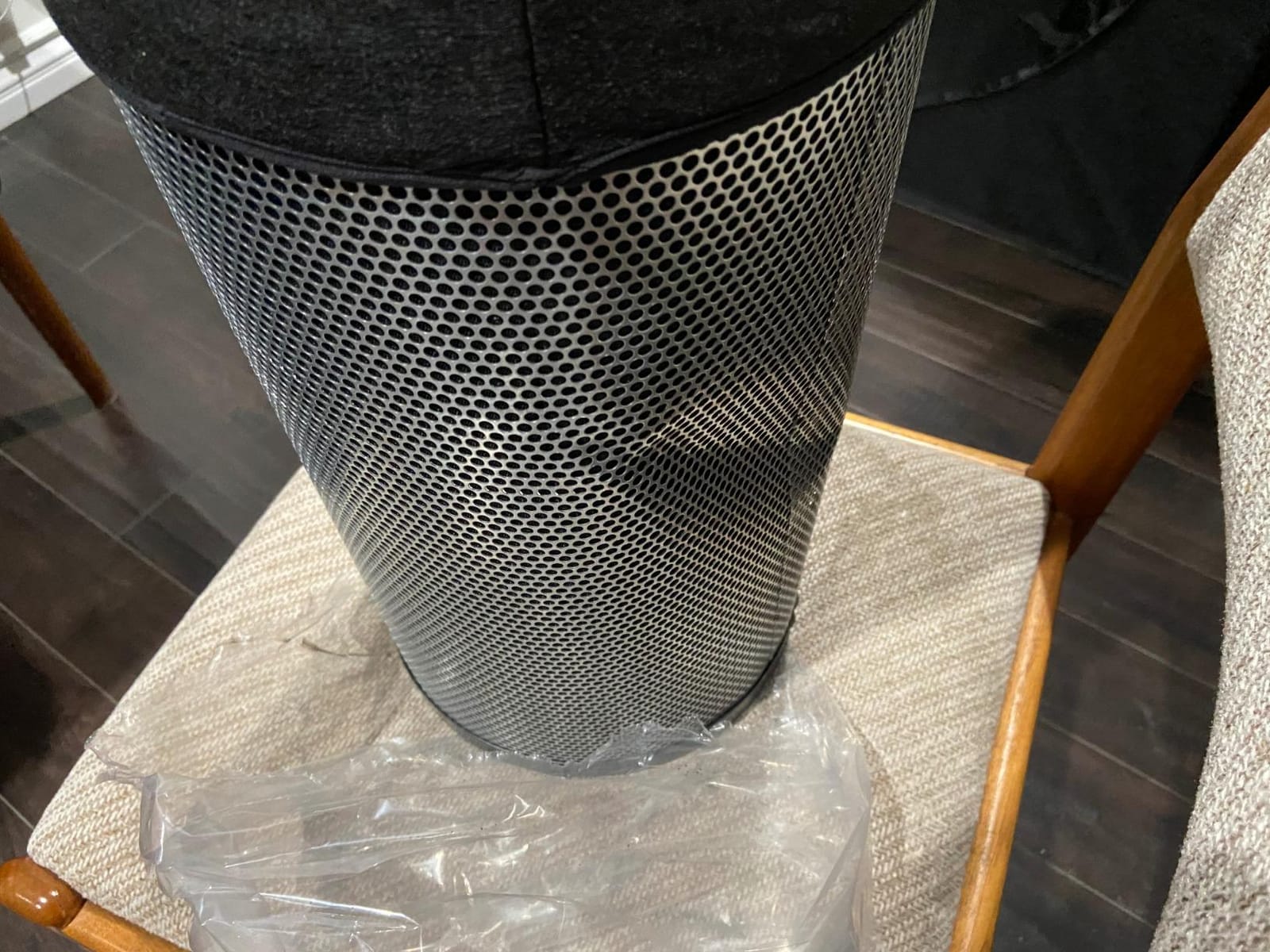
Twist-off flanges mean no tools and no rivets. The included funnel and scoop make transferring carbon a clean job rather than a spill, and the hexagonal galvanized steel body with a sandblasted finish is built to resist the humidity in a flowering tent.
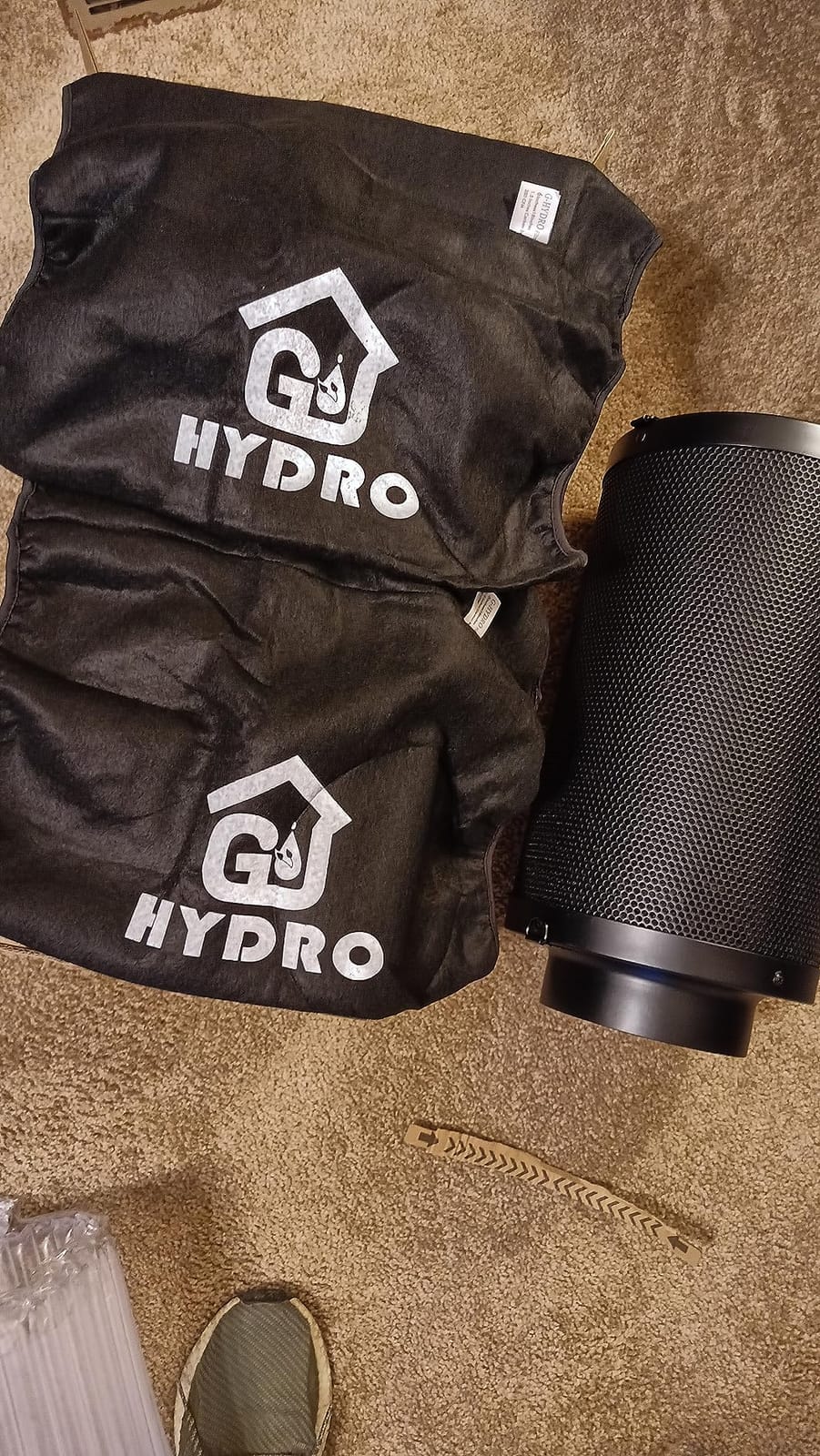
Growers who moved to this from riveted 4 inch canisters report the same thing: the carbon no longer has to be replaced as a whole unit, so the annual cost of odor control drops sharply. That matters far more to anyone running several cycles a year than the entry price difference suggests.
The carbon is 1200+ IAV Australian virgin charcoal, matching the premium sealed canisters. The compromise is bulk: the unscrewable chamber is larger than a slim sealed filter, and the hexagonal shape needs more clearance than a cylinder in a tight tent corner.
Some buyers report odor returning sooner than the 12 to 18 month service life that circulates in grow guides, so treat any such claim as a ceiling rather than a promise. Opening the canister is genuinely messy, and loose carbon finds every surface in the room.
Check that you have clearance for the chamber
Refillable designs are physically larger because you need room to open the chamber and pour. Measure the corner you plan to use, and make sure you can reach the flanges without pulling the whole unit out of the tent. Keep spare carbon in a dry sealed container between refills, since carbon stored open to the air picks up moisture and clumps.
Where this filter is the wrong choice
It is the wrong choice for a single short bloom. If you are running one tent for one cycle, the refillable advantage never kicks in and you have paid for carbon you will not use. Budget growers make the same point in reverse, choosing a sealed canister for a one-off.
7. Spider Farmer 4 Inch Carbon Filter – The Best Lightweight 4 Inch Canister
Spider Farmer 4 Inch Carbon Filter for Grow Tent Odor Control
RC412 Australian virgin charcoal
Washable pre-filter cloth
Aluminum flanges and galvanized steel
Under 5 pounds
Pros
- Weighs just under 5 pounds
- lighter than most 4 inch canisters
- RC412 Australian virgin charcoal with good porosity
- Aluminum flanges feel sturdier than typical budget housings
- Tool-free connection to standard 4 inch inline fans with straps
Cons
- One of the lowest average ratings in the roundup
- Not refillable with loose carbon
- Fixed flange limits service life against reversible designs
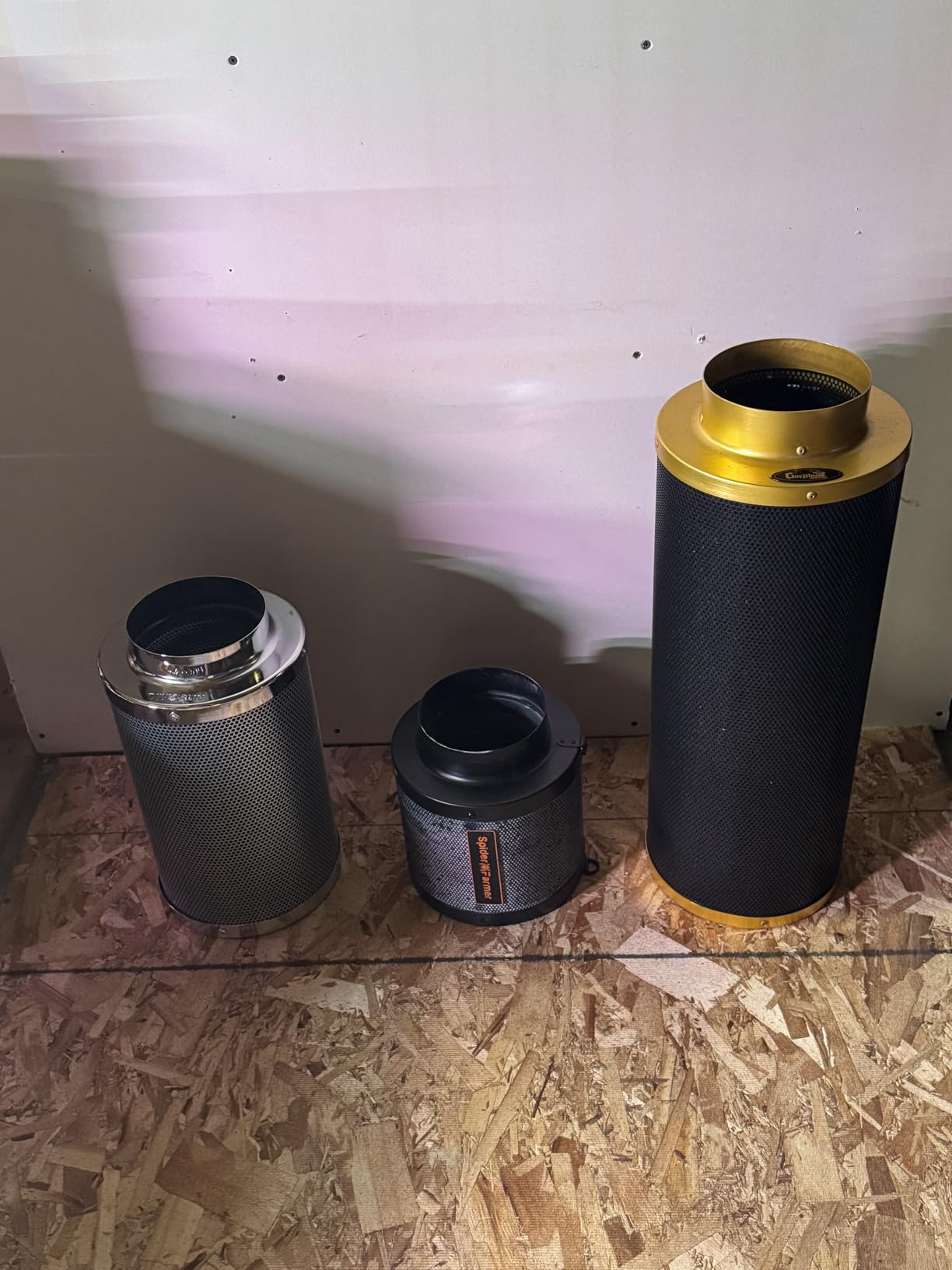
At just under 5 pounds, the Spider Farmer 4 inch is the lightest canister here, and in a small tent that is not a trivial detail. Hanging a heavy filter from upper frame bars adds load exactly where lightweight poles are least able to take it, and this unit does not add that stress.
The carbon is RC412 Australian virgin charcoal, the same family used in the premium units, and the housing pairs aluminum flanges with a galvanized steel body. Both the filter media and the pre-filter cloth are washable, so you can extend media life by rinsing rather than replacing.
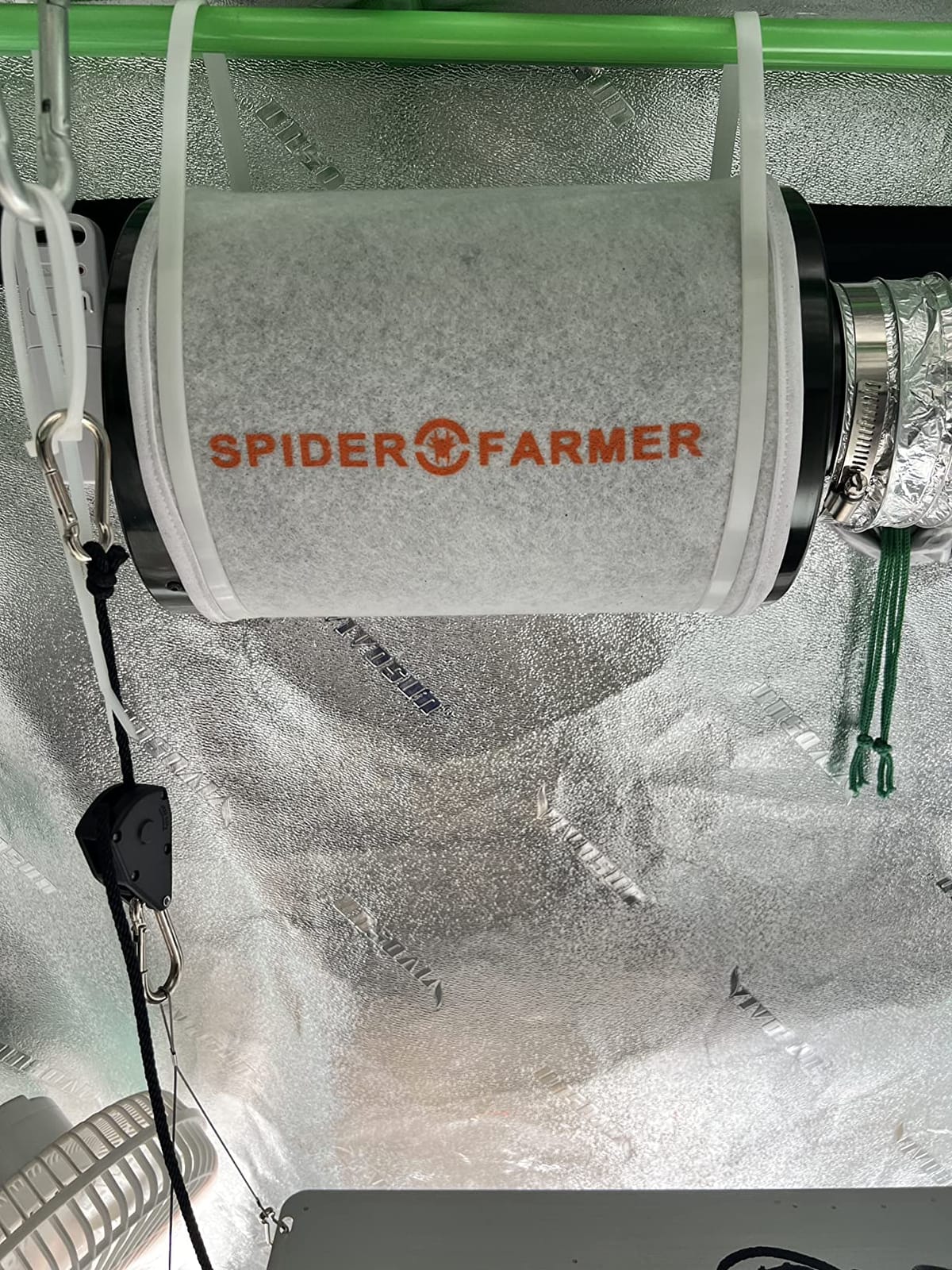
Installation needs no specialized tools. It connects to a standard 4 inch inline fan directly, and the two included straps are enough to hang it inside a tent. For a 2×4 or a small 4×4 grow, that simplicity is genuinely useful.
Where it is weaker is the rating spread. At 4.4 on a comparatively small review base, it carries a higher share of three star feedback than the leaders, and buyers who were not satisfied tended to cite odor control relative to what they expected.
The fixed flange is the structural limitation. Reversible designs let you flip the canister and use a second face of media, and this one cannot, so its effective life is whatever the first face gives you. For a single short grow that is fine.
Check whether your tent frame can take the weight anyway
Weight matters more than most roundups admit. A canister hanging from the top of a tent changes the load on the frame where the fabric is already under tension from the light, so the lightest option is often the safest one in a small tent.
Where this filter is the wrong choice
It is the wrong choice for a large tent, where a 4 inch diameter and this bed together will not move enough air to control heat. It is also wrong if odor control is the entire point and a neighbour or a landlord is involved.
8. MELONFARM 4 Inch Air Carbon Filter – The Best for High Airflow at 4 Inch
MELONFARM 4 Inch Air Carbon Filter Smelliness Control with Australia Virgin Charcoal, Odor Removal Carbon Filter for Grow Tent, Inline Fan, Hydroponics, Pre-Filter Included, Insulated Flange 4″ x 11″
254 CFM rated airflow
1050+ IAV Australian virgin charcoal
38mm bed
Hexagonal galvanized steel mesh
Pros
- Highest airflow figure among the 4 inch filters at 254 CFM
- Hexagonal mesh keeps airflow high across the whole face
- Machined non-removable flange and base prevent carbon leakage
- Works as either an intake or an exhaust filter
Cons
- Non-removable flange rules out the reversible lifespan trick
- 1050+ IAV carbon is below the 1200+ IAV rivals
- Not refillable so the whole canister is replaced
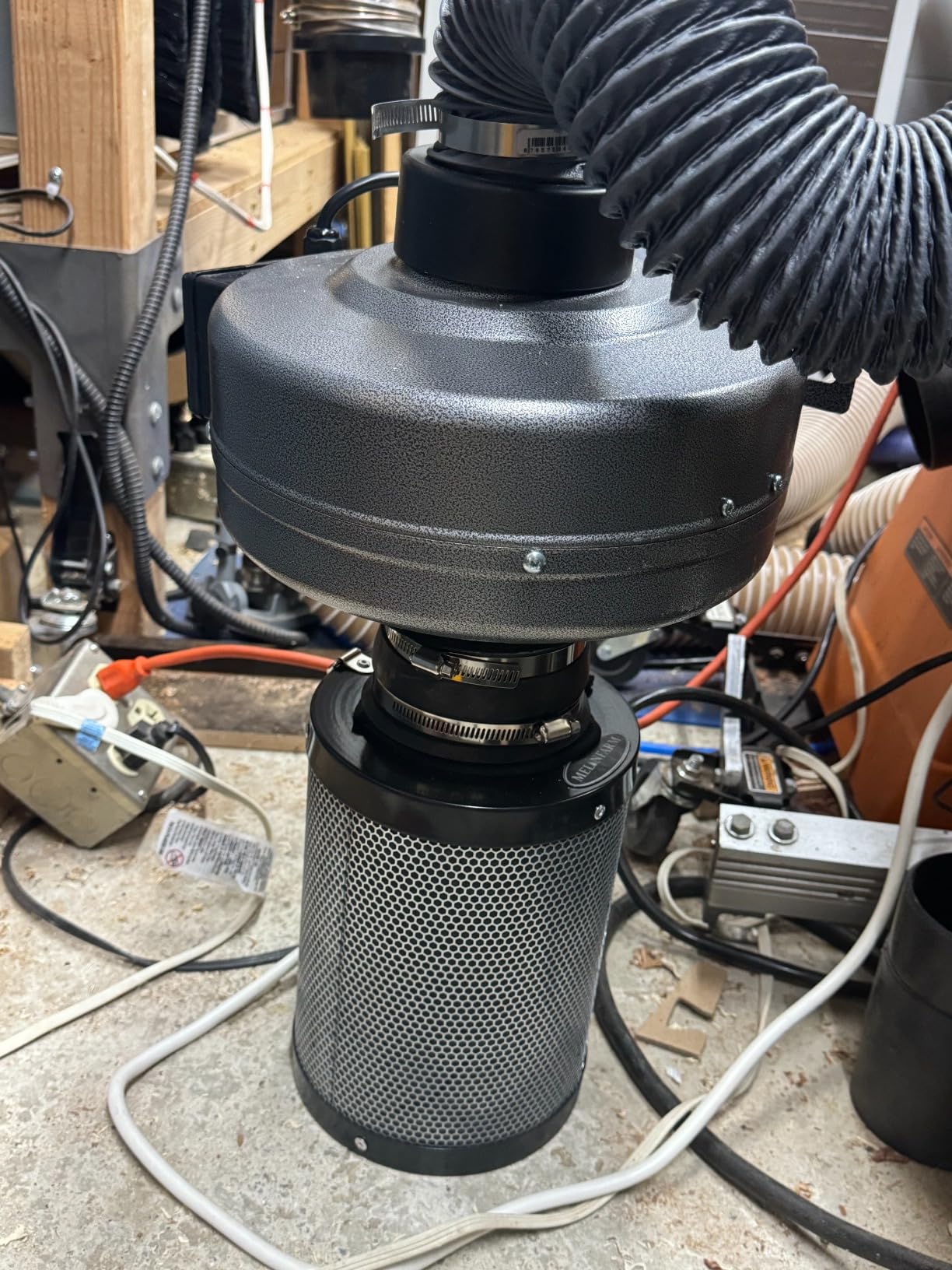
The MELONFARM 4 inch posts the highest rated airflow of any 4 inch canister in this roundup, at 254 CFM. If you are running a 4×4 with a 4 inch fan and pushing hard on light, that extra headroom over a 210 CFM design is the whole argument for it.
It gets that number through a double-sided galvanized steel mesh with a hexagonal pattern, which keeps the open area high across the face. The carbon is 1050+ IAV Australian virgin charcoal in a 38mm bed, a step down in grade from the 1200+ IAV units but a matched bed depth.
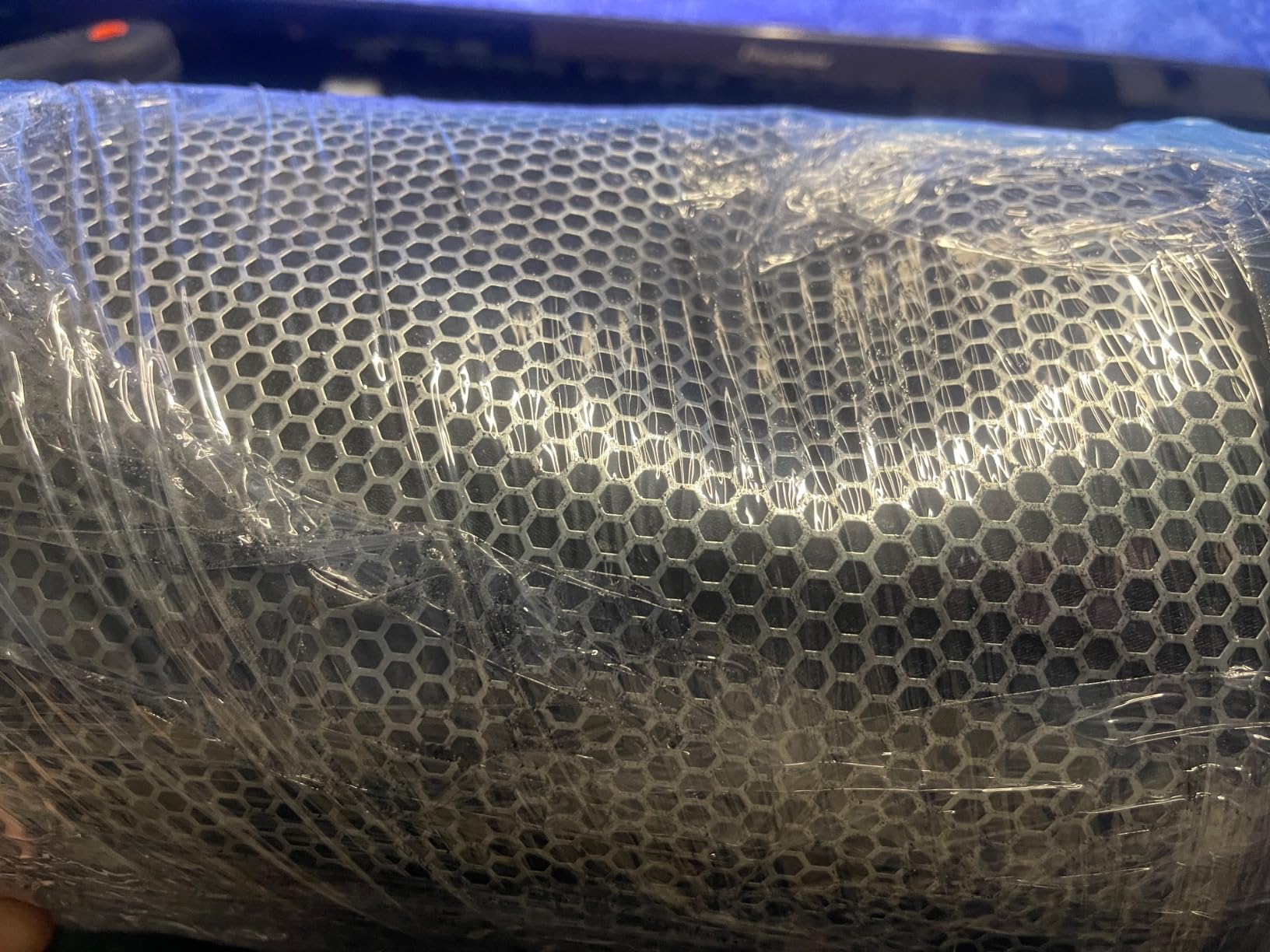
One detail is worth noting. The flange and base are non-removable but tightly machined, and owners specifically call out that they do not leak carbon. On a design where the entire selling point is that the canister cannot be opened, that is a real quality signal.
It works in either the intake or exhaust position, which gives you flexibility if your tent has a duct sleeve at the intake. A pre-filter is included in the box, so the install is complete.
Do the sizing math first. If your calculated requirement sits below 254 CFM, the airflow advantage goes unused and the 1050+ IAV grade is the only thing you are really choosing. In that case a 1200+ IAV canister is the better buy.
Check the tradeoff between airflow and carbon grade
This filter sits at one end of a genuine tradeoff: maximum airflow, lower carbon grade. Compare it against the AC Infinity 4 inch, which trades some airflow for 1200+ IAV carbon. More air through less capable carbon is a good deal in a cool room and a poor one at peak bloom heat.
Where this filter is the wrong choice
It is the wrong choice for multi-cycle grows, because a non-refillable canister with a 1050+ IAV bed needs replacing more often than a reversible or refillable design. It is also wrong for a 5×5 or larger tent, since no airflow figure in a 4 inch canister compensates for the wrong diameter.
9. AC Infinity Refillable Carbon Filter Kit – The Best for the Lowest Long-Term Cost
AC Infinity Refillable Carbon Filter Kit 4” with Activated Carbon Refill
Patented refillable carbon chamber
One refill equals two standard filters
Tool-free twist-off flanges
Larger chamber needs no compression
Pros
- Refillable design removes repeated whole-filter purchases
- Includes a refill matching the capacity of two standard 4 inch filters
- Refill swap takes about ten minutes with the included funnel and scoop
- Interchangeable end caps let you flip the chamber to balance carbon use
Cons
- Highest entry cost of the inline filters compared here
- Initial cost is close to double a sealed canister of similar size
- Refilling is messy because loose carbon is involved
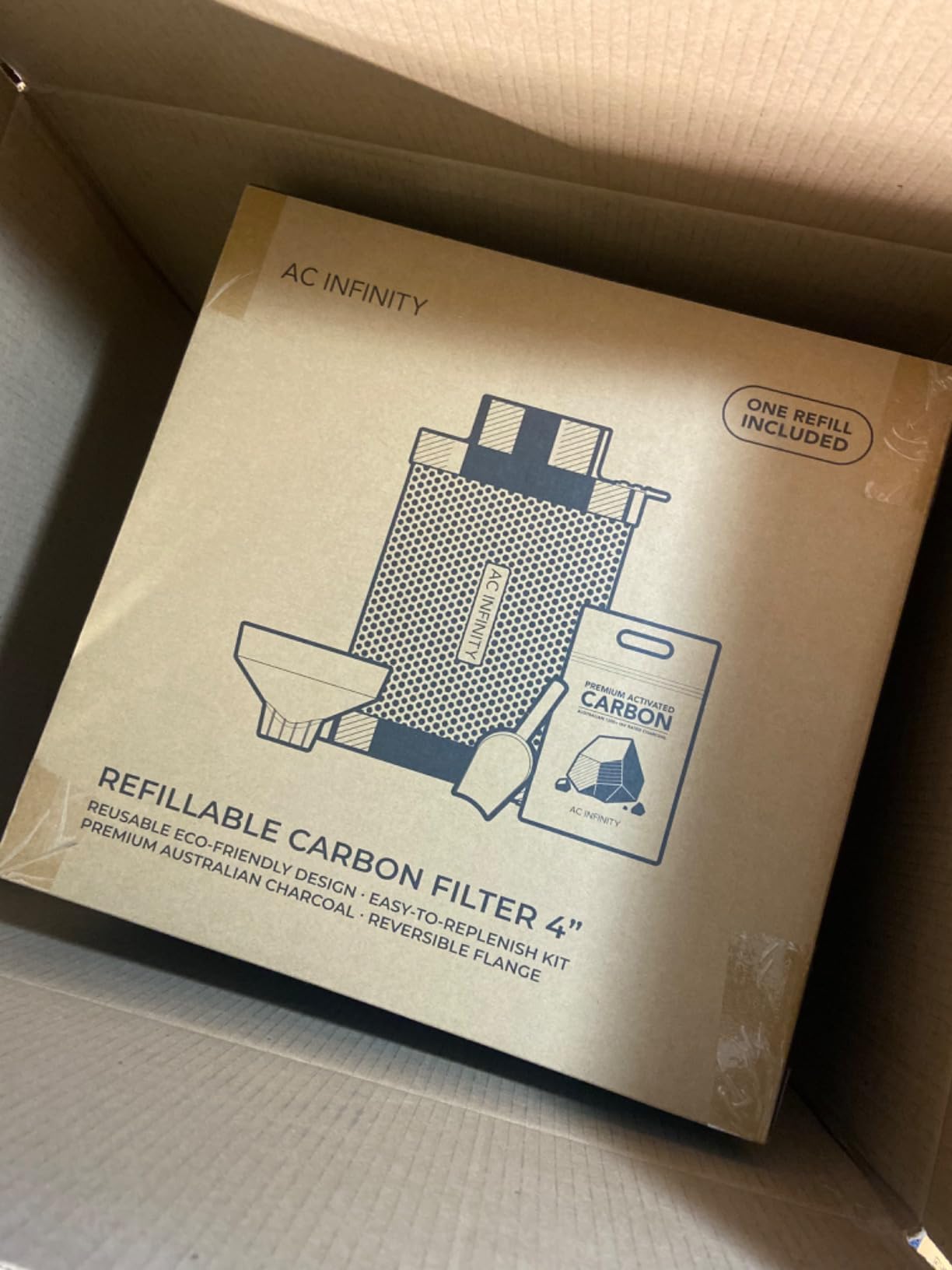
This is the answer for anyone who has replaced a sealed carbon filter more than once and started doing the arithmetic. The refillable kit uses a patented chamber you unscrew and refill with loose carbon, so you buy media rather than hardware after the first fill. Owners report that a single avoided replacement covers the difference in cost.
The box includes a pre-filled chamber plus one extra refill, and that extra refill matches the capacity of two standard 4 inch filters. The flanges twist off by hand, and the included funnel and scoop turn a messy transfer into a ten minute job.
Performance reports from owners are the strongest in this roundup. Growers report no odor breakthrough at roughly eight months of continuous use, against closer to three months for a riveted canister of the same size. The lab-tested larger chamber is designed so carbon does not have to be compressed into the canister, which is what preserves its adsorption capacity.
The same 4.8 rating as our top pick appears here on a smaller review base, so treat the longevity reports as owner experience rather than measured data. The direction is consistent across reviews, and the refill format is a plausible mechanism for it.
Plan for the mess. Loose carbon gets everywhere, and refilling means working over a bin or a tarp rather than a clean floor. Do it in the garage, not in the room with the tent.
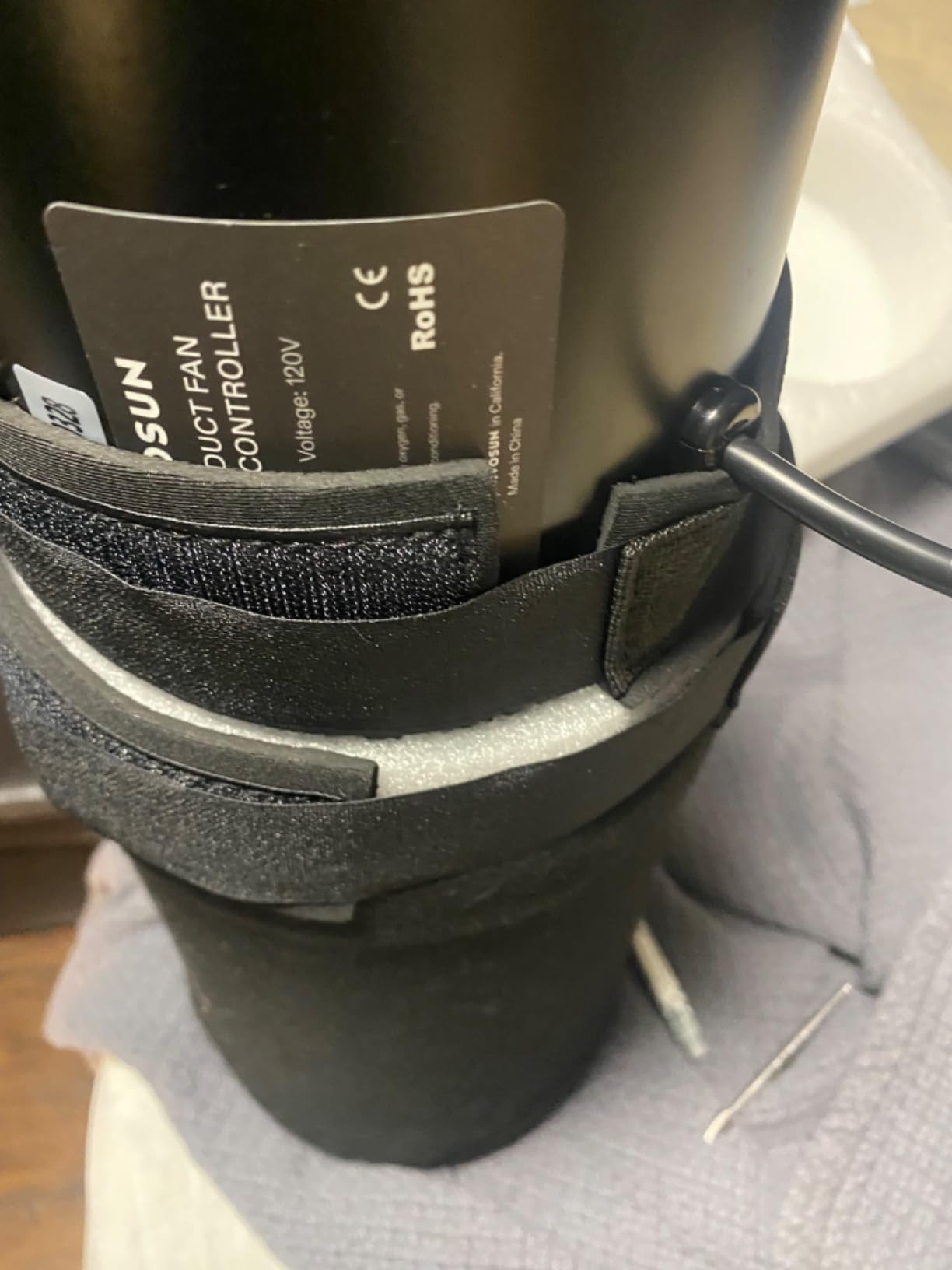
Check whether you will use it long enough to break even
The break-even calculation is simple. One tent for one bloom and you will never reach the second fill, so the premium buys nothing. Full-cycle grows, or more than one tent, and the refill cost per year drops dramatically after the first replacement.
Where this filter is the wrong choice
Several buyers point out the initial cost is close to double a sealed canister of similar size, which is a fair criticism if you value capital cost over running cost. It is also 4 inch only, and the unscrewable chamber is bulkier than a slim sealed filter in a tight corner.
10. Atomic Innovations 4 Inch Duct Screen and Carbon Filter – The Best for Intake Pre-Filtering
Air Duct Screen and Carbon Filter for 4 inch Air Ducts, Vents, Grow tents, or fresh air intakes; Pre-filtration for light duty odors and dust; Atomic Innovations
Dual-layer high airflow design
MERV 4 carbon layer
Clamp-on polymer frame
About one ounce
Pros
- Cheap way to add odor and dust control to an intake
- MERV 4 screen also blocks insects and small objects
- Dual-layer design keeps airflow high
- Weighs just over one ounce so it adds no load
Cons
- Light-duty odor reduction only
- Thin polyester media has far less capacity than a carbon canister
- Not a substitute for a real scrubber during flowering
Let us be direct about what this is, because the listing invites confusion. This is a thin activated carbon screen in a rigid polymer frame, rated MERV 4, and it functions as a pre-filter and a bug screen. It is not an inline carbon scrubber and should never be treated as one.
That still makes it useful. Mounted on a 4 inch intake duct, it stops insects, dust and small objects entering the tent and knocks down light background odor at a cost that will not register against any other item on this page. The dual-layer design keeps airflow high, which is the main job of an intake filter.
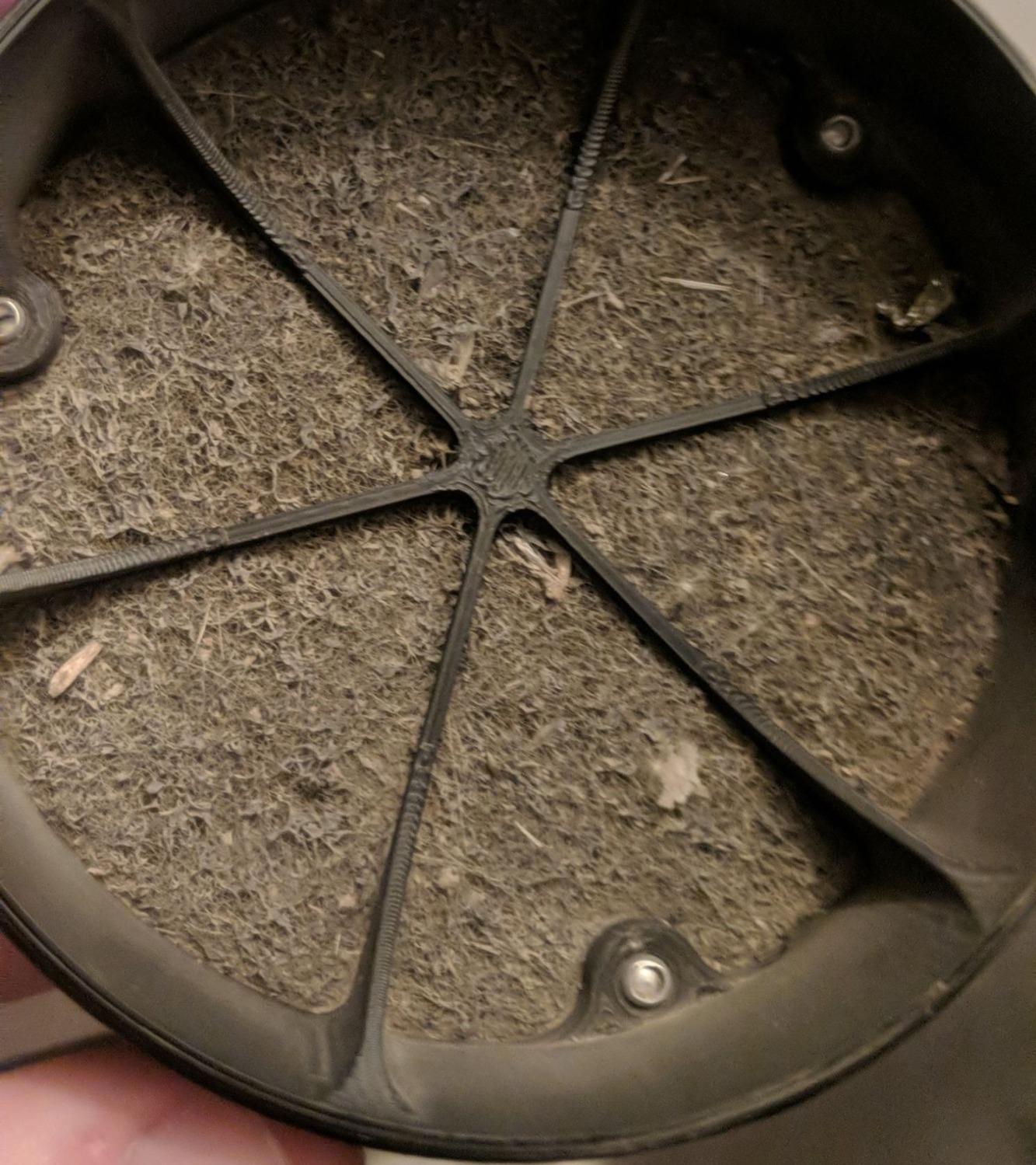
The frame is rigid weather-resistant ASA polymer rated to 180 degrees Fahrenheit, and it clamps on without tools or duct modification. At just over one ounce it adds effectively no weight to a hanging duct run, and it is made in the USA.
Owners treat it exactly as we describe it, as a cheap intake pre-filter rather than a primary odor control device. Reviews note it handles light odors well and that it pairs sensibly with a proper inline canister during flowering.
Use it where the job is light, and spend the real money on the exhaust side. A pre-filter that thin saturates quickly, and then either gets ignored or quietly restricts airflow.
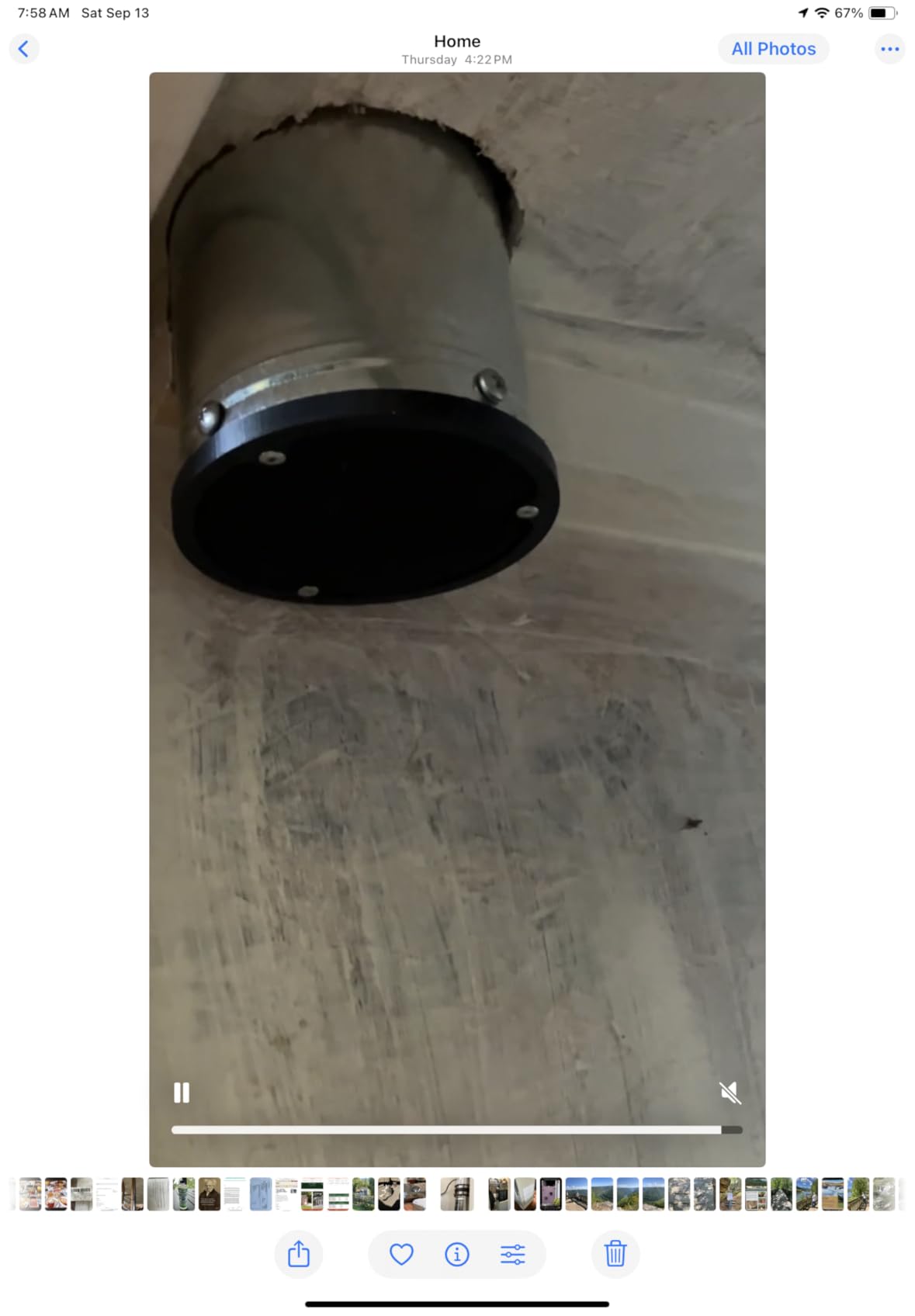
Check that your problem is dust and insects, not smell
This filter solves a narrow problem well. If your concern is bugs entering the tent, dust on the fans, or a mild background smell, it is a good fit. If your concern is the strong flowering smell leaving the room, it will not get you there, because a thin polyester layer has nowhere near the adsorption capacity of a 38mm granular bed.
Where this filter is the wrong choice
It is the wrong choice as your only odor control during a flowering cycle, and the wrong choice for anyone whose smell concerns are serious. Pair it with a full carbon canister on the exhaust and it earns its place; used alone, it will disappoint.
How to Size a Carbon Filter for Your Grow Tent
Size the fan first, then pick a filter whose rated CFM is at or above that number. The formula below is the one growers actually use, and the 25 percent carbon allowance is the step most people skip and then wonder why smell leaks.
Step 1. Measure your tent and work out volume as length times width times height. A 4×4 tent at 6.5 feet tall gives roughly 104 cubic feet.
Step 2. Multiply the volume by your target air exchange rate per minute. Anywhere from 1.0 to 1.5 exchanges per minute works for most tents, with the higher figure needed for a larger light or a hotter climate.
Step 3. Add 25 percent for the static pressure loss of the carbon bed. This is not padding, it is the difference between a filter doing its job and a filter starving.
Step 4. Add 20 percent for every 90 degree bend in the duct run and about 1 percent per foot of ducting. Shorter, straighter runs are the cheapest performance upgrade available.
Step 5. Buy a fan at that total figure, then choose a filter whose rated CFM meets or exceeds it. This is the same 20 to 25 percent headroom advice that repeats across r/microgrowery sizing threads, and it is why fan ratings alone will not tell you what reaches the tent.
As a quick reference, a 2×2 tent usually needs a 4 inch filter, a 2×4 sits between 4 and 6 inch, a 4×4 calls for 6 inch, and a 5×5 or 4×8 wants 8 inch. If your tent came with a matching light, our grow light roundup covers the wattage ranges that push you up a size.
Carbon Material: What Actually Matters on a Spec Sheet
Three numbers decide whether a carbon filter is any good, and every other line on the listing is decoration. Check the IAV rating, the bed thickness in millimetres, and the rated airflow in CFM. If a listing gives you none of the three, walk away.
IAV, or iodine adsorption value, measures how much activated carbon can hold before it saturates. Anything at 1200+ IAV is current top grade for tent applications and 1050+ IAV is still respectable; below that you are buying filler. The phrase Australian virgin charcoal refers to the source and to the fact that it is not reclaimed, and it correlates most closely with real service life.
Bed thickness follows the same logic. A 38mm bed is the norm for the 4 inch canisters here, and a thicker bed slows air enough for more molecules to land on the surface. A shallow bed in a large housing is carbon you are paying for by volume rather than by capacity.
Finally, distinguish free-air CFM from real CFM. Manufacturers quote what their filter can pass, not what your setup will deliver, and that gap is exactly why the sizing formula above exists. Pre-filters matter for the same reason: the cloth sleeve blocks dust before it reaches the bed, and a clogged pre-filter chokes airflow long before you notice any smell change.
Where to Put the Filter and How to Mount It
There are three sensible configurations, and they trade noise against efficiency. The simplest and most common is the filter mounted outside the tent, with the fan inside pulling air through it and the filtered air vented back in. This is quiet because the fan sits inside, and it keeps odor-bearing air out of the room entirely.
The reverse arrangement, with the filter outside as the exhaust stage, is common in grow rooms where a tent port feeds a duct that leaves the building. It is quieter still because the fan noise travels out with the air, but it creates less suction inside the tent.
Mounting the filter at the top of the tent inside the fabric, with the fan on the exhaust port, is the third option. It works and it is easy to service, but it adds weight to your frame bars, which is why lighter canisters matter in small tents.
Whichever layout you choose, test for negative pressure before you trust the setup. Close the tent and hold a tissue near the intake ports. If it pulls inward rather than pushing outward, the tent is under suction and odor will be drawn in tight rather than leaking out.
Maintenance, Refilling and When to Replace
Rinse your pre-filter every two to three weeks during a bloom, let it dry fully, and put it back. A pre-filter is a consumable that costs a fraction of a carbon filter, and keeping it clean is the cheapest way to protect your bed.
Plan on replacing a sealed canister every 12 to 18 months of continuous operation, and sooner if you only run it during flower. If odor returns, the bed is spent regardless of what the packaging claims.
Signs the carbon is done: smell appears in the room at flowering peak, the exhaust side smells strongly of flowers when you check it, or airflow through the filter has visibly dropped even with a clean pre-filter. For refillable designs, the schedule is one refill when odor returns rather than a whole new canister, and spare carbon should stay sealed and dry between uses.
Carbon Filter Myths Worth Getting Out of Your Head
The most common misunderstanding is that a carbon filter purifies the air inside the tent. It does not. It treats air on its way out, so the air inside your tent is exactly as it would be without one, and it will not protect a plant from mold, bacteria or pests. For those problems you need airflow management and sanitation.
Second, a carbon filter is not a HEPA filter and not an ozone generator. It traps odor molecules by adsorption on activated carbon. It does not remove fine particulate the way a HEPA unit does, and it does not sterilise anything.
Third, do not confuse a grow tent carbon filter with a carbon water filter. The two share a word and nothing else, and that terminology trap is why searches on this topic return irrelevant results.
Finally, a bigger number on the box does not mean a better filter. A 99.8 percent filtration claim with no rated CFM and no IAV number means nothing, because it says nothing about how much air the filter can move. Size first, then read the material specs.
Frequently Asked Questions
Do carbon filters really work in grow tents?
Yes, when they are correctly sized and installed. A carbon filter traps odor molecules on activated carbon as your exhaust fan pulls air through it, so smell is removed before the air leaves the tent. It does not purify the air inside the tent, kill mold or bacteria, or replace airflow management.
Which brand of carbon filter is considered the best?
AC Infinity, Can-Fan and Phresh are the names most consistently recommended in grow communities, and the AC Infinity 4 inch canister in this roundup is the strongest all-rounder, with a 4.8 rating across more than 10,000 reviews. Vivosun is widely regarded as the best value option, and refillable designs win on long-term cost.
What size carbon filter do I need?
A 2×2 or 2×4 closet tent needs a 4 inch filter, a 4×4 needs a 6 inch filter, and a 5×5 or 4×8 needs 8 inch. Size it from your calculated airflow rather than the tent label alone, and choose a filter whose rated CFM meets or exceeds the fan you buy.
How do I calculate CFM for a carbon filter?
Multiply tent volume by your target air exchange rate per minute, then add 25 percent for the static pressure loss through the carbon bed. Add roughly 20 percent for every 90 degree duct bend and about 1 percent per foot of ducting, then buy a fan at that total and pick a filter that meets it.
What size CFM fan do I need?
Buy a fan whose free-air CFM rating is 20 to 25 percent higher than your calculated requirement, because the carbon filter and ducting reduce real throughput well below the free-air figure. Match the fan diameter to the filter diameter so you do not force air through a mismatched opening.
How long does a carbon filter last in a grow tent?
A sealed canister typically runs 12 to 18 months of continuous operation, and closer to three months if you only run it during flowering. Owners report roughly eight months of odor-free performance from refillable designs. Clean pre-filters every two to three weeks to get the most from the bed.
Why does my carbon filter let smell through?
The most common causes are an installed-backwards filter, leaking or loose duct connections, an exhausted carbon bed, and a filter that is too small for the tent. Test for negative pressure with a tissue at the intake ports, and check the airflow direction arrow before blaming the carbon.
Can you reuse a carbon filter?
Only refillable models can be reused, by unscrewing the chamber and replacing the loose carbon. A reversible flange design gives you a second face of media by flipping the canister, but a riveted sealed canister has to be replaced as a complete unit once the bed is spent.
Which Carbon Filter Should You Buy?
The AC Infinity 4 inch carbon filter is our pick for most people in 2026. It carries the highest rating on the largest review base in the roundup, uses 1200+ IAV virgin charcoal in a proper 38mm bed, and every part needed to hang it arrives in the box. If your tent is 4×4 or larger, step up to the VIVOSUN 6 inch Pro for the airflow. If you replace filters every year and the running cost bothers you, the refillable kit wins back its premium within a single avoided replacement.
Whatever you choose, size it from the formula above rather than from the price tag, and check three numbers before you order: rated CFM, IAV grade, and bed thickness. Those three tell you everything a grow tent carbon filter needs to tell you. If you are still building out the room, our grow bag roundup and carbon monoxide detector guide cover the rest of the setup.