
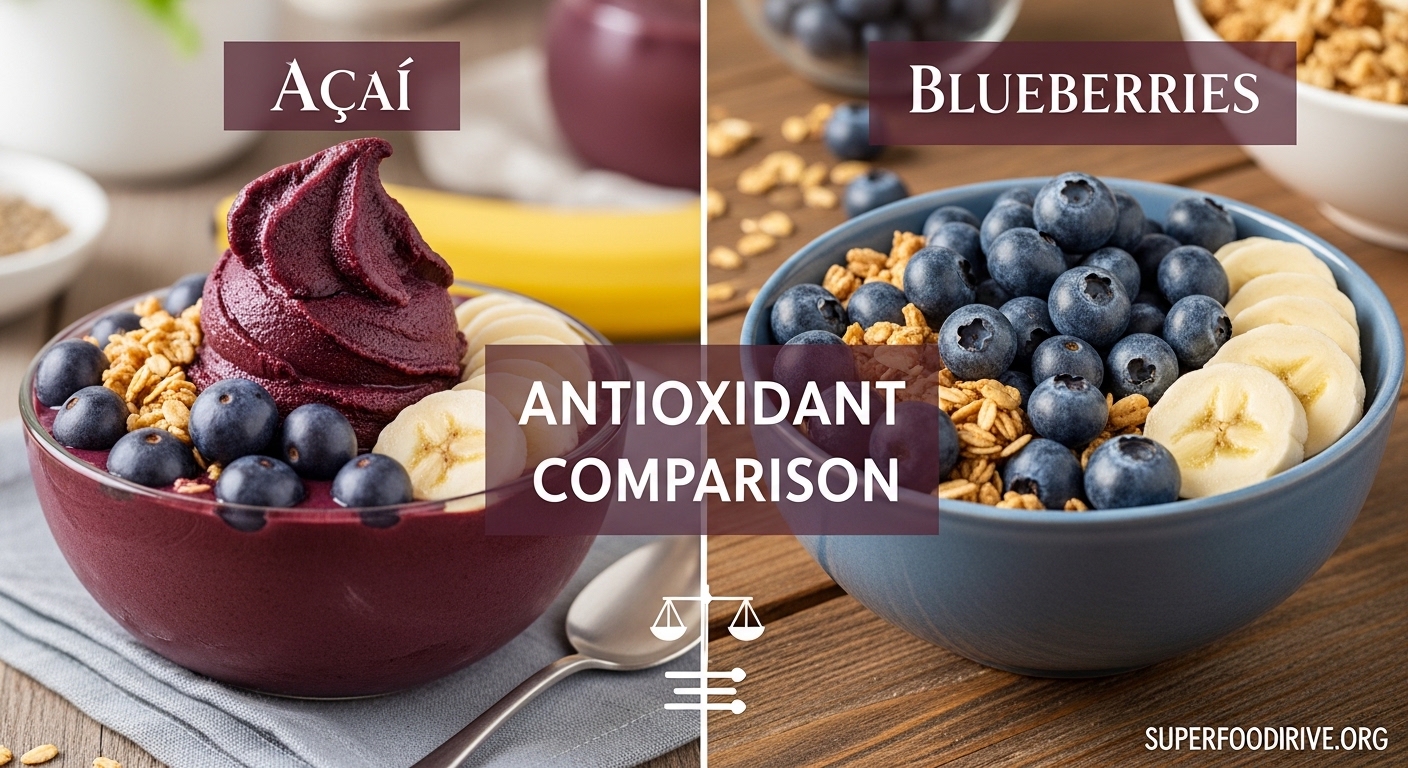
If you have ever stood in front of the frozen fruit section wondering whether acai or blueberries pack more antioxidant power, you are not alone. I have spent hours researching the science behind these two superfood berries, and the answer is more nuanced than marketing claims suggest.
Both acai and blueberries boast impressive antioxidant profiles, but they shine in different ways. Acai delivers more polyphenols and heart-healthy fats per serving, while blueberries offer superior accessibility, lower cost, and more extensive clinical research backing their health benefits.
In this acai vs blueberries antioxidant comparison, I will break down the actual numbers, explain what they mean for your health, and help you decide which berry deserves a spot in your shopping cart.
Table of Contents
Acai vs Blueberries Antioxidant Comparison: Understanding the Numbers
Before comparing these berries, let me explain how scientists measure antioxidant power. The ORAC (Oxygen Radical Absorbance Capacity) scale measures how well foods neutralize free radicals. Higher numbers indicate stronger antioxidant potential.
Acai berries clock in at approximately 15,405 ORAC units per 100 grams of freeze-dried powder. Wild blueberries average around 9,621 ORAC units per 100 grams. Cultivated blueberries measure lower at approximately 4,669 ORAC units per 100 grams.
These numbers suggest acai wins the antioxidant contest by a significant margin. However, raw ORAC values only tell part of the story. The form of the berry, serving size, and how your body absorbs these compounds all matter.
Nutritional Profile: Acai Berry Breakdown
Acai berries come from palm trees native to the Amazon rainforest. Indigenous communities have consumed them for centuries, but they only gained global superfood status in the early 2000s.
Fresh acai berries are about 70% seed and 30% pulp, making them impractical to eat whole like blueberries. Most people consume acai as frozen pulp, powder, or in juice form.
According to USDA data, 100 grams of unsweetened acai berry pulp contains approximately 70 calories, 5 grams of fat (mostly unsaturated), 2 grams of protein, and 3 grams of fiber. The fat content sets acai apart from most fruits, which are typically fat-free.
Acai is particularly rich in anthocyanins, the purple pigments that give it that distinctive color. These compounds account for roughly 10-30% of acai’s dry weight and contribute significantly to its antioxidant capacity.
The berry also contains unique compounds like velutin, a flavonoid not found in other berries, plus trace minerals including iron, calcium, and zinc.
Nutritional Profile: Blueberry Breakdown
Blueberries grow on bushes in temperate climates across North America and Europe. They come in two main varieties: wild (lowbush) and cultivated (highbush). Wild blueberries pack more concentrated nutrients into smaller berries.
USDA data shows that 100 grams of fresh cultivated blueberries contain about 57 calories, 0.3 grams of fat, 0.7 grams of protein, and 2.4 grams of fiber. They are also excellent sources of vitamin C, vitamin K, and manganese.
Blueberries contain a diverse range of anthocyanins, with malvidin being the most abundant. They also provide pterostilbene, a compound similar to resveratrol that has shown promise for heart health in clinical studies.
Unlike acai, blueberries contain virtually no fat and minimal protein. Their antioxidant power comes primarily from their water-soluble polyphenol content rather than fat-soluble compounds.
Research published in the Journal of Agricultural and Food Chemistry found that wild blueberries contain approximately twice the antioxidant content of cultivated varieties, making them a more potent choice if available.
Side-by-Side Antioxidant Comparison
Let me put the numbers side by side so you can see exactly how these berries compare. Remember that preparation methods significantly affect these values.
| Nutrient | Acai (100g frozen pulp) | Blueberries (100g fresh) | Wild Blueberries (100g) |
|---|---|---|---|
| ORAC Value | ~15,405 | ~4,669 | ~9,621 |
| Calories | 70 | 57 | 64 |
| Fat | 5g | 0.3g | 0.4g |
| Fiber | 3g | 2.4g | 2.6g |
| Carbohydrates | 6g | 14g | 15g |
| Sugars | 2g | 10g | 10g |
| Protein | 2g | 0.7g | 0.7g |
| Vitamin C | Trace | 9.7mg | 10mg |
Looking at this table, acai clearly leads in ORAC values and healthy fats while containing significantly fewer sugars. Blueberries win on vitamin C content and offer more carbohydrates for energy.
Anthocyanin Content: The Purple Powerhouses
Anthocyanins are responsible for the deep purple and blue colors in both berries. These compounds act as powerful antioxidants in your body, helping neutralize harmful free radicals.
Acai contains approximately 320 milligrams of anthocyanins per 100 grams. The primary anthocyanins are cyanidin-3-glucoside and cyanidin-3-rutinoside. These specific compounds have shown anti-inflammatory properties in laboratory studies.
Blueberries contain roughly 163 milligrams of anthocyanins per 100 grams when cultivated, and up to 300 milligrams when wild. Malvidin dominates blueberry anthocyanin content, followed by delphinidin and petunidin.
Research from the University of Maine suggests that wild blueberries contain a more diverse range of anthocyanin types than acai, potentially offering broader antioxidant benefits despite lower total quantities.
Health Benefits: What the Science Actually Shows
Both berries offer impressive health benefits, but blueberries have a significant advantage when it comes to clinical evidence. Dozens of human studies support blueberry consumption for various health outcomes.
Blueberry research shows consistent benefits for cognitive function, blood pressure reduction, and insulin sensitivity. A study published in the European Journal of Nutrition found that daily blueberry consumption improved memory in older adults over 12 weeks.
Acai research is more limited but promising. Studies suggest acai may improve cholesterol profiles and reduce markers of oxidative stress. The heart-healthy fats in acai might explain why it shows particular promise for cardiovascular health.
Both berries support endothelial function, which refers to how well your blood vessels relax and contract. Healthy endothelial function is crucial for cardiovascular health and blood pressure regulation.
Blood Sugar Impact: Which Berry is Better for Diabetics?
For people watching their blood sugar, acai offers some advantages. With only 2 grams of sugar per 100 grams compared to blueberries’ 10 grams, acai produces a smaller glycemic response.
However, the research on blueberries and blood sugar is more extensive. Multiple studies show that blueberry consumption can improve insulin sensitivity and help manage blood glucose levels over time.
A study in the Journal of Nutrition found that blueberry bioactives improved insulin sensitivity in obese, insulin-resistant individuals. The effect was modest but statistically significant.
If you have diabetes or prediabetes, both berries can fit into your diet. Acai provides fewer immediate sugars, while blueberries offer more proven long-term benefits for metabolic health.
Cost, Accessibility, and Practical Considerations
Here is where blueberries pull ahead for most people. A pint of fresh blueberries costs $3-6 and stays fresh in your refrigerator for about a week. Frozen blueberries cost even less and last months.
Acai is a different story. Pure unsweetened acai pulp runs $8-15 for a small bag of frozen packets. Acai powder costs $15-30 for an 8-ounce container. The high price reflects the labor-intensive harvesting process and import costs.
Beware of acai bowls at trendy cafes. These often contain added sugars, granola, and other toppings that turn a healthy base into a 600-calorie dessert. I have seen acai bowls with more sugar than a can of soda.
If you choose acai, buy unsweetened frozen pulp or pure powder and add your own fresh fruit. This keeps costs down and sugar content under control.
How to Use Each Berry in Your Diet
Blueberries are incredibly versatile. You can eat them fresh by the handful, add them to oatmeal, blend them into smoothies, or bake them into muffins and pancakes. They require no preparation beyond washing.
Acai works best blended. The traditional Brazilian preparation involves blending frozen acai pulp with banana to create a thick, smoothie-bowl consistency. You can also add acai powder to smoothies, yogurt, or homemade energy bars.
I recommend using acai powder for convenience. It stores well, blends easily, and eliminates the need to thaw frozen pulp. Start with one teaspoon per smoothie and adjust to taste.
For maximum antioxidant benefit, combine both berries. A smoothie with blueberries for volume and acai powder for concentrated antioxidants gives you the best of both worlds.
Frequently Asked Questions
Are blueberries better than acai for antioxidants?
Not necessarily. Acai actually contains higher ORAC values and more anthocyanins per gram than cultivated blueberries. However, wild blueberries come much closer to acai’s antioxidant levels. Blueberries have more clinical research supporting their health benefits, making them a proven choice despite lower antioxidant numbers on paper.
What fruit has the strongest antioxidants?
According to USDA ORAC databases, acai berries rank among the highest antioxidant fruits. Other top contenders include goji berries, wild blueberries, and elderberries. However, antioxidant capacity is just one factor in overall health benefits. The variety of antioxidants and how well your body absorbs them also matter significantly.
Why do some doctors say not to eat blueberries?
This is largely a misconception. Some doctors caution patients taking blood thinners because blueberries contain vitamin K, which affects blood clotting. Others warn against eating too many due to natural salicylates, which can trigger reactions in aspirin-sensitive individuals. For the vast majority of people, blueberries are a healthy dietary addition.
Do blueberries help lower A1C?
Research suggests blueberries may help improve insulin sensitivity and modestly reduce A1C levels over time. Studies show that regular blueberry consumption, about one cup daily, can improve markers of glucose metabolism in people with insulin resistance. However, blueberries are not a replacement for medical treatment of diabetes.
Conclusion: Which Berry Should You Choose?
After analyzing the acai vs blueberries antioxidant comparison, here is my verdict. If you prioritize maximum antioxidant content and do not mind the cost, acai delivers superior numbers on the ORAC scale. Its unique fat content also supports heart health in ways blueberries cannot.
However, for most people, blueberries offer better value. They cost less, are widely available, require no special preparation, and have decades of clinical research supporting their health benefits. Wild blueberries, when available, bridge the antioxidant gap significantly.
My recommendation is to enjoy both. Use blueberries as your daily antioxidant staple and add acai powder to smoothies a few times per week for variety and extra polyphenol power. This approach maximizes benefits while keeping costs reasonable.
Remember that no single superfood replaces a balanced diet rich in diverse fruits and vegetables. Acai and blueberries both deserve a place in your nutrition plan for 2026 and beyond.