
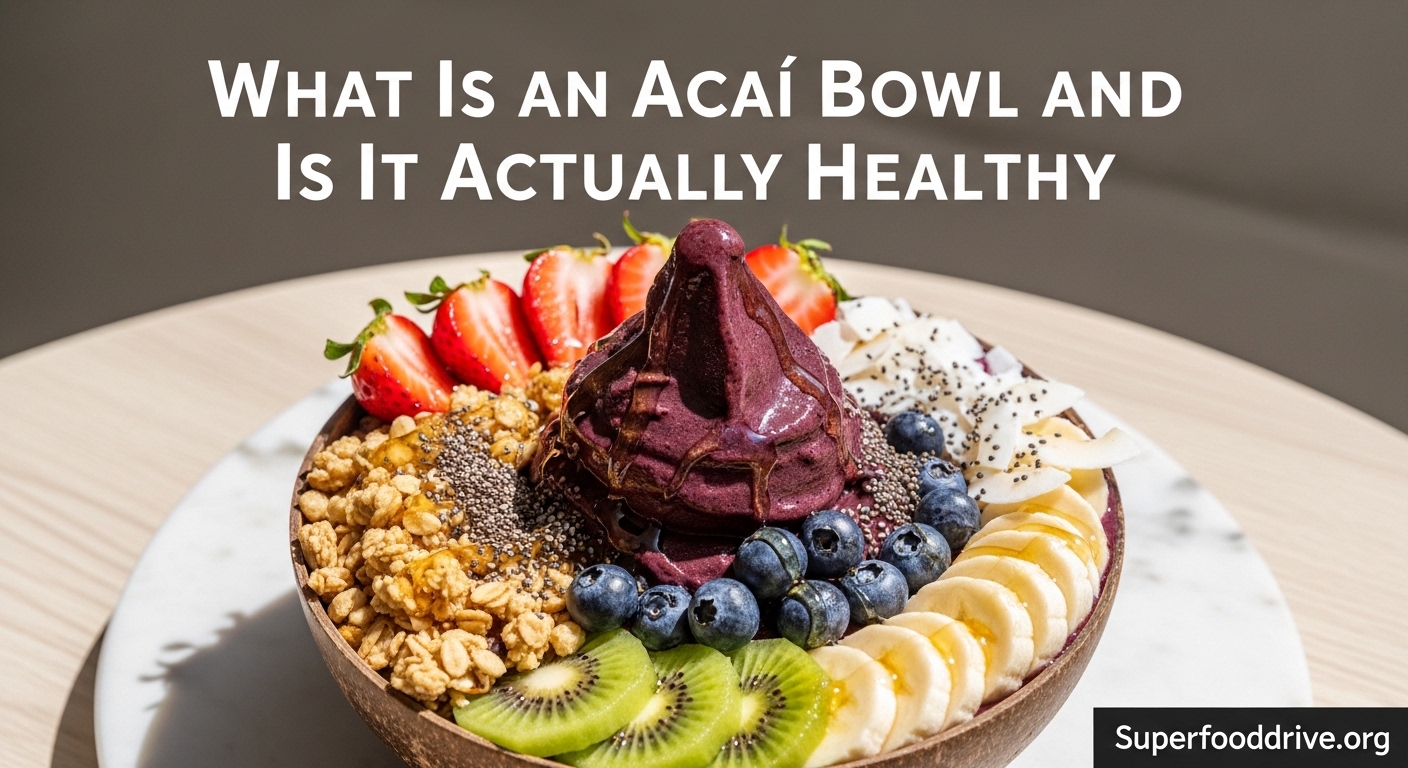
You have probably seen acai bowls all over Instagram, with their gorgeous purple bases topped with fresh fruit, granola, and drizzles of honey. They look like the picture of health. But here is the question that keeps coming up in our community: is an acai bowl actually healthy?
“Acai bowls can be a nutritious option when built thoughtfully, but the ones you buy at popular chains often contain as much sugar as a candy bar,” explains registered dietitian Sarah Chen, M.S., R.D.N. After diving deep into the nutrition data and testing homemade versions over the past few months, I can tell you the answer is not a simple yes or no.
In this guide, we will break down exactly what is in an acai bowl, the real health benefits backed by research, the sugar trap you need to watch out for, and how to build a bowl that actually supports your health goals in 2026.
Table of Contents
What Is an Acai Bowl? (And How to Say It)
An acai bowl is a thick, smoothie-like dish made from frozen acai berries that are blended into a soft-serve consistency and served in a bowl with various toppings. It is pronounced “ah-sigh-ee,” and it originated in the Brazilian Amazon where locals have enjoyed acai for centuries.
Unlike a smoothie you drink through a straw, acai bowls are thick enough to eat with a spoon. Think of them as ice cream’s healthier cousin. The base consists of frozen acai puree, often blended with other frozen fruits like banana or berries to achieve that creamy, spoonable texture.
Traditional Brazilian preparations are simple, just acai with perhaps a sprinkle of granola and sliced banana. But the Americanized versions you find at juice bars and cafes can come loaded with honey, coconut flakes, nut butters, protein powders, and multiple types of fruit. This is where the health story gets complicated.
The Rise of Acai as a Superfood
Acai berries gained superfood status in the early 2000s when researchers discovered their exceptionally high antioxidant content. They started appearing in everything from supplements to skincare. The bowl format exploded in popularity around 2026 as a photogenic, supposedly healthy breakfast alternative.
Today, you will find acai bowls at dedicated shops like Oakberry and Sambazon, mainstream chains like Jamba and Smoothie King, and even in the freezer aisle of most grocery stores. But not all acai bowls are created equal.
Nutritional Profile: What Is Actually in Acai?
Let us get specific about what acai berries bring to the table nutritionally. A 100-gram serving of pure acai puree contains approximately 70 calories, 5 grams of fat (mostly heart-healthy unsaturated fats), 4 grams of carbohydrates, and 2 grams of fiber.
The real star of acai is its antioxidant profile. Acai berries contain anthocyanins, the same compounds that give blueberries their color, but in concentrations up to three times higher. These anthocyanins help neutralize free radicals and reduce oxidative stress in your body.
Acai also provides small amounts of calcium, potassium, and vitamin A. While these amounts are modest (about 2% of your daily value per serving), the berry delivers unique plant compounds called polyphenols and phytosterols that you will not find in significant amounts in most other fruits.
Acai vs Other Breakfast Options
When you compare a basic acai bowl to other popular breakfast choices, the picture becomes clearer. A plain acai base with minimal toppings provides roughly 200-300 calories with moderate fiber and minimal protein. Compare that to a standard breakfast sandwich at 400-500 calories, or oatmeal with fruit at 250-350 calories.
The difference lies in the toppings. Add granola, honey, coconut, and banana to your acai bowl, and you are easily looking at 500-700 calories and 40-60 grams of sugar. That is where many people get tripped up, assuming the bowl is automatically healthier because it contains fruit.
Health Benefits of Acai Bowls: What the Research Shows
The acai berry itself has been studied for several potential health benefits. Here is what the research actually supports.
1. Heart Health Support
Studies published in the Journal of Nutrition show that acai’s anthocyanins may help lower LDL cholesterol and improve blood vessel function. The phytosterols in acai also compete with cholesterol for absorption in your digestive system, potentially reducing overall cholesterol levels.
2. Brain Health and Cognitive Function
Research from the Linus Pauling Institute suggests that the polyphenols in acai may protect brain cells from oxidative stress and inflammation. Some studies indicate acai could support autophagy, your brain’s natural cleanup process that removes damaged cells.
3. Anti-Inflammatory Properties
Acai has demonstrated anti-inflammatory effects in laboratory studies, which could be beneficial for managing chronic inflammation associated with conditions like arthritis and heart disease. The combination of antioxidants and healthy fats works together to reduce inflammatory markers.
4. Digestive Health
While acai itself is not extremely high in fiber compared to other fruits, the fiber content combined with typical bowl toppings like chia seeds and fresh fruit can support healthy digestion. The fiber helps feed beneficial gut bacteria and promotes regular bowel movements.
5. Stress Response and Cortisol
Emerging research suggests acai may help modulate cortisol levels. A study in the Journal of Nutritional Biochemistry found that acai supplementation was associated with improved stress markers in animal models. While human research is limited, the antioxidant content may help reduce oxidative stress that elevates cortisol.
The Sugar and Calorie Reality Check
Here is where things get tricky. While the acai base itself is relatively low in sugar, most acai bowls end up being sugar bombs. The American Heart Association recommends women limit added sugar to 25 grams per day and men to 36 grams. Yet a typical acai bowl from a popular chain can contain 50 grams of sugar or more.
Forum users consistently report this concern. One Reddit user in r/healthyeating noted, “They are usually just a fruit bowl with some granola… feels like a lot of sugar honestly. Seems more like a dessert than a healthy meal.” Another in r/nutrition pointed out, “Calories and while it is mostly natural sugar, it is still a lot of sugar with very little protein or fat.”
Chain Restaurant Comparison
Let us look at real numbers from popular chains. A medium Jamba Juice Acai Primo Bowl contains 510 calories and 65 grams of sugar. An Oakberry signature bowl can run 450-600 calories depending on toppings. Sambazon bowls range from 300-550 calories with 30-50 grams of sugar.
Compare that to making your own at home with unsweetened acai puree, a small amount of fresh fruit, nuts, and no added honey. You can easily cut those numbers in half while still enjoying the experience.
Natural vs Added Sugar
Not all sugar is equal. The fructose in whole fruit comes packaged with fiber, water, and nutrients that slow absorption. However, when you blend fruit into a puree and add honey, agave, or sweetened granola, you are concentrating that sugar while removing some of the protective fiber structure.
Your body processes 40 grams of sugar from a bowl differently than 40 grams from whole fruit spread throughout the day. The glycemic impact is higher, which matters for blood sugar management and energy stability.
Who Should Be Careful with Acai Bowls
Certain populations need to approach acai bowls with extra caution.
People with Diabetes
If you have diabetes or prediabetes, the high carbohydrate and sugar content of typical acai bowls can spike your blood glucose. The glycemic load becomes significant when you factor in the blended fruit base plus toppings. If you choose to have an acai bowl, opt for a smaller portion with protein-rich toppings like Greek yogurt or hemp seeds, and skip the honey and granola.
Those with Chronic Kidney Disease
People with CKD need to monitor potassium intake, and acai does contain moderate amounts of potassium. Combined with banana toppings and other high-potassium additions, an acai bowl could exceed daily limits for those on restricted diets. Always consult your nephrologist or renal dietitian before adding acai to your routine.
Anyone Watching Their Weight
Acai bowls can easily become calorie-dense without being filling. The lack of protein and healthy fats in many commercial versions means you might feel hungry again in an hour. If weight loss is your goal, treat acai bowls as an occasional treat rather than a daily breakfast, or build them with protein and portion control in mind.
How to Build a Healthier Acai Bowl
You do not have to give up acai bowls entirely. Here is how to build one that actually supports your health goals.
Step 1: Start with Unsweetened Acai
Look for frozen acai puree packets that contain only acai with no added sugar. Brands like Sambazon and Tambor offer unsweetened versions. Avoid acai powders that have been heavily processed or mixed with other ingredients.
Step 2: Blend with Low-Sugar Bases
Instead of banana, try blending your acai with cauliflower rice or zucchini for creaminess without the sugar spike. If you want fruit, use a small amount of berries which are lower in sugar than banana or mango.
Step 3: Add Protein
Protein is what transforms an acai bowl from dessert into a meal. Add Greek yogurt, protein powder, collagen peptides, or hemp hearts. Aim for at least 15-20 grams of protein to keep you satisfied.
Step 4: Choose Smart Toppings
Skip the granola and honey. Instead, top with chia seeds, flaxseeds, a tablespoon of nut butter, unsweetened coconut flakes, and a small portion of fresh berries. These add healthy fats, fiber, and protein without the sugar overload.
Step 5: Watch Your Portion
Restaurant portions are often double what you actually need. At home, use a smaller bowl and stick to one acai packet (about 100 grams). Remember, just because it is healthy food does not mean unlimited amounts are good for you.
Frequently Asked Questions
Can diabetics have an acai bowl?
Diabetics can enjoy acai bowls occasionally with modifications. Choose unsweetened acai puree, skip the honey and granola, add protein like Greek yogurt, and keep portions small. Monitor blood glucose response as individual tolerance varies.
How healthy are acai bowls really?
Acai bowls are healthy when built thoughtfully with unsweetened acai, protein, and minimal toppings. However, most commercial versions contain 40-60 grams of sugar and 500+ calories, making them closer to dessert than a health food. The acai berry itself offers antioxidants and healthy fats, but toppings determine the overall nutritional value.
Is acai good for cortisol?
Preliminary research suggests acai’s antioxidants may help reduce oxidative stress, which can lower cortisol levels. However, human studies are limited. The stress-reducing benefits likely come from acai’s anti-inflammatory compounds rather than direct cortisol regulation.
Can you eat acai with CKD?
People with chronic kidney disease should consult their doctor before eating acai. Acai contains moderate potassium, and combined with typical toppings like banana, the total potassium load may exceed daily limits for those on restricted diets. Portion control and careful topping selection are essential if approved by your healthcare provider.
Is eating an acai bowl everyday bad?
Eating acai bowls daily can be problematic due to high sugar content and calorie density. If you enjoy them frequently, make them at home with unsweetened acai, added protein, and minimal toppings. The American Heart Association recommends limiting added sugar to 25-36 grams daily, and one typical acai bowl can exceed this amount.
Conclusion: The Verdict on Acai Bowl Health
So, is an acai bowl actually healthy? The answer depends entirely on how it is made. The acai berry itself is a nutritional powerhouse packed with antioxidants, healthy fats, and beneficial plant compounds. But what you add to that base makes all the difference between a nutrient-dense meal and a sugar-heavy dessert.
If you are buying acai bowls from chains, treat them as an occasional indulgence rather than a daily health food. When making them at home, focus on unsweetened acai, add protein, choose low-sugar toppings, and watch your portions. With these adjustments, an acai bowl can absolutely be part of a healthy diet.
The key takeaway is this: do not let the health halo fool you. Just because something is purple and comes from the Amazon does not automatically make it good for you. Apply the same critical eye you would to any other food, and you can enjoy acai bowls without the sugar crash.