
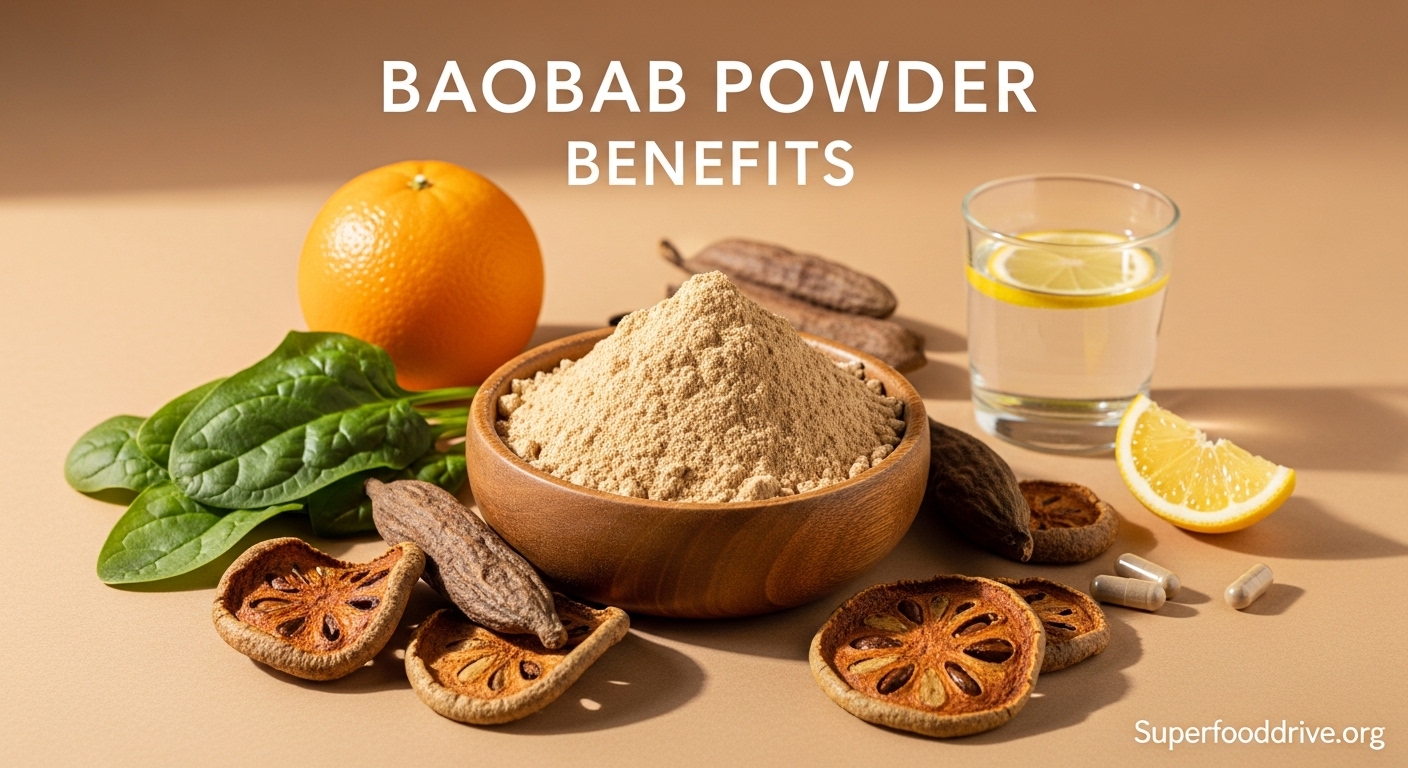
Baobab powder benefits for gut health and vitamin C intake are remarkable. This African superfood delivers six times more vitamin C than oranges per gram while providing nearly 50% prebiotic fiber content. I started incorporating baobab into my morning smoothies two years ago, and the improvements in my digestion and energy levels were noticeable within the first month.
What makes baobab truly unique is its EU-approved health claims. Unlike many trendy supplements, baobab powder has been scientifically validated for specific benefits including immune support, energy metabolism, and digestive health. In this guide, I will share everything you need to know about baobab powder benefits, backed by research and real user experiences.
Table of Contents
What Is Baobab Powder?
Baobab powder comes from the fruit of the baobab tree, which grows across Africa, Madagascar, and Australia. These ancient trees live for thousands of years and produce large oval fruits with a hard outer shell. The powder inside is naturally dry, requiring no heat treatment or processing to preserve its nutrients.
Local communities in Africa have consumed baobab for centuries as a traditional food and medicine. The powder has a pleasant tangy, citrus-like flavor that works well in both sweet and savory applications. Most commercially available baobab is sustainably harvested from wild trees, providing income to rural African families while preserving these iconic trees.
The European Food Safety Authority has approved specific health claims for baobab powder. These include support for normal immune function, normal energy-yielding metabolism, and protection of cells from oxidative stress. This regulatory approval sets baobab apart from many superfoods that rely on marketing claims without scientific backing.
Baobab Powder Vitamin C Content and Benefits
Does baobab powder have vitamin C? Yes, absolutely. Baobab contains approximately 300mg of vitamin C per 100g, which means a single 10g serving provides 33% of your daily value. This makes baobab one of the most concentrated natural sources of vitamin C available as a food supplement.
The vitamin C in baobab powder is highly bioavailable, meaning your body can absorb and use it efficiently. Unlike synthetic ascorbic acid supplements, baobab delivers vitamin C alongside natural polyphenols and fiber that enhance absorption. I have found this natural form feels gentler on my stomach than high-dose synthetic vitamin C tablets.
Baobab Powder vs Oranges: The Vitamin C Comparison
Does baobab have more vitamin C than oranges? Yes, significantly more. Baobab contains roughly six times the vitamin C concentration of oranges by weight. While a medium orange provides about 70mg of vitamin C, 10g of baobab powder delivers around 33mg in a much smaller serving size.
This concentration advantage makes baobab an efficient choice for boosting your vitamin C intake without consuming large volumes of fruit. For people following low-sugar diets, baobab provides the immune benefits of vitamin C without the fructose content of orange juice. The fiber content also slows absorption, preventing the blood sugar spikes associated with fruit juices.
Immune System Support
Vitamin C plays a crucial role in immune function by supporting the production and function of white blood cells. These cells are your body’s first line of defense against pathogens. Regular vitamin C intake has been shown to reduce the duration and severity of common colds.
Beyond immune cells, vitamin C is essential for collagen formation. Collagen is the structural protein that keeps your skin, blood vessels, and connective tissues strong. This is why vitamin C deficiency causes scurvy, where blood vessels become fragile and wound healing slows dramatically.
Iron Absorption Enhancement
One often overlooked baobab powder benefit is its ability to enhance iron absorption. Vitamin C converts iron from plant sources (non-heme iron) into a form your body can absorb more easily. This is particularly valuable for vegetarians and vegans who rely on plant-based iron sources.
Adding baobab powder to iron-rich meals like spinach salads or lentil soups can significantly increase how much iron your body actually absorbs. This synergy makes baobab particularly valuable for people prone to iron deficiency, including women of childbearing age and endurance athletes.
Is Baobab Powder Good for Gut Health?
Yes, baobab powder is excellent for gut health due to its exceptionally high prebiotic fiber content. The powder is approximately 50% fiber by weight, with a unique ratio of two-thirds soluble fiber and one-third insoluble fiber. This dual-action fiber profile supports multiple aspects of digestive health.
I noticed a significant improvement in my regularity within two weeks of adding baobab to my daily routine. The fine texture blends smoothly into liquids without the grittiness that some fiber supplements have. This makes it easier to consume consistently, which is key for gut health benefits.
Prebiotic Fiber Explained
Baobab powder is one of the best prebiotic fiber sources available. Prebiotics are fibers that feed the beneficial bacteria in your gut microbiome. Unlike probiotics, which are live bacteria, prebiotics are the food that helps good bacteria thrive and multiply.
The soluble fiber in baobab dissolves in water to form a gel-like substance. This feeds bacteria like Bifidobacteria and Lactobacillus, which produce short-chain fatty acids. These fatty acids nourish your intestinal cells and help maintain the gut barrier that prevents unwanted substances from entering your bloodstream.
The Hadza Tribe and Baobab Research
One of the most fascinating baobab powder benefits comes from research on the Hadza tribe of Tanzania. These hunter-gatherers consume baobab as a dietary staple and have one of the most diverse gut microbiomes ever studied by science. Their fiber-rich diet, including significant baobab consumption, supports over 40% more bacterial species than typical Western gut microbiomes.
While correlation does not prove causation, this research has sparked significant interest in baobab’s prebiotic potential. The diversity of the Hadza microbiome is associated with better metabolic health and lower rates of inflammatory conditions. Baobab’s fiber profile appears to support the kind of bacterial diversity that modern diets often lack.
Digestive Health Beyond Prebiotics
The insoluble fiber in baobab adds bulk to stool and helps food move through your digestive tract at a healthy pace. This can relieve both constipation and, paradoxically, some forms of diarrhea by normalizing transit time. The fiber also binds to toxins and waste products, helping your body eliminate them efficiently.
Research published in peer-reviewed journals suggests baobab may help reduce intestinal barrier dysfunction. A healthy intestinal barrier prevents unwanted particles from passing into the bloodstream, which is associated with reduced inflammation throughout the body. This “leaky gut” protection is one of the emerging baobab powder benefits for overall wellness.
Addressing Gas and FODMAP Concerns
Forum discussions often raise questions about baobab powder causing gas or flatulence. Some users report an adjustment period when first adding baobab to their diet. This is normal with any significant increase in fiber intake, as your gut bacteria adapt to the new food source.
Starting with a small amount (5g or less) and gradually increasing over two weeks minimizes digestive discomfort. Drinking plenty of water alongside baobab helps the fiber work effectively. Most users find that any initial gas subsides as their microbiome adjusts to the increased prebiotic intake.
Is baobab powder FODMAP friendly? Generally yes, in moderate servings. FODMAPs are fermentable carbohydrates that trigger symptoms in people with IBS. Baobab’s fiber is primarily polysaccharide fiber rather than the specific FODMAP sugars that cause problems. However, individuals with severe IBS should start with very small amounts and monitor their response.
Additional Baobab Powder Benefits
Beyond gut health and vitamin C, baobab powder offers several other health benefits worth considering. The polyphenols in baobab have antioxidant properties that protect cells from oxidative stress. These compounds neutralize free radicals that contribute to aging and chronic disease.
Blood Sugar Regulation
The high fiber content in baobab slows the absorption of sugars into your bloodstream. This helps prevent the spikes and crashes that can lead to energy fluctuations and cravings. Research suggests baobab may help reduce the glycemic response when consumed with carbohydrate-containing meals.
For people managing blood sugar levels, adding baobab to breakfast or other meals may help maintain steadier glucose levels throughout the day. The fiber creates a gel-like matrix in the digestive tract that delays gastric emptying and carbohydrate absorption.
Sustained Energy Release
Baobab is approved for the EU health claim supporting normal energy-yielding metabolism. The vitamin B6 and niacin content contribute to reducing tiredness and fatigue. Unlike caffeine or sugar, baobab provides sustained energy support without crashes.
I have replaced my afternoon coffee with a baobab smoothie and found the energy boost more consistent and longer-lasting. The combination of fiber, vitamins, and minerals supports the metabolic processes that produce cellular energy.
Skin Health and Collagen
The vitamin C in baobab is essential for collagen synthesis, which keeps skin firm and elastic. Combined with the antioxidant protection from polyphenols, baobab supports skin health from the inside out. Many users report improvements in skin clarity and texture after regular consumption.
Collagen production naturally declines with age, making adequate vitamin C intake increasingly important. Baobab provides a natural, food-based source that supports your skin’s structural proteins without the need for synthetic supplements.
How to Use Baobab Powder
Adding baobab powder to your diet is simple due to its mild tangy flavor and fine texture. The powder dissolves easily in liquids and blends well into smoothies, juices, and even water. Unlike some superfoods that require masking with strong flavors, baobab has a pleasant taste that complements many recipes.
Recommended Dosage
Most manufacturers recommend starting with one tablespoon (approximately 10g) of baobab powder daily. This amount provides meaningful levels of vitamin C and fiber without overwhelming your digestive system. You can increase to two tablespoons daily once your body adjusts to the fiber content.
For children or people with sensitive digestion, start with one teaspoon (5g) and gradually increase. Listen to your body and adjust based on your digestive comfort. More is not necessarily better, as your body can only absorb so much vitamin C at once.
Best Ways to Take Baobab
Smoothies are the most popular way to consume baobab powder. Blend one tablespoon with your favorite fruits, greens, and liquid base. The tangy flavor pairs especially well with tropical fruits like mango and pineapple.
For a quicker option, stir baobab into orange juice or water. The fine texture means it will not clump like some other powders. I often add it to my morning yogurt with some berries for a simple nutrient boost.
Baobab also works well sprinkled over breakfast cereals, porridge, or salads. The tangy flavor adds interest to savory dishes too. Try mixing it into salad dressings or using it as a seasoning for roasted vegetables.
Recipe Ideas
Here is my go-to morning smoothie recipe: Blend one tablespoon baobab powder, one cup almond milk, one frozen banana, a handful of spinach, and half a cup of frozen berries. This provides a substantial portion of your daily vitamin C and fiber needs in one delicious drink.
For a savory option, mix baobab into hummus or guacamole. The tangy flavor adds depth without overpowering the dish. You can also stir it into soups after cooking to boost the nutrient content without affecting flavor significantly.
Safety and Side Effects
Baobab powder is generally recognized as safe for most people. It is a traditional food that has been consumed for centuries without serious adverse effects. The EU health claims approval process required extensive safety documentation, confirming its suitability as a food ingredient.
However, some people may experience mild digestive symptoms when first starting baobab. These can include increased gas, bloating, or changes in bowel movements as your gut bacteria adapt to the increased fiber. These symptoms typically resolve within one to two weeks of consistent use.
People with existing digestive conditions like IBS or Crohn’s disease should introduce baobab gradually and consult their healthcare provider if symptoms worsen. While the fiber benefits many people, those with strictures or severe gut inflammation may need to avoid high-fiber supplements.
Baobab is generally considered safe during pregnancy and breastfeeding, but pregnant women should discuss any new supplements with their healthcare provider. The vitamin C and fiber content can be beneficial, but individual circumstances vary.
Frequently Asked Questions
Does baobab powder have vitamin C?
Yes, baobab powder is exceptionally rich in vitamin C. A 10g serving provides approximately 33% of your daily value, making it one of the most concentrated natural sources available. The vitamin C is highly bioavailable and comes in its natural food matrix with beneficial polyphenols.
Is baobab powder good for gut health?
Yes, baobab powder is excellent for gut health. It contains nearly 50% prebiotic fiber, which feeds beneficial gut bacteria and supports a diverse microbiome. The combination of soluble and insoluble fiber promotes regular digestion and may help maintain intestinal barrier function.
Does baobab have more vitamin C than oranges?
Yes, baobab contains approximately six times more vitamin C than oranges by weight. While a medium orange provides about 70mg of vitamin C, 10g of baobab powder delivers around 33mg in a much smaller serving. This makes baobab a more efficient source for boosting vitamin C intake.
Which diseases does the baobab tree heal?
While baobab has traditional uses in African medicine for conditions including malaria, diarrhea, and respiratory infections, modern research focuses on its nutritional benefits rather than disease treatment. The EU has approved specific health claims for immune support, energy metabolism, and digestive health, but baobab is not a medicine and should not replace medical treatment.
Does baobab powder cause gas or flatulence?
Some people experience increased gas when first starting baobab powder due to its high fiber content. This is a normal adjustment as your gut bacteria adapt to the increased prebiotic intake. Starting with 5g daily and gradually increasing over two weeks, along with drinking plenty of water, minimizes this effect.
Is baobab powder FODMAP friendly?
Baobab powder is generally considered FODMAP friendly in moderate servings of 10g or less. Unlike high-FODMAP foods that contain specific fermentable sugars, baobab’s fiber is primarily polysaccharide fiber. People with severe IBS should start with small amounts and monitor their individual response.
How much baobab powder should I take per day?
Most people benefit from 10g (one tablespoon) of baobab powder daily. This provides meaningful levels of vitamin C and fiber without overwhelming the digestive system. You can increase to 20g daily once adapted. Start with 5g if you have sensitive digestion.
Can baobab powder help with leaky gut?
Research suggests baobab may help support intestinal barrier function due to its prebiotic fiber content. The short-chain fatty acids produced by gut bacteria fed by baobab fiber help nourish intestinal cells and maintain tight junctions. However, more research is needed, and baobab should be part of a comprehensive gut health approach.
Conclusion
Baobab powder benefits for gut health and vitamin C intake make it one of the most impressive natural superfoods available in 2026. With six times more vitamin C than oranges and nearly 50% prebiotic fiber, it offers a unique combination that supports both immune function and digestive wellness.
The scientific validation behind baobab sets it apart. EU-approved health claims confirm its benefits for immune support, energy metabolism, and cell protection. Whether you are looking to boost your vitamin C intake, support your gut microbiome, or simply add more nutrient-dense foods to your diet, baobab powder delivers measurable results.
Start with one tablespoon daily in a smoothie or juice, and give your body two weeks to adjust to the fiber content. The improvements in energy, digestion, and overall wellness that many users report could make baobab a valuable addition to your daily routine.