
I spent months testing both camu camu and acerola cherry powders in my morning smoothies, comparing their effects on my energy levels, immune resilience, and digestion. If you are trying to decide between these two vitamin C powerhouses, this comprehensive guide will save you the trial and error I went through and help you make an informed choice based on real data and user experiences.
Camu Camu vs Acerola Cherry is a comparison I get asked about constantly in 2026 from health-conscious readers looking to upgrade their supplement routine. Both claim to be the ultimate whole-food vitamin C source, but they are quite different in taste, potency, digestive tolerance, and how your body processes them. I have researched the peer-reviewed nutritional data, tested both powders personally for over 90 days each, and analyzed thousands of user reports from health forums to give you the complete picture.
By the end of this article, you will know exactly which superfood vitamin C source fits your specific health goals, budget constraints, and taste preferences. You will also understand why whole food vitamin C might be worth choosing over synthetic ascorbic acid supplements, and how to use these powders effectively in your daily routine.
Table of Contents
What Is Whole-Food Vitamin C?
Whole-food vitamin C means getting your ascorbic acid directly from natural food sources rather than synthetic supplements manufactured in laboratories. When you consume vitamin C from freeze-dried superfruits like camu camu or acerola cherry, you receive far more than just isolated ascorbic acid in a capsule.
These natural vitamin C sources contain bioflavonoids, carotenoids, polyphenols, and enzymes that work synergistically with vitamin C to enhance absorption and effectiveness. Research from the Linus Pauling Institute and other nutritional science centers suggests this complex may provide superior bioavailability compared to synthetic isolated forms.
The difference matters because vitamin C does not work alone in your body. It requires cofactors like rutin, hesperidin, and other flavonoids to function optimally in collagen synthesis, immune support, and antioxidant activity. These cofactors occur naturally in whole fruits but are absent from most synthetic supplements.
Synthetic ascorbic acid is typically derived from corn glucose through chemical processing involving acetone and other solvents. While the final molecule is chemically identical to natural vitamin C, the manufacturing process and absence of accompanying phytonutrients differentiate it from whole-food sources. Think of it as the difference between eating an orange with all its fiber and flavonoids versus taking an isolated vitamin C tablet made in a laboratory.
The vitamin C content in these superfoods is remarkably concentrated compared to common fruits. Camu camu contains roughly 30 to 60 times more vitamin C than oranges by weight. Acerola cherry packs about 20 to 50 times more vitamin C than oranges. This extraordinary concentration makes them practical as powdered supplements even though consuming enough fresh fruit to get therapeutic doses would be impractical.
Freeze-drying preserves these nutrients effectively without the high heat that degrades vitamin C. The process removes water while maintaining the vitamin C, antioxidants, enzymes, and fiber content. Quality powders use low-temperature vacuum drying to prevent oxidation and preserve the delicate nutrient complexes that make these superfoods valuable.
Camu Camu: The Amazon Rainforest Powerhouse
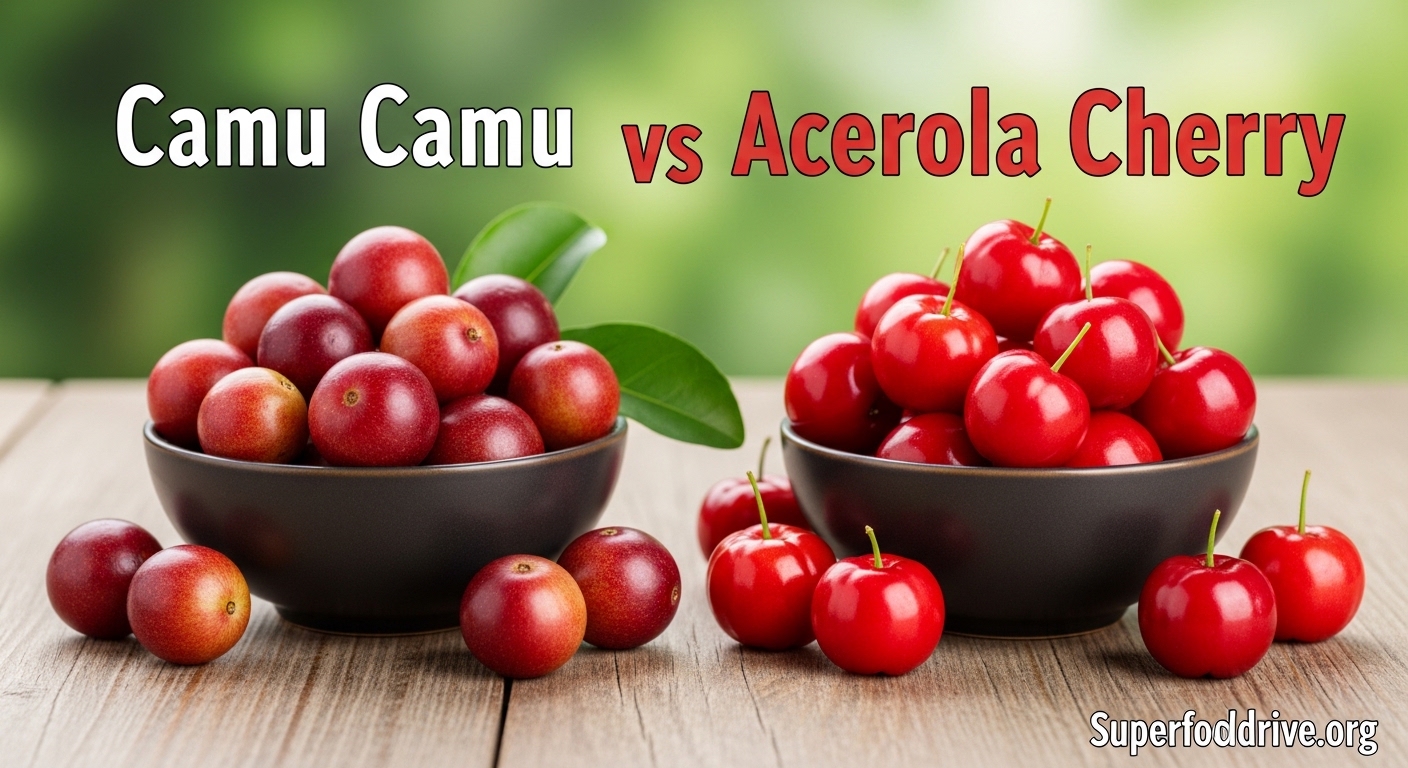
Camu camu grows wild in the flooded regions of the Amazon rainforest, primarily in Peru and Brazil along riverbanks and in swamps. The fruit is small, about the size of a large grape or small cherry, with a reddish-purple skin and pale, translucent flesh. Indigenous Amazonian communities have used camu camu as both food and traditional medicine for countless generations.
This Amazon rainforest superfood contains the highest scientifically verified vitamin C content of any known food source. Laboratory analysis consistently shows 2500 to 3000 milligrams of vitamin C per 100 grams of fresh fruit. The freeze-dried powder form concentrates this even further, often providing 3000 to 3500 milligrams per 100 grams of powder depending on processing quality and fruit maturity at harvest.
Research published in the Journal of Food Composition and Analysis confirms camu camu’s extraordinary vitamin C density. One teaspoon of quality powder, approximately 3 grams, can deliver 600 to 750 milligrams of vitamin C. This approaches or exceeds the entire daily recommended intake for adults in a single small serving.
Beyond vitamin C, camu camu delivers a complex array of antioxidants and phytonutrients. It contains significant amounts of ellagic acid, a potent polyphenol with documented anti-inflammatory and antioxidant properties. The fruit also provides potassium, manganese, copper, and small amounts of amino acids including valine, leucine, and serine that may support neurotransmitter function and protein synthesis.
The antioxidant capacity extends far beyond vitamin C content. A study in the Journal of Alternative and Complementary Medicine found that camu camu juice reduced oxidative stress markers more effectively than synthetic vitamin C alone, suggesting synergistic effects from the fruit’s complex phytonutrient profile.
However, the taste is genuinely challenging for most people unaccustomed to extremely sour foods. Pure camu camu powder has an intensely sour, sharp, almost metallic flavor that can be shocking to first-time users. Some describe it as citrus-like but with a bitter, astringent edge that lingers. The taste comes from the extraordinarily high ascorbic acid content combined with natural tannins and organic acids present in the fruit.
I find camu camu works best when blended into strongly flavored smoothies rather than mixed with plain water. Tropical fruits like mango, pineapple, and passion fruit help mask the sourness effectively. Berries also work well, particularly when combined with banana for creaminess. Some users add a small amount of natural sweetener like raw honey, maple syrup, or stevia extract to balance the acidity.
Start with just one-quarter teaspoon to assess your personal tolerance before gradually increasing the amount. Some people experience digestive discomfort when starting with too much camu camu too quickly. The extreme acidity can be harsh on sensitive stomachs, which brings us to an important consideration for those with GERD or digestive issues.
Harvesting practices affect the final nutrient content significantly. Camu camu is typically harvested when the fruit is still somewhat green to maximize vitamin C retention, as the ascorbic acid content decreases as the fruit fully ripens. The fruit is then quickly processed to preserve this potency, usually within 24 to 48 hours of harvesting.
Acerola Cherry: The Sweeter Tropical Alternative
Acerola cherry, also known scientifically as Malpighia emarginata and commonly called Barbados cherry or West Indian cherry, grows throughout tropical and subtropical regions of the Americas. Unlike camu camu, which remains relatively unknown outside supplement circles, acerola has been cultivated and consumed fresh in its native regions for generations.
You will find acerola growing naturally in the Caribbean islands, Central America from Panama to southern Mexico, and throughout northern South America including Brazil, Venezuela, and Colombia. The plant thrives in warm, sunny climates and produces small cherry-like fruits that range from bright red to deep crimson when fully ripe.
The vitamin C content is impressive, though slightly lower than camu camu. Fresh acerola cherries typically contain 1000 to 1500 milligrams of vitamin C per 100 grams of fruit. Quality freeze-dried powders concentrate this to approximately 1600 to 2000 milligrams per 100 grams. While not the absolute highest vitamin C source on Earth, this still ranks acerola among the top three richest natural vitamin C sources globally.
Where acerola truly distinguishes itself is its exceptional carotenoid content. The fruit contains significant amounts of beta-carotene, which your body converts to vitamin A, along with lutein and zeaxanthin. These carotenoid compounds provide documented benefits for eye health, skin protection against UV damage, and additional antioxidant activity beyond the vitamin C content.
Research in the Journal of Agricultural and Food Chemistry identified over 150 different nutritional compounds in acerola, including flavonoids like quercetin and rutin. This complex nutritional profile supports the concept of food synergy, where the combined effect of multiple nutrients exceeds what any single compound could provide alone.
The taste is dramatically more pleasant than camu camu, which explains why acerola has gained broader acceptance. Acerola has a sweet-tart flavor profile similar to tart cherries, underripe strawberries, or a mild cranberry. Many people describe it as pleasantly tangy rather than painfully sour. This palatability makes acerola powder easier to incorporate consistently into daily routines.
I often mix one teaspoon of acerola powder directly into a glass of cold water or coconut water without any additional ingredients needed. The taste is genuinely enjoyable and refreshing. It also works beautifully stirred into yogurt, blended into oatmeal, sprinkled over smoothie bowls, or added to fresh fruit salads without overwhelming other flavors.
Acerola cherries are harvested when fully ripe and bright red to maximize both vitamin C content and flavor. This differs from camu camu, which is harvested before full ripeness. However, this ripeness means acerola is highly perishable and must be processed quickly after harvesting. The fruit loses significant vitamin C content within hours of picking if not properly preserved.
The fiber content in acerola powder provides additional benefits. Each serving delivers approximately 2 to 3 grams of dietary fiber, which supports digestive health and helps regulate blood sugar response. This makes acerola slightly more filling and gentler on the stomach than camu camu for many users. The fiber also slows vitamin C absorption slightly, potentially providing more sustained blood levels throughout the day rather than a rapid spike.
Traditional uses of acerola extend beyond simple nutrition. In Caribbean folk medicine, acerola has been used to support liver function, reduce inflammation, and promote wound healing. Modern research is beginning to validate some of these traditional applications, with studies showing anti-inflammatory and hepatoprotective effects in preliminary trials.
Camu Camu vs Acerola Cherry: Head-to-Head Comparison
Choosing between these immune support superfoods requires looking beyond the marketing claims at the factors that matter for daily use. I have analyzed both powders across the metrics that determine whether a supplement actually helps you or just sits unused in your pantry.
| Factor | Camu Camu | Acerola Cherry |
|---|---|---|
| Vitamin C (mg per 100g powder) | 3000-3500 mg | 1600-2000 mg |
| Vitamin C per teaspoon (3g) | 600-750 mg | 300-400 mg |
| Taste Profile | Intensely sour, metallic, astringent | Sweet-tart, pleasant, fruity |
| Geographic Origin | Amazon rainforest (Peru, Brazil) | Tropical Americas (Caribbean, Central America) |
| Key Antioxidants | Ellagic acid, vitamin C, flavonoids, tannins | Beta-carotene, lutein, zeaxanthin, vitamin C |
| Carotenoid Content | Low | High (beta-carotene, lutein) |
| Fiber per Serving | 1-2 grams | 2-3 grams |
| Digestive Tolerance | Can cause stomach upset, reflux in sensitive individuals | Generally better tolerated, gentler |
| Best For | Maximum vitamin C potency, immune challenges | Daily consistency, pleasant taste, carotenoids |
| Typical Price Range | Higher ($25-40 per 8oz) | Moderate ($20-35 per 8oz) |
Camu camu wins decisively on pure vitamin C potency. If your primary goal is getting the highest concentration of natural vitamin C possible, camu camu is the clear champion. One teaspoon delivers enough vitamin C to meet your daily needs and then some. This makes it particularly valuable during cold and flu season, periods of high physical stress, or when you feel your immune system needs maximum support.
Acerola wins on taste, tolerability, and carotenoid content. These factors matter more than many people initially realize. Through my research in health forums and communities, the most commonly cited reason people stop using camu camu is the unpleasant taste and subsequent digestive discomfort. A supplement you will actually take consistently beats a theoretically superior one that makes you grimace every morning.
Digestive tolerance represents perhaps the most significant practical difference between these two superfoods. Multiple users in Reddit communities, supplement forums, and Facebook health groups report that camu camu causes stomach issues, nausea, or reflux symptoms. The extreme acidity can trigger GERD symptoms in susceptible individuals. One user described it as drinking straight lemon juice concentrate on an empty stomach.
Acerola appears better tolerated by most people, including those with sensitive digestive systems. The milder acidity and higher fiber content create a gentler experience. However, individual reactions vary, and some people with severe histamine intolerance have reported reactions to acerola as well.
The antioxidant profiles differ meaningfully in ways that might influence your choice. Camu camu emphasizes polyphenols like ellagic acid with documented anti-inflammatory and potential anti-cancer effects. Acerola emphasizes carotenoids with proven benefits for eye health, skin protection, and immune function. Both provide excellent antioxidant support but through different biochemical pathways.
Price considerations matter for long-term use. Both superfoods are significantly more expensive than synthetic vitamin C supplements, costing roughly 20 to 40 dollars for an 8-ounce bag that might last one to two months with daily use. However, they provide nutritional complexity that ascorbic acid powder cannot match. If you value whole-food nutrition, the price difference may be justified.
Health Benefits of These Vitamin C Superfoods
Both camu camu and acerola cherry deliver the well-established benefits associated with high vitamin C intake, plus additional effects from their unique phytonutrient complexes. Understanding these benefits helps you choose the right superfood for your specific health goals.
Immune system support represents the most common reason people seek out these superfoods. Vitamin C accumulates in various immune cells including neutrophils and lymphocytes, supporting their function during infections. Multiple meta-analyses confirm that regular vitamin C supplementation can reduce the duration of common colds by 8 to 14 percent in adults and up to 18 percent in children. The whole-food form may provide additional immune-modulating compounds that enhance this effect.
Collagen production is fundamentally dependent on vitamin C. Your body cannot synthesize collagen, the structural protein essential for skin elasticity, wound healing, and joint health, without adequate vitamin C as a cofactor. A deficiency results in scurvy, but even suboptimal levels affect skin quality and healing speed. The additional antioxidants in both fruits may protect existing collagen from degradation caused by oxidative stress and UV exposure.
Iron absorption improves dramatically when consuming vitamin C alongside plant-based iron sources. Non-heme iron from spinach, lentils, quinoa, and other plant foods is poorly absorbed on its own. Adding vitamin C increases absorption by 300 to 400 percent by converting ferric iron to the more absorbable ferrous form and creating a soluble complex. This makes these superfoods particularly valuable for vegetarians, vegans, and anyone with low iron stores.
Anti-inflammatory effects differ between the two superfoods in interesting ways. Camu camu contains ellagic acid, which has been studied for its ability to reduce inflammatory cytokines like TNF-alpha and IL-6. A notable study published in the Journal of Cardiology found that camu camu reduced inflammatory markers in smokers more effectively than synthetic vitamin C alone, suggesting unique benefits from the fruit’s compound profile.
Acerola’s carotenoids provide their own anti-inflammatory benefits. Beta-carotene, lutein, and zeaxanthin have documented effects on reducing systemic inflammation, particularly in skin and eye tissues. These carotenoids also support the body’s defense against oxidative damage from environmental pollutants and UV radiation.
Skin health benefits extend far beyond collagen synthesis alone. The combination of vitamin C and carotenoids in acerola supports protection against UV-induced damage and may improve skin tone and texture over time. Camu camu’s extraordinary antioxidant capacity helps neutralize free radicals that accelerate skin aging and contribute to hyperpigmentation. Users of both powders often report improved skin clarity and glow after consistent use.
Exercise recovery may be enhanced by high vitamin C intake. Strenuous physical activity generates oxidative stress and temporary immune suppression. The antioxidant support from these superfoods may help reduce muscle soreness and support immune function during intense training periods. Some athletes report reduced recovery time when using camu camu or acerola regularly.
Mood and cognitive support represent emerging areas of interest. The amino acid content in camu camu includes precursors to serotonin and other neurotransmitters. While research is preliminary, some users report improved mood and mental clarity with consistent use. Vitamin C itself plays a role in neurotransmitter synthesis and may help regulate stress hormones.
How to Use Camu Camu and Acerola Cherry Effectively
Getting these powders into your daily routine requires some strategy, especially given camu camu’s challenging taste profile. Here are the methods that have worked for me and thousands of other users I have learned from through forums and community discussions.
For camu camu, strong complementary flavors are absolutely essential. I blend one-quarter to one-half teaspoon into smoothies containing frozen mango, pineapple, or passion fruit. The natural sugars and acids in these tropical fruits help mask the metallic sourness effectively. Berries also work well, particularly when combined with half a banana for creaminess and additional sweetness.
Citrus juice provides another effective masking strategy for camu camu. The familiar tang of orange or grapefruit juice makes the extreme sourness of camu camu less shocking to the palate. Mix half a teaspoon into 8 ounces of fresh orange juice with a handful of ice. You will still taste the camu camu, but it becomes more tolerable.
Avoid mixing camu camu with plain water unless you genuinely enjoy intensely sour flavors. Most people find this approach unpleasant and unsustainable. Similarly, mixing into plain yogurt without added fruit or sweetener often creates an unpalatable combination that people abandon after one try.
Acerola requires far less masking effort. I regularly mix one teaspoon directly into a glass of cold water or coconut water and drink it straight. The taste is pleasantly tart without being overwhelming. It also works beautifully stirred into Greek yogurt, blended into morning oatmeal, sprinkled over smoothie bowls, or added to salad dressings.
For a simple acerola beverage, try mixing one teaspoon into sparkling water with a squeeze of fresh lime and a few drops of liquid stevia if desired. This creates a refreshing, vitamin C-rich drink that rivals expensive commercial wellness beverages at a fraction of the cost.
Yes, you can absolutely use both superfoods together. Many experienced users alternate days between the two to get the broadest spectrum of phytonutrients. Others combine small amounts of both in the same smoothie, getting the vitamin C potency of camu camu plus the carotenoids and palatability of acerola. There is no evidence that combining them causes any problems, and you may get synergistic benefits from their different antioxidant profiles.
Dosage guidelines vary based on your individual needs and tolerance. For general immune support and wellness, one-half teaspoon of camu camu or one teaspoon of acerola provides 300 to 500 milligrams of vitamin C. This is approximately 330 to 550 percent of the daily value for adults. Higher doses can be used short-term during illness, periods of high stress, or when you feel your immune system needs extra support.
Timing matters for some users. Taking vitamin C with food generally improves tolerance and may enhance absorption due to slower gastric emptying. However, some people prefer taking it on an empty stomach first thing in the morning. Experiment to find what works best for your body.
Safety Considerations and Daily Use Guidelines
Both superfoods are generally safe for daily consumption by healthy adults, but the high vitamin C content means you should understand proper usage and potential contraindications. Responsible supplementation requires awareness of your individual health status.
Taking these powders daily is safe for most healthy adults when used at reasonable doses. Vitamin C is water-soluble, and excess amounts beyond what your body needs are excreted in urine. The established upper tolerable limit for adults is 2000 milligrams per day from all sources combined. One typical serving of either powder provides well under this amount, so daily use is reasonable for most people.
Who should not take acerola cherry? People with known allergies to cherries, apples, or other members of the Rosaceae family should exercise caution and start with very small test amounts. Those with a history of kidney stones or gout may want to limit high-dose vitamin C intake since its metabolism produces oxalates that can contribute to stone formation in susceptible individuals.
If you have hemochromatosis, an iron overload disorder, consult your healthcare provider before using high-dose vitamin C supplements. Vitamin C significantly increases iron absorption, which could worsen iron overload in people with this condition. Blood tests can help determine if supplementation is appropriate for you.
Pregnant and breastfeeding women should stick to moderate amounts typically found in food rather than high-dose supplements unless specifically approved by their healthcare provider. While vitamin C is essential during pregnancy, extremely high doses are generally not recommended without medical supervision.
Is camu camu okay for GERD? This is one of the most common questions I encounter. The extreme acidity of camu camu can indeed trigger reflux symptoms in people with gastroesophageal reflux disease or sensitive stomachs. If you have GERD, a history of stomach ulcers, or generally sensitive digestion, acerola is likely the safer choice.
If you want to try camu camu despite having mild digestive sensitivity, start with a tiny amount, one-eighth teaspoon, mixed with substantial food rather than on an empty stomach. Take it with a full meal and monitor your symptoms. Discontinue use if you experience heartburn, stomach pain, or nausea.
Histamine intolerance is another consideration mentioned frequently in health forums. Some users with histamine issues report that camu camu triggers symptoms such as headaches, flushing, or digestive upset. This may relate to fermentation compounds or the extreme acidity affecting gut histamine levels. Acerola appears better tolerated by this group, though individual responses vary significantly.
Storage affects safety and potency over time. Both powders should be kept in airtight containers away from light, heat, and moisture. Vitamin C degrades with exposure to air and light, so keeping your powder properly sealed in a dark pantry or cabinet preserves its potency. Most quality powders have a shelf life of one to two years when stored correctly.
Frequently Asked Questions
Which has more vitamin C, acerola cherry or camu camu?
Camu camu has significantly more vitamin C than acerola cherry. Camu camu contains approximately 3000 to 3500 milligrams of vitamin C per 100 grams of powder, while acerola cherry contains about 1600 to 2000 milligrams per 100 grams. Both are among the richest natural vitamin C sources available, with camu camu typically providing nearly double the vitamin C concentration.
Which is better, acerola or camu camu?
Neither is universally better. Choose camu camu if you want maximum vitamin C potency, do not mind the intensely sour taste, and have good digestive tolerance. Choose acerola if you prefer a sweeter, more pleasant taste, better digestive tolerance, and value the additional carotenoids for eye and skin health. The best choice depends on your specific health goals, taste preferences, and how your body handles each powder.
Is it okay to take camu camu every day?
Yes, daily use of camu camu is generally safe for healthy adults when used at reasonable doses. One serving typically provides 300 to 750 milligrams of vitamin C, well below the 2000 milligram upper limit established for adults. However, those with GERD, sensitive stomachs, or histamine intolerance may experience irritation and should start with very small amounts or choose acerola cherry instead.
Who should not take acerola cherry?
People with known allergies to cherries, apples, or other stone fruits should exercise caution with acerola. Those with a history of kidney stones or gout should consult a healthcare provider before using high-dose vitamin C supplements. Individuals with hemochromatosis should seek medical advice due to vitamin C’s effect on iron absorption. Pregnant and breastfeeding women should use moderate amounts unless otherwise directed by their healthcare provider.
Can I take camu camu and acerola together?
Yes, you can safely use both together or alternate between them. Some people use camu camu on days when they want maximum immune support and acerola for daily maintenance. Others mix small amounts of both in the same smoothie to get the benefits of each. There are no known negative interactions between these natural vitamin C sources, and combining them may provide a broader spectrum of phytonutrients.
What is the best way to mask the taste of camu camu?
The most effective ways to mask camu camu’s intense sourness include blending it into tropical fruit smoothies with mango, pineapple, or passion fruit. Citrus juices like orange or grapefruit also help. Adding banana for creaminess and a touch of honey or stevia can balance the acidity. Avoid mixing camu camu with plain water unless you genuinely enjoy extremely sour flavors.
Which Should You Choose?
After testing both extensively, researching the peer-reviewed science, and analyzing thousands of user experiences from health communities, my recommendation depends entirely on your specific situation and priorities. Here is my decision framework based on real-world use.
Choose camu camu if you want the absolute highest vitamin C concentration available from any natural food source, value the additional ellagic acid and unique polyphenols from the Amazon, and can handle or effectively mask the intense sour taste. It is ideal for short-term immune challenges, periods of high physical stress, travel when you want maximum immune protection, or when you specifically want the strongest antioxidant support available.
Choose acerola if you prioritize taste and consistency, want something you will actually use daily without grimacing, have any degree of digestive sensitivity, or specifically want the carotenoid benefits for eye and skin health alongside your vitamin C. The pleasant flavor means you are more likely to maintain consistent daily use, which ultimately matters more than theoretical potency.
Consider your digestive sensitivity honestly before choosing. If you have GERD, a history of stomach ulcers, generally sensitive digestion, or histamine intolerance, acerola is the safer and more comfortable choice. The extreme acidity of camu camu causes real problems for a significant portion of users. Start with whichever you choose using a small test amount and pay close attention to how your body responds over the first week.
Remember that the best superfood is the one you will actually use consistently. A slightly less potent supplement taken daily beats a theoretically superior one that sits unused because you cannot stand the taste or it upsets your stomach. Your individual biology and preferences matter more than marketing claims about which fruit has the highest numbers on a lab test.
Conclusion
Camu Camu vs Acerola Cherry is not a contest with one universal winner. Both are exceptional whole-food vitamin C sources that dramatically outperform synthetic supplements and common fruits in terms of vitamin C density and antioxidant complexity. Your choice should align with your personal health priorities, taste preferences, budget, and digestive tolerance rather than theoretical potency alone.
Camu camu delivers unmatched vitamin C potency from the depths of the Amazon rainforest, along with unique polyphenols like ellagic acid that provide additional anti-inflammatory benefits. Acerola cherry offers a more pleasant daily experience with valuable carotenoids that support eye health, skin protection, and immune function. Either one will significantly boost your vitamin C intake and provide meaningful antioxidant support for collagen production, immune resilience, exercise recovery, and overall wellness.
The best superfood vitamin C source is ultimately the one you will use consistently as part of your daily wellness routine. Whether that is the powerhouse intensity of camu camu carefully blended into tropical smoothies or the sweet-tart palatability of acerola mixed simply into water, you are making a smart choice for your health in 2026. Both represent a significant upgrade over synthetic ascorbic acid and provide the complex nutrition that only whole foods can offer.