
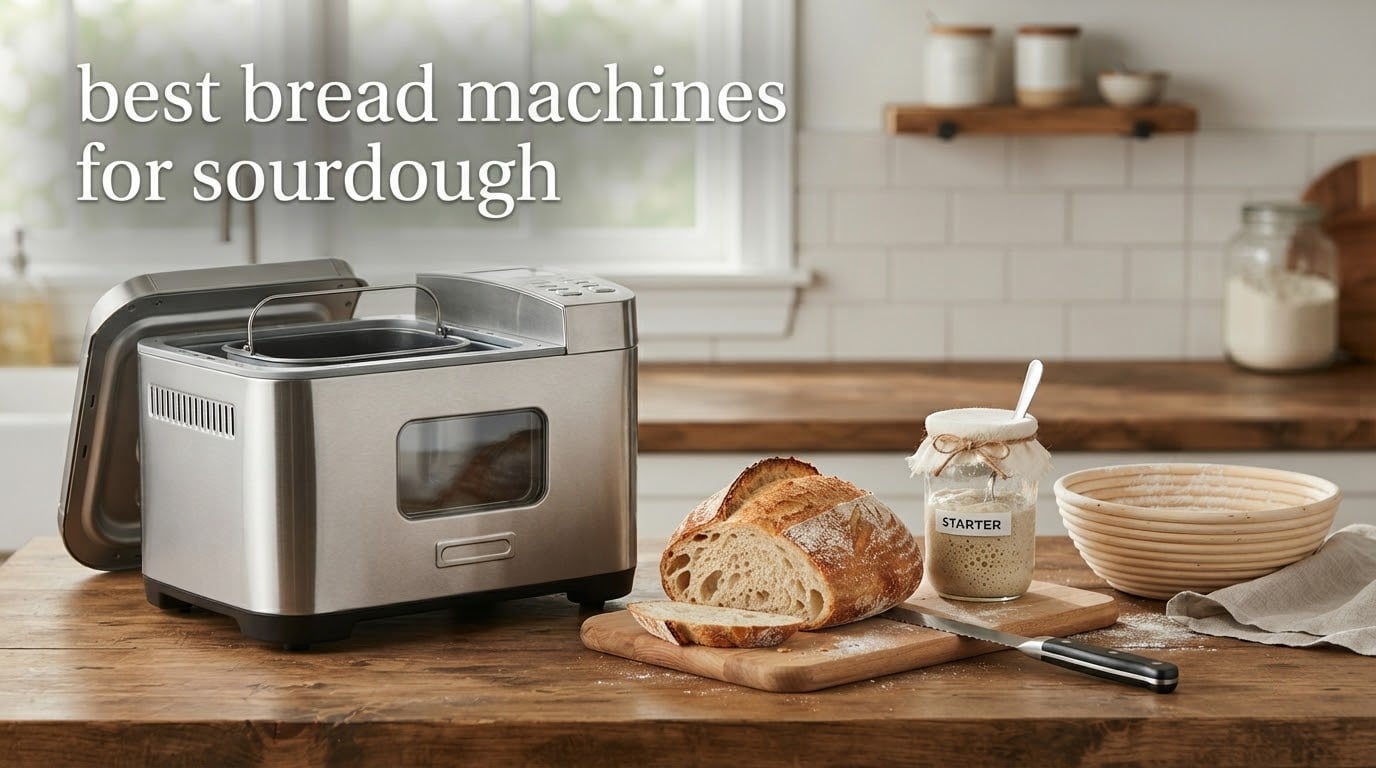
Yes, a bread machine can make good sourdough bread, but only if you can control the timing. A fixed yeasted-white-bread cycle finishes in about three hours, and a real sourdough ferment needs far longer, so the loaf comes out pale and dense unless the machine lets you set the knead, rest and rise times yourself. That programmability, not the shape of the box, is what separates a good machine from a disappointing one.
Our best overall pick among the best bread machines for sourdough is the KITCHENARM 29-in-1 Smart Bread Machine, because it pairs a dedicated sourdough menu and a starter cycle with four personal menus where every cycle time and temperature can be set. Its 4.6 rating across 7898 reviews puts it at the top of this group alongside the Zojirushi Virtuoso Plus, and 82% of those reviews are five-star.
We spent weeks reading owner reviews and comparing control panels rather than trusting the word sourdough printed on the front of a machine. Ten machines made the cut, and every one has a real weakness. By contrast, several of the machines below bake a beautiful crust but cannot lengthen a ferment, while others give you total control but demand a learning curve. We tell you which is which in every review.
If you already have a starter going, you will also want our sourdough banneton and proofing basket guide before you bake the first loaf, and our bread boxes for sourdough storage guide once you have more loaves than you can eat.
Top 3 Best Bread Machines for Sourdough in 2026
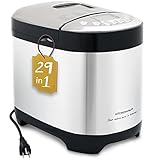
KITCHENARM 29-in-1 Smart Bread Machine
- Sourdough menu plus starter cycle
- 4 programmable personal menus with per-cycle timing
- 2 lb loaf in 1 lb/1.5 lb/2 lb sizes
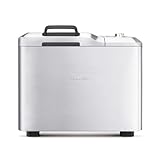
Breville Custom Loaf BBM800XL
- Modify function edits any cycle step
- 9 storable custom programs
- 2.5 lb horizontal loaf
- collapsible paddle

Zojirushi Virtuoso Plus BB-PDC20
- Dual lid and base heaters
- Horizontal dual-paddle mixing
- 2 lb loaf
- 7 fixed courses
The KITCHENARM leads because it is a rare machine that gives you both halves of what sourdough needs: a named sourdough program for beginners, and a cycle-level editor for when your starter outruns the presets. The Breville goes further on control but asks more of the operator, and its 4.2 rating is the joint-lowest in this group. The Zojirushi Virtuoso Plus bakes the most evenly of the three and is the one most owners already recognise, but its seven courses cannot be adjusted at all.
All 10 Bread Machines for Sourdough at a Glance
| Product | Specifications | Action |
|---|---|---|
| KITCHENARM 29-in-1 Smart Bread Machine |
|
Check Latest Price |
| Breville Custom Loaf BBM800XL |
|
Check Latest Price |
| Zojirushi Virtuoso Plus BB-PDC20 |
|
Check Latest Price |
 Cuisinart CBK-110 Cuisinart CBK-110 |
|
Check Latest Price |
 KBS Pro 17-in-1 KBS Pro 17-in-1 |
|
Check Latest Price |
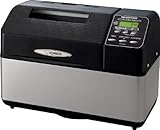 Zojirushi Home Bakery Supreme BB-CEC20 Zojirushi Home Bakery Supreme BB-CEC20 |
|
Check Latest Price |
 Elite Gourmet EBM8103B Elite Gourmet EBM8103B |
|
Check Latest Price |
 OSIPOTO BM8205 17-in-1 OSIPOTO BM8205 17-in-1 |
|
Check Latest Price |
 Zojirushi Home Bakery Mini BB-HAC10 Zojirushi Home Bakery Mini BB-HAC10 |
|
Check Latest Price |
 Neretva PE9806U 15-in-1 Neretva PE9806U 15-in-1 |
|
Check Latest Price |
1. KITCHENARM 29-in-1 Smart Bread Machine: Best Overall for Sourdough
KITCHENARM 29-in-1 SMART Bread Machine with Gluten Free Setting 2LB 1.5LB 1LB Bread Maker Machine with Homemade Cycle – Stainless Steel Breadmaker with Recipes Whole Wheat Bread Making Machine
29 menus including Sourdough and a starter cycle
4 personal menus with per-cycle timing
2 lb loaf
550W
Pros
- 4.6 rating across 7898 reviews with 82% at five stars
- Four fully programmable personal menus for long ferments
- Dedicated sourdough menu and starter cycle
- Quiet operation and a base that does not creep
- Free replacement parts shipped years after purchase
Cons
- Dough cycle gives no completion beep so you must time it yourself
- Teflon-coated pan rather than ceramic or stainless
- Lid hinges high so the pan may need lifting out
I kept coming back to this one because it does something most machines in this list do not: it lets you edit the knead, rest, rise and bake stages independently on four personal menus. That is the whole argument for buying a programmable machine, and 7898 reviews at a 4.6 average with 82% of them at five stars is a well-proven record. Multiple owners report three to five years of reliable daily use.
The 29 menus cover 21 breads and 7 non-bread modes, and both a Sourdough program and a starter function are in there. For a beginner, that means you can load a ripe starter and press one button. For anyone past that stage, the personal menus are where the machine earns its place, because you can set an eight-hour first rise and then a normal bake without watching the clock.
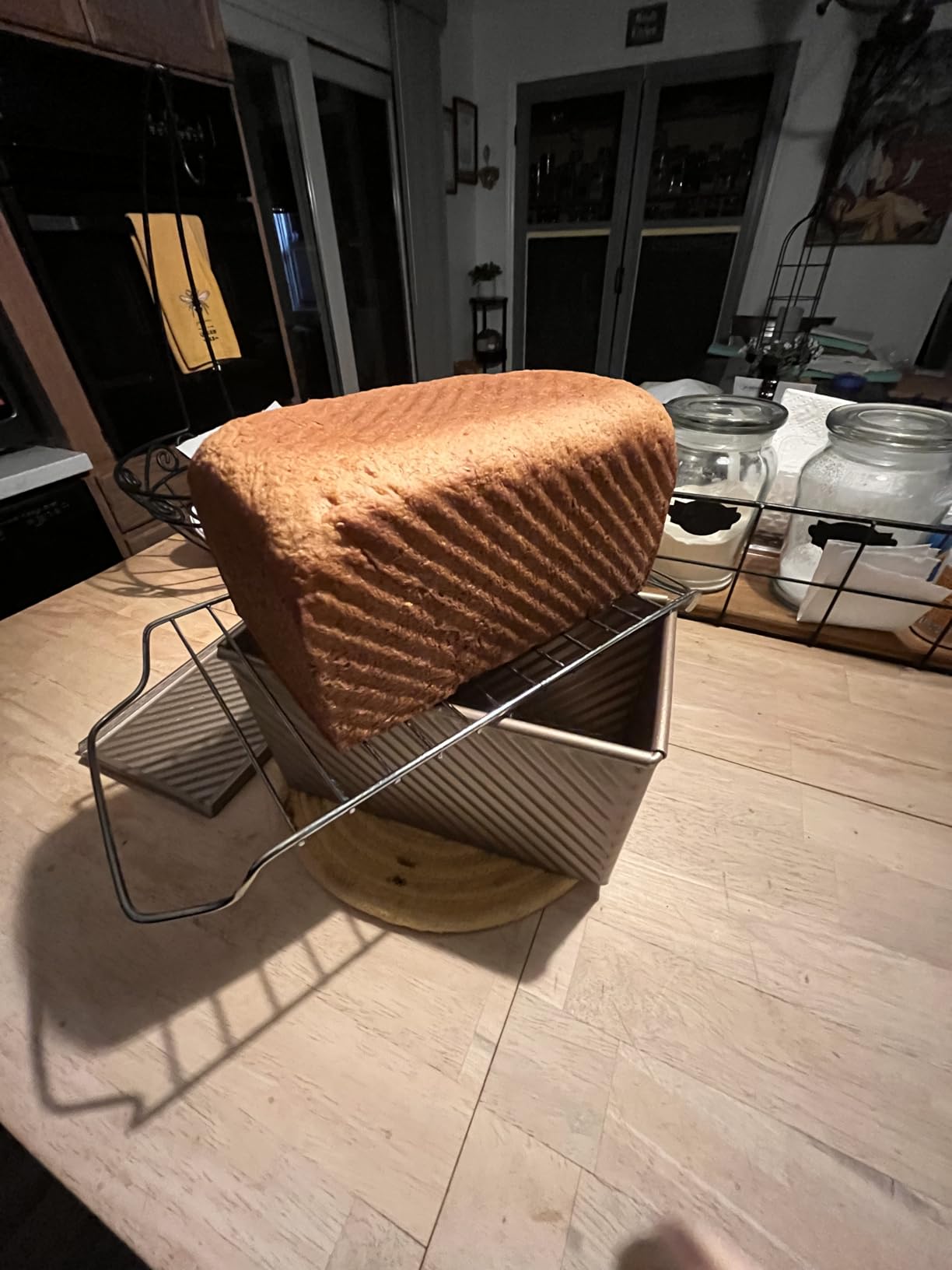
There is a one-press mode worth knowing about. Every setting is saved for the next bake, so the second sourdough loaf takes a single press instead of a full menu walk. With 1 lb, 1.5 lb and 2 lb sizes and three crust colors, it also covers discard loaves, which are usually smaller and wetter than a full starter-fed bake.
What I would not gloss over: the dough cycle does not beep or auto-deflate when it finishes, so if you use the hybrid workflow you have to time it yourself. The pan is Teflon-coated rather than ceramic, the supplied metal paddle tool scratches the paddle, and the lid hinges high enough that you may want to lift the pan out at a table. A 2 lb loaf that over-rises can also overflow the basket, so watch the second rise.
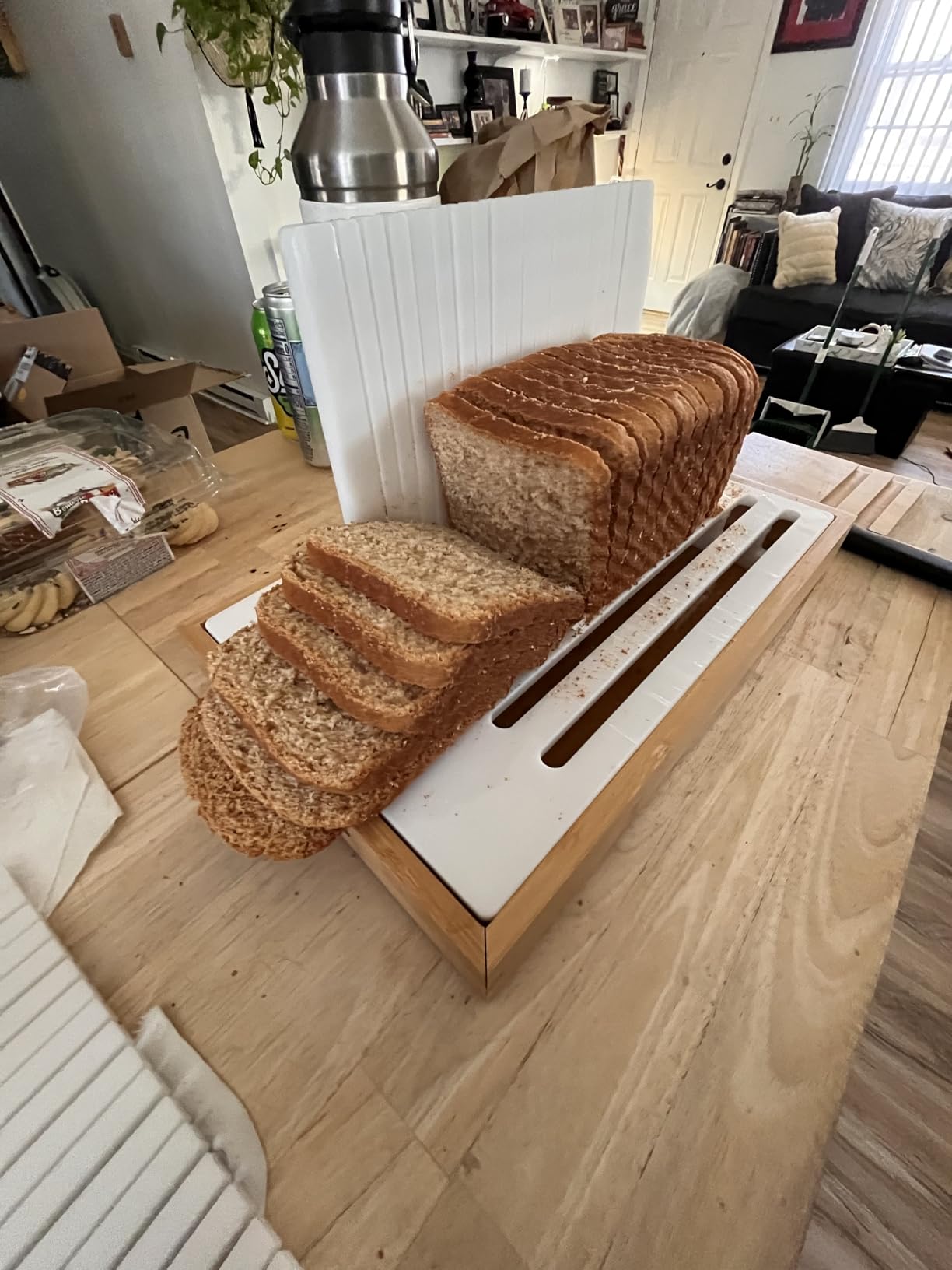
Why it wins for sourdough specifically
Because a long ferment is the one thing sourdough truly needs that a yeasted loaf does not, and this machine is the one that combines a named sourdough menu with per-cycle editing you can use to override it. You can run the preset when your starter is young, then move to a personal menu with a 7-hour rise and a 1-hour bake once you know your dough.
That combination also makes it a good first machine. You are not forced to choose between beginner presets and expert control, which is usually the trade-off every competitor roundup glosses over. The 2.5-inch LCD with a viewing window and interior light also helps you judge rise without opening the lid and dropping the temperature.
When to skip it
Skip it if you are buying purely for a crust. Nothing inside a closed pan will give you steam, blistering or oven spring, and this machine does not change that. It is also the wrong choice if you will not touch a manual, because the cycle-level programming takes a few bakes to get comfortable.
I would also look elsewhere if you are sensitive to nonstick coatings, since the pan here is Teflon rather than ceramic or bare metal. And if your kitchen is small, the 14.2-inch depth is worth measuring before you commit.
2. Breville Custom Loaf BBM800XL: Best for Custom Cycles and Large Loaves
Breville BBM800XL Custom Loaf Bread Maker Machine, Brushed Stainless Steel
13 automatic plus 9 storable custom programs
Modify function edits any cycle step
2.5 lb loaf
Collapsible paddle
830W
Pros
- Deepest manual control of any machine in this group
- Nine storable custom programs for your own recipes
- Collapsible paddle retracts so loaves have no paddle hole
- Automatic fruit and nut dispenser and 60-minute power protection
Cons
- 4.2 rating
- the joint-lowest here
- with the widest spread of reviews
- Top of the loaf often bakes pale unless you modify the temperature
- Loud and it can walk across the counter while kneading
- Some warranty claims went unanswered
No other machine here gives you this much control. The Modify function lets you change the length and temperature of any individual step on any cycle, and nine custom settings are storable, so once you have a sourdough program that works you stop rebuilding it. It also ships with an automatic program labeled yeast free, which is the closest thing to a no-yeast sourdough setting in this group.
The 830W motor handles stiff, high-hydration dough well, and the 2.5 lb pan is the largest you will find among the 2 lb machines in this group. A collapsible kneading paddle folds away before the bake begins, which removes the hole at the bottom of the loaf that most paddles leave behind. That detail alone changes the texture of a tall sourdough bake.
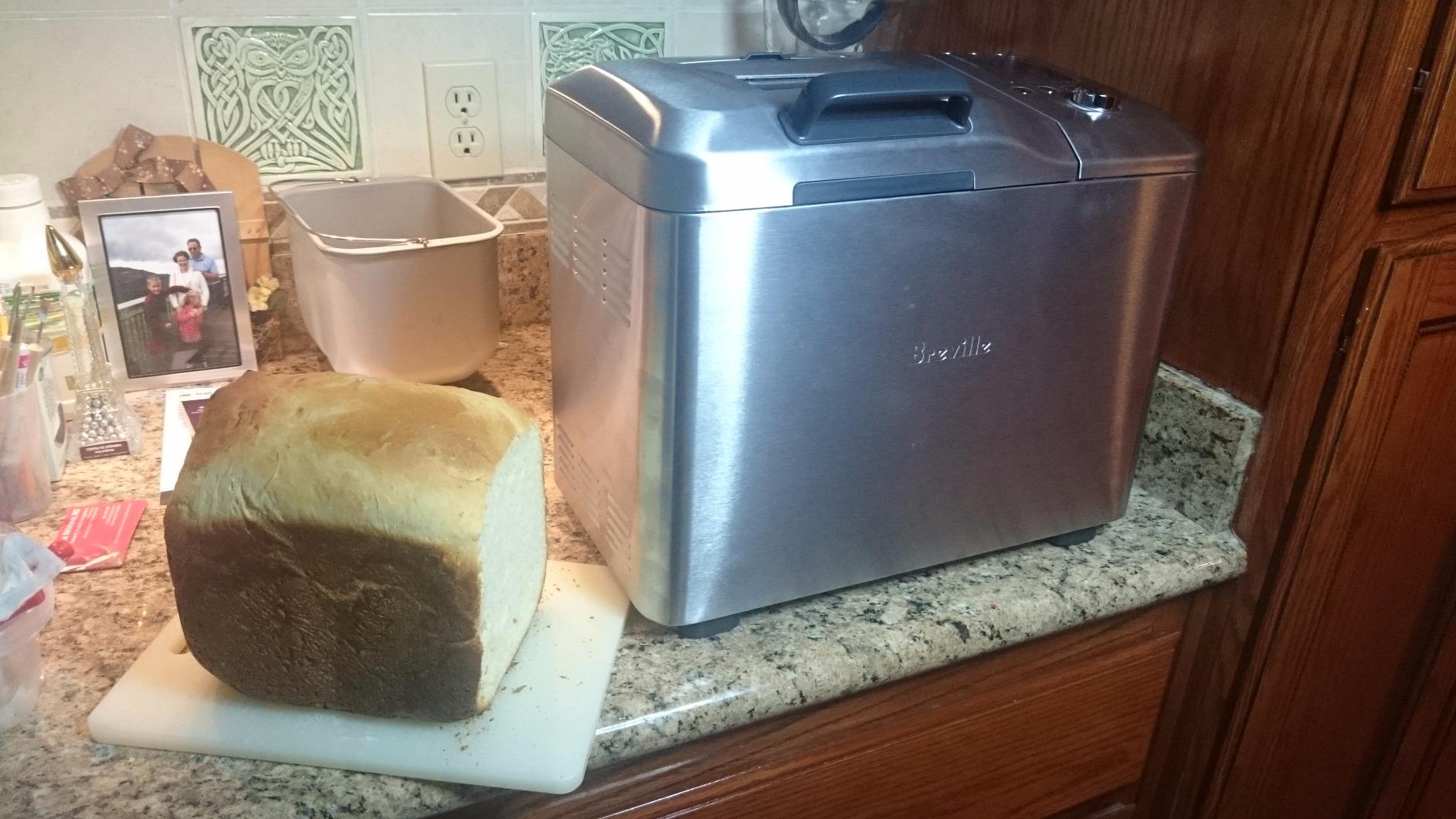
The honest drawback is that this is the most polarizing machine in the group. It holds a 4.2 average from 1521 reviews, with 68% five-star but 10% one-star, the widest spread we found. Owners report a pale top crust unless you raise the bake temperature, a bottom that darkens faster than the top on the medium setting, a hot exterior during the bake, and a thin wire pan handle that is awkward with oven mitts.
It is also noticeably loud in owner reports, and it walks across the counter while kneading. Several buyers report 1.5 to 2 years of flawless daily use, while others report failures inside six months and slow warranty support from Breville. That range is worth weighing before you buy, especially if you plan to run it daily.
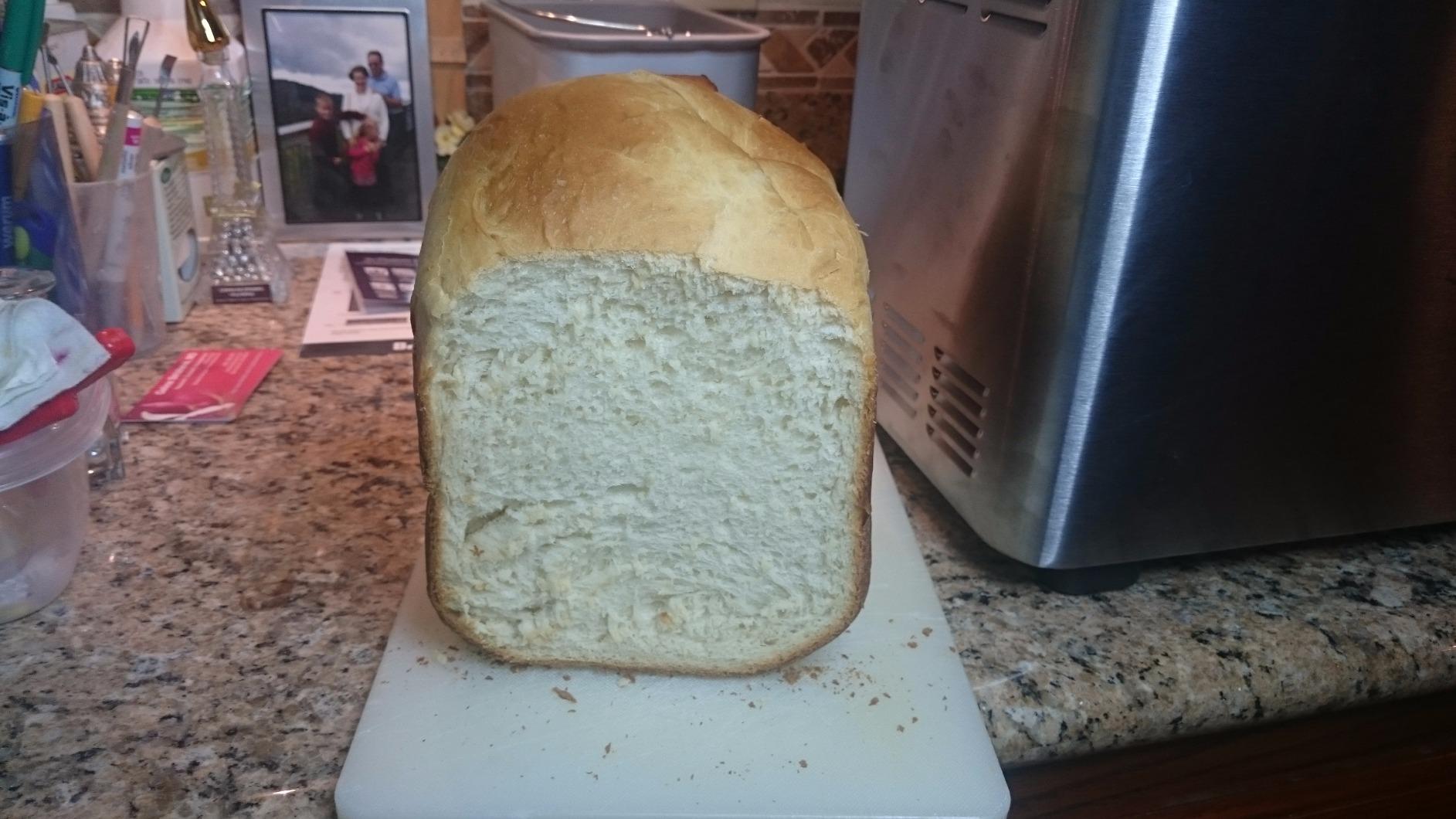
Why it wins for long ferments
Because you can set a rise in minutes rather than choosing the closest preset, and then store that program permanently. For a starter that peaks slowly in a cool kitchen, or for a warm kitchen where four hours turns into ninety minutes, that flexibility is the difference between a predictable loaf and a guessing game.
The dough and pasta program also makes the hybrid workflow clean: run the dough phase, take the dough out, shape and proof it yourself, then finish in a hot oven. The interior light and large viewing window help you judge the rise without cracking the door. The automatic fruit and nut dispenser handles seeded sourdough properly, which most machines in this list do not.
When to skip it
Skip it if your kitchen is shared or you bake at odd hours, because the noise level is genuinely high. If you want an appliance that works without a learning curve, the Modify function is more than most beginners need in year one, and beginners often get better results from a preset than from a hand-built cycle.
I would also weigh the warranty reports carefully. If a machine will run several loaves a week for years, reliability history matters as much as features, and this is the one product here where owner reports split most sharply.
3. Zojirushi Home Bakery Virtuoso Plus BB-PDC20: Best for Even Browning
Zojirushi Bb PDC20BA Virtuoso Plus 2 Lb Breadmaker, Black
Dual heaters in the lid and base
Horizontal pan with dual kneading blades
2 lb loaf
7 fixed courses
700W
Pros
- Dual lid and base heaters brown the top as well as the base
- Horizontal dual paddles mix evenly with no dry flour in corners
- Add-ins distribute through the loaf instead of clumping
- Quiet and stays put on the counter
Cons
- Only 7 fixed courses with no editable knead
- rest or rise times
- Paddles have play on the shaft and wear out early
- Replacement paddles reported unavailable from the manufacturer
- Heavy 24 lb body with a large footprint
The Virtuoso Plus earns its reputation in two places: the heating elements and the paddle. It has heaters in the lid and the base, which is why the top of the loaf browns properly instead of staying pale, and it kneads with two horizontal blades so no dry flour hides in the corners. The result is an evenly mixed, evenly baked 2 lb loaf with a shape that fits a normal bread slicer.
It holds a 4.6 rating from 4943 reviews with 85% at five stars, and r/BreadMachines users single out the dual paddles and the longer rise capability as the reasons they keep coming back to Zojirushi. For a sourdough baker who does not need to change timing, that consistency is worth paying for. The two paddles also fold nuts and fruit evenly through a seeded loaf, which a single paddle clumps at the top.
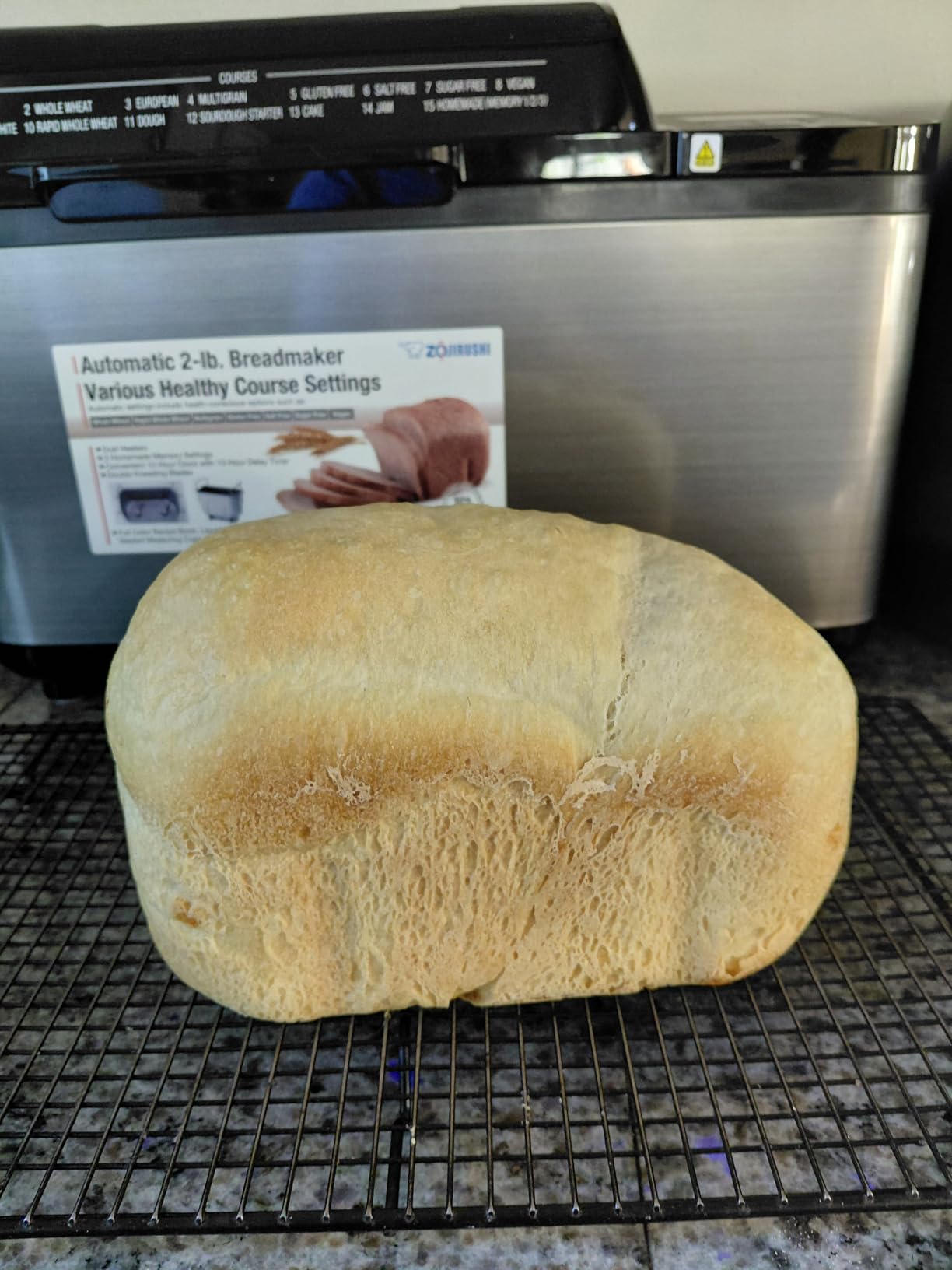
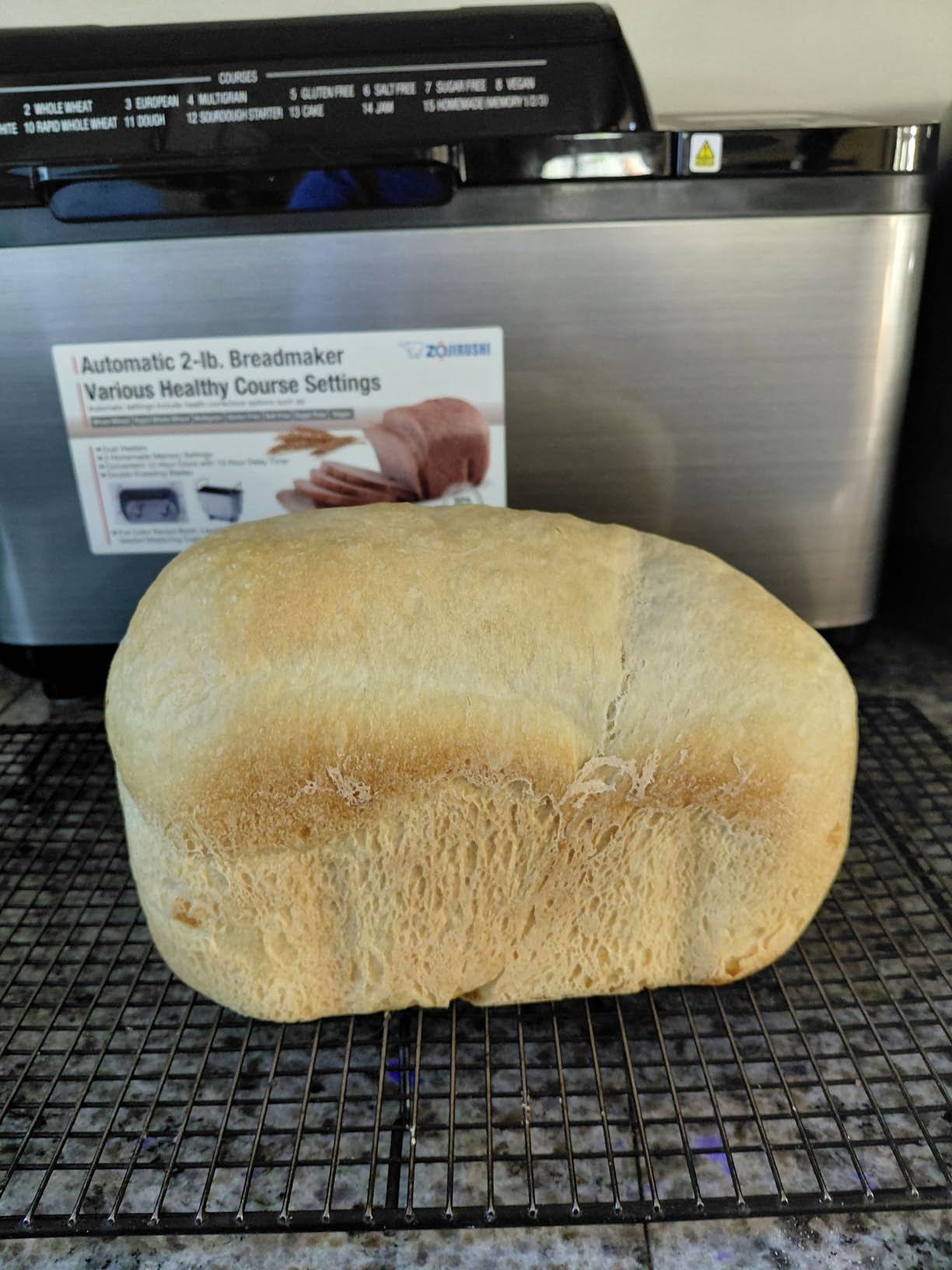
Here is the problem for sourdough specifically, and it is not a small one. There are only seven fixed courses: Basic, Multigrain, Whole Wheat, Rapid Whole Wheat, Gluten Free, Salt Free, Sugar Free and Vegan. There is no way to adjust knead, rest or rise times, so a long natural ferment has to be worked around rather than programmed. Several owners get good flavour by using a poolish or a biga pre-ferment so the fixed cycle is only finishing work that is already half done.
Physical ownership has costs too. The body weighs 24 lb and takes up real counter space, it is louder than smaller machines, and the paddles have play on the shaft and wear out early. Buyers also report difficulty sourcing replacement paddles from the manufacturer, which is a genuine long-term ownership problem on a machine this size.
Why sourdough bakers still choose it
Because the heating system is the closest a countertop machine gets to an even bake, and that is what you notice first when you cut a loaf. The horizontal pan also produces a proper sandwich-loaf shape rather than the tall narrow tower a vertical pan gives you, which makes machine sourdough far more usable day to day.
There is another use worth knowing: many owners run long-fermented ciabatta-style dough on a basic cycle after a cold overnight ferment, so the machine finishes dough that has already developed on its own. That is a legitimate way to get real sourdough flavour out of fixed programs, and it works because the ferment happens in your fridge, not in the machine.
When to skip it
Skip it if your starter is fast and your kitchen is warm, because a machine that cannot lengthen the rise will outrun the dough. Nothing in the program structure lets you respond to an over-active starter, and that is the exact situation where you most need control.
I would also pass if counter space is tight, since the 18-inch width and 24 lb weight are the largest in this group. And if you already own any Zojirushi, the Supreme and the Mini below cover the starter-maintenance and small-loaf ends of the range without buying a second machine.
4. Cuisinart CBK-110: Best for First-Time Bakers
Cuisinart Bread Maker Machine, Stainless Steel, 12 Programs, Up to 2 lbs
12 menu programs
Removable nonstick vertical pan
1 lb, 1.5 lb and 2 lb loaves
3 crust colors
550W
Limited 3-year warranty
Pros
- Most review volume of any machine here at 17156 ratings
- Compact footprint with a full-size vertical cavity
- Removable nonstick pan bakes up to 2 lb
- Simple automatic operation with LCD countdown
- Backed by a limited 3-year warranty
Cons
- Vertical pan produces a tall narrow loaf rather than a sandwich shape
- Only 12 programs against 17 to 29 on competing machines
For someone taking their first loaf with a starter, this is the least intimidating machine here. Twelve menu programs, a single-button start, an LCD countdown and audible reminders mean there is nothing to learn beyond loading the pan. The 17156 reviews it has collected is the largest review base in this roundup, so you will find a long record of real loaves and real failures to read before you commit.
It holds a 4.4 average with 74% five-star and 7% one-star, which is a good long-run score for an appliance that has been on the market for years. The removable nonstick vertical pan bakes up to 2 lb with three loaf sizes and three crust colors, and the limited 3-year warranty outlasts the one-year cover on the premium machines here.
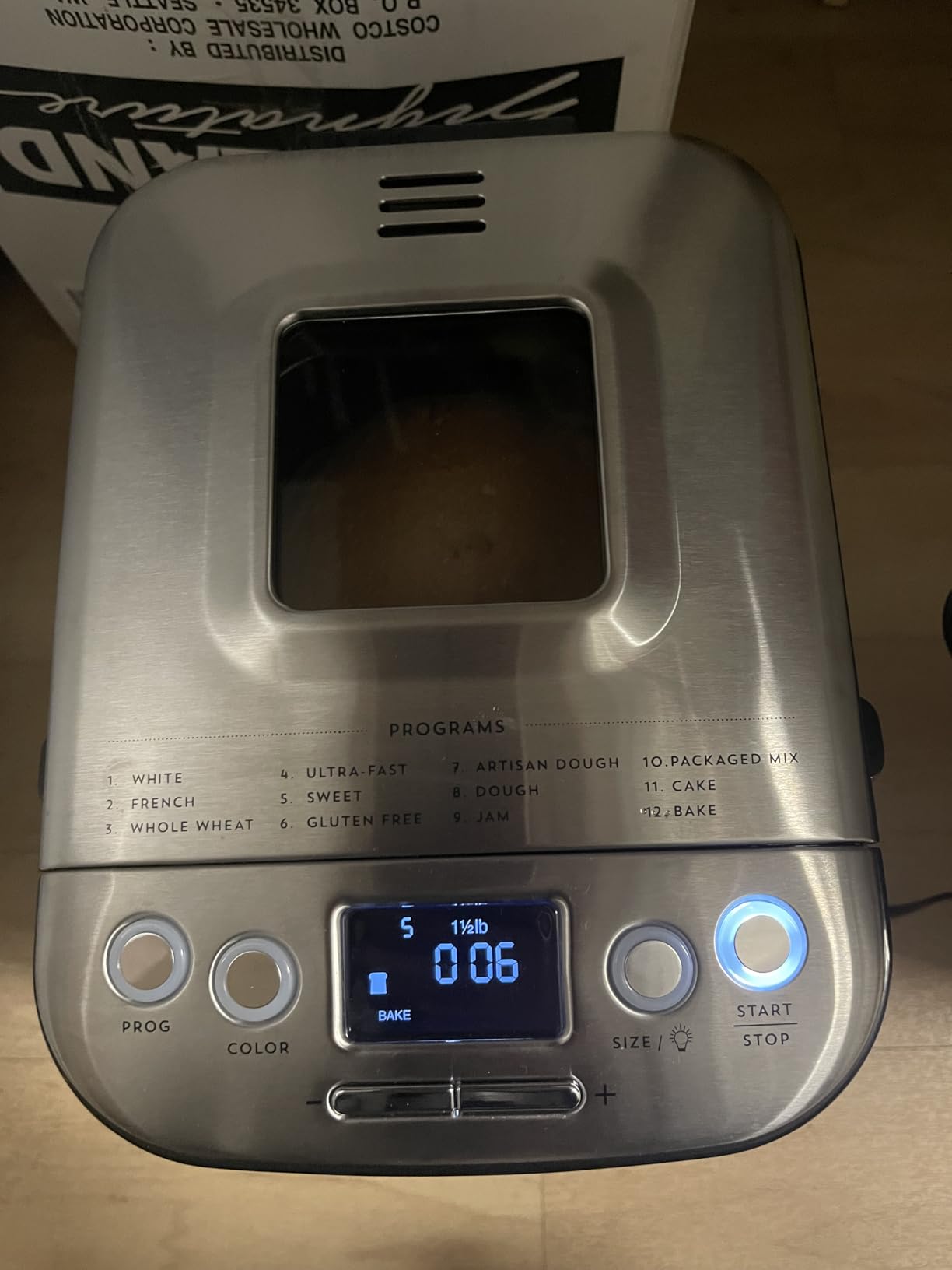
The limitation that matters for sourdough is the pan shape. A vertical cavity gives you a tall, narrow loaf with a domed top, which looks more like a small sourdough country loaf and less like the sandwich loaf a machine is usually bought for. It also means less horizontal surface for a spread-out dough, and sourdough is a wide dough.
Twelve programs is also fewer than the 17 to 29 offered by most competitors here, so you are working within a narrower menu. There is no dedicated sourdough or starter program in that list, so a long ferment has to come from a pre-ferment in your fridge rather than from a machine setting.
Why it suits a beginner sourdough loaf
Because the first thing a new sourdough baker needs is a repeatable result, not control. The Cuisinart will do the same thing at the same time every week, which is how you learn what your starter and your kitchen are doing. The 13-hour delay start also means a discard loaf can be ready when you wake up, and the 60-minute keep-warm cycle covers the morning window.
It is also a genuinely compact machine at 10.25 by 13.25 by 11.25 inches, so it does not dominate a small kitchen. Being able to bake cakes and pizza in the same pan is a small thing that makes a first machine easier to live with while you learn.
When to skip it
Skip it if the shape of the loaf matters to you, because the vertical pan is not going to change and there is no alternative pan available. And skip it if you are already an experienced baker who wants a dough cycle you can extend, because twelve fixed menus will feel limiting within a few months.
If you want the same beginner-friendly shape with more menus and a horizontal pan, the KITCHENARM at number one is the step up, and it is the pick we would actually start a sourdough habit with.
5. KBS Pro 17-in-1: Most Versatile with a Dedicated Sourdough Program
KBS Pro 710W 2.2LB Bread Maker, Stainless Steel 17-in-1 Smart Bread Machine with Healthy Ceramic Pan, Automatic Nut Dispenser, Tempered Glass Touch Panel, 3 Crust Colors, 15H Timer &Keep-Warm, Recipes
17 programs plus 1 custom setting with a Sourdough course
710W with 360-degree convection
2.2 lb maximum loaf
Ceramic pan and paddle
Pros
- Dedicated sourdough program with a 2 lb setting for a long ferment
- Non-toxic ceramic pan and paddle that do not chip or peel
- 710W motor with convection baking
- Automatic dispenser for nuts and add-ins
- 15-hour timer plus 15-minute power failure recovery
Cons
- Manual and recipe book are thin and inconsistent on metric measurements
- Menu navigation takes an unintuitive button sequence
- The paddle can stick to the axle and leaves a hole at the loaf base
- Some bakers report better rise hand-mixing than in the cycle
The KBS is one of the machines already in real sourdough use, and on r/BreadMachines a user is following the machine cookbook sourdough setting and refining their process with it. That matters, because a named sourdough program with a 2 lb setting is exactly what a beginner or a casual baker wants: a longer ferment preset instead of a blank program. It also has 17 programs plus one custom setting, so there is a place to go when you outgrow the preset.
It draws 11610 reviews at a 4.4 average with 72% five-star, the second-largest review base in this group. The 710W motor with 360-degree convection is a real step up in power from the 550W entry machines, and the non-toxic ceramic pan and paddle do not chip or peel the way coated pans can. The automatic stainless steel dispenser releases add-ins mid-bake, which matters for a seeded sourdough.
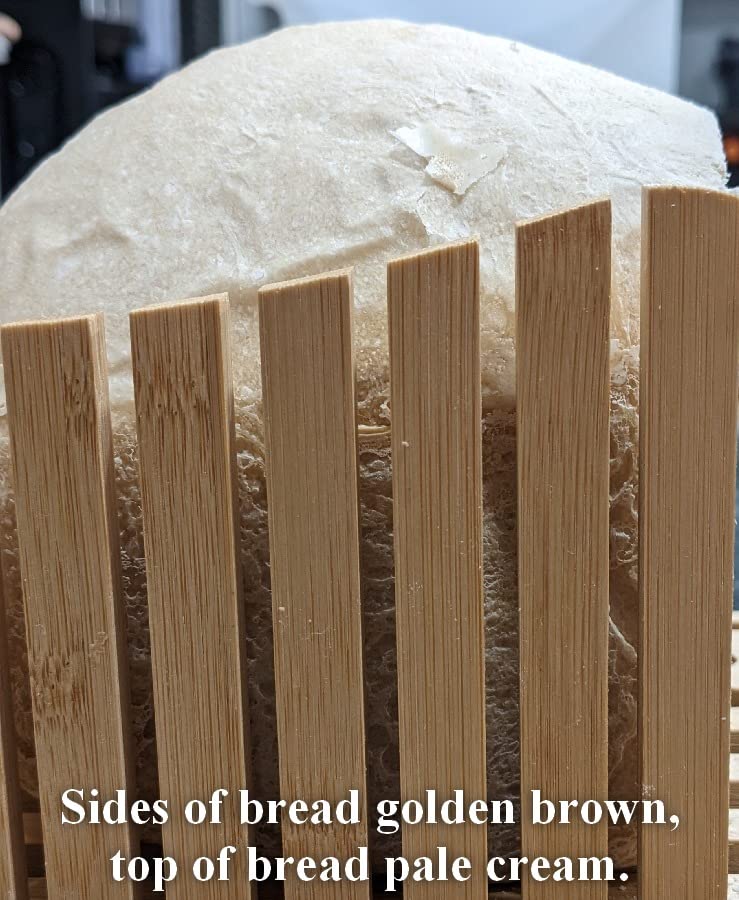
What you trade is polish. The manual and recipe book are thin and their measurements are inconsistent, and the 53-recipe book needs adapting for metric kitchens. Reaching the menu takes a Start/Pause/Stop button sequence that confuses most people the first time. The paddle can stick to the axle and needs soaking or a release spray, and it leaves a hole at the bottom of the loaf.
Several bakers also report that hand-mixing produces a better rise than the machine cycle, which is a useful warning: the 710W motor is not automatically gentle on wet dough. The 14.7 lb body is also one of the heavier machines here, at 9.76 by 13.58 by 12.21 inches.
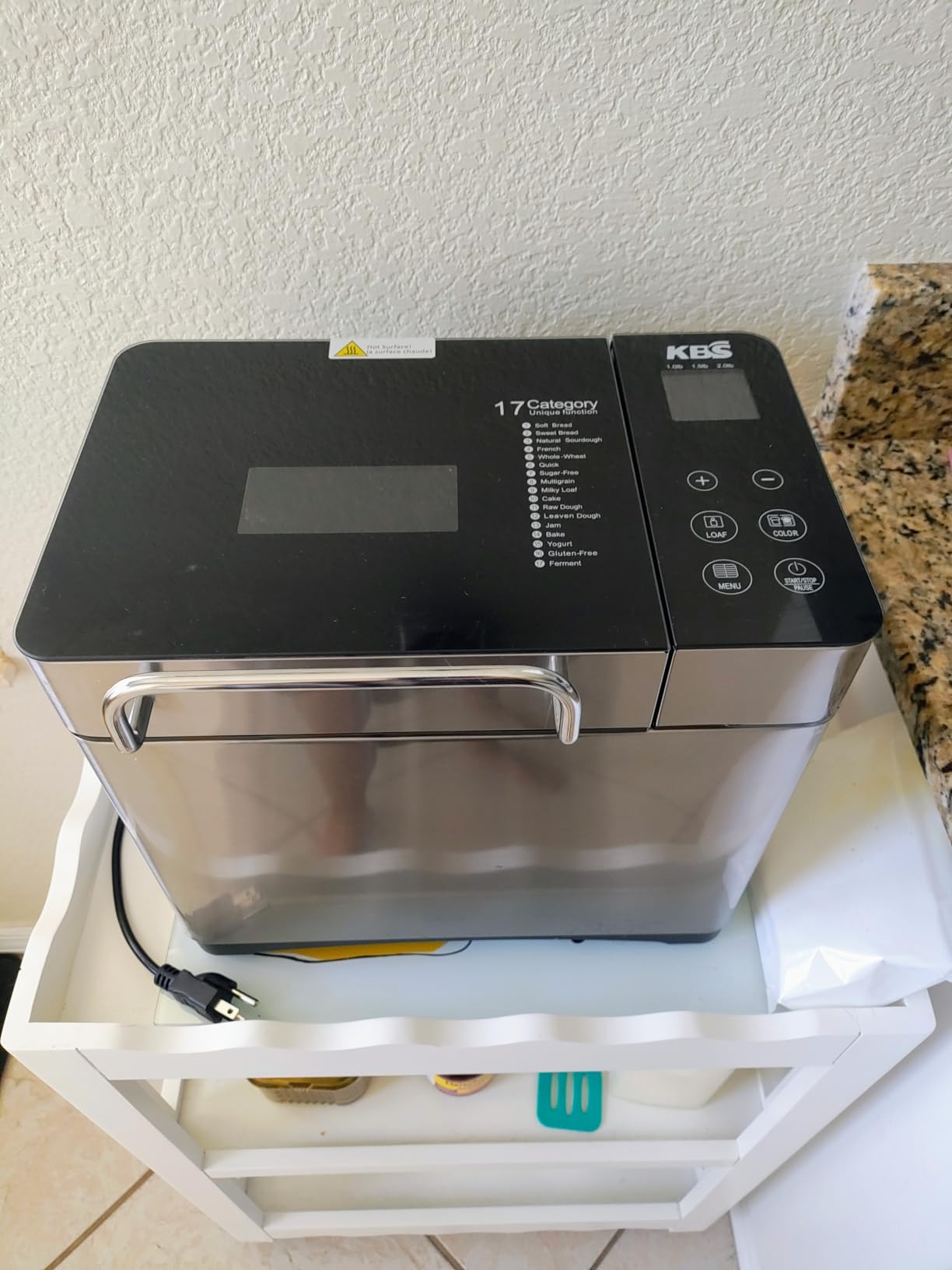
Why the ceramic pan matters here
Because sourdough bakers tend to care about coatings. The ceramic pan and paddle are non-toxic and will not chip or flake into dough that sits warm for hours during a long rise. If you have been avoiding nonstick-coated equipment in a hot kitchen, this is the machine in the group that answers that concern without giving up the automatic cycle.
The 15-hour delay timer and 15-minute power failure back-up are also unusually useful for a sourdough schedule, where a ferment is often timed overnight. Replacement bread pans are available, and the machine carries a one-year warranty plus a free replacement policy and two years of after-sales support.
When to skip it
Skip it if you dislike menus that hide behind a button sequence, because seventeen programs plus one custom setting is a lot to navigate without clear documentation. It is also the wrong pick if paddle holes in the base of the loaf bother you, since this machine cannot retract its paddle before baking.
And if you plan to bake a lot of seeded loaves, the dispenser is useful but you will need to check it is actually releasing, because a paddle hole plus uneven add-ins is a common combination in owner photos of this machine.
6. Zojirushi Home Bakery Supreme BB-CEC20: Best for Starter Maintenance
Zojirushi Home Bakery Supreme Breadmaker
10 programs with a dedicated sourdough starter setting
2 lb rectangular loaf with adjustable crust shade
Jam and dough modes
Bakes bread, cakes and meatloaf
700W
Pros
- Dedicated sourdough starter setting alongside the Sourdough course
- Also handles jam
- dough
- cake and meatloaf
- Clean rectangular 2 lb loaf with adjustable crust shade
- Large easy-to-read LCD panel
- 13-hour timer and a quick-bake mode
Cons
- No lid heating element so the top crust is less pronounced than the Virtuoso Plus
- Pan and blades must be hand washed and cannot be submerged
- Older design with fewer programs than newer models
- Heavy 19.5 lb body with a wide footprint
This is the machine to buy if your starter is the priority rather than the loaf. It is one of only two machines in this group with a dedicated sourdough starter setting, which means you can keep a small quantity of active starter warm in the machine between feeds instead of juggling jars on the counter. For a baker who maintains a large starter, that single program does more for daily consistency than any other feature on this page.
It also runs ten automatic programs covering bread, cake and even meatloaf, plus jam and dough modes, and produces a clean rectangular 2 lb loaf with adjustable crust shade. The 4.4 rating from 3164 reviews comes with 75% five-star, and the large LCD control panel keeps the cycle easy to read at a glance.
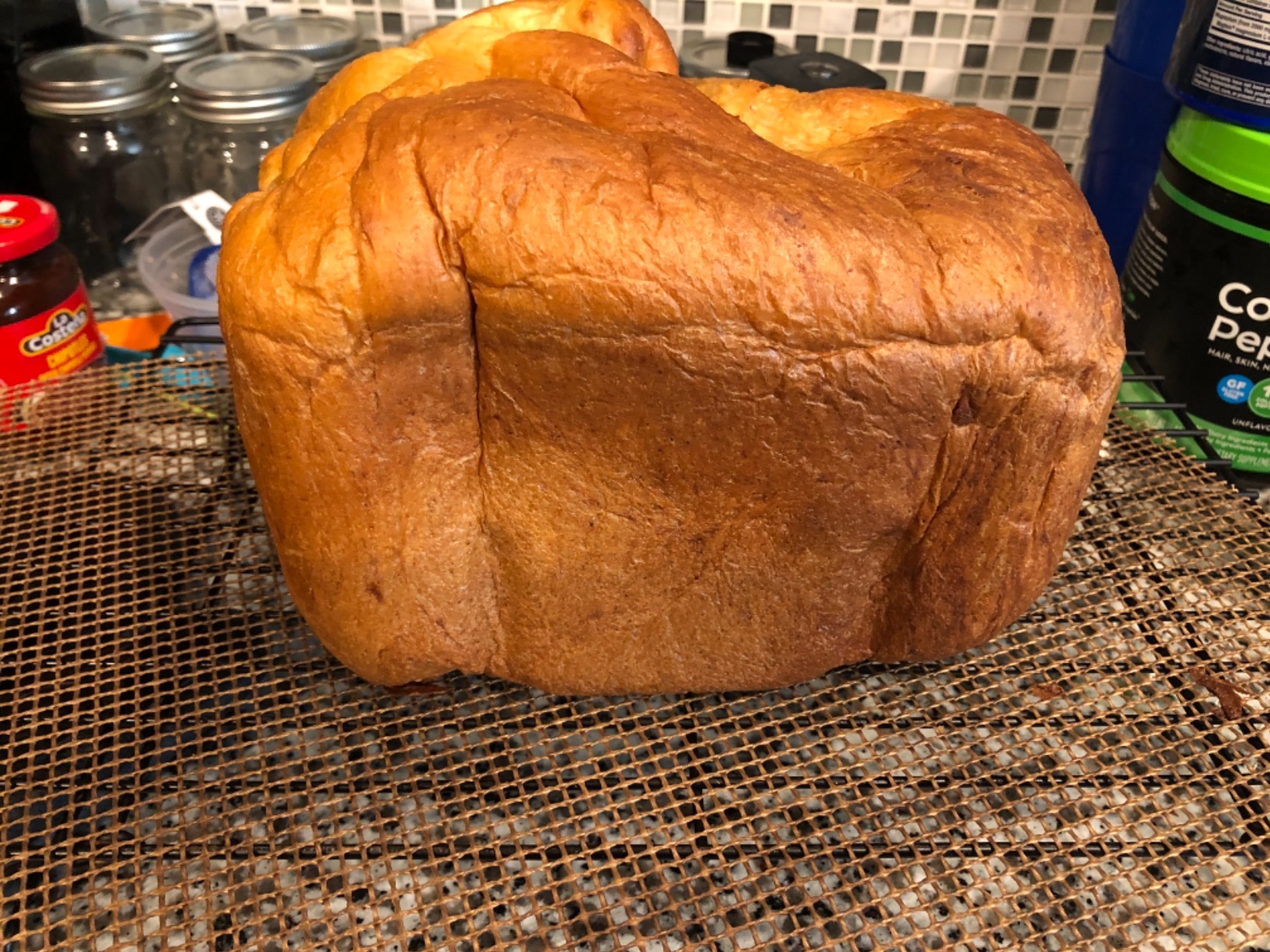
Where it falls short is the top of the loaf. There is no lid heating element, so the crust on top is less pronounced than on the Virtuoso Plus, and anyone chasing browning should know that before buying. Care is also more hands-on: the pan and kneading blades have to be hand washed and cannot be submerged, which is unusual in this category.
The design is older, with ten programs against 17 to 29 on newer machines, and the 19.5 lb body sits on a 16.87-inch wide footprint. If you want a dual-heater bake and fewer dishes, the Virtuoso Plus is the same brand with a better chassis.
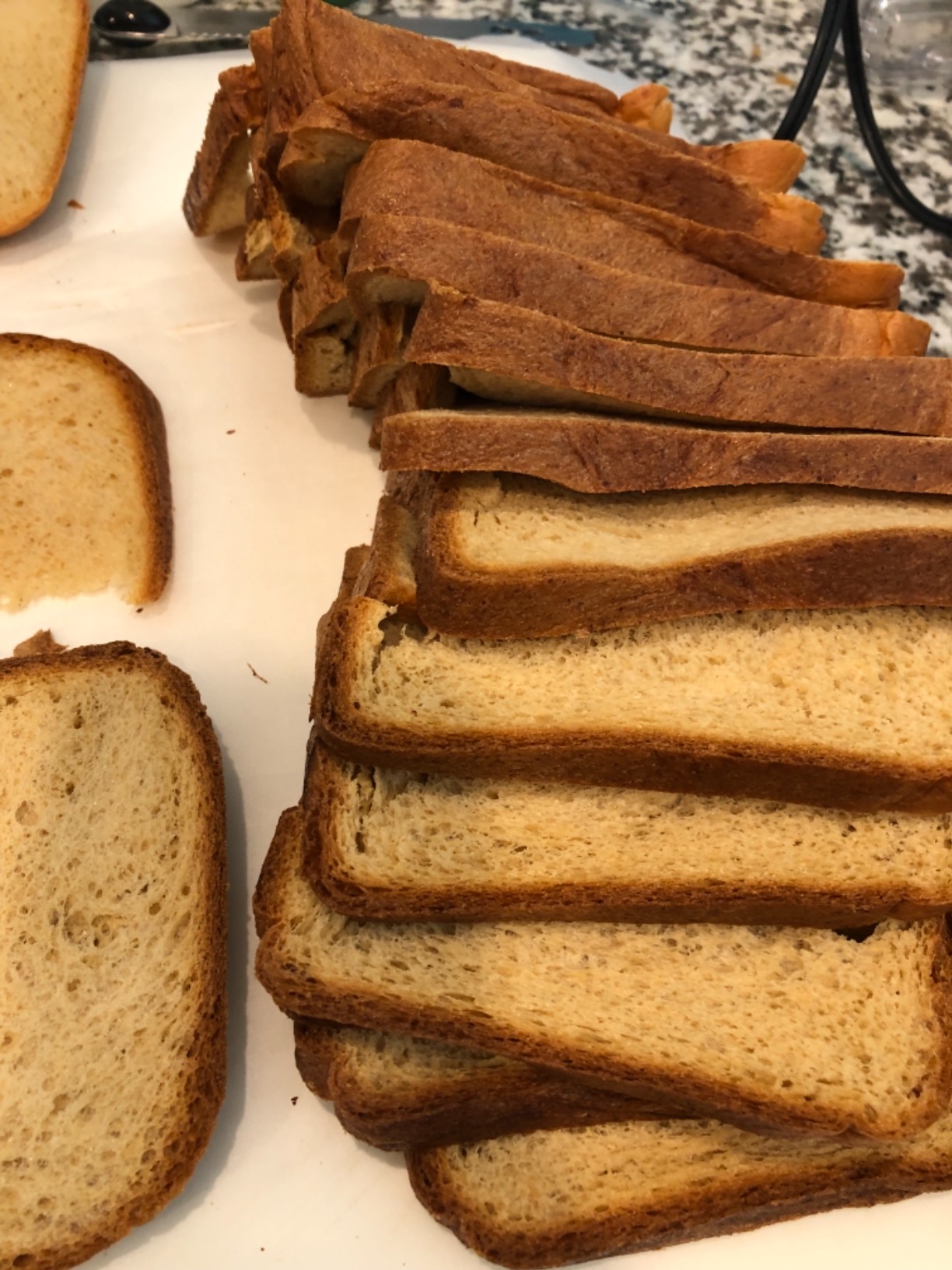
Why the starter setting changes the routine
Because a starter that is kept warm and fed on a machine cycle stays more active than one sitting at room temperature, and a more active starter means a more predictable rise. It also means you are less likely to skip a feeding before a bake, which is the single most common cause of a failed sourdough loaf in our reading of owner reports.
Combined with the dough and jam programs, it covers the two other jobs a starter creates: bulk fermentation and discard loaves. The 13-hour timer and quick-bake mode give you a short window when a discard loaf is all you have flour for.
When to skip it
Skip it if browning is the thing you enjoy most in a loaf, because the missing lid element shows. And skip it if you hate hand-washing, since a non-submersible pan is a small daily friction that most modern machines removed.
I would also pass if your kitchen is small, because the 19.5 lb body is the second heaviest here. The Zojirushi Mini at number nine covers starter-adjacent baking in a much smaller footprint if space is the deciding factor.
7. Elite Gourmet EBM8103B: Best for Hands-Off Automatic Loaves
Elite Gourmet 2 Lb Programmable Bread Maker, 3 Sizes, 19 Presets, Black
19 one-touch programs
2 lb loaf in 1 lb, 1.5 lb and 2 lb sizes
Nonstick ceramic pan
15-hour delay timer
550W
Pros
- 19 one-touch programs covering gluten-free
- rye
- French and pizza dough
- Nonstick ceramic pan releases loaves easily and wipes clean
- Suction-cup base keeps the machine stable while kneading
- Compact design that does not heat the whole oven
- Consistent results for sweet
- savory and quick breads
Cons
- The manufacturer recommends using only the included recipes
- Thin English-only manual whose recipes need adjusting
- Some users report the motor sounding strained while mixing
- A little bulky and noisy during the knead cycle
What makes this one useful for sourdough-adjacent baking is the breadth of the menu. Nineteen one-touch programs cover gluten-free, white, wheat, rye, French, sweet, quick bread, pizza dough, cake and jam, and a rye or French cycle is a reasonable first container for a discard loaf or a yeasted-assist sourdough. It holds a 4.5 rating from 8710 reviews with 75% five-star, which is a strong score for an entry-level machine.
The nonstick ceramic pan is the part owners mention most. It releases cleanly, wipes down without soaking and does not need a metal tool, which suits someone who does not want a second job maintaining a bread pan. The suction-cup base keeps the machine steady during the knead, a real issue with lighter bodies, and the 550W element bakes without heating the whole oven.
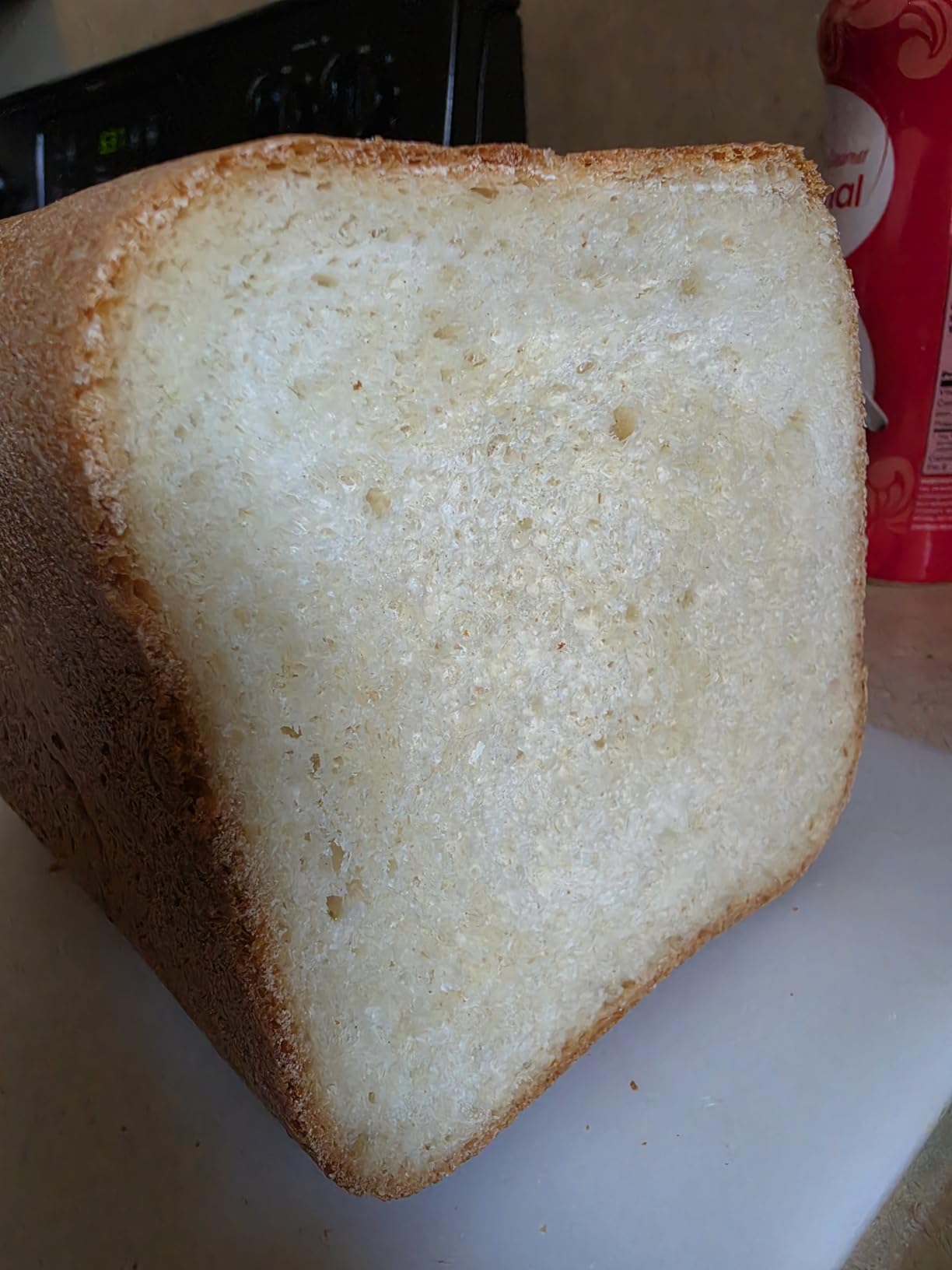
Here is the honest limitation, and it is a real one for this topic. The manufacturer recommends using only the included recipes, which means the outside sourdough formulas you will find online are, strictly speaking, outside what this machine supports. You can still make sourdough in it, but you are on your own with quantities and timings, and the thin English-only manual does not help you adjust them.
Some users also report the motor sounding strained while mixing dough, which is what we would expect from a 550W machine asked to handle wet high-hydration sourdough. The 4.88 kg body is described as compact but measures 13.98 inches tall, so measure your shelf before assuming it stores away.
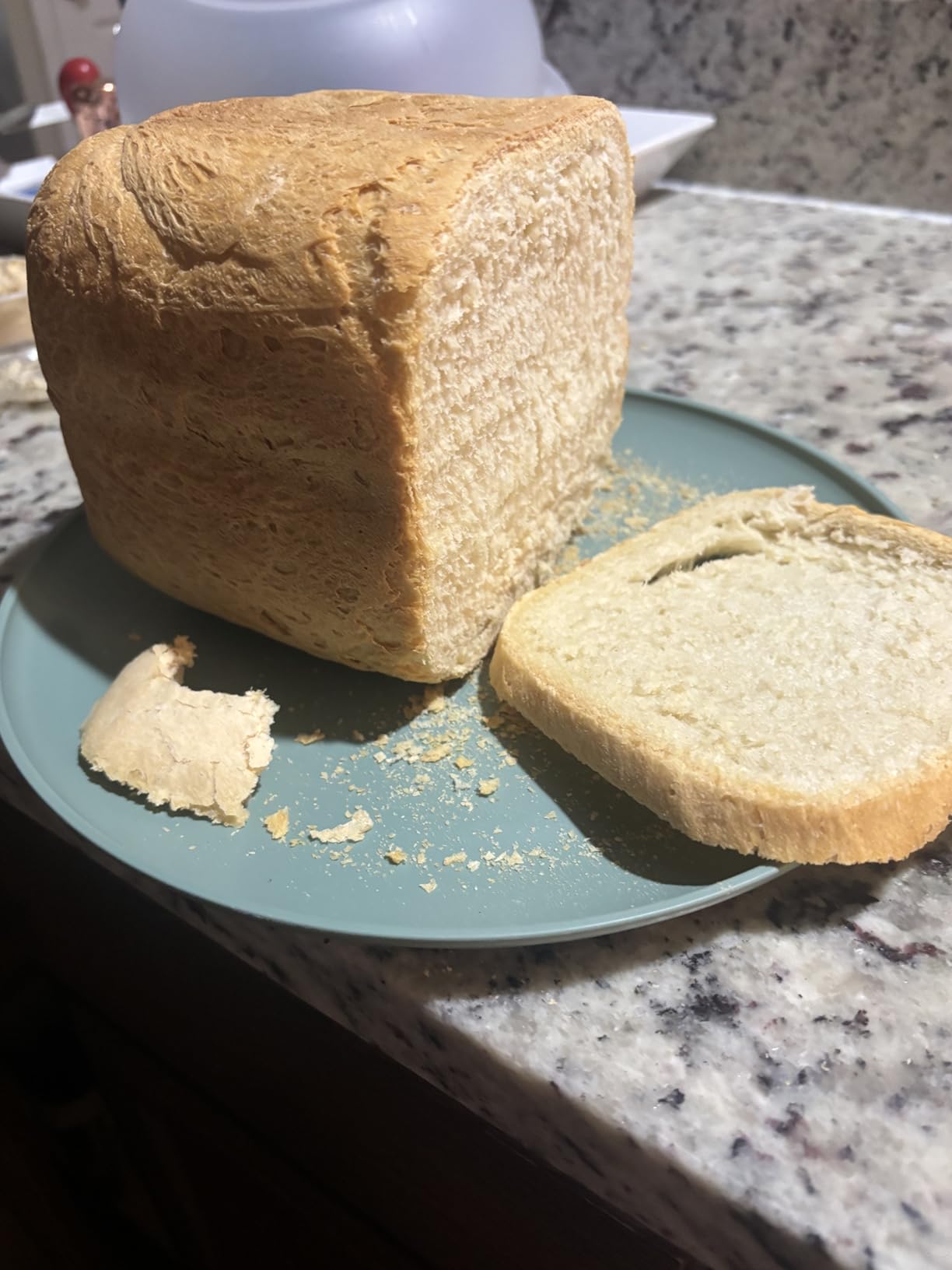
Why the 19 menus are not the deciding factor
Because a menu count tells you nothing about ferment control. Every one of those nineteen programs is a fixed cycle, and a sourdough ferment is not a fixed thing. The machines worth owning for sourdough are the ones where you can set the rise, and this one cannot do that.
What the menu breadth is genuinely good for is variety around the bread habit: pizza dough with the same starter, a rye discard loaf on a cold day, a gluten-free program that shares the same pan. If your sourdough interest is one part of a broad baking routine rather than the whole focus, that is a good use of the machine.
When to skip it
Skip it if you intend to write your own recipes from scratch, because the manufacturer steers you away from it and the documentation is thin. It is also a poor match for high-hydration dough on a 550W motor, which is precisely what a wet starter produces.
If you want more menus and more control, the KITCHENARM at number one has 29 programs plus per-cycle editing for not much more. This one makes sense when you want the machine to run without you thinking about it.
8. OSIPOTO BM8205 17-in-1: Best for Quiet Baking
2LB Bread Maker, 17 in 1 Automatic Stainless Steel Bread Machine
17 customizable automatic programs
2 lb loaf in 1 lb, 1.5 lb and 2 lb sizes
Rated at 50 decibels
600W
Overheat protection
Pros
- Quiet 50 dB operation that will not disturb sleep
- 360-degree even heat distribution for an evenly browned crust
- Overheat protection pauses rather than burning the bake
- Nonstick pan wipes clean with minimal mess
- 15-hour delay timer with a full keep-warm hour
Cons
- No dedicated sourdough or starter program among the 17 menus
- Stainless body is heavier than most machines in this class
- Overheat protection forces a 20 to 30 minute wait before resuming
This machine runs quietly enough to live in the kitchen rather than in a cupboard, and that is a bigger deal for sourdough than it sounds. A ferment schedule means a machine running while people sleep, and a motor rated at 50 dB is the difference between a machine you can keep on the counter and one you have to move elsewhere. The 4.5 rating from 2292 reviews, with 78% five-star, comes from a recent release that currently holds the number-one sales rank in the Bread Machines category.
The 360-degree even heat distribution also produces a more evenly browned crust than the entry machines that heat from the base only, and the overheat protection is a genuinely thoughtful feature. Instead of scorching the loaf it pauses the cycle and resumes after the machine cools for 20 to 30 minutes, which is a small thing that prevents a ruined bake when your kitchen runs hot.
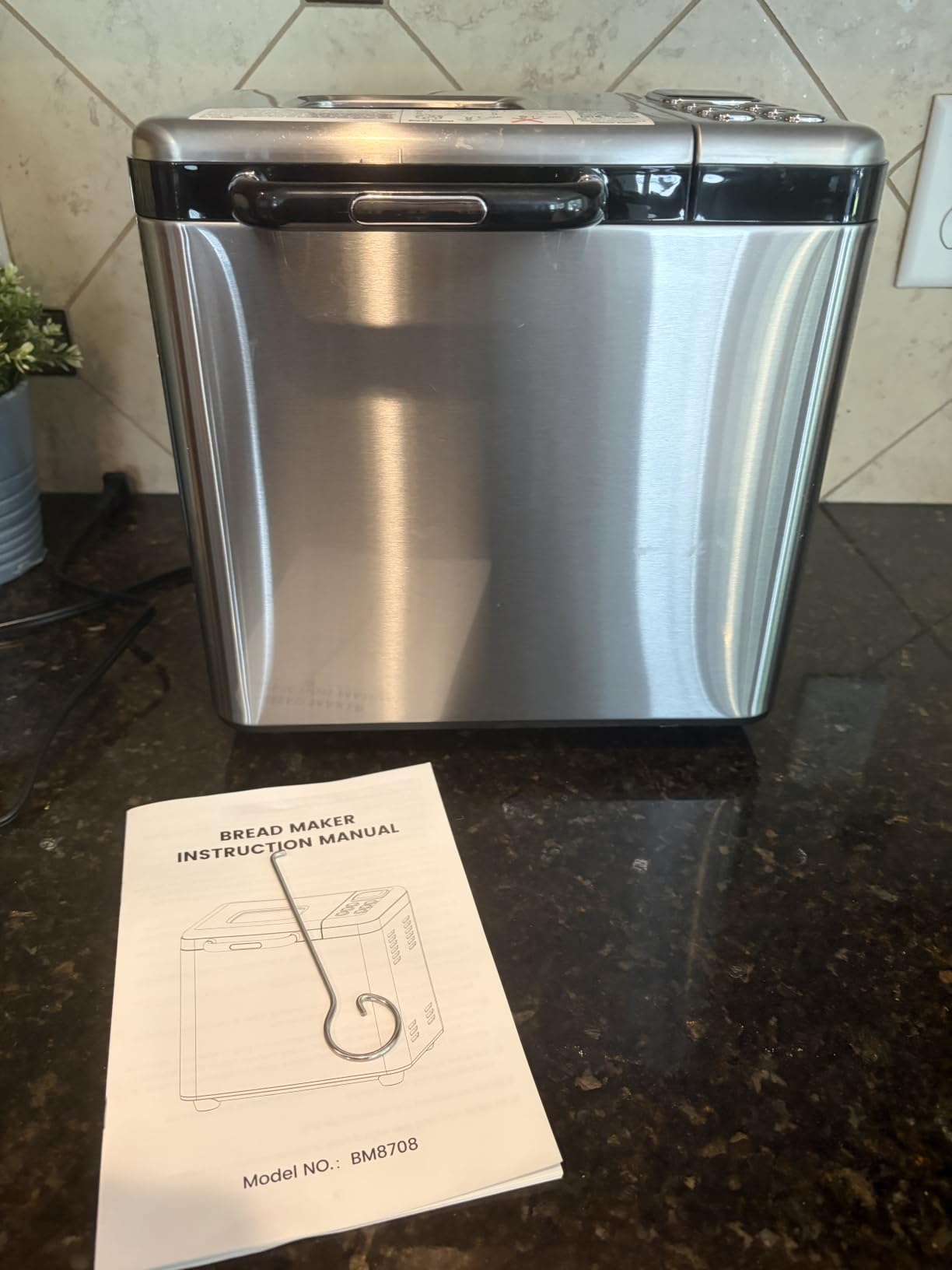
But there is no dedicated sourdough or starter program among the 17 menus, and that is the whole limitation. You are choosing this machine for its chassis, not for its sourdough feature set. Any sourdough baking here runs on a generic bread or dough cycle, which means you supply the timing by fermenting outside the machine.
The stainless steel body is heavier than comparable budget machines at 11.7 lb, and the overheat cooldown is a genuine downside during a long bake, since a sourdough program that runs five hours has more opportunity to trip it in a warm kitchen.
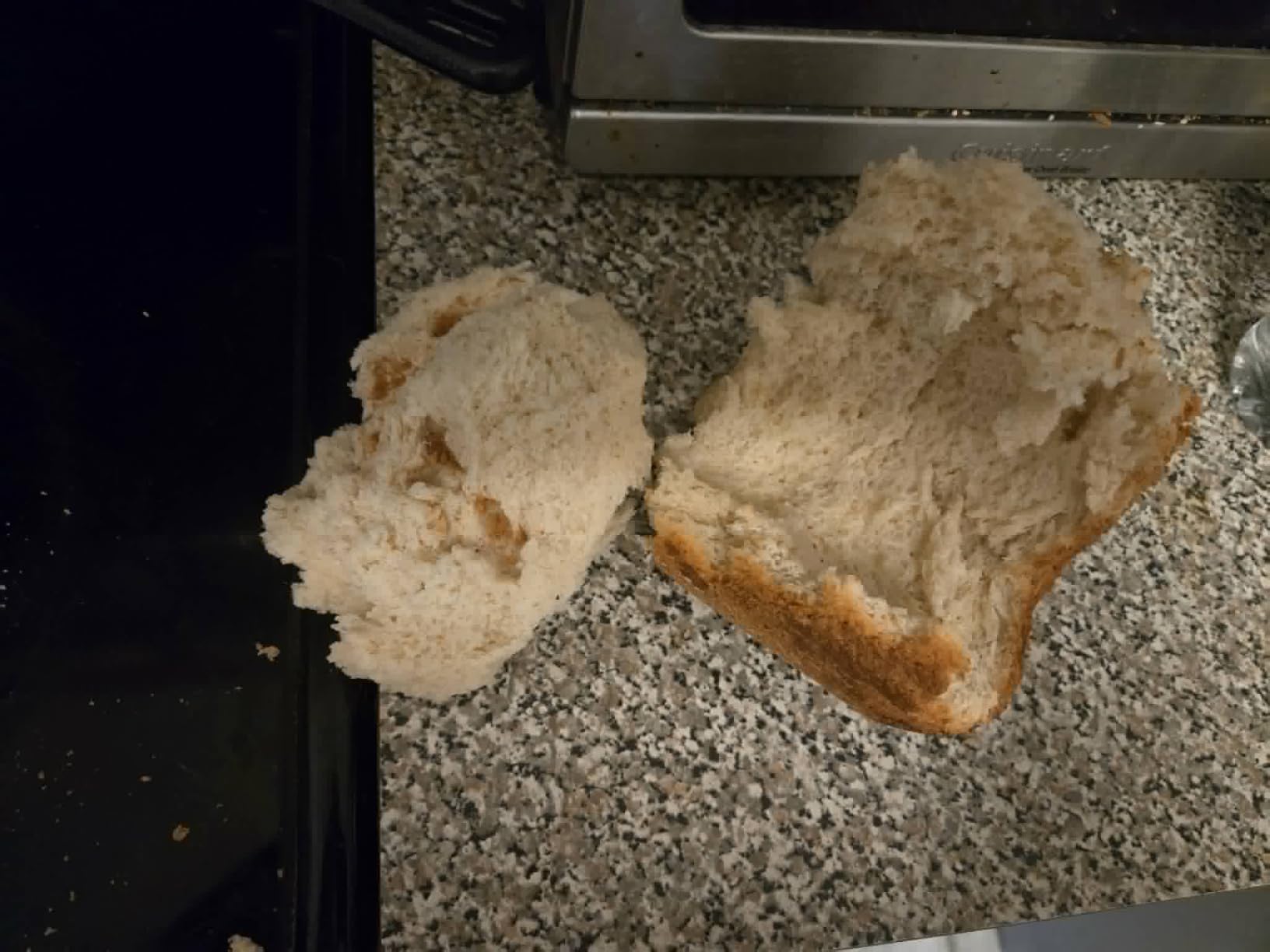
Why quiet matters for a sourdough schedule
Because sourdough bakes on a clock that has nothing to do with your day. A delay start, a long rise and a 2 lb loaf can easily run five hours, and if the machine is loud enough to wake the house, you will end up baking at times that do not suit a long ferment. The 15-hour delay timer plus a full keep-warm hour solves that scheduling problem better than any feature on the premium machines.
The heavy stainless body is also less likely to walk across the counter during a stiff dough, which is a real problem with lighter machines. And the basic program runs about three hours and 45 minutes for a 2 lb loaf, so you can plan a ferment around a known finish time.
When to skip it
Skip it if you want a machine that names sourdough on the panel. Anyone researching this topic will notice the absence immediately, and there is no way to add that program later. It also does not earn its place if you bake in a cool, quiet kitchen, because its main advantage does not apply to you.
For most sourdough bakers the KITCHENARM or the KBS Pro, both of which carry a named sourdough program, are the more direct answers. Buy this one if noise is your actual constraint.
9. Zojirushi Home Bakery Mini BB-HAC10: Best for One-Person Loaves
Zojirushi Bb HAC10 Home Bakery Mini Breadmaker, 1 Lb (White)
1 lb loaf capacity
9 automatic programs with a dough setting
Quick-bake cycle under 2 hours
450W
Compact with a carrying handle
Pros
- Very compact footprint that fits under cabinets
- Exceptionally quiet and often inaudible in a normal kitchen
- Heavy thick pan that releases loaves cleanly
- Consistent 1 lb results with add-ins distributed evenly
- Long durability record with years of weekly use reported
Cons
- No dedicated sourdough program so long ferments must be worked around
- Bread and cake cycles are fixed and cannot be customized
- Add-ins must be added by hand about 30 minutes into a cycle
- 1 lb loaf is only about 6 to 10 slices
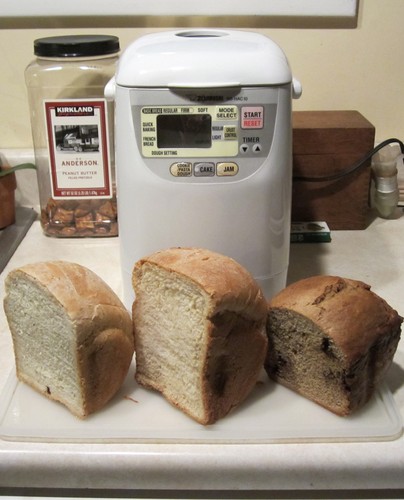
The Mini is a small, quiet machine, and for a one or two-person household the size is exactly right. A 1 lb loaf is roughly six to ten slices, which is a week of bread for one person and a long weekend for two. It holds a 4.5 rating from 2198 reviews with 75% five-star, and owners report years of weekly use, which tells you something about the build.
On r/BreadMachines, bakers mention the Mini working well for sourdough-adjacent bakes, with several using it for long-fermented ciabatta with a homemade starter on the dough setting. The dough, jam, cake and cookie modes add flexibility, the quick-bake cycle finishes in under two hours, and the thick pan releases a loaf cleanly without soaking.
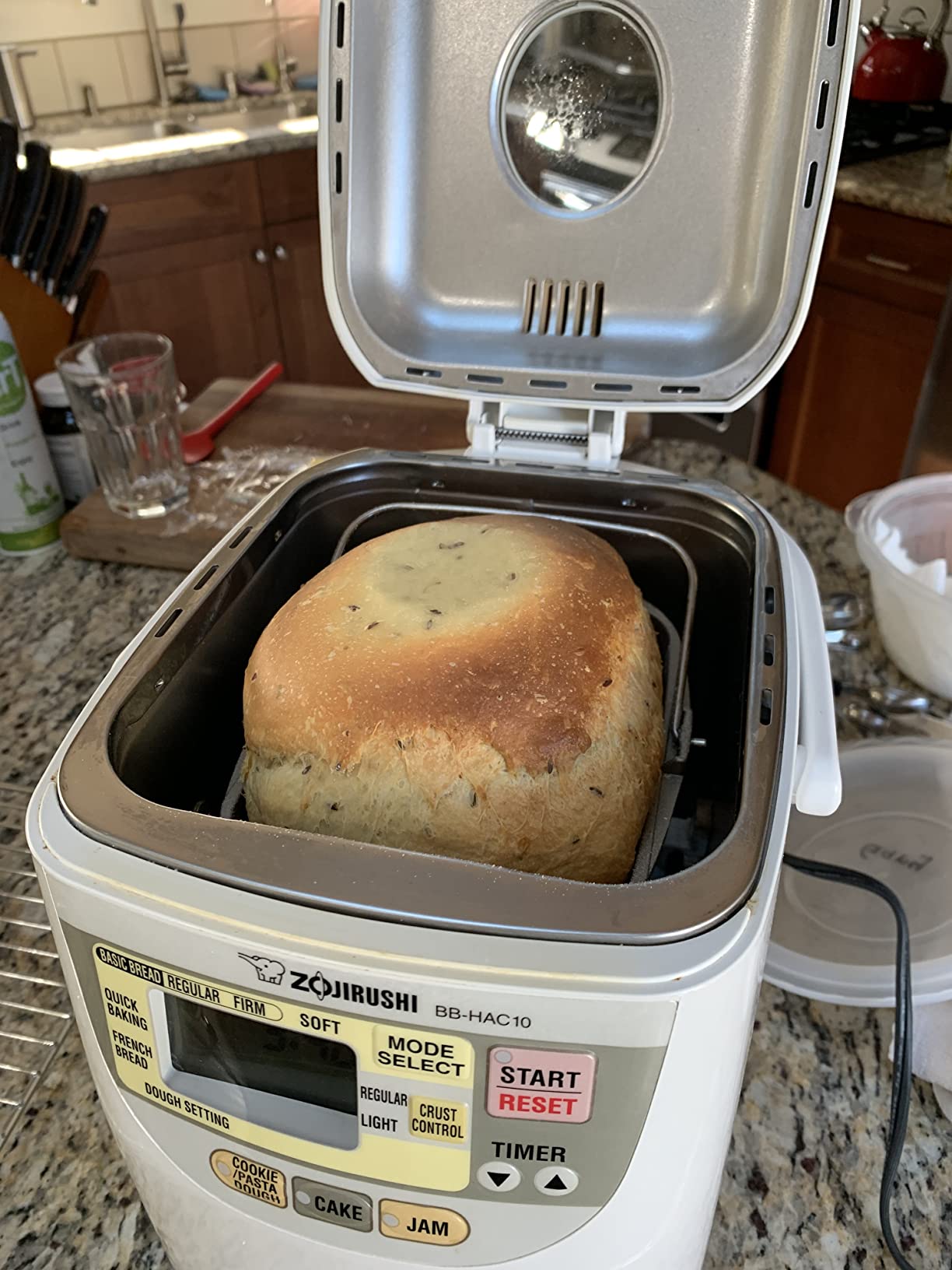
The limits are structural. There is no sourdough program, the bread and cake cycles are fixed, and you add raisins, nuts or seeds by hand about 30 minutes into a cycle rather than using a dispenser. The kneading blade coating eventually wears with heavy use, and the included recipe book is thin, with recipes that need adapting down to the 1 lb size.
At 450W it is also the least powerful motor here, which is the main reason we would not push a wet starter through it. Treat it as a small-batch machine for a discard loaf or a yeasted-assist bake, not as a high-hydration sourdough machine.
Why small-batch sourdough works here
Because a 1 lb pan is the easiest way to manage a very wet dough. A smaller pan means less dough for the paddle to drag, less chance of the mass clumping against the wall, and a faster rise that fits inside a workable window. For discard loaves, which are wetter than starter-fed dough, that is a real advantage.
The dough setting also lets you ferment cold overnight in the fridge and finish the next morning, which sidesteps the fixed-cycle problem entirely. The built-in carrying handle and viewing window make the 1 lb bake easy to check on, and the 13-hour delay timer covers an overnight start.
When to skip it
Skip it if you bake for a family. A 1 lb loaf will not feed three or four people, and there is no larger pan available for this model. Also skip it if you want to bake frequently for gifts or for a small business, because the 450W motor and the 1 lb pan are the wrong scale.
And skip it if you want add-ins handled for you, since everything goes in by hand mid-cycle. The Cuisinart at number four is the straightforward step up in capacity without changing the simple one-button approach.
10. Neretva PE9806U 15-in-1: Best for Large Family Loaves
Neretva 3.3LB &15-in-1 Bread Maker Dual Heaters with Auto Nut Dispenser
3.3 lb maximum loaf with 2.2 lb, 2.76 lb and 3.3 lb sizes
15 programs including dough and homemade
360-degree dual heaters
Ceramic pan and dual paddles
Under 40 dB
Pros
- Largest loaf capacity in this roundup at 3.3 lb serving 7 to 8 people
- Dual heaters at the top and bottom bake a loaf evenly all the way around
- Nonstick ceramic pan releases easily and is easy to wash
- Dual kneading paddles mix thoroughly for a higher rise
- Selectable knead times from 10 minutes for pasta and dumpling dough
Cons
- Touch panel is fiddly to program with no reset function or button labels
- Pan is very hard to seat and remove and needs real force
- Dispenser drops add-ins in without mixing them so they settle at the bottom
- Dispenser cannot be switched off and is loud on overnight cycles
- Manual is metric-only and some machines arrive dented or with a cracked lid window
If you need volume, this machine is the one that delivers it. The 3.3 lb maximum, with 2.2 lb and 2.76 lb intermediate sizes, is enough for seven to eight people, and the pan is the largest in this group. It carries a 4.2 rating from 1039 reviews, the smallest review base here, with 66% five-star and 9% one-star.
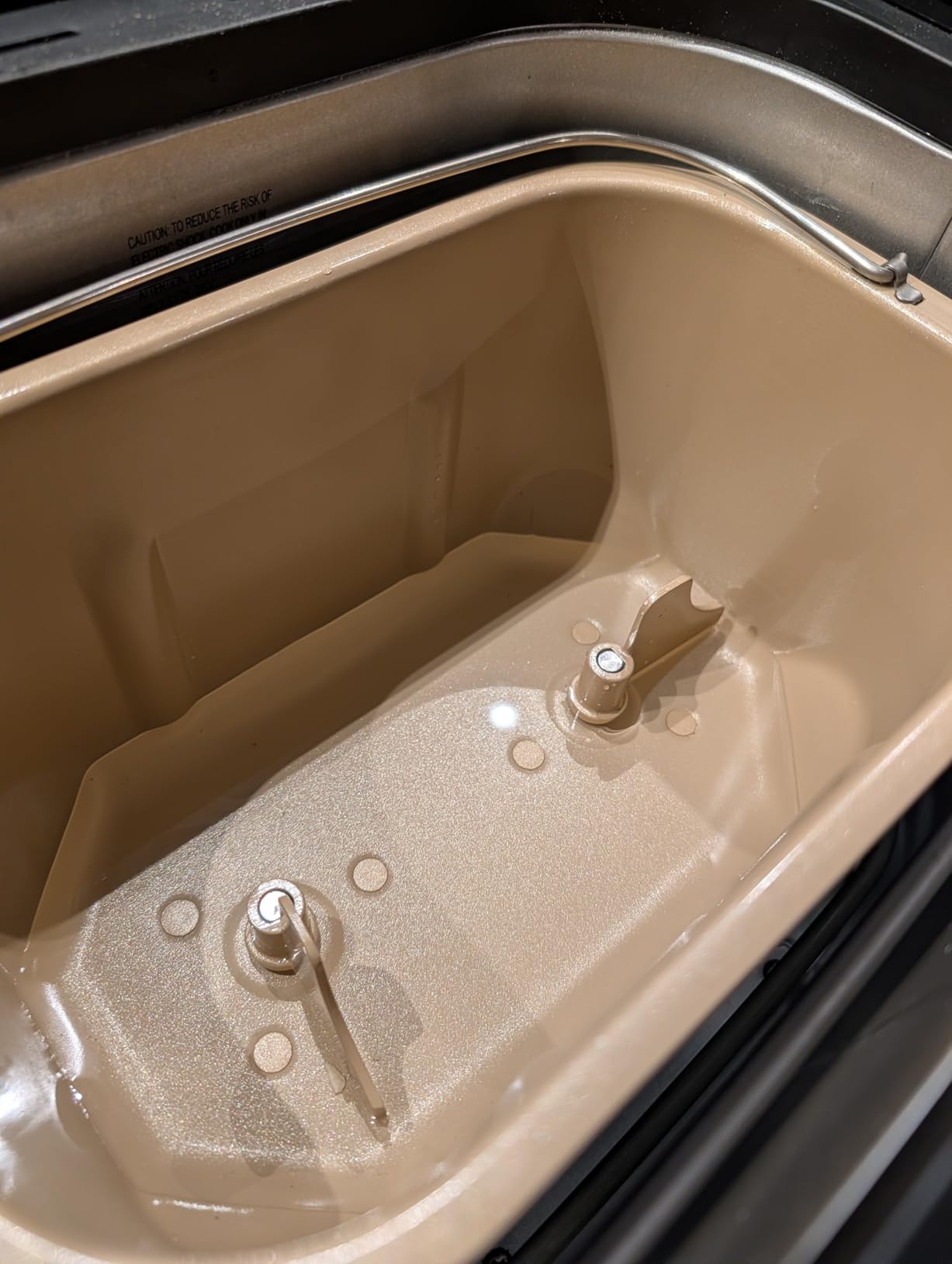
The hardware is genuinely good. Dual heaters sit at the top and bottom of the pan for even baking all the way around, the motor runs under 40 dB, and at 850W its element draws more power than any other machine here. The ceramic pan and dual kneading paddles come with a full accessory kit including a dispenser, a paddle removal tool, two paddles and a heat-resistant glove.
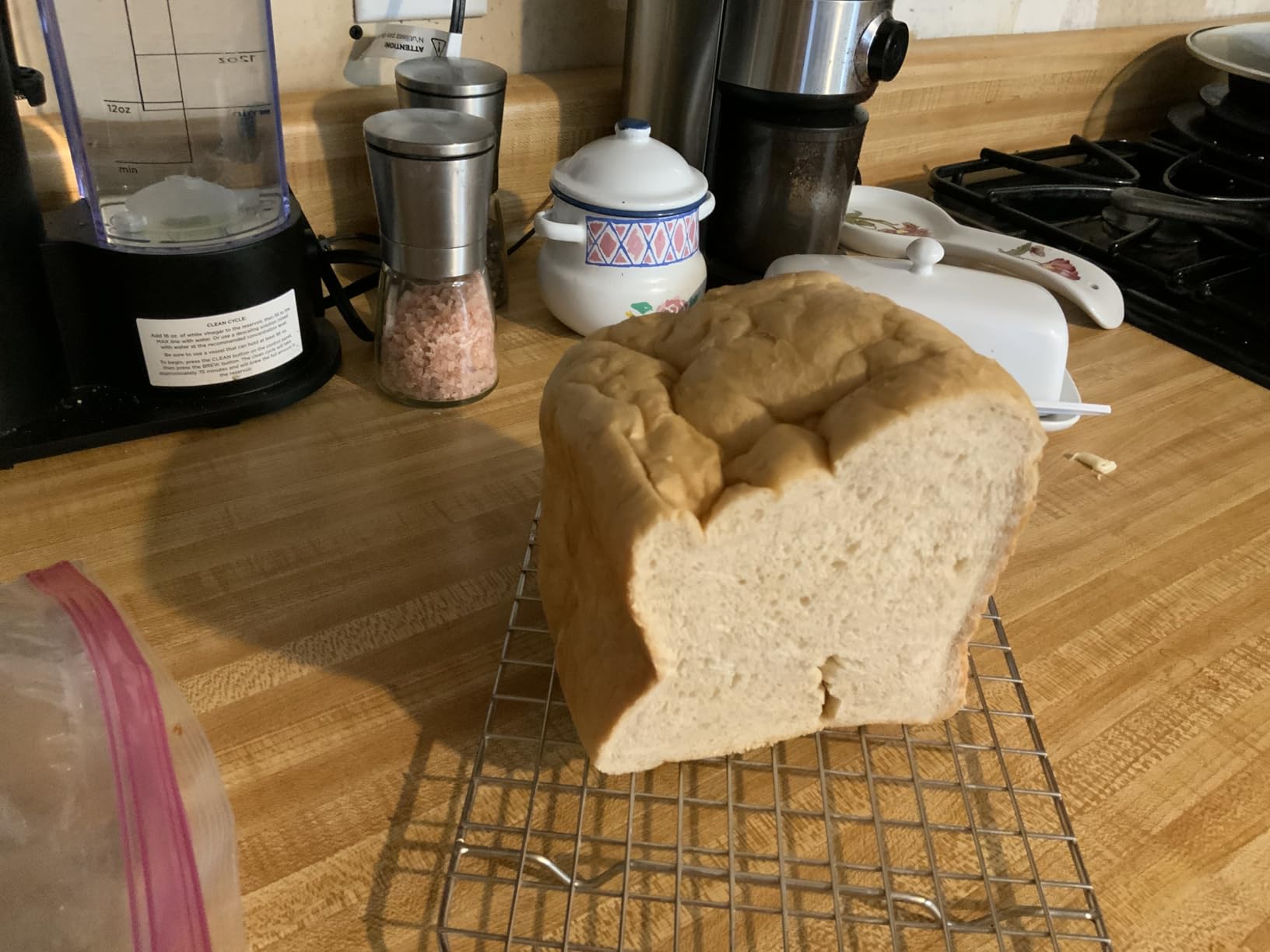
What holds it back is build quality and interface. The touch panel is fiddly to program, has no reset function and no labels on the buttons. The pan is very hard to seat and remove and needs real force to snap into place, which is a daily friction when you are handling a full 3.3 lb pan of wet dough. The fruit and nut dispenser drops add-ins in without mixing them, so seeds and nuts settle at the bottom rather than distributing through the loaf.
The dispenser also cannot be switched off and is loud when it fires, even on an overnight delayed cycle, which is disruptive when the whole point of a delay timer is to sleep. Top browning is weak on the smaller loaf sizes, the manual is metric-only, and some machines arrive with a dented body or a cracked lid viewing window. Small and medium sizes also produce oddly shaped egg-shaped loaves.
Why the capacity changes the plan
Because a 3.3 lb sourdough loaf takes a starter quantity and a hydration level that smaller machines cannot hold. If you are feeding a starter large enough for a family, the smaller pans leave you baking three times for the same week. Here you bake once, and the intermediate 2.2 lb size covers a smaller household without a second machine.
The selectable knead times from 10 minutes upward also make this useful beyond bread, since you can set a short knead for pizza or dumpling dough from the same starter. The 15-hour delay timer covers a long overnight schedule, and the dual paddles mix more evenly than a single paddle, which matters on the larger volumes this pan is built for.
When to skip it
Skip it if you are fussy about the pan, because a 3.3 lb pan that needs real force to seat is an annoyance every single bake and a lifting risk when it is full. Several buyers suggest hand-shaping the loaf before the final rise, which is fine but means the machine is doing less than you paid for.
And skip it if you bake seeded loaves regularly, because the dispenser does not mix add-ins and cannot be turned off. The Breville at number two is the better machine to add nuts and fruit to, and the KITCHENARM is the safer all-round choice for most households.
Bread Maker vs Stand Mixer vs Dutch Oven for Sourdough
These are not competing products so much as three tools that cover different parts of the same job, and most serious sourdough bakers end up owning more than one. The honest framing from Breadtopia is that bread machines are built around predictability, which suits yeast and frustrates a living culture.
A stand mixer develops gluten fast and handles stiff dough well, but it does nothing about temperature, timing or the bake. A Dutch oven is the only one of the three that gives you steam, oven spring and a blistered crust, and it is where your final sourdough loaf should come from. A bread machine is the one that removes the labour.
So the sensible setup for most people is a machine for the knead and the first rise, and an oven or Dutch oven for the finish. pizza steel guide for sourdough bakers covers the baking-surface question if you want a fast, dark bake, and our sourdough bread reviews show what a finished loaf should look like before you start chasing it.
If you only own one appliance, a machine that lets you run a dough cycle is the most useful of the three for a weekday sourdough habit, because a dough cycle followed by an oven bake gives you both the labour saving and the crust.
How We Chose the Best Bread Machines for Sourdough
We did not score machines on general bread making, because a machine that bakes a perfect sandwich loaf can still be the wrong tool for sourdough. Every pick here was judged against four sourdough-specific criteria, in this order:
Ferment control, first. Can you set a long first rise independently, either through a custom or Homemade menu that edits knead, rest, rise and bake times, or through a dough-only cycle you can pull out of the machine?
A real sourdough program. A named Sourdough or starter setting that has been lengthened for a natural ferment counts; a machine with a Basic bread cycle and nothing else does not.
Kneading and pan design. Dual paddles and a horizontal pan mix a wet dough more evenly and produce a usable loaf shape, while a vertical pan gives a taller, narrower loaf.
Ownability. Whether the pan, paddles and parts are still available years later, how loud the machine is, and how much counter space it takes.
On top of that we read the complaint side of the review data as carefully as the praise. Machines that scored well but had repeated motor, warranty or arrived-damaged reports were flagged in their sections rather than dropped, because you should be able to see the weakness before you spend money on it.
What to Look for When Buying a Bread Machine for Sourdough
Custom cycle programming is the feature that decides everything. A machine that lets you set the knead, rest, rise and bake times separately is worth more than one with twice as many preset menus. The KITCHENARM and the Breville both do this; most of the others do not, and that single fact explains most of the differences in loaf quality below the programming tier.
A dough-only cycle is the second must-have. A dough cycle with no heat lets you remove the dough, shape it, proof it, score it and bake it in a real oven. Several bakers on r/BreadMachines run a fed starter with a small amount of sugar and bread flour on a dough cycle, then bulk proof for about four hours and do the final proof in a pan. If that hybrid path appeals to you, check the dough cycle exists before you buy anything else.
Starter and yeast-free programs matter for maintenance. A dedicated sourdough starter setting keeps a small amount of starter warm and active between feeds, and a yeast-free program on the Breville is the only preset here aimed at a no-commercial-yeast bake. If you keep a large starter going, this is worth real money in consistency.
Loaf size is a household decision, not a feature contest. The range runs from a 1 lb Zojirushi Mini at roughly 6 to 10 slices, through the 2 lb standard that most machines here share, to 2.2 lb on the KBS, 2.5 lb on the Breville and 3.3 lb on the Neretva. A 2 lb loaf is the sensible default for two to four people. Anything larger needs a starter you are already maintaining at that scale.
Pan shape changes the loaf more than most buyers expect. A horizontal pan gives a squat, sliceable, sandwich-style loaf, while a vertical pan gives a tall narrow loaf with a domed top. Dual kneading blades on a horizontal pan also mix wet dough more evenly and distribute seeds and nuts through the loaf instead of clumping them at the top.
Heating elements decide the crust. The Virtuoso Plus and the Neretva both have heaters above and below the pan, which is why the top of the loaf browns instead of staying pale. Machines that heat from the base alone will give you a pale top no matter what crust setting you choose, which is a meaningful loss when the crust is the point of baking sourdough.
Paddle design is a smaller thing that still shows in the slice. A collapsible paddle, as on the Breville, folds away before the bake and leaves no hole at the base. A fixed paddle leaves a tunnel, and it can stick to the axle on high-torque machines, which is a common complaint on the KBS.
Pan and paddle availability is a real long-term cost. A replacement pan is the part most likely to need replacing, and buyers of the Virtuoso Plus report difficulty sourcing replacement paddles from the manufacturer. Brands that ship free replacement parts years after purchase, as the KITCHENARM does, remove a genuine ongoing expense.
Delay timers need a safety rule. The 13 to 15-hour delay timers on most of these machines are excellent for yeasted loaves, and risky for sourdough. Wet starter, milk and eggs sitting warm for ten hours is how you lose a batch, so keep perishable ingredients out of the delayed cycle and use the timer for dry dough only.
Our guide to sourdough nutrition and how to eat it covers the eating side, and our bread box guide is worth reading before you commit to a weekly bake, since a fresh sourdough loaf goes stale faster than a sandwich loaf.
Frequently Asked Questions
Do bread machines make good sourdough bread?
They do, provided the machine lets you control the timing. A standard bread cycle finishes in about three hours, which is too short for a natural ferment, so a machine with a custom cycle, a long sourdough program or a dough-only setting gives you a loaf with real flavour. What you cannot get is a blistered artisan crust, because there is no steam or scoring inside a closed pan.
Which bread maker can make sourdough?
Any machine that can run a long first rise or a dough-only cycle. The KITCHENARM 29-in-1 has both a named sourdough menu and four programmable personal menus, the Breville Custom Loaf lets you modify the length and temperature of any cycle step, and the KBS Pro 17-in-1 has a dedicated sourdough program with a 2 lb setting. A machine that only offers fixed white-bread cycles will not get you there.
Do you need a special bread maker for sourdough?
You need programmability, not a machine marketed as sourdough-specific. The qualifying features are a custom or Homemade menu where you set knead, rest, rise and bake times independently, or a dough cycle that stops before baking. A dedicated sourdough program helps beginners, and a sourdough starter setting helps you maintain a culture, but neither replaces the ability to lengthen a ferment when your kitchen is cold.
Can sourdough starter replace yeast in a bread machine?
Sometimes, but it is harder than it sounds because the ferment does not follow a clock. The machine expects a rise of a certain length and the culture decides on its own schedule, so the dough can over-proof and collapse in the pan or sit under-risen. Most machine sourdough recipes add a small amount of commercial yeast alongside a ripe starter for insurance, which keeps the flavour and removes most of the timing risk.
What is one drawback of using a bread machine for sourdough?
No steam, no scoring and no true oven spring. Inside a closed pan the crust browns evenly but it does not blister, and you will not get the large open crumb that comes from a scored loaf hitting a hot oven or a preheated Dutch oven. If the crust and the crumb are what you care about, use the machine to make dough and finish the bake in your own oven.
Why are breadmakers no longer popular?
Two trends pulled people away rather than a drop in machine quality. Convenience moved toward yeasted sandwich loaves baked by other people, and the artisan bread renaissance pulled home bakers toward Dutch ovens, bannetons and scoring. Machines have arguably improved, with programmable cycles, ceramic pans and dual heaters that older models lacked. The machines are still the easiest way to remove kneading and timing from a weekday bake.
What is the biggest mistake beginners make with sourdough bread?
Using starter that is not actually active. A jar that smells sour but has not doubled in a few hours will not raise bread, and beginners often compensate by loading the pan heavier. The second most common mistake is expecting a four-hour machine cycle to replace a twelve-hour ferment. Feed your starter until it doubles, and make the dough ferment in your fridge, not in the machine.
Can I use a bread maker just to knead sourdough dough?
Yes, and that is the workflow we would recommend to anyone who also owns an oven. Run a dough-only cycle, remove the dough, shape it, proof it, score it and bake it in a hot oven or a preheated Dutch oven. You get consistent kneading and hands-off timing, and you keep the crust and crumb that a closed pan cannot produce. A flour and water or starter dough is the usual starting point.
The Verdict: Best Bread Machines for Sourdough in 2026
The KITCHENARM 29-in-1 Smart Bread Machine is our pick for the best bread machines for sourdough in 2026, because it is the one that gives a beginner a named sourdough menu and an expert per-cycle editor in the same machine. That combination is backed by a 4.6 rating across 7898 reviews and a record of multi-year daily use from owners.
Buy the Breville Custom Loaf BBM800XL if you want maximum manual control and the biggest pan here at 2.5 lb, and accept the noise and the split reliability reports. Buy the Zojirushi Virtuoso Plus BB-PDC20 if the crust and a clean sandwich-loaf shape matter more to you than adjustable timing, since its lid and base heaters give the most even bake of the dual-heater machines and its programs cannot be changed at all.
Whatever you choose, use the machine for what it does well: the knead, the temperature and the timing. Then take the dough to a hot oven or a Dutch oven for the finish, and that is how you get an open crumb instead of a dense one. Every machine here improves on hand kneading. None of them replaces an oven.