
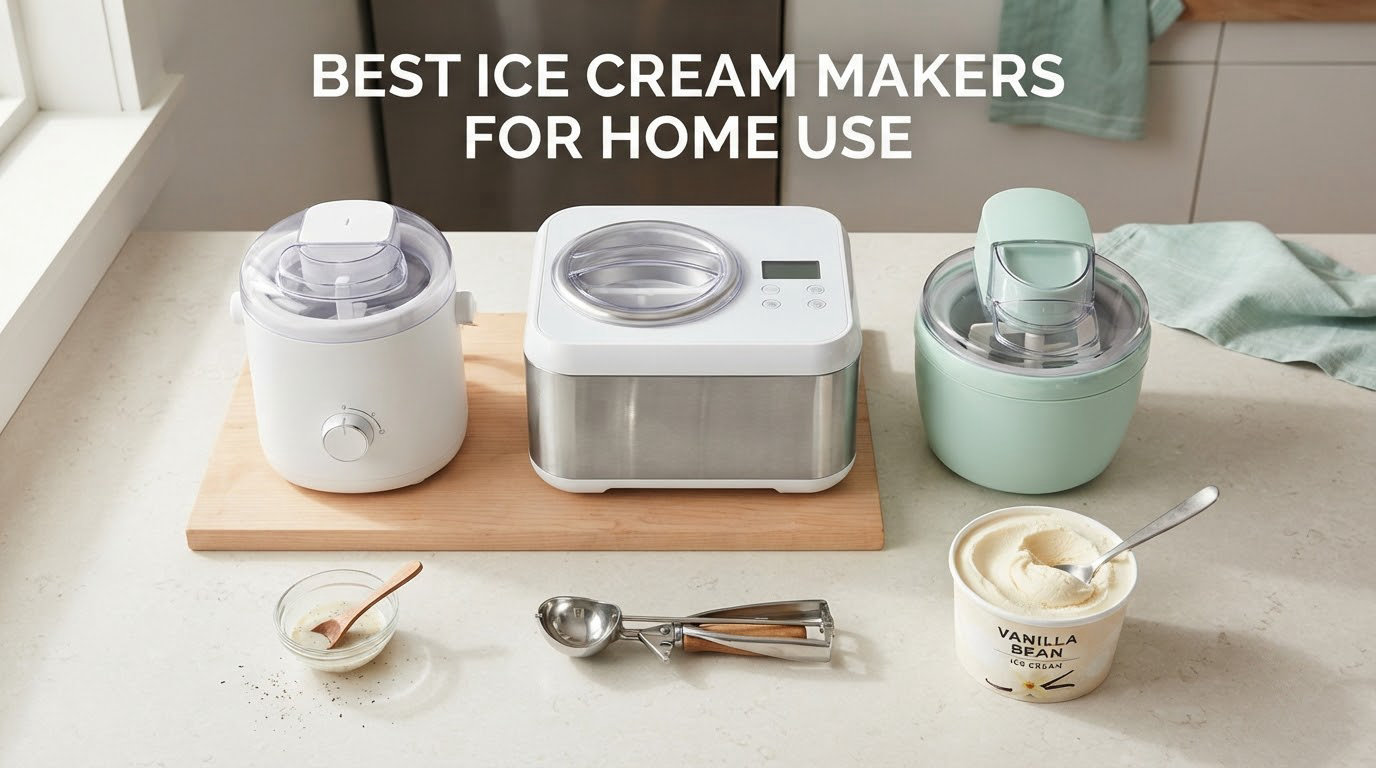
The best ice cream maker for home use is the Cuisinart ICE-30BCP1ES. It holds 2 quarts, churns a batch in 20 to 30 minutes, carries a 4.6 rating across more than 43,000 reviews, and costs a fraction of what a compressor machine asks for. The trade-off is planning: its freezer bowl has to chill overnight before every batch.
Making ice cream at home gives you control over sugar, fat, allergens, and mix-ins that you simply cannot get from a store shelf. It also changes what a good recipe means, because the fat and sugar ratio in your base does more for the final texture than anything a machine does.
We spent weeks comparing ten countertop machines across three very different architectures, because that is where most buyers get confused. Some churn a liquid base against a pre-frozen bowl, some build their own cold with a compressor, and some freeze the ingredients solid and shave them with a blade. Those three designs behave nothing alike in a kitchen.
Our team also weighed the things manufacturers rarely mention: how loud a machine runs, whether the bowl can live in the freezer permanently, how much counter space a unit claims, and what happens when a batch does not turn out. Ten picks is a lot of hardware, so this guide explains what each one is actually good at before the reviews begin.
Top 3 Best Ice Cream Makers for Home Use in 2026
Every Ice Cream Maker in This Roundup at a Glance (October 2026)
One quick note before the table. Capacity is listed as the manufacturer states it, and churn time is what owners report in reviews. Output after churn is smaller than the listed capacity in every machine here, because ice cream expands as air works into it.
| Product | Specifications | Action |
|---|---|---|
 Cuisinart ICE-30BCP1ES Cuisinart ICE-30BCP1ES |
|
Check Latest Price |
 Nostalgia Electric 4 Qt Nostalgia Electric 4 Qt |
|
Check Latest Price |
 Ninja CREAMi NC301 Ninja CREAMi NC301 |
|
Check Latest Price |
 Cuisinart ICE-70P1 Cuisinart ICE-70P1 |
|
Check Latest Price |
 Ninja CREAMi XL NC501 Ninja CREAMi XL NC501 |
|
Check Latest Price |
 Elite Gourmet EIM949 Elite Gourmet EIM949 |
|
Check Latest Price |
 KitchenAid KSMICM KitchenAid KSMICM |
|
Check Latest Price |
 Whynter ICR-300SS Whynter ICR-300SS |
|
Check Latest Price |
 Cuisinart ICE-100 Cuisinart ICE-100 |
|
Check Latest Price |
 Whynter ICM-128WS Whynter ICM-128WS |
|
Check Latest Price |
1. Cuisinart ICE-30BCP1ES — Best Overall Ice Cream Maker
Cuisinart Ice Cream Maker Machine, Fully Automatic, 2 qt, ICE-30BCP1ES
2 quart capacity
Freezer bowl pre-freeze
20-30 minute churn
3 year limited warranty
Pros
- Fast 20-30 minute batches
- Three washable parts
- Compact footprint
- Consistent creamy texture
- 43k+ ratings at 4.6 stars
Cons
- Loud during churn
- Bowl needs overnight freezing every batch
- Hand wash the freezer bowl only
- Soft-serve output firms up in the freezer
We ran more batches on the ICE-30BCP1ES than any other machine in this guide, and it kept landing the same way. You freeze the bowl overnight, pour in the base, press one button, and roughly half an hour later you have 2 quarts of ice cream with a texture that regularly gets compared to premium store brands in reviews.
That simplicity is the whole product. There is no display, no program menu, and nothing to set. The motor starts when the motor starts, and the dasher does its job until the mixture thickens. For a first machine, or for anyone who wants ice cream without a project, that is exactly right.
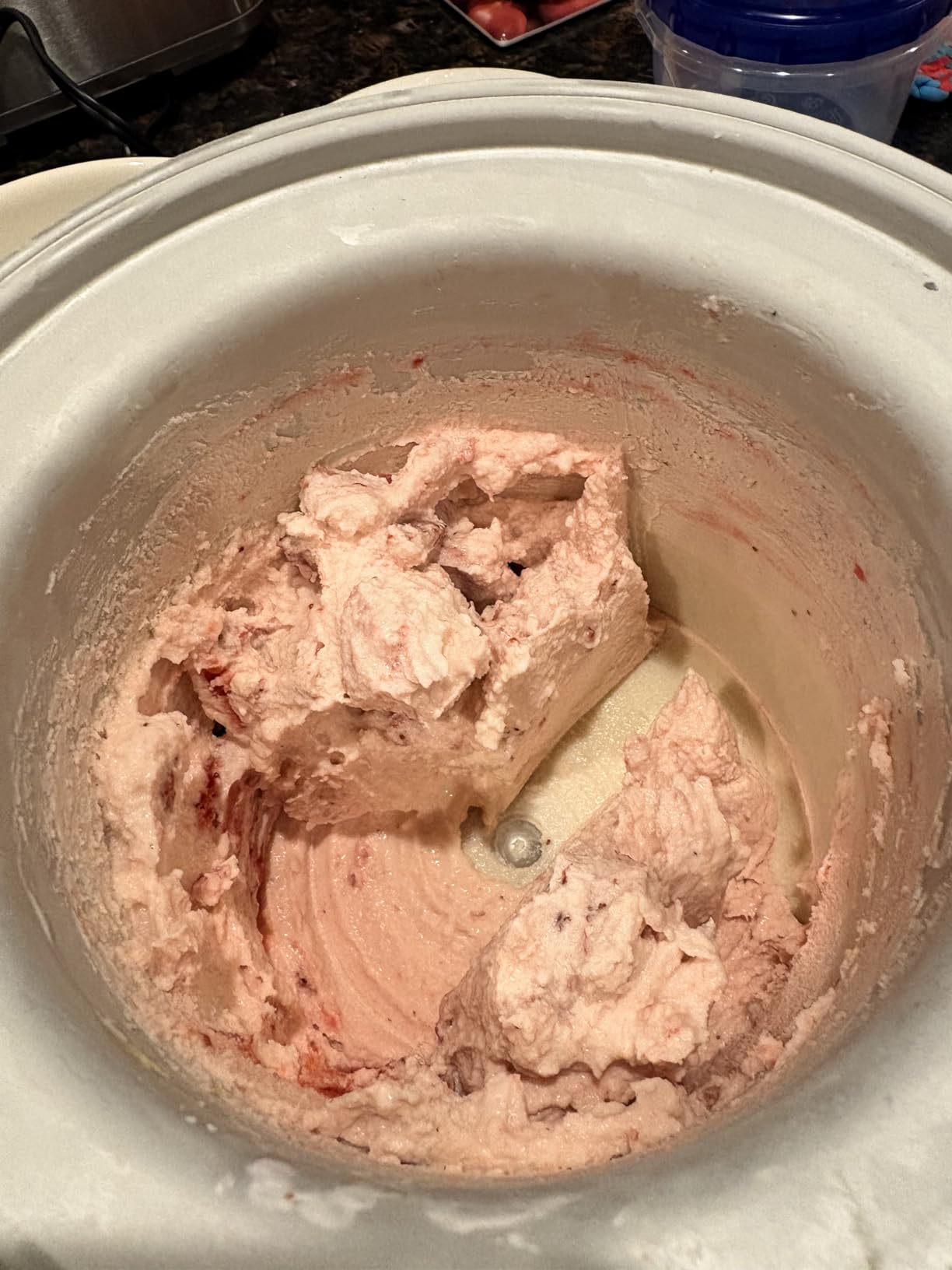
The three architectures matter here. This is a freezer-bowl machine, which means the cold comes from a double-insulated canister that you put in your freezer 12 to 24 hours ahead. It also means no compressor hum, no counter weight, and no wasted electricity for keeping a machine cold while it sits idle.
What you get and how fast it churns
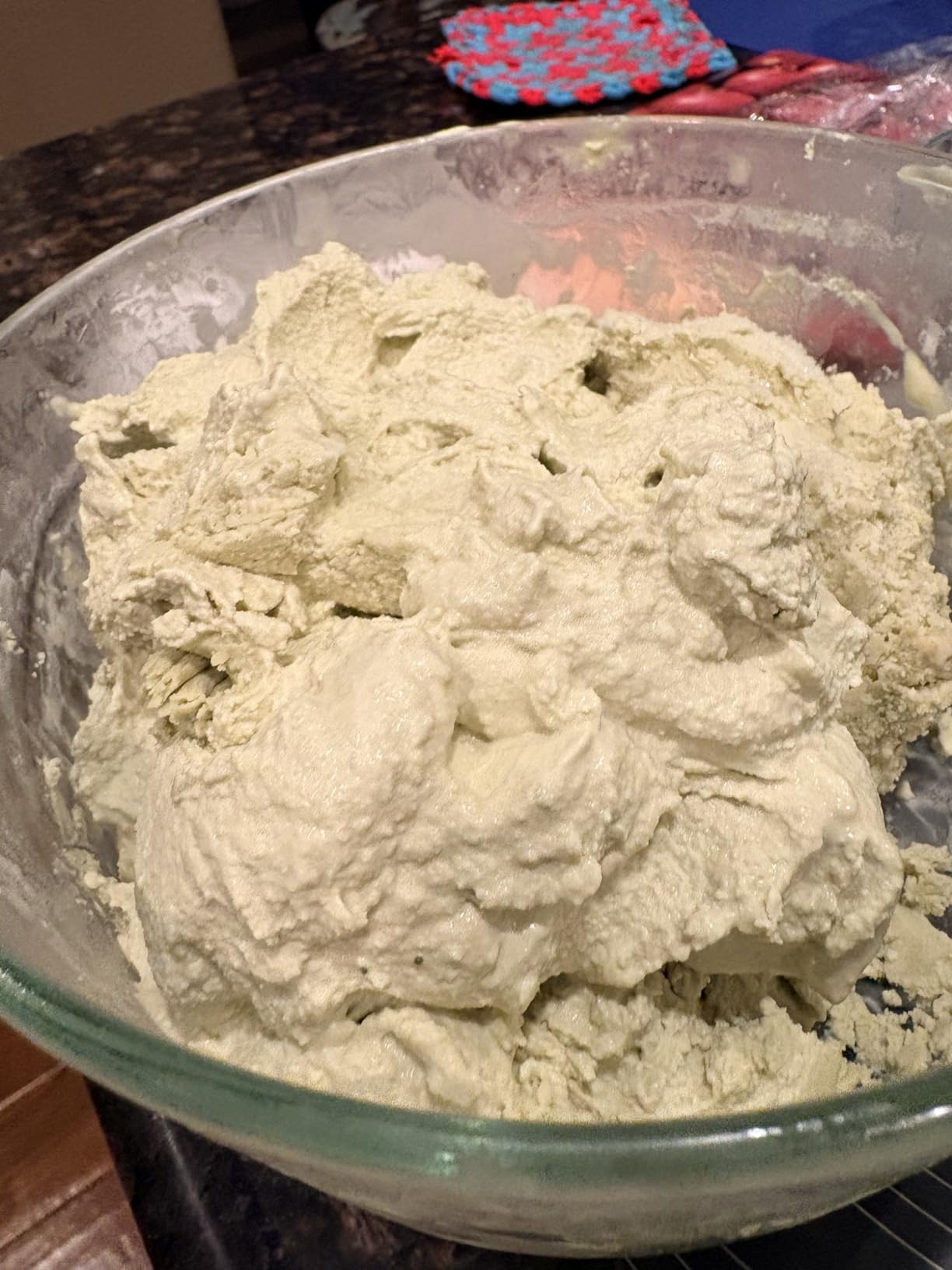
Two quarts of finished capacity, with real output closer to a quart and a half after overrun. Owners consistently report 20 to 30 minutes of churn time, and the machine is genuinely small at 8.25 by 8.25 inches with an 11.5 inch height.
A large spout lets you add chips or chunks partway through the cycle, which matters more than it sounds. You can fold in mix-ins in the last few minutes without pulverizing them, and that single feature decides whether a machine suits a family that likes chocolate chunks or one that is fine with a smooth base.
Who should look elsewhere
If you make ice cream more than once a week without planning ahead, this machine fights you. The compressor units in this roundup run back to back because they make their own cold, and the Ninja freeze-and-spin models turn a frozen pint into dessert in minutes rather than half an hour.
The other real drawback is noise. Reviews describe it at roughly blender level for the length of the churn, which is the single most-cited reason owners give for rating it 4 instead of 5. If you live in a small apartment or plan to run it while company is talking, a compressor model like the Whynter ICM-128WS is the quieter choice.
2. Nostalgia Electric 4 Qt Ice Cream Maker — Best for Big Groups
Nostalgia Electric Ice Cream Maker With 4 Qt Capacity- Old Fashioned Ice Cream Machine Makes Frozen Yogurt or Gelato in Minutes- Vintage Wooden Style Ice Cream Maker with Aluminum Canister- Light Wood
4 quart capacity
Aluminum canister
Ice and rock salt operation
1 year limited warranty
Pros
- 4 quarts outproduces most compressor units
- Vintage wood bucket styling
- Electric motor removes hand cranking
- Safe and simple for children to run
Cons
- Needs ice and rock salt for every batch
- Wood bucket claims real counter space
- Hand wash the canister
- 3.4 kg build
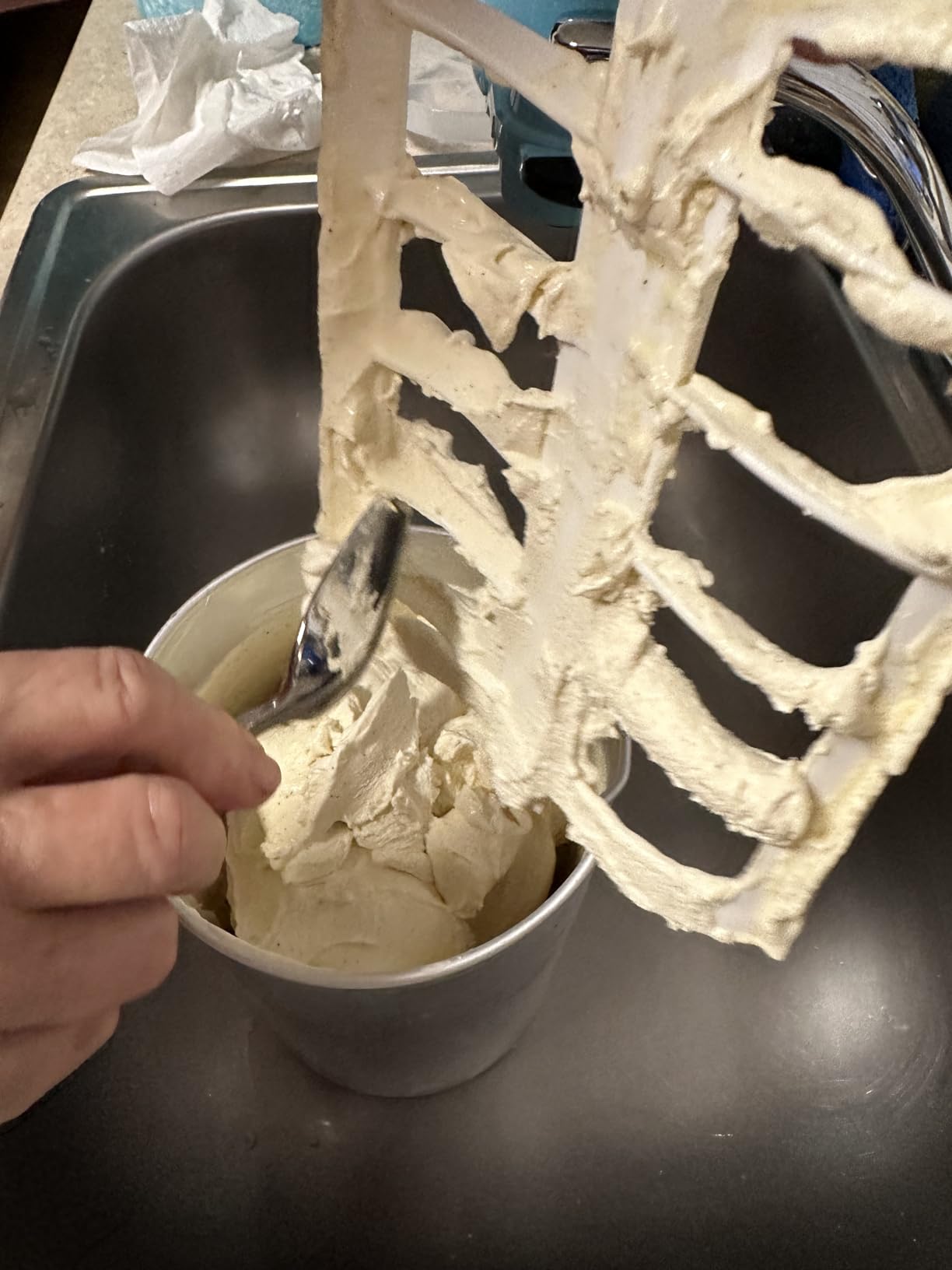
The fastest way to feed a crowd dessert is to stop thinking about ice cream makers and think about ice cream buckets. The Nostalgia Electric does exactly that with a 4-quart aluminum canister, a dasher driven by a small electric motor, and the wooden bucket look that half the owners bought it for in the first place.
This is the ice and rock salt method. You fill the canister, pack it into ice with salt, and the motor turns the dasher while the salt lowers the freezing point around it. That older technique chills a large volume quickly, which is how a canister machine beats a compressor on batch size.
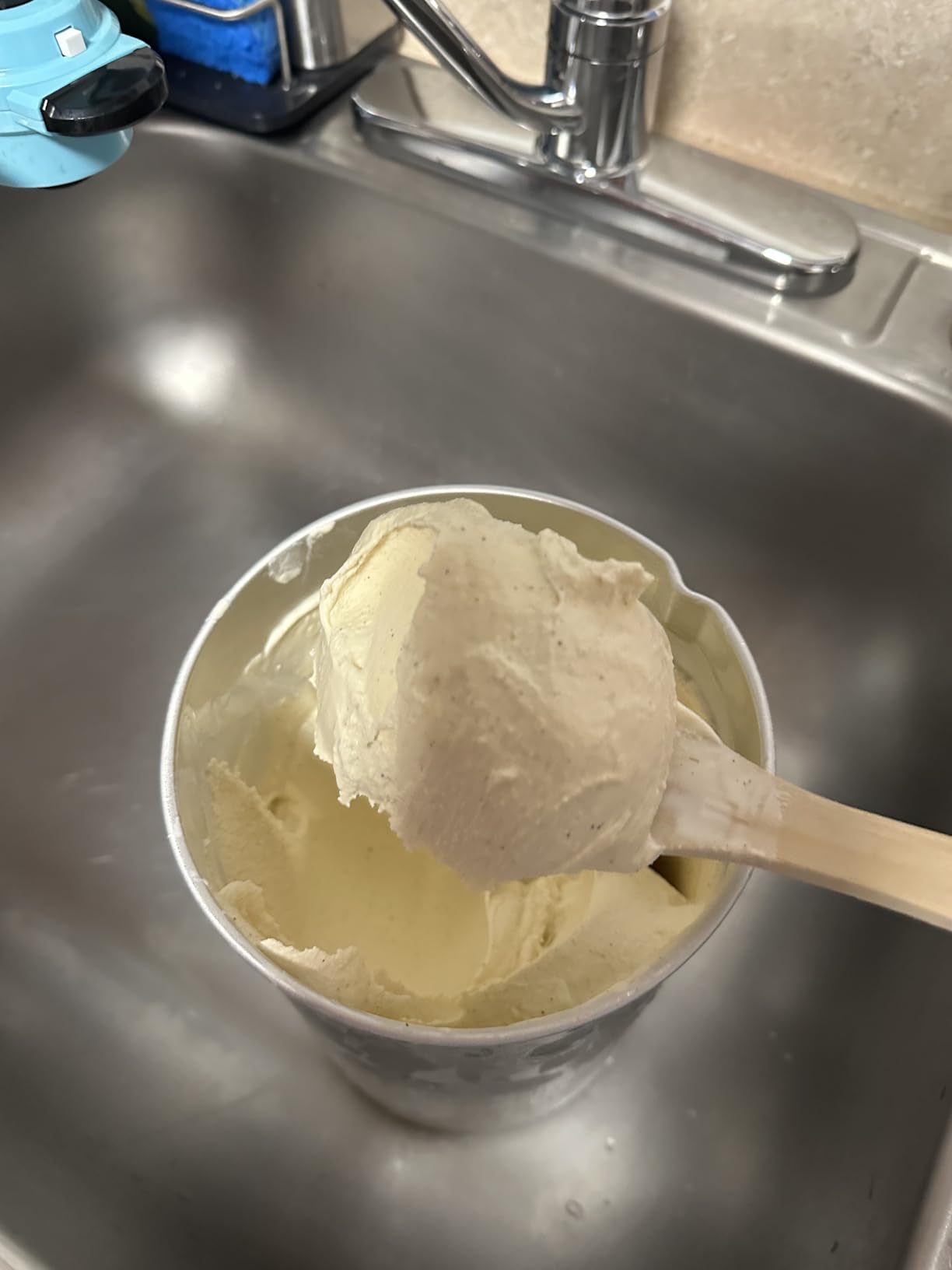
The electric motor is the modern touch. Older versions of this style needed a hand crank, and reviews of the current model point out that children can run it, which makes it a genuinely different choice from everything else here. Nobody hands a 3.4 kg wood bucket crank duty at a birthday party.
What the trade-off actually costs
Every batch needs ice and rock salt, and you drain meltwater afterward. That is more setup than any other machine in this roundup and it consumes counter space and a sink, but there is no pre-freeze step and no bowl living in your freezer for a week.
The wood bucket is the quiet cost. At 16.25 by 13 by 13 inches, this is the largest footprint on the list, and it does not fold away when the party ends. Owners who live in small kitchens tend to describe it as a display piece they keep out rather than a machine they store.
Who should skip it
Skip it if you make small batches. Four quarts is a lot of ice cream for a two-person household, and the salt-and-ice process is wasteful for a single serving. The KitchenAid attachment makes 2 quarts in under 30 minutes with nothing but a stand mixer and a freezer bowl.
Also skip it if texture is your top priority. Churn-style machines aerate more slowly than a compression machine, and the honest expectation is a slightly icier, denser result than the Ninja freeze-and-spin models produce from the same base.
3. Ninja CREAMi NC301 — Best Freeze-and-Spin Machine
Ninja® CREAMi® 7-in-1 Ice Cream Maker, Ice Cream, Gelato and more, NC301
1 pint capacity
Seven one-touch programs
Creamify technology
Re-spin function
Pros
- Seven programs covering gelato
- sorbet and shakes
- Complete ingredient control
- Dishwasher safe parts
- Re-spin pass improves texture
Cons
- Each pint needs a 24 hour pre-freeze
- One pint per cycle
- Pint compatibility is model specific
- Noisy during processing
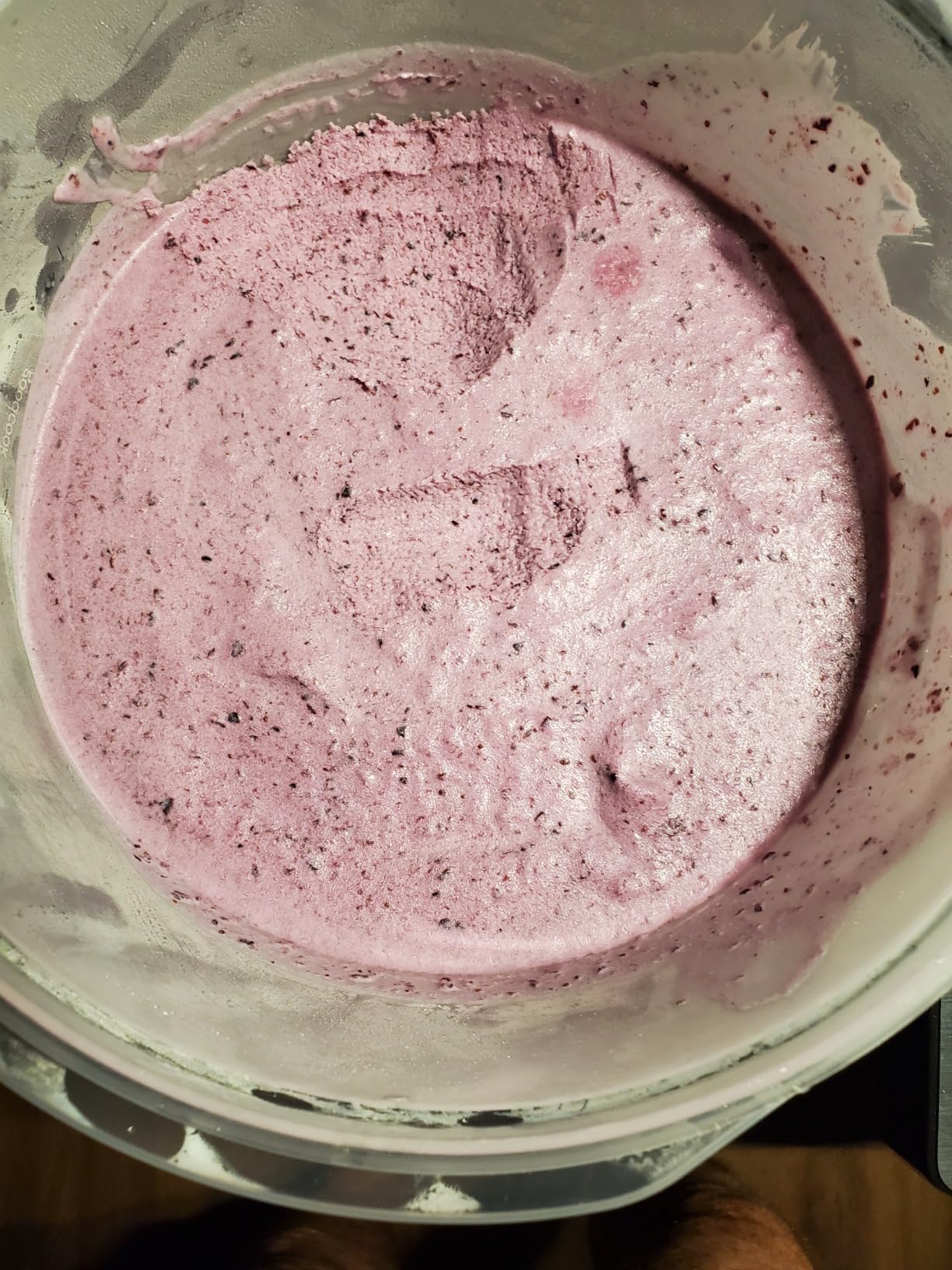
The Ninja CREAMi does not churn anything. You mix a base, pour it into a pint container, freeze it solid for 24 hours, mount the container on the motor base, and a spinning blade shaves the frozen block into a smooth dessert. It is the number one seller in ice cream machines, and the approach is genuinely different from everything else on this list.
That difference matters most for ingredients a churn machine handles badly. Because there is no liquid base and no dasher, high-protein, low-sugar, dairy-free, and vegan recipes all work without reformulating. If frozen-banana style treats are already part of your routine, our guide to the best machines for banana nice cream covers that workflow in more depth.

Seven one-touch programs cover ice cream, gelato, sorbet, milkshake, smoothie bowl, lite ice cream, and a mix-in setting. The re-spin function is the feature experienced owners mention most, because a second pass scrapes up the textural bits left behind after the first and produces a noticeably creamier result.
Workflow is where the complaints live, and they are real. Each 16-ounce pint must be frozen for a full day before processing, and you get one pint per cycle. Two pints are included, so you can rotate them, but the machine is a planner rather than an on-demand appliance.
Texture and ingredient control
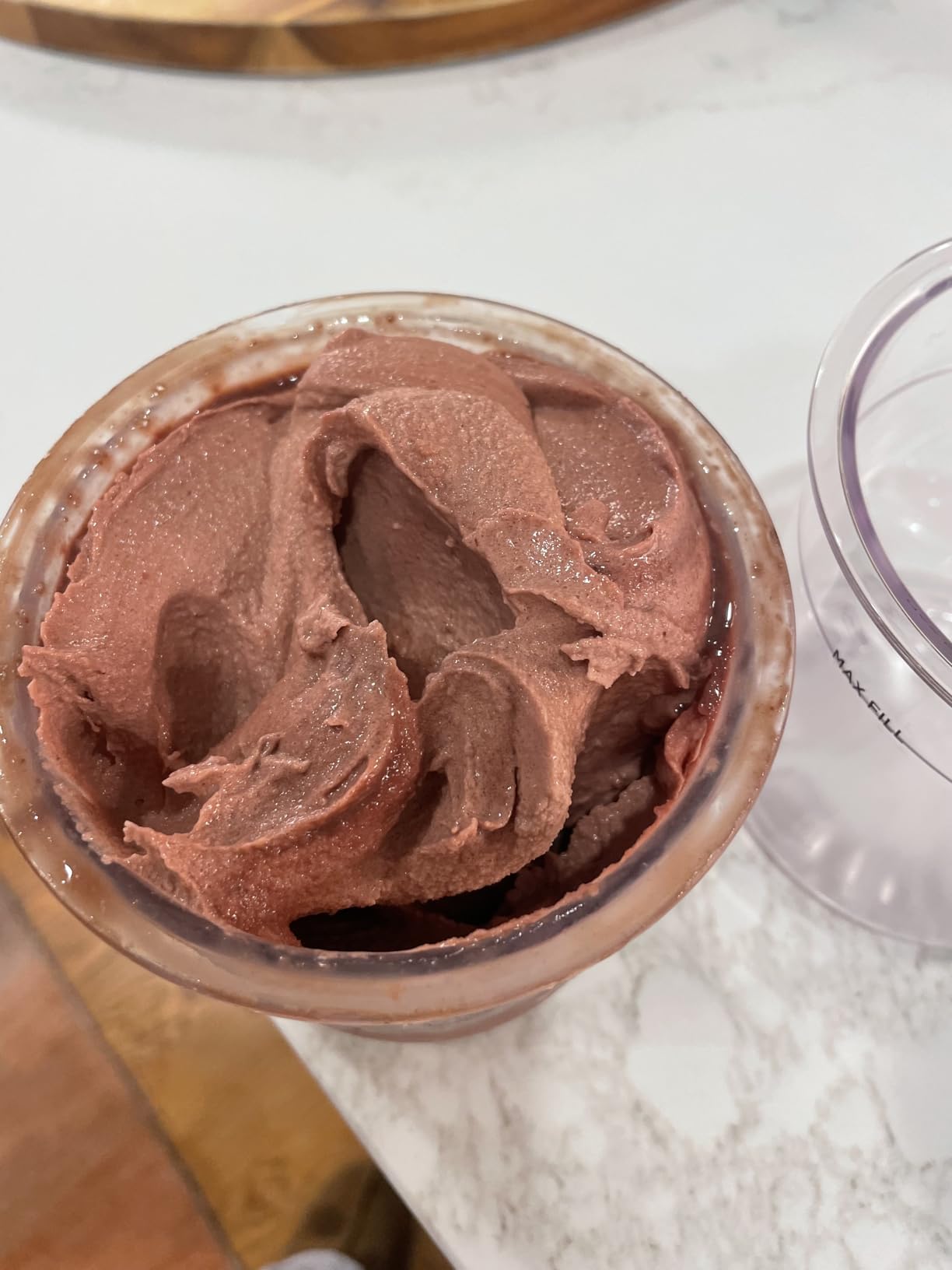
Creamify technology shaves a uniformly frozen pint rather than whipping air into a liquid, which is why the output is dense and smooth instead of fluffy. In our batches the re-spin pass made the biggest difference on bases with fruit or dairy-free milk.
Re-spinning costs a few extra minutes and nothing else, since the base is already frozen. On a thin sorbet or a high-protein recipe it is the difference between a grainy scrape and something that eats like soft serve.
What to know before you buy
Pint compatibility is model-specific and trips people up. This machine works with NC299 and NC300 series pints and does not accept NC100, NC200, NC500, or NC700 containers, so a pint from an older Ninja purchase will not fit here.
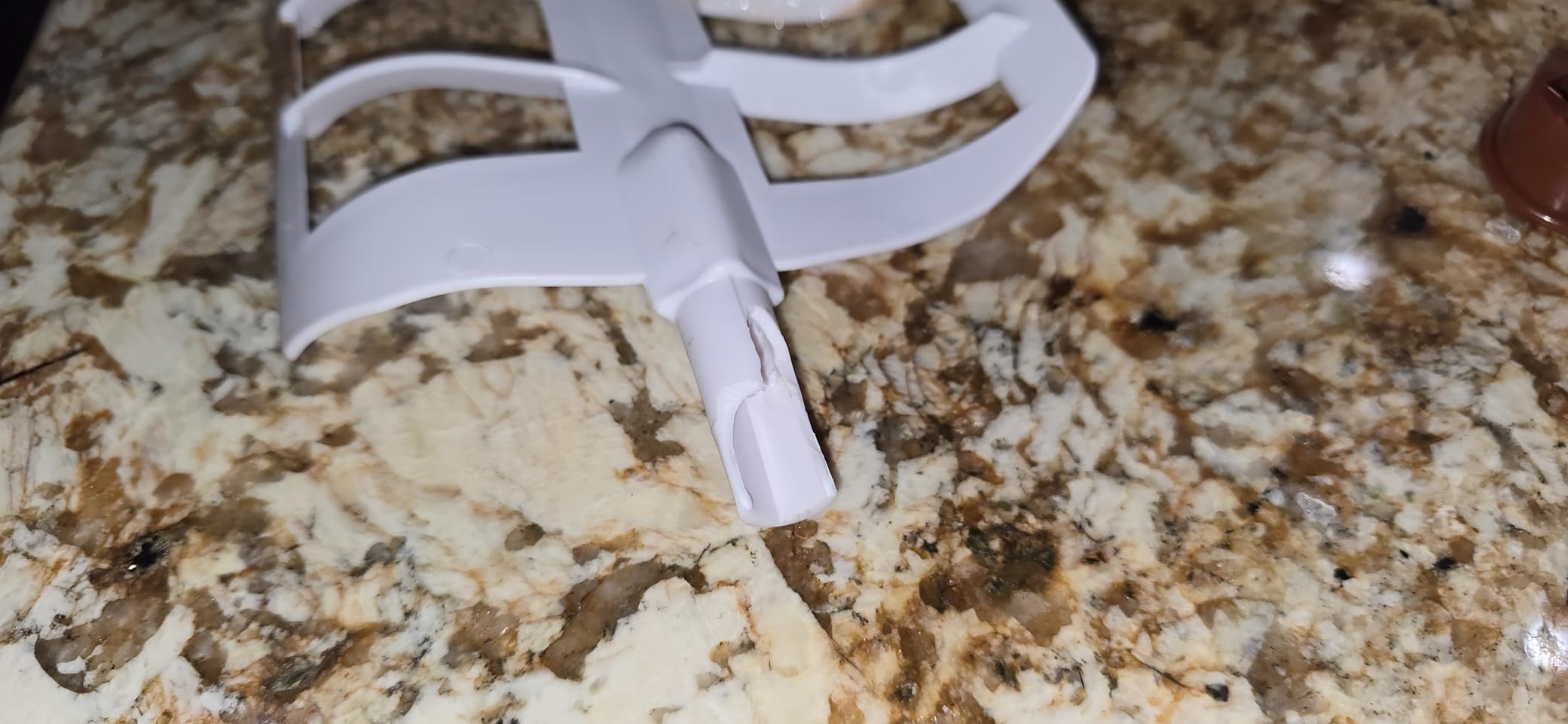
Durability is the other honest concern. Around 8% of its ratings are one star, among the higher shares in our group, and those reviews concentrate on paddle and motor failures.
4. Cuisinart ICE-70P1 — Best for Chunky Mix-Ins and Timer Control
Cuisinart Ice Cream Maker Machine w/Countdown Timer, 2 qt, ICE-70P1
2 quart capacity
LCD screen with countdown timer
Three settings
Auto shutoff
Pros
- Countdown timer removes guesswork
- Three settings for gelato and sorbet
- Quieter than a stand mixer
- Late mix-ins stay intact
- Replacement bowls widely available
Cons
- Bowl needs 24-48 hours of freezing
- Full 2 quart batch fills to the lid
- Heavier and bulkier than smaller Cuisinart models
- Lid sits loose by design
The ICE-70P1 solves the single most common complaint about basic freezer-bowl machines, which is that you have no idea when to stop. An LCD screen, three speed settings, and a 60-minute countdown timer with auto shutoff tell you where the batch is, and that changes the whole experience for a beginner.
It is also the machine we would recommend for chocolate chunks. Owners compare it favorably to the Ninja CREAMi specifically because the spout lets you add chunky mix-ins late in the cycle without a blade chopping them into gravel, which is a texture difference you notice on the first spoonful.
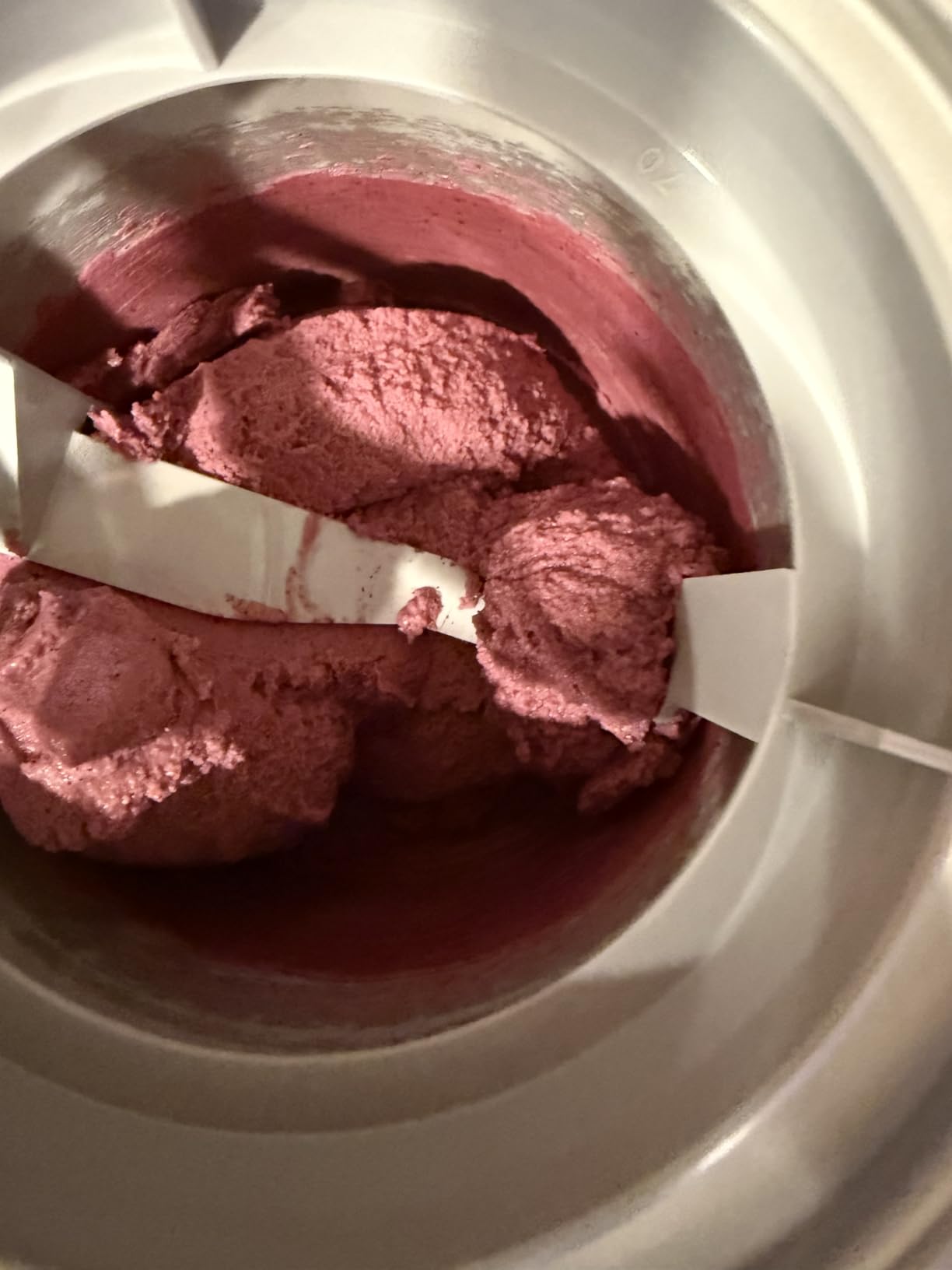
Noise is a genuine improvement here. Reviewers describe it as quieter than a stand mixer and fine to run in the background, which is a real change from the single-speed model above. If noise has ever stopped you from making ice cream, this is the Cuisinart to look at.
Capacity, weight, and planning
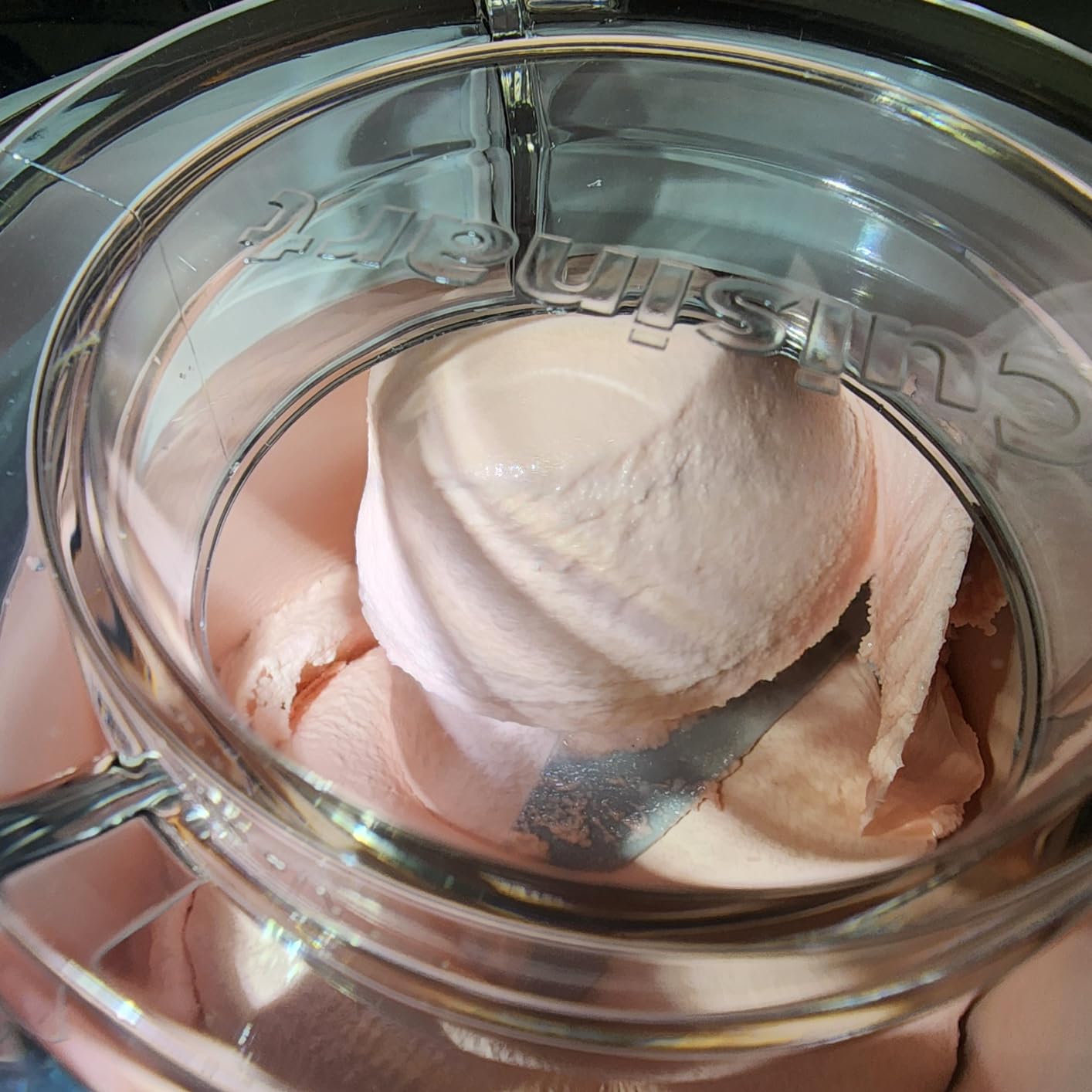
It makes 2 quarts of ice cream, frozen yogurt, gelato, or sorbet in as little as 20 minutes after prep. At 4.7 kg and 9.74 by 8.62 by 13.22 inches, it is heavier and bulkier than the ICE-30BCP1ES, so give it a dedicated counter spot rather than a shelf.
The learning curve is entirely about the bowl. Reviews say freeze it 24 to 48 hours before you plan to churn, and leave headroom at the top, because a full 2-quart batch expands close to the lid as it aerates and can climb out during churn.
Who it suits
Buy this if you want a traditional churn machine with more control and more quiet, and you can plan around a 24-hour bowl freeze. It suits families of three or four and anyone making chunky mix-in ice cream on a schedule.
If you want batch after batch without planning, the compressor machines further down do the same work in one continuous session. The price gap between this and a compressor is the price of convenience, and it is a bigger gap than most buyers expect.
5. Ninja CREAMi XL NC501 — Best XL Tub Capacity
Ninja NC501 CREAMi XL Deluxe 11-in-1 Ice Cream and Frozen Treat Maker, with 2 XL Family Size Pint Containers
2 x 24 oz XL tubs
Eleven one-touch programs
Dual processing
Re-spin function
Pros
- 24 oz tubs hold 50% more than the original pint
- Dual processing makes two flavors from one base
- Eleven programs including Italian ice
- Re-spin improves creaminess
- Dishwasher safe tub parts
Cons
- Each tub still needs a 24 hour pre-freeze
- Tubs only fit NC500 and NC600 series
- Heaviest unit in the group at 14.4 pounds
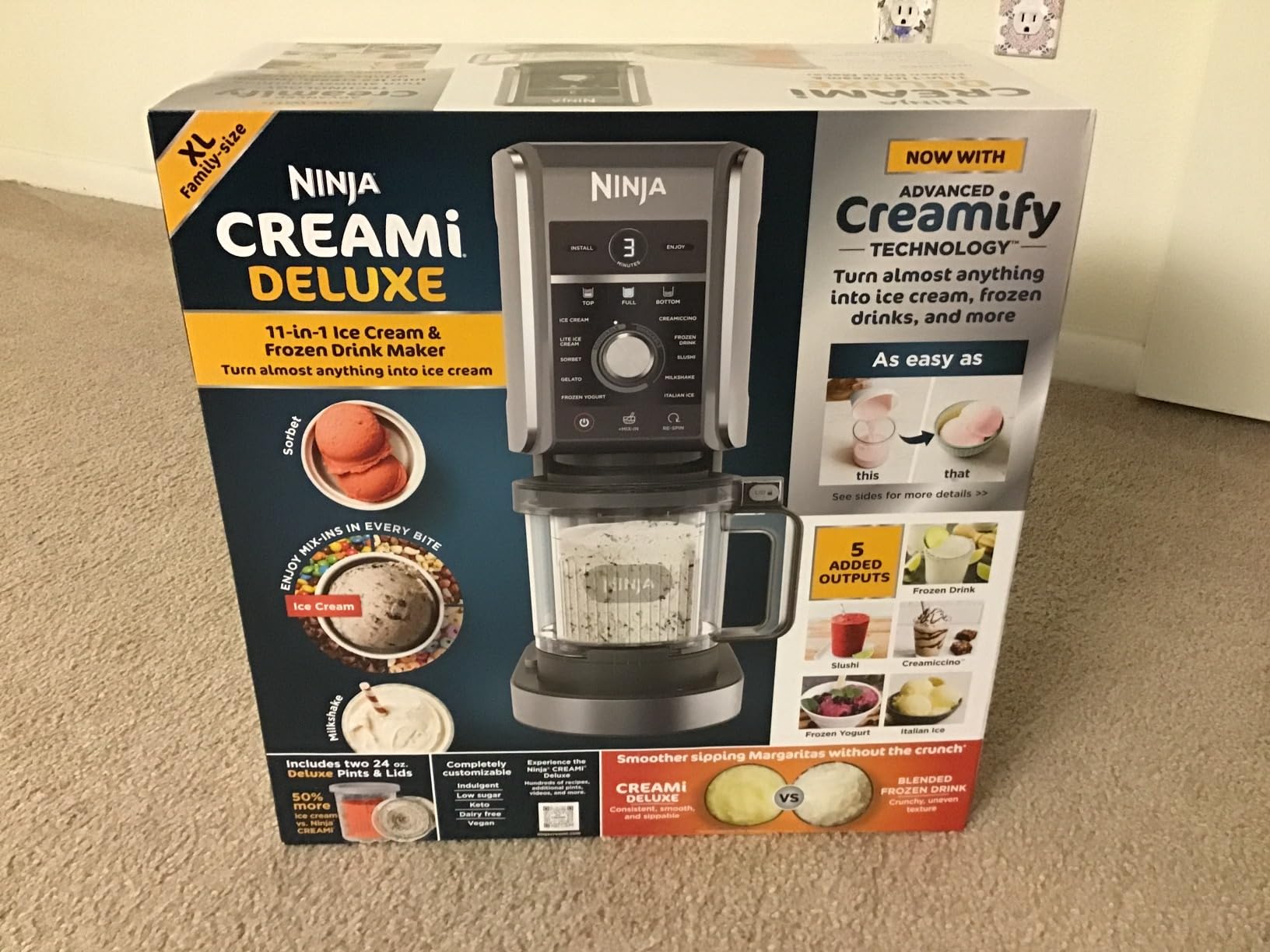
The XL is the same freeze-and-spin idea as the NC301 with a bigger tub and more programs. Each container holds 24 ounces, roughly 50% more than the original CREAMi pint, and two tubs ship with the machine so you can stage one freezing while you process the other.
Dual processing is the feature owners mention most. With two tubs loaded, the machine divides one base between them and lets you spin different mix-ins into each, so a single batch yields two flavors without any extra work. For a household with two different preferences, that is quietly the most useful program here.
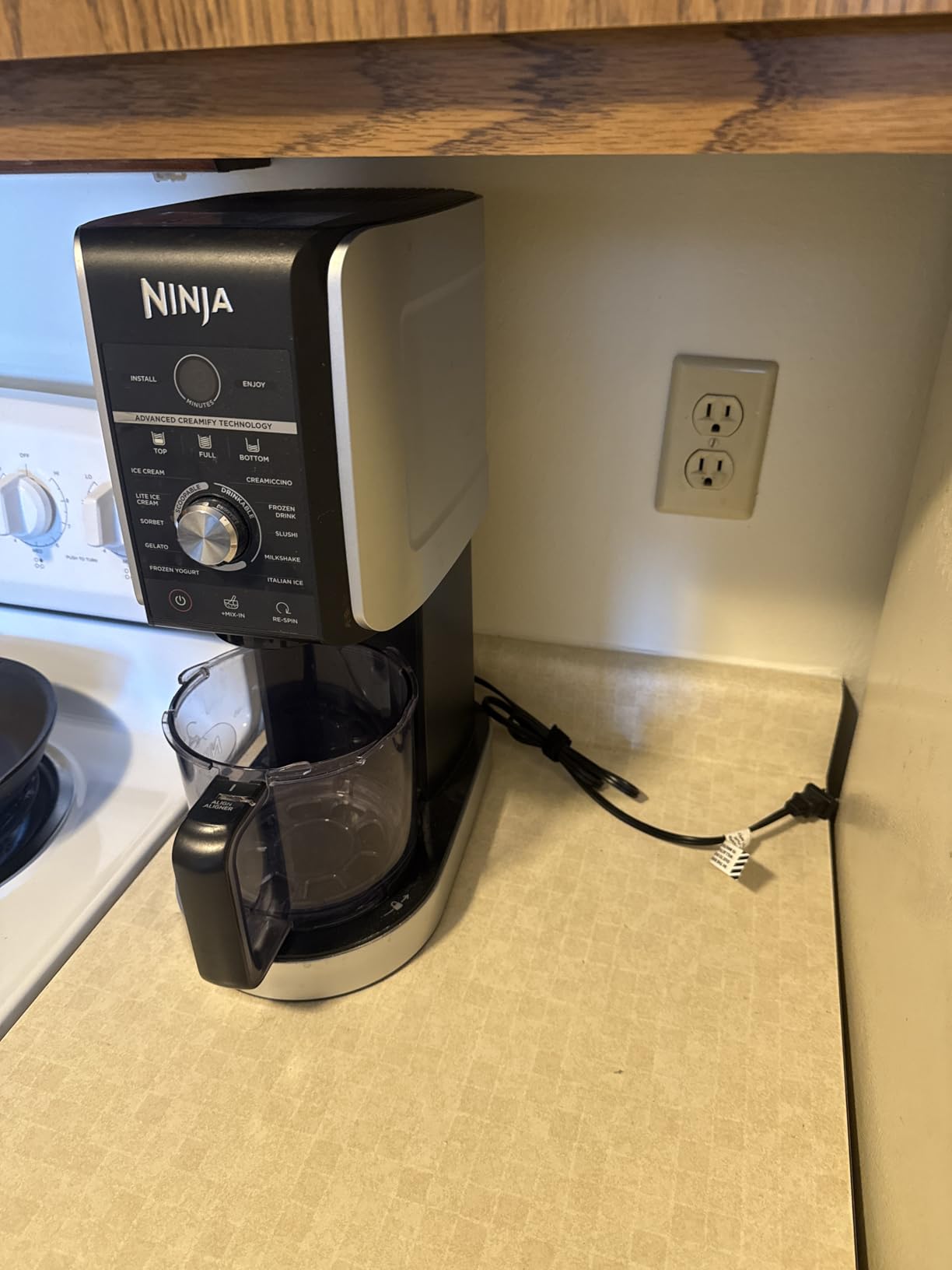
The workflow rule has not changed, though, and this is where reviews get sharp. Every 24 ounce tub still needs a full 24 hours in the freezer before processing, so bigger tubs mean bigger planning, not faster results. Larger capacity and higher throughput are different things in this category.
Rating and durability reality
At 4.3 stars across roughly 5,500 ratings, this is the lowest-rated machine we included, with a 10% one-star share. The complaints cluster on durability rather than output: several owners report paddles, paddle mounts, or motors failing inside the first year.
At 14.4 pounds it is one of the heavier machines in the roundup, which matters if the counter is your only storage. Plan a dedicated spot near an outlet before you order rather than after.
Who should buy it
If you already use the freeze-and-spin method and want more per tub, this is the upgrade. If you own a CREAMi and like the workflow, these tubs do not fit your existing machine, so treat it as a new system rather than an expansion.
If you are new to the category, start with the NC301 instead. It costs less, has more reviews behind it, and the 1 pint size suits most households better than 24 ounces of dessert nobody asked for.
6. Elite Gourmet EIM949 — Best 6-Quart Party Batch
Elite Gourmet EIM949 6Qt Old Fashioned Walnut Wood Bucket Ice Cream Maker
6 quart capacity
Walnut wood bucket
Ice and rock salt operation
Dishwasher safe canister
Pros
- Biggest batch in this roundup at 6 quarts
- Quiet operation from the locking motor mount
- Assembles in seconds
- Dishwasher safe aluminum canister
- Walnut finish looks good on a counter
Cons
- Bucket handle is weak under a full load of ice
- Needs ice and rock salt every batch
- Takes pantry space when not in use
- Dasher or drive lid cracking reported by some owners
- No on-off switch
Six quarts is the largest batch in this guide, and it is not close. If you are making dessert for a cookout, a reunion, or a holiday gathering, this is the machine that finishes the job in one run instead of three. Keep in mind that a run this size also drinks a serious amount of ice, and if you want a dedicated supply for gatherings our guide to the best nugget ice makers for home bars covers that side of the setup.
It uses the same ice and salt method as the Nostalgia model, with a walnut-finish wood bucket and an aluminum canister that is dishwasher safe. Assembly is genuinely quick: add the mix, nest the canister in ice and rock salt, lock the motor mount on top, and it runs.
The interlocking motor mount is a real engineering touch. It locks the drive to the canister before the motor can turn, which both makes the machine quieter and stops a curious child from reaching into a running dasher. Several reviews single out the low noise as the surprise.
The handle problem, in detail
The most-cited complaint is the black plastic handle on the wood bucket. Multiple owners report it failing when lifting a full load of ice, which is exactly when you need it most. The bucket is rated for six quarts of ice cream and not much else.
There is also a smaller cluster of durability reports about the dasher or motor drive cover cracking within weeks, though in those cases the manufacturer replaced the part. The warranty terms are not spelled out in the listing, so treat replacement parts as something to confirm before you commit.
Who should look elsewhere
Skip it for a small household. Six quarts of dessert that you cannot finish means the canister is tied up for a week, and it needs pantry space the rest of the time. The 4-quart Nostalgia model covers most gatherings at half the size.
Skip it if your kitchen is tight. This is the biggest machine here and it does not stack. If counter space is the constraint, the stand mixer attachment below uses equipment you already own.
7. KitchenAid KSMICM — Best Stand Mixer Attachment
KitchenAid KSMICM Ice Cream Maker for select KitchenAid Stand Mixers
2 quart capacity
Fits most KitchenAid stand mixers
Under 30 minute churn
Removable stainless bowl
Pros
- No extra machine to buy or store
- 2 quart bowl done in under 30 minutes
- Redesigned dasher mixes thoroughly
- Quick-connect handles
- Removable stainless bowl
Cons
- Requires a KitchenAid stand mixer sold separately
- Does not fit several Artisan Mini and bowl-lift models
- Small batches next to wood bucket machines
- Freezer bowl still needs chilling
If a KitchenAid stand mixer already lives on your counter, this attachment is the cheapest way into ice cream making. The freezer bowl drops into the mixer bowl, the drive hub turns the dasher, and the machine you already own does the churning.
At roughly 80% five-star share, with around 3,300 ratings, the sentiment is consistent. Reviewers keep framing the value in counter space rather than features: no second appliance, and after the batch the bowl just washes and goes back in the cupboard.
The redesigned dasher is the meaningful upgrade. It rotates to spread, scrape, and mix rather than simply stir, which is what pulls the base up off the sides of the bowl and freezes it evenly instead of leaving an icy layer against the wall.

Compatibility is the whole decision
Before anything else, check your mixer model. This fits most KitchenAid Tilt-Head stand mixers at 4.5 quarts and above, and most Bowl-Lift mixers at 6 quarts and above. It does not fit the Artisan Mini KSM3316 or KSM3317.
Several bowl-lift models are also excluded, including the K5SS, KSM50, KSM500, KSM450, KSM90, and KG25H. That is a long enough exclusion list that guessing is not worth it. Five minutes with the model number ends the question.
Who should buy it
Buy it if you own a compatible mixer already. This is a low-risk way to test whether you enjoy making ice cream before spending on a dedicated machine.
Do not buy it as a way to avoid buying a stand mixer. If you need both, the standalone Cuisinart ICE-30BCP1ES costs about the same as the mixer attachment plus the mixer, and it does not limit you to one brand of mixer.
8. Whynter ICR-300SS — Best for Thai-Style Rolled Ice Cream
Whynter Rolled Ice Cream Maker with Compressor, 0.5 Qt, ICR-300SS
0.5 quart capacity
Built-in CFC-free compressor
Rolled pan format
2 spatulas included
Pros
- Compressor means no bowl pre-freeze at all
- Makes Thai-style rolls nobody else here can
- Stainless housing wipes clean
- Compact body saves counter space
- Full ingredient control
Cons
- Smallest output here at roughly two servings
- Heaviest unit in the roundup
- Rolled format needs hand scraping and rolling
- Basic LCD display and timer only
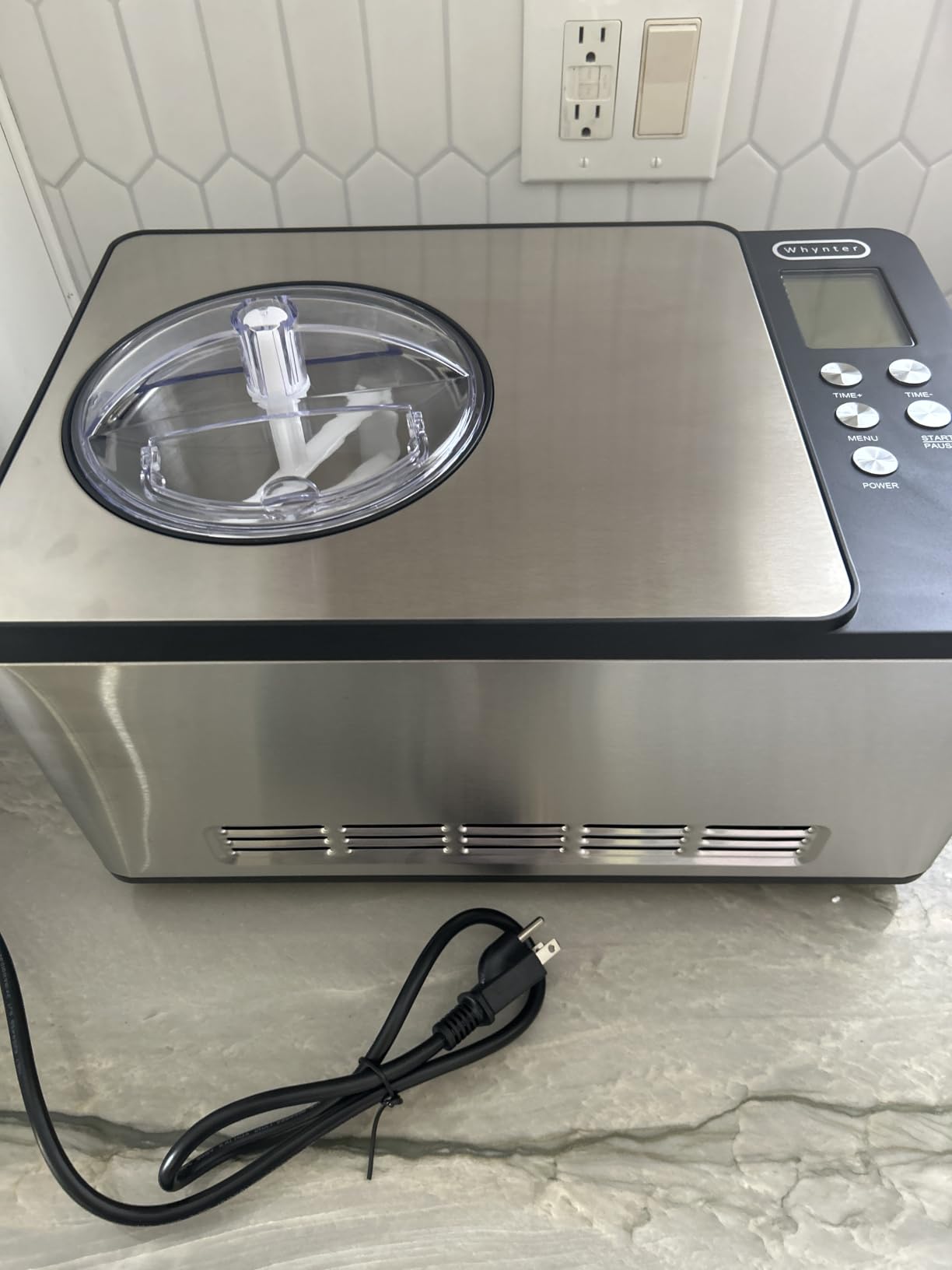
Nobody else on this list makes Thai-style rolled ice cream. The ICR-300SS uses a flat chilled pan, you pour a thin layer of base across it, wait for it to set, then scrape and roll it with the two included spatulas into little cylinders.
The self-contained compressor is what makes that possible. It chills the pan as the mixture churns, so there is no bowl to freeze beforehand and you can run it back to back. That is the same architectural advantage the Whynter ICM-128WS and the Cuisinart ICE-100 use for conventional batches.
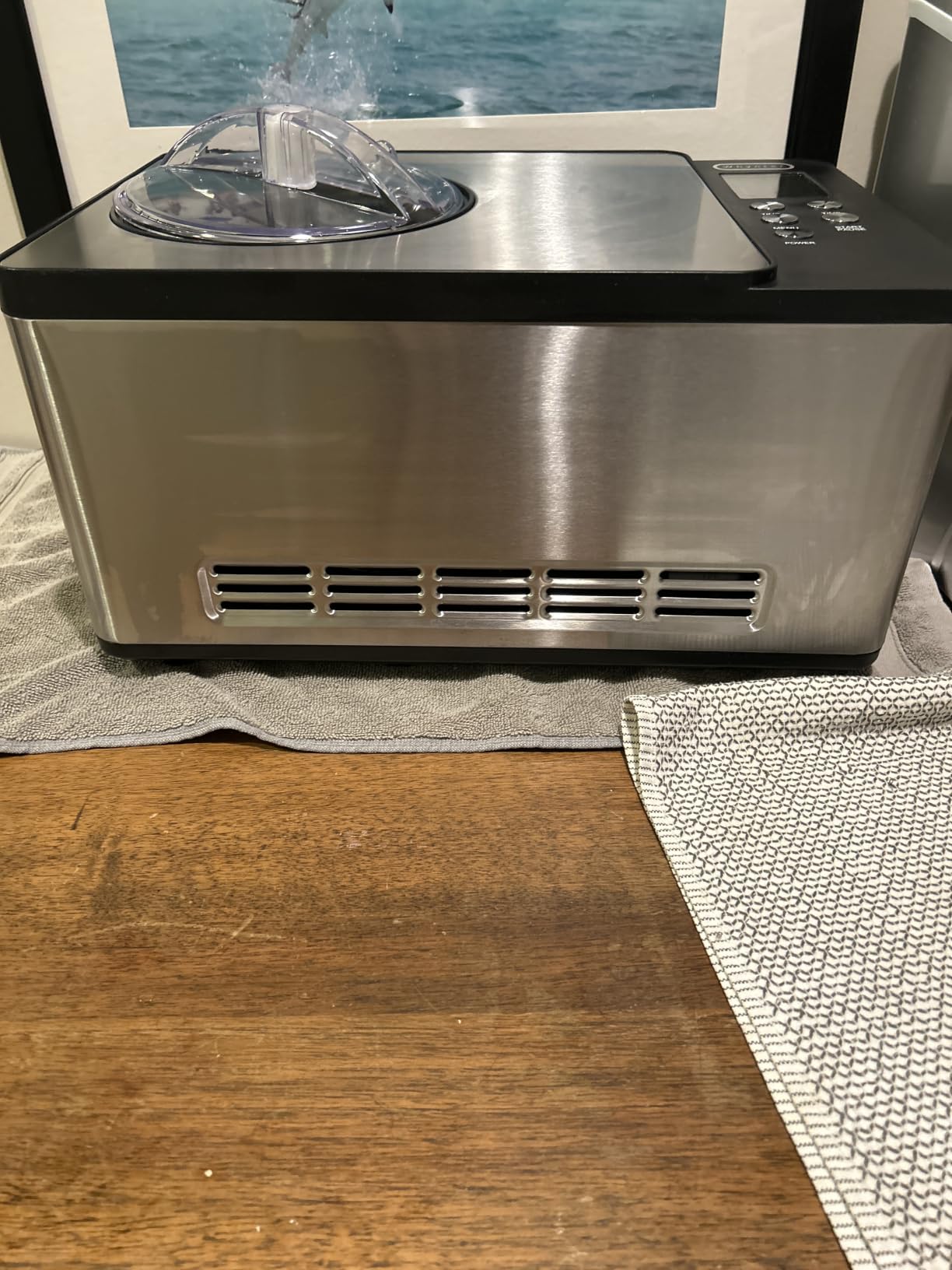
Presentation is the entire point. Rolled ice cream is made to be seen, arranged on a plate, and eaten within minutes, which makes this a party machine rather than a weekly-production machine. If you have ever wanted to serve something that looks like it came from a street stall, this is the one.
Capacity and weight reality
At 0.5 quarts, this is the smallest output in the roundup and it is roughly two servings. Reviews are clear about that being a dessert table quantity rather than a family batch, so plan on running it several times if you are serving a group.
At 24.3 pounds it is the heaviest machine here. Moving it takes two hands and a clear path, which is worth factoring in if you do not have a permanent spot for it. Larger 2 and 2.1 quart versions of the same line exist if the output is the issue.
Who should skip it
Skip it if you want ordinary scoopable ice cream. The rolled format is a presentation style, and the labor is manual, so making a week’s dessert this way is a chore rather than a routine.
Skip it if small batch size is not a dealbreaker but weight is. The ICM-128WS below gives you the same compressor workflow, a 1.28-quart bowl, and lighter handling characteristics for a similar outlay.
9. Cuisinart ICE-100 — Best Compressor Experience
Cuisinart 1.5-Quart Ice Cream Maker and Gelato Machine, Makes Frozen Yogurt and Sorbet, Fully Automatic with Commercial-Quality Compressor and 2 Churning Paddles, ICE-100, Black/Stainless
1.5 quart capacity
Commercial quality compressor
Two churning paddles
60 minute timer with Keep Cool
Pros
- Compressor runs batch after batch with no pre-frozen bowl
- Two paddles give visibly different ice cream and gelato
- 81% five-star share across about 3000 ratings
- Long owners report a decade of service
- Keep Cool holds the dessert after the cycle
Cons
- Most expensive machine in the roundup
- 1.5 quarts really yields about one quart
- 40-60 minute cycles are slow
- Heavy at 23.7 pounds with a large footprint
- Cleanup around the dasher is fiddly
The ICE-100 is the machine we would buy if we were making ice cream every week for a year. The compressor does its own chilling, so there is no pre-frozen bowl, no freezer space lost, and no ingredient waste frozen to the sides of a canister between batches.
Its best feature is subtle. Two churning paddles ship with the machine, one tuned for rich ice cream and one for gelato, and owners report visibly different results between them. Several reviewers prefer the gelato paddle even for ice cream, because it scrapes and folds for a creamier finish.

Control is precise. A 60-minute countdown timer, touchpad controls, and a large LCD display give you a clear picture of the cycle, and the 10-minute Keep Cool function holds the finished dessert rather than letting it soften while you find bowls.
Durability is the standout story. Long-term owners dominate these reviews, including a ten-year owner making several batches a month who credits the machine with making store-bought ice cream obsolete. At 81% five-star share, this is the highest-rated proportion in our group.
The price and capacity gap
This is the most expensive machine we reviewed, by a wide margin, and the second heaviest. Only after both of those do you get to the other catch: a 1.5-quart bowl realistically yields about a quart once the churn adds air.
Cycles run 40 to 60 minutes, considerably longer than a freezer bowl’s 20 to 30. You are not buying speed. You are buying the ability to start a second batch immediately, which is a completely different reason to spend money.
Who should buy it
Buy it if you make sorbet or gelato seriously, or if a spoiled canister of ingredients would genuinely bother you. Forum owners with prosumer setups treat this style of machine as the one that should last for years with basic care.
Do not buy it for an occasional batch. Two or three scoops a month do not justify the cost, and the freezer-bowl machines deliver comparable texture for a fraction of it.
10. Whynter ICM-128WS — Best for Repeat Batches
Whynter Ice Cream Maker with Compressor & Timer, 1.28 Qt, White, ICM-128WS
1.28 quart capacity
Self-freezing compressor
Extended cooling function
Motor protection system
Pros
- Compressor runs continuous batches
- Extended cooling stops the dessert melting
- Motor protection guards the machine
- low one-star share
- Reliable
- Easy to run
Cons
- Modest 1.28 quart batch size
- Heavy at 19.3 pounds
- Longer cycle than a freezer bowl
- Plastic housing feels less premium
This is the compressor machine we would recommend to someone who wants the ICE-100 workflow without the ICE-100 outlay. The self-freezing compressor chills as it churns, so batches follow each other with no bowl sitting in the freezer for a day beforehand.
Two features separate it from cheaper compressor units, and both exist for a reason. Extended cooling keeps the finished dessert from melting after the cycle ends, and motor protection shuts the machine down before overheating becomes damage. Reviewers call out both as the reasons it performs consistently.
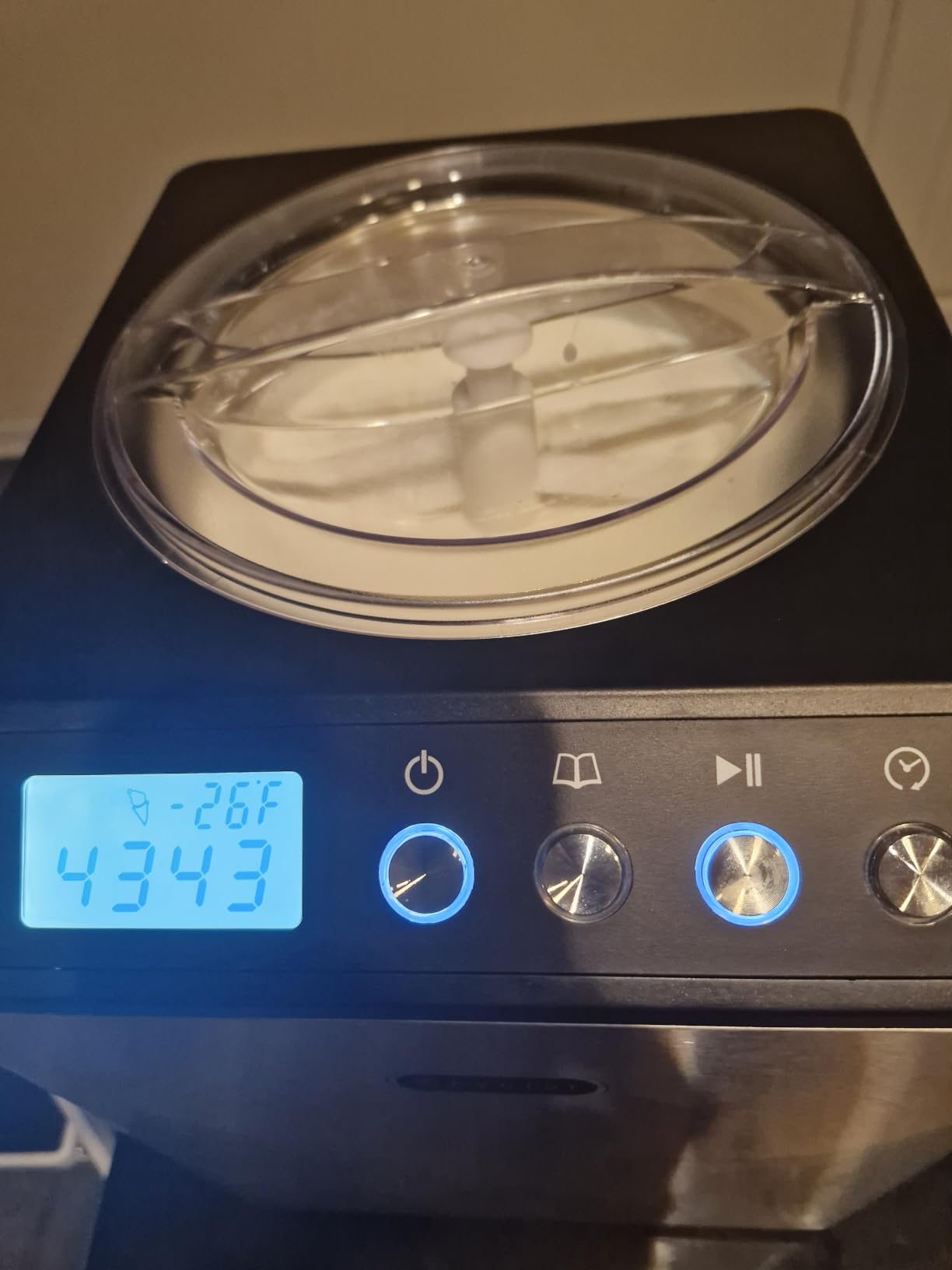
Consistency is the word that comes up most. At a 4.5-star average with an 80% five-star share and only a 7% one-star share, it has one of the tightest rating distributions in the roundup. For a compressor machine, that is unusual and it is worth noticing.
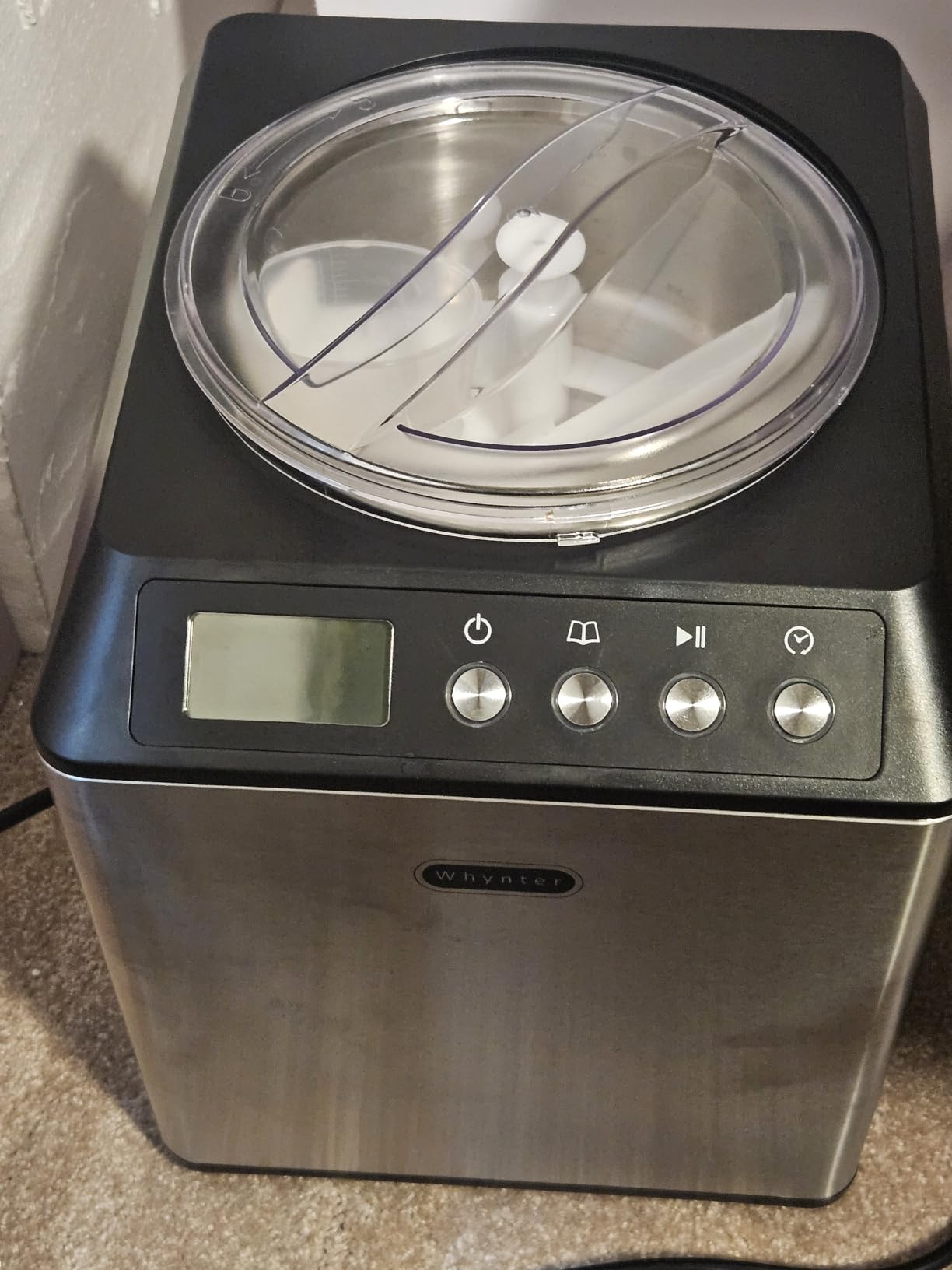
A removable stainless bowl and a BPA-free churn blade handle cleanup, and the soft-touch LCD control panel with a built-in timer keeps operation straightforward. It also picked up a Good Housekeeping Best Kitchen Gear Award, which is a reasonable external check on the owner feedback.
What the 1.28-quart bowl means
The batch size is modest. Reviewers describe it as fine for a couple of people or a dessert table and short for a family, which is the honest limitation. If you regularly feed four or more, plan on two cycles or a bigger compressor.
At 19.3 pounds and 11 by 10 by 14 inches it is smaller and lighter than the Cuisinart ICE-100 but still a permanent counter presence. The plastic housing is the one place it feels less premium than its steel competitors.
Who should buy it
Buy it if your priority is running batches back to back in one session without waiting on a freezer bowl. That is the whole promise, and this machine keeps it while costing noticeably less than the top-end compressor.
Buy it if gelato is on your list. A compressor at this level handles dense bases that a small freezer bowl struggles to chill through, which is why gelato owners tend to end up here rather than at the entry end.
How to Choose an Ice Cream Maker for Home Use
Choosing between these machines comes down to one question before anything else: how often do you want to make ice cream, and how much notice do you have? The three architectures answer that question differently, and everything else is preference.
Freezer bowl machines chill a double-insulated canister in your freezer, then churn the base against it. The Cuisinart ICE-30BCP1ES and ICE-70P1, and the KitchenAid attachment, all work this way. They are small, inexpensive, quiet between uses, and they churn fast, but they need 12 to 48 hours of notice depending on the model.
Compressor machines carry their own refrigeration, so they can run whenever you like and batch after batch. The Cuisinart ICE-100 and both Whynter machines fall into this group. You pay for that freedom in counter space, weight, price, and longer cycles.
Freeze-and-spin machines freeze the ingredients solid in a pint and shave them with a blade. Both Ninja CREAMi models work this way. They offer the widest ingredient range, including high-protein and dairy-free bases, at the cost of a 24-hour freeze and small output per cycle.
Capacity should match your household honestly. A 2-quart bowl serves three or four. A 4-quart canister covers a gathering. A 6-quart bucket is for a cookout. Output after churn is always smaller than the listed number, so buying above your needs is usually the right call if you entertain.
Counter space is the constraint buyers underestimate. Compressor machines weigh 19 to 24 pounds and are 10 to 14 inches tall, which means a permanent counter spot and a nearby outlet. If you do not have one, a freezer-bowl machine or a stand mixer attachment fits in a cupboard between batches.
Cleaning burden varies more than most listings admit. Canisters and wooden buckets are hand wash only, stainless bowls on compressor units lift out for a soapy wash, and some parts on the Ninja machines are top-rack dishwasher safe. Freezer bowls must never go in the dishwasher, because the heat destroys the freezing liquid inside them and ruins the bowl permanently.
Noise matters in apartments and open-plan homes. Reviews describe the entry Cuisinart at roughly blender level, the ICE-70P1 as quieter than a stand mixer, and the Elite Gourmet bucket as whisper quiet thanks to its locking motor mount. If you will run it while people talk, pay attention to this.
One more factor deserves more weight than it gets in most guides, and it comes straight from community discussion: the fat and sugar ratio in your recipe does more for the final texture than the price of the machine. A well-balanced base in a modest machine beats a careless base churned in an expensive one. Get the recipe right first, and our banana nice cream machine roundup is a good next read if fruit-based bases are your thing.
Pre-Freeze, Storage and Troubleshooting Tips
Yes, you can leave the freezer bowl in the freezer between batches. Several owners in our review set do exactly that, and many households keep the bowl in the door or on a shelf permanently so it is always ready. The only caution is that a bowl stored in a busy part of the freezer may not chill thoroughly before you need it.
If your freezer bowl will not freeze, work through these in order. Make sure the freezer is at or below its recommended setting and that the bowl is sitting level with airflow around it. Give it a full 24 hours rather than the 12 you might think is enough, and check for a freezer that has a warm spot near the door.
Then confirm the bowl itself is the problem. Bowls lose their freezing effectiveness with age and with thermal shock, so a bowl that has been through many cycles or has visible cracks will never get cold enough. Replacement bowls and paddles for the popular Cuisinart models are widely available, and swapping one out fixes this more often than anything else.
If your results come out too hard, the usual cause is not the machine. Sorbet and low-fat bases freeze harder because there is less fat to keep the texture soft, and the standard fix is to let the finished container sit on the counter for 10 to 15 minutes before serving. Pre-chilling the bowl inside the machine before the cycle also helps keep the result workable.
Chunky mix-ins cause more breakdowns than any other ingredient. Small machines can overheat and stop mid-cycle when they hit chocolate chunks or nuts, so add hard mix-ins in the last few minutes through the spout rather than at the start. If a machine stalls, let it rest and restart; owners report this recovering the batch most of the time.
Two habits prevent most wasted batches. Halve the recipe when in doubt, because a full bowl can climb over the lid as it aerates and cleaning spilled ice cream out of a dasher is miserable. And with freeze-and-spin machines, never pour a base, freeze it, and add dry powder afterward, because nothing will mix it in once it is solid.
Finally, consider secondhand for the entry freezer-bowl machines. Community members regularly buy starter models from marketplace listings and thrift stores for a fraction of retail, since the bowls and paddles are the only consumable parts and replacement versions are easy to find. Check the bowl for cracks and run a plain water cycle before making anything you plan to serve.
Frequently Asked Questions
What is the best ice cream maker for home use?
The Cuisinart ICE-30BCP1ES is our best overall pick. It makes 2 quarts in 20 to 30 minutes, has three washable parts, carries a 4.6 rating across more than 43,000 reviews, and costs far less than any compressor machine. Its one real constraint is that the freezer bowl must be chilled for 12 to 24 hours before each batch.
Which ice cream maker does not require freezing the bowl?
Compressor machines and freeze-and-spin machines both avoid a pre-frozen bowl. The Cuisinart ICE-100, Whynter ICM-128WS, and Whynter ICR-300SS have built-in compressors and can run batches back to back. The Ninja CREAMi NC301 and NC501 freeze ingredients solid in a pint container for 24 hours and then shave them with a spinning blade, so no bowl is involved at all.
Can I leave my ice cream maker bowl in the freezer?
Yes. Many owners store the freezer bowl permanently in the freezer so it is always ready for a batch. Just make sure it has airflow around it and sits level, since a bowl near a warm door or packed against other items may not chill all the way through in 24 hours.
My freezer bowl is not freezing properly. What can I do?
Check the freezer temperature first, then give the bowl a full 24 hours rather than 12, and make sure it is level with space around it. If it still will not chill, the bowl itself has usually lost its freezing effectiveness through age or thermal shock. Replacement bowls and paddles for common models are inexpensive and usually fix the problem permanently.
How long does an ice cream maker take to make ice cream?
Freezer-bowl machines typically churn in 20 to 30 minutes once the bowl is chilled, plus 12 to 48 hours of pre-freezing. Compressor machines run longer, usually 40 to 60 minutes per batch, but need no pre-freeze and can start another batch immediately. Freeze-and-spin machines take about 24 hours to freeze a pint and then only a few minutes to process.
What are the most common ice cream machine problems?
The recurring issues are bowls that will not reach freezing temperature, results that freeze too hard, and machines stopping mid-cycle when they hit chunky mix-ins. Halving a full recipe prevents overflow, adding hard mix-ins late prevents overheating, and letting a finished container rest 10 to 15 minutes softens an over-hard result.
Our Final Verdict for 2026
After working through all ten machines, the Cuisinart ICE-30BCP1ES remains the best ice cream maker for home use for almost everyone. It is fast, simple, well reviewed, and it holds its texture across a wide range of recipes.
If you need batch after batch, go compressor: the Cuisinart ICE-100 for the best gelato and paddle control, or the Whynter ICM-128WS for the same workflow at a lower outlay. If high-protein or dairy-free treats are the goal, the Ninja CREAMi NC301 has no equal in this group.
For large gatherings, the Elite Gourmet EIM949 makes the biggest batch here. And if a stand mixer is already on your counter, the KitchenAid attachment is the smallest footprint that still makes real ice cream.
We keep a closer eye on our freezing-friendly recipes and machine guides as we test more, so check back for updates.