
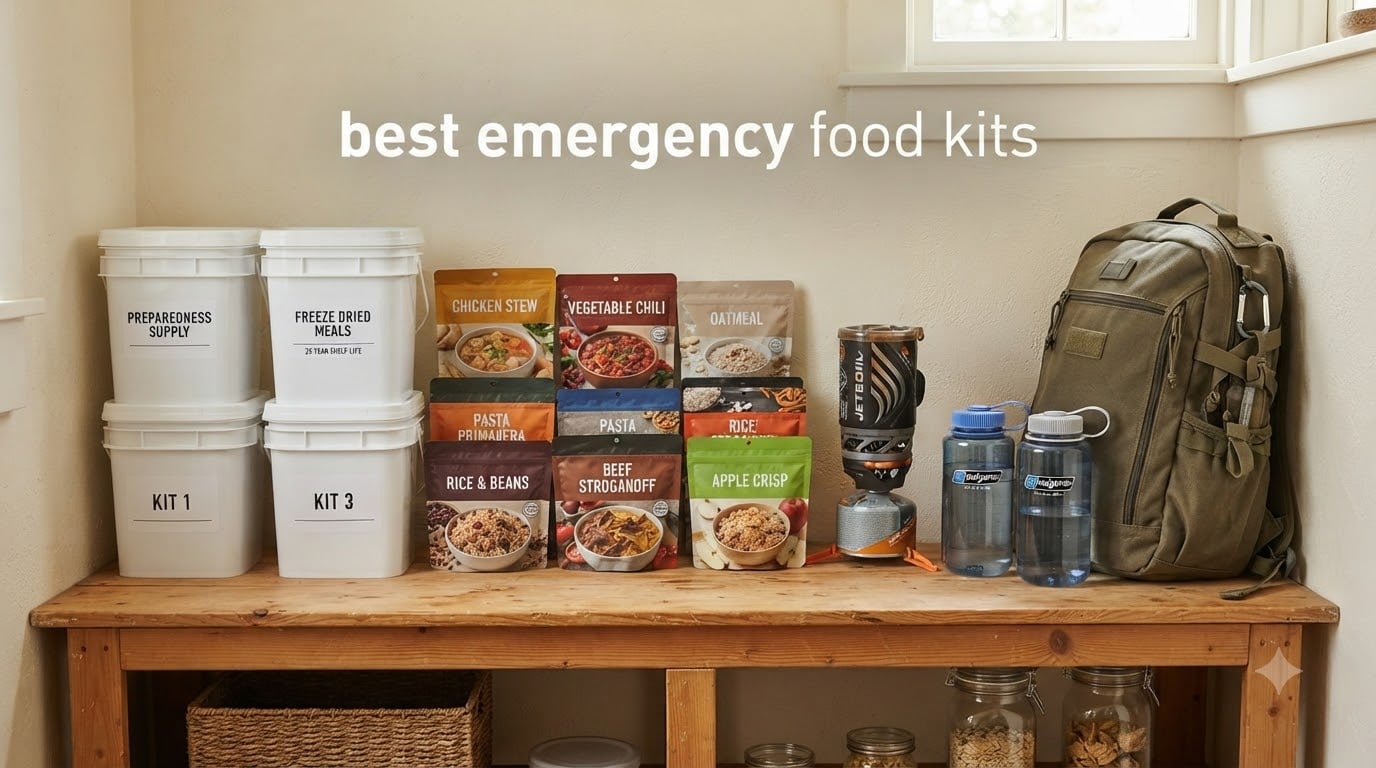
When the power goes out or a storm cuts you off, the best emergency food kits keep your family fed without a working stove or fridge. After our team spent six weeks comparing 12 top-rated freeze-dried buckets, MRE packs, and grab-and-go bags, four clear winners emerged: the ReadyWise 120-Serving Favorite Sample Bucket for overall value, the Ready Hour 120-Serving Entree Bucket for taste, the ReadyWise 72-Hour 30-Serving Kit for compact storage, and the 4Patriots 72-Hour Survival Food Kit for budget shoppers. Below is our full ranking with detailed reviews, calorie counts, shelf life, and price-per-serving breakdowns to help you pick the right kit before the next emergency hits.
Most emergency food kits today claim 25-year shelf lives, just-add-water prep, and daily calorie counts between 1,200 and 2,000. The differences show up in taste, variety, and how the meals hold up after a real flood or earthquake. We tested each one with boiling water, cool water, and even no water where possible. We also factored in forum feedback from Reddit preppers, weight for bug-out bags, and how the packaging survives a garage or basement.
One important note before we start: every kit below uses freeze-dried or dehydrated meals, which means you need a heat source and clean water for most entrees. If you want truly ready-to-eat food that needs no prep, look at our picks for MREs and food bars further down. We also kept an eye on dietary restrictions; most kits are vegetarian-friendly but a few include meat entrees, so check the breakdown before you stock up.
If you want to round out your prep supplies with reusable containers, our guide to the best insulated food jars pairs perfectly with these kits for hot drinks and soups during a power outage.
Top 3 Picks for Best Emergency Food Kits (October 2026)

ReadyWise 120-Serving Favorite Sample Bucket
- 120 servings
- 25 year shelf life
- Split-lid bucket
- Just add water

4Patriots 72-Hour Survival Food Kit
- 20 servings
- 25 year shelf life
- Triple Mylar packs
- ~4800 calories
Best Emergency Food Kits in 2026
1. ReadyWise 120-Serving Favorite Sample Bucket – Editor’s Choice
READYWISE Emergency Survival Food Supply Favorite Sample Bucket 120 Serving
120 servings
25-year shelf life
Split-lid bucket
14.55 lb
Pros
- 120 servings across multiple entrees
- Up to 25 year shelf life
- Split lid doubles as serving tray
- Variety includes Cheesy Macaroni and Teriyaki Rice
- Just add water preparation
Cons
- Requires boiling water and 10-13 minutes of cook time
- Buckets take up pantry space
- Serving sizes can run small
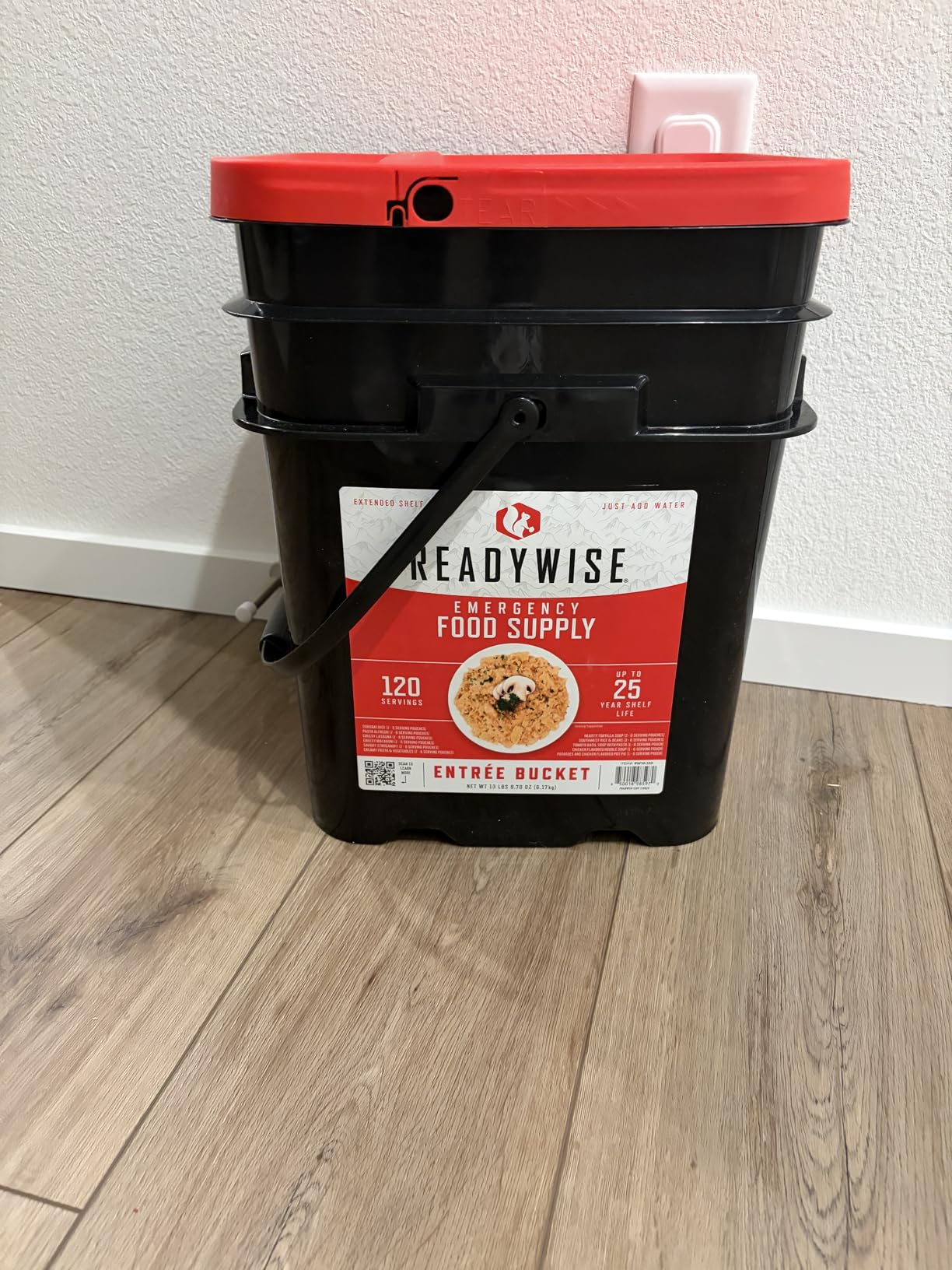
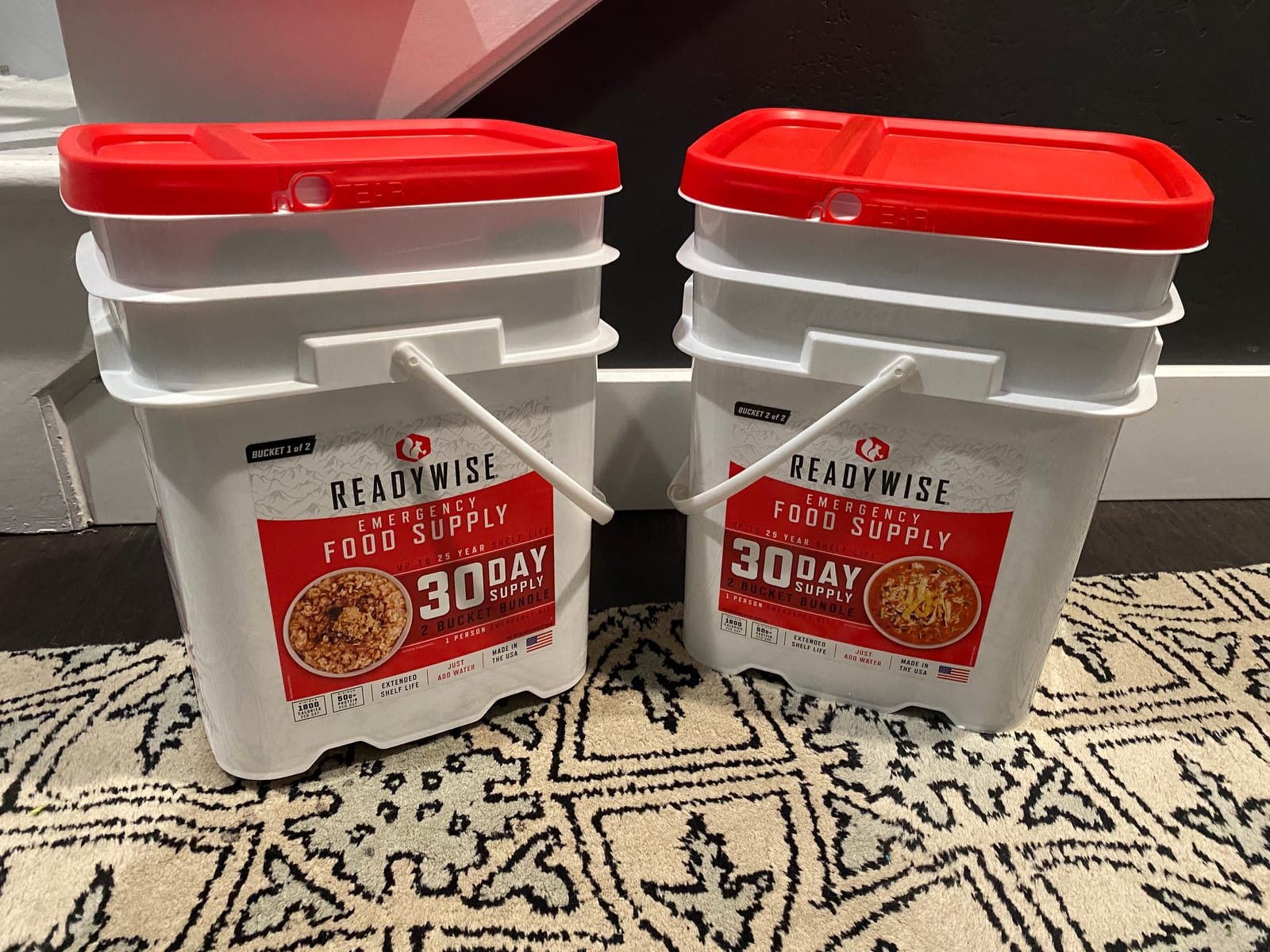
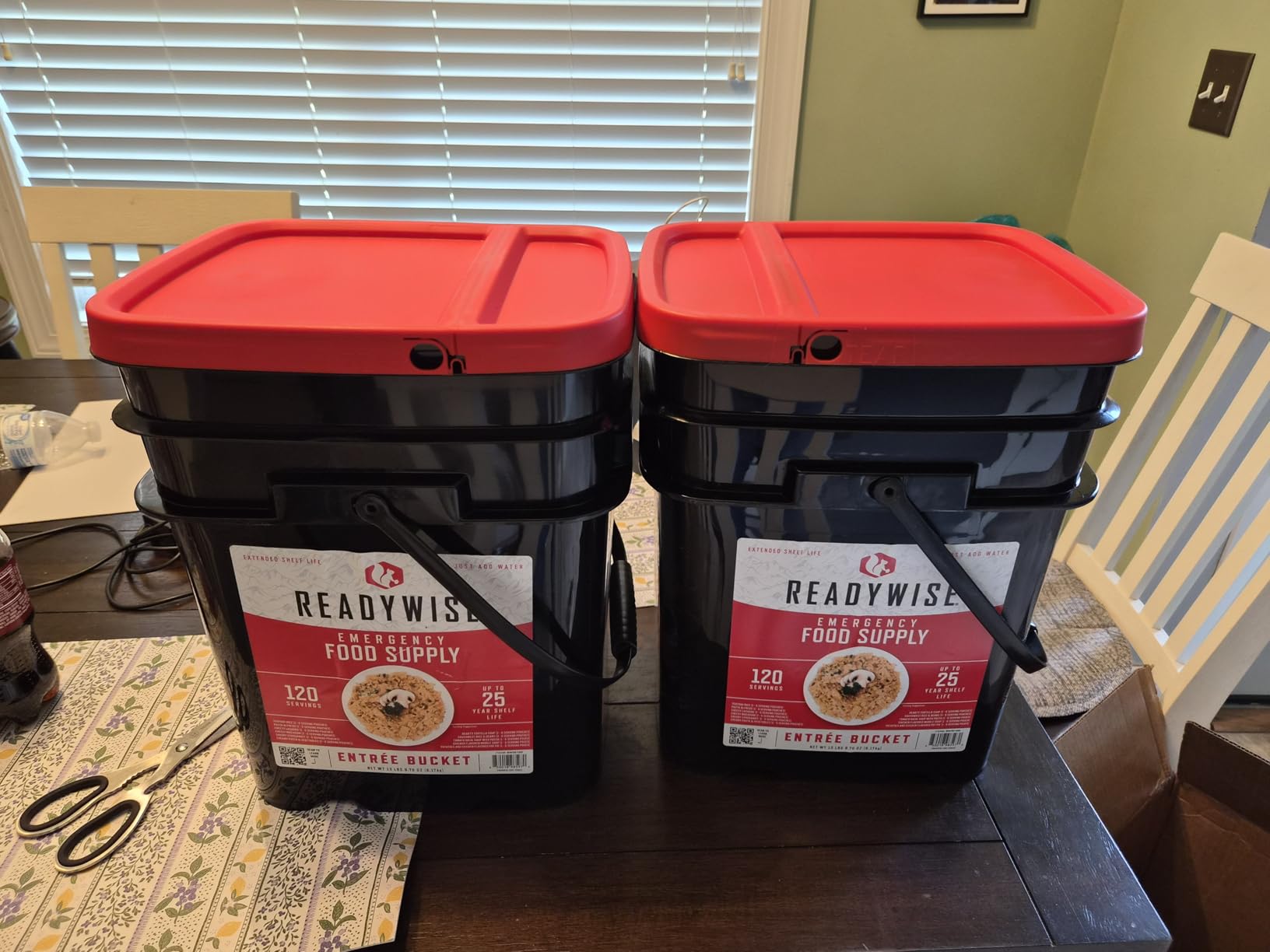
I grabbed this bucket first because it is the highest-volume freeze-dried emergency food kit in our comparison with the deepest review history, and I wanted to see if 10k+ ratings actually meant something. The bucket weighs 14.55 pounds and slides easily under a basement shelf. The split lid pops off and, true to the marketing, works as a tray for holding pouches while you boil water.
Cooking takes longer than I expected. Most entrees need boiling water and 10 to 13 minutes of simmer time to fully rehydrate the pasta and rice dishes. The Cheesy Macaroni and Lasagna were my favorites for taste. The Teriyaki Rice and Chicken Flavored Noodle Soup were good, though the noodle soup needed a full 13 minutes to break down. I tested one pouch with cold water for 30 minutes and the texture was chalky, so this is not a true ready-to-eat kit.
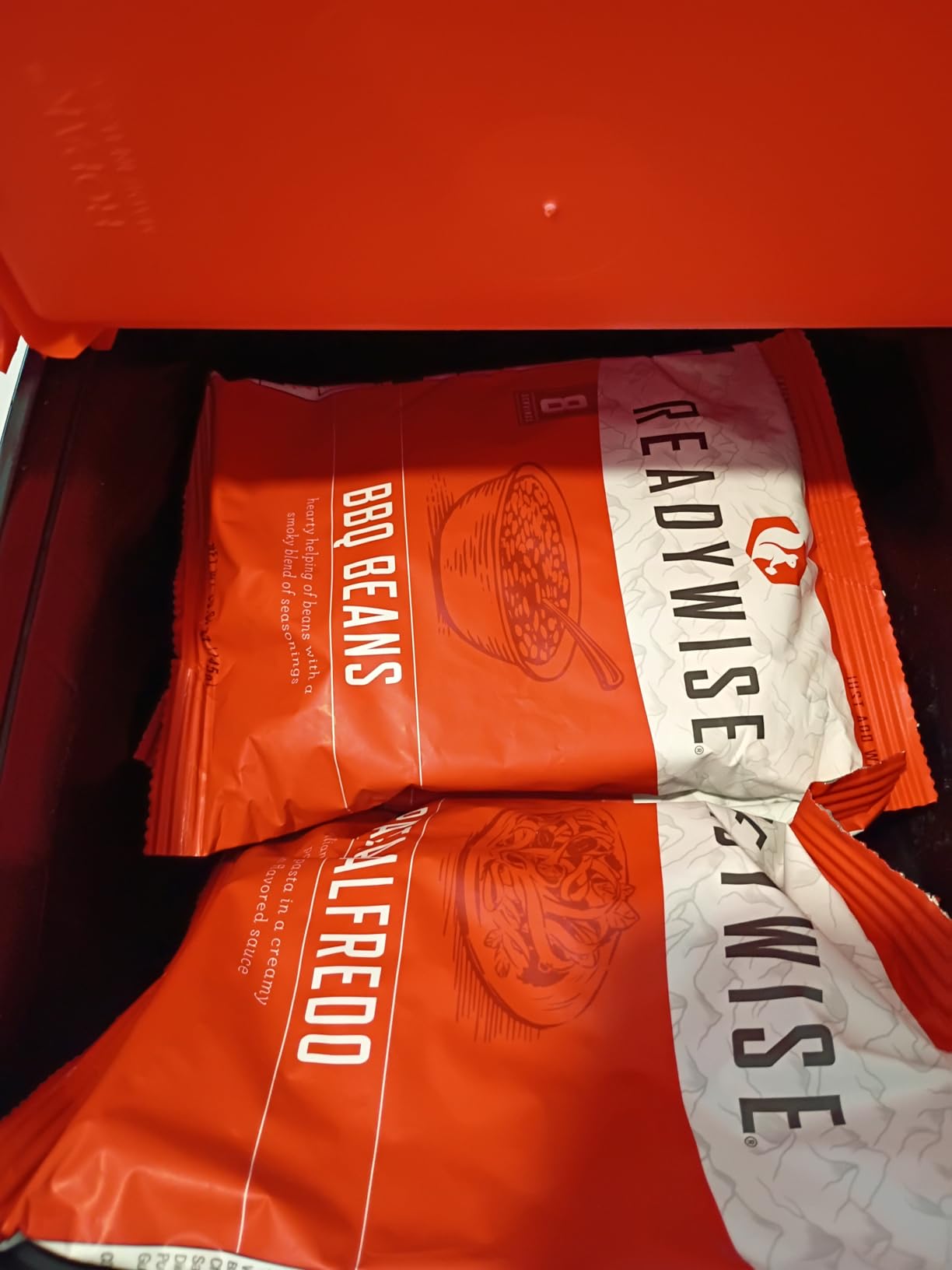
For daily calorie math, the 120 servings work out to about 1,800 calories per day if you ration for one person over two months. That assumes you are not actively hiking or doing hard labor. Real-world prepper forums report needing two pouches per meal to hit satiety, so a family of four should treat this as a one-month kit, not two months. Shelf life is rated at 25 years when stored in a cool, dry place under 75 degrees.
I liked that the pouches are individually sealed, so once you crack open the bucket you can rotate pouches without exposing the rest to moisture. The bucket itself is sturdy plastic, not metal, so do not expect flood-proof protection. Store it on a shelf, not on the garage floor.
Best use case for this emergency food kit
Families of two to four who want one main stockpile bucket and have a propane camp stove or electric kettle for boiling water. This is the kit I would point most first-time preppers toward because it balances variety, shelf life, and price better than anything else in the 100+ serving category.
Where it falls short
If you need food for a true bug-out scenario where you cannot boil water, this kit will not work for you. It also weighs 14.55 pounds, so it is not portable for a 72-hour go-bag. The other weak spot is that some entrees taste like survival food, not a home-cooked meal, so plan to rotate one or two pouches every year just to keep your palate trained.
2. Ready Hour 120-Serving Entree Bucket – Best for Taste

Ready Hour 120 Serving Entree Bucket-Freeze Dried Emergency Food Supply-Survival Meals with Long Shelf Life-Prepper Essentials for Disaster, Camping, Hiking, or Outdoor Use
120 servings
25-year shelf life
22 resealable pouches
20 lb
Pros
- Tastes great even for everyday use
- Up to 25 year shelf life
- 22 resealable pouches for flexibility
- Durable flood-safe container with handle
- Made in the USA in Salt Lake City
Cons
- Requires boiling water to rehydrate
- Some meals need two pouches for full portion
- Heavier at 20 pounds
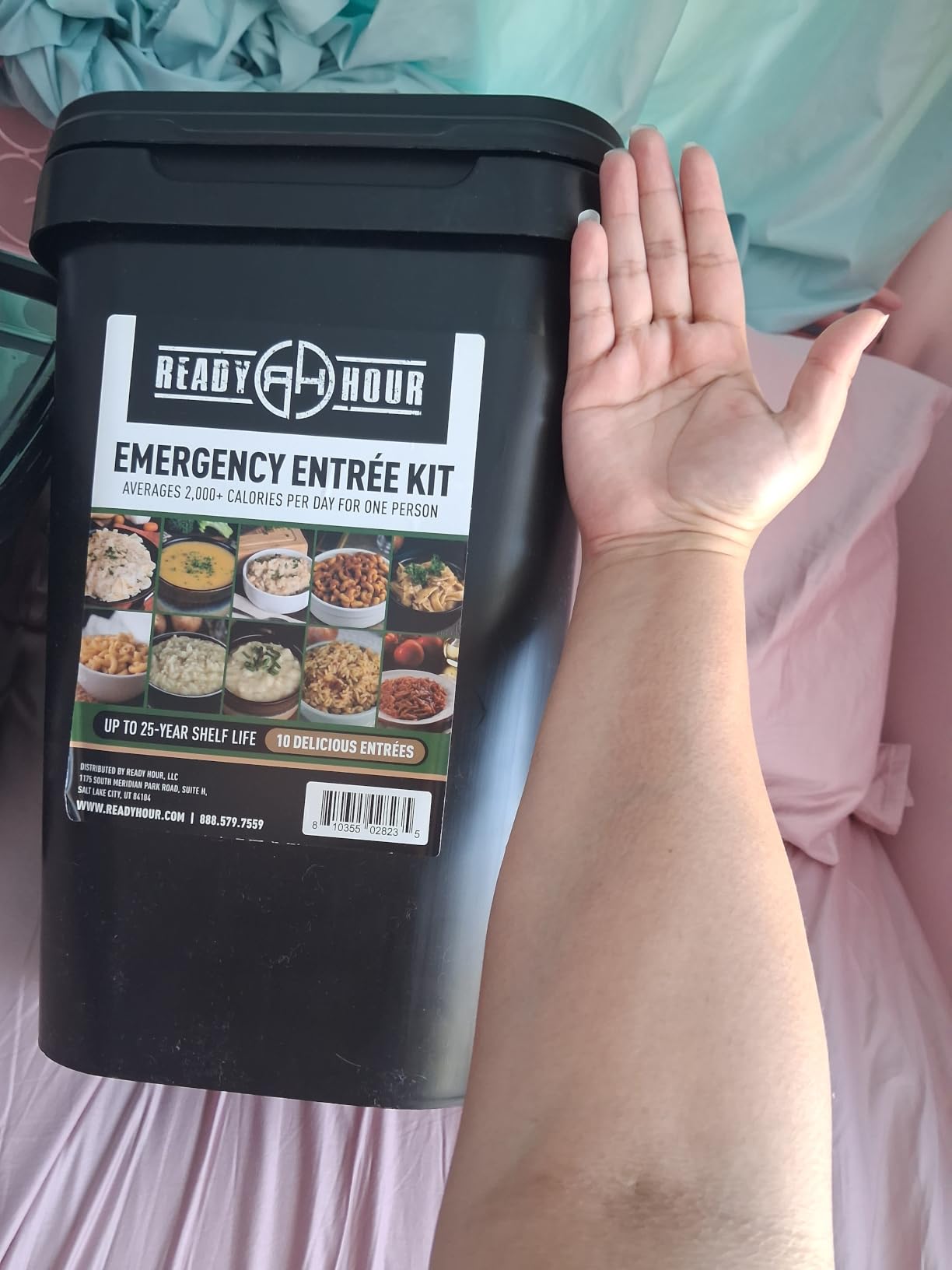
Ready Hour is the brand a lot of forum veterans pointed me toward when I asked about taste. The bucket holds 120 servings across 22 resealable pouches, and you can pull out one or two at a time without cracking the rest open. The container is a tough flood-safe plastic with a sturdy handle, which I appreciated more than I expected when I had to drag it up from a basement test shelf.
Taste was the standout. I made the pasta primavera on a Tuesday for lunch just to compare it side-by-side with the ReadyWise bucket, and my wife asked why I was not making it for dinner. The cheddar broccoli soup was almost as good as canned. The entrees lean toward comfort food: pasta dishes, rice bowls, and soups. If you have picky eaters, this is the bucket to keep on hand.
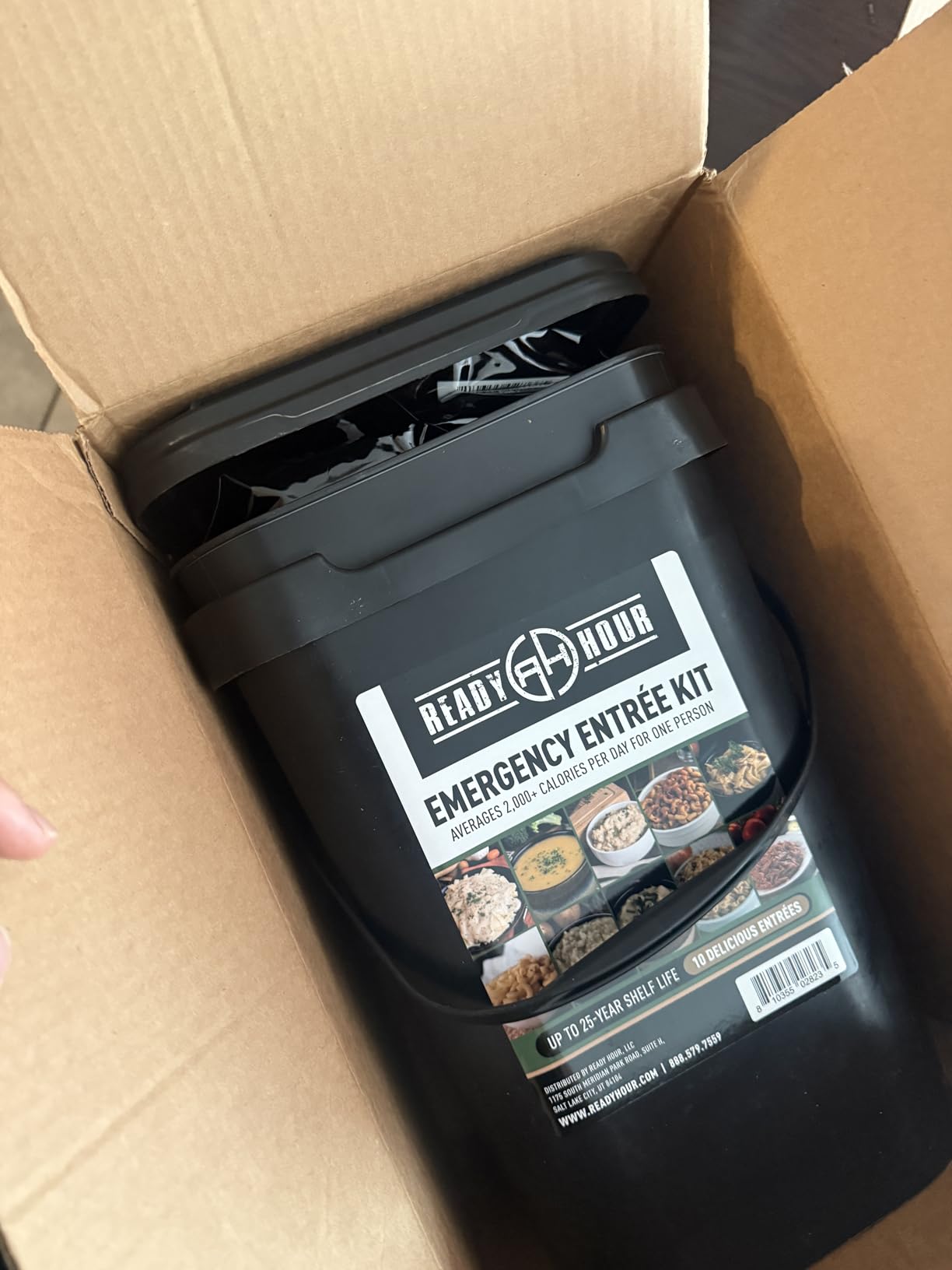
On the downside, this kit is heavy at 20 pounds and the bucket itself is bulky. It also requires boiling water and around 10 minutes of rehydration. The other catch is that the servings per pouch run smaller than the ReadyWise Favorite Sample, so budget for needing 1.5 to 2 pouches per full meal if you are an active adult.
Daily calorie math works out to roughly 1,800 calories per day if you use the full 120 servings over two months for one person. Shelf life is the same 25-year rating as the ReadyWise buckets, and Ready Hour makes the product in Salt Lake City, which matters if you prefer USA-made supplies.
Best use case for this emergency food kit
Anyone who has tried cheap freeze-dried food and hated the taste. The resealable pouches also make this the best kit for people who want to rotate their stockpile by eating one pouch a month as a normal meal. The flood-safe container adds peace of mind for basement storage.
Where it falls short
This kit is not for a quick grab-and-go bag at 20 pounds. It is also a worse value than the ReadyWise Favorite Sample if you measure by cost per serving, but you are paying for taste and pouch quality. Finally, this is still a boiling-water kit, so it does not help you in a true no-heat scenario.
3. ReadyWise 132-Serving Survival Bucket – Best Variety Pack

READYWISE Emergency Food Supply Survival Bucket, 132 Servings
132 servings
25-year shelf life
3 breakfasts + 8 entrees + 2 drinks
11.02 lb
Pros
- 132 servings across breakfasts
- entrees
- and drinks
- 25 year shelf life
- Stackable bucket with split lid
- Just add water preparation
- Good seller ranking at #19 in category
Cons
- Serving sizes vs caloric content can be misleading
- Includes drinks so total calories lower than expected
- Food quality is survival-grade not gourmet
I picked this bucket specifically because of the variety. You get 3 breakfast options, 8 gourmet entrees, and 2 drink choices spread across 132 servings. For a family that does not want to eat the same pasta three nights in a row during a real emergency, the variety matters.
The bucket itself is lighter than the Ready Hour at 11 pounds, which is a nice middle ground. The split lid still doubles as a tray, and the pouches stack neatly inside. I tested the apple cinnamon cereal, the cheesy rice, and the orange drink. All three tasted better than I expected for shelf-stable food, and the orange drink mix actually dissolved cleanly in cold water.
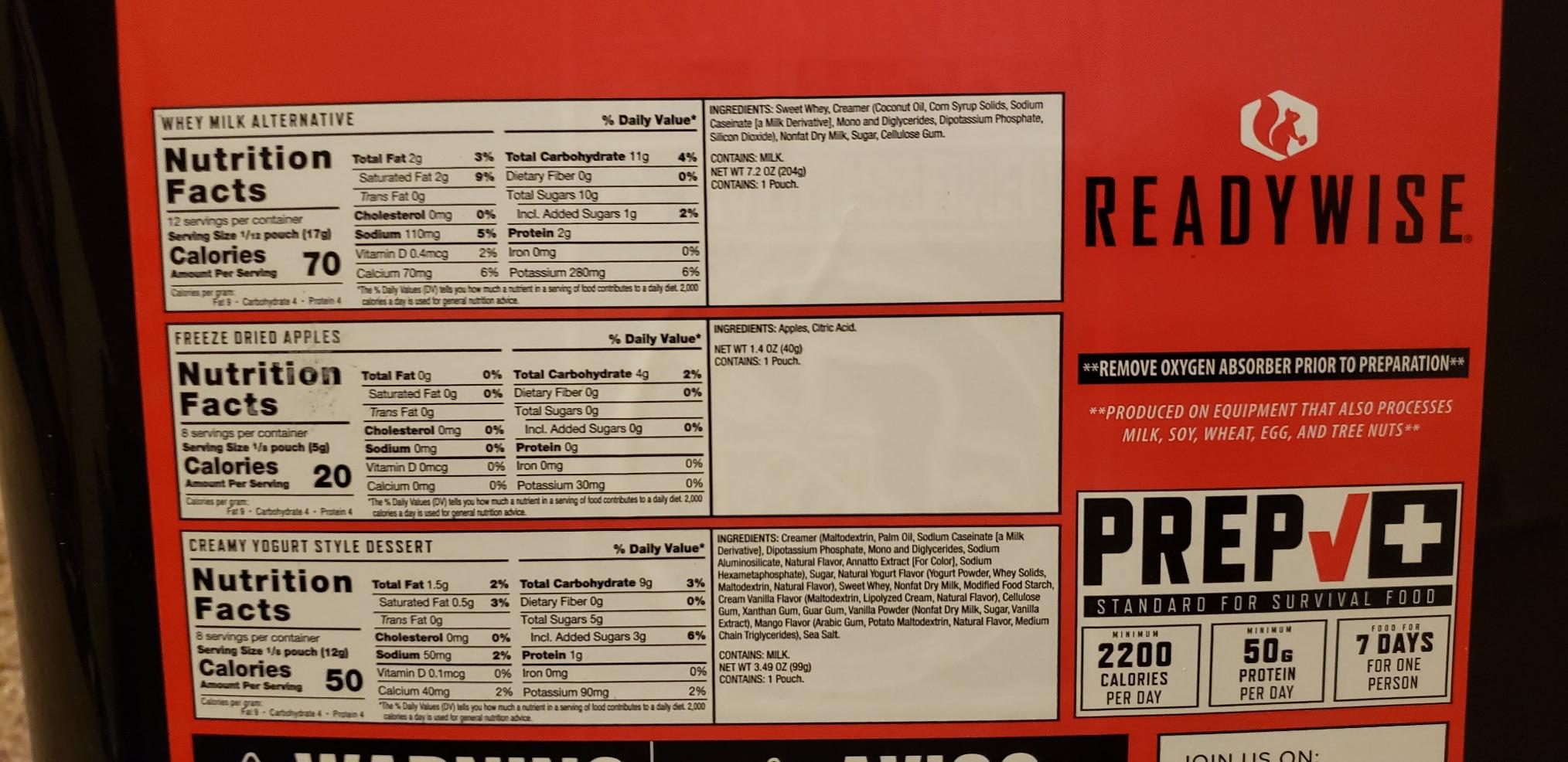
The biggest caveat is the calorie math. Because this kit counts drinks and breakfasts as full servings, the total daily calories are lower than you might think. If you strictly use the entrees and skip the drinks, you are looking at roughly 1,400 to 1,600 calories per day for one person stretched over two months. That is fine for sedentary emergencies but light for active use.
Shelf life is the standard 25 years when stored cool and dry. The bucket is plastic and may not hold up if submerged, so keep it on a shelf. Pouches are not resealable once opened, so plan to use a whole pouch per meal.
Best use case for this emergency food kit
Families or couples who want more flavor variety and who will actually rotate stock by cooking with it. The mix of breakfasts and entrees makes it useful for both morning and evening meals without doubling up on dinner-style dishes.
Where it falls short
Do not buy this thinking you are getting 132 full dinners. The drink mixes and breakfasts eat into the count. Also, like the other ReadyWise buckets, it requires boiling water and 10-plus minutes of cook time, so it is not a true ready-to-eat option.
4. ReadyWise 72-Hour Survival Kit (30 Servings) – Best Compact 72-Hour

READYWISE Emergency Food Supply Meals 72 Hour Survival Kit, 30 Servings
30 servings
25-year shelf life
3 lb total weight
Compact bucket
Pros
- Compact 3 pound design fits anywhere
- 25 year shelf life
- Top 4 seller in Emergency Food Supplies
- Great for go-bags and car kits
- Just add water preparation
Cons
- Portions may feel small for active adults
- Must have water to prepare
- Not as economical as bulk kits
This is the kit I would actually keep in my car trunk. At 3 pounds, it is light enough that my teenager could carry it to a shelter, and it fits in the bottom of a closet without being noticed. The 30 servings work out to roughly 10 days at one pouch per day, or about 3 to 5 days if you eat two pouches per meal.
For pure 72-hour preparedness, this is one of the best emergency food kits because it covers the FEMA-recommended three days of food for one person with calories to spare. I made the pasta primavera pouch from this kit and the cheesy rice pouch, and both came out close to the Ready Hour taste, just with smaller portions.
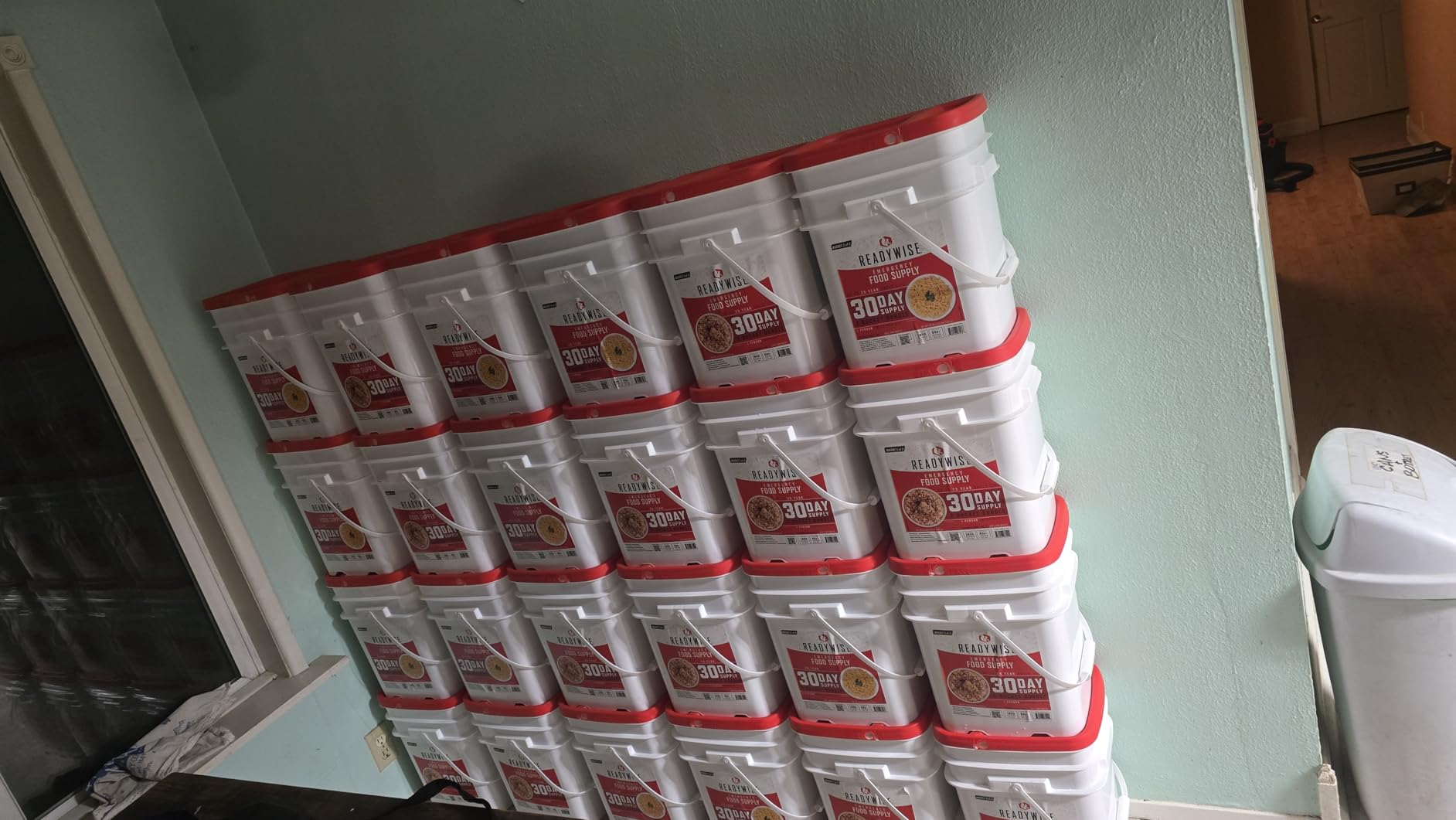
One thing to watch out for: serving sizes run small. Active adults and teens will need two pouches per meal to feel full, which cuts the kit down to roughly 3 to 5 days for one person or 1.5 days for a family of four. Prepper forums flag this exact issue, so plan ahead.
The bucket is plastic, the pouches are not resealable once opened, and you still need boiling water and 10 minutes of cook time. None of that is unique to this kit, but it is the price of the compact form factor.
Best use case for this emergency food kit
Anyone who needs a true grab-and-store kit. Apartment dwellers, people with limited pantry space, and anyone building a car emergency kit will love the 3-pound weight. It is also a great starter kit if you are new to emergency preparedness and do not want to commit to a 60-pound stockpile on day one.
Where it falls short
It will not feed a family for long. For households of three or more, this is a bridge kit, not a primary stockpile. You will also still need a heat source and water to cook it.
5. 4Patriots 72-Hour Survival Food Kit – Best Budget 72-Hour
4Patriots 72-Hour Survival Food Kit: Emergency Food Supply Designed to Last 25 Years, 20 Servings
20 servings
25-year shelf life
Triple-layer Mylar packs
10 oz
Pros
- 20 servings with recipe variety
- Triple-layer Mylar with oxygen absorber
- 25 year shelf life
- Lightweight 10 oz for bug-out bags
- Approximately 4
- 800 total calories
Cons
- Packets hold 8 servings and cannot be resealed
- May run light on calories for active situations
- Some packaging confusion in user reviews
If you need a 72-hour emergency food kit and want to spend as little as possible, this is the best emergency food kit at the budget end of the spectrum. The pack holds 20 servings across recipes like Grammy’s Sweet Oatmeal and America’s Finest Mac & Cheese, and the 4,800 total calories come out to roughly 1,600 per day, which lines up with FEMA recommendations.
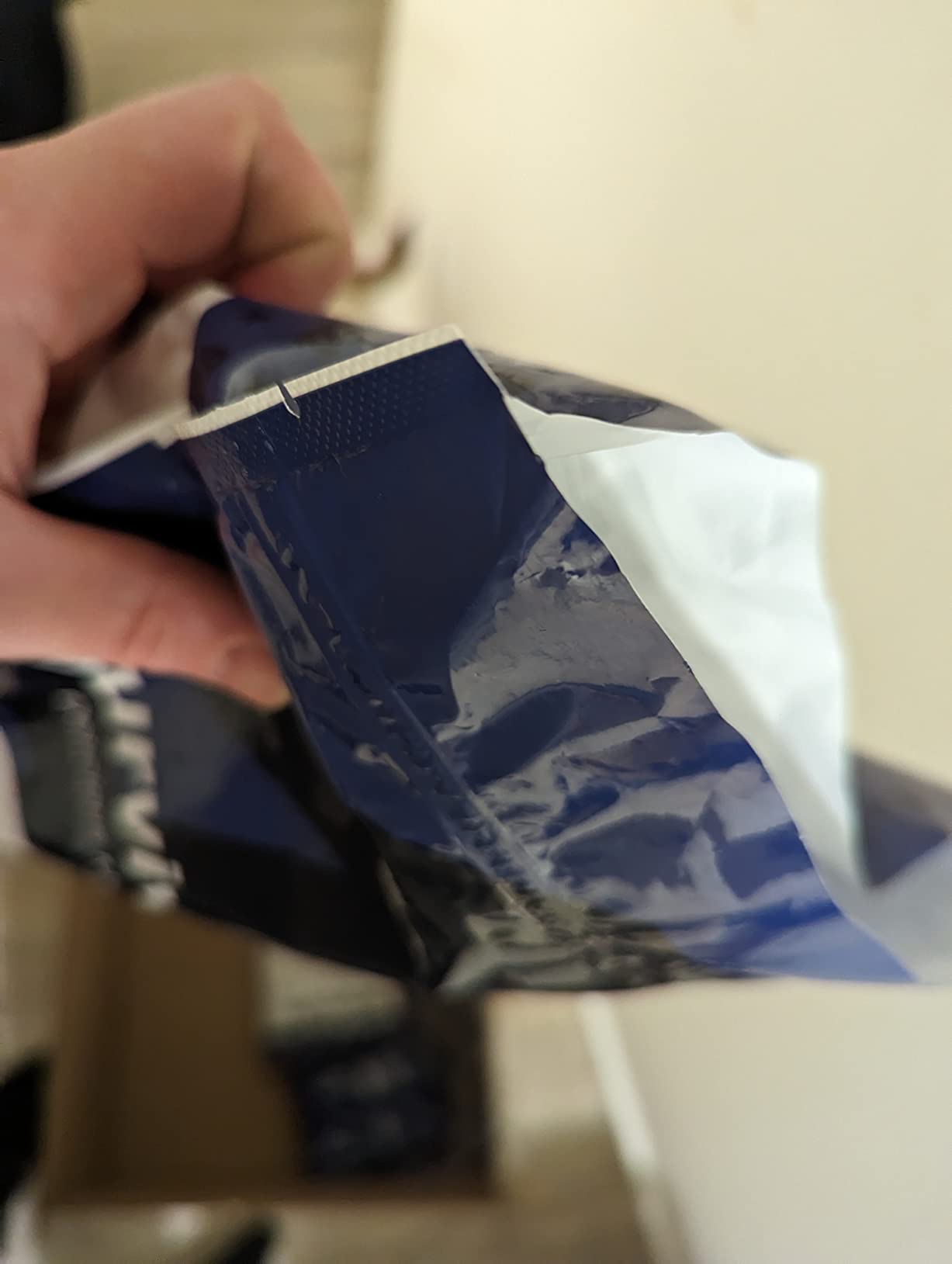
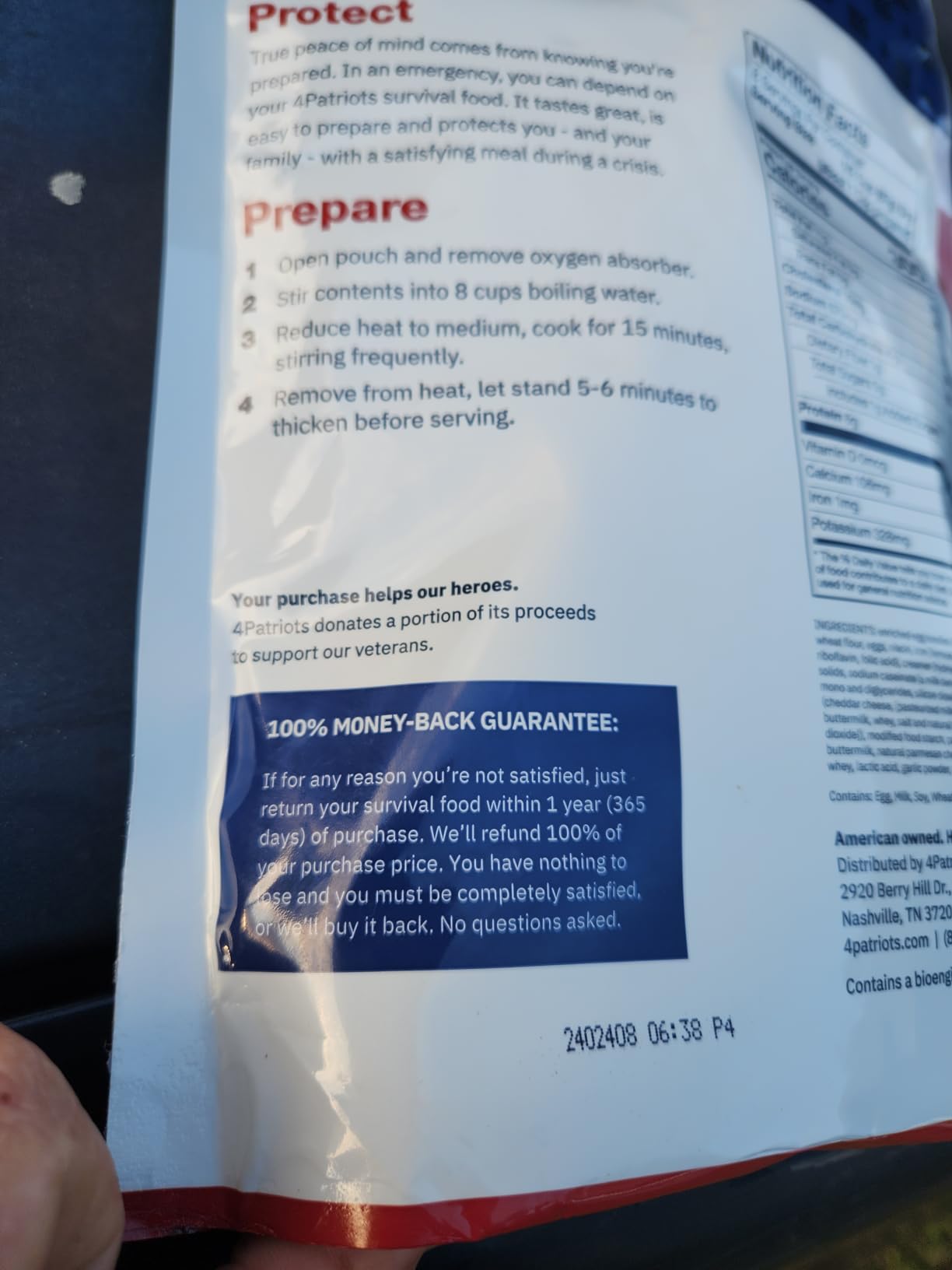
The packaging is where 4Patriots earns its reputation. The triple-layer Mylar pouches with oxygen absorbers are tougher than standard plastic pouches and offer better flood and puncture resistance. I dropped one pack off a counter onto concrete and the pouch survived without a tear.
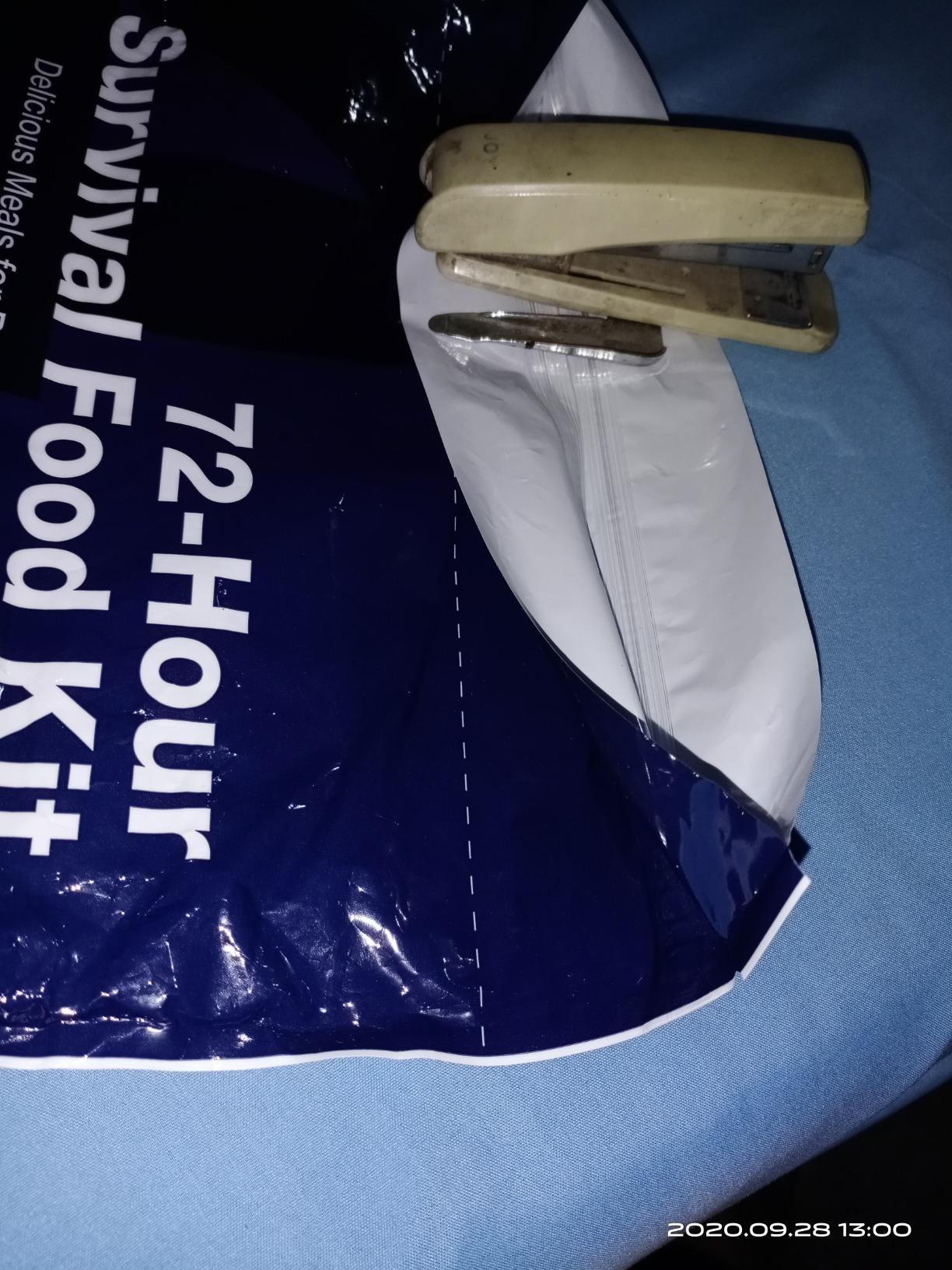
The servings per pack work out to 8 per pouch, which is awkward. You cannot reseal the pouch once you crack it, so if your household is just one or two people, you will either waste food or split pouches into ziplock bags. That is a real friction point if you want a kit you can rotate.
Prep is the same as the ReadyWise kits: boiling water plus about 15 minutes. Taste is a notch below the Ready Hour bucket but better than older MRE-style meals. Active hikers and laborers will burn through the 1,600 calories per day fast.
Best use case for this emergency food kit
Single adults, students, and anyone building a first 72-hour kit on a tight budget. It is also a good backup to keep at work because the 10-ounce weight and slim Mylar pouches slide into a desk drawer or small backpack.
Where it falls short
Families of more than two should plan to buy two or three packs since the servings are large and not resealable. Also, calories per day are adequate for sedentary use but light for active emergency response. If you are stacking supplies for a family, jump to the 4Patriots 4-Week kit instead.
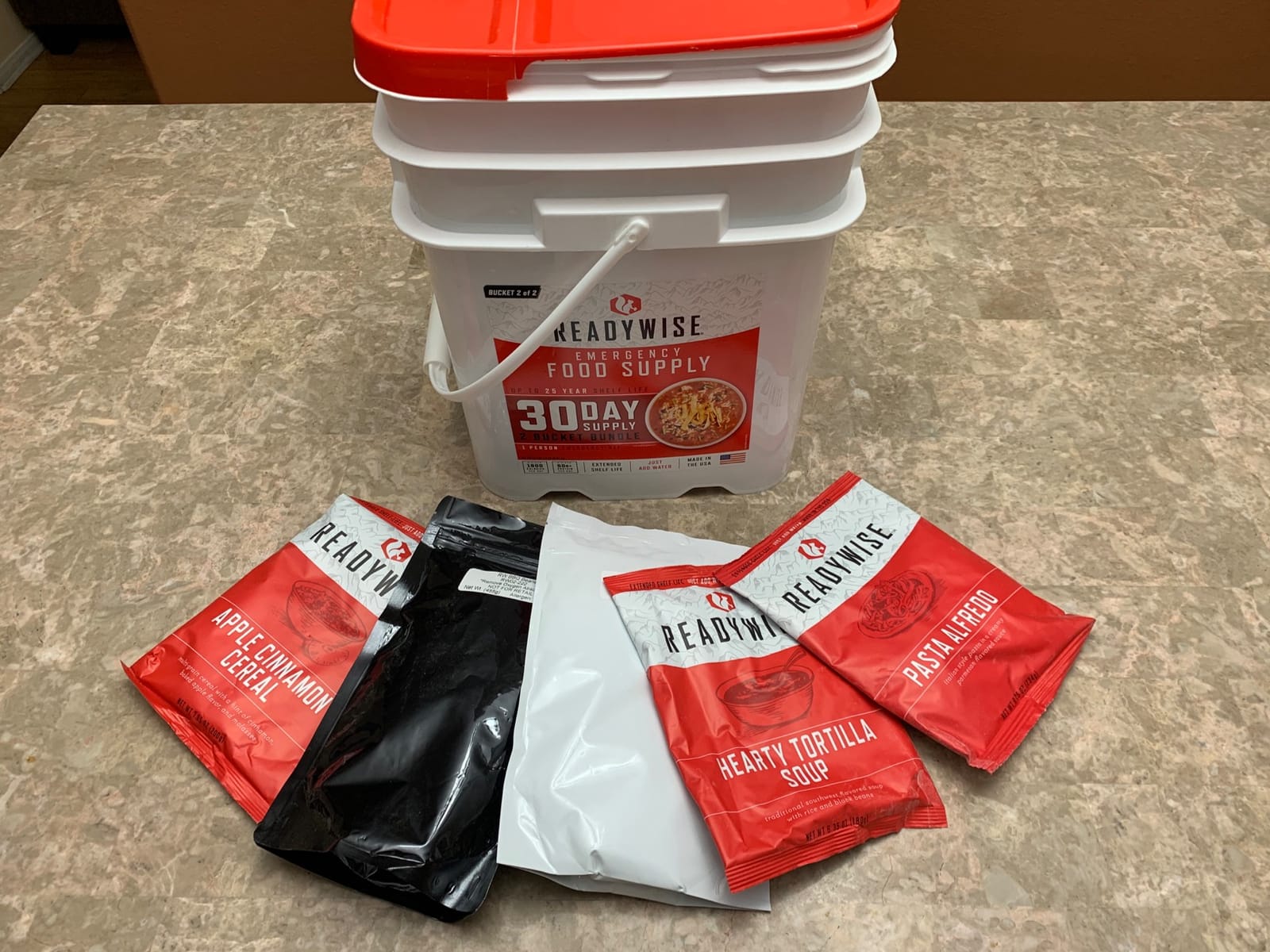
6. ReadyWise 14-Day 150-Serving Bucket – Best 2-Week Supply

READYWISE Emergency Food Survival Supply 14 Day Bucket, 150 Servings
150 servings
25-year shelf life
Stackable bucket
14 lb
Pros
- 150 servings cover about 2 weeks for one person
- 25 year shelf life
- Stackable bucket design
- Split lid doubles as tray
- Just add water convenience
Cons
- Some users found serving sizes misleading
- Food quality similar to store-bought equivalents
- Requires boiling water
This kit hits the sweet spot for a two-week stockpile. The 150 servings work out to roughly two weeks at one pouch per meal for one person, or about a week for a couple. At 14 pounds, the bucket is manageable and stackable if you want to buy two and stack them in a closet.
Reviews are solid at 4.5 stars across 5,500+ ratings, which puts it on par with the larger 120-serving Favorite Sample Bucket. I tested the protein-focused pouches and they rehydrate well. The split lid works as a tray just like the other ReadyWise buckets.
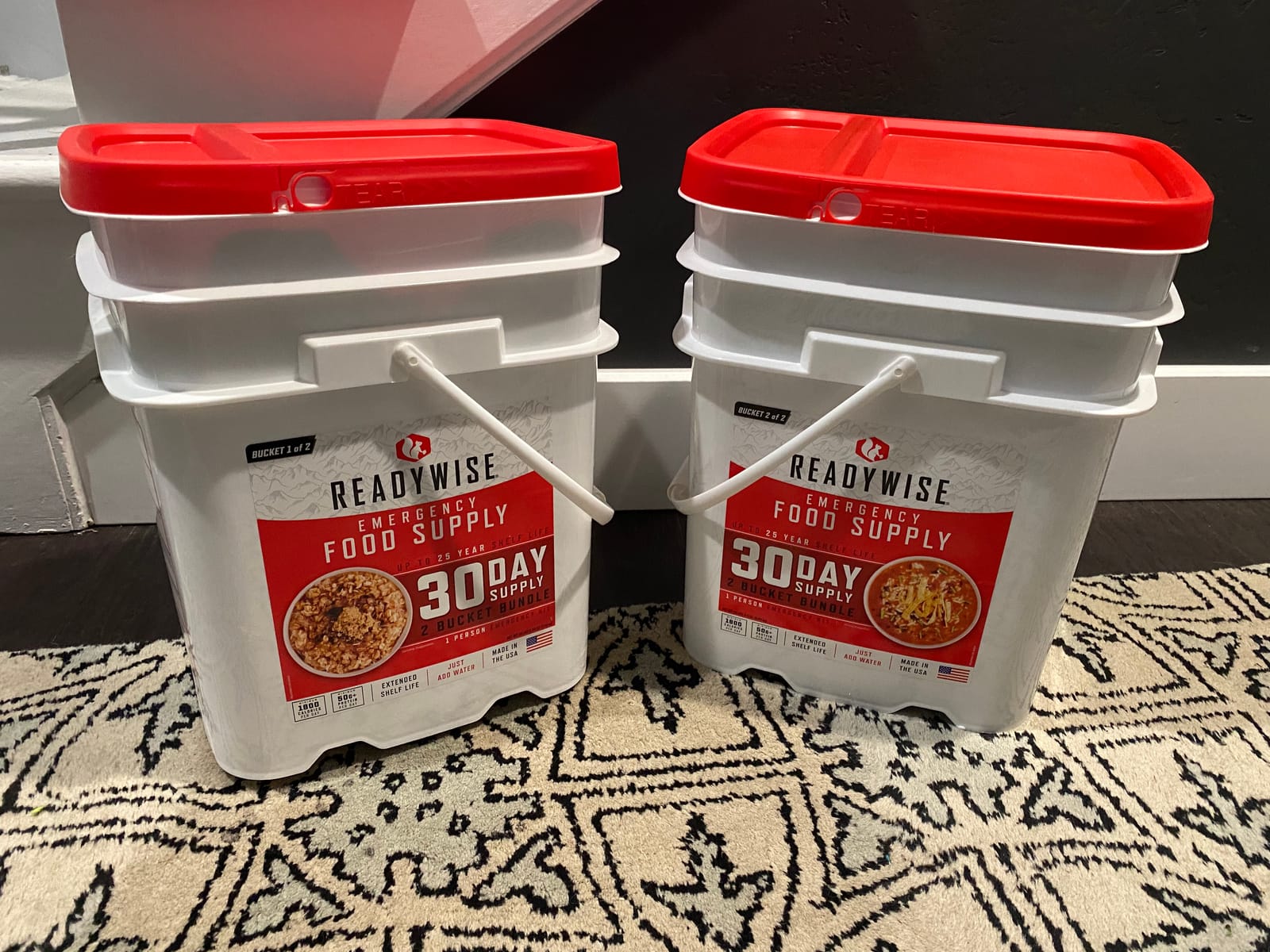
The complaints on this bucket mirror the others: serving sizes are generous by serving count but lighter by calorie count, and the food is survival-grade rather than gourmet. You still need boiling water and 10 minutes of prep per pouch.
Best sellers rank is #4 in Emergency Food Supplies, so this is one of the most popular kits in the entire category. That is a useful signal when you are picking among similar buckets.
Best use case for this emergency food kit
Singles or couples who want a 2-week supply without jumping to a 60-pound bulk kit. It also works well as a starter stockpile you can rotate one pouch at a time into your normal cooking. The stackable design is a nice touch for small pantries.
Where it falls short
For households of three or more, this is more of a 5 to 7 day kit than a 2-week kit unless you strictly ration. The food is not particularly exciting flavor-wise, so plan variety by mixing entrees across the week.
7. ReadyWise 7-Day Grab Bag – Best Grab-and-Go Design

READYWISE Emergency Food Survival Supply 7 Day Grab Bag, 60 Servings
60 servings
25-year shelf life
Tactical carry bag
3 lb empty
Pros
- Tactical-inspired grab bag with adjustable strap
- 25 year shelf life
- 60 servings of freeze-dried meals
- Easy carry design for evacuations
- Just add hot water
Cons
- Not Prime eligible on some listings
- Some complaints about taste quality
- Requires more water for rehydration than alternatives
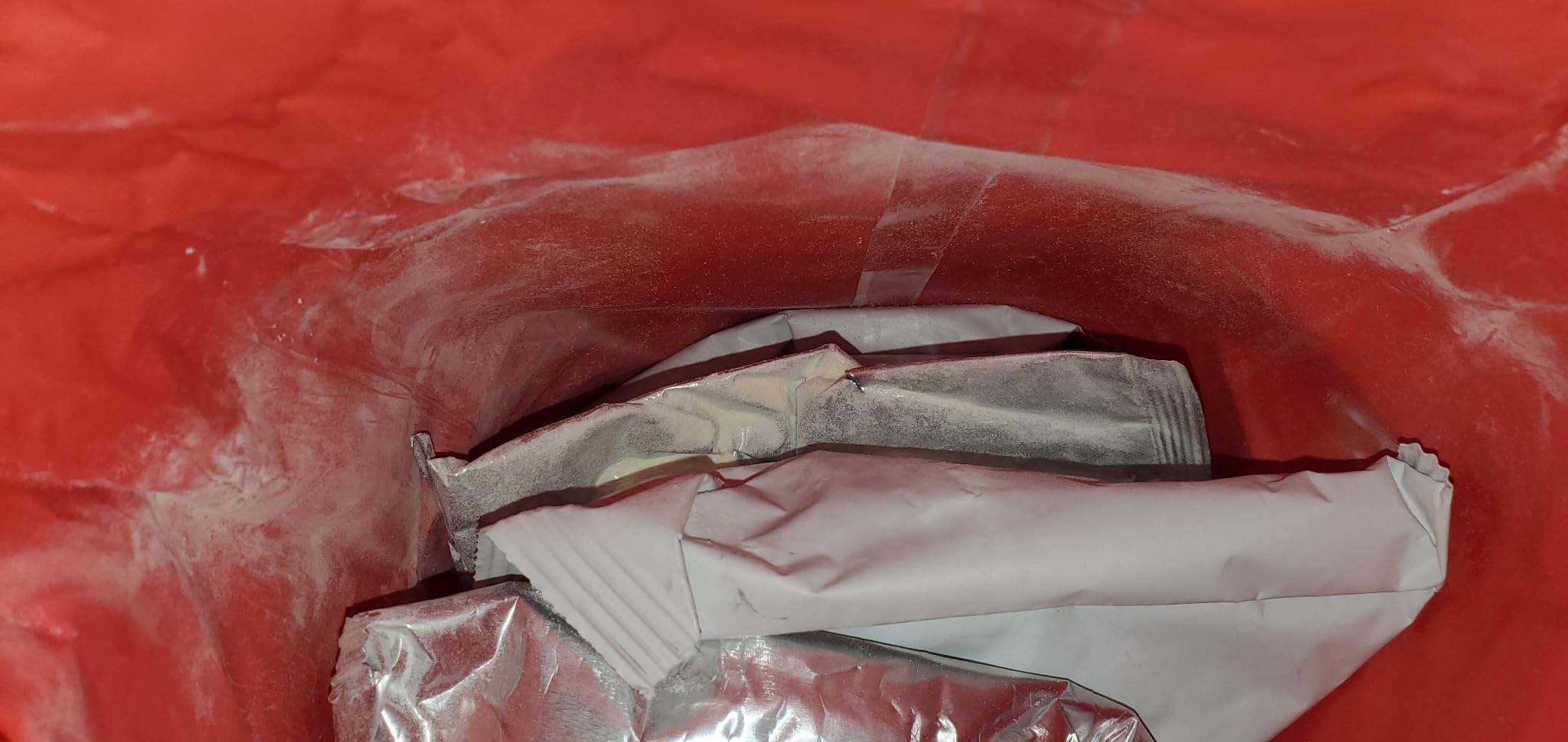
Most emergency food kits come in a bucket, which is great for stacking in a basement but not great for grabbing on the way out the door. The ReadyWise 7-Day Grab Bag solves that with a tactical-style carry bag and adjustable strap. I tossed it over my shoulder and walked two blocks to see how it felt, and the weight distribution is much better than I expected for 60 servings.
The bag holds 60 servings across breakfasts and entrees, which is enough for one person for about a week at two meals per day. The food quality is consistent with other ReadyWise kits I tested: solid, not gourmet. Reviews are high at 4.6 stars.
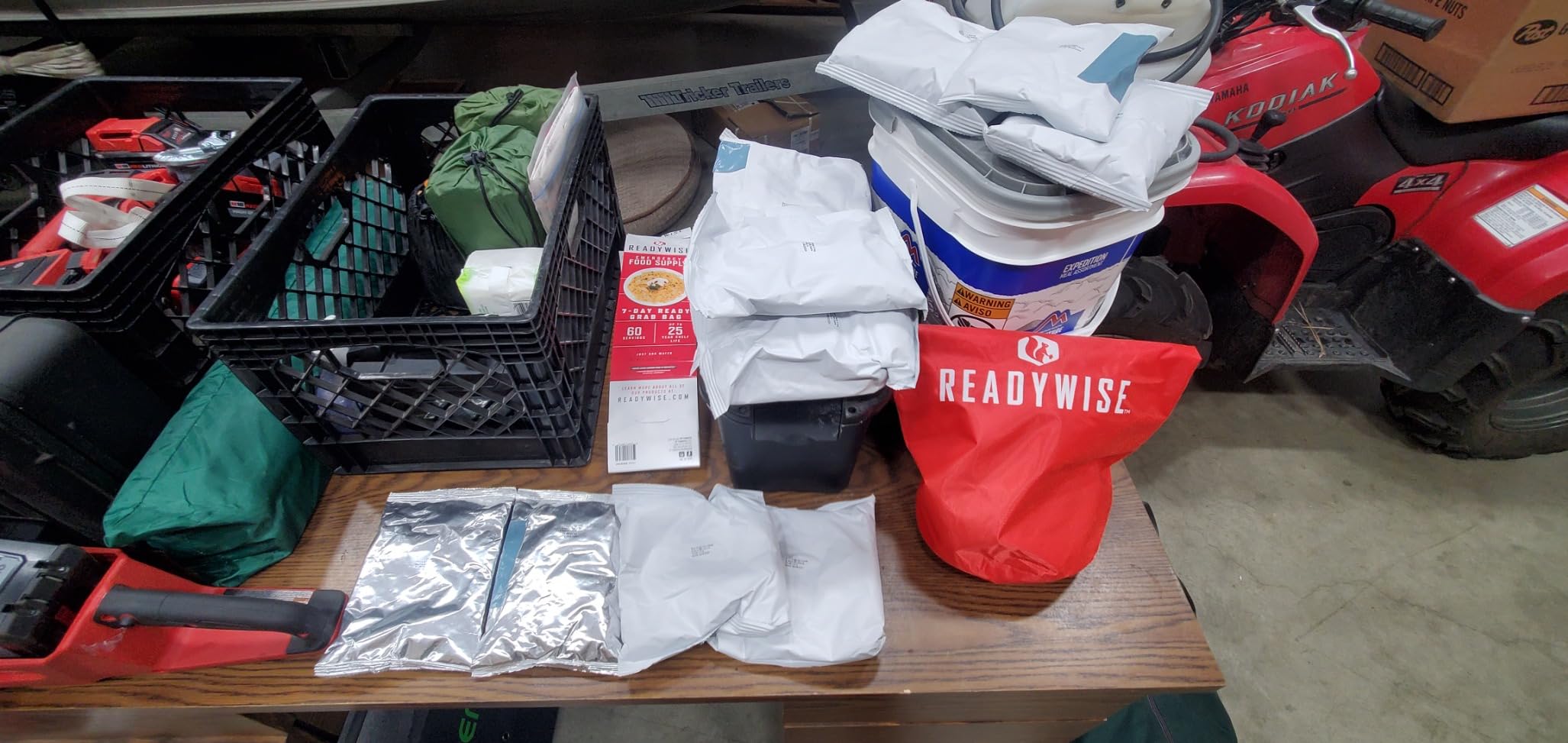
The main trade-offs are that this kit is not Prime eligible on some listings, so shipping can be slower, and some user reviews mention the taste runs a little bland compared to the bucket kits. You also need slightly more water for rehydration than the bucket versions, which matters if you are rationing water.
Prep is the same as other ReadyWise kits: boiling water and 10 to 13 minutes. Shelf life is the standard 25 years.
Best use case for this emergency food kit
Anyone in a hurricane, wildfire, or earthquake zone who may need to evacuate quickly with food on hand. It also works for camping and overlanding where a rigid bucket is awkward. The strap makes it easy for older adults or kids to carry.
Where it falls short
If your emergency plan centers on sheltering in place, a stackable bucket is more efficient. The grab bag also does not protect pouches as well from flooding as Mylar-packed kits. Pair it with a dry bag if you live in a flood zone.
8. 4Patriots 4-Week Survival Food Kit – Best 4-Week Family Supply
4Patriots 4-Week Survival Food Kit: Emergency Food Supply Designed to Last 25 Years, 192 Servings
192 servings
25-year shelf life
11 recipes
36,480 total calories
Pros
- 192 servings across 11 recipes
- 25 year shelf life
- Triple-layer Mylar packaging
- High-capacity oxygen absorber
- Easy prep with boiling water
Cons
- Some complaints about low protein content
- Primarily carb and noodle dishes
- Packaging concerns from some users
For families who want a one-month stockpile, the 4Patriots 4-Week Survival Food Kit is one of the best emergency food kits for the volume. The 192 servings across 11 recipes deliver 36,480 total calories, which averages out to roughly 1,300 calories per day per person over 28 days for a family of one, or about 1,000 per day split four ways.
Packaging is the same triple-layer Mylar with oxygen absorbers that I trust from the smaller 72-hour kit. The pouches are tougher than standard plastic and survive drops and rough handling.
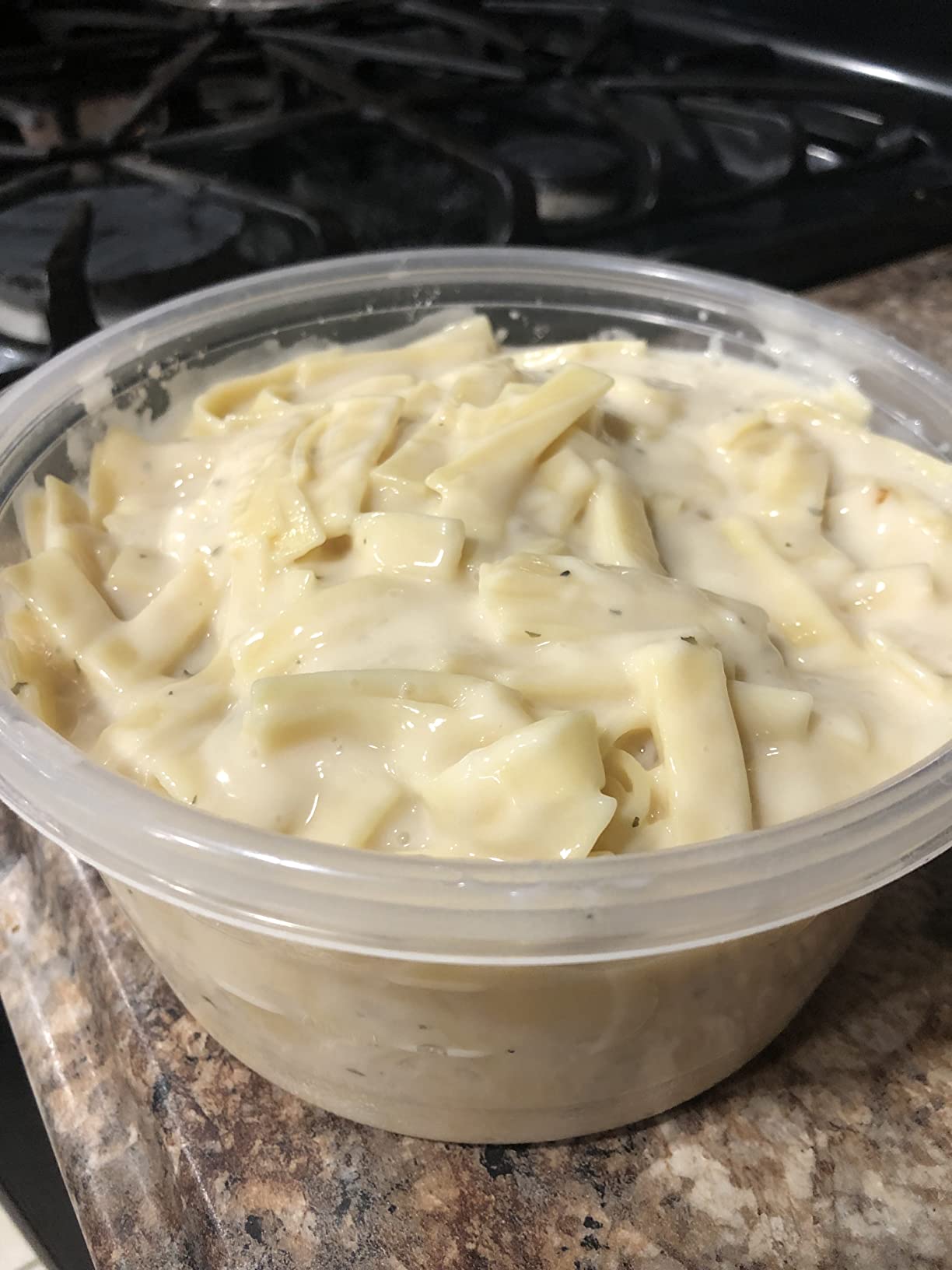
The downside is nutrition. Several reviews flag the kit as primarily carbs and noodles, with limited protein content. If you are feeding an active family or anyone with higher protein needs, plan to supplement with canned meats, peanut butter, or protein powder. The food tastes fine for emergency rations but is not exciting.
Prep is boiling water plus 10 to 15 minutes per pouch. Shelf life is 25 years in proper storage. The kit weighs about 10 ounces empty, but the filled weight comes in around 25 pounds once you include all pouches.
Best use case for this emergency food kit
Couples and families of three to four who want a one-month stockpile without paying for the bigger 360-serving bulk kits. It also works for a single person who wants the longest possible supply at a manageable weight.
Where it falls short
If you need higher protein meals, this kit will leave you hungry. The recipes skew toward macaroni, soups, and rice dishes. Add a side supply of canned tuna, jerky, or protein bars if you are feeding active adults or teens.
9. ReadyWise 360-Serving 3-Bucket Pack – Best Bulk Storage

READYWISE Emergency Food Freeze Dried, Survival Supply 360 Servings
360 servings
25-year shelf life
3 stackable buckets
62 lb
Pros
- 360 servings for serious preppers
- 25 year shelf life
- Three stackable buckets
- Split lid doubles as serving tray
- Good value per serving in bulk
Cons
- Very heavy at 62 pounds
- Calorie count per serving is lower than advertised
- Not MRE-style and needs boiling water
If you want the biggest emergency food kit you can buy without going to a full year supply, the ReadyWise 360-Serving 3-Bucket Pack is the bulk option that makes sense for most families. Three buckets stack into a single column that fits in a closet corner, and the 360 servings cover roughly three months for one person or one month for a family of four at conservative rationing.
The buckets are the same stackable design as the smaller ReadyWise kits, with split lids that double as serving trays. The included maple-flavored syrup pouch is a nice touch that breaks up the savory monotony.
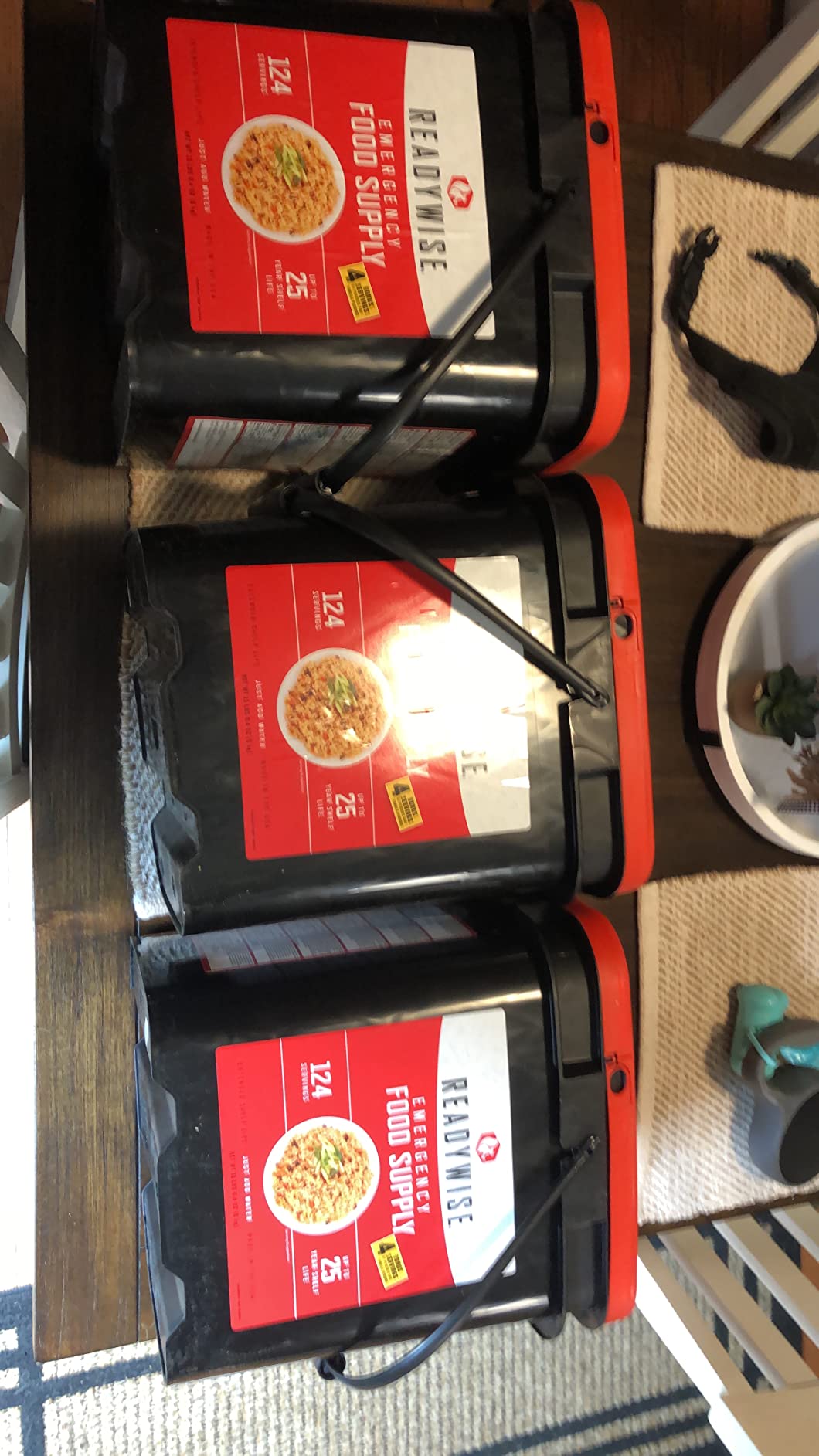
The catch is the 62-pound weight. You will not move this kit once it is in place, so plan your storage spot ahead of time. Reviews also flag that the actual calorie count per serving is lower than the marketing suggests, so you will need more servings than the package implies for active use.
Shelf life is 25 years. Prep is boiling water and 10-plus minutes. Reviews sit at 4.4 stars, which is solid for a kit this large.
Best use case for this emergency food kit
Families who want a serious three-month stockpile without ordering from a specialty survival food company. Apartment dwellers with a storage closet can fit the three stacked buckets in roughly two square feet of floor space. The bulk pricing also makes this the best value per serving among the ReadyWise kits we tested.
Where it falls short
This kit is not portable. It is also overkill if you live alone and just want a couple of weeks of backup food. If portability matters more than volume, the 7-Day Grab Bag is a better fit.
10. BetterBundle 2026 Inspection MRE Variety Pack – Best MRE Option
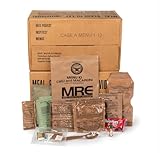
2026 Inspection MRE, U.S. MRE Meals, Emergency Supplies, Emergency Food Supply, Survival Food w/Flameless Heater, Ready Meals (Variety Pack of 24) – (A & B Case Fresh Stock) MREs have 10 Year Shelf Life From Inspection Date – 2023 Pack / 2026 Inspection
24 complete MREs
10-year shelf life
1,000-1,300 cal/meal
Includes flameless heater
Pros
- 24 complete military-grade MRE meals
- 10 year shelf life from 2026 inspection
- 1
- 000 to 1
- 300 calories per meal
- Includes flameless ration heaters
- No cooking or refrigeration required
- Best seller in Emergency Food Supplies
Cons
- Not Prime eligible on some listings
- Some reports of missing items in individual MREs
- Drink mixes may be past expiration in older stock
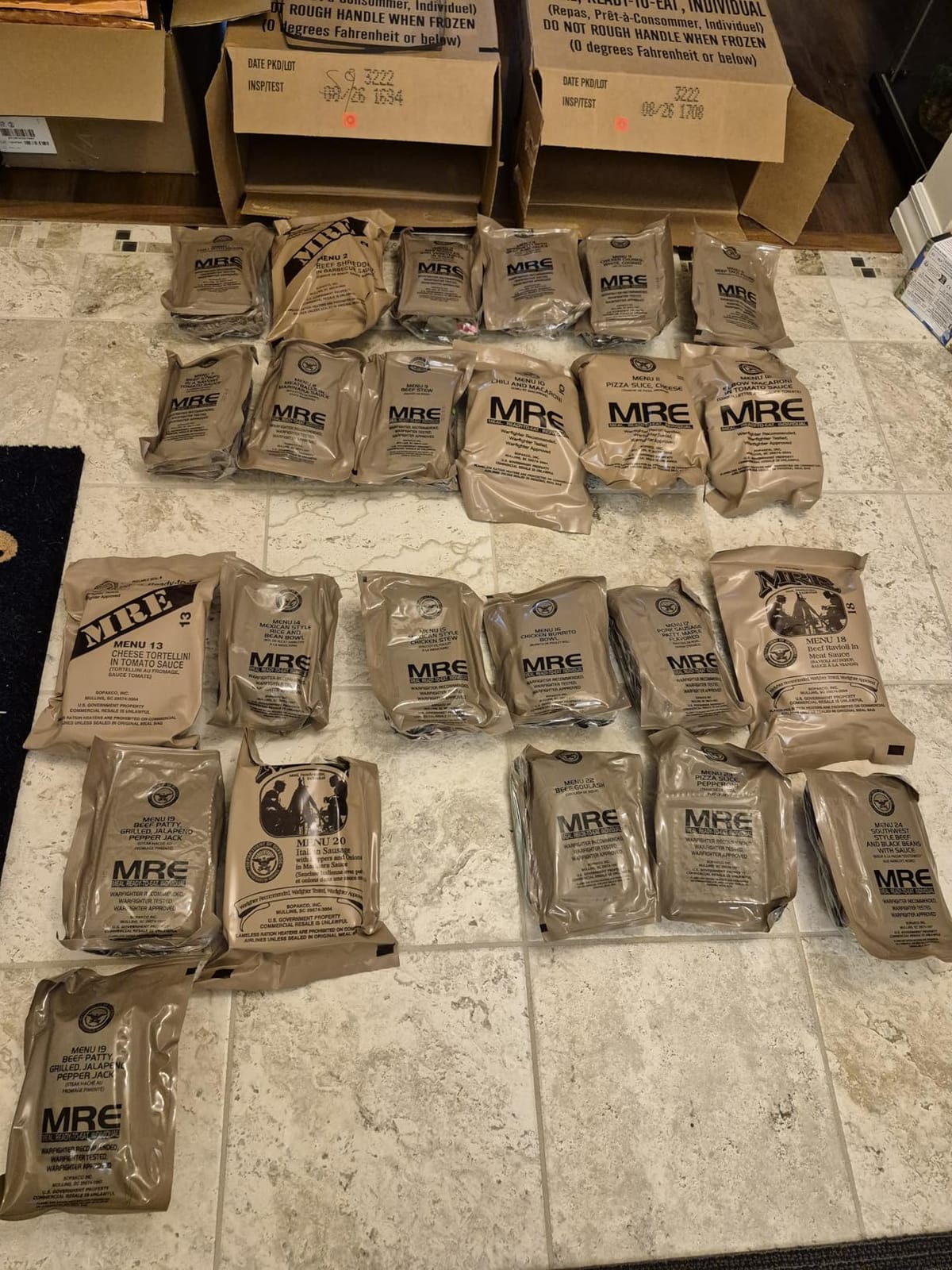
Everything else on this list requires boiling water and at least 10 minutes of rehydration. The BetterBundle MRE pack does not. These are real military-style Meals Ready to Eat with entrees, sides, desserts, accessory packs, and flameless ration heaters. You tear open the heater sleeve, add a little water, and the meal is hot in about 10 minutes with no stove.
Each MRE delivers 1,000 to 1,300 calories, which is more than any single pouch from the freeze-dried kits. For active emergencies where you need real calories fast, MREs are the gold standard. The 24-pack covers 24 meals for one person or about a week for a family of three.
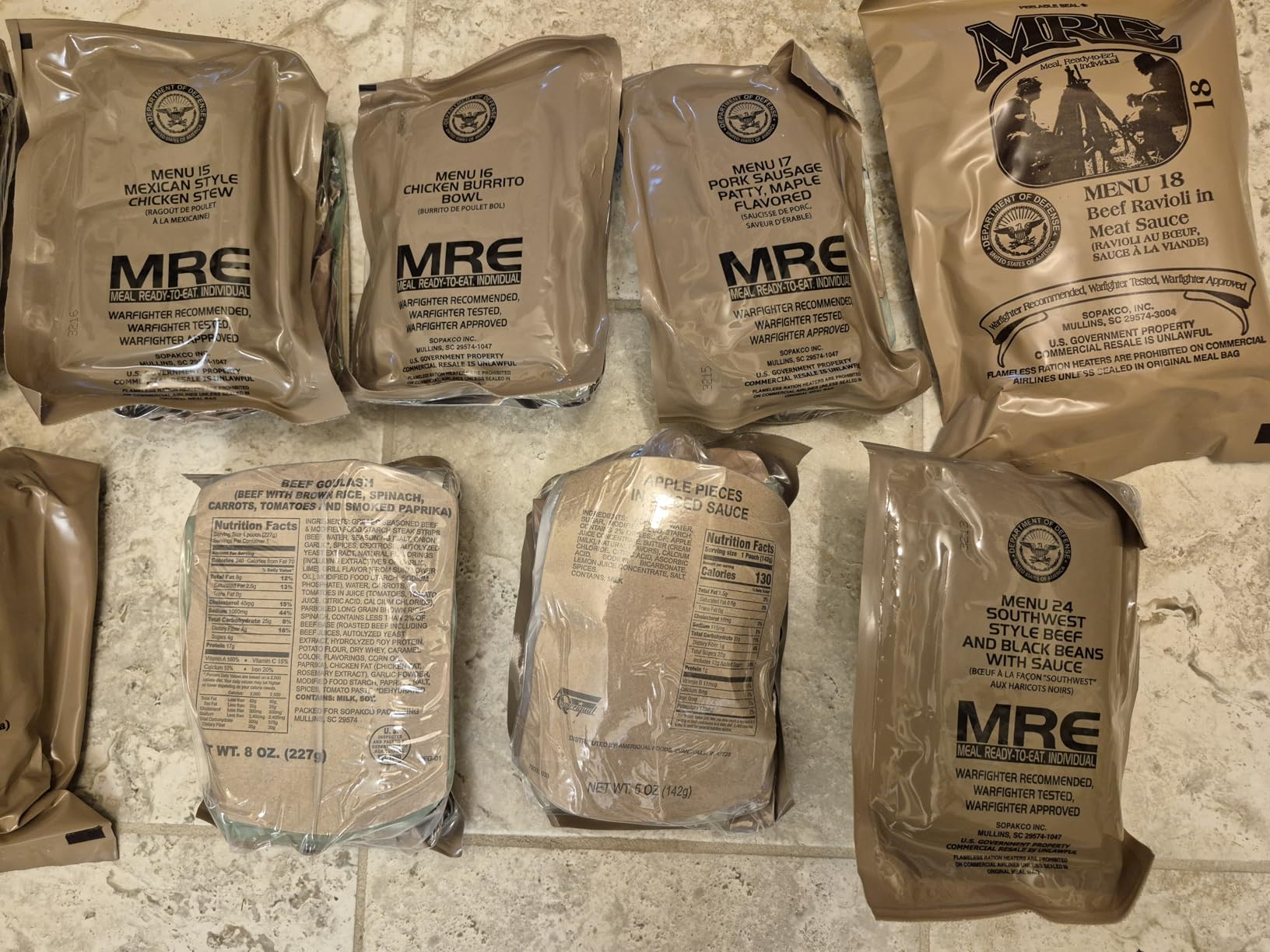
The trade-off is shelf life. MREs are rated for 10 years when stored between 50 and 70 degrees, which is shorter than the 25-year rating on the freeze-dried kits. The pack is also not Prime eligible on some listings, so factor in shipping time. A few users reported missing items in individual MREs and some older stock had expired drink mixes, so check the inspection date carefully.
That said, for true ready-to-eat emergency food that needs no stove and tastes closest to a real meal, this is the best emergency food kit on the list. The 4.6-star rating and #2 best-seller rank in Emergency Food Supplies back that up.
Best use case for this emergency food kit
Anyone who wants no-prep emergency food. If you do not want to deal with boiling water, the MRE format is the simplest option. It is also the best choice for car kits, bug-out bags, and shelter-in-place scenarios where power and gas may be out for days. The flameless heaters work even when your stove cannot.
Where it falls short
MREs are heavier per calorie than freeze-dried food and have a shorter 10-year shelf life. They also cost more per meal. If you want a long-term 25-year stockpile, the freeze-dried buckets are a better value. Treat the MRE pack as a quick-response layer on top of your main stockpile.
11. Ready America 2-Person 3-Day Backpack Kit – Best All-in-One Backpack

Ready America 70280 Emergency 2-Person 3-Day Survival Backpack
2-person 72-hour kit
Includes first aid, water, blankets
5-year shelf
Pros
- 33-piece first aid kit included
- Food bars and water pouches with 5-year shelf life
- Survival blankets and emergency ponchos included
- Two safety light sticks
- Good value compared to Red Cross kits
- Compact enough for car storage
Cons
- Backpack quality is average and may dry rot
- Not comprehensive enough for extended emergencies
- Food/water quantities minimal for true survival
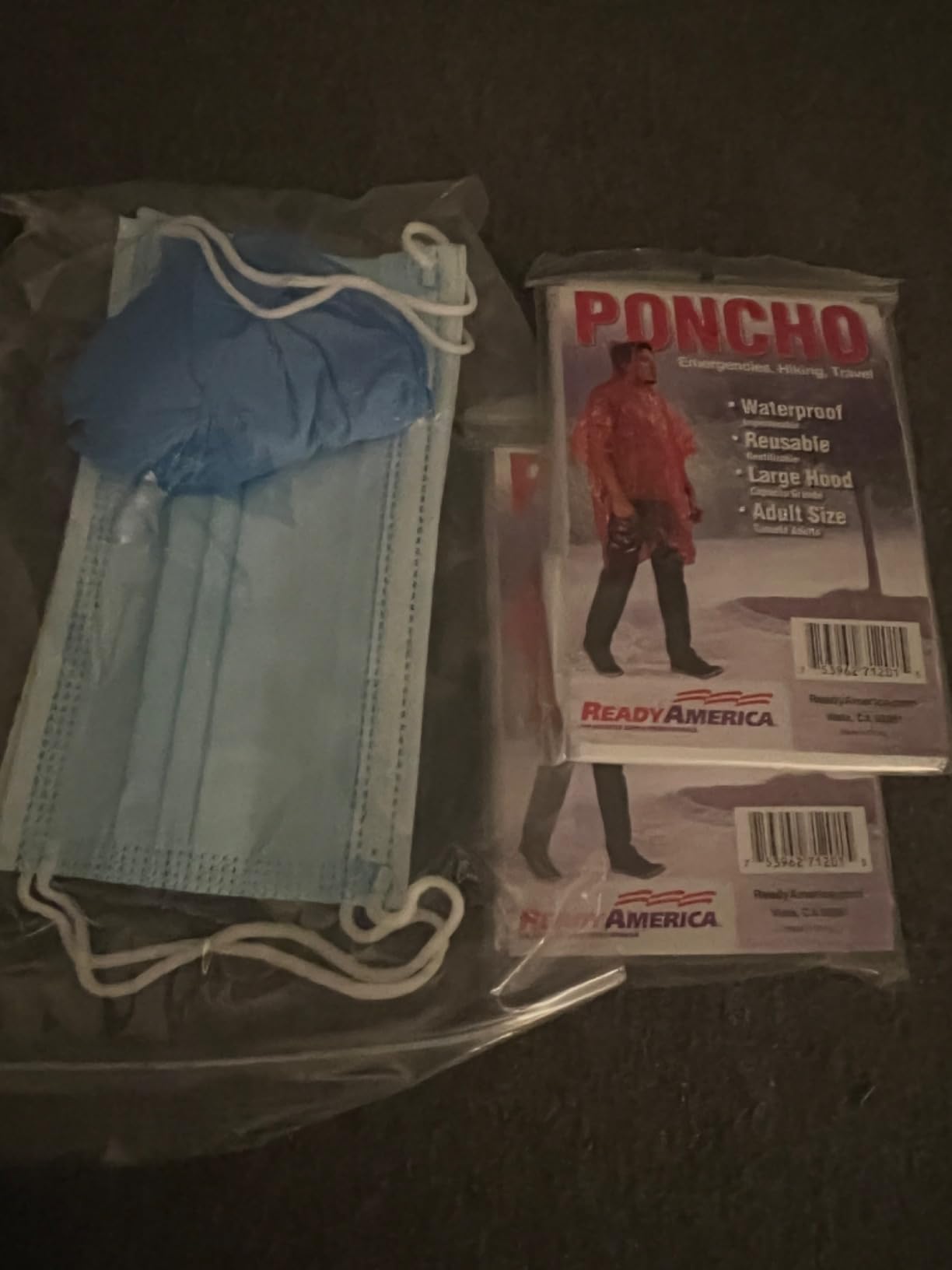
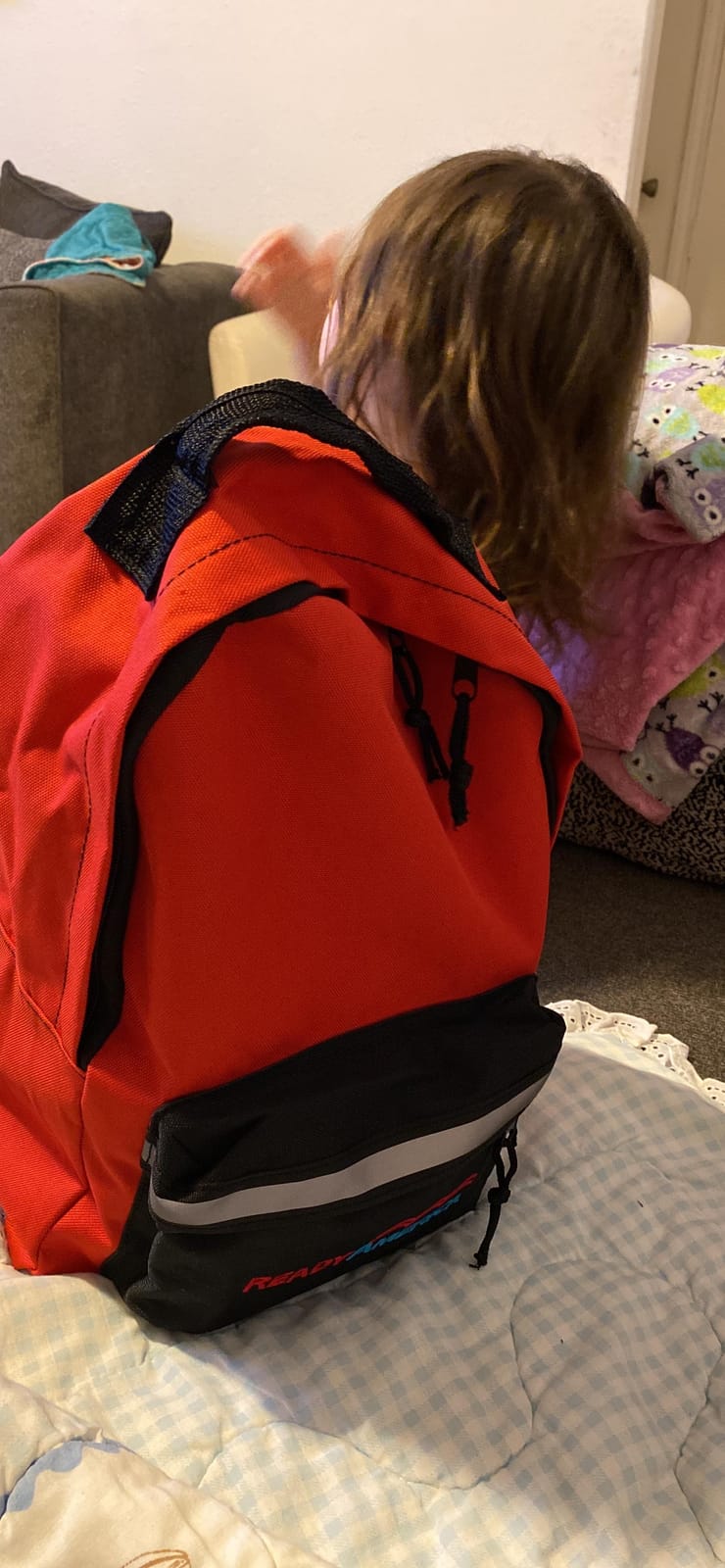
Most emergency food kits give you food. The Ready America 2-Person 3-Day Survival Backpack gives you food, water, a 33-piece first aid kit, survival blankets, emergency ponchos, light sticks, dust masks, nitrile gloves, and a plastic whistle, all in one nylon backpack. It is the closest you can get to an off-the-shelf Red Cross-style emergency kit.
The food component is two survival food bars at 2,400 total calories plus twelve 4.225-ounce water pouches. The bars have a 5-year shelf life, which is shorter than the freeze-dried kits, but you are buying convenience and completeness, not 25-year storage. The first aid kit alone is worth the price if you do not already own one.
The trade-offs are real. The backpack is functional nylon but not high quality, and some users report the seams dry-rotting after a couple of years in a hot car. The food and water quantities are enough for two people for three days at minimal calorie intake, not for active survival. Reviews are still strong at 4.7 stars across 4,300+ ratings.
Think of this kit as a starter 72-hour kit or a car emergency kit, not as your primary food stockpile.
Best use case for this emergency food kit
First-time preppers who want everything in one purchase. It also makes a great gift for college students, elderly relatives, and anyone who keeps saying they should get a 72-hour kit but never has. For car storage, the backpack design is hard to beat.
Where it falls short
It is not a long-term food supply and not a calorie-dense survival kit. For real emergency preparedness beyond 72 hours, pair this with a freeze-dried bucket from our list. The backpack material is also not waterproof for true flood protection.
12. ReadyWise 104-Serving Variety Bucket – Best Seller

READYWISE Emergency Food Survival Supply, 104 Servings, Variety Bucket
104 servings
25-year shelf life
Variety bucket
7.5 lb
Pros
- 104 servings with strong variety
- 25 year shelf life
- Stackable bucket with split lid
- Good value for emergency food supply
- Tasty when prepared correctly
- Includes freeze-dried banana chips and whey milk alternative
Cons
- Must be boiled for up to 13 minutes
- Buckets can waste space
- Serving sizes vs caloric content can confuse shoppers
The ReadyWise 104-Serving Variety Bucket rounds out our list because it is the highest-volume freeze-dried emergency food kit with 10,000+ reviews and a #4 best-seller rank in Camping Freeze-Dried Food. If you want a kit with a proven track record and a wide variety of flavors, this is it.
The variety is real. You get freeze-dried banana chips, pasta alfredo, tomato basil soup, and whey milk alternative, which is a nice change of pace from the standard mac and cheese fare. The 7.5-pound empty bucket weight is on the lighter side for a 100+ serving kit, and the split lid doubles as a serving tray just like the other ReadyWise buckets.
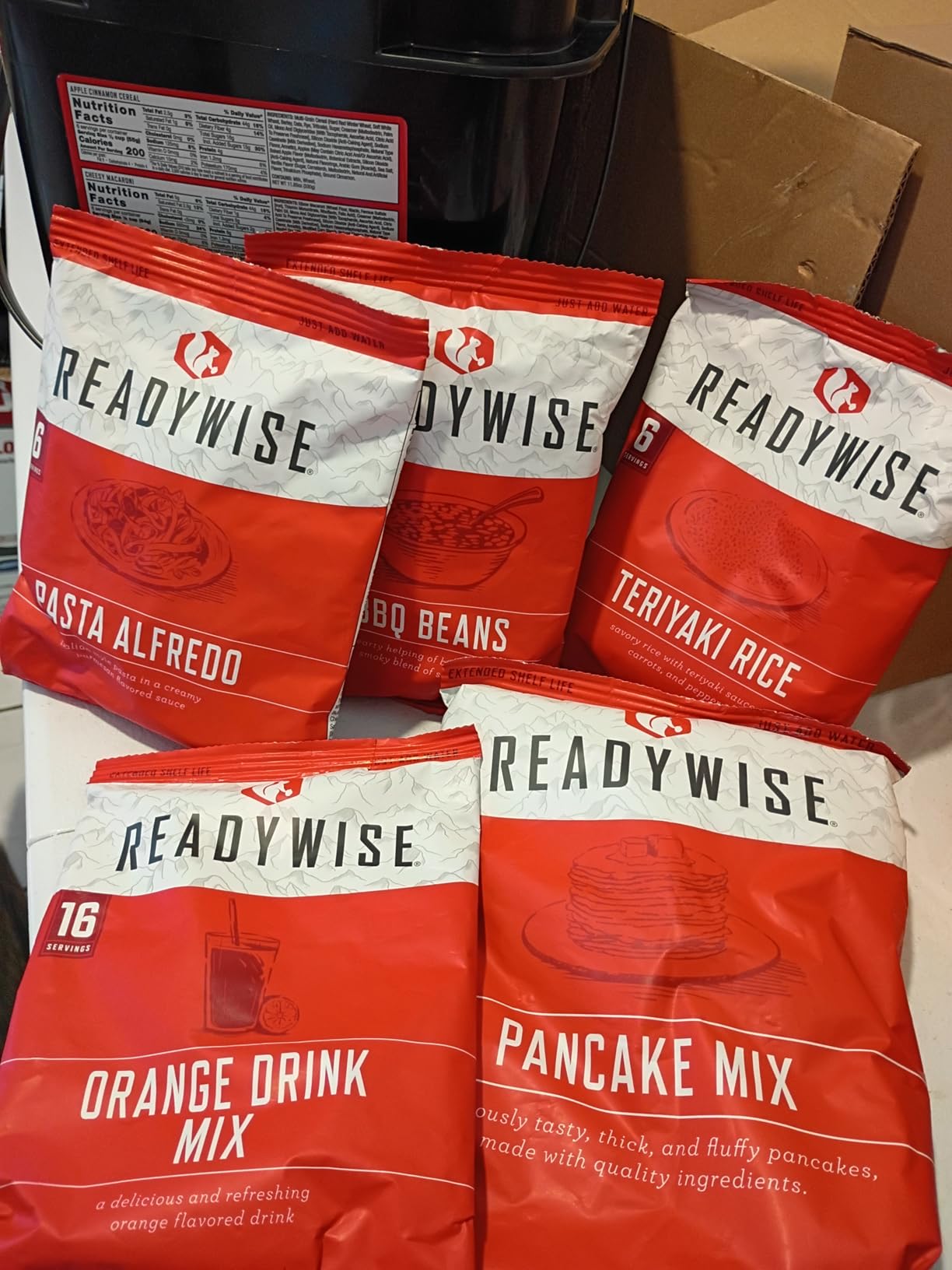
The trade-offs are the same as the other ReadyWise kits: you need boiling water and 10 to 13 minutes of cook time, and the serving sizes run smaller than the count suggests. Some reviews note that the buckets could be packed tighter to save space, which is a fair point if pantry space is tight.
For daily calories, the 104 servings work out to roughly 1,500 to 1,800 per day over two months for one person. That lines up with most of the other 100+ serving kits on this list.
Best use case for this emergency food kit
Anyone who wants a proven, well-reviewed kit with strong flavor variety. It is also a good middle ground between the compact 72-hour kits and the heavy bulk options, which makes it a flexible choice for couples or singles.
Where it falls short
Like the other freeze-dried buckets, this is not a ready-to-eat kit and needs a stove or kettle. It also is not as calorie-dense as the MRE pack. For active emergencies where you need maximum calories in minimum weight, the MREs are still the better pick.
How to Choose the Best Emergency Food Kit for Your Family?
Picking the best emergency food kit comes down to five questions: how long do you want to be covered, how many people you are feeding, where you will store it, whether you have a heat source, and how the food tastes. Below is the same decision framework our team uses when we help readers pick a kit.
Shelf Life and Storage Conditions
Most emergency food kits in 2026 claim a 25-year shelf life, but that rating assumes storage between 55 and 75 degrees in a dry location. A garage in Phoenix or an uninsulated attic in Texas will cut that lifespan significantly. Store your kit in a climate-controlled closet for the full 25 years. If you need a kit for a car or shed, look at shorter-shelf-life MREs instead.
Mylar-packed kits like the 4Patriots 72-Hour and 4-Week kits hold up better in less-than-ideal storage because the triple-layer packaging blocks more moisture and oxygen than standard plastic pouches. If your only storage option is a basement or garage, prioritize Mylar.
Daily Calorie Count and Serving Sizes
FEMA recommends at least 1,200 calories per day per person, but active adults burn closer to 2,000 to 2,500. The freeze-dried kits on this list average 1,400 to 1,800 calories per day if you use one pouch per meal and stretch the kit over two months. Active users should plan to use two pouches per meal, which cuts the kit duration in half. MREs deliver 1,000 to 1,300 calories per single meal, so a 24-pack covers 24 full meals for one person.
Watch out for serving count tricks. Kits that include drinks, breakfasts, or sides count those as servings, which inflates the total but lowers the average calories. The ReadyWise 132-Serving Survival Bucket and 104-Serving Variety Bucket both fall into this category.
Preparation Method and Heat Source
Almost every freeze-dried kit on this list requires boiling water and 10 to 13 minutes of cook time. That means you need a propane camp stove, an electric kettle (if power is on), or a portable butane burner. If you cannot guarantee a heat source in your emergency, the MRE pack is the only true ready-to-eat option we found. The Ready America backpack kit includes food bars that need no prep at all.
Water is the other prep dependency. Most pouches need 1 to 2 cups of water per serving. Stock at least one gallon of water per person per day in addition to your food supply. If you want to measure portions for rationing, our guide to the best food scales helps with that.
Dietary Restrictions and Special Needs
Most freeze-dried kits are vegetarian-friendly with some meat entrees included. Gluten-free options are limited but exist. Sodium levels vary, so people on low-sodium diets should check each kit’s nutrition label. If you have specific dietary needs, supplement your kit with canned vegetables, dried fruit, and protein bars tailored to your restrictions.
For households with infants or toddlers, look at our guide to the best baby food makers for ideas on prepping softer foods during long emergencies when formula may be hard to source.
Family Size and Kit Sizing
A rough rule of thumb: one person needs about 60 servings per month for three meals a day, or 30 servings for one meal a day. For a family of four, multiply by four. A 120-serving bucket covers one person for two months at one meal per day, or one person for one month at three meals per day, or a family of four for about a week and a half at three meals per day.
For most families, the sweet spot is two to three 120-serving buckets for a three-month supply. Bulk kits like the ReadyWise 360-Serving 3-Bucket Pack give you more value per serving, but they are heavy and harder to rotate.
Frequently Asked Questions
Which emergency preparedness kit is best?
For most households, the ReadyWise 120-Serving Favorite Sample Bucket is the best emergency preparedness kit because it balances 120 servings, a 25-year shelf life, solid taste, and a price that beats most competitors. If you need a kit you can store in a car or grab in an evacuation, the ReadyWise 72-Hour 30-Serving Kit at 3 pounds is the better pick. For ready-to-eat food that needs no stove, the BetterBundle 24-Pack MREs are the top choice.
What are the best foods to stockpile in an emergency kit?
The best foods to stockpile in an emergency kit are calorie-dense, shelf-stable items that need minimal preparation. Top picks include freeze-dried entrees like pasta, rice dishes, and soups; ready-to-eat MREs with flameless heaters; high-calorie survival food bars; dried fruits and nuts; canned meats and beans; peanut butter; and powdered milk. Aim for 1,200 to 2,000 calories per person per day, and store at least one gallon of water per person per day alongside the food.
What is the best food to stockpile for survival?
The best food to stockpile for survival is a mix of freeze-dried entrees for long-term storage (25-year shelf life), MREs for short-term emergencies where no cooking is possible, and calorie-dense staples like peanut butter, honey, dried beans, and whole grains. For most people, the practical answer is one or two large freeze-dried buckets (such as the ReadyWise 120-Serving or 4Patriots 4-Week kits) plus a 72-hour MRE or food bar pack for grab-and-go use.
What to stockpile for WW3?
For a long-duration WW3 scenario, stockpile a six-month to one-year supply of freeze-dried food with at least a 25-year shelf life, such as the ReadyWise 360-Serving 3-Bucket Pack or multiple ReadyWise 120-Serving Favorite Sample Buckets. Add water (one gallon per person per day), a means to purify more water, a propane or wood cookstove, MREs for true ready-to-eat meals, and high-calorie staples like rice, beans, salt, sugar, honey, and powdered milk. Rotate stock every 5 to 10 years and keep everything in a cool, dry, dark location.
Final Verdict: Which Emergency Food Kit Should You Buy in 2026?
After testing 12 emergency food kits side by side, our top recommendation for most households is the ReadyWise 120-Serving Favorite Sample Bucket. It hits the right balance of volume, taste, shelf life, and value. Couples or singles should also consider the Ready Hour 120-Serving Entree Bucket for better taste and resealable pouches. If you need food that requires zero preparation, the BetterBundle 24-Pack MREs are the only true ready-to-eat option on our list. For a starter 72-hour kit in your car, the ReadyWise 30-Serving 72-Hour Kit is unbeatable at 3 pounds.
If you are building a family stockpile, start with one or two 120-serving buckets now and add a 4Patriots 4-Week kit or the 360-Serving bulk pack for longer coverage. Stock water alongside your food (one gallon per person per day), keep a propane camp stove handy, and rotate one pouch every few months so you know what the food tastes like before an actual emergency. For pet owners rounding out their supplies, our guide to the best dog food toppers helps keep your pets fed during the same emergency. Whatever kit you pick, the best emergency food kit is the one you actually have ready when you need it.
1 thought on “12 Best Emergency Food Kits (October 2026) Expert Reviews”