
The easiest GPS device for a senior to use is a dedicated dash-mounted navigator with a large high-contrast screen, loud spoken turn-by-turn directions, and a menu no deeper than two levels. Nothing on it should require a phone, a data plan, or a monthly fee. That is the whole test we applied to every unit below.
The best GPS navigators for seniors are not the ones with the most features. They are the ones that keep telling you what to do, out loud, before you have to look down. We compared seven dedicated in-car units, read thousands of owner reviews, and focused on what actually matters to an older driver: screen size, how clear the voice is, whether it still works with no cell signal, and whether the maps cost anything after the day you buy it.
A note on who this article is for. Most of the people searching for a GPS for seniors are adult children buying for a parent, not the senior driver. So we describe the setup burden honestly, including the parts that are genuinely annoying, because that burden lands on the family. If you are shopping for an RV rather than a daily driver, our guide to GPS navigators for RV travel covers larger vehicle routing instead.
Top 3 GPS Navigators for Seniors in October 2026
These three cover the widest range of older drivers. One is the safest all-round buy, one is built for reduced vision, and one costs the least to run over five years.

Garmin DriveSmart 55 and Traffic
- 5.5 inch screen
- Voice-activated directions
- Garmin Traffic rerouting
- Bluetooth hands-free calling
- Wi-Fi map updates

Garmin DriveSmart 86 8-Inch
- 8 inch high-resolution screen
- Large top-bar text
- Works with no cell reception
- Voice assist and Bluetooth calls

Garmin Drive 50 USA LM
- Lifetime North America maps
- Spoken Real Directions guidance
- Split-screen lane view
- Sharp curve and school zone alerts
All 7 GPS Navigators Compared in October 2026
Every model in this guide, with the details that decide whether it suits an older driver. Screen size is the first filter because it is the hardest thing to change later.
| Product | Specifications | Action |
|---|---|---|
| Garmin DriveSmart 55 and Traffic |
|
Check Latest Price |
| Garmin DriveSmart 86 8-Inch |
|
Check Latest Price |
| Garmin Drive 50 USA LM |
|
Check Latest Price |
 Garmin DriveSmart 66 Garmin DriveSmart 66 |
|
Check Latest Price |
 Garmin Drive 53 Garmin Drive 53 |
|
Check Latest Price |
 Garmin DriveSmart 66 EX Garmin DriveSmart 66 EX |
|
Check Latest Price |
 Garmin DriveSmart 55 EX Garmin DriveSmart 55 EX |
|
Check Latest Price |
1. Garmin DriveSmart 55 and Traffic: Best Overall GPS Navigator for Seniors
Garmin DriveSmart 55 and Traffic, GPS Navigator, 5.5” Display, Simple On-Screen Menus, Easy-to-See Maps
5.5 inch screen
Voice control
Bluetooth calling
Wi-Fi updates
Garmin Traffic
Pros
- Top rating in the group at 4.5 out of 5 across nearly 2900 reviews
- Voice-activated directions keep hands off the screen
- Garmin Traffic suggests alternate routes around congestion
- Wi-Fi updates maps without a computer
- Concise large-text prompts readable at a glance
Cons
- Wi-Fi update process is slow and can run for hours
- 5.5 inch screen is small for drivers with reduced vision
- Suction cup mount and repeated license prompt annoy owners
This is the unit we keep coming back to. It has the highest average rating in the group at 4.5 out of 5 from close to 2900 reviews, which is a much thicker cushion than most of the field. Owners consistently describe the same thing: after a week, they stop thinking about the device because the instructions are short and the voice does the work.
The voice control is the reason it suits an older driver. You ask for a destination out loud and the unit routes there, so nobody has to tap a small on-screen keyboard at a stop light. Owners also report that the spoken directions are concise, which matters more than it sounds. Long rambling prompts are harder to act on than short ones.
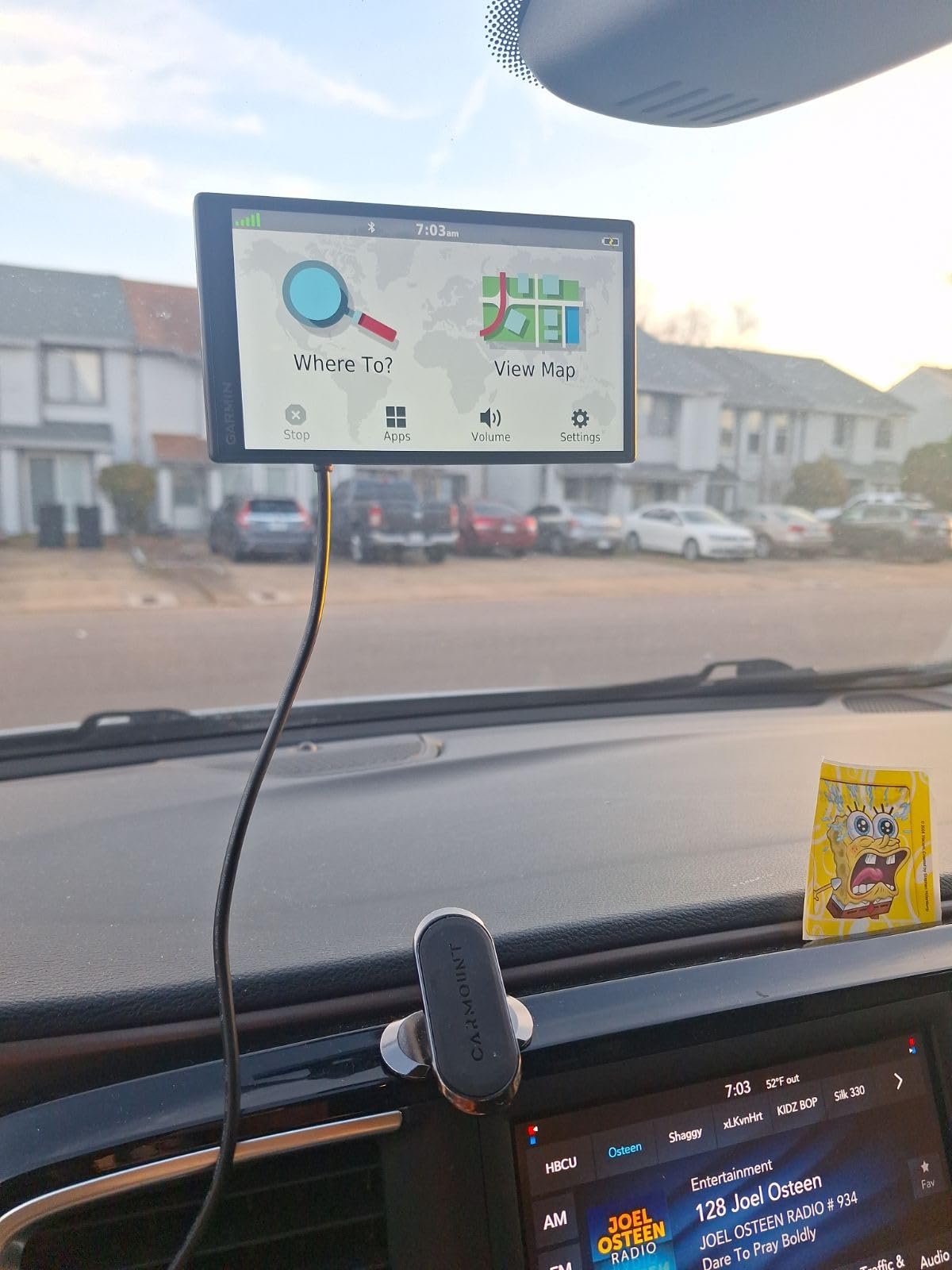
Garmin Traffic is the quiet bonus. It reroutes around congestion without any subscription, and pairing a phone over Bluetooth adds hands-free calling. The internal battery lasts about an hour off the 12V socket, so treat it as a plug-in device rather than a portable one.
The screen is a 5.5-inch WQVGA colour panel with a resistive touchscreen, and the bracket is a suction cup on the dashboard. This is an older-generation design, which shows in two ways that matter to a senior: the resistive screen responds more slowly than a capacitive one, and the 5.5-inch diagonal is on the small side if vision is the main concern.
Who will be happy with the DriveSmart 55
Any driver who wants to speak destinations instead of typing them, especially on longer trips where a wrong turn costs time. Roughly 3000 owners have rated it, which is a deep sample for a car device, and the complaints are consistent rather than scattered.
It also suits a car that has no CarPlay or Android Auto. Everything works without a phone; the phone only adds calling and notifications.
Who should look elsewhere
If the driver has reduced vision, move up to a 6-inch or 8-inch screen. The Wi-Fi update process is widely reported as slow, so plan to run it during an idle afternoon rather than the morning you need directions.
Voice recognition can also miss uncommon street names unless the city and state are added first. Write those two words into the habit of saying the full address.
2. Garmin DriveSmart 86 8-Inch: Best for Drivers with Reduced Vision
Garmin DriveSmart 86 8-inch Bright Crip Glass Screen Car GPS Navigator (010-02471-00) (Renewed)
8 inch screen
1280 x 800 resolution
Top-bar turn text
Glass capacitive touch
Pros
- Largest display in the group at 8 inches
- Large text stays visible from across the cabin
- Keeps guiding with no cell reception
- Wi-Fi updates without a computer
- Brackets hold steady in varied weather
Cons
- Routing is often not the quickest even on fastest route settings
- Turn accuracy and map freshness trail phone apps
- 8 inch body is bulky in small vehicles
- Renewed condition leaves remaining service life uncertain
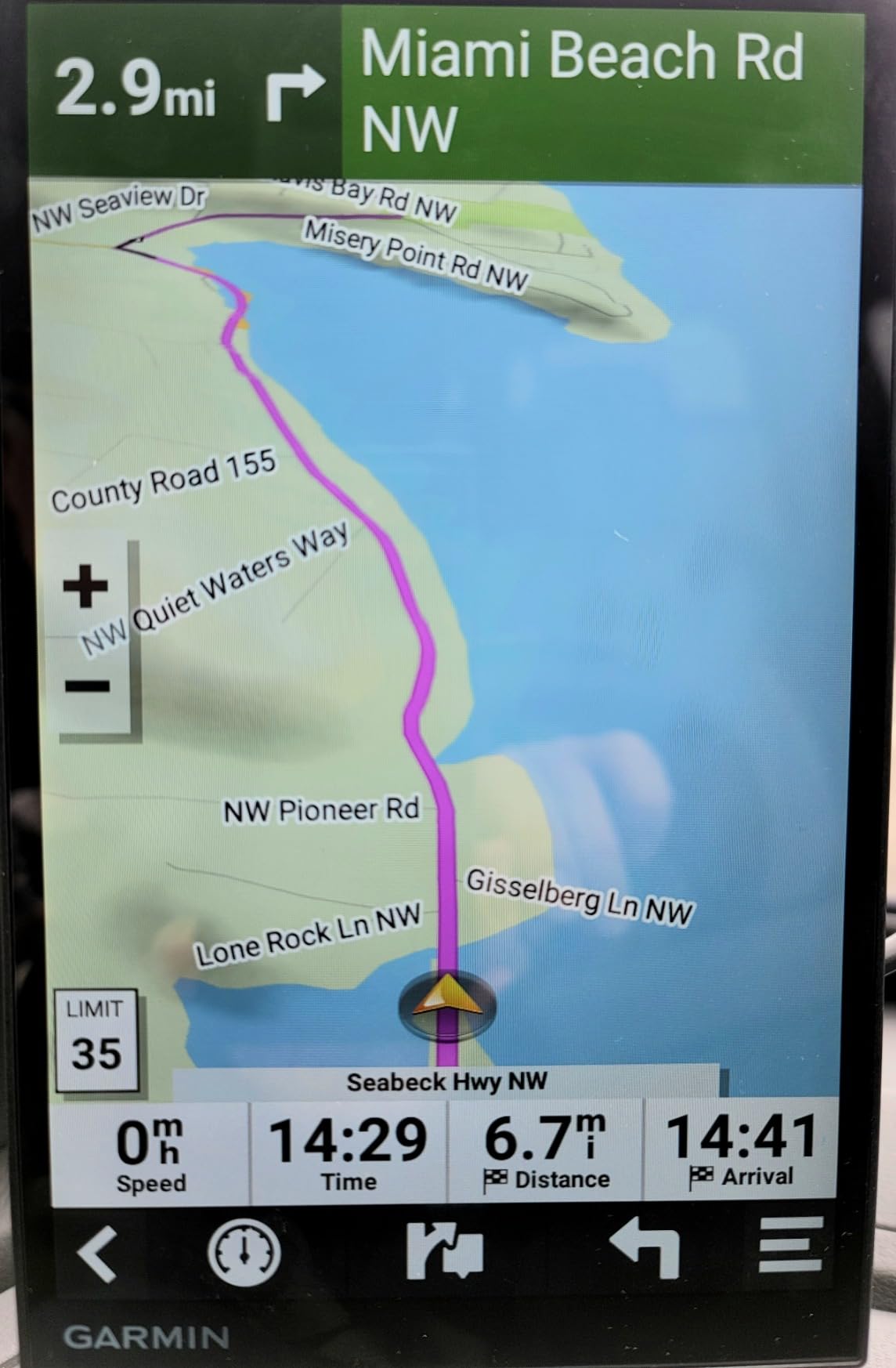
If screen size is the deciding factor, this is the pick. An 8-inch 1280 by 800 glass display is the biggest in the group, and the model keeps the next street name and turn in a large text strip along the top of the screen at all times. That strip is what a driver with reduced vision actually reads between glances.
It also carries the second-highest rating here at 4.4, and owners point to a specific and unusual strength: it works with no cell reception, which matters on rural routes. Wi-Fi handles map updates, so no computer is needed either.
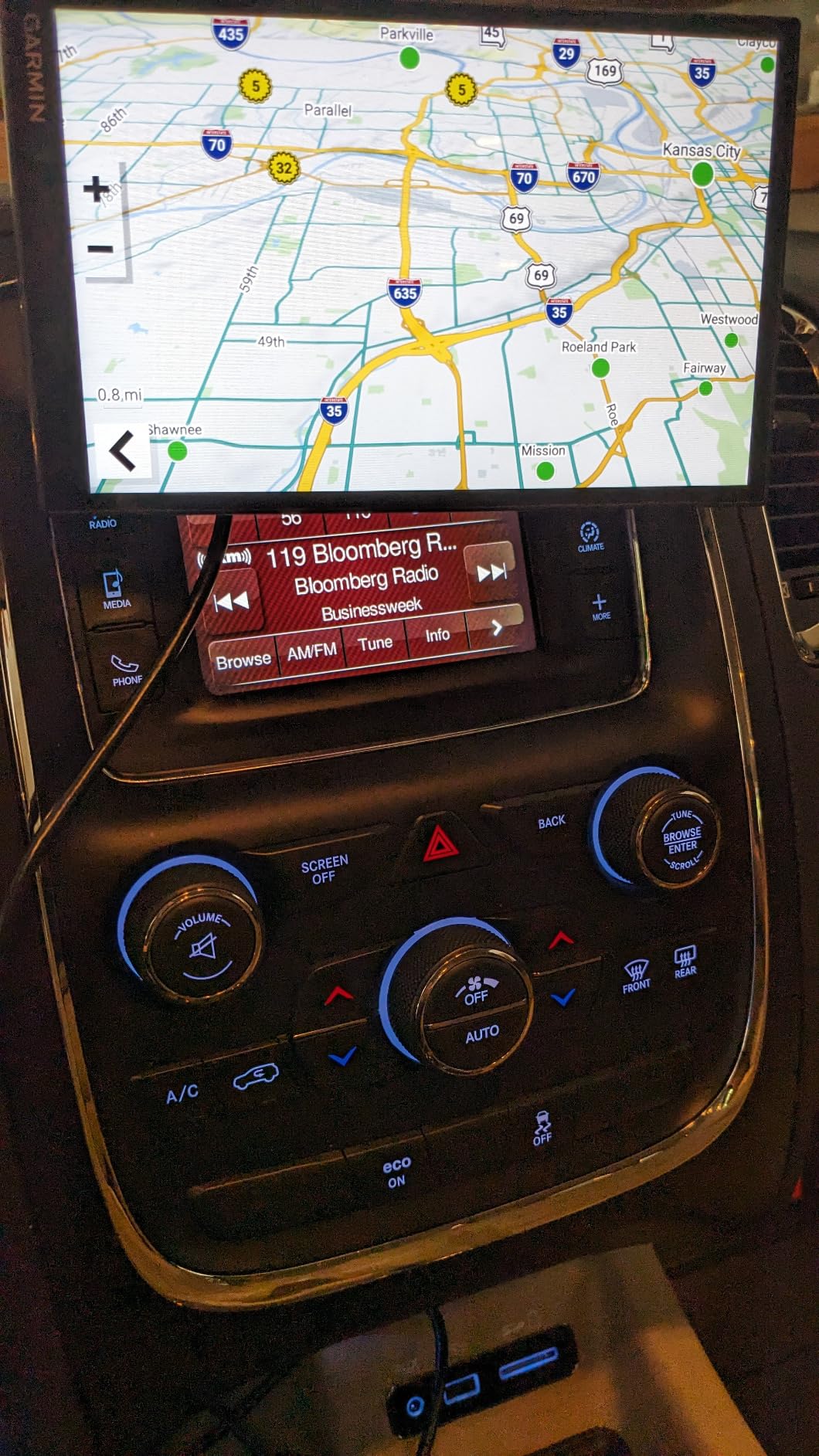
The honest weakness is routing. Reviewers are blunt that fastest route settings frequently produce a longer drive, that turn-by-turn accuracy sits below phone mapping apps, and that map updates lag when roads change. You are buying screen real estate and offline certainty, and paying for it in route polish.
This is a renewed listing, so the unit has been previously owned and inspected. One owner noted the unit was recognised immediately by a modern computer, unlike an older Garmin they had been using, which suggests the electronics are current even if the box was not.
When the 8-inch screen earns its space
Choose it when the driver reads maps rather than listens to them, wears strong glasses, or has been asking to pull over to check the route. At that point the extra screen width removes real stress rather than adding a feature.
It is also the right call for long-distance freeway driving, where a big upcoming-exit display matters most.
When it is the wrong choice
In a small car, an 8-inch body can dominate the dash and block part of the view. Older hatchbacks and compact sedans are where this becomes annoying rather than helpful.
If the driver relies on the very latest road openings or temporary rerouting, phone navigation will usually get there first. For a fixed routine of the same trips, this matters much less.
3. Garmin Drive 50 USA LM: Budget Pick with Lifetime Map Updates
Garmin 010-01532-0C Drive 50 USA LM GPS Navigator System with Lifetime Maps, Spoken Turn-by-Turn Directions, Direct Access, Driver Alerts, and Foursquare Data
Lifetime North America maps
5 inch screen
Spoken Real Directions
Driver alerts
Pros
- Most owners of any unit in the group at over 3500 ratings
- Lifetime maps mean no update subscription
- Keeps guiding where there is no cell coverage
- Calm voice that does not startle in heavy traffic
- Compact enough to stow in a console
Cons
- 5 inch resistive screen is small and slow to respond
- Address search has no state-then-city step so it can fail
- No route preview before guidance starts
- Internal battery drains fast away from the 12V socket
The five-year cost of ownership is the argument here. One of only two units here with lifetime North America maps written into the box, which means no annual fee and no update service to remember. For a driver on a fixed income, that removes a recurring decision entirely.
It also carries the longest owner history in the group at more than 3500 ratings, which means its quirks are well documented rather than mysterious. Long-standing owners emphasise reliability, offline navigation and a calm spoken voice that does not startle in heavy traffic.
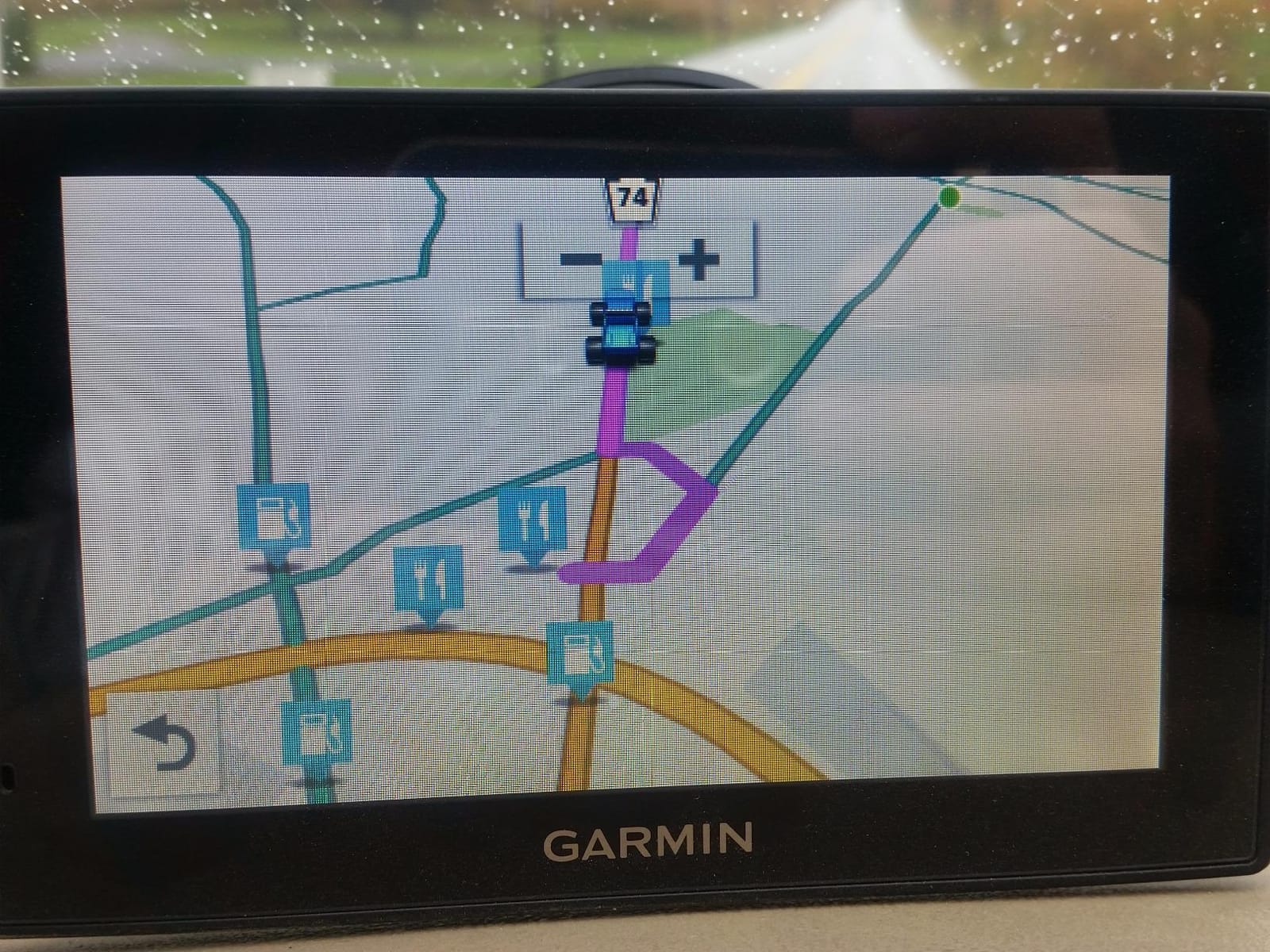
The split-screen layout shows the upcoming turn and lane guidance next to the live map, which helps on motorway merges. Driver alerts cover sharp curves, speed changes, school zones, a fatigue warning and red-light and speed camera locations.
Two things work against it for an older driver. The 5-inch resistive touchscreen is small and sluggish to respond, and there is no way to preview or confirm a route before guidance starts, so the first few seconds of a trip require patience.
Why lifetime maps are worth choosing
Subscription map services look cheap until you count five years of them. Lifetime maps remove the choice completely, and they keep working when a phone-based service loses signal, which is exactly when a lost driver needs help.
For a parent who drives the same routes to the surgery, the shops and the grandchildren, an older map that still routes correctly is worth more than a perfect one that needs a signal.
What you give up
Destination entry offers no state-then-city selection, so unusual addresses can return a cannot locate message and need a second attempt. SD-card expansion has also been reported as unreliable for map updates.
If the driver struggles with a small, slow screen, the 5-inch panel will frustrate them within days. Buy this one for the lifetime maps, not for the display.
4. Garmin DriveSmart 66: Best for Rural Routes and No Signal
Garmin DriveSmart 66, 6-inch Car GPS Navigator with Bright, Crisp High-Resolution Maps and Garmin Voice Assist
6 inch display
Garmin Voice Assist
Hands-free calling
Wi-Fi updates
Alexa built-in
Pros
- 6 inch display with bright crisp maps readable at a glance
- Voice assist lets a driver ask for directions hands-free
- Keeps working once a route is set with no cellular reception
- Built-in Wi-Fi plus a dual USB charger in the box
- School zone and sharp curve alerts
Cons
- Voice command occasionally matches a different destination than the one spoken
- Toll avoidance preferences are not always honoured
- Some buyers report freezing or units arriving without power
- Registration and Wi-Fi setup described as unintuitive
This is the balanced middle of the lineup. A 6-inch display is a genuine step up in legibility from the 5-inch and 5.5-inch models, and the 480 by 272 panel renders maps that owners describe as bright and crisp at a glance.
The offline behaviour is the reason we rate it best for rural routes. Once a route is set, it keeps guiding without cellular reception, which is the situation that strands phone-based navigation at the worst possible moment. Owners also praise the improved voice recognition over older Garmin models.
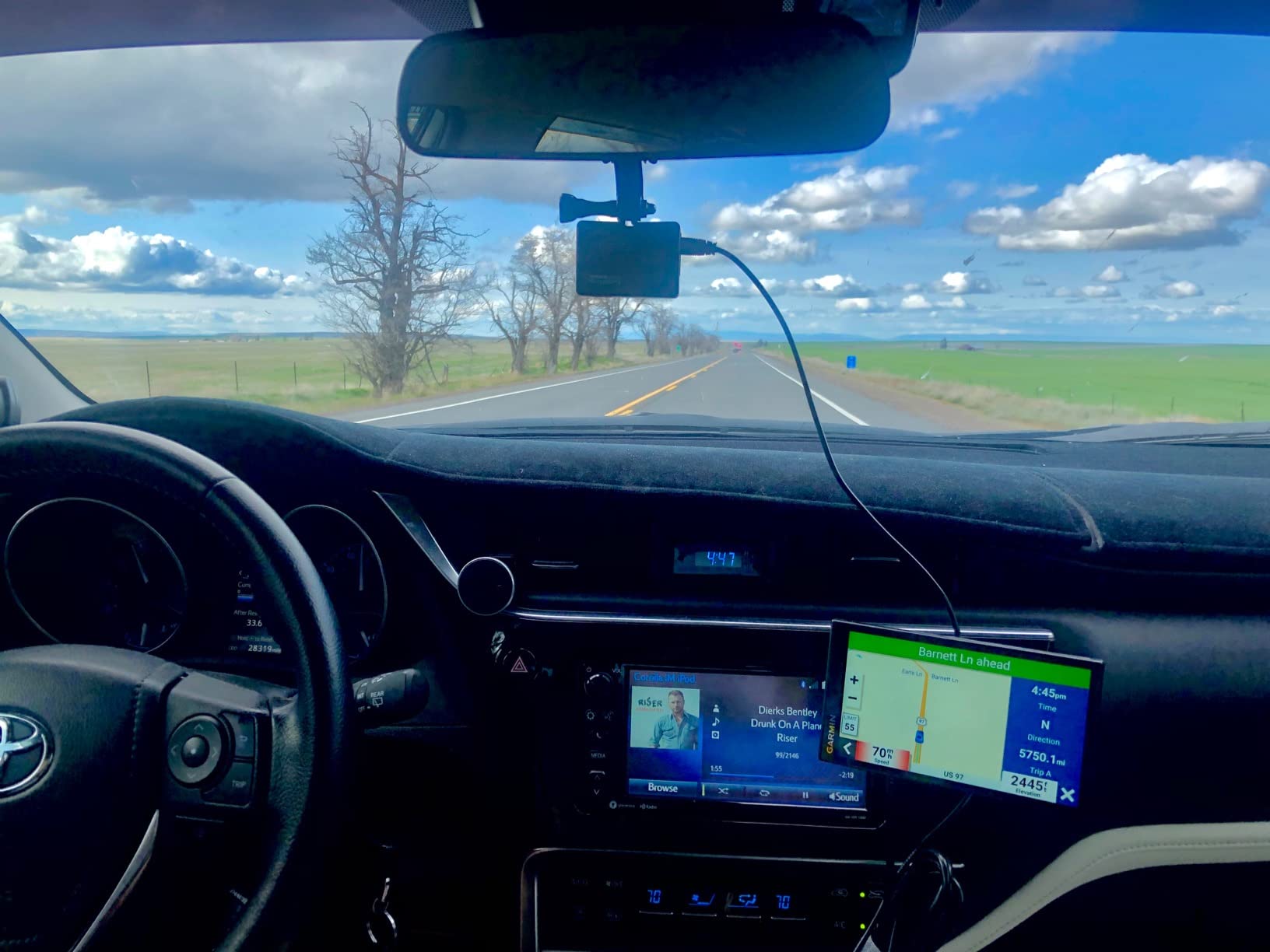
Extra features exist but do not dominate the experience. Alexa built-in plays music, audiobooks and news hands-free, and the included dual USB charger adds a second charging port for a passenger phone. Driver alerts cover school zones, sharp curves and speed changes.
Reviewers are mixed on the software. Voice commands occasionally land on a different destination than the one spoken, toll preferences are not always honoured, and on multi-stop routes a single stop cannot be deleted without restarting the trip. Some buyers also report a unit freezing soon after purchase.
Who this fits best
A driver who does regular long trips across countryside where bars disappear, and who wants a screen big enough to read without leaning in. The 6-inch panel is the sweet spot for most car sizes.
It also suits households where a passenger needs to charge a phone, since the dual USB charger ships in the box.
What to watch during setup
Device registration and the first Wi-Fi update are described as unintuitive. Sit with the driver for twenty minutes and get through them together, because the unit is much calmer once a route is set.
If a voice command lands on the wrong place, verify the highlighted street name before pulling away. That habit prevents most misdirected trips on this model.
5. Garmin Drive 53: Best Value with a Modern Touchscreen
Garmin Drive™ 53 GPS Navigator
4.97 inch capacitive screen
Spoken directions
Driver alerts
North America maps
Pros
- Modern edge-to-edge glass capacitive touchscreen
- Spoken directions with Real Directions landmark guidance
- Shows food fuel and rest areas along the active route
- Tripadvisor ratings and a national parks directory
- Lightest and most compact unit in the group at 2.43 ounces
Cons
- Smallest screen here at just under 5 inches
- Touch only with no voice assistant on this model
- Unfamiliar addresses can take several attempts to find
- Older-style entry experience versus newer capacitive models
At 2.43 ounces this is the lightest and most compact unit here, and it fits on a small dash without blocking the view. That makes it a sensible gift when the parent drives a small older car, which is exactly the situation where a bulky screen becomes a complaint.
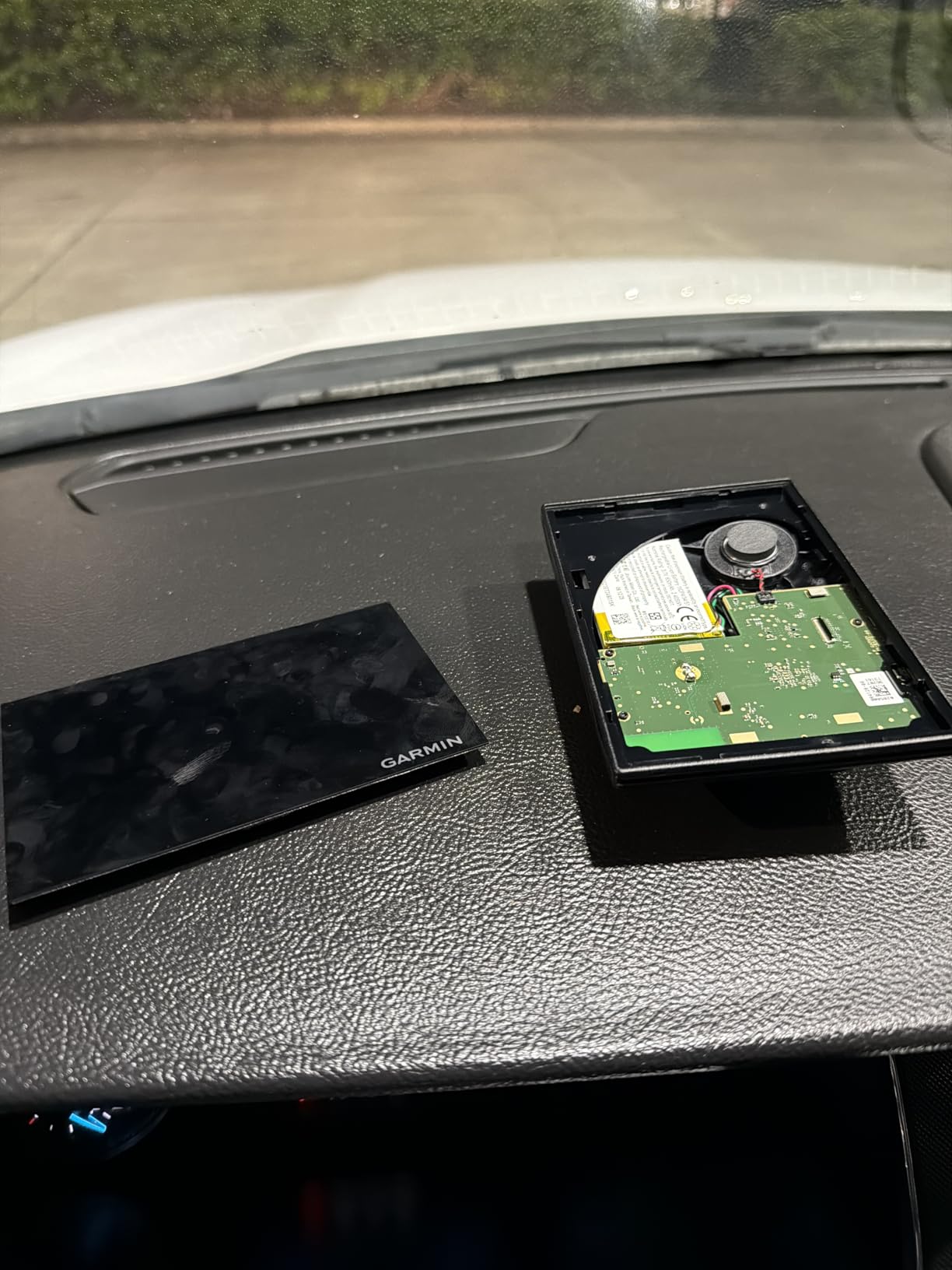
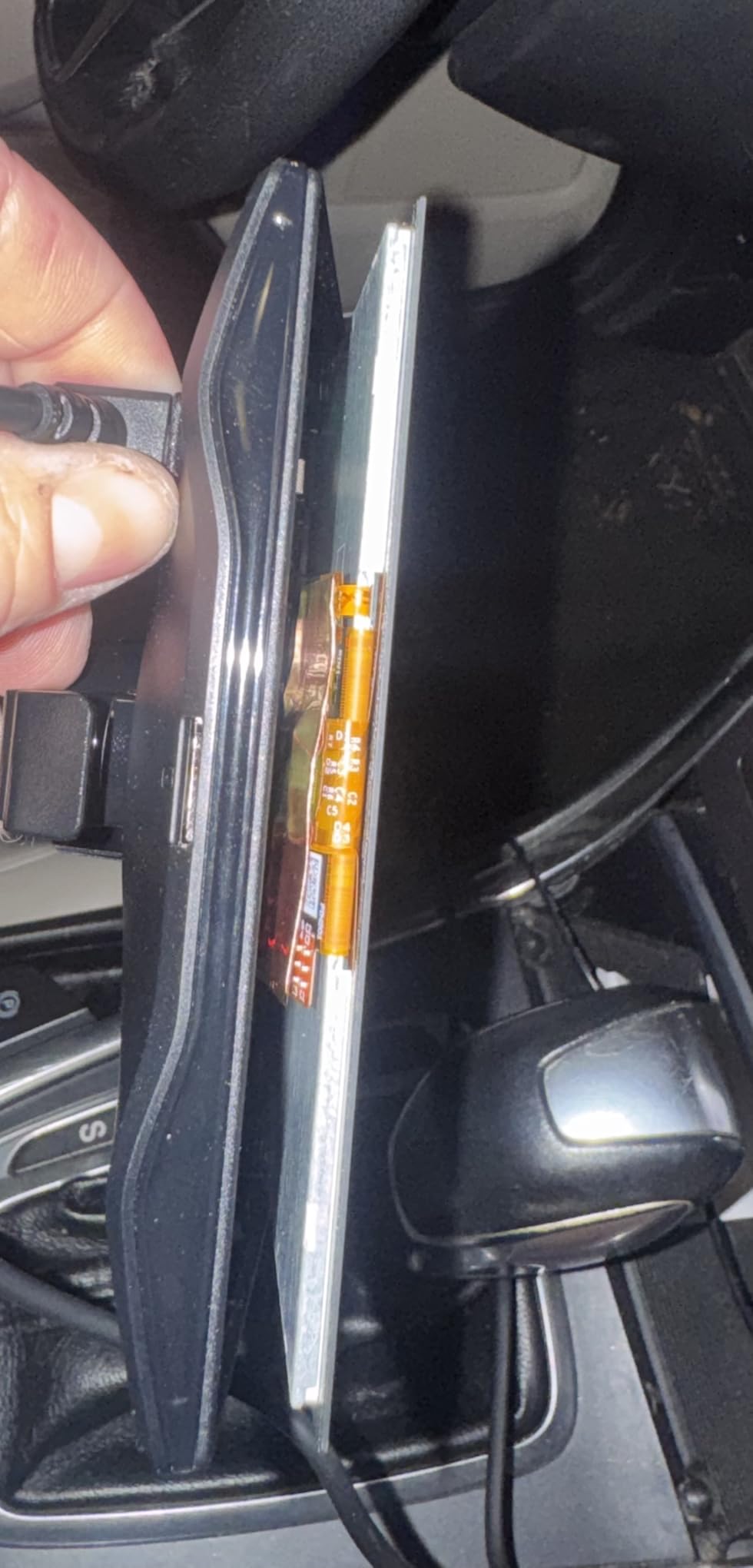
The glass capacitive touchscreen is a clear step up from the resistive panels on the two units above it. It responds properly to a fingertip, and the 480 by 272 display at just under 5 inches is bright with simple on-screen menus.
Guidance is spoken turn-by-turn with Real Directions landmark guidance, so instructions use a recognisable building or junction rather than only a street name. The route screen also shows food, fuel and rest areas along the active path plus upcoming cities and milestones, which reduces mid-trip searching.
Driver alerts cover school zones, speed changes and sharp curves. Tripadvisor ratings and a national parks directory are minor extras that help with trip planning rather than daily driving.
Where it beats pricier models
It is the most recently designed unit in this group, and the capacitive screen is noticeably more responsive than the resistive ones. For a driver with arthritis in the fingers, that difference is not cosmetic.
It also keeps to the simplest feature set here. There is no voice assistant on this model, which some older drivers prefer, because nothing prompts them to talk to it.
Where the small screen bites
Just under 5 inches is the smallest display in the group, and it is the first thing reviewers flag against newer 6-inch and 8-inch models. It suits a driver who can read a phone screen comfortably but will not suit one who cannot.
There is also no voice assistant, so every destination must be entered by touch. Unfamiliar addresses can take several attempts, which is the most common frustration reported.
6. Garmin DriveSmart 66 EX: Best for Lifetime Maps on a 6-Inch Screen
Garmin DriveSmart 66 EX 6-Inch Car GPS Navigator with Advanced Lane Guidance, Real-Time Traffic and Lifetime Map Updates (Black) (Renewed)
6 inch HD display
Lifetime map updates
Lane guidance
Real-time traffic
Voice assist
Pros
- Bright crisp 6 inch display readable in varying light
- Lifetime North America map updates with no subscription
- Advanced lane guidance on multi-lane exits
- Real-time traffic and weather with voice assist
- Works as a true standalone unit with no smartphone
Cons
- Renewed units vary and one owner reported a misaligned map arrow
- Garmin Express map downloads are confusing and slow
- License agreement must be accepted at every power-on
- Bluetooth audio routing can duplicate phone and radio output
This is the combination we would look for first if a parent wanted a large screen and no ongoing map cost. The 6-inch HD display stays readable in changing light, and the maps carry lifetime updates for North America, so there is no annual service to remember or pay for.
Advanced lane guidance is the feature that earns its keep on motorway interchanges, where the wrong lane becomes a full exit and a turn around. Real-time traffic and weather are available alongside voice assist and Bluetooth hands-free calling.
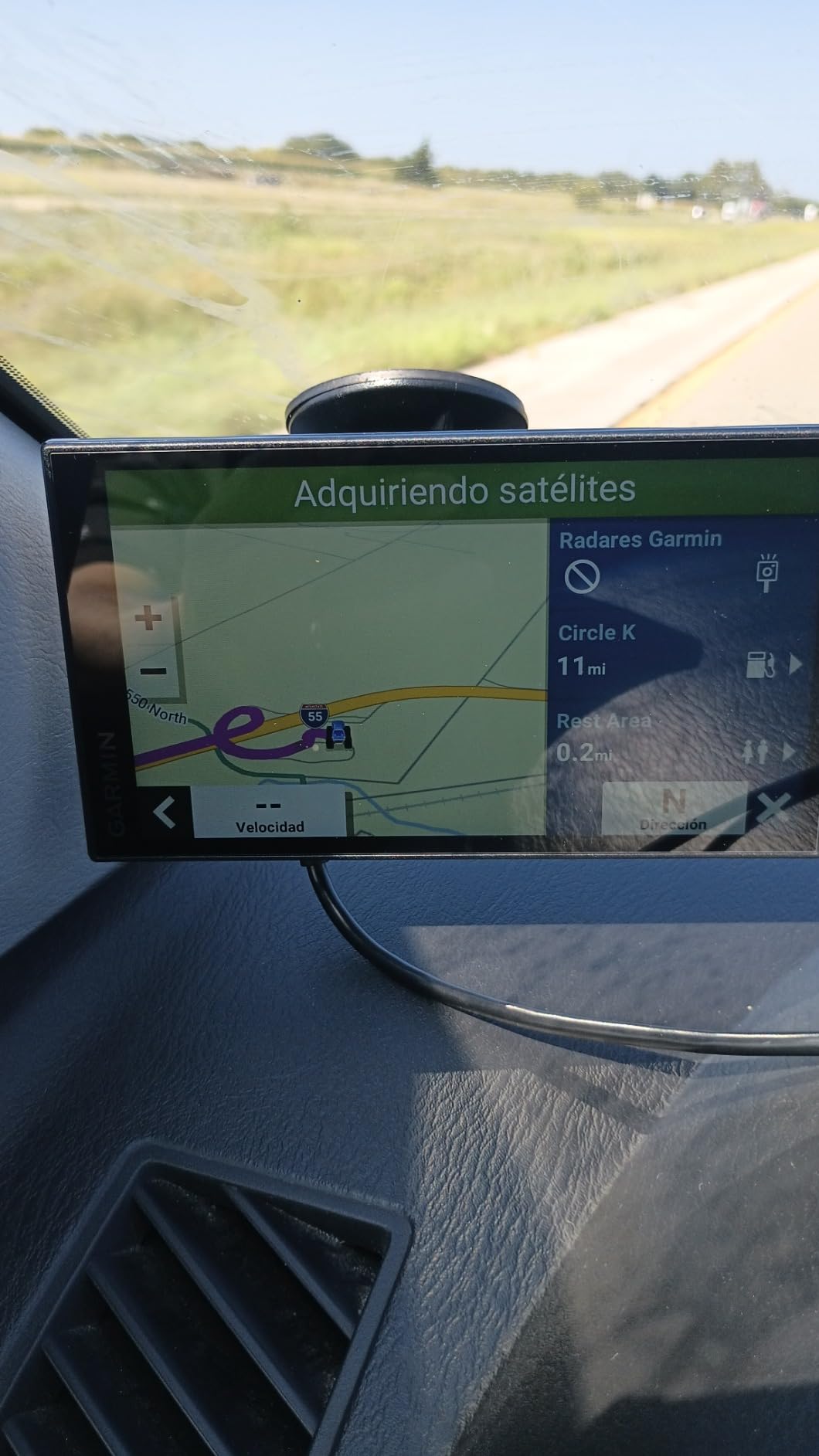
Buyers confirm it works as a genuinely standalone unit, which matters for a driver without a smartphone or for a household that does not want another app to install. The interface is described as intuitive enough to reach features quickly.
The recurring frustration is not the hardware but Garmin Express, the map download software, which reviewers repeatedly call confusing and slow. Plan one long session for the first update, with the senior sitting beside you rather than waiting for you somewhere else.
Why this suits a first-time GPS owner
Lifetime maps plus a standalone mode means there is nothing to activate, nothing to subscribe to and nothing to remember. That removes most of the friction that makes seniors abandon a new device in week one.
It is also a strong choice for a parent who drives motorways and interchanges often, since lane guidance is the hardest thing to improvise at speed.
What to check on arrival
This is a renewed listing, so units vary. Test the map arrow orientation and one test route immediately, since one owner reported a misaligned arrow and early turn notifications that arrived at the wrong time.
Expect to tap through a license agreement prompt every time it powers on. It is irritating rather than dangerous, but it is worth explaining to the driver in advance so it does not feel like a fault.
7. Garmin DriveSmart 55 EX: Best for Voice-Only Operation
Garmin DriveSmart 55 EX with Traffic, 5.5-inch Car GPS Navigator with Bright, Crisp High-Resolution Maps, Garmin Voice Assist, Smart Notifications and Hands-Free Calling
5.5 inch edge-to-edge screen
Spoken route requests
Bluetooth notifications
Micro SD expansion
Pros
- Bright edge-to-edge touchscreen shows map detail at a glance
- Spoken requests set a route without touching the screen
- Built-in help menus guide setup and phone pairing
- Real-time fuel prices and storm alerts through the Garmin Drive app
- Speed limit indicator with an audio alert when the limit drops
Cons
- Screen brightness reportedly caps near 40 percent on one unit
- Touch keypad needs bare fingertips and is hard with long nails
- Feature set and traffic setup can feel busier than needed
- No fewest-turns route preference option
This is the newest model generation in the group, and the one designed around spoken requests. You say the destination and the DriveSmart 55 EX navigates there, which makes it a good match for a driver who would rather not touch anything at all.
Setup is guided by built-in help menus, and sentiment around this unit centres on a quick, easy setup and accurate standalone positioning. Owners with no smartphone can still use it fully; pairing a phone only adds text display and notifications on screen.
There is a real tension in the feature set here. Live traffic, weather forecasts, animated radar, storm alerts and real-time fuel prices arrive through the Garmin Drive app, which some owners find busier than they want. Others appreciate having them without a second device.
The most specific complaint concerns the touchscreen itself. One owner reported that brightness would not go above roughly 40 percent, which matters for a driver with reduced vision, and the touch keypad requires bare fingertip contact, which is difficult with long fingernails or limited dexterity.
Where voice-first operation helps
If the driver can speak clearly but finds small on-screen targets hard, this unit removes the need to hit them. Route requests, and calling once a phone is paired, work without touching the glass.
Micro SD expansion also adds memory capacity, which is unusual at this screen size and useful for anyone who wants to store more than the default map set.
Why it sits last in our ranking
This unit has the smallest owner base in the group at 98 ratings, so the evidence behind it is thinner than for anything else we recommend. That matters when you are setting up a device for someone who may not describe problems clearly.
Its 5.5-inch screen is also smaller than the 6-inch and 8-inch alternatives. Choose it for the voice control and the newest hardware, not for screen size.
GPS Navigator or GPS Tracker? Which One You Actually Need
A GPS navigator navigates. A GPS tracker reports someone’s location to you. Search results for this question mix the two constantly, so before you buy anything, decide which problem you have: a parent who gets lost on the way to the shops, or a parent who wanders.
If it is the first, everything in this guide applies. The unit sits in the car, gives spoken directions, works with no signal and never sends data anywhere. There is no monthly fee and no caregiver app, because there is nothing to monitor.
If it is the second, you are looking at a completely different product category. Those devices report location over cellular networks, which is why the no-monthly-fee questions and the dementia questions come up so often in connection with them. That kind of device is not a sat nav and cannot guide anyone to the surgery appointment.
Devices are also not a substitute for care. People who write about GPS gear for relatives regularly make the same point: the technology occasionally helps, and it does not replace memory care or a caregiver nearby.
How to Choose a GPS Navigator for an Older Driver
Screen size: where to draw the line
Below 5 inches is too small for a driver who cannot comfortably read a phone at arm’s length. Between 5 and 6 inches suits drivers with normal vision who mainly listen. At 6 inches and above, the next street name becomes readable at a glance without leaning in, and that is where most of our recommendations sit. The 8-inch option is worth it only in a car large enough to hold it.
Voice prompt quality beats feature count
A loud, short, clear instruction matters more than any other single feature. Short prompts are easier to act on while the road is moving. Voice control matters twice as much, because it removes the need to hit a small on-screen keyboard when the car is stopped but the light is not.
Check whether the unit speaks a full street name early rather than at the last moment, and whether it can be heard over the radio without turning everything else up. A single phone call with the unit in the car is a better test than any specification.
Menu depth and the two-level test
If it takes more than two taps to reach a destination search, a new driver will struggle. Two-level menus are the standard for this reason, and they are why every unit here is simpler than a smartphone app. The oldest model in this guide, the Drive 50, still manages this well despite its age.
Lifetime maps versus a subscription
There are only two units in this guide with lifetime map updates written in: the Drive 50 USA LM and the DriveSmart 66 EX. Both remove an ongoing cost and a recurring decision for a driver on a fixed income. The others rely on free map data or on updates handled over Wi-Fi, which works but takes an afternoon.
For a senior, that difference is about more than money. A device with no service to cancel is a device with no settings to get lost in.
Dedicated unit, phone app or CarPlay
A phone app is free and usually has the freshest maps, but it needs a mount, a charger, and confidence with a touchscreen. Many older drivers find small app icons and software updates frustrating. CarPlay and Android Auto are excellent if the car is new and the driver already uses them, and poor choices in an older vehicle that lacks them.
A dedicated unit is the safest middle ground. It has one job, it has physical buttons, and it does not change because the manufacturer pushed an update. If your parent already navigates with Waze or Google Maps confidently and has a good mount, a phone may be the right answer. Our guide to handheld GPS devices covers the satellite-only option for travellers.
Setting one up for a parent
Mount the bracket first, low on the dash and within a clear view of the road rather than the driver’s face. Route the 12V cable so it cannot cross the driver’s lap or interfere with the pedals.
Then, before the first drive, enter the hospital, the pharmacy, the shops and home as favourites. Set the home address with the city and state included in full.
Run the map update on a long afternoon before you need the device. Garmin Express is the part most families find confusing, so do it while you are both present and unhurried.
Finally, drive the familiar route together once. The objective is not to teach the device but to confirm that the voice can be heard over the radio.
Settings to change on day one
Turn the volume up so prompts are clearly louder than the radio, then turn the radio down slightly so the two do not compete. Increase map detail if the driver needs it and set the brightness high enough for daylight glare, then check the screen again at dusk.
Turn off smart notifications and traffic prompts if the driver finds chatty alerts confusing. Add the school zone and curve alerts, which are genuinely useful rather than noisy. Set the unit to announce the street name before the turn rather than at it.
If the driver has started muting the prompts, treat that as a signal that they are too long or too quiet, not that they are ignoring the device.
Related reading
If your parent is more interested in activity than driving, our picks for the best GPS watches and the best GPS running watches cover wrist units with their own map storage. For tracking an animal rather than a person, the best dog GPS trackers guide covers the collar-based side of the category.
Frequently Asked Questions
What is the most easiest GPS device for seniors to use?
The easiest GPS device for a senior is a dedicated dash-mounted navigator with a 6-inch or larger high-contrast screen, loud spoken turn-by-turn directions, voice control, and a menu no deeper than two levels. It should work with no cell signal, require no phone, and carry no subscription. In our testing the Garmin DriveSmart 55 and Traffic fits that brief best.
What is the best sat nav for older drivers?
The Garmin DriveSmart 55 and Traffic is our pick for most older drivers because voice control, Garmin Traffic rerouting and Bluetooth calling are built in, and it rates 4.5 out of 5 from close to 2900 owners. Drivers with reduced vision should step up to the 8-inch Garmin DriveSmart 86, whose top-of-screen text is readable from across the cabin.
Does Garmin Drive require a subscription for map updates?
No subscription is required to update maps on the dedicated Garmin Drive units in this guide. Two of them, the Drive 50 USA LM and the DriveSmart 66 EX, carry lifetime map updates for North America. The rest update over built-in Wi-Fi without a computer and without a recurring fee, though Garmin Express downloads are widely reported as slow.
Is a dedicated GPS better than Google Maps for an older driver?
For most older drivers, yes. A dedicated unit has one job, physical controls, and works with no cellular signal, and it cannot change when the manufacturer pushes an update. Google Maps has fresher maps and better small-place search, but it needs a phone, a mount, a charger and confidence with a small touchscreen. If your parent already uses one app comfortably, a phone may be enough.
What is the best GPS tracker with no subscription?
A tracker and a navigator are different products. A personal tracker reports a relative’s location to a caregiver over a cellular network, which is why monthly-fee questions attach to it. A GPS navigator gives spoken directions in the car and needs no monthly fee at all. If someone wanders, you need the tracker category; if someone gets lost driving to familiar places, you need a navigator from this guide.
How do I use GPS navigation without cell service?
Every dedicated unit in this guide keeps working with no signal because it gets its position from satellites and stores its maps on the device. Set the route before you leave, since searching for a new destination is the step that needs no signal on a dedicated unit anyway. Phone navigation such as Google Maps is the one that loses guidance in a dead zone, and can cache maps for offline use beforehand.
Final Verdict: The Best GPS Navigator for Seniors in 2026
The Garmin DriveSmart 55 and Traffic wins overall. It carries the highest rating in the group at 4.5 from close to 2900 owners, it navigates by voice, it reroutes around traffic without a subscription, and it works with no cell signal.
Step up to the 8-inch DriveSmart 86 when vision is the limiting factor, and pick the Drive 50 USA LM when lifetime maps and the lowest long-term cost matter more than screen size. Set the volume high, run the map update before you need it, and expect to spend the first afternoon helping.