
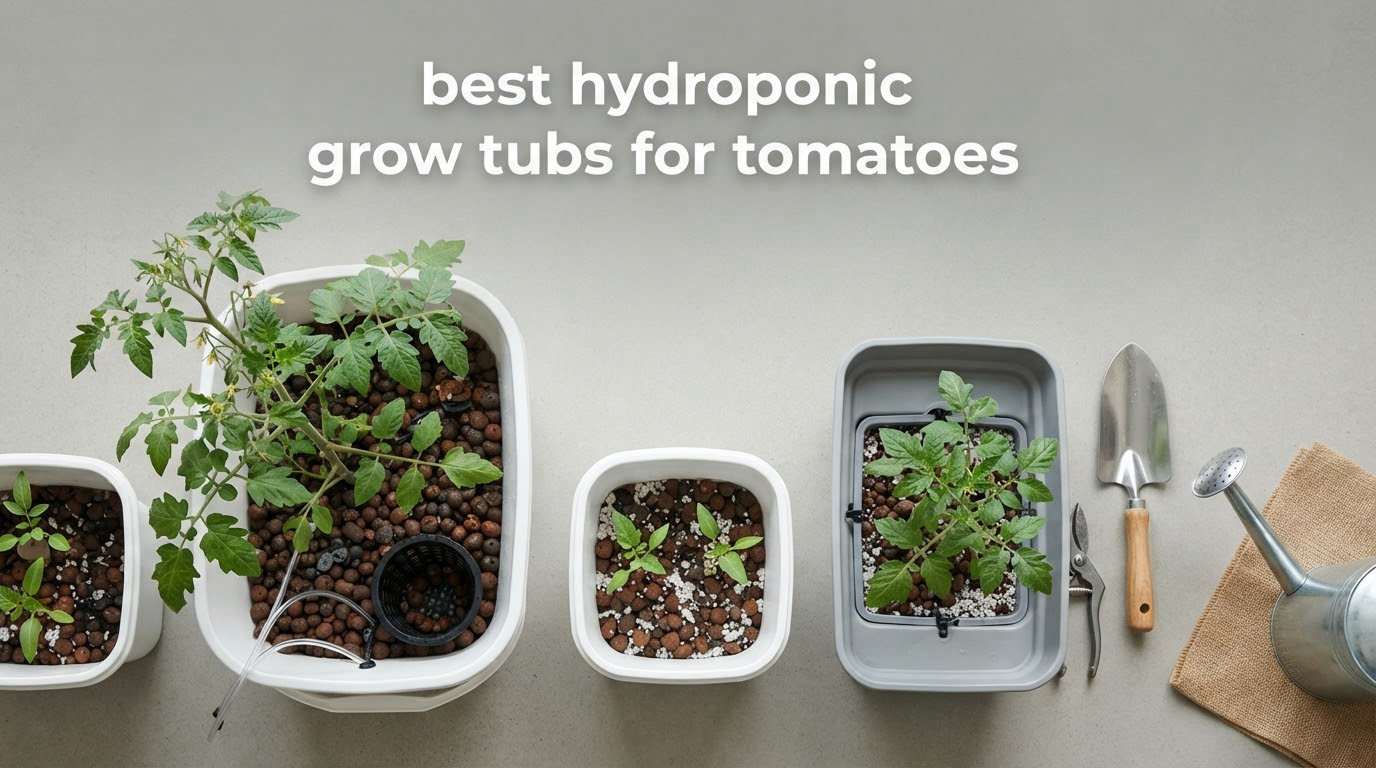
Tomatoes are heavy feeders, and that single fact decides which hydroponic grow tubs work. The best options for tomatoes are an active deep water culture (DWC) bucket with a net-pot lid and a running air pump, a top-drip bucket that recirculates nutrient solution over the roots, or a recirculating DWC (RDWC) set with a shared reservoir. Passive Kratky buckets and NFT channels are poor fits, because a fruiting tomato drinks far more water and nutrient than a passive jar can hold in reserve.
We compared 11 bucket-based systems for this guide, from single 5-gallon tubs to an eight-site recirculating kit, and rated every one on reservoir volume, air delivery, net-pot sizing and how much actual day-to-day handling it demands. Every tub here is an opaque food-grade bucket or food-grade plastic vessel. We left out countertop pod gardens, which can hold a cherry tomato at best, and NFT channels, which suit leafy greens rather than staked fruiting plants.
One honest note before we start: we weighed specs, ratings and reviewer reports carefully, but nobody plants a tomato in an Amazon warehouse. Expect to spend the first two weeks learning your own system, and treat every number in this guide as a spec to verify on your setup rather than a promise.
Table of Contents
Top 3 Picks for Best Hydroponic Grow Tubs for Tomatoes
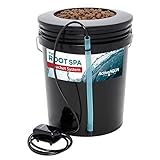
Hydrofarm Root Spa 5 Gallon DWC
- 5 gallon DWC bucket
- 8 inch net pot lid
- air pump and air hose
- leak tight grommet fittings

PowerGrow DWC Kit 5 Gallon
- 5 gallon HDPE bucket
- 6 inch basket lid
- 44 GPH air pump
- water level indicator and drain

VIVOSUN DWC 4 Bucket Top Drip Kit
- 4x 5 gallon buckets
- top drip ring per bucket
- 25 L per min air pump
- visual level indicators
All 11 Hydroponic Grow Tubs Compared in 2026
| Product | Specifications | Action |
|---|---|---|
| Hydrofarm Root Spa 5 Gallon DWC Bucket System |
|
Check Latest Price |
| PowerGrow Systems DWC Kit 5 Gallon |
|
Check Latest Price |
| VIVOSUN DWC System with Top Drip Kit 4 Buckets |
|
Check Latest Price |
 ActiveAqua Root Spa 4 Bucket DWC Grow Kit ActiveAqua Root Spa 4 Bucket DWC Grow Kit |
|
Check Latest Price |
 VEVOR DWC Hydroponic System 8 Buckets VEVOR DWC Hydroponic System 8 Buckets |
|
Check Latest Price |
 PowerGrow Bubbler Bucket Kit 4x 5 Gallon PowerGrow Bubbler Bucket Kit 4x 5 Gallon |
|
Check Latest Price |
 Atwater HydroPod DWC Bubble Bucket Atwater HydroPod DWC Bubble Bucket |
|
Check Latest Price |
 LAWNFUL 4 Hydroponic Buckets Pod Kit LAWNFUL 4 Hydroponic Buckets Pod Kit |
|
Check Latest Price |
 Mars Hydro DWC System 2 Buckets with Top Drip Mars Hydro DWC System 2 Buckets with Top Drip |
|
Check Latest Price |
 Spider Farmer DWC System 2 Buckets Spider Farmer DWC System 2 Buckets |
|
Check Latest Price |
 Growell Vertical System 32 Buckets Growell Vertical System 32 Buckets |
|
Check Latest Price |
1. Hydrofarm Root Spa 5-Gallon DWC Bucket – the reference single-plant tub
Hydrofarm RS5GALSYS Root Spa Deep Water Culture Bucket System, 5 Gallon, black
5 gallon DWC bucket
8 inch net pot basket
Air pump plus air hose
Includes grommet and elbow fittings
Pros
- Most reviewed tub in this group
- Tight grommet fittings stay leak proof
- Air pump can feed multiple air stones
- Simple first time assembly
Cons
- Included air pump is underpowered for multiple stones
- Buckets cannot be plumbed together
- Water changes are done one bucket at a time
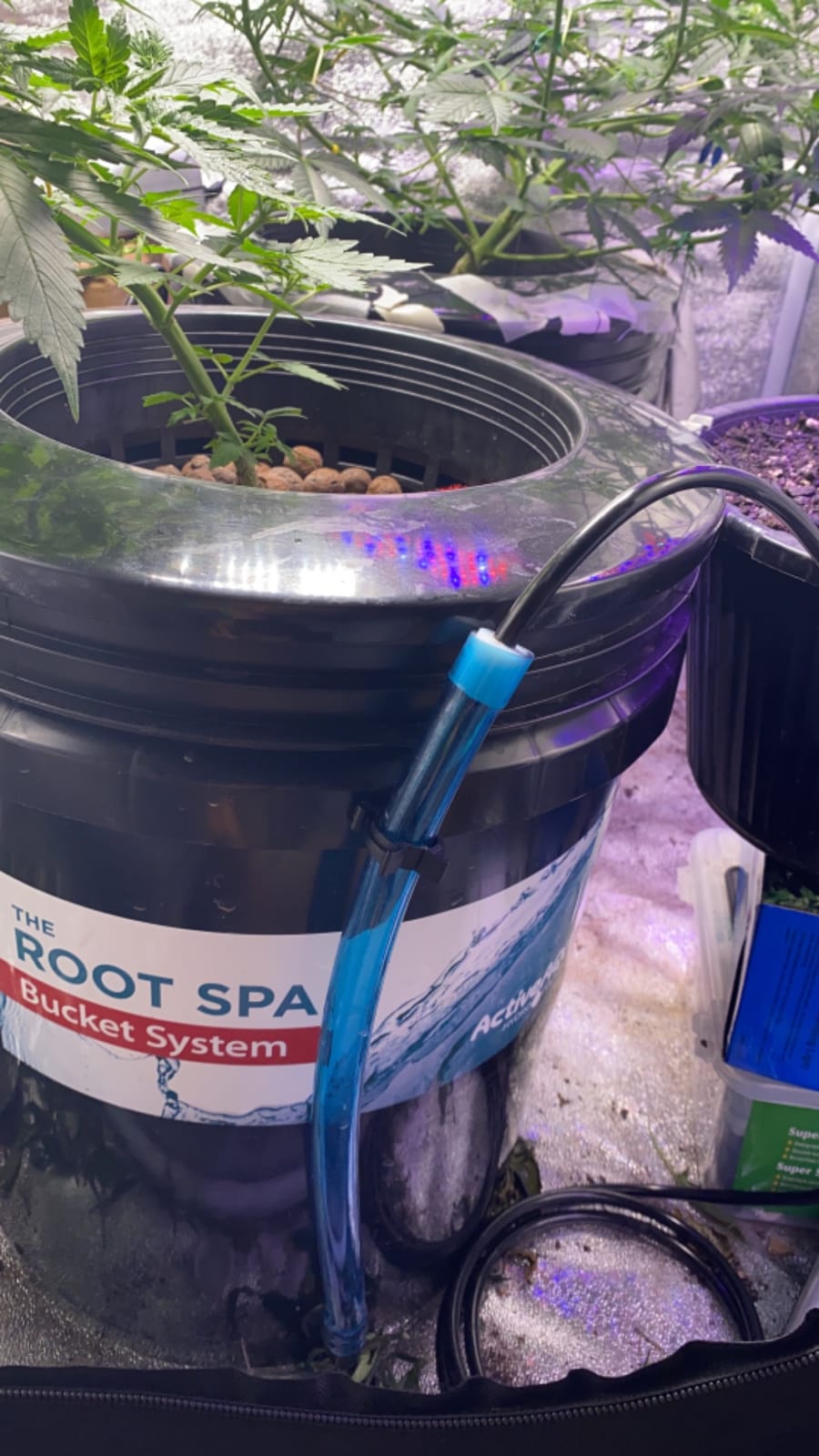
This is the tub most first-time growers end up with, and after working through the range, it is the one I would hand to a friend starting out. The 5-gallon black bucket, the 8-inch basket lid and the multi-purpose air hose are a proven combination, and the fit between lid and bucket is tight enough that light does not reach the solution.
That light-tight fit matters more than most spec sheets admit. Tomato roots in a partially lit reservoir grow algae, and algae competes with the roots for the same dissolved oxygen your air pump is trying to supply. An opaque tub with a sealing gasket removes an entire failure category before it starts.
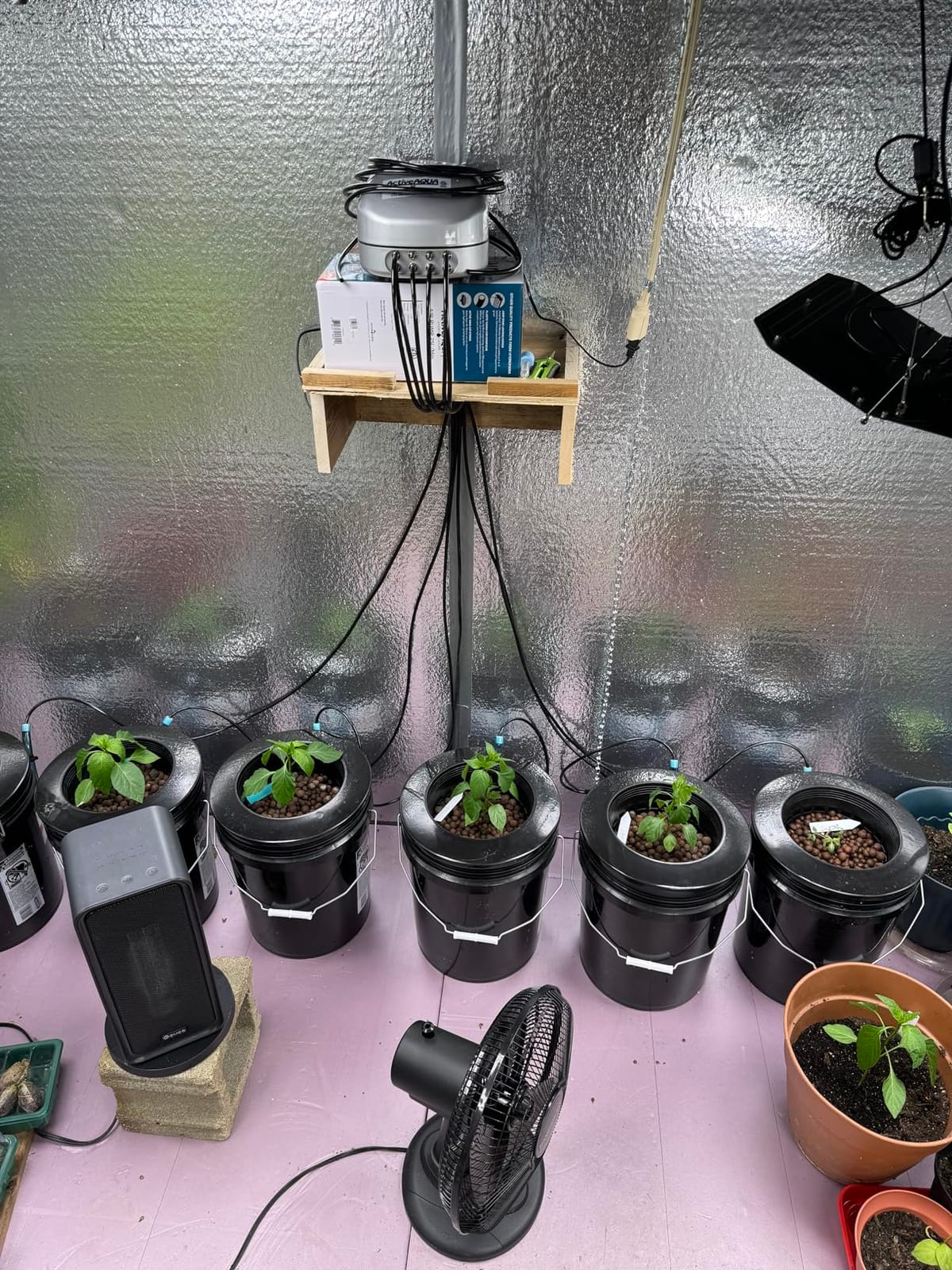
Assembly is genuinely simple: one grommet hole, one elbow fitting, a length of quarter-inch black tubing and the air pump. One reviewer described a full set-up in about half an hour with no tools beyond a pair of scissors, and others report clean, leak-free operation after the first week of use.
The honest drawback is the air pump. It is a starter pump, and once you add a second air stone or push a large indeterminate variety, it becomes the limiting factor. Reviewers also note the buckets are not plumbed together, so a water change means draining four or five buckets one at a time rather than flipping a valve.
What this tub handles well
One plant, one heavy feeder. A determinate variety, a cherry type or a dwarf cultivar fits comfortably in five gallons, and the 8-inch basket gives a large root plug room to spread rather than girdling the stem.
The fittings are the quiet strength here. Grommets that stay sealed when tubing is nudged or the bucket is bumped are the difference between a system you forget about and one you patch weekly.
What this tub cannot do
It does not scale by plumbing. There is no shared reservoir, no drain line and no auto top-off, so every bucket becomes a manual chore as soon as you run more than a couple of plants.
It is also sold without growing medium. Clay pebbles are not in the box, and for a first tomato you will want to buy them or start in rockwool plugs and top-dress with clay.
2. PowerGrow Systems DWC Kit 5 Gallon – the highest rated all-in-one
Deep Water Culture (DWC) Hydroponic Bucket Kit 5 Gallon, 6 inch
5 gallon HDPE bucket
6 inch basket lid
44 GPH air pump
Rockwool plugs and medium included
1 year warranty
Pros
- Highest rated kit we reviewed
- Everything except plants is in the box
- Pre-fitted water level indicator
- Quiet pump and 30 minute setup
Cons
- Included air pump is on the weak side
- Water changes get hard when roots fill the bucket
- Topping up is daily during peak fruiting
At 4.6 stars across 700 reviews, this is the best rated kit we pulled for this roundup, and the rating is not accidental. The difference between this and most single-bucket systems is completeness: bucket, lid, 44 GPH air pump, air tubing, air stone, growing medium, rockwool seed plugs, a pre-attached water level indicator and a bucket drain all ship in one box.
For a beginner, that matters more than any individual spec. The missing-item list on a cheaper tub is the pH kit, the medium, the extra fittings and the level gauge, and every one of those is a reason a first grow stalls in week two.
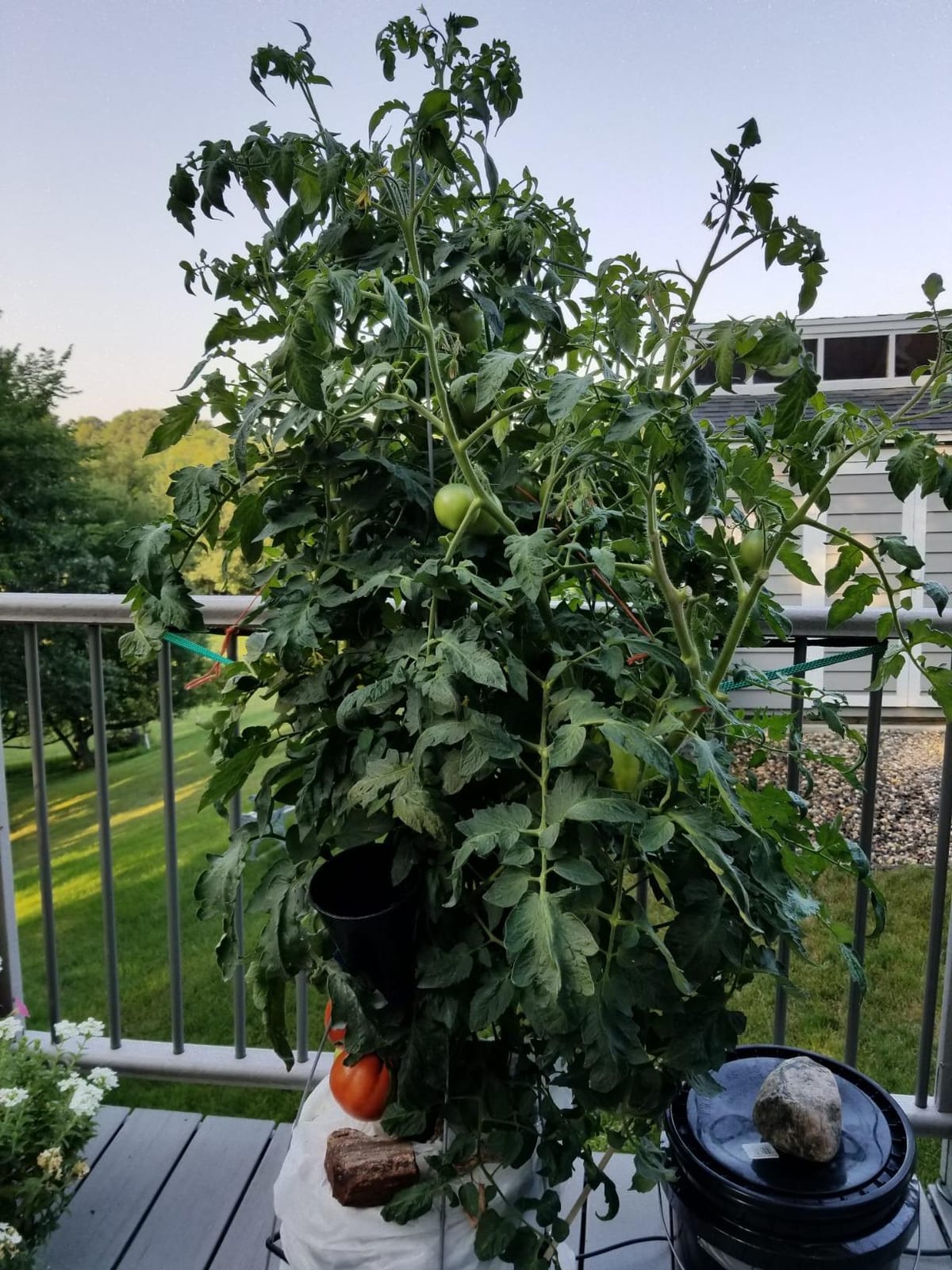
The pre-installed blue water level indicator is the sleeper feature. On a fruiting tomato, daily water use climbs fast, and a visible gauge turns a guess into a fifteen-second check. Several reviewers single this out as the reason their plants never went thirsty during a heat wave.
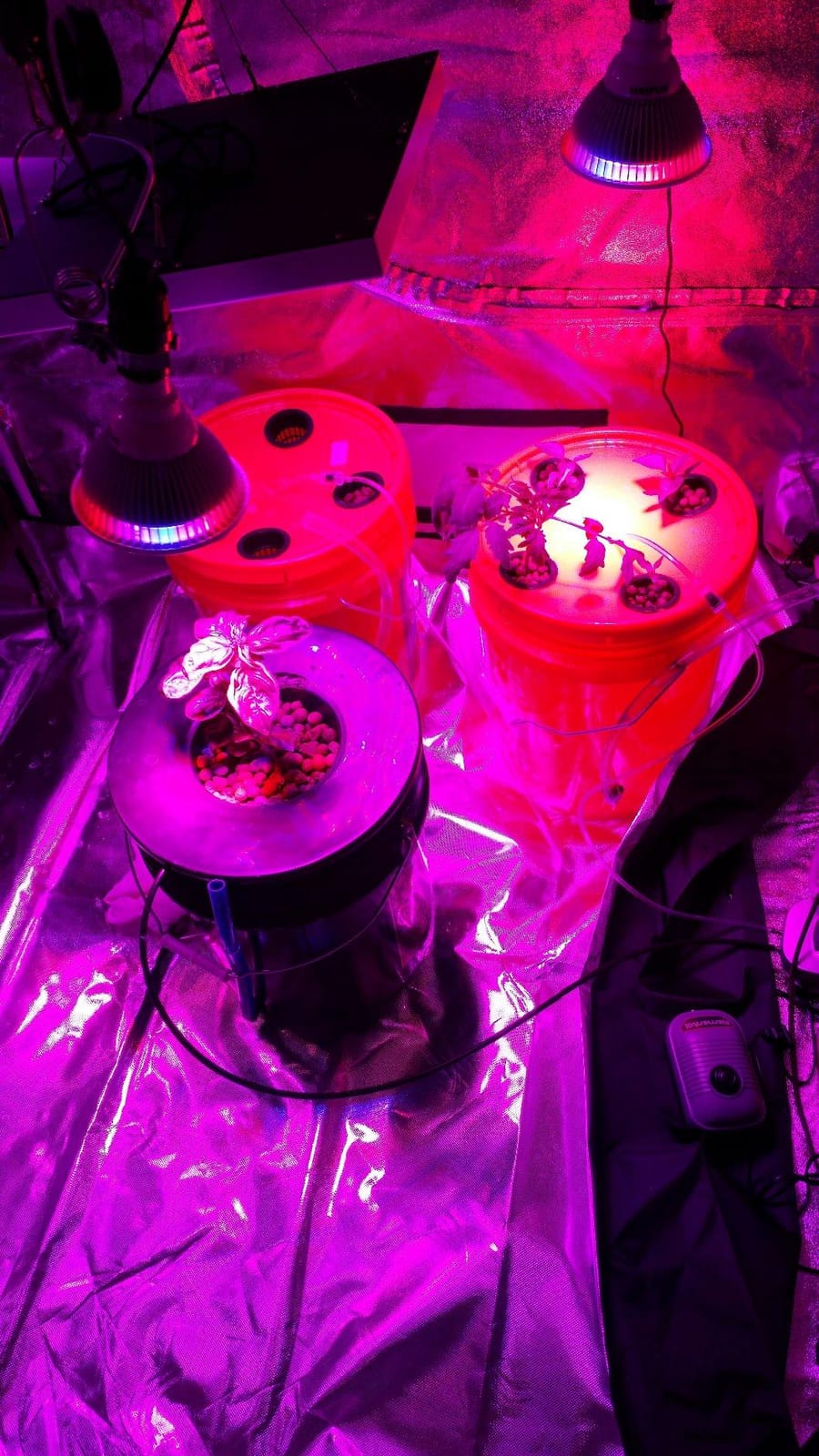
One owner reported a single Rutgers plant in this bucket yielding about 38 tomatoes, with individual fruit up to 19.3 ounces. That is an anecdotal report rather than a controlled trial, but it lines up with what hydroponic tomato growers generally see from a healthy determinate plant.
Why this tub earns the top rating
Nothing in it needs replacing before you start, and nothing in it needs explaining. The pump, the lid, the medium and the seed plugs are all matched, which removes the most common first-grow failure mode.
The drain fitting is worth noting too. It is the only single-bucket system in this group where a full water change does not mean tipping 20 pounds of wet clay pebbles across a room.
Where it falls short
The air pump is a small starter unit. It is fine for one bucket and one air stone, which is exactly what this kit is, but it will not carry a second bucket if you scale later.
Water changes still get unpleasant once roots fill the bucket. A mature tomato’s root mass is dense by design, and pulling it out to empty and refill the reservoir is the routine labor every DWC grower eventually has to schedule.
3. VIVOSUN DWC 4 Buckets with Top Drip Kit – the best value multi-site kit
VIVOSUN DWC Hydroponics Grow System with Top Drip Kit 4 Buckets
4x 5 gallon buckets
8 inch baskets
Top drip ring per bucket
25 L per min air pump
12m of air tubing
Pros
- Complete four site package
- Top drip ring keeps solution moving
- Fits a 2x4 tent
- Detailed instruction booklet
Cons
- Air pump and drip ring are loud
- Flow valves adjust only about a quarter turn
- Tubing is hard to push through grommets
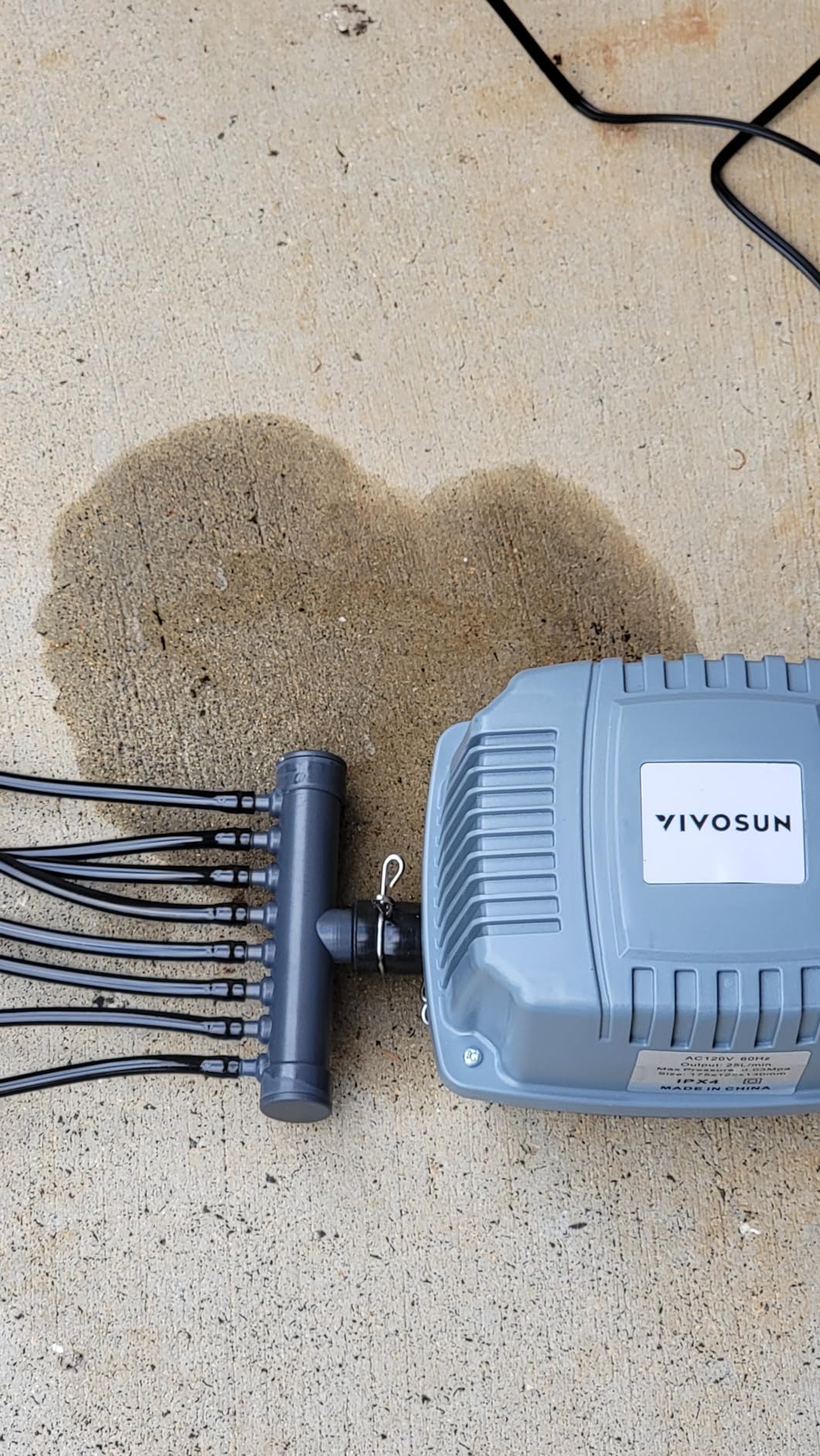
This is the kit that most closely matches what people mean by a hydroponic grow tub for tomatoes at a realistic scale. Four 5-gallon buckets, four 8-inch baskets, a top drip ring on each, and a 25 L per minute air pump feeding four air stones through 12 meters of tubing.
The top drip ring is the important design choice. Instead of leaving roots sitting in still solution, a small stream recirculates over the root zone, which keeps the upper roots moist and the solution moving. Growers report strong results on tomatoes, cucumbers and peppers over multi-month runs.
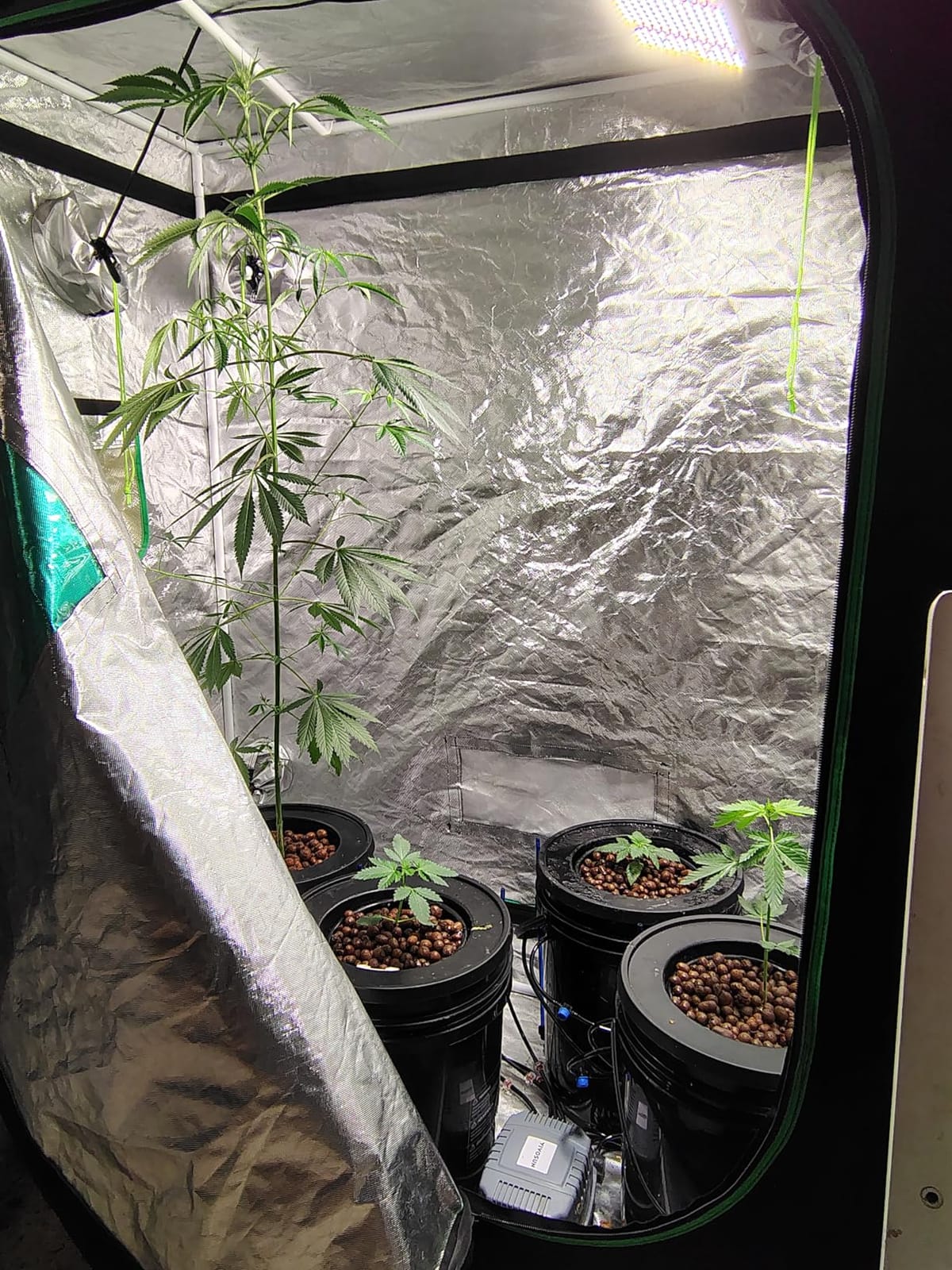
Because each bucket is an independent growing site, you can run a staked tomato in one, cherry tomatoes in another and lettuce in the rest. That flexibility is the argument for a multi-bucket kit over a single tub, and it is why this shape of system keeps appearing in growers’ setups.
Set-up is quick. Most owners report 10 to 15 minutes with scissors as the only tool, and the instruction booklet includes actual grow information rather than just part diagrams.
What works about the design
Four independent sites mean one sick plant does not take out the whole system, and a water change on one bucket does not disturb three healthy tomatoes. That isolation is worth more than raw capacity in a home setup.
The visual water level indicator on every bucket is another quiet win. At a glance you can see which of four plants has been drinking heavily, which is usually the plant putting on fruit.
What to watch out for
Noise is the first complaint. The air pump and the drip ring are both audible in a quiet room, so this is a grow-tent or basement system rather than a living-room one.
Second, the drip flow valves have almost no adjustment, roughly a quarter turn, and the drip ring tends to sputter rather than flow continuously. If you want a steady top feed, you will be adjusting at the pump instead of at the bucket.
4. ActiveAqua Root Spa 4 Bucket System – the quiet raw-air four
ACTIVEAQUA RS5GAL4SYS Root Spa 5 Gallon Hydroponic 4 Bucket Deep Water Culture Grow Kit System with Multi-Purpose Air Hose and Air Pump, Black
4x 5 gallon buckets
8 inch baskets
Multi output air pump
Air pumped raw, no stones needed
1 year warranty
Pros
- No air stones to harbor biofilm
- Practically silent pump
- No leaks reported after assembly
- Good tomato results in dry conditions
Cons
- Growing medium not included
- No way to drain a bucket without lifting it
- Buckets cannot share a reservoir
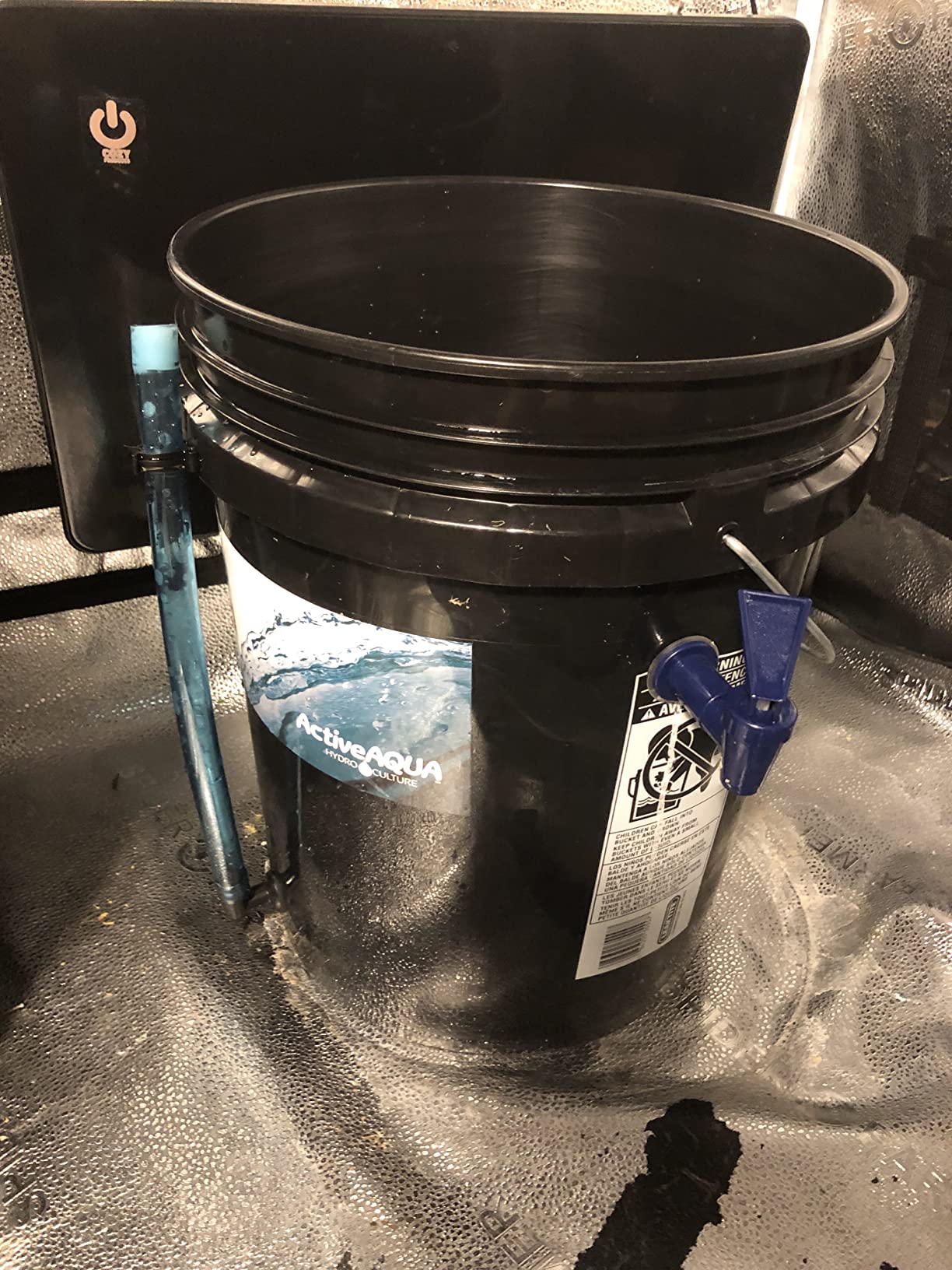
This is the four-bucket sibling of the classic Root Spa design, and it makes one deliberate change: the air pump pushes raw air into the solution rather than feeding air stones. No stones means no stone surface for biofilm to colonize, which removes a cleaning item and a common source of slow root-zone problems.
Reviewers also report the pump is practically silent, which makes this the pick if your system lives anywhere other than a detached shed. The buckets are black plastic with watertight basket seals, and multiple owners report no leaks once assembled.
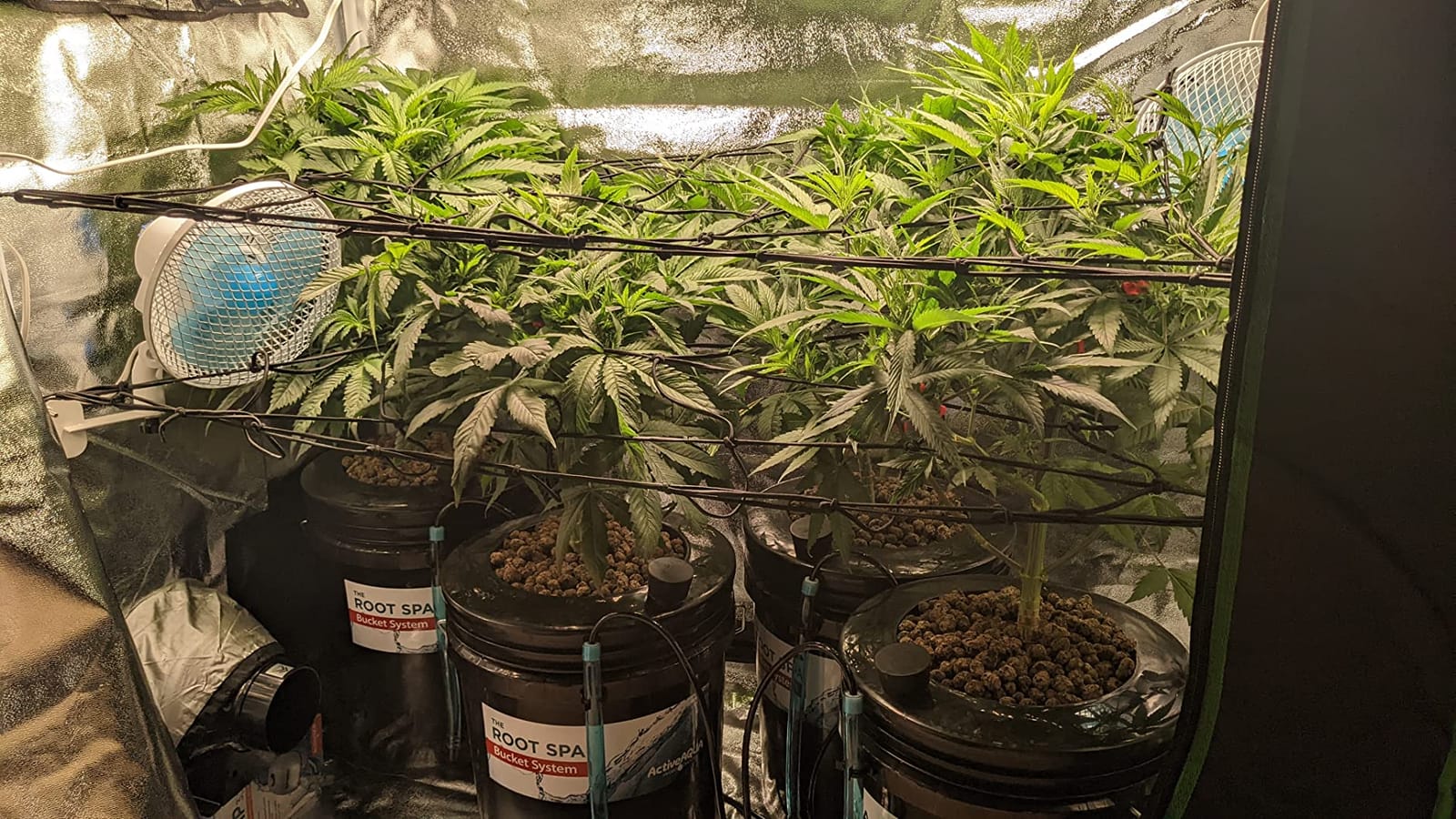
The raw-air design is a genuinely interesting approach to oxygen delivery. A bubble stone diffuses air into fine bubbles that hang in the water column; a raw air line creates a rolling circulation that moves the whole volume. Either can carry a tomato, and this one has fewer parts to go wrong.
Owners commonly use extra buckets from this kit as a rotation set, keeping a clean empty tub on hand so a water change does not stall a plant mid-day. That is a practical habit worth copying.
Why growers like it
Fewer consumables. There is no air stone to replace every few months, and there is no stone to clog with nutrients or biofilm, which is a common reason a DWC system slowly loses oxygenation.
It also works well in arid conditions. Several owners report consistent tomato growth in dry air, where constant transpiration is pushing water into the bucket faster than in a humid greenhouse.
Why it might not suit you
There is no growing medium in the box, so plan on buying clay pebbles or a comparable medium separately. For a beginner, that extra step is the main argument for the PowerGrow kit instead.
Draining is also awkward. With no plumbed reservoir, an empty bucket means lifting it or siphoning it, and a full 5-gallon bucket of solution is genuinely heavy for a garden bed setup.
5. VEVOR 8 Bucket DWC System – the most sites in one kit
VEVOR DWC Hydroponic System, 5 Gallon 8 Buckets, Deep Water Culture Growing Bucket, Hydroponics Grow Kit with Pump, Air Stone and Water Level Device, for Indoor/Outdoor Leafy Vegetables
8x 5 gallon PP buckets
5 inch baskets
10W air pump at 25 L per min
12m air hose,8 air stones
Water level device per bucket
Pros
- Eight growing sites in one package
- Strong aeration to every bucket
- Water level device on each bucket
- Check valves help prevent leaks
Cons
- 5 inch baskets are smaller than competing kits
- Eight buckets need frequent water changes
- 25.4 pounds when full
- Oversized for a small tent
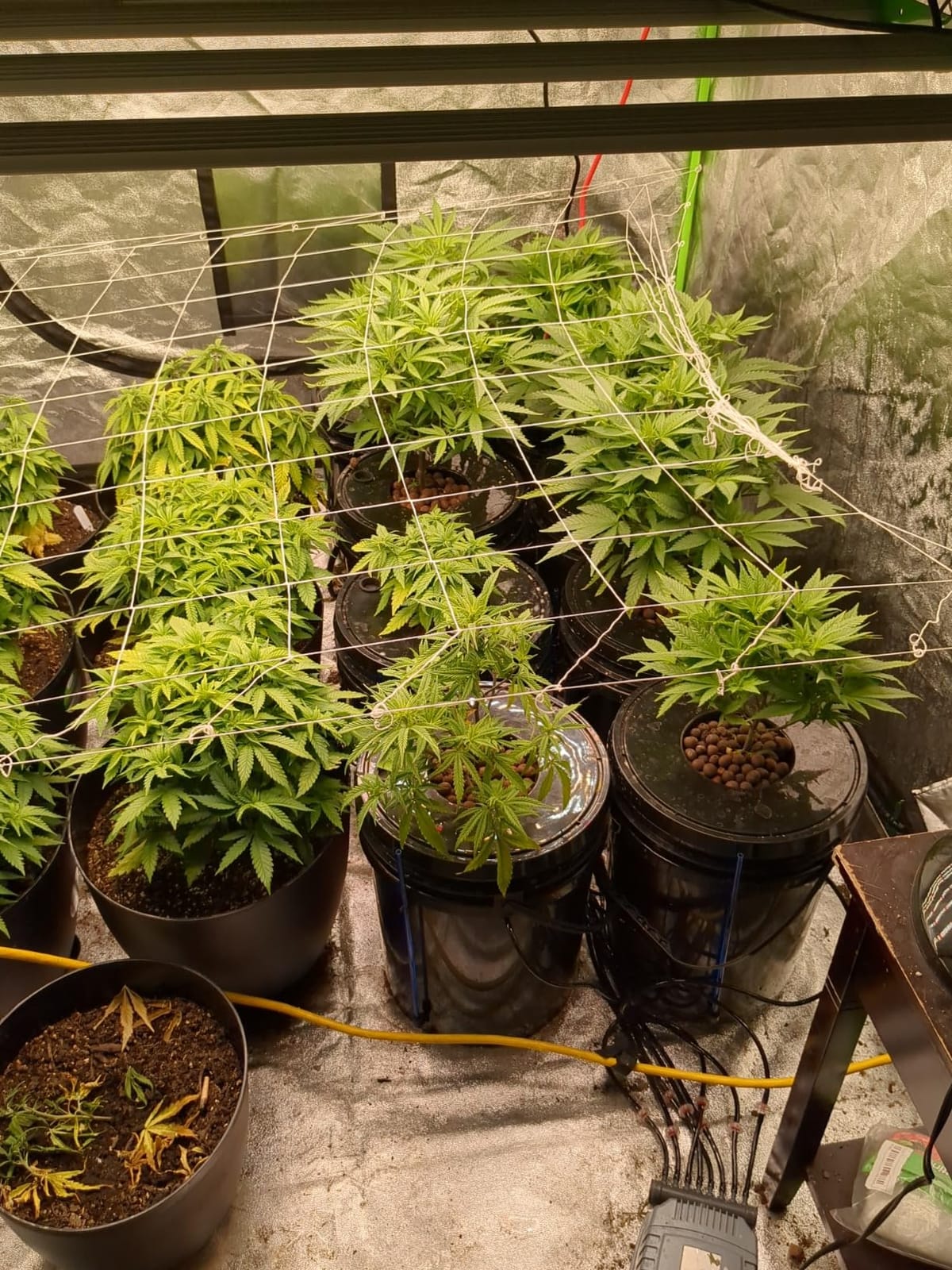
Eight 5-gallon polypropylene buckets, each with a 5-inch basket, fed by a single 10 watt pump moving 25 liters per minute. The recirculating layout with tight seals and inline check valves is what makes eight buckets practical, because reverse flow between buckets is what usually turns a large kit into a leaky one.
A water level device on each bucket means you can walk down a row and check eight reservoirs at a glance without lifting a lid or crouching to see a line through plastic.
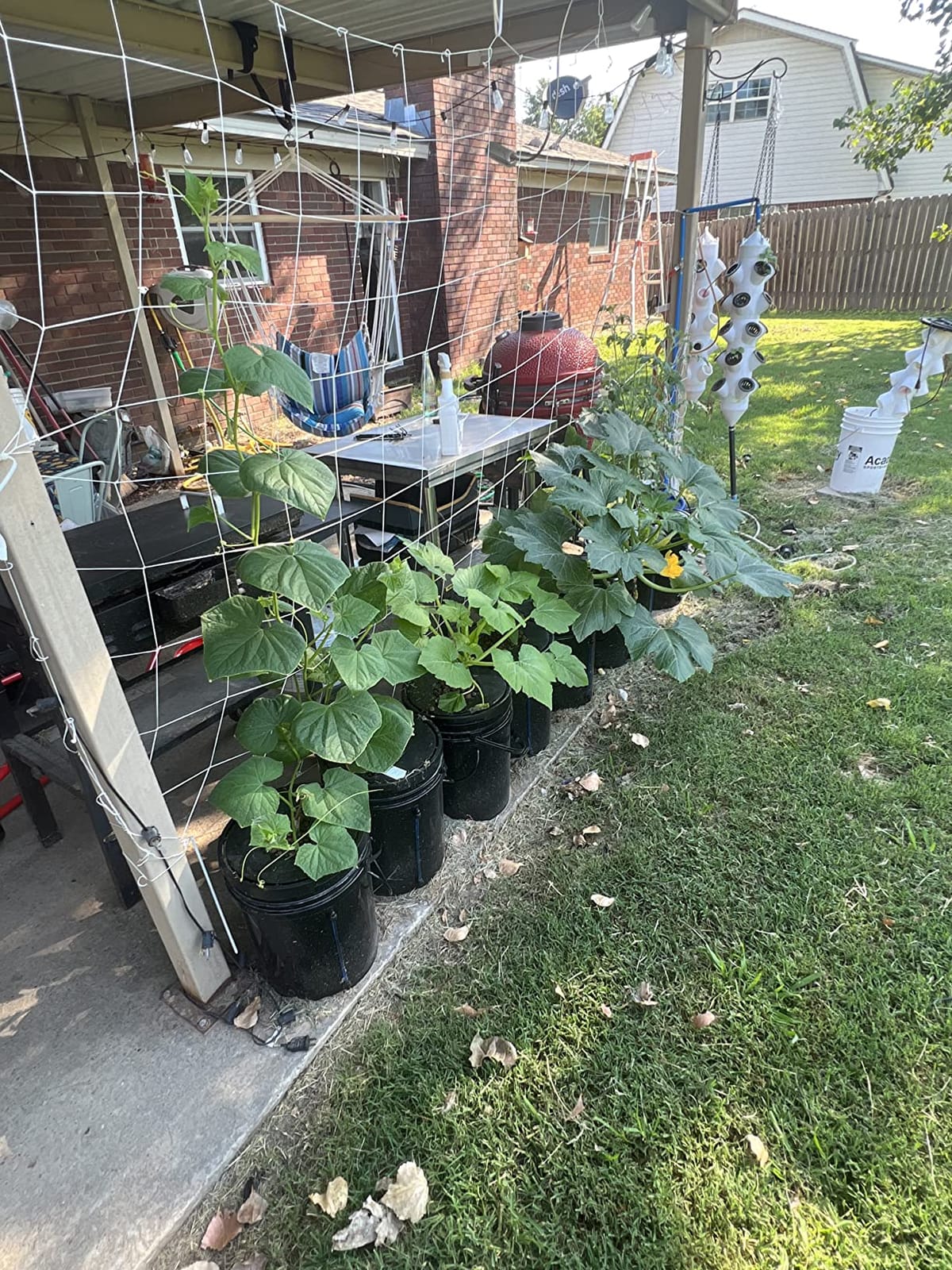
Where this system is genuinely strong is capacity per purchase. If you have a dedicated room or a greenhouse bench and want a block of fruiting plants rather than a single trial plant, eight sites is the number that makes maintenance scheduling workable.
Air delivery is the other strength. Owners consistently report strong root growth, and with tomato roots this dense, dissolved oxygen at the bottom of the bucket is usually the limiting factor in a home system.
When eight sites is the right call
Group production. If you want a rotation so that a water change on one bucket never leaves a fruiting plant sitting in depleted solution, more sites is how you buy that flexibility.
It is also the natural upgrade path. Buy one set, learn the water chemistry on eight simple buckets, then add a timer-controlled top-drip ring per bucket as each site graduates from leafy greens to tomatoes.
Where the trade-offs show
The 5-inch baskets are the main complaint. Competing kits in this roundup use 6-inch and 8-inch baskets, and a larger net pot gives a mature tomato’s root plug more room before it becomes a wall of roots you have to move for every water change.
Size also cuts both ways. At 25.4 pounds empty, this is heavy to move once filled, and eight buckets of solution is a meaningful amount of water to change on a schedule. In a small indoor tent, it is simply more system than you need.
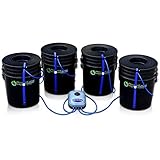
6. PowerGrow Bubbler Bucket Kit 4 – the four-site system made in the USA
Deep Water Culture (DWC) Hydroponic Bubbler Bucket Kit by PowerGrow ® Systems (4) 5 Gallon – 6″ Buckets
4x 5 gallon buckets
6 inch basket lids
Air pump, lines and stones included
Level indicator and drain per bucket
1 year US warranty
Pros
- Four independent growing sites
- Level indicator and drain on every bucket
- Made in the USA with warranty
- Complete kit in one box
Cons
- Costs more per bucket than peer kits
- Six inch lids are smaller than 8 inch baskets
- Sales rank is weak against similar systems
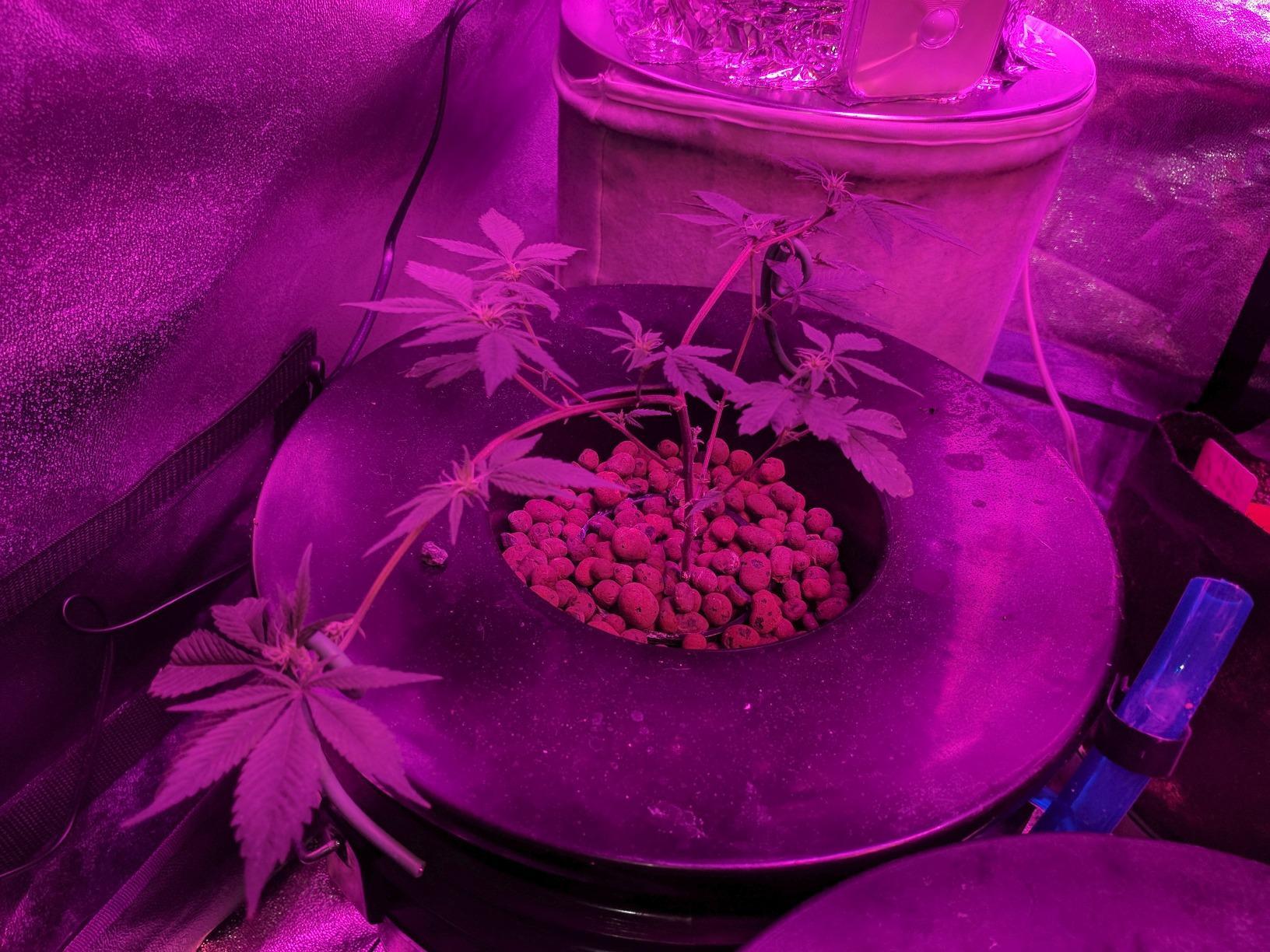
This is the four-bucket expansion of PowerGrow’s popular single-bucket kit, and it keeps the feature that makes that kit good: every bucket has its own water level indicator and its own drain. Draining four buckets independently is more work than a shared reservoir, but it means a problem in one site does not contaminate the other three.
Everything ships together: buckets, six-inch basket lids, air pump, air lines, air stones and the indicators. Four independent growing sites in one system also means four different crops, which is useful if you want tomatoes alongside herbs and greens.
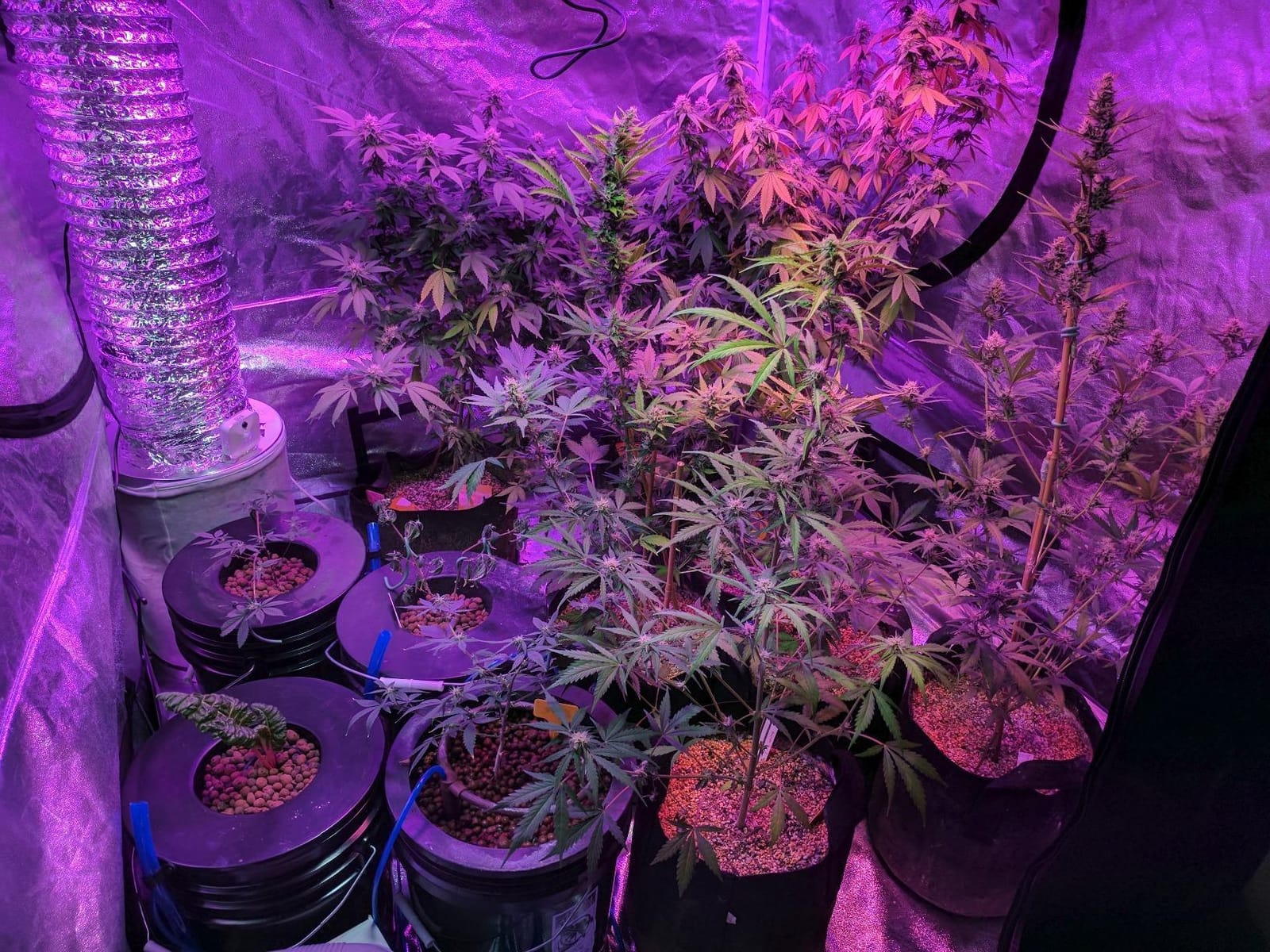
Owners rate it consistently at 4.4 stars, and the complaints are narrow: the per-bucket cost is higher than comparable multi-bucket kits, and the six-inch lids are smaller than the eight-inch baskets on the Hydrofarm and VIVOSUN systems.
That smaller lid is the specification to think about. A six-inch net pot is still workable for a staked cherry or determinate tomato, but if you intend to run a large indeterminate variety with a heavy fruit load, the wider basket gives the root ball more room.
What it is best at
Crop diversity across four sites. Tomato, pepper, cucumber and a lettuce bucket on the same air pump is a straightforward way to run a mixed kitchen garden from one kit.
Per-bucket draining also means you can stagger water changes site by site, which keeps every plant on its own schedule instead of putting all four into the same depleted window.
What to weigh before buying
Cost per site is the honest drawback. The per-bucket maths works out higher than the other four-bucket kits here, and for many growers that difference buys a six-inch lid instead of an eight-inch one.
If your goal is a single serious tomato plant rather than four mixed sites, the single-bucket PowerGrow kit does the same job with a smaller lid and one bucket of water to manage.
7. Atwater HydroPod – the turn-key tub with nutrients in the box
The Atwater HydroPod – DWC Deep Water Culture Garden System Kit – 5 Gallon Bubble Bucket – Bubbleponics – Nutrients & pH Testing/Adjusting Kits are Included!
5 gallon food grade bucket
Dual outlet DC air pump
Nutrient powders included
pH testing and adjusting kit included
USA made
Pros
- Nutrients and pH kit included in the box
- Dual outlet DC pump is quiet and low heat
- USA made food grade bucket
- Turn key with no separate shopping list
Cons
- Single bucket format limits scale up
- Smallest review base in this group
- Only one growing site
The HydroPod is the only kit in this roundup that ships with nutrient powders and a pH testing and adjusting kit. That is not a small thing. For a first grow, having no nutrients and no pH meter means not growing, and this tub removes both blockers in a single box.
The vessel is a USA-made 5-gallon food-grade black bucket, and the air delivery comes from a dual-outlet DC pump with two air stones. DC pumps tend to run cooler and quieter than the AC pumps in most competing kits, which matters if the system is indoors.
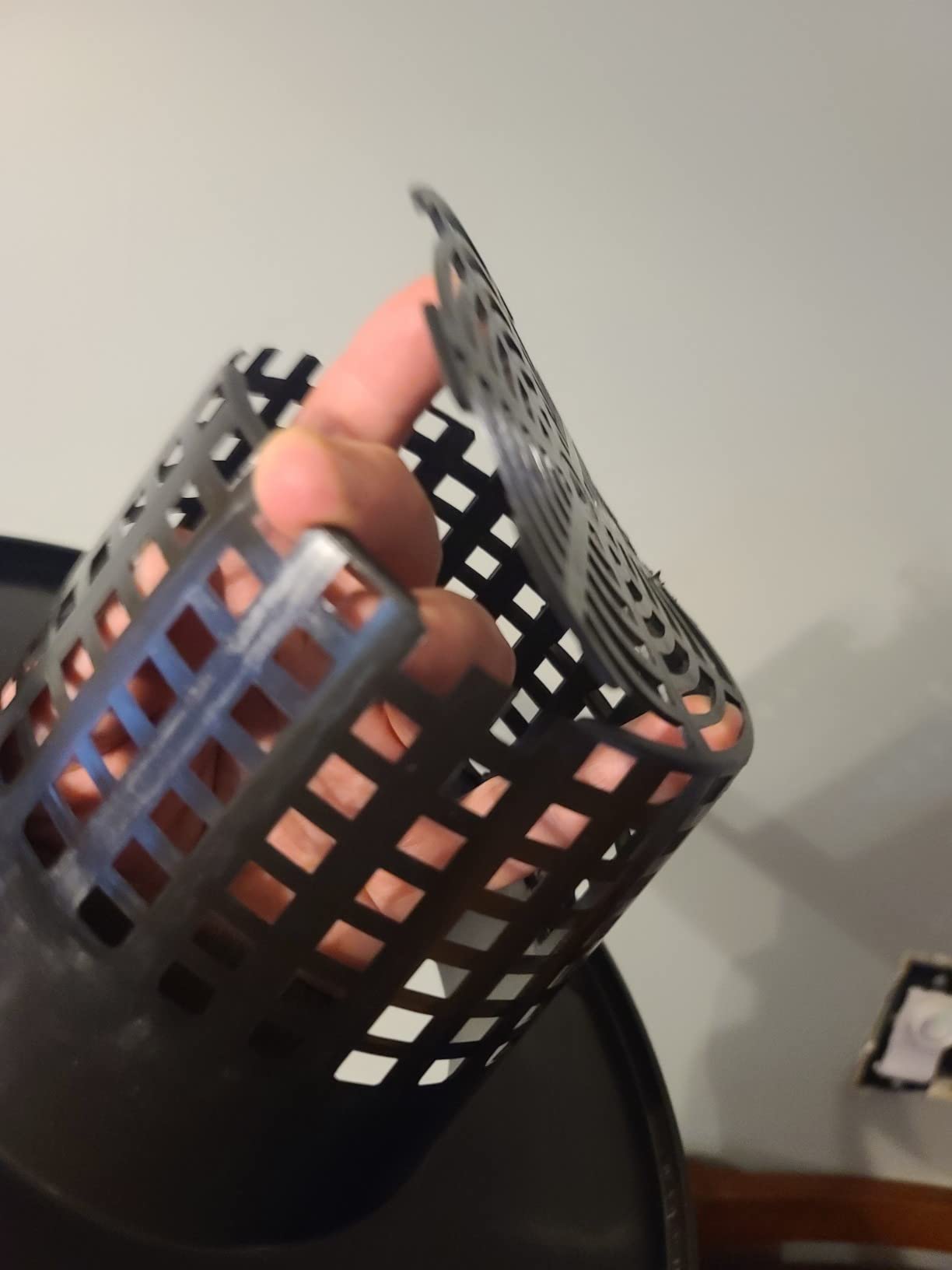
The turn-key framing is accurate. Mix nutrients, adjust pH, insert a plant, plug in the pump. There is no assembly list to decode and no parts to buy before you can start, which is why this is the one we would point a first-time grower toward who is not ready to chase a shopping list.
The pump running continuously creates the growing zone and the reservoir in the same bucket, so a single tomato has both an aerated root bath and a stable water volume in one vessel.
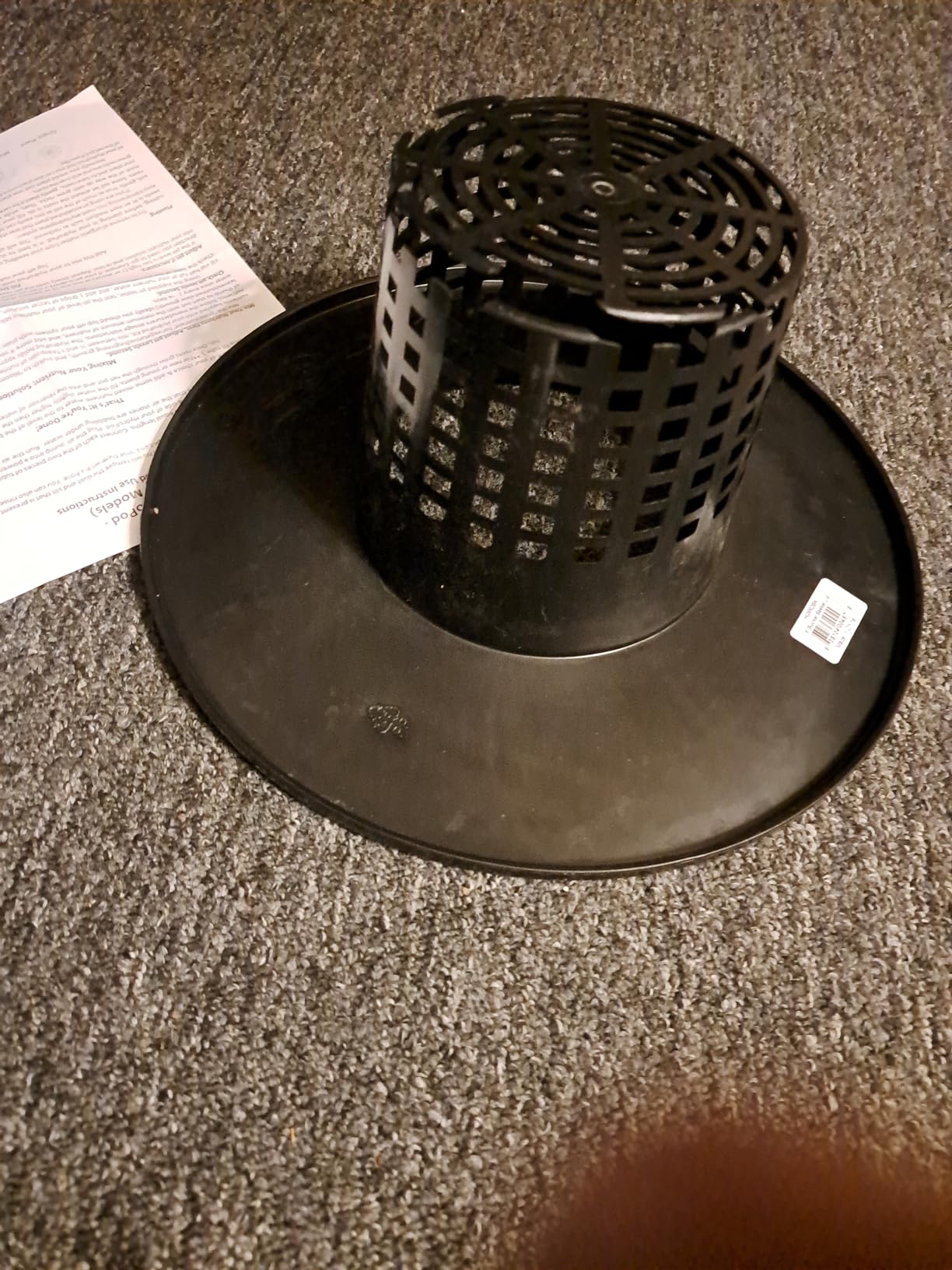
Why it suits a first grow
Everything needed to run a first cycle is included. Nutrient powders, pH test and adjust, pump, stones, fittings and an opaque food-grade tub means your first month is about learning the plant rather than sourcing parts.
The two outlets also mean you can add a second air stone later without replacing the pump, which is a small piece of headroom the single-bucket competitors rarely offer.
Where it runs out of road
One site. There is no shared reservoir and no second bucket, so scaling means buying another full kit rather than adding a bucket to a system.
Its review base is also the smallest in this group at 256 reviews, and the star distribution has a heavier share of mid ratings than the leading kits, so treat the results as consistent rather than outstanding.
8. LAWNFUL 4 Bucket Pod Kit – the best germination bundle
Lawnful 4 Hydroponic Buckets Kit for Plants, Hydroponics Growing System for Herbs/Tomato/Vegetables, DWC System with Air Pump & Germination Tray (Complete Indoor Hydroponic Gardening Supplies)
4x 10L buckets
Five grow pods per lid
4 outlet air pump with check valves
Germination trays, sponges and humidity dome
Pros
- Only kit with a full germination station
- Five pods per bucket
- Compact 4 outlet air pump
- Small buckets mean less water to manage
Cons
- 2.6 gallon buckets limit root mass
- Lowest average rating in this group
- Smallest one star share is highest here
- Pod lids suit lettuce and herbs better
The distinguishing feature of this kit is everything that comes before the plant: two germination trays, a vented humidity dome, 24 grow sponges, 24 grow baskets, 16 sponge cubes and a 12-cell tray. It takes you from seed to harvest inside one system, which is genuinely useful if you do not already have a propagation setup.
The four buckets hold 10 liters each, or about 2.6 gallons, and each lid carries five grow pods. That multi-pod lid is the design’s strength and its weakness when tomatoes are the goal.
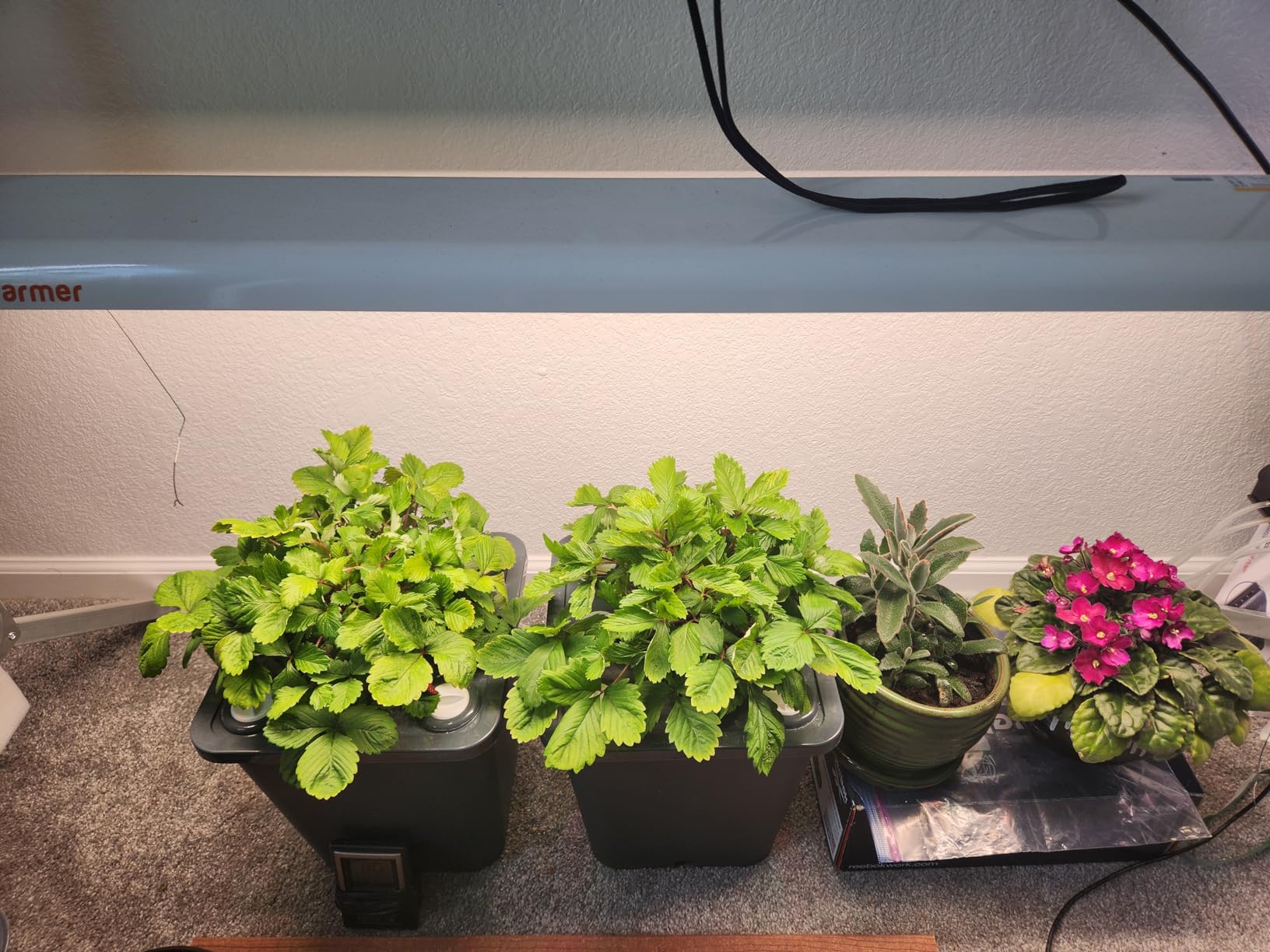
Five pods per bucket is excellent for lettuce, herbs and strawberry starts, where you want density. For a staked tomato, you want a single large net pot with a big root mass, and 2.6 gallons is a tight reservoir for a plant that drinks several gallons a day at peak.
Smaller buckets do have a real advantage: less water volume means less to top off, less to change and less nutrient to mix. For a mixed kitchen garden of greens and herbs, that is a genuine efficiency.
What it does better than the rest
Propagation. No other kit in this roundup includes a humidity dome, grow sponges and cell trays, so you can start tomato seeds without a separate seed starting system.
The 4-outlet air pump with check valves keeps the plumbing tidy, and the adjustable airflow lets you dial back individual outlets as plant counts change.
Why it is last in our tomato ranking
At 4.1 stars it has the lowest average rating of the eleven, and the one-star share is the highest in the group at 10 percent. Reviewers also point out the buckets are the smallest here, which limits mature root mass.
Used as a tomato tub, a pod lid is working against you. Used as a lettuce and herb system with one or two tomato slots, it is a good value, but that is a different article.
9. Mars Hydro DWC 2 Buckets with Top Drip – the strongest aeration per site
Mars Hydro DWC Hydroponics Grow System 5 Gallon Deep Water Culture with 8W Air Pump, Multi-Purpose Air Hose, Air Stone, 2 Buckets and Top Drip Kit
2x 5 gallon buckets
8W air pump
Top drip kit per bucket
Flow regulators,check valves,level indicators
Pros
- Strong aeration for the power draw
- Lid supports trained plants with tie down holes
- Thick walled buckets hold water temperature stable
- Flow regulators tune the top feed
Cons
- Air pump is noticeably louder
- Included 4mm tubing is the wrong size for some setups
- Some units ship without instructions
- Level indicator tubes arrive bent
This two-bucket kit is aimed at growers who already understand DWC rather than at first-timers, and the reason is the aeration. One reviewer recorded dissolved oxygen staying above 7 mg per liter in a teardown-style test, which is the kind of measurement most listings never show.
Each bucket gets a top drip ring to replenish the root zone, an air flow regulator to control that top feed, a visual level indicator and check valves, all driven by an 8 watt pump moving up to 4 x 63.4 GPH.
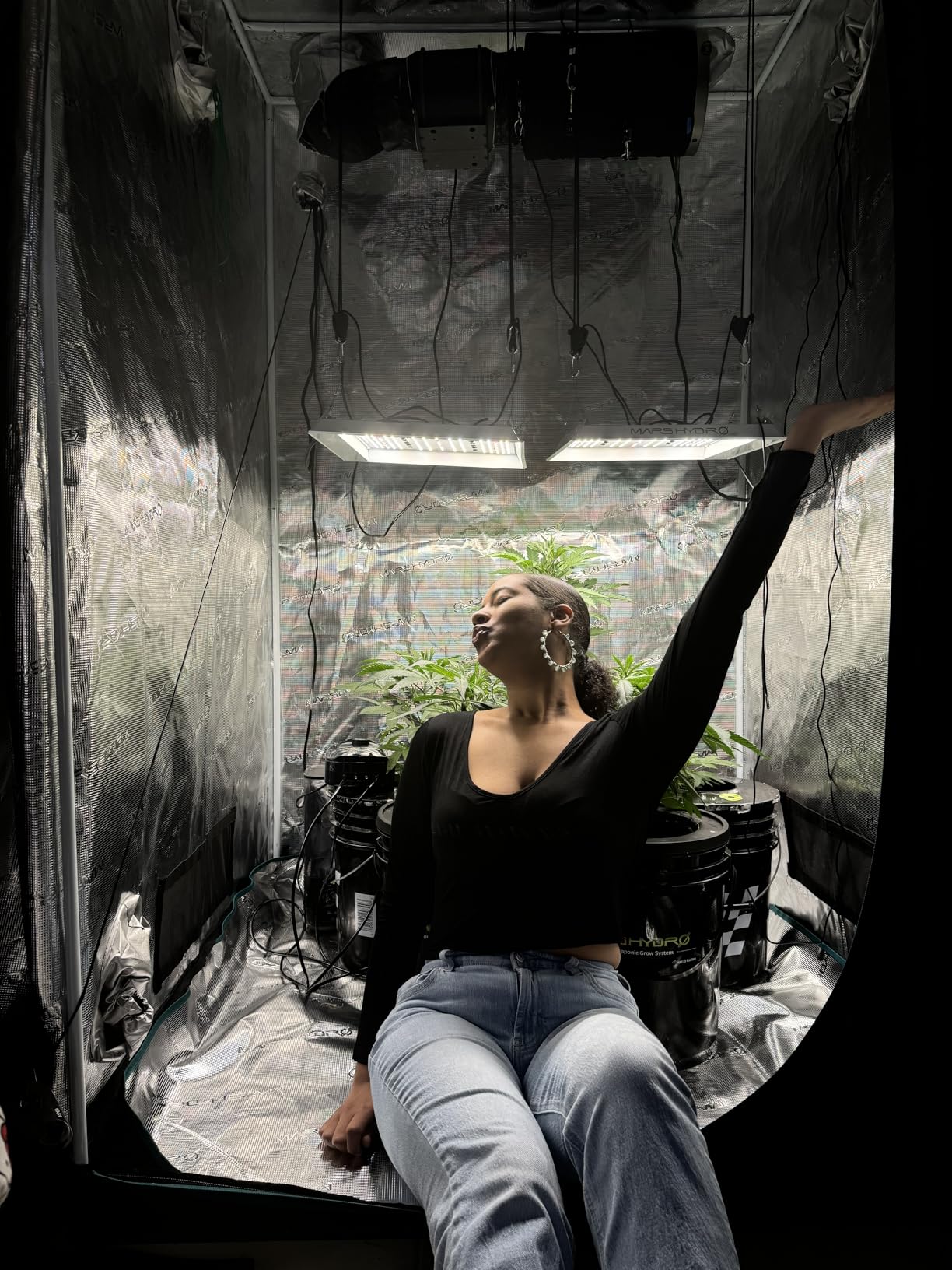
The thick-walled food-grade buckets are the sleeper detail. Reservoir temperature swings drive dissolved oxygen saturation, and owners report that these buckets held nutrient temperature more stably inside a tent than thinner-walled options, which matters in a warm room.
The lid also has tie-down holes, so a heavily trained plant can be anchored to the net pot rather than to a separate stake driven into clay. For indeterminate varieties that get topped and low-strung, that is a meaningful difference.
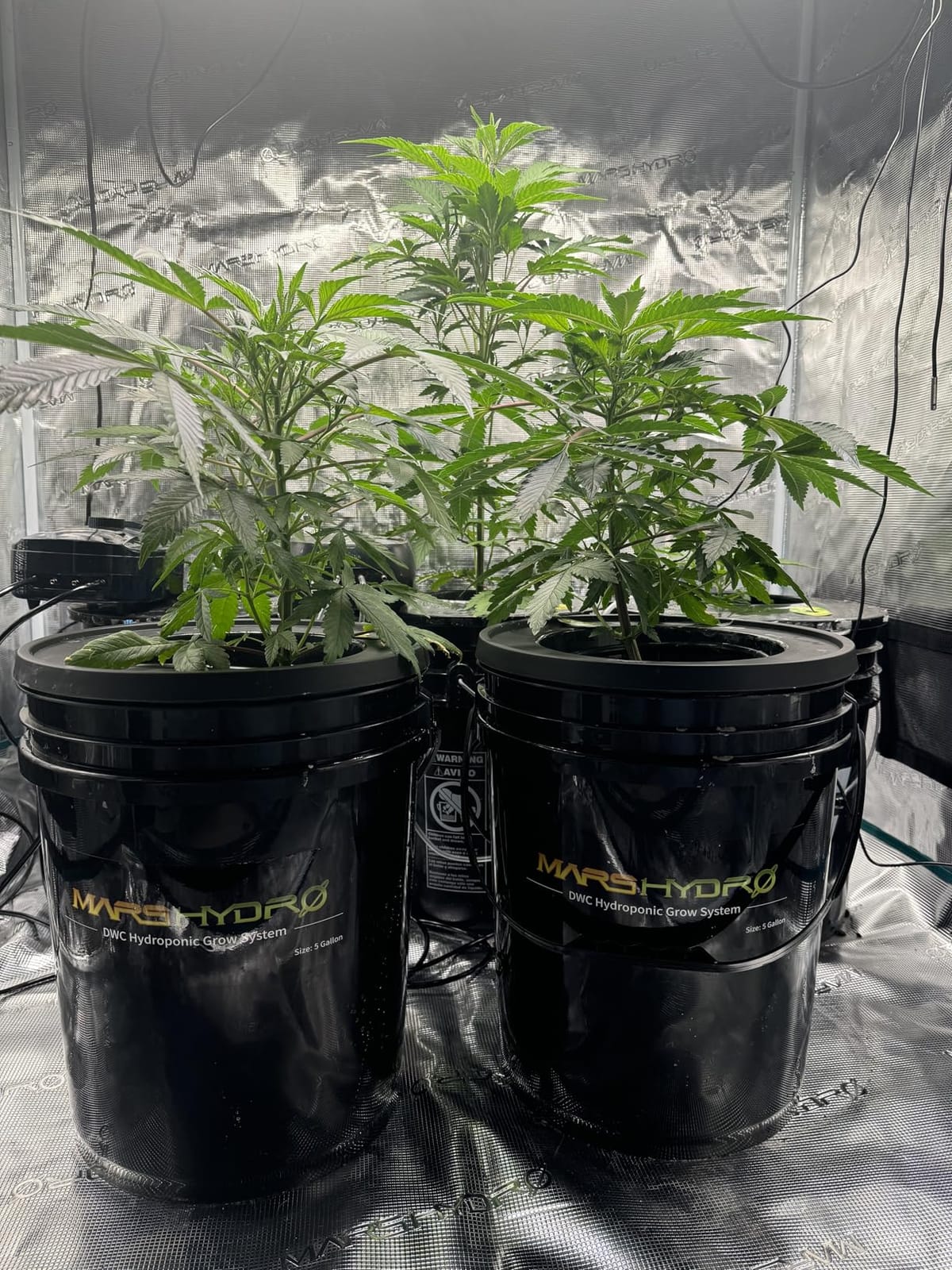
Where it outperforms
Root oxygen. Strong aeration plus top-watering means the crown and the lower roots are both served, and that combination is what separates a healthy tomato root mass from a stalled one.
Regulated drip. The air flow regulator on each ring lets you tune the top feed instead of living with a fixed sputter, which is the adjustment reviewers ask for on other kits.
What needs fixing on arrival
The included 4mm tubing is frequently the wrong size, and many buyers end up buying 5mm tubing separately. Check your grommet size before you start rather than after.
The air pump is loud, documentation is thin on some shipments, and level indicator tubes sometimes arrive bent or crimped. All three are small, but all three are annoying at install time.
10. Spider Farmer DWC 2 Buckets – the most root space per plant
Spider Farmer DWC Hydroponics Growing System Kit 2 Buckets for Indoor Plant
2x 7 gallon PP buckets
Triangle cover lids
6 inch high tenacity net cups
8W adjustable air pump
Drip irrigation rings
Pros
- Seven gallons per plant
- Triangle covers make top-ups and testing easy
- 6 inch net cup handles large fruited plants
- Adjustable drip ring and airflow
Cons
- Adjustable AC pump is louder than DC pumps
- 19.69 inch height needs ceiling clearance
- Only two sites
- No shared reservoir
Reservoir volume per plant is the whole argument here. Two 7-gallon corrosion-resistant polypropylene buckets give each tomato roughly 40 percent more solution than a 5-gallon tub, and a larger, more stable reservoir is what buffers pH and temperature swings across a hot day.
The triangle cover is the feature that changes daily work. You uncover the top to add water, take an EC or pH reading, and close it again, instead of reaching into a bucket with a full canopy of stems and leaves blocking your view.
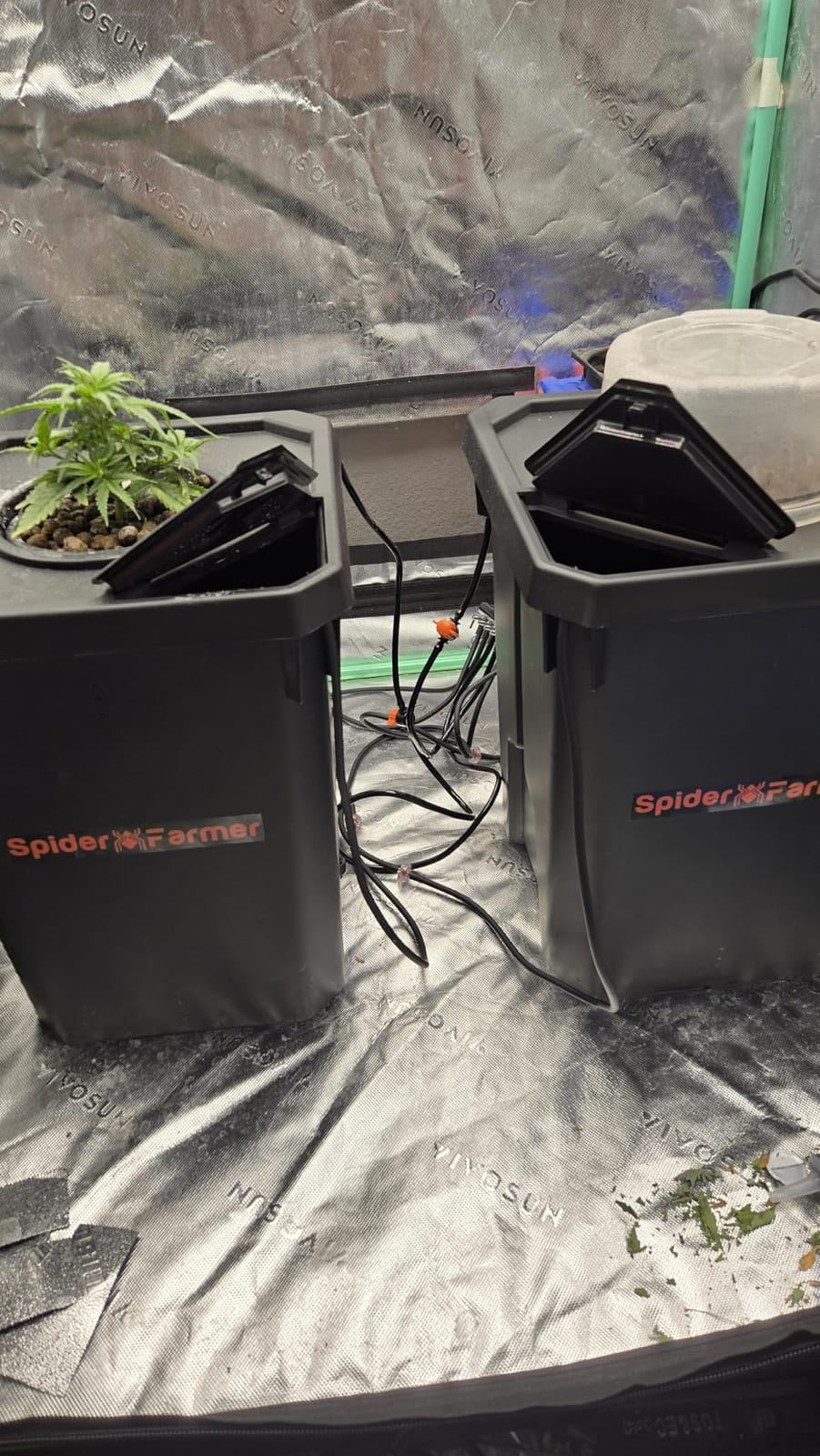
The 6-inch high-tenacity polypropylene net cup is sized for large, heavily fruited plants, and the adjustable drip ring gives finer irrigation control than fixed-flow rings. Owners report it working indoors and outdoors, in tents and on balconies.
That extra water is not wasted effort. A bigger reservoir means fewer top-offs, a smaller swing in nutrient concentration between checks, and more thermal mass holding the solution below the temperature where dissolved oxygen starts to drop away.
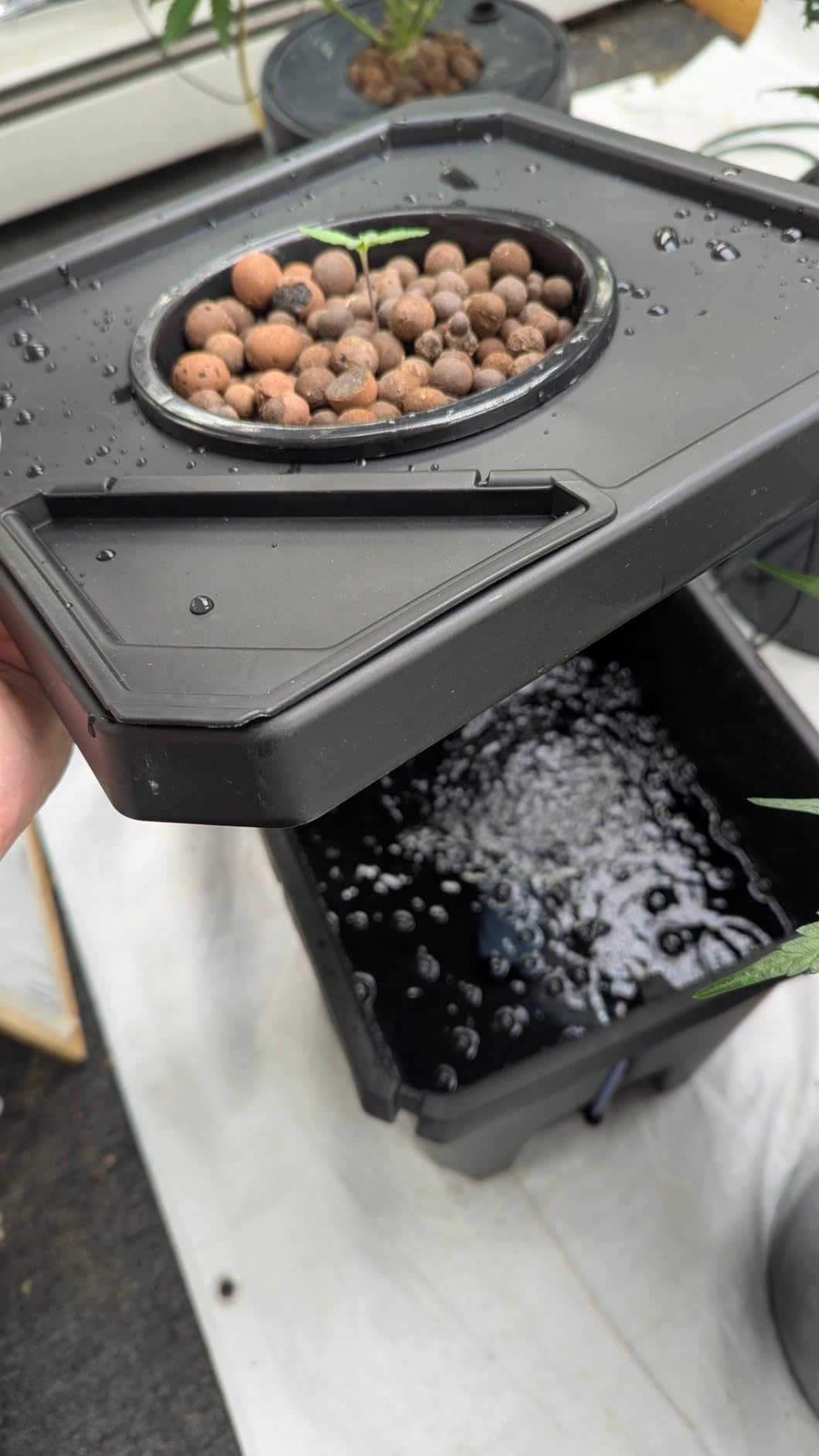
What the extra gallons buy
Stability. Larger water volumes move more slowly toward the pH and EC drift that stalls a tomato, so the daily check becomes a five-second confirmation rather than a correction.
Headroom for a big root mass. A mature tomato can fill seven gallons in a way that chokes a five-gallon bucket, and a fuller root mass is also a root mass you cannot lift out for a water change.
Check your space first
At 19.69 inches tall these are the tallest vessels in the roundup. Measure your ceiling or grow tent height before you commit, because canopy clearance above a tomato matters as much as the tub footprint below it.
Two sites is the limit. Each bucket is an isolated reservoir, so if your plan was a block of plants, this covers two and the rest of the room stays empty.
11. Growell 32 Bucket Vertical System – the tower, and where it stops fitting
Growell Hydroponics Growing System Kit with 32 Large Buckets, Indoor Garden
2 tier tower with 32 buckets
24L plus 8L tank
60W full spectrum LED lights
Vegetable and flower light modes
16h or 22h timers
Pros
- Grows 32 plants at once
- Truly all in one with tank pump and lights
- Easy to assemble and maintain
- Tank holds water for weeks
- Lockable casters
Cons
- Nearly 4 feet tall
- 3 inch pods suit lettuce not fruiting plants
- Regular water changes and tank cleaning
- 60W LEDs may be weak for fruiting
- Reports of fitting leaks
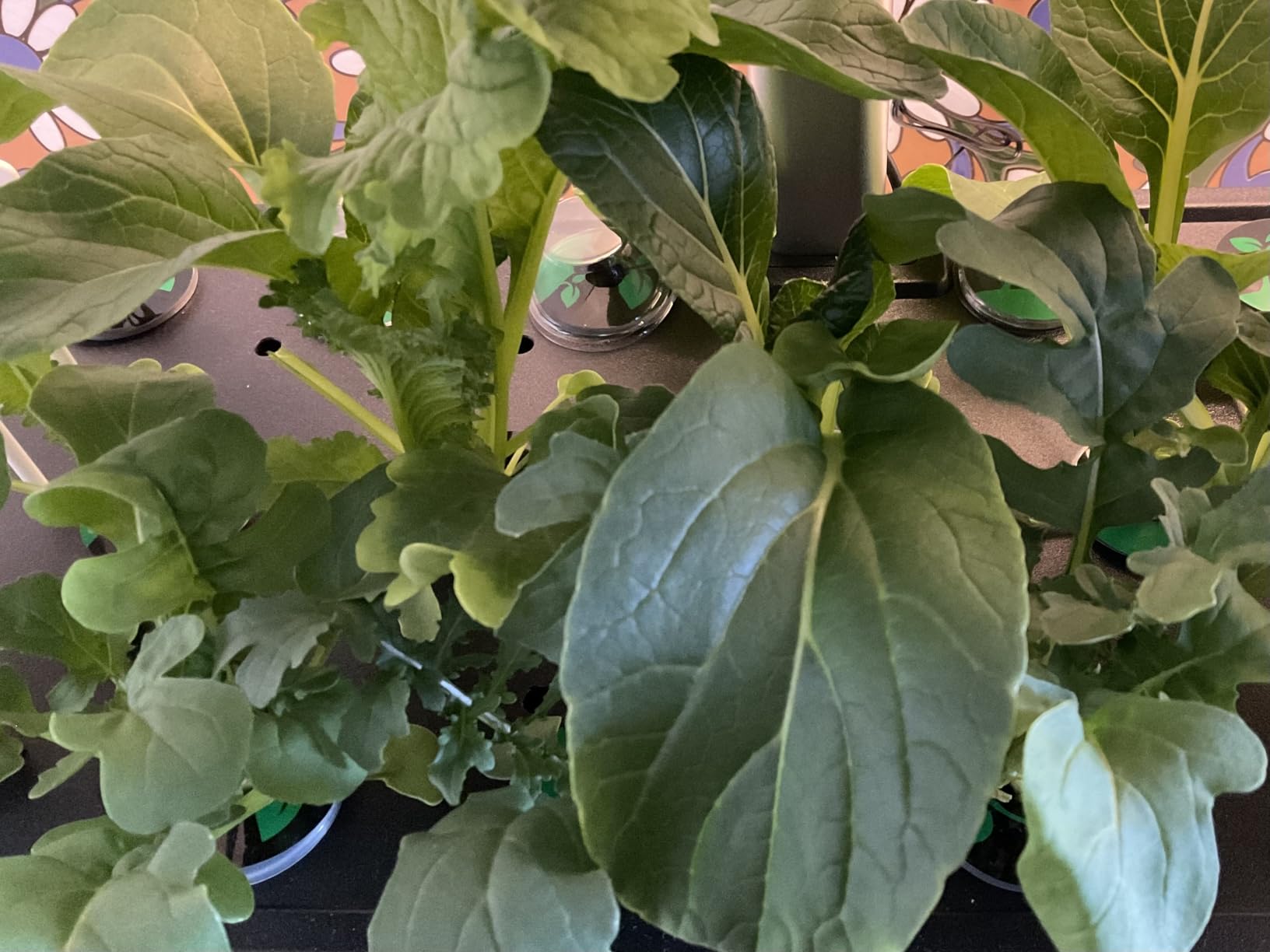
This is a different product category rather than a standard DWC bucket kit. It is a two-tier vertical tower with 32 planting buckets, a 24L plus 8L tank with a self-circulating pump, and 60 watts of full-spectrum LED on adjustable mounts, all on lockable casters.
Owners love the all-in-one simplicity. There is nothing to buy separately, the tank holds water for weeks between refills, and the two-tier layout with adjustable light height saves floor space in a small room.
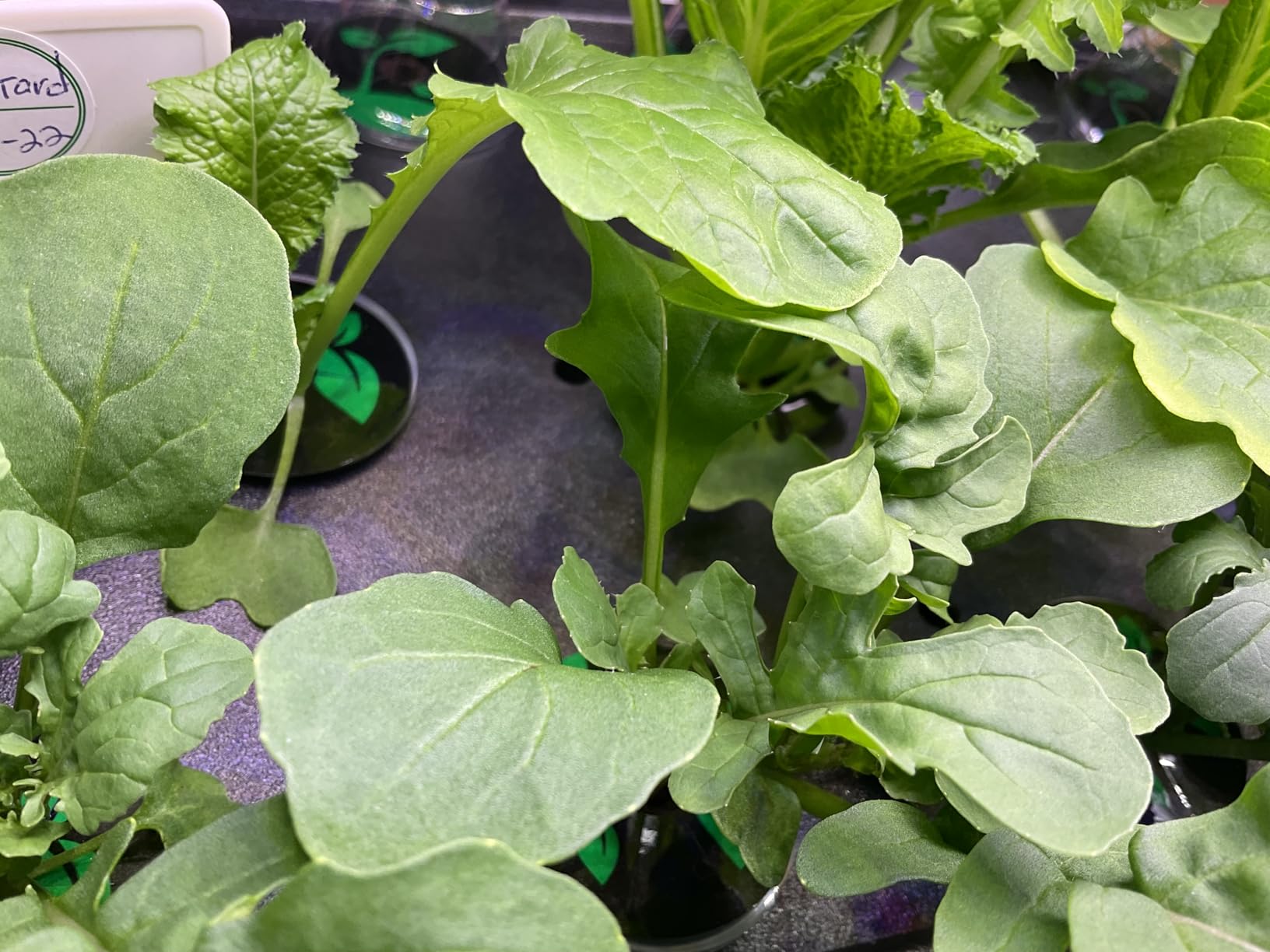
Vegetable and Flowers/Fruits light modes, a 16h or 22h timer and independent per-tier control give it the shape of a small indoor greenhouse, which is why it appears in tomato-capable roundups even though the buckets are 3 inches.
Those 3-inch pods are the honest limit. A 3-inch pod suits lettuce, herbs and strawberry starts; a staked tomato needs a 6-inch net cup or larger and several gallons of reservoir behind it.
What it is genuinely good at
Plant count in a small footprint. Thirty-two sites on two tiers is a real answer for anyone who wants a dense kitchen garden, and the assembly is straightforward with easy per-level maintenance.
The recurring water capacity matters. A quiet pump keeps the system hydrated for weeks between refills, which is a very different experience from checking four 5-gallon buckets daily.
Why it is not a tomato tub
The pods are too small and the water per site is too little for a fruiting tomato. Reviewers who tried larger plants report they struggle, and the 60W LED output is light for tomato fruit production.
Owners also describe the maintenance as dealing with a fish tank: regular water changes and tank cleaning, on a system large enough that 32 liters of solution is a real chore. At 34 reviews, it is also the thinnest evidence base in this roundup.
How to Choose a Hydroponic Grow Tub for Tomatoes
Tub size and how many tomato plants fit
Five gallons per fruiting plant is the working floor, and a single 5-gallon tub is a fine home for one determinate, cherry or dwarf tomato. Larger indeterminate varieties with heavy fruit loads do better with the 7-gallon buckets, and spacing matters more than density: plan 12 to 18 inches between plant centers.
Growers consistently report that trying to keep several tomatoes thriving in a small countertop system fails, and that two plants per countertop unit is about the ceiling. In a bucket system, the rule is simpler: one plant per bucket, and only a multi-bucket kit or a shared reservoir gets you past two.
DWC, top drip, RDWC or Kratky: which form fits tomatoes
DWC keeps roots suspended in aerated solution and is the simplest reliable form. Top drip adds a recirculating stream over the root zone, which keeps upper roots wet and slows solution stagnation. RDWC runs many buckets off one reservoir, which makes water changes a single job. Kratky leaves roots in still, unoxygenated water, and that is why tomatoes stall and yellow in a passive bucket.
NFT channels are built for shallow-rooted leafy greens. A tomato’s root mass and water demand are a mismatch for a thin film of nutrient solution, so NFT is the one system type in this category we would not put a staked tomato into.
EC, pH and reservoir temperature by growth stage
Tomatoes are heavy feeders, and their needs shift across the cycle. Work in EC in mS/cm and adjust pH with a meter you trust, and keep the reservoir cool, because warmer water holds less dissolved oxygen.
Seedlings and early vegetative growth want a gentler solution than fruiting plants. From the first flowers onward, move the mix toward potassium-heavy feeding and keep the root zone aerated, because fruit production is where calcium and water movement problems show up as blossom end rot.
Tub material and why light leaks cause root rot
Opaque black HDPE or polypropylene is the material you want. A clear tub, a translucent lid or a lid whose net pot does not seal will grow algae, and algae in the solution competes with tomato roots for the dissolved oxygen your pump is working to supply.
Root rot is almost always an oxygen, temperature or sanitation problem rather than a disease you can spray away. A sealed opaque tub, a working air delivery, cool water and a regular water change address all three at once.
Maintenance cadence between crops
Check water level, pH and EC every day during peak fruit set, and plan a full reservoir change roughly every two weeks. Topping off with plain water without correcting pH and EC is how salt creep builds up over a cycle, and the drift compounds quietly.
Between crops, sanitize the tub, replace the air stone, and start the next plant in fresh solution rather than old. Every grower we heard from on forums treats a full clean-out between runs as non-negotiable, and it is the cheapest root rot prevention available.
Frequently Asked Questions
Which hydroponic system is best for tomatoes?
An active deep water culture bucket with a net-pot lid and a running air pump is the best balance of simplicity and results for tomatoes. A top-drip or recirculating system works even better if you want more control, while passive Kratky buckets and NFT channels are poor fits. Tomatoes are heavy feeders and need aerated, temperature-controlled nutrient solution at every stage.
Is a 5 gallon bucket big enough to grow a tomato plant in?
Yes, one 5-gallon bucket comfortably supports a single determinate, cherry or dwarf tomato plant, and that is the standard working floor for a fruiting plant. Larger indeterminate varieties with heavy fruit loads do better in a 7-gallon bucket, since they drink several gallons a day at peak. Plan on one plant per bucket and 12 to 18 inches of spacing between centers.
Do tomatoes grow well hydroponically?
They do. Hydroponics gives tomatoes consistent water and nutrient access, which is why they are a standard fruiting crop in controlled-environment growing. The tradeoff is that the system only works if you check pH and EC every couple of days and keep the solution aerated and cool. Skip those and the plant stalls or the roots rot.
Do I need an air pump for hydroponic tomatoes?
Yes. Tomato roots need dissolved oxygen, and still water in a passive Kratky bucket is the most common reason a hydroponic tomato stalls and yellows. A single air stone or a raw air line delivering a steady stream is enough for one 5-gallon bucket, and a multi-outlet pump covers a multi-bucket kit. Run it continuously rather than on a timer.
What are the best tomato varieties to grow hydroponically?
Compact and cherry types are the easiest fit, including dwarf and micro varieties that stay under about two feet. Determinate cultivars suit a single bucket well because they set fruit lower and finish sooner. Indeterminate varieties can be grown, but they need a trellis, a large net pot and a bigger reservoir, so give them 7-gallon buckets rather than 5-gallon ones.
How long does it take tomatoes to grow in a hydroponic system?
From transplant into the net pot, expect roughly 60 to 90 days to first ripe fruit for most varieties, with cherry types often earlier and large beefsteaks later. Hydroponics usually speeds up early vegetative growth compared with soil because roots never hit a nutrient ceiling. Flowering still depends on light intensity, so an underpowered grow light will stretch the timeline regardless of the tub.
Conclusion
For the best hydroponic grow tubs for tomatoes, the Hydrofarm Root Spa 5-Gallon DWC bucket is the pick we would start with. Its 5-gallon reservoir, sealing 8-inch net-pot lid and multi-purpose air hose are proven, it is the most reviewed tub in this group, and one plant per bucket is the right density for a home setup.
If you want everything in one box, the PowerGrow Systems DWC Kit has the highest rating here at 4.6 stars and includes medium, seed plugs and a pre-fitted level indicator. If you want a block of plants, the VEVOR 8 Bucket DWC System gives you eight recirculating sites, while the Spider Farmer’s 7-gallon tubs give one tomato the most root space per plant.
Whichever tub you choose, remember the basics: opaque vessel, continuous air, cool solution, daily pH and EC checks, and one plant per five gallons. Our broader guides to the best hydroponic systems and hydroponic gardens for beginners cover the lighting and tent side, and systems built around greens is worth reading if you plan a mixed crop.
As 2026 moves on, the core of a good tomato tub has not changed: roots in moving, aerated, temperature-controlled solution, and a plant fed on a schedule you actually keep.