
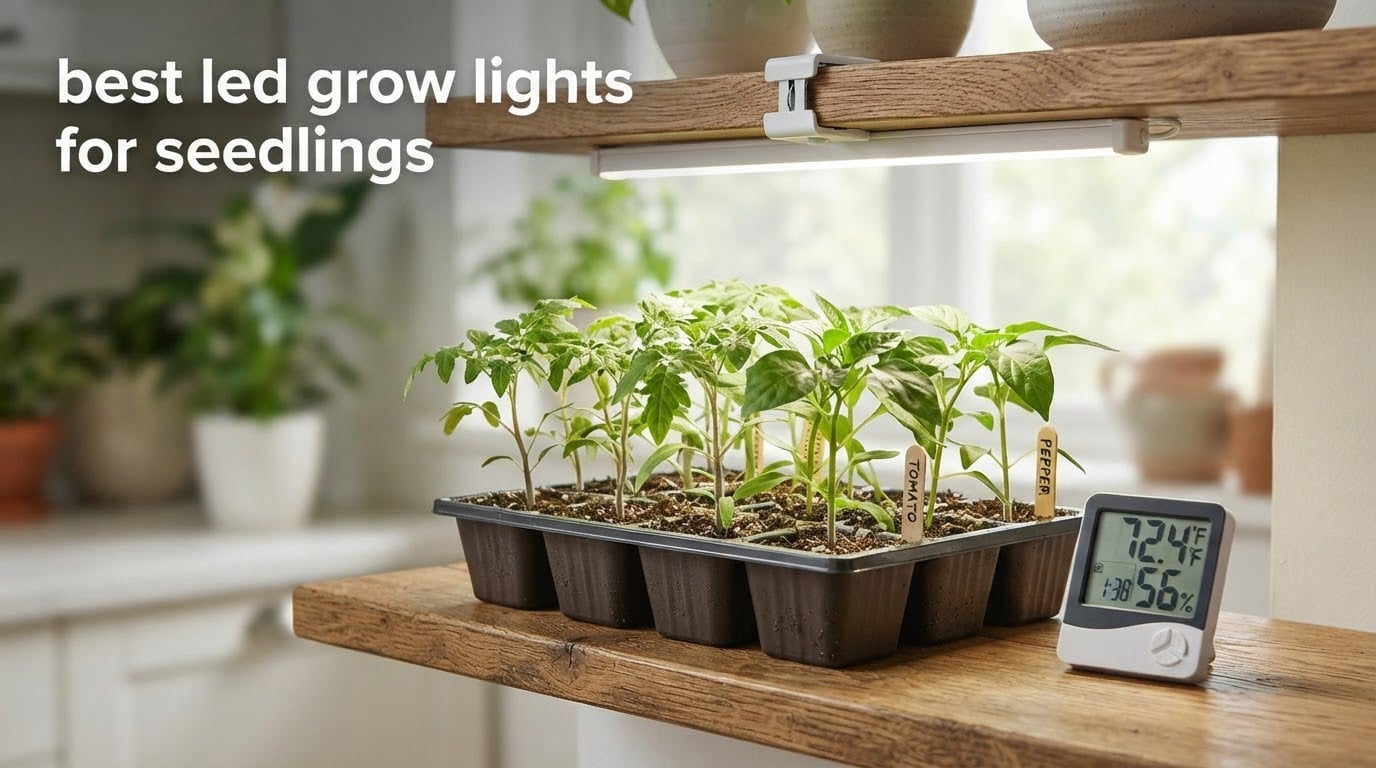
Starting seeds indoors is the cheapest way to extend your growing season, and the single piece of equipment that decides whether it works is the light. A windowsill rarely delivers enough intensity, and the wrong fixture either scorches tender sprouts or leaves them stretching. That is why the best LED grow lights for seedlings sit on a very short list of criteria: low heat, dimmable or distance-adjustable output, and a spectrum weighted toward blue light.
We spent weeks working through ten of the most-reviewed seedling lights on the market, reading the customer review patterns and comparing the numbers that actually matter at this stage. This guide covers clip-on lamps for a single tray, hanging strips for a full seed shelf, freestanding stands, and the dimmable panels that can carry a tray from germination all the way to transplant.
If you already know the form factor you need, our general grow light guide covers larger fixtures for houseplants and herbs. If you are growing a dense tray of greens rather than vegetable seedlings, start with our microgreens grow light picks instead.
Top 3 Picks for Seedlings in 2026
Three lights came out ahead of the group. The GooingTop clip lamp wins overall because it has the deepest review history in the test group and a rigid gooseneck that holds position where cheap arms droop. The Barrina T5 four-pack is the value pick: four individually switchable bars let you light one shelf or split the set across two rooms. The VIPARSPECTRA 70W panel is the stronger fixture, with a four-level dimmer and fanless aluminum construction.
Readers who only have a single 72-cell tray should skip straight to the SYEIORAOM four-head lamp or the Juhefa panel. Both cover one tray with even light and nothing more, which is exactly what a single tray needs.
A quick note on timing before you buy anything: run seedlings on a 16 hours on, 8 hours off photoperiod rather than 24 hours. Seedlings germinate and grow well at 16 hours, and the dark window keeps the trays drier, which lowers the risk of damping-off.


Barrina T5 1ft 4-Pack
- 4 bars at 20W each
- 5000K full spectrum
- Individual on/off
- Link up to 16
Best LED Grow Lights for Seedlings in 2026
All ten lights below are in the seedling range rather than the flowering range. The wattage, coverage and control options are listed so you can match a fixture to the tray area you actually have.
| Product | Specifications | Action |
|---|---|---|
| GooingTop 10W Clip Lamp |
|
Check Latest Price |
 LEOTER 80-LED Four-Head Lamp LEOTER 80-LED Four-Head Lamp |
|
Check Latest Price |
 Juhefa 9.9 Inch Panel Juhefa 9.9 Inch Panel |
|
Check Latest Price |
| Barrina T5 1ft 4-Pack |
|
Check Latest Price |
| VIPARSPECTRA 70W Panel |
|
Check Latest Price |
 SYEIORAOM Four-Head Tabletop Lamp SYEIORAOM Four-Head Tabletop Lamp |
|
Check Latest Price |
 GroCruiser Slim Panel 3-Pack GroCruiser Slim Panel 3-Pack |
|
Check Latest Price |
 APICDOM 4ft Slim Strip APICDOM 4ft Slim Strip |
|
Check Latest Price |
 GYTF T5 1.4ft Strip 3-Pack GYTF T5 1.4ft Strip 3-Pack |
|
Check Latest Price |
 FOXGARDEN Stand Light FOXGARDEN Stand Light |
|
Check Latest Price |
1. GooingTop 10W Clip Lamp – Best Overall LED Grow Light for Seedlings
GooingTop Grow Light,6000K Full Spectrum Indoor Plant Growing Lamp
84 LEDs at 6000K
10W draw
Clamp mount
4/8/12H timer
Pros
- Rigid gooseneck holds position
- Heavy clamp grips shelves and pot rims
- Bright flicker-free 6000K output
- Works in windowless rooms
Cons
- Timer runs a 24-hour cycle rather than repeating
- Coverage is narrow at close range
- No protective film over the LEDs
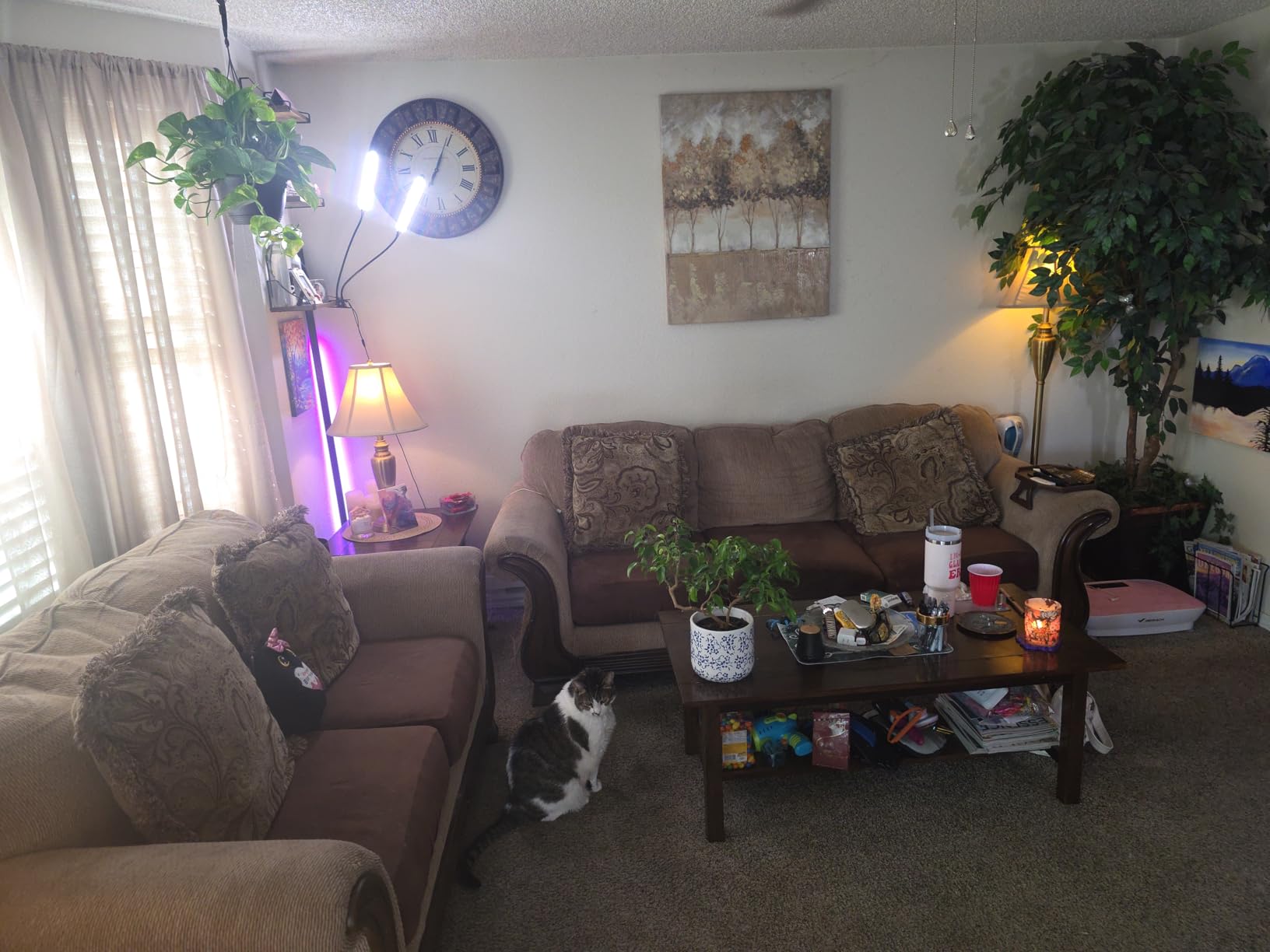
This clip lamp has been the workhorse of our own seed-starting shelf for two seasons. It clamps to the edge of a wire shelf, bends over the tray, and stays exactly where you put it. That gooseneck stiffness is the detail most people miss when comparing cheap clip lamps, and it is the reason this one has built up more than 22,000 reviews at a 4.5 average.
The light source is 84 diodes: 74 white and 10 red, at 6000K with a color rendering index up to 95. At a 10W draw it produces up to 2500 lumens, which is more than enough for one 72-cell tray of lettuce, basil, or pepper when the head sits 8 to 14 inches above the soil. The output reads as clean neutral white rather than the purple glow most buyers expect from a grow light.
The 3-setting circular memory timer is the one thing that regularly confuses owners. It offers 4, 8, and 12 hours on a 24-hour cycle, so a 4H setting means the lamp comes on for four hours and then stays off for the remaining twenty. It is a genuine daily cycle rather than a repeating countdown, and it resets when power is interrupted. If you want 16 hours of light, pair it with an external plug timer.
Coverage is the real limitation. One lamp comfortably covers a single 10-cell or small 20-cell tray, and it will lean toward the center of anything larger, so outer cells stretch. Owners of larger flats typically buy two. The construction is aluminum, iron, and plastic, and it ships with a 365-day warranty.
What it is good for
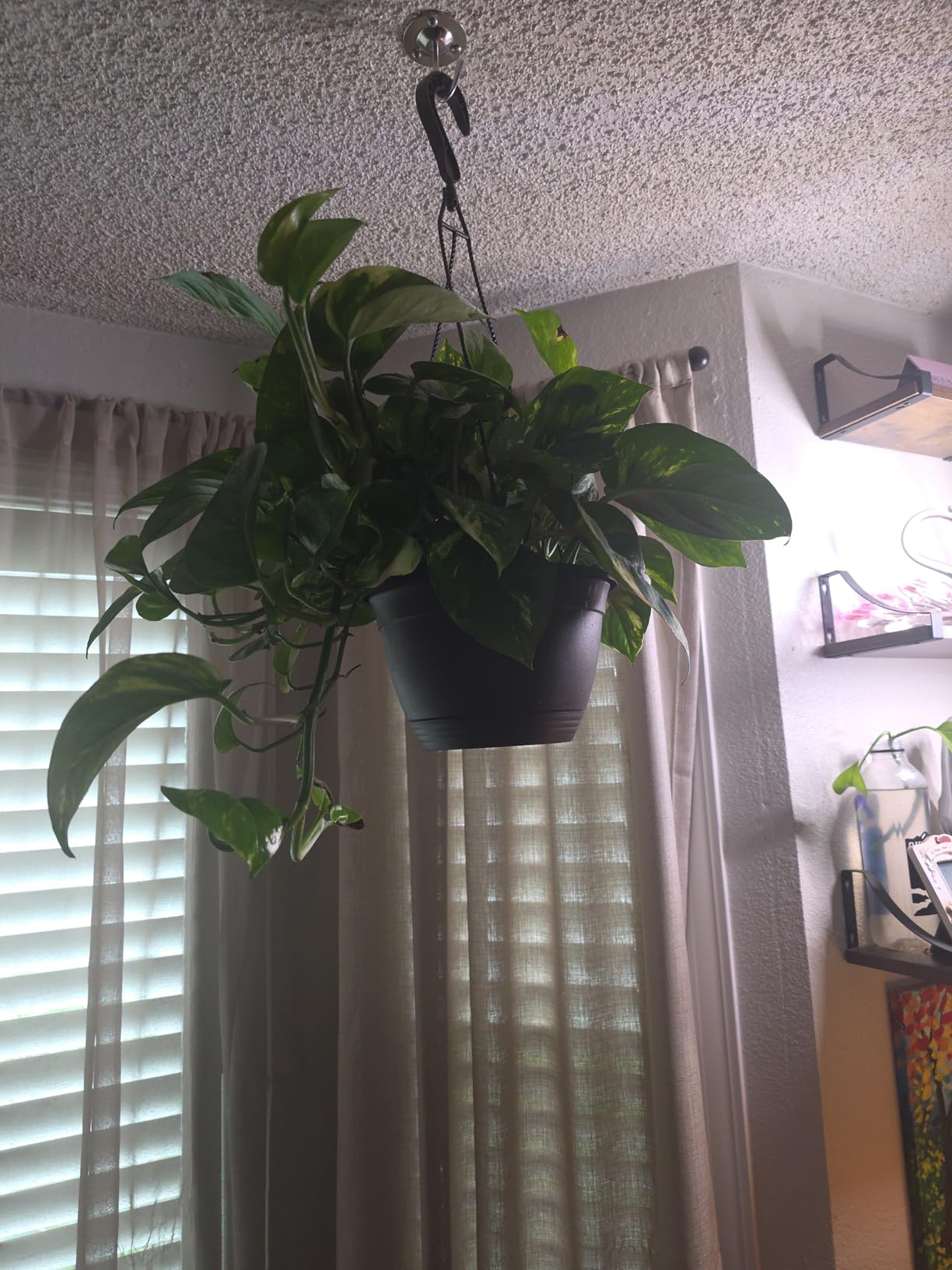
A single seed tray on a bookshelf, a windowsill with no direct sun, or a propagation station for cuttings. It is also the easiest light to aim in a tight space, because the clamp grips a shelf lip without needing any hardware. If your growing area is a rented apartment and you cannot drill, this is the pick.
It also works well as a supplemental lamp in a larger setup, filling the corners of a rack that a strip light does not quite reach.
What it is not good for
It will not light a full 72-cell tray evenly on its own, and it cannot be dimmed. If you want to start with the lowest setting and raise the intensity as your seedlings grow, look at the LEOTER or FOXGARDEN lamps, both of which have real dimming controls. Plan on a separate timer for a 16-hour photoperiod.
2. LEOTER 80-LED Four-Head Lamp – Best for Covering One Full Seed Tray
LEOTER Grow Light for Indoor Plants – Upgraded Version 80 LED Lamps with Full Spectrum & Red Blue Spectrum, 3/9/12H Timer, 10 Dimmable Level, Adjustable Gooseneck,3 Switch Modes
4 gooseneck heads
10 dim levels
USB powered
3/9/12H timer
Pros
- Four heads cover a full tray from one fixture
- Ten dimming levels for new sprouts
- Three spectrum modes
- Aviation-grade heat sink
Cons
- Timer resets after a power cut
- Some units report a faint whine
- USB cord adds shelf clutter
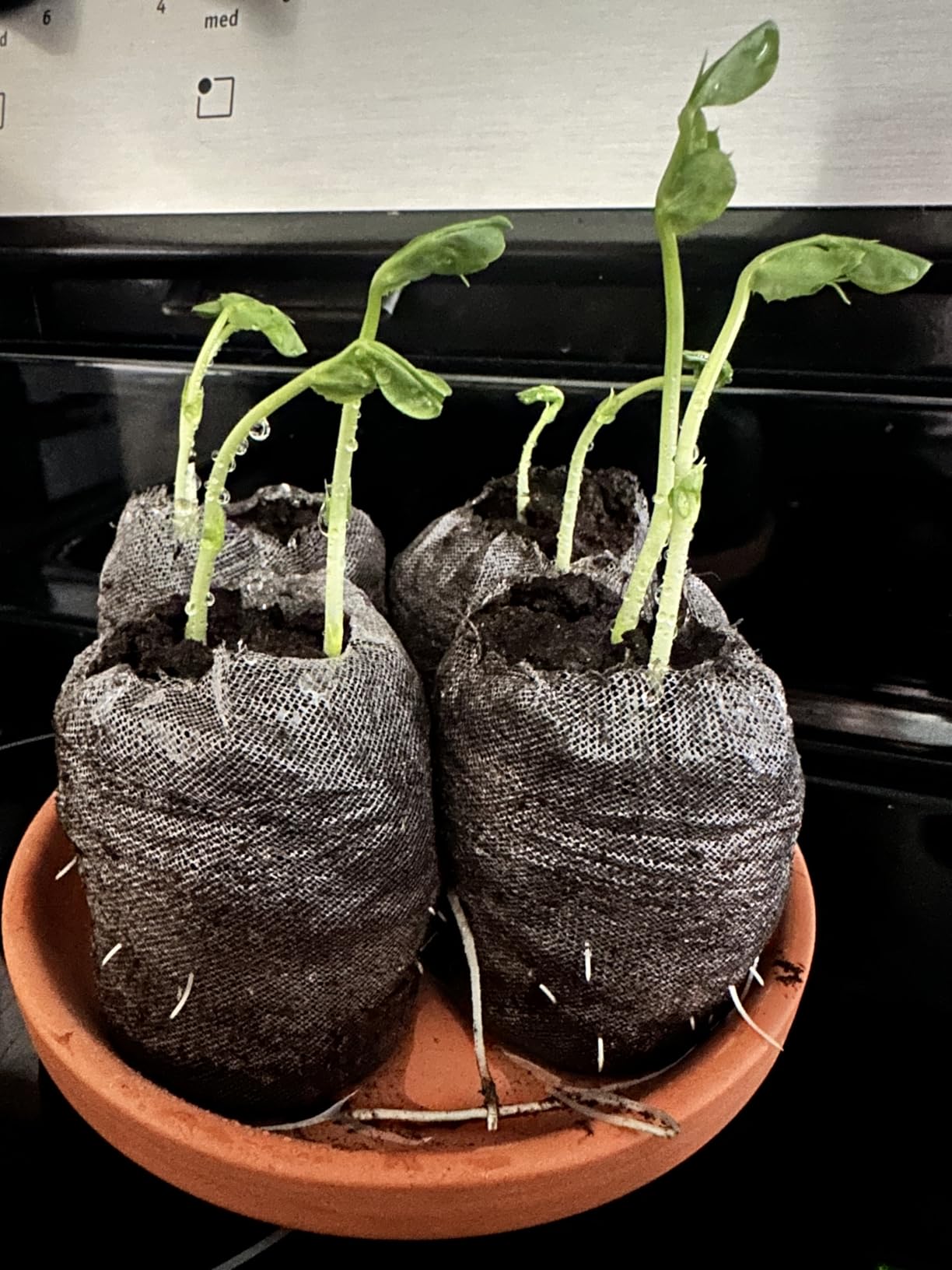
The LEOTER solved the coverage problem the single-head lamps create. Four independently aimable heads on 360-degree goosenecks let you spread the output across a full 72-cell tray and then close them back in on a smaller tray once cells are empty. Buyers consistently report using it for germination first and moving plants to a bigger light later.
The diode mix is 32 red, 12 blue, 20 yellow, and 16 white across a 380nm to 800nm full spectrum, with separate red 660nm and blue 460nm modes. That gives you three spectral modes and ten brightness levels, which is the most granular control in this roundup for the seedling stage specifically. You can start new sprouts at a low level and turn up as true leaves develop.
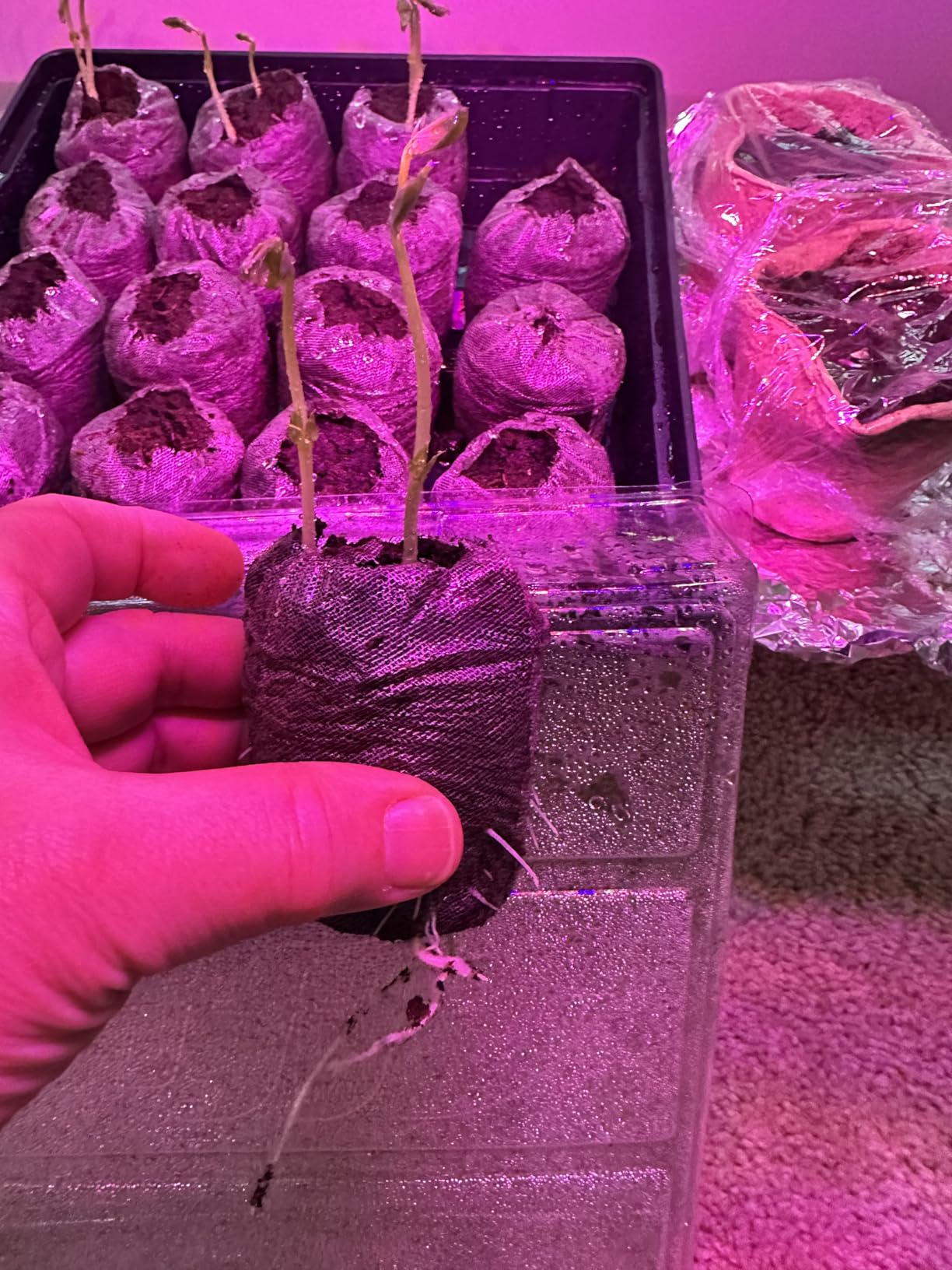
Two details matter more than they sound. First, the aviation-grade aluminum heat sink keeps the heads cool enough to sit close over a tray for long days, which matters more than lumens at the seedling stage. Second, the built-in timer means you are not hunting for a plug timer, though it offers 3, 9, and 12 hours rather than the 16 hours most growers run.
Because it is USB powered with an included AC adapter, you can run it from a small power bank or a powered shelf hub if your outlet is far from the tray. The metal clamp grips a shelf, table edge, or pot rim, and the goosenecks hold their bend without slowly drooping over a two-week cycle.
What it is good for
One tray of vegetables, a double 20-cell tray, or a shallow propagation flat of cuttings. The dimming range makes it the safest option for a mixed batch where tomatoes and lettuce are side by side and want different intensities. It also handles a small shelf of houseplants without special settings.
For anyone who wants one fixture to cover seedling and vegetative stages, the three spectrum modes mean you do not have to buy again in a month.
What it is not good for
It is a 20W-class fixture by draw and covers roughly a foot-square footprint, so it will not fill a two-shelf rack. A faint high-pitched sound is reported by some owners, which matters if the setup is in a bedroom. The USB lead also adds cable clutter on a crowded shelf, and the timer loses its setting whenever power is cut.
3. Juhefa 9.9 Inch Panel – Best for Fast Germination Under One Panel
Juhefa LED Grow Lights for Indoor Plants, Panel Plant Light Full Spectrum with IR & UV Bulbs for Seedlings,Micro Greens,Clones,Succulents (Size:9.9×9.9inches)
144 LEDs with UV and IR
9.9 inch panel
Hanging kit
3x3 ft at 2 ft
Pros
- Fast
- even germination across a tray
- Very inexpensive per watt
- Lightweight with included hanging kit
- Runs cool
Cons
- No on/off switch or timer
- Output drops off beyond about 18 inches
- UV and IR diodes are dim
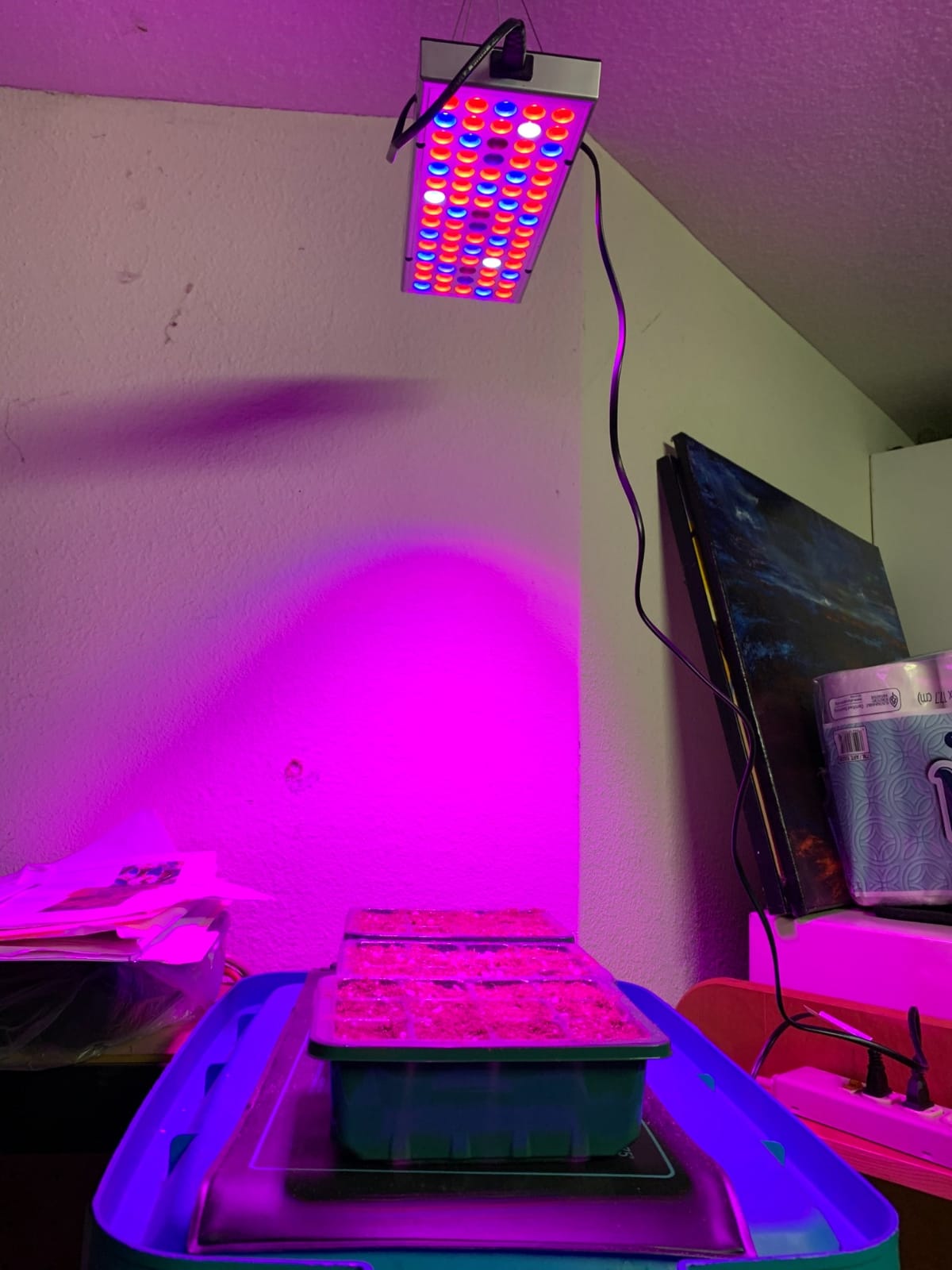
This panel is the one to buy when the goal is germination, not finished plants. Seed-starting hobbyists report kale, chard, peas, and onions coming up in two to three days under a single 9.9 by 9.9 inch panel, which is about the right size to sit over one propagation tray.
The diode count is 144: 90 red, 36 blue, 6 UV, 6 IR, and 6 white. The included hanging kit uses wires and clips, so there is no assembly beyond hooking it up, and the panel is light enough to reposition between shelves. Rated output runs to about 265 micromoles at 4 inches, 175 at 8 inches, 105 at 12 inches, and 50 at 18 inches.
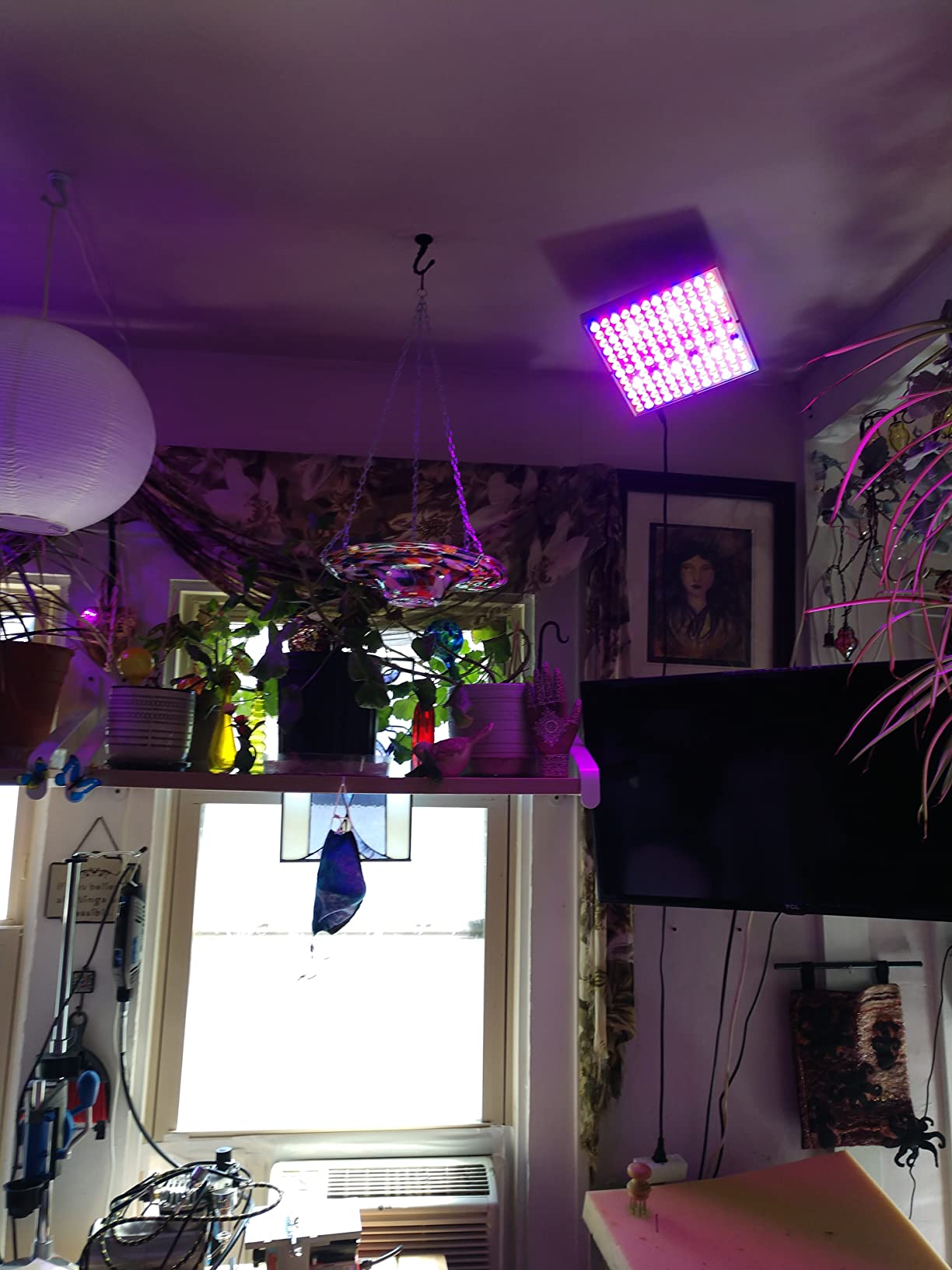
Those readings are the whole story for this light. It is a close-range fixture by design, and the manufacturer recommends a hanging height of 8 to 36 inches with coverage up to a 3 by 3 foot area at 2 feet. Sprouts under the center get plenty of light; the far corners of a large tray will lean outward, so keep the head centered and low for the first two weeks.
It is also the lowest-rated product we tested, at 4.2 across more than 9,400 reviews, with a visible tail of one-star reports. The most common complaints are practical: there is no inline switch and no timer, so the light runs whenever it is plugged in, and output beyond roughly 18 inches is weak. A few owners report dimming output or failure over time.
What it is good for
Germinating a tray and then moving the sprouts under something stronger. The cheap-per-watt math makes it attractive when you are starting many trays in sequence rather than all at once. The 12 by 4.7 inch version of the same panel suits a narrow shelf where a square panel will not fit.
It also works for microgreens and clones, which sit close enough to the light that falloff is not an issue.
What it is not good for
It is not a whole-tray canopy light for seedlings that need to grow tall before transplant, because the light dies off quickly with distance. There is no switch, which means darkening it for a night cycle means unplugging it and remembering to plug it back in. If you want unattended scheduling, choose a fixture with a timer.
4. Barrina T5 1ft Grow Light 4-Pack – Best Value Strip Set for a Seed Shelf
Barrina T5 Grow Lights for Indoor Plants, 5000K Full Spectrum, 1FT, 4 Packs
4 bars at 20W each
5000K full spectrum
Individual on/off
Link up to 16
Pros
- Individual switches per bar
- Neutral white light
- Linkable design
- Mounting kit included
Cons
- No built-in timer
- Short cords
- Fixed brightness with no dimming
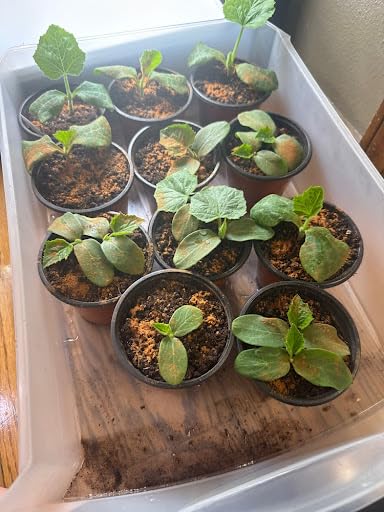
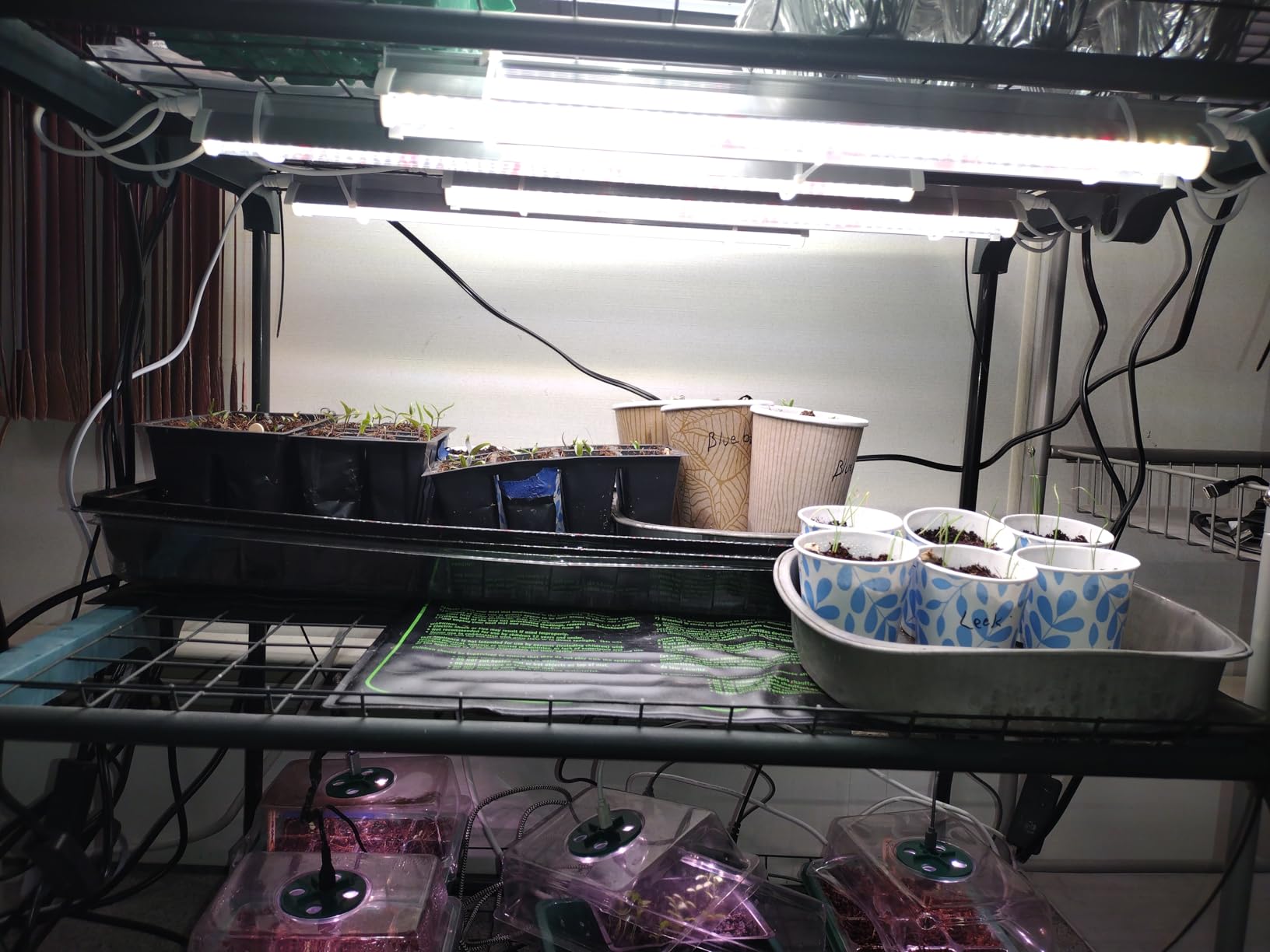
The Barrina set is the most practical answer for a multi-shelf seed rack, and at 4.6 across more than 7,000 reviews it is one of the highest-rated traditional fixtures in the group. Each of the four 1-foot bars is 20W with its own on/off switch on the housing, so you can light the shelf where seedlings have just emerged and darken the shelf that is still in germination.
The output is 5000K white full spectrum, tuned to plant absorption ratios rather than a purple blend. That neutral appearance is the reason many owners put these above visible workspaces. In the r/IndoorGarden community these bars are a recurring recommendation because they are inexpensive, hangable, and daisy-chainable, and growers report good results for seed germination.
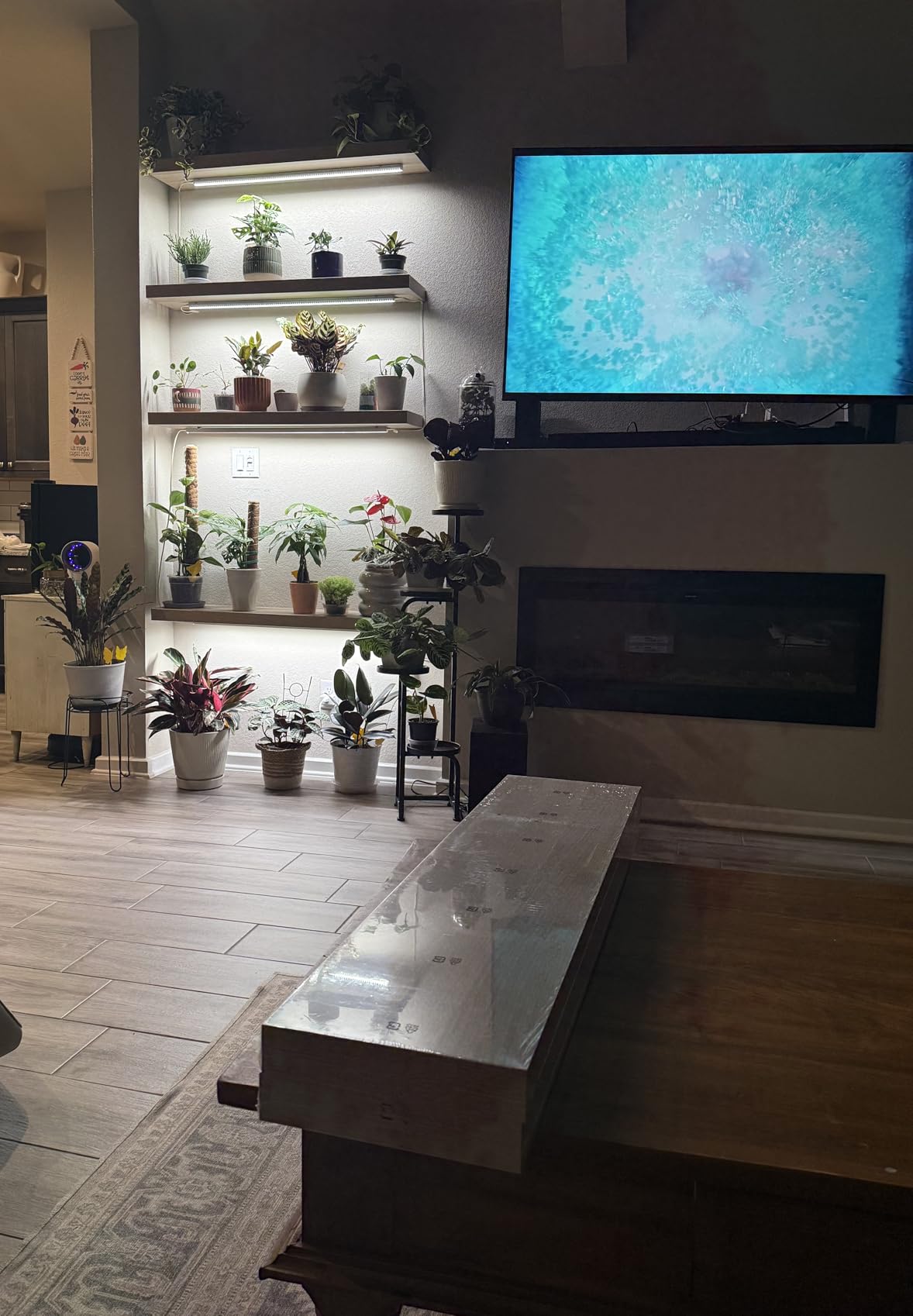
Linking is the feature that makes a rack build work. Fixtures can be connected in series up to 16, and the set includes two switched power cords so you can split it across two rooms or two separate shelves. The mounting kit has double-sided tape, clips, cable ties, three connecting cords, and small connectors, which covers both under-shelf and vertical rack mounting. Construction is aluminum and polycarbonate, and it runs cool enough to stay safe through 12-plus hour days.
What you give up is control. There is no built-in timer, so scheduling needs a wall timer or smart plug, and output is fixed at 5000K with no dimming. Cord lengths are short, so most builds need an extension. The tape mounts can release in humidity, which matters in a propagation area, and one bar failing takes that section of the shelf dark.
What it is good for
Multi-shelf racks, closet seed stations, and anyone starting more than a few dozen seeds at once. A single 1-foot bar is the right size for one tray, and four bars cover a full shelf tier. The 5000K neutral light also makes these usable for houseplant shelves after the seedlings are past the tray stage.
It is the one to buy if you want a quiet-looking shelf rather than a purple glow, since growers in the r/kratky community frequently note that 4000K to 5000K shop lights are enough for seed starting.
What it is not good for
It is not adjustable once hung. Without a timer or dimming, you have to set the height correctly from the start and raise the bars as seedlings stretch. It is also not ideal for a bedroom, since four fixtures plus external timers is a lot of hardware to hide.
5. VIPARSPECTRA 70W Dimmable Panel – Best Dimmable Panel for Seedlings
70 Watt Grow Light, Dimmable Plant Light, LED Grow Lights for Indoor Plants
70W, 11000 lumens
4-level dimmer
Fanless aluminum
2x2 ft area
Pros
- Highest rated light we tested
- Dimmable from seedling to bloom
- Fanless and completely silent
- Pulley height adjustment
Cons
- Very bright even at the lowest setting
- No reflector to soften side glare
- Warm top surface on long runs
This panel scored 4.7 across more than 5,300 reviews, the highest average in the test group, and owners repeatedly mention verifying its coverage with a PAR meter rather than taking the advertised footprint at face value. It produces 11,000 lumens from a 70W draw, which the maker compares to the output of a 150W HPS or MH fixture, and it covers a 2 by 2 foot vegetative area.
The reason it earns a place in a seedling guide is the four-level dimmer. Seedlings want a fraction of the intensity a mature plant wants, and this is the only fixture here that lets you turn a genuinely strong light down to seedling levels and then raise it as the plant grows. That means one purchase can carry a tray from germination to transplant, then get moved above a larger pot.
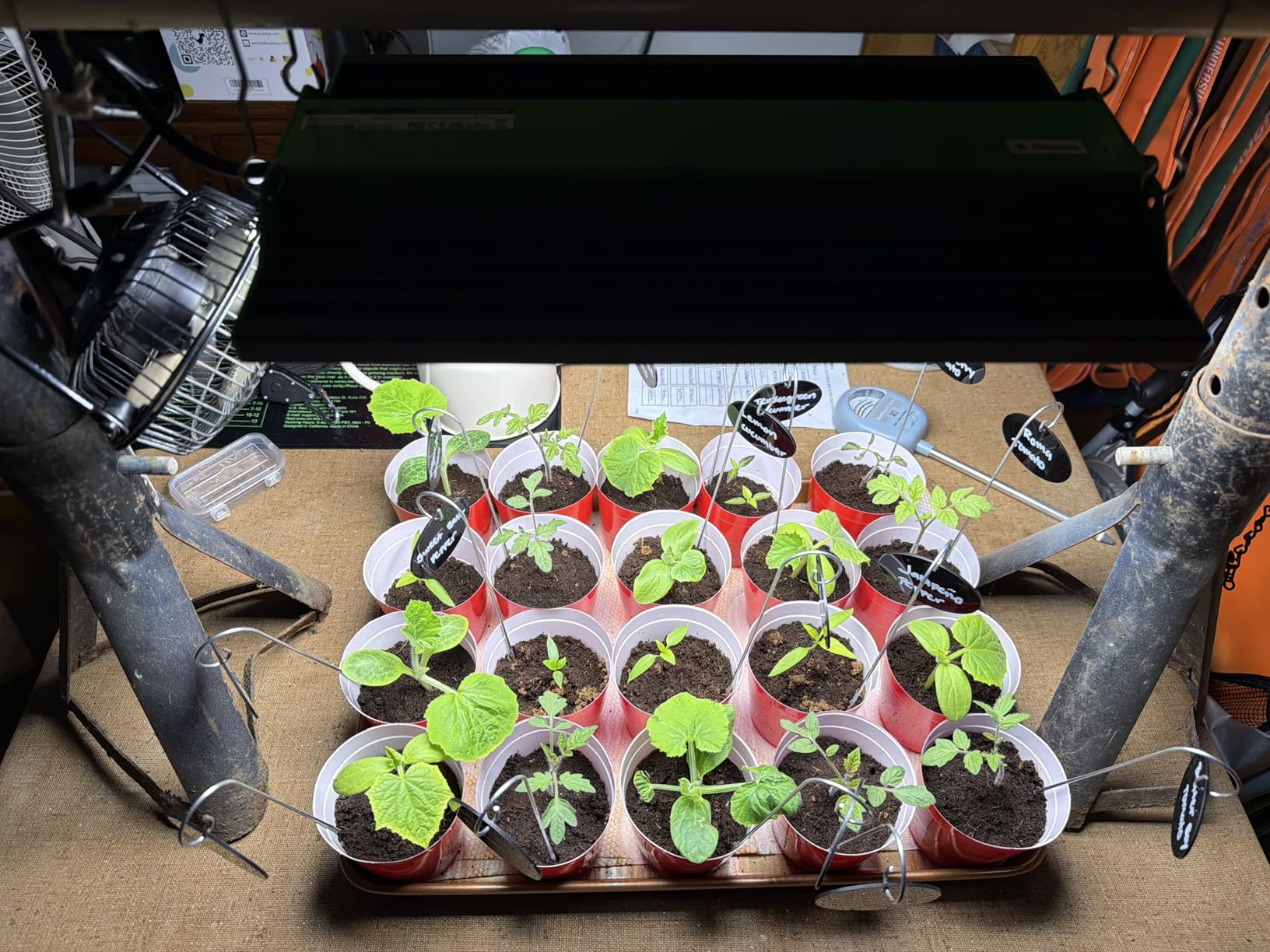
It is also completely silent. There is no fan, just large aluminum heat sinks, which makes it the right choice for a bedroom, office, or any room where fan noise is a deal-breaker. The spectrum combines 660nm red with 3000K and 5000K white. Adjustable pulley hardware makes raising the fixture as the canopy grows a two-second job, and the warranty runs three years.
The caveat everyone mentions is intensity. Even at the lowest dimmer setting the panel is bright enough to be uncomfortable at eye level, and it has no reflector or hood to soften glare from the side. The top of the housing gets warm over long runs and benefits from airflow, and the on/off switch and plug sit on top of the fixture, which is awkward on a narrow shelf.
What it is good for
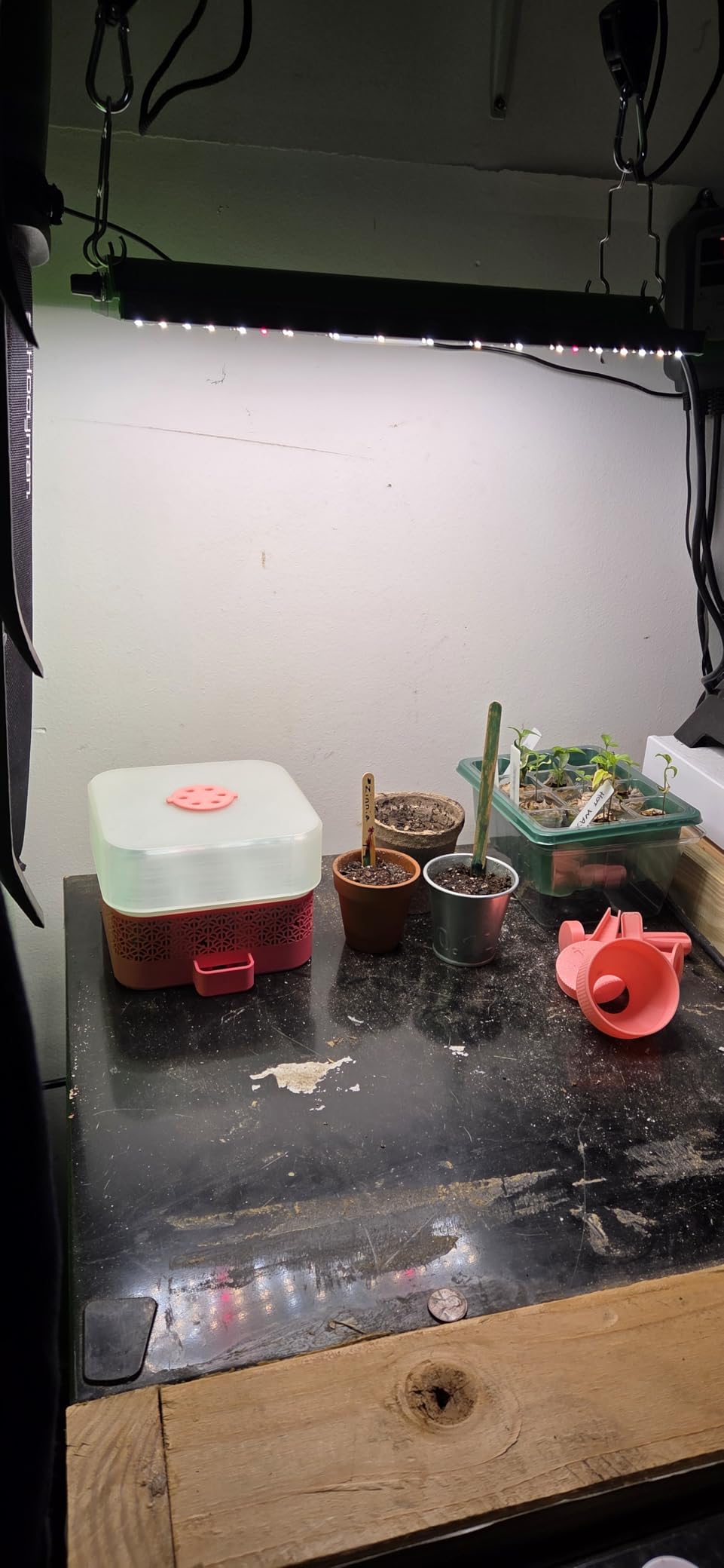
Anyone who wants a single light that grows with the plant, and anyone starting more seedlings than fit on one shelf. The 2 by 2 foot coverage handles a full 72-cell tray with room around the edges, and the dimmer lets you protect newly emerged sprouts from bleaching while giving older seedlings more light.
It is our pick for a home office or bedroom setup, since the fanless design produces no noise at all. If you later move to houseplants or a countertop herb garden, this same fixture works.
What it is not good for
It is a hanging fixture, so you need somewhere to suspend it from, and it is much brighter than a small tray strictly needs. Position it above or below direct sight lines. At full brightness above a young tray it can bleach leaves that touch the panel, so respect the dimmer setting rather than relying on distance alone.
6. SYEIORAOM Four-Head Tabletop Lamp – Best for a Countertop Setup With No Mounting
SYEIORAOM Grow Lights for Indoor Plants, Four Head LED Grow Light with Full Spectrum, Red White Spectrum for Indoor Plant Lamp, Adjustable Gooseneck, Suitable for Vegetation
72 LEDs
Four gooseneck heads
Telescopic pole
Weighted tabletop base
Pros
- Freestanding base needs no mounting
- Four heads cover a 72-cell tray evenly
- Folds down for storage
- No assembly
Cons
- No built-in timer
- Output drops off quickly
- Telescoping pole tops out low
This is the fixture we recommend when nothing can be screwed, taped, or hung. It stands on a weighted base, four goosenecks spread over a 72-cell tray, and a telescopic pole raises the heads as seedlings stretch. Long-term owners report growing tomatoes, tomatillos, and strawberries on a windowsill through two full seasons with reliable germination.
Output comes from 72 high-efficiency beads with a red and white balance for full spectrum, and buyers consistently report noticeably brighter light than other lights in the same cost class. The base is sturdy enough not to tip when you lift a tray off, and the whole unit folds small enough to live in a drawer between seasons. A six-head version is also available if you run two trays.
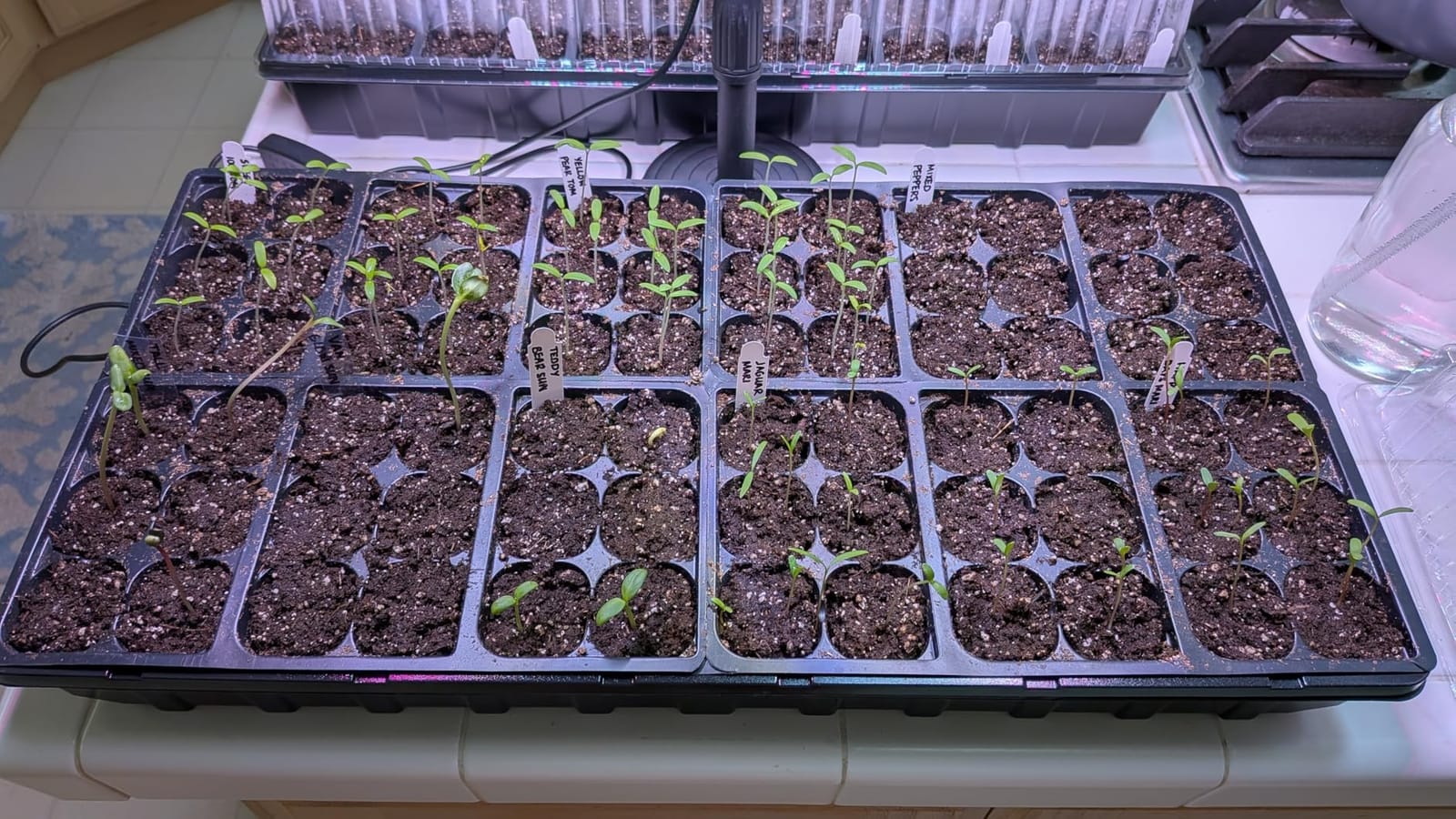
The design has limits you should know about before buying. Output drops off quickly with height, so the heads need to sit close to the tray or seedlings will stretch toward them. The telescopic pole tops out at a low ceiling, and tomatoes outgrow it within about three weeks. There is no built-in timer, so a 16-hour photoperiod requires an outlet timer.
Reviews also flag a cluster of early-failure and fading reports on some units, and the mains cabling with a US-only plug causes problems outside the US. Coverage is not enough for two seed trays at once, which is worth noting since the four heads can look like more capacity than it is.
What it is good for
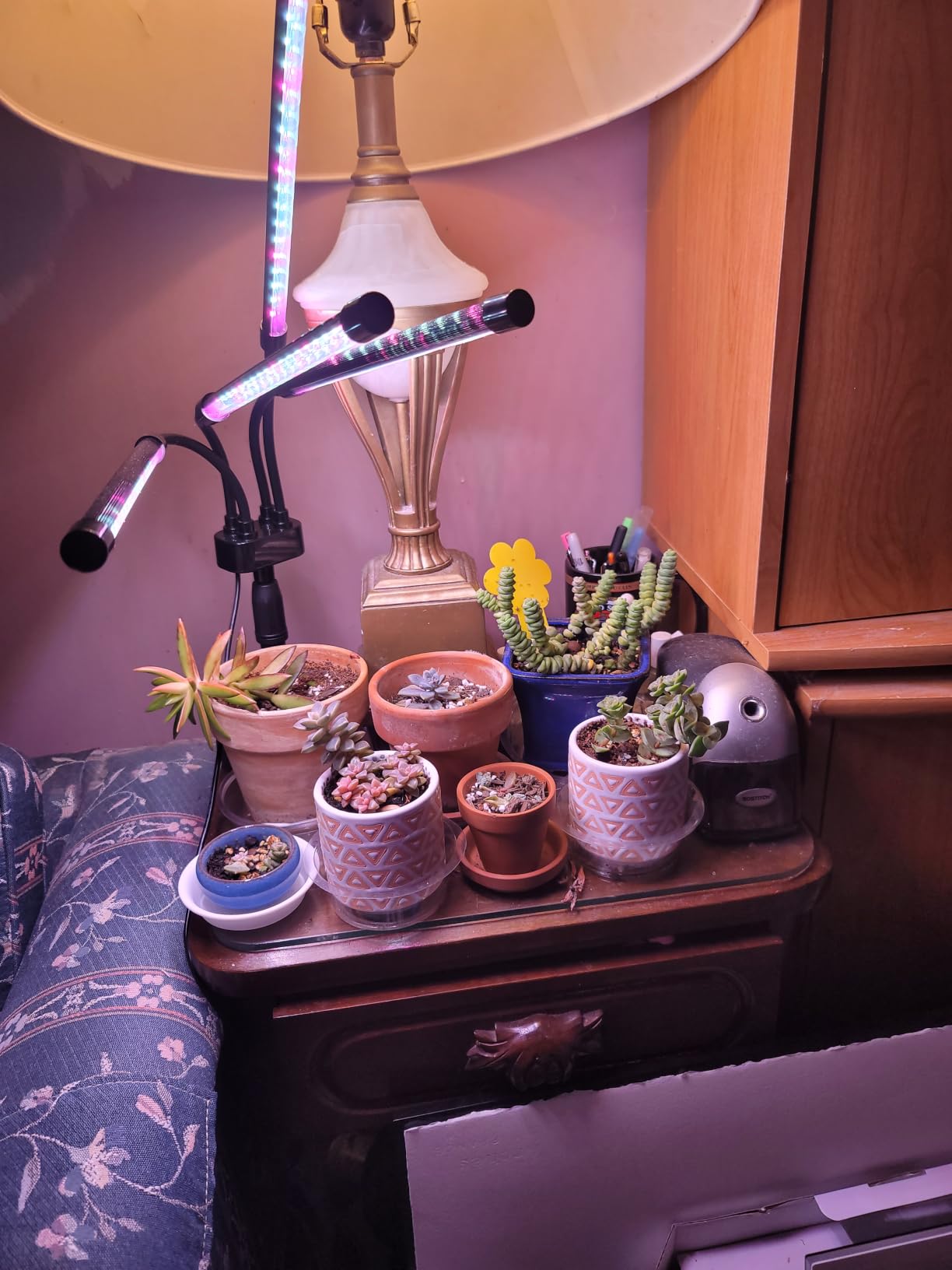
A countertop, a kitchen windowsill without direct sun, or a renter setup where drilling is not an option. It is also a good first light for a beginner because there is no mounting hardware to assemble and nothing to fall onto a tray below. Moving it between rooms is a matter of carrying one base.
It suits a single tray of a moderate number of seeds, especially when you want to move the whole setup into better light as the season warms up.
What it is not good for
It is not a rack or shelf light, and it is not adjustable in intensity. If you plan to grow a tall plant under it, the pole will not keep up. Buyers outside the US should look elsewhere, since the plug and voltage are US-specific.
7. GroCruiser Slim Panel 3-Pack – Best Under-Shelf Panels With a Built-In Timer
GroCruiser 3-Pack Panel Grow Lights for Seed Starting,Veg, Bonsai,Seedling
3 slim panels, 30W total
5-stage timer 4-20H
Linkable
Water resistant
Pros
- Built-in 5-stage timer removes the plug timer
- Very bright even output
- Ultra-thin profile fits under shelves
- Panels link for a rack build
Cons
- Thin metal and cheap connectors
- Timer resets if power is cut
- Very bright at close range
These panels are the sleeper pick of the roundup. The rating is 4.7 across 208 reviews, a strong score on a much smaller review base than the established brands, and the feature that separates them is scheduling: a five-stage timer covering 4, 8, 12, 16, and 20 hours, cycling daily, with no external plug timer required.
Each panel measures 11.8 by 3.7 by 0.4 inches and the set draws 30W total. That 0.4 inch profile is what makes them work under an existing shelf where a boxy fixture would steal headroom. Output is full spectrum with a 660nm-style natural sunlight mimic, and owners report bright, even dispersion that beat out a competing brand head to head in their own comparisons.
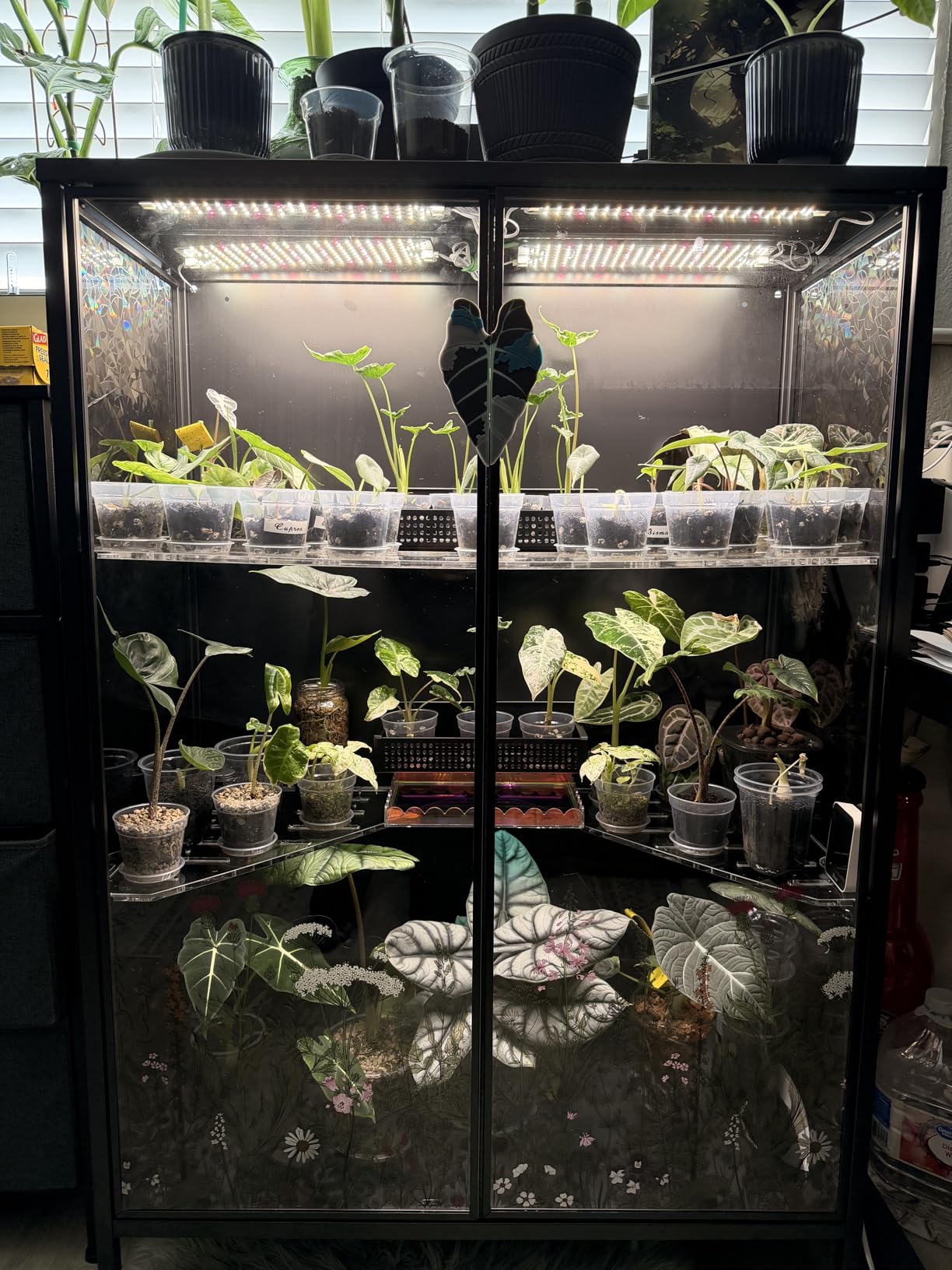
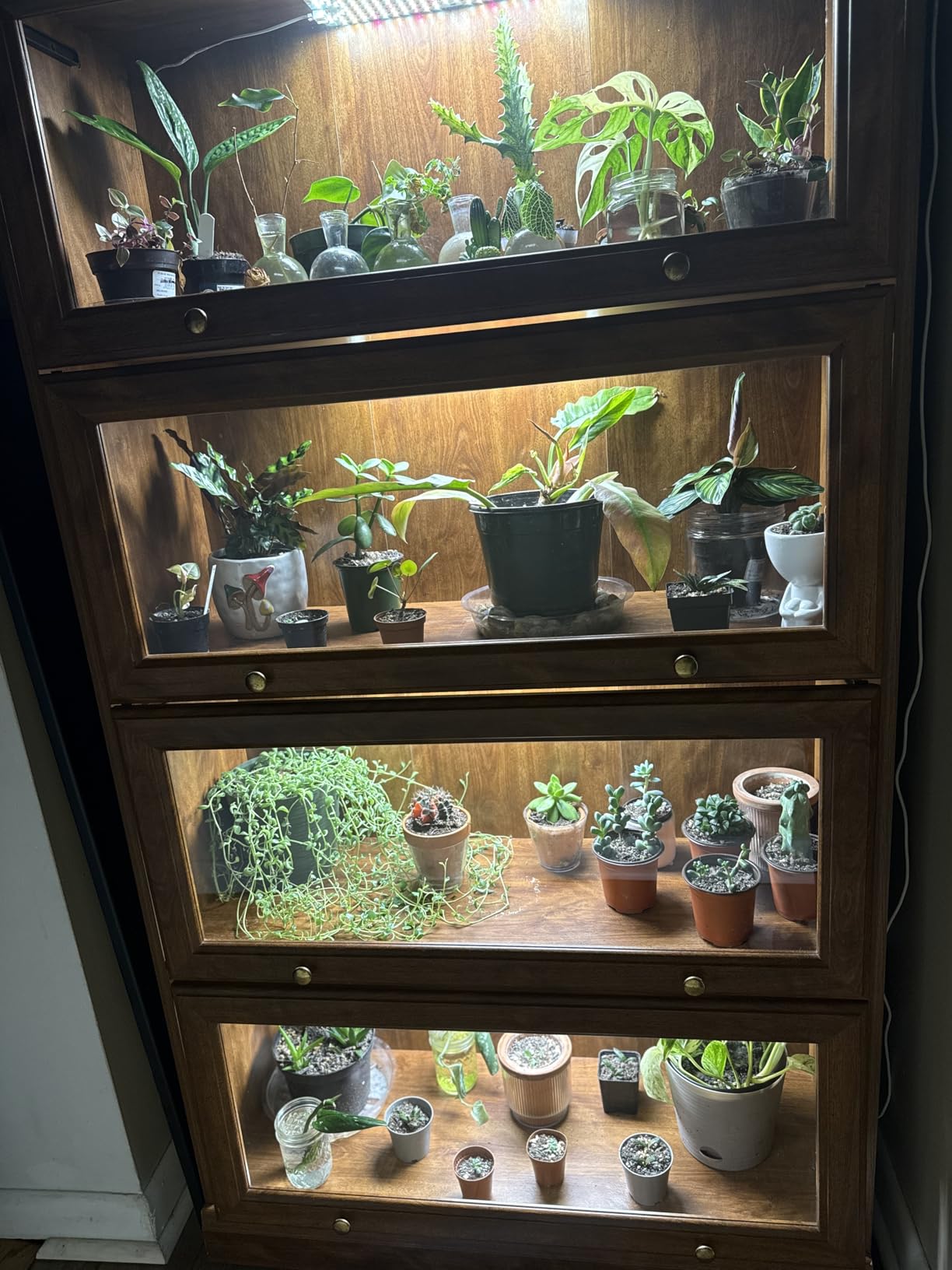
Panels link in series or parallel, so a permanent rack or cabinet build is straightforward, and 4, 6, and 10-pack versions exist for scaling. The construction is water resistant, which matters in a propagation area where watering splashes are routine, and mounting is tool-free using the included tape and cable ties. One owner reported earlier off-season blooming in houseplants under them, which is not the target use but suggests real intensity.
Construction quality is the reservation. The sheet metal is thin and the connectors feel cheap, and the supplied cable ties are flimsy for permanent mounting. The timer resets when power is interrupted, output is bright enough to bleach leaves that touch a panel, and 208 reviews is not much long-term durability data.
What it is good for
Under-shelf and inside-cabinet installs where vertical space is the constraint, and for anyone who wants a real 16-hour cycle without buying a plug timer. Three panels can cover one shelf tier, and the water-resistant build suits humid rooms and propagation shelves.
They also work well for herb shelves after the seedling stage, since the brightness is closer to a full grow light than a nursery lamp.
What it is not good for
They are not dimmable, and the brightness is high enough to scorch a leaf that rests against a panel. The connectors can snap off the end of a panel, so handle the ends carefully when mounting. If you are buying for a permanent setup, budget for better mounting hardware than the included ties.
8. APICDOM 4ft Slim Strip – Best Single Strip for a Full Seed Shelf
APICDOM LED Grow Light 4FT Full Spectrum Compact Linkable Lighting Fixture for Indoor Greenhouse Year Round Plant Seedlings, Essential Grow Slim Hanging Suspended Strip
4 ft strip, 30W
3600 lumens
Link 4 on one cord
Inline cord switch
Pros
- 4 ft length covers a full shelf tier
- Only 12.8 oz so easy to reposition
- Daisy-chain 4 strips to one outlet
- Hanging cable and screw mounts included
Cons
- No timer and no dimming
- Linked strips must share one cord
- Short interconnecting cord
A single 4-foot strip is the efficient way to light a whole seed shelf in one fixture rather than four short bars. This one is 46.1 by 1.65 by 1.42 inches, weighs 12.8 ounces, and produces 3600 lumens from a 30W draw. Full spectrum with 660nm red enhancement covers the seedling stage well.
You can link up to four strips on a single power cord, which keeps cable runs to one outlet on a rack. Installation hardware is complete, with a 2-foot hanging cable and screw mounts, and the inline on/off switch on the power cord means you do not have to unplug a strip mounted up high. The fixture carries a 3-year limited warranty and FCC certification.
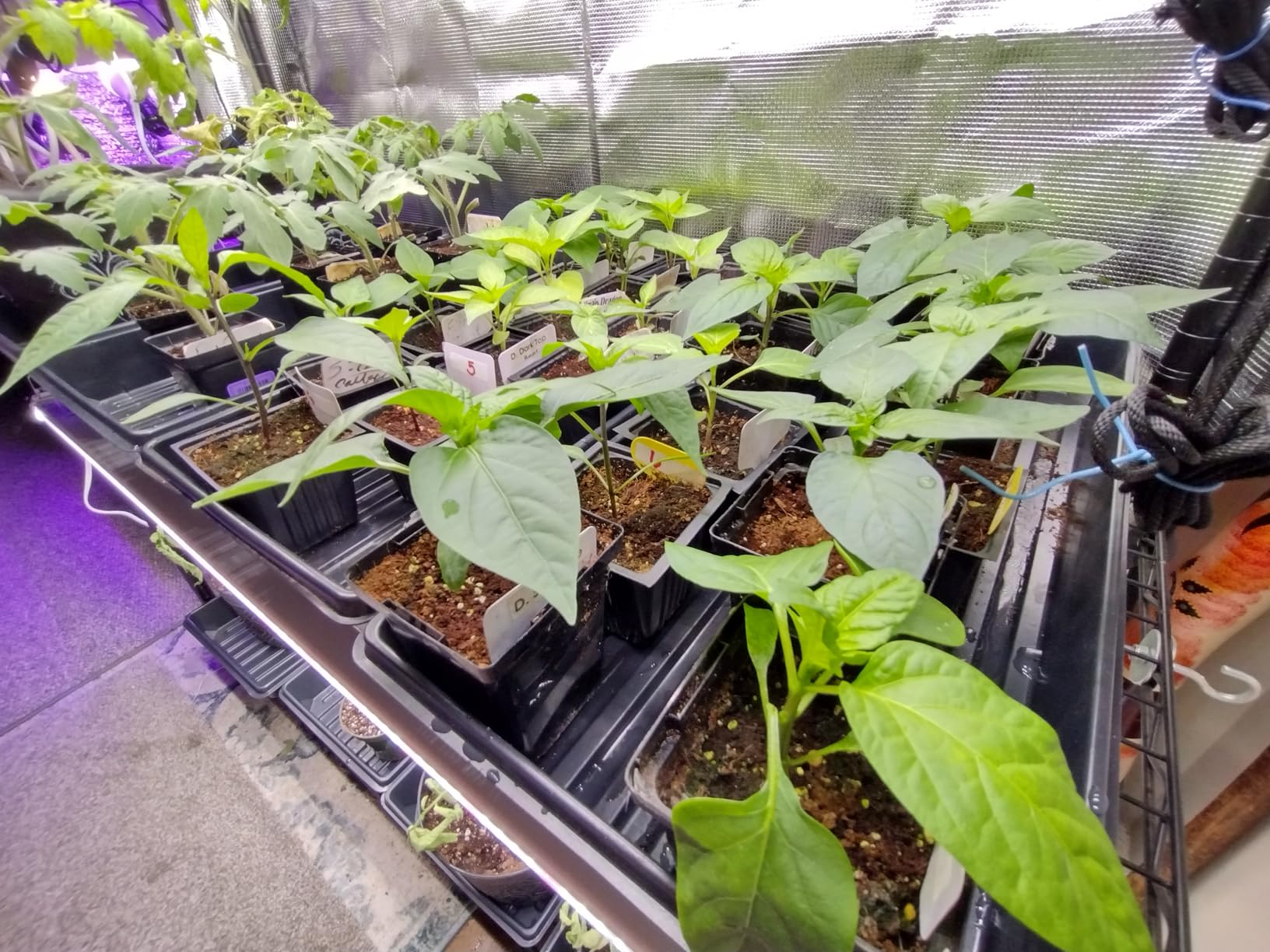
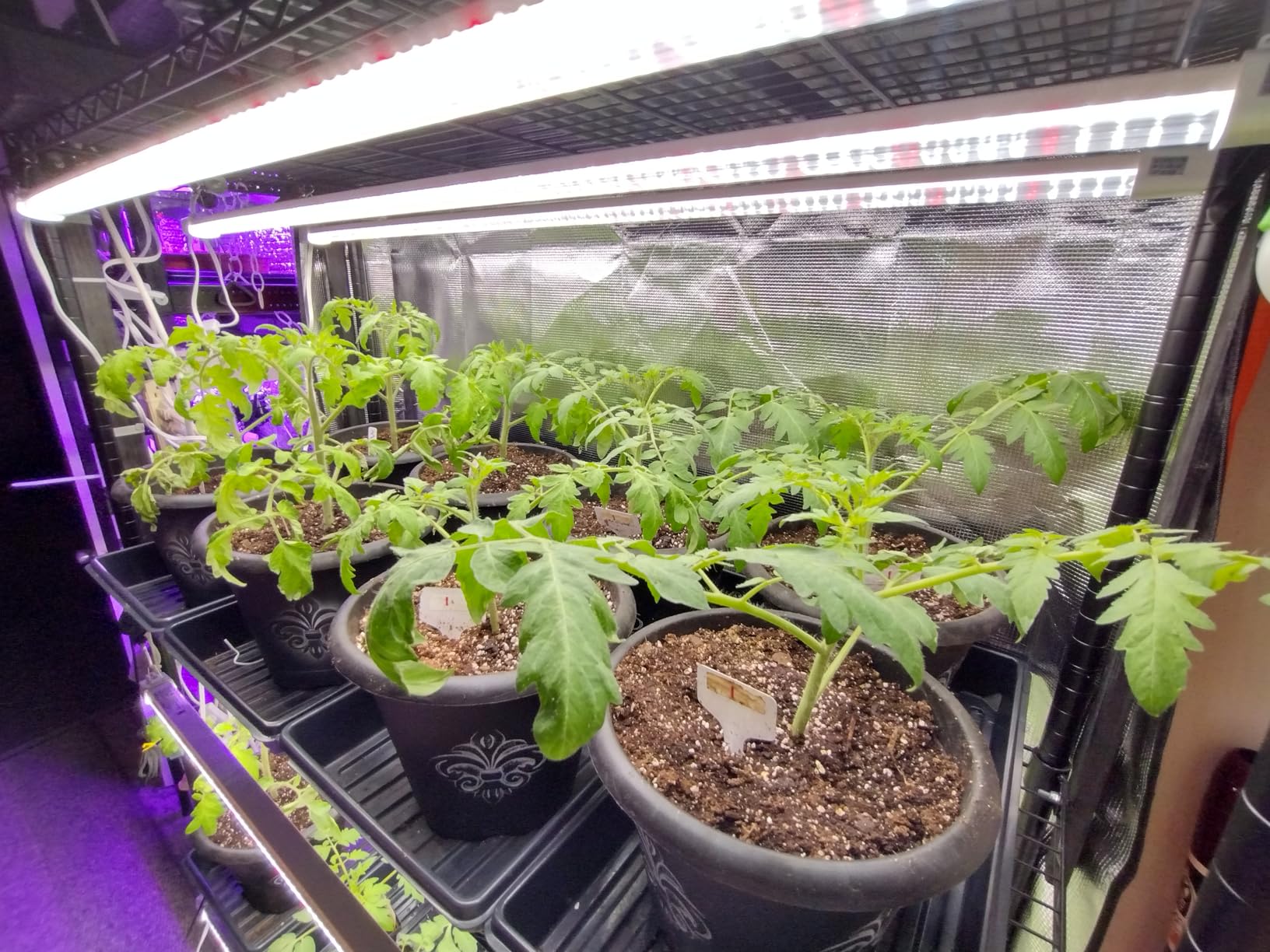
The rating is 4.6 across 209 reviews, with a reported number 31 ranking in plant growing light fixtures, which points to solid early demand in the linkable strip category. Owners value the 4-foot coverage and the low weight, which makes repositioning a light under a cabinet or up onto a shelf a one-handed job.
Two constraints shape where it works. There is no timer, so scheduling needs an external plug timer, and there is no dimming, so brightness is fixed. Because linked strips share one power cord, they run together rather than independently, which is fine for a full shelf but wrong if you want one section dark. The interconnecting cord is also short, limiting the gap between linked strips.
What it is good for
A seed shelf, a greenhouse tier, or a plant cabinet where one long fixture beats several short ones. The 4-foot length covers a full tray plus working space on either side, and the low weight makes it easy to raise as seedlings grow. It is also a reasonable pick for a small balcony or patio setup under cover.
If you are building a multi-shelf rack, our broader strip light guide covers the other options in this category.
What it is not good for
It is not for anyone who needs separate control per shelf, because linked strips operate as one circuit. Fixed brightness also means no gentle ramp for newly emerged sprouts, so get the height right on day one. And with no timer, forgetfulness is the main risk to a consistent photoperiod.
9. GYTF T5 1.4ft Strip 3-Pack – Best Reflector Strips for Tight Shelves
GYTF T5 Grow Lights 1.4Ft, 5000K White Full Spectrum LED Plant Growing Lamp Strips for Indoor Plants, Seeds Starting, Succulents, High PPFD with V-Shaped Reflector
3 strips at 60W total
3000 lumens
V-shaped reflector
Link up to 8
Pros
- V-shaped reflector adds 20-25% efficiency
- Very bright neutral 5000K light
- Narrow profile fits tight shelves
- Runs cool with no heat buildup
Cons
- No timer and no dimming
- Strips in the pack must all be connected
- Adhesive strips can let a fixture drop
The defining feature here is the V-shaped reflector, which concentrates light downward and improves efficiency by roughly 20 to 25 percent over a flat strip. That matters in a narrow shelf or cabinet where you want the light on the plants rather than lost to the sides. The set runs 60W across three strips for 3000 lumens of 5000K full spectrum output.
Each strip carries 153 super bright LEDs and measures 16.7 by 1.88 by 1.37 inches, a narrow profile that fits inside cabinet widths other fixtures miss. Owners highlight brightness, cool running, and the reflector effect, and several report orchids and succulents thriving under them in north-facing rooms. It pairs cleanly with a smart plug for scheduling.
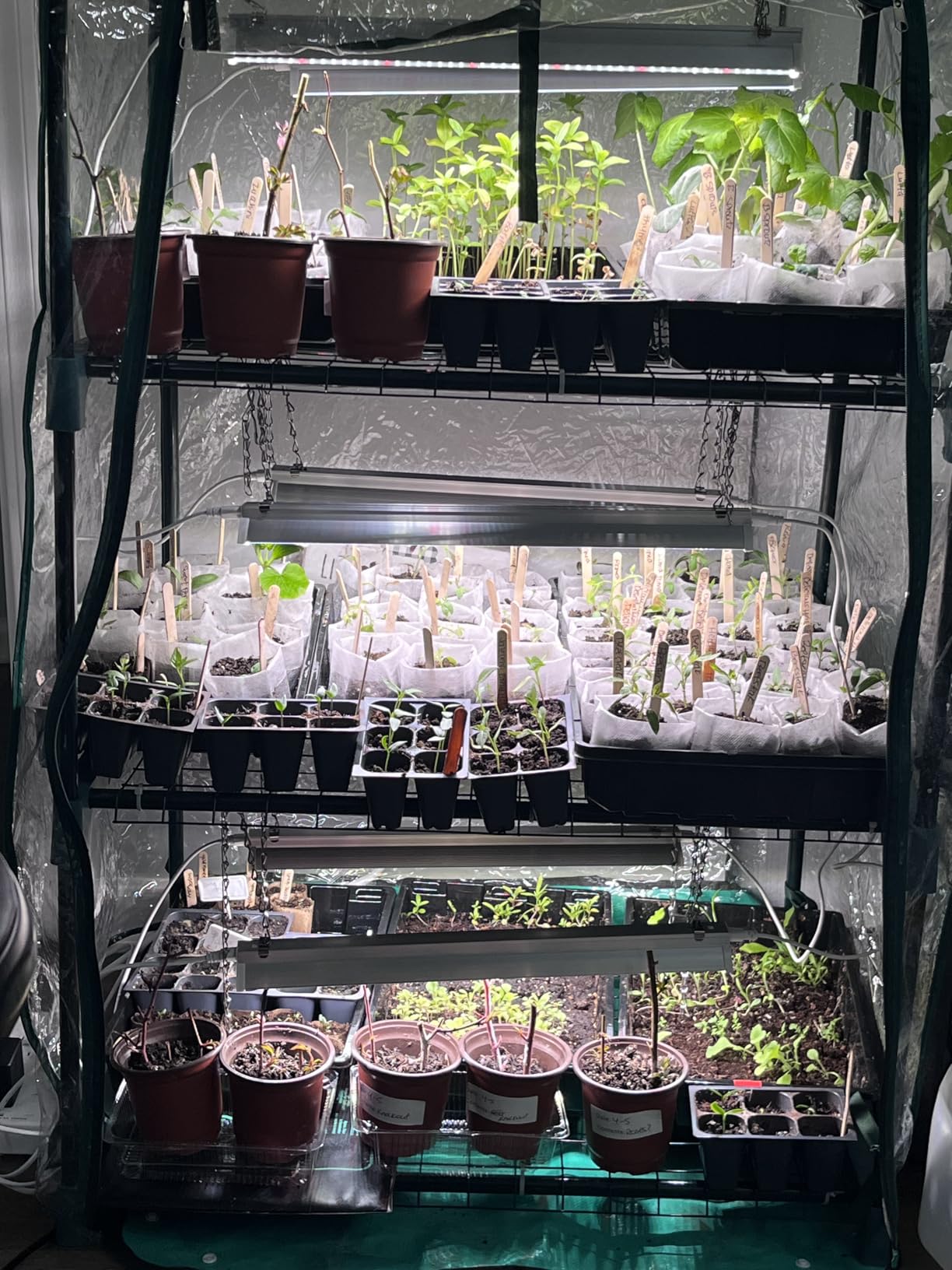
There are two daisy-chain options: extension cords or direct end-to-end connectors, and up to eight strips can run from a single power supply. The mounting kit is thorough, with screws, double-sided tape, zip ties, clips, and dust caps to protect the connection ports from moisture. The warranty runs 36 months.
The practical complaints are consistent. There is no timer and no dimming, every strip in the pack must be connected for any of them to run, and the interconnecting cord is short. Output is bright enough to scorch leaves within about 6 inches, and the adhesive mounts can fail and let a fixture drop onto the plants below, so use the screws in any humid setup.
What it is good for
Tight shelves, inside-cabinet builds, and any space where a flat strip would waste light sideways. The reflector design makes it a good fit for shallow plant cabinets, and the 5000K output works for both seed starting and later houseplant growth. Three strips cover a moderate shelf tier.
It is also useful for anyone who wants to keep spending low and already has a smart plug or wall timer in place.
What it is not good for
It cannot be used with only some of the pack, so do not buy it if you only have room for one strip. It scorches leaves that sit too close, so keep clearance. And the short interconnecting cord means tight, evenly spaced rows are the only layout that works cleanly.
10. FOXGARDEN Stand Grow Light – Best Freestanding Light With Height Adjustment
FOXGARDEN Grow Light Stand, Advanced LED Plant Growth Lighting with 4/8/12H Timer, 6 Dimming Options, and Adjustable Height – Optimal for Indoor Plants in Seedlings, Vegetative, and Flowering Phases
108 LEDs at 22W
6 dim levels
3 timer settings
Telescoping stand
Pros
- Freestanding design frees shelf space
- Six brightness levels and three timer settings
- Raising rod as plants grow
- Reflector helps keep seedlings compact
Cons
- Plug runs hot on high settings
- Whine on lower dimming levels
- Stand tops out at about 21.6 inches
This is the only true stand-mounted light in the group, and that changes the layout problem. Instead of a shelf, a clamp, or tape, you set a weighted metal base on a table and the light hovers over the tray. Several owners use it over a small tabletop greenhouse, where the whole tray sits under one position and seedlings stay compact.
Control is the strength: 108 LED beads made up of 60 cold white, 32 warm white, and 16 red, six dimmable brightness levels running from 10 to 100 percent, and a timer with 4, 8, and 12 hour settings that cycles daily. A telescopic rod adjusts height from 11 to about 21.6 inches, and a built-in reflector extends coverage while conserving energy.
The base is wide and stable enough to avoid tipping, and a sponge desk pad underneath protects the surface underneath it. A remote control, adapter, wrench, and hardware are included, and the white finish blends into a kitchen or living space better than black fixtures. The warranty is 12 months with a 90-day return window.
Three complaints recur. The plug runs hot, especially at the highest brightness setting. There is a loud high-pitched whine on the lower dimming levels, which is a real drawback if the light sits in a bedroom or an office. The rod tops out too low for taller plants, and the iron construction with the reflector plate is heavy and tip-prone on a small surface. Several growers also find the dimmed output falls below a useful level.
What it is good for
A tabletop greenhouse, a kitchen counter used as an indoor seed station, or a small cabinet where you cannot hang anything. Six dimming levels let you protect fresh sprouts and then raise the intensity as the seedlings thicken, and the stand raises the light without touching the fixture while it is hot.
It is a good fit for someone who wants one visible, tidy object on a counter rather than a rack of hanging hardware.
What it is not good for
It is not quiet at low dimming levels, so skip it for a bedroom. The 22W draw and reflector footprint suit a single tray rather than a rack, and the height ceiling means you will outgrow the stand by the time tomatoes get tall. On a small desk, check the weight and stability before committing.
How to Choose an LED Grow Light for Seedlings
Seedlings have different needs from mature plants, and almost every expensive mistake we see comes from buying a flowering fixture for a tray of sprouts. These are the six things worth checking before you buy.
Work out the watts per square foot, not the total wattage
The most repeated rule of thumb in r/gardening is that 15 to 20 watts of power draw will light 1 square foot of seedlings, and 25 to 30 watts per square foot for a more intense setup. A 72-cell propagation tray is roughly 1.4 square feet, so a single tray needs about 20 to 30W of draw to sit comfortably in that band. A 10-cell tray is closer to 0.5 square feet, which is why 10W clip lamps work so well on small trays.
That single number resolves most of the confusion in this category. A 70W panel is not overkill for a 2 by 2 foot shelf, but it is far more than a 1.4 square foot tray needs, which is exactly why it ships with a dimmer. Buy for the footprint you have now, not the one you might build later.
Check intensity against the seedling PPFD band
PPFD, photosynthetic photon flux density, is the usable light a fixture actually delivers per square meter, measured in micromoles per square meter per second. Growers on r/IndoorGarden put seedlings in a band of 100 to 300 PPFD, and a brighter guide aims for 200 to 400 for healthy early growth. Below roughly 100, seedlings stretch and go leggy. Well above 400 at close range, leaves bleach.
Reference points for later stages help you calibrate. Vegetative growth generally sits between 400 and 600 PPFD, and flowering fixtures are built for 600 and up. A seedling light should never be a fixture whose only selling point is a high number. The Juhefa panel shows why real numbers matter: it measures about 265 micromoles at 4 inches but only 50 at 18 inches, so the same fixture is generous or inadequate depending on height.
Get the form factor right for your space
Five shapes cover almost every seedling setup. A clip lamp grips a shelf edge and needs no hardware, which suits a single tray. A tabletop stand needs floor space but frees the shelf entirely. A strip or bar hangs under a shelf and scales across a rack. A panel hangs flat and covers a square footprint, which is the easiest geometry for one tray. A multi-head lamp aims several diodes independently across a wide tray and is the most forgiving of uneven coverage.
Coverage numbers are frequently overstated. Forum growers regularly point out that a fixture advertised for a 4 by 4 foot area rarely delivers usable intensity across all of it, and that a stated footprint usually means something closer to half that at a workable distance. Our general LED panel light guide goes deeper on coverage geometry if you are building a rack rather than a tray.
Set the distance first, and raise the light weekly
Distance is the number one cause of both failure modes. Too far and seedlings go leggy; too close and leaves bleach or the tray overheats. Start newly emerged sprouts 8 to 12 inches under a 10 to 30W fixture, and give a 40 to 70W panel 18 to 24 inches. As true leaves develop, raise the light by an inch or two a week to keep the same intensity on a growing canopy.
Never measure by height alone. The same fixture delivers very different intensity depending on whether it has a reflector, and a strip under a shelf throws light unevenly across the width. Judge by plant response instead: compact, sturdy stems and flat leaves mean the distance is right, while leaning stems mean lower or brighter, and bleached patches mean move it up or dim it.
Check whether you need a timer and a dimmer
Sixteen hours on and 8 hours off is the standard photoperiod for seedlings, and a light with no timer means an external plug timer or smart plug, which adds cost and one more thing to forget. Built-in timers appear on the LEOTER, GroCruiser, and FOXGARDEN lamps, though their longest setting is 12 hours on the LEOTER and FOXGARDEN, so pair those with a plug timer for a full 16-hour day.
Dimming matters most in the first two weeks, when sprouts are most vulnerable to bleaching. A fixture with 6 or 10 brightness levels lets you start low and turn up rather than gambling on height. Fixed-output strips work fine if you are confident about placement, and adjustable or multi-head designs cover a wide range of tray sizes. If your light is bright and close, a dimmer is the cheapest insurance against light burn you can buy.
Spectrum: what seedlings actually use
Seedlings lean on blue light, roughly 400 to 500nm, to build short stems and thick leaves. Red light at 600 to 700nm supports photosynthesis and overall growth, and far-red above 700nm is mostly relevant later. A 5000K or 6000K white full spectrum light covers both well, which is why 5000K shop-style bars are a recurring recommendation in the r/kratky community for exactly this stage.
That is the myth to shed: blue-only is not required. Growers debate it on r/tomatoes, and most succeed with non-adjustable full-spectrum fixtures, including the many people who simply use a good white LED shop light. Treat UV and IR diode claims sceptically. On both the Juhefa panel and the LEOTER lamp, owners report those diodes are very dim and add little visible benefit, so do not pay extra for them.
Diagnosing leggy versus burned seedlings
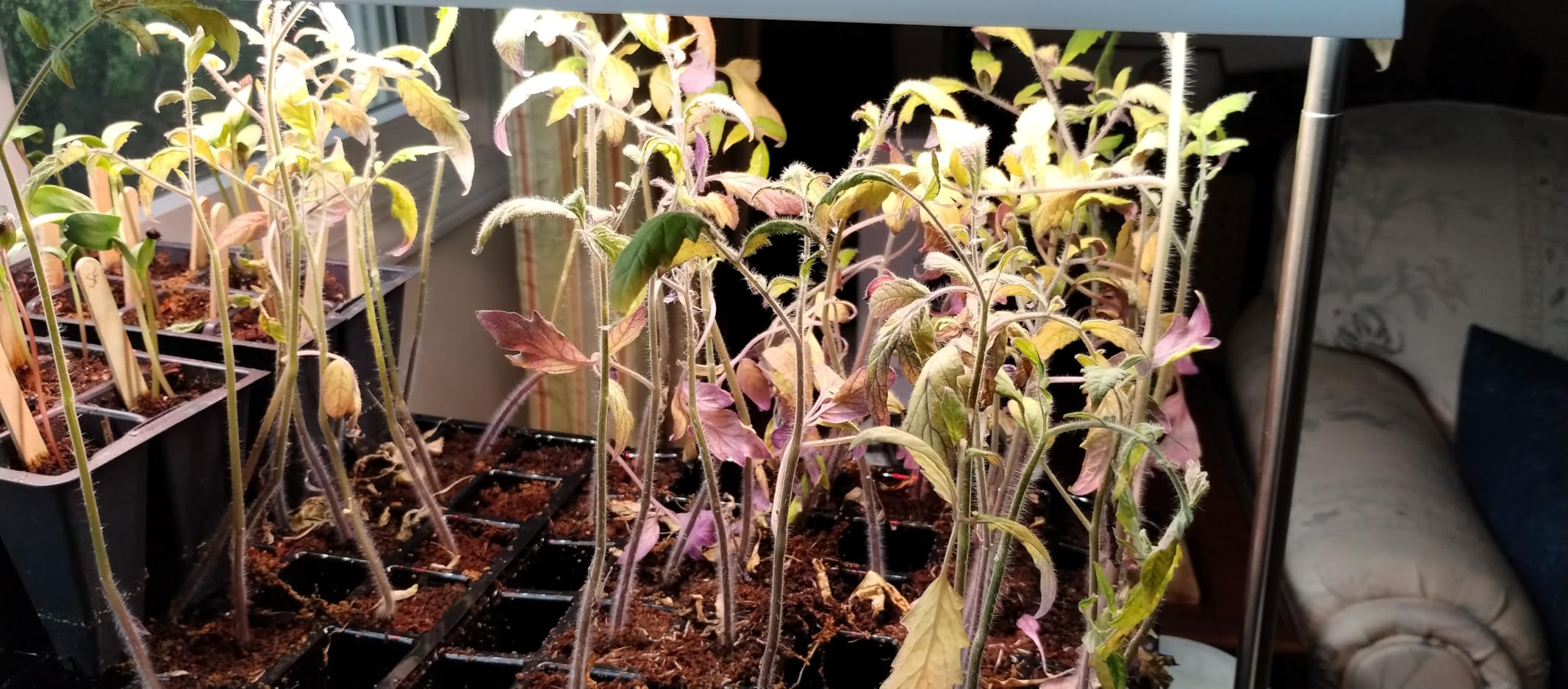
Leggy seedlings are tall, thin, pale, and bending toward the light. That means insufficient intensity or too much distance. Move the light closer, add a second fixture over the outer cells, or switch to a brighter setting. It is also the single biggest reason new growers over-water, and over-watered seedlings are the ones that develop damping-off, a fungal collapse of the stem at soil level. Fix the light, then let the tray dry slightly between waterings.
Burned seedlings look bleached, white, or papery, usually on the leaves closest to the fixture. That means too much intensity at too close a range. Dim the light, raise it, and check that no leaf is touching a panel. The fix is faster than the cause, and neither problem leaves permanent damage once corrected early.
Frequently Asked Questions
What type of light is best for growing seedlings?
A dimmable, low-heat full spectrum LED, ideally around 5000K to 6500K, works best for seedlings. Blue-weighted light builds short, sturdy stems, while some red supports overall growth. Place it 8 to 12 inches above newly emerged sprouts and raise it as they grow, running 16 hours on and 8 hours off. A clip lamp suits one tray; a hanging panel or strip set suits a rack.
What color light is best for seedlings to grow optimally?
Blue light between 400 and 500nm promotes compact stems and thick leaves, which is what seedlings need most. Red light from 600 to 700nm supports general photosynthesis. A 5000K or 6000K full spectrum white fixture delivers both in one lamp, which is why growers on r/kratky and r/IndoorGarden commonly recommend them. Blue-only fixtures are not necessary, and UV and IR diodes are usually too dim to justify their price premium.
Which LED grow light is best for growing plants?
It depends on the footprint. For a single 72-cell seed tray, the SYEIORAOM four-head tabletop lamp or the Juhefa 9.9 inch panel cover it evenly. For a shelf of trays, the Barrina T5 four-pack gives individually switchable bars. For one fixture that grows with the plant, the VIPARSPECTRA 70W panel has a four-level dimmer and silent fanless operation, so it covers seedling through vegetative stages.
How many watts should a grow light be for seedlings?
Plan for 15 to 20 watts per square foot of seedlings, or 25 to 30 watts per square foot for a more intense setup, which is the rule of thumb repeated in r/gardening. A 72-cell tray is about 1.4 square feet, so it needs roughly 20 to 30 watts. A 10-cell tray needs closer to 10 watts. A larger tray or shelf multiplies from there, and dimming lets you scale intensity without moving the light.
How far should seedlings be from a LED grow light?
Start newly emerged sprouts 8 to 12 inches under a 10 to 30 watt fixture, and give a 40 to 70 watt panel 18 to 24 inches of clearance. Raise the light by an inch or two each week as true leaves develop so intensity stays constant on a growing canopy. Panels without reflectors lose intensity faster with distance, so check the plant response rather than trusting height alone.
Do seedlings need grow lights indoors?
If you have a strong south-facing window that gets direct sun for most of the day, you can start seeds there, though a light still helps. In a basement, apartment, or north-facing room, indoor seedlings do need a grow light to get the intensity they need. Weak window light produces pale, stretched stems that never recover. If you only grow microgreens, our microgreens grow light picks cover the lighter-duty case.
Final Verdict
The best LED grow lights for seedlings in 2026 come down to footprint and control. The GooingTop clip lamp is the pick for a single tray on a shelf, the Barrina T5 four-pack is the best way to light a whole seed rack, and the VIPARSPECTRA 70W panel is the one fixture that can grow with your plants and stay silent in a living space.
Start with the tray area you actually have, aim for 15 to 30 watts per square foot, run 16 hours on, and judge the result by stem thickness rather than by the plant’s height. If you want a second opinion on bigger fixtures, our full grow light roundup covers the vegetative and flowering stage picks.