
Trailer theft is a low-effort crime with a high recovery cost. A thief needs a ball, a socket, and five quiet minutes, and the trailer is simply gone. If you store a travel trailer, boat trailer, or equipment trailer anywhere you are not standing next to it, the single most useful purchase you can make is one of the best trailer hitch locks on the market for 2026.
Our team spent weeks reading the spec sheets, the fit dimensions and thousands of owner reviews across the whole category, then sorted the winners by what actually stops a thief rather than by how a lock looks in a photo. We looked at all three architectures available to most people: coupler locks that clamp onto an unhitched trailer’s coupler, receiver and hitch pin locks that replace the pin on a hitched trailer, and wheel chock locks that immobilize a tire.
Are trailer hitch locks actually effective? Honestly, yes for the opportunistic thief who wants your trailer in under five minutes, and no against someone who arrives with an angle grinder and patience. That distinction drives every recommendation below, and we would rather tell you where a lock fails than pretend steel means invulnerability.
Over the years our readers have asked us to cover the whole trailer security picture, not just the lock, so we link out to our guides to the best trailer hitches and the best trailer jacks where those parts matter to the setup.
Quick Picks: Top 3 Best Trailer Hitch Locks for Security in 2026
REESE Towpower 72783 Coupler Lock — universal ratchet coupler lock with 11 locking positions and the highest review volume in the category, our pick for the unhitched trailer.
Master Lock 389DAT Universal Coupler Lock — covers 1-7/8 inch, 2 inch and 2-5/16 inch couplers in one body, the easiest fit decision you can make.
CURT 23518 Barbell Hitch Lock — a locking receiver pin that disappears into the hitch, the strongest deterrent when a thief cannot tell it is there.

REESE Towpower 72783 Coupler Lock
- 11-position ratchet
- Universal coupler fit
- Powder-coated alloy steel
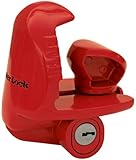
Master Lock 389DAT Universal Coupler Lock
- Fits 1-7/8 to 2-5/16 inch couplers
- Pick and pry resistant
- Corrosion resistant
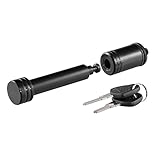
CURT 23518 Barbell Hitch Lock
- 5/8 inch barbell locking pin
- Quarter-turn key activation
- Powder coat and dust cap
Are Trailer Hitch Locks Actually Effective?
They are effective against opportunistic theft, which is the vast majority of trailer theft, and ineffective against a prepared attacker with power tools. That is the honest answer, and every experienced owner we heard from said the same thing in different words: a lock works because it converts a five-minute job into a loud, messy, one-hour job that leaves evidence.
What a lock genuinely does is close the window. On RV owner forums, the most common theft story involves a trailer taken from a campground or a storage lot overnight, and the recurring advice is that the lot matters as much as the lock. A trailer parked among twenty unlocked trailers is the easy target. A trailer with a bright lock on it in a row of locked trailers is not.
What a lock does not do is stop someone who brings a 4.5 inch angle grinder and a cutoff wheel. One Forest River Forums member reported destroying three inexpensive locks in a matter of minutes. Another iRV2 poster put it more bluntly, saying any lock can be removed with the right tool, and that good insurance plus a hidden GPS tracker is the more realistic plan for a high-value trailer.
So the practical goal is layered defense. A lock handles the impulsive thief, a second layer handles the prepared one, and a tracker plus documentation handles the case where both fail. We explain the full sequence later in this guide.
The Three Types of Trailer Hitch Locks Explained
There are three distinct architectures, and choosing the wrong one for your parking situation is the most common mistake we see. The type you need is decided almost entirely by whether the trailer is hooked up.
Coupler locks for unhitched trailers
A coupler lock slides into the open throat of the trailer coupler and bridges the latch, so the latch cannot close over a hitch ball. It works only when the trailer is not attached to a vehicle, which makes it the right choice for a stored trailer, one on a jack, or one sitting in a driveway. Most universal coupler locks cover the common 1-7/8 inch, 2 inch and 2-5/16 inch ball sizes.
Hitch pin and receiver locks for hitched trailers
A receiver lock replaces the ordinary hitch pin and can only be pulled with the matching key, so a hitched trailer cannot be unhooked and dropped onto another vehicle’s ball. Several designs use a barbell-shaped pin that sits flush with the receiver and barely reads as a lock at all, which matters when you park where you cannot watch the trailer.
Wheel chock locks for immobilizing a tire
A wheel chock lock clamps around a tire and locks to the wheel itself, so the trailer cannot be rolled or towed even if the coupler is free. It is the least common of the three in this roundup, but it is the one that protects against a winch being hooked to the A-frame. Many owners pair one with a coupler lock rather than choosing between them.
One more category deserves a mention even though we did not test one here: pull-pin locks for fifth wheel and gooseneck hitches, which stop the hitch release handle from being pulled while the trailer is parked. If you tow a fifth wheel, that is the architecture you actually need.
Best Trailer Hitch Locks in 2026: Quick Overview
All twelve locks below appear in the same order as the individual reviews that follow. Use the price button on any row to see the current listing.
| Product | Specifications | Action |
|---|---|---|
| REESE Towpower 72783 Coupler Lock |
|
Check Latest Price |
| Master Lock 389DAT Universal Coupler Lock |
|
Check Latest Price |
| CURT 23518 Barbell Hitch Lock |
|
Check Latest Price |
 Rhino USA 2 Inch Locking Receiver Pin Rhino USA 2 Inch Locking Receiver Pin |
|
Check Latest Price |
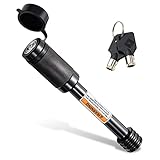 CZC AUTO Hitch Pin Lock CZC AUTO Hitch Pin Lock |
|
Check Latest Price |
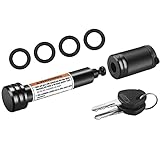 METOWARE 5/8 Inch Hitch Lock METOWARE 5/8 Inch Hitch Lock |
|
Check Latest Price |
 Master Lock 1469DAT Stainless Barbell Lock Master Lock 1469DAT Stainless Barbell Lock |
|
Check Latest Price |
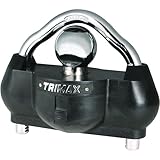 TRIMAX UMAX100 Coupler Lock TRIMAX UMAX100 Coupler Lock |
|
Check Latest Price |
 Rhino USA Coupler Lock Kit Rhino USA Coupler Lock Kit |
|
Check Latest Price |
 Blaylock American Metal TL-33 Blaylock American Metal TL-33 |
|
Check Latest Price |
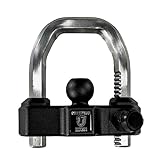 BulletProof Hitches Extreme Duty Lock BulletProof Hitches Extreme Duty Lock |
|
Check Latest Price |
 Master Lock 1465DAT Stainless Hitch Pin Master Lock 1465DAT Stainless Hitch Pin |
|
Check Latest Price |
How to Measure Your Coupler and Pick the Right Lock Size
Fit is the number one reason a trailer hitch lock gets returned, and every measurement takes about two minutes with a tape measure or calipers. Get this right before you buy anything.
First, measure the ball size your coupler is designed for. The common sizes are 1-7/8 inch, 2 inch and 2-5/16 inch, and most universal coupler locks are built to handle all three. If your trailer uses an odd size, a narrower coupler, or a rolled-lip or underslung design, a universal model may not sit properly and you will need a coupler-specific lock instead.
Second, measure the opening of the coupler across the throat, from the inside face of the latch channel to the outer lip. This is the gap a lock has to bridge. The REESE Towpower, for example, opens to about 3-7/8 inches, which covers the common sizes but not a very wide 4 inch coupler opening.
Third, check the lip dimensions if you are buying a fitted lock rather than a universal one. The Rhino USA coupler kit lists a maximum lip width of 4-3/8 inches and a maximum lip height of 5/16 inches, and it will not work on rolled-lip or underslung couplers. Buyers who skip this step are the ones returning kits for a poor fit.
For receiver and hitch pin locks, the numbers are simpler. You need the receiver tube width, usually 2 inch or 2-1/2 inch, the pin hole diameter, almost always 5/8 inch, and the usable depth. Usable length is the figure people miss, and it varies sharply between models: the CURT 23518 gives you 2.85 inches of usable length, while the Master Lock 1469DAT and the CZC AUTO both give 3-1/2 inches. Owners report the shorter pin running out of room on some factory receivers, so measure depth before you order.
One more check: whether your receiver is double-walled. The CURT 23518 and the METOWARE lock both state they are not compatible with double-walled receiver tubes, so a heavy-duty aftermarket receiver can rule out an otherwise well-reviewed lock.
1. REESE Towpower 72783 Coupler Lock Is the Best Overall for Unhitched Trailers
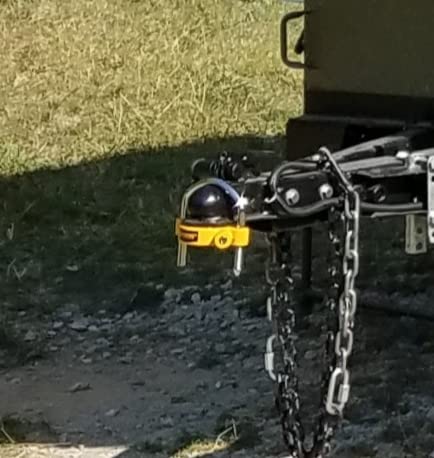
REESE Towpower 72783 Coupler Lock, Adjustable Storage Security, Heavy-Duty Steel, Yellow and Chrome ( Universal Fit)
Ratchet design with 11 locking positions
9 x 9 x 3 inch body, 16 oz
Corrosion and weather resistant
Pros
- Ratchet with 11 adjustable locking positions fits a range of coupler openings
- Bright yellow finish works as a visible deterrent
- Tool-free installation and removal
- Two keys included and works across multiple trailers
Cons
- Lock body has noticeable play once engaged
- Opening is about 3-7/8 inches so very wide couplers may not fit
- Coarse ratchet teeth on one side only
This is the lock we keep coming back to for the money, and the reason is unglamorous: volume of real-world use. At more than 18,000 reviews it has been installed on more trailers than anything else we looked at, which means the failure modes are well known and the sizing surprises are already documented.
The mechanism is a ratchet with 11 locking positions, so you can set the body to suit your coupler without hunting for a single sweet spot. Installation is genuinely tool-free: it drops into the coupler throat, the steel bridge drops over the latch, and you swing the U-bar closed until the ratchet catches. Removal reverses the whole thing in seconds.
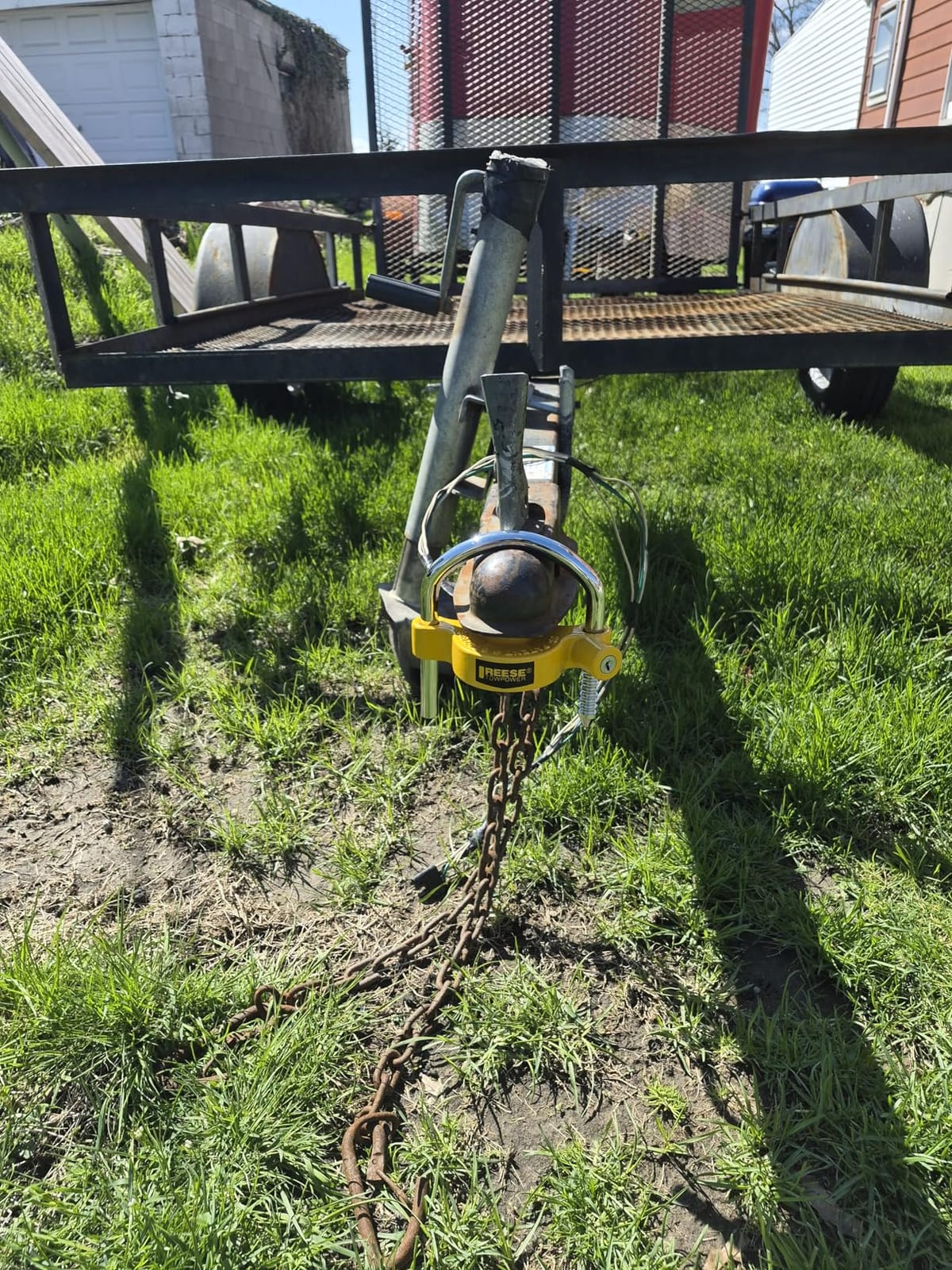
The yellow powder coat is not just styling. Owners consistently point out that the bright finish is what makes the lock read as a lock from twenty feet away in a storage lot at night, which is the entire point of a deterrent. The alloy steel body is listed as corrosion and weather resistant, and reviewers report it staying clean through multiple seasons outdoors.
What we do not like is the play. A number of reviews note that the lock body feels loose on the coupler once engaged, with visible movement. It does not stop it working as a deterrent, but if you want a rock-solid fit with zero wobble you should measure carefully and consider a tighter-fitting design.
Is the REESE 72783 a good fit for a travel trailer?
For most travel trailers, yes. The adjustable ratchet covers the common 2 inch couplers and many 2-5/16 inch setups without guesswork, and owners with more than one trailer report using the same lock across them.
Measure your coupler opening first. If your throat measures wider than about 3-7/8 inches, the bar will not have a solid lip to sit against and you would be better served by a fitted lock.
Is the yellow finish just a color choice?
No. High-visibility color is one of the cheapest security features available, because it converts an unknown object into an obviously locked one. A thief who has to stop and evaluate a bright yellow lock loses the seconds that make a quick grab-and-go possible.
The tradeoff is that the powder coat can scuff over years, and a lock that looks scratched reads as less serious even if the steel underneath is fine.
2. Master Lock 389DAT Is the Best Value for Unknown Coupler Size
Master Lock Trailer Lock, Trailer Hitch Lock fits 1-7/8″,2″ & 2-5/16″ Red
Universal fit for 1-7/8, 2 and 2-5/16 inch couplers
3.6 x 7.6 x 6.7 inches, 16 oz
Limited lifetime warranty
Pros
- Universal fit covers the three most common coupler sizes
- Bright red finish is an immediate visual deterrent
- Resists picking and prying
- Resists rust and corrosion
Cons
- Small basic pin-tumbler cylinder can be worked by a determined attacker
- Bulky enough to be noticeable under a coupler cover
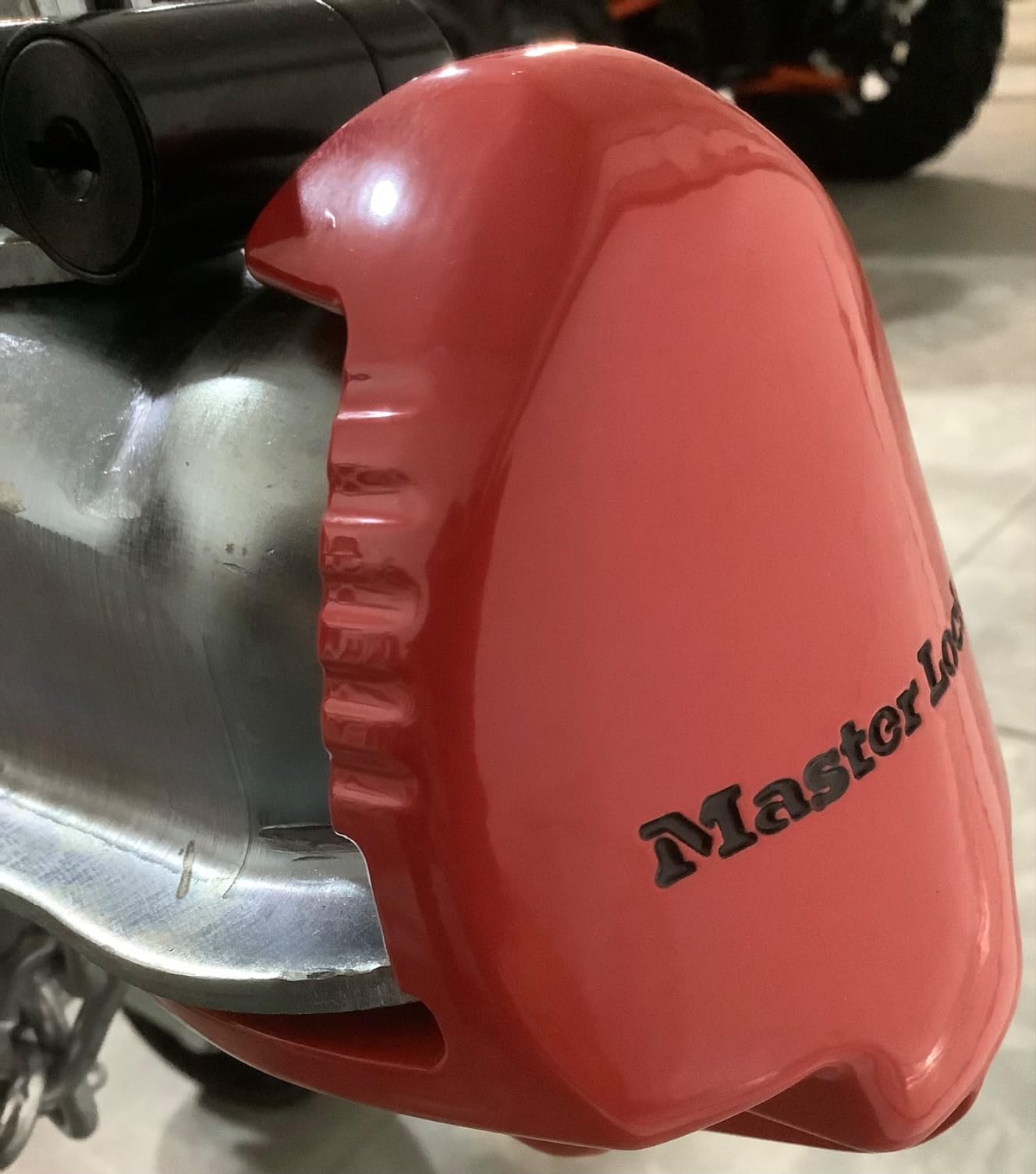
If you are not sure what size coupler you have, this is the least risky purchase in the entire roundup. It covers 1-7/8 inch, 2 inch and 2-5/16 inch in a single body, so the fit question disappears entirely.
Buyers rate it highly at 4.7 across a very large review base, and the praise concentrates on two things: the fit and the install. There is no adjusting, no measuring, and no guessing. You drop it in, close the bar, and the red housing makes the locked state obvious.
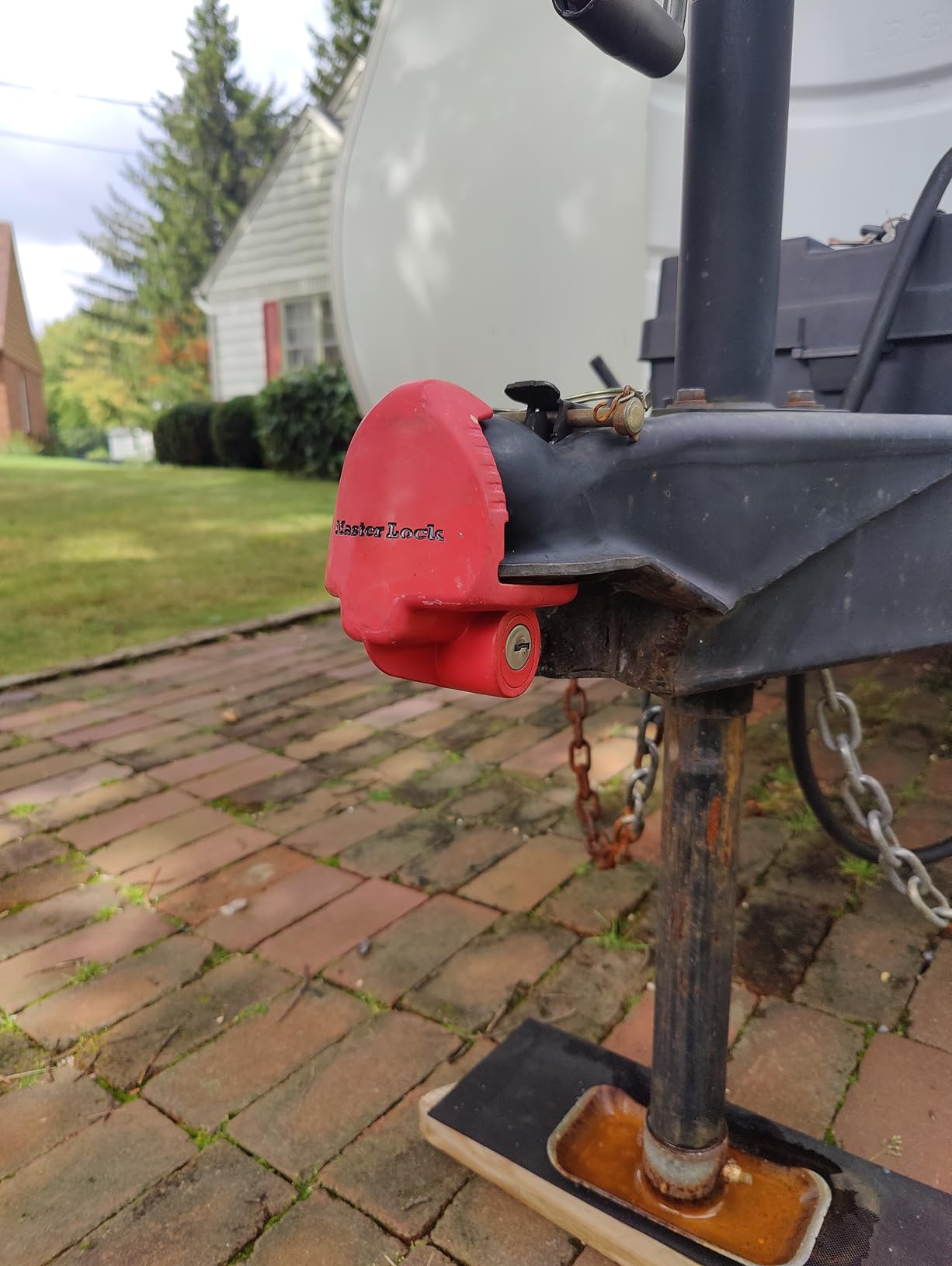
Here is where we will be blunt. Master Lock is the most discussed brand in trailer lock forums, and the criticism is not about durability but about the cylinder. Users on RV owner forums report that the pin-tumbler core is approachable for anyone who has practiced picking, and one described a locksmith opening a Master Lock in under ten seconds. That is a real limitation and it belongs in any honest review of a Master Lock coupler lock.
Set against that, the cylinder is still far better than a no-key or combination-only design, and the steel body is what actually gets attacked first. For a storage lot, a campground, or a driveway, the deterrent effect of a bright red lock is the factor that matters more.
Will the 389DAT fit my trailer?
Almost certainly, if your coupler uses a standard 1-7/8 inch, 2 inch or 2-5/16 inch ball. That is the overwhelming majority of recreational and utility trailers sold in North America.
The size to double-check is the coupler throat itself. The housing is bulky enough that owners note it can be visible under a coupler cover, and on a trailer with a very narrow or unusual coupler you may have less room than the product dimensions suggest.
How secure is a Master Lock pin-tumbler core?
It is a basic pin-tumbler cylinder. It stops an opportunistic thief and it stops a casual attempt to pick, but it is not in the same class as a high-security disc detainer mechanism, and forums describe it as the weak point of an otherwise decent lock.
If you need a lock that is specifically hardened against picking, the TRIMAX UMAX100 and the BulletProof Hitches Extreme Duty are the two in this group that address the core rather than only the body.
3. CURT 23518 Barbell Hitch Lock Is Best for Hiding in Plain Sight
CURT 23518 5/8″ Barbell Hitch Lock for 2″ Receivers, Black
5/8 inch pin, 2.85 inch usable length
Fits 2 inch receivers with 5/8 inch hole
Quarter-turn key activation
Pros
- Barbell profile barely protrudes from the hitch
- Quarter-turn key activation is fast
- Powder coat and watertight dust cap survive years outdoors
- Two keys included
Cons
- Pin can roll while turning the key
- Usable length is short for some factory receivers
- Not compatible with double-walled receiver tubes
Most locking hitch pins announce themselves. This one is designed not to. The barbell profile sits in line with the pin shaft so it blends into the receiver, and owners consistently highlight the low-profile look as the main reason to buy it.
That matters most when you park somewhere you cannot watch the trailer, such as a job site, a fairground, or a storage lot, where a visible lock advertises that something on the trailer is worth protecting. A pin that reads as an ordinary hitch pin removes that signal.
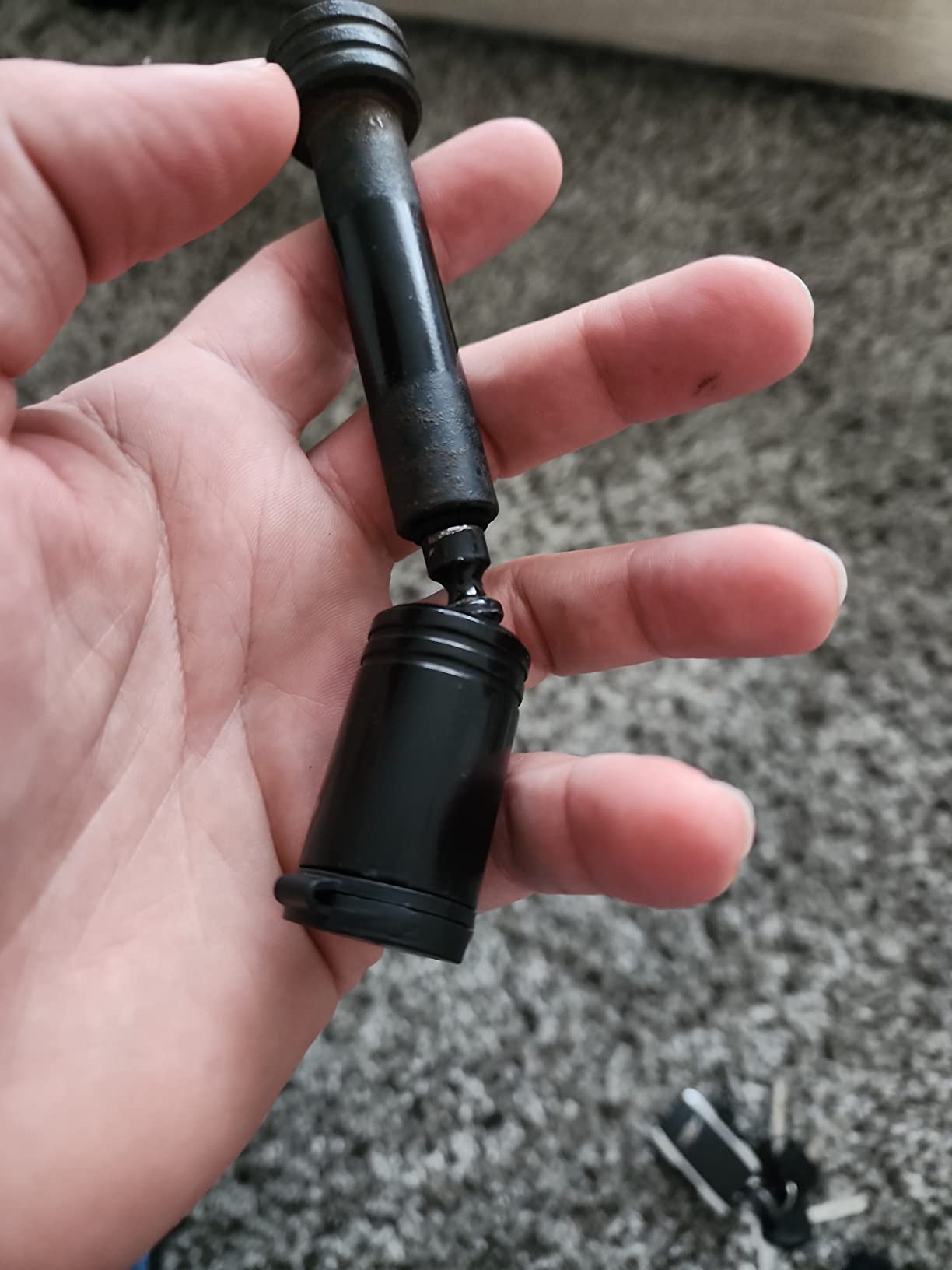
Operation is a quarter turn of the key, which is about as fast as it gets. The watertight dust cap and the powder coat finish are the details that keep it working year after year, and reviewers with long-term use report no rust and no sticking key.
The honest weakness is length. Usable pin length is 2.85 inches, and owners report it falls short on some factory receivers, including certain truck models. If your receiver is deep or double-walled, this one will not work at all.
Is a barbell-style lock better than a bent-end pin?
For deterrence, most bent-end pins are better because they are obvious. The barbell trades visibility for subtlety, and that is a good trade only when the trailer is parked unattended where an observer might otherwise take note.
If your trailer lives in your driveway under a camera, visibility is worth more than subtlety and a brightly colored coupler lock is the better choice.
Can I tow with this lock installed?
No. The CURT 23518 is a security device, not a towing pin. It must be removed before you connect the trailer, and leaving it installed is both a safety problem and a quick way to damage the pin.
Keep the removal habit tied to the unhitching routine, and store the keys with the truck rather than the trailer.
4. Rhino USA 2 Inch Locking Receiver Pin Is the Best for Heavy Daily Use
Rhino USA 2in Trailer Hitch Pin – Patented Locking Receiver Pin
Solid carbon steel pin, powder coated
Patented weatherproof slide cap
1.17 pounds, 9.06 inches long
Pros
- Heavy solid carbon steel feels more substantial than typical pins
- Patented slide cap keeps mud and debris out of the lock
- Fits all Class III and IV 2 inch receivers
- Backed by a lifetime replacement policy
Cons
- Heavier than slim competing pins
- Multiple lengths and pack options make the wrong order easy to place
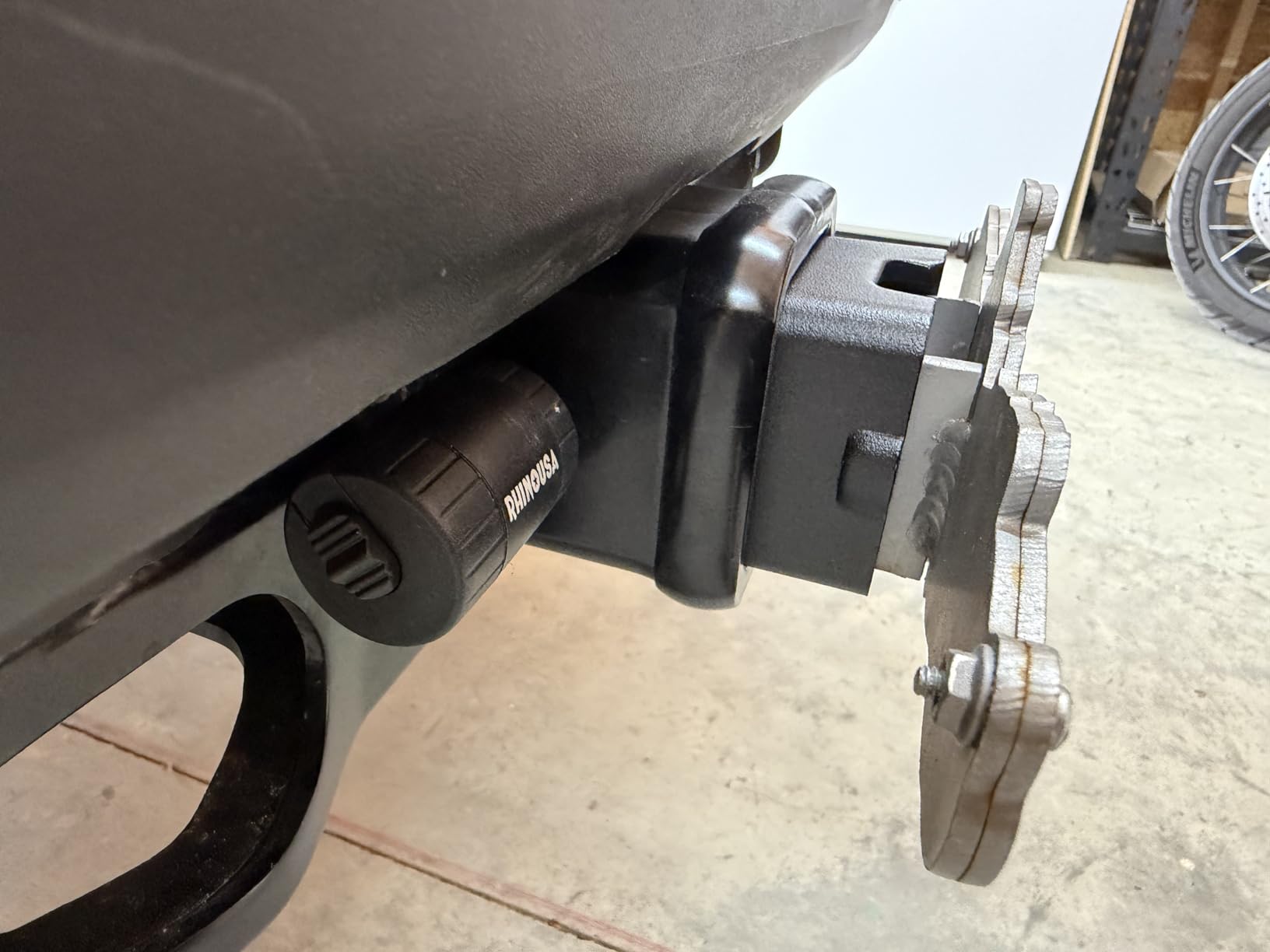
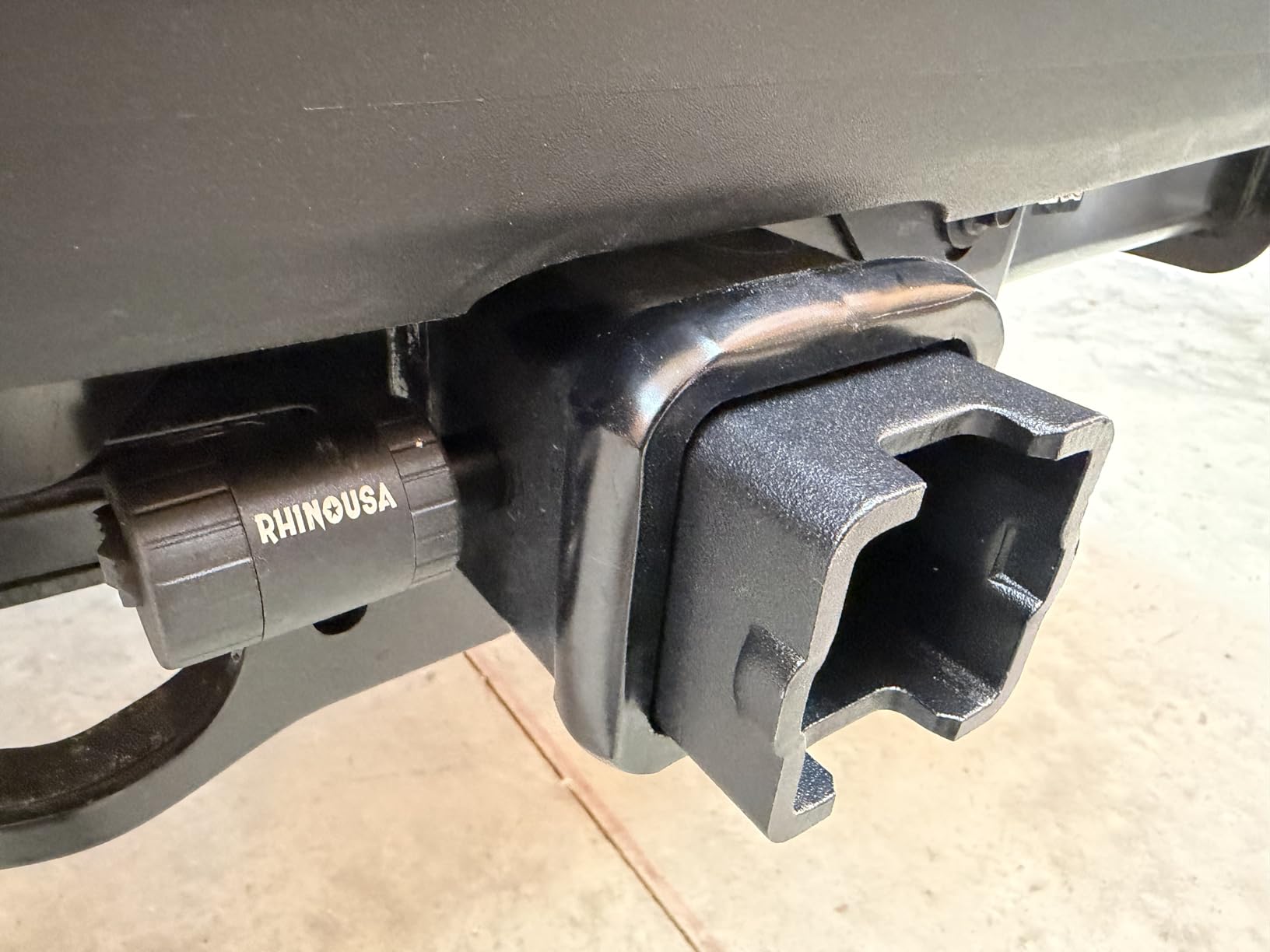
This is the pin we would put on a trailer that gets hitched and unhitched every week. The carbon steel body is noticeably heavier than a standard pin, and that weight is the point: it resists the pry bar and the kick that lighter pins invite.
The patented weatherproof slide cap is the feature owners praise most. Instead of a rubber flap that wears out, the cap slides over the lock mechanism, so dirt and mud stay out of the keyway and the lock keeps working in muddy conditions.
The warranty is a real lifetime replacement policy with US-based support, and the company is American owned and family operated. For a part that takes the load of every tow, that matters more than most buyers expect at purchase time.
The practical pitfall is ordering. The pin is offered in 2 inch, 2.5 inch and 3 inch lengths and in single and two-packs with a keyed-alike option, so it is easy to order a length that does not suit your receiver depth.
Is the Rhino USA pin heavy enough for a light trailer?
It weighs a little over one pound, which is heavier than slim locking pins in the same category. On a very light utility trailer you will feel that weight every time you lift it into the receiver.
On a travel trailer, a boat trailer, or anything on a receiver rated for the pin, we found no complaints about the weight at all.
Can I get one key for several pins?
Yes, this pin is offered in a keyed-alike option, so you can run the same key across a coupler lock and a receiver lock. That removes the juggling of several keyrings every time you move the trailer, which owners consistently describe as the biggest practical complaint about owning multiple locks.
5. CZC AUTO Hitch Pin Lock Is the Most Versatile
CZC AUTO Trailer Hitch Pin Lock 5/8″ for Class III IV 2″ 2-1/2″ Receiver
5/8 inch pin with 3-1/2 inch length
Fits 2 and 2-1/2 inch receivers
5000 pound rated pull force
Pros
- 360-degree rotating head makes it easy to handle
- Long 3-1/2 inch length fits 2 and 2-1/2 inch receivers
- Rubber key slot cap keeps water and dust out
- High rated pull force for a low-cost lock
Cons
- Locking mechanism can stiffen after extended use
- Some units are very hard to unlock once installed
- Pin diameter runs slightly under nominal
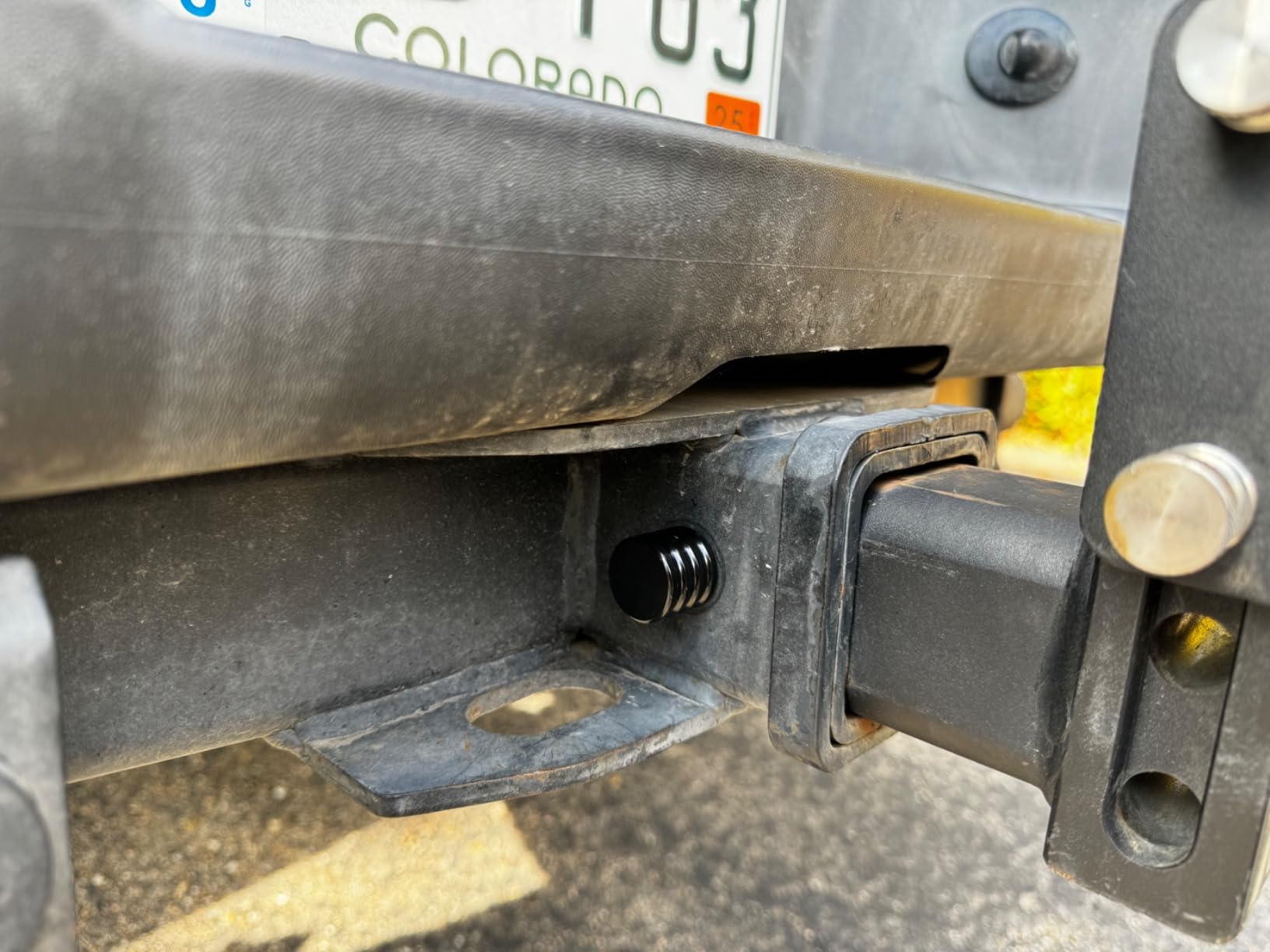
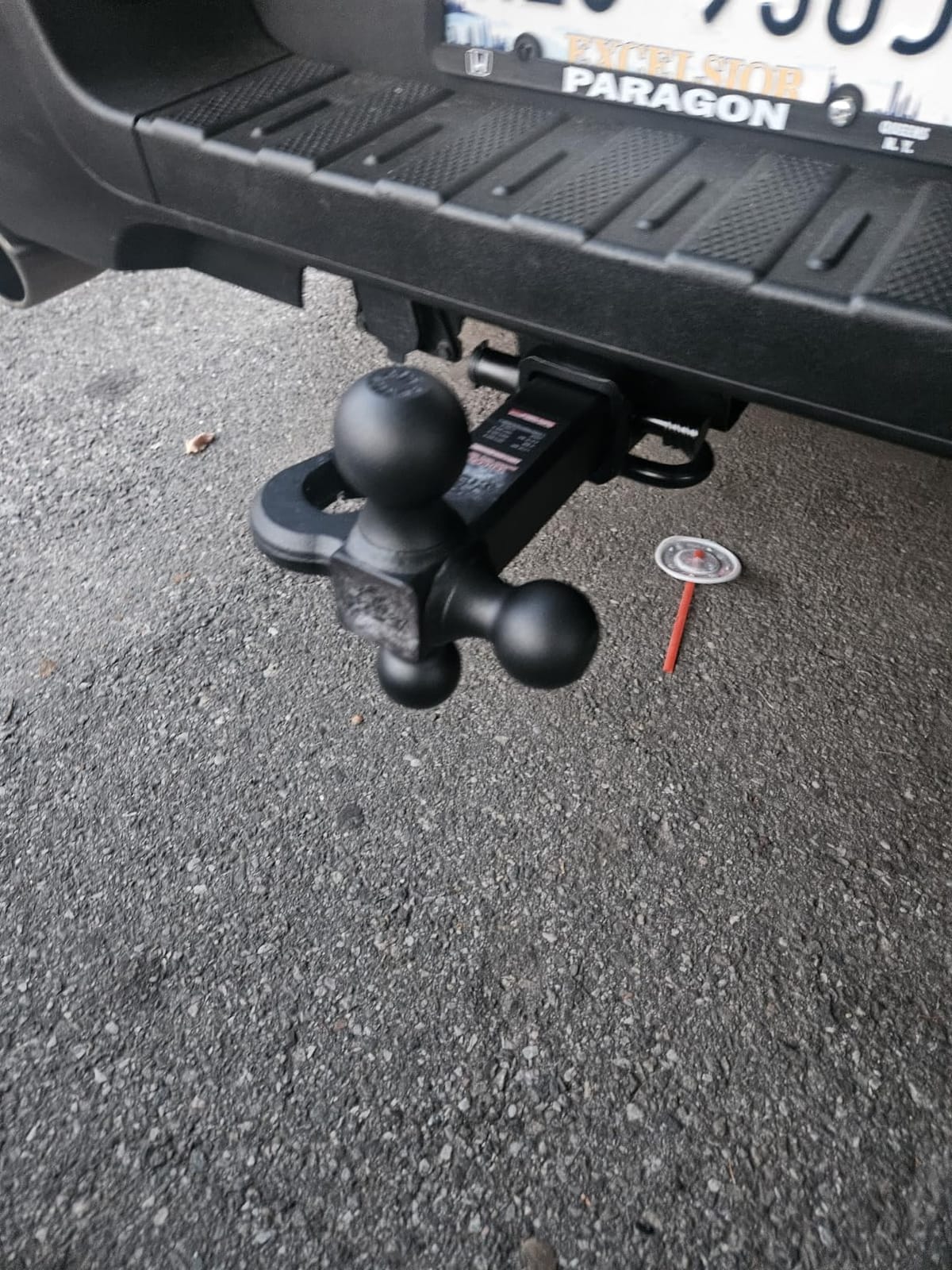
This is the value pick, and the numbers behind it are strong. The listing rates the pin at 5,000 pounds of pull force, which is far beyond anything a ball hitch applies, and the carbon steel body is described as hard to bend.
Where it beats more expensive pins is usable length. At 3-1/2 inches, it clears both 2 inch and 2-1/2 inch receiver tubes, so it is a safer order than the shorter options in this roundup if you are unsure about your depth.
The 360-degree rotating head is a small touch that makes a real difference. You can turn the lock to face you without wrestling the pin around, which matters when you are crouched behind a bumper in the dark on a storage lot.
The recurring complaint is stiffness. A small number of owners report the mechanism becoming hard to turn after extended use, and some report a unit that proved exceptionally difficult to remove even with the correct key. A light application of lubricant at installation reduces the chance of that becoming an annual annoyance.
Is a budget lock like this worth buying at all?
Yes, for most situations. A low-cost steel pin turns a five-minute opportunistic theft into a job that requires tools and creates noise, and it does that without any special technique.
The thing a budget pin does not do is survive a prepared attacker with cutting tools. Nothing in this price bracket does, and we would not pretend otherwise.
Will it fit my receiver?
It fits Class III and IV receivers in both 2 inch and 2-1/2 inch sizes, which covers nearly every standard tow receiver on modern trucks and SUVs.
One detail worth noting: owners report the pin diameter running slightly under nominal, which leaves a small amount of play in the receiver. It does not affect the lock function, but expect a little movement when you shake the hitch.
6. METOWARE Hitch Lock Is the Best for Quiet Towing
METOWARE Trailer Hitch Lock, 5/8″ Dia Hitch Pin, Fit 2″ Receiver, Black
5/8 inch pin, 2-3/4 inch usable length
Four rubber O-rings reduce rattle
All-weather cap and two copper keys
Pros
- Rubber O-rings eliminate the rattle normal hitch pins make
- All-weather cap protects the keyhole
- Smooth lock action
- High-strength steel at a low price
Cons
- Not compatible with double-walled receiver tubes
- 2-3/4 inch length can be longer than some receivers allow
- One reviewer reported missing rubber spacers in the package
There is a small but persistent annoyance with ordinary hitch pins: they rattle inside the receiver, and you hear it on every road surface. This lock solves that with four rubber O-rings, and owners call it out as the feature that made them buy a second one.
The lock core is zinc alloy, the keys are copper with a non-slip coating, and there is an all-weather cap over the keyhole. High-strength steel construction at a low price point is the rest of the package.
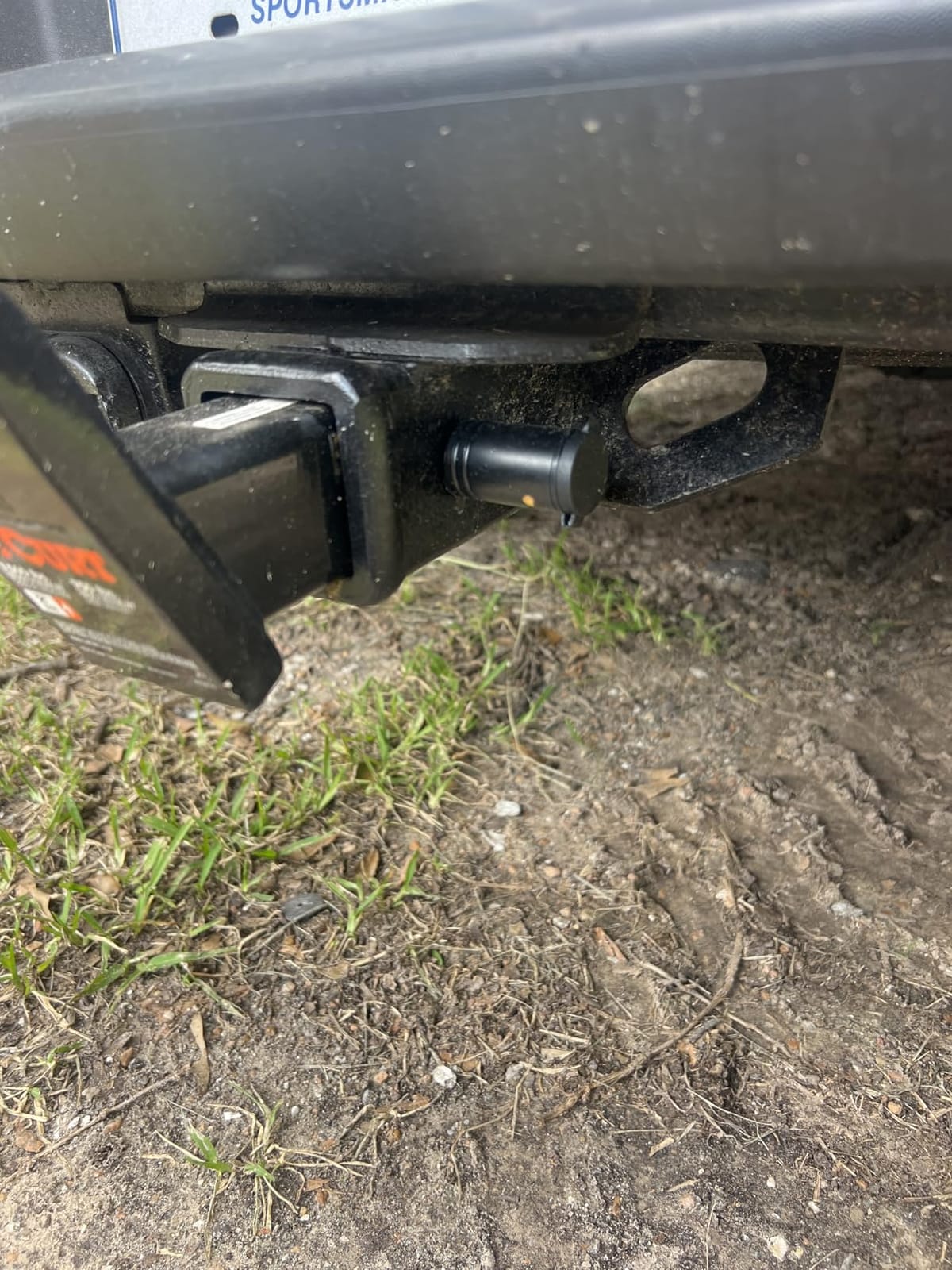
Be careful with the length, though. Usable pin length is 2-3/4 inches, shorter than the CZC AUTO and the Master Lock 1469DAT, and owners report it can run longer than some receivers allow. Measure depth first.
The listed exclusions matter too. Like the CURT, it is not compatible with double-walled receiver tubes, so a heavy aftermarket receiver rules it out before any other consideration.
Do the rubber O-rings really make a difference?
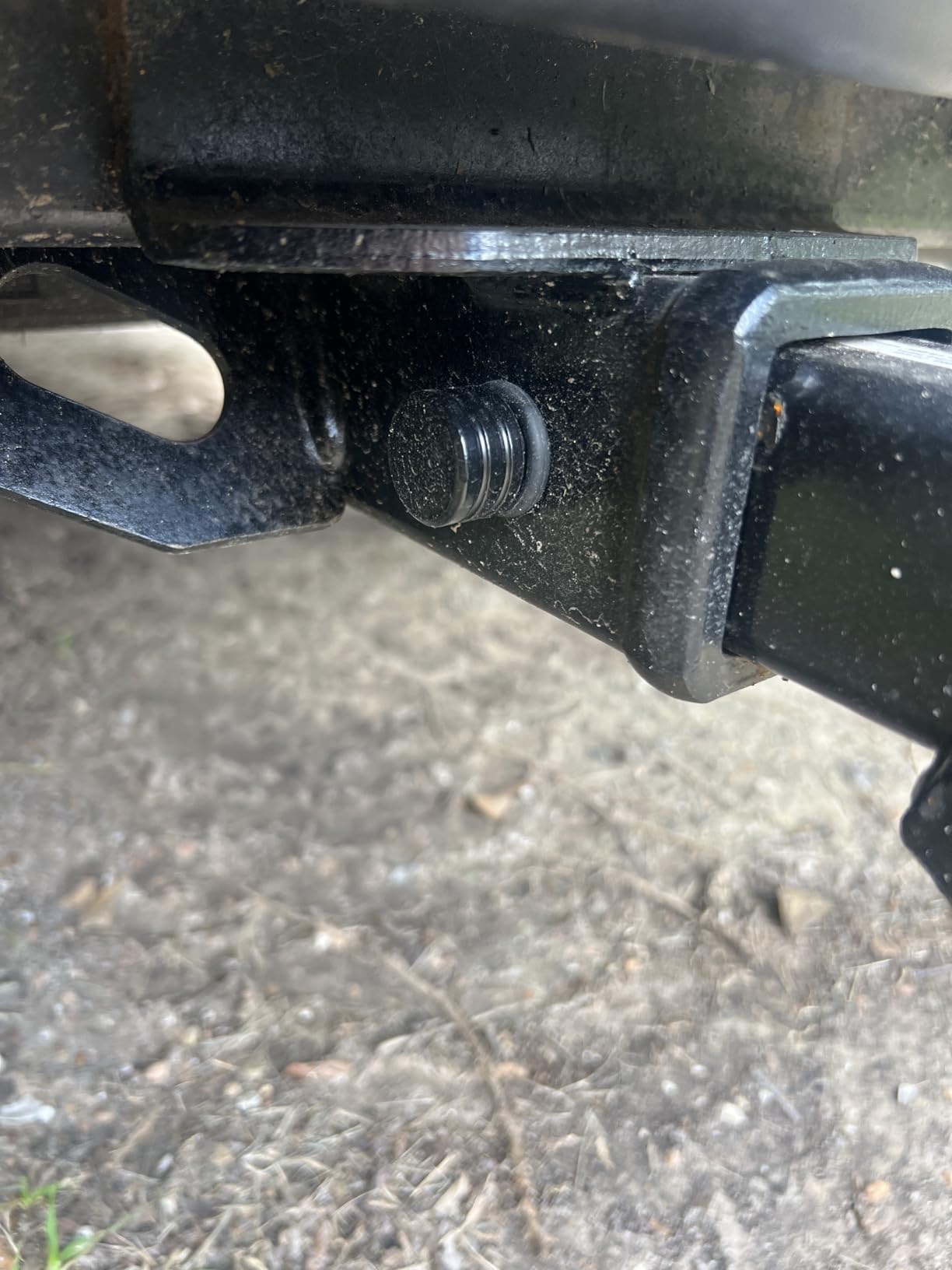
Yes, and it is one of those details you only appreciate once you have driven a mile with a normal pin. The O-rings take up the slack in the receiver and stop the pin from knocking against the tube walls.
They also reduce the chance of the pin wearing into a loose fit over time, which is a nice side effect on a security part that lives in a dirty environment.
Is this lock strong enough to matter?
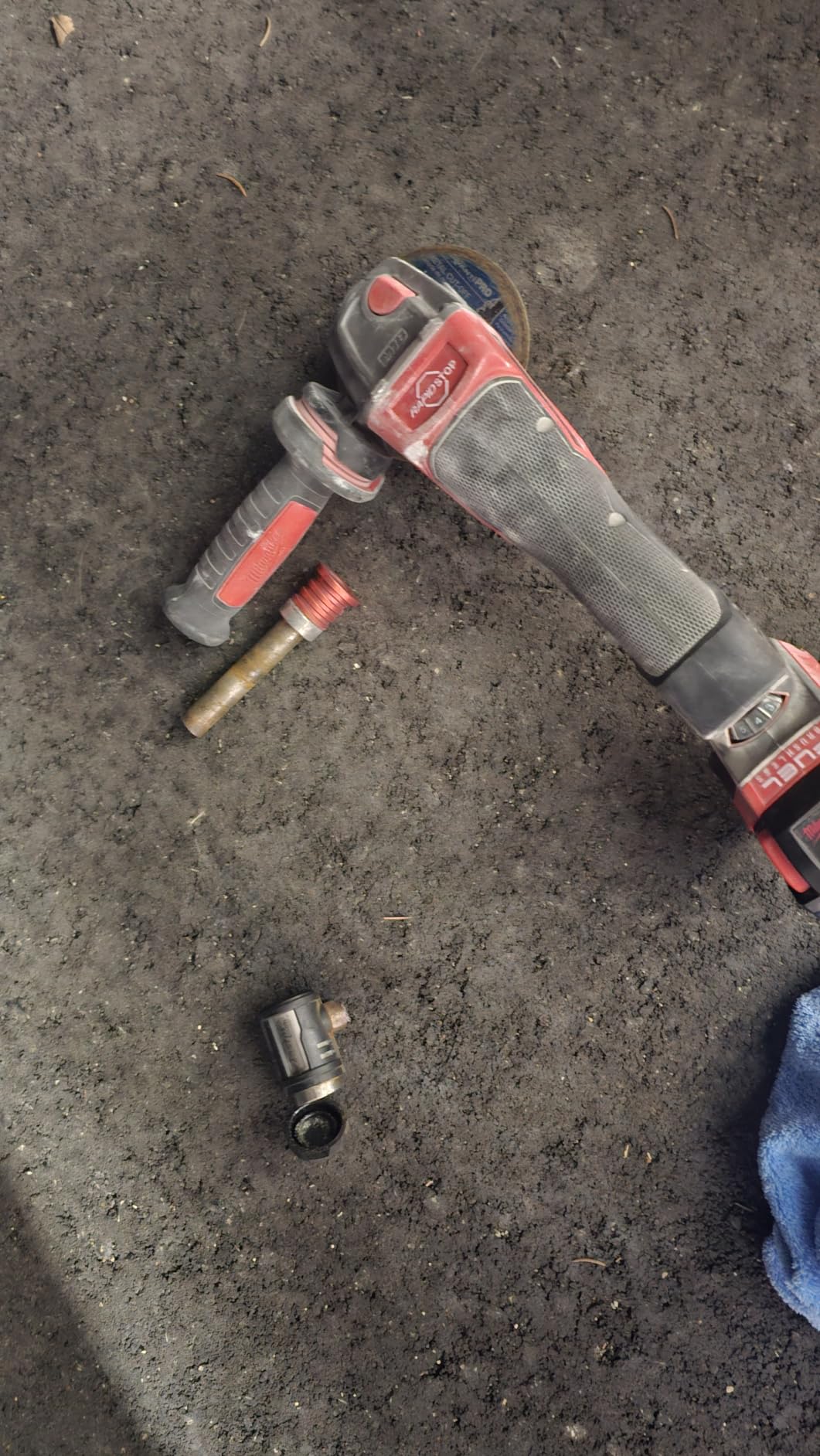
It is steel, it is keyed, and it blocks the pin from being removed. That is enough to stop the opportunistic theft that makes up nearly all trailer theft, and it is not enough to stop an angle grinder, which is true of nearly everything in this roundup below the top tier.
7. Master Lock 1469DAT Stainless Barbell Is Best for Tight Clearance
Master Lock Silver and Red Receiver Lock, Stainless Steel Barbell™ Hitch Pin Lock, Fits 5/8 in. Receivers, Weather Resistant Automotive Receiver Lock, 1469DAT
5/8 inch pin with 3-1/2 inch shaft
Stainless steel, push-to-lock design
14.4 ounces, 8 inches long
Pros
- 90-degree swivel head solves key access in tight receivers
- Extended 3-1/2 inch shaft clears bulky receivers
- Large key is easy to grip and operate
- Stainless steel resists corrosion
Cons
- Rubber debris cover can wear out and let moisture in
- New units may need lubrication before the key turns
- Shaft can rotate into the way when attaching chains
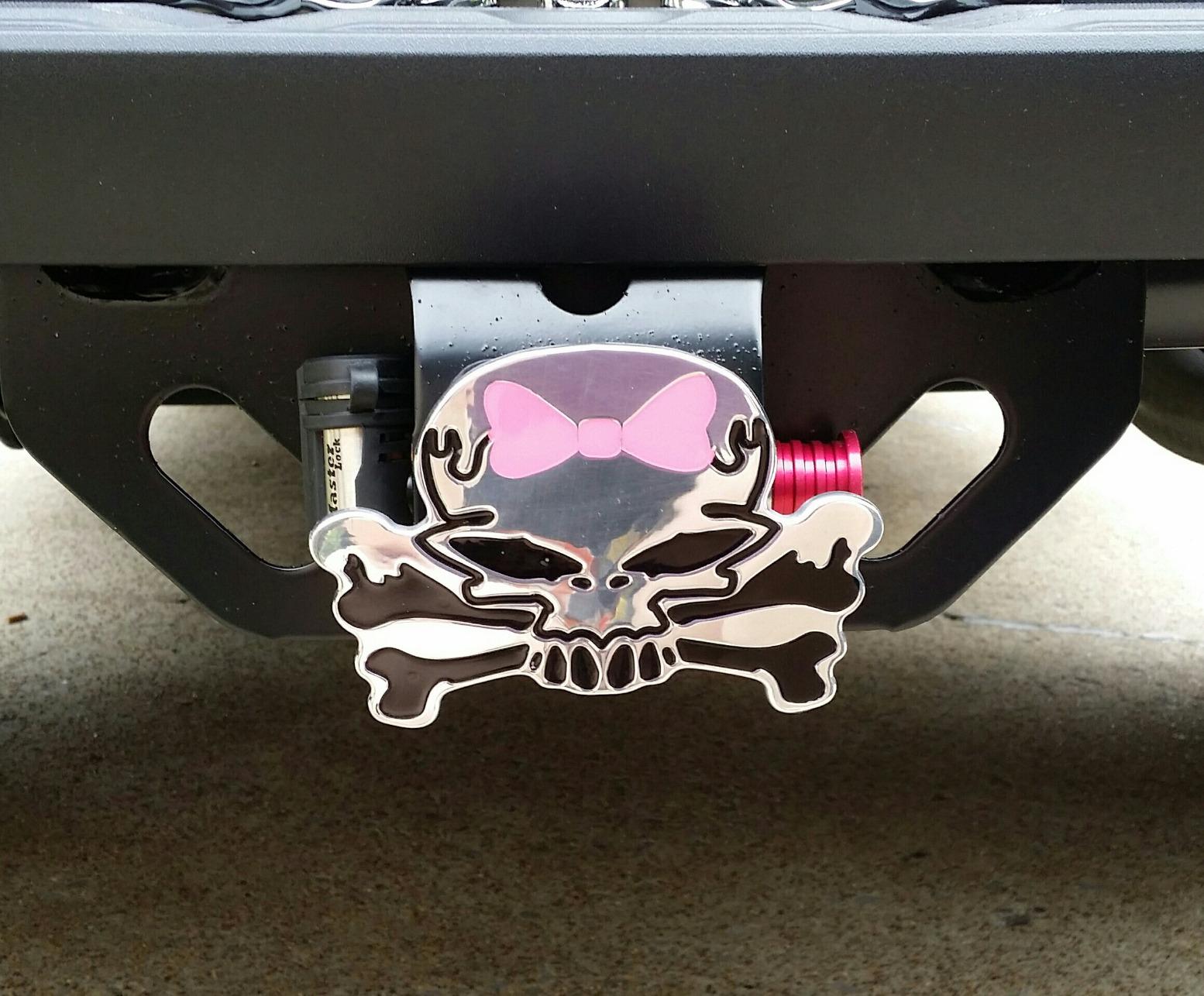
The defining feature here is the swivel head. On a receiver tucked up under a bumper or surrounded by a factory tow package, the key cylinder is often at an angle where your fingers cannot get a straight line. Turning the head 90 degrees brings the key to face you.
That is not a minor convenience. It is the difference between unlocking the trailer in ten seconds and lying on your back with a flashlight while the key slips off the cylinder.
The 3-1/2 inch stainless steel shaft is long enough for 2 inch and 2-1/2 inch hitches, and stainless holds up better in coastal and salty air than a plated pin. The push-to-lock mechanism is simple and has no separate retaining clip to lose.
The failure mode owners report is the rubber debris cover wearing out over time, after which moisture reaches the lock and operation gets stiff. A light grease resolves it, and keeping the cover seated during towing extends its life.
Which vehicles have the tightest key access?
Modern trucks and electric SUVs with tucked and shielded receivers are the usual culprits, and owners specifically mention clearances where a straight-keyed pin is very hard to operate. The swivel head is designed for exactly that geometry.
If you tow with a factory bumper or a spare tire carrier, check the clearance around your receiver before you settle on a straight-head pin.
Does stainless steel matter near salt water?
It does, and if you store a boat trailer anywhere near brackish or salt water it is a real advantage over plated pins. Corrosion is what eventually seizes a lock cylinder, and stainless delays that considerably.
Rinse the lock with fresh water after salt exposure and keep the debris cover in place, and you will get many seasons out of it.
8. TRIMAX UMAX100 Is the Best Coupler Lock for High-Exposure Storage
TRIMAX UMAX100 Trailer Hitch Lock, 1-7/8″-2-5/16″ Couplers
Dual ratchet locking system
Sealed keyhole cover for weather
Fits 1-7/8 to 2-5/16 inch couplers
Pros
- Dual ratchet engagement resists cutting and hacksaw attacks
- Sealed keyhole survives years of outdoor weather
- One-size design fits most standard couplers
- Limited lifetime manufacturer warranty
Cons
- Top bar is thin material for a pry bar attack
- Heavier and bulkier than basic coupler locks
- Outer housing is plastic
The reason to step up to this lock is the dual ratchet system. Most universal coupler locks grip on one side. This one engages ratchets on both sides of the slide shafts, so a cutting tool has to defeat two separate retention points rather than one.
That is a genuine step up in cut resistance for a coupler lock, and it is why we put this one at the top of the coupler category for anyone storing a high-value trailer where attention is likely.
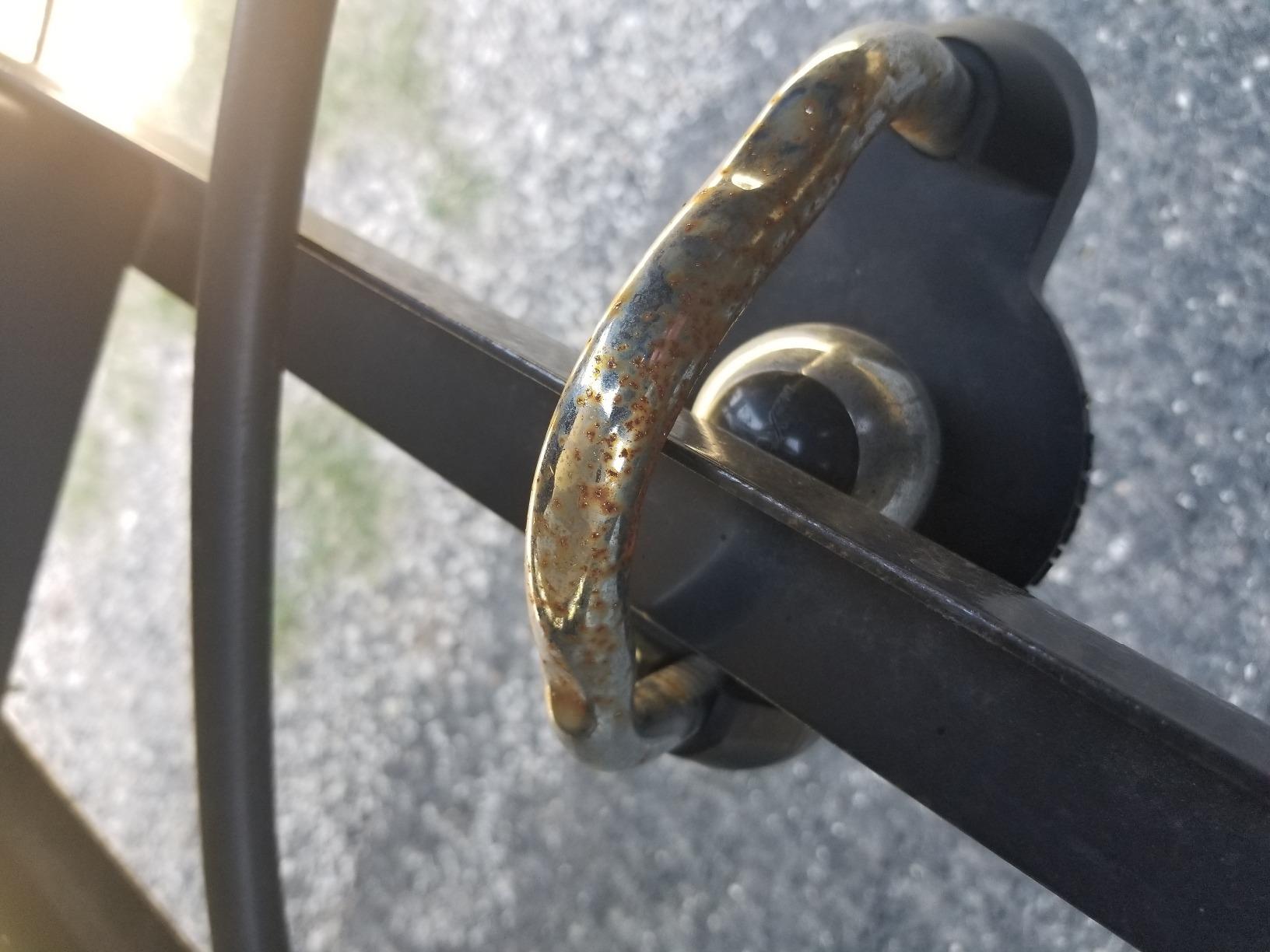
The sealed keyhole cover is the other reason owners keep this lock for years. Keys do not stick, the cylinder does not fill with grit, and a couple of drops of lubricant at the start of each season is genuinely all the maintenance it needs.
Owners also note it is frequently accepted by insurers as evidence of hitch security when filing a claim, which is a practical benefit that costs nothing extra.
Is the plastic outer housing a problem?
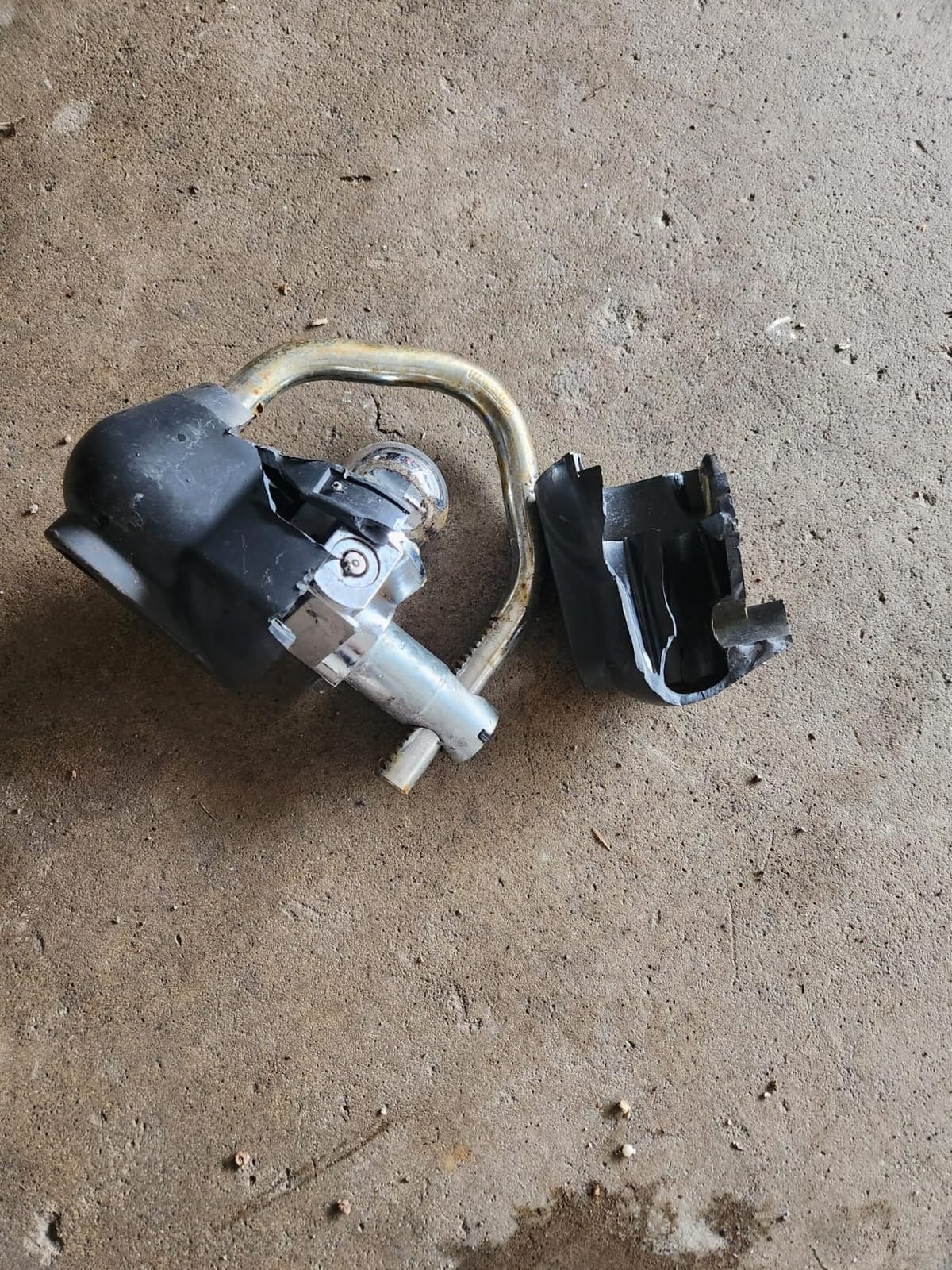
It looks cheaper than it is, because the housing is a shell and the strength sits in the internal steel shafts and ratchets. Buyers who expected machined metal at first read the plastic as a downgrade.
The real vulnerability buyers identify is the top bar, which has limited material behind it for a pry bar to catch. If your threat is prying rather than cutting, this is the point of failure to know about.
How does it compare with a hardened bar lock?
Hardened heat-treated steel bar, as used in the top-tier lock later in this guide, resists cutting considerably better than any ratcheted aluminum or steel body of this size. Against a determined attacker with a cutoff wheel, the bar lock is the stronger of the two.
Against a thief working alone at night with hand tools, the dual ratchet is a real obstacle and the sealed keyhole keeps the lock working when lesser locks jam.
9. Rhino USA Coupler Lock Kit Is the Best Keyed-Alike Set
Rhino USA Trailer Coupler Lock Kit (2-5/16in Trailers) – Anti-Theft Steel
Two-lock keyed-alike kit with matching keys
Fits 2-5/16 inch A-frame couplers
Powder-coated steel, 2 pounds
Pros
- Secures the coupler and the tongue latch with one key
- Solid steel feels durable and tight fitting
- Powder coat has held up without rust
- Two matching keys for fast on and off
Cons
- Lock mechanism can be stiff on first use
- Lip dimensions must be measured and some 2 inch trailers do not fit
- Latch lock is redundant if your coupler has no latch hole
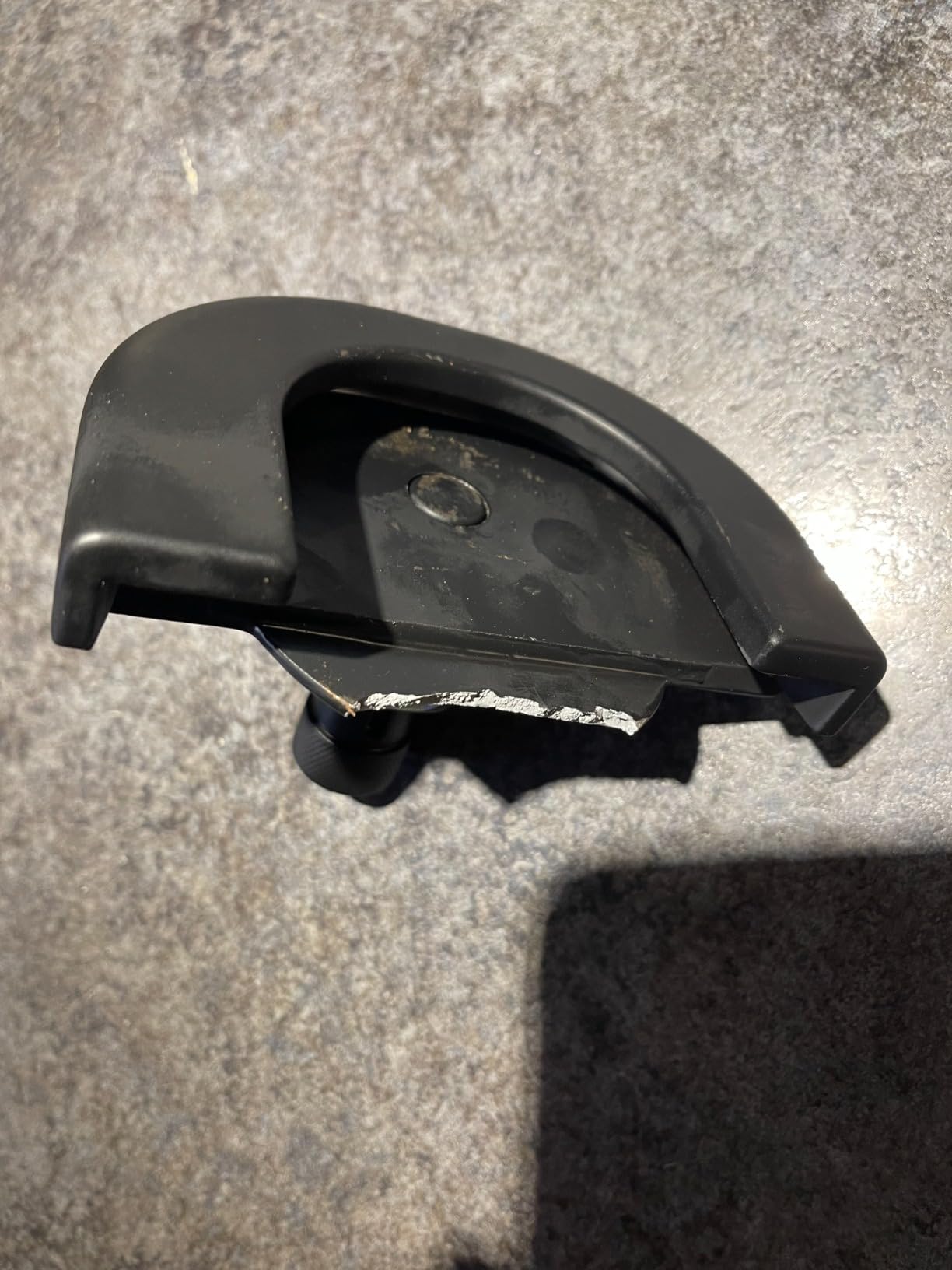
This is the only two-lock kit in the roundup, and it addresses a problem most trailer owners do not think about until they own several locks. Running a coupler lock and a separate latch lock means two keys, two keyrings, and two chances to lose one.
This kit solves that. Both locks open with the same key, and two matching keys are included, so you can keep one on your keyring and one in a secure place.
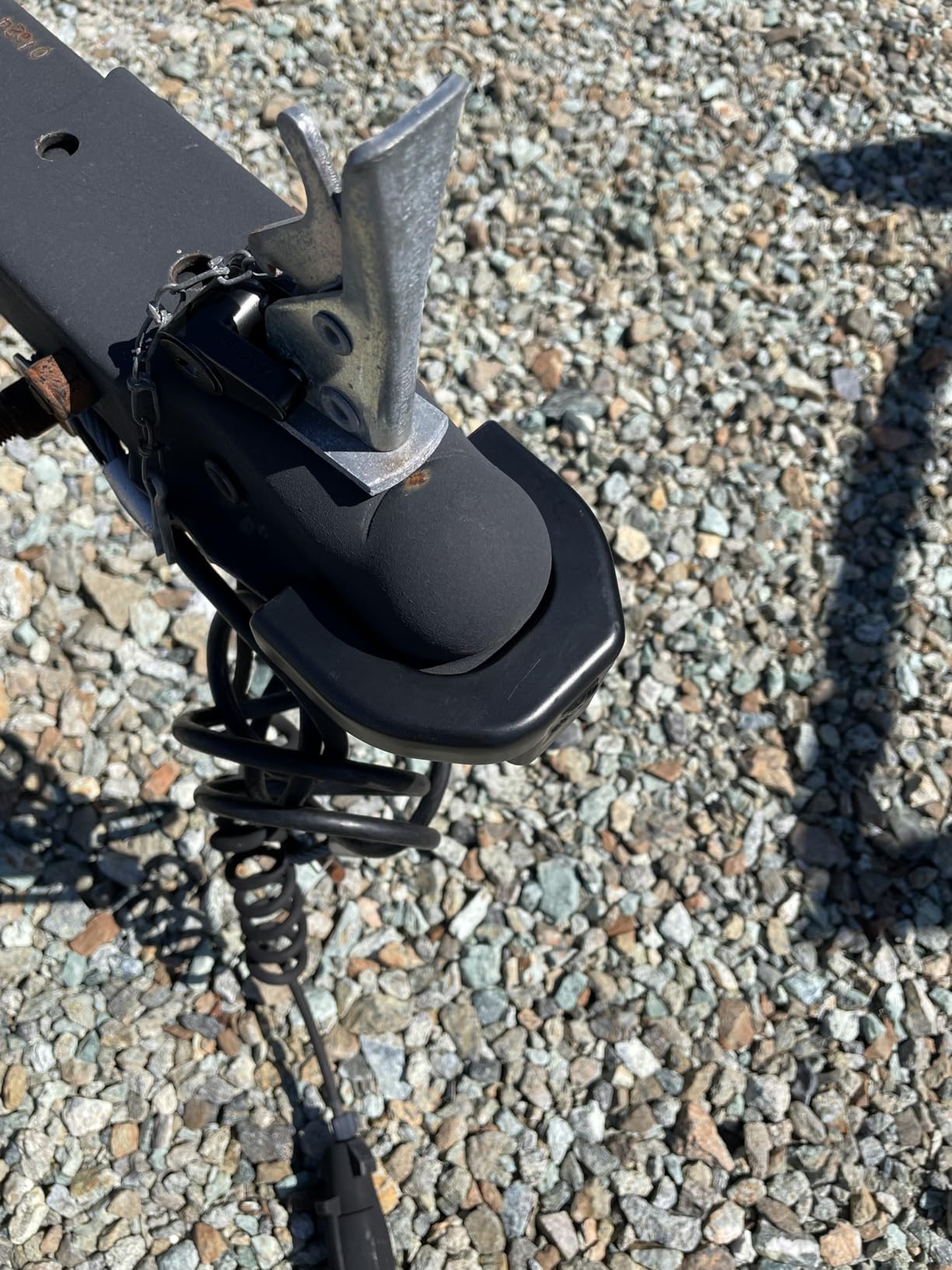
The build is solid steel with a powder-coated finish, and owners report the coating holding without rust through weather exposure. The fit is tight rather than adjustable, which is the trade for the strong construction.
Fit is the thing to verify carefully. The kit is built for 2-5/16 inch A-frame, 50×50 and 50×60 couplers, with a maximum lip width of 4-3/8 inches and a maximum lip height of 5/16 inches, and it will not work on rolled-lip or underslung designs. Some 2 inch trailers simply will not take it.
Is one key for two locks genuinely useful?
It is more useful than it sounds. Every time you move the trailer you are handling keys in the dark, often one-handed, and that is exactly the moment a loose keyring is dropped into grass and never found.
For anyone layering two locks as we recommend, a keyed-alike set removes an entire category of friction for a modest premium over buying one lock.
Do I need the tongue latch lock?
Only if your coupler has a latch hole. The second component secures the latch itself, and on couplers without that provision it sits unused in the box while you still need it to secure the tongue.
Check your coupler for a small latch hole before buying. If there is none, a single universal coupler lock is the more sensible purchase.
10. Blaylock American Metal TL-33 Is the Best Lock for Unusual Couplers
Blaylock American Metal TL-33 Coupler Lock
Fits 2 to 2-5/16 inch couplers, over 30 styles
Alloy steel, aluminum and metal construction
3 pounds, user-supplied padlock
Pros
- Machined parts align cleanly with no sharp edges
- Heaviest coupler lock in the group at 3 pounds
- Fits an exceptionally wide range of coupler brands
- You control the keying by supplying your own padlock
Cons
- Requires a separate padlock as an added cost
- Pin hole sizing varies so a thick shackle may need filing
- Only three adjustment positions in the main body
- Steel pin is the weakest point against cutting tools
This lock exists for the trailer owner who cannot get a universal lock to sit right. The TL-33 fits over 30 different coupler styles and brands, including Buyers, Atwood, Fulton, U-Haul, Pro-Series, Titan and Demco, across 2 inch to 2-5/16 inch couplers.
That compatibility comes from a custom three-pin placement design, and owners consistently report the machined parts aligning cleanly with no sharp edges and no rust around the contact points.
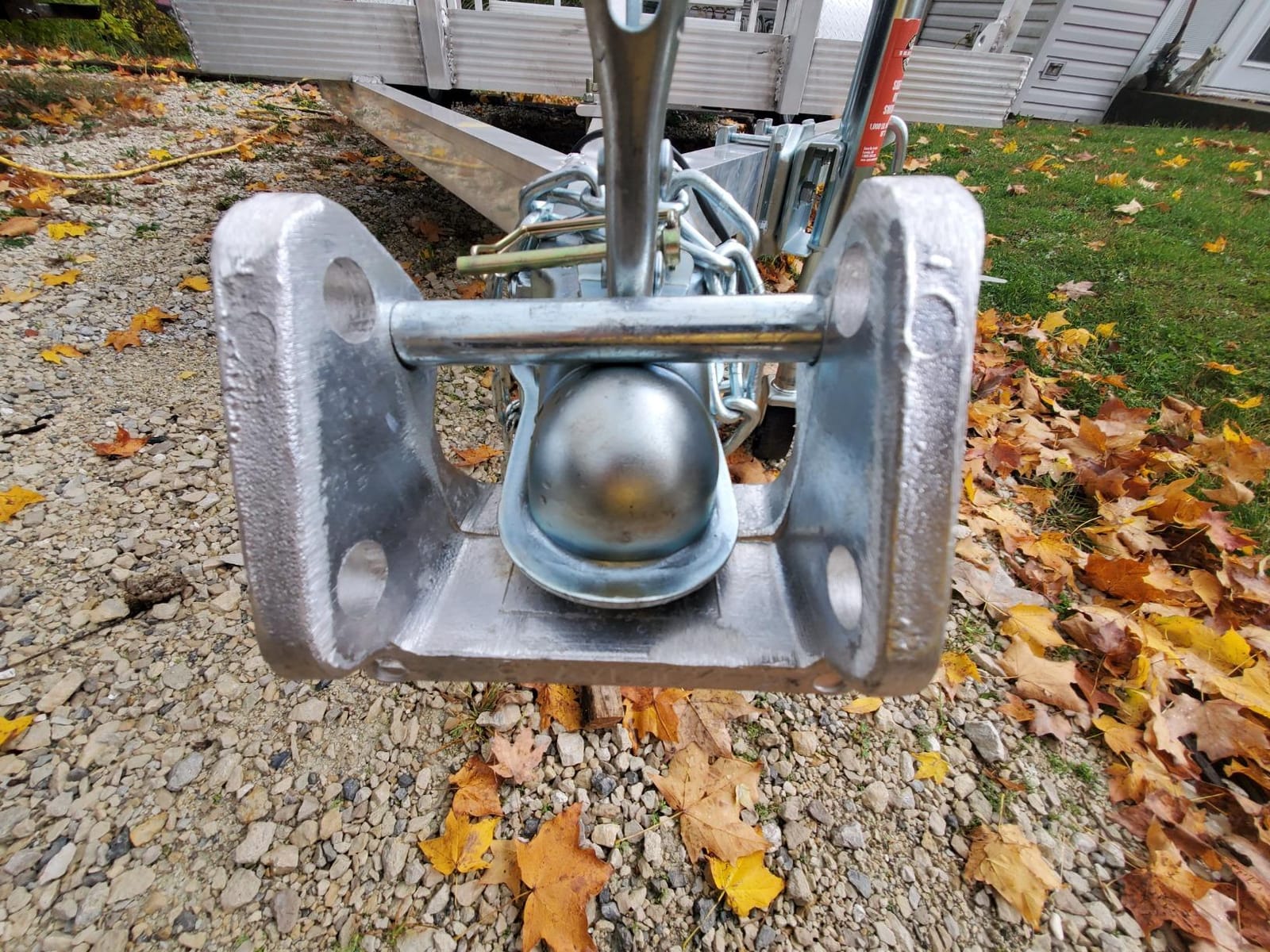
At three pounds it is the heaviest coupler lock here, and that weight reads as deliberate. It is built for commercial and recreational use, and the machined construction is a level above stamped sheet steel.
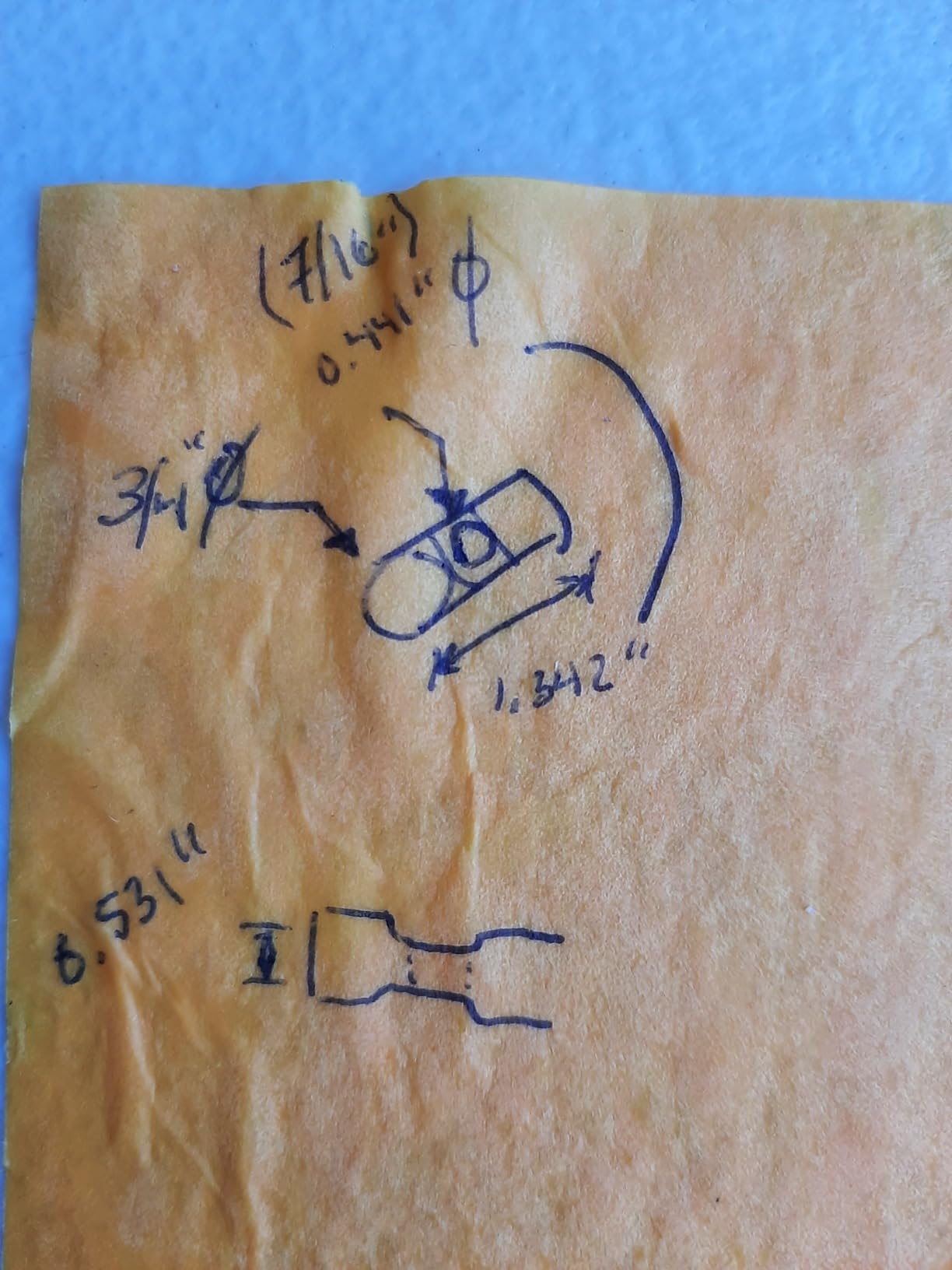
The design choice we like most is the user-supplied padlock. You choose the lock core, you choose the keying, and you can fit it into a multi-lock system. The cost is that it adds a component, and the pin hole sizing varies between pieces so a thicker shackle may need filing to fit.
Is a user-supplied padlock better than an integrated cylinder?
It can be. A quality padlock with a hardened shackle and a better cylinder beats a basic integrated core, and you can key it to match other locks you own.
It can also be worse, if you reach for the cheapest padlock available. The security of this product is the sum of its body and whatever you put through the pin hole.
Will it fit a coupler nothing else will?
Very likely. This is the broadest compatibility in the roundup, and it is the right first call for an unusual or older coupler from a brand that no longer sells replacement parts.
Measure the coupler anyway, and expect to do a little adjustment, since the main body offers only three positions.
11. BulletProof Hitches Extreme Duty Lock Is the Best Heavy-Duty Build
BulletProof Hitches – Extreme Duty Trailer Coupler Lock – Universal Trailer Lock with 1″ Solid Steel Bar – Fits 1-7/8″, 2″ and 2-5/16″ Couplers – Heat-Treated & Pick-Resistant
1 inch heat-treated solid steel bar
Universal fit for 1-7/8, 2 and 2-5/16 inch
9.15 pounds, 11 x 8.75 x 3 inches
Pros
- 1 inch hardened solid steel bar resists cutting far better than a standard pin
- Heat-treated cut and pick resistant lock core
- Universal fit spans the three common coupler sizes
- Aircraft-grade lubricant and rubber cap for longevity
Cons
- Very heavy and bulky to carry and position
- Small review base because the listing is newer
- Premium price for a category where lighter locks deter the same casual thief
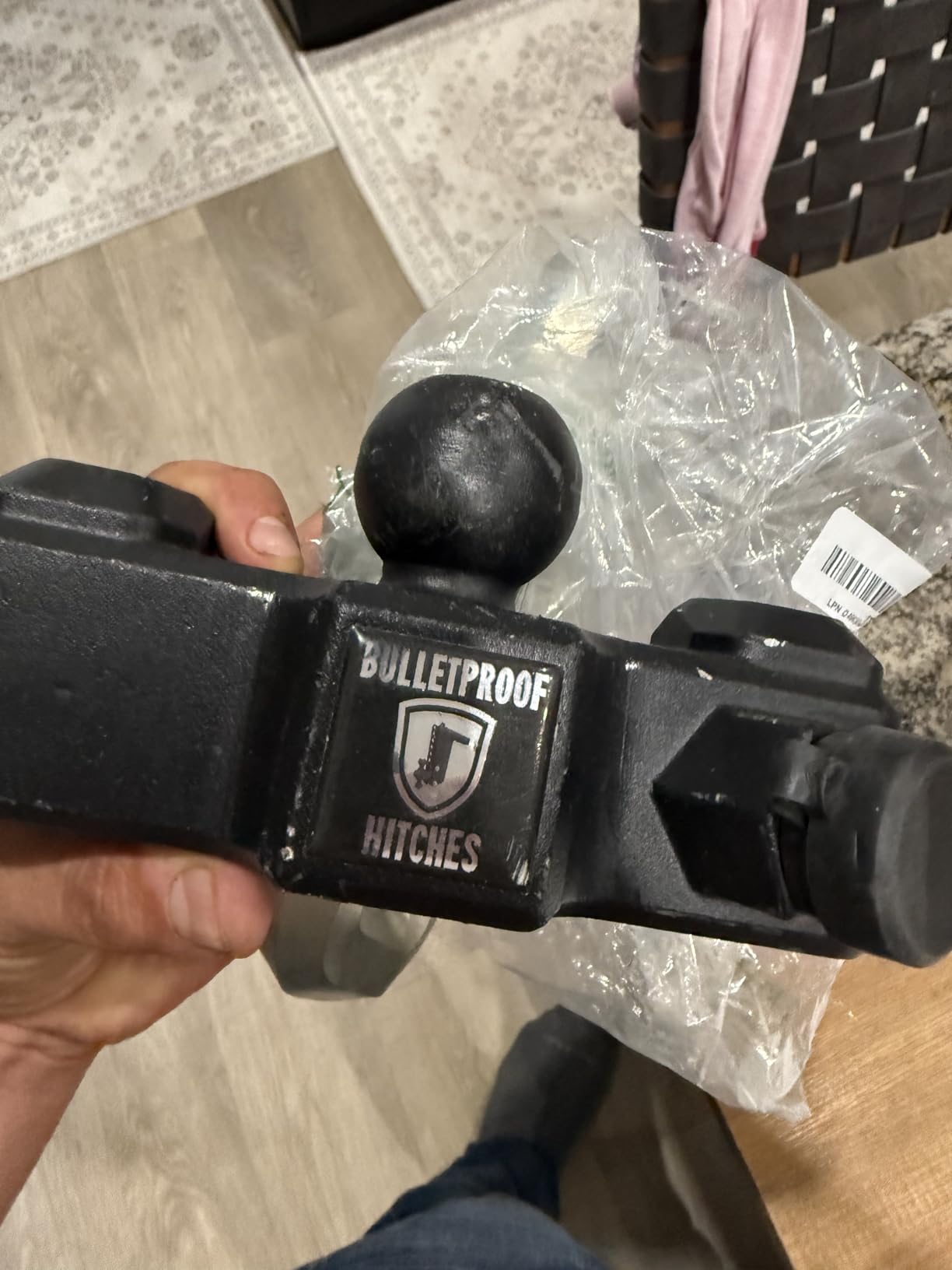
This is the top of the security range, and the difference is material. A 1 inch heat-treated solid steel bar is not the same thing as a cast body with a lock in it. The bar is what a cutting tool has to get through, and a full inch of hardened steel is a genuinely different proposition.
The core is described as cut-resistant and pick-resistant, and the lock body is universal across 1-7/8 inch, 2 inch and 2-5/16 inch couplers, so the fit question is still simple.
Two details show the manufacturer thought about service life. It is supplied assembled with aircraft-grade lubricant, and the lock mechanism has a heavy-duty weather-resistant rubber cap, so the moving parts stay protected from water and grit.
At over nine pounds, this is the heaviest and bulkiest lock in the comparison, and getting it onto a coupler is a two-handed job. Buyers say that if you have a lift or a ramp, the weight is manageable; on the ground in a dark lot, it is a real inconvenience.
Will an angle grinder get through a 1 inch hardened bar?
It will eventually. No product in this category is grinder-proof, and forum owners report a determined attacker with a torch set defeating even far more expensive hardware.
What a bar that thick changes is time. A thinner body fails in under a minute on a cutoff wheel; a full inch of heat-treated hardened steel turns a quick theft into a loud, multi-minute job with a large tool and plenty of light. That is the same reason the lock exists.
Is it worth the premium over a standard coupler lock?
If the trailer is a low-value utility trailer in a fenced yard, no. A bright universal coupler lock will do the same deterrent work for a fraction of the outlay and a fraction of the weight.
If the trailer carries expensive equipment or a valuable fifth wheel on a storage lot or job site, the hardened bar is a reasonable part of a layered plan, and you should still add a second layer behind it.
12. Master Lock 1465DAT Stainless Pin Is the Best Quick-Swap Hitch Pin
Master Lock Trailer Hitch Pin Stainless Steel Class III/IV Rating 1465DAT
5/8 inch diameter, 3 inch usable length
Stainless steel, chrome plated finish
Barrel head replaces hairpin clip
Pros
- Rotating barrel head removes the fussy hairpin cotter clip
- Stainless steel slides in easily and resists salt air
- Highest average rating in the group at 4.8 stars
- No-key mechanism locks with positive spring tension
Cons
- Secures the pin but is not itself a theft deterrent
- Long-term durability of the internal coil spring is not guaranteed
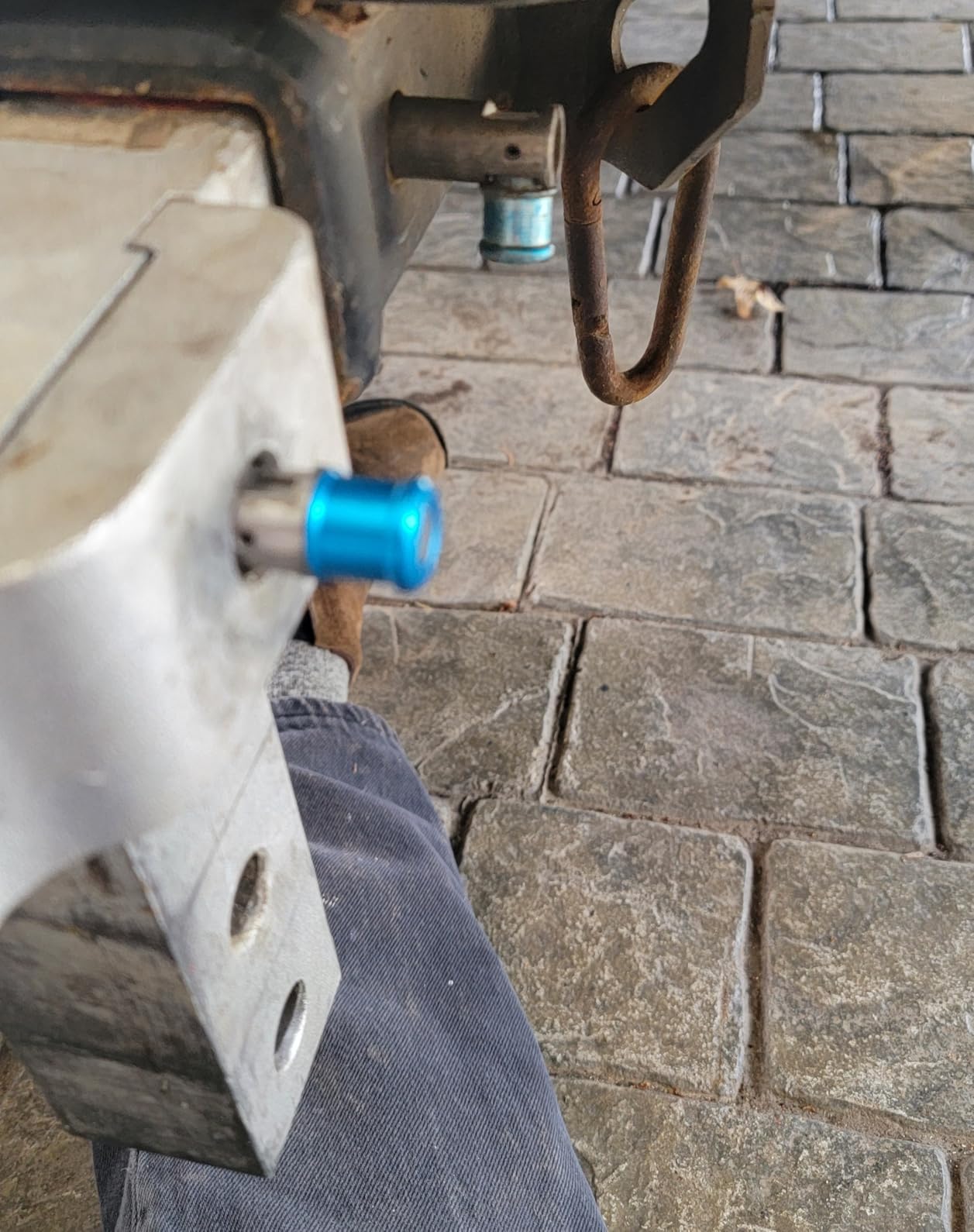
This one is different from everything else in the roundup, and we include it deliberately. It is a quality hitch pin with a security feature, not a lock. The rotating barrel head threads onto the pin and locks it in place with positive spring tension, replacing the hairpin cotter clip.
That clip is a genuine weak point on ordinary pins. It is small, it rusts, it bends during a back-in, and it walks out under vibration. A lot of trailer theft attempts start with pulling that clip, and this design removes the target.
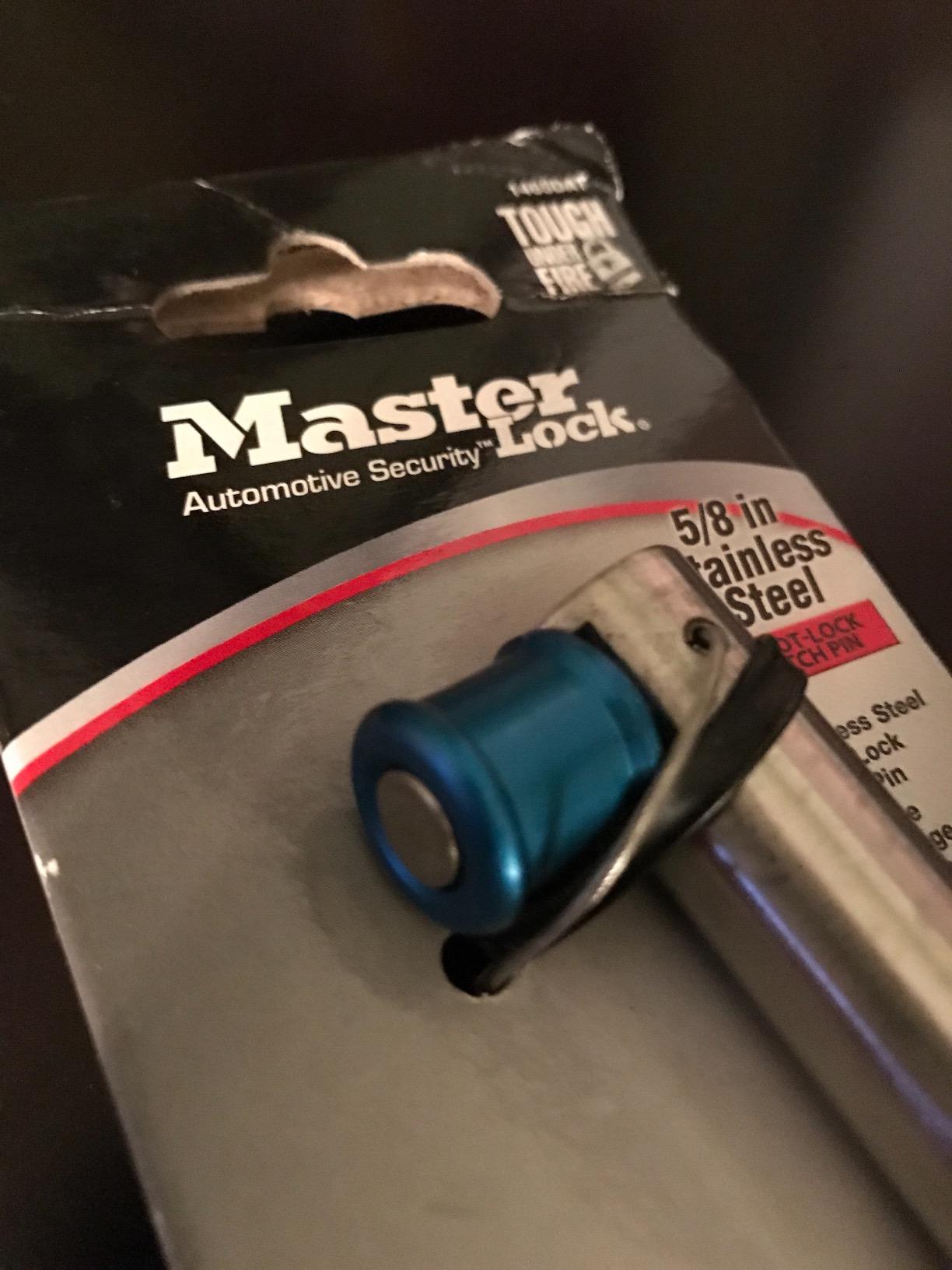
It also happens to carry the highest average rating in the group at 4.8 stars, with a 90 percent five-star share. Owners praise the tapered ends for easy insertion, the stainless steel for sliding into a tight receiver without fighting it, and the clean look compared with a bent-end pin.
Being clear about the limits: this does not stop a determined thief with tools. It stops the casual pin pull and the lazy clip snap, and the right pairing is a real locking pin like the CURT or Rhino USA used alongside it.
Is this a security lock or just a better pin?
It is a better pin with a security-oriented retention mechanism. On its own it will not stop someone who has decided to take your trailer, and we would not want a reader to believe otherwise.
What it does is remove the cheap, easy method. It is rated Class III and IV for 5/8 inch receivers, and the 3 inch usable length suits most standard receivers.
Why pair it with a locking hitch pin?
Because the two do different jobs. The barrel head stops the clip being flicked out or lost; a keyed locking pin stops the pin being pulled at all. Together they cover both the fast method and the slightly slower one.
Owners raise one long-term question worth knowing: the barrel housing is stainless, but it is not guaranteed that the internal coil spring is. Periodic lubrication is sensible on a mechanism that lives outdoors year round.
How Thieves Attack Trailer Locks and Where They Fail
Understanding the attack tells you which lock to buy. Here is what the people who actually try to steal trailers say, drawn from RV owner forums rather than from marketing copy.
Angle grinder. This is the most commonly reported method, and the most damning for cheap hardware. A Forest River Forums member reported destroying three locks in short order with a 4.5 inch cutoff wheel, and a Master Lock housing reportedly shattered into pieces when a hitch ball was backed into it. Cast aluminum and thin stamped bodies fail in seconds. Solid hardened steel of real thickness buys minutes and a great deal of noise.
Bolt cutters and pry bars. Bolt cutters target the exposed pin or the shackle. A pry bar looks for a thin spot to catch, which is why the TRIMAX UMAX100’s buyers point out the thin top bar as its known vulnerability. Locks with no exposed cross-section defeat this approach better.
Lock picking. Basic pin-tumbler cylinders, including the ones in widely used Master Lock trailer locks, are approachable for anyone with practice. One forum user described learning to pick a Master Lock in an hour, and a locksmith opening one in under ten seconds. Higher-end cores with disc detainer or puck mechanisms raise the skill and time required considerably.
Freeze spray and brittle fracture. A recurring forum suggestion is chilling the lock core with aerosol freeze spray to make the pins brittle and then striking the keyway. It is rarely decisive against a solid steel body, and no editorial source we found quantifies a real-world result for trailer locks specifically.
Ignoring the lock entirely. The most reliable method is to change the approach. Storage lot thieves have been reported winching a trailer out with a chain around the A-frame regardless of the coupler lock, and a storage lot owner reported a fifth wheel hitch release pin being pulled while parked. This is the argument for layering, and for removing a jack or a wheel.
How to Lock a Trailer So It Cannot Be Towed Away
One lock is a speed bump. This sequence is what actually protects a trailer over a long unattended period.
Lock the coupler. Fit a universal coupler lock if the trailer is unhitched, using the yellow, red or black finish that makes the lock obvious in daylight and in a floodlit lot.
Use one key across every lock. A keyed-alike set covering the coupler and a second locking point removes the key-juggling that causes lost keys, and a lost key can mean cutting off your own lock.
Add a wheel or pin layer. For a hitched trailer, a locking receiver pin plus a quality barrel-head pin covers both the slow and the fast removal methods.
Remove the jack or a wheel. A top-voted tactic on RV forums. A trailer on jack stands or with one wheel removed cannot be moved by a vehicle, and a jack-E-Up style replacement jack is itself a common security upgrade.
Secure the safety chains. Several owners padlock the chains around the hitch lever so they cannot be used to pull the trailer forward or to hook a winch.
Add a hidden tracker. A concealed GPS tracker with a subscription is the only layer that helps after the theft. iRV2 members recommend it as the practical response to the fact that any lock can eventually be removed.
Photograph and document everything. Record the lock in place, the trailer serial number and the date, and keep the purchase receipt. Forum owners note that documented security measures materially help an insurance claim after a theft.
Park with intent. Storage yards with a locked gate and cameras are consistently viewed as stronger than an open lot, and a well-lit, visible position is better than hiding the trailer behind a building.
For the parts of your trailer setup we have covered separately, our guides to the best trailer wheels and the best trailer tires matter for a different reason: a trailer that cannot be moved is a trailer that cannot be stolen, and a flat tire takes it out of that category entirely.
Buying Guide: Matching a Lock to Your Trailer and Budget
Start with the asset, not the lock. A low-value utility trailer in a fenced yard needs a bright universal coupler lock and nothing more. A travel trailer in an open storage lot with a season of stored cargo needs a coupler lock plus a receiver pin for when it is hitched. A contractor with equipment worth real money on a job site needs the layering sequence above, and a tracker is the cheapest insurance on the list.
Then match the architecture to the hitch state. Coupler locks work only when the trailer is unhitched. Receiver and hitch pin locks work only when it is hitched. Wheel chock locks work in either state and are the only one of the three that stops a winch being hooked to the frame. If you tow a fifth wheel or gooseneck, look for a pull-pin lock rather than any of the products here.
Next, think about materials. Hardened or heat-treated solid steel bar resists cutting far better than a cast aluminum body, and steel is heavier to carry. Stainless steel matters near salt water, and a sealed keyhole cover matters in every climate if you do not want to maintain a lock. Powder coat and plating are both adequate for corrosion resistance over several seasons.
Then think about keys, which is the failure people underestimate. Lost keys are a real and common problem, and the fix is a keyed-alike set so one key opens everything plus a spare stored somewhere secure. Count your keys before you buy, not after.
Finally, plan the maintenance. Twice a year, clean the keyhole, check that the cap or cover is seated, and put a light film of lubricant on the cylinder. If you see surface rust forming on the body, wipe it before it becomes pitting. We also suggest checking your hitch rack or bike rack hardware if you use one, since a loose rack is an easy way to defeat an otherwise secure setup.
One safety note to be clear about: a trailer hitch lock is not a towing device. Every lock in this roundup must be removed before you hitch up, and towing with one installed is both dangerous and a fast way to destroy the lock. Build the removal step into your unhitching routine.
Frequently Asked Questions
What is a coupler lock used for?
A coupler lock fits inside the throat of a trailer coupler when the trailer is not attached to a vehicle. A steel bridge blocks the latch from closing over a hitch ball, so the trailer cannot be hooked up to a tow vehicle and driven away. It is the primary lock for an unhitched trailer in a storage lot, driveway or yard, and universal models cover the common 1-7/8 inch, 2 inch and 2-5/16 inch coupler sizes.
What are the different types of hitch locks?
There are three main types. Coupler locks clamp into an unhitched trailer coupler and stop the latch engaging. Receiver or hitch pin locks replace the standard pin on a hitched trailer and need a key to remove. Wheel chock locks clamp around a tire to stop the trailer being rolled or towed. Fifth wheel and gooseneck trailers use pull-pin locks that stop the hitch release handle being pulled.
Are trailer locks effective?
They are effective against opportunistic theft, which is the majority of trailer theft, because they turn a five-minute grab into a slow, noisy job. They are not effective against a prepared attacker with an angle grinder, a pry bar or a torch. Forum owners describe cheap cast locks failing in under a minute with a cutoff wheel, so the value of a lock comes from layering it with a second lock, a removed jack or wheel, a hidden GPS tracker and good parking.
What are the common problems with trailer hitch locks?
The most common problems are poor fit, wear in the lock cylinder and an exposed pin or bar. Fit fails when the coupler opening is wider than the lock throat or the receiver is too short for the usable pin length. Cylinders stiffen when dirt and moisture get in, and basic pin-tumbler cores can be picked. Pin-style locks also have a cross-section a cutting tool can reach, which is why a full inch of heat-treated steel resists far better.
How to lock a trailer hitch so it cannot be stolen?
Use more than one layer. Fit a bright universal coupler lock when the trailer is unhitched, and a keyed locking receiver pin when it is hitched. Choose a keyed-alike set so one key opens every lock and a spare is not easily lost. Remove the jack or a wheel so the trailer cannot be towed, padlock the safety chains to the hitch lever, and add a concealed GPS tracker because a lost key or a cut lock means a second chance to recover the trailer.
Conclusion: Our Best Trailer Hitch Lock Picks for 2026
The REESE Towpower 72783 is our best trailer hitch lock pick for 2026 if your trailer sits unhitched, because the 11-position ratchet solves almost every sizing problem and it has the deepest real-world history of anything we tested. If you are unsure of your coupler size, the Master Lock 389DAT covers all three common ball sizes in one body and is the least risky order. When the trailer stays hitched to a truck, the CURT 23518 barbell pin is the pick, since it works as a lock and disappears as an object.
None of them stops a prepared attacker, and we would rather you plan for that with a second lock, a removed jack, a tracker and photographs on file than spend your way into false confidence. Measure your coupler, pick your layer, and check the lock twice a year.