
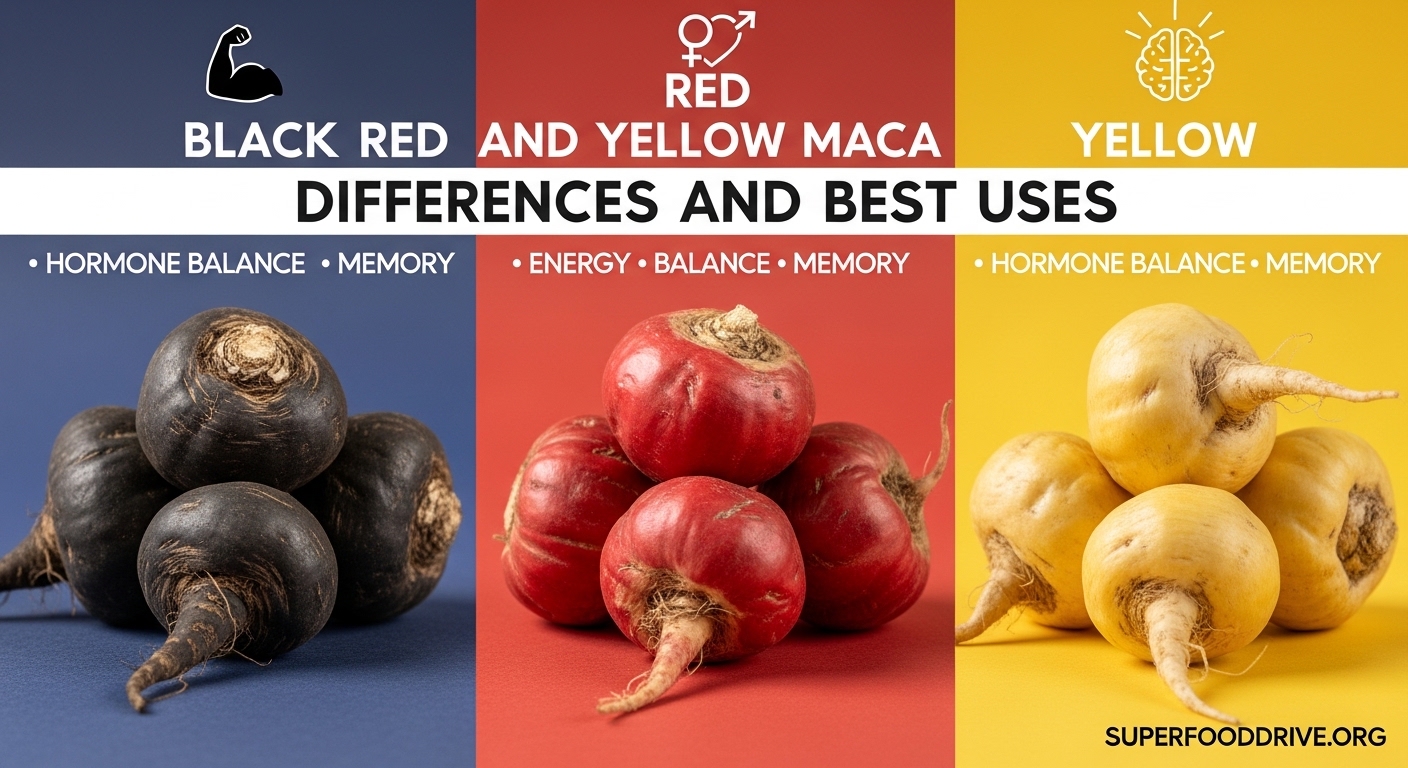
Walking into a health food store and staring at three different colors of maca powder can feel overwhelming. I remember standing there wondering if the color actually mattered or if it was just marketing. After digging into the research and talking with herbalists who have worked with this Andean root for decades, I can tell you this: the color absolutely matters. Each variety of maca root – yellow, red, and black – offers distinct benefits that target different aspects of your health.
In this guide, we will break down the Black Red and Yellow Maca Differences and Best Uses so you can choose the right one for your specific goals. Whether you are looking for hormone balance, cognitive enhancement, or just a natural energy boost, there is a maca color designed for you.
Maca, scientifically known as Lepidium meyenii, is a cruciferous vegetable native to the high Andes Mountains of Peru. Grown at altitudes exceeding 13,000 feet where few plants survive, this resilient root has sustained Incan warriors and Peruvian communities for over 2,000 years. Unlike caffeine or sugar that give you a quick spike and crash, maca works as an adaptogen – supporting your body’s natural ability to handle stress and maintain balance.
Table of Contents
What Is Maca Root and Why Color Matters
Maca belongs to the Brassicaceae family, the same plant family as broccoli, cabbage, and kale. But unlike its leafy cousins, maca is cultivated for its underground tuber – a root that comes in three distinct colors that indicate different nutrient profiles.
The Inca civilization prized maca so highly they restricted its consumption to royalty and fed it to warriors before battle. They believed different colors carried different energies and medicinal properties. Modern science has validated what these ancient healers knew: each color contains unique concentrations of bioactive compounds including glucosinolates, macamides, and alkaloids that produce different physiological effects.
Yellow maca makes up 60 to 70 percent of the annual harvest. Red maca accounts for 20 to 25 percent. Black maca is the rarest at just 10 to 15 percent of the total crop. This rarity often translates to higher prices for black maca, but as you will see, each color serves specific purposes that may make one more valuable to your particular needs than others.
Yellow Maca: The Balanced All-Rounder
Yellow maca is what most people picture when they think of this superfood. With its light beige to golden color, it represents the most accessible entry point into the world of maca supplementation. If you are new to maca, this is where I recommend starting.
Key Characteristics of Yellow Maca
Yellow maca delivers a well-rounded nutritional profile that supports overall wellness without specializing too heavily in any single area. It contains a balanced ratio of the bioactive compounds found in all maca varieties, making it the safest choice for general daily use.
Research published in the journal Evidence-Based Complementary and Alternative Medicine shows that yellow maca supports healthy mood regulation and sustained energy levels throughout the day. Users report feeling more alert without the jittery sensation that comes from stimulants like caffeine.
Primary Benefits of Yellow Maca
The benefits of yellow maca span multiple body systems. Users consistently report improvements in daily energy, emotional balance, and general vitality. The adaptogenic properties help your body respond to stress more effectively, which can translate to better sleep, improved focus, and a more stable mood.
For women, yellow maca provides gentle hormone support that can help regulate menstrual cycles and ease PMS symptoms. For men, it offers prostate support and helps maintain healthy testosterone levels already within normal range. It is truly the versatile option that works for nearly everyone.
Who Should Choose Yellow Maca
Yellow maca is ideal if you want an introduction to maca supplementation without diving into specialized effects. It is perfect for beginners who want to experience what maca can do before committing to a specific color. Daily wellness seekers, people with busy lifestyles needing consistent energy, and those looking for gentle hormone balance will all find yellow maca beneficial.
The recommended dosage ranges from 1,500 to 3,000 milligrams daily, typically taken in the morning. Starting at the lower end allows you to assess tolerance before increasing.
Red Maca: The Hormone and Bone Health Specialist
Red maca stands out with its distinctive pinkish-red hue that comes from higher concentrations of specific antioxidants. This variety has gained significant attention in scientific circles for its effects on hormonal health and bone density.
What Makes Red Maca Unique
The red color indicates elevated levels of certain compounds that interact with the endocrine system more directly than yellow maca. Studies from Peruvian universities have documented red maca’s ability to support prostate health in men and alleviate menopausal symptoms in women.
A 2005 study published in Reproductive Biology and Endocrinology found that red maca reduced prostate size in male rats without affecting testosterone levels, suggesting it works through pathways other than hormone manipulation. This makes it particularly valuable for men concerned with prostate health as they age.
Red Maca Benefits for Women
Women experiencing perimenopause or menopause often find red maca especially helpful. Research indicates it can reduce hot flashes, night sweats, and mood swings associated with hormonal transitions. Unlike hormone replacement therapy, red maca works with your body’s natural systems rather than introducing external hormones.
Bone health represents another major benefit. A study published in BMC Complementary Medicine and Therapies demonstrated that red maca helped prevent bone loss in postmenopausal women, likely due to its effects on hormone balance and nutrient absorption.
Who Should Choose Red Maca
Choose red maca if you are navigating hormonal transitions, concerned about bone density, or seeking prostate support. It is also the variety I recommend for women dealing with menstrual irregularities or menopausal symptoms. The standard dosage mirrors yellow maca at 1,500 to 3,000 milligrams daily.
Black Maca: The Cognitive and Stamina Powerhouse
Black maca commands attention as the rarest and most potent variety. Its dark color signals the highest concentrations of certain neuroprotective compounds and makes it the top choice for cognitive enhancement and physical performance.
The Science Behind Black Maca
Research conducted at the Universidad Peruana Cayetano Heredia demonstrated that black maca improved learning and memory in mice more effectively than red or yellow varieties. The study participants showed enhanced spatial learning and reduced anxiety-like behaviors, suggesting black maca supports both cognitive function and stress resilience.
Black maca also shows the strongest effects on physical stamina and athletic performance. The same bioactive compounds that support brain function appear to enhance mitochondrial efficiency – essentially helping your cells produce energy more effectively during physical exertion.
Black Maca for Male Vitality
While all maca colors support male reproductive health, black maca shows the most pronounced effects on libido and sperm quality. A clinical trial published in the Asian Journal of Andrology found that men taking black maca experienced significant improvements in sexual desire compared to placebo groups.
The stamina benefits extend beyond the bedroom. Athletes report improved endurance and faster recovery when supplementing with black maca, likely due to its effects on oxygen utilization and energy metabolism.
Who Should Choose Black Maca
Select black maca if your priorities center on mental clarity, memory support, athletic performance, or male reproductive health. It is also excellent for students during exam periods or professionals needing sustained cognitive performance. Due to its potency, some users prefer cycling black maca – taking it for 8 weeks then switching to yellow or red for a few weeks before returning.
Quick Comparison: Which Maca Color Is Right for You
Deciding between maca colors comes down to understanding your primary health goals. The table below breaks down the key differences to help you make an informed choice.
| Feature | Yellow Maca | Red Maca | Black Maca |
|---|---|---|---|
| Percentage of Harvest | 60-70% | 20-25% | 10-15% |
| Best For | General wellness, beginners | Hormone balance, bone health | Cognitive function, stamina |
| Primary Benefits | Energy, mood, daily vitality | Prostate health, menopause support | Memory, athletic performance |
| Target Users | Everyone | Women 40+, men concerned with prostate | Athletes, students, men seeking vitality |
| Research Strength | Moderate | Strong for prostate and bones | Strong for cognition and stamina |
| Typical Dosage | 1500-3000mg | 1500-3000mg | 1500-3000mg |
Decision Guide by Goal
For energy and daily wellness: Start with yellow maca. It provides sustainable energy without overstimulation and works well as a daily supplement.
For hormone balance: Choose red maca. Its specific compounds target the endocrine system and help regulate hormonal fluctuations.
For mental performance: Black maca is your best option. The research clearly shows superior cognitive benefits compared to other colors.
For athletic performance: Black maca wins again with its stamina-enhancing and recovery-supporting properties.
For beginners: Yellow maca offers the gentlest introduction with the most balanced effects profile.
How to Use Maca: Forms, Dosage, and Timing
Getting the most from your maca supplement requires understanding the different forms available and how to incorporate them into your routine.
Powder vs Capsules: Which Is Better
Maca powder offers versatility and typically costs less per serving. You can blend it into smoothies, stir it into oatmeal, or mix it with warm (not boiling) water. The earthy, butterscotch-like flavor pairs well with chocolate, vanilla, and nut milks. However, some people find the taste takes getting used to.
Capsules provide convenience and eliminate taste concerns. They are ideal for travel or busy mornings when blending a smoothie is not practical. The downside is higher cost per serving and less flexibility with dosing adjustments.
Gelatinized vs Raw Maca
Gelatinized maca has been processed to remove starch content, making it easier to digest and more concentrated. If you have sensitive digestion or experience bloating with raw maca, gelatinized is worth the extra cost. Raw maca maintains all original enzymes and nutrients but can cause digestive discomfort for some users.
Timing and Cycling Recommendations
Take maca in the morning. Its energizing effects can interfere with sleep if consumed too late in the day. Several users on Reddit’s r/Supplements forum reported vivid dreams and insomnia when taking maca after 2 PM.
Cycling maca – taking it for 8 weeks followed by a 1 to 2 week break – may prevent tolerance and maintain effectiveness. This approach mimics traditional use patterns where communities would consume maca during specific seasons rather than continuously year-round.
The standard dosage of 1,500 to 3,000 milligrams daily works across all colors. Start low and increase gradually to assess your individual response.
Safety, Side Effects, and Who Should Avoid Maca
While maca is generally well-tolerated, understanding potential side effects and contraindications helps you use it safely.
Common Side Effects to Watch For
Digestive issues represent the most frequently reported side effect, particularly with raw maca. Starting with gelatinized maca or reducing your dose usually resolves this. Some users report increased anxiety or jitteriness if taking too high a dose initially.
Sleep disturbances can occur when taking maca late in the day. The energizing effects that make it valuable for morning use can become problematic if they persist into evening hours.
Can I Take Maca If I Have Hashimoto’s
This is one of the most common questions I see, and it requires a careful answer. Maca is a goitrogen – a substance that can interfere with thyroid function in some people. For those with Hashimoto’s thyroiditis or hypothyroidism, this creates a potential concern.
However, research specifically on maca and thyroid function shows mixed results. Some studies suggest maca may actually support thyroid health in certain contexts, while traditional practitioners often recommend avoiding it with thyroid conditions.
The safest approach: consult your endocrinologist before using maca if you have any thyroid condition. If you get approval, start with very low doses and monitor your thyroid markers regularly. Gelatinized maca may be preferable as the processing reduces goitrogenic compounds.
Other Contraindications
Avoid maca during pregnancy and breastfeeding due to limited safety data. People with hormone-sensitive conditions should use caution and consult healthcare providers, as maca can influence hormonal pathways even though it does not contain hormones itself.
Those with allergies to other Brassicaceae plants (broccoli, cauliflower, cabbage) should introduce maca cautiously and watch for allergic reactions.
Frequently Asked Questions
Which is better, red, black, or yellow maca?
No single maca color is objectively better – they serve different purposes. Yellow maca is best for general wellness and beginners. Red maca excels for hormone balance and bone health. Black maca is superior for cognitive function and physical stamina. The best choice depends on your specific health goals.
Can I take maca if I have Hashimoto’s?
People with Hashimoto’s should exercise caution with maca. Maca is a goitrogen that can potentially interfere with thyroid function. Consult your endocrinologist before using maca if you have Hashimoto’s or hypothyroidism. If approved, start with low doses of gelatinized maca and monitor thyroid markers regularly.
Which type of maca is the best?
The best maca type depends on your goals: Choose yellow for daily energy and wellness, red for hormone balance and prostate health, or black for cognitive enhancement and athletic performance. Beginners should start with yellow maca.
What does black and yellow maca root do?
Black maca supports cognitive function, memory, learning ability, and physical stamina. It is especially beneficial for athletes and those seeking mental clarity. Yellow maca provides balanced energy, mood support, and general vitality. It is ideal for daily use and works well for most people seeking an adaptogenic supplement.
Conclusion
Understanding the Black Red and Yellow Maca Differences and Best Uses empowers you to choose the right adaptogen for your specific needs. Yellow maca offers balanced daily support for everyone. Red maca targets hormones and bone health with special benefits for women and men concerned with prostate wellness. Black maca delivers the strongest cognitive and stamina benefits for those needing mental or physical performance enhancement.
If you are just starting out, I recommend beginning with yellow maca to establish your baseline response. Once you understand how your body reacts to maca, you can experiment with red or black varieties to target specific goals. Remember to take it in the morning, start with a lower dose, and consider cycling your use for optimal results.