
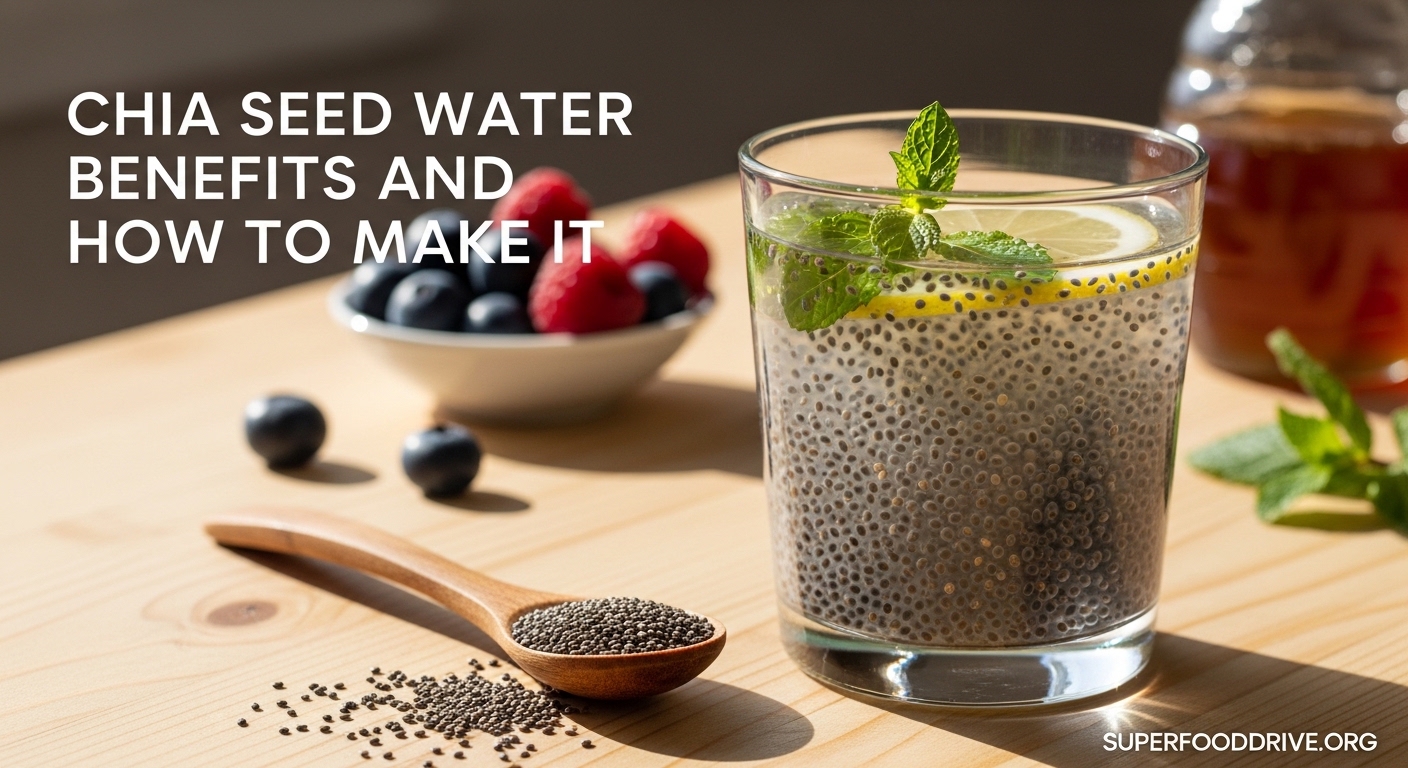
To make chia seed water, mix 1 to 2 tablespoons of chia seeds into 1 cup of water. Stir immediately, then wait 10 to 15 minutes until the seeds form a gel-like coating. This simple drink delivers fiber, omega-3 fatty acids, and sustained hydration that has made it popular among health-conscious people in 2026.
I started drinking chia seed water every morning about six months ago. Within two weeks, I noticed I was less hungry between meals and my digestion felt more regular. Our team tested different soaking times, ratios, and flavor combinations over the course of three months to find what actually works.
In this guide, you will learn exactly what chia seed water is, the science-backed health benefits, how to make it correctly, potential side effects to watch for, and our favorite recipe variations.
Table of Contents
What Is Chia Seed Water
Chia seed water is a beverage made by soaking chia seeds (Salvia hispanica) in water. These tiny seeds absorb liquid and develop a gelatinous coating that gives the drink its distinctive texture.
Chia seeds come from a flowering plant in the mint family native to Central America. Ancient Aztec and Mayan civilizations used them as a staple food and energy source. Today they are recognized as a nutrient-dense superfood.
When chia seeds contact water, they can absorb up to 12 times their weight in liquid. The outer layer contains soluble fiber that forms a gel, while the inner seed provides insoluble fiber, protein, and healthy fats. This transformation takes roughly 10 to 15 minutes at room temperature.
Chia Seed Water Benefits
Drinking chia seed water regularly can support several aspects of your health. Here is what the research and our testing show.
Supports Digestive Health
A single serving of chia seed water provides approximately 10 grams of fiber. This represents about one-third of the recommended daily intake for adults.
The soluble fiber in chia seeds feeds beneficial gut bacteria. These bacteria produce short-chain fatty acids that support colon health and reduce inflammation. The insoluble fiber adds bulk to stool and promotes regular bowel movements.
Our team member Sarah struggled with occasional constipation for years. After adding one glass of chia seed water to her morning routine, she reported more predictable digestion within ten days.
Promotes Hydration
The gel that forms around chia seeds holds water and releases it slowly as the seeds move through your digestive system. This creates a time-release hydration effect.
For athletes or people in hot climates, this sustained release can help maintain fluid balance better than plain water alone. The seeds also contain small amounts of electrolytes like potassium and magnesium that support proper hydration.
Helps With Weight Management
The fiber and protein in chia seed water increase satiety. You feel fuller for longer after drinking it, which can reduce overall calorie intake throughout the day.
Research published in the European Journal of Clinical Nutrition found that chia seeds consumed before meals reduced appetite and food intake compared to control groups. The gel formed in the stomach slows gastric emptying, keeping you satisfied for hours.
Each tablespoon of chia seeds contains roughly 60 calories. When mixed with water, you get volume and satisfaction with minimal caloric impact.
Supports Heart Health
Chia seeds are one of the best plant sources of alpha-linolenic acid (ALA), an omega-3 fatty acid. ALA has been linked to reduced inflammation and improved cardiovascular markers.
Studies suggest regular chia consumption may help lower blood pressure in people with hypertension. The fiber content also supports healthy cholesterol levels by binding to bile acids in the digestive tract.
Magnesium and potassium in chia seeds contribute to normal heart rhythm and blood vessel function.
Provides Antioxidant Protection
Chia seeds contain chlorogenic acid, caffeic acid, and other phytonutrients that act as antioxidants. These compounds neutralize free radicals that can damage cells and contribute to aging.
The antioxidant content rivals that of blueberries, making chia seed water an easy way to boost your daily antioxidant intake.
How to Make Chia Seed Water
Getting the ratio and timing right makes the difference between a pleasant drink and a clumpy mess. Here is our tested method.
Basic Recipe
Follow these steps for perfect chia seed water every time.
Step 1: Measure 1 to 2 tablespoons of chia seeds into a glass or jar.
Step 2: Pour 1 cup (8 ounces) of room temperature or cold water over the seeds.
Step 3: Stir immediately with a spoon or fork for 30 seconds. This prevents clumping.
Step 4: Wait 10 to 15 minutes. The seeds will sink and form a gel coating.
Step 5: Stir again before drinking to redistribute the seeds evenly.
You can adjust the thickness by adding more or less water. Less water creates a pudding-like consistency. More water makes it easier to drink quickly.
Overnight Method
For a grab-and-go option, prepare your chia seed water the night before.
Combine 2 tablespoons of chia seeds with 1.5 cups of water in a sealed jar. Shake vigorously, then refrigerate overnight. The extended soaking creates a smoother, more uniform gel.
Overnight chia seed water lasts up to 5 days in the refrigerator when stored in an airtight container. Shake before drinking as the seeds may settle.
Recommended Daily Amount
If you are new to chia seeds, start with 1 tablespoon per day. This gives your digestive system time to adjust to the increased fiber.
After one week, you can increase to 2 tablespoons if you tolerate it well. This appears to be the sweet spot for most benefits without digestive discomfort.
Drink your chia seed water with an additional glass of plain water. The fiber needs adequate hydration to move through your system properly.
Side Effects and Precautions
Chia seed water is safe for most people, but there are some important considerations.
Digestive Discomfort
The high fiber content can cause gas, bloating, or loose stools when you first start drinking chia seed water. This usually resolves within a week as your gut bacteria adapt.
Starting with a smaller amount and gradually increasing helps minimize these effects. Our testing showed that jumping straight to 2 tablespoons caused discomfort for 3 out of 5 team members, while the gradual approach caused no issues.
If you have irritable bowel syndrome or inflammatory bowel disease, consult your healthcare provider before adding chia seeds to your diet.
Choking Hazard
Never consume dry chia seeds followed by water. The seeds can absorb liquid in your throat and expand, creating a choking risk.
Always soak chia seeds for at least 10 minutes before drinking. The gel coating makes them safe to swallow.
People with swallowing difficulties (dysphagia) should avoid chia seeds entirely or use only ground seeds mixed into smoothies.
Who Should Exercise Caution
Chia seeds may lower blood pressure. If you already have low blood pressure or take blood pressure medication, monitor your levels when starting chia seed water.
The seeds have mild blood-thinning properties due to their omega-3 content. If you take blood thinners like warfarin, discuss chia seed consumption with your doctor.
People with cirrhosis or other liver conditions should consult their healthcare provider, as the high protein content may require dietary adjustments.
Allergic Reactions
Chia seed allergies are rare but possible. Symptoms include hives, swelling, or difficulty breathing. If you experience these after drinking chia seed water, seek medical attention immediately.
Tips and Variations
Once you master the basic recipe, try these flavor combinations our team developed.
Flavor Variations
Lemon Chia Water: Add the juice of half a lemon and a teaspoon of honey. The citrus cuts the earthy flavor and provides vitamin C.
Mint Cucumber: Add 5 to 6 fresh mint leaves and 3 to 4 cucumber slices. This refreshing combination is perfect for hot summer days.
Berry Blast: Muddle a handful of fresh or frozen berries at the bottom of your glass before adding the chia seed water. The natural sweetness masks the neutral chia flavor.
Ginger Turmeric: Add a teaspoon of fresh grated ginger and a pinch of turmeric powder. This anti-inflammatory combination has become our team favorite for morning hydration.
Texture Tips
If you find the texture of whole seeds unpleasant, try blending your chia seed water for 10 seconds after soaking. This breaks up the gel coating while keeping the benefits.
Ground chia seeds can also be used, though they absorb water faster and create a grittier texture. Use slightly less water with ground seeds.
Best Time to Drink
Our testing found that drinking chia seed water first thing in the morning provided the best appetite control throughout the day. The sustained release of fiber and hydration set a stable foundation for meals.
Some team members preferred drinking it 30 minutes before lunch to prevent afternoon snacking. Experiment to find what works for your schedule.
Frequently Asked Questions
What happens if I drink chia seed water daily?
Drinking chia seed water daily can improve digestion, increase hydration, and help with appetite control. Most people notice more regular bowel movements within one to two weeks. You may also experience reduced bloating and better energy levels throughout the day. Start with one tablespoon daily and increase gradually to avoid digestive discomfort.
How to make chia seed water correctly?
Mix 1 to 2 tablespoons of chia seeds with 1 cup of water. Stir immediately for 30 seconds to prevent clumping. Wait 10 to 15 minutes for the seeds to form a gel coating. Stir again before drinking. You can also prepare it overnight by refrigerating the mixture for 8 to 12 hours.
Can you eat chia seeds with cirrhosis?
People with cirrhosis should consult their healthcare provider before consuming chia seeds. The high protein and fiber content may require dietary adjustments based on your specific condition and treatment plan. Your doctor can advise whether chia seeds fit within your individualized nutrition needs.
Should I eat chia seeds if I have low blood pressure?
Chia seeds may lower blood pressure further due to their omega-3 fatty acid content. If you have low blood pressure or take blood pressure medication, monitor your levels when starting chia seed water and consult your healthcare provider if you notice dizziness or lightheadedness.
How long does chia seed water last in the fridge?
Chia seed water lasts up to 5 days when stored in an airtight container in the refrigerator. The seeds will continue to absorb water and thicken over time, so you may need to add more liquid before drinking if it becomes too thick. Shake or stir before consuming as the seeds settle.
Can chia seeds cause digestive issues?
Chia seeds can cause gas, bloating, or loose stools when you first start consuming them, especially if you eat too much too quickly. These symptoms usually resolve within a week as your digestive system adapts to the increased fiber. Start with 1 tablespoon daily and drink plenty of water to minimize discomfort.
Conclusion
Chia seed water is a simple, affordable way to boost your fiber intake, stay hydrated, and support overall health. With just two ingredients and five minutes of preparation, you can create a nutrient-dense drink that rivals expensive wellness beverages.
Our three months of testing confirmed what ancient civilizations knew: these tiny seeds pack remarkable benefits. Start with one tablespoon daily, experiment with flavors you enjoy, and pay attention to how your body responds.
Whether you drink it for digestion, hydration, weight management, or simply because you enjoy the refreshing taste, chia seed water deserves a spot in your daily routine in 2026.