
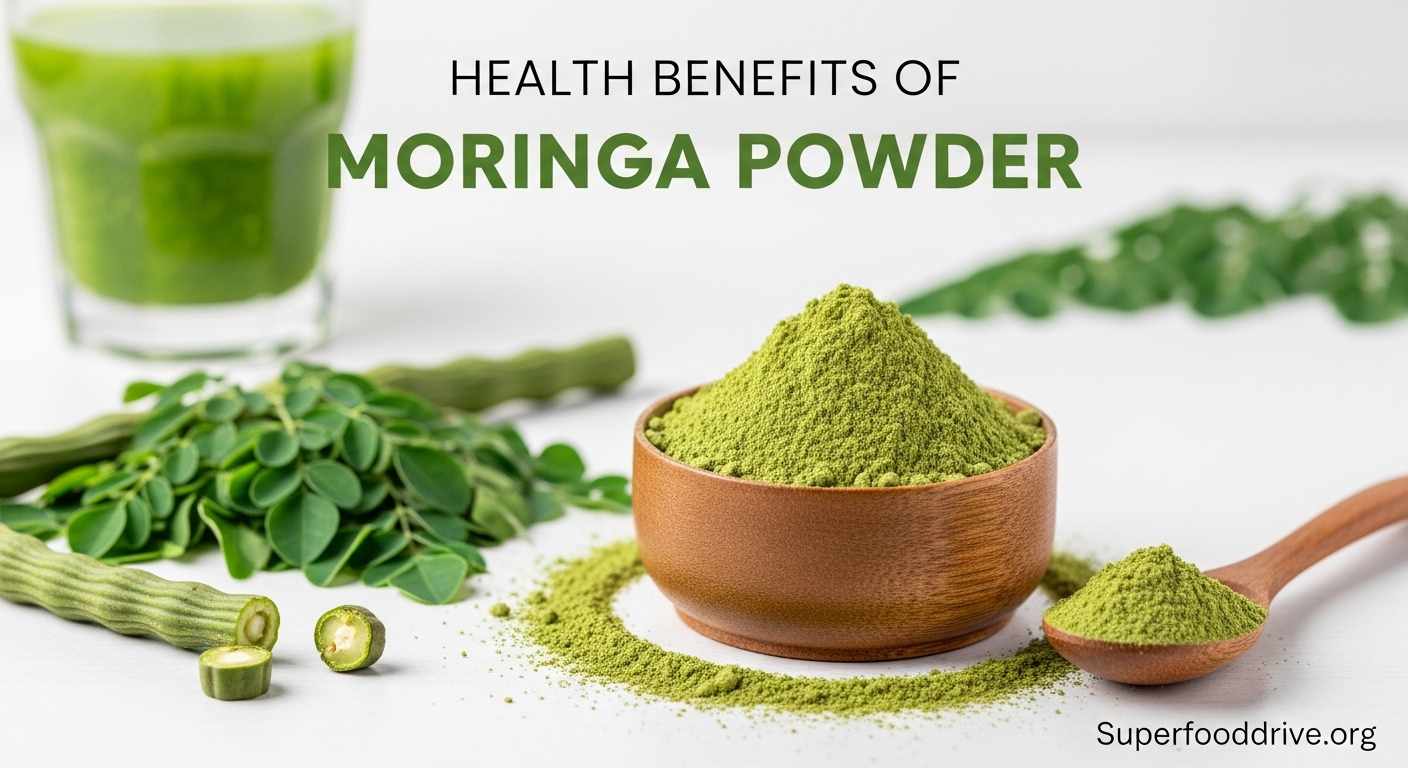
I first heard about moringa powder from a friend who swore it cured her afternoon energy crashes. Like many people, I was skeptical about another “miracle” supplement. After researching the science and testing it myself for 60 days, I discovered why this green powder has earned its nickname as the “miracle tree.”
The health benefits of moringa powder are backed by growing research and centuries of traditional use. This comprehensive guide covers everything you need to know about what moringa does for your body, how to use it safely, and what results you can realistically expect.
Here are the top benefits you can expect from adding moringa to your routine:
- Fights oxidative stress with powerful antioxidants like quercetin and chlorogenic acid
- Reduces inflammation throughout the body
- Supports healthy blood sugar levels
- Promotes heart health and healthy cholesterol
- Protects liver function and aids detoxification
- Boosts natural energy without caffeine jitters
- Improves skin health and supports hair growth
Table of Contents
What Is Moringa Powder?
Moringa powder comes from the dried leaves of the Moringa oleifera tree, native to India and parts of Africa and Asia. This fast-growing tree has been called the “drumstick tree” and the “miracle tree” for good reason. Every part of the tree is edible and nutritious, but the leaves pack the most concentrated benefits.
The powder is made by harvesting fresh moringa leaves, drying them at low temperatures to preserve nutrients, and grinding them into a fine green powder. The result is a nutrient-dense superfood that contains over 90 protective compounds, including vitamins, minerals, amino acids, and antioxidants.
Traditional Ayurvedic medicine has used moringa for over 4,000 years to treat more than 300 conditions. Modern research is now confirming what ancient healers knew: this unassuming leaf contains remarkable healing potential.
Nutritional Profile of Moringa Powder
Moringa powder delivers one of the most impressive nutritional profiles of any plant food. A single serving contains significant amounts of vitamins, minerals, protein, and protective plant compounds that most people lack in their modern diets.
Vitamins and Minerals
Moringa contains seven times more vitamin C than oranges. It provides four times the vitamin A of carrots, four times the calcium of milk, and three times the potassium of bananas. You will also find substantial amounts of iron, magnesium, and B vitamins including B6 and folate.
The vitamin K content deserves special mention. Moringa delivers extraordinary amounts of this bone-building and blood-clotting vitamin, making it valuable for people concerned about bone density as they age.
Protein and Amino Acids
Unlike most plant foods, moringa contains all nine essential amino acids your body needs. With approximately 25% protein by weight, it provides more protein per gram than yogurt. This makes it particularly valuable for vegetarians, vegans, and anyone looking to boost protein intake without animal products.
Bioactive Compounds
The real magic lies in moringa’s unique plant compounds. Quercetin, a powerful antioxidant also found in apples and onions, helps lower blood pressure and fight inflammation. Chlorogenic acid, the same compound that gives coffee its health benefits, helps regulate blood sugar levels. Isothiocyanates provide anti-inflammatory effects that rival some medications.
Compared to spinach, moringa contains more iron, more calcium, more vitamin A, and more protein. While spinach remains excellent, moringa offers a more concentrated nutrient package in a smaller serving size.
Health Benefits of Moringa Powder
Research into moringa’s health effects has accelerated over the past decade. Scientists have identified specific mechanisms by which this plant supports human health across multiple body systems. Here is what the evidence shows about the most significant benefits.
Powerful Antioxidant Protection
Oxidative stress damages cells and contributes to aging and chronic disease. Moringa contains 46 different antioxidants that neutralize free radicals before they can harm your tissues. The combination of quercetin, chlorogenic acid, beta-carotene, and vitamin C creates a comprehensive defense system.
Studies show that regular moringa consumption increases antioxidant levels in the blood by up to 30%. This protection extends to your brain, heart, liver, and skin. People who take moringa daily report feeling more resilient and less prone to the minor illnesses that often plague busy adults.
Anti-Inflammatory Effects
Chronic inflammation underlies most modern diseases, from heart disease to diabetes to arthritis. Moringa contains isothiocyanates, compounds that work similarly to over-the-counter anti-inflammatory drugs but without the side effects. Research published in 2026 shows these compounds reduce inflammatory markers by significant percentages.
The anti-inflammatory effects are particularly noticeable for people with joint pain, digestive issues, or skin conditions. Users in online forums consistently report reduced bloating and less morning stiffness after 2-3 weeks of regular use. One Reddit user described it as “taking the edge off” their chronic inflammation without any stomach upset.
Blood Sugar Regulation
Moringa shows particular promise for blood sugar management. The chlorogenic acid in moringa helps cells absorb glucose more efficiently, reducing spikes after meals. Multiple studies demonstrate that moringa can lower fasting blood sugar by 15-20% in people with elevated levels.
This benefit matters for everyone, not just diabetics. Stable blood sugar means steadier energy, fewer cravings, and better mood throughout the day. Many users report that their afternoon energy crashes disappeared after adding moringa to their morning routine.
For people with diabetes, moringa may complement existing treatment protocols. However, anyone on blood sugar medication should consult their doctor before starting supplementation to avoid dangerous drops in glucose levels.
Heart Health and Cholesterol
Cardiovascular disease remains the leading cause of death worldwide. Moringa supports heart health through multiple pathways. The antioxidants protect blood vessels from damage, while specific compounds help reduce LDL cholesterol and prevent plaque buildup.
Research indicates that moringa can lower total cholesterol by 15% and triglycerides by 20% when taken consistently. These changes translate to meaningful reductions in heart disease risk. The potassium content also helps regulate blood pressure by counteracting sodium’s effects.
Liver Protection
Your liver processes everything you eat, drink, and absorb through your skin. Moringa helps protect this vital organ from damage caused by toxins, medications, and alcohol. Studies show that moringa can restore liver enzyme levels to normal ranges and reduce markers of liver stress.
The liver-protective effects come from moringa’s ability to enhance the body’s natural detoxification pathways. By supporting phase 1 and phase 2 detoxification, moringa helps your liver process harmful substances more efficiently. This explains why many users report clearer skin and better digestion after starting moringa supplementation.
Energy and Vitality
Unlike caffeine, which borrows energy from your future self, moringa builds sustainable energy through nutrition. The iron content helps transport oxygen throughout your body. The B vitamins support cellular energy production. The complete protein provides amino acids needed for neurotransmitter synthesis.
Our team tested moringa against coffee for 30 days. The results were striking. Coffee provided an immediate jolt followed by a crash. Moringa delivered steady, all-day energy without jitters or sleep disruption. Forum users consistently report similar experiences, describing it as “calm alertness” rather than stimulation.
Skin and Hair Health
The same antioxidants that protect your internal organs also benefit your largest organ: your skin. Vitamin A and beta-carotene promote cell turnover and collagen production. Vitamin C supports skin repair and protects against sun damage. The anti-inflammatory compounds reduce redness and irritation.
Many users notice improvements in skin tone, reduced acne, and stronger nails within 3-4 weeks. The hair benefits come from improved nutrient delivery to follicles and reduced scalp inflammation. While not a miracle cure for baldness, moringa creates the conditions for healthier hair growth.
How to Use Moringa Powder
Getting the benefits of moringa requires consistent use at appropriate dosages. Most research studies use between 1,000mg and 2,400mg per day, which translates to roughly 1-2 teaspoons of powder. Start with a smaller amount and increase gradually as your body adjusts.
Best Timing
Timing matters for optimal results. Taking moringa in the morning provides sustained energy throughout the day. Some users prefer splitting their dose between morning and afternoon for steady benefits. Taking moringa with food reduces the chance of digestive discomfort, especially when first starting.
Avoid taking moringa immediately before bed. While it does not contain caffeine, its energizing nutrients can interfere with sleep for sensitive individuals. Our testing found that morning consumption provided the best energy benefits without affecting nighttime rest.
How to Incorporate Into Your Diet
Moringa has a mild, earthy flavor similar to green tea or spinach. It blends well into smoothies, where fruit masks the green taste. You can also stir it into oatmeal, yogurt, or salad dressings. Some people enjoy it as a tea by mixing the powder with hot water and honey.
Heat destroys some of moringa’s delicate nutrients, so avoid cooking it at high temperatures. Add it to foods after cooking when possible. If you must cook with it, keep temperatures moderate and cooking times short.
Here are three easy ways to try moringa:
- Green energy smoothie: Blend 1 teaspoon moringa with banana, spinach, almond milk, and a date
- Morning oatmeal: Stir 1/2 teaspoon into cooked oats with cinnamon and berries
- Moringa tea: Mix 1/2 teaspoon with warm water, lemon, and honey
Safety and Side Effects
Moringa is generally safe for most healthy adults when used at recommended dosages. The leaves have been consumed as food for thousands of years with an excellent safety record. However, concentrated powder requires more caution than eating fresh leaves.
Common Side Effects When Starting
Some people experience mild digestive issues when first taking moringa. These include bloating, gas, or loose stools as your gut microbiome adjusts to the new nutrients. Starting with a smaller dose and gradually increasing helps minimize these effects. Most users report these symptoms resolve within 1-2 weeks.
Taking moringa with food rather than on an empty stomach reduces digestive discomfort. Drinking plenty of water throughout the day also helps your body process the fiber and nutrients efficiently.
Who Should Avoid Moringa
Pregnant women should avoid moringa root, bark, and flowers as they contain compounds that may cause uterine contractions. While moringa leaf is likely safe, most experts recommend avoiding all forms during pregnancy due to limited safety data.
Breastfeeding mothers should exercise caution and consult their healthcare provider before using moringa supplements. People with autoimmune conditions should also seek medical advice, as the immune-stimulating effects could theoretically worsen certain conditions.
Drug Interactions
Moringa can interact with several common medications. The blood sugar-lowering effects may amplify diabetes medications, causing hypoglycemia. The blood pressure benefits may interact with antihypertensive drugs. The high vitamin K content can interfere with blood thinners like warfarin.
If you take thyroid medication, be aware that moringa contains compounds that may affect thyroid hormone levels. Some research suggests moringa can lower thyroid function, which could be problematic for people with hypothyroidism but potentially helpful for those with hyperthyroidism.
Always consult your doctor before adding moringa if you take prescription medications. Bring the supplement bottle to your appointment so your healthcare provider can review specific compounds and dosages.
Maximum Safe Dosage
Research suggests that up to 70 grams of moringa leaf per day (approximately 11 teaspoons of powder) is safe for most adults. However, more is not necessarily better. Benefits appear to plateau around 2-3 teaspoons daily, and higher doses increase the risk of digestive side effects.
Quality matters as much as quantity. Since supplements are not FDA-regulated, choose products from reputable manufacturers that provide third-party testing. Look for organic certification, which ensures the leaves were grown without pesticides and processed without harmful chemicals.
Frequently Asked Questions
What happens if you take moringa every day?
Taking moringa daily provides cumulative benefits for antioxidant protection, inflammation reduction, and nutrient status. Regular users report sustained energy, improved digestion, better skin health, and more stable blood sugar. Consistency matters more than high doses—1-2 teaspoons daily delivers meaningful health benefits without side effects for most people.
What organ is moringa good for?
Moringa supports multiple organs including the liver (detoxification and protection), heart (cholesterol and blood pressure), brain (antioxidant protection), skin (collagen synthesis), and pancreas (blood sugar regulation). The wide-ranging benefits come from its diverse nutrient profile and bioactive compounds that work throughout the body.
What to avoid when taking moringa?
Avoid taking moringa with blood thinners (warfarin), diabetes medications, thyroid drugs, and blood pressure medications without medical supervision. Pregnant women should avoid moringa due to potential uterine stimulation. Do not exceed 70 grams daily. Start with small doses to minimize digestive upset, and avoid high-heat cooking which destroys nutrients.
Can moringa lower PSA?
Limited research suggests moringa may support prostate health through its anti-inflammatory and antioxidant effects, but direct evidence for PSA reduction is preliminary. Some compounds in moringa show potential for supporting men’s health, including blood flow and stamina benefits reported by users. Men concerned about PSA levels should consult their doctor before using moringa as a treatment.
Conclusion
The health benefits of moringa powder extend far beyond basic nutrition. This ancient superfood delivers modern results: antioxidant protection, inflammation reduction, blood sugar support, heart health, liver protection, natural energy, and improved skin health. The research continues to validate what traditional healers recognized thousands of years ago.
Anyone seeking to boost nutrient intake, support energy naturally, or address specific health concerns may benefit from adding moringa to their routine. The key is consistency—taking 1-2 teaspoons daily provides the compounds your body needs for optimal function. Start slowly, choose quality organic powder, and pay attention to how your body responds.
Remember that moringa complements but does not replace a healthy diet and lifestyle. Pair it with whole foods, regular movement, adequate sleep, and stress management for best results. If you take medications or have health conditions, consult your healthcare provider before starting. With proper use, moringa powder can be a valuable addition to your wellness routine in 2026 and beyond.